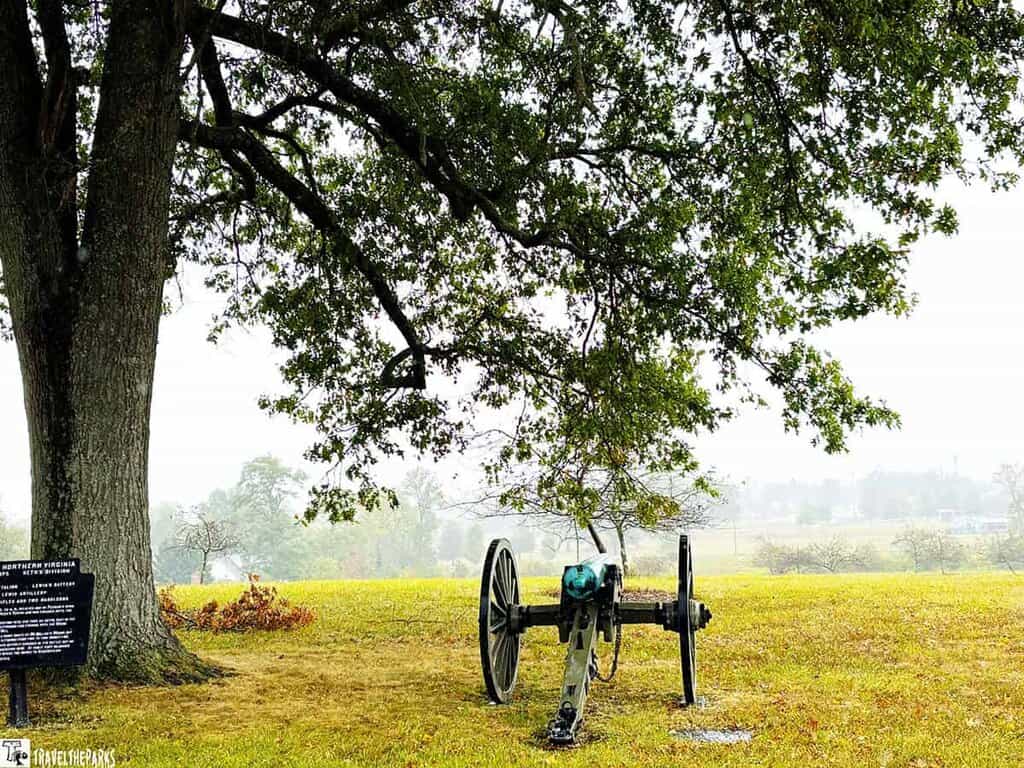
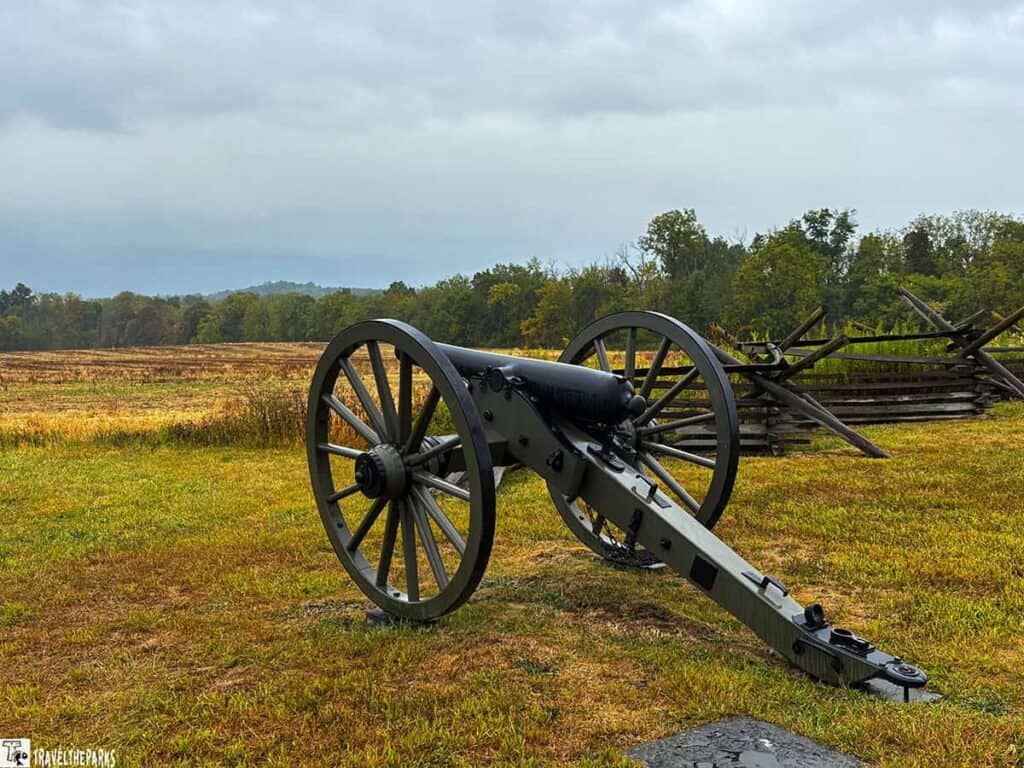
Exploring Gettysburg Battlefield wasn’t just another road trip stop. It turned out to be the best surprise of the whole trip. Honestly, the first thing that popped into my head when I got to Gettysburg National Military Park was, ‘Gee, that’s a lot of cannons.’ (There are over 1,300 monuments and markers. I didn’t really go around counting, but hey, I am all in for that kind of passion.)
Gettysburg—it’s a name that immediately brings to mind one of the most pivotal moments in American history. Gettysburg will surprise you. There’s something oddly magical about wandering the same fields where history was literally made—and trying not to get lost in a sea of monuments while doing it.
A leisurely walk through the gentle Pennsylvania countryside turned out to be more interesting than I expected. After walking on the serene fields of Gettysburg, it’s quite difficult to visualize the guns that were fired here with such a force that they made this very earth shake.
This post may contain affiliate links, meaning if you purchase something through one of these links, we may earn a small commission at no extra cost to you! Read the full disclosure policy here.

Table of Contents
What You Should Know Before You Go to the Gettysburg Battlefield
- Location: Gettysburg is in south-central Pennsylvania, about 1.5 hours from Baltimore and 2.5 hours from Philadelphia. The park’s address is: 1195 Baltimore Pike, Gettysburg, PA 17325.
- Entrance Fees: There is no entrance fee to visit Gettysburg National Military Park itself. There is a fee for the Film, Cyclorama & Museum Experience ($).
- Hours and Visitor Center: The park is open year-round, but hours vary by season. The Gettysburg National Military Park Visitor Center is open daily from 8:00 AM to 5:00 PM (hours may vary by season). Start your day here to grab maps, watch the film, and check out the Cyclorama. The battlefield itself is open from dawn to dusk, so plan accordingly!
- Best Time to Go: Summer can be busy and hot, but early mornings or late afternoons are quieter. Spring and fall are ideal—the weather is mild, and the crowds are smaller. We went in early fall, which had beautiful weather and fewer tourists than summer. Winter offers a quieter, more reflective experience, but some attractions may be closed.
- Pets: Good news for dog lovers: leashed pets are allowed on the battlefield and in some outdoor areas. Just be sure to clean up after your furry friend and keep them away from indoor exhibits.
- Give Yourself Time: You could easily spend two days here, but if you only have one, prioritize the highlights.
- Respect the Site: Gettysburg is a hallowed place. Be mindful of the solemnity of the battlefield and cemetery.
- Check for Events: The park often hosts reenactments, lectures, and special programs. It’s worth seeing if anything aligns with your visit. Check the NPS website.
History of the Battle of Gettysburg
If you’re planning a visit to Gettysburg National Military Park, you probably already know about the iconic sites and Lincoln’s famous Gettysburg Address. But there’s much more to explore — from lesser-known monuments to hidden stories of courage and sacrifice — that can make your visit truly unforgettable.
For those interested in tracing the broader path of the Civil War, a visit to Antietam National Battlefield and Harpers Ferry National Historic Park in nearby Maryland offers another powerful experience. As the site of the bloodiest single-day battle in American history, Antietam complements Gettysburg with its own compelling stories and historic landscapes, giving visitors a deeper understanding of the war’s scale and human cost.
The Battle of Gettysburg, fought from July 1 to July 3, 1863, was a pivotal moment in the American Civil War. It resulted in the highest number of casualties of the entire war and is often seen as the turning point that shaped the conflict’s outcome. Over three intense days, fierce fighting swept across the rolling hills and fields of the battlefield.
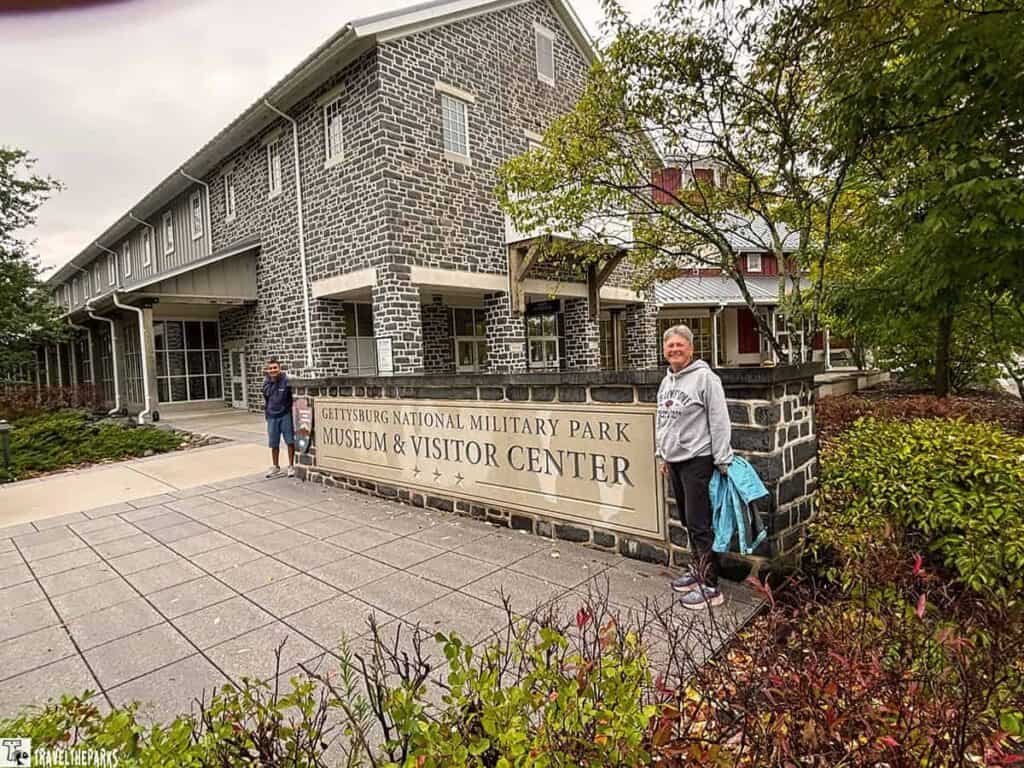
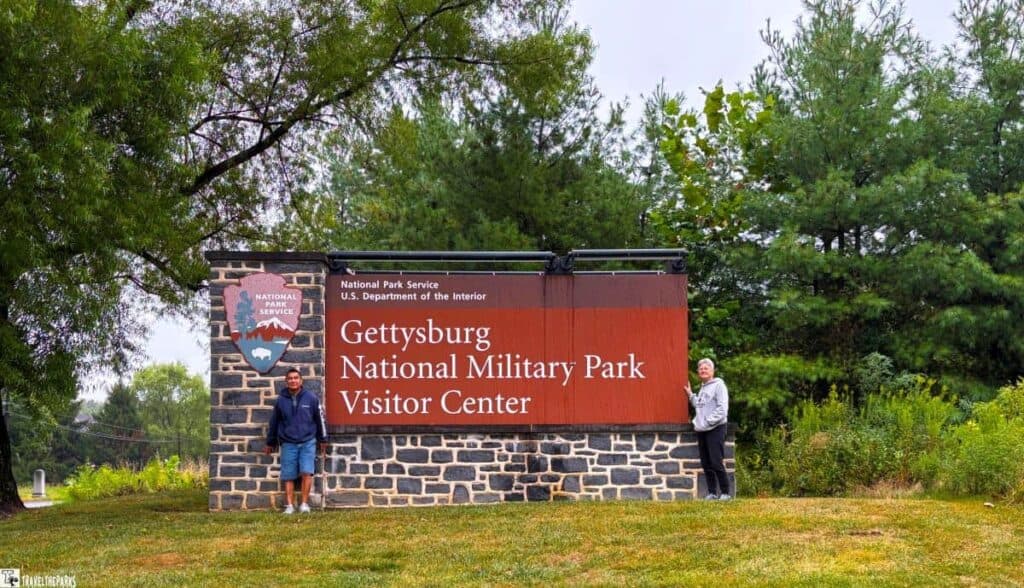
Start your day at the Gettysburg National Military Park Museum & Visitor Center.
We kicked off our day at the Gettysburg National Military Park Museum & Visitor Center, and let me tell you, this is the perfect place to start. The center houses many exhibits, artifacts, and a short film, “A New Birth of Freedom,” providing context for your upcoming experience. We noticed there was ample parking available at the Visitor Center, including spaces for RVs and buses. A park shuttle service is available from the Visitor Center to key sites on the battlefield, including Little Round Top and Devil’s Den.
Once we finished our exploration of the museum, we headed to the adjacent gift shop for some souvenirs—there’s a fantastic collection of Civil War books, memorabilia, and even exclusive artwork on the battlefield.
Pro tip: Get a map and consider hiring a licensed battlefield guide ($$) or downloading the official park app for a self-guided tour. The latter is true for just about everything that requires context, trust me.
Why visit the Cyclorama?
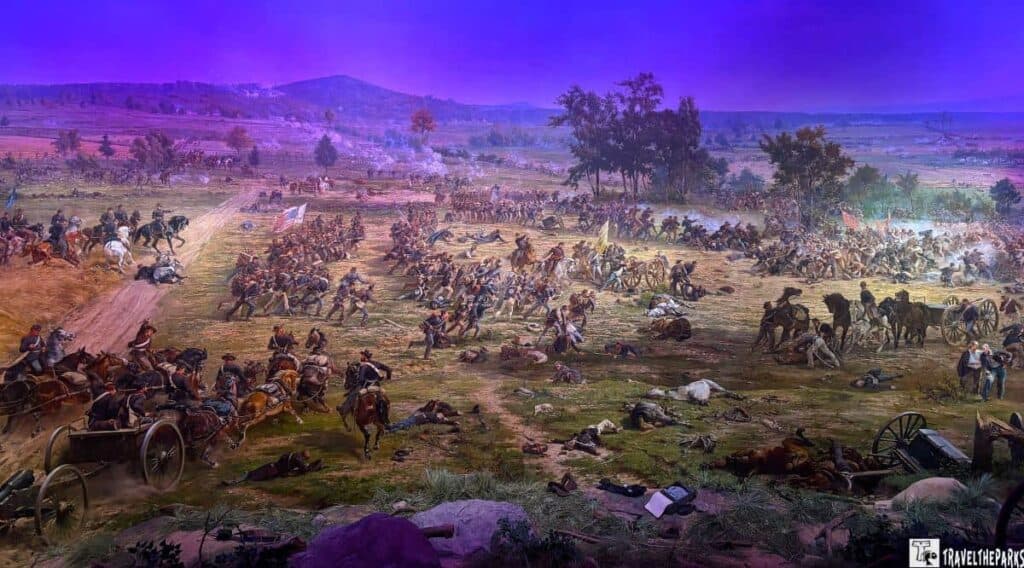
Not to be missed is the Cyclorama; it’s worth the small fee. It’s a 360-degree painting of Pickett’s Charge during the Battle of Gettysburg (1863), a turning point in the Civil War. Housed at the Gettysburg National Military Park Museum, it provides context about the war’s impact. The circular design, sound effects, and layered landscapes create a “time travel” effect, placing viewers at the heart of the battle. It’s immersive, dramatic, and gives you an idea of the scale and intensity of the battle. Even if you don’t particularly like history, I’m sure you will find it captivating.
Getting Started on a Self-Guided Auto Exploration
After the visitor center, we hopped in the car (you’ll need one to get around—it’s an extensive park!) and started our tour of the battlefield. The park is vast, spanning over 6,000 acres.
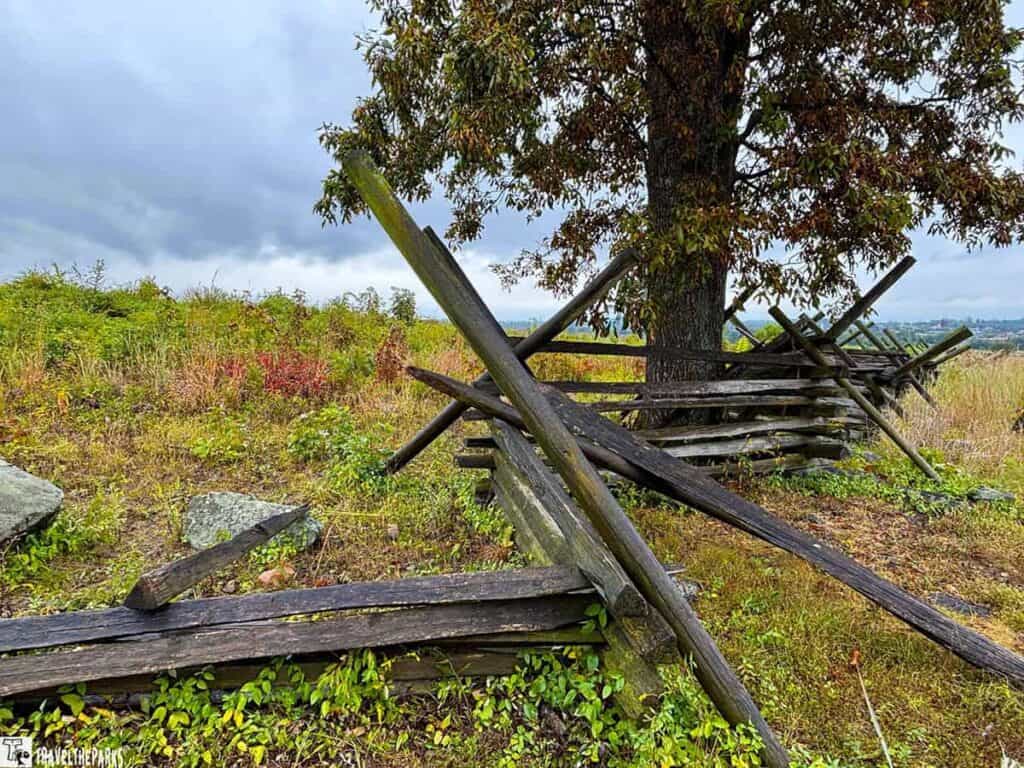
I must say the self-guided driving tour of Gettysburg National Battlefield is an excellent way to explore. Using the National Park App, it leads you to the key sites from the battle. The 24-mile path is straightforward to navigate because it has clear red signs that say “Auto Tour Route.” The popular tour showcases important events from each day of the battle, giving you the chance to experience the battlefield at your own speed.
Tips for a Self-Guided Tour of the Battlefield
- Download the Official Park App: Audio Guide/Smartphone Apps: Consider using an audio guide or a smartphone app for more in-depth explanations of each stop. It’s a lifesaver for navigation.
- Start Early: beat the crowds and enjoy the battlefield in the peaceful morning light.
- Take Your Time: Don’t rush—there’s so much to see, and the hidden gems are worth the extra effort.
- Talk to the Rangers: The park rangers are incredibly knowledgeable and can point you to lesser-known spots.
Where It All Began: Exploring Gettysburg Battlefield (Stops 1-7)
Here’s a summary of the key stops on Gettysburg’s Self-Guided Auto Tour Route, listed in the order you will see them. These places let you experience the important moments of the amazing three-day battle that took place from July 1 to July 3, 1863.
- Stop #1-McPherson Ridge: This is where the Battle of Gettysburg began on July 1, 1863. The Union’s Iron Brigade initially held their ground here before being forced to retreat through the town.
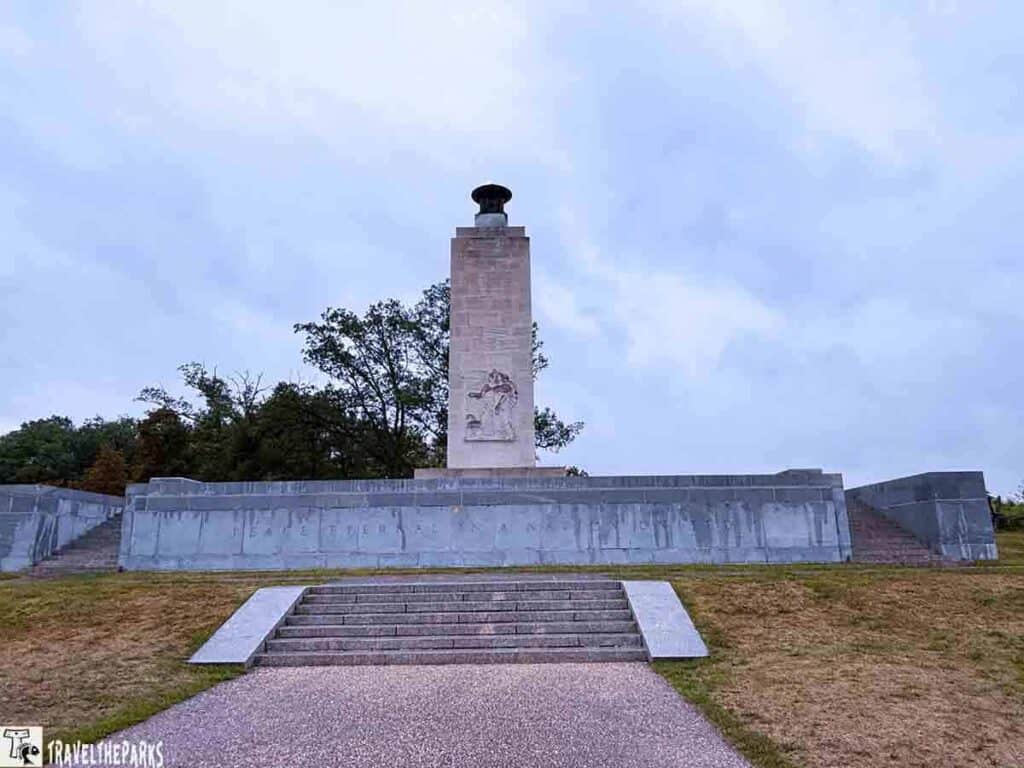
- Stop #2-Eternal Light Peace Memorial: This site saw heavy artillery fire. In 1938, President Franklin D. Roosevelt dedicated it as a symbol of peace and reconciliation.
- Stop #3-Oak Ridge Observation Tower: On Day 1 of the battle, Union forces retreated to this area as the Confederate forces pushed them back.
- Stop #4-North Carolina Memorial: This monument honors the North Carolina troops who launched a fierce charge during the battle, particularly on Day 2.
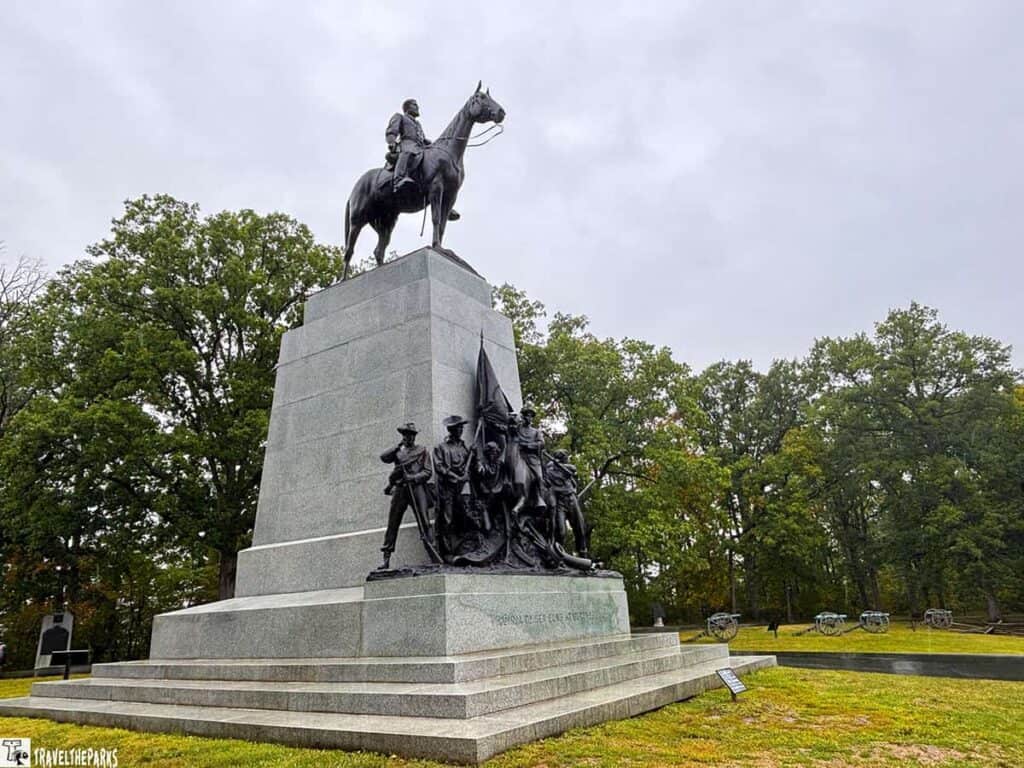
- Stop #5-Virginia Memorial: Featuring a statue of Robert E. Lee, this memorial marks the starting point of Pickett’s Charge on Day 3, one of the most pivotal moments in the battle.
- Stop #6-Pitzer Woods: This was a key Confederate artillery position during the battle, playing a significant role in the fighting on Day 1.
- Stop #7-Warfield Ridge: Located just before the Confederate assault on Little Round Top, this ridge marks the Confederate lines in preparation for one of the most intense clashes of the battle.
Stop #8: A Crown Jewel: Must-See Little Round Top
After parking, we set off on the footpath to conquer the mighty Little Round Top — and by “conquer,” I mean, a moderately difficult hike that’s a bit steep but totally manageable, as long as you’re wearing the right shoes (I, for one, was thankfully not wearing flip-flops). The path is well-marked, so no getting lost — though there were a few moments when my legs gave me that look, but I pushed on.
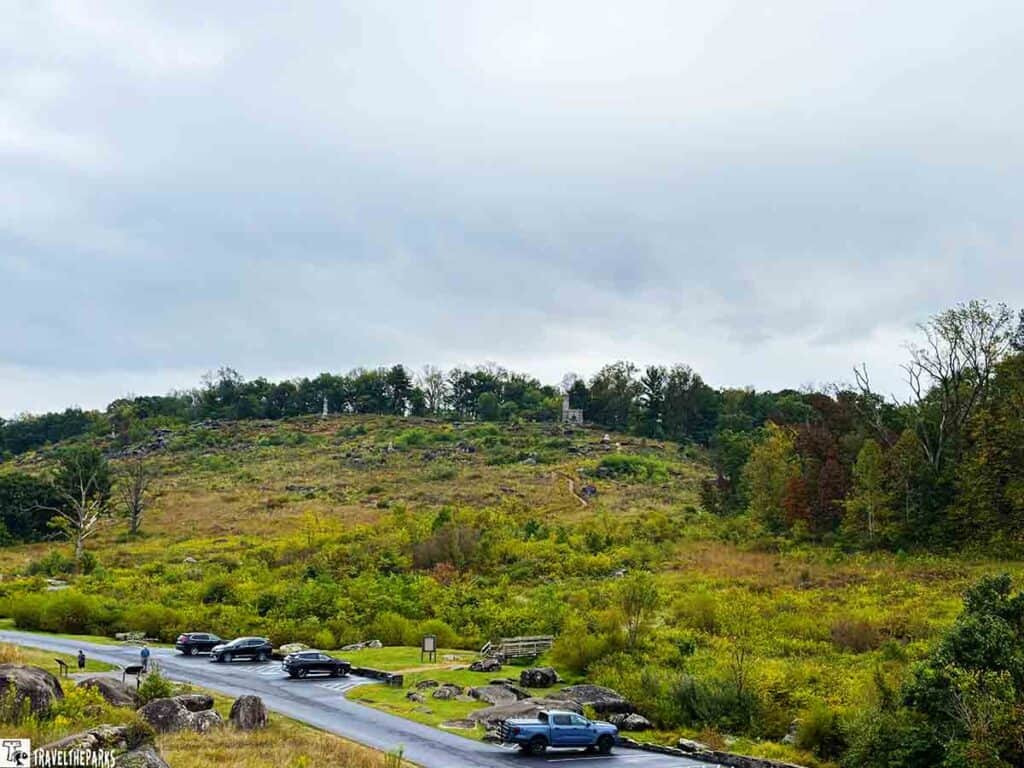
Along the way, interpretive signs popped up like helpful little guides. Each giving us the 411 on the terrain and the historic events that unfolded right under our feet. It was like a nature walk with a side of intense Civil War drama. Once at the top, we were treated to a breathtaking panoramic view of the battlefield. We could view Devil’s Den, the Wheatfield, and the Peach Orchard all spread out before us. This was prime real estate for the Union forces during the battle. It’s easy to imagine the stakes from up here.
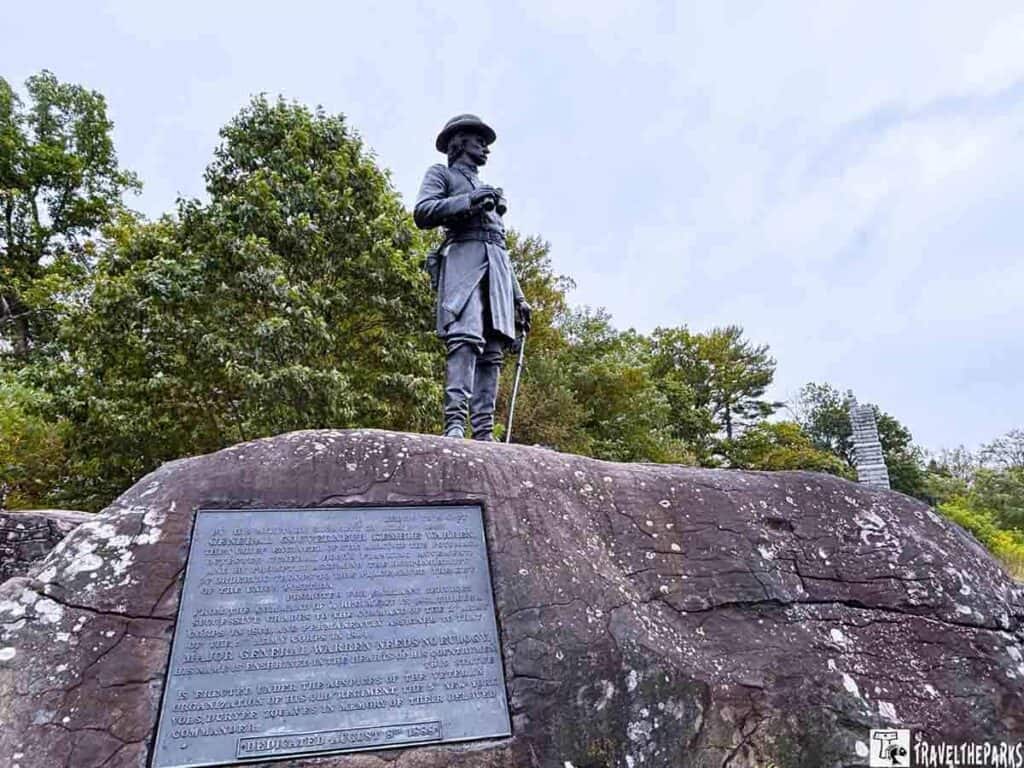
At the summit, we found monuments and markers dedicated to the brave units that fought and struggled in the area. Among the stars of the show were the 20th Maine Infantry under Colonel Joshua Lawrence Chamberlain, as well as the 44th New York Infantry. It’s like a history museum with a view, only the museum has a few steep hills and a lot of heroic sweat involved.
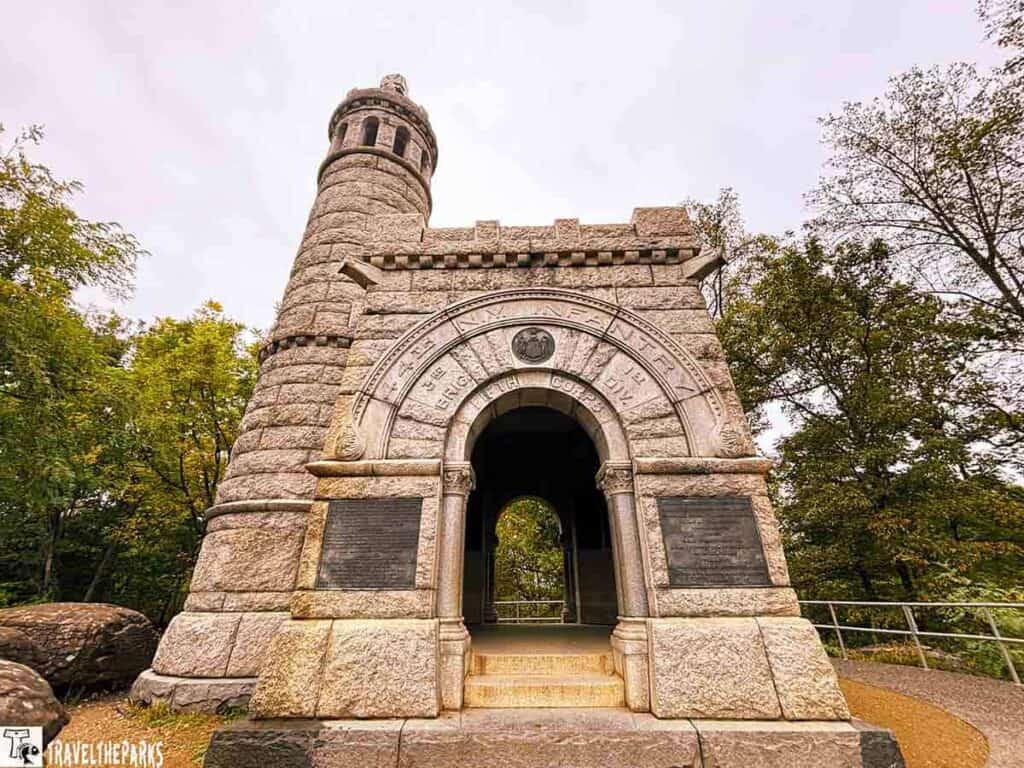
44th-New York Infantry Monument-1893 on Little Round Top
Key Points of Interest at Little Round Top:
- 20th Maine Position: The most famous spot on Little Round Top is where the 20th Maine Infantry held their ground. Interpretive signs detail how Colonel Chamberlain and his men heroically defended the Union left flank against Confederate assaults on July 2, 1863.
- Signal Corps Station: It was, among other things, the point of view for the Union Signal Corps that communicated to other parts of the Union army, hence its location provided clear visibility for line-of-sight signaling.
- Artillery Positions: You’ll also see the remains of artillery positions that were used to defend the hill. Interpretive signs explain the role of artillery in the battle and how it was deployed on Little Round Top.
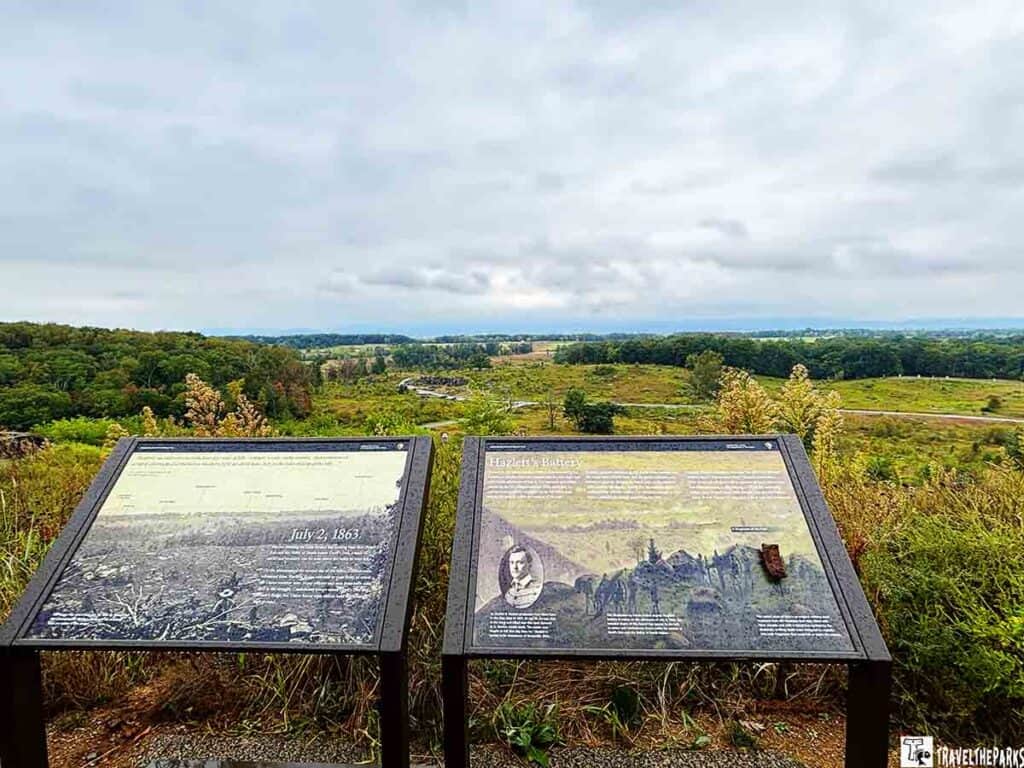
Uncovering the Secrets of Devil’s Den
If you’re looking for a rocky detour on your Gettysburg battlefield auto tour (pun intended), Devil’s Den is definitely worth the trek! Located south of Little Round Top, it is about 500 yards to the west. We started our exploration from the parking lot on South Confederate Avenue. It was easy to find since it had clear signs—no need for GPS! As we walked, we saw signs close to the parking lot.
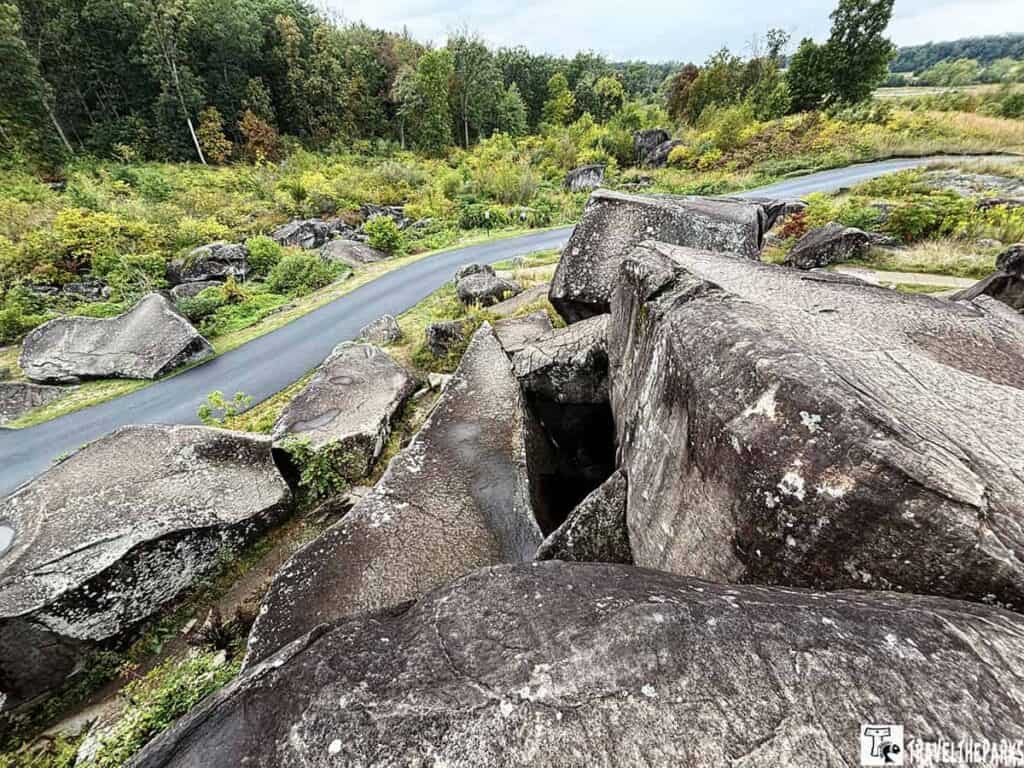
The signs were anything but ordinary. They told us all about Devil’s Den, describing its important role in the battle. They explained the strategies used there and introduced us to the major groups involved in the fighting. It’s like a short motivational talk before you jump into the exciting history that happened among those rocks.
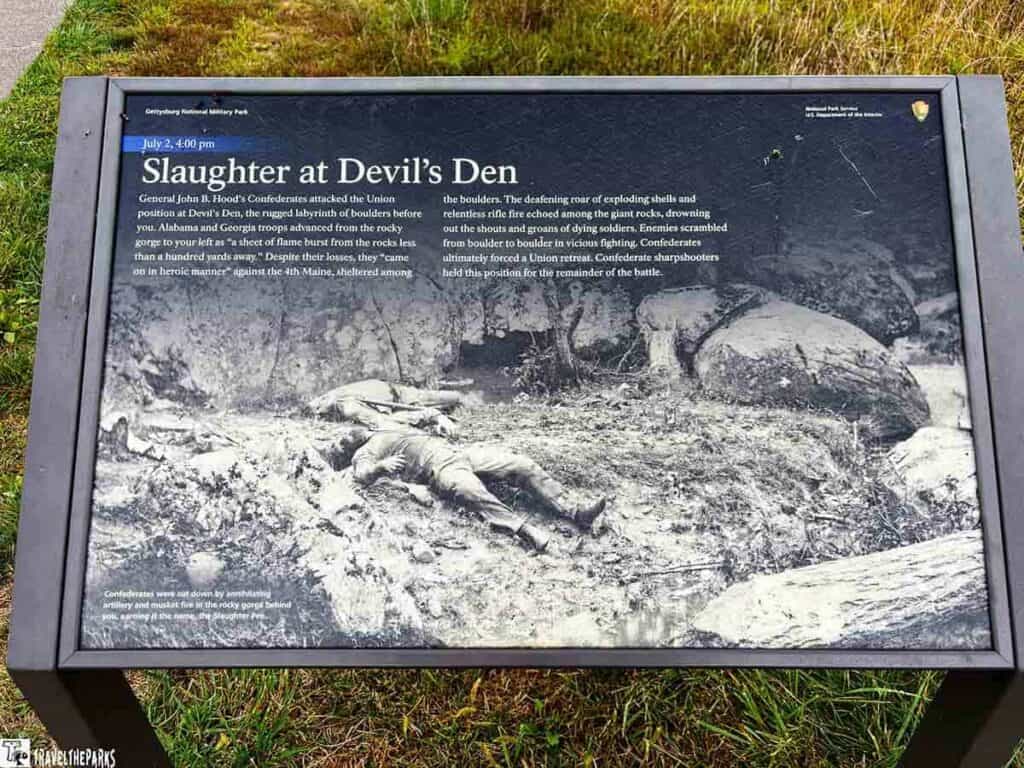
As we walked into Devil’s Den, we instantly noticed the huge rocks and the rough ground. The landscape had a big impact on the battle. It provided soldiers with natural places to hide, but it also made it difficult for them to move around.
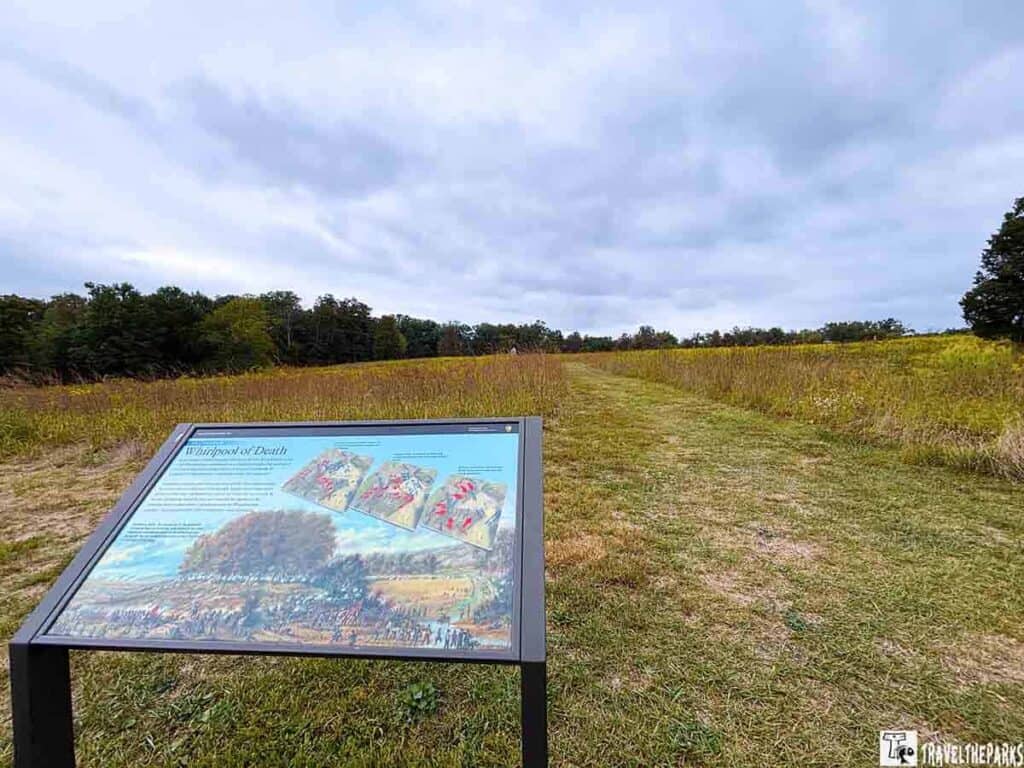
Key Points of Interest at the Devil’s Den
- The Slaughter Pen: Let’s be real — you’re probably picturing something out of a horror movie. No, it’s not as grim as it sounds. This maze-like landscape at the base of Devil’s Den earned its name because of the intense and bloody fighting that took place here. The close-quarters combat resulted in heavy casualties.
- The Devil’s Den Boulder Field: The boulder field is one of the most iconic features of Devil’s Den. These colossal boulders—like Mother Nature’s forgotten Jenga — once echoed with the clink of ramrods, the crack of muskets, and the frantic whispers of hidden sharpshooters.
- Sharpshooter’s Nest: Tucked among the rocks like a secret lair, this eerie nook is best known for a haunting tale. Apparantly, a Confederate sharpshooter, said to have taken deadly aim at Union troops on Little Round Top, made this his perch. Later, a photographer staged a dramatic shot of a “fallen” soldier here, turning fact into folklore. Was it real? Was it staged?
- The Triangular Field: Don’t let the pastoral name fool you — this was once a furious cauldron of battle. Confederate forces surged through the field in dramatic fashion, aiming to seize Little Round Top. Today, signs along the path tell of cannons roaring and infantry lines clashing in a struggle as chaotic as the field’s jagged edges.
- Strategic Importance: Perched at Devil’s Den, one can spy Little Round Top and Houck’s Ridge in the same sweeping glance. This craggy outcrop wasn’t just photogenic — it was pivotal. The Confederates saw it as the perfect launchpad to outflank the Union. What now feels like a whimsical wonderland was once the stage for a very real, very deadly chess match.
Walking Gettysburg’s Turning Point: Exploring Gettysburg Battlefield (Auto Tour Stops 9-14)
- Stop #9–The Wheatfield: A brutal Day 2 battleground, soaked in blood from fierce, back-and-forth fighting and heavy casualties.
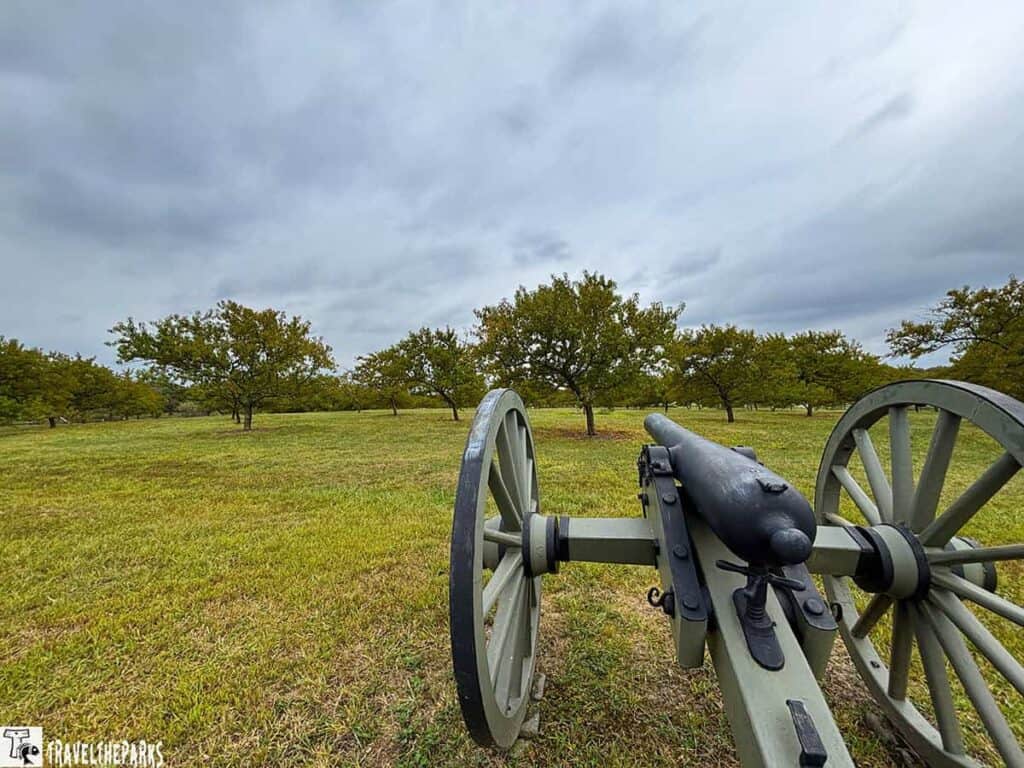
- Stop #10–The Peach Orchard: A critical point on Day 2 where the Union line collapsed under Confederate assault. It led to intense fighting and a Confederate breakthrough.
- Stop #11–Plum Run: On July 2, this rocky creek became a bloodbath as Confederates advanced toward Little Round Top.
- Stop #12–Pennsylvania Memorial: A large monument honoring Pennsylvania soldiers, pivotal to the Union victory. It features inscriptions and a statue of Governor Andrew Curtin.
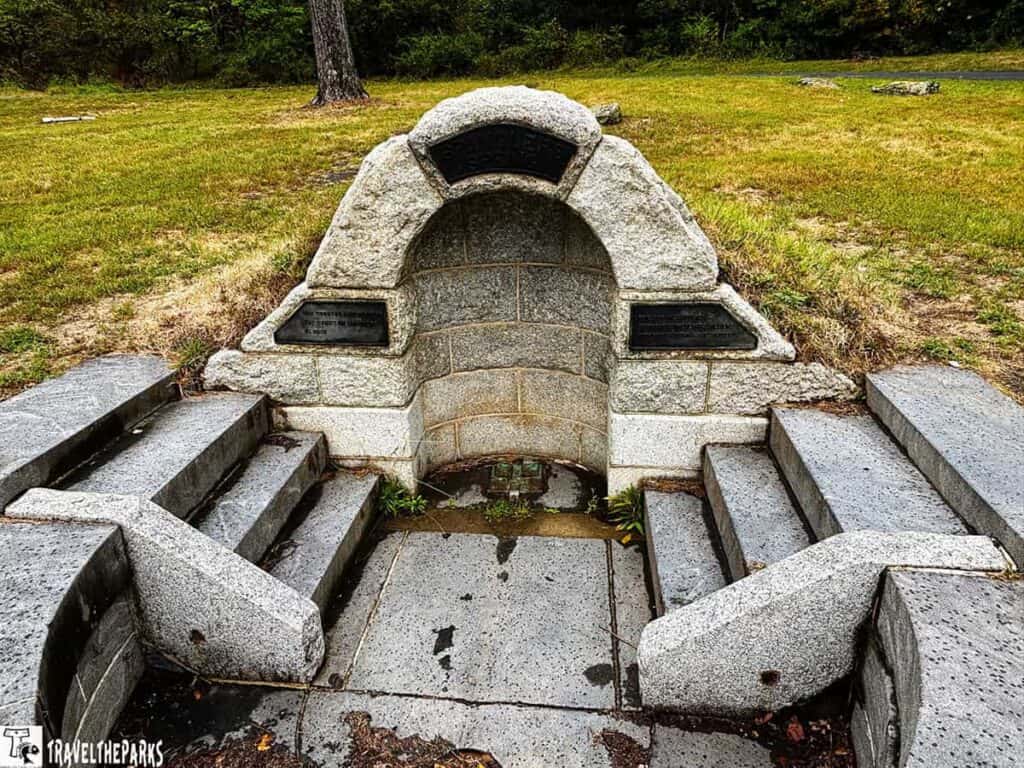
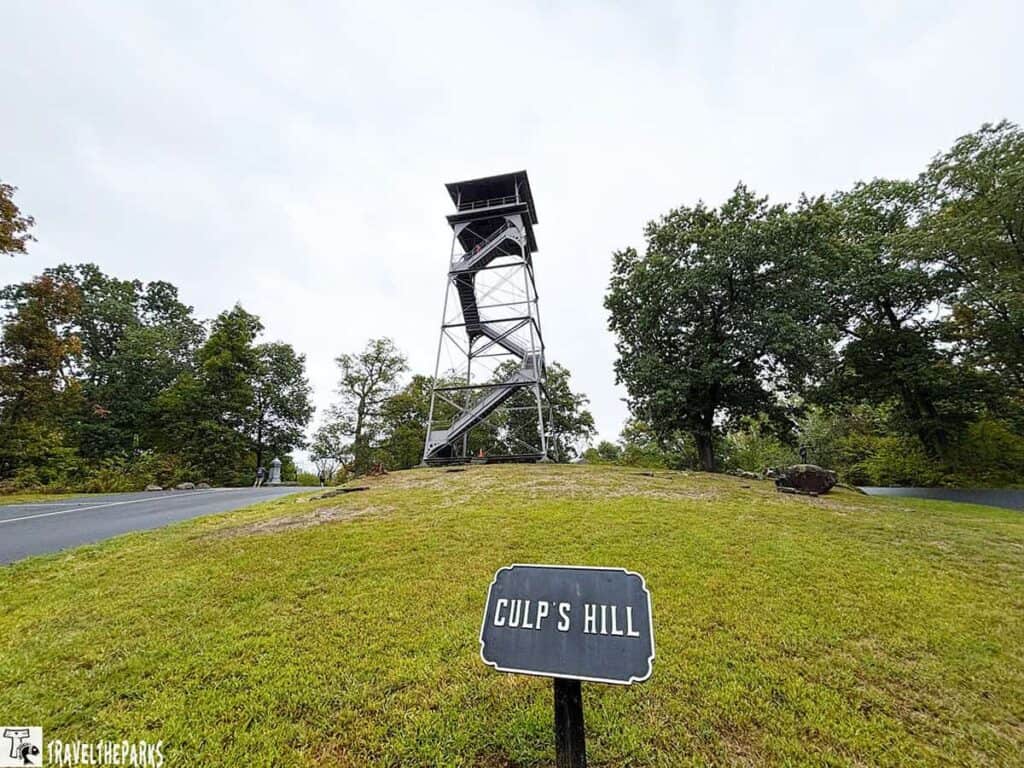
- Stop #13–Spangler’s Spring & Culp’s Hill: Spangler’s Spring provided water for soldiers, though it’s unclear who drank first. Culp’s Hill saw fierce fighting on July 2, with Union troops holding their ground against multiple Confederate attacks. It shifted the battle’s course.
- Stop #14–East Cemetery Hill & Cemetery Ridge: East Cemetery Hill was a lookout during Confederate charges on July 2. Cemetery Ridge, just south, was the Union’s defensive line, preparing for Pickett’s Charge on Day 3.
Stop #15–High Water Mark & The Copse of Trees: The Fury of Pickett’s Charge
This is the spot where the battle reached its peak and then turned. On July 3rd, during Pickett’s Charge, Confederate soldiers moved across open fields to get to this location, only a few yards away from the Union army. The small “Copse of Trees” is the main target of their attack. This peaceful group of trees has become a lasting symbol of the Confederacy’s nearest chance for victory. They reached the wall… but could go no further.
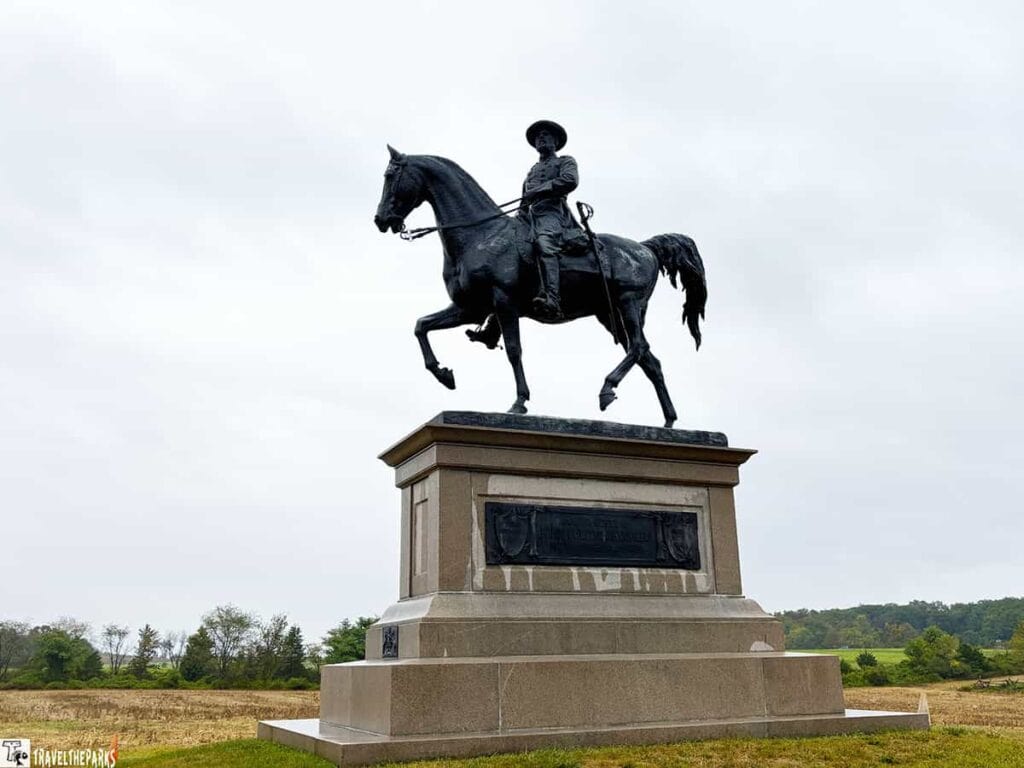
We began at the Virginia Memorial on West Confederate Avenue, where a bronze General Lee surveys the battlefield from horseback, forever mid-command. Interpretive signs nearby unpack the strategy behind Pickett’s Charge, the units involved, and the high stakes of the plan.
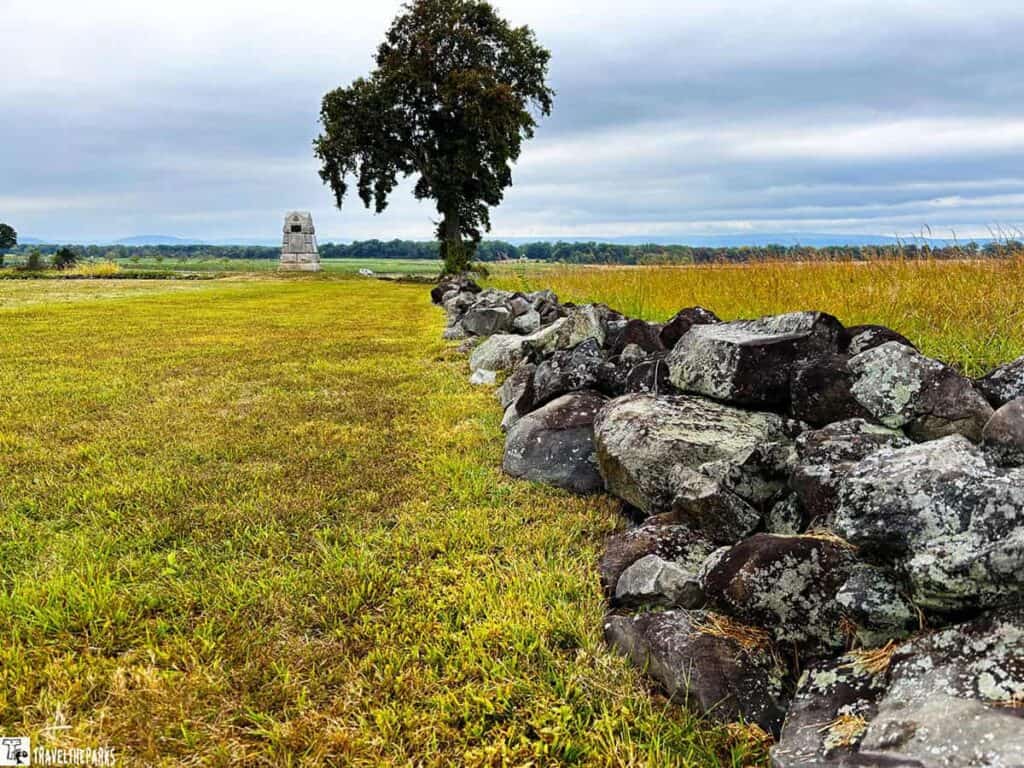
Further down West Confederate Avenue, we passed the remains of Confederate artillery positions, where cannons once thundered in hopes of breaking the Union line. The signs along the way describe the misfires and miscalculations—clouds of smoke, poor visibility, and shells that mostly missed their mark—reminding visitors that even the grandest plans can fizzle in the fog of war.
Key Points of Interest: Pickett’s Charge
- The Angle: This zigzag of stone wall, forever etched into the annals of American history, witnessed a storm of bayonets and grit. Known as “the High Water Mark of the Confederacy,” The Angle saw a fierce breach in the Union line—and even fiercer hand-to-hand combat. Today, it’s a solemn pause in the landscape, where courage once collided in a frenzy of smoke and shouts.
- Armistead’s Fall: In the chaos, Confederate General Lewis Armistead reached the Union line. He fell mortally wounded beside a Union cannon. His story is one of tragic nobility. A hat raised high on his sword. A final push into enemy fire. It was a poignant end beneath the summer sun. A marker tells the tale, but the ground remembers too.
- Bryan Farm: Just behind the Confederate lines, Bryan Farm bore witness to a quieter, but no less harrowing, side of the charge. Here, amid rustling fields and worn-out fences, surgeons worked desperately in makeshift hospitals. Interpretive signs reveal the human cost of war: the torn uniforms, whispered prayers, and the grim determination to save what they could.
- Casualties: Pickett’s Charge wasn’t a battle—it was a tidal wave that broke. The Confederates lost thousands in under an hour, while Union defenders, though victorious, paid dearly to hold their ground. What was meant to be a bold stroke became a staggering loss, scattered across the fields in silent tribute.
- Impact on the Battle: Pickett’s Charge didn’t just end a day. It marked the collapse of the Confederate dream at Gettysburg. The gamble was bold—but it failed. Today, walking the path of the charge, you’ll see more than monuments and plaques. You’ll feel the echoes of a moment that helped turn a nation’s tide.
Stop #16–Soldiers’ National Cemetery
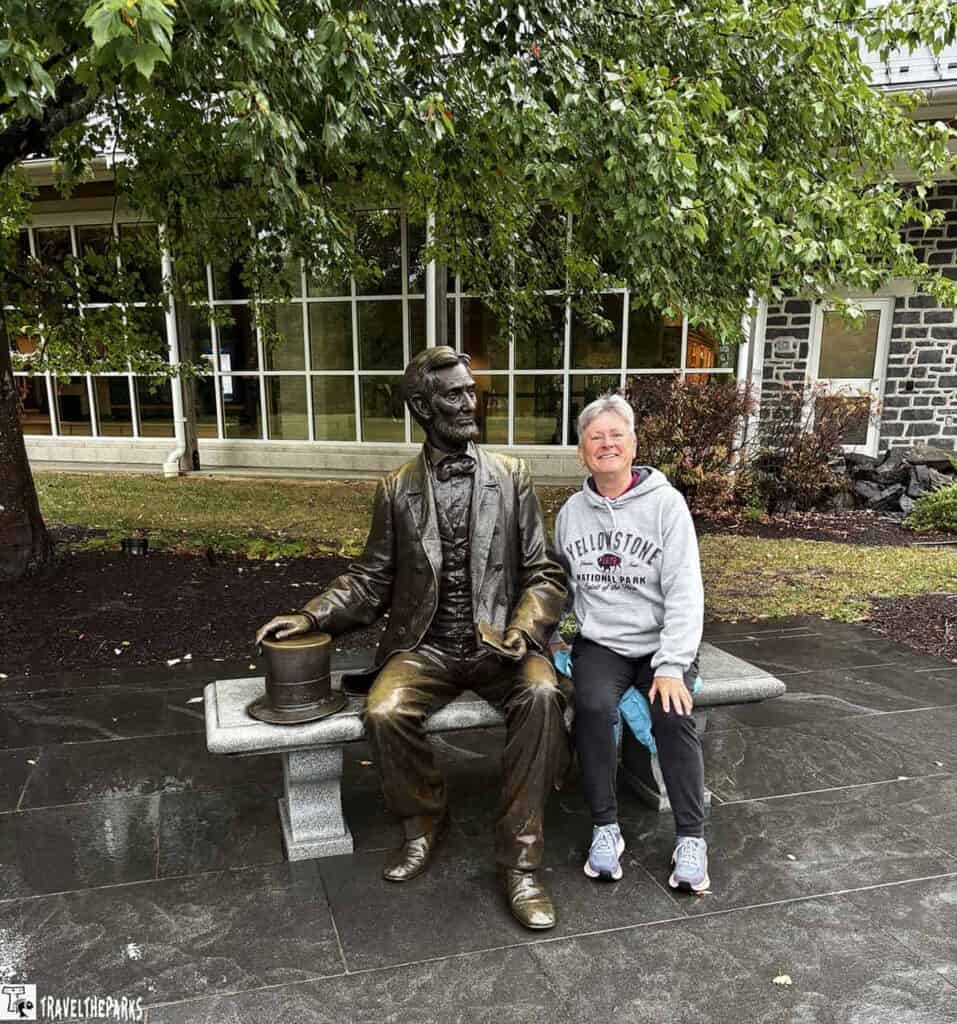
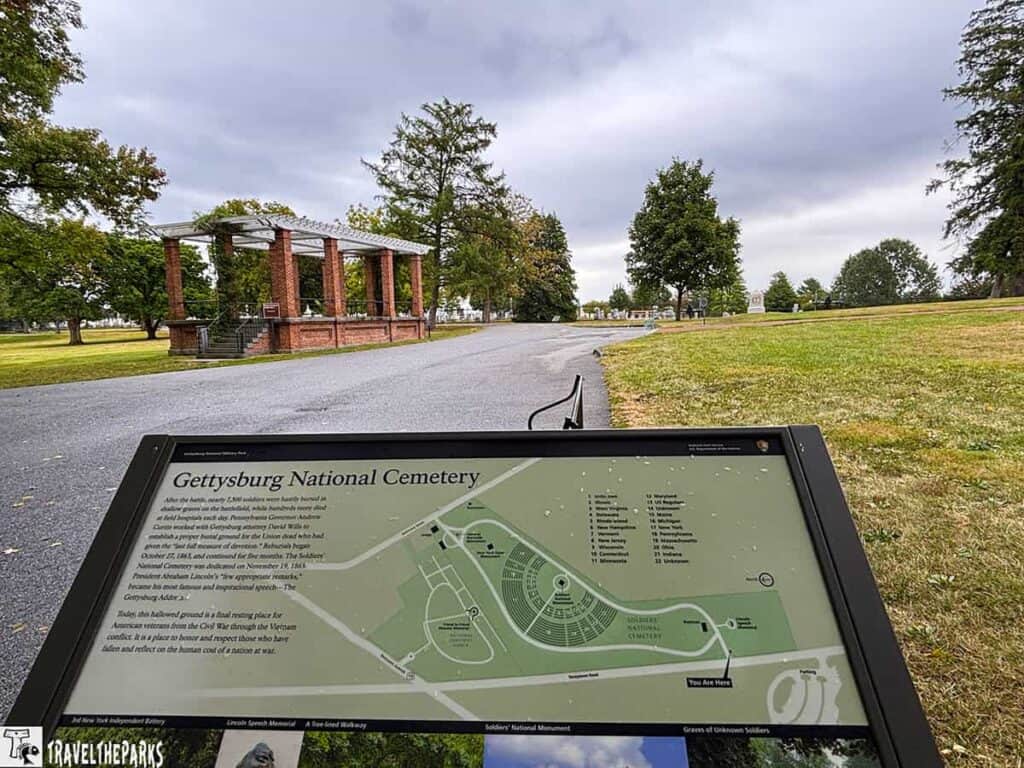
We finished our journey at a spot where you can think quietly. This sacred place is where many Union soldiers were buried. In November 1863, President Abraham Lincoln spoke 272 words here that changed the direction of the country. The Gettysburg Address continues to resonate today. It reminds us that the battle fought here was not just about land, but about the true meaning of freedom.
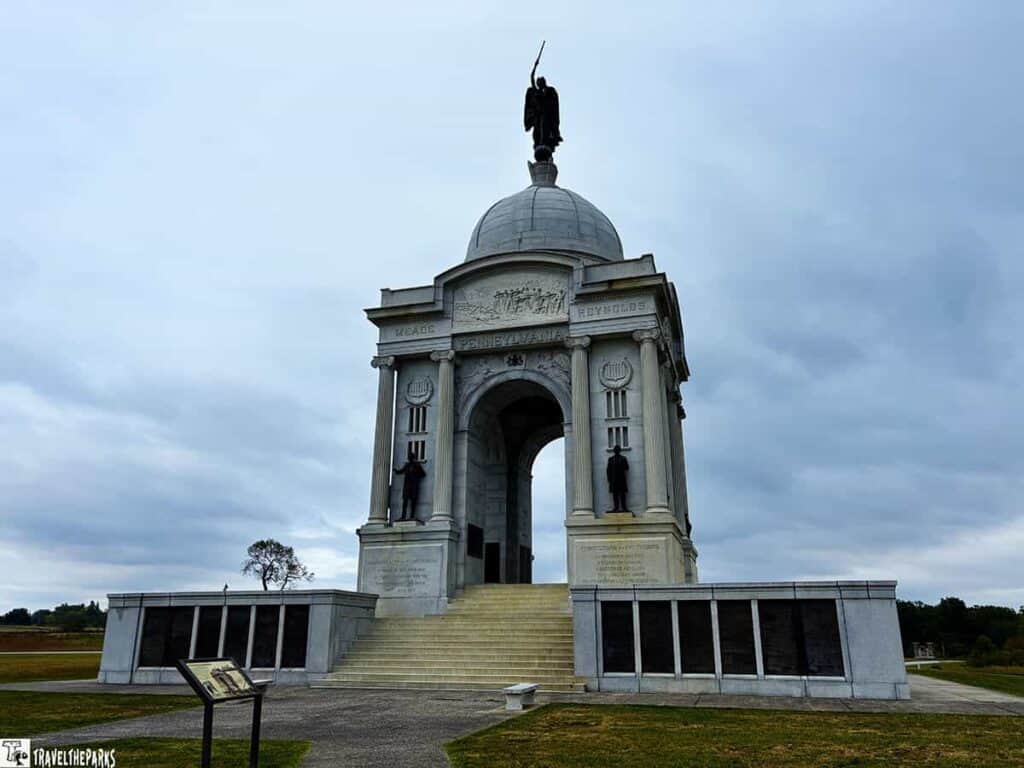
Exploring Gettysburg Battlefield houses
The Gettysburg National Battlefield features several historic homes that played important roles during the battle or were used in the aftermath. Some of these homes were directly involved in the fighting, while others were turned into hospitals or centers for military activity.
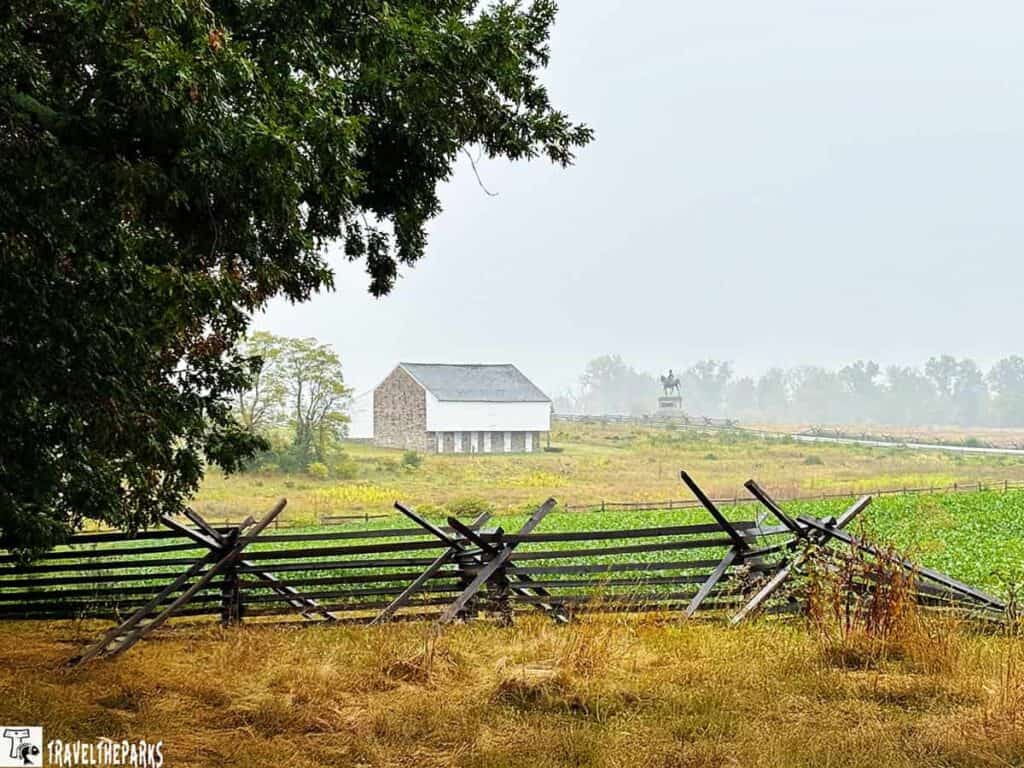
McPherson Farm: A Pivotal Site in the Battle of Gettysburg
The McPherson Farm, located north of the Gettysburg battlefield, played a key role in the battle. On July 1, 1863, it became a focal point for intense fighting as Confederate forces advanced. The farm’s buildings and fields were caught in the conflict.
The McPherson family suffered significant damage, with their barn used as a temporary field hospital. The McPherson house also provided shelter for wounded soldiers. Today, the farm stands as a reminder of the fierce combat and its impact on local civilians.
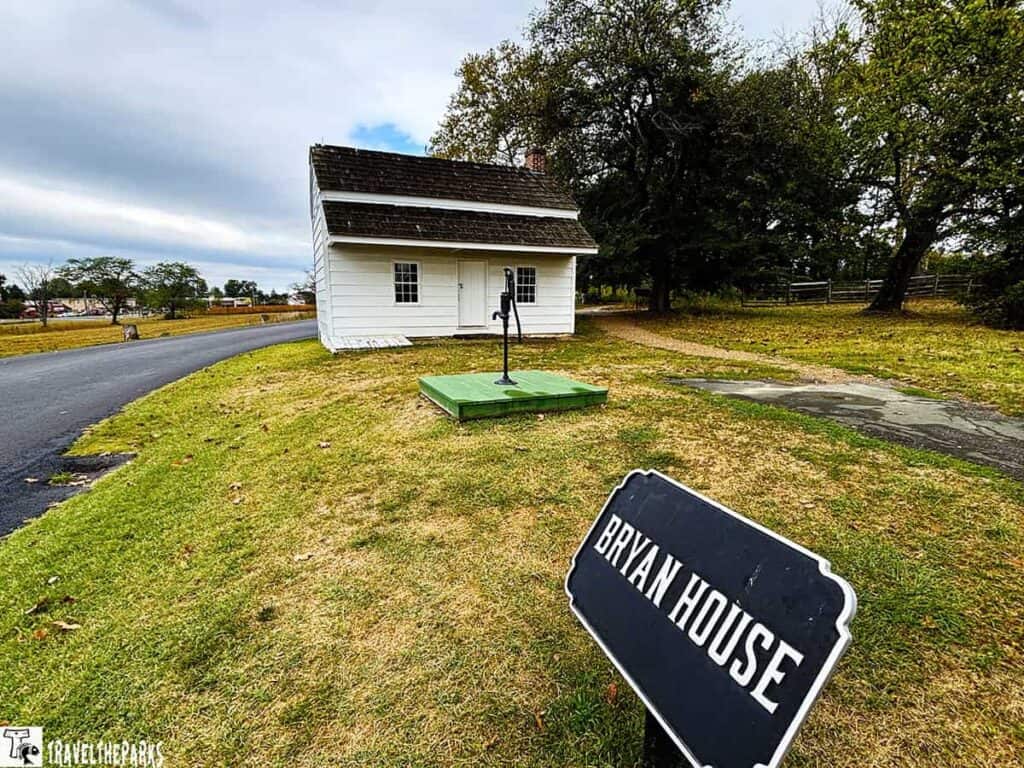
Bryan Farm: A Local Witness to Gettysburg’s History
Abraham Brian, sometimes spelled Bryan, was a farmer whose land played a key role in the Battle of Gettysburg. His farm, located north of the battlefield, became a focal point during the fighting on July 2, 1863. Brian’s property was caught in the path of Confederate forces advancing toward Union lines. His home and barn were heavily damaged in the battle.
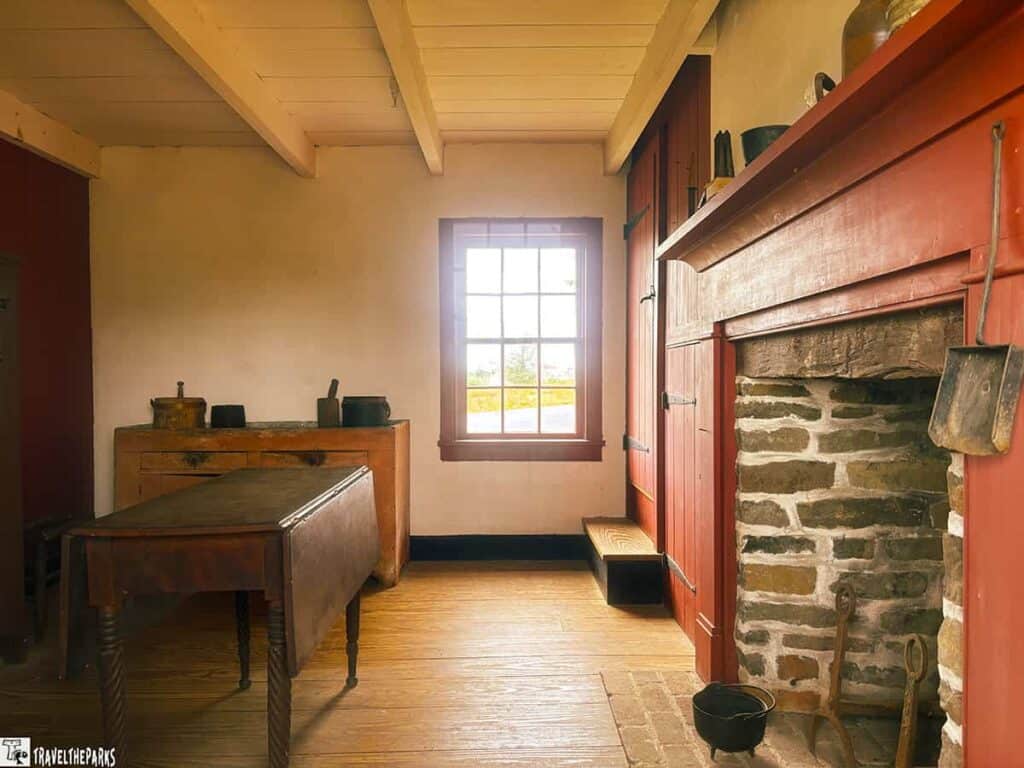
Though not a major strategic site, Brian’s farm was close to key locations like the Wheatfield and Peach Orchard. Abraham Brian’s experience highlights the impact of the battle on local civilians. Today, his farm serves as a reminder of the many families affected by Gettysburg’s violence.
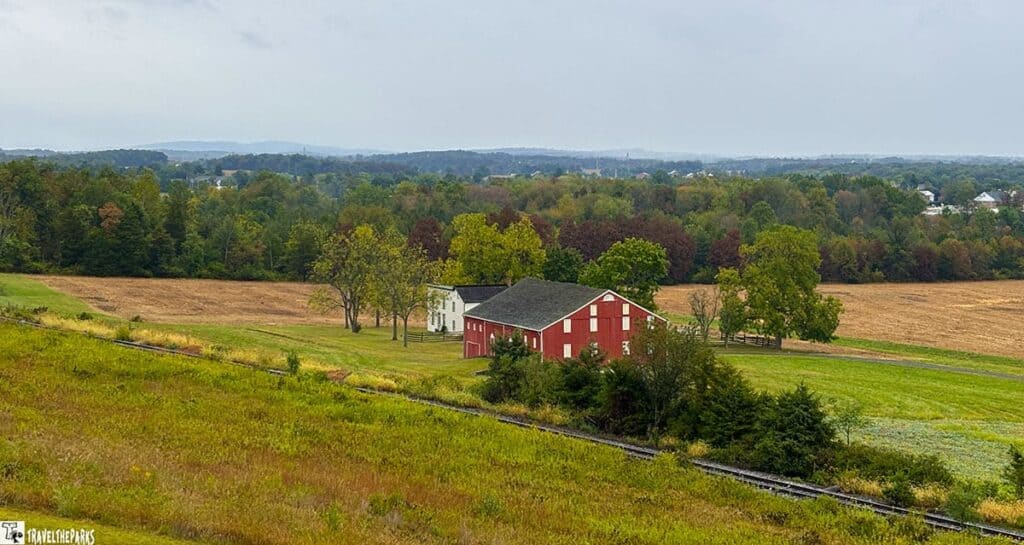
McLean Farm (McClean Farm):
The McLean Farm, sometimes spelled McClean, is a lesser-known but historically significant site near the Gettysburg battlefield. Located on the Emmitsburg Road, it played a discreet role in the battle. The McLean family, like many local farmers, found themselves in the midst of heavy fighting. While not a major tactical point, the farm’s proximity to key locations, like the Confederate and Union lines, made it a silent witness to the chaos and bloodshed of July 1863. The farm’s buildings and fields suffered damage, much like other nearby farms.
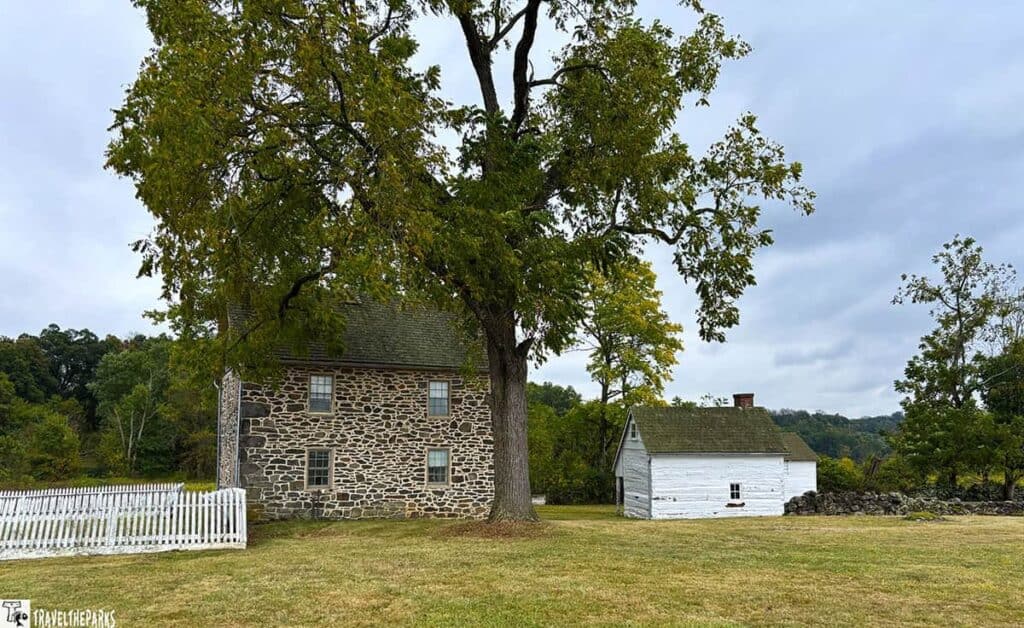
The Strategic Importance of the John Slyder Farm at Gettysburg
The John Slyder farm, on the west side of Big Round Top, was both a site and a place of the Battle of Gettysburg that had a direct impact on the battle. From the farm, which was located just down Plum Run from the Devil’s Den – a remarkably violent area during July 2, 1863, the heart of the battle was burning. The neighborhood around the farm was the center of the fighting as the Confederate forces were trying to seize the high ground. Although the Slyder farm was not as famous as some of the battle landmarks, its vicinity to such decisive locations in the fight made it a very important event in the battle. Slyder Farm, like many others in the area, was greatly affected by the battle, and the damage was so big that it left an imprint on the landscape.
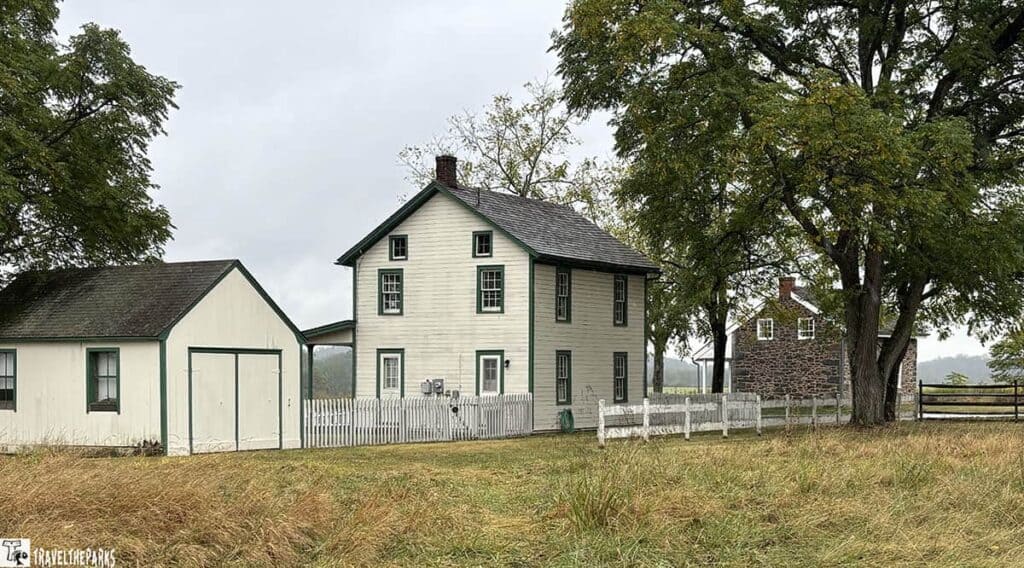
You can explore many other houses. Some are being fixed up by the National Park Service (NPS), while others are available to rent, allowing you to spend the night. Some of them are private houses. The list includes Snyder Farmhouse, Catherine Trostle House, Codori Farm, and Rose Family House.
PRO Tip: Consider combining your Gettysburg Battlefield adventure with a quick visit to the Eisenhower National Historic Site right next door.
What to Bring on a Tour of the Gettysburg Battlefield
For a day trip to Gettysburg Battlefield, bring comfortable walking shoes, weather-appropriate layers, sunscreen, sunglasses, insect repellent, a hat and plenty of water. Pack snacks or a light lunch, a small daypack, and a portable phone charger, along with a camera or phone for photos and the NPS app (download materials ahead since service can be spotty). A map, binoculars, and a car mount are helpful if you’re doing the auto tour. In cooler seasons, add warm layers, and in summer, bring extra water and sun protection; avoid drones and metal-detecting gear, which aren’t allowed.
A Spooky Side Trip: Ghost Tours in Gettysburg
Ghost tours are one of the unique way to experience Gettysburg, blending the town’s rich history with the eerie stories that linger long after the battles ended. As you wander the streets and historic corners of this battlefield town, guides share tales of soldiers, civilians, and unexplained happenings that make Gettysburg one of the most haunted spots in the country. If you’re planning a visit, you can even use promo code PARKS10 for 10% off select tours. It’s the perfect way for history lovers—and thrill seekers—to explore the battlefield from a spine-tingling perspective.
Where We Stayed and Dined While Exploring Gettysburg Battlefield
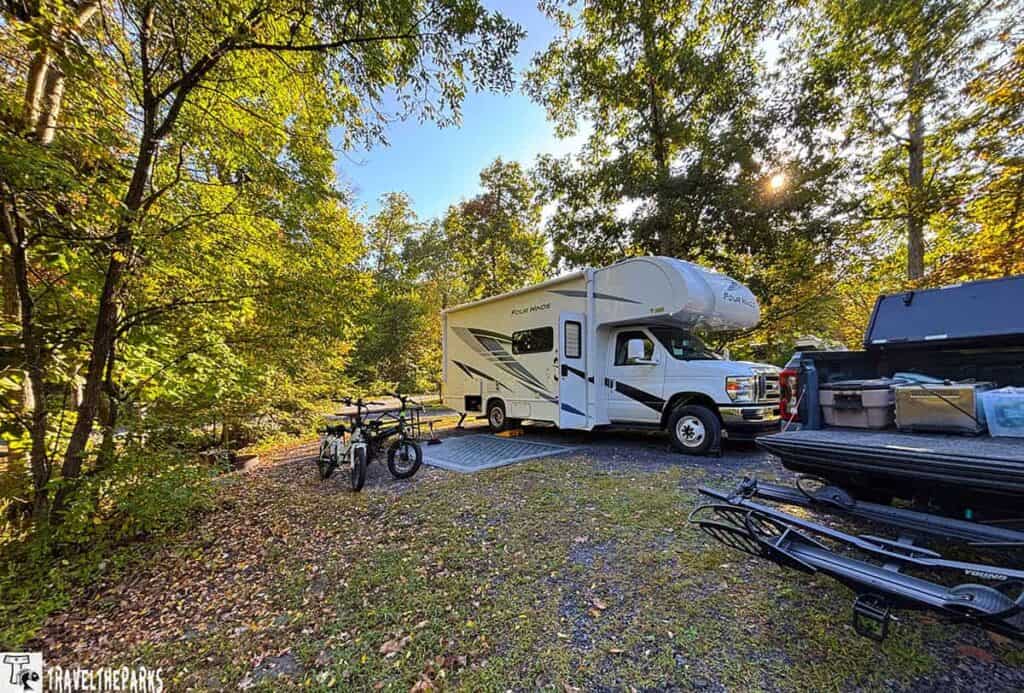
During our trip to the Gettysburg Battlefield, we stayed at Drummerboy Camping Resort. This was an extensive park with nicely spaced sites. It was just a short drive from the famous battlefield. The campground had spots for both tents and RVs with full hookups. Its proximity was ideal for our Gettysburg Battlefield exploration.
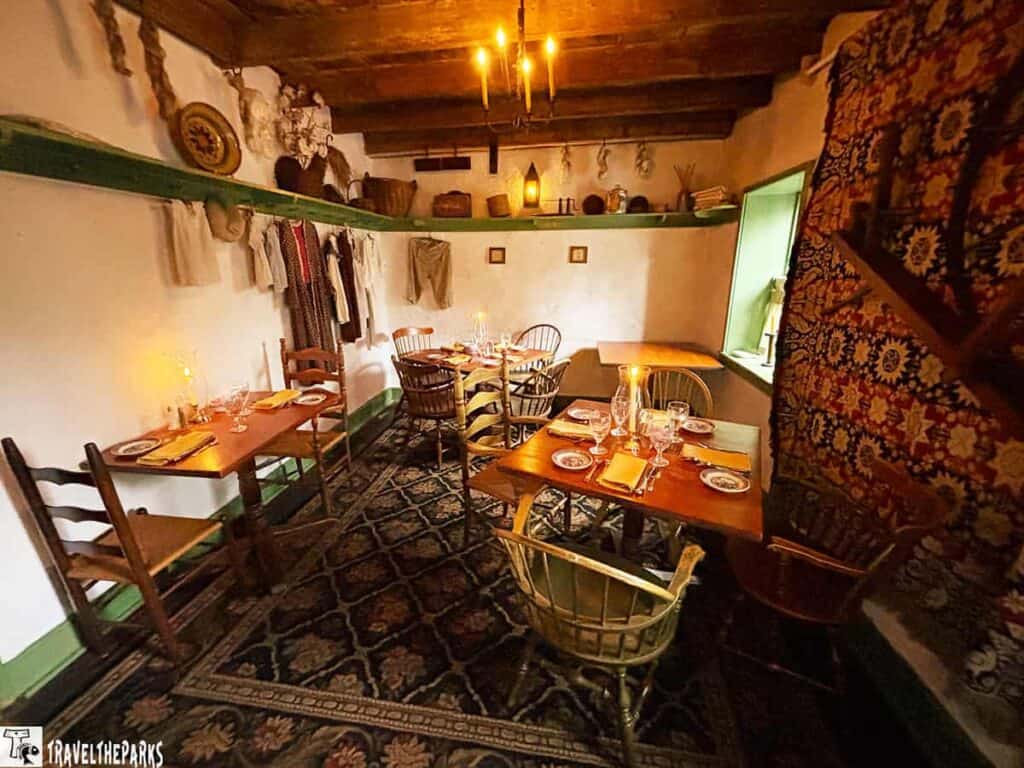
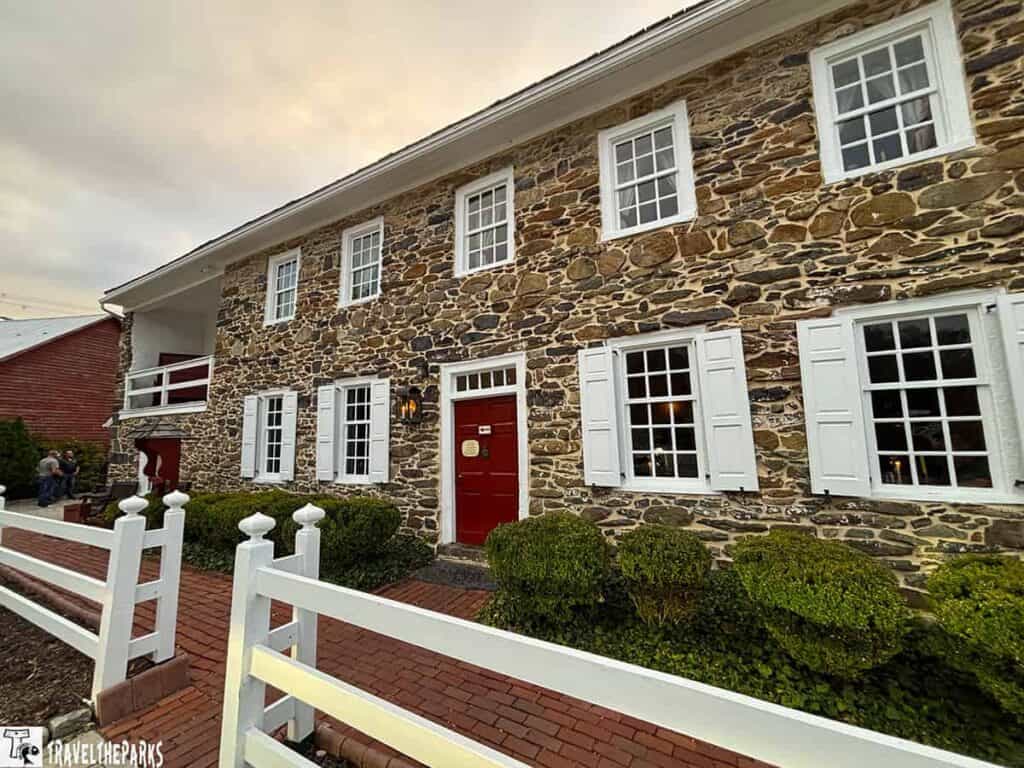
For our anniversary meal, we made sure to eat at Dobbin’s House Tavern. It is one of the oldest and most charming restaurants in Gettysburg. Located in a historic building from 1776, Dobbin’s House had a cozy, colonial vibe that made us feel like we were in the past. The menu offered classic American dishes with a local twist. We enjoyed tasty meals like roast duck, Seafood Isabella, and indulgent desserts. The tavern’s rich history and warm atmosphere created a brilliant spot for us to think back on our discoveries from the battlefield while enjoying a hearty meal.
Final Thoughts: Exploring Gettysburg Battlefield
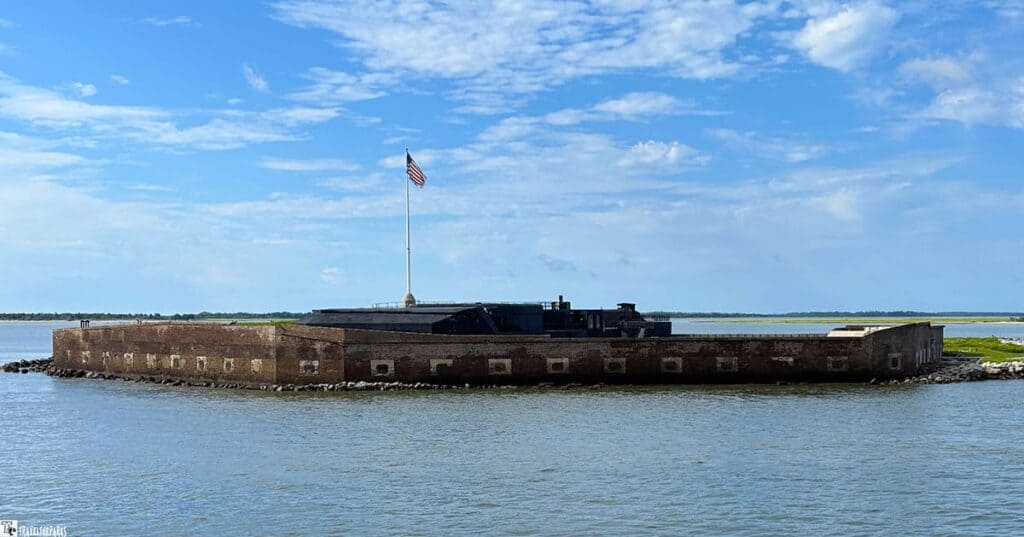
Gettysburg was a turning point in the Civil War, just as the fall of Vicksburg gave the Union control of the Mississippi River. Meanwhile, Fort Sumter marked the war’s explosive beginning with its first shots. Together, these battles shaped the course of the conflict and the future of the nation.
For me, visiting Pickett’s Charge at Gettysburg National Military Park was a powerful—and slightly surreal—experience. You’re walking across fields where thousands once clashed in one of the most dramatic moments in American history. On July 3, 1863, Confederate General Robert E. Lee rolled the dice, ordering a bold assault on the very heart of the Union line at Cemetery Ridge. The tour reveals not just the events, but the courage, chaos, and costly consequences of that fateful charge.
Have you discovered any hidden gems in Gettysburg? If you’ve been to Gettysburg, drop your favorite spot in the comments. I’d love to hear your stories!