Set on Virginia’s coast, Fort Monroe is more than a fort; it’s a door to the past. On our east coast drive through old America, led by coffee and the want to know more, we followed the paths of the first days of America. We walked the cobblestone streets of Williamsburg, saw the river in Jamestown, and ventured through the war-torn lands of Yorktown. Fort Monroe’s walls protect the land, birds soar, and history feels powerful. Come with us as we take a self-guided walking tour of Fort Monroe. Here, the sounds of the Civil War mix with the beauty of the shore, and the tales of freedom and might are still in the air.
This post may contain affiliate links, meaning if you purchase something through one of these links, we may earn a small commission at no extra cost to you! Read the full disclosure policy here.
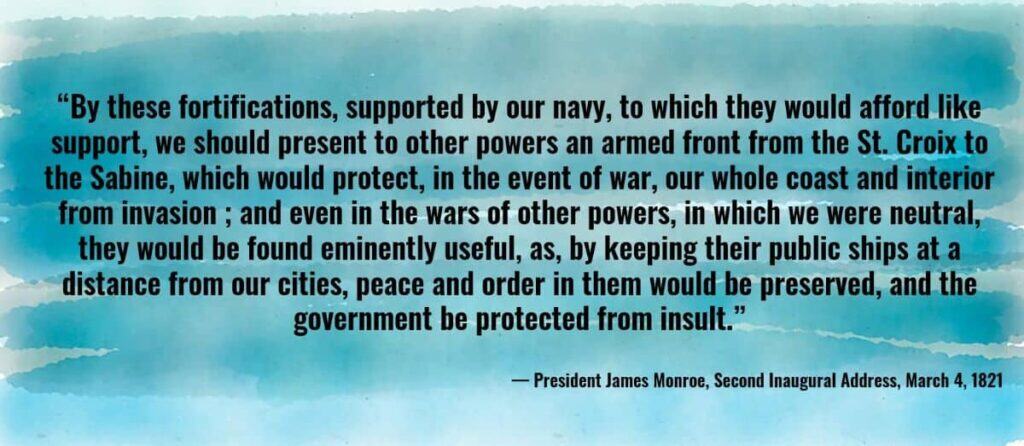
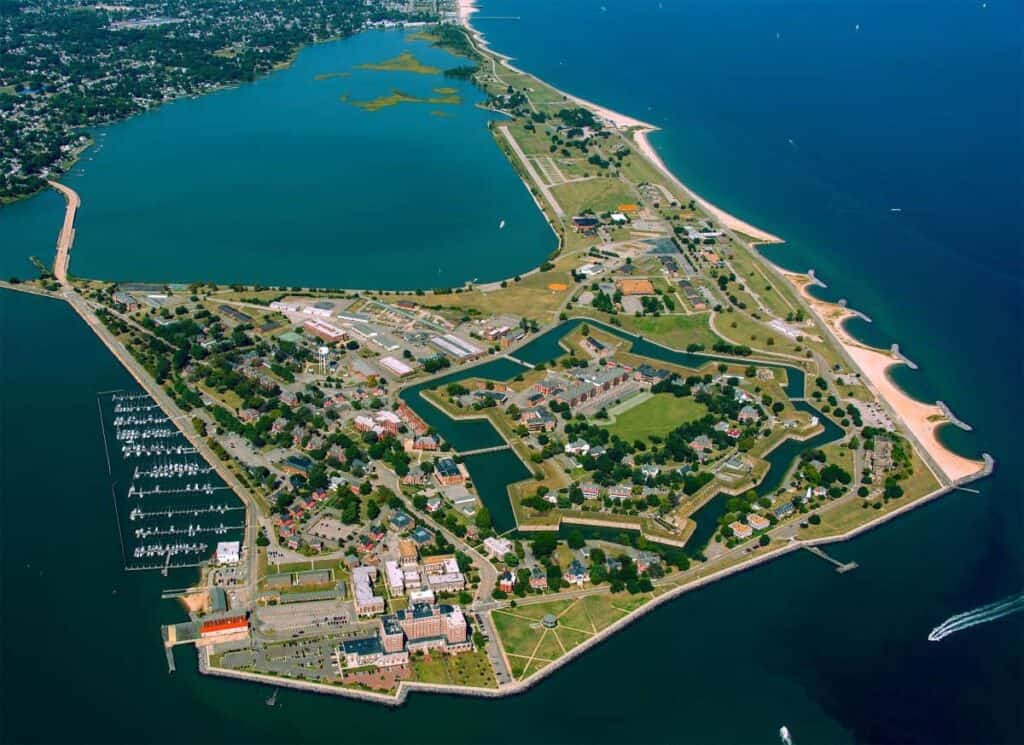
Table of Contents
Know Before You Go on a Fort Monroe Walking Tour
- Hours: Grounds open daily sunrise to sunset; museum and visitor center hours vary seasonally. Check the NPS website for the updates.
- Parking: free street parking near the Visitor Center and Engineer Wharf.
- Guided Tours: Ranger-led tours (free) are available; check the NPS website for schedules.
- Weather: wear sunscreen and bring water—shade is limited. Bring comfortable shoes since you’ll be doing a lot of walking.
- Amenities: restrooms at the Visitor Center and Engineer Wharf; picnic areas in Continental Park.
- Pets: Leashed pets are allowed within the fort, except in buildings.
- Accessibility: A Visitor and Education Center and the Casemate Museum are both wheelchair accessible. Paved paths cover most stops, but some casemates have uneven floors.
- Nearby: Combine your visit with the Casemate Museum (open daily) or nearby Buckroe Beach.
- Combine a tour of the fort with nearby Jamestown, Yorktown Battlefield, and Colonial Williamsburg. All these are a part of Virginia’s Historic triangle.
Fort Monroe, a Third System of Coastal Forts
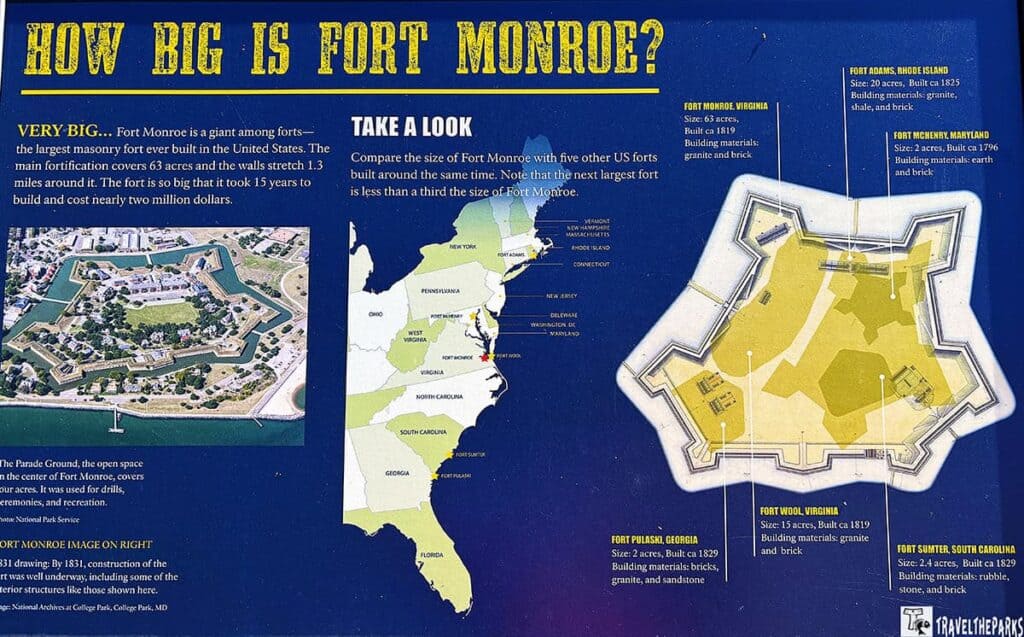
While Fort Monroe was part of the Third System of coastal forts, it was in a class by itself as far as sheer scale goes. Constructed after the War of 1812 to protect vital harbors, this network included formidable forts like Fort Pulaski and Fort Pickens. But Fort Monroe dwarfed them all.
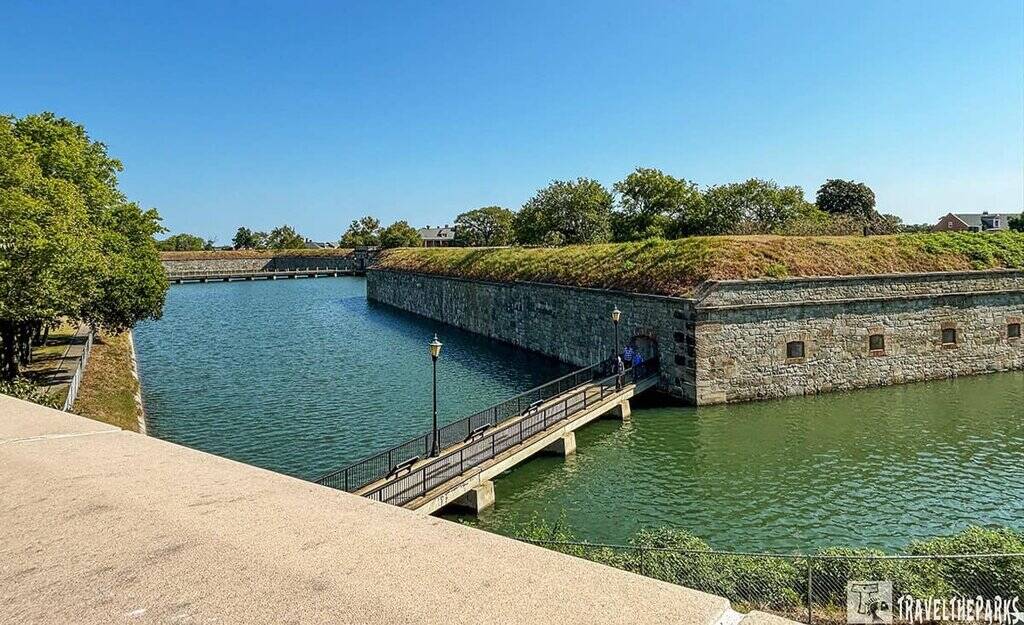
They constructed its masonry walls and sprawling moat on an unimaginable scale. Compare it to the famous Fort Sumter, a relatively small fortification whose claim to fame lay not in its defensive strength but in its symbolic role at the beginning of the Civil War. Even the massive, remote Fort Jefferson in the Dry Tortugas was never completed or fully armed. In contrast, Fort Monroe was not only the largest fort ever built in the United States but was also fully operational and strategically manned for decades. Its immense size and strength made it the best, a Chesapeake Bay shield.
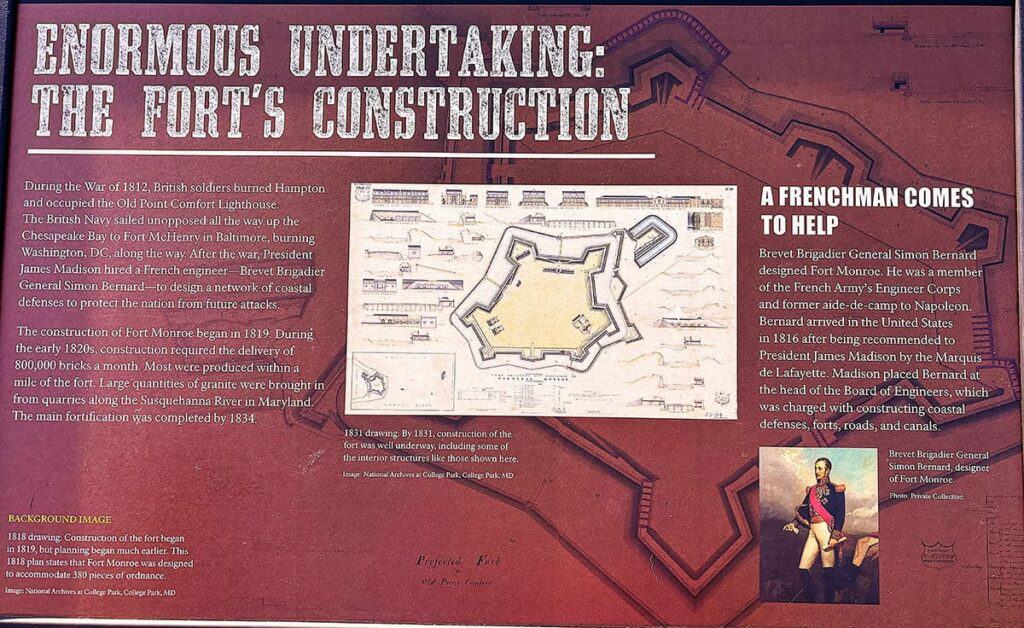
Construction of Fort Monroe (1819–1834)
Fort Monroe’s strategic importance was immense, especially for protecting inland Virginia and the crucial ports of Norfolk and Richmond.
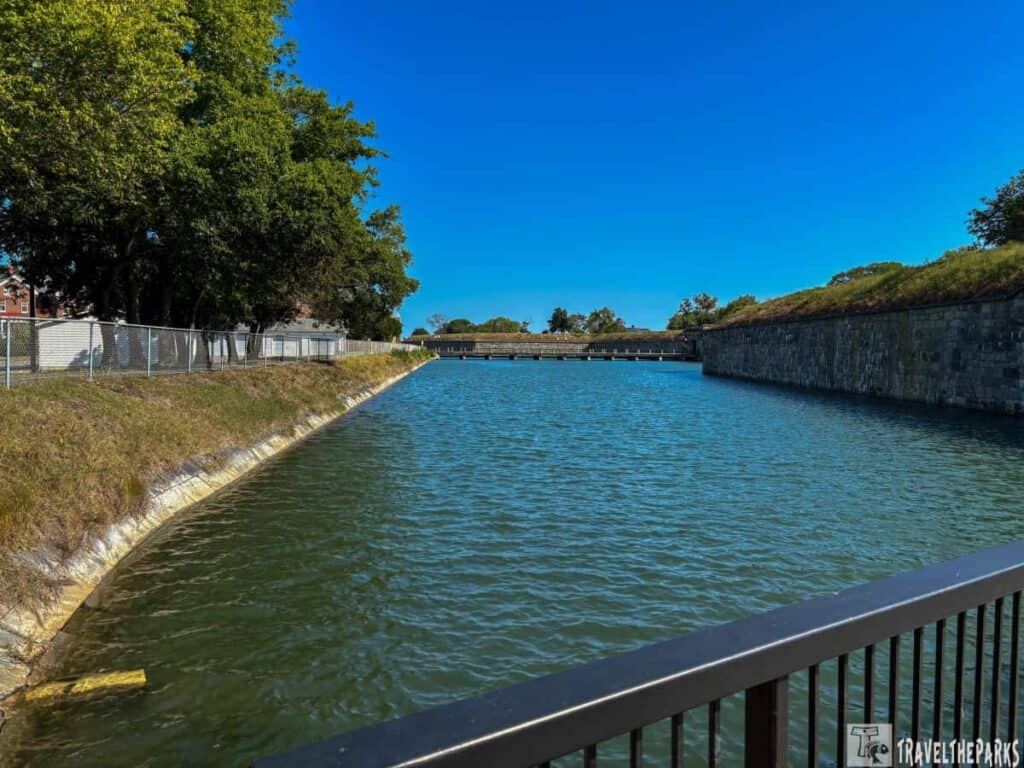
Named after President James Monroe, construction started in 1819. Designed by French military engineer Simon Bernard, a former aide to Napoleon. Built largely using enslaved African American labor and free Black workers, alongside military engineers and laborers. Completed around 1834, it became the largest stone fort ever built in the United States, covering 63 acres and surrounded by a moat.
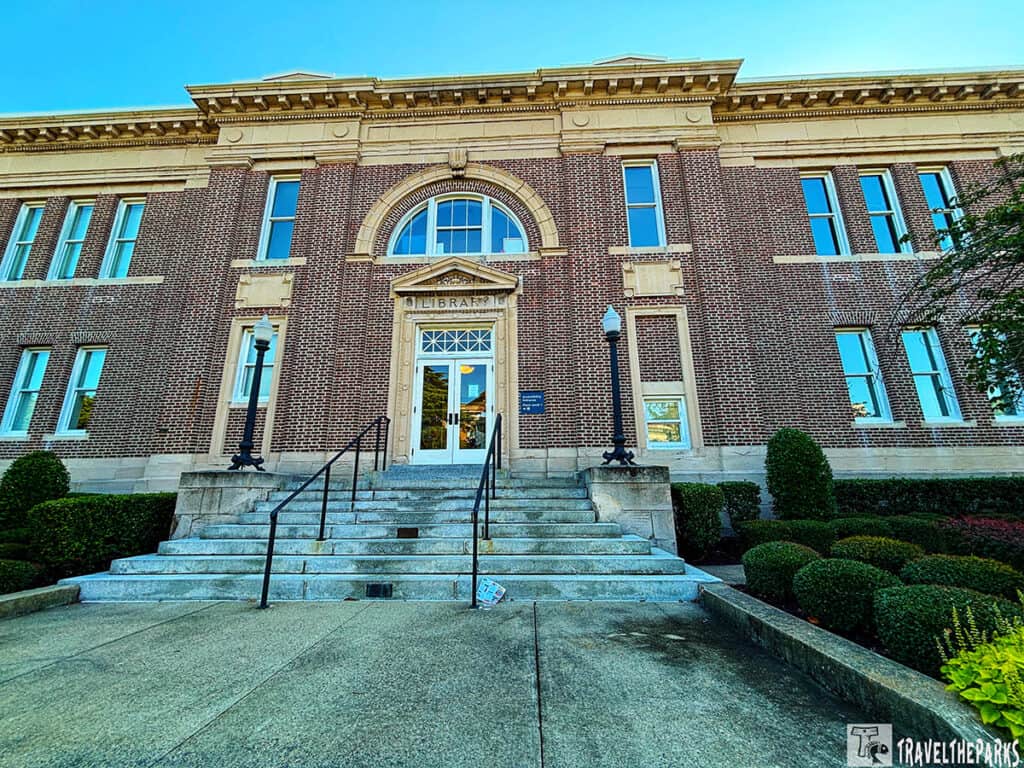
Start your Fort Monroe walking tour at the Visitor & Education Center
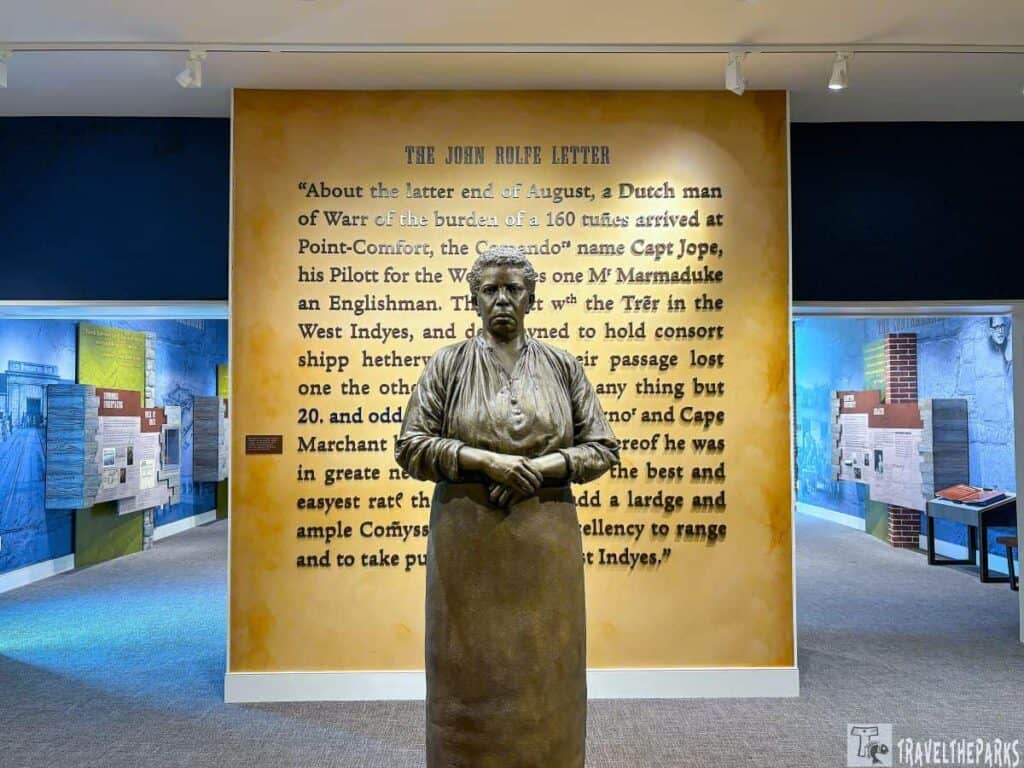
We always begin our journey at the Fort Monroe Visitor Center, and for good reason: this is where the fort’s profound story begins, even before you cross the moat. Housed at the entrance to the former military post, the center provides a powerful and essential introduction to a complex history—from its strategic role as a Union stronghold during the Civil War to its deep connections to the quest for freedom, tracing back to the first enslaved Africans in English North America in 1619.
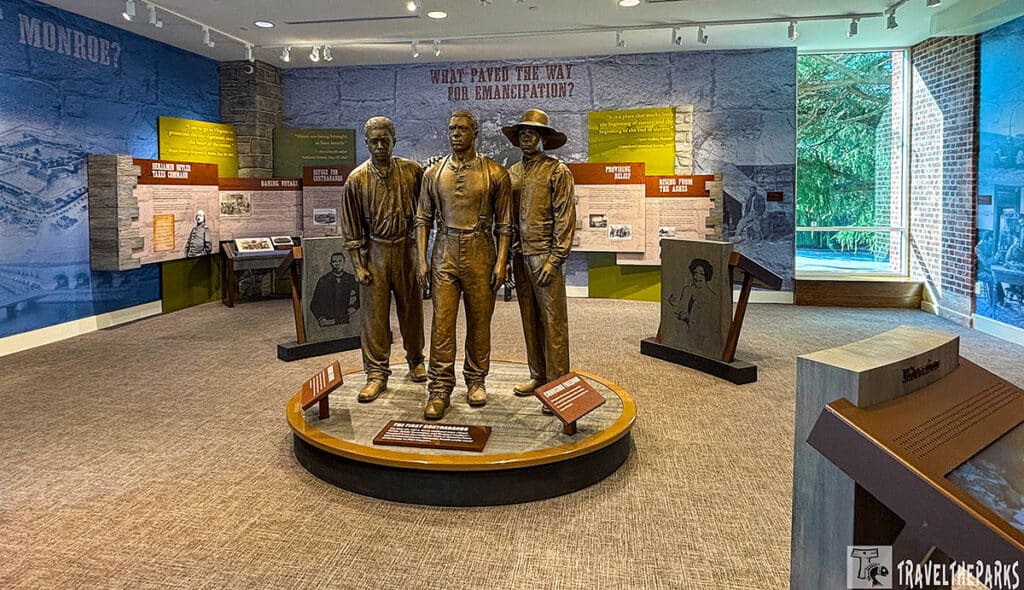
What sets this visitor center apart is the exceptional quality of its exhibits. They are brilliantly lit, thoughtfully organized, and historically accurate—among the best we’ve ever experienced. With interactive displays, thoughtful presentations, and knowledgeable staff, it provides the crucial context that transforms a simple walk through the grounds into a meaningful exploration. It is without a doubt the perfect starting point for your journey through one of America’s most significant historic landmarks.
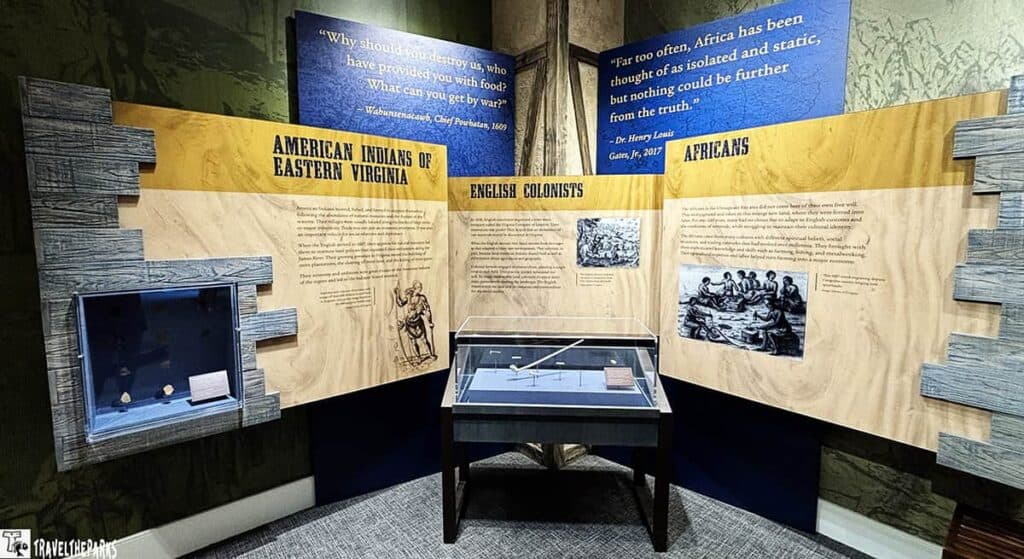
What to See: 21 Stops on the Fort Monroe Walking Tour
Fort Monroe National Monument, also known as “Freedom’s Fortress,” is a significant piece of American history on the Virginia coast. This fort played an important role in the Civil War and has been strategically important for military purposes for four hundred years. It provides an interesting to look back through history. The Fort Monroe self-guided walking tour took us through 21 important stops (3-miles). All with interesting stories and stunning views of the coast. This tour offers an amazing experience for everyone, whether you love history or enjoy nature.
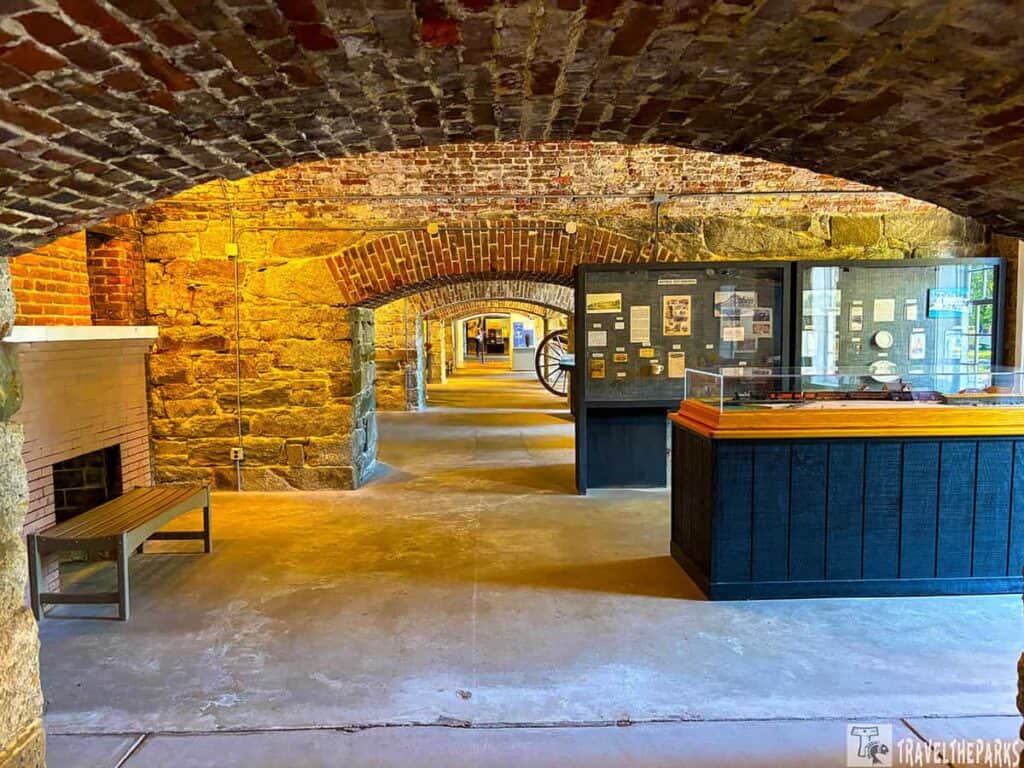
Stop 1: Casemate Museum
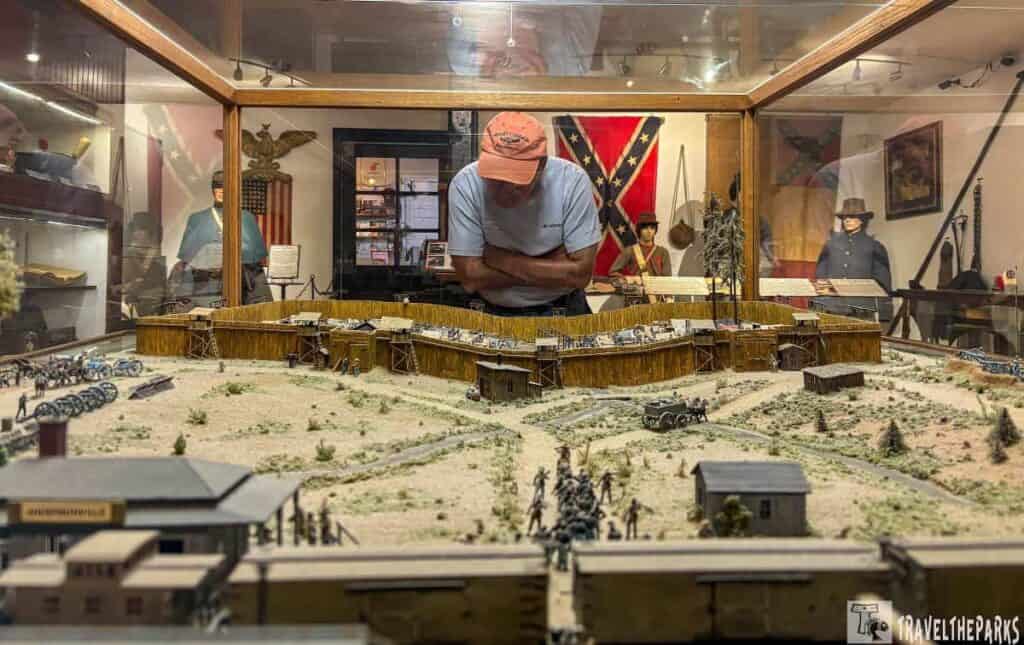
We started our adventure at the Casemate Museum. Fort Monroe’s Casemate Museum tells a compelling story. Here, history hides within the fort’s sturdy stone walls, waiting to be discovered! Inside, we found a treasure trove of military tales: cannons that once roared, letters that spilled secrets, and exhibits that whisk you through 400 years of drama. Not to be missed is Jefferson Davis’s not-so-luxurious “suite” (a prison cell) or young Robert E. Lee’s early military misadventures.
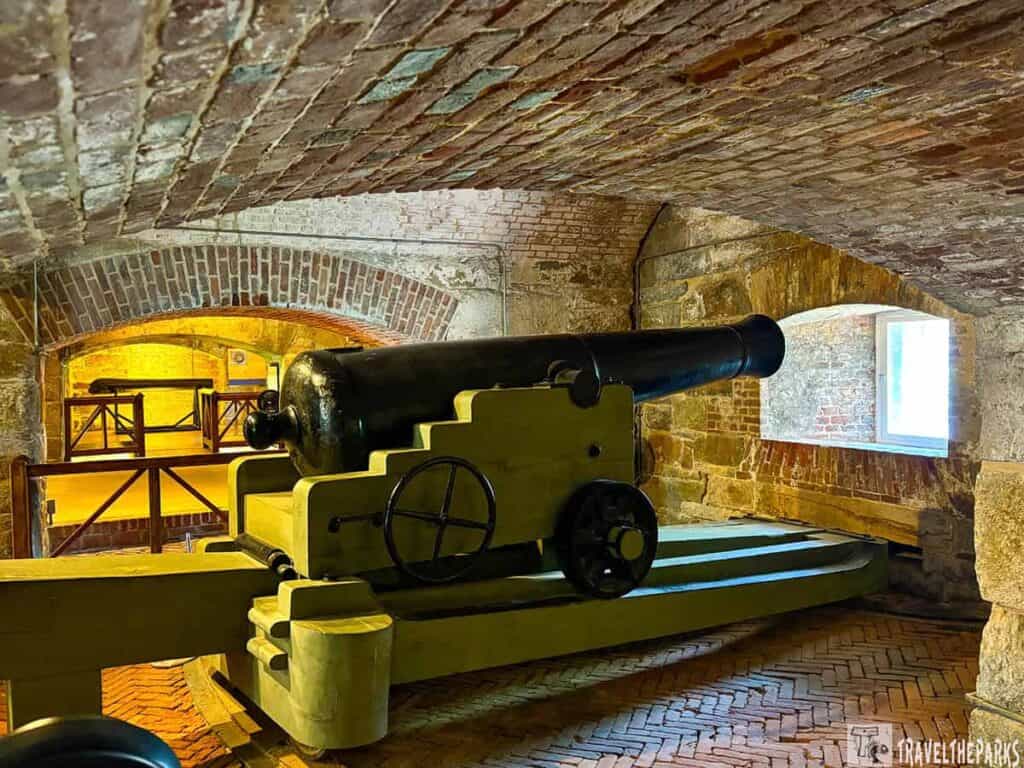
Why just read history when you can walk right into it? The exhibits and dioramas are really informative. The casemates themselves are key features. These arched casemates—once packed with cannonballs and soldiers—now guard stories of bravery, rebellion, and salty sea breezes. Peeking into the past, touching the rough-hewn walls, and letting the echoes of wars and whispers guide our way.
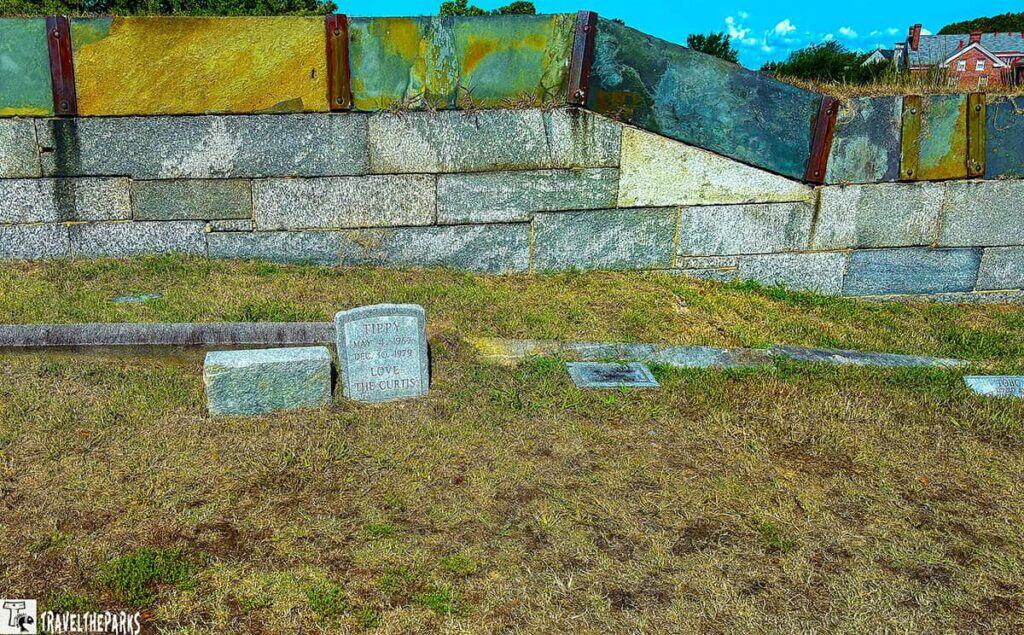
Stop #2: The Pet Cemetery
The small pet cemetery on a quiet stone parapet is a seldom-mentioned feature of Fort Monroe’s history. This cemetery is the burial ground for over 400 Army working dogs, unit mascots, and pets. Dating to 1936, the headstones reflect dogs, cats, or even birds that were like children to the soldiers.
Although the cemetery closed to new burials in 1988, it remains a deeply moving memorial. It’s a quiet place for reflection—a reminder of the uncommon bonds that sustained those who served. The site also honors the loyal animals that stood beside them, reminding visitors that courage and sacrifice were shared by all who served here.
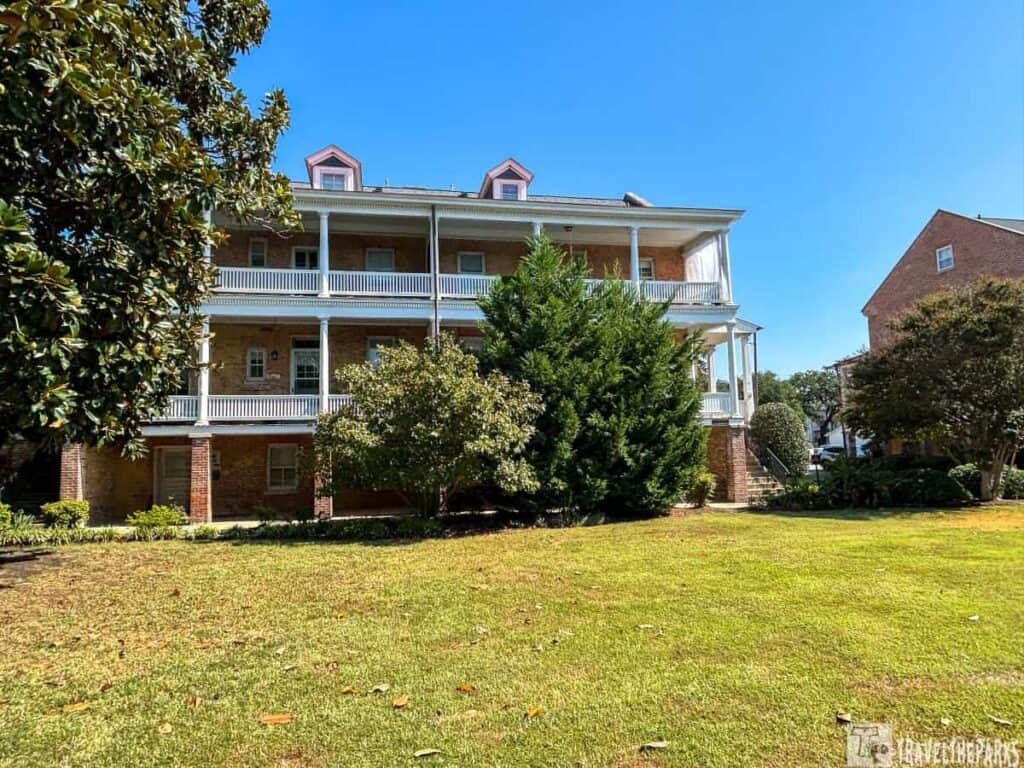
Stop 3: Robert E. Lee’s Quarters: Building #17
A short walk from the Casemate Museum brought us to a building rich with historical irony: the former home of 2nd Lieutenant Robert E. Lee. The future Confederate general resided here in the 1840s while serving the U.S. Army engineers. Reinforcing the stronghold, he would later challenge. Building #17, which is now the park’s headquarters, isn’t accessible to the public. Its exterior reminds us that history often turns on such personal contradictions.
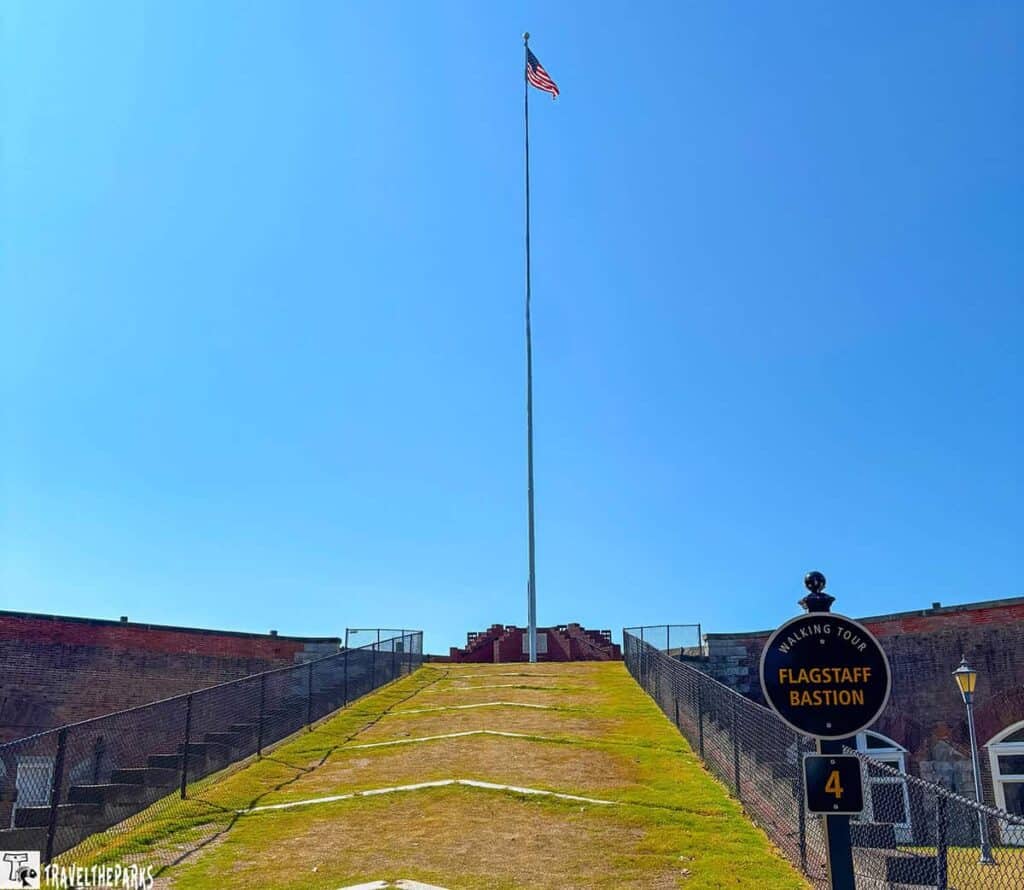
Stop 4: Flag Staff Bastion
Where cannons used to be, there are now beautiful views. The Flag Staff Bastion has changed from a military role to a place where you can feel the ocean breeze and see amazing sights of the moat, walls, and Chesapeake Bay. For many sailors over the years, this location has been very important: it marks the first time they see the American flag when they come home and the last time they see it when they leave. It has always been a timeless beacon.
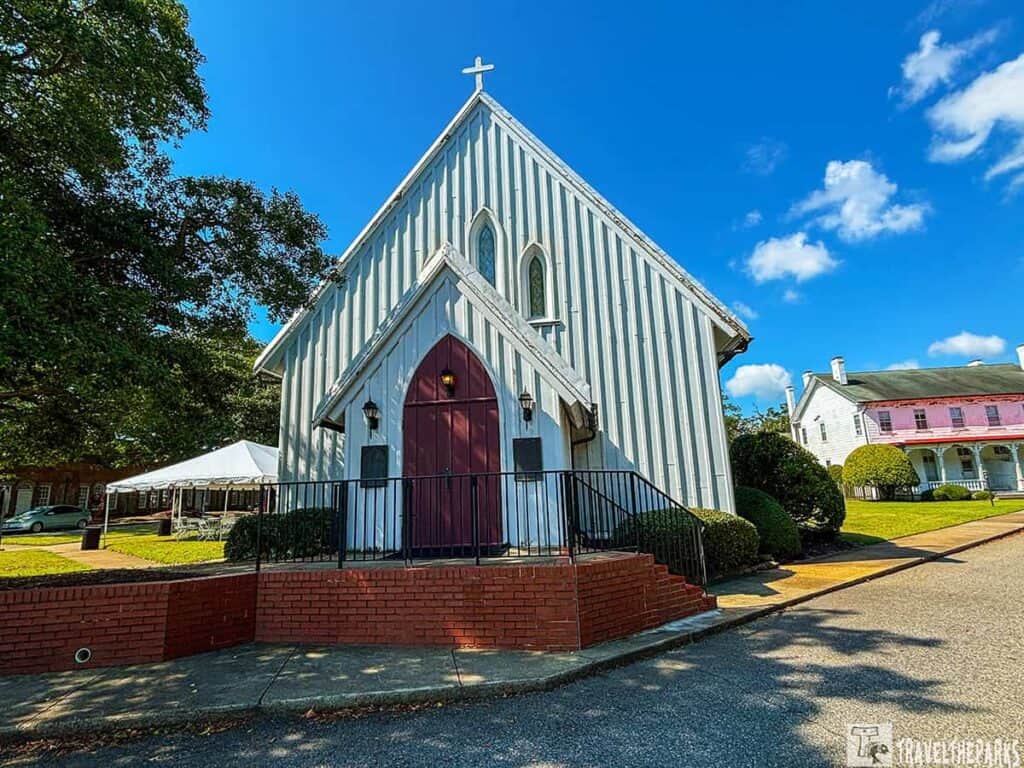
Stop 5: Chapel of the Centurion
The Chapel of the Centurion was constructed in 1858, and it is the oldest wooden military chapel in the United States that is still in operation. It has striking Gothic Revival architecture both outside and inside. The inside of the chapel is special because of its stained-glass memorial windows. It still holds regular Sunday services.
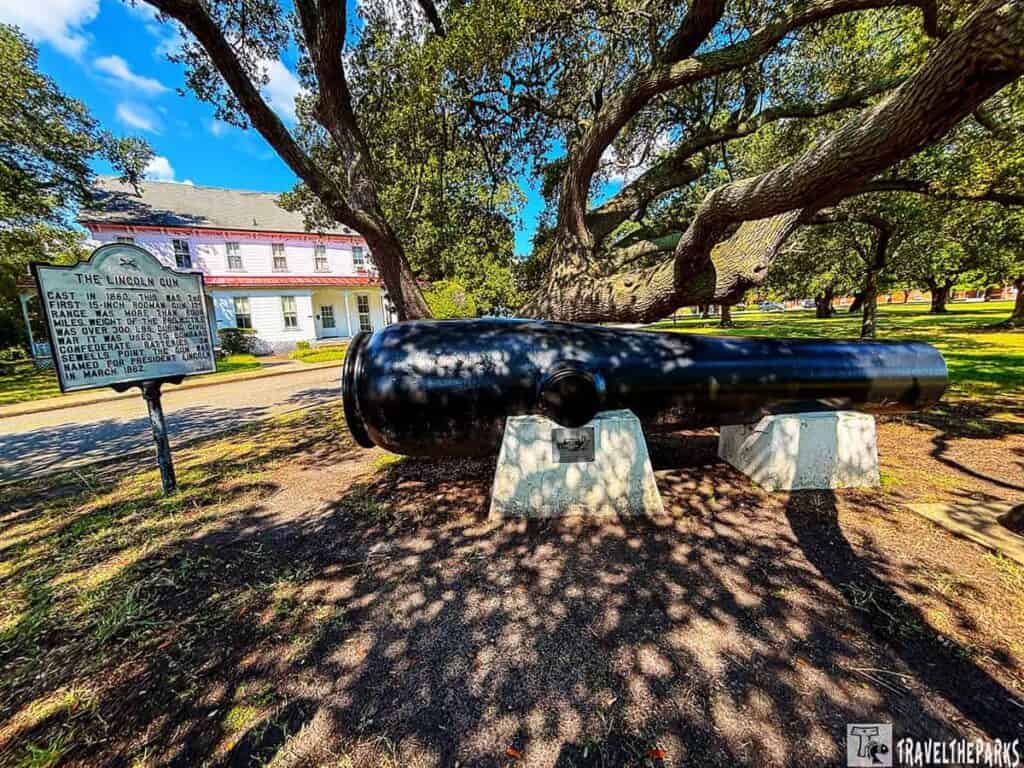
Stop 6: Lincoln Gun
The Lincoln Gun, named after President Lincoln, is a large monument that shows the strength of the Union. This gigantic cannon used to protect the Chesapeake Bay and the capital from Confederate dangers. It represents the industrial power and strong will that kept the country together. The force it represents is perceptible as you stand in front of it.
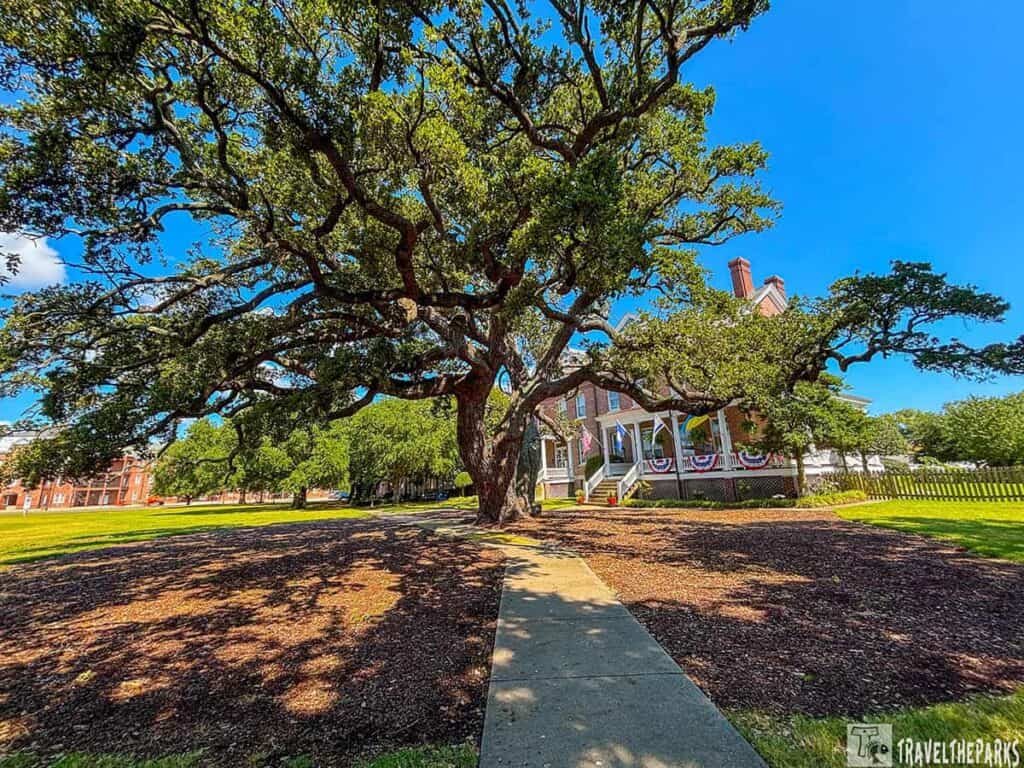
Stop 7: Parade Ground: The Live Oak of Fort Algernourne
The Algernourne Oak is more than just a tree—it’s a living memorial. This majestic Southern live oak (Quercus virginiana), more than four centuries old, has stood in silent witness since the early days of Fort Algernourne (1609). Through centuries of change, it has watched history unfold, embodying strength and endurance. Resting beneath its vast branches, one can almost feel a connection to the earliest days of English settlement and the timeless spirit of this historic place.
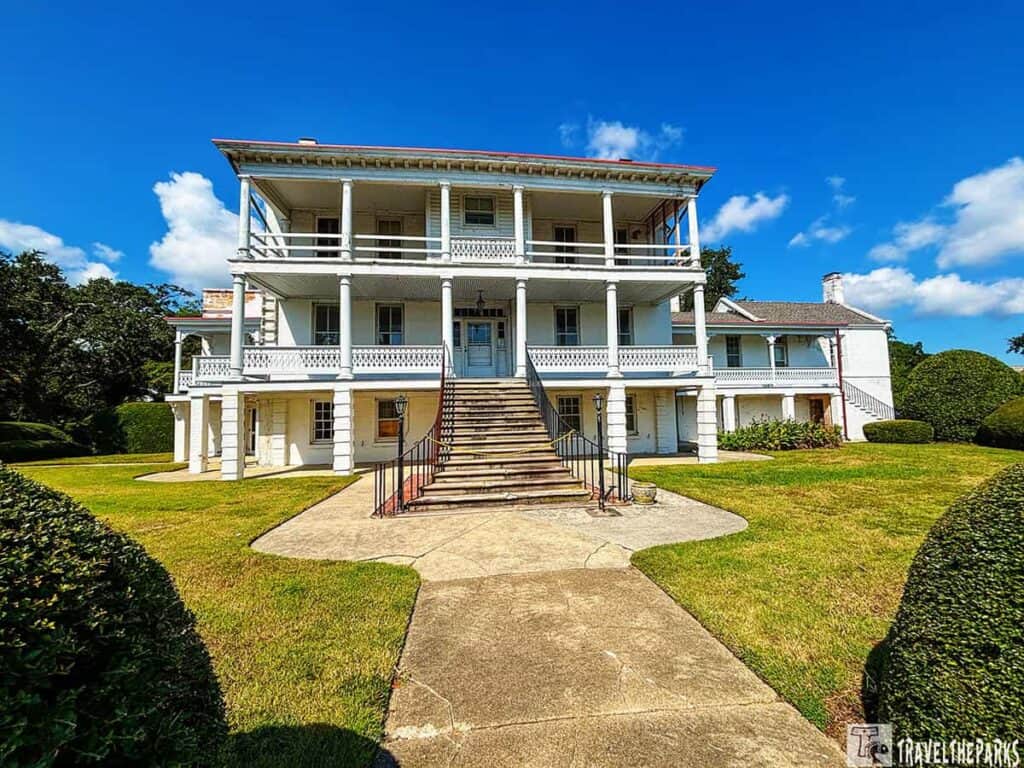
Stop 8: Building #1, Old Quarters
Quarters No. 1, formerly the home of General Benjamin Butler and other high-ranking officers, is one of the oldest houses (going back to the 1800s) in the fort. With its typical Federal-style design, large, airy rooms, and impressive views of the Chesapeake Bay, one can very well picture it as the place where distinguished men held their meetings and made history. Its red-brick front and views of the bay visually emphasized the fort, while this stylish house that once served as a power symbol embodied control. Currently, visitors can explore its rooms and imagine the fort’s past life.
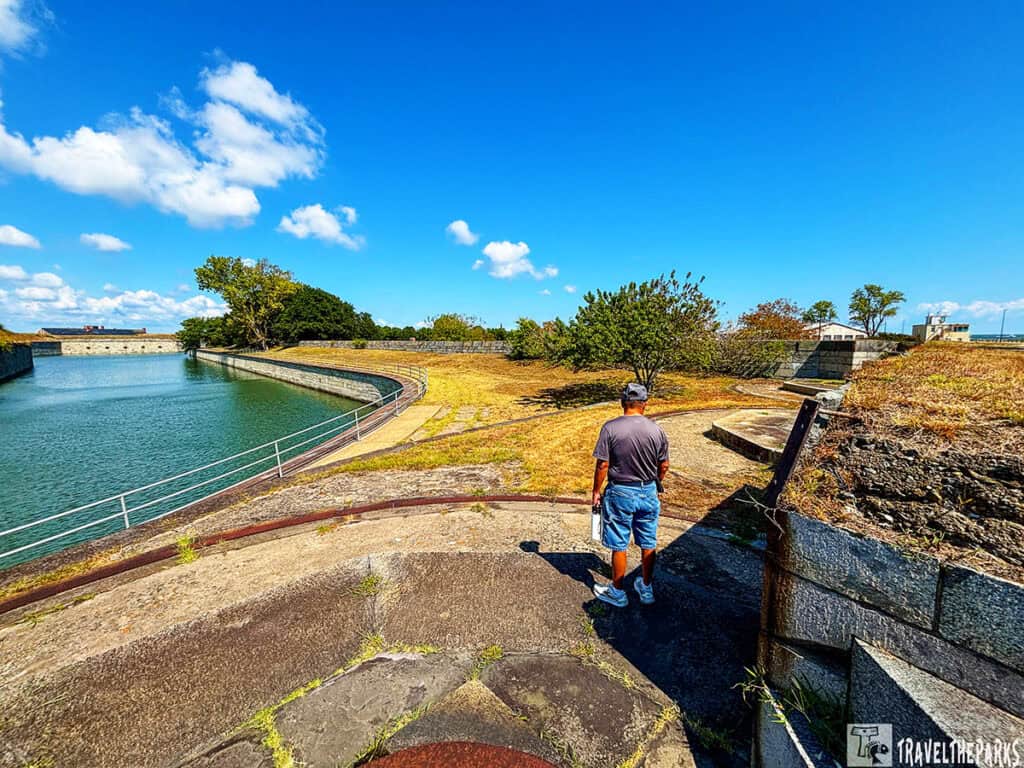
Stop 9: Water Battery
Fort Monroe’s Water Battery was the key to controlling the Chesapeake. Unlike the elevated main fort, this early-1800s structure sat directly on the shore, its cannons trained on the horizon to repel sea attacks. During the Civil War, it was the linchpin of Union naval strategy, earning the fort its “Gibraltar of the Chesapeake” moniker. Now integrated into the Seawall Trail, visitors can walk this historic ground, learn its story from signs, and take in the same commanding views it once defended.
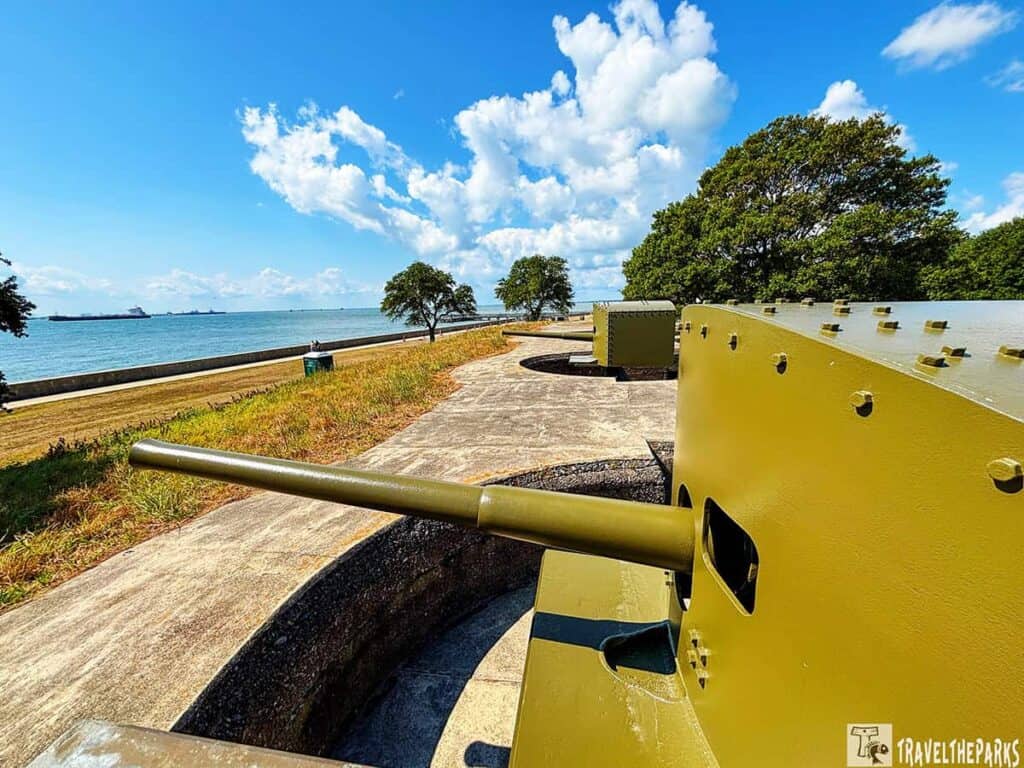
Stop 10: Endicott Era: Batteries, Parrot and Irwin
Batteries Parrott and Irwin guarded the bay’s south edge at Fort Monroe. Construction of these concrete forts occurred in the early 1900s. They were part of upgrades to defend the coast. Their job was to protect shipping lanes. Many of the big gun foundations are still there. The guns themselves are gone now. Battery Parrott honored the rifled cannon inventor. Battery Irwin saluted a Civil War hero. These structures now rest under the sky. You can almost hear the old military drills. Imagine the shouted commands and the waiting. Wild grasses now grow between them. Sea breezes blow through. These old forts are quiet, pretty spots. They offer a pleasant view.
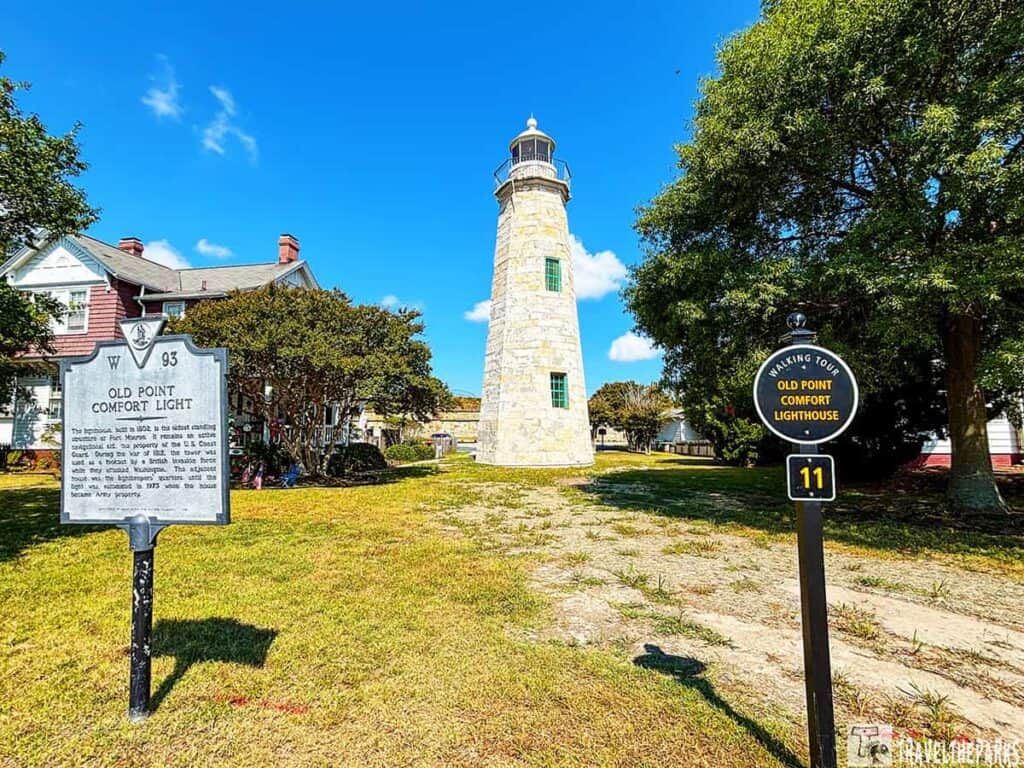
Stop 11: Old Point Comfort Lighthouse
On our Fort Monroe walking tour, this was one of the best stops. We discovered that the Old Point Comfort Lighthouse was built in 1802, making it the second-oldest lighthouse on the Chesapeake Bay. Remarkably, it’s still in operation today. From the top, you can get stunning views of the water. Inside, we learned about its important role during wartime—the lighthouse stood watch through both the War of 1812 and the Civil War. I could only imagine the warm glow of its original oil lamp cutting through a foggy evening.
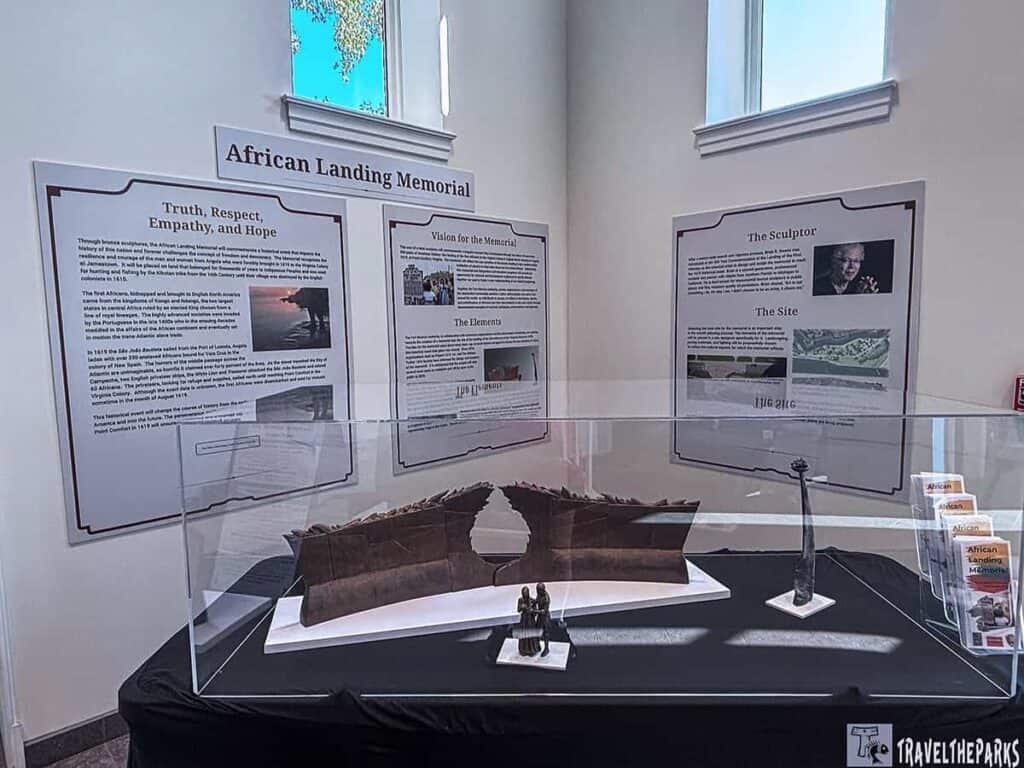
Stop 12: African Landing Memorial-First Africans in Virginia
This powerful memorial, currently under development, marks one of the most significant and sobering sites in American history. The artistic rendering (shown above) illustrates the vision for this sacred space, which will honor the moment in 1619 when the first enslaved Africans in English North America were forced ashore at Old Point Comfort.
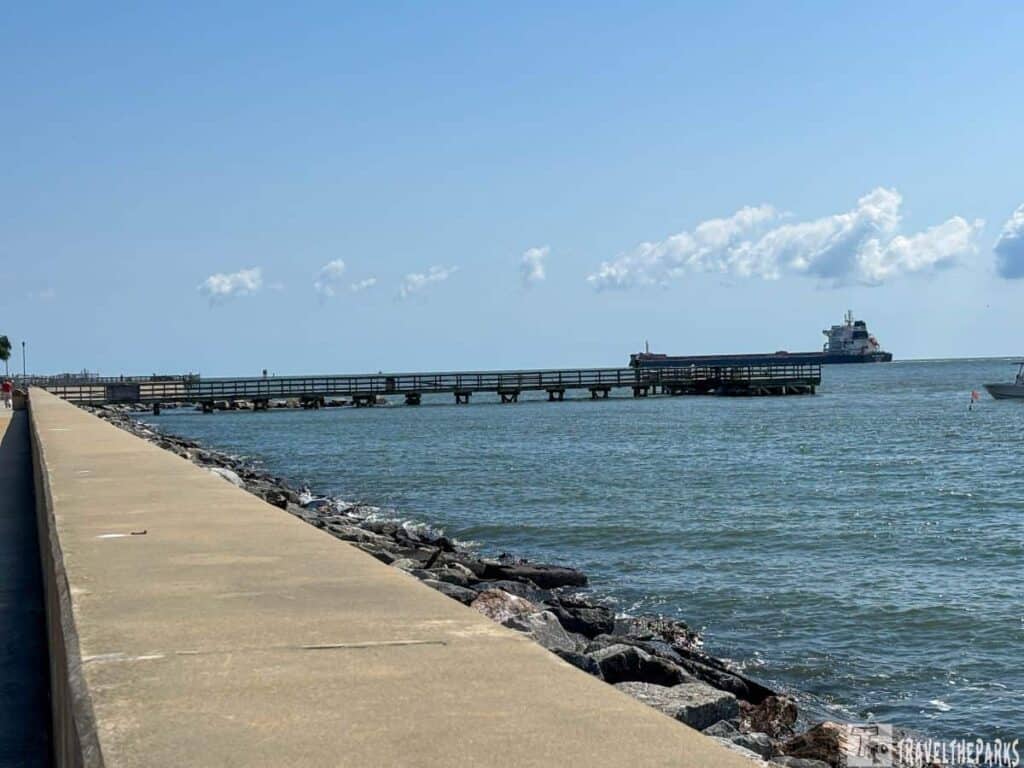
Stop 13: Engineer Wharf
Where military innovation met the tides! This unassuming waterfront was Fort Monroe’s 19th-century workshop. Here, engineers designed pontoon bridges, tested experimental weapons, and loaded cannons onto ships. I could picture Robert E. Lee overseeing engineering projects before the Civil War. The worn grooves in the stone still trace the paths of cannon carriages, and the rusted mooring rings hint at long-gone vessels. Come for the harbor breeze, stay for the thrill of standing where warfare was reinvented—one unique idea at a time.
PRO tip: Time your visit for high tide—the lapping waves sound just like they did when Lincoln’s secret weapon, the ironclad USS Monitor, steamed past here in 1862. Now that’s a waterfront view with stories to tell!
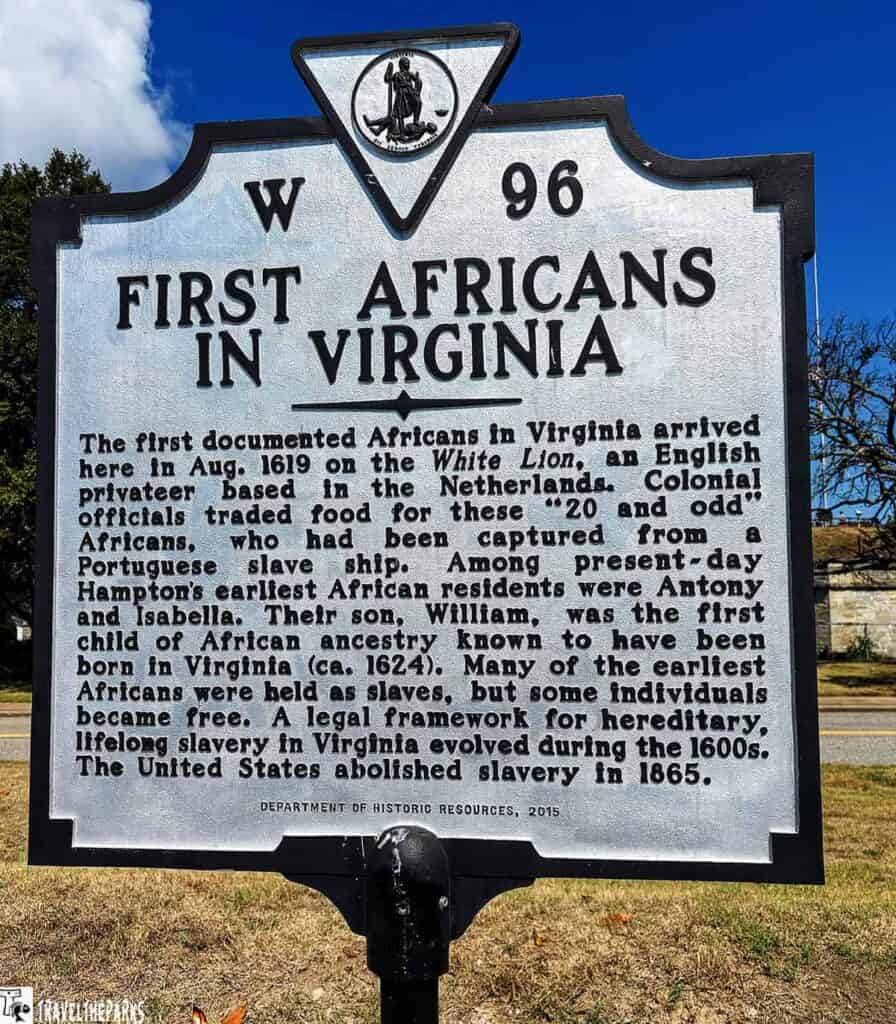
Stop 14: First Africans in Virginia: State Historical Marker
Their arrival on the ship “White Lion” marked a tragic turning point, beginning a system of bondage whose long shadow stretches across centuries. This marker was created to ensure we remember this stark reality—a story of profound injustice intertwined with incredible resilience. It is a crucial place to reflect on the complex and painful history that shapes not only Fort Monroe’s story, but the very foundation of the United States.
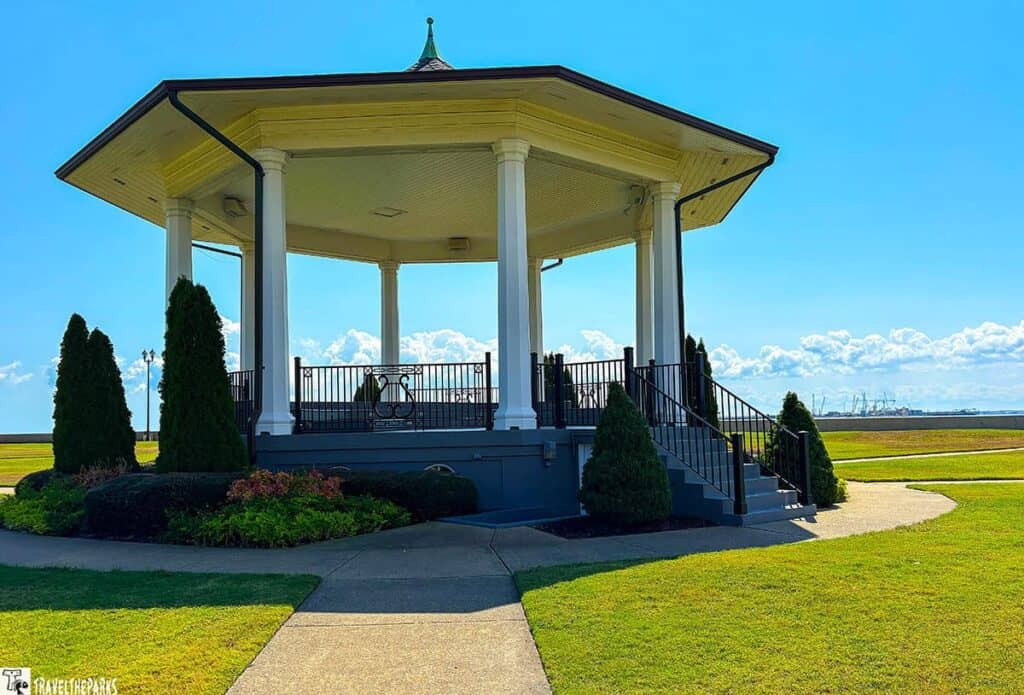
Stop 15: The Bandstand/ Continental Park
In 1934, as the nation rebuilt from the Depression, an all-Black Civilian Conservation Corps crew raised this octagonal stage—their hammers and saws singing a different kind of freedom song. Designed for the 40-piece 2nd Coast Artillery Band, its very timbers vibrated with military marches and jazz riffs, while newly paved walkways (courtesy of WPA laborers) welcomed audiences of all colors. It was interesting standing where 19th-century soldiers swayed to military bands. The original bandstand hosted “contraband” slaves—newly freed during the Civil War—singing spirituals that would shape American music. Today, their legacy lives on in summer concerts where the past and present harmonize.
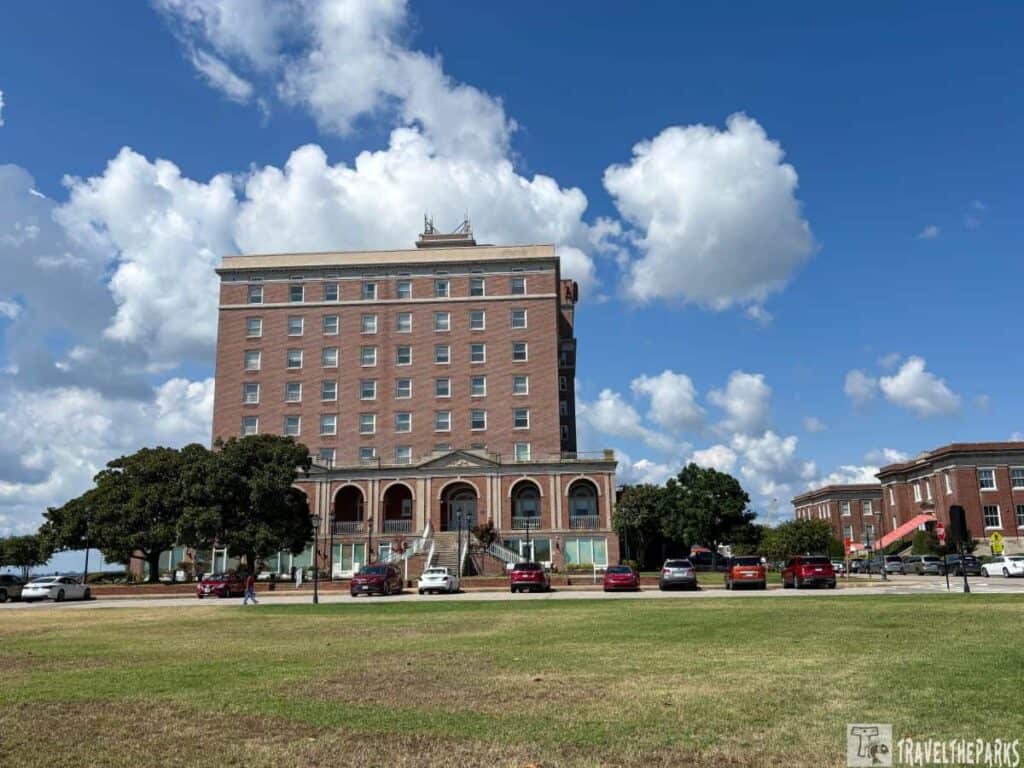
Stop 16: The Chamberlain Hotel
The Chamberlin still stands in its majestic glory along the Fort Monroe waterfront. As if it were a scene from a Gatsby-era postcard—its magnificent face towards the bay. The hotel was first launched in 1896 (and reconstructed in 1928 after a fire) and has catered to presidents, dignitaries, and many other not so notable celebrities.
What was formerly a high-end resort getaway where visitors arrived to be rejuvenated by its healing sea breezes and later danced in its grand ballroom. The Chamberlin Hotel now houses a 55+ community. However, its Art déco character from that period remains beautifully preserved. You don’t need a reservation to appreciate its spacious verandas and the stories that still linger in its marbled halls.
Fun fact: During WWII, officers and their families often stayed here while stationed at Fort Monroe.
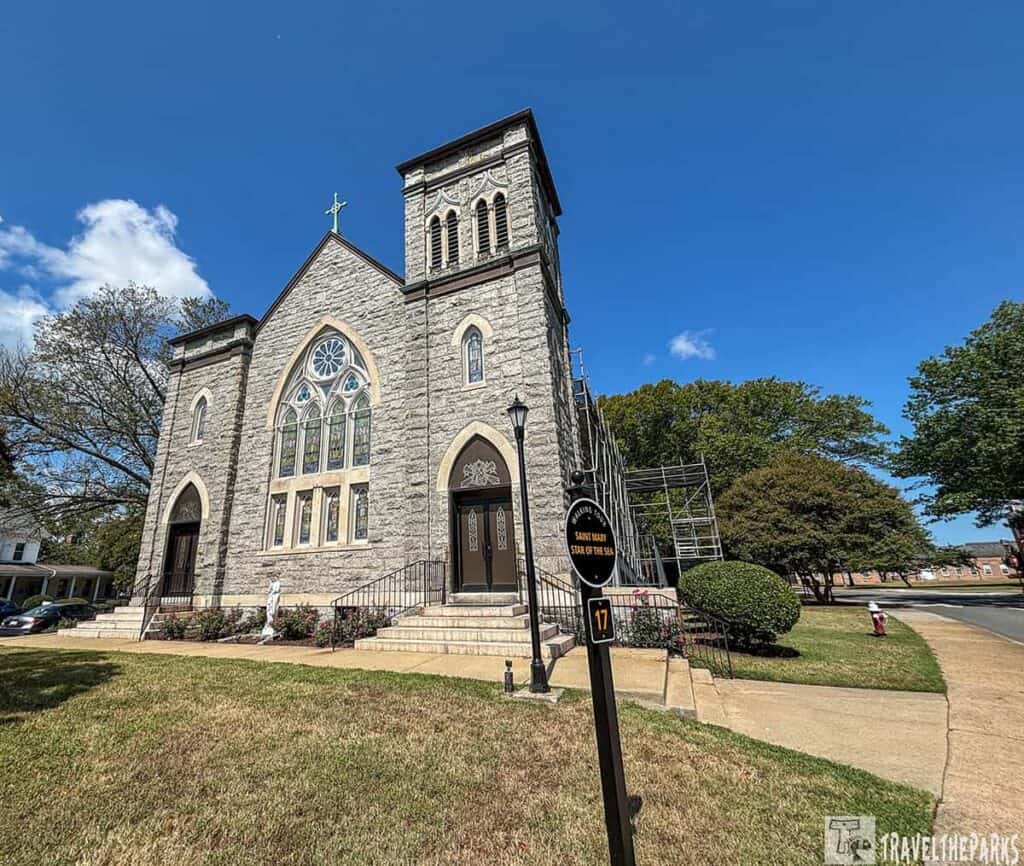
Stop 17: Saint Mary Star of the Sea Catholic Church
Saint Mary Star of the Sea Catholic Church is a sharp contrast to the cannons and fortifications nearby. Established in 1860, this charming Gothic-style church has served generations of soldiers, families, and visitors. All were seeking solace, reflection, or simply a quiet moment in the presence of grace.
Named after the Virgin Mary’s ancient title as protector of sailors and travelers, the church’s name feels especially fitting here. It is just steps from the Chesapeake Bay. With its distinguishing features of pointed arches, stained glass, and enduring sense of calm, Saint Mary’s is the oldest continually used Catholic military parish in the United States. It is also one of the spiritual heartbeats of Fort Monroe.
PRO Tip: If the doors are open, step inside—the quiet sanctuary speaks volumes.
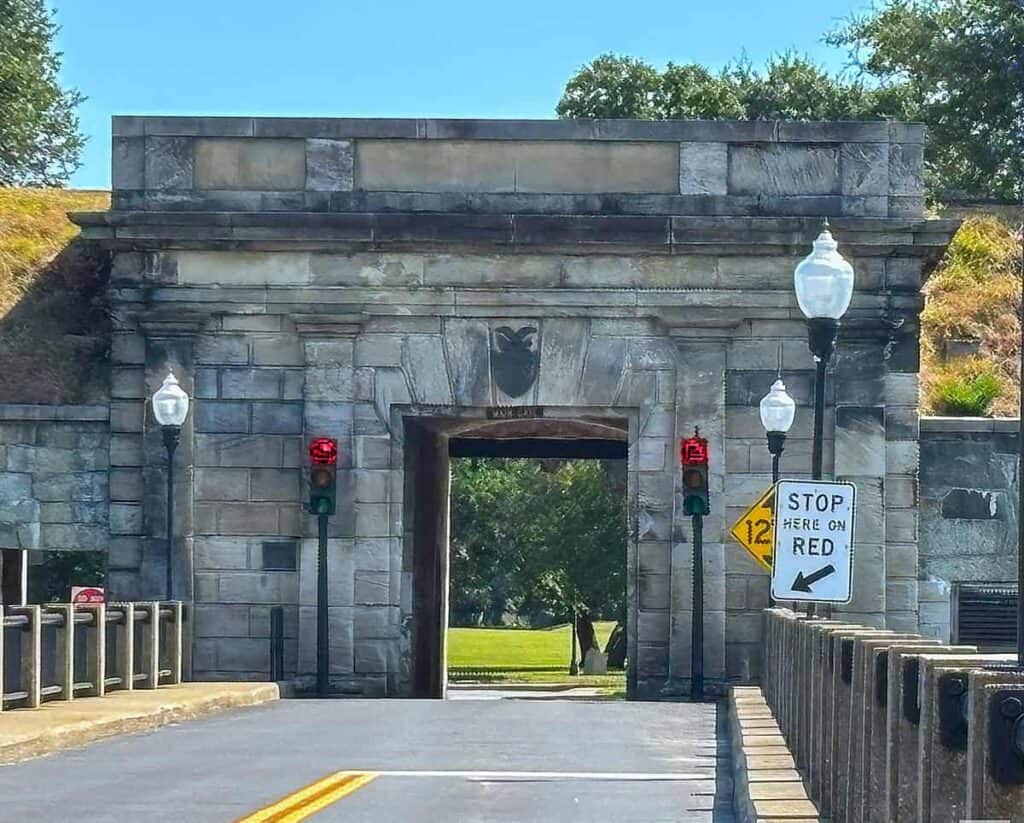
Stop 18: Main Gate
Completed in 1820, the Main Gate marked the first construction phase of Fort Monroe. On May 23, 1861, three men who were slaves left Norfolk and sought refuge with the Union forces at Fort Monroe. The day after, Major General Benjamin Butler called these men “war contraband” and did not send them back to their owners. During the Civil War, many who were enslaved came to Fort Monroe for safety, earning it the name “Freedom’s Fortress” for its part in giving freedom.
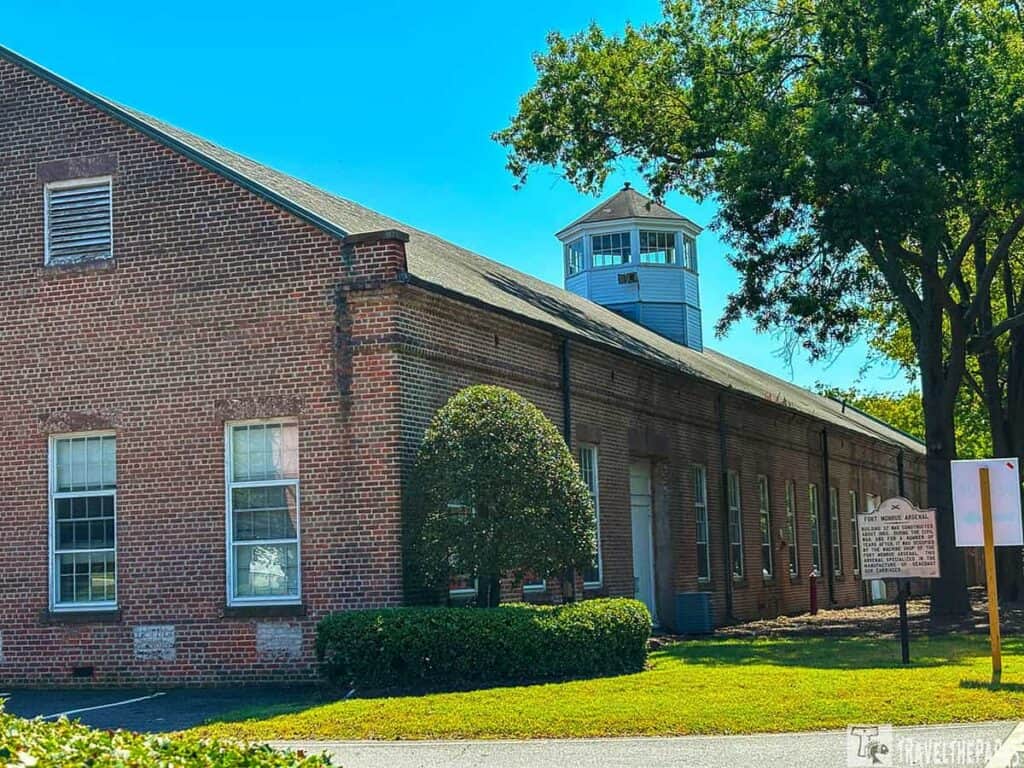
Stop 19: Fort Monroe Arsenal
Just outside the walls of Fort Monroe, we found the historic arsenal. It was an important part of the fort’s military history. The Fort Monroe arsenal began in the early 1800s. It became an important place for taking care of the supplies that soldiers needed to protect the Chesapeake Bay.
Although it wasn’t as impressive as the rampart walls or the scenic lighthouse, this brick building played an important role in helping the fort during the War of 1812 and the Civil War. I can easily picture crates filled with muskets, cannonballs, and soldiers getting ready for battle.
Today, the building stands as a simple reminder that defense is not just about the soldiers on the front lines; it also includes the many people working quietly in the background.
Did you know? Parts of the arsenal were also used for administrative and logistical work during the 19th century. It may have even supplied Union troops when Fort Monroe became a stronghold during the Civil War.
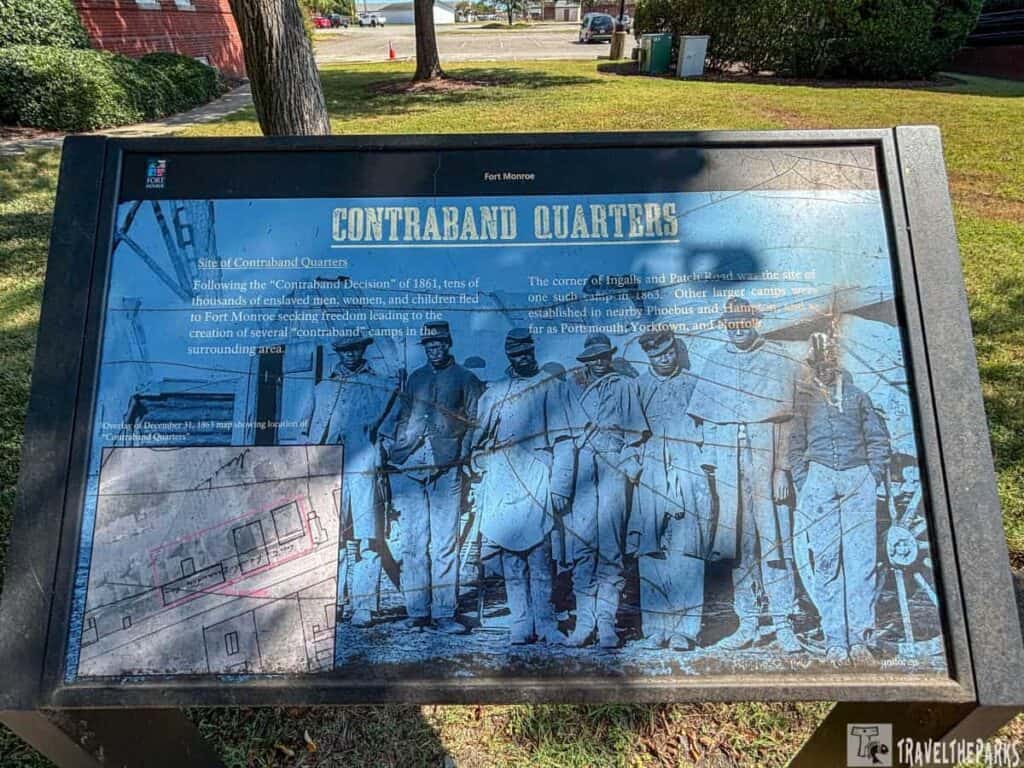
Stop 20: Contraband Quarters: A Refuge in the Shadow of Freedom
Fort Monroe became a beacon of hope for many enslaved individuals seeking freedom during the Civil War, following the pivotal “Contraband Decision” in 1861. Called “contraband of war,” these items were not sent back to their Confederate owners. Many people took the risky trip to the fort, where Union soldiers offered them safety. By 1863, this place became one of many camps made to house the growing number of folks seeking freedom. Life here was hard, but it began a new chapter filled with strength, unity, and the ongoing fight for true freedom. Bigger contraband camps, like the Grand Contraband Camp in Hampton, would come next. These camps helped create some of the first self-sufficient African American communities in the United States.
Stop 21: Contraband Hospital: Healing in a Time of Hope and Hardship
In 1863, Fort Monroe created a “Contraband” Hospital to help the growing number of people who had escaped slavery and were seeking safety and freedom in Union lands. As many flocked to find safety, lots were sick, injured, or needed basic medical care. This hospital became a vital support network, giving medical aid when times were tough. One thing I found interesting was that Harriet Tubman worked here. She was a well-known abolitionist, the leader of the Underground Railroad, and a Union spy. She spent a few months in the hospital working as a nurse and preparing meals as a cook. Her time at Fort Monroe shows the connection of this place to the significant battle for freedom, dignity, and human rights during the Civil War.
Pro Tip: After your Fort Monroe walking tour, grab a table at The Deadrise around sunset for the best waterfront views and fresh seafood.
Final Thoughts: Uncover 400 Years of History on the Fort Monroe Walking Tour
The Fort Monroe walking tour for me was not just a simple walk. It took us through important events that helped shape America. From the eerie casemates to the scenic lighthouse, every location uncovers pieces of history set against the beautiful coast of Virginia. If you’re following the paths of Civil War soldiers or thinking about the fight for freedom, Fort Monroe makes a powerful impact. If you get the chance, take the opportunity to walk in places where important events took place.
Plan your visit to Fort Monroe National Monument and let its stories of courage, conflict, and freedom inspire you.