
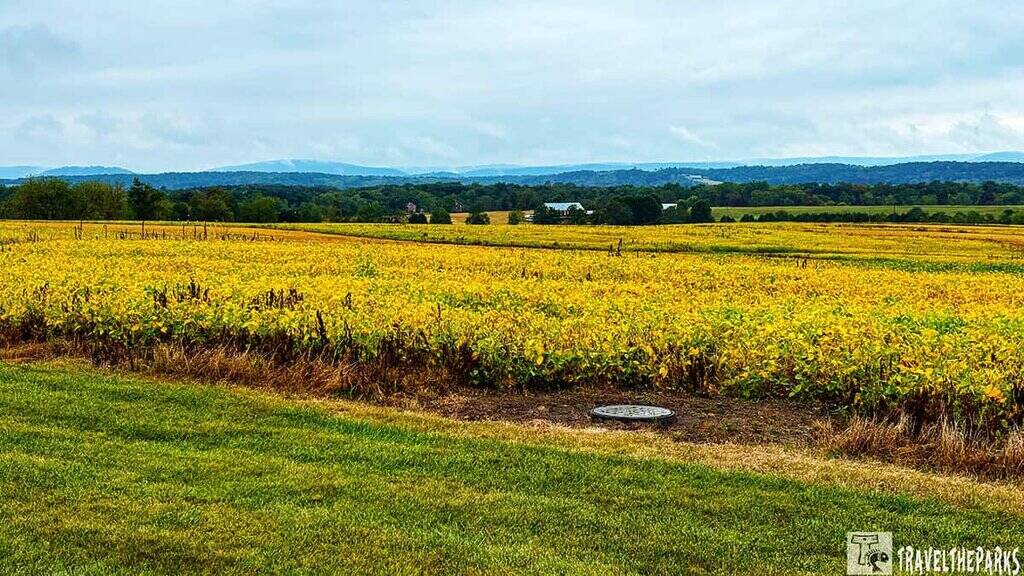
When you think of Gettysburg, the epic three-day Civil War battle likely comes to mind. Yet, a short shuttle ride from the famous battlefield is another national treasure. This shares a story about peace, a presidency, and a personal sanctuary. Visiting Eisenhower National Historic Site is a significant contrast and an absolutely necessary supplement to any tour of Gettysburg.
This was the only home ever owned by President Dwight D. Eisenhower and his wife, Mamie. Besides being a historical house, it is a functional farm and sanctuary where the President entertained global leaders, vacationed with his family, and kept Black Angus cattle. Let’s explore what makes this site so special.
This post may contain affiliate links, meaning if you purchase something through one of these links, we may earn a small commission at no extra cost to you! Read the full disclosure policy here.
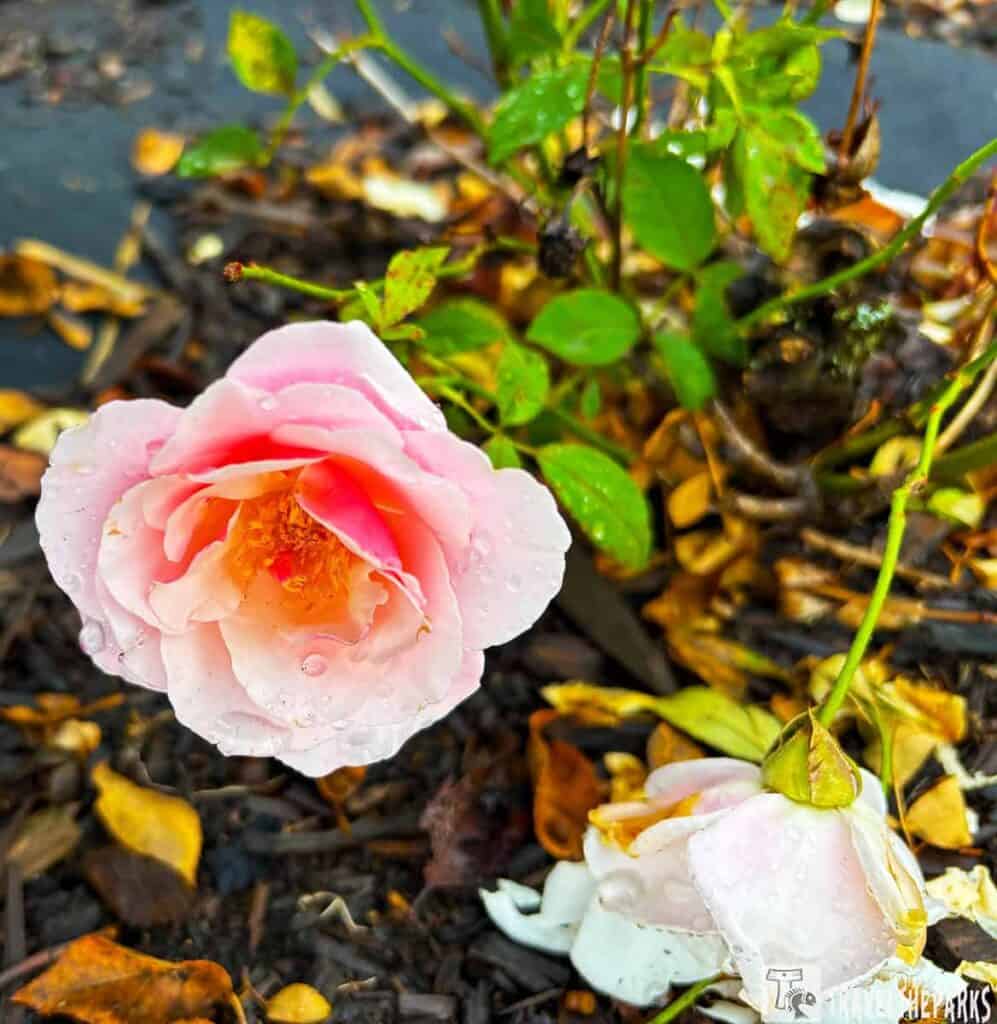
Table of Contents
What is Eisenhower National Historic Site?
Eisenhower National Historic Site is the preserved farm that President Dwight and Mamie Eisenhower called home. They purchased the 230-acre farm in 1950, way before Ike became the 34th President of the United States.
To President Eisenhower, this farm wasn’t a monument; it was simply home. It served as both a private residence and a functioning “Weekend White House.” Here, he recovered from illness, wrote speeches, and found solace tending his prized Angus cattle, all while hosting some of the most powerful figures of the 20th century—from Soviet Premier Nikita Khrushchev to Prime Minister Winston Churchill.
Standing on the very porch where these historic meetings unfolded was a profound experience. It perfectly encapsulated how Eisenhower seamlessly blended the immense responsibilities of global leadership with the simple, grounding pleasures of farm life.
This site adjoins Gettysburg National Military Park and is an easy and meaningful stop at the end of any day exploring the battlefield.
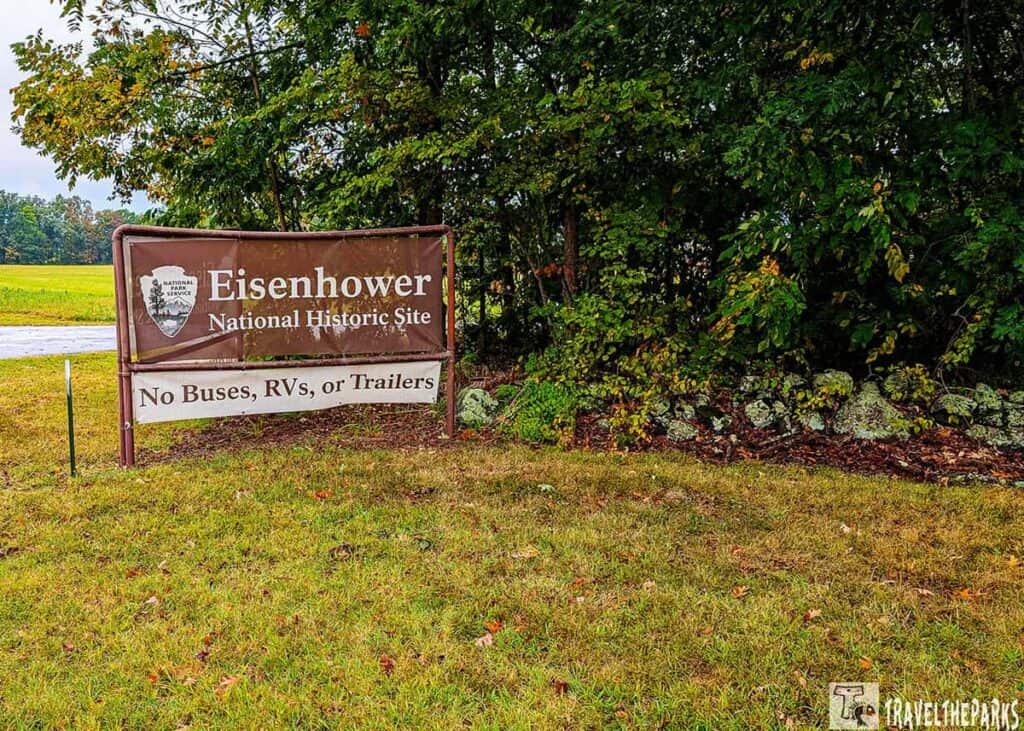
Know Before You Visit Eisenhower National Historic Site
- Operating Hours: The site is open daily, sunrise to sunset. Home tours are available seasonally. Check the NPS website for tour times.
- Entrance Fees: It’s FREE!
- Parking: You can drive directly to the Eisenhower farm. Parking is available on-site, but is limited.
- Best times to visit: spring and fall offer the most comfortable weather and beautiful natural scenery. Summer can be hot/humid, while winter may bring cold winds across the open fields. Morning visits provide softer light for photos and a quieter experience.
- Pets are not allowed inside the house or historic buildings. Service animals are permitted. Pets can be walked on the grounds but must remain leashed and attended at all times.
- For a day at the Eisenhower National Historic Site, bring comfortable walking shoes, water, and sunscreen for exploring the farm and outdoor areas. A camera is a must for capturing the views of the president’s home and grounds. If you’re taking the shuttle or joining a ranger tour, a light jacket and a small backpack with snacks will keep you comfortable. Binoculars are also great for spotting wildlife and enjoying the wide-open landscape.
Eisenhower’s Journey: From General to President to Gettysburg Farmer
To truly appreciate the Eisenhower Farm, it helps to understand the remarkable journey of the man who cherished it. Two defining forces shaped Dwight D. “Ike” Eisenhower’s path to Gettysburg: his extraordinary military career and his lifelong desire for a peaceful, pastoral retreat.
- A Real Break from the Presidency: The farm offered Eisenhower a genuine escape from the pressures of leading the nation. It was a place where he could breathe, reflect, and enjoy the simplicity of country life.
- A Diplomatic Retreat: This was their only home, so it became a place where he could invite and meet with global leaders in a casual, countryside setting.
- Paradise at Last: Eisenhower embraced rural life again in retirement, his long-awaited dream. The farm allowed him to reconnect with his boyhood roots. He could finally embrace the role of a full-time farmer he had always dreamed of becoming.
Things to See and Do at Eisenhower National Historic Site
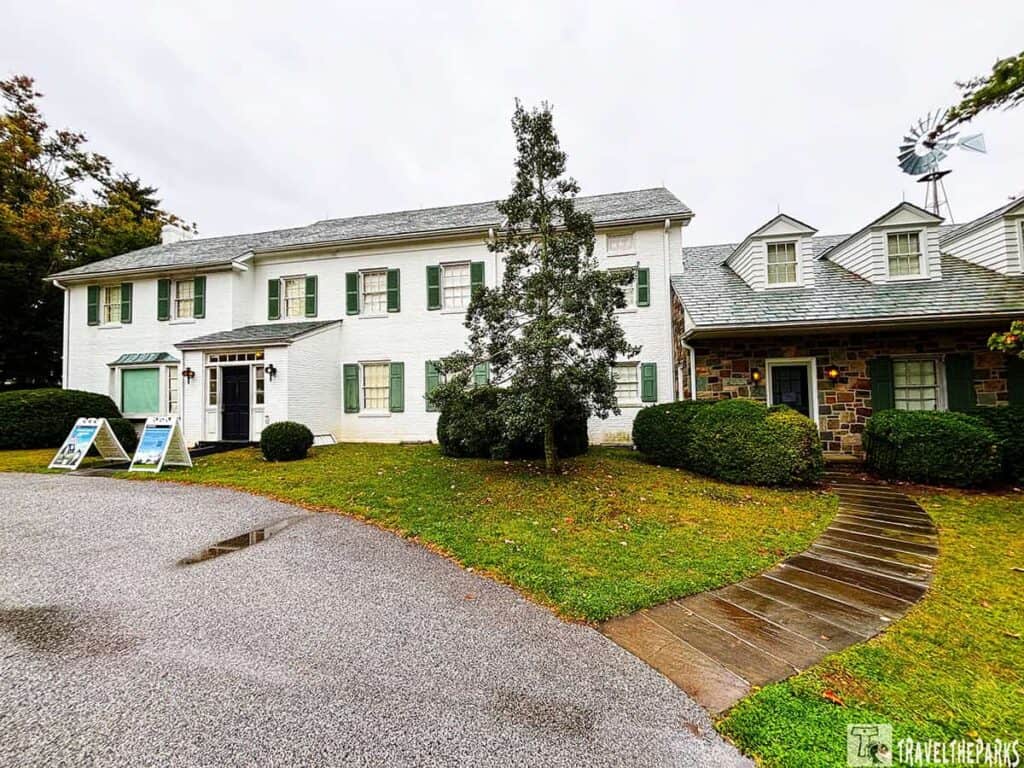
1. The Eisenhower Home (Ranger-Guided Farmhouse Tour)
To us, the true magic of the site was the Eisenhower home. As we stepped inside, it felt like stepping back in time.
Decorated with warm, inviting furnishings, the real enchantment for me was Mamie’s signature pink touches. Our ranger guide shared wonderful stories about the Eisenhowers’ lives here—some humorous, some deeply touching. It made us feel intimately connected to the day-to-day lives of the President and First Lady, beyond the political trappings. This experience truly brought history to life for us.
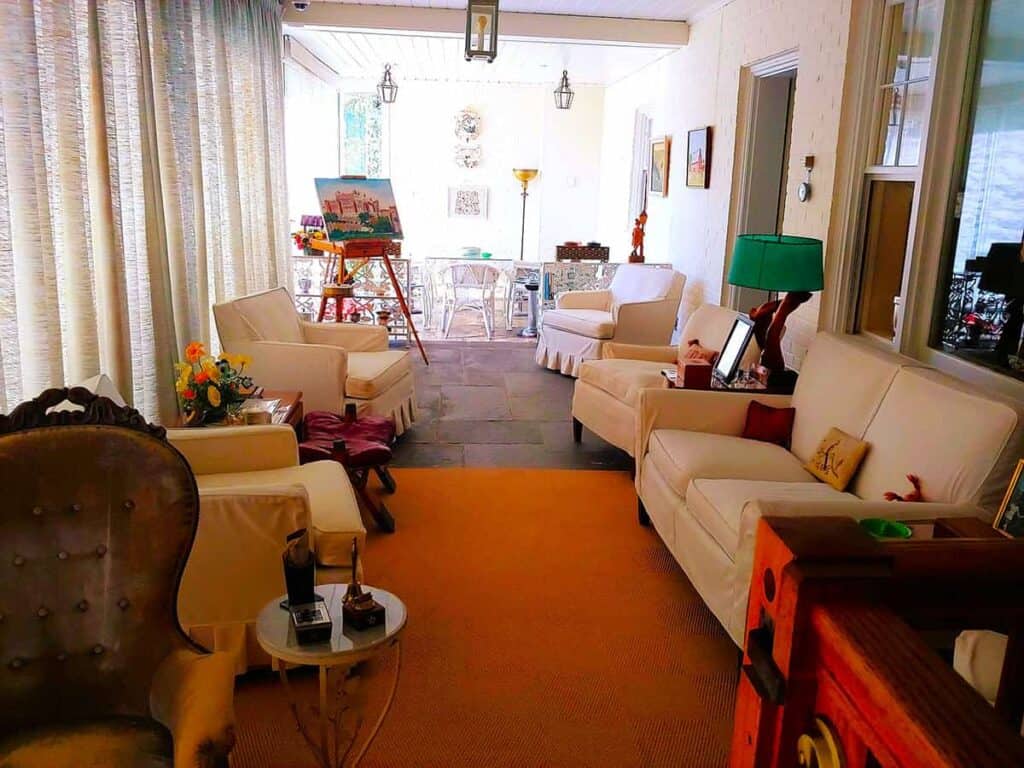
I won’t go over all the rooms in the house, but one really stood out to me.
The master bedroom. Coming into the master bedroom, I was immediately struck by how deeply it felt like Mamie’s personal sanctuary. This was her command post, where she’d prop herself up in bed-a lifelong heart condition often keeping her there-to manage the household and write letters, the very desk still perched on the covers.
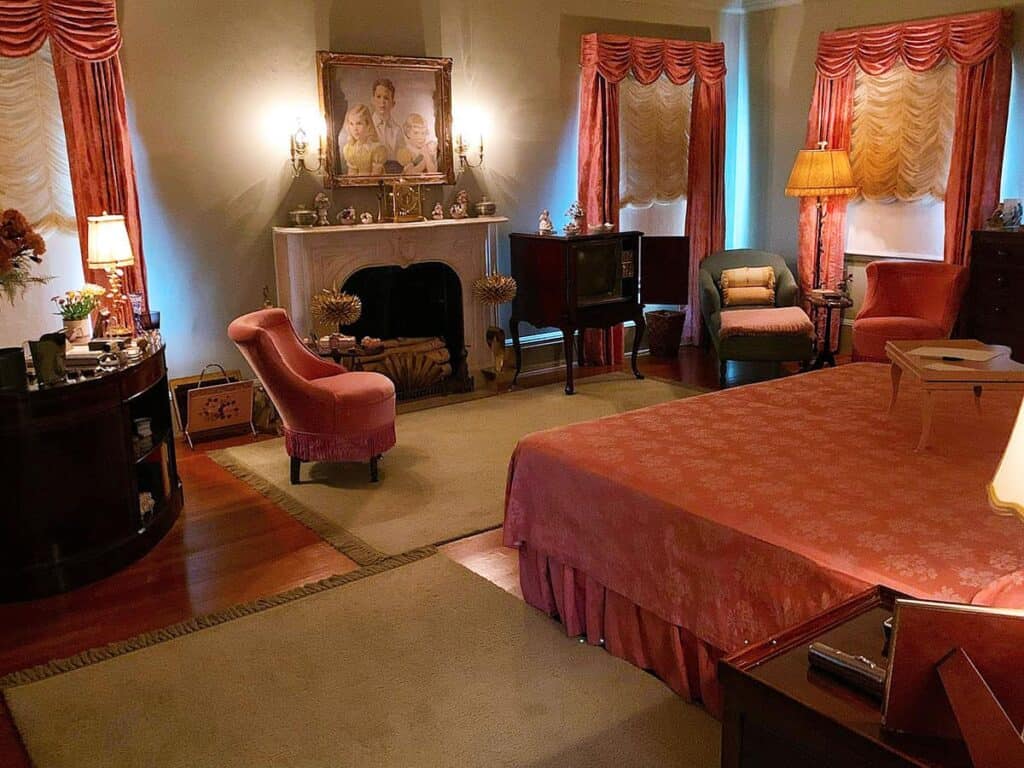
For them, family was the center of their world. Above the fireplace hangs a portrait of their three oldest grandchildren. It was a Christmas gift from Ike that speaks volumes of their shared affection. Another painting above the dresser features their youngest granddaughter, Mary Jean. It was a nest built with love, memory, and family at its heart.
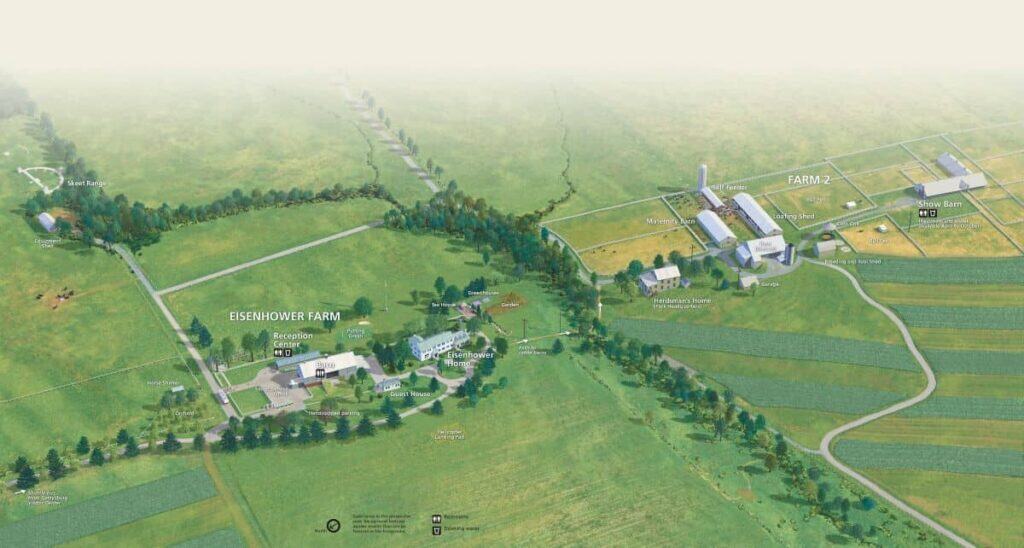
2. Self-Guided Exploration of the House Grounds
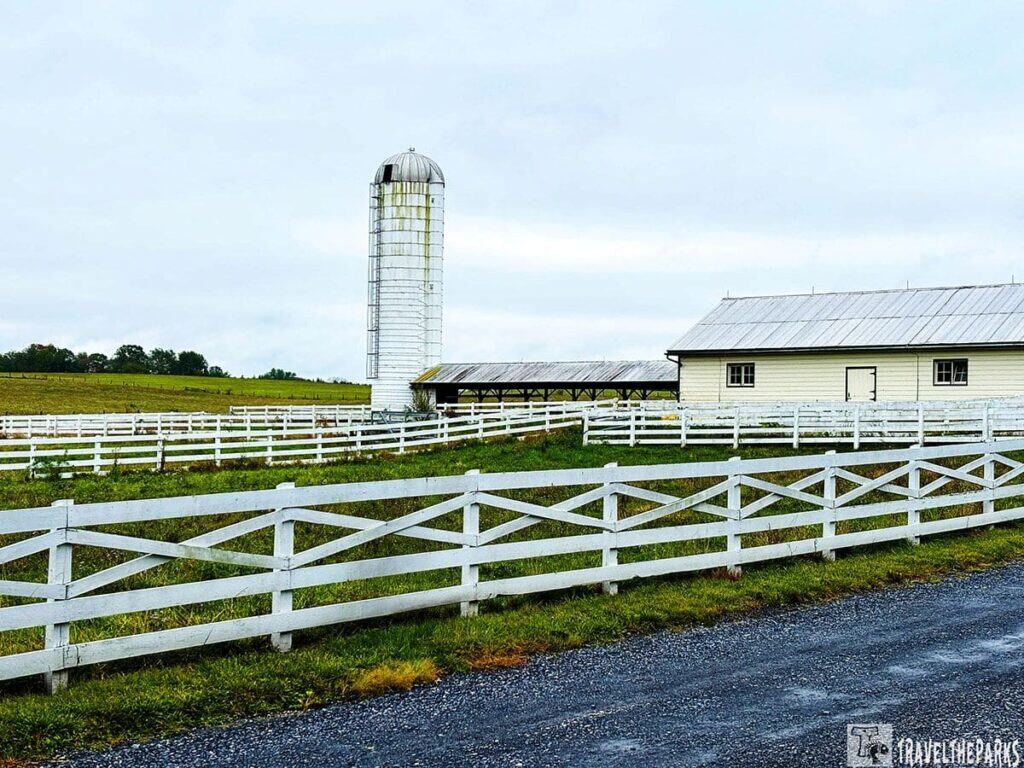
Once you leave the house, you can really see the full extent of President Eisenhower’s refuge. We highly recommend taking a leisurely stroll around the expansive property, which remains a working farm to this day. But this wasn’t merely a pastime for the President. He labeled the farm his “American Foothold.” It was a place where he could be refreshed by the simple, genuine work of farming. While walking, you can certainly empathize with the comfort he found here.
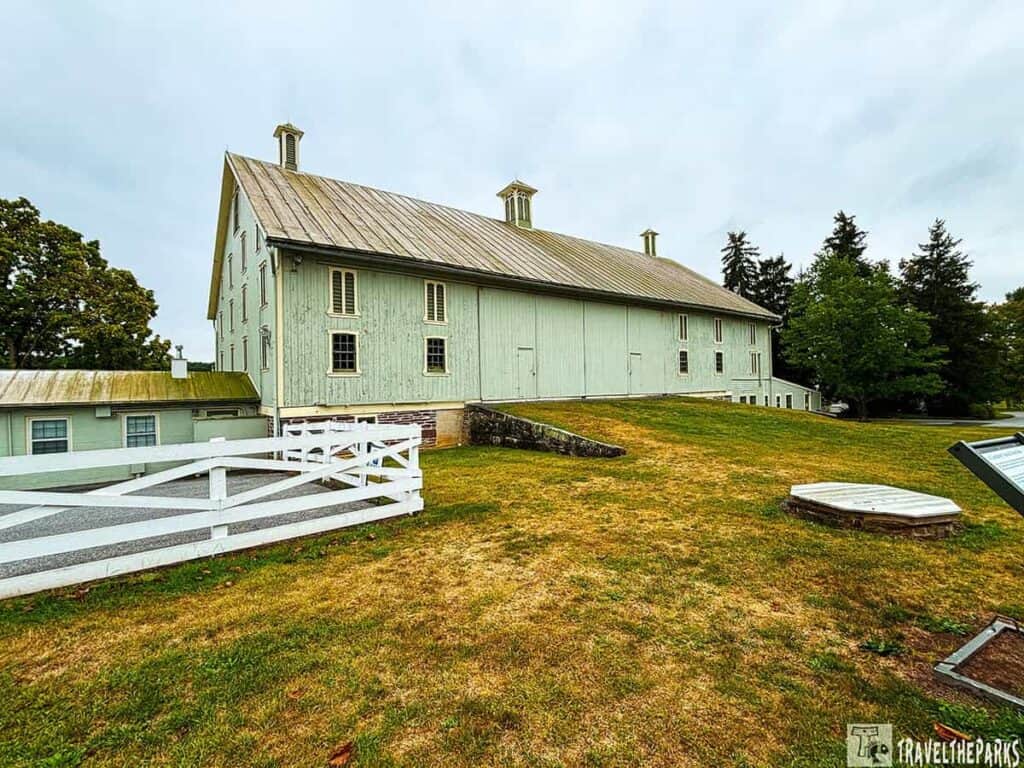
Stop #1: The Bank Barn
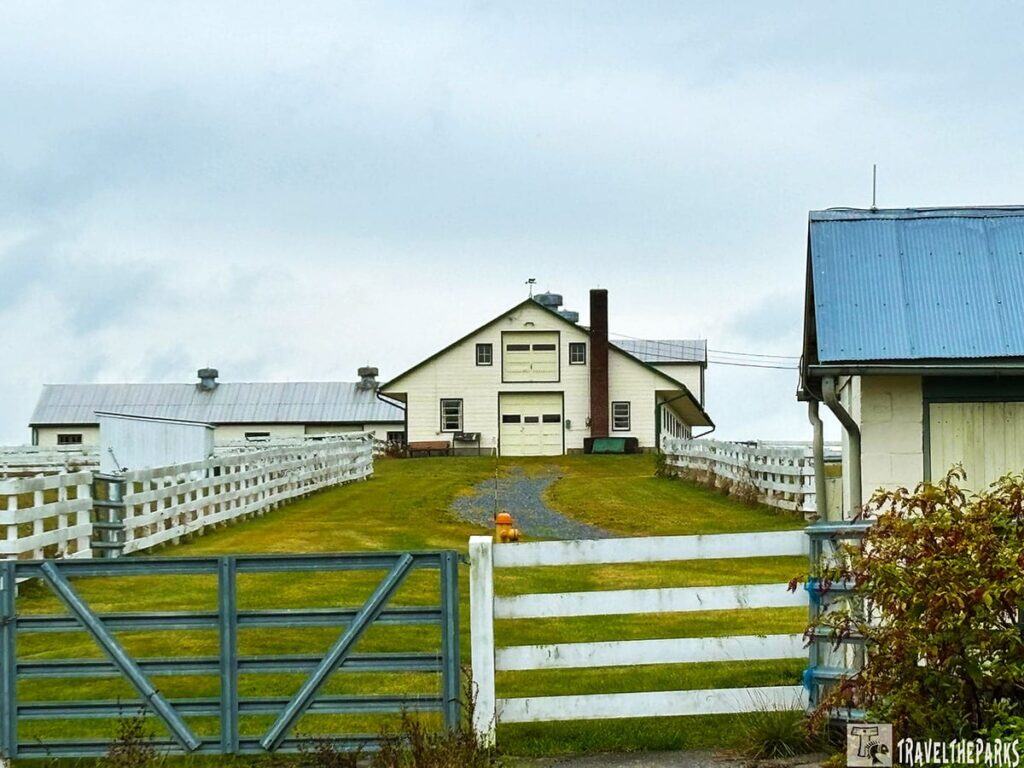
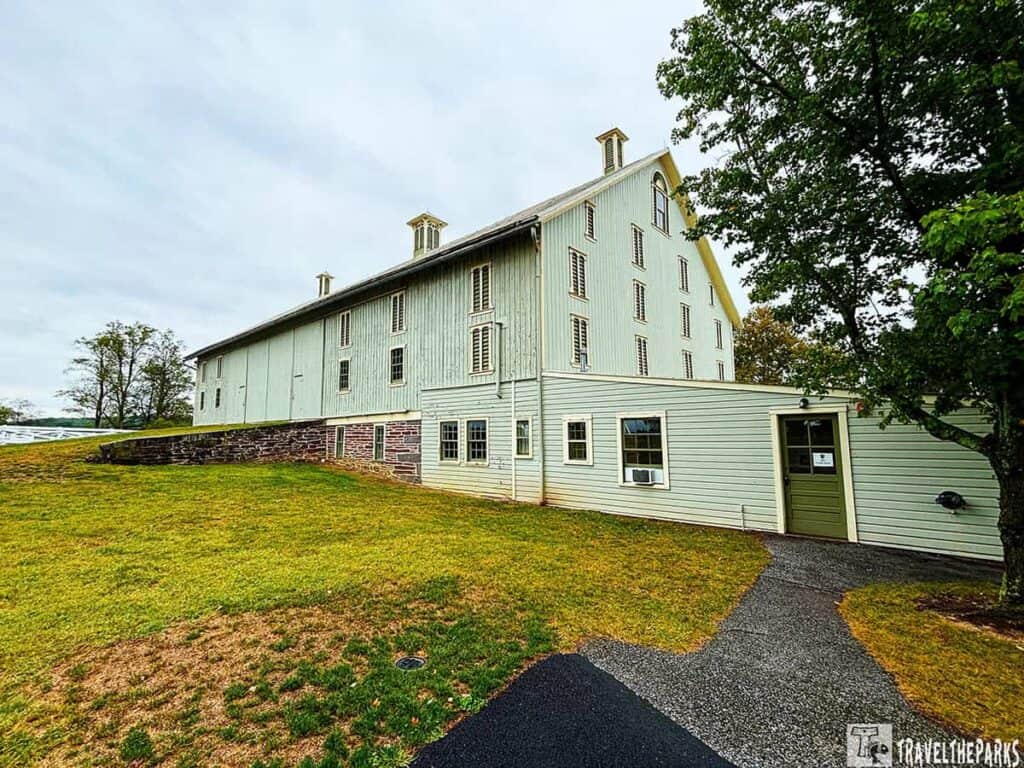
As someone who spent childhood days loading hay and cleaning stalls, I’ve always had a soft spot for barns. The Eisenhower barn is a classic, dating back to 1887. This sturdy “bank barn” was originally built with a classic layout: hay and straw stored above, with dairy cattle housed below. By the 1950s, its purpose evolved; the lower level was converted into stables for the horses and ponies Ike kept for the enjoyment of his grandchildren.
Stop #2: Secret Service Command Post: A Hidden Layer of History
Who could have guessed that the most clandestine operation on the entire farm was headquartered attached to the barn? We discovered inside that humble milk-house was the U.S. Secret Service Command Post. This is where agents maintained a watchful eye on the President. I could just picture the scene. The president, merrily mucking out stalls or judging his prize cattle. Meanwhile, a dedicated team a few feet away was monitoring radio traffic and likely pondering the unique challenge of protecting the Leader of the Free World from an ornery Angus.
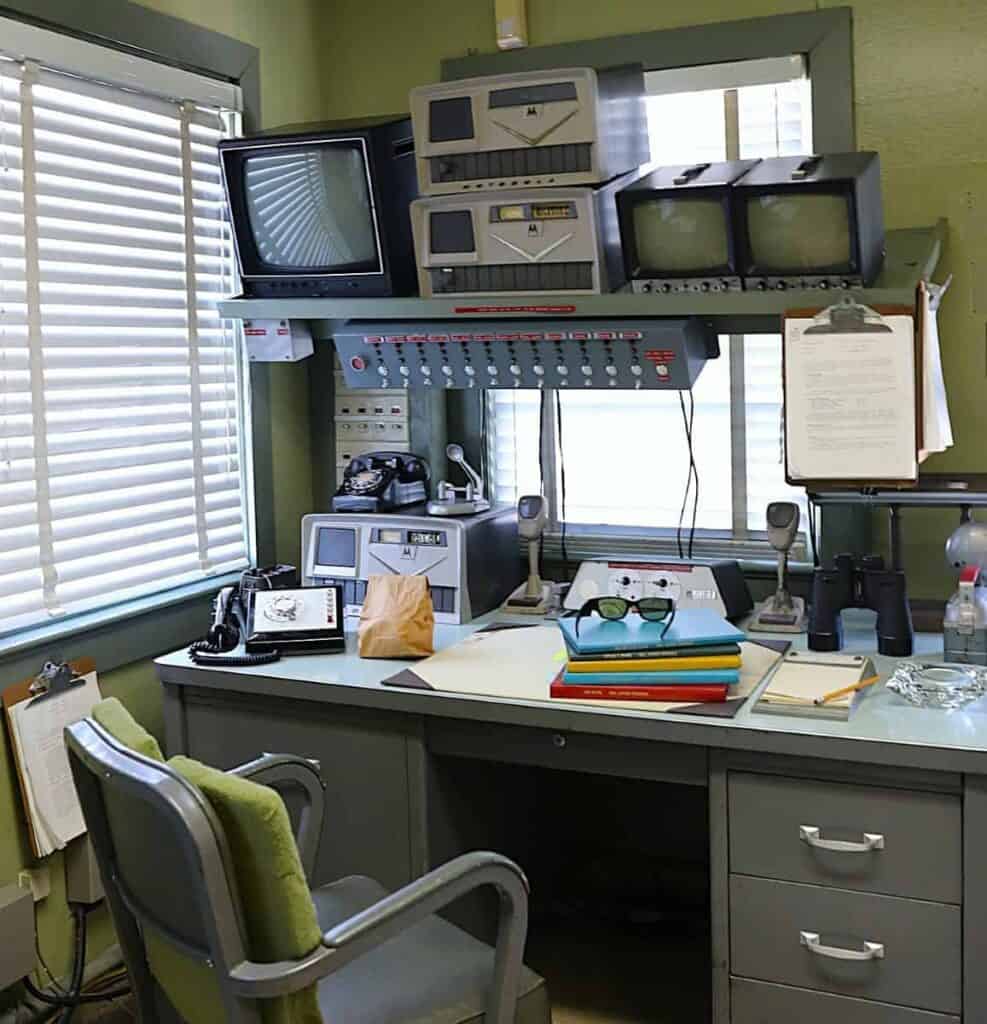
It’s a wonderfully bizarre slice of history. Visiting this spot, you get a tangible sense of Eisenhower’s life. It’s a place where high-stakes global security and the simple pleasure of farm eggs existed just a barn wall apart.
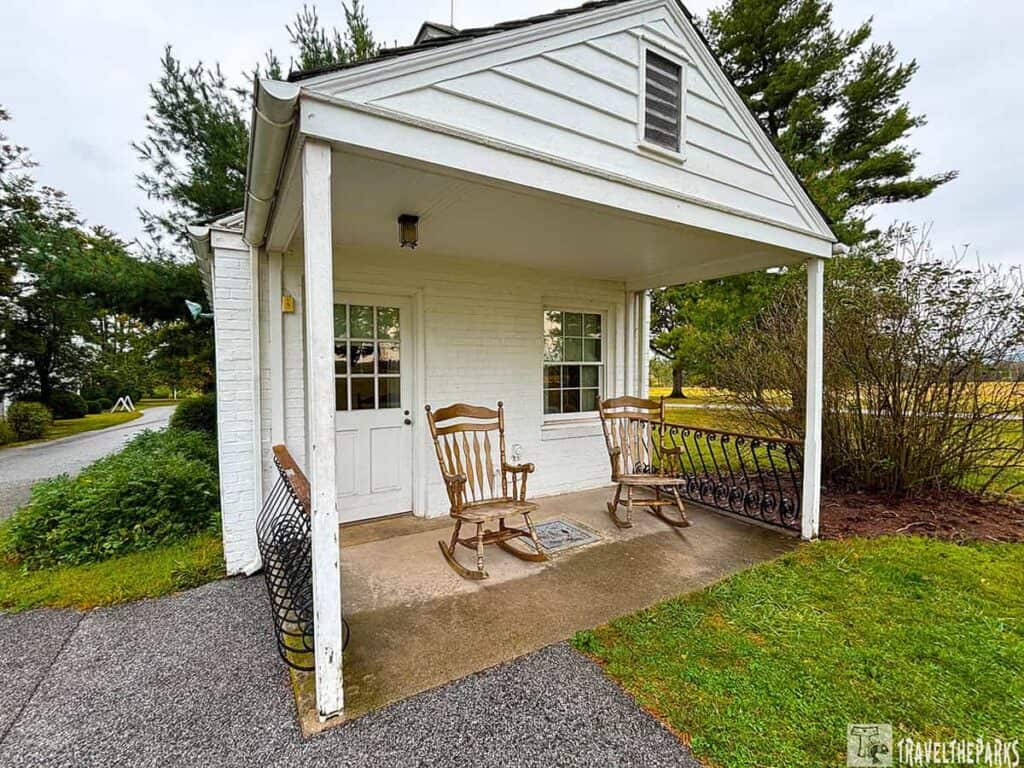
Stop #3: The Guest House
Even the guesthouse has a story. Imagine young David Eisenhower spending a summer here, trading the life of a president’s grandson for the honest work of a farmhand. The bell outside once rang at the Pitzer School, which stood near the home of his parents, John and Barbara Eisenhower. Although it is empty inside, devoid of furnishings, it’s a slice of family history preserved right here on the farm.
NOTE: Stop #4 is the Eisenhower home
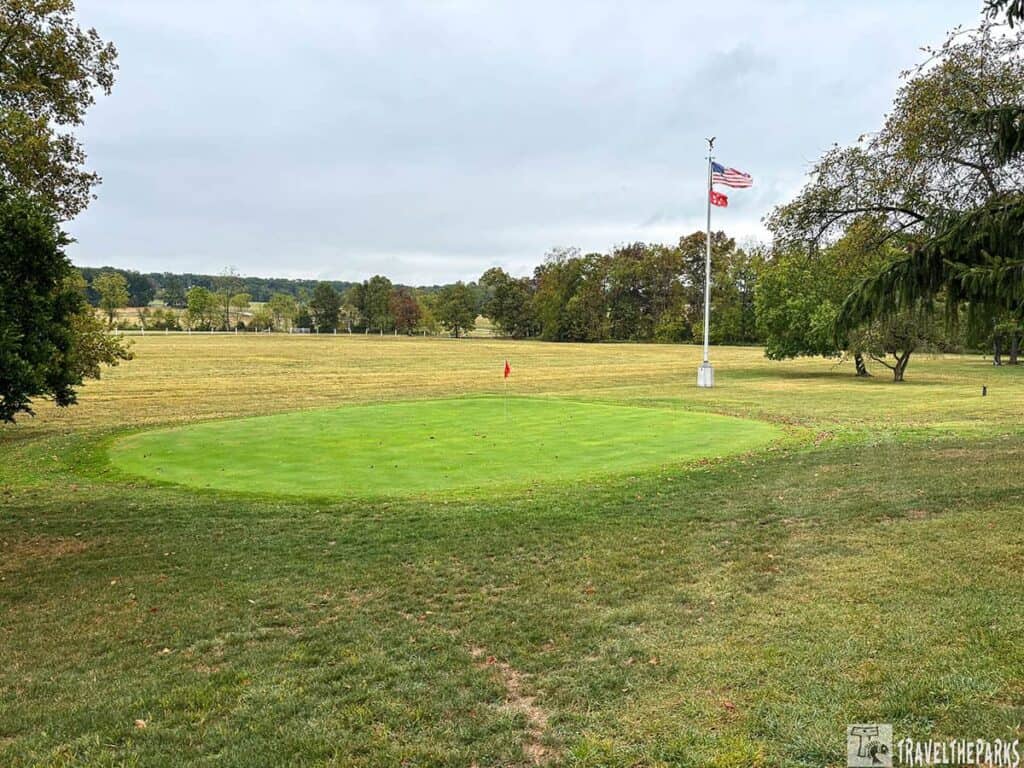
Stop 5: The Putting Green
The Putting Green: Ike was an avid golfer. In the 1950s, he had a personal putting green installed by the Professional Golfers Association just outside his home. He also had his own helipad too.
Stop #6: The Flag Pole
This flagpole marked Eisenhower’s journey from Commander-in-Chief back to a military commander. After his presidency, the Presidential standard was swapped for the five-star flag of a General of the Army—a banner that has since become synonymous with his Gettysburg retirement.
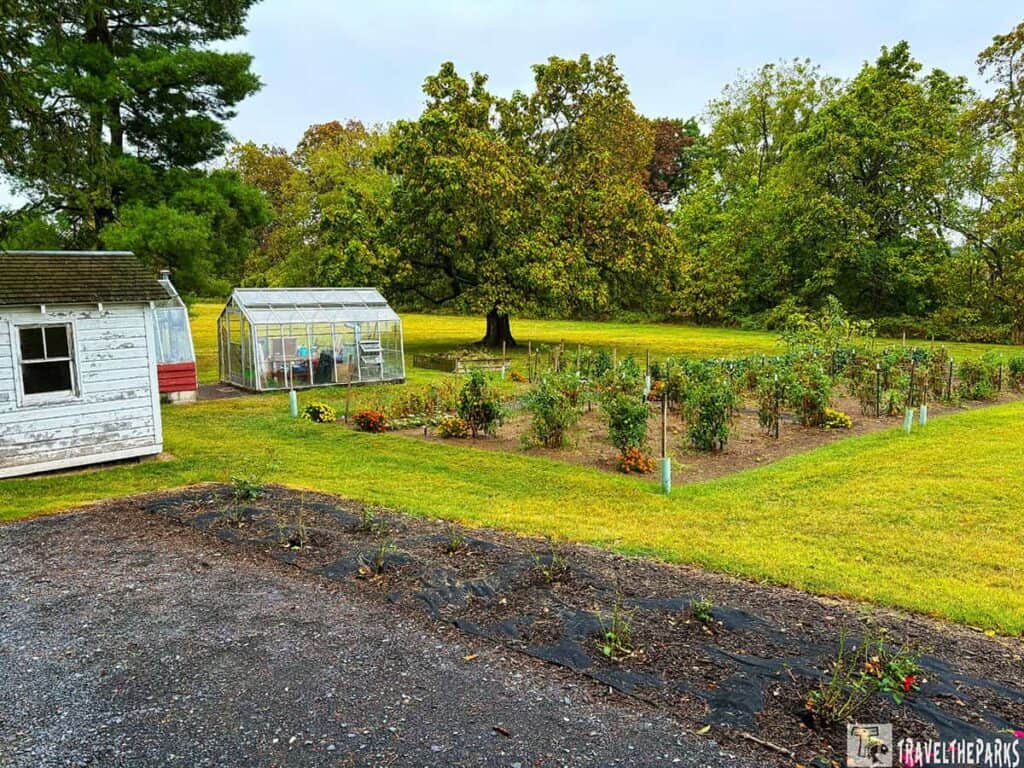
Stop #7: Greenhouse and Rose Garden
Before leaving the house grounds, we found ourselves at the cozy teahouse. This is where we discovered Mamie’s elegant world of gardens and gracious hospitality. A huge brick barbecue. Apparently, the President was a grill-master, a man who simply enjoyed a cookout. Nearby, I enjoyed her beautiful rose garden. The fragrant pathway perfectly highlighted the personal touches they added to make this property a true home.
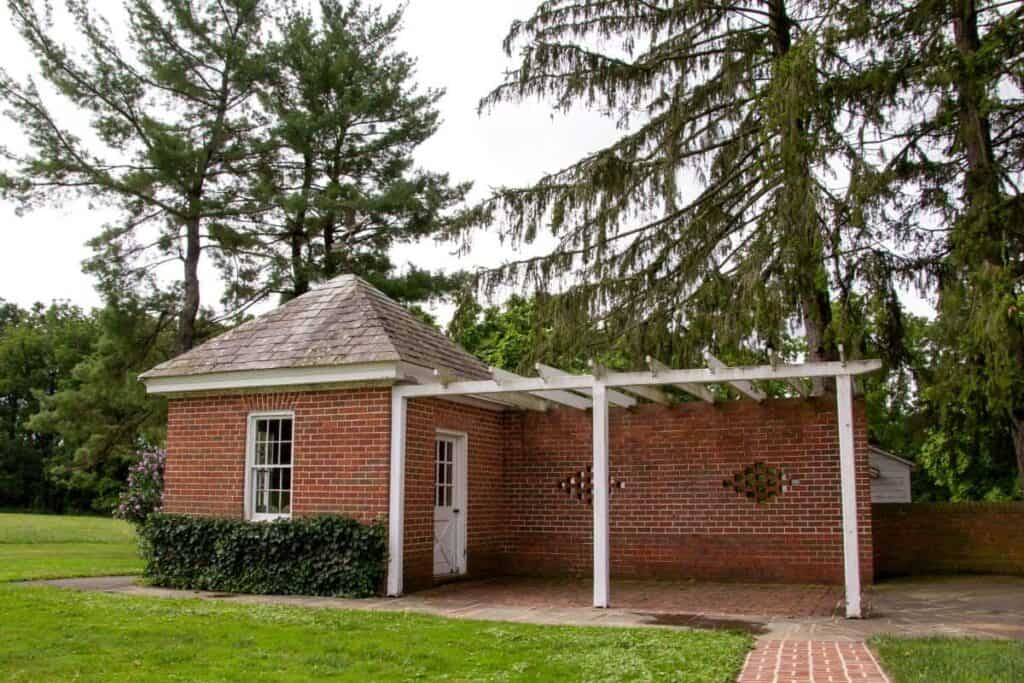
A short walk from the Reception Center brought us to the skeet range, where an exhibit showcases Eisenhower’s remarkable marksmanship and clearly explains the rules of trap and skeet.
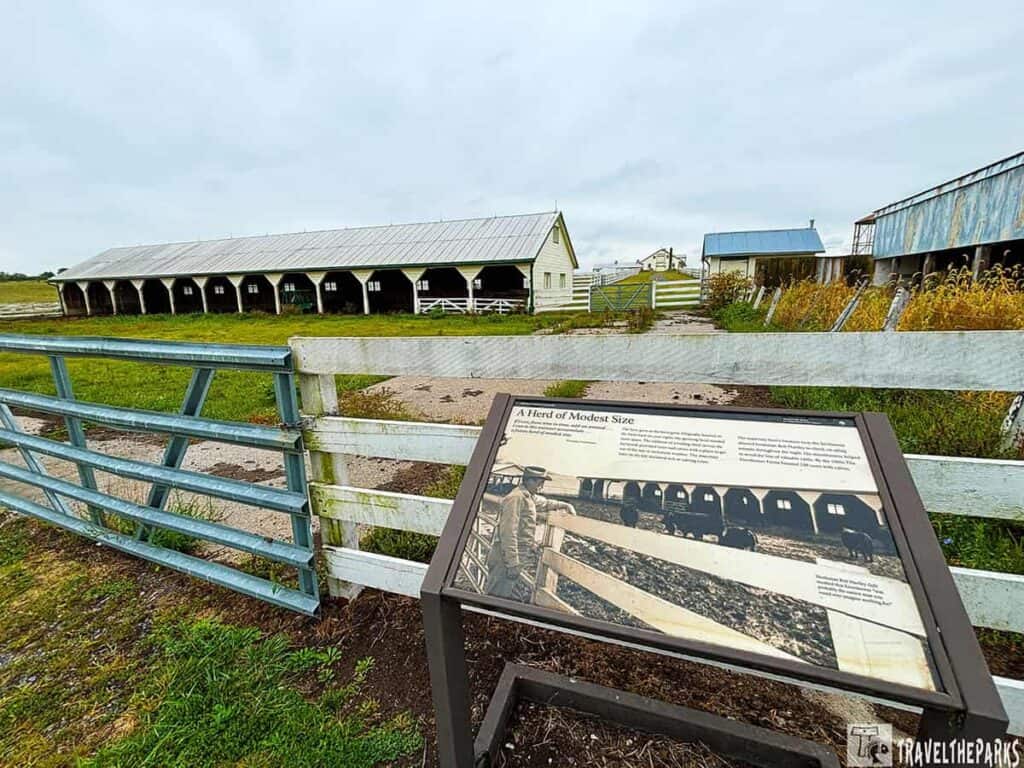
3. Self-Guided Exploration of Farm #2: The Heart of the Cattle Operation
To see the real engine of Eisenhower’s farming passion, we crossed the bridge to Farm #2. The culvert in the stream below marks the boundary of the original property. Eisenhower’s friend and partner, W. Alton Jones, purchased this additional land in 1954 specifically to raise their prized purebred Angus herd.
PRO Tip: Wheelchairs should avoid this gravel trail. Disabled parking is available at Farm 2.
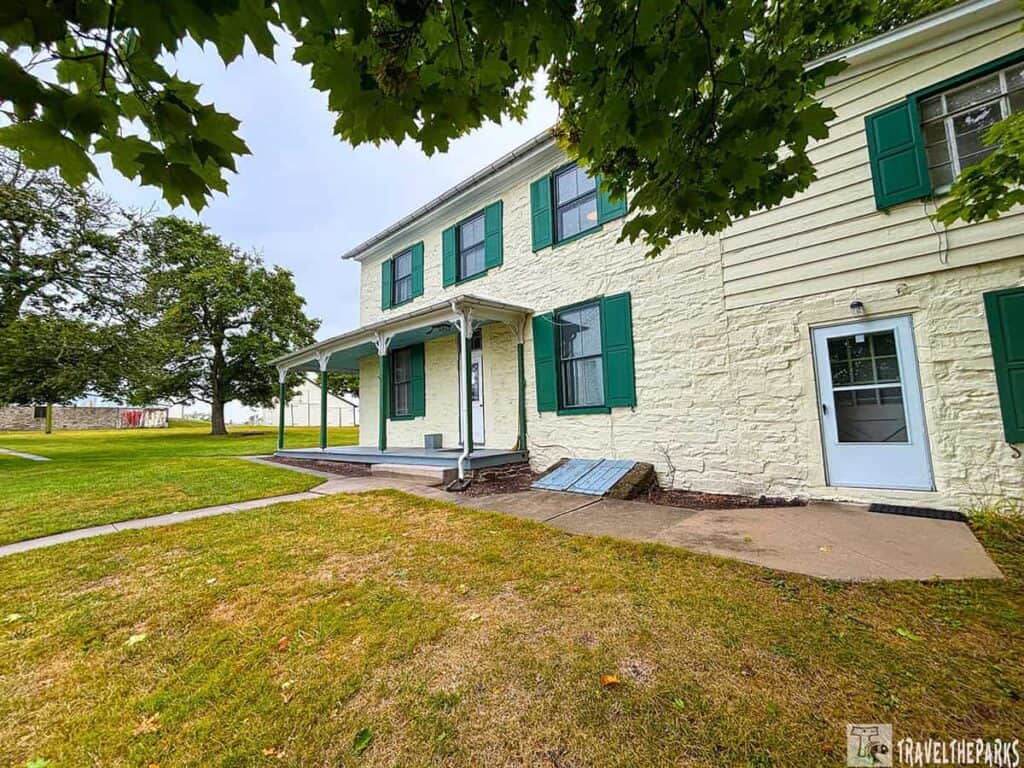
As we explored, we saw the entire ecosystem of a world-class cattle operation:
- Herdsman’s Home: Bob Hartley, the man who managed the entire operation, occupied this charming 1797 house. He was the mastermind behind the breeding schedules and herd quality.
- Maternity Barn: A true luxury in the livestock world, this barn provided a safe, dedicated space for pregnant cows and their newborn calves.
- Breeding & Tool Shed: This dual-purpose shed was all about business. The North Bay was a controlled breeding area, with every mating meticulously recorded. The south bay housed the tools needed to keep the farm running.
- Loafing Shed: A simple, three-sided structure that offered the herd a dry spot in the winter and a cool, shaded retreat in the summer.
- Bull Pens: home to the breeding bulls, including the celebrated Ankonian 3551, who sired prize-winning offspring for over a decade.
- Show Barn: This was the glamour department! Here, the chosen animals were pampered with daily brushings and weekly baths to prepare them for competition.
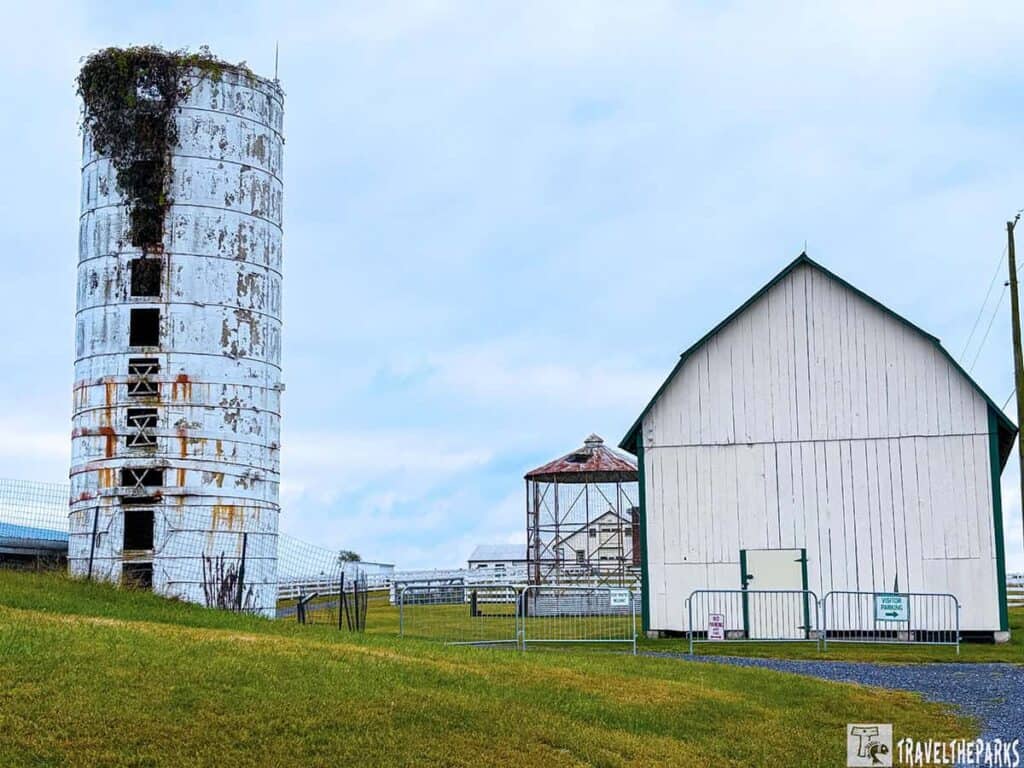
4. Special Events & Living History
If you can time your visit right; you might experience the farm at its most dynamic. The site regularly hosts events that turn history into a living, tangible experience. You could encounter:
- WWII or Cold War Weekends: These are the times when reenactors in their period costumes take over the area. They act out scenes, tell stories, and demonstrate equipment from that era.
- Expert ranger-led walks: These walks are personal stories and historical facts told by the rangers that make the walk a time travel experience.
- Hands-on demonstrations of 1950s farming and home life: These exhibits explain to you the “how” and the “why” of the farm’s functioning, starting with the work of the crops and going to the kitchen utensils thus making the Eisenhowers’ daily life the most direct and real.
- Engaging Junior Ranger activities: a fun, interactive way to discover. Children are not merely learners of history. They become participants through activities and scavenger hunts that are made to kindle their curiosity.
These programs do not merely inform you about history—they allow you to step right into it, thus creating a much more vivid and lasting connection to the Eisenhower era.
5. Combine With a Gettysburg Visit
Because of its proximity, a visit to the Eisenhower Farm pairs perfectly with the Gettysburg Battlefield. A typical day itinerary guide often unfolds like this:
- Morning: Explore the peaceful retreat of President Eisenhower.
- Afternoon: Tour the hallowed grounds of the Gettysburg battlefield.
- Evening: Reflect over a meal at the Dobson House Tavern in historic downtown Gettysburg.
For us, this journey created a profound narrative arc. From the home of a president who helped shape the modern world, to the very fields that defined the war which nearly tore America apart. The contrast between a leader’s tranquil home and the war-torn landscape next door is a powerful and moving experience.
Final Thoughts: Visiting Eisenhower National Historic Site
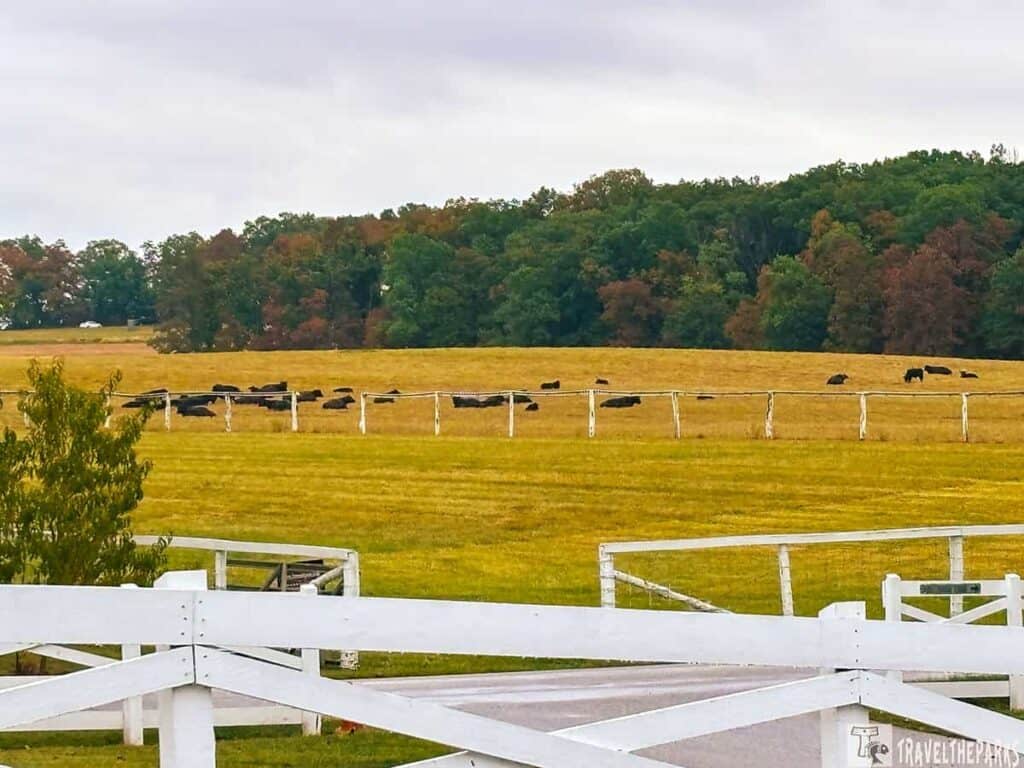
I gaze out at the golden fields before me and, sure enough, in the distance is Eisenhower’s pride and joy, an Angus herd. And can you believe it—each and every one of them is lying down. It makes me think of my childhood again, when I was sure that “when the cows are laying down, rain is coming.” Apparently, even a president’s cattle follow the same old folk wisdom, and today with the intermittent showers, they have proven to be right again.
For us, visiting Eisenhower National Historic Site was a lovely way to remember that even the most powerful leaders in the world need a home of their own. This farm, which is right next to the Gettysburg Battlefield, provides a very personal view of the life and the morals that Ike shared with Mamie. It’s a simple, beautiful, and surprisingly moving experience.
What about you? Have you visited a presidential home that gave you a new perspective? Or do you have a favorite piece of folk wisdom like our rain-predicting cows? Share your stories in the comments below!
![Statue on a stone pedestal with flags and trees in a park. Transcribed Text: JUAN PONCE DE LEON DISCOVERER OF FLORIDA […] MARCH 1513 THIS LAND WHICH HE CALLED LA FLORIDA ESTABLISHING A RIGHT OF POSSESSION UNDER THE SOVEREIGNTY OF THE CROWNS OF SPAIN AND CASTILE FROM WHICH THIS COUNTRY DERIVES THE NAME OF FLORIDA THIS MEMORIAL ERECTED BY PONCE DE LEON’S DESCENDANTS IN THE RICHEST AGRICULTURAL SECTIONS OF SPAIN AUGUST 1909.](https://traveltheparks.com/wp-content/uploads/2020/12/statue-of-ponce-de-leon-st-augustine-1020-FI-1.jpg)