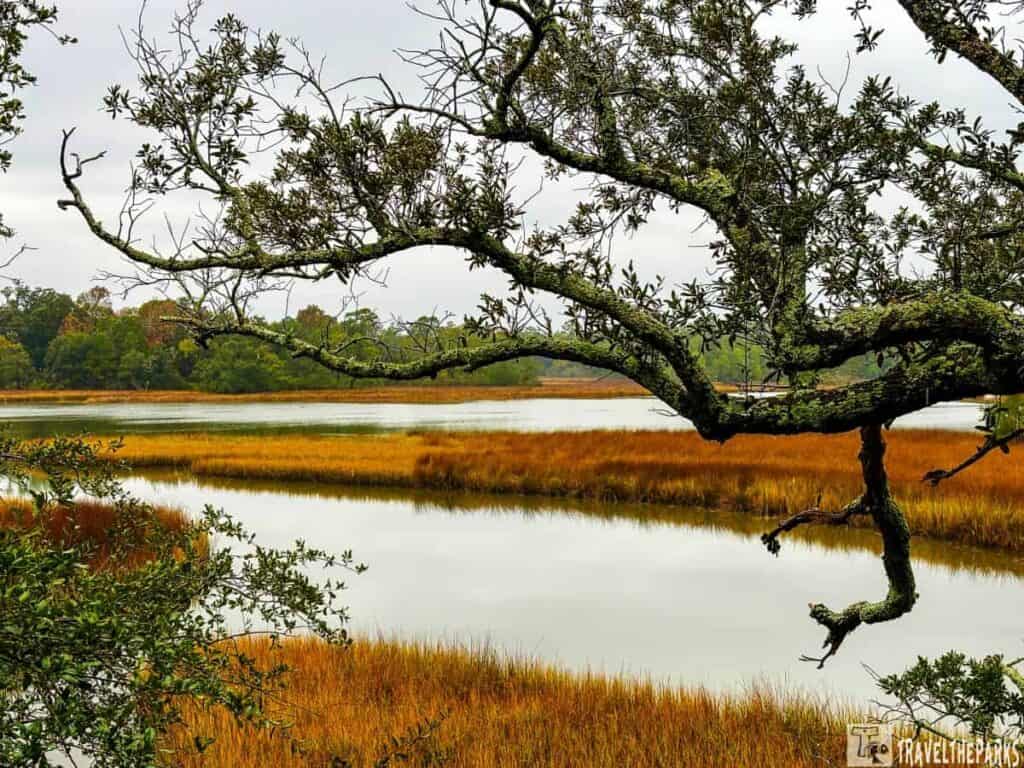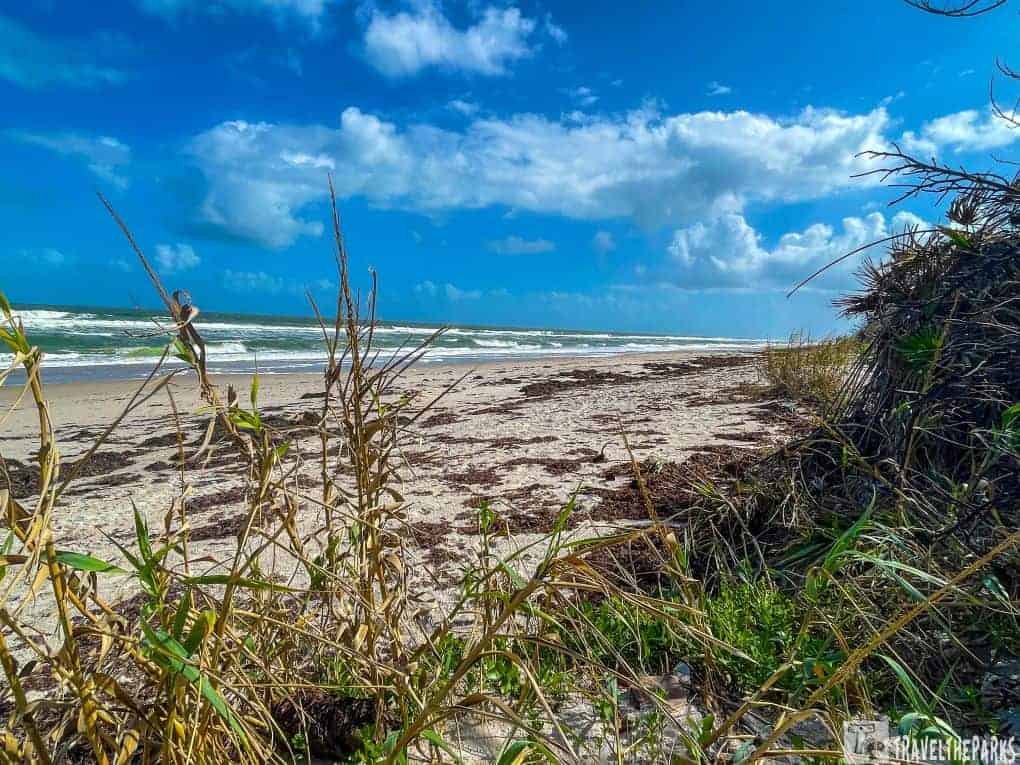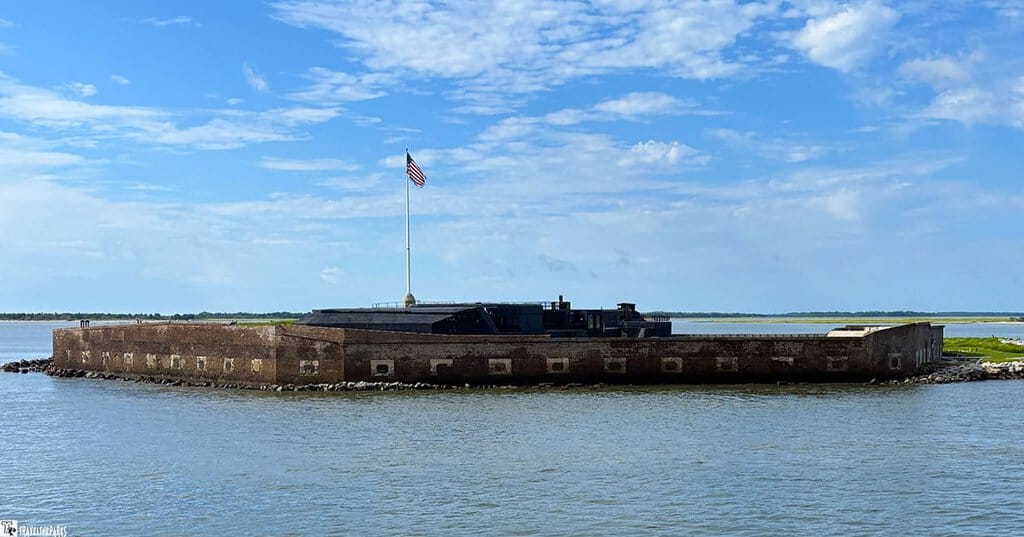
As we zigzagged our way down the East Coast on our unforgettable road trip, one stop stood out like a cannon blast from the past. Visiting Fort Sumter and Fort Moultrie National Monument in charming Charleston,, South Carolina! This isn’t just any old pile of bricks—oh no. Fort Sumter is where history literally exploded, shaping the fate of a nation. From standing where the first shots of the Civil War rang out to its dramatic seaside setting, it whispers tales of resilience.
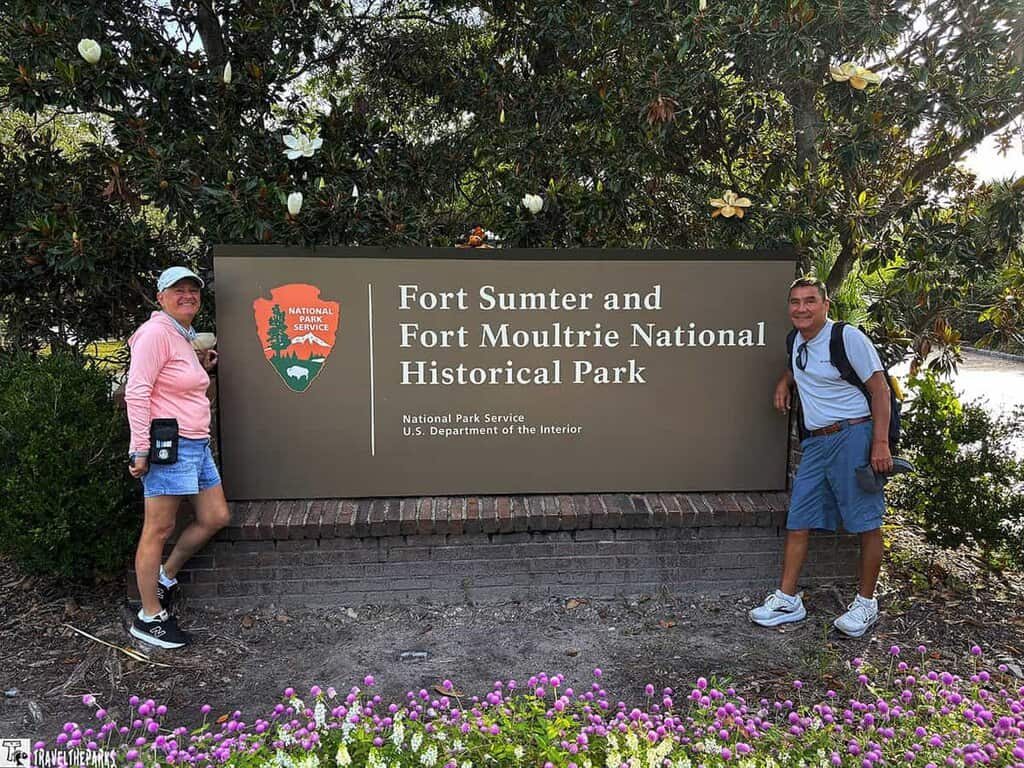
In this post, we’ll recount our time-traveling escapade and share why this historic gem is an absolute must-see for any curious traveler chasing tales along the coast. One of the must-see destinations here? Fort Sumter has been a national monument since 1948.
This post may contain affiliate links, meaning if you purchase something through one of these links, we may earn a small commission at no extra cost to you! Read the full disclosure policy here.
When we started planning our road trip up the East Coast, I knew we had to include a visit to Fort Sumter. Let’s be real—most of us remember Fort Sumter as “the spot where the first shot of the Civil War was fired” from high school history lessons (April 12–13, 1861). But there’s way more to this little island fortress than just being the opening act of America’s messiest family feud. If you are visiting Charleston, this is a must-do on any itinerary.
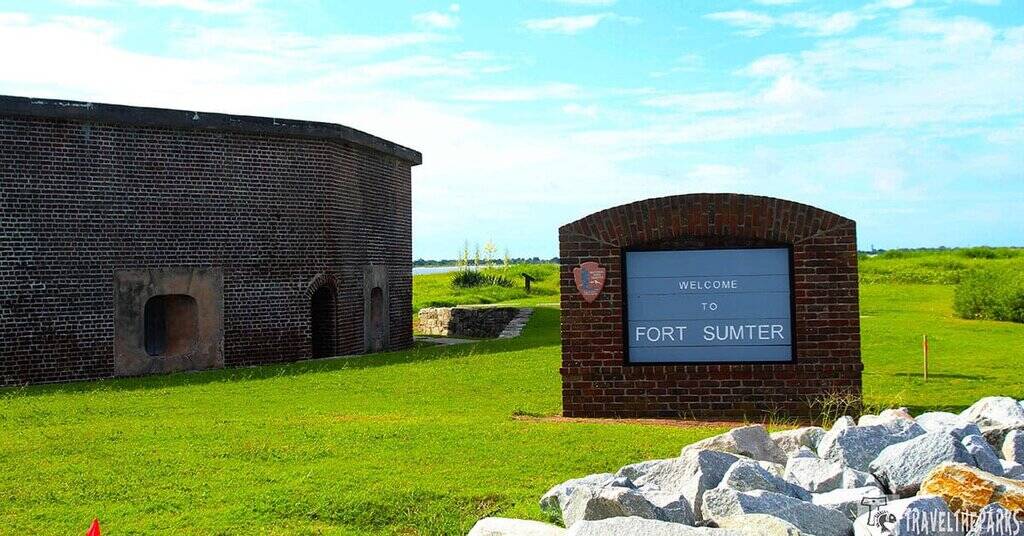
Table of Contents
What to Know Before You Go: Survival Tips
- Ferry Tickets: Book Tickets in Advance: Trust us, the ferry ride is popular. Around $25–$35 for adults, less for kids. Departure Times: Usually 2–3 trips per day (check the schedule!). Arrive early; boarding starts 30 minutes before departure.
- Operating Hours: Fort Sumter is open daily except for Thanksgiving, Christmas Day and New Year’s Day. No admission cost for the fort itself.
- The Fort Sumter Visitor Center at Liberty Square is open daily from 9:00 am to 4:30 pm. The official park website provides updated times.
- Parking at Patriots Point is easy, with a large lot right by the ferry terminal. Expect to pay a fee (typically around $5–$10) for parking. Liberty Square offers parking at nearby garages and surface lots. Be aware that prices can vary, and it’s more expensive than Patriots Point (typically $10–$15).
- Best time to visit Fort Sumter: during the spring (March to May) or fall (September to November). Both seasons offer mild temperatures, fewer crowds, and pleasant weather for outdoor exploration. Summer can be hot and crowded, while winter offers peace/quiet, though it’s chillier. For the most enjoyable experience, aim for early morning visits to avoid crowds and enjoy cooler temperatures.

Fort Sumter Historic Overview
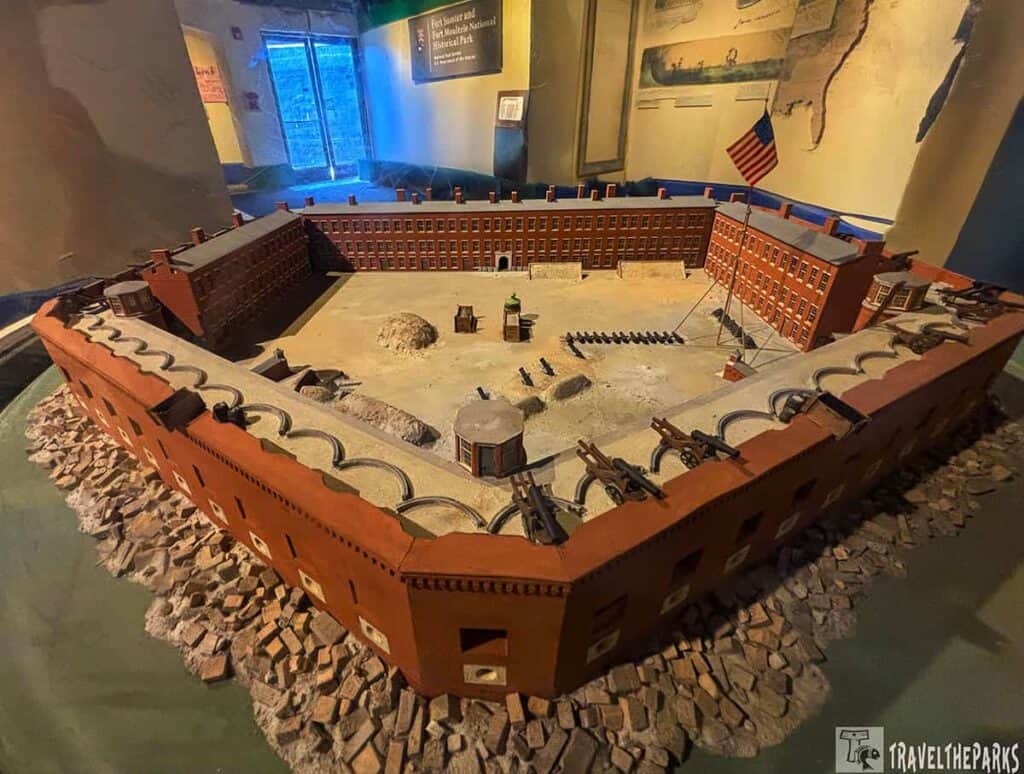
Fort Sumter stands as a stoic sentinel on an artificial island, guarding the entrance to Charleston Harbor in South Carolina. Born from the ambitions of a nation determined to fortify its shores after the rocky aftermath of the War of 1812, construction on this mighty coastal fortress began in 1829. It was part of a grand scheme that birthed other imposing strongholds like Fort Jefferson, Fort Pickens, Fort Pulaski, and Fort Clinch. Built of sturdy brick, it housed 650 soldiers and held 135 artillery pieces, ready to defend against any threat that dared approach.
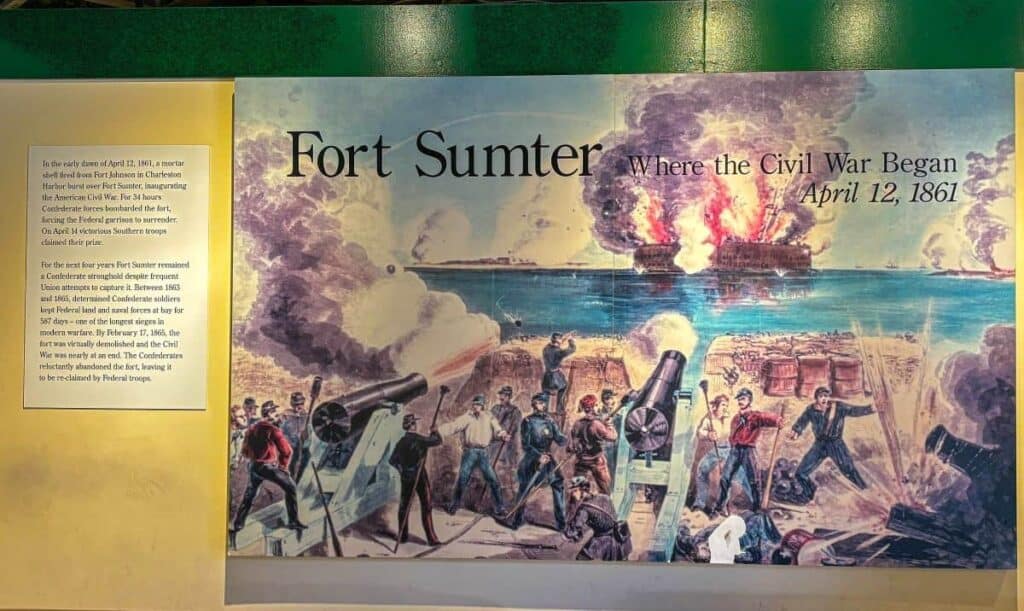
But as history often loves to stir the pot. In December 1860, South Carolina seceded, and Fort Sumter became the flashpoint of a growing storm. Under the command of Major Robert Anderson, Union forces found themselves at odds with the rising Confederacy. The fort became the stage for a dramatic standoff. For 34 grueling hours, Confederate forces hurled bombardments, their shells painting the sky with fire, until Anderson and his men, battered but resolute, finally withdrew.
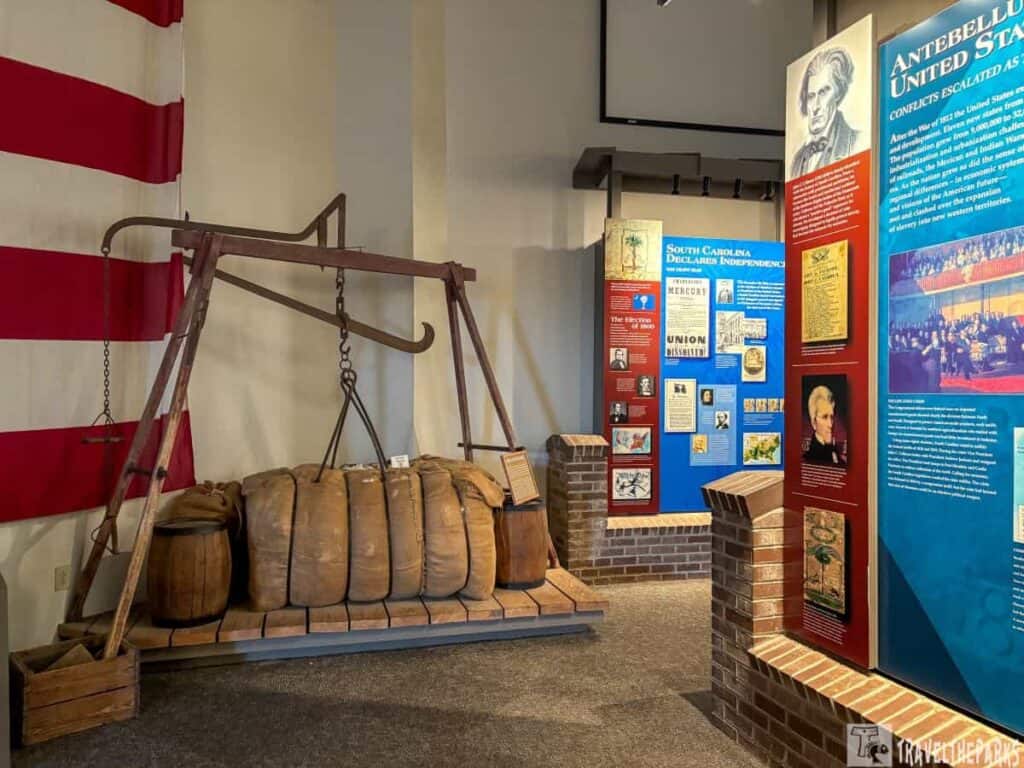
That deafening cannonade didn’t just rattle the walls of Fort Sumter—it set the stage for the Civil War, fueling the flames of conflict on both sides. The Confederacy claimed the fort. They held it for nearly four long years, enduring a constant rain of Union fire from afar. It wasn’t until February 1865, with the winds of war beginning to shift, that Union forces returned to reclaim the fort. It was just months before the war would come to its inevitable end.
Visitor Education Center at Liberty Square
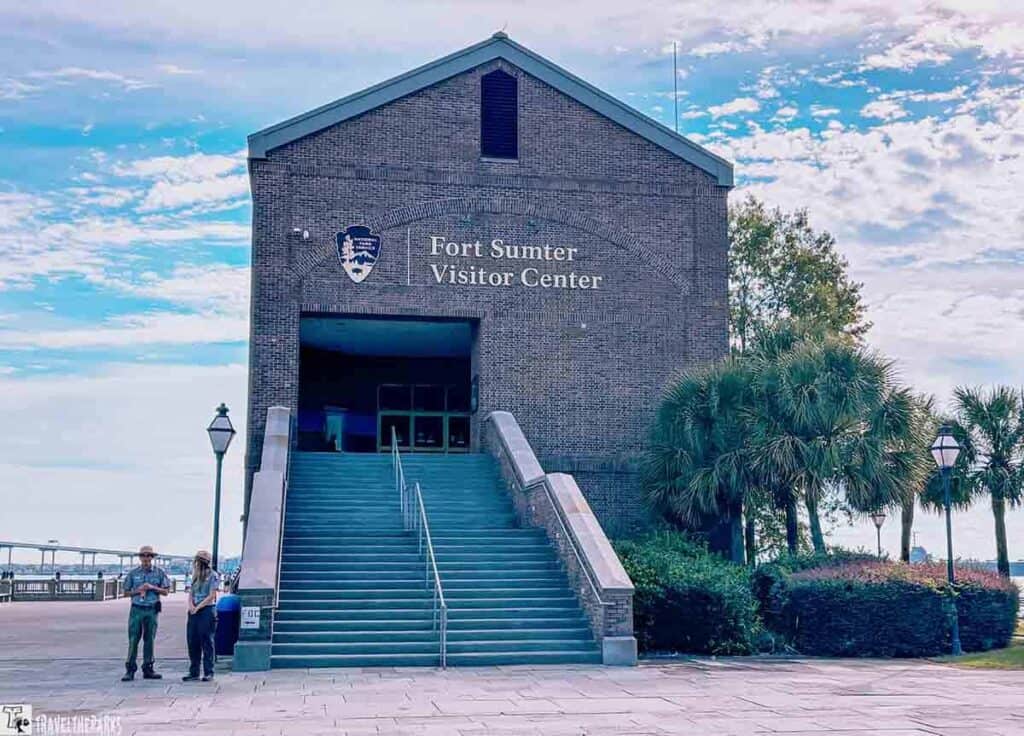
Before we went to the island, we stopped at the Fort Sumter Visitor Center in Liberty Square. It serves as a doorway for exploring the heart of the American Civil War’s history. This place is full of exceptional exhibits, dioramas and videos that prepare you for what you’re going to see at the fort. Their collection of real Civil War guns and items that belonged to soldiers is amazing. It’s as if you are getting a glimpse into their lives during that actual timeframe. The visitor center offers more than just historical information. They have a nice gift shop where you can pick up some souvenirs or books to continue your learning after you return home. Once we were done, we hopped on the ferry and sailed across the harbor to the fort.
The Ferry Ride: A Scenic Adventure (With a Side of Seagulls)
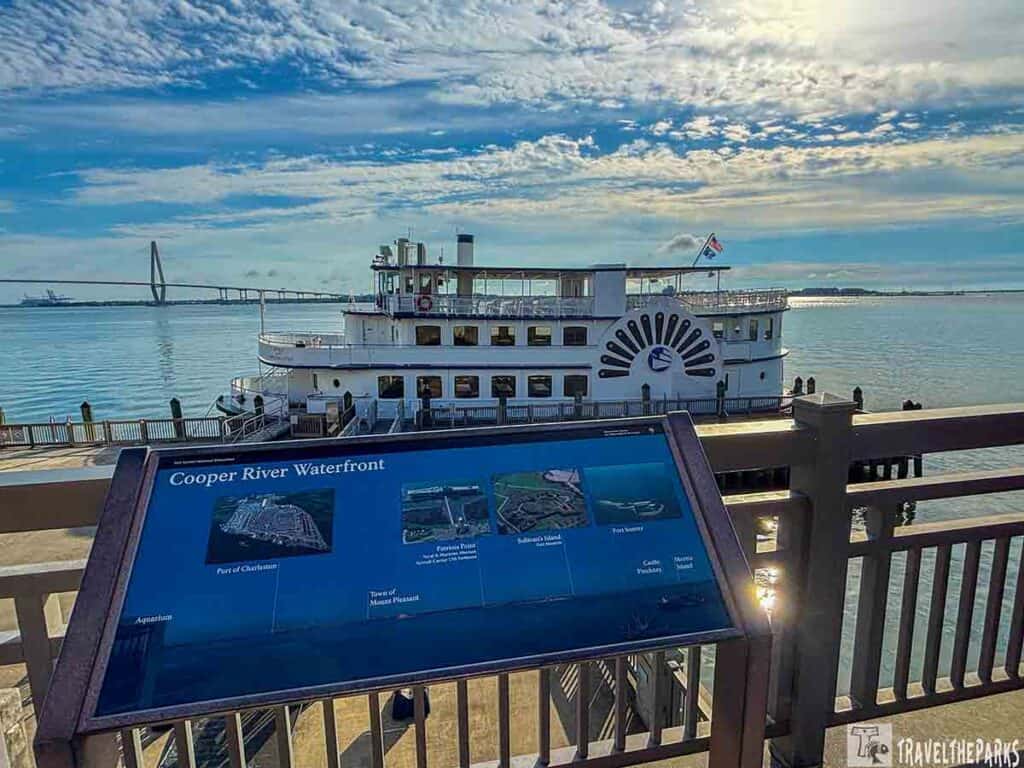
Before we dive into all the cool historical tidbits, let’s talk about the first step in our adventure—getting to Fort Sumter. First things first—you can’t drive to Fort Sumter and Fort Moultrie National Monument. Nope, this isn’t one of those “park and stroll” kind of historic site. To reach the fort, we had to hop on a ferry, which is half the fun! Operated by the National Park Service in partnership with Fort Sumter Tours, departures are from Liberty Square in Charleston or Patriots Point in Mt. Pleasant.

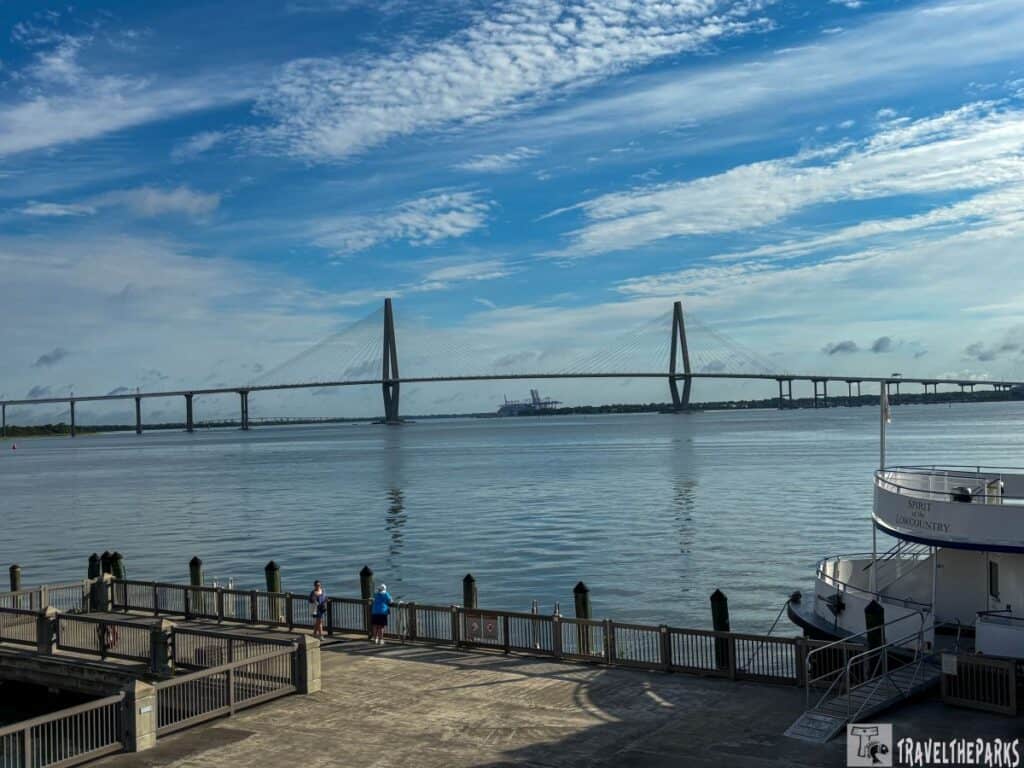
We parked at the parking garage for the Charleston Aquarium, a short distance from Liberty Square. Arriving early for the 9:30 AM departure, we joined the line at Liberty Square to board the ferry. The anticipation was noticeable as the day’s adventure awaited. The 3.5-mile ride across the harbor to Fort Sumter takes about 30-45 minutes each way. As the boat cut through the water, we were treated to stunning views of the Charleston skyline, Arthur Ravenel Jr. Bridge, and the historic harbor. It set the stage for the immersive experience that lay ahead.
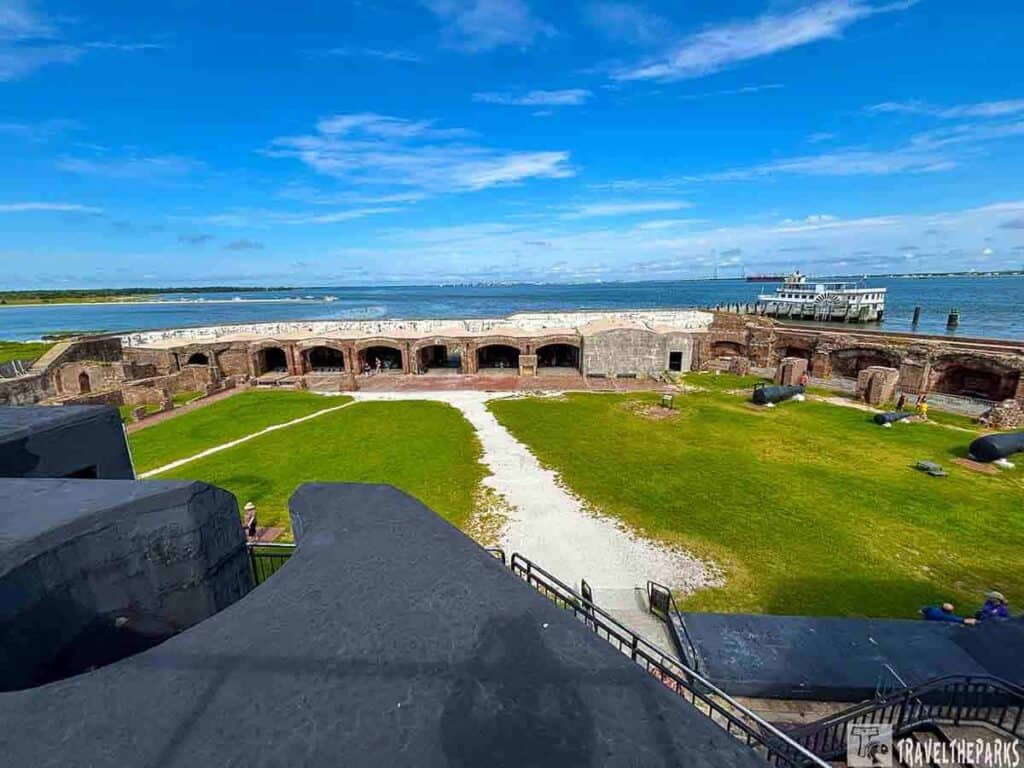
Our first sight of Fort Sumter was powerful. Notice its pentagonal shape and the stark difference between the dark, pre-war brick of the lower levels and the lighter, post-war reconstruction above. Once we disembarked, we had about 60 minutes to explore the fort. Rangers give a brief talk upon arrival, and then we were free to roam.
PRO tip: Book in advance, especially in peak season, unless you enjoy playing “ferry roulette” with your schedule.
Things to Do Visiting Fort Sumter
Okay, so when I was at Fort Sumter, I got totally sidetracked by one question: who in the world was Sumter? Turns out, the fort is named for this legendary guy from the Revolutionary War, Thomas Sumter, who they called the ‘Carolina Gamecock.’
And that nickname is just perfect—a gamecock is a fighting rooster, known for being tough and stubborn, which totally matches his ferocious, never-back-down style of fighting. He was a big deal in South Carolina.
The funny part is, his name ended up getting a whole new kind of fame years later, attached to the fort where the Civil War kicked off. The big irony? Before any of that happened, the original Gamecock had been dead for quite some time. He never even saw the place!
The Daily Ceremony: Raising the Flag at Fort Sumter
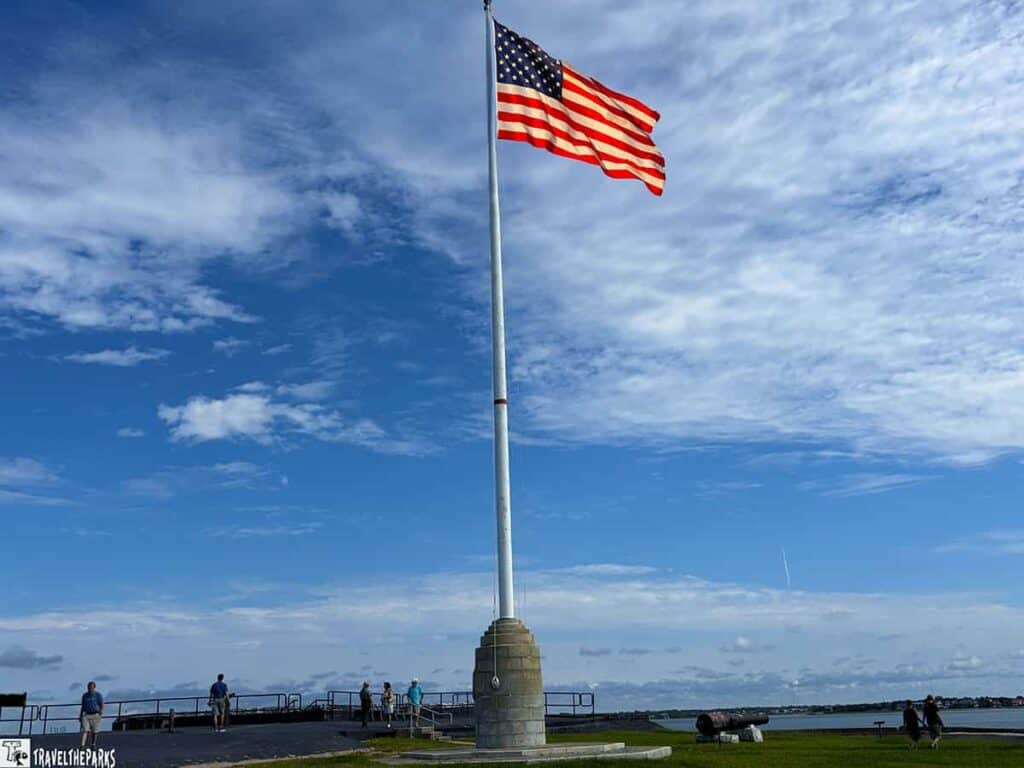
Flags are the superstars of Fort Sumter! The iconic flagpole you see is a replica of the original from 1861. It was the raising and lowering of flags here that literally signaled the start and end of the Civil War. We got to experience the Park Service’s daily flag ceremony, which is a really cool tradition. The ranger shared the dramatic story of the original flag—the one the Confederates demanded to be taken down, sparking the first shots. It was a powerful moment, watching a new flag go up today while hearing about the one that started it all.
Exploring Battery Huger: The Spanish-American War’s Legacy at Fort Sumter
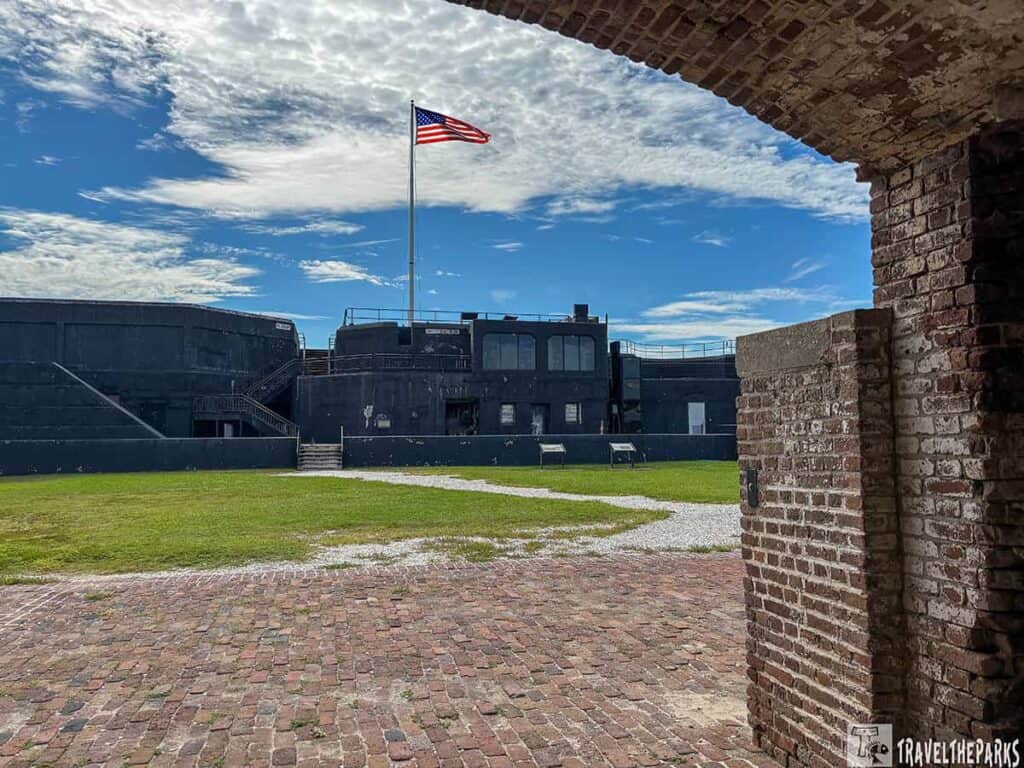
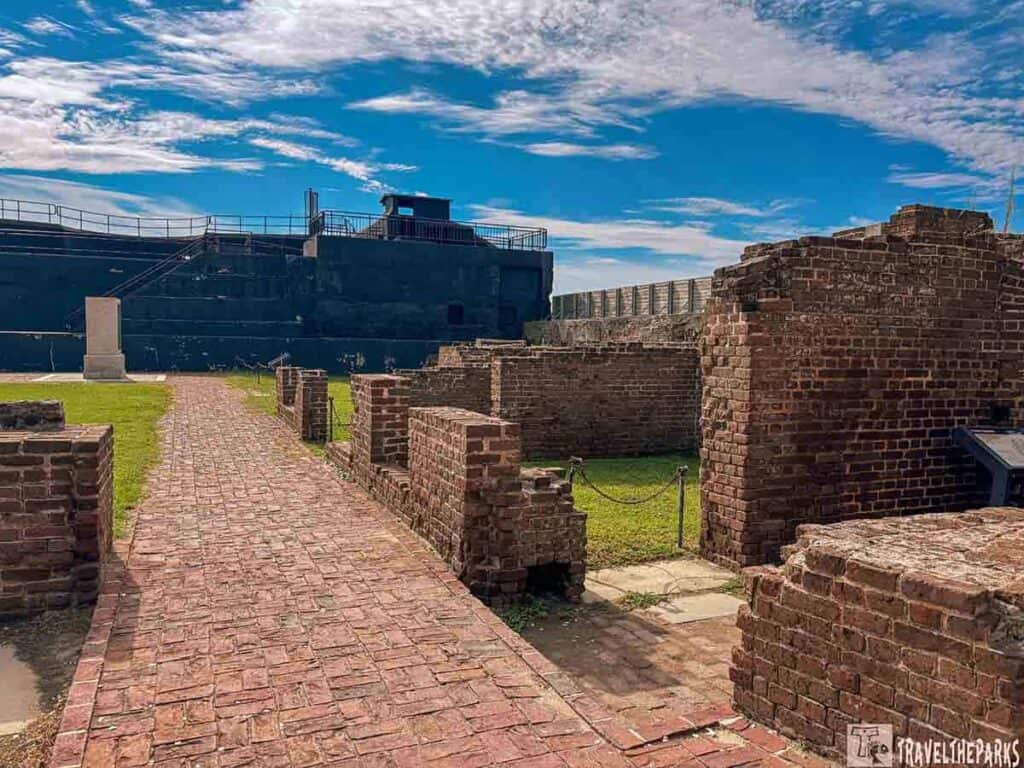
We toured the Battery Huger; it is pretty impressive. Nevertheless, it seemed somewhat intimidating to me. Maybe it was the solid black paint that covered the structure. The battery’s stark black armament gives it a somber, yet imposing presence. This concrete artillery battery was very similar to other Endicott batteries we have seen previously at Fort Pickens. This structure was built on the northwest side of the fort between 1898 and 1899, during the Spanish-American War. What’s really interesting to me is that it partly covers up the original Civil War walls. It blends the old history with the more recent military past of the fort.
Inside the Fort: Exploring the Museum
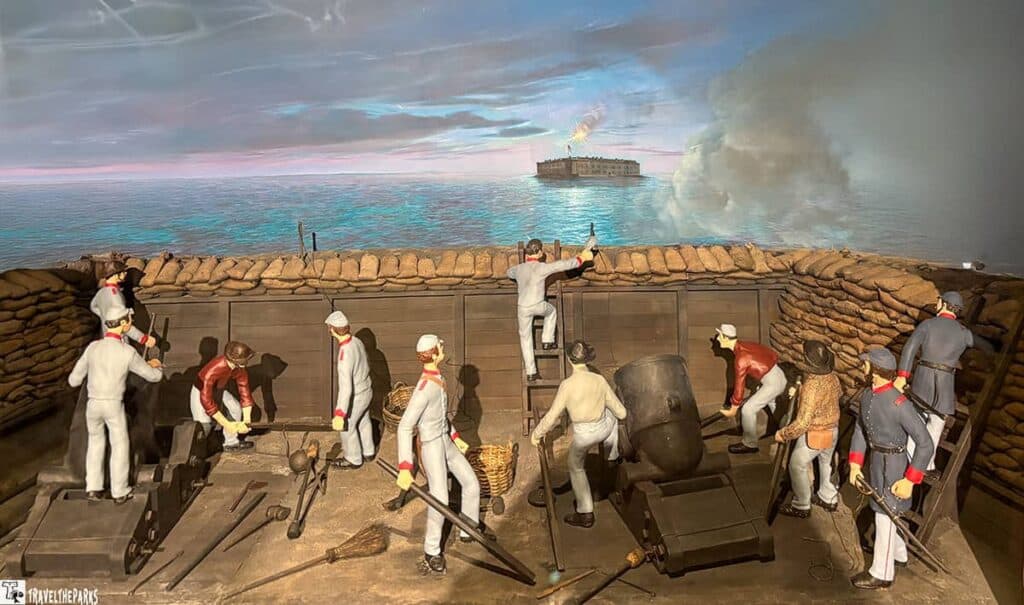
Battery Huger lies in the middle of the fort. The museum exhibits inside the Battery Huger help explain how the battle unfolded, including the challenges the Union forces faced and the symbolic importance of the fort. Items like uniforms, weapons, and personal effects of soldiers who fought in the fort. The panels depict the events leading up to, during, and following the Civil War. There are also displays related to the fort’s role during the Spanish-American War and World War II. Don’t miss the original Fort Sumter flag that Major Anderson removed after surrendering.
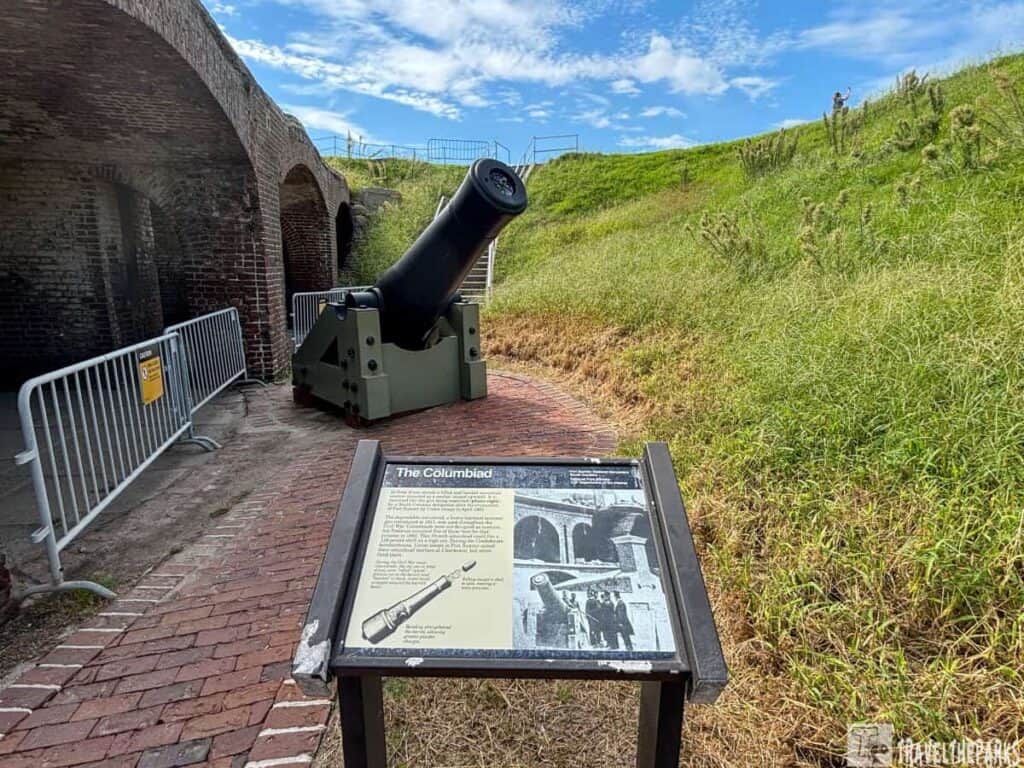
As we wandered around this area, it was fascinating to think about the contrast between the Civil War fortifications and the Spanish-American War artillery. Both speaking to different eras of conflict but sharing the same strategic location. Battery Huger is a testament of how Fort Sumter continued to develop and adapt throughout its history. From its role in the Civil War to its function as a coastal defense installation in the late 19th century.
What Most Visitors Miss at Fort Sumter: The Hidden Fingerprints in the Brick
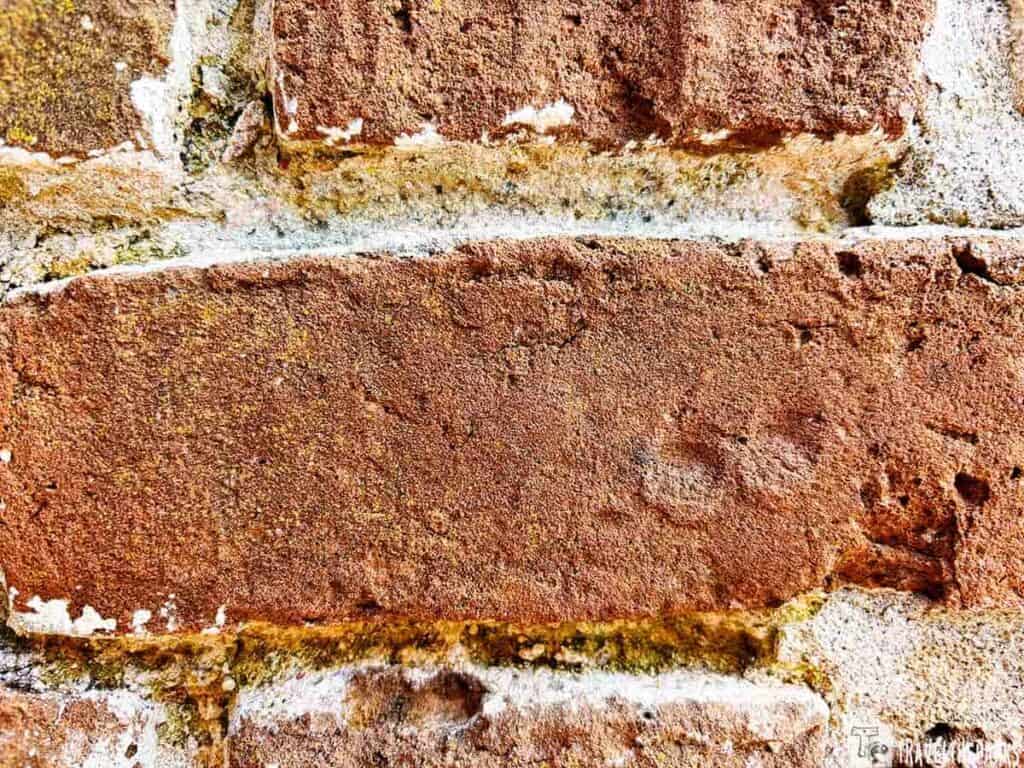
One of the most poignant and often overlooked details at Fort Sumter is the fingerprints of enslaved children, preserved in the bricks they made. During construction, their small hands left lasting impressions in the clay before it was fired.

A park ranger pointed out that these fragile marks are most visible in certain areas, like the bricks near the main entrance (the sally port) and along the walls of the parade ground. It’s a quiet but powerful reminder that this fortress, famous for war, was first built by the hands of the enslaved.
Seeing these fingerprints connects Fort Sumter to a broader story—similar marks can be found at Fort Pulaski, another Southern fortification built through the same forced labor.
Witness the Scars of Battle: Embedded Shells at Fort Sumter
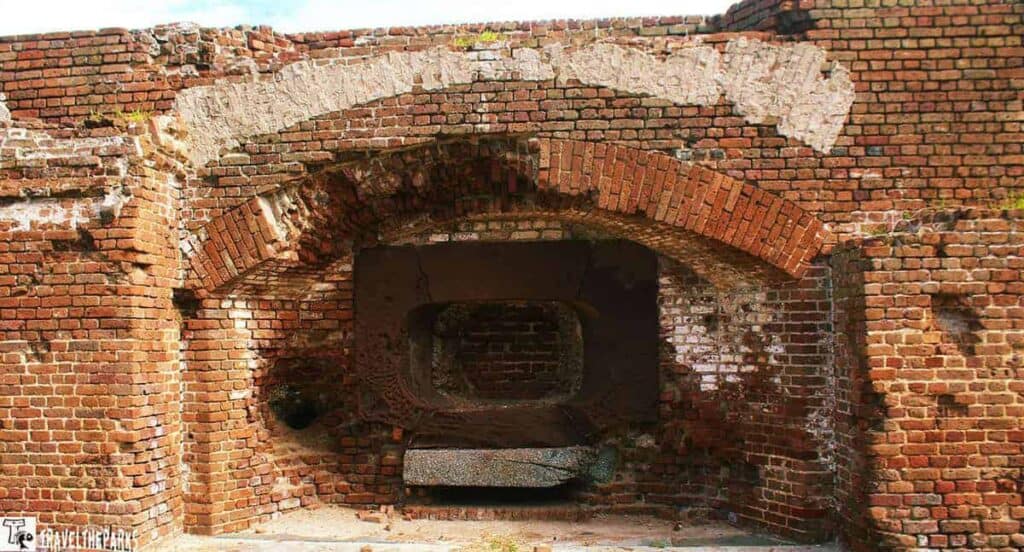
One of the most powerful sights here isn’t a grand monument, but these—original mortar shells still lodged in the fort’s inner walls. They’ve been stuck right here since the Union’s relentless bombardment. For me, they create an undeniable connection to the violent beginning of the Civil War.
Fort Sumter Tour Highlights: What Not to Miss
Here’s a quick look at the key sights we discovered on our self-guided tour:
- The Flagpole & Parade Ground: Stand at the heart of the fort where the Civil War began and witness the daily flag-raising ceremony.
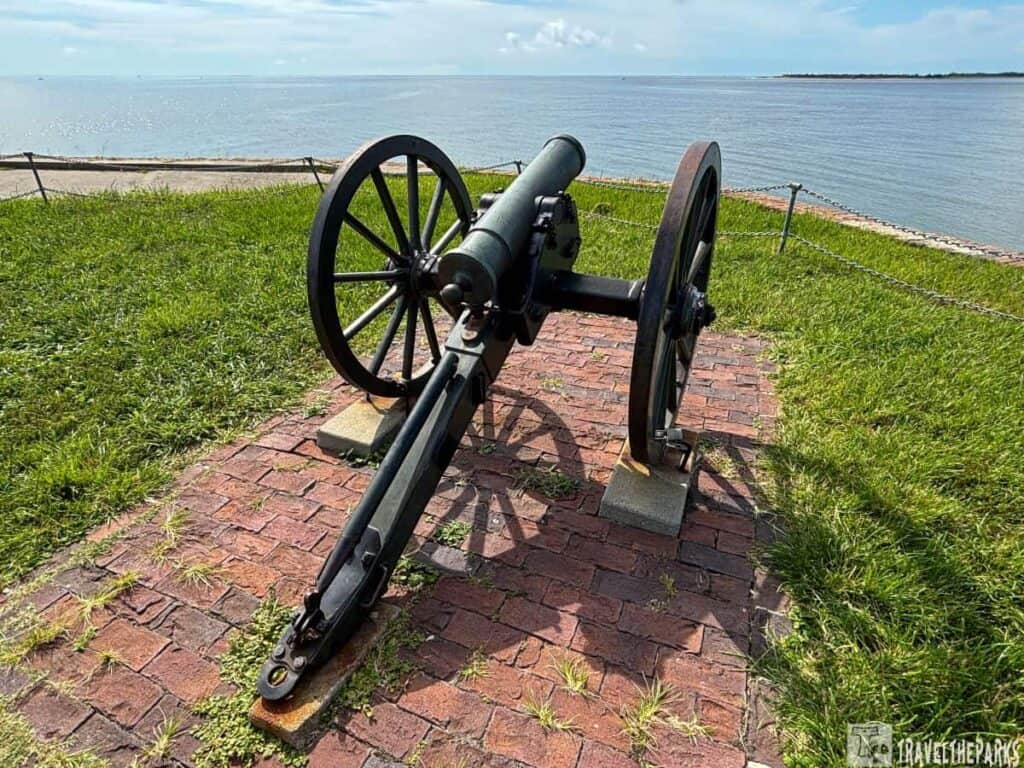
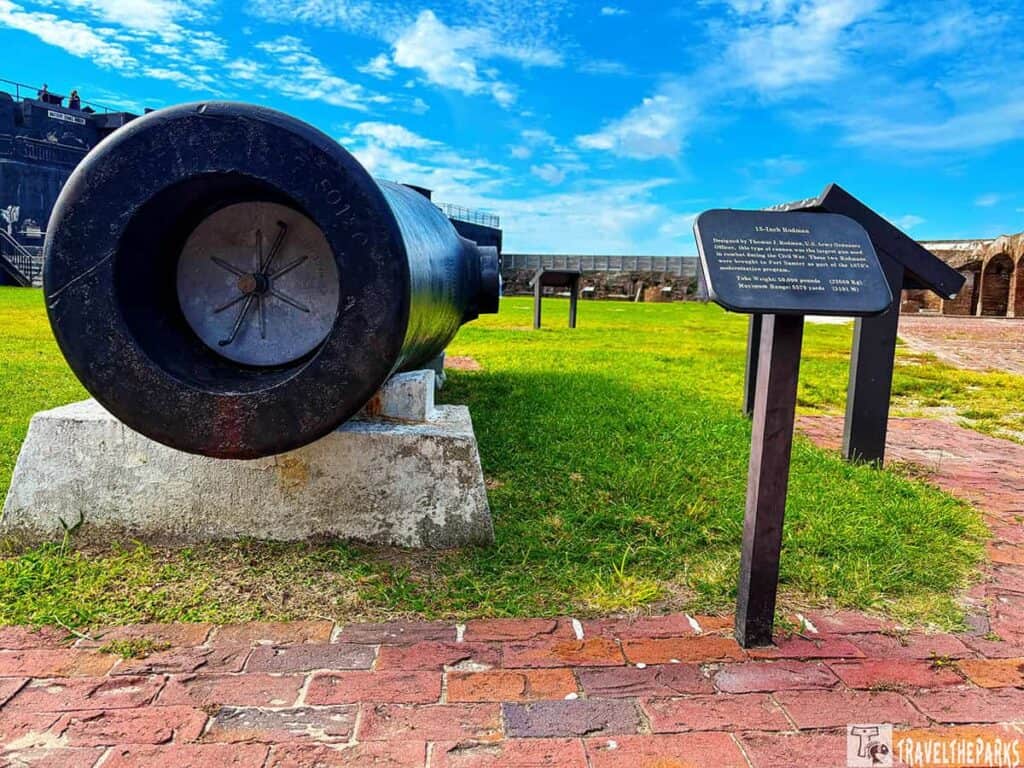
- Massive Artillery: Get up close to the enormous 15-inch Rodman Gun and other historic cannons that defended the harbor.
- The Gorge Wall & Officers’ Quarters: See the heavily damaged rear wall and the ruins of the multi-story barracks, pockmarked with shell damage.
- Battle-Scarred Walls: Look for the embedded mortar shells and cannonballs still lodged in the brickwork from years of bombardment.
- Powder Magazine: See the location where a fire threatened a catastrophic explosion, forcing the fort’s surrender in 1861.
- The Sally Port: Walk through the fort’s original main entrance, used by soldiers and supplies arriving by boat.
- Panoramic Harbor Views: Take in the strategic vistas of the Atlantic Ocean, Charleston Harbor, and Fort Moultrie from the ramparts.
Pack Smart for Your Fort Sumter Adventure
When visiting Fort Sumter, it’s important to come prepared for an enjoyable experience. Be sure to bring sunscreen, a hat, and sunglasses, as much of the tour takes place outdoors with limited shade. Comfortable walking shoes are a must, especially for navigating the historic grounds. A refillable water bottle is also recommended, particularly on warm days. While the ferry offers refreshments, packing a light snack can help keep your energy up. Don’t forget a camera or smartphone to capture the scenic views of Charleston Harbor and the historic fort itself.
Oak Plantation Campground: Where We Stayed
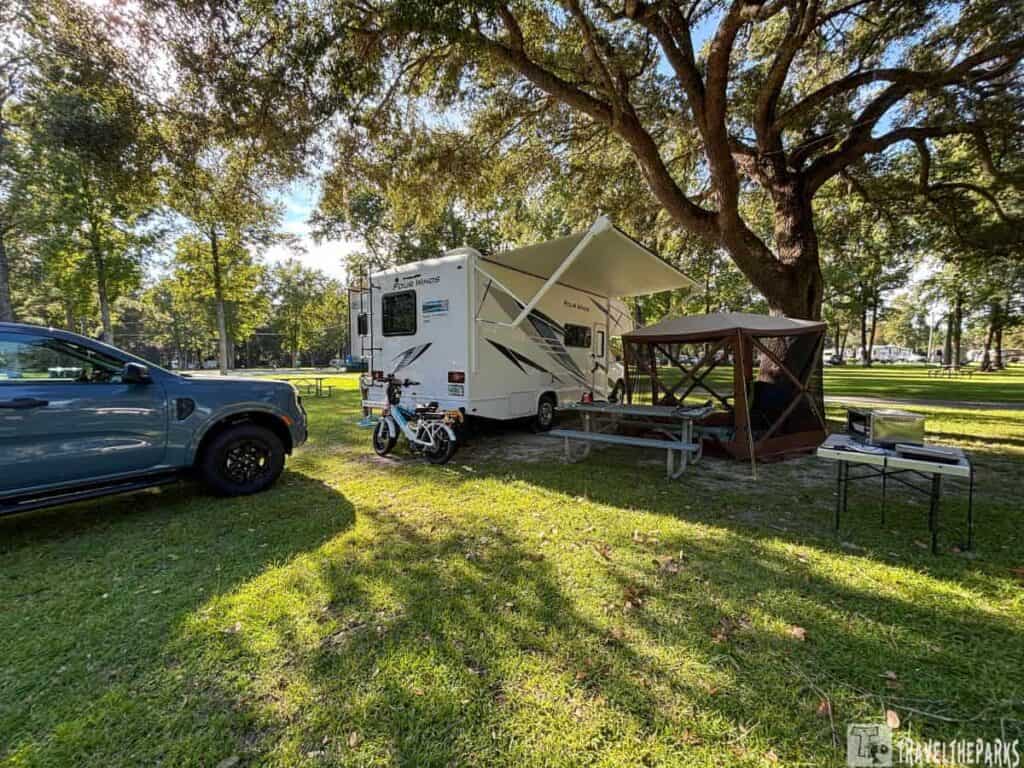
Oak Plantation Campground is easily accessible from State Route 17. It’s a safe place for kids and families. Sites are mixed grass, gravel, and concrete; with large oak trees for shade. The site accommodates larger RVs. The campground features a variety of amenities, such as a swimming pool, a fishing pond, a playground, and a dog park. This park is clean and well-maintained. The management was friendly and helpful. Also, its proximity to Charleston lets you explore the historic city.
PRO Tip: During peak traffic hours, getting out of the park onto the Savannah Hwy and Main Road can be difficult. You cannot make a left turn at all. Must go right and loop around.
Final Thoughts on Visiting Fort Sumter
I’ve found myself reflecting a lot on this trip. Mostly about history, and how much our modern comforts shape the way we see the world. It makes me wonder if life wasn’t so bad back when things were harder, when struggle was part of the rhythm of daily life.
Take Fort Sumter, for example. I started imagining what it would’ve been like to get there without a motorized boat. No engines. Just wind, or oars. If you had a crew of six to eight men rowing, maybe you’d move at 2–3 knots. That means a trip that now takes 30 minutes could’ve taken close to two hours. That’s a long time to be exposed to the elements — especially in tense or dangerous moments.
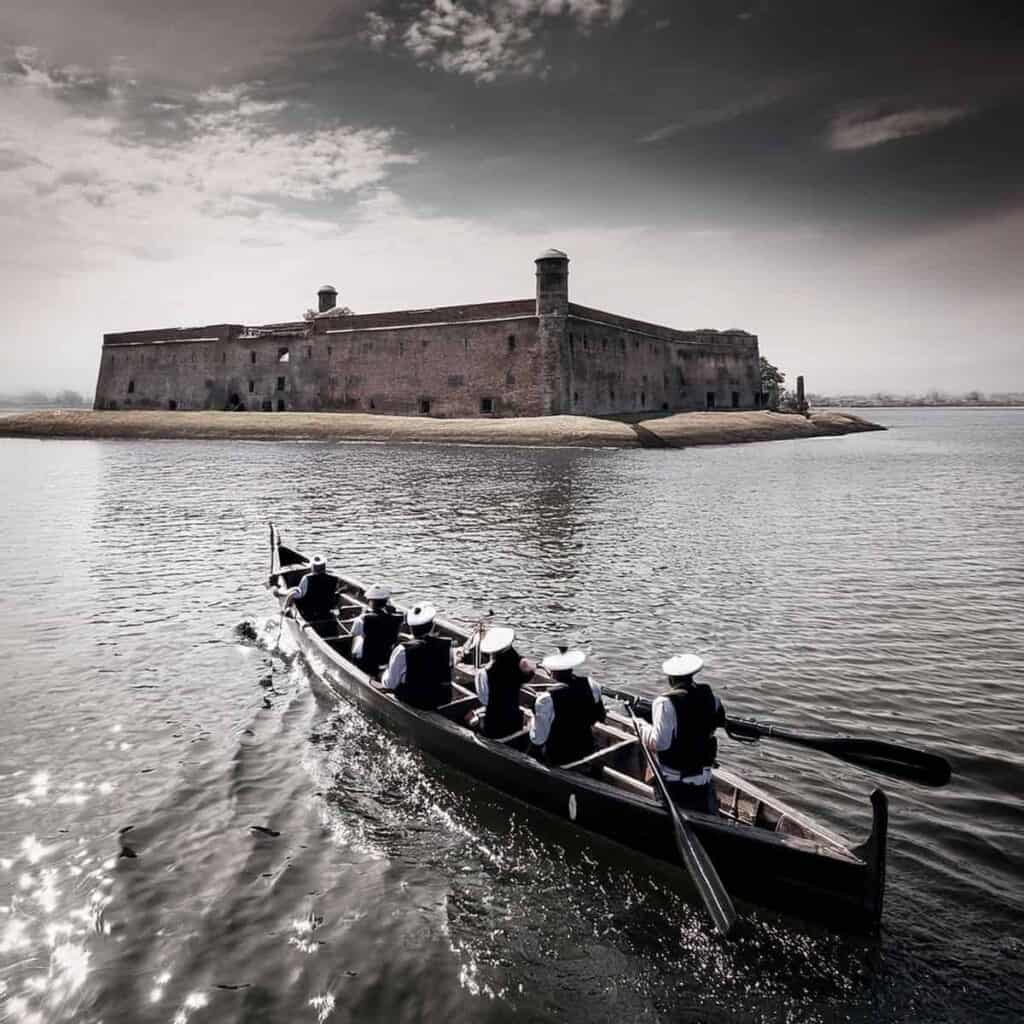
But that kind of life required something we don’t tap into much anymore: patience, resilience, teamwork. People had to be physically connected to what they were doing — feeling the weight of each stroke, reading the wind, working in sync. There’s something raw and real about that.
These days, we move faster, but I think we’ve lost a bit of that connection to the physical world — and maybe to each other, too.
Have you been to Fort Sumter? We’d love to hear your thoughts, experiences, or favorite moments from your visit — feel free to share in the comments below!