A visit to Antietam National Battlefield immerses you in American history. We had a special experience there during a road trip for our nephew’s wedding. Walking on the same ground where thousands fought and lost their lives on September 17, 1862, was truly amazing. Exploring Antietam through self-guided tours and walking paths helped us see why every part of the battle matters. This journey connects you to the past, filled with stories of bravery and gentle reminders of sacrifice found in the lovely fields.
This post may contain affiliate links, meaning if you purchase something through one of these links, we may earn a small commission at no extra cost to you! Read the full disclosure policy here.
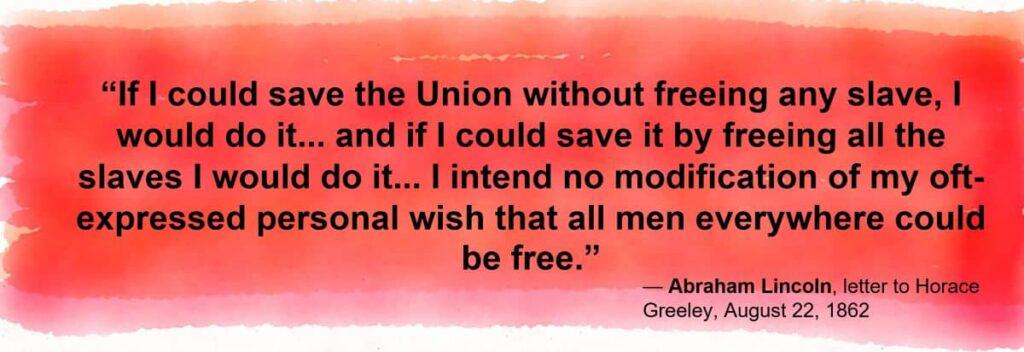
Table of Contents
How do I get to the Antietam National Battlefield Site?
- Driving: From Washington, D.C. (about 70 miles, 1.5 hours): Hop on I-70 West from Washington, D.C., and cruise toward Hagerstown. Take Exit 49 for US-40 ALT West (aka the National Pike) drive 11 miles. Merge onto MD-34 West (Shepherdstown Pike). Follow the brown NPS signs for Antietam National Battlefield. They’ll lead you straight to the visitor center on your right.
- Turn left onto Dunker Church Road, and the battlefield entrance will be on your right.
- Driving from Baltimore, MD (about 60 miles, 1.25 hours): Take I-70 West from Baltimore. Continue on I-70 West and take exit 49 for MD-65 South toward Sharpsburg. Follow MD-65 South for about 12 miles. Turn left onto Dunker Church Road, and the battlefield entrance will be on your right.
- From Frederick, MD (about 30 miles, 45 minutes): Take U.S. 40 West (National Pike) from Frederick. Continue for about 18 miles and turn left onto MD-65 South. Follow MD-65 south for 10 miles. Turn left onto Dunker Church Road, and the battlefield entrance will be on your right.
- Arriving by Airplane: Nearest Airports: Washington Dulles (IAD): ≈1 hour 15 minutes by car. Baltimore-Washington (BWI): ≈1.5 hours by car. Hagerstown Regional (HGR): Tiny but closest (≈15 minutes).
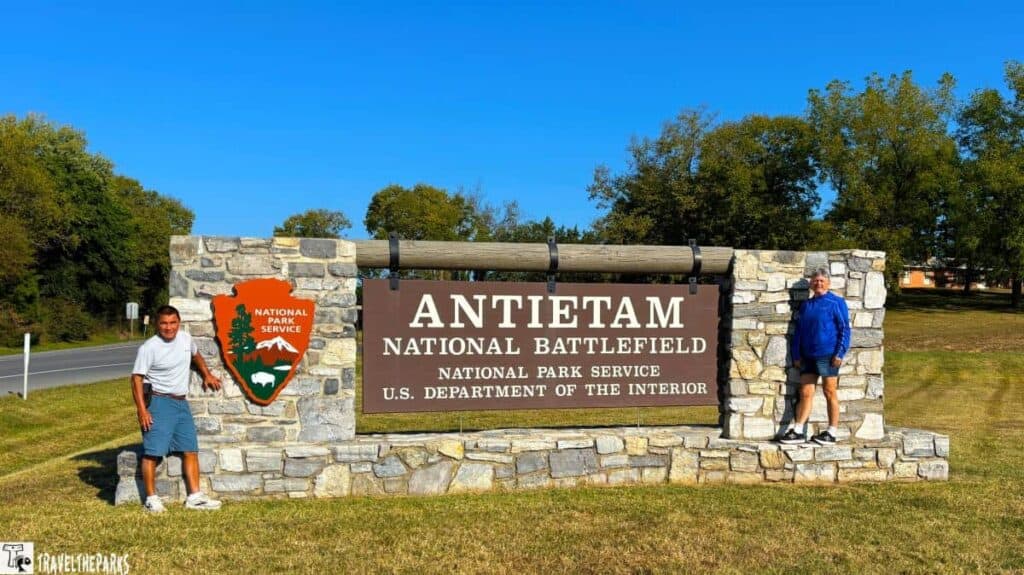
Planning Your Visit: Essential Information for Antietam National Battlefield
We paired our visit to Antietam National Battlefield on this road trip with Harpers Ferry National Historical Park on a self-guided walking tour (20 minutes east), Gettysburg National Military Park and South Mountain State Battlefield. This made it easy for us to spend a full day sightseeing at the Antietam National Battlefield. For us, visiting Civil War battlefields has been an important pastime. Each has been significant from Vicksburg to Gettysburg and beyond. Here is what to know before you visit.
- Location: 5831 Dunker Church Rd, Sharpsburg, MD 21782. Phone: 301-432-5124.
- Entry Fee: $15 per vehicle (valid for 7 days). Free with the America the Beautiful Pass.
- Hours: Battlefield Grounds: Open sunrise to sunset. The park visitor center is open daily from 9 AM to 5 PM, but the visitor center may close earlier depending on the season. The park and visitor center are closed Thanksgiving, December 25, and January 1. Check the official NPS website for updates.
- Parking: There are pullouts along the self-guided driving tour for cars/trucks. There are several parking areas for RV/motorhomes, with a few specifically designated for larger vehicles. However, be sure to arrive early, especially during the peak visiting season, as the spaces can fill up quickly. If you plan on exploring Antietam National Battlefield for a full day, getting an early start is essential.
- Accessibility: The battlefield is accessible to all, with paved paths for walking and a few exhibits and locations that those with mobility challenges can easily access.
- Best Time to Visit: Fall (September–November): Cool weather, stunning foliage. Spring (April–June): Mild temps, fewer crowds. Avoid the summer heat; winter offers solitude but limited services.
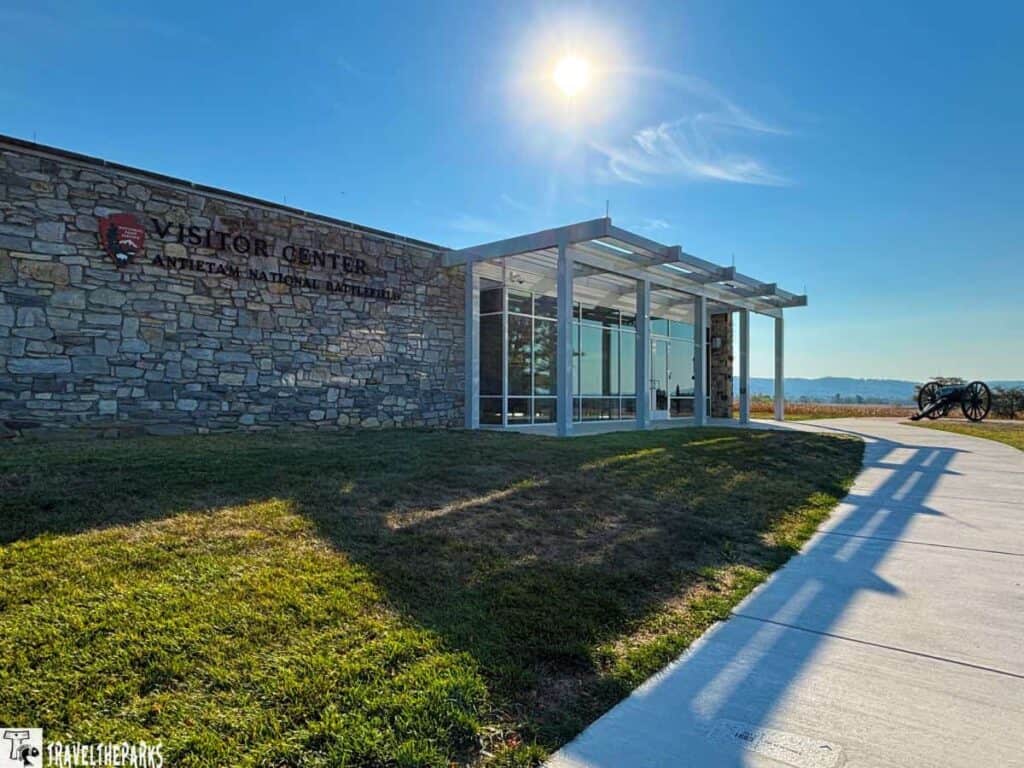
Start Your Visit at the Antietam National Battlefield Visitor Center
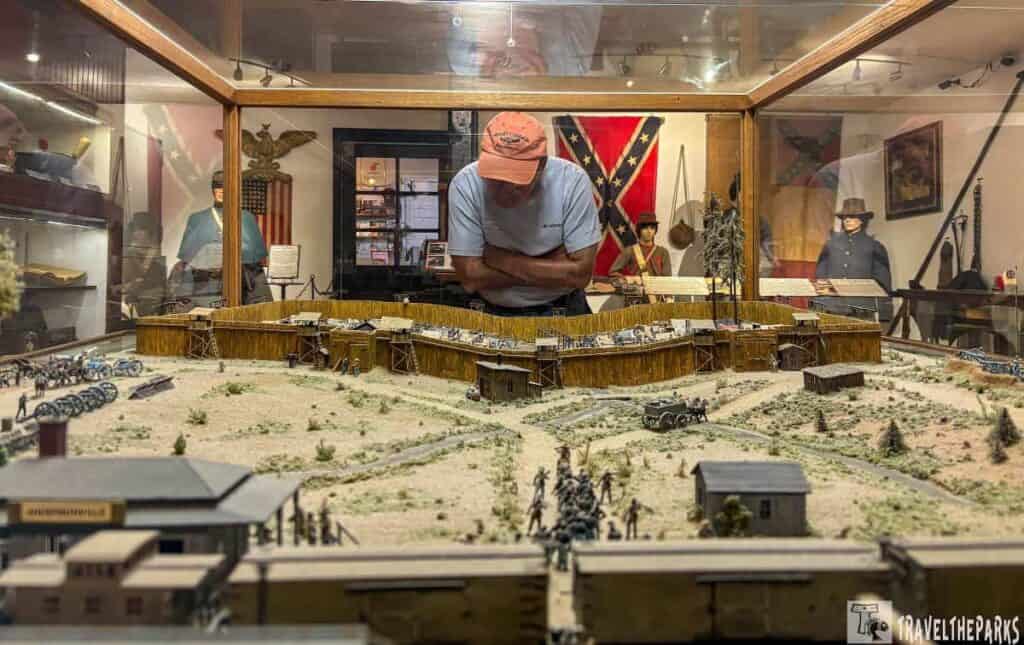
For us, the first stop on any visit to Antietam National Battlefield was the visitor center. It has restrooms, a gift shop, and an informative museum with exhibits detailing the battle and the Civil War.
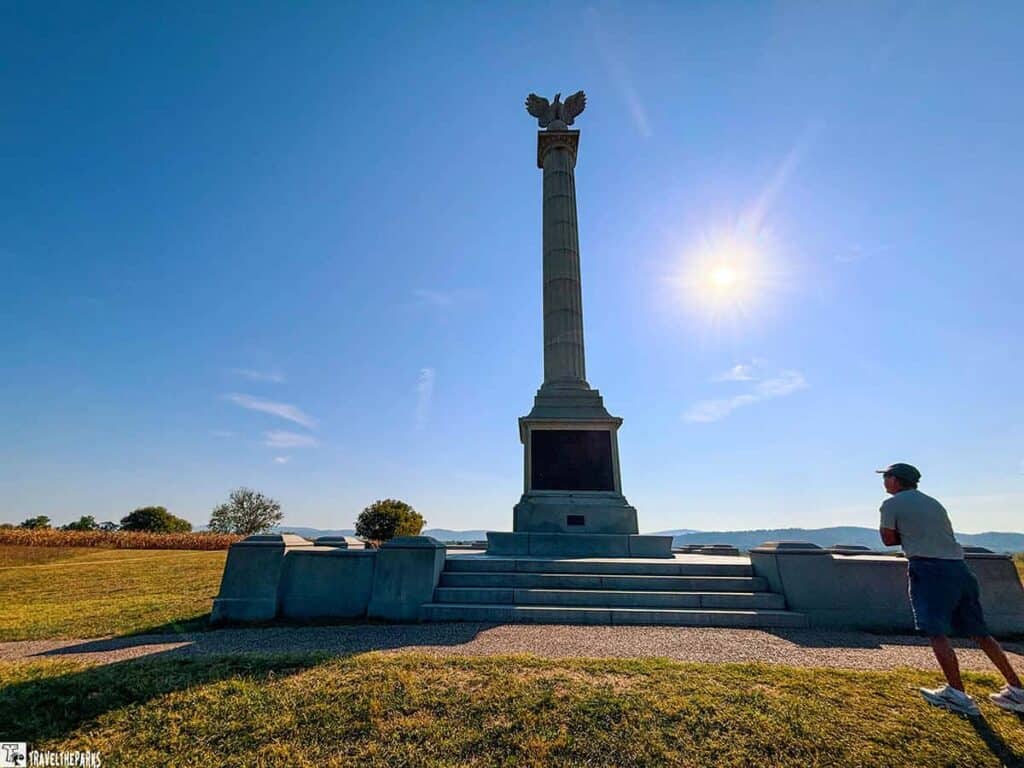
While we were exploring the visitor center, I couldn’t help but reflect on how this battle altered the history of America. You really have to see the intense film “Remembering Antietam“; it immerses you in the turmoil of the battle, showcasing the clash between Union and Confederate tactics. The stunning scenery of Antietam, with its rolling hills, serene forests, and ancient stone bridges, contrasts sharply with the horrific events that took place in 1862. The film serves as a serious reminder of the vast scale of the conflict and the significant loss of life. Our tour of the exhibits and the short film gave us the historical context we needed to truly understand the scale and significance of the battle.
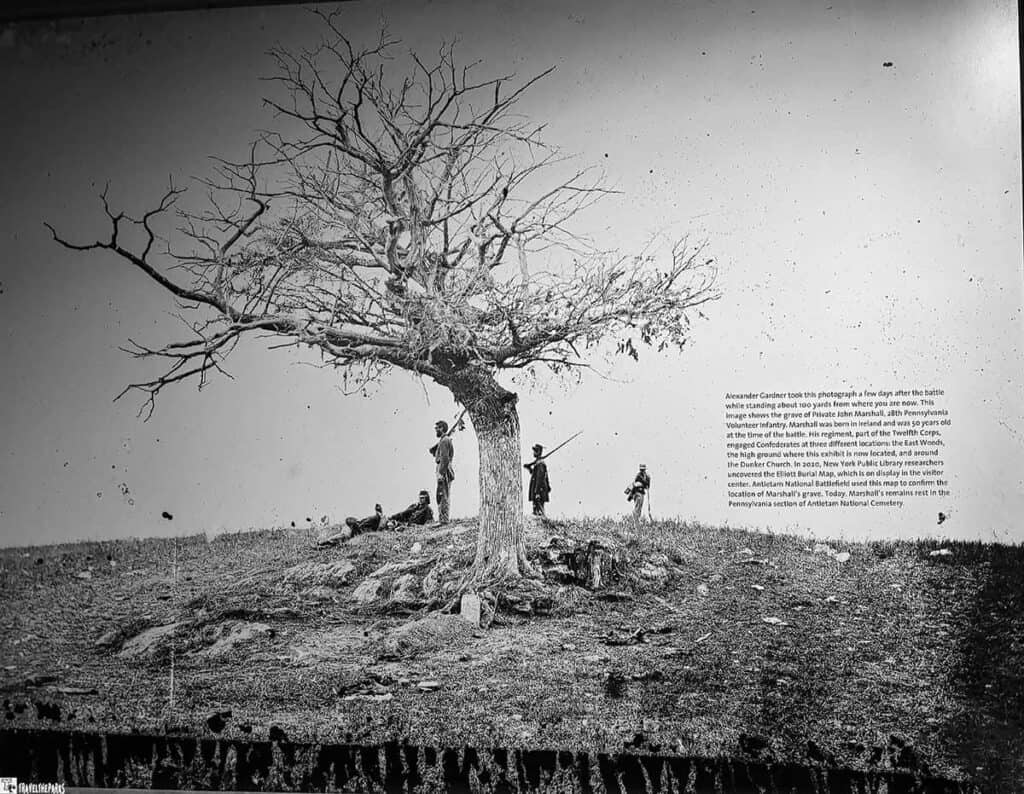
The Unanswerable Question: Weighing the Cost of a Turning Point
The exhibits in the display hall at Antietam really drive the point home: this was the bloodiest single day in American history. It is one thing to read the number—22,700 casualties in just twelve hours of fighting. It is another to stand on that ground and try to fathom it.
That’s more than 1,800 men falling every hour. It’s a number that numbs the mind. The sheer scale of suffering is almost beyond comprehension.
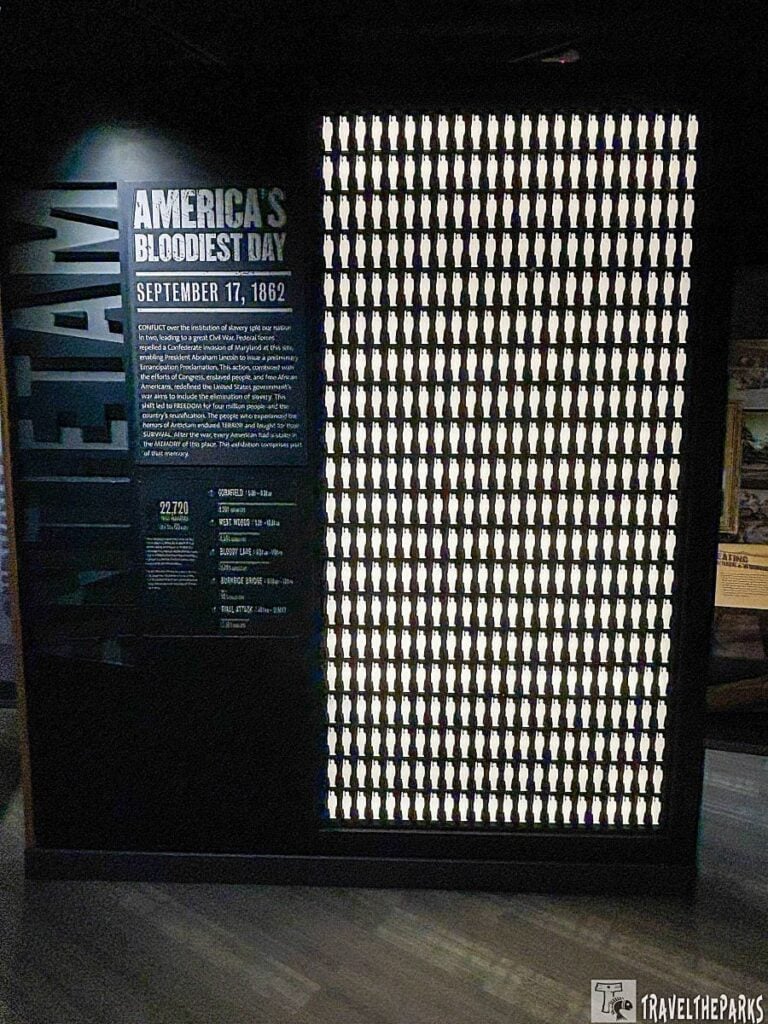
But what truly stopped me in my tracks was the simple, profound question posed by one exhibit: “Was it Worth It?”
It’s a question that echoes far beyond the tactical victories and losses of September 17, 1862.
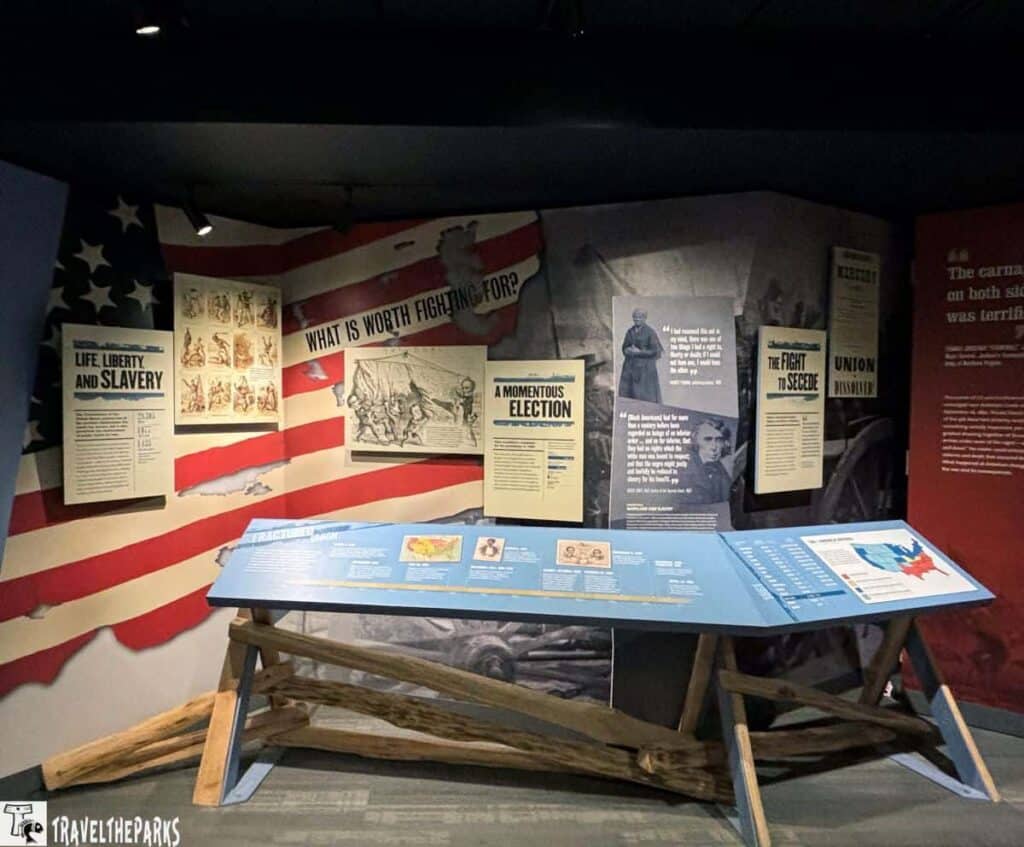
Was it worth it…
- because it halted the Confederate Army’s first major invasion of the North?
- because it gave President Lincoln the political capital he needed to issue the Emancipation Proclamation, fundamentally transforming the war from a fight to preserve the Union into a fight for human freedom?
- when you weigh the strategic gains against the thousands of individual lives shattered—sons, fathers, and brothers lost on a single Maryland field?
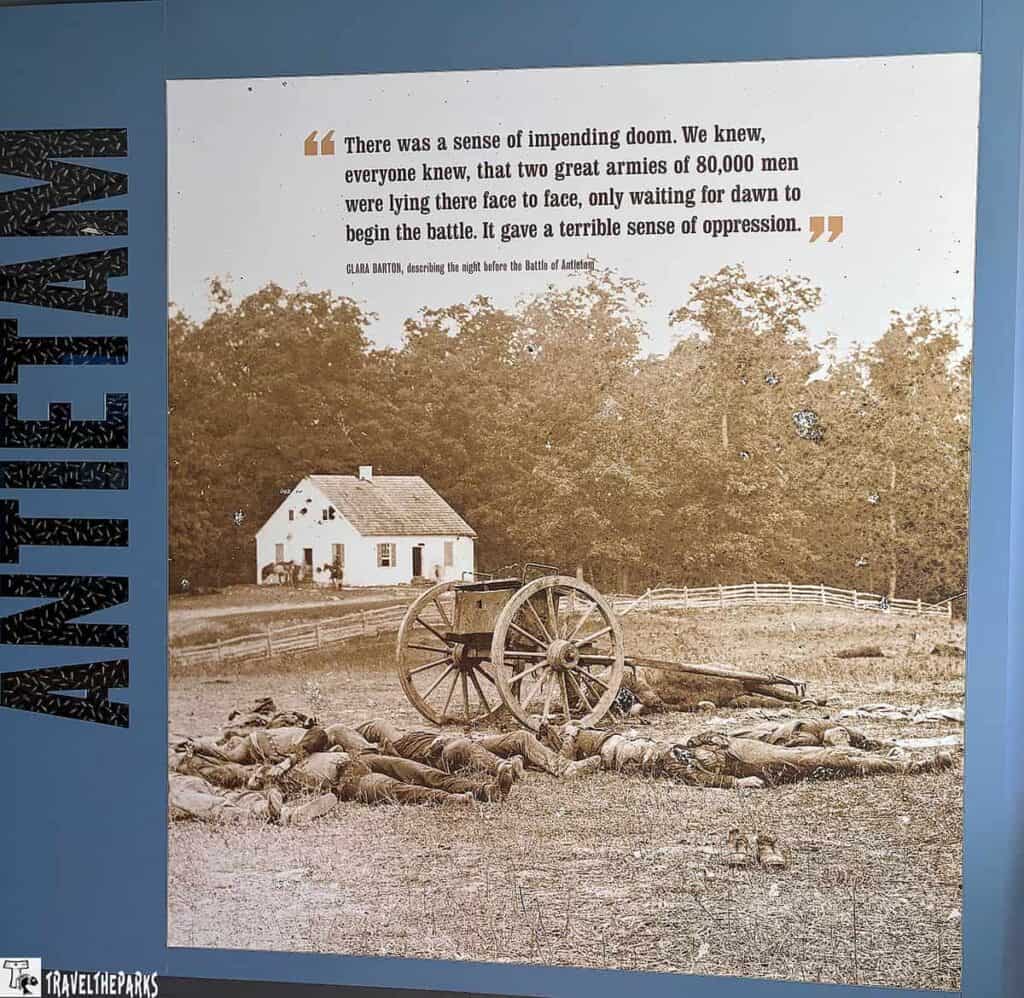
The park doesn’t give you an easy answer. It asks you to hold the immense cost and the profound consequences in your mind at once. You have to grapple with the terrible, intricate math of war and history. The question is ultimately personal. For the enslaved, the Proclamation was everything. For a family who lost their sole breadwinner, the cost may have felt too high. The power of the exhibit is in forcing us to sit with that unresolved tension.
It was a day of unparalleled horror, but also a pivotal turning point. Holding that contradiction is at the heart of understanding Antietam.
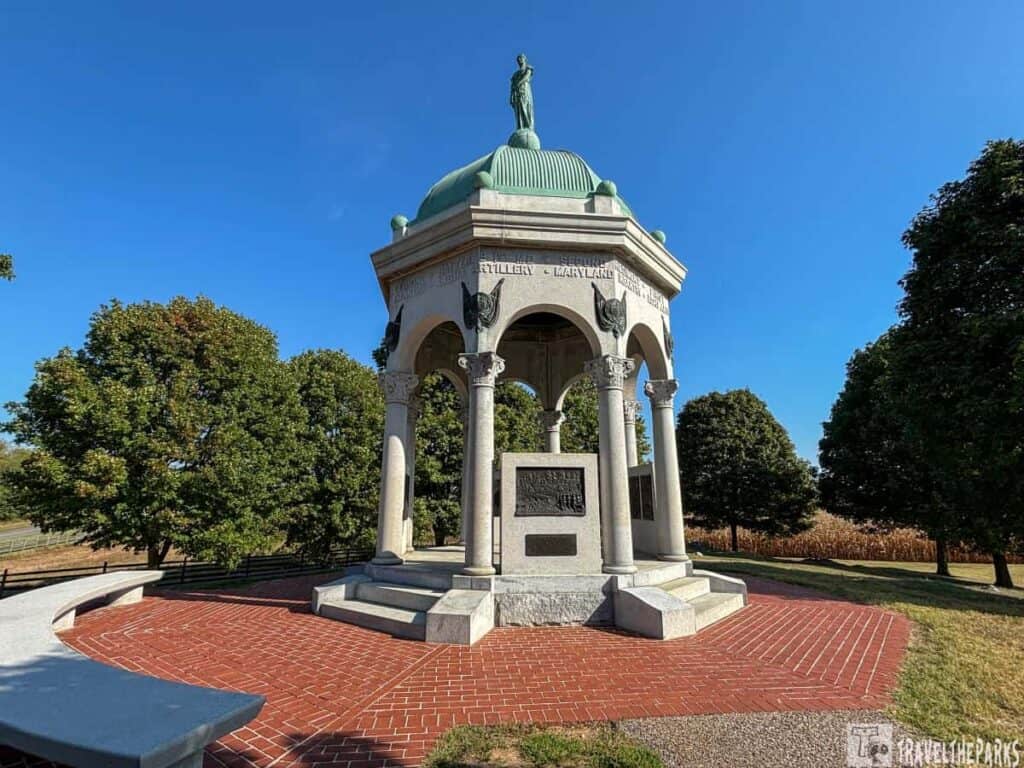
A Journey Through History: Touring Antietam National Battlefield
Before leaving the visitor center, we grabbed a brochure about the park. The battlefield has 10 stops along a 9-mile self-guided driving tour you can do on your own, and it comes with audio commentary that tells you all about the history of important spots (you can download the Antietam Battle App®). This way, we could check out the battlefield at our own speed and discover what each place meant.
As our tour began, I could picture a cool autumn morning in September 1862 in Maryland; the air feeling fresh. The Battle of Antietam is beginning, the fighting so intense. By sunset, the battle had killed or injured over 22,700 soldiers. The earth shook with sadness, but this disaster brings a chance for change.
Stop 1: The Dunker Church: A Sanctuary Turned Battleground
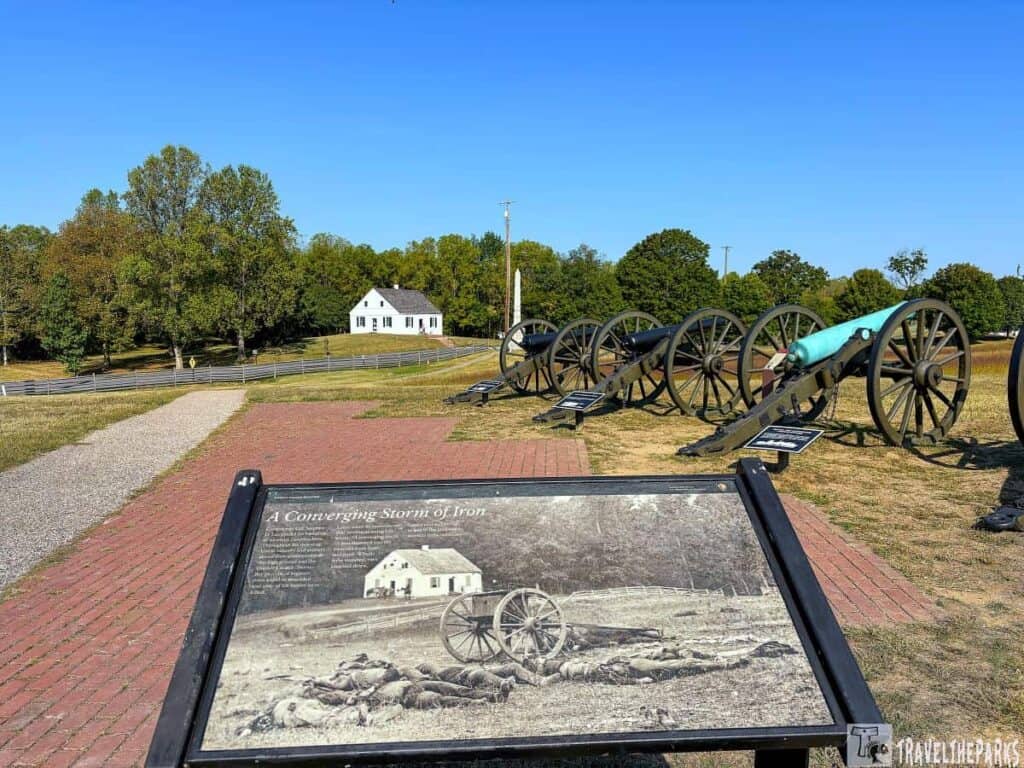
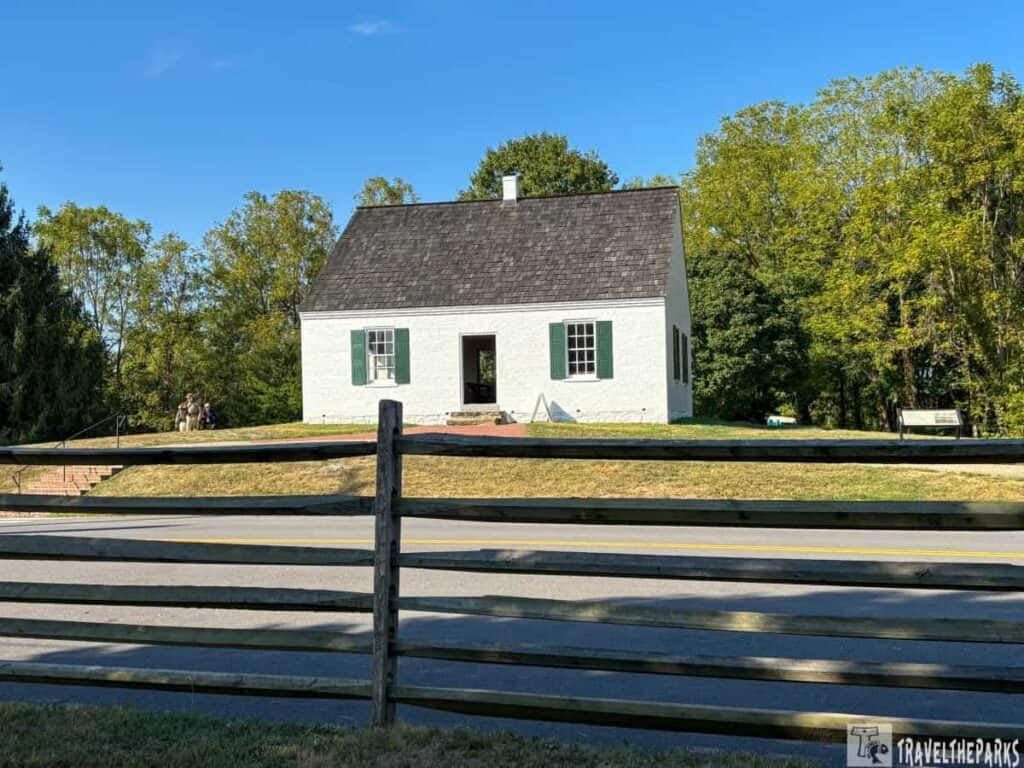
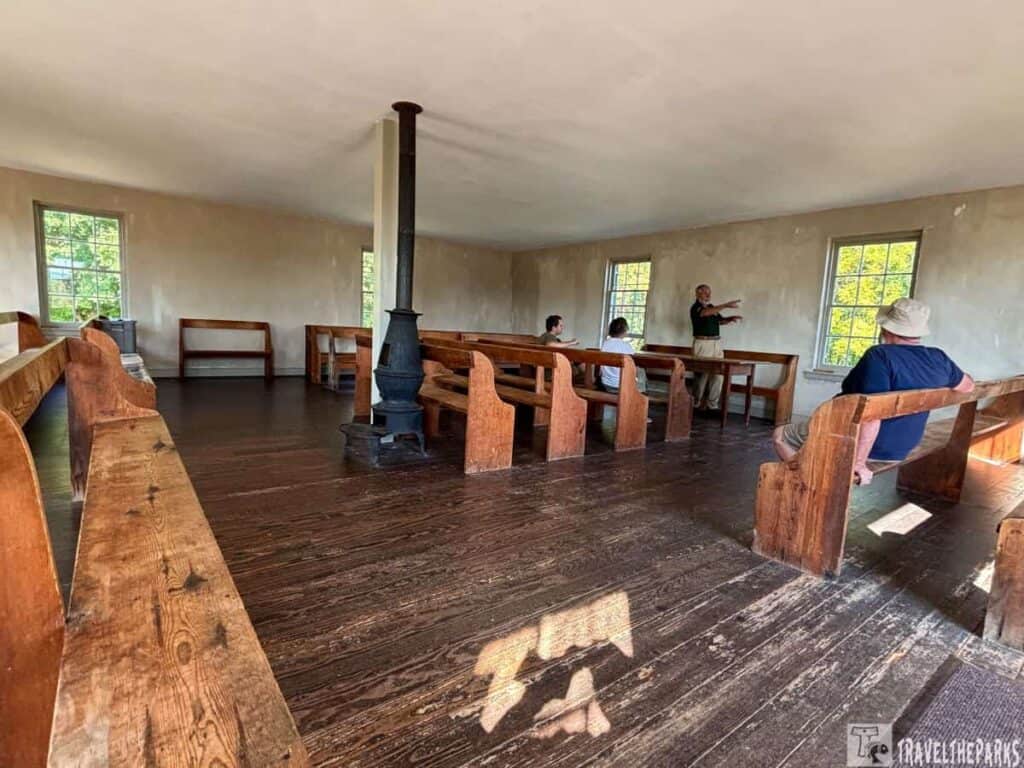
In 1852, the German Baptist Brethren congregation raised their modest white church on this hill, a house of peace that they called the Dunker Church. For a decade, they came here for their quiet and reverent practice. Then, in a single morning in 1862, their refuge turned into the center of the bloodiest day in United States history. The fire of the guns muffled the hymns they sang; the church they comforted themselves in became a place that was attacked and held. Coming here now, you can experience the overwhelming loss of that tranquility, not only the great tragedy of war but also the deep grief of the personal desecration of a community’s most holy place.
Stop 2: The North Woods: The Calm Before the Storm
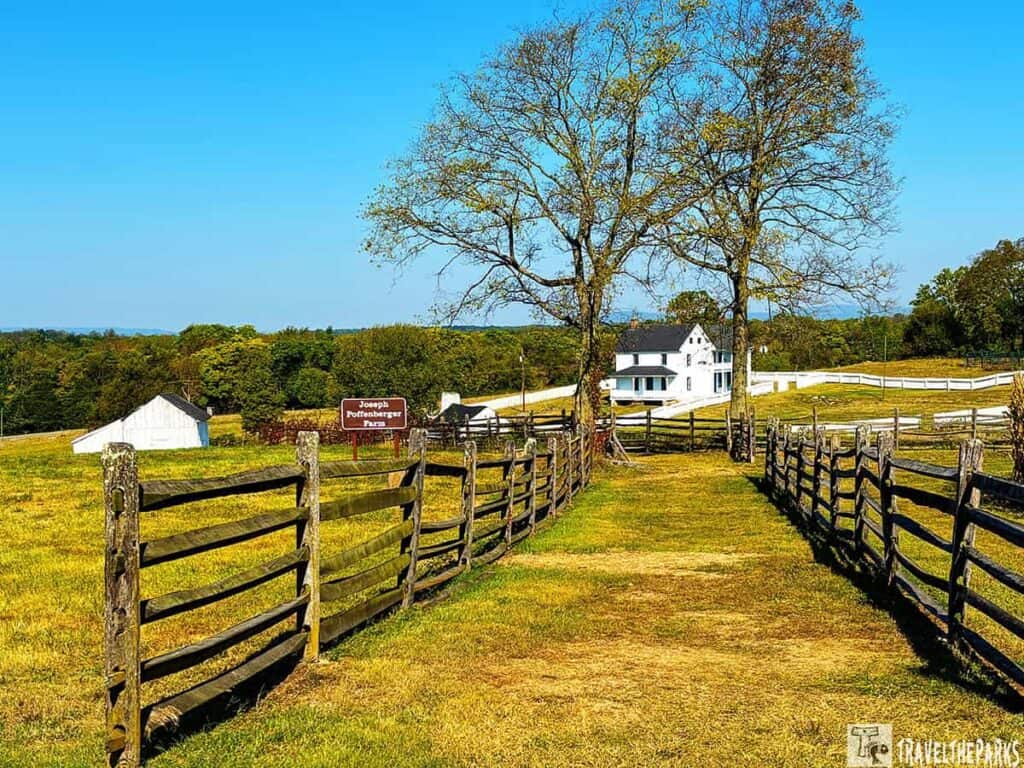
Our next stop, the North Woods, provided a dramatic contrast to the open killing grounds we would see later. Our journey began at the Poffenberger Farm, where General Hooker’s men spent a restless night before the battle. Just a short march away, the North Woods provided a stark contrast to the open killing fields of the Cornfield. This dense forest served as a crucial cover for the Union I Corps’ initial assault. But the trees that offered concealment soon became a source of peril, as bullets and shells ripped through the canopy, turning wood into deadly shrapnel.
Walking these now-peaceful trails, it’s difficult to envision the chaos that erupted from such tranquility. A short distance south, the Clara Barton monument marks where the “Angel of the Battlefield” tirelessly aided the wounded, her courage a stark counterpoint to the surrounding carnage. The small, shadowed woods represent the fear of combatants and the sympathy of caregivers.
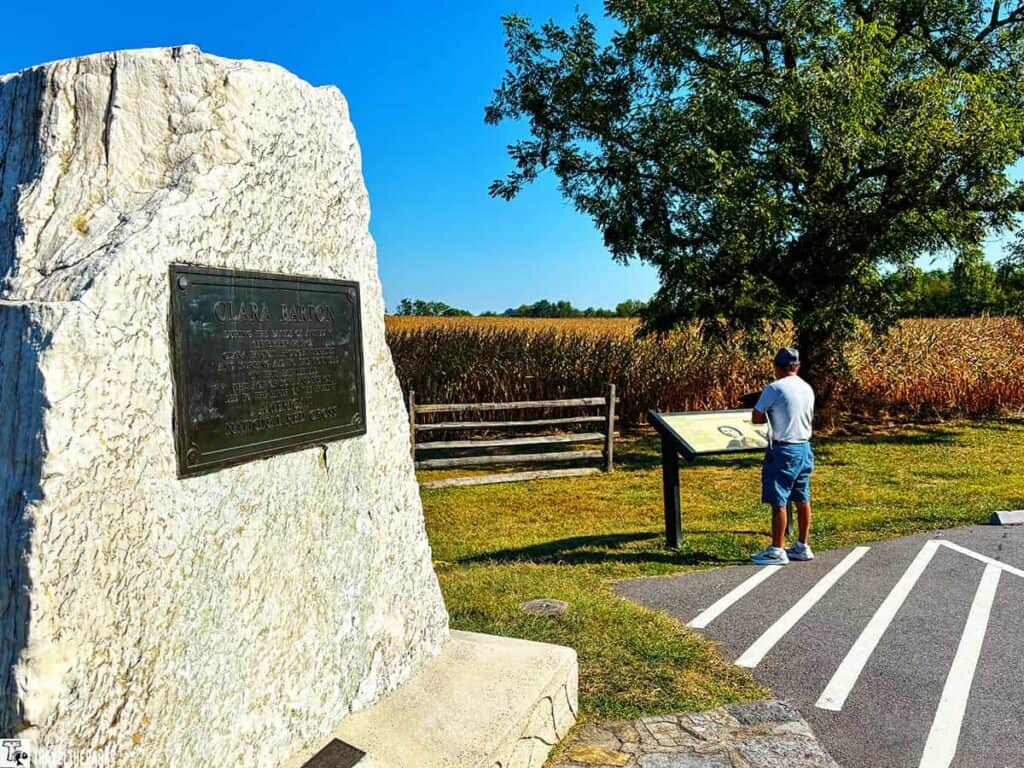
Walking its peaceful trails today, it’s difficult to envision the chaos. It serves as a powerful reminder of the battle’s harsh reality. A short walk into its shade offers a moment to think about the fear and bravery of the soldiers who fought in this small but bloody space.
Stop 3: The East Woods: The Battle’s Cruel Jigsaw Puzzle
Just behind the recognizable Antietam landmarks is the East Woods, where the fight was utter chaos, evil, and vicious. It was there in that thick forest that General Mansfield’s Union troops fought a bloody battle so hot and frenzied that they lost their commander, General Mansfield.
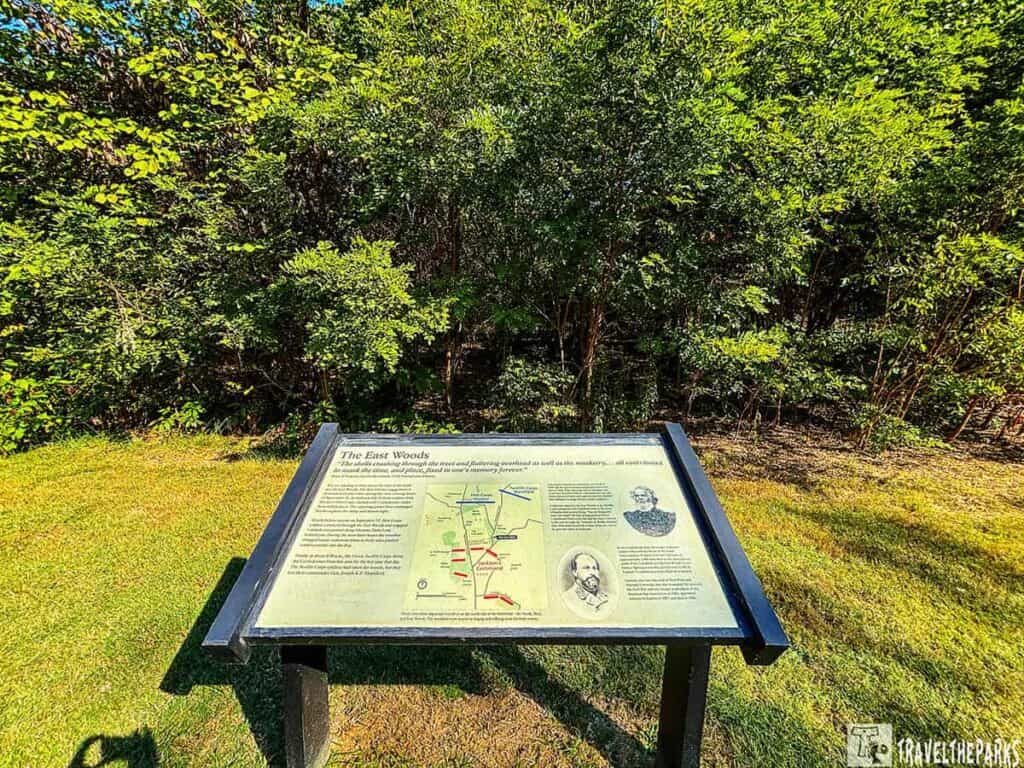
The trees were at the center of a furious battle in which they changed hands again and again in a killer game of tug-of-war. Their importance was enormous: a concealed path to the Confederate right flank and a shield for the guns pounding the Cornfield.
Today, the East Woods with its tranquil trails is a place of quiet that is very far from the fight it saw. It was a battle that took place not only in the open fields but also in these quiet woods, which are now haunted by the dead.
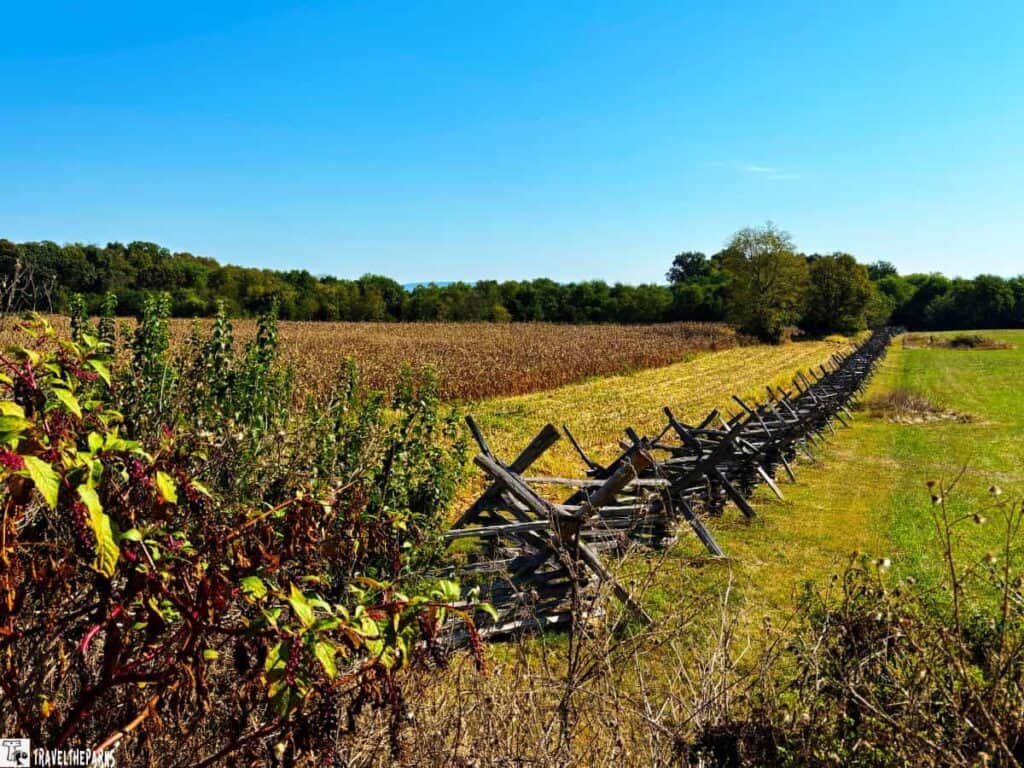
Stop 4: The Cornfield: The Battle’s Violent Heart
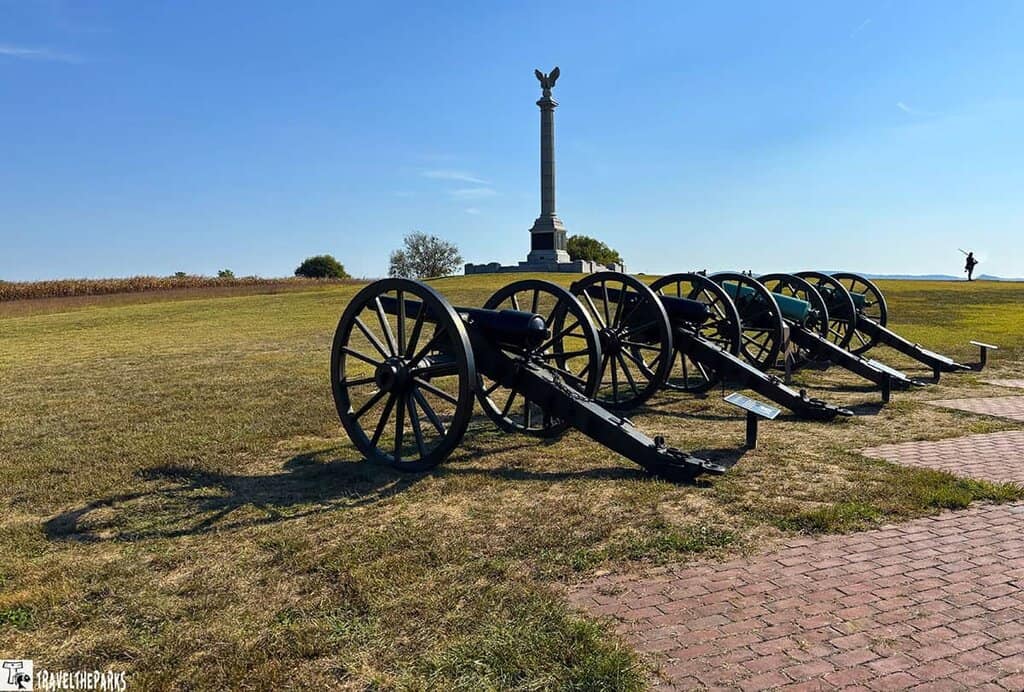
We’re standing in the Antietam Cornfield in the fall, the cornstalks at their actual, head-high level. It’s a visceral detail that makes the history terrifyingly immediate. It is almost impossible to realize that 8,000 men were lost right here, in this space, within three hours.
Antietam’s fury was centered here. At dawn, men marched into this unremarkable field, and the corn that provided cover became a death trap. They fought blindly, the dense vegetation and smoke turning the fight into a close-range slaughter. The ground was so covered with bodies that movement became difficult.
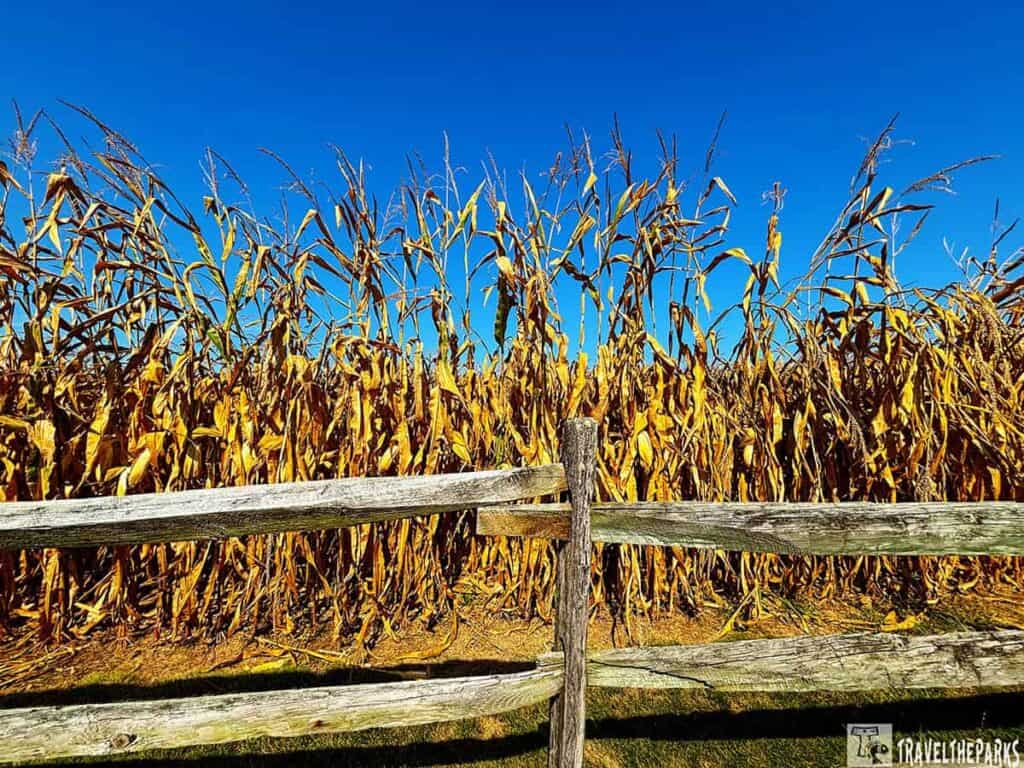
Now, there is only a gentle rustle where chaos once stormed. This is not just a field; it’s sacred ground. And standing here, with the corn brushing our shoulders, you feel the weight of that truth.
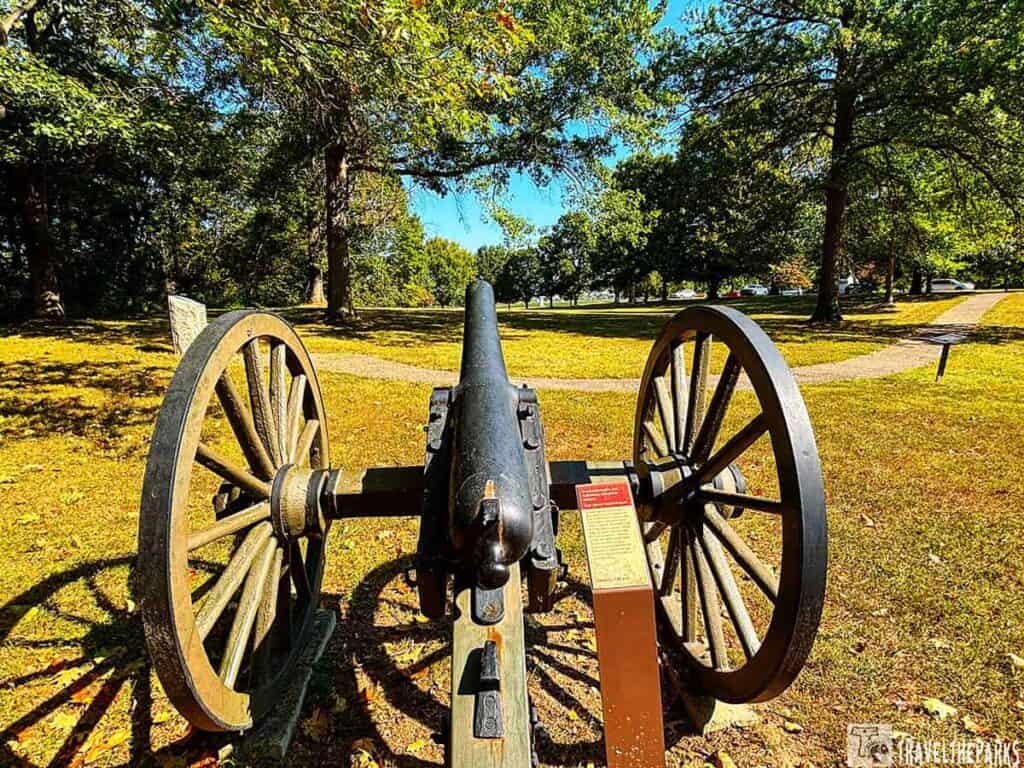
Stop 5: The West Woods: A Perfect Ambush and a Slaughterhouse
The name West Woods belies the horror that unfolded here. What began as a bold advance by Union General Edwin Sumner’s II Corps quickly devolved into chaos. Believing Confederate resistance was weakening, Sumner committed his men deep into these woods—only to walk them straight into a deadly trap. From three sides, hidden Confederate forces sprang their ambush. In less than twenty minutes, over 2,200 Union soldiers were killed or wounded. The woods were a killing ground, and hope fast turned to disaster.
Now the forest is heavy with silence, a sorrowful and oppressive silence, in contrast to the fear and uncertainty of that day. I know for me, this stop was a sobering reminder of the human cost of a single catastrophic military error.
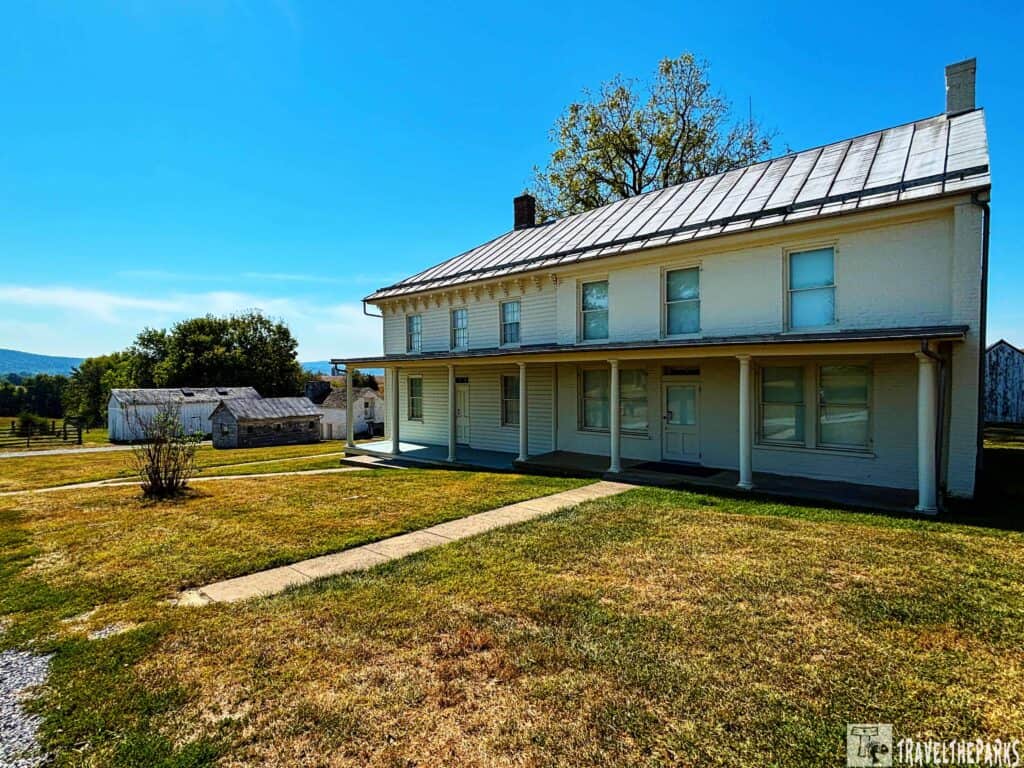
Stop 6: The Mumma Farm and Cemetery: The Civilian Sacrifice
On a battlefield defined by military sacrifice, the Mumma Farm tells a different, more personal story of loss. It stands as the only property deliberately destroyed during the fighting. As Union sharpshooters began to use the buildings for cover, Confederate soldiers were given a stark order: burn them to the ground.
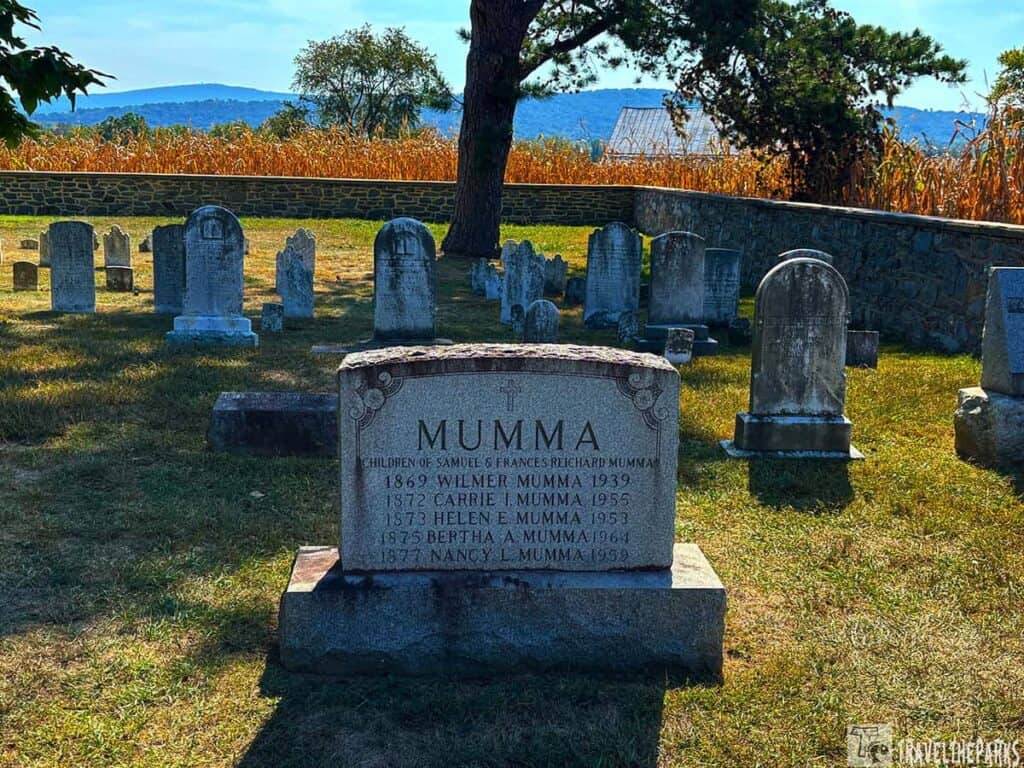
Such a major decision’s impact can be seen just a little farther from the site of the conflict, in the family cemetery. The simple gravestones make the price of war very real and distressing. It is not only the loss of the war this was a decision – the demolishing of the family’s house, their way of life, and their safety. The Mumma Farm is a vivid reminder of how the big plan of war ended the broken lives of the home front.
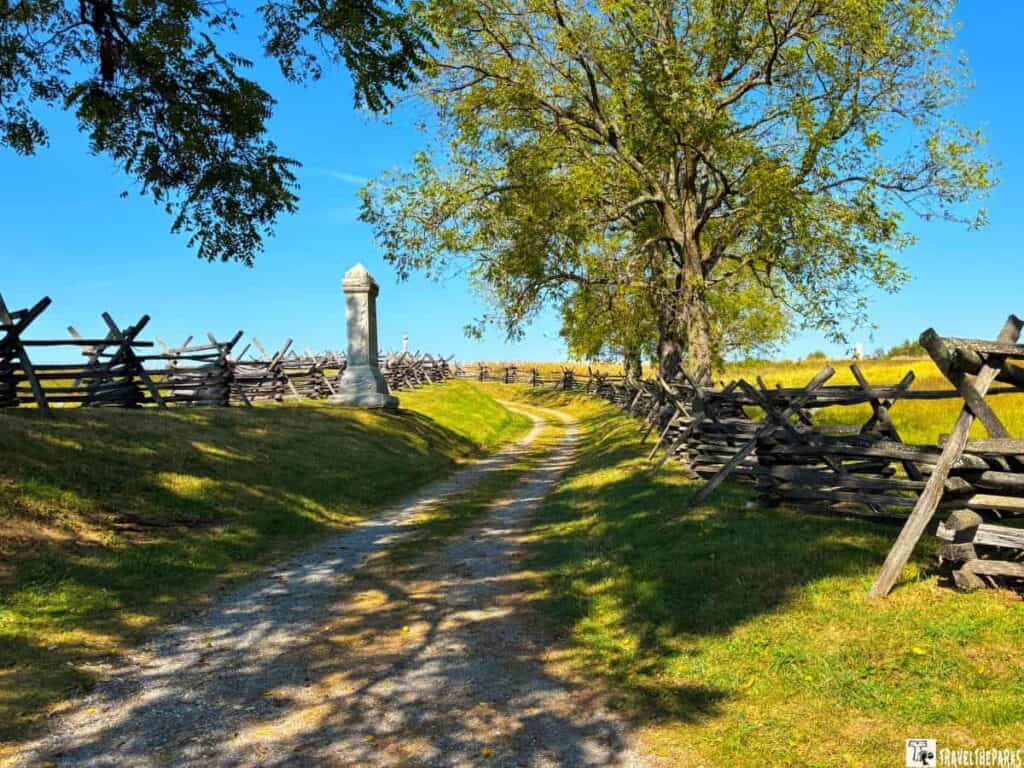
Stop 7: The Sunken Road (Bloody Lane): A Trench of Tragedy
Our journey to Bloody Lane began with a walk from the Roulette Farmhouse, a quiet approach that belied the chaos ahead. Climbing the observation tower first, we saw the sunken road as the Confederate defenders did—a perfect, deadly trench.
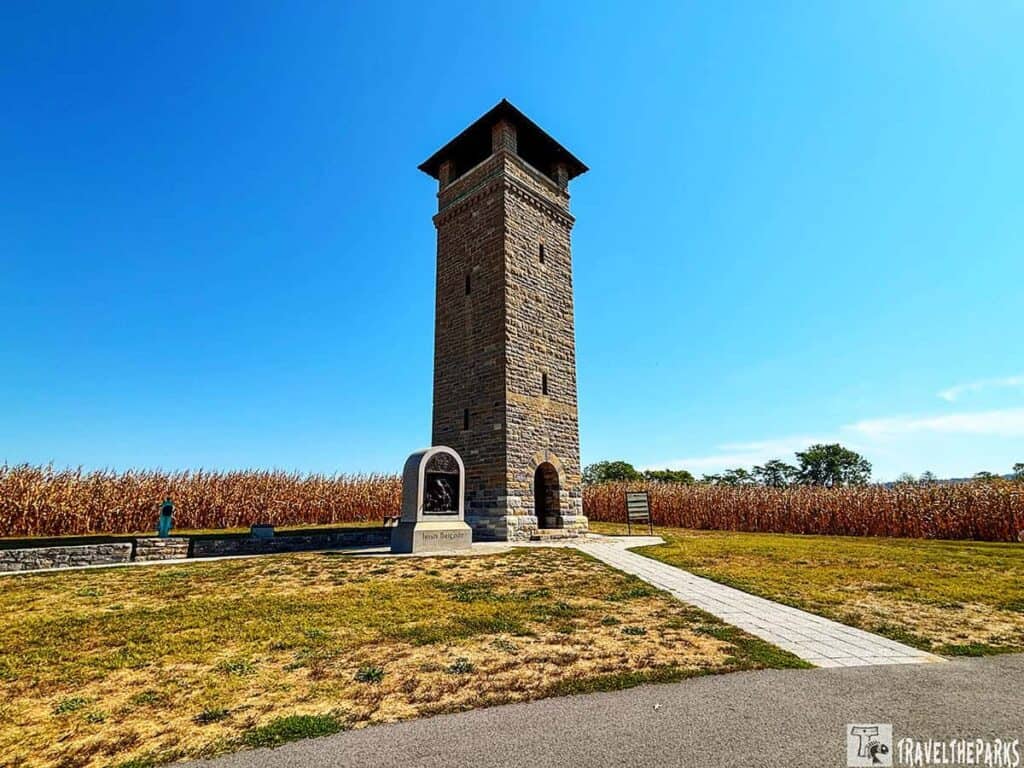
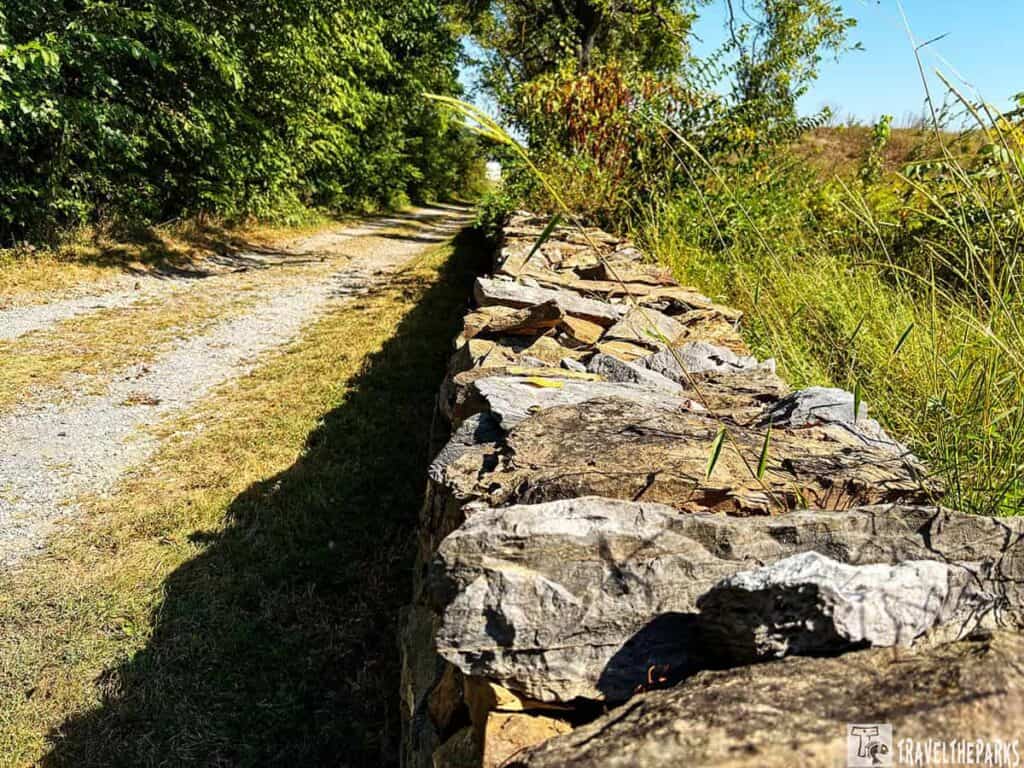
But nothing prepares you for standing in the lane itself. This sunken path, a quiet ditch today, is where over 5,000 men fell in three hours. It’s a place where the air still feels heavy, a stark and solemn reminder of the war’s true price. It’s more than a stop on a tour; it’s a necessary, humbling encounter with history.
Stop 8: The Burnside Bridge: A Pivotal Crossing
Taking the stone Burnside Bridge today, one can hardly imagine that it was the target of a fierce fight for this vital crossing. However, this is where most of the delay and the bloodshed happened. Confederate soldiers numbering only a few hundred, for hours, they dug in the bluffs above the bridge and successfully resisted the attack of the overwhelming Union forces led by General Ambrose Burnside. The desperate battle to get hold of this bridge changed the whole time of the engagement and thus, it was possible for the Confederate troops to come to the rescue.
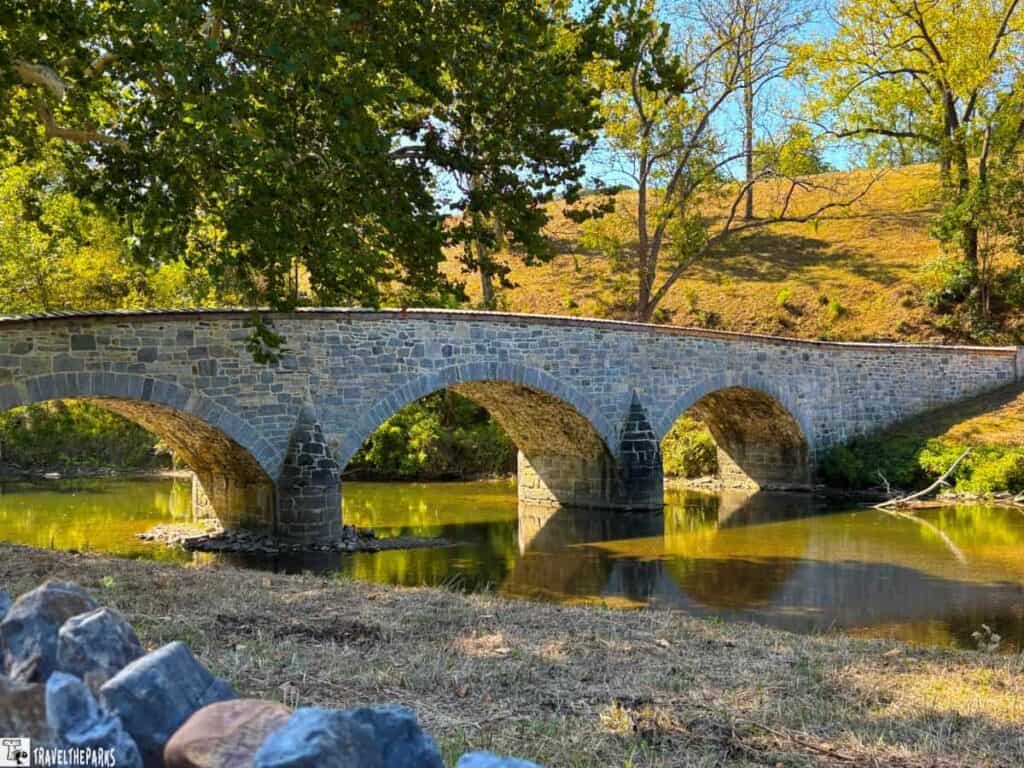
The area is preserved very well and even has historical markers that tell the story of the bloody fight. The bridge remains a strong and vivid image of how it was used as a key point in the strategy and the tremendous difficulties the soldiers had to endure.
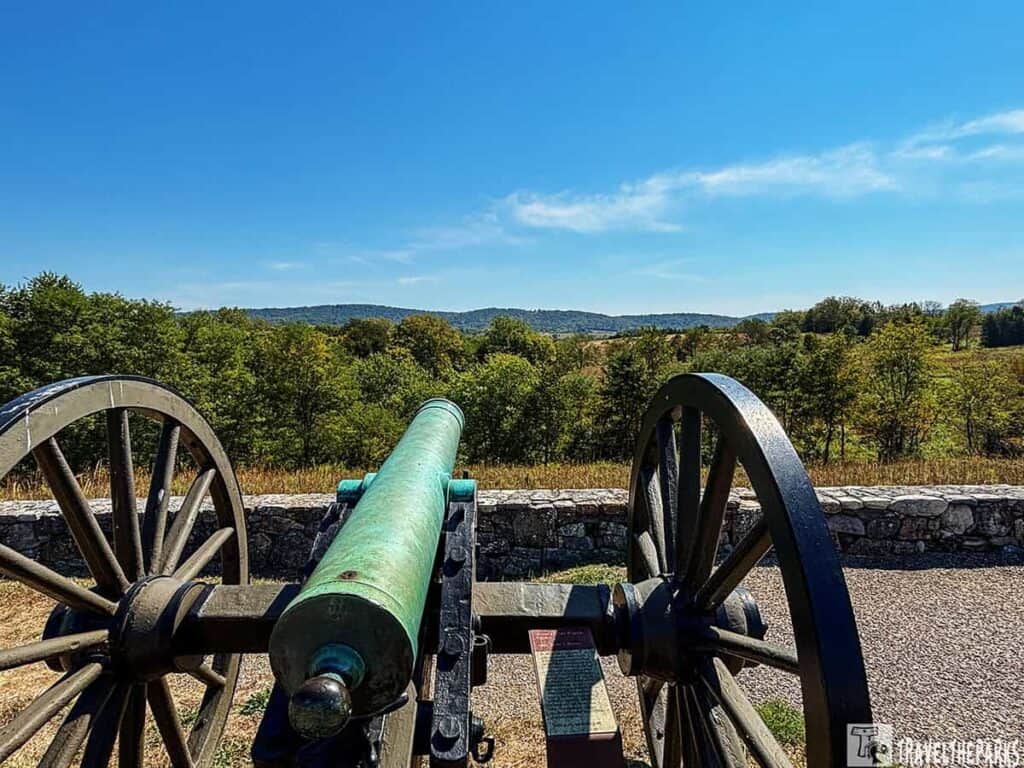
Stop 9: The Final Attack: A Nation’s Turning Point
This area of the battlefield relates to the most intense moment of the drama. The small Confederate force was able to hold Burnside’s Bridge for many hours and thus the Union army was pinned down. The newly arrived Union troops seemed ready to ravage the Confederate flank and bring victory to their side.
However, the good fortune was only for a short while. Confederate General A. P. Hill’s division, which was worn out from the forced march, met the Union troops with a counteroffensive of unprecedented rage. This single, abrupt, and brutal twist stopped the Union troops from going forward, rescued Lee’s army, and resulted in a bloody stalemate.
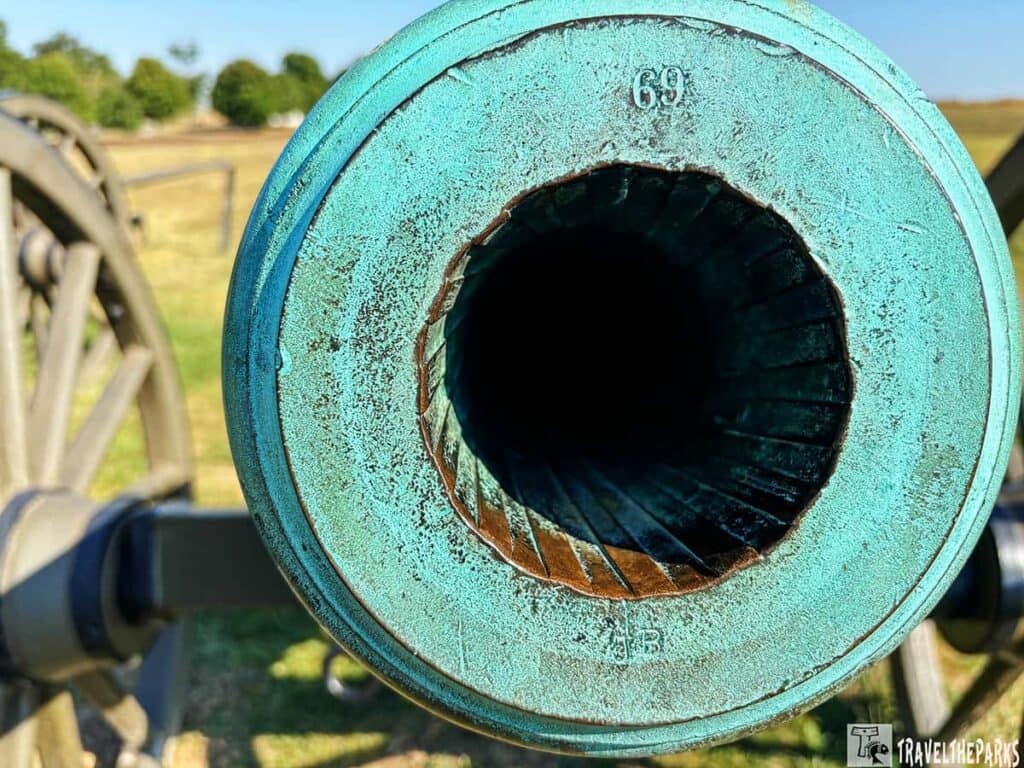
This peaceful land today is a complete contrast to the horrific bloodshed of September 17, 1862—the single most bloody day in the history of humanity. The fight was a tactical draw, but it handed a political win to Lincoln, which he greatly needed.
Here, on this field, the cause of the war was redefined. After the battle, Lincoln gave the Emancipation Proclamation. Thus, it became not only a struggle to save the Union but also a mission to abolish slavery. A place to remember the enormous sacrifice for liberty and the occasion that changed the country forever is here.
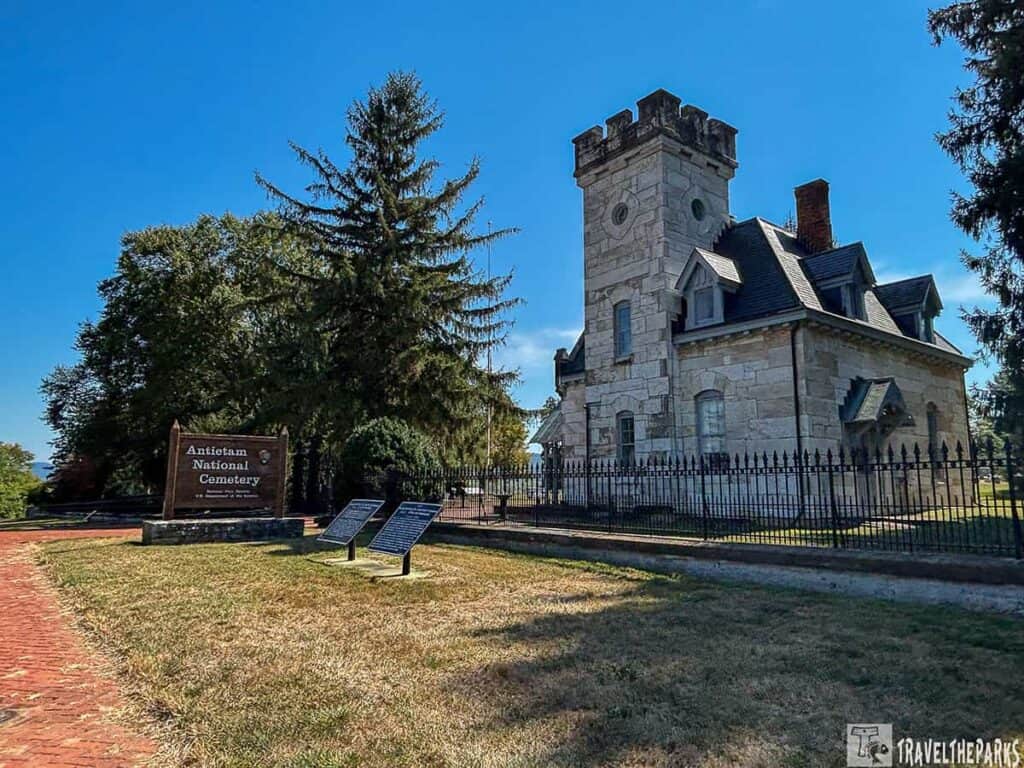
Stop 10: Antietam National Cemetery: A Place of Honor and Remembrance
Our journey ends among the silent ranks of the Antietam National Cemetery. Here, the echoes of the battle finally fall still. Established in 1865, these peaceful grounds hold the weight of a nation’s grief, sheltering over 4,700 Union soldiers. Walking among the endless rows, one cannot help but feel the profound silence that followed the storm. It is a solemn, sacred space that transforms the abstract statistics of war into a permanent and personal testament to loss.
PRO Tip: Pack the essentials for a full day at Antietam: comfortable walking shoes, plenty of water, sunscreen, a hat, and bug spray for the open fields. Bring a camera or binoculars for scenic overlooks, plus a light jacket if you plan to stay for the evening ranger programs. A small backpack and snacks will keep you fueled as you explore the battlefield.
Pry House Field Hospital Museum: Medicine on the Front Lines
Our visit to the Pry House Field Hospital Museum was one of the most moving parts of our Antietam trip. A short drive from the battlefield, this farmhouse-turned-hospital forces you to confront the war’s brutal aftermath.
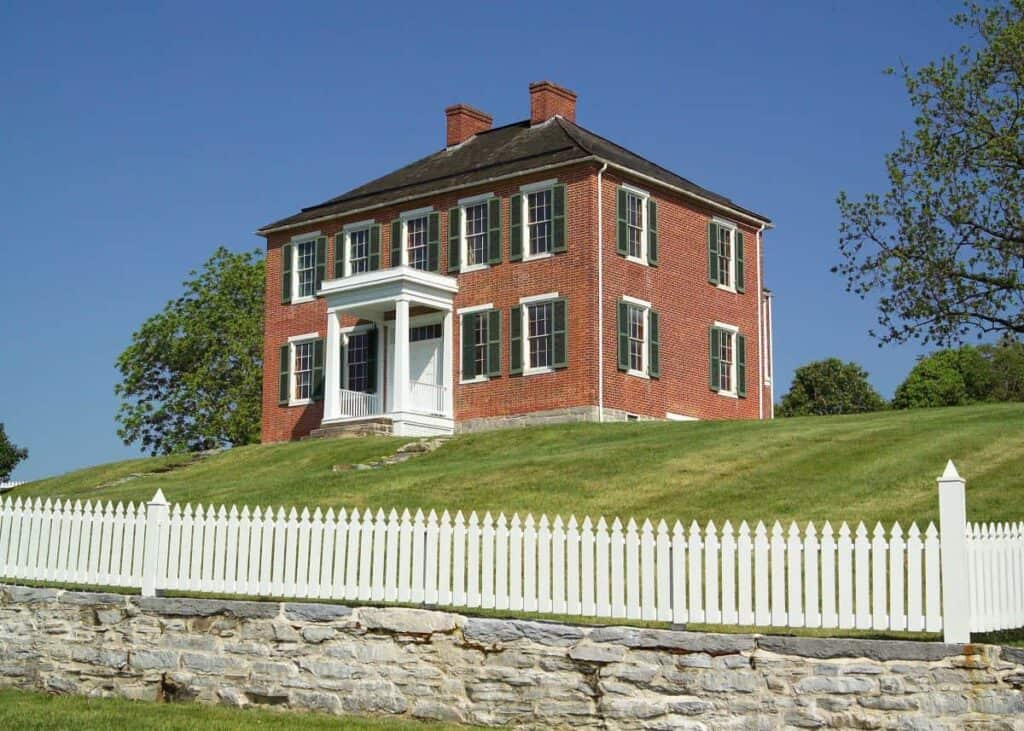
Seeing the original surgical kits and medical displays was chilling. It’s one thing to read about Civil War medicine; it’s another to stand in the room where amputations happened. Yet, amid the grimness, we also found a story of profound courage. Not of soldiers, but of the medical teams who fought their own desperate battle to save lives with limited tools and overwhelming numbers. It’s a crucial, yet humbling chapter of the Antietam story.

Final Thoughts: Our Visit to Antietam National Battlefield
Driving through Antietam, the scale of sacrifice becomes palpable. This hallowed ground is more than a historical marker; it is a timeless classroom. Walking these fields deepens our respect for the immense human cost of war and the fragile peace it ultimately forged.
The legacy of Antietam is a quiet plea from the past, urging us to remember. If you listen closely, history doesn’t just whisper—it asks us to carry its lessons forward. This journey leaves an indelible mark, a sobering gratitude for the hard-won unity we enjoy today.
Have you been to Antietam National Battlefield? What about other battlefields? What is your favorite historical park? Share your thoughts in the comments below.