Table of Contents
Updated August 2026
There’s something surreal about bobbing in crystal-clear water, a coral reef glowing beneath you, while the Miami skyline shimmers just a few miles away. That’s Biscayne National Park—one of Florida’s most underrated gems, and honestly, one of the easiest adventures you can tack onto a South Florida trip. No park pass? Yep. Free entry? Also yep. And if you’ve got a spare afternoon, the Everglades are only 40 minutes down the road for a serious two-for-one nature fix. Whether you’re a snorkeling newbie, a seasoned angler, or just someone who loves being on the water, this park delivers. So grab your sunscreen and your sense of wonder—here are 9 can’t-miss things to do in Biscayne National Park.
If being out on the water sounds like your kind of day, Biscayne National Park is worth a visit. Here are 9 things we think you shouldn’t miss.
📍 Heads up: While it’s often called Key Biscayne National Park, the official name is Biscayne National Park. You’re in the right spot for everything this park has to offer!
This post may contain affiliate links, meaning if you purchase something through one of these links, we may earn a small commission at no extra cost to you! Read the full disclosure policy here.
Exploring Florida’s Only Underwater National Park
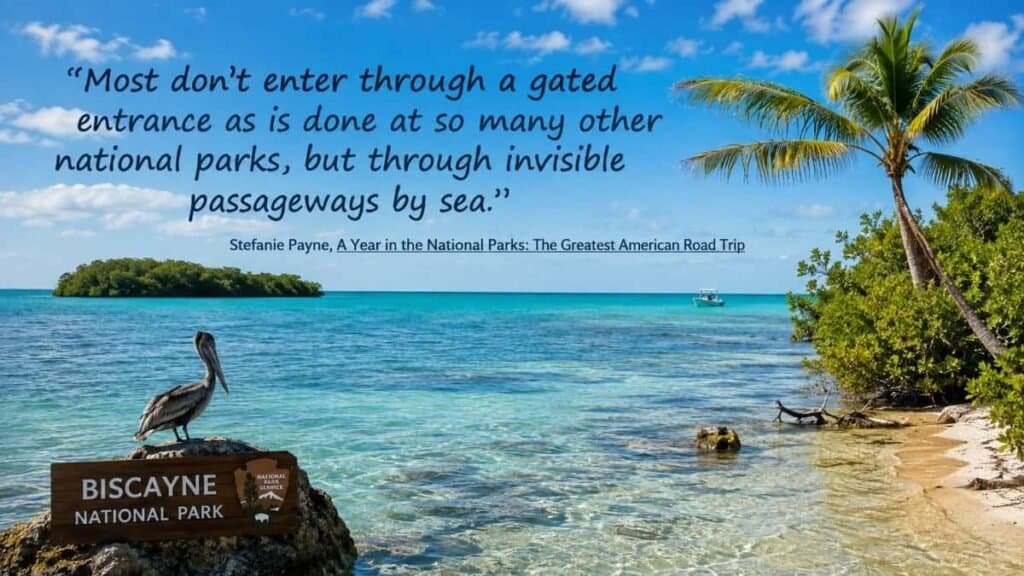
Florida has three national parks—Everglades, Dry Tortugas, and Biscayne—and they’re all completely different. Biscayne stands out because about 95% of the park is underwater. Its 173,000 acres include coral reefs, mangrove shorelines, and a fascinating collection of shipwrecks and other pieces of maritime history.
The Maritime Heritage Trail. is one of the coolest parts of the park. It includes six historic shipwrecks dating from the early 1800s, all located underwater where snorkelers and divers can see them. The trail also includes Fowey Rocks Lighthouse, which was built in 1878 to help guide ships into the Port of Miami. It’s an impressive piece of South Florida history, especially when you realize how many vessels relied on that light over the years.
And you don’t have to travel far from Miami to see it. Biscayne National Park is just a short boat ride from the city, and there’s no entrance fee. If you want to make a full day of exploring South Florida’s national parks, Everglades National Park is about 40 minutes away by car.
Planning: What to Know Before You Visit Biscayne National Park
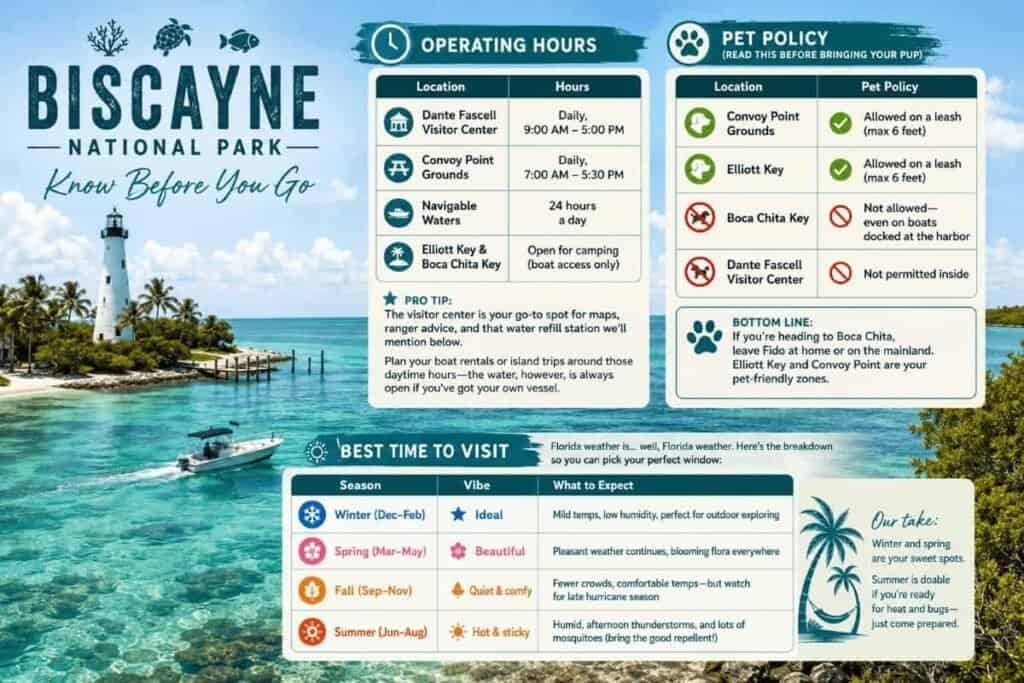
Good news first: Biscayne National Park is completely free to enter. No park pass, no entrance fee—just show up and explore. Now let’s get into the nitty-gritty so you can plan a smooth, stress-free trip.
What to Bring
- There are no concessions at the park or on the island tours. None. Zero. So pack like you’re heading out for the day on the water—because you are.
- The essentials:
- 🥪 Food, snacks, and drinks – Pack a picnic to enjoy by the water.
- 💧 Refillable water bottle – There’s a water-refilling station on the lower level of the visitor center.
- ☀️ Sunscreen– You’ll be on the water, and the Florida sun is no joke.
- 🦟 Bug repellent – Trust us on this one.
- 🔭 Binoculars– Great for birdwatching and spotting the Miami skyline.
- 📸 Camera– You’ll want to remember this place.
- 🩱 Swimsuit or wetsuit– Bring one if you’re planning to snorkel, kayak, or canoe.
- 🧢 Hat & towel– You’ll appreciate both after a few hours in the sun and water.
- Forgot something? There’s a Walgreens in Homestead before you reach the park. It’s a good last stop for sunscreen, bug spray, snacks, or anything else you forgot to pack.
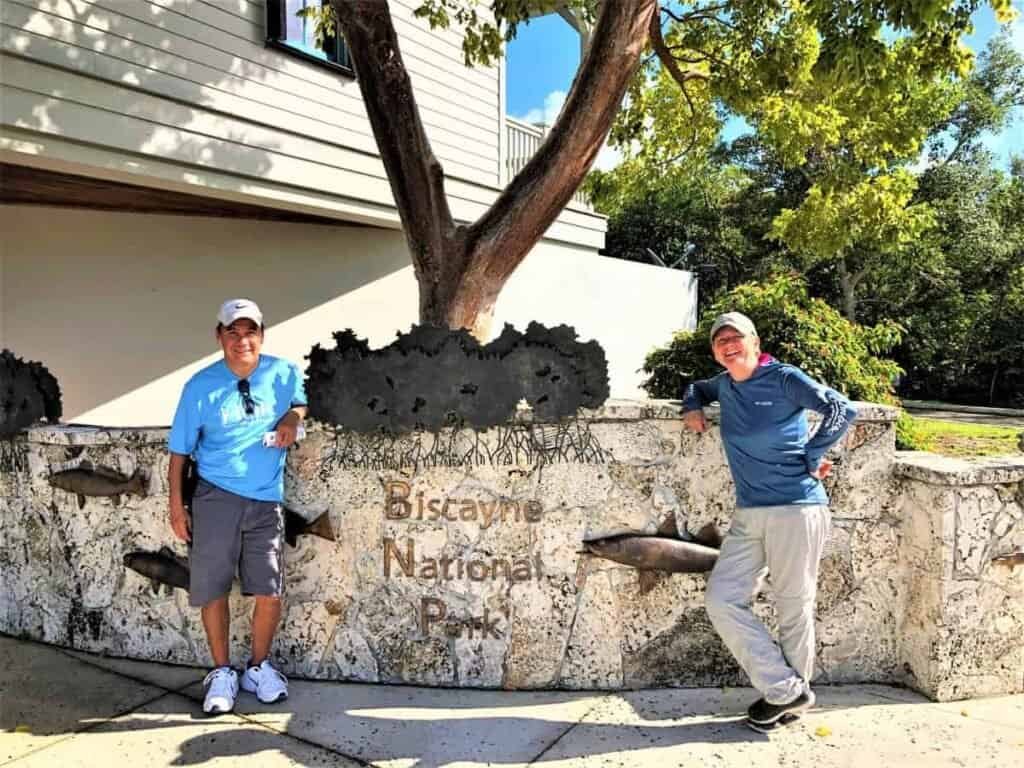
1. Dante Fascell Visitor Center: The Heart of Biscayne National Park
First stop? The Dante Fascell Visitor Center. It’s a good place to get oriented before heading out on the water, but even if you aren’t taking a boat tour or renting equipment, it’s worth stopping to see.
Getting There
The park entrance is about a 20-minute drive (9 miles) from Homestead. The drive takes you through back roads lined with palm farms and rural Florida scenery, which feels surprisingly different from the Miami you might be expecting.
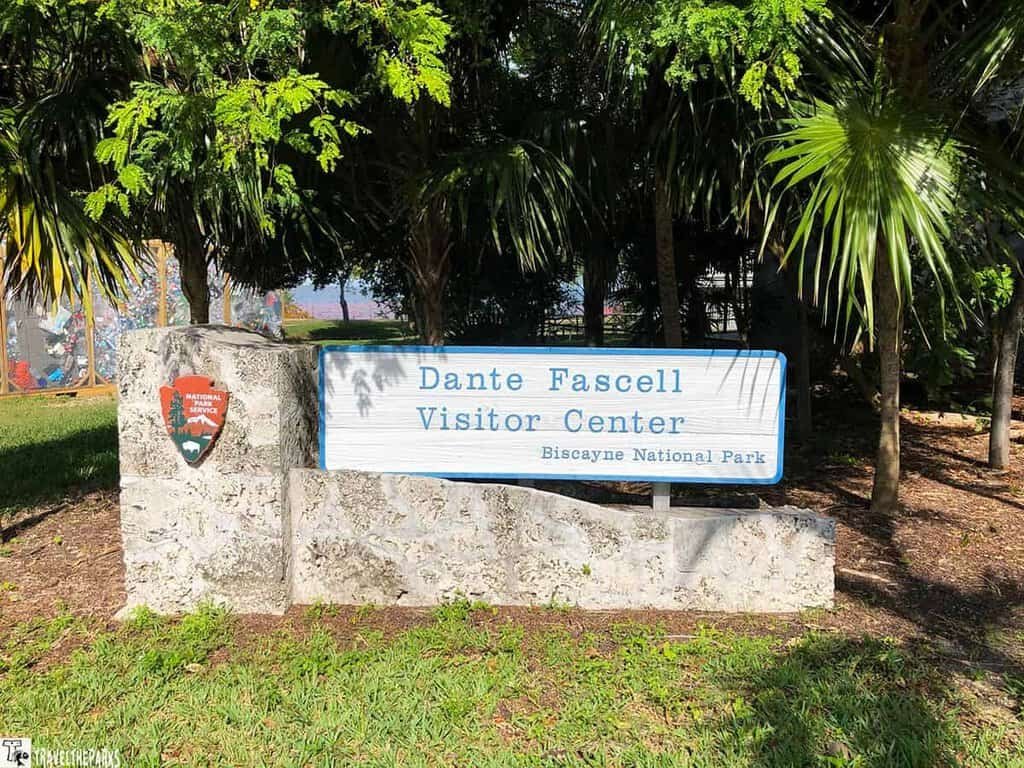
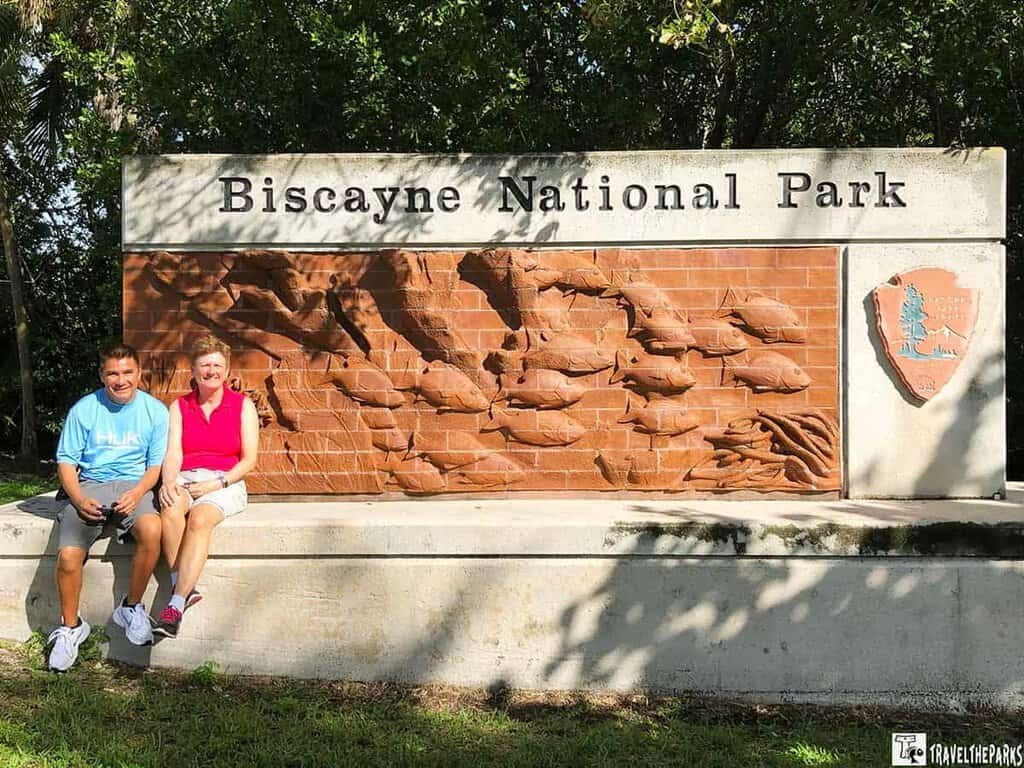
You’ll spot the park sign at a small roundabout when you arrive. Quick tip: We stopped here for our usual “we made it” photo, but parking is limited, so don’t plan on staying long.
From there, it’s another 1/4-mile drive along the park road to the visitor center. There’s ample parking when you arrive.
What You’ll Find Inside
The visitor center sits right on the water, with a small harbor tucked into a cove protected by mangroves.
First Floor:
- 🚻 Restrooms
- 🛶 Equipment rentals
- 🌿 An interpretive trail outside that explains the impact of Hurricane Andrew on the area
Second Floor:
- 🎥 A theater showing a 20-minute film about the park’s history
- 📚 Displays covering the park’s terrestrial and marine ecosystems
- 🧭 Tour desk for information about ranger-led programs and island tours
- 📖 Small bookstore with maps, guides, and souvenirs
Don’t miss: The rocking chairs on the porch. They overlook the harbor and Biscayne Bay, and it’s a great place to sit for a few minutes and watch what’s happening on the water.
The Boardwalk & Shoreline
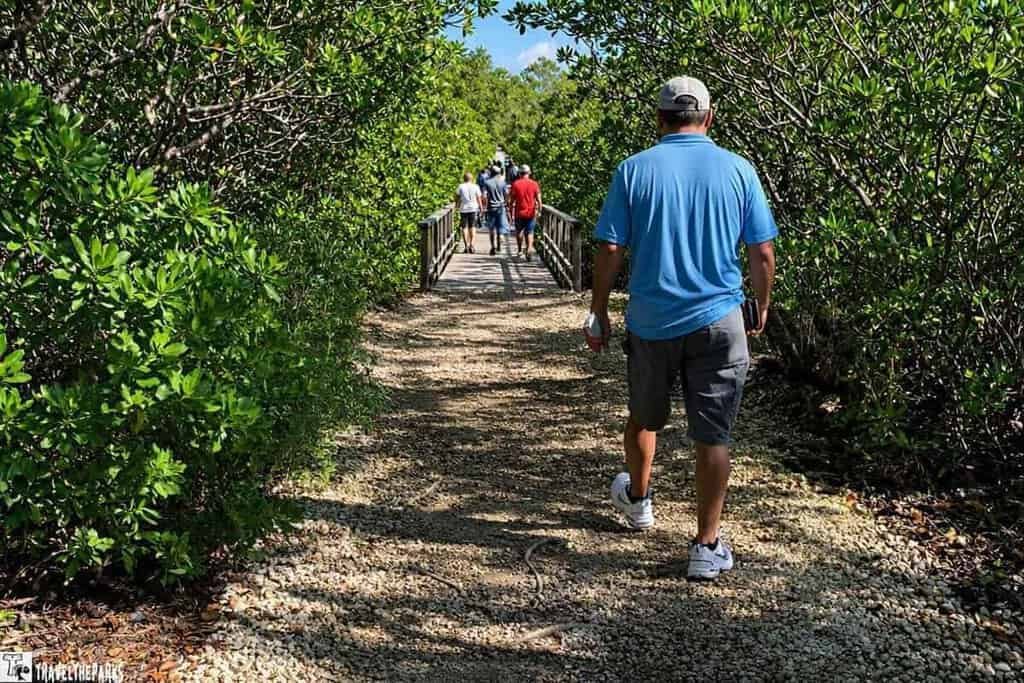
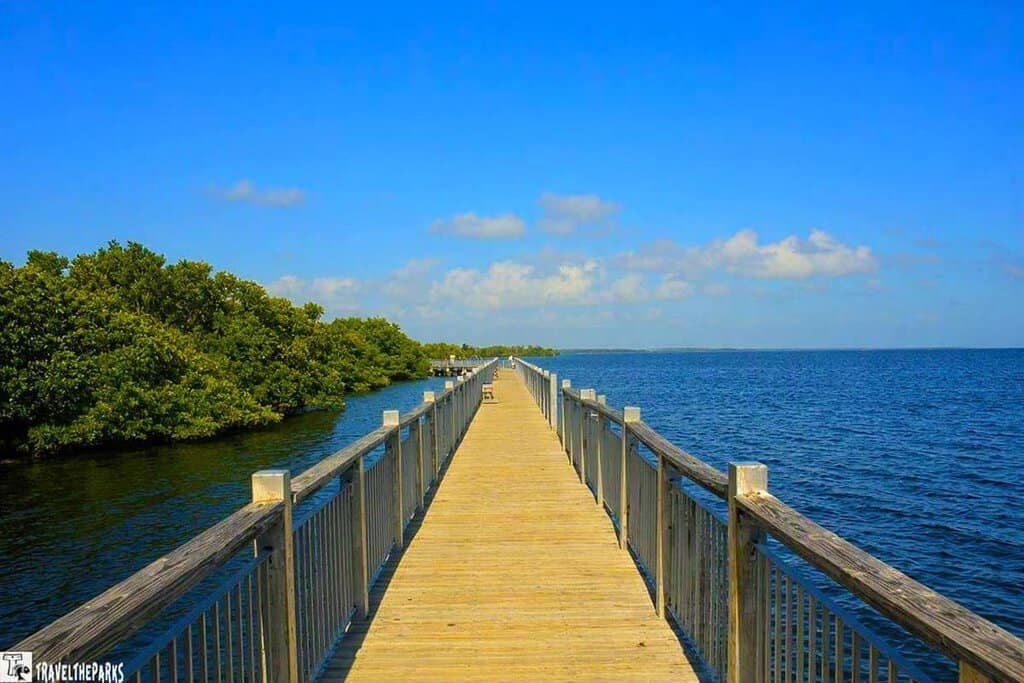
An accessible boardwalk follows the shallow waters of Biscayne Bay and leads toward a jetty surrounded by mangroves. It’s flat and easy to walk, making it a nice option if you want to explore the shoreline before or after a boat trip.
Along the way, you’ll find:
- 🪑 Benches where you can stop and enjoy the view
- 🧺 Picnic tables and barbecue grills along the shoreline
PRO tip: If there’s a ranger-led program happening during your visit, consider joining it. It’s an easy way to learn more about the park before heading out on the water.
Why This Stop Matters
The Dante Fascell Visitor Center is more than just a place to pick up a map. It’s where you’ll find the information, equipment rentals, tours, and exhibits that can help you make the most of your visit.
And if you’re waiting for a tour or simply have some extra time, the boardwalk and those rocking chairs overlooking the bay make it an easy place to slow down for a while.
2. Must-Do Experiences in Key Biscayne National Park: Choose a Key Biscayne Institute Tour
If you really want to experience what makes Biscayne National Park different from Florida’s other national parks, take a tour. About 95% of the park is underwater, so you’ll miss a huge part of it if you stay on shore.
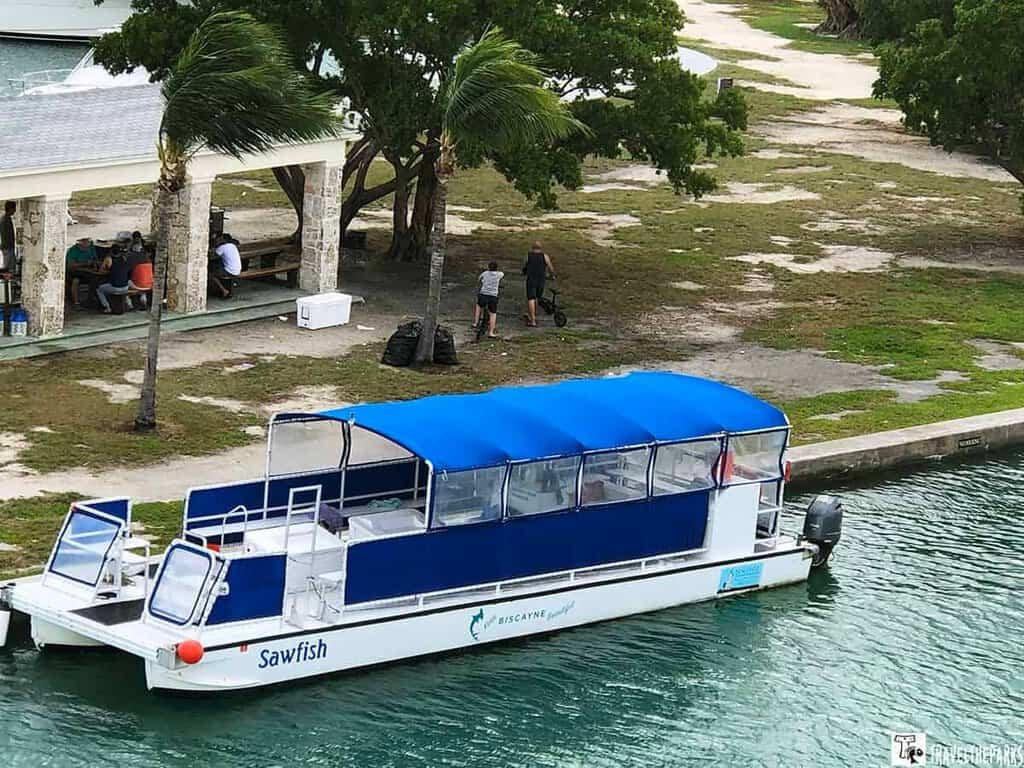
The Biscayne National Park Institute is an approved National Park Service concessionaire that operates boat tours in the park. They offer several ways to get out on the water, from snorkeling and island trips to tours focused on the park’s maritime history.
You’ll find the tour desk on the second level of the Dante Fascell Visitor Center, next to the theater and bookstore. Tours leave from the small harbor behind the visitor center, making it easy to get from the information desk to the boat.
A Quick Shout-Out to the Volunteers
I have to give a special mention to the volunteers who run the tour desk. These folks are passionate, knowledgeable, and—as we found out—incredibly understanding.
Here’s our story: On the morning of our Boca Chita Key tour, we ran into a little hiccup. Our car battery died. Check-in was 30 minutes before departure, and we were cutting it close.
I called the tour desk in a mild panic, and the volunteer I spoke with didn’t skip a beat. She assured us they’d hold the boat—and true to her word, they waited for us. We arrived about five minutes past check-in, and they waved us aboard like it was no big deal.
That kind of service? Above and beyond. It turned what could have been a stressful morning into a memory we still laugh about.
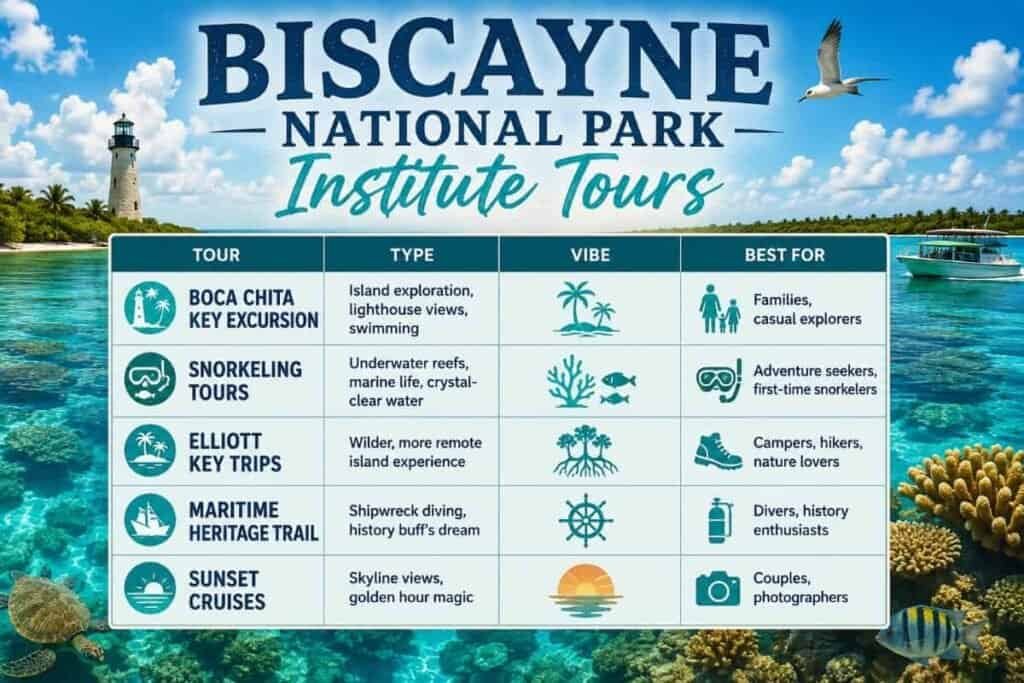
Tour Options at a Glance
The Institute offers several ways to explore Biscayne, depending on what you want to see and do.
PRO Tip: Book ahead, especially if you’re visiting during the busy winter and spring months. Popular tours can fill quickly, and you don’t want to get to Biscayne only to discover the tour you wanted is sold out.
Why a Tour Is Worth It
Biscayne is 95% underwater, so if you want to experience the part of the park that makes it truly different from Florida’s other national parks, you’ll need to get out on the water.
A tour also takes the guesswork out of the experience. Guides can point out reefs, marine life, shipwrecks, islands, and pieces of the park’s history that you might otherwise miss. And having someone else handle the navigation while you enjoy the scenery isn’t a bad deal either.
3. Snorkeling Tours: Dive Into Biscayne’s Underwater World
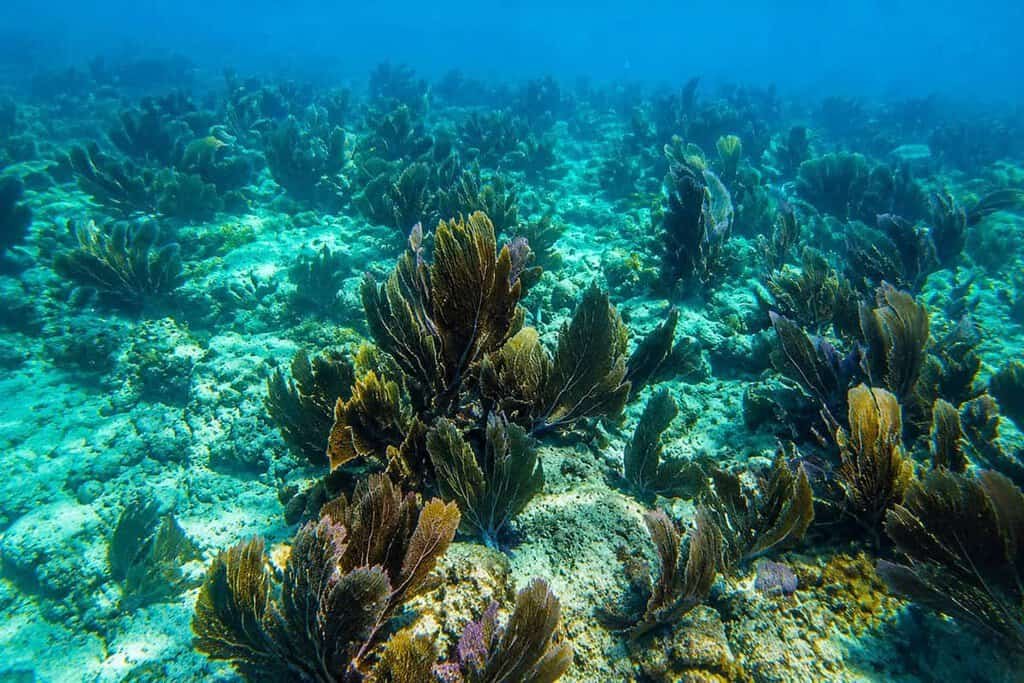
Here’s the thing about Biscayne National Park: about 95% of it is underwater. If you want to see the part of the park that makes it so different from other national parks, you need to get out on the water. For us, a snorkeling tour was one of the highlights of the visit.
The Reef Experience
From the visitor center harbor, it’s about a 30-minute boat ride to the reef. The trip takes you past Elliott Key and out toward the Florida Keys Reef system.
Keep an eye on the water during the ride. Wildlife sightings aren’t guaranteed, but you might see:
- 🐬 Dolphins – Sometimes they ride alongside or in the boat’s wake.
- 🐢 Loggerhead turtles – You may spot one moving through the water.
- 🦈 Sharks – Seeing one from the boat can be pretty exciting.
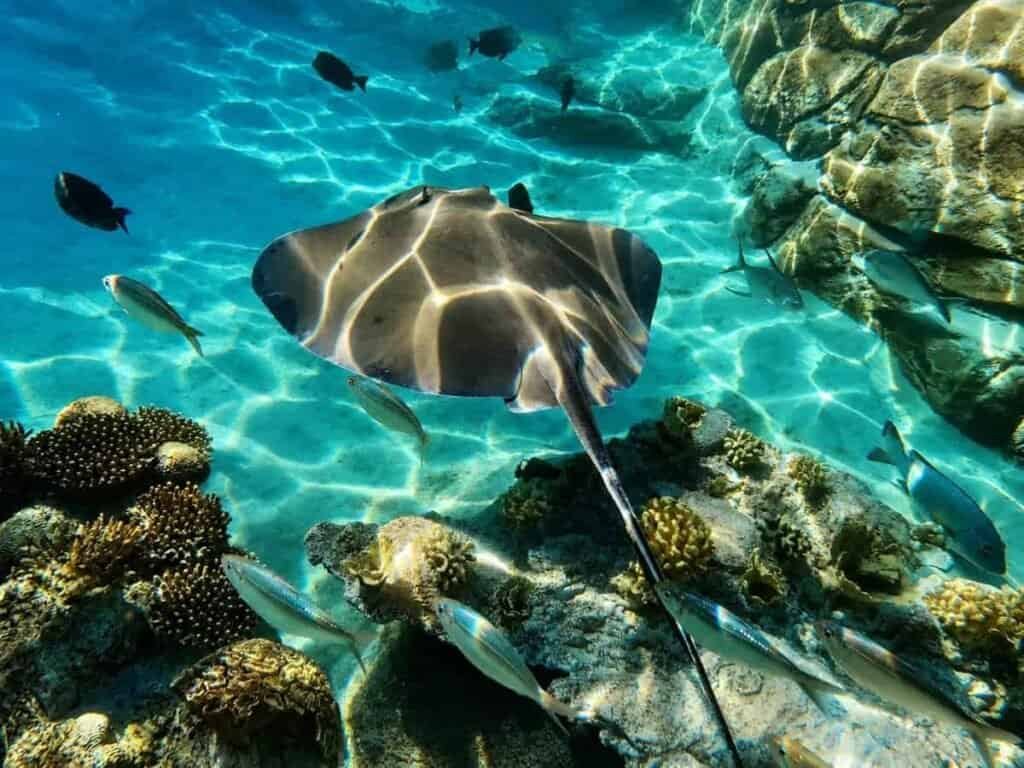
- 🐟 Stingrays – Look down toward the sandy bottom when conditions allow.
Every trip is a little different, which is part of what makes the boat ride fun.
In the Water
Once you reach the reef, the crew gives you a short orientation and gets everyone fitted with the appropriate gear. Then it’s time to get in the water.
The reef is home to:
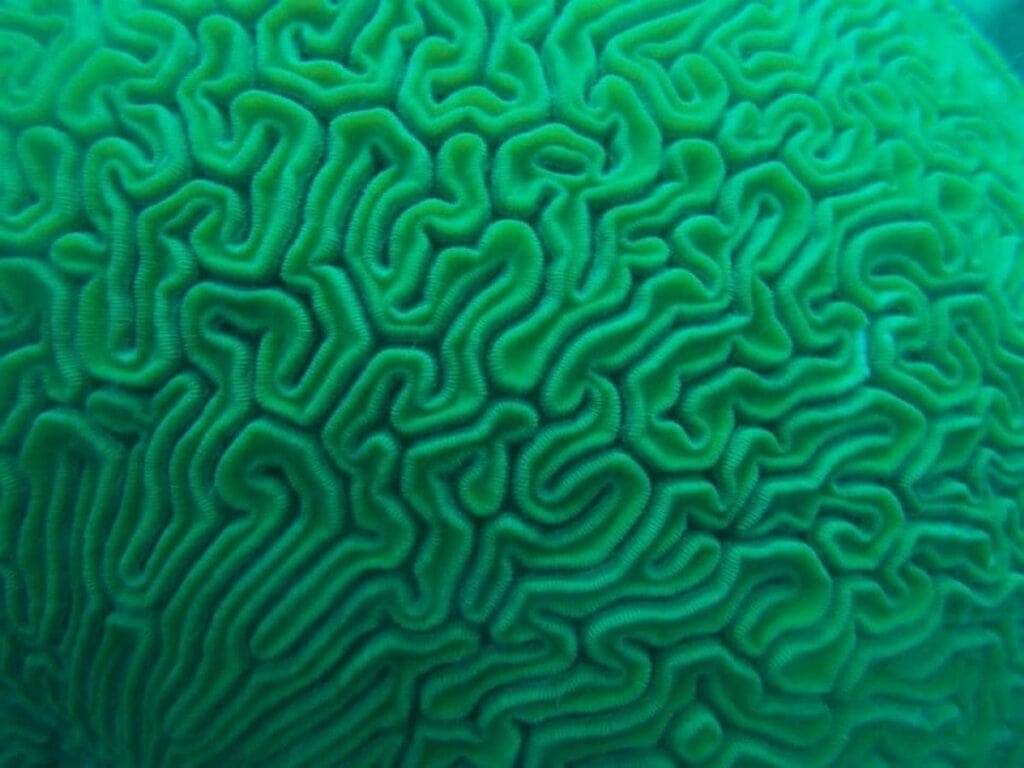
- 🧠 Brain corals – Some are surprisingly large.
- 🌊 Sea fans – Moving with the current as you swim past.
- 🧽 Sponges – Found throughout the reef.
- 🐠 Colorful fish – Many species move in and around the coral.
The water depth on our trip was around 8 to 12 feet, which made it comfortable for snorkeling without needing to dive deep.
One important reminder: Don’t touch the coral. Coral is a living part of the reef, and even a small amount of contact can cause damage. Look, take your photos, and leave the reef exactly as you found it.
What Happens If the Weather Doesn’t Cooperate?
Florida weather can change quickly, and reef conditions aren’t always suitable for snorkeling. If conditions aren’t right, the tour operator may offer another location instead.
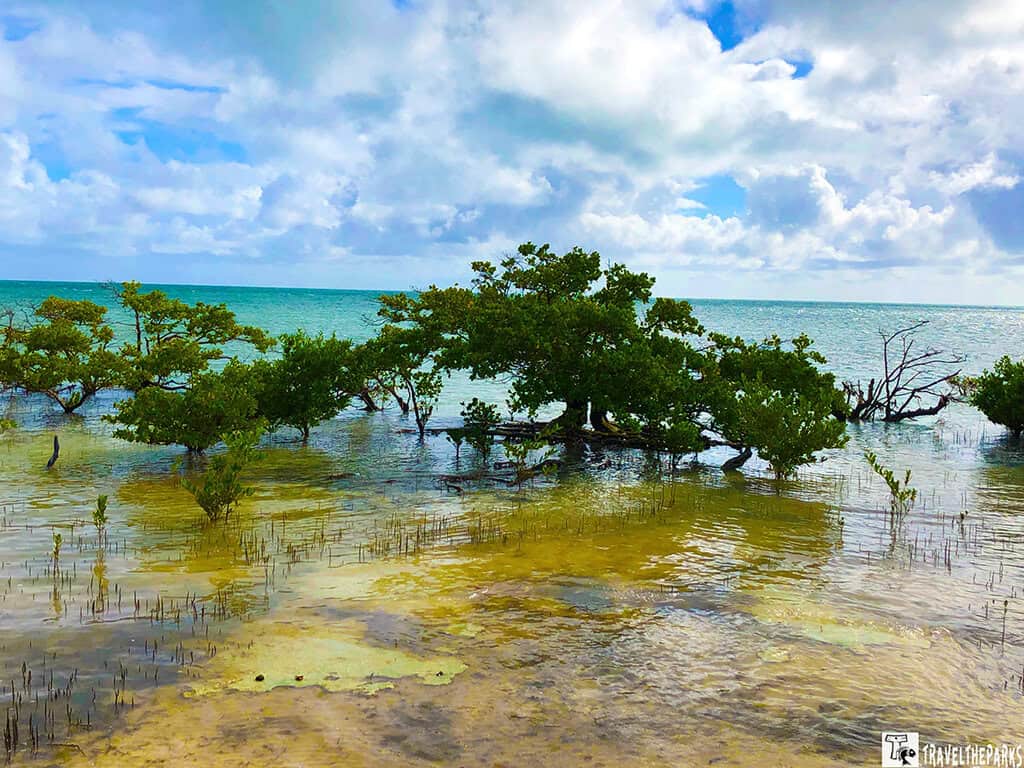
One possibility is a mangrove forest snorkel, which gives you a completely different look at Biscayne’s underwater environment.
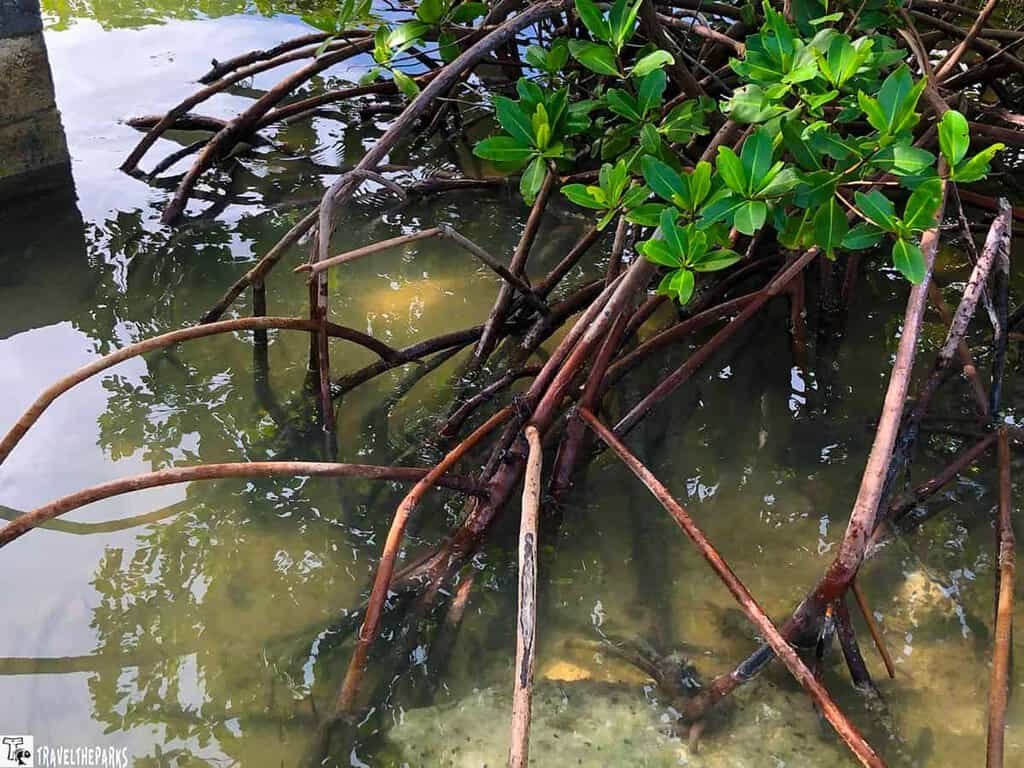
Mangroves are important nursery areas for young fish, and the tangled roots provide shelter for all kinds of marine life. Depending on conditions, you might see:
- 🌿 Stingrays resting in the shallows
- 🐟 Mangrove snapper around the roots
- 🐠 Young mullet and grunts moving through the water
The mangroves also help protect the shoreline from erosion and waves, so there’s more going on beneath those roots than you might realize.
The tour operator notes that weather alternatives can also include a wreck, reef, or bay-side snorkel. So even if the original reef trip isn’t possible, you may still get a chance to see Biscayne from the water.
Why Snorkeling Belongs on Your Biscayne Itinerary
If you enjoy being in the water, snorkeling should be near the top of your list of things to do in Biscayne National Park. The reef gives you a look at the park you simply can’t get from the visitor center.
And if the weather sends you toward the mangroves instead, don’t count that as a consolation prize. It’s a completely different experience and another chance to see how much life exists just beneath the surface.
4. Kayaking Adventures: Get Out on the Water!
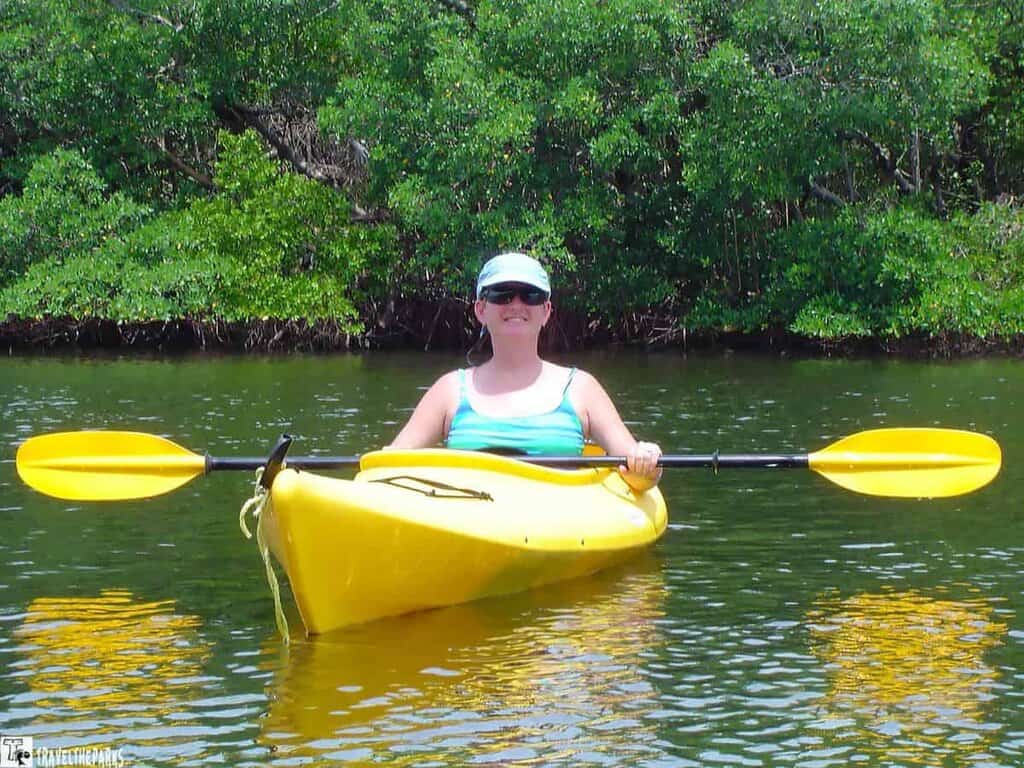
If you’re looking for a relaxed way to experience Biscayne National Park, kayaking is a great choice.
The tours provide everything you need—canoes, paddles, and life jackets—so you don’t have to haul your own gear or figure out what to bring. Just show up and get ready to paddle.
Our Experience: Laid-Back and Beginner-Friendly
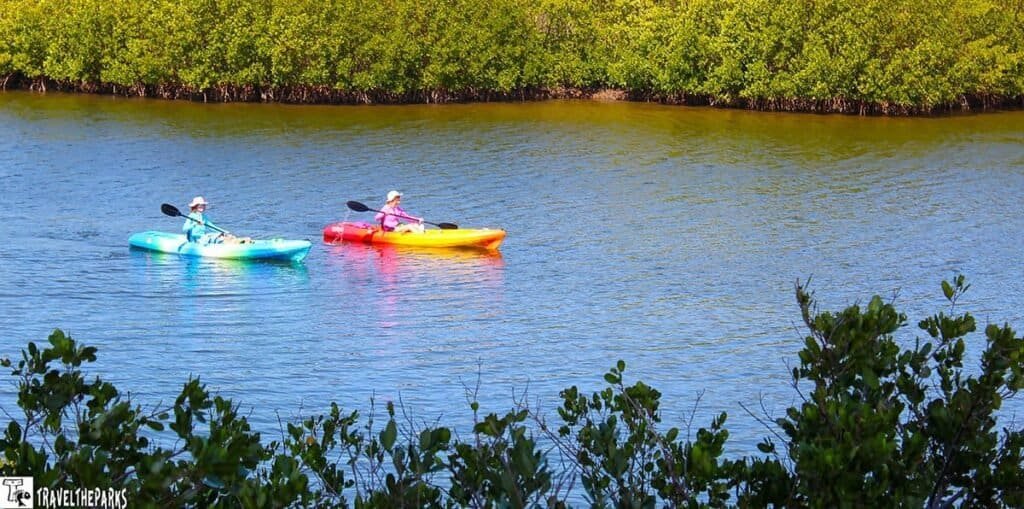
We found kayaking to be a great way to spend a morning. We paddled through the mangrove forest, and our guide stopped several times to point out marine life and talk about the park’s natural history.
For us, it was a laid-back paddle and really wasn’t much of a workout. The pace was easy, and I think even someone who has never kayaked before would enjoy this type of trip.
That doesn’t mean every kayaking excursion will be the same, though.
Longer Trips for Experienced Paddlers
The longer day trips offered by the Biscayne National Park Institute require more time and paddling, so I’d look carefully at the trip description before booking. If you’re comfortable spending several hours on the water, a longer excursion could be a great way to see more of the park.
If you’re new to kayaking or just want an easier morning, I’d stick with a shorter guided trip.
What You’ll See
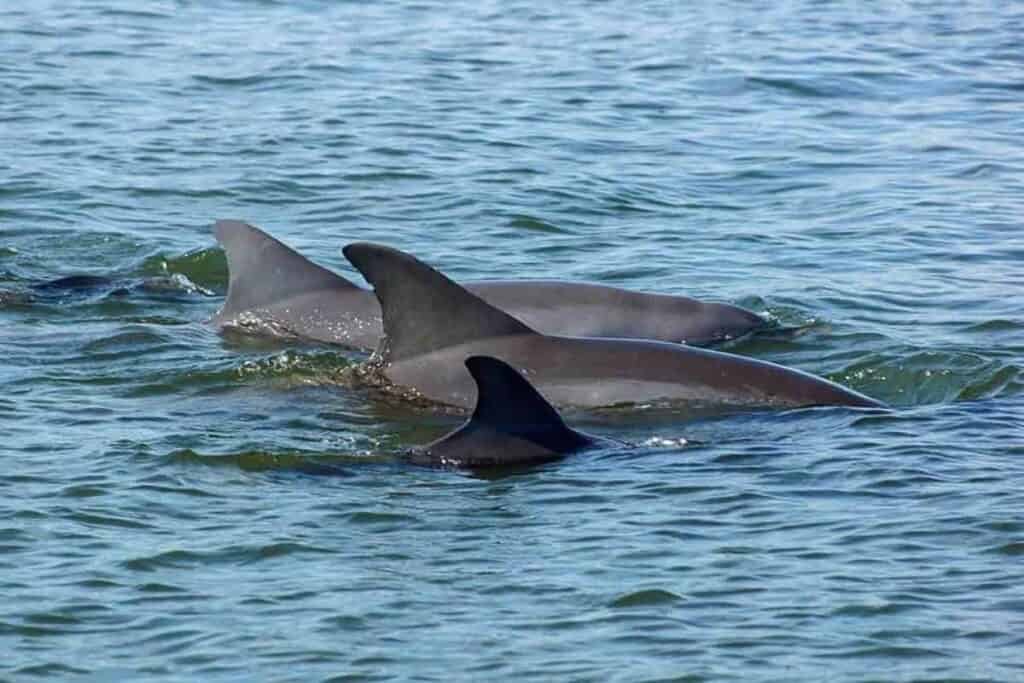
One of the fun parts of kayaking through the mangroves is not knowing what you’ll spot along the way. Keep an eye out for:
- 🐢 Sea turtles – You may see them surfacing nearby.
- 🐬 Dolphins – Occasionally cruising through the bay.
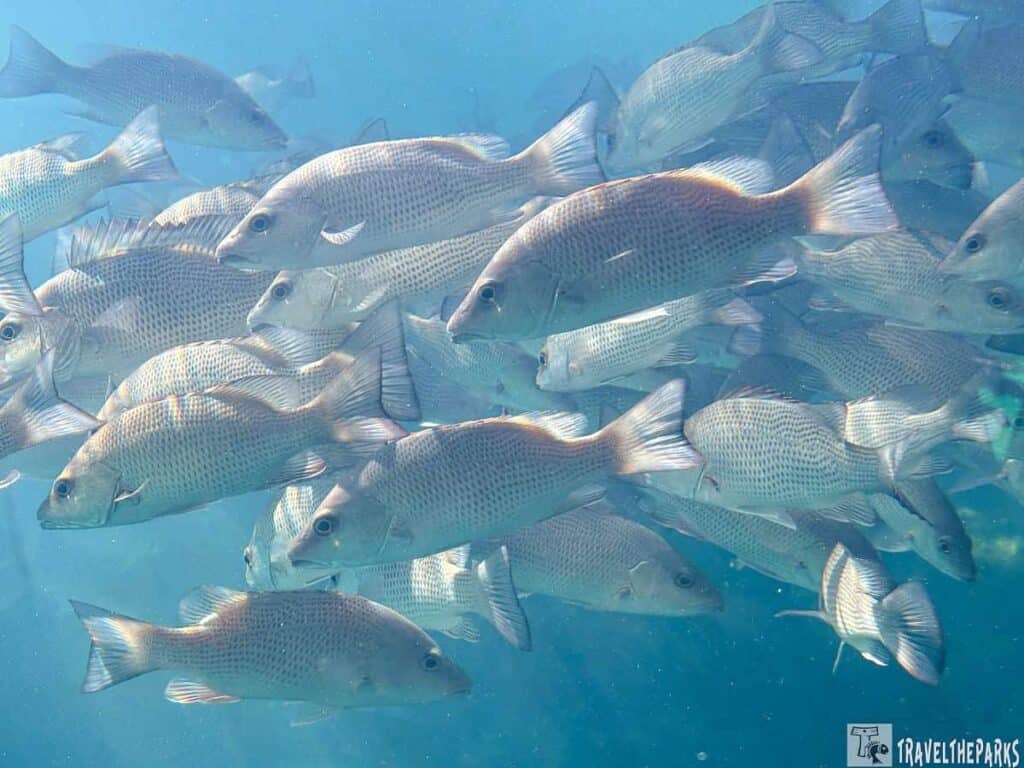
- 🐟 Mangrove snapper – Often found around the mangrove roots.
- 🦅 Ospreys and herons – Watch for them along the shoreline.
- 🌿 Mangrove roots – These tangled roots provide important habitat for young fish and other marine life.
PRO Tip: Bring a waterproof phone case or Dry Bag if you want to take pictures. It’s easy to get a little water in the kayak, and the last thing you want is a soaked phone.
Why Kayaking Belongs on Your List
If you’re looking for things to do in Biscayne National Park that don’t require a full day on the water, kayaking is worth considering. It’s quieter than a motorized boat tour and gives you time to slow down and look around.
For us, the easy pace and chance to paddle through the mangroves made it a really enjoyable morning.
5. Saltwater Fishing
If fishing is your thing, don’t overlook Biscayne National Park. The park’s grass flats, mangrove channels, and offshore reefs give anglers plenty of water to explore.
The Florida Keys are known for species like bonefish, permit, and tarpon, and you can find some of that same saltwater fishing experience around Biscayne’s islands and flats.
You’ll need a Florida saltwater fishing license to fish in the park. Fishing is allowed around the islands, but there are areas where it isn’t permitted, including designated swimming areas and marinas.
Before you cast, make sure you know the current saltwater fishing regulations for the park. Regulations can vary depending on the species, location, and season. And if you’re hoping to catch lobster, there’s an important rule to know: lobster harvesting is prohibited within Biscayne National Park waters.
For anglers, the variety is part of the appeal. You can work the shallow grass flats, explore the mangrove channels, or head toward the reefs depending on what you’re hoping to catch.
6. Boca Chita Key: Explore the Island and Climb the Lighthouse
Boca Chita Key was one of the stops we were most curious about, and getting there was part of the fun. The boat ride from the visitor center takes about an hour, and on our windy day, the captain’s warning that we might get wet turned out to be an understatement.
We ended up in the middle seats toward the back of the boat, with plenty of spray coming over the sides. Thankfully, our light rain gear kept us mostly dry. The ride also gives you a chance to see Turkey Point Nuclear Plant, and you may spot dolphins along the way. We weren’t so lucky because of the rough conditions, but the views made the trip worthwhile.
Boca Chita Key Lighthouse
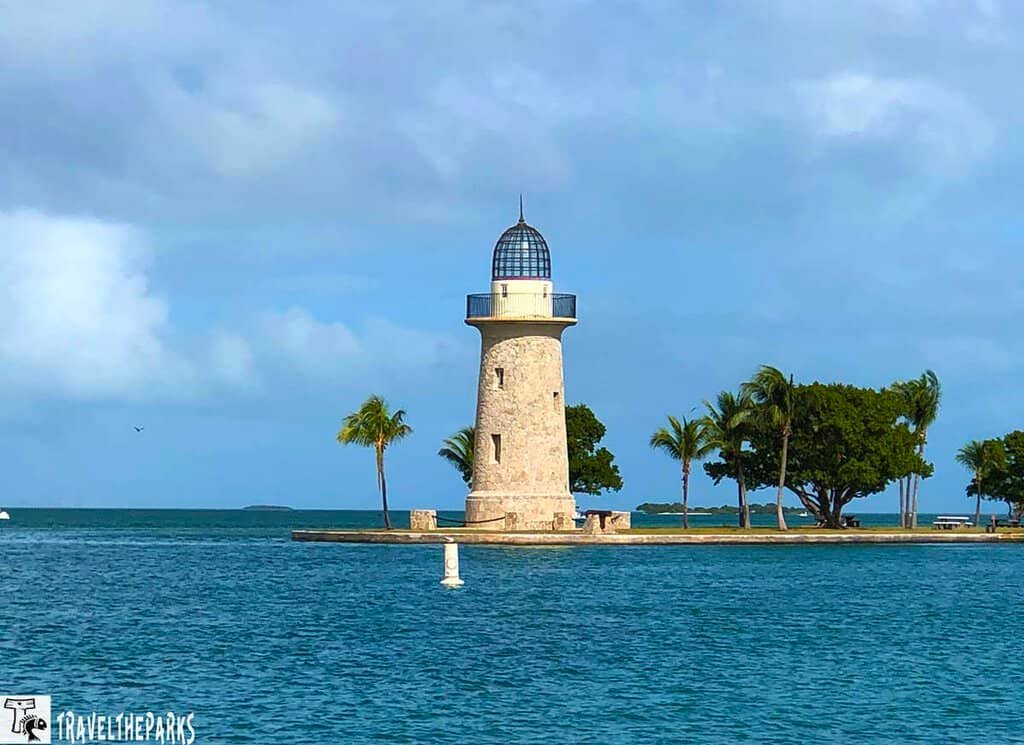
Once you arrive, you’ll have roughly an hour to explore the island. The main attraction is the 50-foot lighthouse, which is opened by the tour operator during the visit.
We climbed the stairs to the top, and the view was worth the effort. On a clear day, you can see across Biscayne Bay toward the Miami skyline.
One interesting piece of Boca Chita history is that the lighthouse was built in the 1930s by Mark Honeywell as a decorative feature. It was never used as a functioning navigational lighthouse. Our park ranger shared some of the island’s history during the visit, which added a lot to the experience.
Explore the Island
Boca Chita also has a short island trail that takes only about 10 minutes to walk. The trail was once a complete loop, but part of it was washed out by Hurricane Irma, so it is now an out-and-back route.
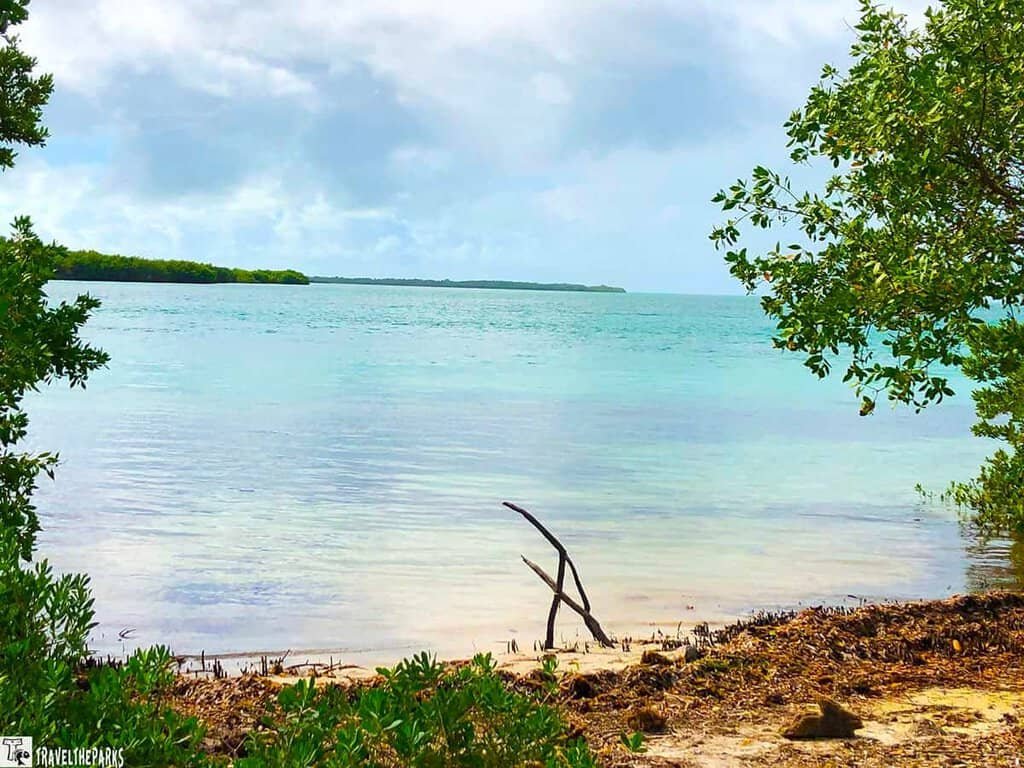
There’s also a small beach area on the north side of the island. We didn’t see anyone swimming during our visit because the weather wasn’t cooperating, but the shallow water can be a nice place to cool off when conditions are better.
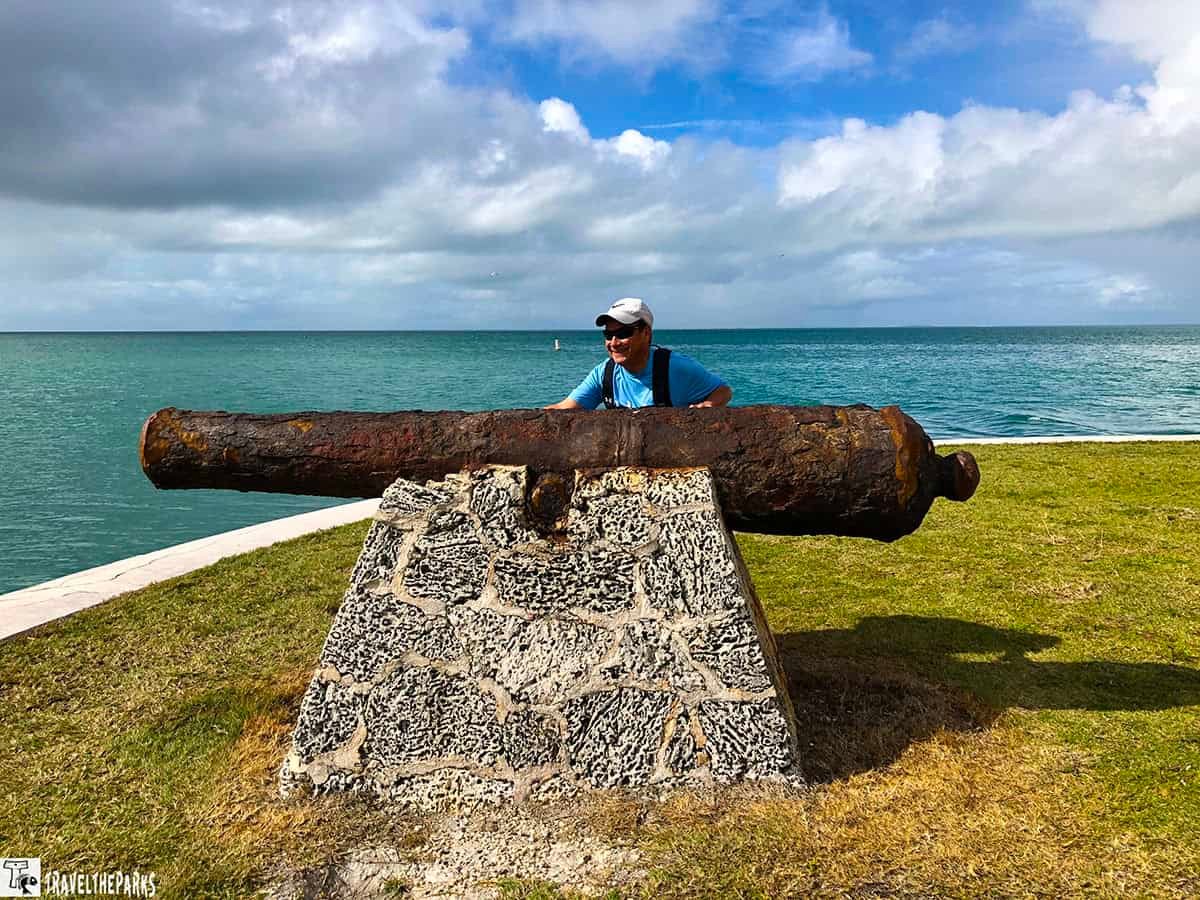
If you have time before heading back to the boat, walk around the harbor and take a look at the old cannon and the boats tied up in the marina.
What About the Marina?
This is where our experience was a little different from what we expected.
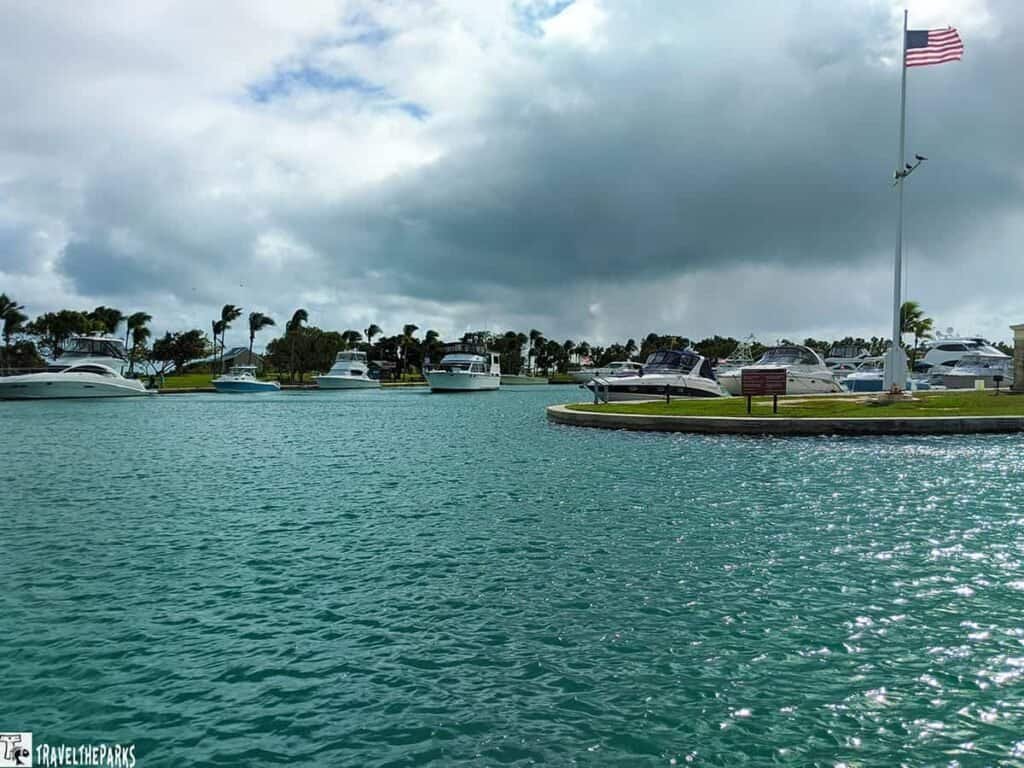
We visited around Christmas, and the marina was packed. Large yachts were playing loud music, generator cords stretched across parts of the boardwalk, and towels, bikes, and other gear were everywhere. The trash cans were overflowing, too.
I’m sure Boca Chita feels very different on a quiet weekday, but weekends and holidays can be busy, particularly around the marina. If you’re looking for a peaceful island escape, keep that in mind when choosing when to visit.
Can You Camp on Boca Chita Key?
Yes. Overnight camping is available on Boca Chita Key, although amenities are limited. There are restrooms, but don’t expect the kind of facilities you’d find at a developed campground.
If you’re planning to stay overnight, come prepared with everything you’ll need, including food and plenty of drinking water.
What things can I do at Boca Chita Island?
You’ll have about one hour to explore Boca Chita Island, and the highlight is the 50-foot lighthouse. The tour operator unlocks it upon arrival, though it’s only open for a short window each day. We took the climb up the steps, which offered a unique perspective of the island and, on a clear day, even a view of the Miami skyline.
The lighthouse was built in the 1930s by Mark Honeywell purely as a decorative structure — it was never a functioning lighthouse. Our knowledgeable park ranger shared fascinating stories about the island’s history, making the visit even more memorable.
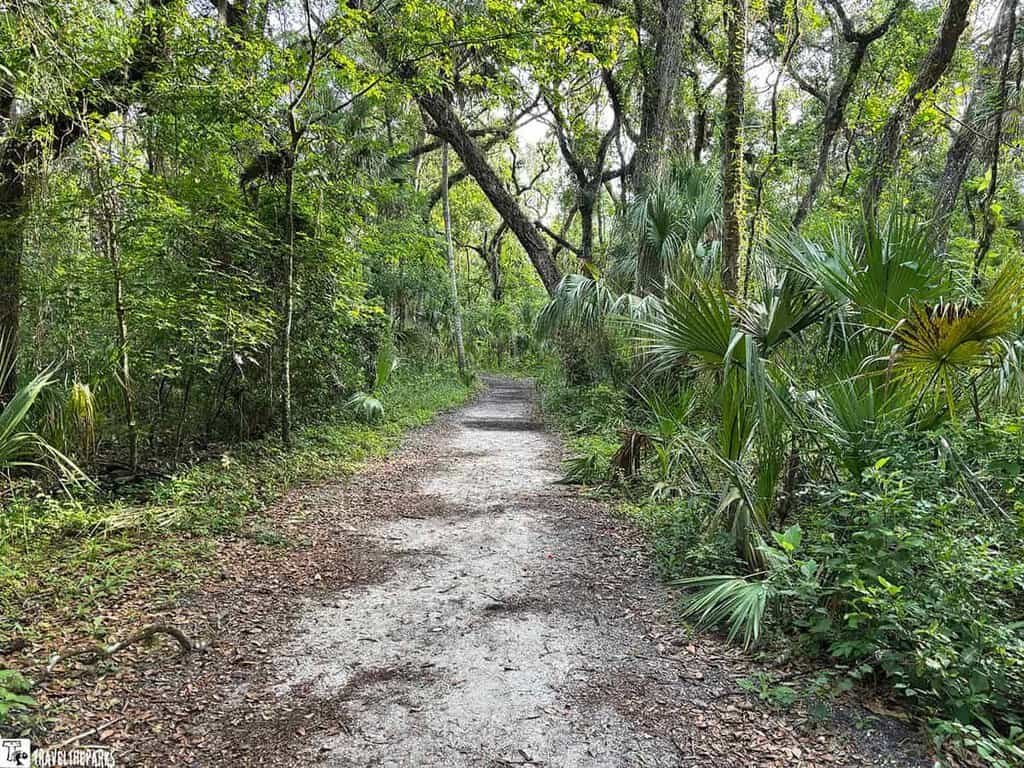
We completed the short island trail in about 10 minutes. Originally, it formed a full loop around Boca Chita, but today it’s an out-and-back route, as Hurricane Irma washed away a small footbridge. Adventurous visitors can wade through the channel to complete the loop.
The bathrooms are well-maintained by park rangers, though there is no running water, so plan accordingly. On the north side of the island, there’s a small beach area. We didn’t see anyone swimming, as the weather was uncooperative, but in warmer conditions, the shallow waters are ideal for swimming and snorkeling. If you’re visiting on a sunny day, it’s worth bringing your beach essentials to enjoy the water.
Campers can stay overnight on Boca Chita Island, where you’ll find restrooms, picnic tables, and grills. However, there are no wash sinks, showers, or running water, so plan accordingly.
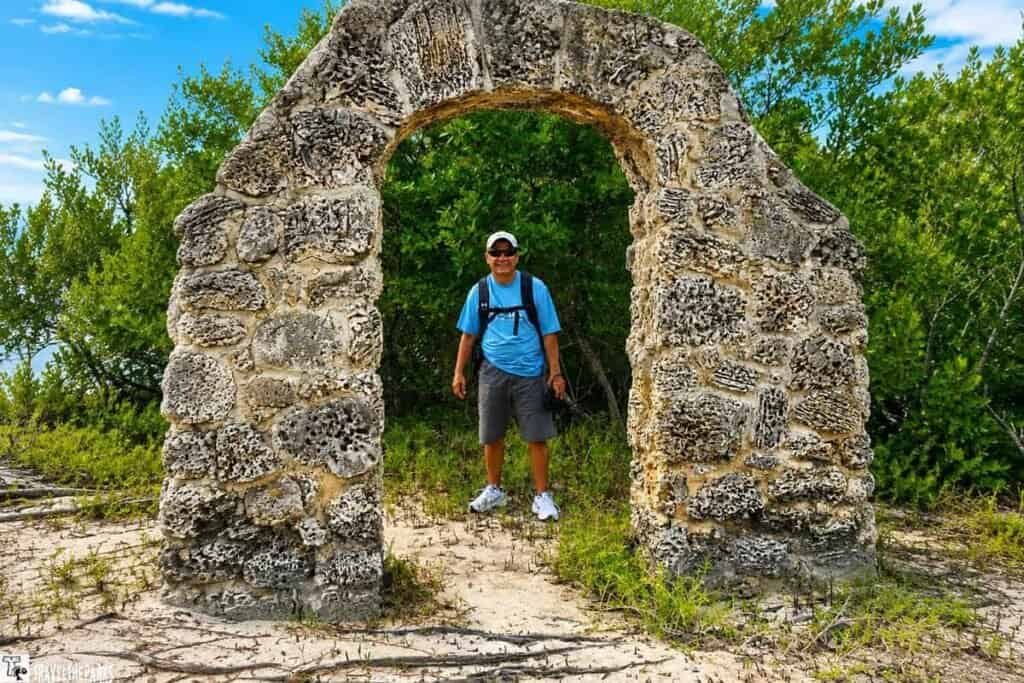
7. Elliott Key and Adams Key: Two Very Different Islands
If you have time to visit another island in Biscayne National Park, Elliott Key and Adams Key offer two very different experiences.
Elliott Key
Elliott Key is about 7 miles offshore from the Dante Fascell Visitor Center and has more space for camping than Boca Chita. The harbor is shallower, and the camping area stretches well beyond the marina.
Campers will find restrooms with sinks, cold-water showers, picnic tables, and grills. Camping is allowed in designated areas away from the marina, so check the current park rules before setting up.
For hikers, the main trail runs about 7 miles from north to south. There are a few places along the trail where you can get good views of Biscayne Bay. A shorter trail crosses the island and is roughly one mile long.
The trails are marked, although some sections can become overgrown. And here’s the part you really don’t want to forget: mosquitoes can be relentless, especially during warm, humid weather. Bring plenty of bug spray.
Elliott Key is also a popular spot for kayaking, particularly around the mangroves.
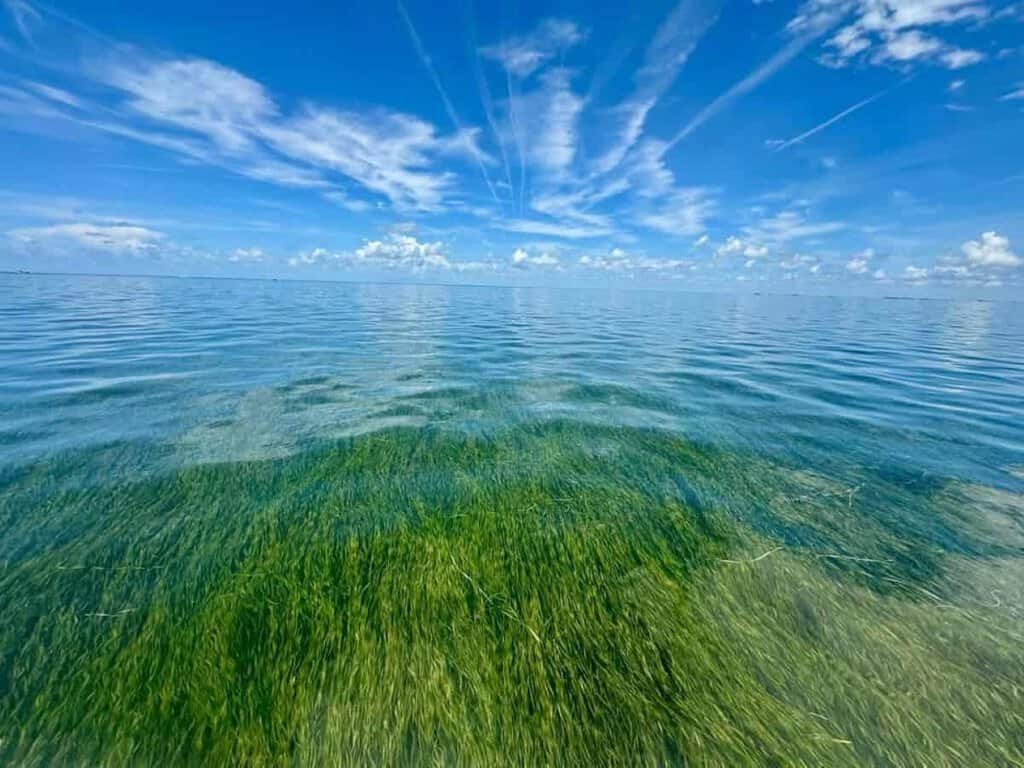
Adams Key
Adams Key is a completely different experience. It’s open for day use only and can only be reached by boat.
The island has a picnic pavilion, toilets, and a small loop trail that winds through a hardwood hammock. Adams Key was once a retreat for wealthy visitors, but today it has a much quieter feel.
The marina is small, and much of the dock space is reserved for NPS employees who live on the island. Two homes provide housing for park staff, so don’t expect Adams Key to feel like a busy visitor destination.
Instead, it’s a place to slow down, have a picnic, and take a short walk through the island’s vegetation.
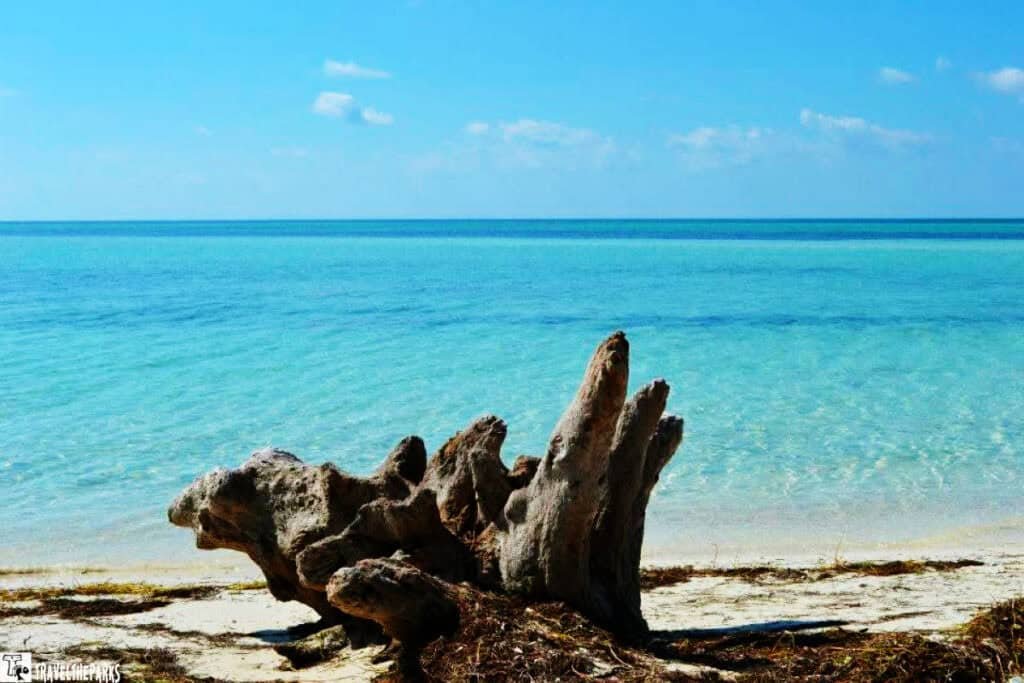
Which Island Should You Visit?
If you’re looking for camping, hiking, and more space to explore, Elliott Key is the better choice.
If you’d rather spend a few quiet hours walking a short trail and having a picnic, Adams Key may be more your speed.
Either way, you’ll need a boat to get there, which is part of what makes visiting these islands feel so different from a typical national park stop.
8. Stiltsville Scenic Tour
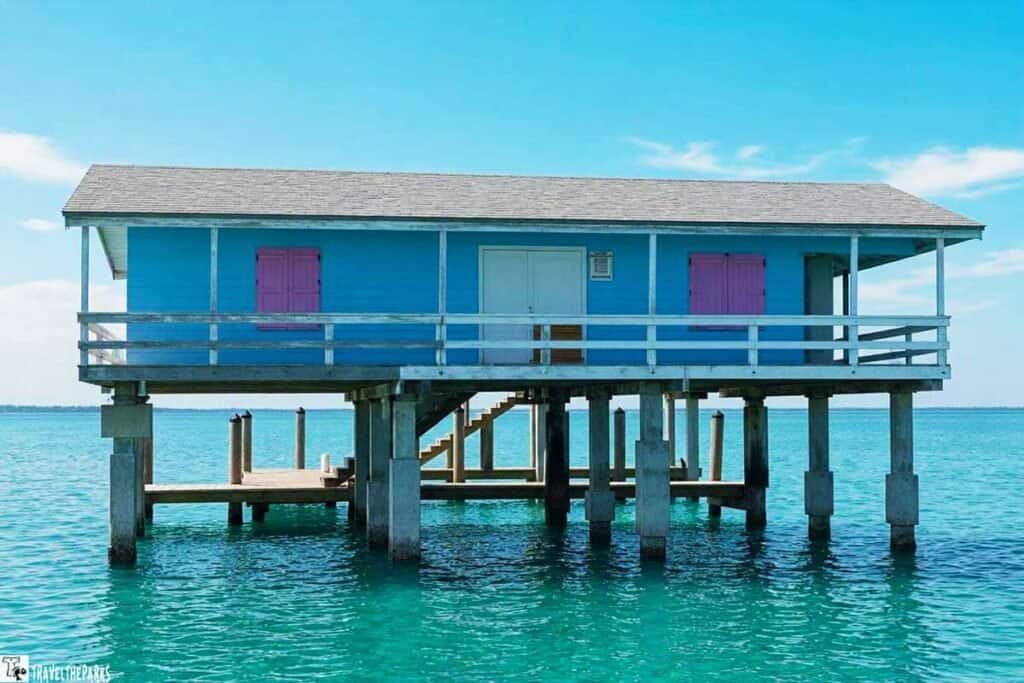
If you’re interested in the unusual side of Biscayne National Park, the Stiltsville Scenic Tour is worth considering. Unlike the other island trips, this tour departs from the Deering Estate and takes you by boat to the historic homes standing in the middle of Biscayne Bay.
The tour lasts about 3 hours and is currently offered on the 1st and 3rd Sundays of the month. The schedule can change, so check the current tour calendar when planning your visit.
Your ticket also includes admission to the Deering Estate, but don’t expect to walk through the Stiltsville houses. The entire Stiltsville tour is by boat, and you remain on board throughout the experience.
A Little Stiltsville History
Stiltsville dates back to 1933, when the first structures were built over the shallow waters of Biscayne Bay. Over the years, the area became known for its restaurants, bars, and clubs, attracting Miami’s social crowd.
Some of the establishments even served alcohol during Prohibition, when doing so was illegal.
At its peak, Stiltsville had 27 houses. Hurricanes and other storms gradually took their toll, and today only seven structures remain.
In 1985, Stiltsville became part of Biscayne National Park, and new construction in the park was discontinued. Today, the remaining structures are managed by the Stiltsville Trust, and access to the houses is restricted.
Even from the boat, it’s an unusual sight. These old structures sitting out in the bay are a reminder of a very different chapter in Miami’s history.
Is the Stiltsville Tour Worth It?
I’d put this one in the “if you have extra time” category. If this is your first visit to Biscayne National Park and you only have one day, I’d prioritize getting out on the water for snorkeling, kayaking, or one of the island tours.
But if you’ve already experienced those activities—or you’re especially interested in Miami history—Stiltsville is a fascinating addition to your Biscayne itinerary.
9. Deering Estate-The Rich & Famous
You can combine a visit to the Deering Estate with a Stiltsville or Boca Chita tour for a full-day adventure. The estate offers daily museum tours at 10:30 AM and 3 PM, and Nature Preserve Tours at 12:30 PM from October through May.
During our visit, the guided house tour was beautifully decked out for the Christmas season, with spectacular holiday decorations. The tour guide shared the rich history of the estate. Originally, the Richmond House served as a hotel, but when the railway bypassed it, the estate never grew into a lodging hub. Highlights included a wine cellar, upstairs bedrooms with private baths, and, most impressive of all, the sweeping views from the balcony across the sprawling green lawn to the bay — truly a picture-perfect scene for southern Florida.
I highly recommend the Nature Preserve tour at the Deering Estate. The guides are exceptionally knowledgeable about the flora and fauna, sharing details about the endangered habitats spread across the estate’s ten acres of lawns and traditional plantings. Highlights include a visit to a Native Tequesta burial mound, an intriguing archaeological site.
Take the time to wander the Deering Estate and soak in this stunning piece of Miami history, set within a truly beautiful waterfront location.
Planning Resources for Key Biscayne National Park
- Lodging options available – Key Biscayne National Park–visit this website to see the options available in the park. Remember to book well in advance.
- Free RV Guide to Key Biscayne – RV Resorts & Campsites in Biscayne National Park.
- Deering Estate Website – plan your day at the Deering Estate
- Campground information is available on the official park website
- Map of Biscayne National Park–a great resource to plan your trip and understand the location of the keys.
- Key Biscayne National Park Official Site–Plan your visit, get updates on weather and general information.
- Outdoor Activities – Planning your outdoor activities-what to do and when to do them.
- Key Biscayne National Institute Tours-website to book tours before your trip.
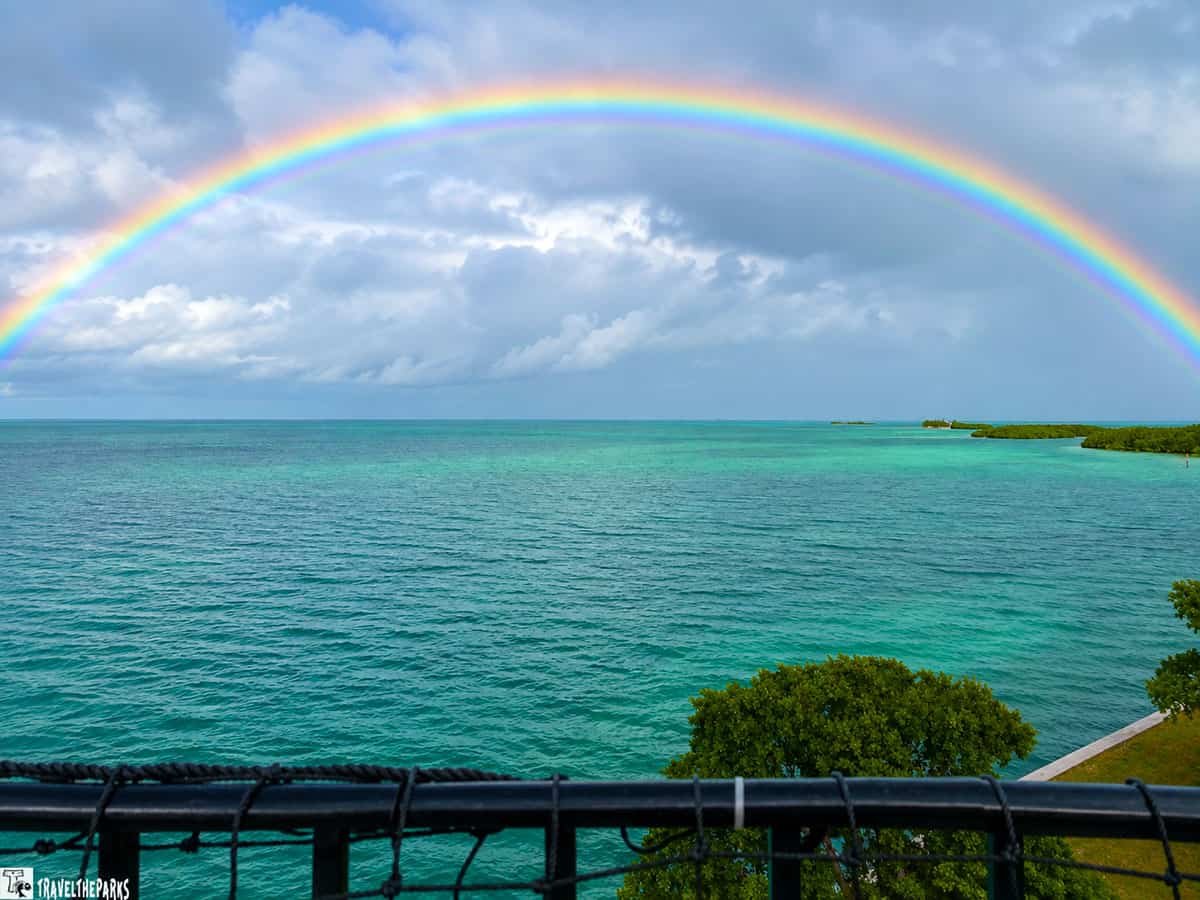
Final Thoughts: A Guide to the Best Things to do in Key Biscayne National Park
Biscayne National Park is one of those places that’s easy to underestimate. From the shore, you might see the bay, a few mangroves, and some boats heading out into the distance. But once you get out on the water, you realize just how much of the park you’ve been missing.
For us, the snorkeling, kayaking, and trip to Boca Chita Key were the highlights. Each one showed us a different side of the park, from the coral reef and marine life to the islands and the history scattered throughout Biscayne Bay.
You don’t need a week to visit Biscayne National Park. Even with just a day, you can get out on the water, explore the visitor center, and experience a part of this unusual national park that you simply can’t see from the mainland.
And that’s what makes Biscayne worth the trip. It’s not a park where you spend the day driving from one overlook to another. You get in a boat, grab a paddle, put on a mask, and see what you find.
If you’re planning a South Florida trip, I’d definitely put Biscayne National Park on the list.
Have you visited Biscayne National Park? What was your favorite part of the experience? Drop a comment below—we’d love to hear about it!