
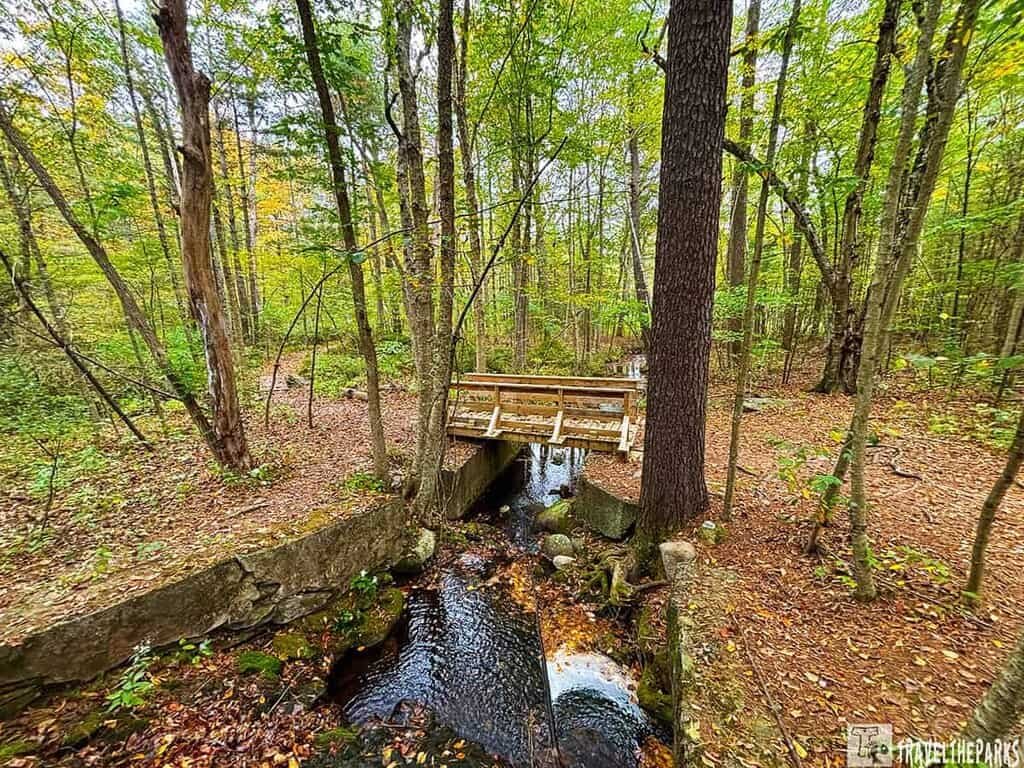
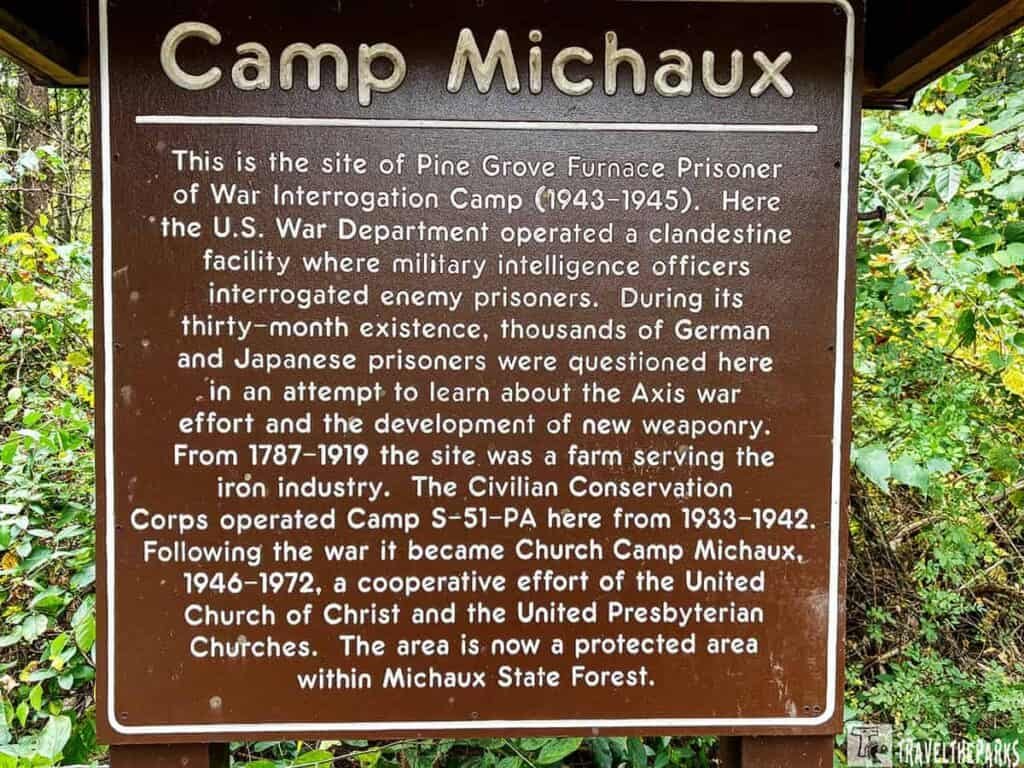
Hidden deep within Michaux State Forest, far from crowds and monuments, lie the quiet ruins of one of Pennsylvania’s most unusual World War II sites. What to us looked like a peaceful stretch of woods once played a secret role in the war effort—serving as a WWII POW interrogation camp for German prisoners.
Deep inside Michaux State Forest, far from the highways and famous battlefields of Gettysburg or Antietam, hides a spot that feels made to stay secret. Trees stand still and quiet. The path appears largely untouched. Yet under the dirt sleep the ruins of one of Pennsylvania’s top World War II secrets—a hidden camp for grilling POWs called Camp Michaux.
We took the Camp Michaux walking tour, and it hit us: this place had many roles. It began as a Civilian Conservation Corps camp. Next came its time as a WWII POW camp. Then it turned into a church camp. Foundations, rock steps, and old bits still tell quiet stories of its past.
This easy self-guided walk gives you a shot at a lost piece of America’s WWII home front—one you’ll skip right by without knowing where to look.
This post may contain affiliate links, meaning if you purchase something through one of these links, we may earn a small commission at no extra cost to you! Read the full disclosure policy here.
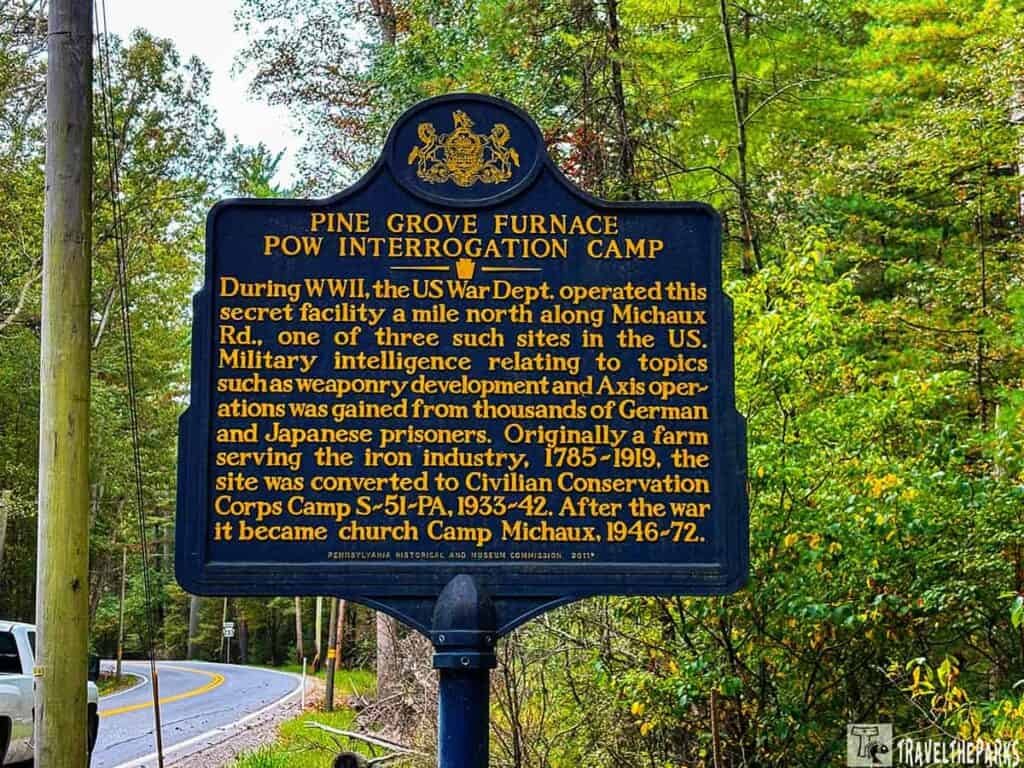
Table of Contents
How to Visit Camp Michaux: Parking, Access, and Tips
Visiting Camp Michaux is straightforward, free, and open year-round during daylight hours. Here’s what you need to know:
- Location & Parking: The site is within Michaux State Forest, near Pine Grove Furnace State Park. The official, free parking lot is a gravel pull-off on Michaux Road (Forest Road 233). There is no formal parking lot or visitor center at the site.
- GPS Pin / Address: Use coordinates
40.0486, -77.2760or search “Camp Michaux Parking Area” for best results.
- GPS Pin / Address: Use coordinates
- Access: Open year-round, weather permitting. From the parking area, a gated forest road leads a short distance to the main clearing where the Camp Michaux interpretive trail begins. The trail is easy and level. Here is a downloadable map to follow.
- Key Info: There are no restrooms, running water, or visitor facilities on-site. Admission is free.
- Best time to visit: Camp Michaux is accessible year-round, but spring and fall are ideal times to visit. Cooler temperatures and lighter foliage make it easier to spot foundations and stonework hidden in the woods. Summer visits are possible, though bugs and thicker vegetation can obscure some features.
From CCC to POW Camp: The History of Camp Michaux
To walk the grounds of Camp Michaux is to walk through three distinct chapters of 20th-century American history. Understanding these phases deepens the experience of the self-guided walking tour.
Long before Camp Michaux became associated with World War II, it was part of a very different national effort. Like many sites in Michaux State Forest, its story began during the Great Depression with the Civilian Conservation Corps (CCC).
The CCC Years: Building a Camp in the Forest (1933-1942)
In the 1930s, Camp Michaux turned into a CCC camp. Originally known as Pine Grove Furnace CCC Camp. Young men stayed here and worked on forest conservation jobs. The teams built roads, fixed trails, and made stone and wood buildings with nearby materials. Most stone bases and steps that visitors see today come from that time.
Everything that came after was built upon the robust foundation of the CCC days. Suitable buildings, entry roads, and ready setup made the camp perfect for reuse when the U.S. joined World War II.
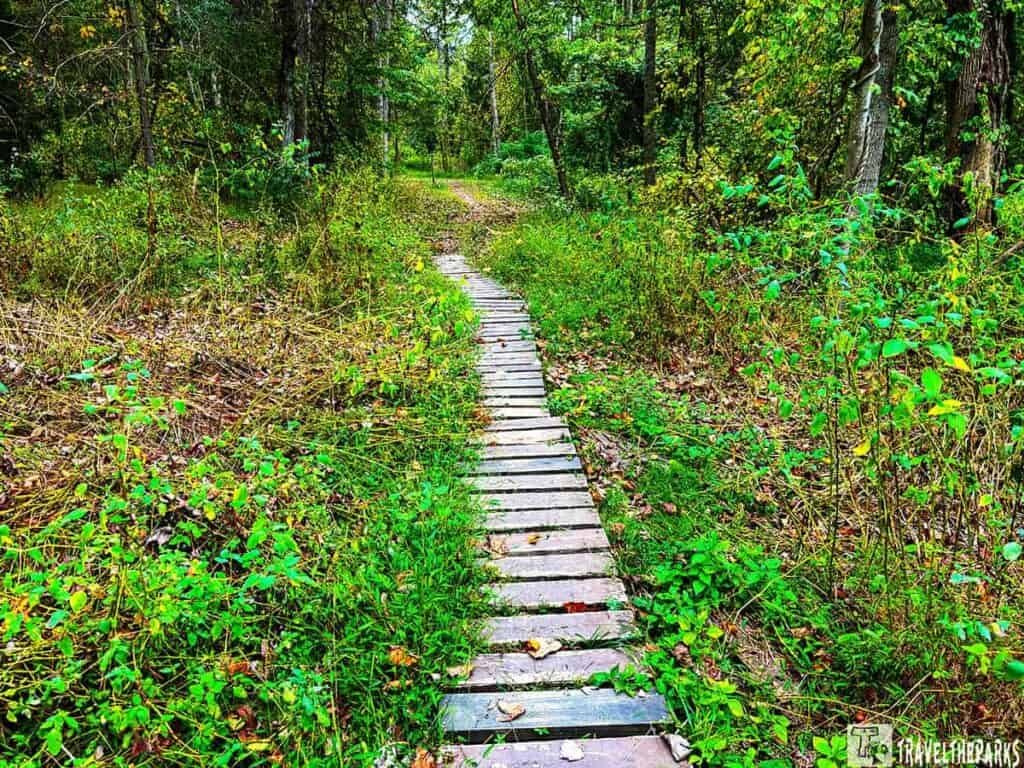
World War II: A German POW Questioning Camp (1943-1945)
World War II was in full swing when military intelligence seized the site. They renamed it Camp Michaux and made it a secret POW Special Camp. The old CCC camp changed into a spot for WWII POW interrogation. This isolated spot was suited perfectly for grilling top German prisoners in total secrecy. These men came from U-boat crews and Afrika Korps units. This era marks the camp’s most fascinating, yet dark, chapter. Back then, this site shifted to a hidden camp for German POWs. Captured troops faced questions there, far from prying eyes.
This location, a calm wooded area, kept it concealed from public sight. The spot ensured a sense of privacy and security. Details of the camp’s work are not well known. Ruins and signs today show how it ran back then.
After the War: Shift to a Church Camp
World War II ended. Camp Michaux took on a fresh role. The site shifted once more to a church camp. That is why some parts do not match army days. This explains why some features don’t fit neatly into a POW military timeline. This concluding chapter deepened the site’s intricate narrative, merging aspects of recreation and retreat into a landscape shaped by both conservation efforts and historical conflicts.
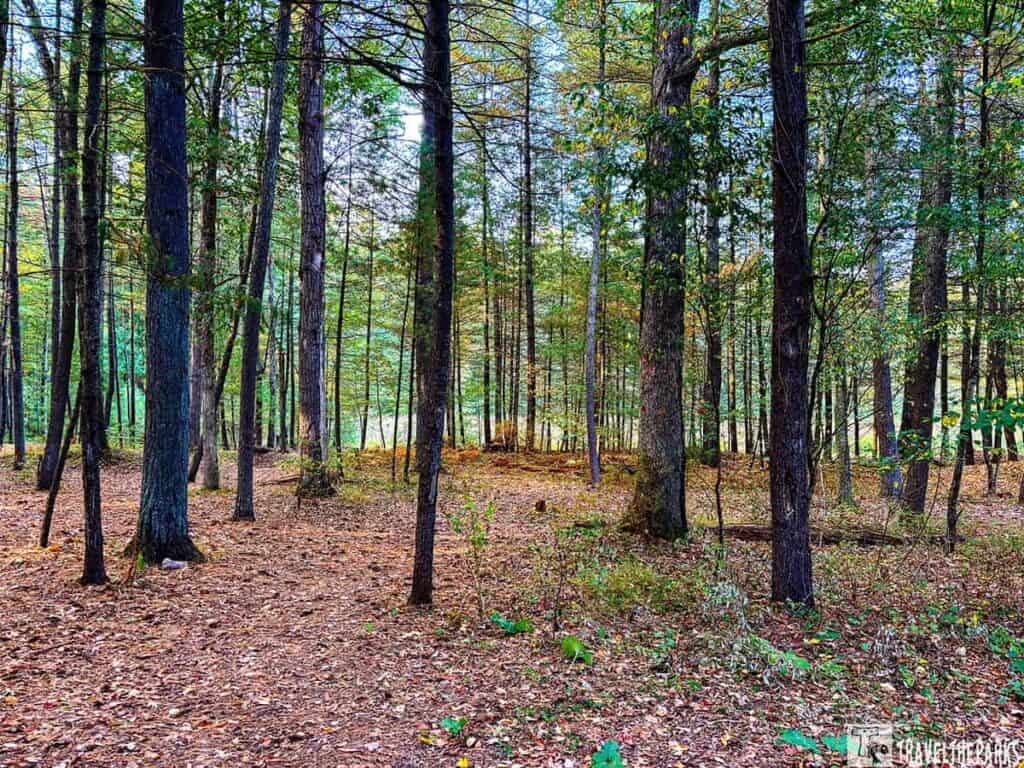
Today, the Camp Michaux trail lets guests trace all three periods. Woods have swallowed most of the camp. Yet the story lingers in the rocks. Ruins and bases now whisper of its past history.
The Camp Michaux Walking Tour: A Step-by-Step Guide to the Ruins
The Camp Michaux walking tour is a loop of approximately 0.5 to 1 mile over mostly flat but occasionally uneven terrain. Start at the large informational kiosk, which provides a map and overview. Follow the numbered posts and interpretive signs that correspond to key locations. Here are the highlights you’ll encounter: The Camp Michaux WWII POW camp walking trail is a self-guided experience marked by interpretive signs and numbered posts that guide visitors through the remaining ruins.
As you move through the site, it helps to slow down. The forest has reclaimed many of the ground-level ruins, making it possible to overlook historical remnants if you are not looking closely. One of the most fascinating parts of the Camp Michaux walking tour is how each stop served a different purpose over time.
Stop 1: Garage and Equipment Area
- CCC Era: Garage, heavy equipment storage, gas tanks
- WWII POW Camp: Bus area and fuel storage
- Church Camp: Equipment and Maintenance Area
When the CCC set up camp here in 1933, this area was a busy work zone. Several garages, a gas station, and other support buildings once stood here, all helping to keep the conservation projects running smoothly. During World War II, the land just north of this stop took on a unique role—it became POW Compound Two, where officers were housed while at the camp. There is not much remaining that we could see.
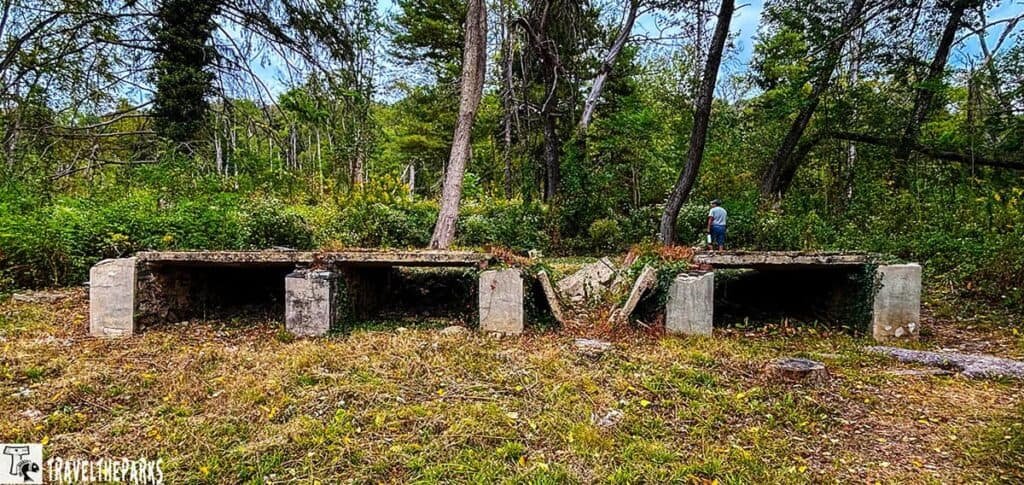
Stop 2: The Old Farmhouse
- CCC Era: Existing farmhouse reused by the camp
- WWII POW Camp: Farmhouse remained in use
- Church Camp: Assistant caretaker’s home
This building served many roles over the years. It was used to house staff during the CCC era, later during the POW camp years, and again when the site became a church camp. The porch foundations date to the POW period, and a name—Erich John Berlin (possibly a German prisoner)—can still be seen carved into the top right of the foundation. Predating much of Camp Michaux, this structure shows how older rural buildings were reused for federal programs and later adapted for civilian use.
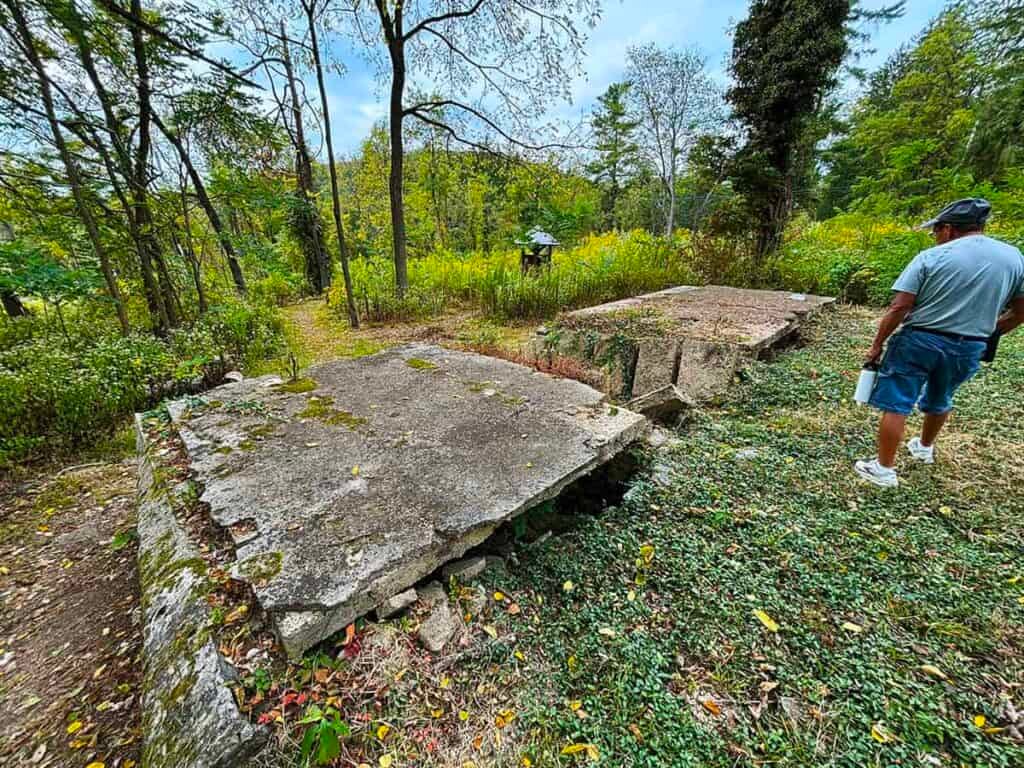
Stop 3: Vesper Hill / Equipment Storage
- CCC Era: Equipment storage area
- WWII POW Camp: Known as Vesper Hill
- Church Camp: Vesper Hill retained as a named area
This elevated hill is where the church camp held its worship services. It is kind of hard to see with all the overgrown grass. I had to use my imagination to visualize what the area must have looked like.
Stop 4: Guard Tower and Compound Two
- CCC Era: (No known CCC structure)
- WWII POW Camp: Guard tower and Compound Two
- Church Camp: Staff Housing
This stop highlights the transition from the open conservation camp to the controlled military compound, with visible changes in layout and purpose.
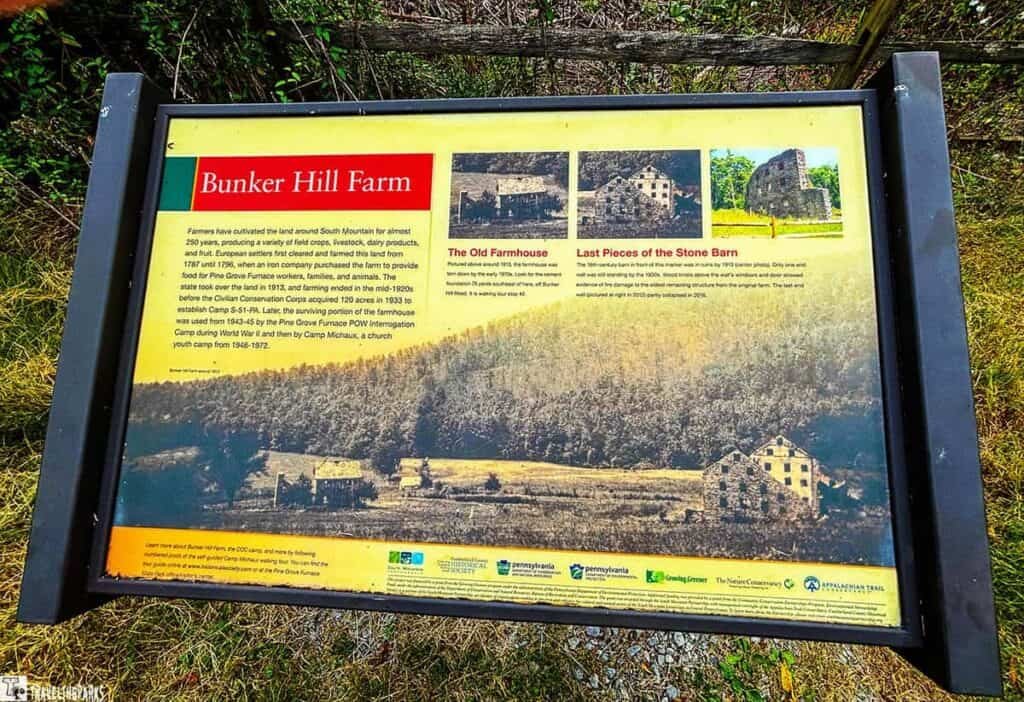
Bunker Hill Farm Barn Ruins
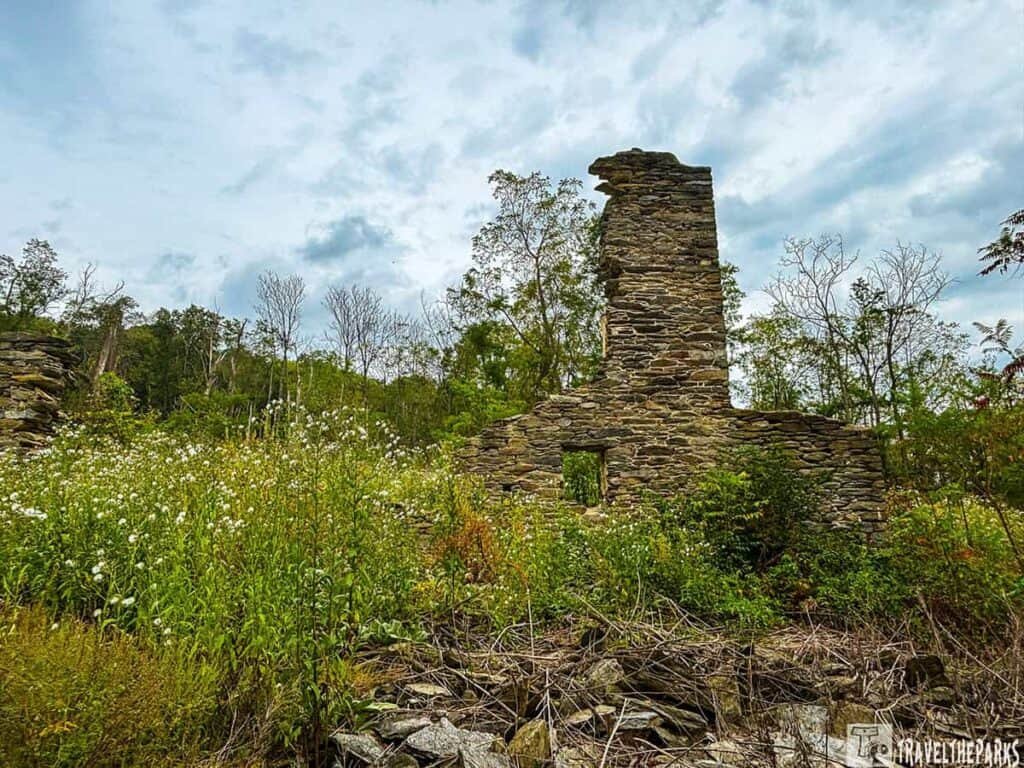
Although there is no marker here, we stopped at the Bunker Hill barn site. Built in the late 1700s or early 1800s, the barn was part of a working farm that supported the local iron industry by providing food for workers, families, and animals. After the land was sold to the state in 1912, the farm continued under lease until closing in 1919. The date of the barn’s fire is unknown.
Known as Bunker Hill Farm, the site dates back to at least 1787. In 2016, a large section of the stone wall collapsed, offering a reminder of its long history.
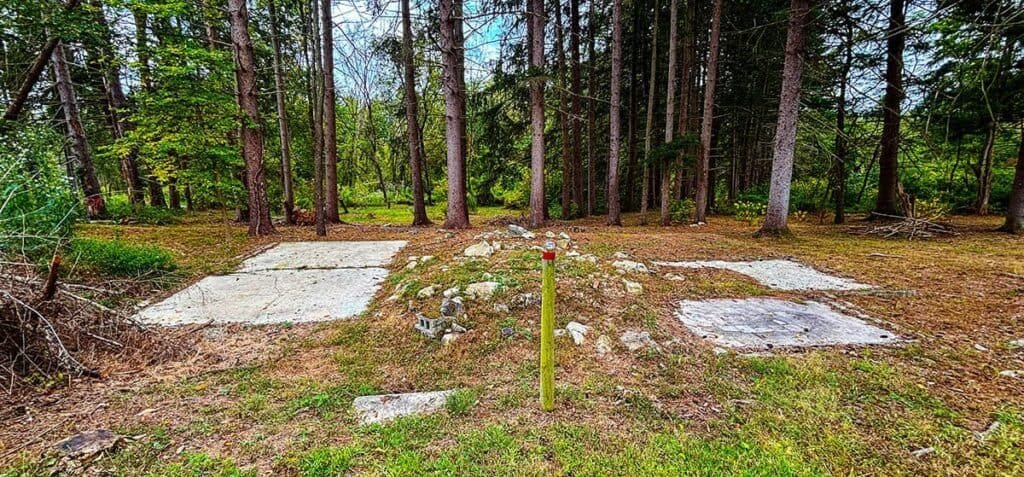
Stop 5: Log Cabin Staff Housing
- CCC Era: Log cabin used by staff
- WWII POW Camp: Senior Staff Housing
- Church Camp: Counselor Housing
At this stop, we could see that the private road on the right was once part of the POW camp’s outer perimeter. All that remains is the foundation ruins of one of two CCC log cabins. Built as housing for CCC officers. Apparently, the Army later used the cabins during World War II, and they used this one as senior staff quarters. In the church camp years, house counselors resided here.
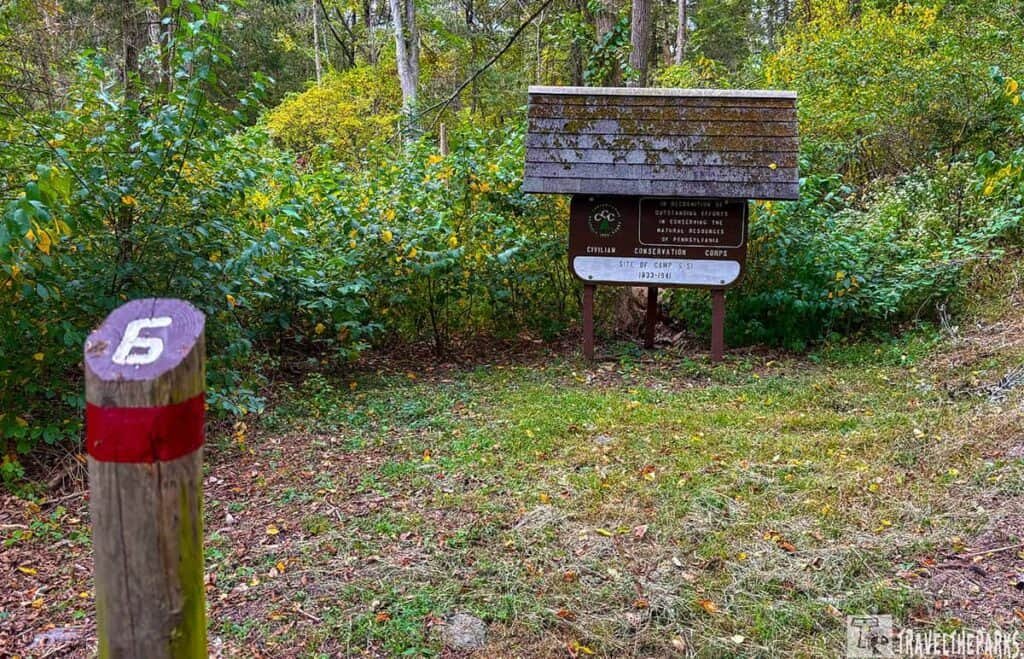
Stop 6: CCC Historical Marker / Parking Area
- CCC Era: CCC historical sign (erected in the 1990s)
- WWII POW Camp: (No POW-era structure)
- Church Camp: Camp parking area
Not really much to see. This stop was once a parking lot for the church camp. Today, a commemorative sign for the Civilian Conservation Corps marks the site.
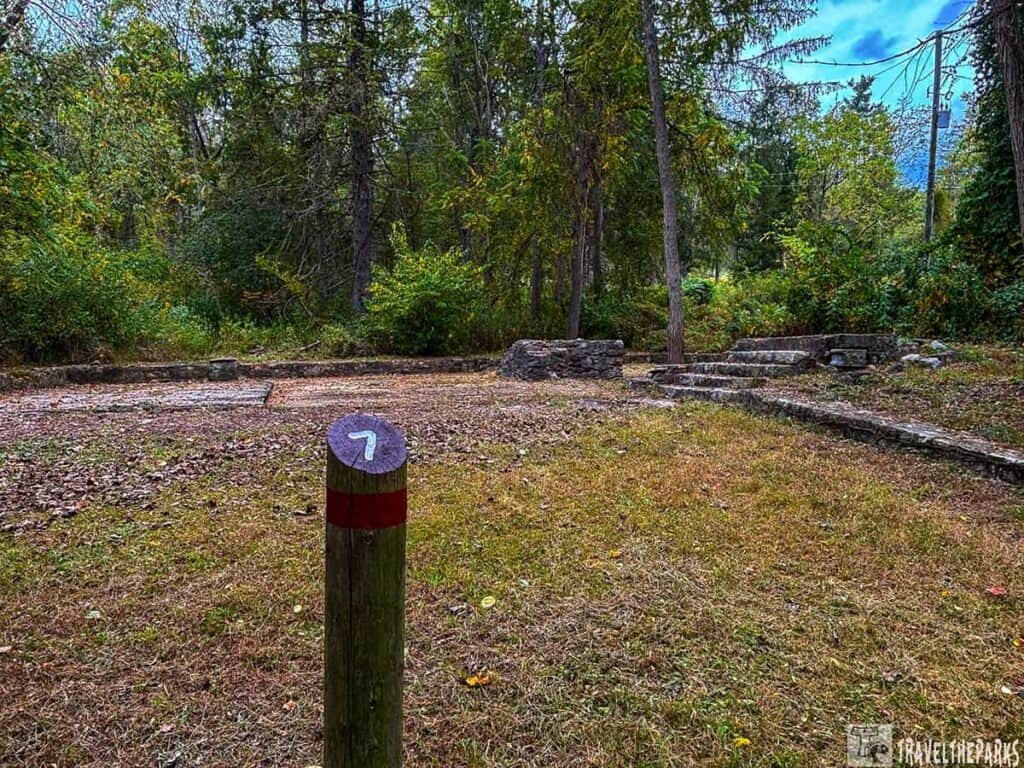
Stop 7: Forestry Office / Interrogation Building
- CCC Era: Forestry Office
- WWII POW Camp: Interrogation Building
- Church Camp: Michaux Lodge (weekly camp leader residence)
This is one of the most significant stops on the Camp Michaux WWII POW walking trail. During the war, it served as the camp’s POW Interrogation Center. Earlier, it housed the CCC Forestry Office, and later it became Michaux Lodge, used year-round and for meetings, including Appalachian Trail gatherings. Today, only the foundation remains.
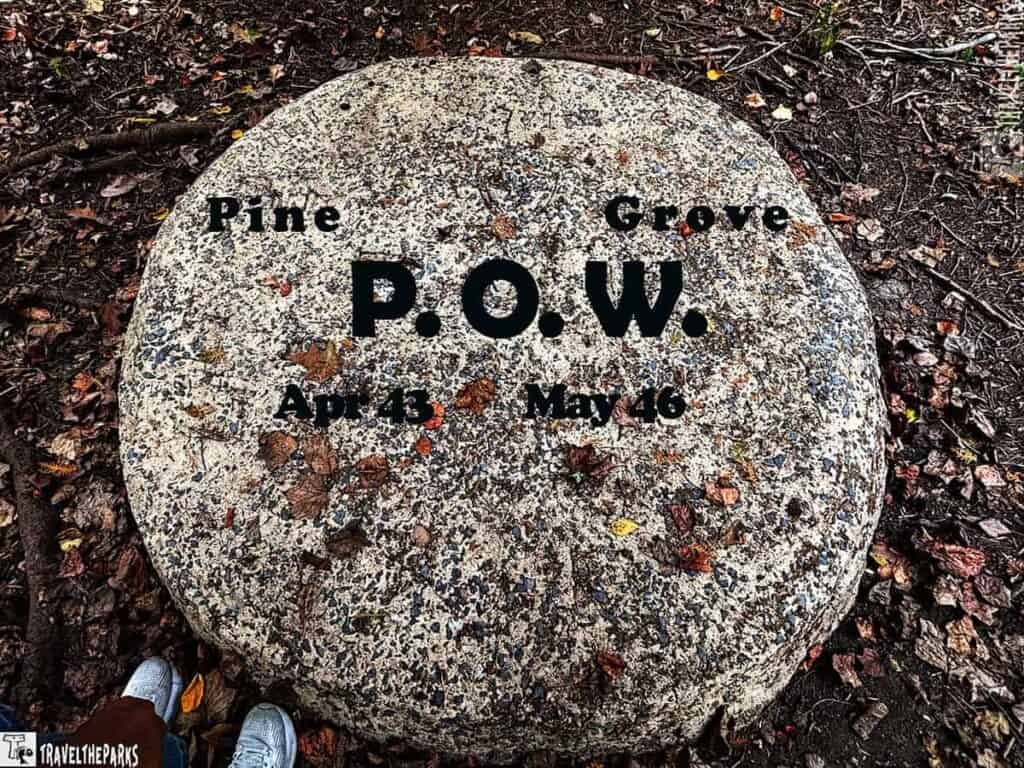
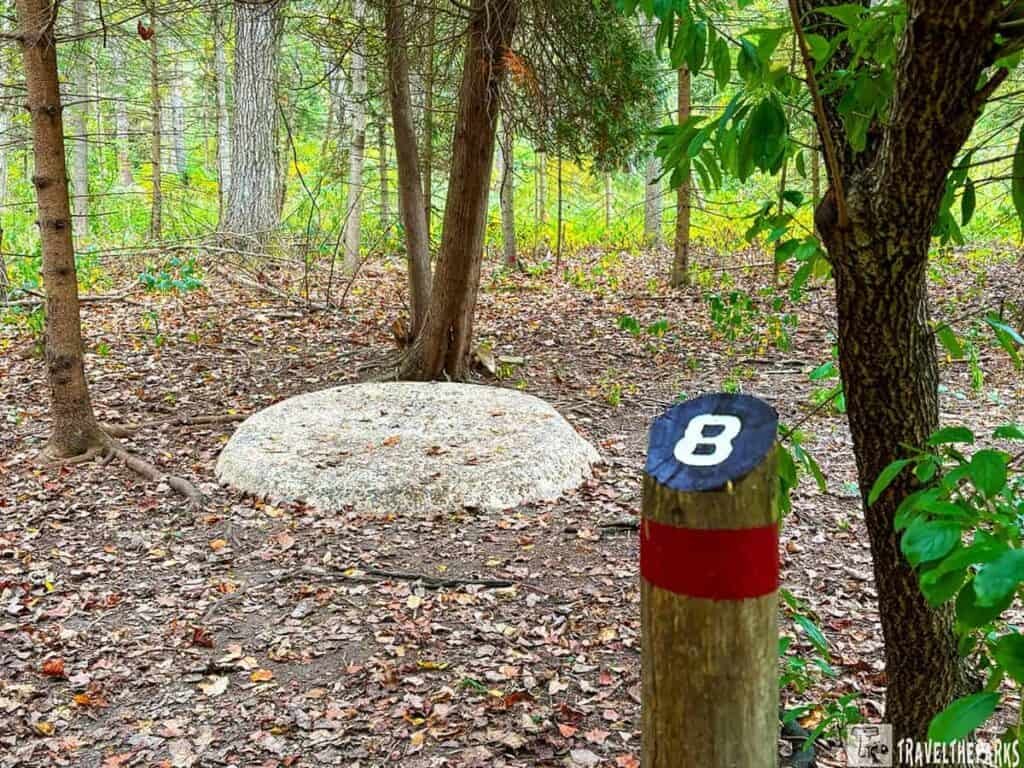
Stop 8: POW Historical Marker
- CCC Era: (No CCC structure)
- WWII POW Camp: POW historical marker (c. 1946)
- Church Camp: Marker preserved
The concrete marker shows the letters POW in its center. Faint details include the Third Service Command insignia topped by an eagle, the words Pine Grove, and the dates April 1943–May 1946. Spaces at the bottom were for unit insignia. Until 2011, this was the camp’s only commemorative marker.
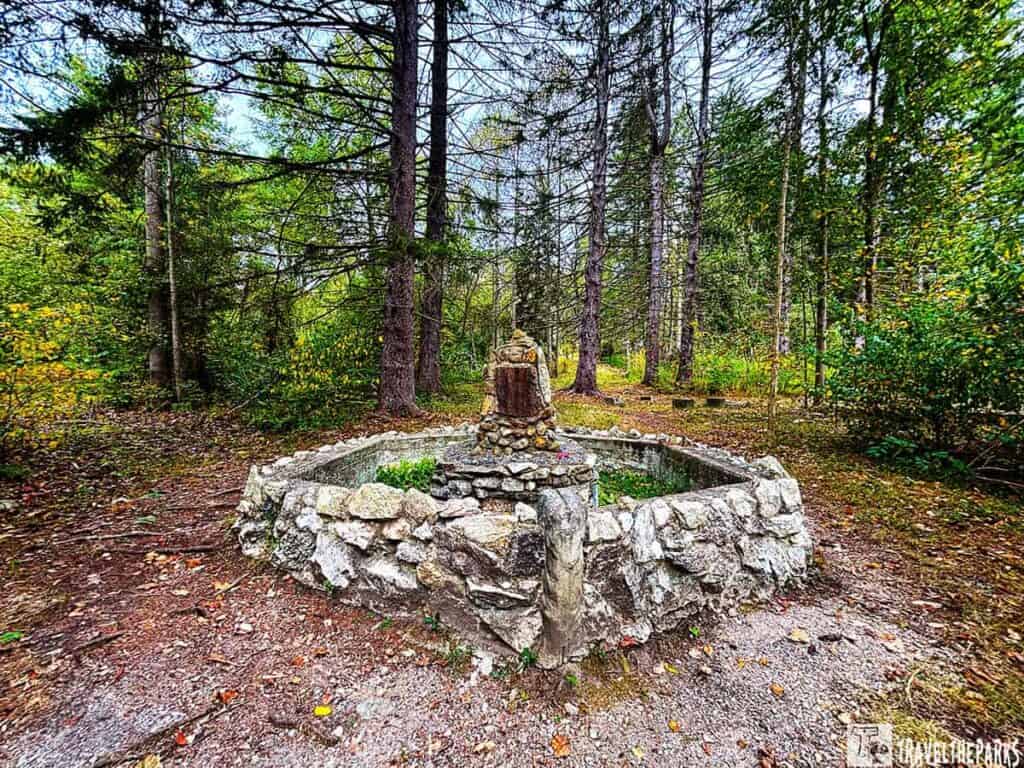
Stop 9: Recreation Hall and Fountain
- CCC Era: Recreation hall and fountain
- WWII POW Camp: Staff recreation hall, fountain, guard tower
- Church Camp: Recreation hall, camp store, fountain
At this stop, we could see three notable features of the former camp. To the left was the recreation building, used by the CCC. The Army, and later the church camp—campers recall German POW paintings that once hung inside. Walking straight ahead, at the end of a short avenue of spruce trees, is the CCC fountain. It is one of the few structures still intact, decorated with blue slag and white quartz. Nearby is the base of the southeast guard tower, another reminder of the camp’s history.
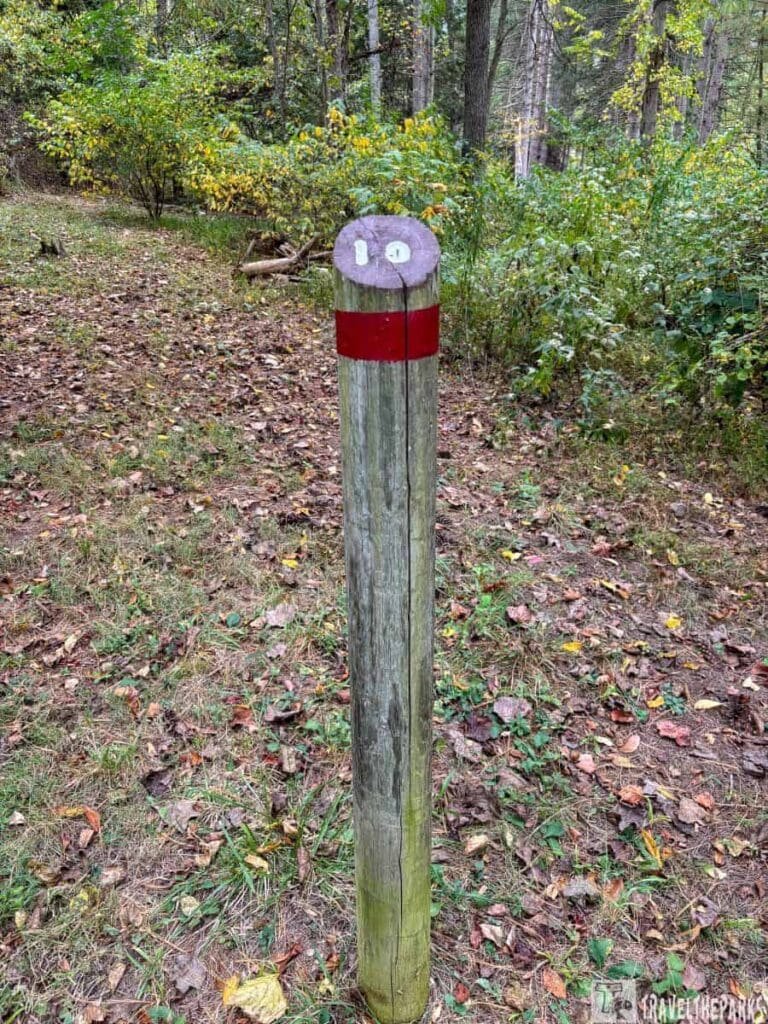
Stop 10: Compound One Gate
- CCC Era: (No CCC structure)
- WWII POW Camp: Entrance gate to Compound One
- Church Camp: (No later structure)
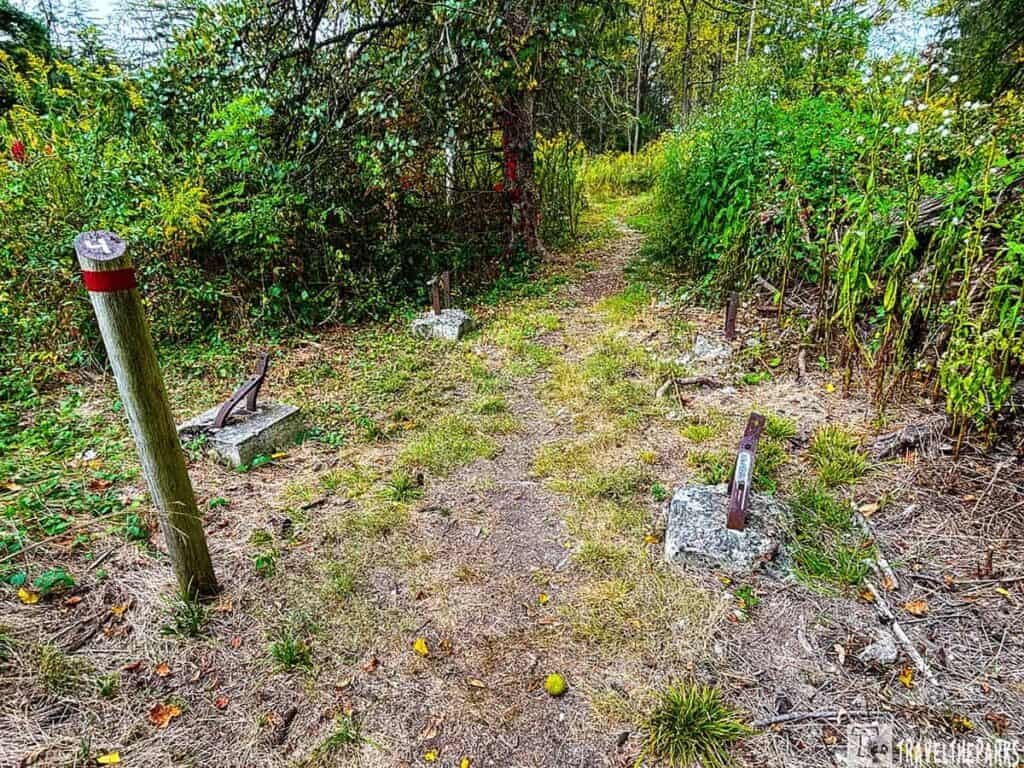
Here we saw a metal plate in the ground that we learned was once part of the locking mechanism. It was for the gates to POW Compound One, the camp’s main housing area. This area originally housed CCC workers and later youth during the church camp, with one barracks converted into a chapel.
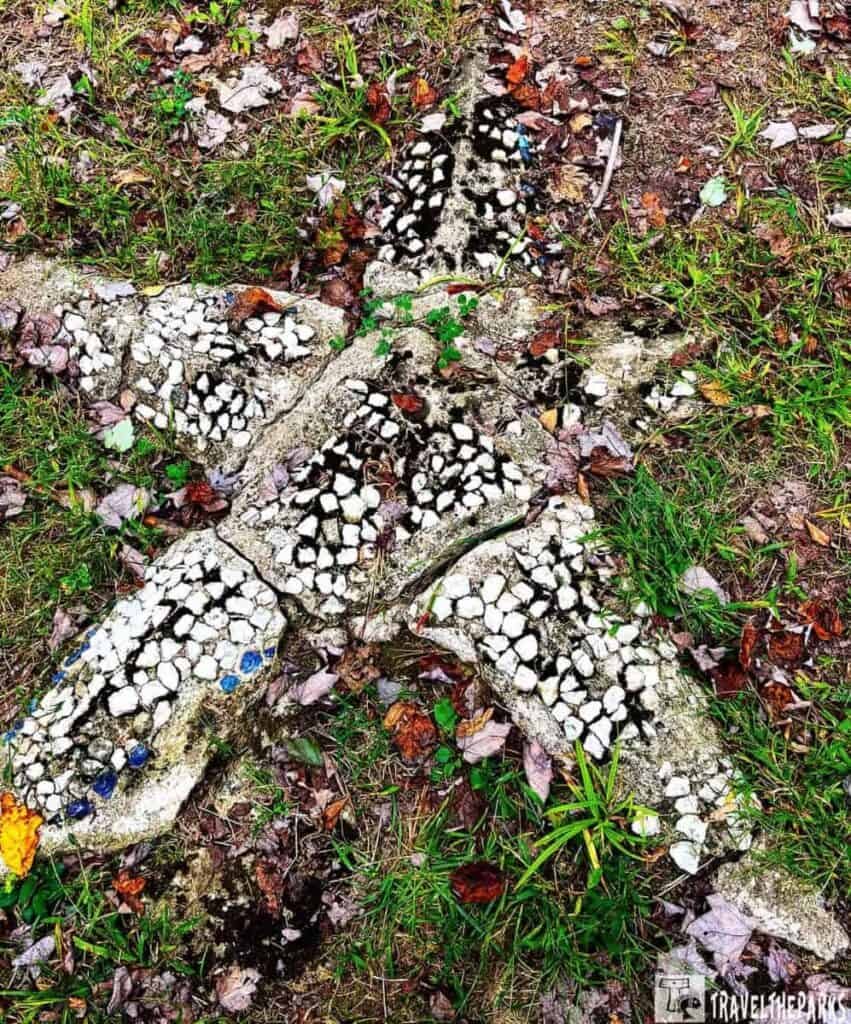
Stop 11: The CCC Star
- CCC Era: CCC star
- WWII POW Camp: CCC star inside Compound One
- Church Camp: CCC star preserved
The CCC star is one of the most symbolic features on the trail, representing the camp’s earliest identity even during wartime use. The foundation of a storage shed is here too.
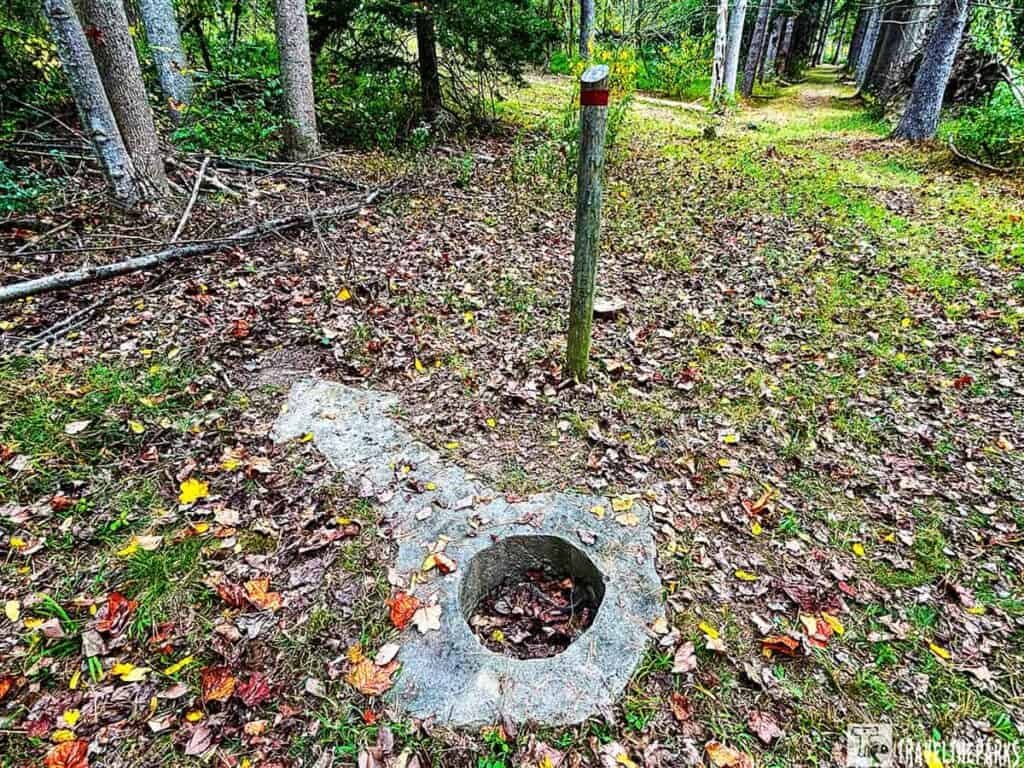
Stop 12: Flagpole Area
- CCC Era: CCC flagpole
- WWII POW Camp: Flagpole base inside Compound One-not used
- Church Camp: Flagpole base remains
The concrete structure in the ground marks the base of the CCC flagpole. This north-facing arrow-shaped item was not used during the POW era.
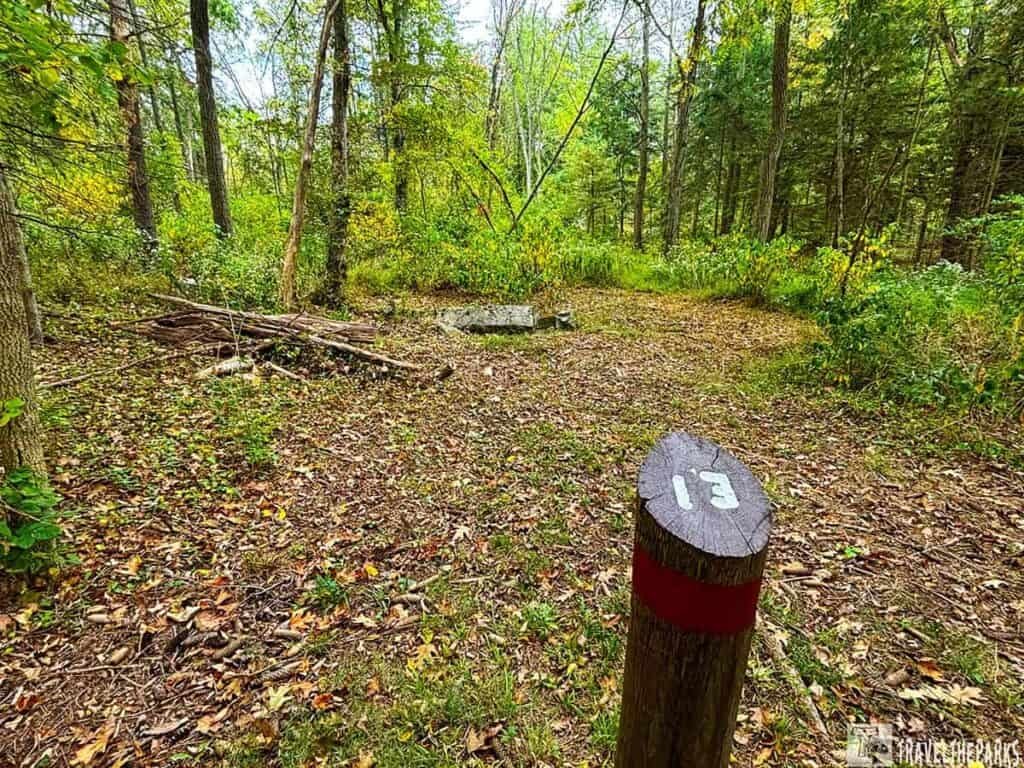
Stop 13: Infirmary Area
- CCC Era: (No CCC structure)
- WWII POW Camp: Infirmary
- Church Camp: Caretaker’s Home
We could see the remains of the POW camp infirmary here. It became the caretaker’s home during the church camp’s tenure. The area was pretty overgrown when we visited.
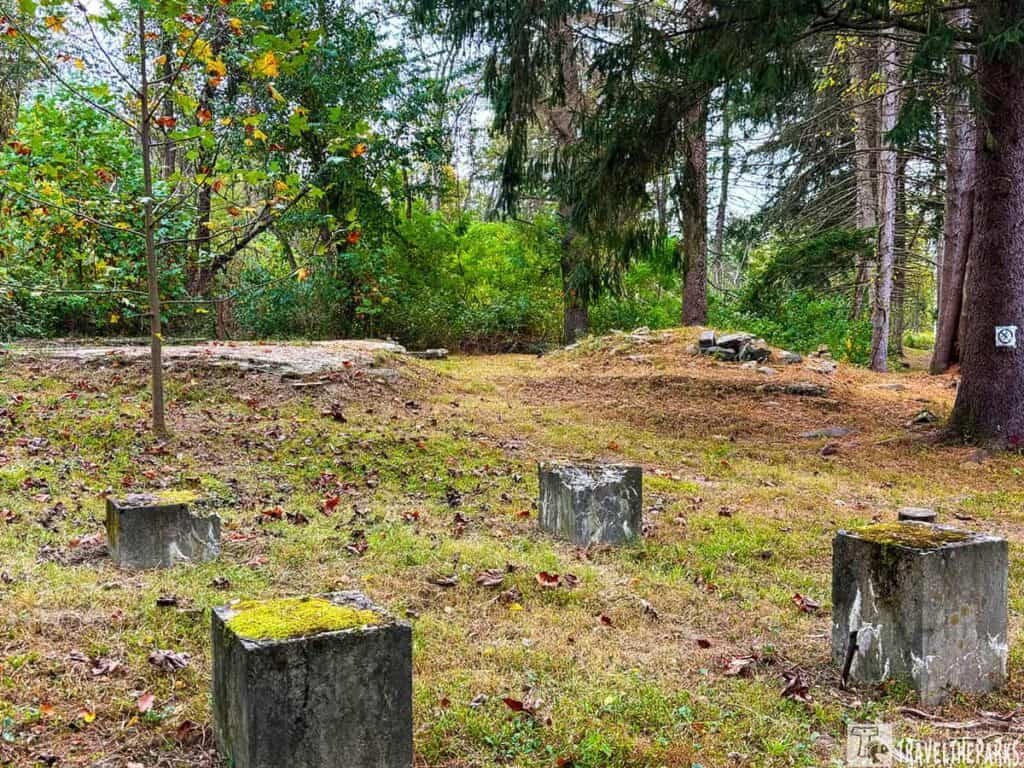
Stop 14: Camp Commander’s Log Cabin
- CCC Era: Log cabin (home and office of the camp commander)
- WWII POW Camp: Home and office of the camp commander
- Church Camp: Counselor Housing
Visible here are the Northeast Guard Tower concrete pilings and the foundation of the second CCC log cabin. It housed both the CCC and the POW camp commanders. The camp’s last commander, Major Laurence Thomas, had a skilled German POW create a painting of his home and office.
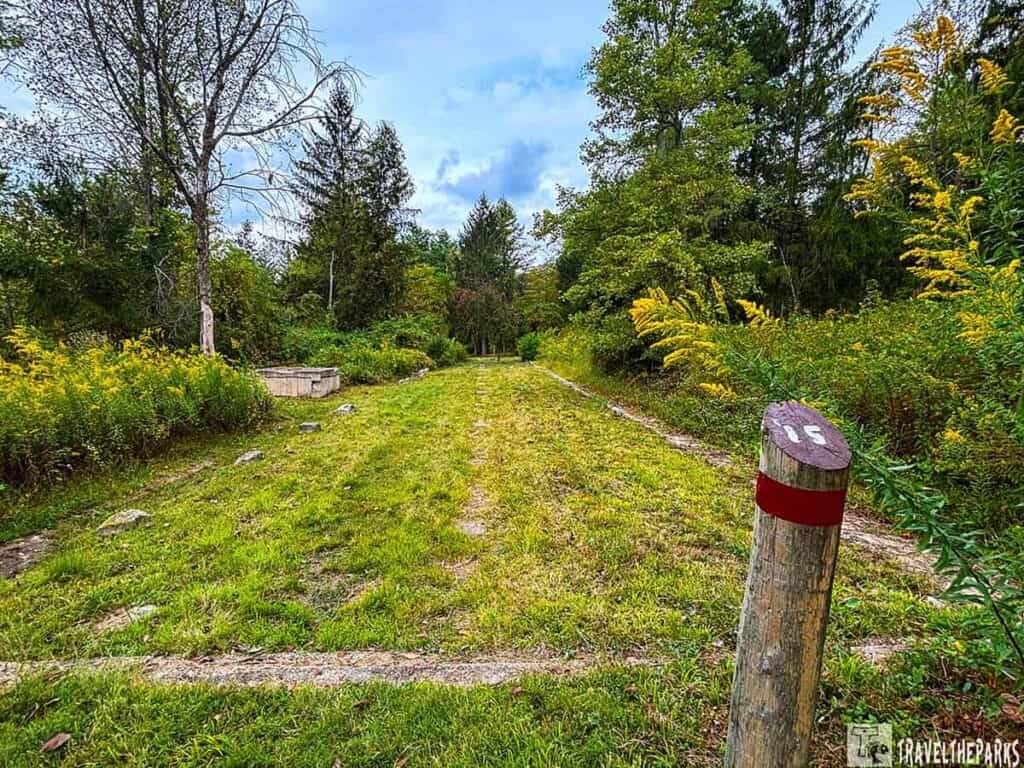
Stops 15–17: Barracks, Mess, and Latrine Complex
These stops work well grouped together.
- CCC Era: Barracks, mess hall, latrine, and bathhouse
- WWII POW Camp: German POW barracks, mess hall, expanded latrine facilities
- Church Camp: Campers’ housing, arts & crafts center, dining hall, pavilion
This section of the camp preserves several ruins. Stop 15 shows a CCC barracks later converted by the Army into the German POW Dining Hall, with the kitchen cooking hearth still visible.
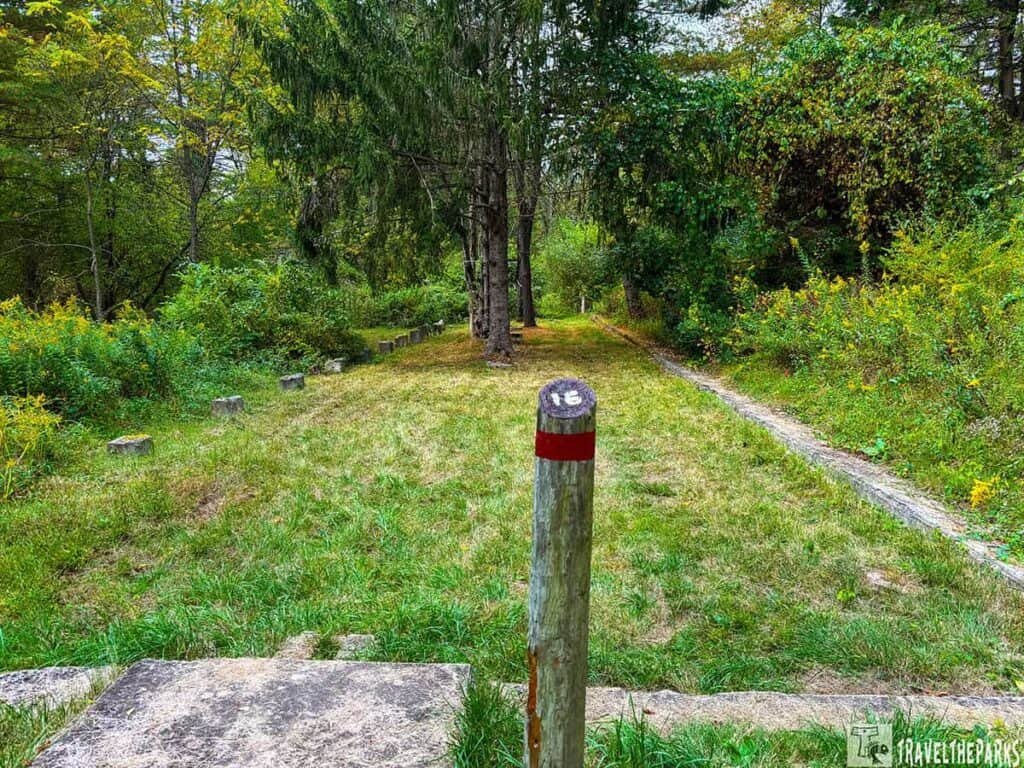
Stop 16 was the northernmost barracks that housed German POWs. The mowed grass helped us see the foundation ruins.
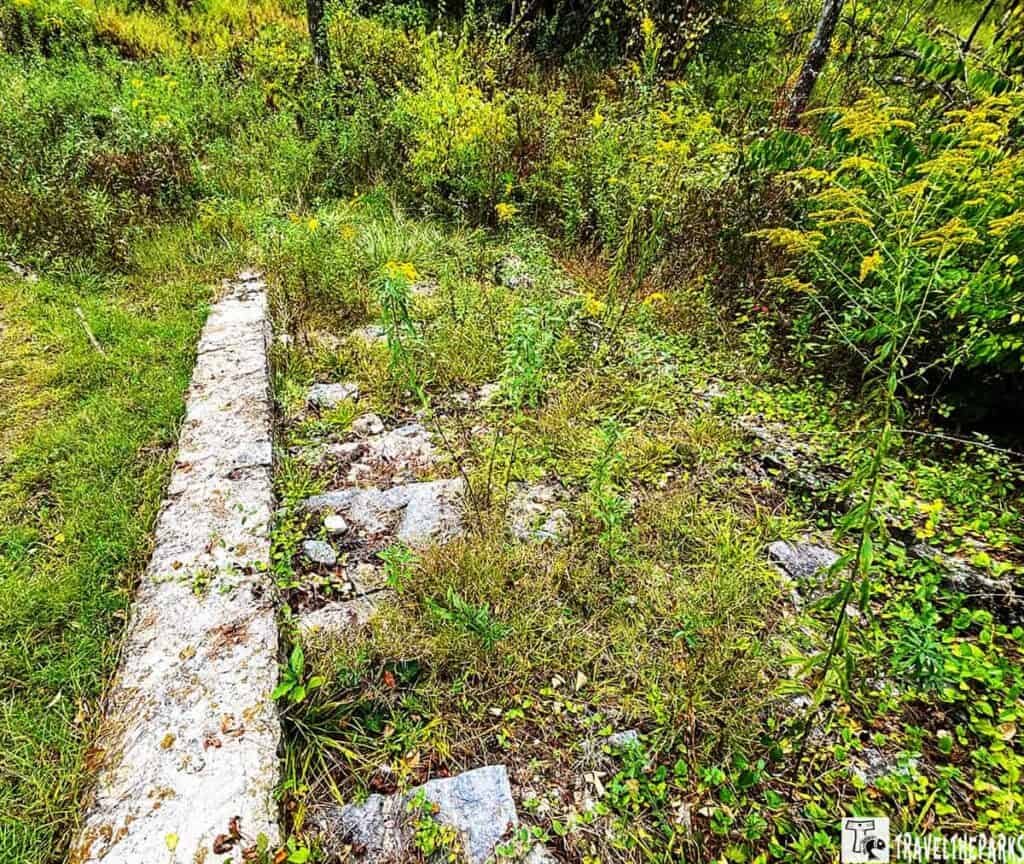
From Stop 17, we could see the latrine and bathhouse ruins, the base of the church camp pavilion, and the CCC-era “steps to nowhere,” once used for camper photos. I guess that west of these ruins were five barracks built in 1945 for Japanese prisoners; two remained for church camp use, though none survive today.
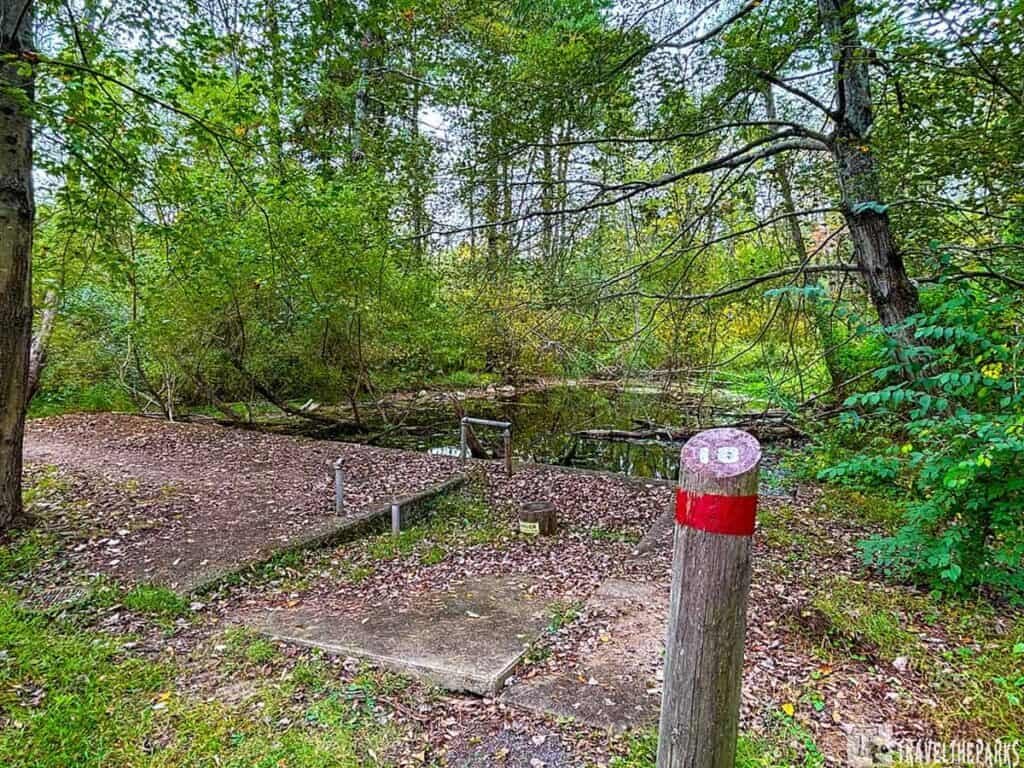
Stop 18: Swimming Pool Site
- CCC Era: (No CCC structure)
- WWII POW Camp: Additional barracks sites
- Church Camp: 1954 swimming pool
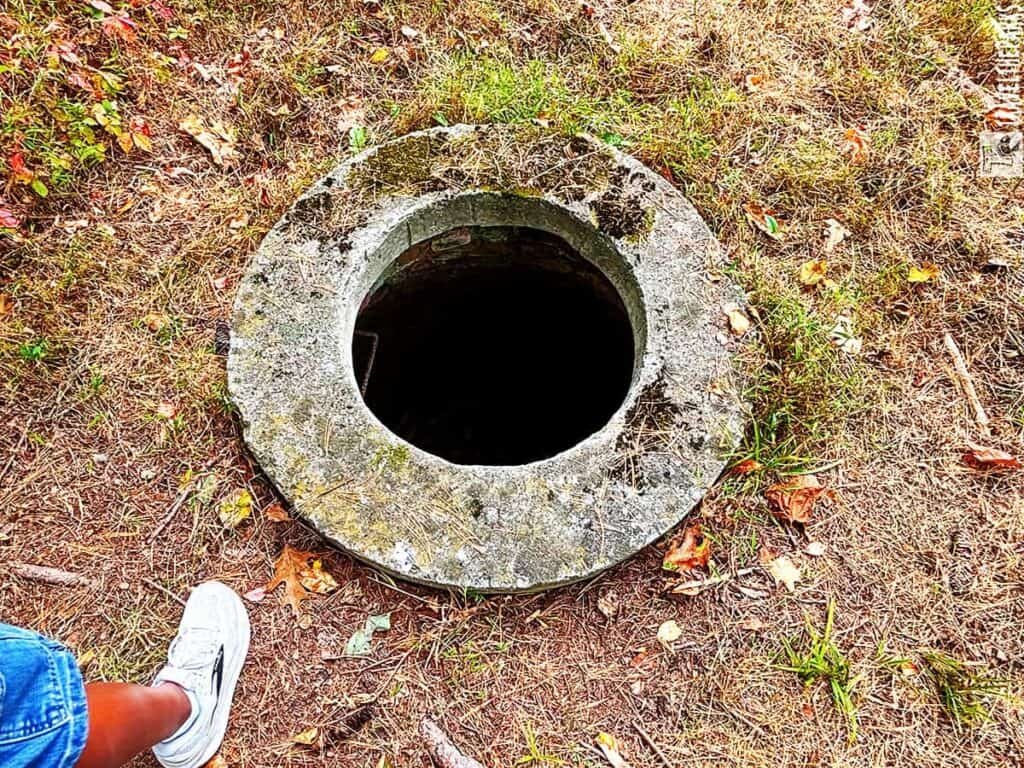
This was the church camp’s spring-fed swimming pool, built in the early 1950s to replace the reservoir on Tom’s Run, which was apparently a little too “adventurous” for safe swimming. It was one of several upgrades made by Camp Michaux, Inc. during the church camp years. Walking around the ruins felt a bit eerie—especially the stairs leading down to the old pump house. I decided not to venture inside; some critters are better left undisturbed!
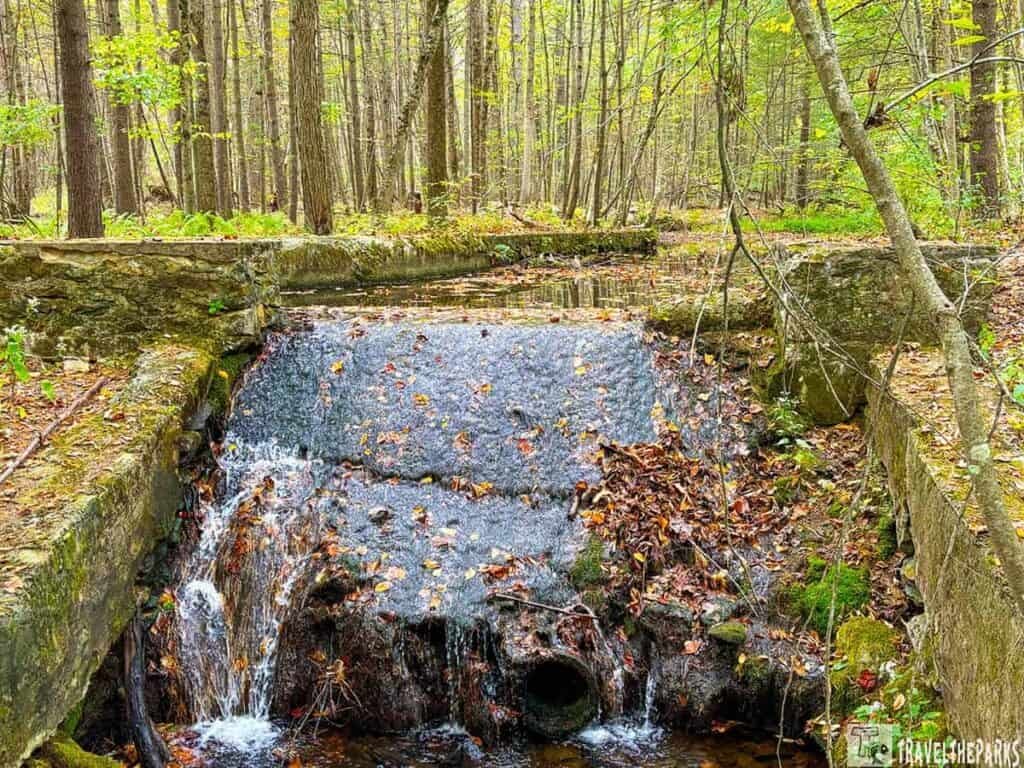
Stops 19–20: Dam, Reservoir, and Pump House
- CCC Era: Dam, reservoir, pump house
- WWII POW Camp: Dam, reservoir, bridge abutments with German writing
- Church Camp: Continued water system use
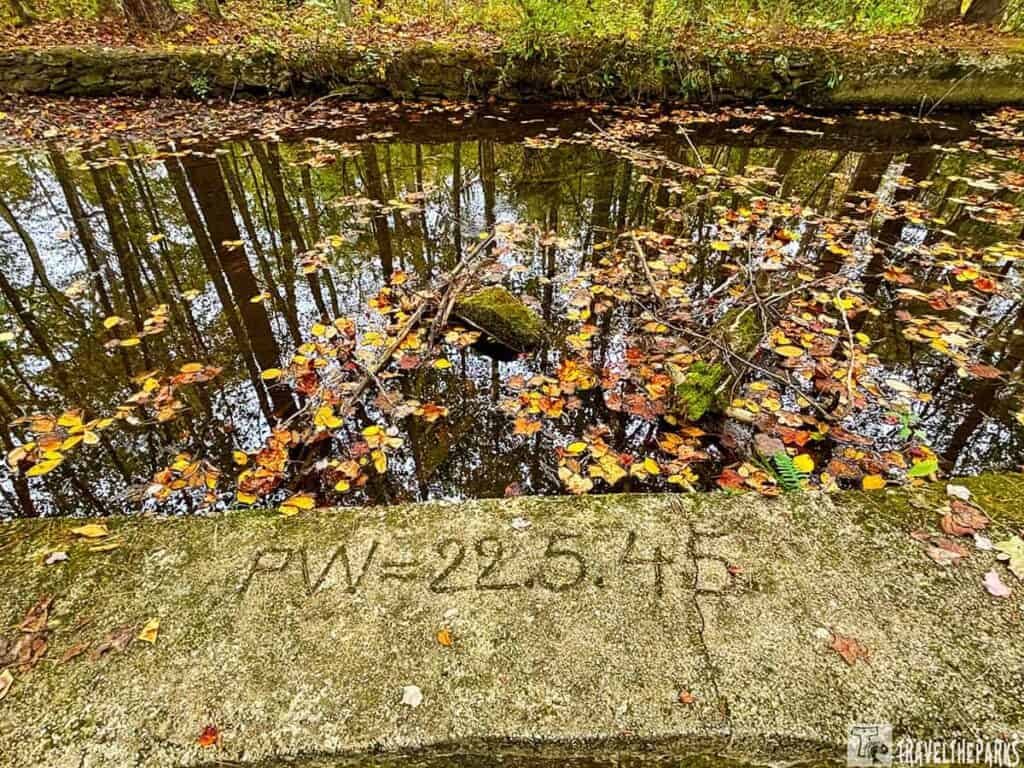
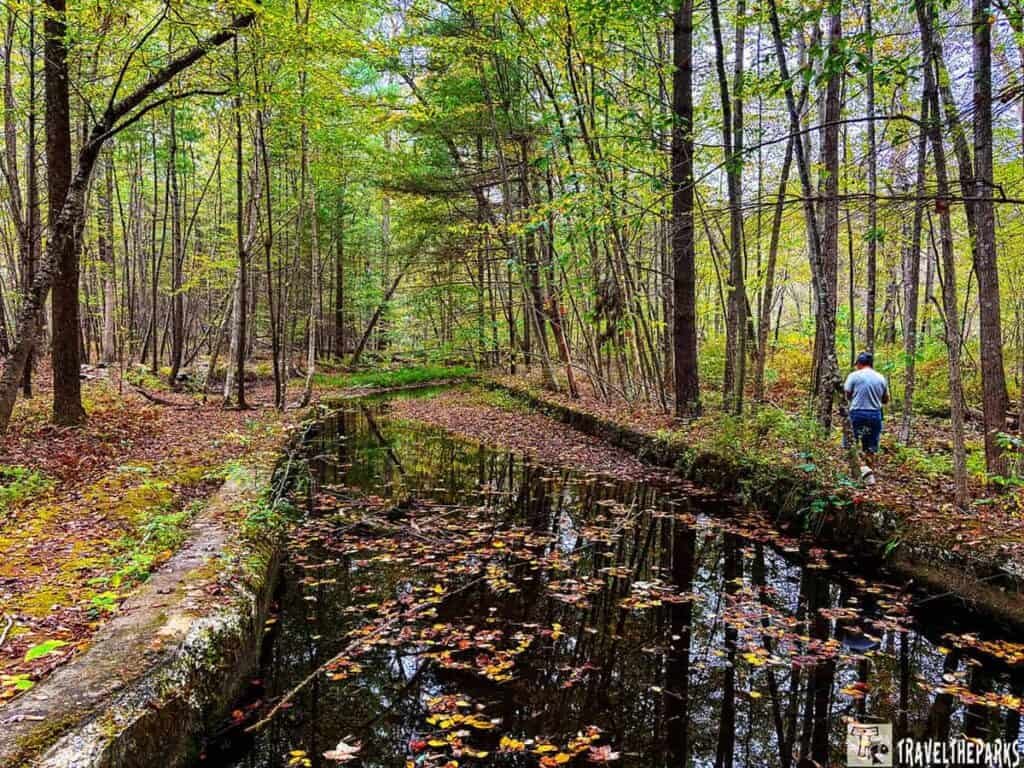
At Stop 19, we could see the remains of the bridge supports from the POW-era perimeter road where it crossed Tom’s Run. The upper dam here supplied drinking water to the camp. Examining the reservoir wall, we found the concrete inscription “PW 22-5-45,” indicating work completed by German prisoners in May 1945.
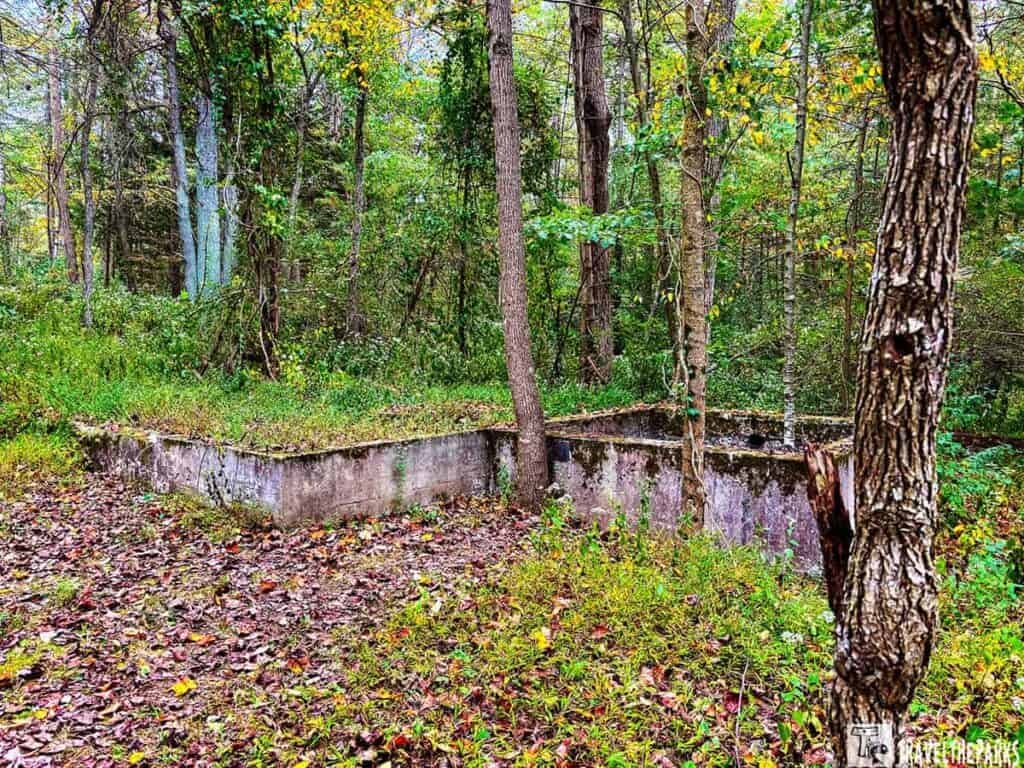
At stop 20, we reached the ruins of the Pump House and a second dam on Tom’s Run. This reservoir provided a recreation spot for guards during the POW era and for the church camp in its early years.
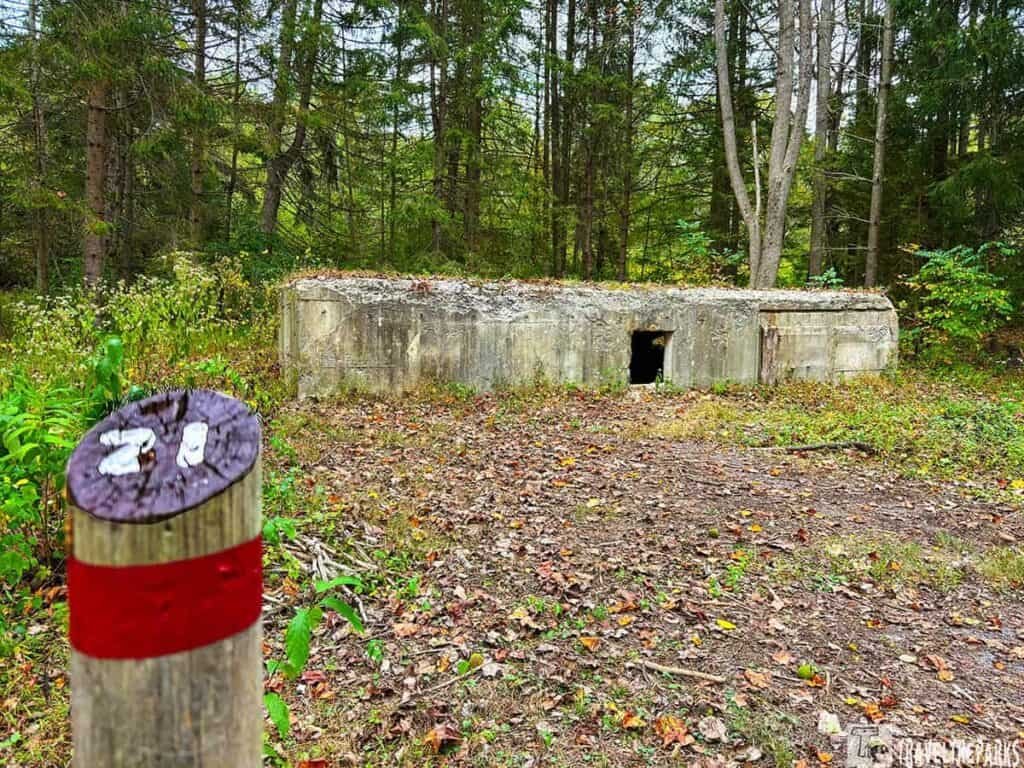
Stop 21: Mess Hall / Dining Hall
- CCC Era: Mess Hall
- WWII POW Camp: Staff Mess Hall
- Church Camp: Campers’ Dining Hall
This site served as the CCC mess hall, later a WWII staff dining facility separate from German POWs, and finally a camp dining hall, with only the foundations remaining today. We discovered the remains of the camp incinerator behind the old foundation.
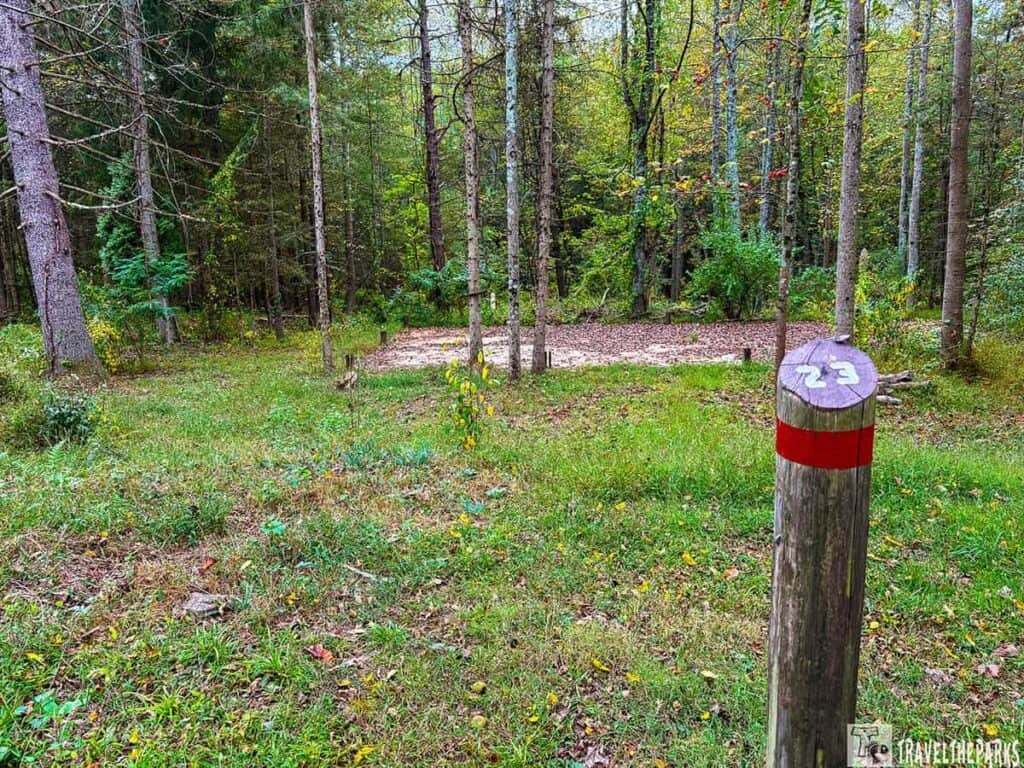
Stops 22–24: Flagpole, Camp Office, and Bathhouse Area
- CCC Era: (No known CCC structures at this location)
- WWII POW Camp: POW flagpole; staff latrine and bathhouse
- Church Camp: Flagpole; camp office and infirmary; latrine and bathhouse
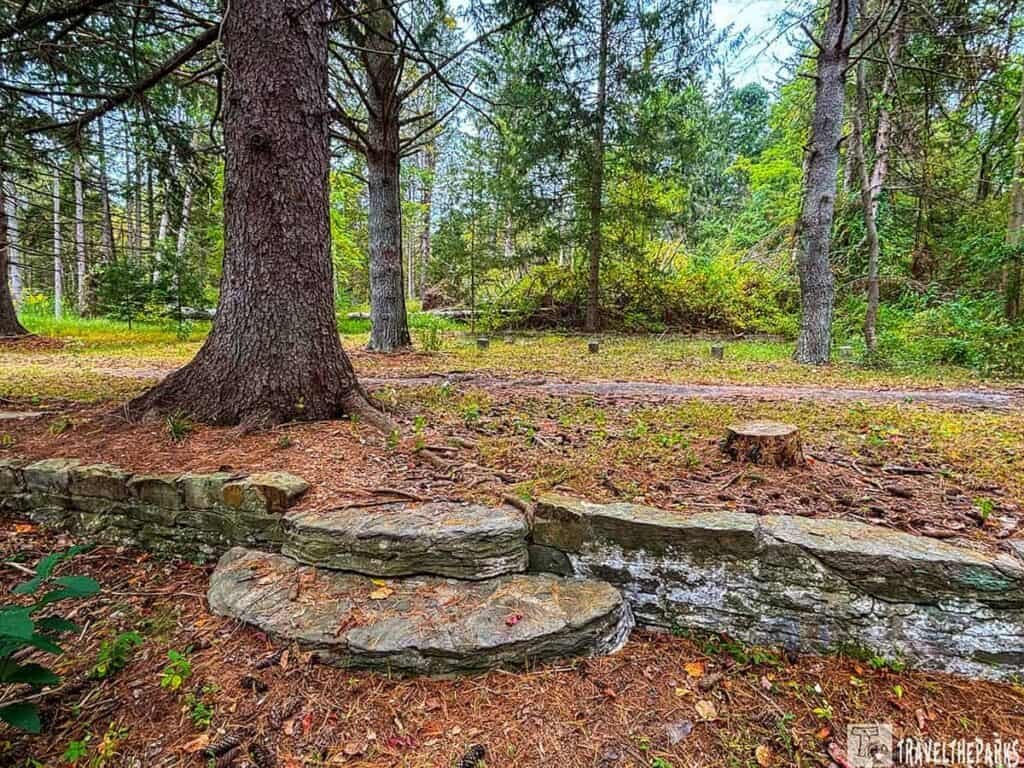
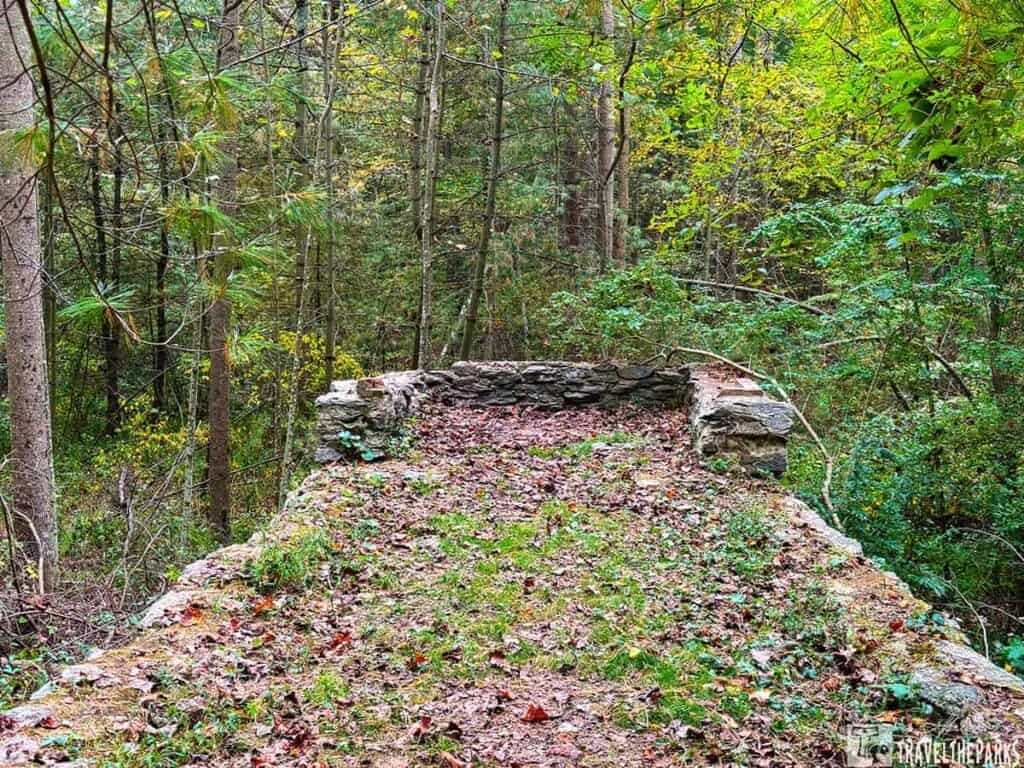
At Stop 22, we saw a concrete hole marking where the flagpole once stood, and overgrown grasses covered the foundational remains of the bathhouse. At Stop 23, the patio’s stone wall and foundation still overlook Tom’s Run. It was easy to imagine the recreational activities that took place here during all three eras of the camp’s history.
Stop 25: Education Building / Staff Barracks
- CCC Era: Education Building
- WWII POW Camp: Staff Barracks
- Church Camp: Campers’ housing
This structure reflects Camp Michaux’s continual reuse. Originally built as an education building during the CCC era. Later served as staff barracks during World War II before being converted to camper housing by the church. Today, we could see the concrete foundation and a stone wall with steps that would have led up to the main road, hinting at how the camp adapted without rebuilding.
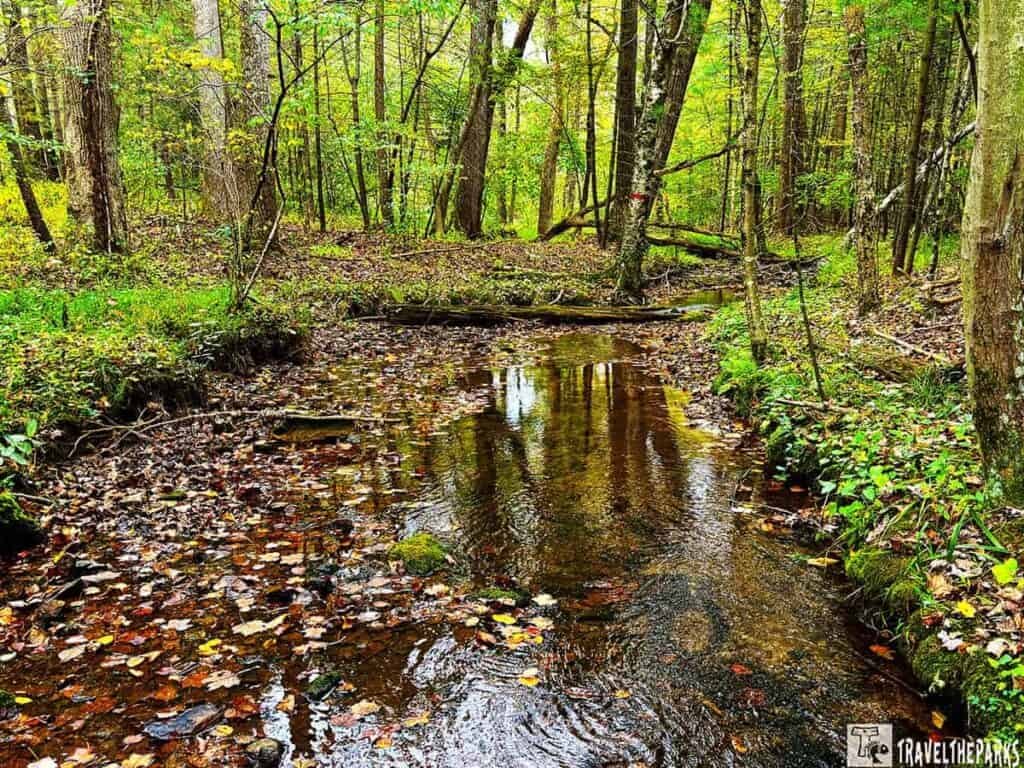
Stop 26: Michaux Road Bridge over Tom’s Run
- CCC Era: Bridge built by the CCC
- WWII POW Camp: Bridge improvements by POWs (with inscriptions)
- Church Camp: Bridge maintained
The CCC constructed the Tom’s Run Bridge in 1933, and the Army enhanced it later, with German inscriptions visible on the southeast side.
Stop 27: Sewage System
All Eras: Sewage system remains in use or adapted
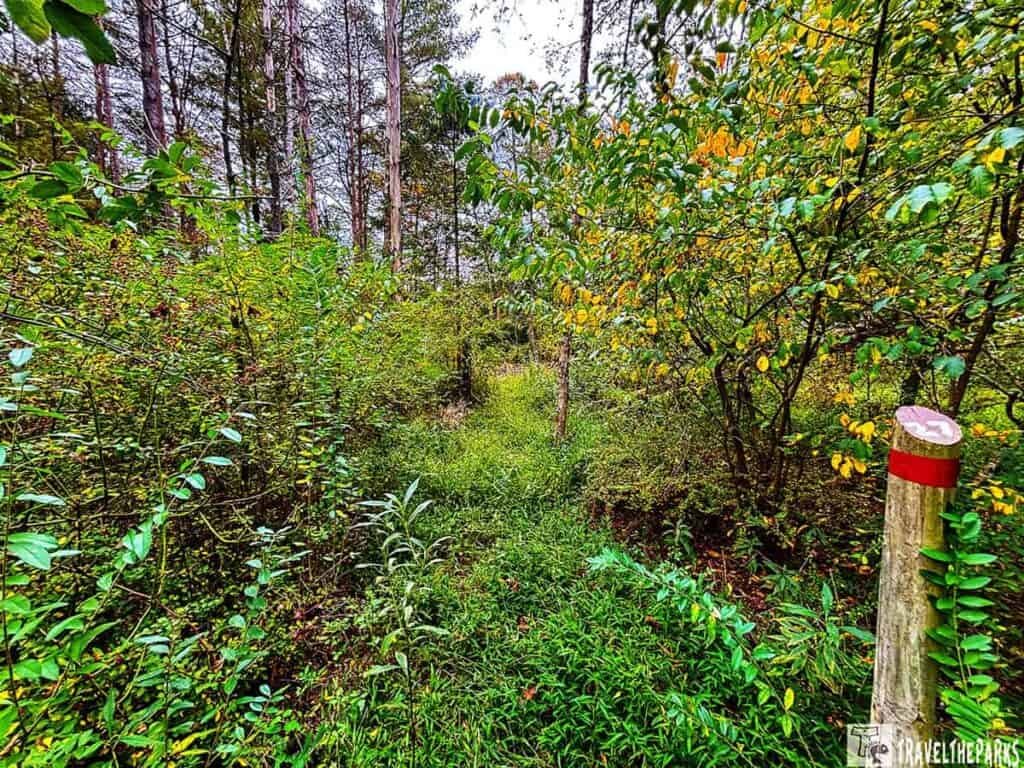
Not glamorous—but essential, and a reminder of how permanent some infrastructure truly is. Thick vegetation prevented seeing much, if any, ruins.
Tips for Your Visit to Camp Michaux
To ensure a safe and respectful visit, keep these practical tips in mind:
- Wear sturdy shoes: The terrain involves uneven ground, grassy paths, and loose stones.
- Pack in, pack out: Carry out all trash. Leave no trace to preserve the site.
- Bring water and bug spray, especially in the summer months.
- Watch your step: Be mindful of open foundations, uneven walls, and trip hazards.
- Leave artifacts in place: It is illegal to remove any historical material. Take only pictures.
- Allow 1-2 hours: This gives you time to read the brochure, photograph the ruins, and reflect.
Nearby Attractions to Camp Michaux
Extend your day trip by exploring the beautiful surrounding area:
- Pine Grove Furnace State Park (5-minute drive): Visit the Appalachian Trail Museum, swim in Laurel or Fuller Lakes, or see the historic iron furnace. This is a perfect complement to your historical hike. We camped in the park during our time in Pennsylvania.
- Gettysburg Battlefield (~30-minute drive): For a deeper dive into military history, the iconic Civil War site is within easy reach.
- Hiking in Michaux State Forest: The forest is crisscrossed with miles of additional trails, including connections to the Appalachian Trail.
Final Thoughts: Camp Michaux Walking Tour: Exploring the Ruins of a WWII POW Camp in PA
The Camp Michaux walking tour is more than a simple stroll through the woods. It’s an immersive walk through a hidden chapter of American history, where a quiet Pennsylvania forest once echoed with hard work, wartime secrecy, and eventual renewal. Moving from ruin to ruin, the past feels close—carried on the wind through the trees and etched into the stone foundations beneath your feet.
Visiting Camp Michaux is an experience that rewards curiosity and reflection. By exploring thoughtfully and respectfully, you help preserve this unique WWII POW camp site in Pennsylvania so its layered history can continue to be discovered by future visitors.
Have you walked the Camp Michaux trail before—or is it on your list now? Tell us in the comments.
Daniel K Ness
Excellent pictures and descriptions. Visited the site 9/2026 and took some pictures, same as yours. 80 years ago I stood at the gate, marked #10, as my father went into the camp to work on a problem with the phones. He worked for the phone company in Gettysburg and was often assigned to problems to and in the camp. He also frustrated the guards becdause he could talk with the prisoners in Pennsylvania Dutch.
Travel the Parks
What a great memory. This hike definitely had a lot of history behind it. A great addition to any Pine Grove Furnace stay. Thx for sharing!