If you have ever wanted to experience the full sweep of Cumberland Island National Seashore in a single day, the Lands and Legacies tour. is the answer. Cumberland Island is vast—18 miles long with over 50 miles of trails—and the honest truth is that on foot alone, you simply cannot reach the most historically significant sites in one visit. We knew that going in, which is why booking the six-hour guided tour was a straightforward decision.
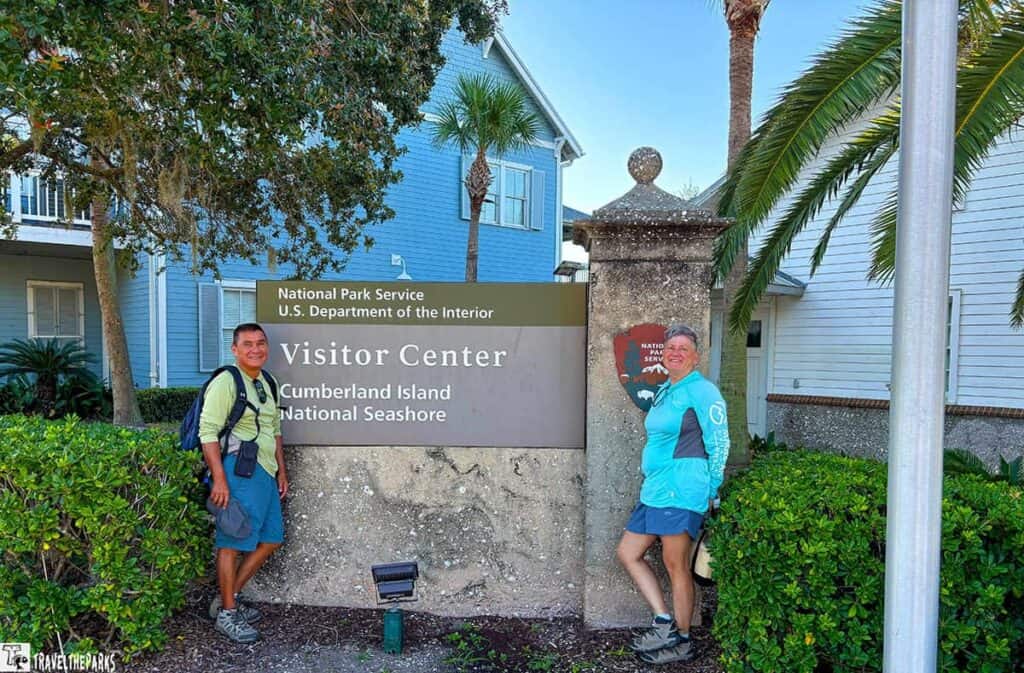
Departing from the Sea Camp Dock, the tour costs $45 per person and runs about six hours. A passenger van carries your group seven miles north along the Grand Main Road, hitting stops that most day-trippers never get to see—Stafford Field, the Stafford Plantation Cemetery, Plum Orchard Mansion, High Point Bluff, and the historic Settlement at the northern end of the island. If you are serious about understanding what makes Cumberland Island one of the most layered and fascinating places on the East Coast, this tour delivers.
PRO Tip: Book well in advance. Spots fill quickly, especially in spring and fall.
This post may contain affiliate links, meaning if you purchase something through one of these links, we may earn a small commission at no extra cost to you! Read the full disclosure policy here.
Table of Contents
Meet Your Guide: The Man Who Brings Cumberland Island to Life
No tour is better than its guide, and we struck gold with Mike Fulford. A gifted historian and natural storyteller, Mike had our group completely absorbed from the first mile. His narration moves fluidly between the island’s Indigenous roots, the plantation era, the Gilded Age excess of the Carnegie family, and the quiet resilience of the freed people who built lives here after the Civil War. His anecdotal stories are vivid and unhurried, the kind that stay with you long after you have left the island. If Mike is leading your tour, consider yourself lucky.
The Grand Main Road-Cumberland Island Guided Tour
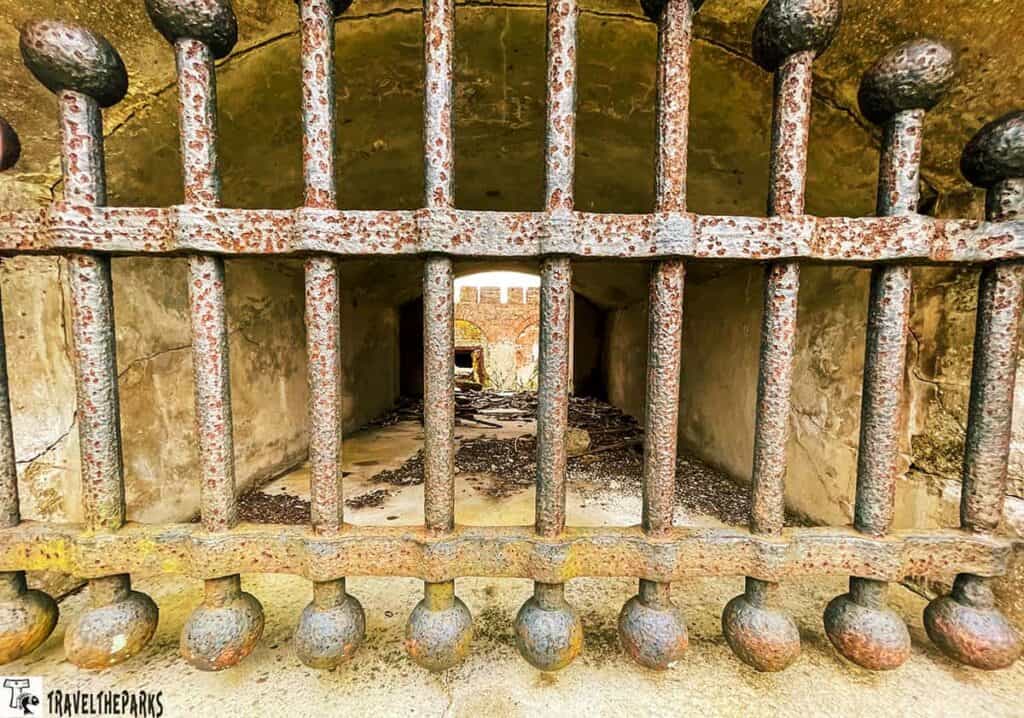
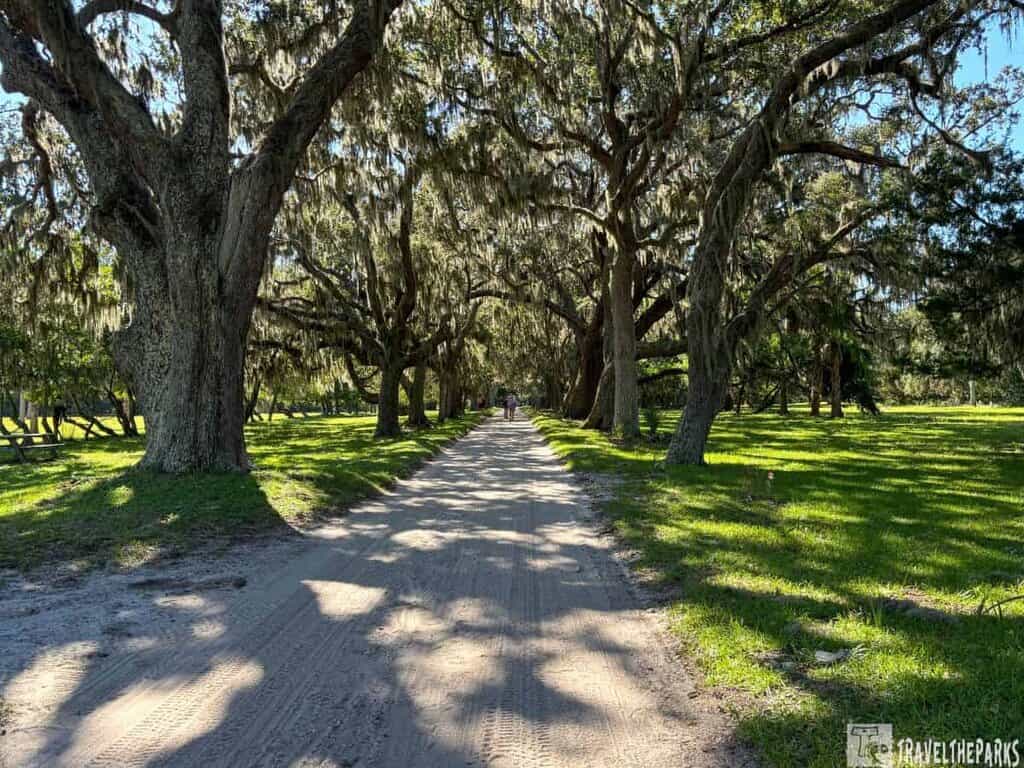
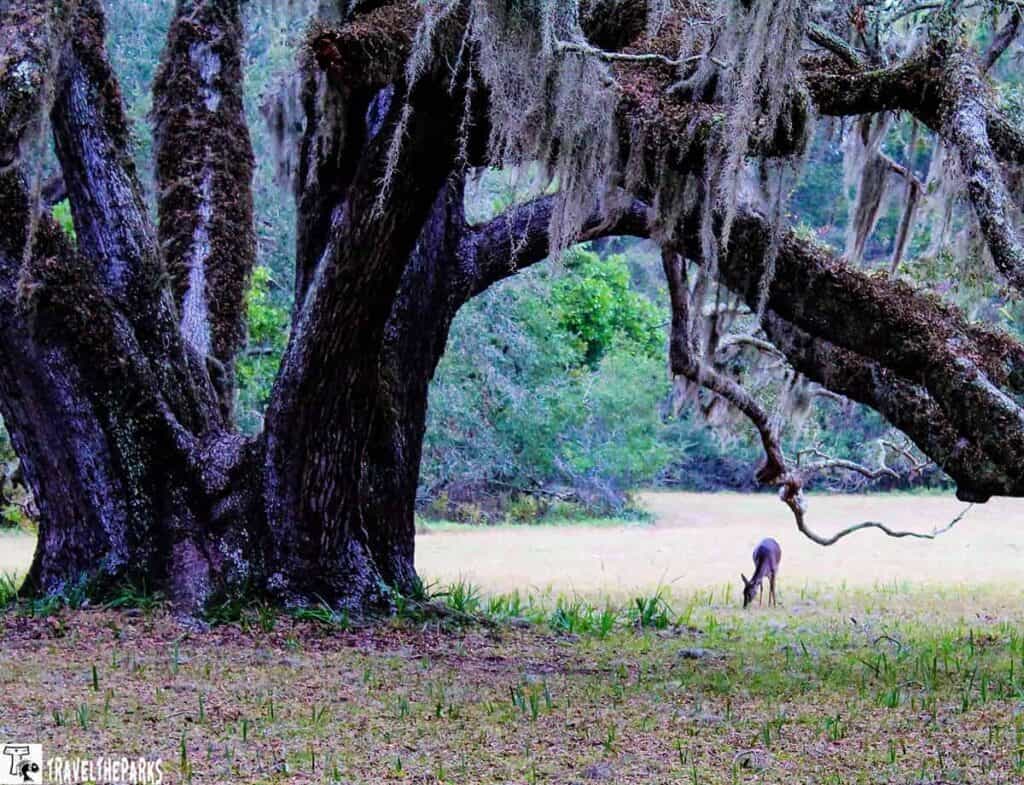
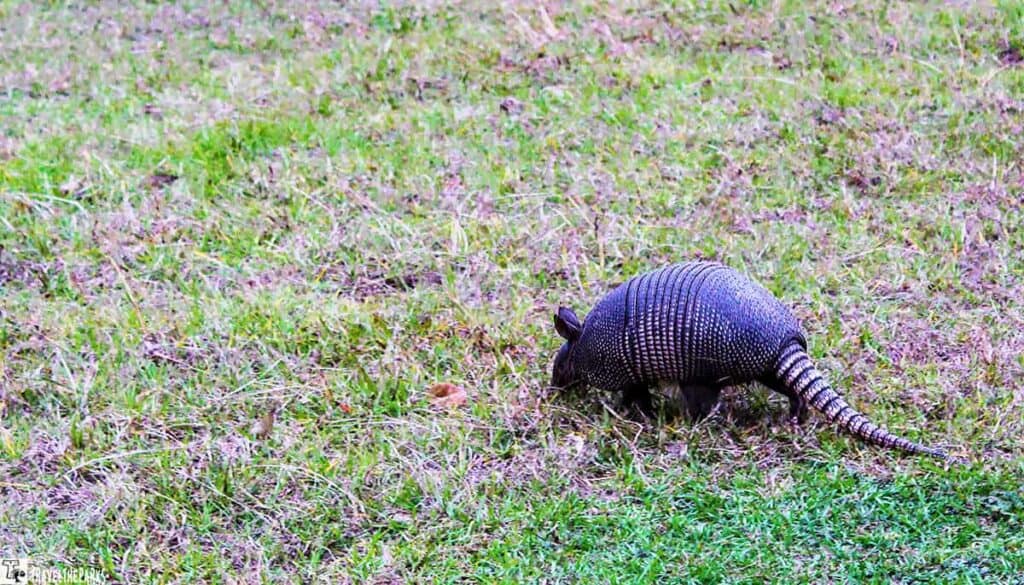
The journey north begins along the Grand Main Road, a seven-mile unpaved corridor that runs the length of the island beneath a cathedral canopy of live oaks draped in Spanish moss. It is a striking introduction to the island’s interior, and as the van moves deeper into the wilderness, the sense of stepping back in time is immediate. Keep your eyes on the treeline—deer, wild turkeys, and the occasional armadillo are common sightings along this stretch.
The Celebrated Feral Horses of Stafford Field
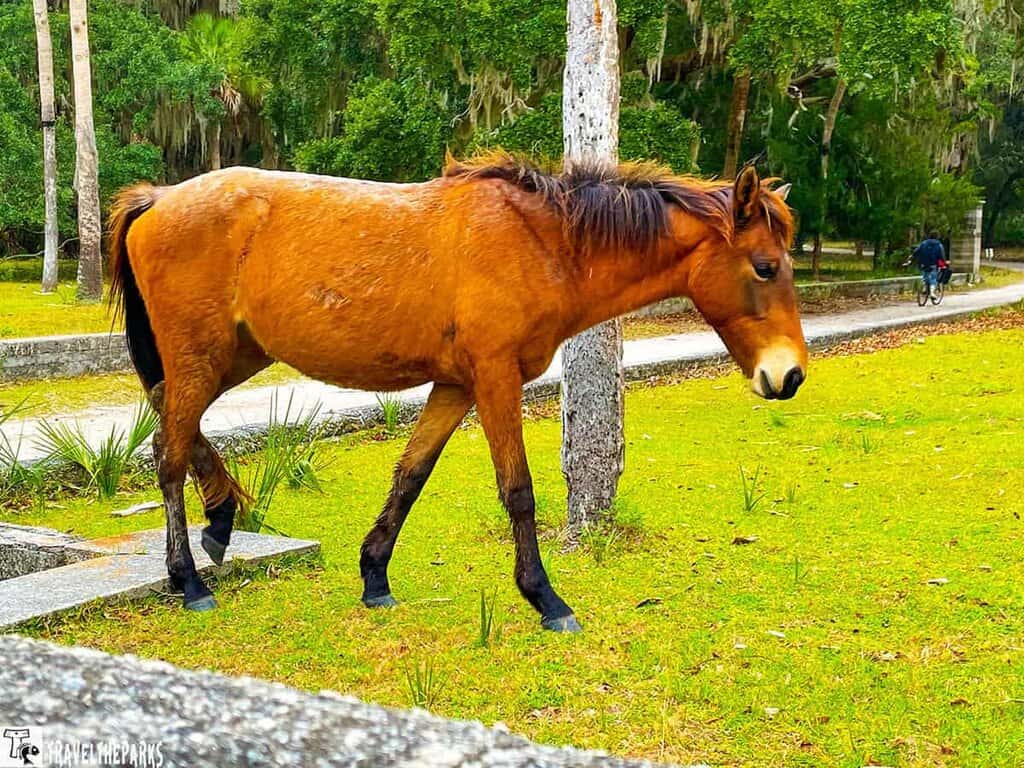
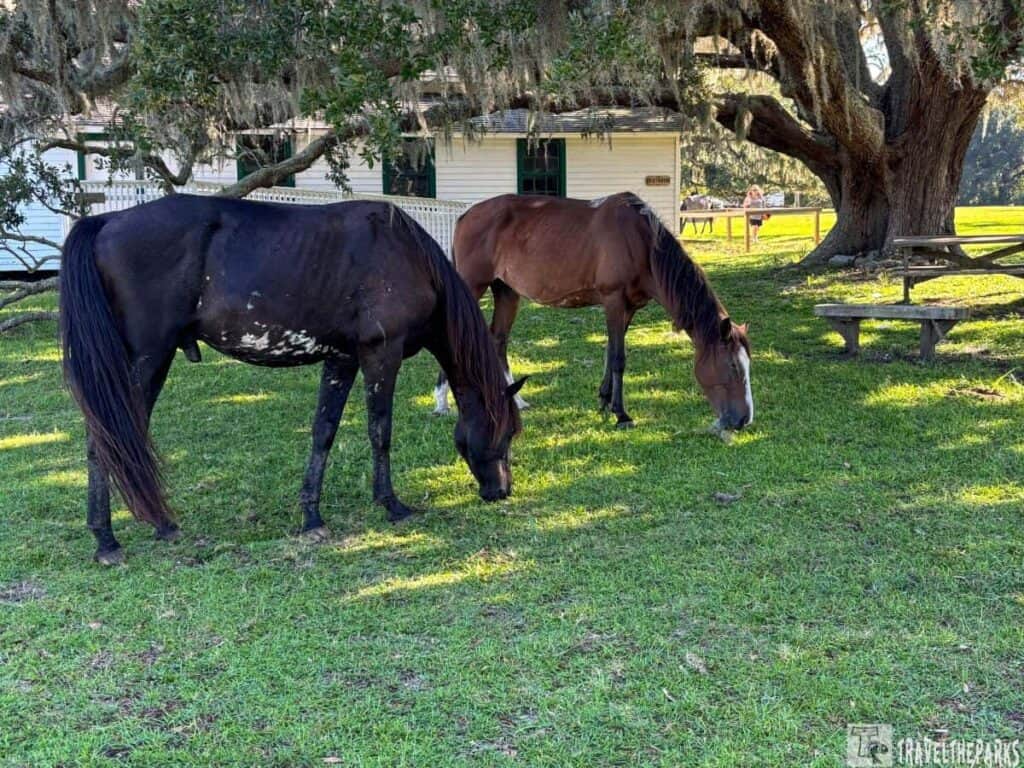
One of the earliest and most memorable stops on the tour is Stafford Field, a wide-open meadow that was once part of a thriving sea island cotton plantation. This is where we had our first encounter with Cumberland Island’s legendary feral horses, and it did not disappoint. A stallion and several mares with foals were grazing peacefully in the field, completely unbothered by our presence.
The National Park Service manages the field carefully. Prescribed burns are conducted annually to protect cultural resources, encourage healthy grass growth, and restore fire to the natural ecosystem. A weather station maintained by the NPS sits at the field’s edge, which also serves as a small airstrip for the island’s private residents. It is a remarkable reminder that Cumberland Island exists simultaneously as a national park and a living, working landscape.
Stafford Cemetery—A Must-Do on Cumberland Island
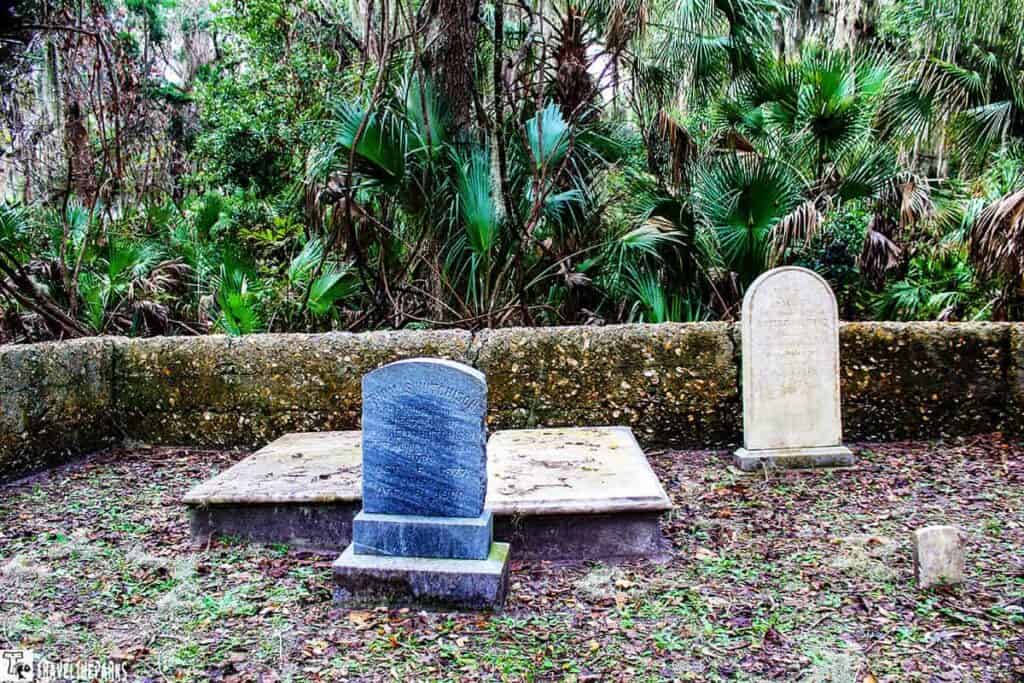
A short distance down the main road, the tour makes its first formal stop at the Stafford Plantation Cemetery. Enclosed by a coquina wall, four marked graves sit quietly in the shade. The first belongs to Robert Stafford himself, the wealthy and deeply complicated industrialist who dominated Cumberland Island life for much of the 19th century. Beside him rest his mother and sister.
The fourth grave caught our entire group off guard. Thomas Hutchinson was a golf professional from St. Andrews, Scotland. He was born in 1877. He died on December 8, 1900—killed in a horseback riding accident at just 23 years old. William Coleman Carnegie had brought him to the island with one job: design a private nine-hole golf course on the Stafford Plantation property. He never finished it. Hutchinson and Stafford never crossed paths in life. Yet here they share the same small plot of ground for eternity. It is exactly the kind of detail that makes Cumberland Island’s history feel genuinely cinematic.
The Stafford Plantation Era
Robert Stafford arrived on Cumberland Island from Groton, Connecticut, in the early 19th century, purchasing the plantation for $11,000. A sum that included 53 enslaved people. Over the following decades he expanded aggressively, eventually controlling 8,125 acres by 1859, making him the island’s dominant landowner.
Stafford ran his operation using a task system rather than the gang labor common on other plantations. Enslaved workers were assigned daily quotas measured in quarter-acre increments—plowing, planting, picking, and ginning cotton. Once those tasks were complete, their time was their own. Many hunted, tended gardens, or produced goods they could trade or sell. Stafford, a banker by instinct, actively encouraged his enslaved workers to save money, a practice that would have profound consequences for the island’s future after emancipation.
The Complicated Legacy of Robert Stafford
His personal life was far more complicated. He never married. Yet he fathered six children with Elizabeth “Zabette” Bernardey. She was a woman of mixed heritage who worked on the plantation. In defiance of Georgia’s restrictive laws, Stafford moved his family to Connecticut. He paid for their education. He ensured their financial security. His daughter, Nancy, became a practicing physician. That was remarkable for any woman of that era. For one born into her circumstances, it was extraordinary.
Upon his death in 1877, his heirs sold the plantation lands. Just a quarter mile from the main house, one haunting reminder survives. It is known simply as “the Chimneys.” Twenty-four hearths and chimneys stand in silence. An entire community once lived here.
Stafford House -Cumberland Island National Seashore
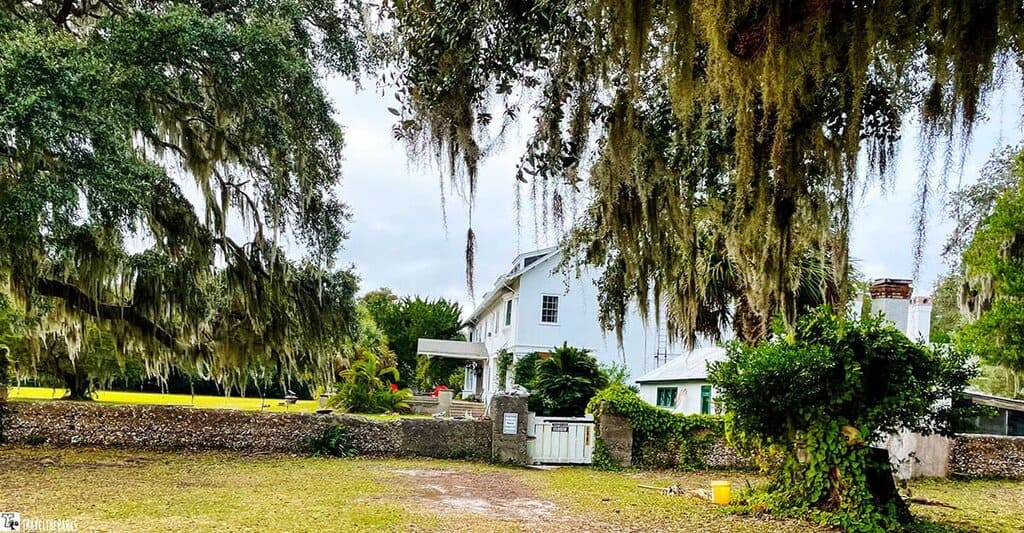
The Stafford House was built in 1901. Lucy Carnegie purchased it as a wedding gift for her son, William. She bought it from the descendants of Stafford. Today it remains in private hands. However, an agreement with the National Park Service will eventually see it become part of Cumberland Island National Seashore within the next five years.
Plum Orchard Mansion—The Crown Jewel of Cumberland Island
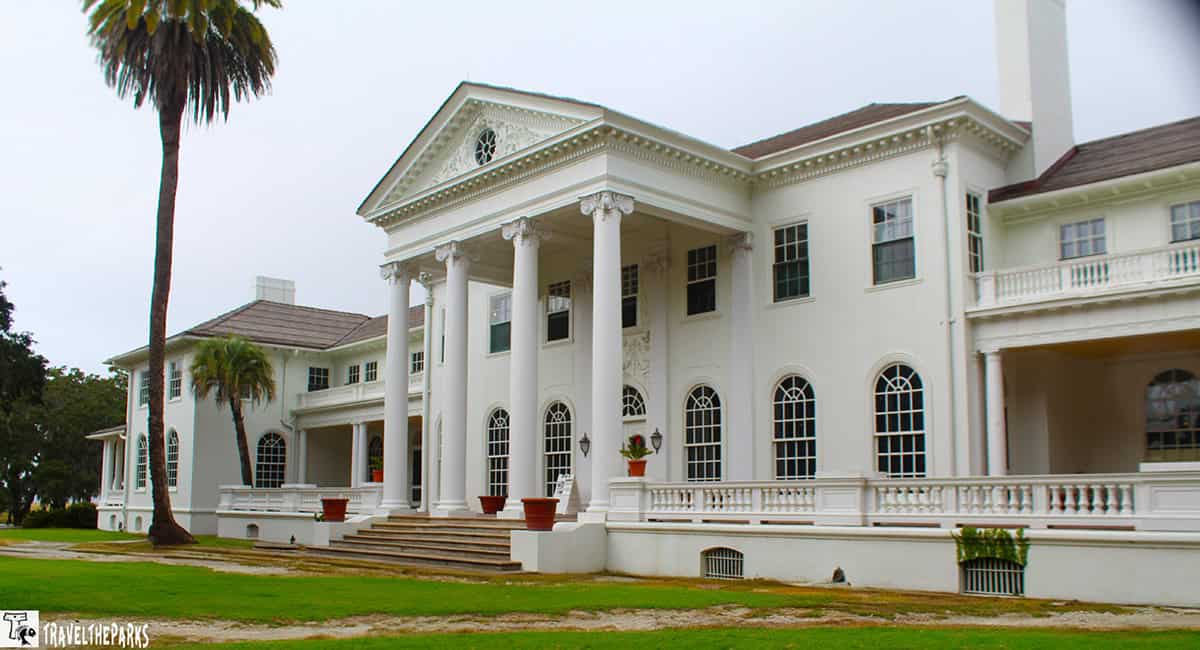
Seven miles north of Sea Camp, Plum Orchard Mansion emerges from the tree line like something out of another world. Listed on the National Register of Historic Places and donated to the National Park Service in 1972, this beautifully restored 22,000 square foot Georgian Revival mansion was built in 1898 by Lucy Coleman Carnegie as a wedding gift for her son George Lauder Carnegie and his wife Margaret Copley Thaw. The prestigious architectural firm Peabody and Stearns designed it, and no detail was spared.
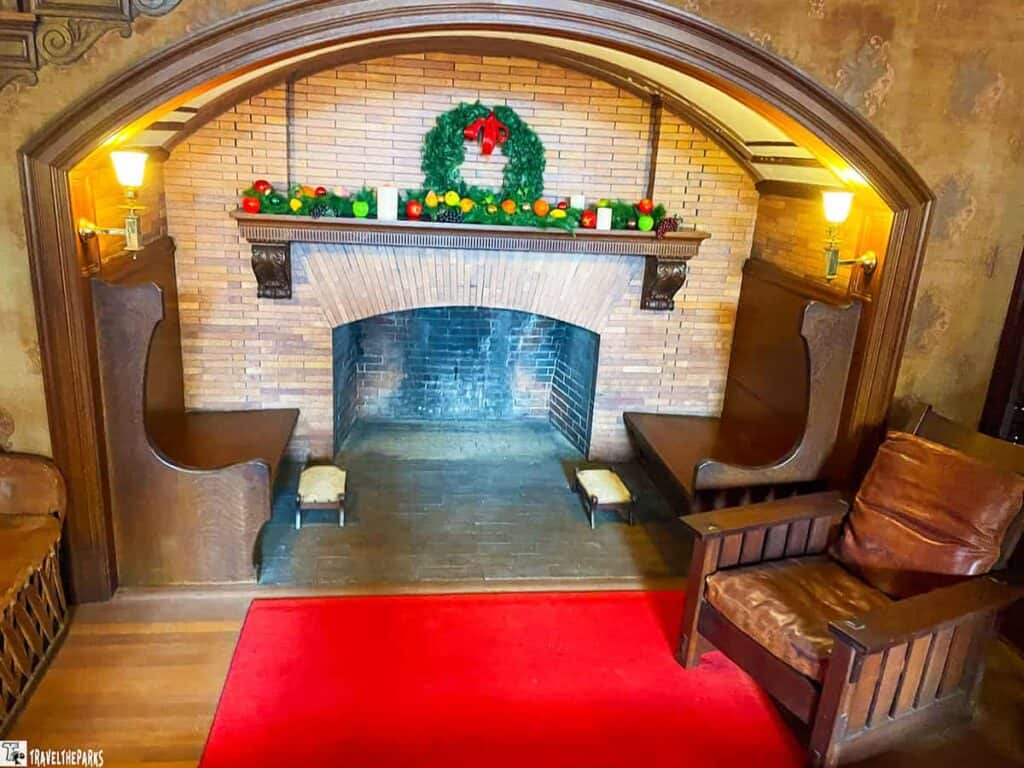
Walking through the 30 rooms with Mike narrating felt genuinely like stepping into the Gilded Age. An indoor swimming pool. A squash court. Twelve bathrooms. An authentic Tiffany lamp hanging over the front hall table. Burlap wallpaper, imported marble tile, and a baby grand piano by William Knabe & Company tucked into the game and gun room. Being surrounded by that level of wealth and privilege is genuinely difficult to comprehend, even standing inside it.
After George Lauder Carnegie’s death, his widow Margaret remarried and relocated to Lake Naivasha, Kenya. She sold the original furnishings before leaving, and pieces from Dungeness were brought in to fill the rooms.
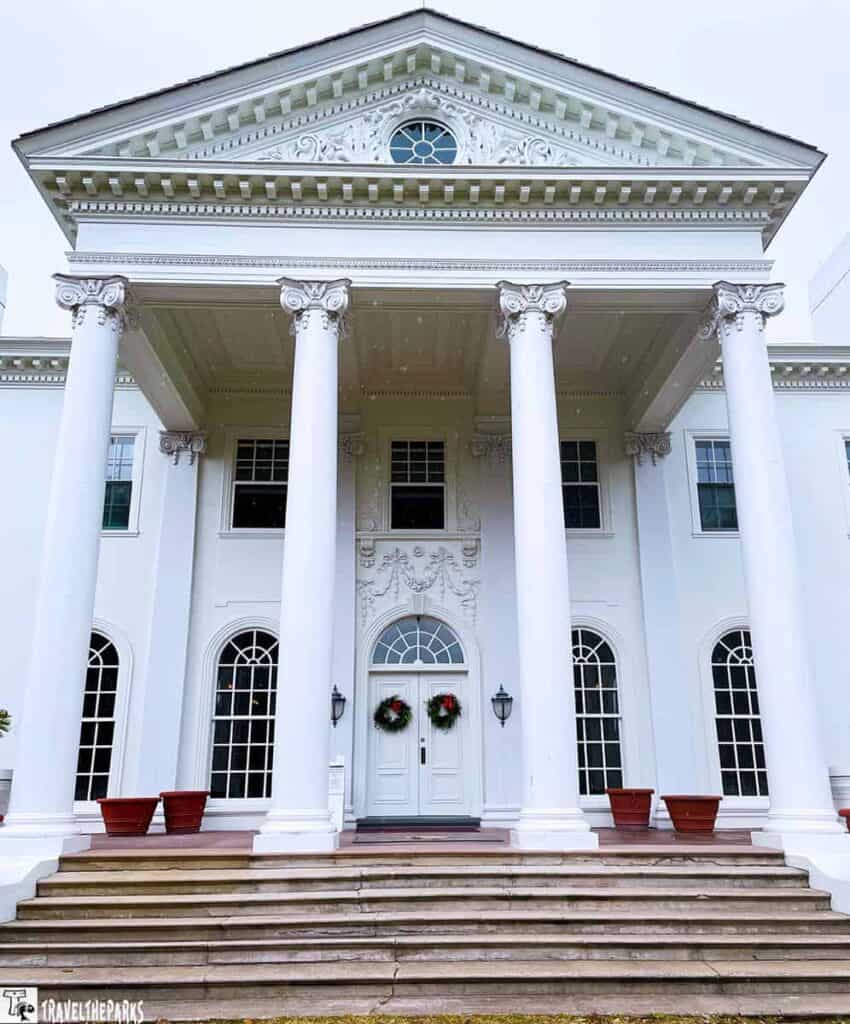
The tour includes a 30-minute lunch break at Plum Orchard. We ate on one of the wraparound verandas as a light afternoon rain moved through. One of those unexpectedly perfect travel moments. Take the time to walk the outer buildings and the river’s edge before the van departs for the second half of the tour.
Plum Orchard is open Thursday through Monday, 9am to 12pm and 1pm to 4pm, with guided tours on the hour lasting 45 minutes. It is only accessible by private vessel, bicycle, on foot, or via the Lands and Legacies Tour.
The High Point/Half Moon Bluff District
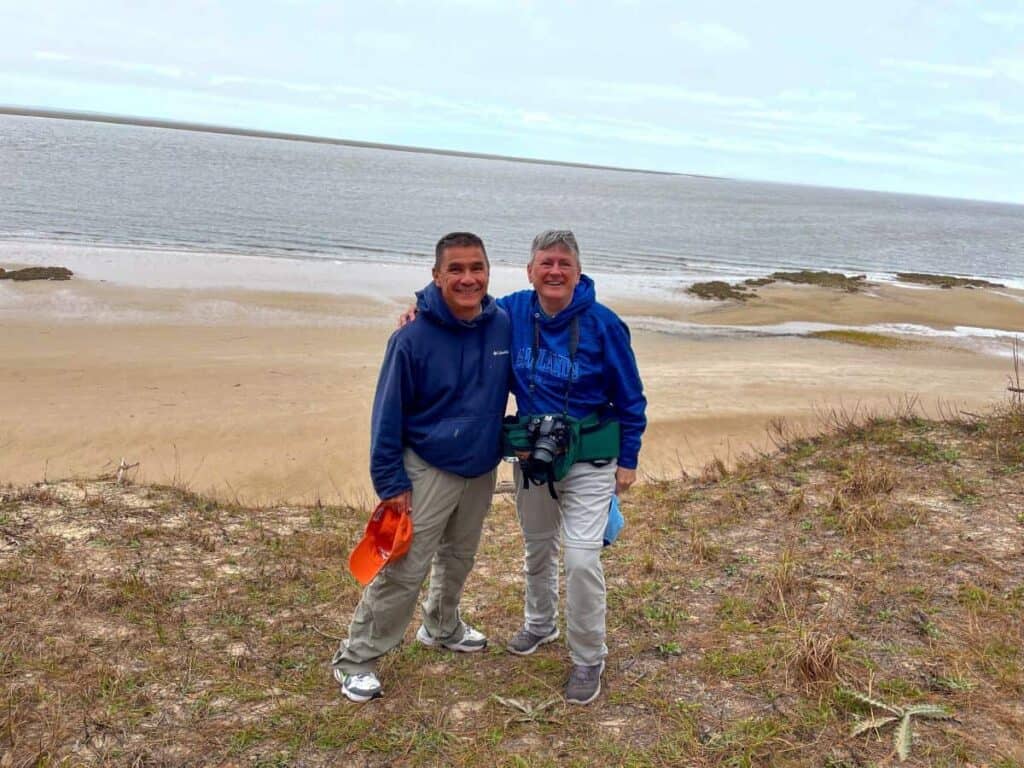
Continuing north, the tour reaches the High Point/Half Moon Bluff District, listed on the National Register of Historic Places since 1978. First developed in 1880, this area was once a thriving resort destination for wealthy families from northern and central Georgia who arrived by steamboat at a wharf below the bluff overlooking the Cumberland River.
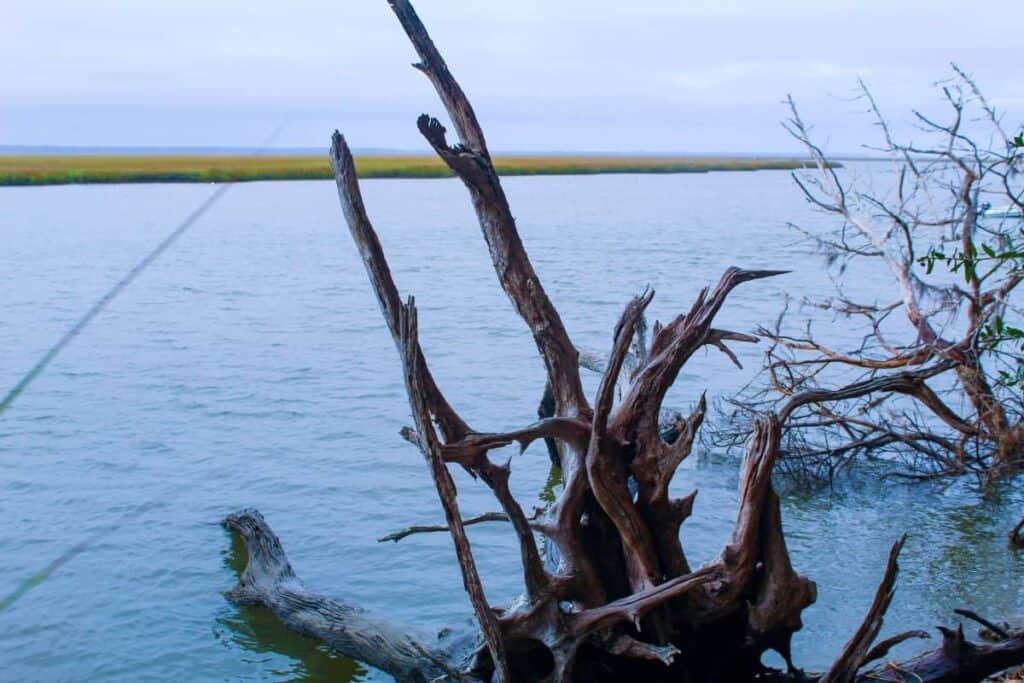
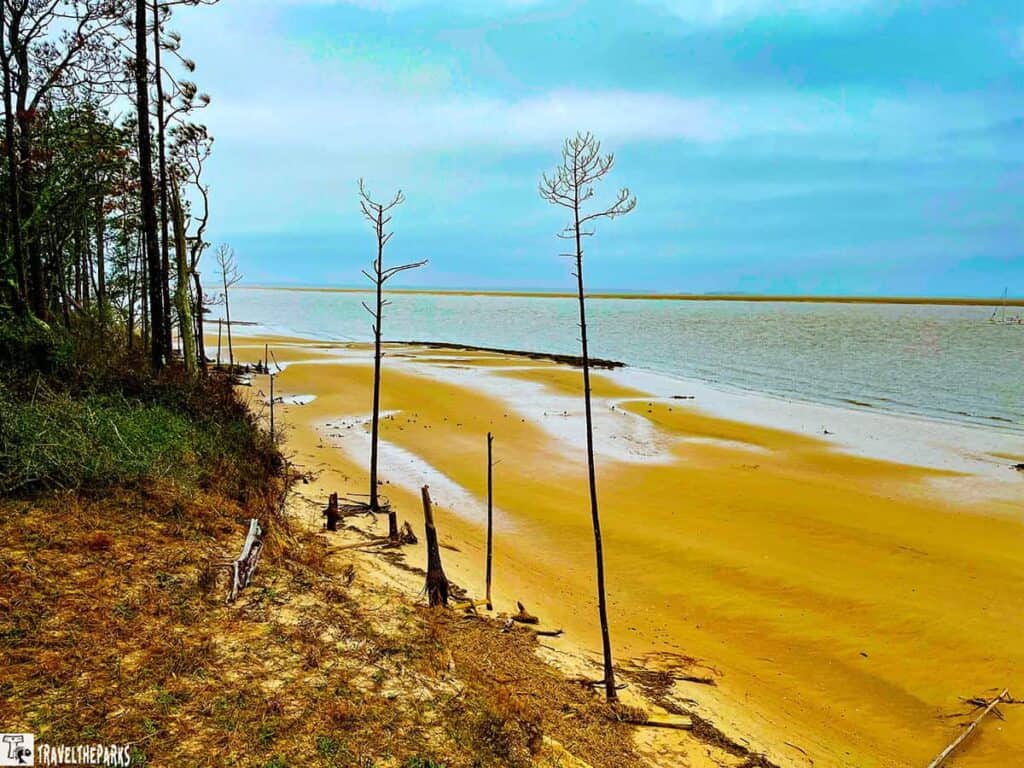
At its peak, the complex included two hotels connected to the wharf by a tramway that ferried guests and supplies up the steep bluff. A short trail now leads to Half Moon Bluff, where a slender strip of sand beach and a handful of weathered pilings are all that remain of what was once a playground for the privileged. The contrast between what was and what stands there now is quietly powerful.
The Settlement—Freedom, Community, and Resilience
Perhaps the most moving stop on the entire tour is the Settlement at the northern end of the island, roughly 14 miles from Sea Camp. After emancipation, many of the people formerly enslaved by Robert Stafford chose to remain on Cumberland Island rather than leave. In the early 1890s, they purchased small plots of land from Martin Burbank, a businessman who operated a hotel at the island’s north end and wanted a reliable local workforce nearby.
What emerged was a small, self-sufficient community. People who owned their land outright, carried no debt, and built their homes as free individuals. The financial habits that Stafford had encouraged during the plantation era gave them the means to do exactly that. Two of the settlement’s original buildings remain open to the public.
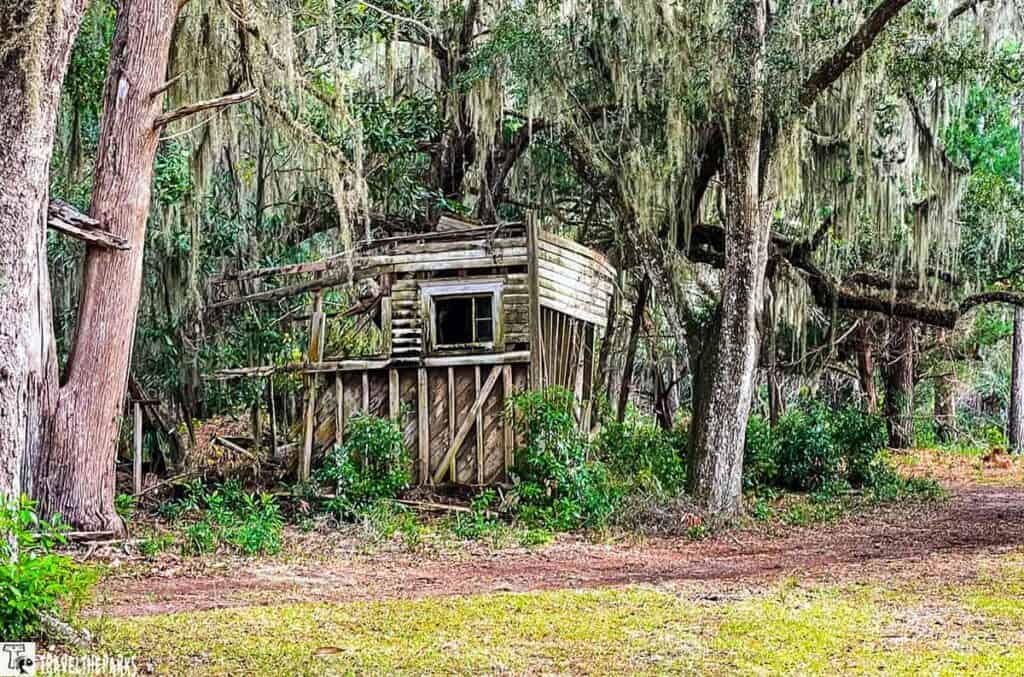
The hotel resort that surrounded them thrived until the Great Depression shuttered it almost overnight. As the resort faded, so did the Settlement’s population, with residents gradually dispersing to the mainland. The remaining resort homes are today privately owned by the Candler family of Atlanta, heirs to the Coca-Cola fortune.
Beulah Alberty—The Mayor of the Settlement
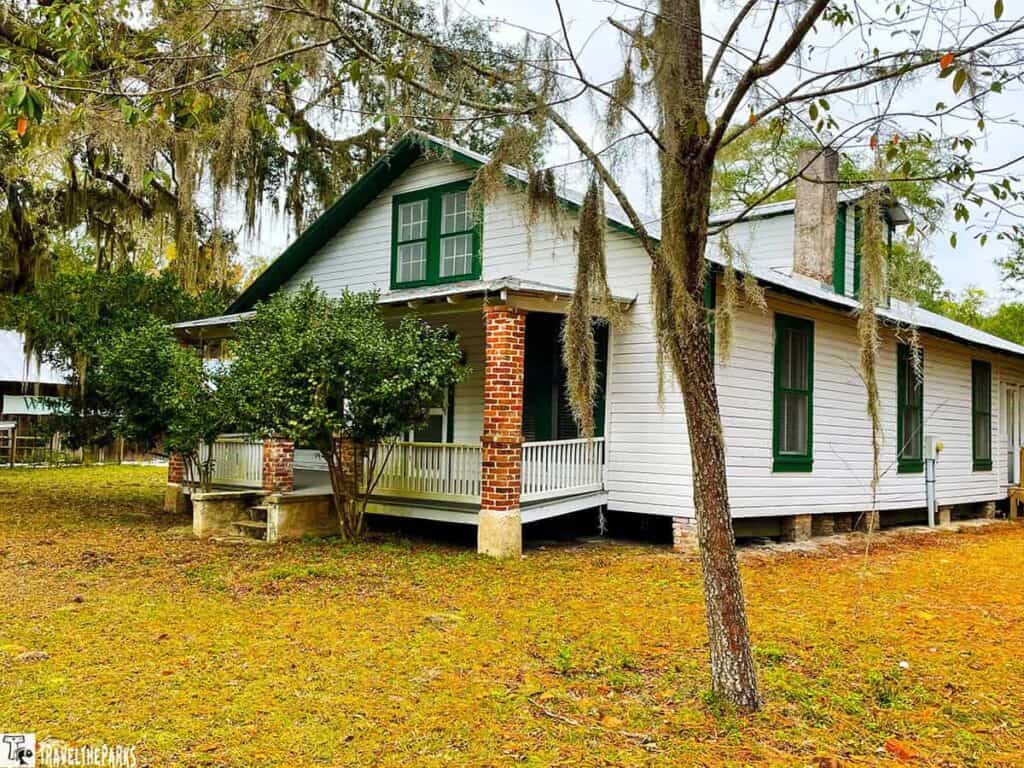
Standing in front of the small, wood-framed bungalow that Beulah Alberty built in 1920, Mike told us her story with the kind of quiet reverence it deserves. A descendant of enslaved African Americans, Beulah educated herself at the Selden Institute in Brunswick, Georgia, and worked initially as a schoolteacher. She returned to the island in the 1950s and 1960s and became one of its most important figures. A church leader, a community advocate, and a fierce entrepreneur whom everyone knew as the Mayor of the Settlement. The National Park Service has restored her home. The smaller house next door, once belonging to Roger Alberty, has since collapsed inward.
The First African Baptist Church—History and a Famous Wedding
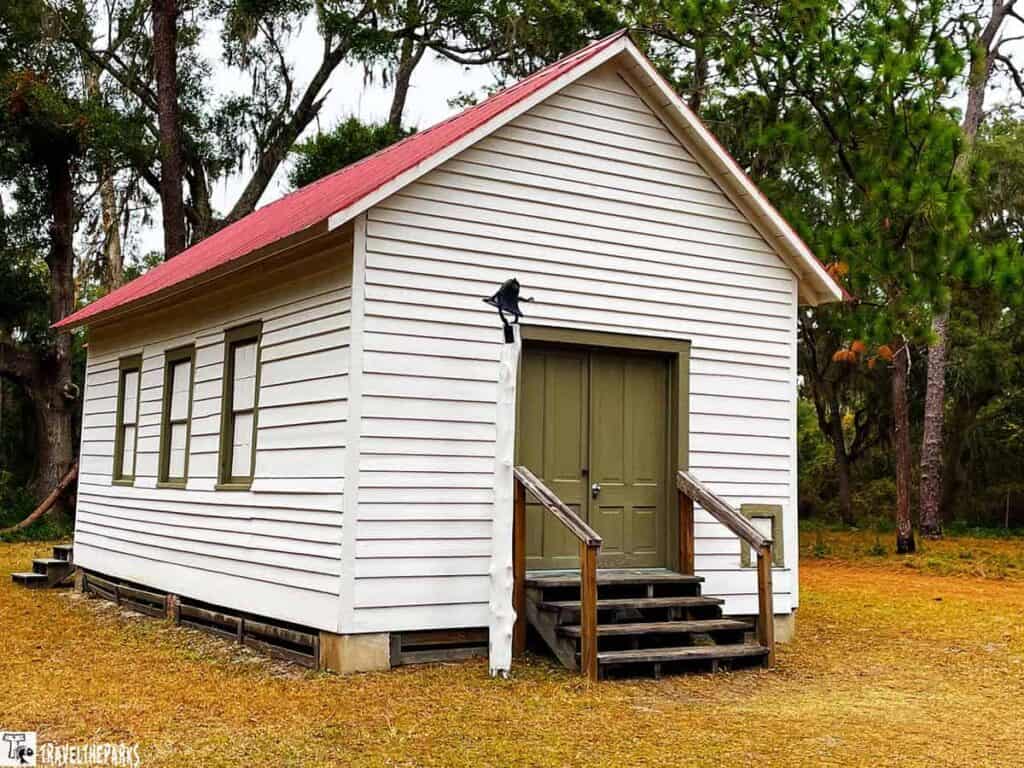
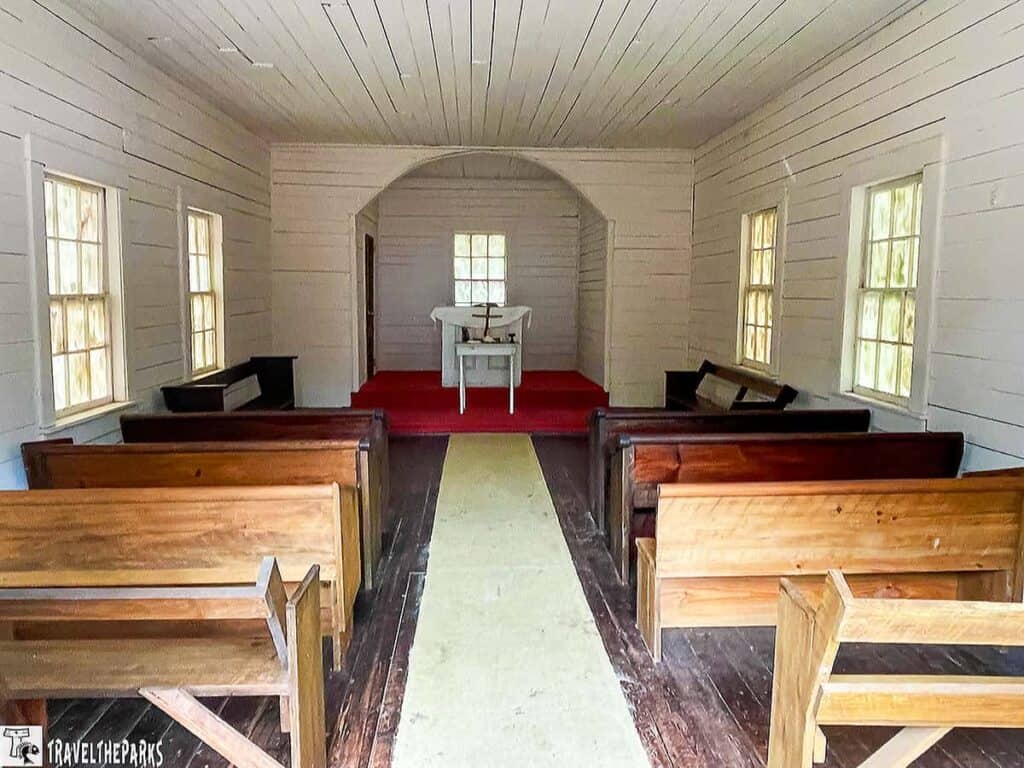
The First African Baptist Church has anchored the Settlement since 1893, though the original structure burned and was rebuilt in 1937. It served the community as both a place of worship and a schoolhouse. A combined purpose common in rural Black communities of that era. Today the church is owned and maintained by the Cumberland Island National Seashore.
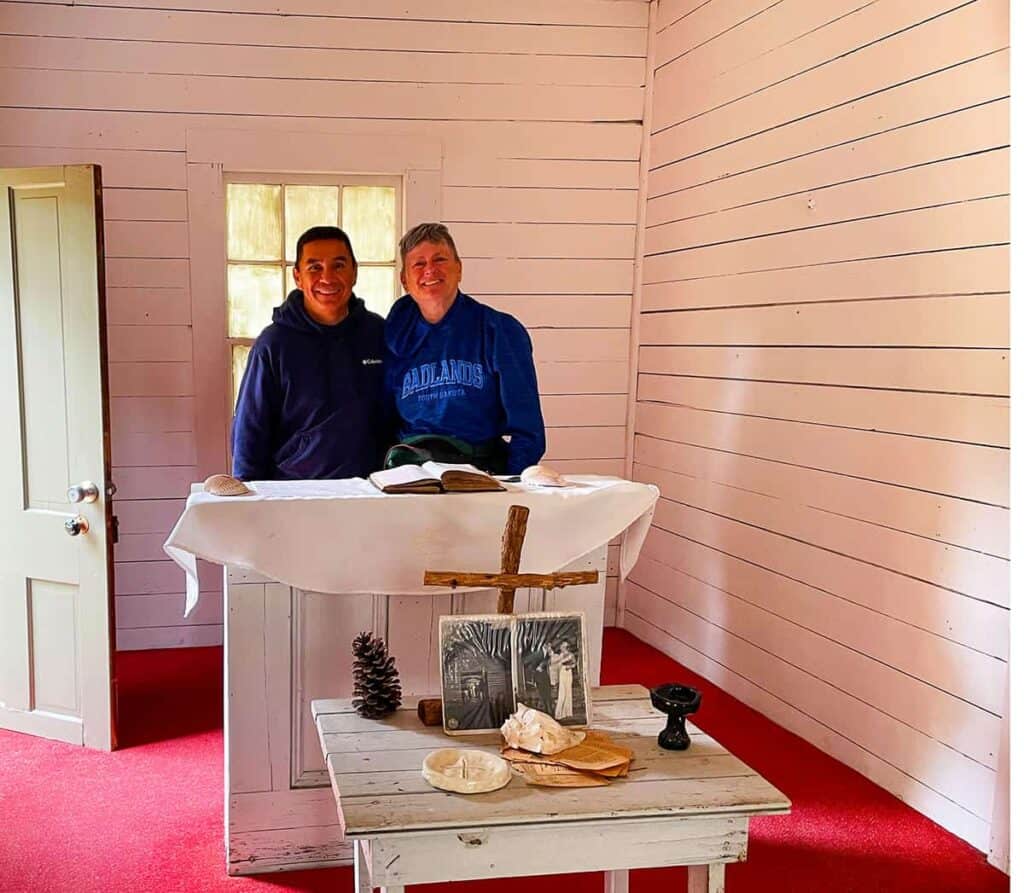
Stepping inside the tiny chapel, it is hard not to feel the weight of history pressing in from every direction. It is also famously where John F. Kennedy Jr. and Carolyn Bessette were married in September 1996. Kennedy had visited the island for years as a guest of Carnegie descendants, and he chose it deliberately. The paparazzi had no way to reach him here. The church is still available for weddings today. Although no transportation to the north end is provided by the National Park Service.
Untamed: The Wildest Woman on Cumberland Island
No account of the Lands and Legacies Tour would be complete without mentioning Carol Ruckdeschel. A self-educated biological specialist, wildlife activist, and pathologist, Carol moved to Cumberland Island in the 1970s and devoted decades of her life to fighting for its protection. She played a meaningful role in the establishment of Cumberland Island National Seashore and dedicated herself particularly to the survival of feral horses and loggerhead sea turtles, both of which faced serious threats at the time.
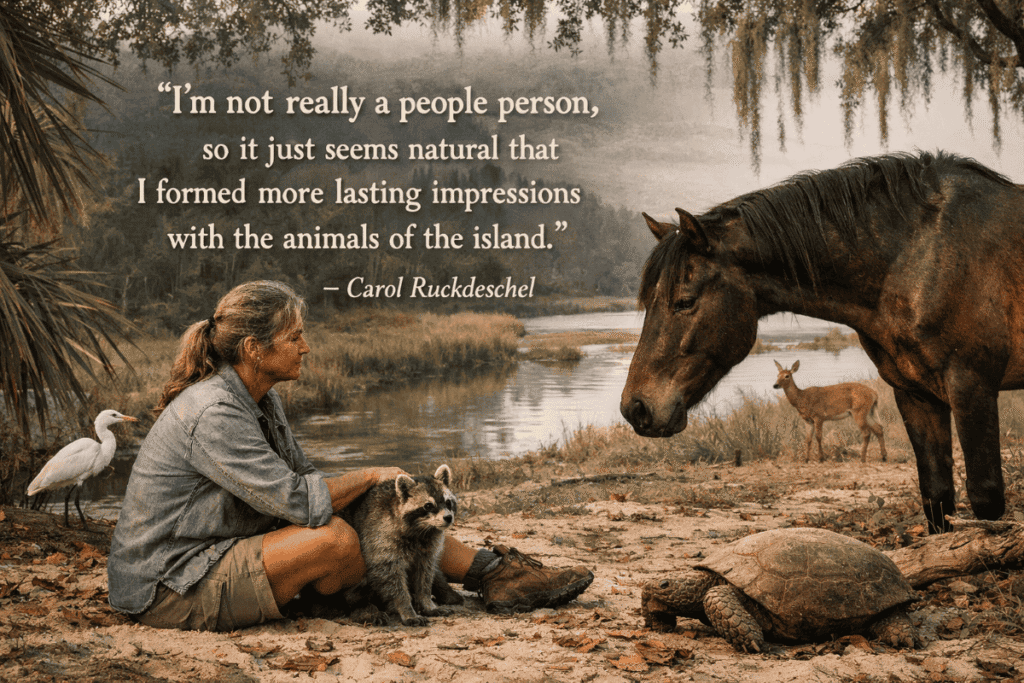
At 81, Carol still lives independently on the island. Her extraordinary life is the subject of Will Harlan’s biography, “Untamed: The Wildest Woman in America.” Well worth reading before or after your visit.
A Parting Glimpse—The Dungeness Ruins
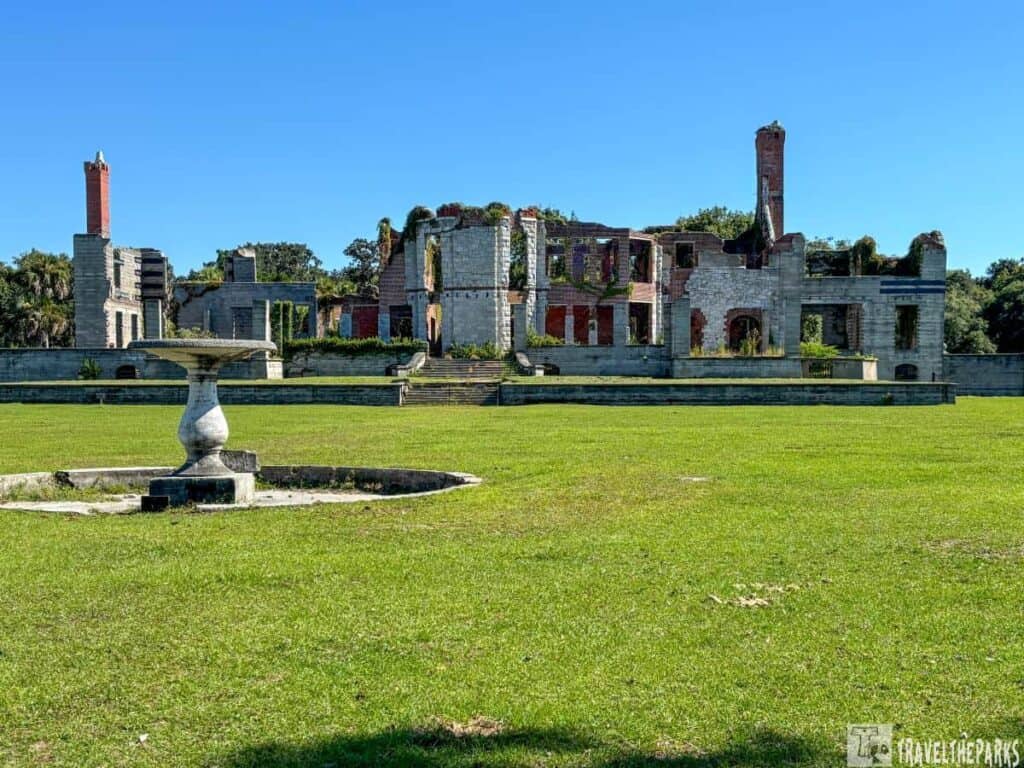
As the Cumberland Island Lands and Legacies tour wound down and the van made its way back south along the Grand Main Road, we were treated to one last surprise. With a little time to spare, Mike swung past the Dungeness Ruins for a drive-by look at the skeletal remains of Lucy Carnegie’s magnificent 59-room mansion. Even from the van, the sight is arresting — brick walls rising out of the landscape like the bones of something ancient, draped in the same Spanish moss that shades the entire island.
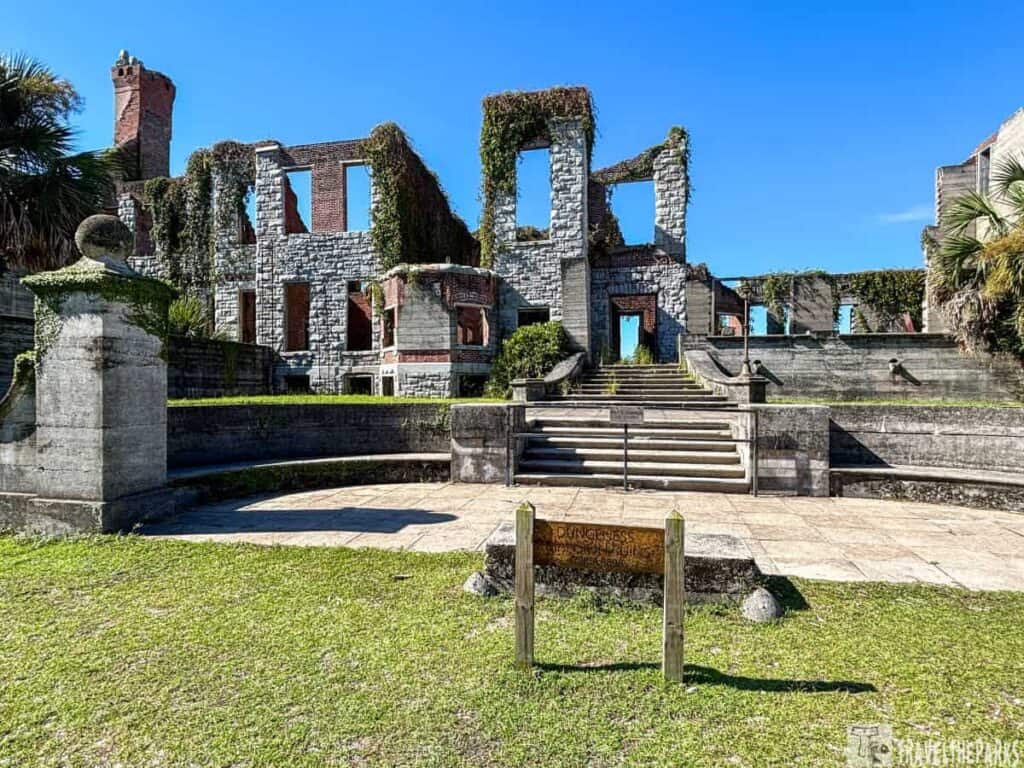
It is not a formal stop, and whether you get this bonus glimpse depends entirely on how the day’s timing unfolds. For us, it was a perfect bookend to the tour. It’s a reminder that Cumberland Island’s history does not begin or end in any one place. The ruins have a way of pulling you back, and honestly, they deserve a proper visit of their own. Plan to arrive early on your ferry or stay south after the tour wraps up. The Dungeness Historic District rewards every extra minute you give it.
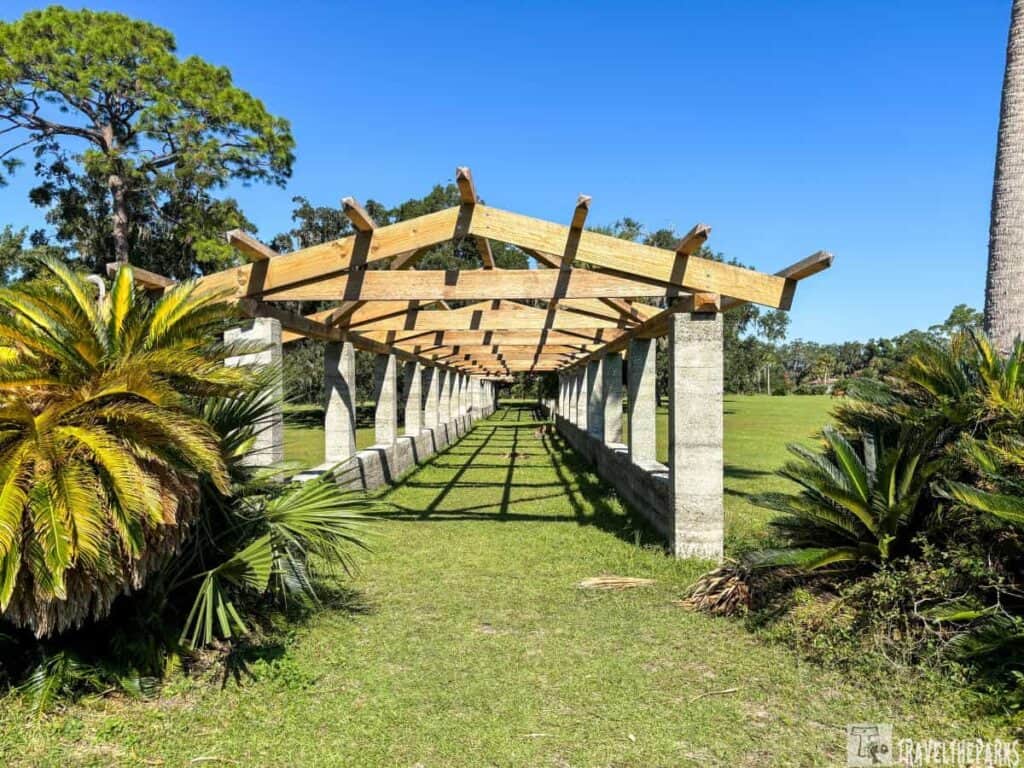
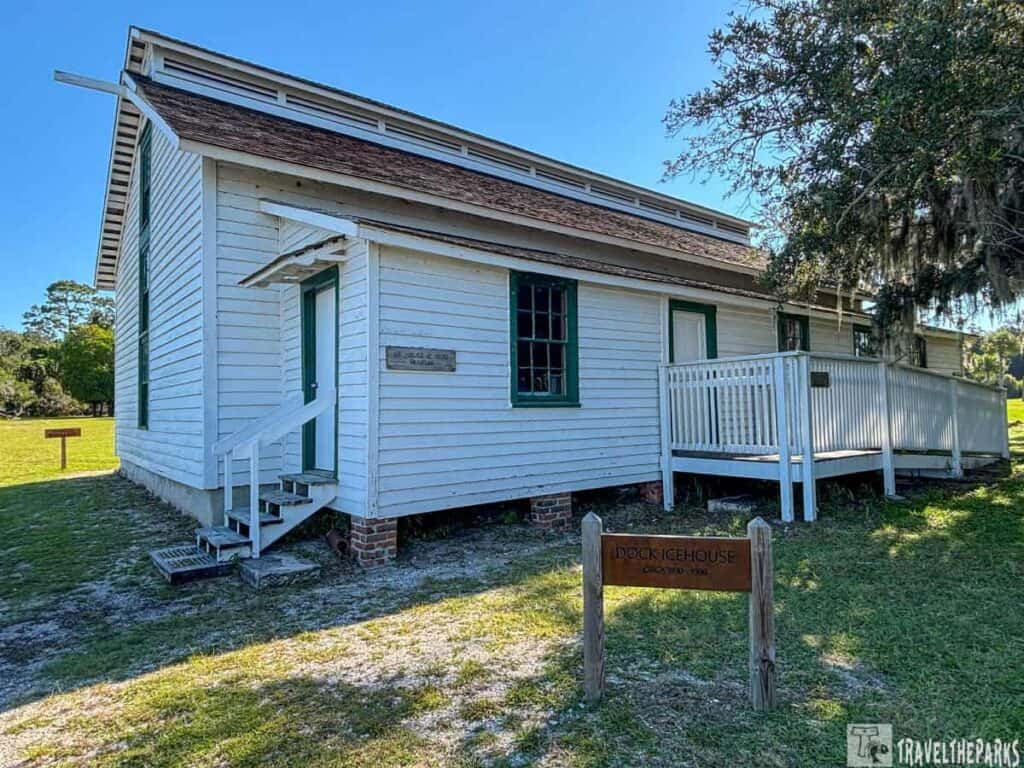
The Ice House Museum
While you are in the Dungeness area, do not overlook the Ice House Museum, sitting right at the dock and open year-round from 8am to 4:30pm. Thomas and Lucy Carnegie built it around 1890 to store the large shipments of ice the estate required—a logistical feat in itself, given the island’s remote location. The building’s construction is fascinating: two-foot thick sawdust insulation walls, and a ventilated roof kept ice from melting in the Georgia heat. The National Park Service has since restored it into a compact but genuinely worthwhile self-guided museum, with a solid collection of artifacts and photographs that put the Carnegie era into sharp visual context. Restrooms and water refill stations are also here, making it a smart first or last stop of the day. In the summer months, keep an eye on the water. Dolphins and manatees are occasionally spotted just off the dock.
What to Bring to Cumberland Island: Lands & Legacies Tour
Cumberland Island doesn’t have a gift shop at the ferry dock or a convenience store around the corner. What you pack is what you’ve got, so a little planning goes a long way. Here’s what we’d recommend throwing in the bag before you board:
- A portable charger: You will take more photos than you planned. You always do.
- Comfortable walking shoes or trail sneakers: The paths between historical sites and the beach involve packed sand, roots, and uneven ground. Leave the flip-flops in the car.
- A quality insulated water bottle: There is no water available once you’re on the island, and the Georgia coast does not play around with heat and humidity. We carried a water bottle and refilled it exactly zero times because there was nowhere to refill it. Bring more than you think you need.
- Sunscreen SPF 50+: The beach stretch is wide open, and the historic ruins offer very little shade.
- A wide-brimmed hat: non-negotiable in our opinion.
- Bug spray: The maritime forest sections are gorgeous and also full of things that want to bite you.
- A lightweight daypack: You’ll want both hands free for taking photos and climbing around ruins.
- Snacks and a packed lunch: There is no food service on the island. Pack more than you think is reasonable, and you’ll be exactly right. [AMAZON LINK: reusable snack bags]
- A waterproof phone pouch or dry bag: Between the ferry spray and the beach, your phone will thank you.
- Binoculars: Wild horses, shorebirds, and the ruins of Dungeness mansion are all worth a closer look.
Final Thoughts: Why the Lands and Legacies Tour is Worth Every Penny
Six hours on the Cumberland Island Lands and Legacies Tour covers more ground — literally and historically—than most visitors see in multiple trips to Cumberland Island National Seashore. From the ghostly quiet of the Stafford Cemetery to the overwhelming grandeur of Plum Orchard, from the story of freed people building something lasting at the Settlement to the tiny church where American royalty exchanged vows, this tour is a masterclass in what makes Cumberland Island unlike anywhere else in the country.
If you are only coming to the island once, do not leave without booking it. And if Mike Fulford is your guide, settle in and let him talk—every word is worth hearing.
Have you taken the Cumberland Island Lands and Legacies Tour? What was your favorite stop? Share your experience in the comments below.