Table of Contents
Updated April 29, 2023
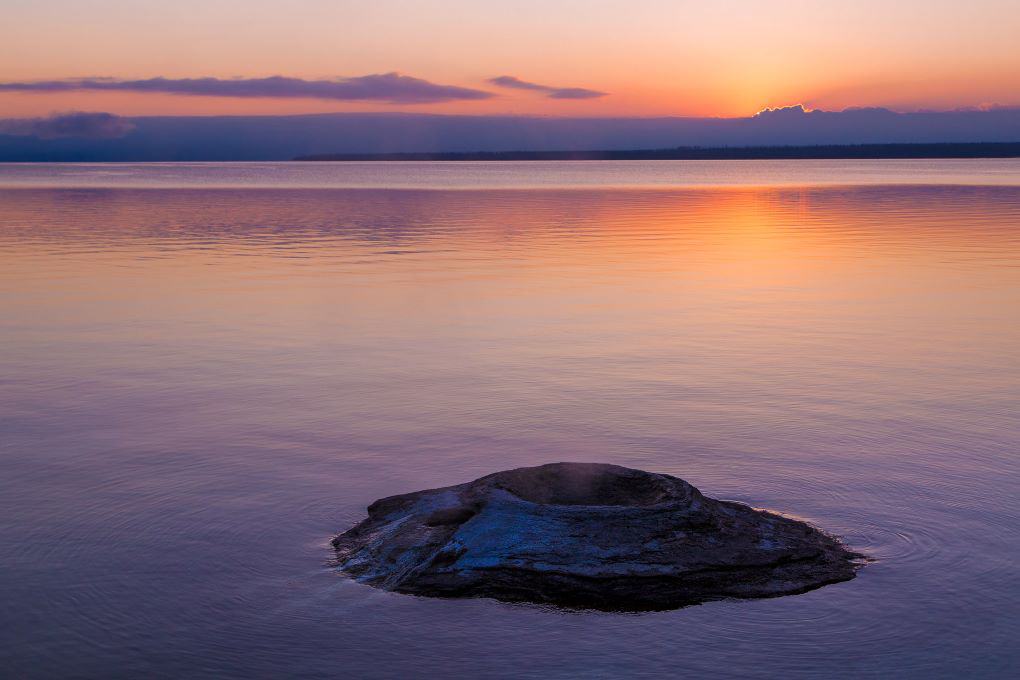
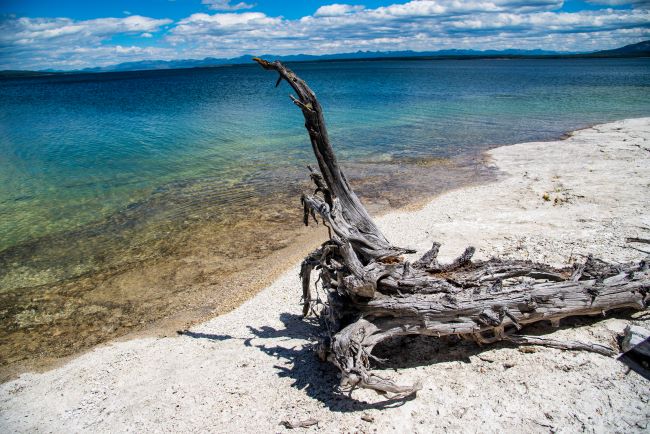
You might think, “I’ve seen enough geysers,” but the geothermal features of the West Thumb Geyser Basin are truly not to be missed! Set against the turquoise waters of Lake Yellowstone and framed by snowcapped mountains, these geysers and hot springs are stunning—especially on a sunny day like today. I can only imagine how spectacular they must look at sunrise or sunset, when the shifting light transforms the landscape.
The West Thumb Geyser Basin is conveniently located just off the Grand Loop Road, the main route through Yellowstone. Visitors can enter the park from any of its five entrances and follow signs to West Thumb. The South Entrance is the closest, only about 3 miles from the basin, making it an easy stop for anyone exploring the park.
This post may contain affiliate links, meaning if you purchase something through one of these links, we may earn a small commission at no extra cost to you! Read the full disclosure policy here

Getting to West Thumb Basin: A Guide to Its Geysers and Thermal Features
We accessed West Thumb from Lake Village, and today we learned an intriguing fact about this part of Yellowstone National Park: the West Thumb gets its name from the lake’s distinctive shape. From above, the lake resembles a human hand, with the basin forming the “thumb.” Interestingly, the basin itself was created many years ago by the collapse of underlying thermal features.
Most of the geothermal features and steam vents are easily accessible via a network of boardwalks that form a figure-eight pattern, making it simple to explore the area safely while getting close to the steaming pools.
For those who prefer a guided experience, several tour operators offer Yellowstone tours that include West Thumb. These typically cover transportation to and from the park as well as expert commentary about the geothermal wonders and history of the area. Visitors can book these tours online or through their hotel or lodging provider.
Highlights of the West Thumb Geysers
The West Thumb Geyser Basin is generally less crowded than other popular areas of Yellowstone, like Midway or Norris Geyser Basins. While the geysers here don’t erupt as spectacularly or predictably as Old Faithful, the intense azure colors of the hot springs make this basin uniquely beautiful. It’s worth noting that eruption activity has dramatically decreased since the early 1970s.
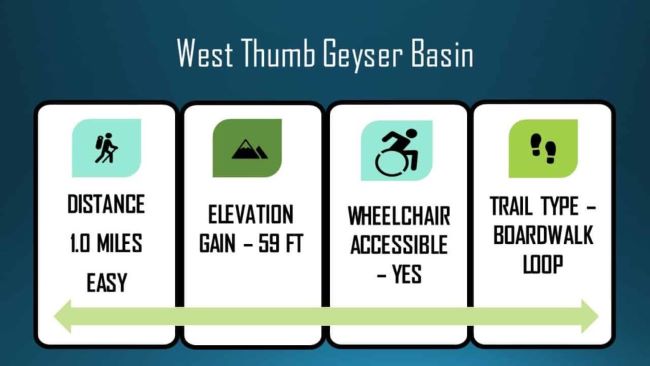
The parking lot is large but tends to fill up by early afternoon, so arriving early is best. Visitors can purchase a trail guide for $1 to keep—or simply return it to the box when finished. The 0.6-mile boardwalk is fully accessible for those with mobility challenges and forms two loops, with the larger loop running along the edge of Yellowstone Lake. In fact, some of the geysers are actually in the lake itself. Walking the trail typically takes 30–60 minutes.
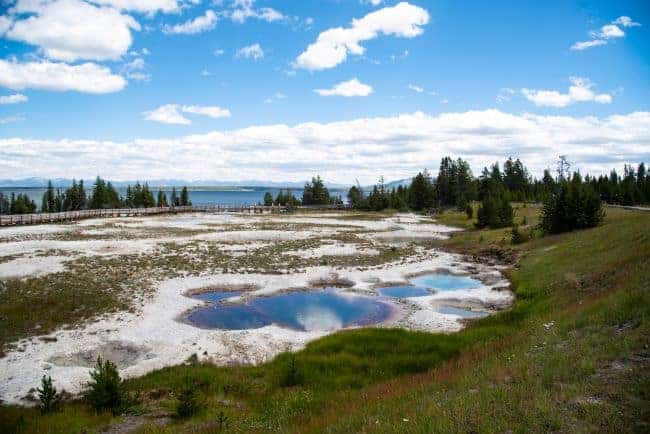
What geysers are at the West Thumb Basin?
This geyser basin is home to several captivating geysers and hydrothermal features that are worth exploring on a visit to Yellowstone National Park. The larger loop (lakeshore basin geysers) that borders the lakeshore walks you passed: Twin Geyser, Abyss Pool, Black Pool, Fishing Cone, Big Cone, Lakeside Geyser and Beach Geyser.
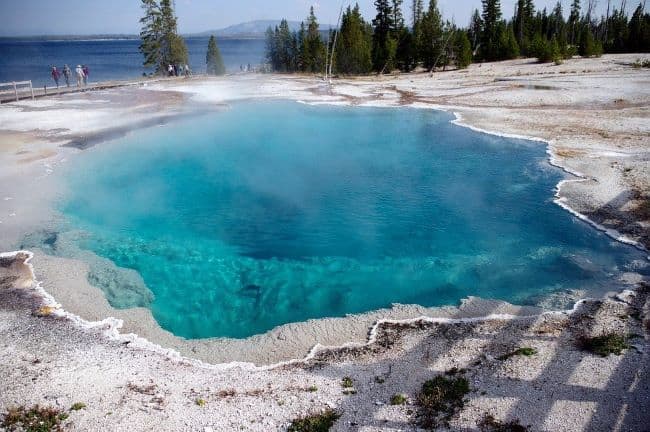
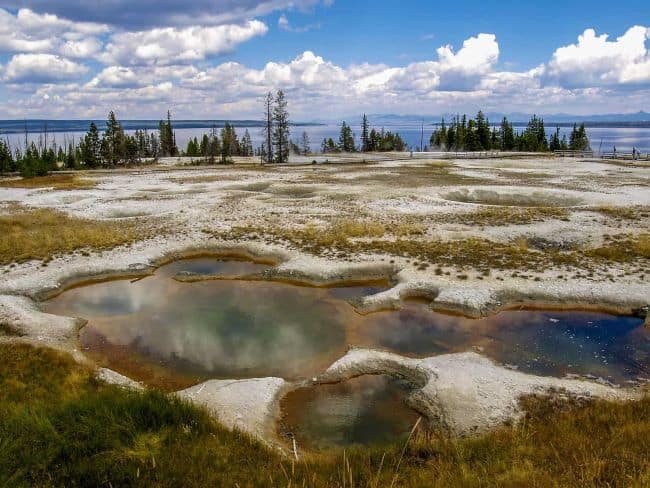
Abyss Geyser is simply spectacular—the deep blue waters make it seem bottomless. Abyss Pool itself is about 53 feet deep and 86 feet wide. While not a geyser, it’s famous for its stunning color and the steam that rises off its surface. The water is extremely hot, ranging from 200°F to 250°F, adding to its dramatic, otherworldly appearance.
Black Pool is another breathtaking feature—a deep, circular pool roughly 30 feet in diameter and over 100 feet deep. Its dark blue-black color originally gave it its name. When a new vent opened, warmer water flowed in, killing the pool’s microbial life and leaving a brilliant, clear blue. The water here is also extremely hot, between 181°F and 192°F. Black Pool’s formation is the result of a series of underground geological processes: the Yellowstone Caldera, a massive volcanic system beneath the park, heats the water that fills this mesmerizing pool.
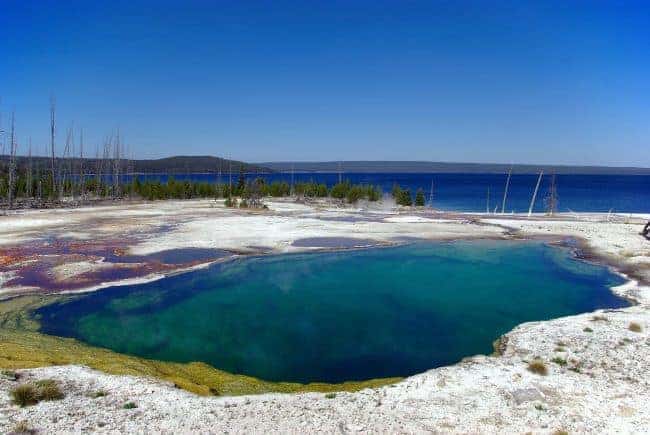
Here are some other notable geysers at the West Thumb Basin:
- Twin Geyser -This geyser has two vents that would erupt simultaneously up to 70 ft. However, it has not erupted since 1999.
- Fishing Cone – they named the cone for the many anglers who fished here. Those in boats noted that the warm waters attracted fish. After catching the fish, they could cook the fish with the cone. Today the area is off-limits for boaters and anglers. Surrounded by clear, cold waters of Lake Yellowstone, which creates an interesting contrast to the hot, bubbling water of the geyser. The geyser erupts sporadically and can be difficult to predict, but visitors who are lucky enough to witness an eruption are treated to a spectacular display of nature’s power and beauty.
- Lakeside Geyser – a smaller geyser, submerged by water, has occasionally erupted with small spurts of scalding water.
- Thumb Paint Pots-This group of hot springs and mud pots near the boardwalks of the West Thumb Geyser Basin. The hot springs are known for their colorful bacterial mats, which give the pools a painted appearance.

The lower loop goes right along the shoreline of Yellowstone Lake. This inner portion (lower geysers) of the trail covers Blue Funnel Spring, Ephydra Spring, Thumb Geyser, Percolating Pool, and a few paint pots. The paint pots resemble little mud volcanoes. In the summer, these pools and springs may show low volume and seem not as impressive as the lakeshore geysers.
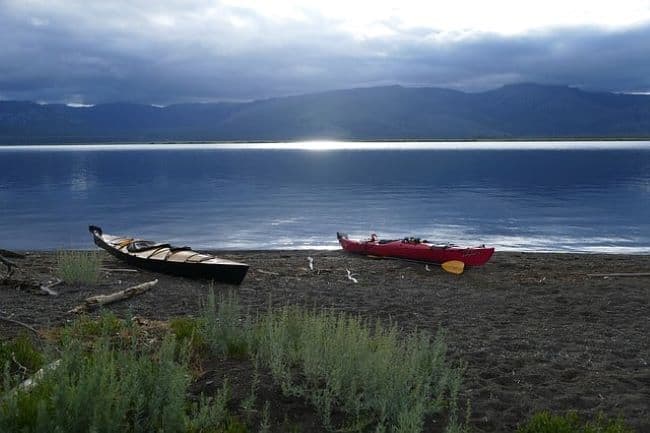
Kayaking the Shoreline-Geysers of the West Thumb Basin
To gain a unique perspective of the geysers of the West Thumb Basin, schedule a kayak tour from Grant Village Marina. For us, this was a unique and rewarding way to experience the area’s thermal features and stunning natural beauty. The tour will get you up close to geysers that cannot be observed from the boardwalk. You can view underwater geysers like Lakeshore Geyser on a clear day when the wind is calm. Vendors that offer tours approved by the National Park Service include Geyser Kayak Yellowstone, Shurr Adventures, Inc, and OARS West Inc. The West Thumb is only a one-mile paddle from Grant Village. Paddling along the shoreline, you may see moose, bears, and waterfowl in the early morning. The tours are with a naturalist guide who provides a narrative along the way. This is an extraordinary adventure that can only be experienced in Yellowstone.

Another option is that you can rent kayaks at Bridge Bay Marina on the north side of Yellowstone Lake, which is about 15 miles from the West Thumb Geyser Basin. Reserve a kayak in advance, especially during peak season.
Kayaking in Yellowstone National Park can be unpredictable, so bring plenty of water, sunscreen, a hat, and warm clothing, as temperatures can change quickly. You should also bring a map or GPS device and know the basics of kayaking and boating safety.
Hiking Trails near the West Thumb Geyser Basin
When visiting the geysers of the West Thumb Basin, be sure to have good hiking shoes to traverse the trails with a quality trekking stick. Bring a refillable water bottle with plenty of water to quench your thirst. Most of the visitor centers in the park have bottle refill stations. As always, be prepared for changing weather conditions,, and practice Leave No Trace principles to help preserve the natural beauty of the park. If you’re looking for hiking trails near the West Thumb area, there are a few options.
PRO Tip: Always be bear aware-attacks have happened-carry bear spray. You can purchase bear spray at the stores in the park, or you can rent it.
Short but Sweet: Duck Lake Trail
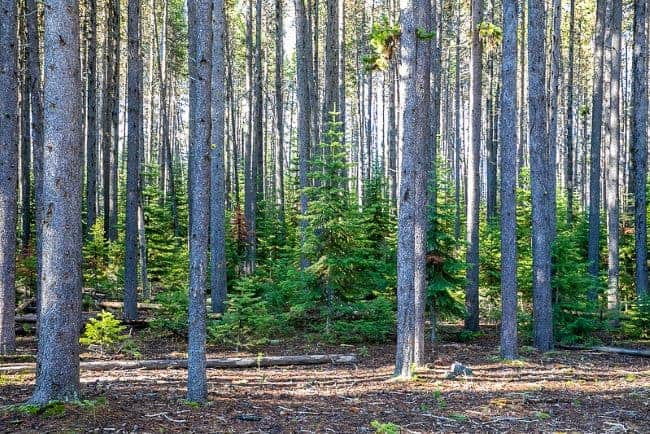
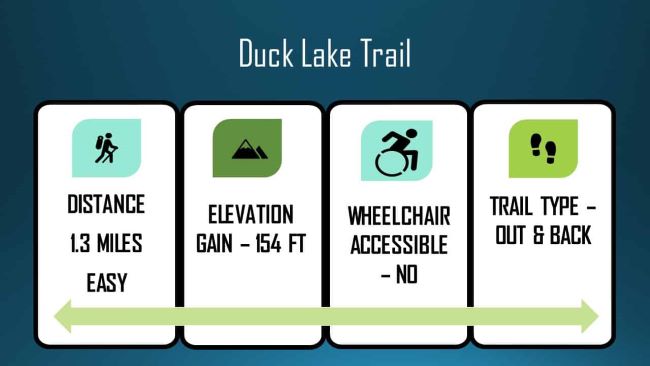
The trail spans 0.8 miles, making the round trip 1.3 miles; it’s an easy, 30-minute walk. The best times to visit this trail are May through October. A brief, 154-foot ascent up the trail reveals breathtaking panoramas of Lake Yellowstone, the snow-clad Absaroka Mountains, and Duck Lake. We got an early morning start, accessing the trailhead at the West Thumb parking lot. The trail took us through dense pine forests. Be sure to make noise so wildlife knows you are coming. Traveling in groups is good for deterring bears. The lake is at the top of the hill. Duck Lake is good for brook or brown trout fishing, as detailed on the park website. However, today we did not have time for fishing.
West Thumb Yellowstone Overlook Trail
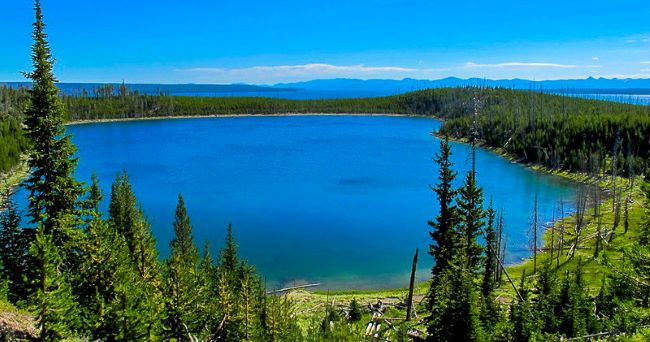
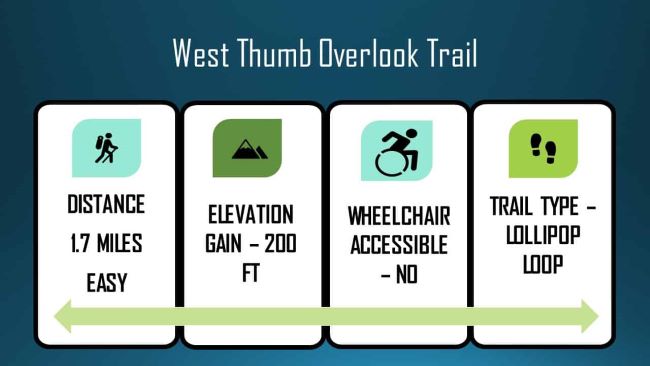
This is a short 1.7-mile lollipop trail that starts at the southern corner parking lot at West Thumb. Sometimes referred to as the Yellowstone Lake Overlook Trail, the overall elevation gain of 200 feet leads to a magnificent view of Yellowstone Lake. They consider the hike moderate, though the elevation was a little tough on this girl from sea-level. The trailhead for the West Thumb Yellowstone Overlook Trail is near the West Thumb Geyser Basin parking lot, just off Grand Loop Road. The trail is well-marked and easy to follow, with a slight incline as it climbs up to the overlook.
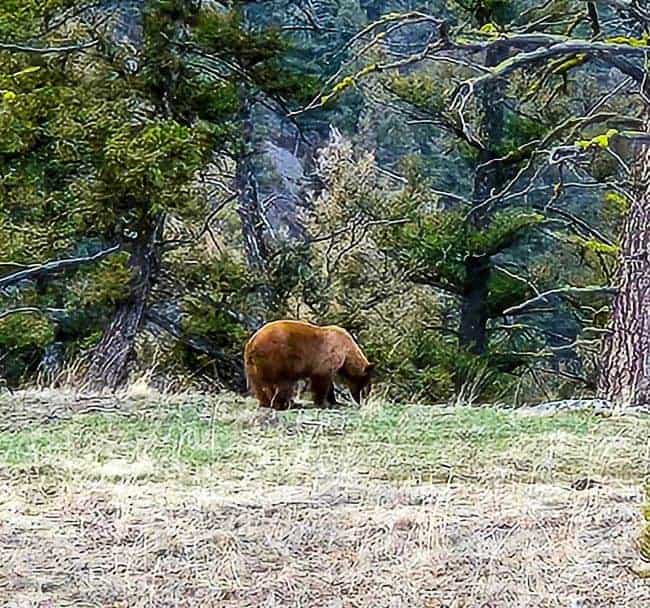
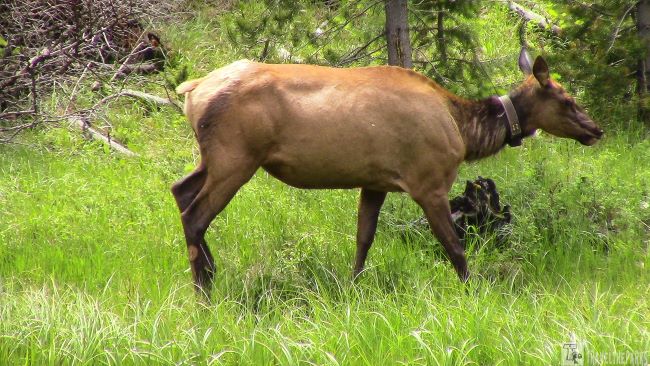
The trail through the forest eventually crosses the Grand Loop Road. Watch for heavy traffic. After crossing the road, the trail gradually opens into a meadow and gains elevation moving up the hill away from the lake. Please be aware that wildlife constantly uses the trails. We saw elk in the meadow and bear tracks along the trail. They posted a warning about bear activity in the area on a trail sign. Luckily, we did not see any bears today, probably because we made plenty of noise.
At the crest of the trail, there is a bench to rest and take in the panorama. From the rocky outcropping, the view is simply overwhelming with the backdrop of the Absaroka Mountains. From this vantage point, you can clearly see why they refer to this area as the thumb of the lake. If you have time to complete the loop, you will be rewarded with plenty of wildlife viewing. We saw plenty of wildlife. This trail provides wonderful photo opportunities.
Planning Resources for Yellowstone National Park
- Alternatives for lodging are available within Yellowstone National Park; check out this webpage to view your alternatives. Always make reservations at least a year in advance.
- Renting an RV is a fantastic way to explore the park.
- Information on campgrounds can be found on the official park website.
- A map of Yellowstone National Park is an excellent tool for trip planning and distance calculation.
- Official Website of Yellowstone National Park -Make travel plans and obtain basic information and updates on the state of the roads.
- There is a digital version of the free trip planning handbook Yellowstone National Park Planner accessible.
- Dining Options: searching for decent restaurants. Check out the available possibilities by visiting the website. The park contains fifty-two picnic areas.
- Get the Yellowstone NPS Tour app before you arrive in the park.
Final Thoughts: Not to be missed – Geysers of the West Thumb Basin
West Thumb Geyser Basin is a must-see destination for anyone visiting Yellowstone National Park. The geysers are enchanting and beautiful hydrothermal areas. It offers a special perspective on the geological forces that shape the landscape of the park. It provides visitors with an opportunity to experience the power and beauty of nature up close.
The West Thumb can be a quiet reprieve in the early morning, so be sure to arrive early and enjoy the boardwalk and take one or both of the hikes. The geysers are worth the short stop. My hope is that you enjoy the basin as much as we did!
Have you had a chance to see the West Thumb Geyser Basin? If so, what did you think, share a comment below with your favorite geyser or story!