Table of Contents
Updated August 2026
Visiting the Norris Geyser Basin is an experience that left us speechless. Hands down, it was one of the most dynamic and restless hydrothermal areas we encountered in Yellowstone National Park. This is a place where the earth feels alive beneath your feet.
Looking out over the steaming landscape, it hits you: this is just a tiny slice of the greater Yellowstone caldera. When you stop to imagine the explosive power lurking below, it’s humbling. The sheer scale of it all makes you feel wonderfully small.
Norris is one of the hottest and most seismically active areas in the park. The geothermal features here are constantly changing, with shifting water levels and underground activity reshaping the landscape. No two visits are necessarily the same.
So how do you make the most of your time here?
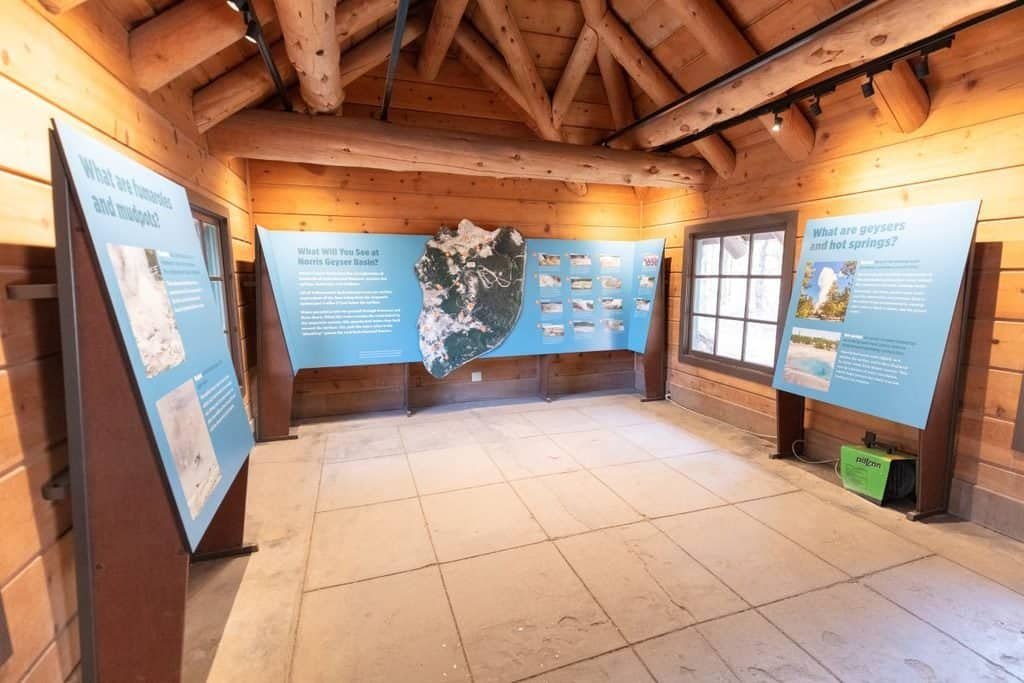
Start at the Basin Museum & Information Station. Trust us on this one. The exhibits and interpretive information provide fascinating context about the basin’s geology, history, and ever-changing features. It sets the stage for everything you’re about to see and gives you a deeper appreciation for the raw energy that defines Norris.
From there, take your time. Wander the boardwalks, listen to the steam vents, breathe in that unmistakable sulfur smell, and let the strange beauty of Norris Geyser Basin do the rest.
This post may contain affiliate links, meaning if you purchase something through one of these links, we may earn a small commission at no extra cost to you! Read the full disclosure policy here.
Exploring Norris Geyser Basin in Yellowstone: Start at the Museum & Information Station
So before visiting the Norris Geyser Basin and heading onto the boardwalks, start your visit at the Norris Geyser Basin Museum & Information Station. The historic museum was designed by architect Herbert Maier and completed in 1930. It was named for Philetus W. Norris, the second superintendent of Yellowstone National Park, who served from 1877 to 1882.
We highly recommend stopping here before exploring the basin. The exhibits and interpretive information provide a helpful introduction to the area’s geology and geothermal activity. Once you understand what is happening beneath the surface, the steaming pools, geysers, and colorful springs become even more fascinating.
If you want a quieter experience, try visiting Norris geyser basin early in the morning or later in the afternoon. Norris can get busy during the middle of the day, and parking may become difficult during peak season.
Plan on spending at least 1½ to 2 hours if you want to explore both Porcelain Basin and Back Basin without rushing. The trails cover a combination of boardwalks, paved sections, and unpaved paths, with some elevation changes along the way.
The geothermal ecosystem here is extremely delicate. More importantly, the ground surrounding the thermal features can be dangerously thin. Stay on the designated trails and boardwalks at all times.
PRO TIP: Pick up the Norris Geyser Basin area guide near the museum before heading onto the trails. It includes a map and information about the geothermal features you’ll encounter along the way.
What to Bring to Norris Geyser Basin: Essentials for a Safe and Comfortable Visit
Visiting Norris Geyser Basin is an easy addition to a Yellowstone itinerary, but you’ll be much more comfortable if you come prepared. The weather can change quickly, and you’ll be walking on boardwalks and trails with little shade in some areas.
Stay on Designated Boardwalks and Trails
This is the most important rule. The ground around Yellowstone’s thermal features can be dangerously thin, with extremely hot water just below the surface. Never step off the marked trail or boardwalk, even for a better photo. Thermal burns can be severe or fatal.
Don’t Touch the Water
The colorful pools and springs may look inviting, but they are not safe to touch. Some thermal features are near or above boiling temperatures. Even shallow water can cause serious burns.
Pets Are Not Allowed on the Trails
Pets are not permitted on Norris Geyser Basin’s boardwalks and trails. This protects both your pet and the fragile geothermal environment. If you’re traveling with a pet, check Yellowstone’s current pet regulations before your visit.
Be Patient With Parking
The Norris parking area can fill during the busiest times of the day. Arriving early or later in the afternoon can make finding a parking space much easier.
Dress in Layers
Yellowstone mornings can be chilly, even during summer. A hooded fleece or lightweight jacket is easy to add when temperatures drop and remove as the day warms.
Wear Sturdy Walking Shoes
You’ll encounter boardwalks, gravel, and uneven surfaces. A comfortable pair of walking or hiking shoes will make exploring both basins much easier.
Carry a Refillable Water Bottle
Bring plenty of water for your walk. There are no water stations along the basin trails, so fill your refillable water bottle before heading out.
Pack Snacks
If you’re planning to walk both Porcelain Basin and Back Basin, a few high-energy snacks can keep you going. Trail mix, granola bars, and fruit are easy to pack.
Consider Carrying Bear Spray
Norris is a developed geothermal area, but you’re still in Yellowstone. If you’re exploring additional trails away from the developed areas, carrying bear spray is a smart precaution. Make sure you know how to use it before you need it.
Don’t Forget Sun Protection
Parts of Porcelain Basin are exposed with little shade. Pack a wide-brim hat, sunglasses, bug spray, and sunscreen.
Optional: Lightweight Backpack
A small daypack makes it easier to carry water, snacks, and extra layers while keeping your hands free for photos and walking the boardwalks.
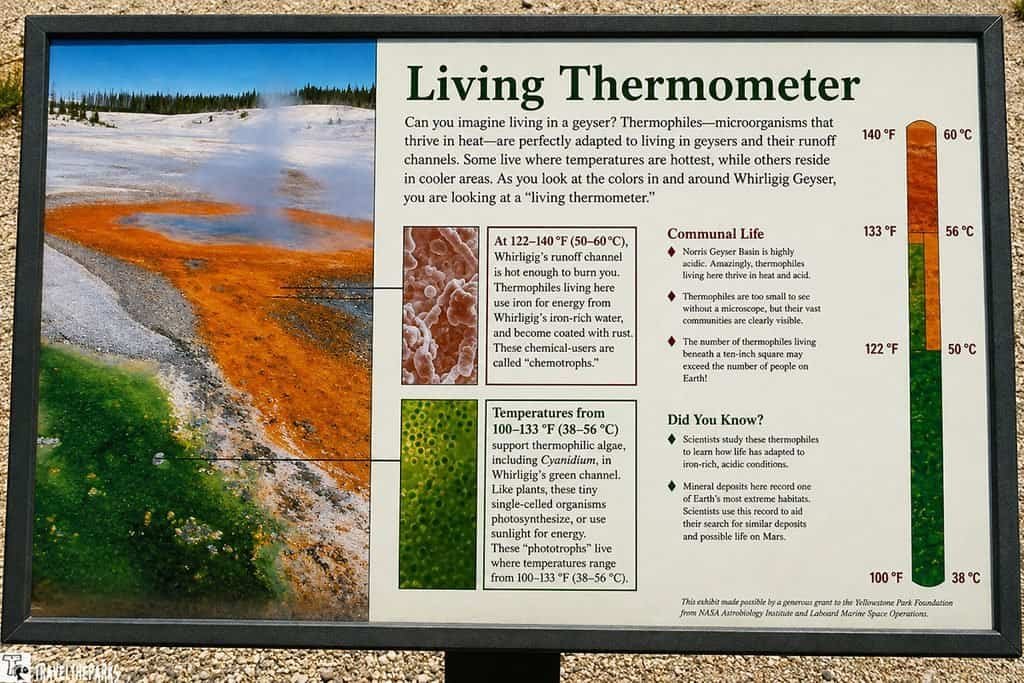
The first time you look over this geyser basin, you can hear it spitting and smoking. The sign states:
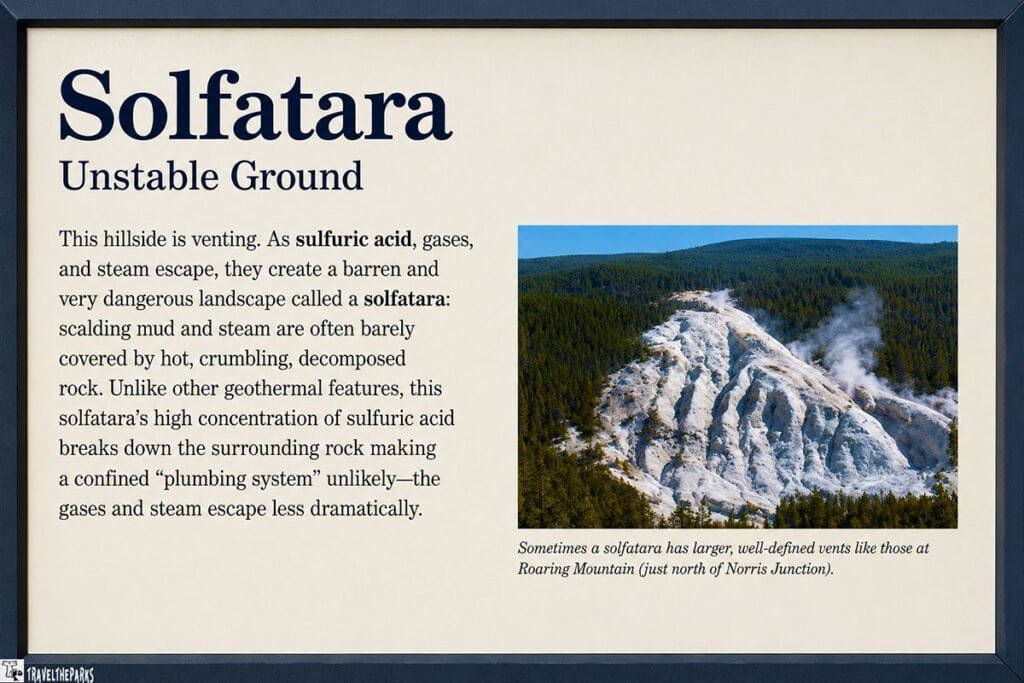
Solfatara Springs: One of the Norris Geyser Basin Must-See Features
The first time you look out over Norris Geyser Basin, you immediately realize this isn’t an ordinary landscape. Steam rises from the ground, vents hiss and spit, and the smell of sulfur hangs in the air. It is one of those places where you can actually hear the earth working beneath you.
The sign at the basin says it perfectly:
Solfatara Springs is a great example of the raw geothermal activity that makes Norris so fascinating. Steam escapes from the ground while sulfur deposits give portions of the area a yellowish appearance. The air has that unmistakable sulfur smell that tells you immediately you’re standing in an active geothermal area.
As you walk the boardwalk, you’ll see fumaroles, steaming pools, and mineral deposits spread across the landscape. Nothing here feels particularly polished or predictable. That’s part of the appeal.
Solfatara is also a good reminder that Norris isn’t simply a collection of colorful pools. Exploring Norris Geyser Basin in Yellowstone gives you a chance to see the powerful forces beneath the park’s surface at work.
Take your time here. Listen to the vents, watch the steam rise, and look closely at the different colors and textures around the basin. It is easy to rush through Norris trying to see every feature, but some of the best moments come from simply stopping and taking it all in.
Porcelain Trail: Exploring Yellowstone’s Striking Thermal Features
Norris has two main areas to explore, and we started with the Porcelain Basin boardwalk. Here’s a tip: begin with the shorter loop before tackling the longer walk into the basin. It gives you a chance to ease into the landscape before going all in.
And trust us—all in is exactly what this place demands.
Porcelain Basin is a full sensory experience: sound, color, and oh, that smell. It’s kind of an assault on the senses, honestly. But in the best way possible. The sulfur scent is what sticks with you longest—sharp, unmistakable, and strangely fitting for a place that feels like another planet.
The geysers here have personalities, too, with names as colorful as the features themselves: Whirligig, Pinwheel, Black Growler, and Congress Pool. Each one hisses, bubbles, or steams with its own rhythm, adding to the constant sounds of this active geothermal landscape.
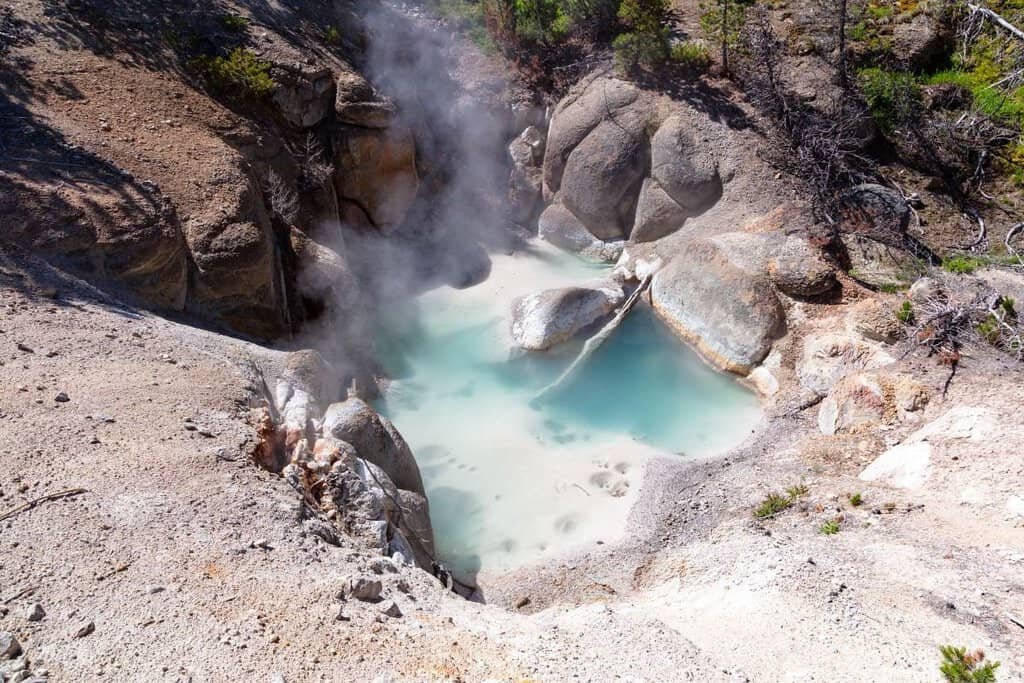
Porcelain Basin View
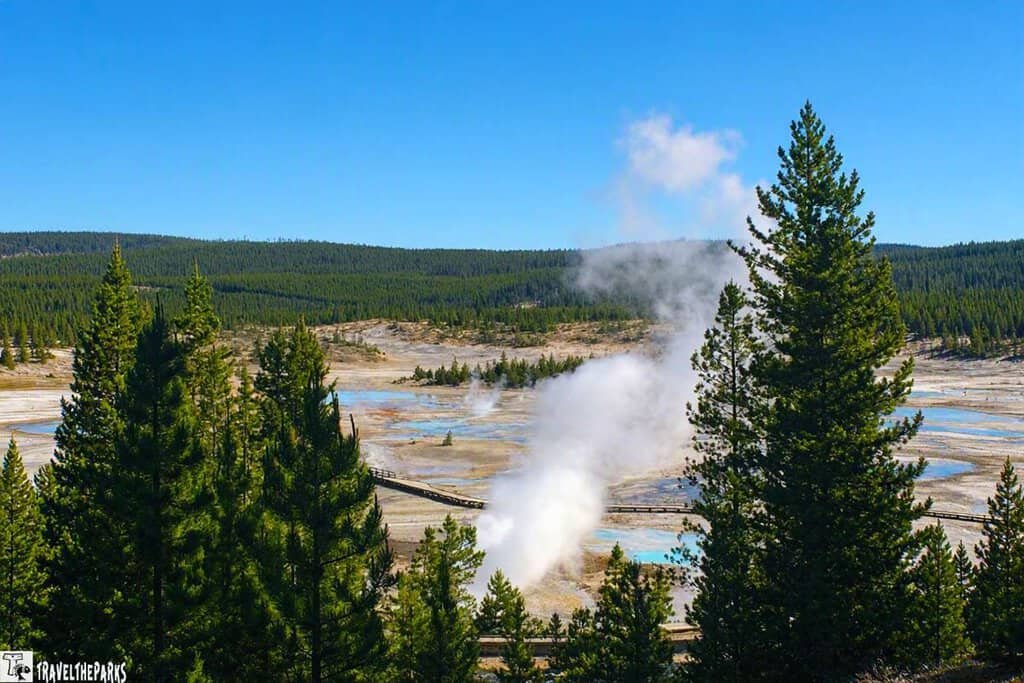
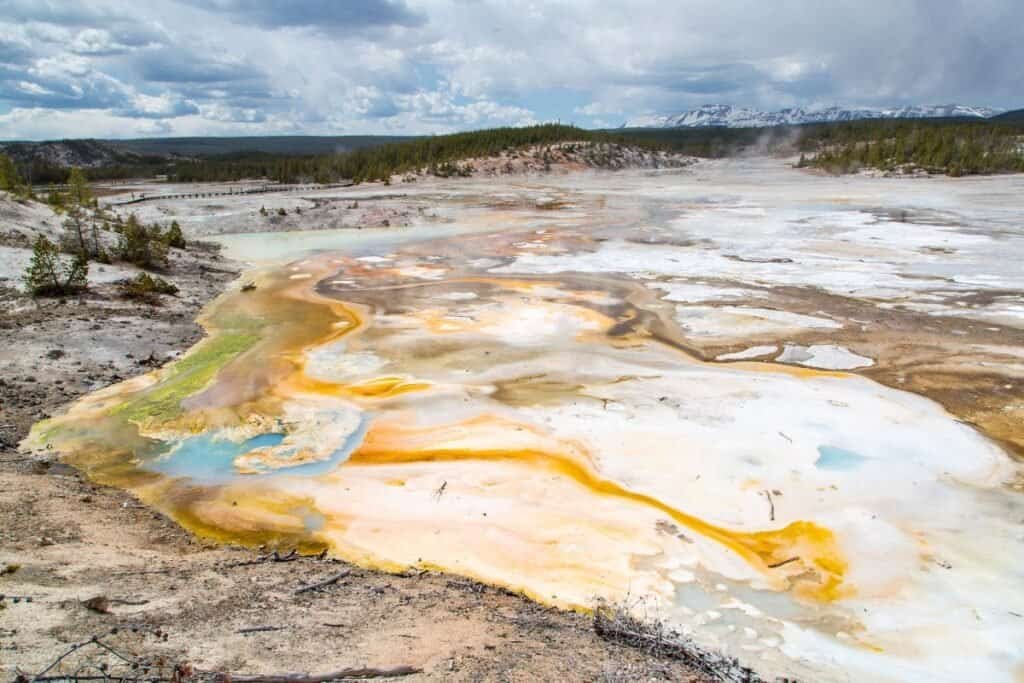
The trail begins right at the Museum, and the moment you step out, the entire basin unfolds before you—a stark landscape of white mineral deposits surrounded by a ring of deep green forest.
It looks almost alien.
The basin gets its name from the white mineral deposits that give the landscape its porcelain-like appearance. Standing there and looking out over that surreal terrain, it’s hard to believe you’re still in the middle of Yellowstone.
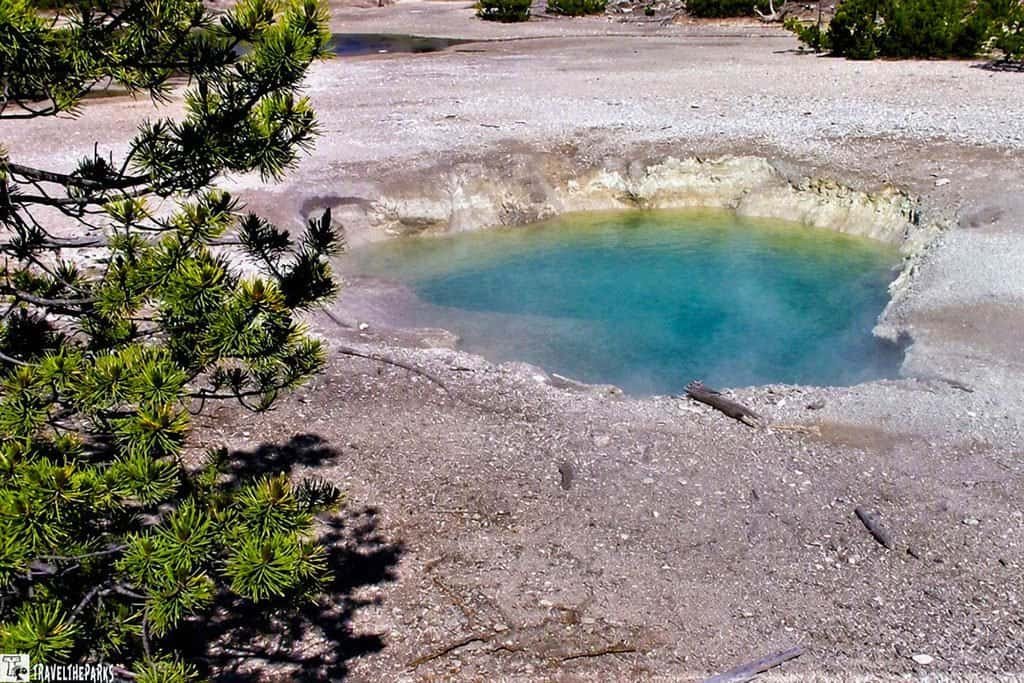
The Porcelain Basin portion of the trail is approximately ¾ mile, according to the National Park Service. Take your time as you walk. There is much more to see than the biggest geysers, and stopping to look closely at the smaller pools, vents, and mineral formations is part of what makes Exploring Norris Geyser Basin in Yellowstone so memorable.
What I remember most about this part of the basin is Hurricane Vent. I can still remember the famous roaring sound coming from the nearby Black Growler Steam Vent, which sits on the slope beside the main trail loop. The sound was surprisingly loud and almost seemed to come from somewhere deep beneath the ground. Standing there and listening to it made the geothermal activity at Norris feel very real.
Must-See Features on the Porcelain Trail in Yellowstone
There are several fascinating geothermal features along the Porcelain Trail. Some are colorful, some are loud, and a few are memorable simply because of the way they make you feel when you’re standing nearby
- Ledge Geyser – If you’re lucky, you may see Ledge Geyser erupt high into the air. Its dramatic eruptions can send water well above the basin, making it one of the features worth watching if you happen to be there at the right time.
- Black Growler Steam Vent – This powerful fumarole is one of the features I remember most. You can often hear the deep roaring sound of Black Growler long before you actually see it. It sounds almost like an animal growling beneath the ground, which is exactly how it got its name. Standing there and listening to that roar makes you realize just how much energy is moving beneath Yellowstone.
- Hurricane Vent – Hurricane Vent is another feature I remember from this part of the basin. Its location along the trail makes it easy to stop and take a closer look at the steam and geothermal activity. Together with the roar of nearby Black Growler, it really adds to the feeling that the entire landscape is alive.
- Whirligig Geyser – Named for the swirling motion of the water near the geyser, Whirligig stands out among the surrounding thermal features. Orange and yellow mineral deposits add even more color to the area.
- Pinwheel Geyser – Pinwheel is a fountain-type geyser surrounded by colorful thermophilic organisms and mineral deposits. The combination of blue, green, and yellow makes this one particularly interesting to see.
- Whale’s Mouth – Park naturalists gave this feature its name because of its wide, blue-colored opening. I especially liked the deep blue color of the pool.
- Crackling Lake – Crackling Lake is another fascinating feature where the water bubbles and boils in several places while steam rises from the surface. It is amazing to watch the earth bubble, hiss, and roar right in front of you.
Porcelain Basin Overlook Trail
Don’t forget to take the Porcelain Basin Overlook trail before continuing farther into the basin. This shorter loop gives you a great view over the entire Porcelain Basin and is an easy way to get oriented before tackling the longer trail.
The overlook is also a good place to appreciate just how unusual this landscape is. From above, you can see the white mineral deposits, colorful pools, steaming vents, and surrounding forest all at once.
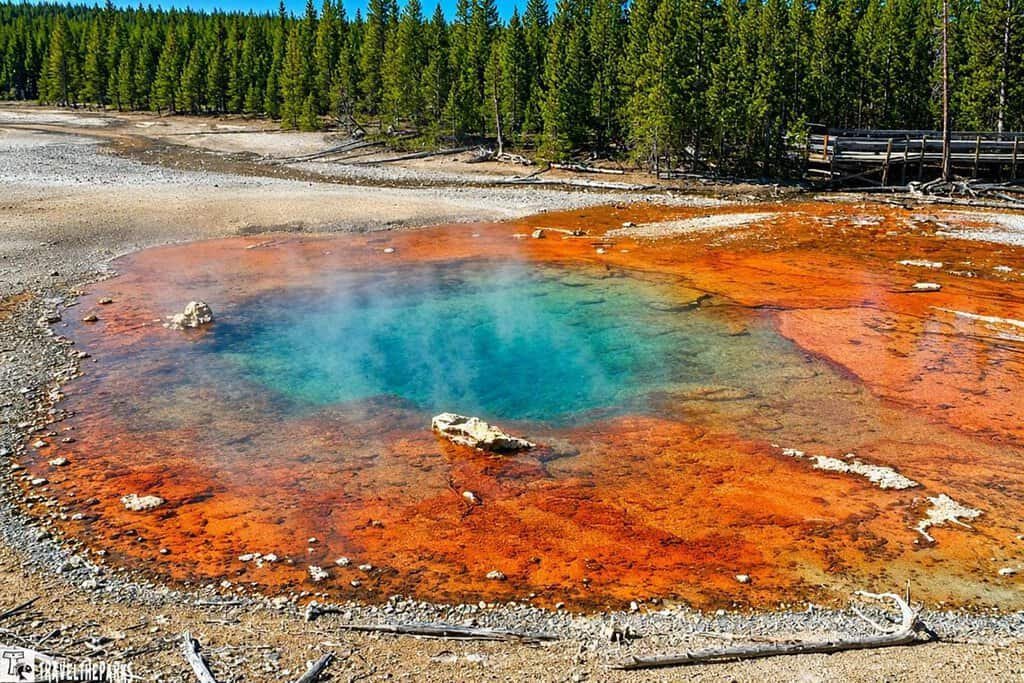
Exploring the Geysers in the Porcelain Basin Loop at Norris Geyser Basin
As you continue through Porcelain Basin, you’ll encounter a collection of colorful pools, steaming vents, and smaller geothermal features. Some may be active when you visit, while others can change dramatically over time.
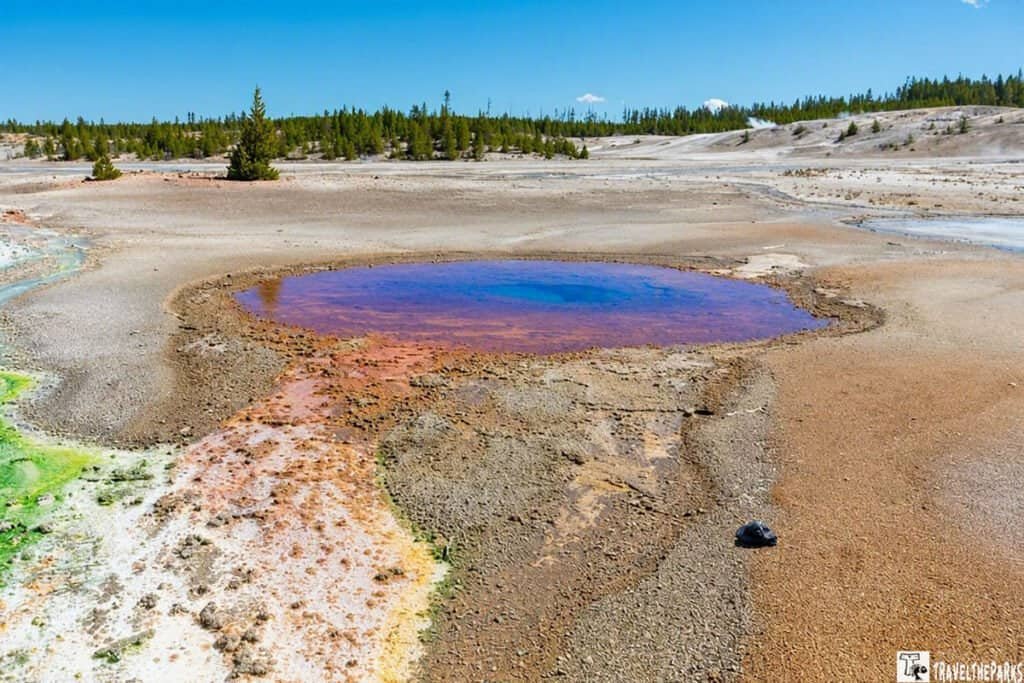
- Congress Pool – This beautiful blue pool is surrounded by pale mineral deposits and is one of the more striking features along the trail. Its activity can vary, so don’t expect to see the same thing every time you visit.
- Porcelain Spring – The area around Porcelain Spring has little vegetation, creating a stark contrast with the surrounding forest. The sulfur smell can be especially strong here. Plug your nose!
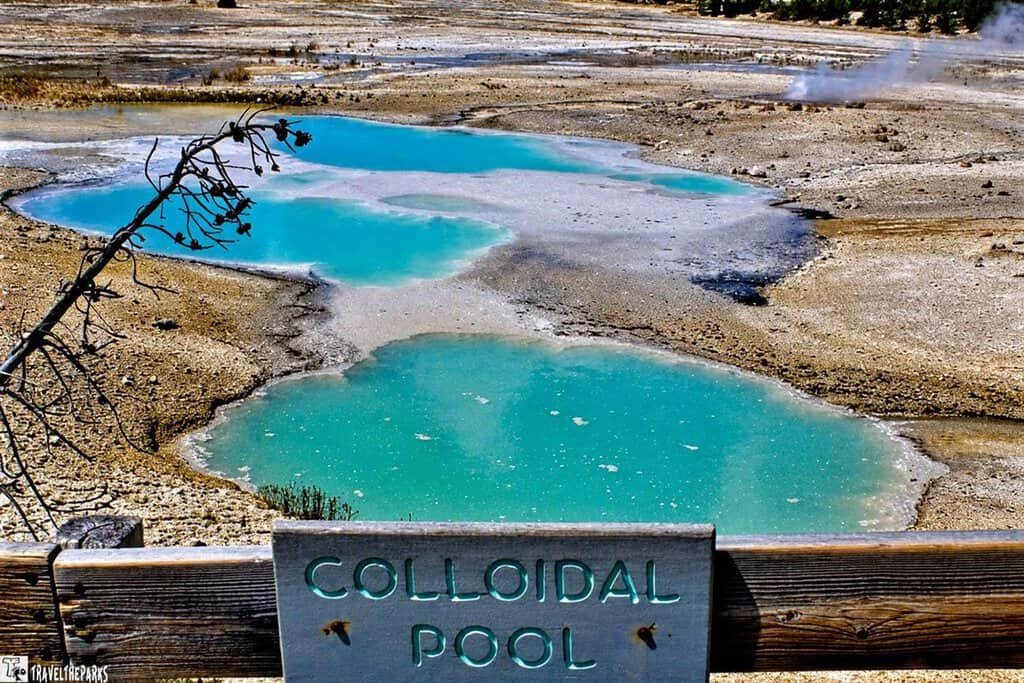
- Colloidal Pool – This large, shallow blue pool has a distinctive funnel-like shape. The unusual color and shape make it an interesting stop along the boardwalk.
- Constant Geyser – Constant Geyser is another feature you may encounter along the trail. Despite its name, don’t assume it will erupt on a predictable schedule. Norris is constantly changing, and geyser activity can vary.
- Sunday Geyser – Sunday Geyser is a long, narrow pool named after a major eruption on Sunday, July 12, 1964. Today, major eruptions are rare, making it more interesting for its history than for its predictability.
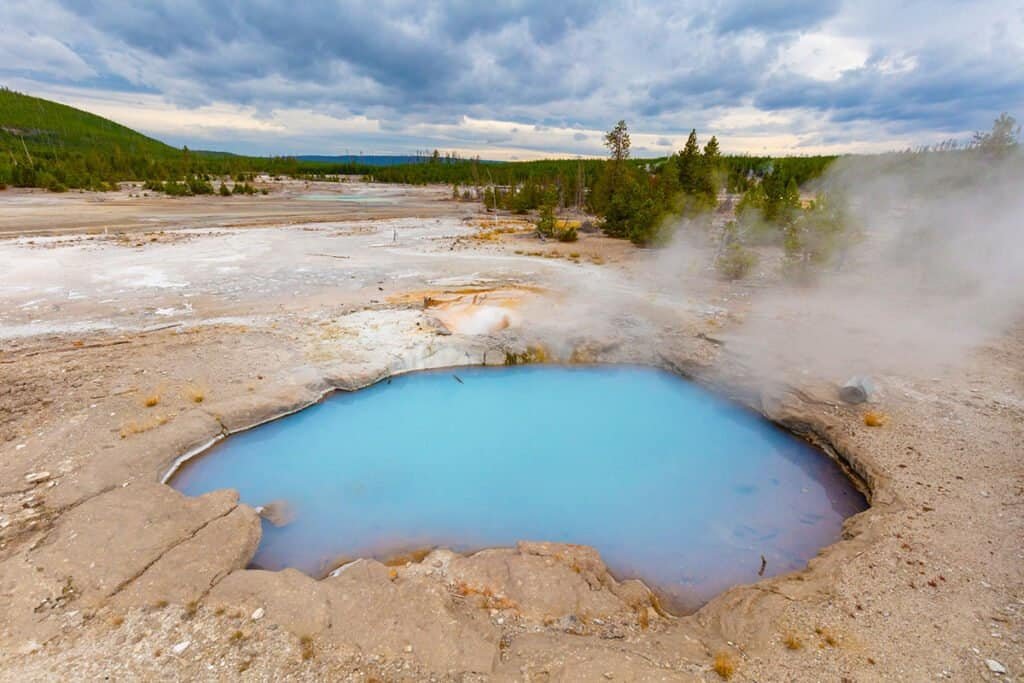
Take your time through this section. The smaller thermal features are easy to overlook when you’re watching for the bigger geysers, but they are part of what makes Exploring Norris Geyser Basin in Yellowstone so fascinating.
Discover the Hidden Wonders Along the Back Basin Trail
The heavily forested Back Basin is a sharp contrast to the desolate-looking Porcelain Basin. I loved how the geysers and hot springs are spread out among the pines. Instead of seeing everything at once, you walk through the forest and discover each geothermal feature along the way.
This is also where you’ll find Steamboat Geyser, the tallest active geyser in the world. When it erupts, it is mesmerizing to see. A major eruption can send water hundreds of feet into the air, and depending on the wind, the spray and water vapor can reach the boardwalk.
Back Basin makes a great finish to your walking tour. It feels more serene than Porcelain Basin, and the forest provides a welcome change after walking through the wide-open geothermal landscape.
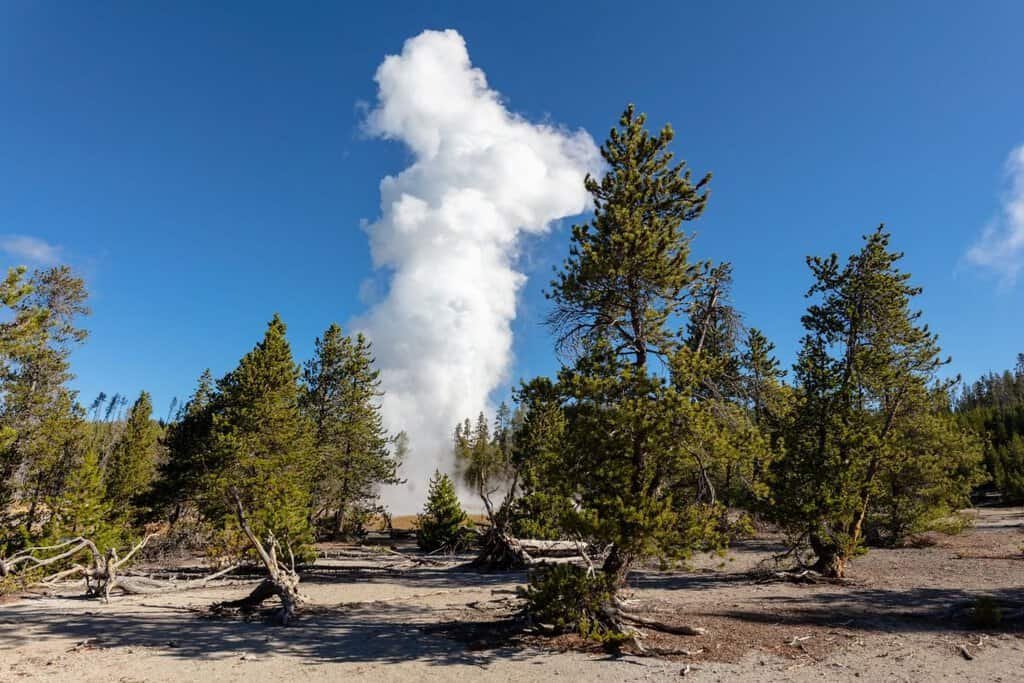
Back Basin: Exploring the Forested Side of Norris Geyser Basin
The Back Basin trail is approximately 1.5 miles and winds through the forested southern portion of Norris Geyser Basin. It was noticeably less crowded when we visited, and for us, it was extremely quiet.
We took refuge here after a busload of tourists with selfie sticks rudely took over the Porcelain trail.
This was my favorite part of Norris.
Walking along the forested trail, a snowshoe hare suddenly hopped out of the trees toward us. We stood absolutely still as the hare continued walking right up to us. It was one of those priceless little moments you can’t plan for when you’re traveling

Notable Geysers and Thermal Features in Back Basin
Back Basin has some of the most memorable geothermal features in Norris. Take your time because several are tucked among the trees and are easy to miss if you’re focused only on finding Steamboat Geyser.
- Vixen Geyser – Vixen is a deep-throated geyser with a distinctive gray surface. It is another example of how different the geothermal features can look from one another.
- Veteran Geyser – Veteran is a smaller geothermal feature that often smolders with steam. It is easy to pass by if you’re rushing, so slow down and look around.
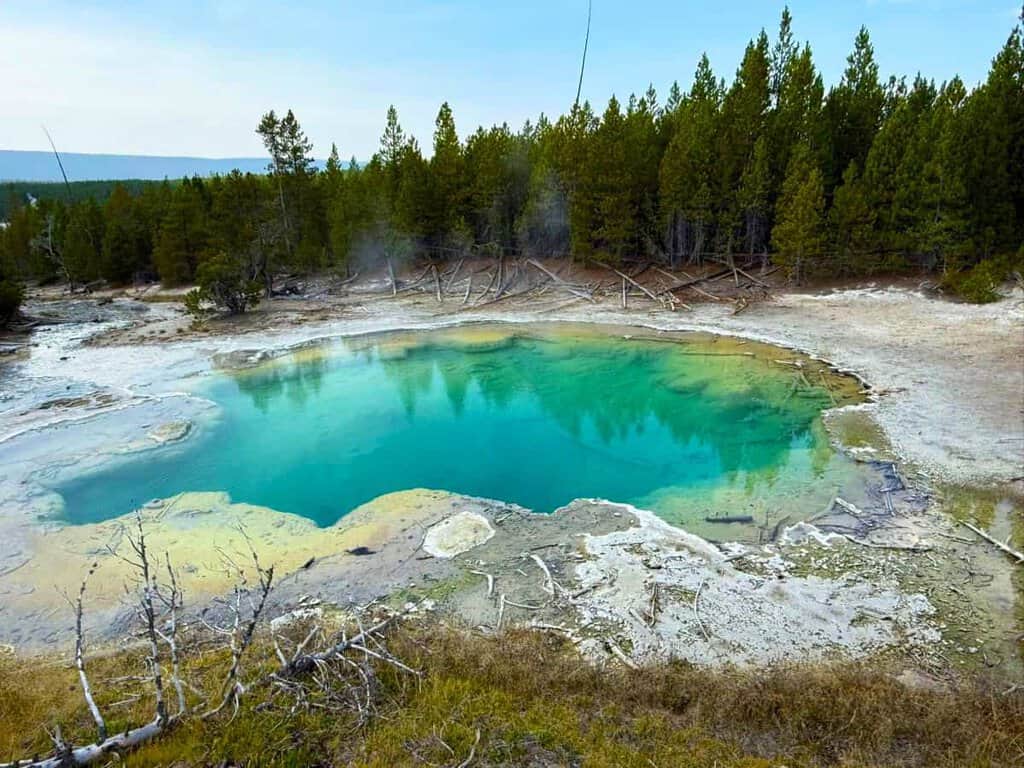
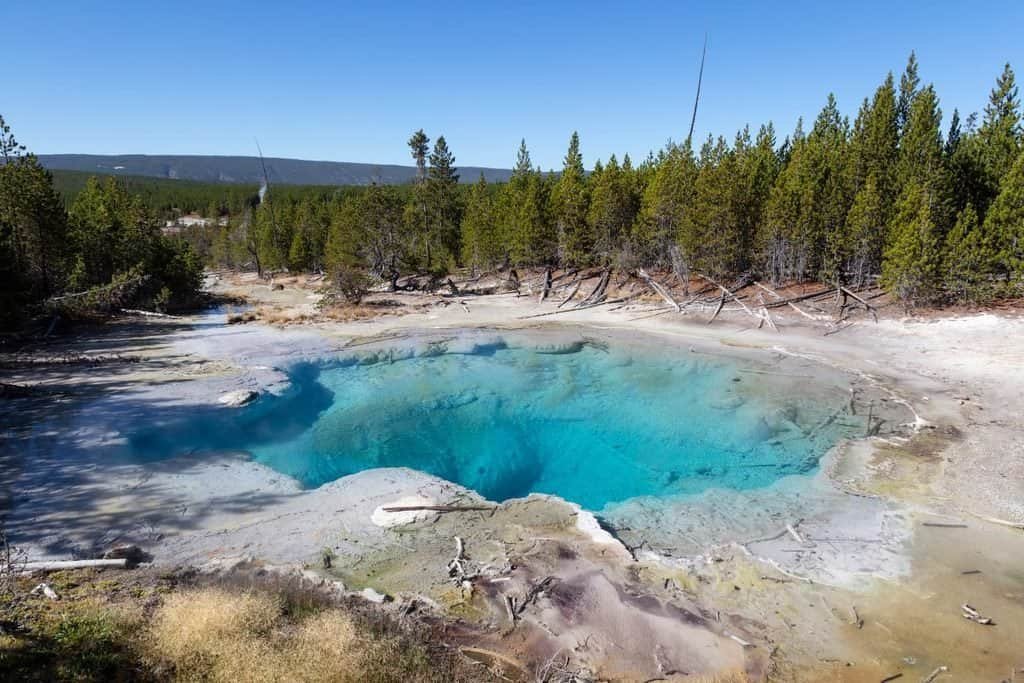
- Emerald Spring – Emerald Spring is one of the most beautiful pools in Back Basin. The blue-green water contrasts beautifully with the surrounding forest and mineral deposits. The color comes from the combination of the water’s chemistry, temperature, and sunlight.
- Cistern Spring – Cistern Spring is connected underground to Steamboat Geyser. After a major Steamboat eruption, the spring can drain dramatically. White mineral deposits coat the trees and surrounding area, adding to the strange beauty of the pool.
- Steamboat Geyser – Steamboat is the world’s tallest active geyser. A major eruption can send water roughly 300 to 400 feet into the air. Unlike Old Faithful, Steamboat does not follow a convenient schedule, so don’t plan your entire day around seeing an eruption. If you happen to be there when it goes off, consider yourself very lucky.
- Echinus Geyser – Echinus is one of the larger and more impressive geysers in Norris. The crater can fill with water before an eruption, creating a fascinating buildup as the geothermal activity increases.
- Puff ‘n Stuff Geyser – Puff ‘n Stuff is a smaller, active geyser that regularly chugs and releases water and steam. It is a fun feature to watch as you make your way through the basin.
- Green Dragon Spring – A short path leads to Green Dragon Spring, a colorful and sulfur-lined geothermal feature. The combination of the bright water and surrounding mineral deposits makes it easy to spot.
- Pork Chop Geyser – Pork Chop has a fascinating and violent history. On September 5, 1989, the feature experienced a hydrothermal explosion that sent rocks and debris outward from the crater. It serves as a powerful reminder that Yellowstone’s geothermal features are not simply pretty pools—they are active and potentially dangerous expressions of the volcanic system beneath the park.
Back Basin was the part of Norris that I enjoyed the most. Maybe it was the quieter trail. Maybe it was the geysers tucked among the trees. Or maybe it was that unexpected snowshoe hare encounter.
Planning Your Visit to Norris Geyser Basin
Before you head to Norris, check the official Yellowstone National Park website for current road conditions, trail closures, weather, and geothermal-area updates. Conditions can change quickly in Yellowstone, especially around the thermal areas.
I also recommend checking the current trail information before you visit. Norris is constantly changing, and some of the distances and eruption information found in older guidebooks may no longer be accurate.
Most importantly, give yourself enough time to enjoy both Porcelain Basin and Back Basin. Don’t rush through simply to check Norris off your Yellowstone itinerary. The sounds, smells, colors, and unexpected wildlife encounters are all part of the experience.
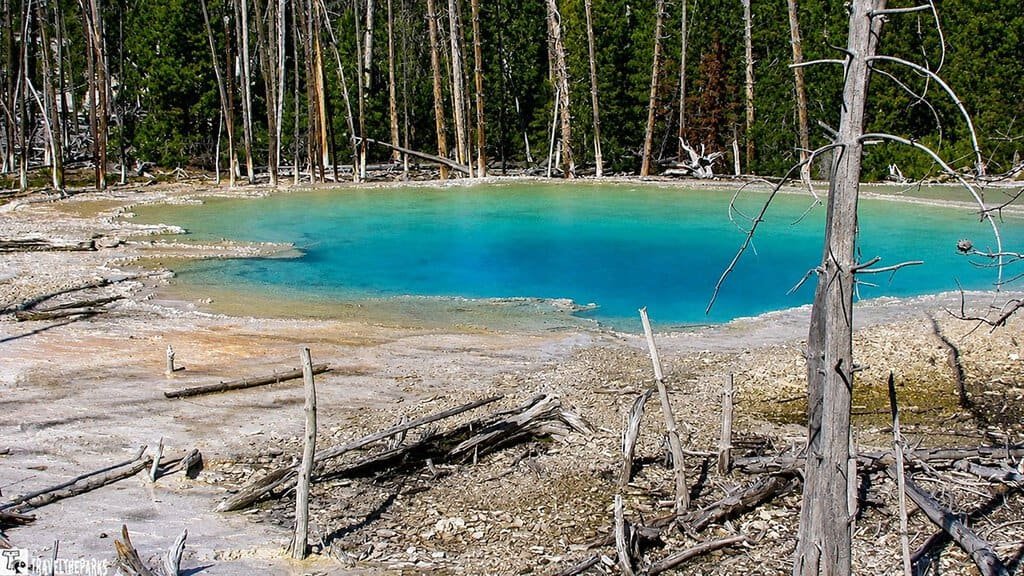
Final Thoughts: Visiting the Norris Geyser Basin in Yellowstone
Visiting the Norris Geyser Basin in Yellowstone was one of the highlights of our time in the park. I loved the contrast between the stark, almost alien landscape of Porcelain Basin and the quiet forested trails of Back Basin.
The geysers, steaming vents, brilliant pools, and unmistakable sulfur smell all remind you that Yellowstone is far from an ordinary landscape. There is something powerful about standing on a boardwalk and realizing that all that activity is happening beneath your feet.
For me, Back Basin was the favorite. Maybe it was the quieter trail, the geysers tucked among the trees, or that unexpected snowshoe hare that wandered right up to us. Those are the moments that stick with you long after the trip is over.
If you’re visiting Yellowstone, don’t rush through Norris Geyser Basin. Give yourself time to walk both areas, stop at the overlooks, listen to the steam vents, and take in the landscape. You never know what you’ll see—or hear—around the next corner.
What did you think of Norris Geyser Basin? Did you find it as fascinating as we did? Leave a comment below and tell us about your experience.