Fakahatchee Strand Preserve State Park is one of those places where the adventure begins as soon as you leave the pavement behind.
We had heard about an isolated cabin called the “Fakahatchee Hilton,” supposedly reachable from Janes Memorial Scenic Drive and the East Main Tram. We were also told to keep an eye out for wildlife, including alligators, Everglades mink, and, if we were incredibly lucky, the elusive Florida panther.
Over the Christmas break, we decided it was time to go adventuring and take the road less traveled.
Compared with nearby Big Cypress and Everglades, Fakahatchee is often overlooked. That’s part of its appeal. With fewer visitors and miles of wetlands, prairies, and forest, Fakahatchee Strand Preserve State Park can feel like a world away from the rest of South Florida.
And somewhere out there was the “Fakahatchee Hilton“.
This post may contain affiliate links, meaning if you purchase something through one of these links, we may earn a small commission at no extra cost to you! Read the full disclosure policy here.
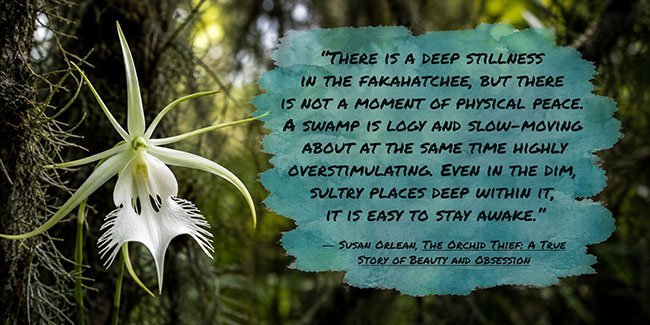
Table of Contents
Fakahatchee Strand Preserve State Park Is Florida’s Largest State Park
I have to ask myself, how did I not know that Fakahatchee Strand Preserve State Park is Florida’s largest state park? At more than 85,000 acres, it protects an incredible mix of flat prairies, sabal palm hammocks, small hardwood forests, and wetlands. These habitats are characteristic of South Florida’s inland wilderness.
Fakahatchee is also famous for its orchids. Thanks in part to Susan Orlean’s bestselling book The Orchid Thief, the park became known for its rare and endangered orchids. The most famous is the elusive ghost orchid (Dendrophylax lindenii).

Where Is Fakahatchee Strand Preserve State Park?
To reach the main park entrance, take I-75 to Exit 80 and follow State Road 29 south for about 15 miles. The drive toward Copeland takes you through some remarkably wild country. Keep an eye out for the panther fencing along both sides of the highway.
The park entrance is on the right in Copeland. From there, make the turn onto Janes Memorial Scenic Drive, where the adventure really begins. The ranger station is located at 137 Coastline Drive.
If you’re visiting the Big Cypress Bend Boardwalk, continue south from the park entrance for about three miles to U.S. 41. Turn right and follow U.S. 41 for approximately seven miles to the boardwalk. There is no formal parking lot; visitors use a gravel pullout.

Our Drive to Fakahatchee
Leaving Central Florida at 6 AM gave us an easy start. We made our way through Lake Placid with very little traffic before turning south on FL-29. The farther south we traveled, the wilder the landscape became.
We were heading into panther country, just north of U.S. 41, and our destination was Fakahatchee Strand Preserve State Park.
That early start turned out to be a good decision. We had plenty of daylight ahead of us and, more importantly, time to explore once we reached the park.

Fakahatchee Ranger Station and Janes Memorial Scenic Drive
The park is open 365 days a year from 8 AM until sunset. Immediately upon entering, signs directed us toward the ranger station, restrooms, and fee station. There is an honor system for paying the $3 park fee, with proceeds going directly to the park. Maps with trail information are available at the ranger station, or you can use the downloadable park map.
An old fire observation tower stands near the park entrance. Prescribed burns are an important part of maintaining Fakahatchee’s fire-dependent habitats and keeping the ecosystem healthy.
After a quick look around the ranger station, we headed down Janes Memorial Scenic Drive toward the East Main Tram, about six miles from the entrance. The scenic road winds through some of the preserve’s most interesting landscapes, including wet prairies, cypress swamps, and tropical hammocks.

Why Is It Called Janes Memorial Scenic Drive?
The road was named in honor of three brothers who founded a tomato farm in Copeland during the 1930s. The Janes brothers also operated a general store and post office near the park entrance on the east side of State Road 29. Those buildings are long gone, but their name remains part of the landscape.
Tackling Janes Memorial Scenic Drive to the Fakahatchee Hilton
The 15-mph speed limit isn’t just about safety. If you want to see wildlife, slow down and pay attention.
At the time of our visit, the road was in surprisingly good condition, and our compact car handled it without any problems. Seasonal flooding can change that, though, leaving ruts and potholes along the way.
This is wild Florida at its finest. The road winds through wet prairie with water on both sides, creating plenty of opportunities for wildlife sightings. Alligators are especially common. I saw so many along the road that I eventually lost count.
Near the ranger station, the remains of an old limestone quarry sit beside the road. A nearby lake is also a good place to watch for herons, ibis, and other waterfowl.
As the road continues, Janes Memorial Scenic Drive narrows into a one-lane gravel road beneath the trees. This is where things get a little more interesting. Cars traveling in the opposite direction have to share the narrow roadway, so slow down and be prepared to pull over when necessary.
Eventually, we reached the parking area and the locked gate marking the entrance to the East Main Tram.
And this was where our search for the Fakahatchee Hilton really began.
Note: Park staff and volunteers maintain Janes Memorial Scenic Drive throughout the year, but weather events and seasonal conditions can affect the road.

Hiking Trails in Fakahatchee from Janes Memorial Scenic Drive
Fakahatchee’s trails have an interesting connection to the area’s logging history. In the 1940s and 1950s, bald cypress logging was widespread throughout the strand. Timber companies constructed about 192 miles of elevated roads called trams to move equipment and timber through the swamp.
Built on a base of karst limestone, many of these old trams remain relatively high and dry even during the wet season. Today, some have become hiking routes that lead deeper into the preserve.
Janes Memorial Scenic Drive follows the route of one of these historic tramways. From the main road, trails branch off and take you farther into the swamp, where the landscape quickly becomes more secluded.
Fakahatchee is generally divided into four major recreational areas: Big Cypress Bend Boardwalk, East River, Jones Grade Lakes, and Janes Memorial Scenic Drive. Each offers a different way to experience the preserve.
If you plan to hike, bring plenty of water. Trails can be muddy and slippery, so sturdy walking or hiking shoes are a good idea. We also carried a trekking stick for the slick sections.
Guided Swamp Walks or Ghost Rider Tram Ride
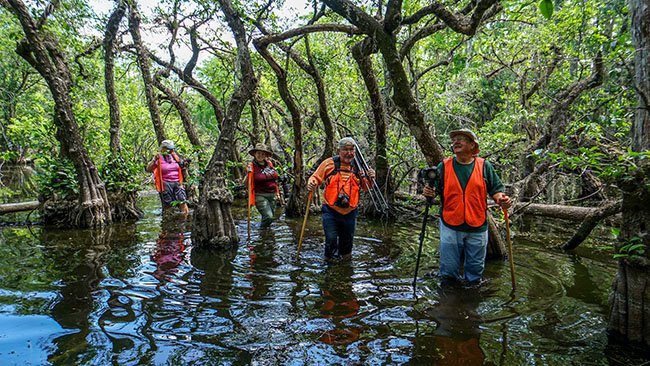
If you want a more immersive experience, consider a guided swamp walk with the Friends of Fakahatchee. Naturalists lead visitors into the preserve while explaining its unusual geology, plants, and wildlife.
We spent about two hours sloshing through the swamp and learning about the area’s karst limestone geology and incredibly diverse flora and fauna. It was a rewarding way to experience Fakahatchee from a completely different perspective.
For a swamp walk, you’ll want to be prepared to get wet. Long pants, wade boots or wet shoes, and a change of dry clothes are recommended.
Don’t want to wade through the swamp? The Ghost Rider Tram offers another option. Named for the ghost orchid found in the preserve, the guided tram ride lets you explore the area while a naturalist points out wildlife and interesting plants along the way.

Finding Solitude on the East Main Tram Trail
Before hitting the trail, we liberally applied bug spray. Temperatures were in the mid-70s, so we expected mosquitoes to be an issue.
We grabbed our day pack and camera, went around the gate, and started our roughly two-mile hike toward the Fakahatchee Hilton.
Almost immediately, the canopy closed in around us. Mosquitoes buzzed overhead, but surprisingly, they didn’t bother us too much.
The East Main Tram runs in a remarkably straight line. Most of the trail was dry during our visit, with a few muddy spots that we simply worked our way around.
But the first thing we really noticed was the quiet.
There was no traffic noise. No nearby buildings. Just the sound of birds and the occasional rustle somewhere in the vegetation.
And the farther we walked, the more isolated we felt. That was exactly what we had come to Fakahatchee to find..

Fakahatchee Hilton Is a World Away!
It immediately came to mind why Fakahatchee is sometimes called the “Amazon of North America.” I was awestruck by the abundance of plants. Orchids, bromeliads, and air ferns hung from enormous old cypress trees. Strangler figs and Virginia creepers twisted through the vegetation, making the forest look more like a tropical rainforest than South Florida.
We talked about how difficult it must have been for early explorers to make their way through this humid, tangled wilderness. Even our trail seemed to go on forever. It felt like we had walked much farther than two miles.
I kept wondering, Did we miss it?
Every so often, we stopped and scanned the vegetation with our binoculars, hoping to spot wildlife. More than once, what looked like an animal turned out to be nothing more than a rotting palm frond.
Royal palms stood tall along the edges of the tram as we continued deeper into the wilderness. We moved quietly, watching and listening.
Then we started finding wildlife.
First came an owl perched on an old stump. Later, we watched red-shouldered hawks hunting overhead. Their piercing calls echoed through the forest. It was haunting and incredibly beautiful at the same time.
Then, finally, we reached the Fakahatchee Hilton.
Solitude and Isolation at the Fakahatchee Hilton
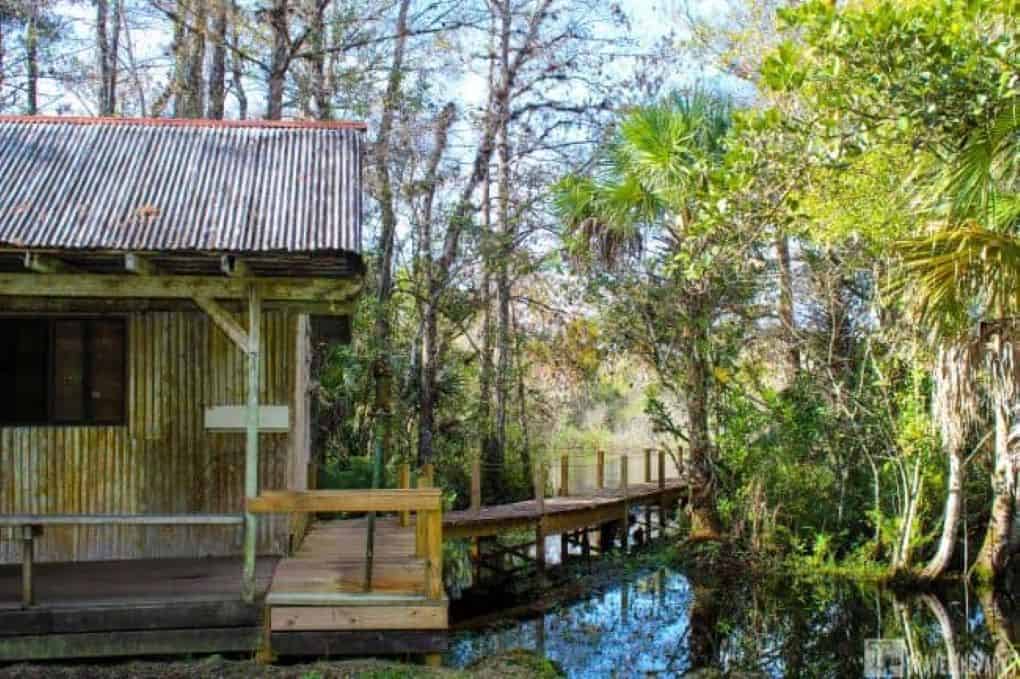
Eventually, the trail opened into a clearing in the subtropical wilderness. There it was—the Fakahatchee Hilton, the cabin we had been looking for.
It felt like a little piece of Old Florida.
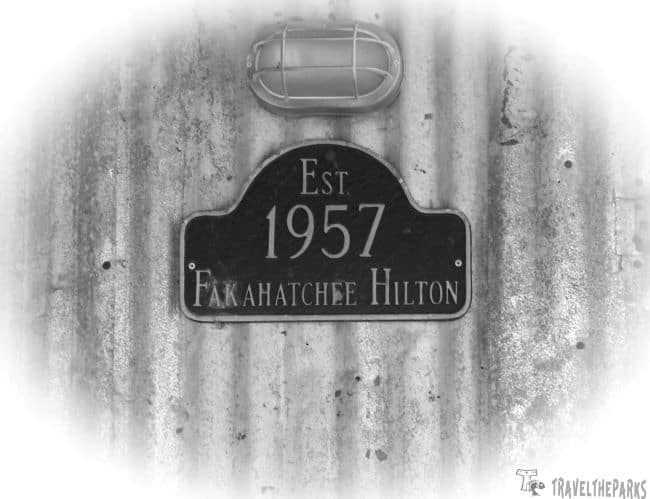
The quaint cracker-style cabin is a throwback to another time. A sign mounted on the front proclaims “Fakahatchee Hilton, Established 1957.” The cabin is privately owned, but visitors are welcome to stop and enjoy the setting. Just remember to be respectful of the property.
The front porch swing was inviting, and the picnic table made a perfect spot to stop for a snack and take in our surroundings.

Note: The Fakahatchee Hilton is private property. Please respect the cabin and the owners while visiting.
Behind the cabin, a wooden walkway leads toward a small lake. We took our time here, enjoying the peaceful setting.
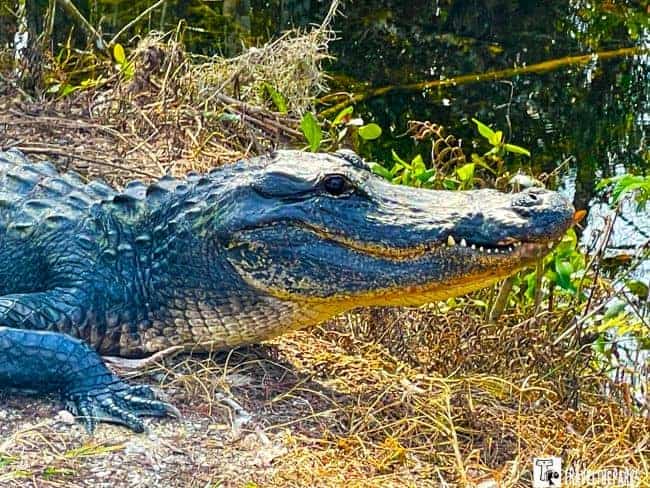
Two massive alligators were moving slowly through the water. I have always been fascinated by these prehistoric-looking reptiles, and we spent nearly an hour watching them maneuver around the lake. During the cooler months, alligators often bask in the sunshine to regulate their body temperature.
Whenever we fish on local lakes, I’m fascinated by the way alligators can seem to simply hang motionless at the surface.
We noticed that one of the larger reptiles looked different enough that we wondered if it could have been an American crocodile. From our distance, though, we couldn’t positively identify it.
A Glimpse of Old Florida
Back in the clearing, a forlorn old-fashioned outhouse stood along the trail. The path eventually dead-ended at a small wooden plank bridge. Beyond it, tall ferns and other vegetation had taken over, making the trail nearly impossible to navigate.
It was another reminder of just how quickly nature reclaims this landscape.

Appreciating the Setting at the Fakahatchee Hilton
We headed back toward the sunny clearing in front of the cabin and settled at the lone picnic table for a light lunch.
It was incredibly peaceful here beside the slough. There was nowhere we needed to be and no reason to hurry. We simply sat and enjoyed the solitude.
While eating, we spotted a red-cockaded woodpecker working its way along a dead cypress, searching for insects.
We considered continuing farther along the right-hand trail toward Jones Grade, about seven miles away. But after everything we had already seen, we decided it was time to turn around.
We headed back toward Gate 12, retracing the East Main Tram through the quiet Fakahatchee wilderness.
This is exactly the kind of experience that makes exploring Fakahatchee Strand so memorable.
Gate 16: Mud Tram Trail
After our visit to the Fakahatchee Hilton, we continued exploring Janes Memorial Scenic Drive. During our first 1.5 miles along the road, we reached Gate 16, marking the beginning of the Mud Tram Trail.
The Mud Tram extends about 7.7 miles toward the park boundary. About 4.4 miles in, the trail connects with the Four Stakes Prairie Trail. For those looking for a much longer adventure, the route can eventually be combined with the West Main Tram.

The trail immediately felt different from the main road. We were surrounded by brilliant cabbage palms, pond apple trees, and pond apple willows. As we continued, the forest seemed to close in around us. The farther we went, the more enclosed it became.
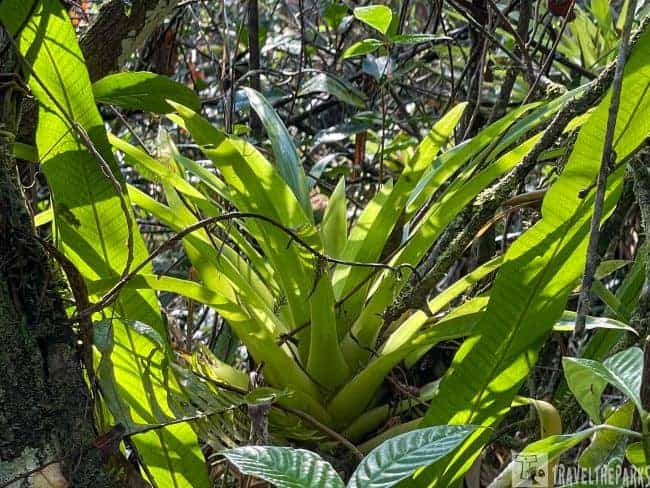
I spotted a stunning Guzmania bromeliad growing on a decaying log. Like other epiphytic plants, it grows on another plant or surface rather than in the soil. The humid Florida environment is perfect for these fascinating plants.
Then we encountered something considerably less welcoming.
An eastern diamondback rattlesnake was coiled in the underbrush just off the tram. He was silent, but we weren’t taking any chances. We gave him a wide berth and continued on our way.

The lowlands here include cypress strands, wet prairie, and pine flatwoods, while hardwood hammocks occupy the slightly higher ground. It was fascinating to see how quickly the landscape changed as we moved through the preserve.
And yes, the Mud Tram lived up to its name.
Rain the previous day had left sections of the trail muddy, and the mosquitoes were becoming increasingly annoying. Eventually, the combination of mud and mosquitoes convinced us it was time to turn around.
Two miles was enough for this adventure.

West Main Tram Trail
For this hike, we decided to tackle about four miles from Gate 7 to the intersection with the Four Stakes Tram. Gate 7 is only about two miles from the ranger station along Janes Memorial Scenic Drive. The parking area is small, but we were the only ones there that afternoon.
Our plan was simple: hike to the end of our route and retrace our steps back to the car.
The trail is relatively level, with few obstacles along the way. At first, the double-track trail winds through a mature forest. Eventually, it opens into a marshy grassland prairie.
Walking slowly and keeping quiet makes all the difference in Fakahatchee. Sunlight filtering through the trees illuminated the incredible variety of plants around us. The farther we walked, the more we appreciated just how beautiful and wild this place really is.
As we approached the grasslands, a deer suddenly appeared. It dashed away before I could get a photo.
We didn’t see any bears that afternoon, but the surrounding forest and wetlands provide ideal habitat for Florida black bears. That’s part of the fun of hiking Fakahatchee—you never know what might appear around the next bend.

Jones Grade Lakes
The turnoff to Jones Grade Lakes is only a short distance from I-75, also known as Alligator Alley. An indistinct gravel side road leads to the hiking trail and lakes.
The lakes were created during construction of Alligator Alley. Crews excavated the karst limestone and used it to help stabilize the highway, leaving behind a series of borrow lakes.
We didn’t have enough time on this trip to fully explore the lakes, but we did find something that caught our attention along the way: Florida panther tracks in the mud.
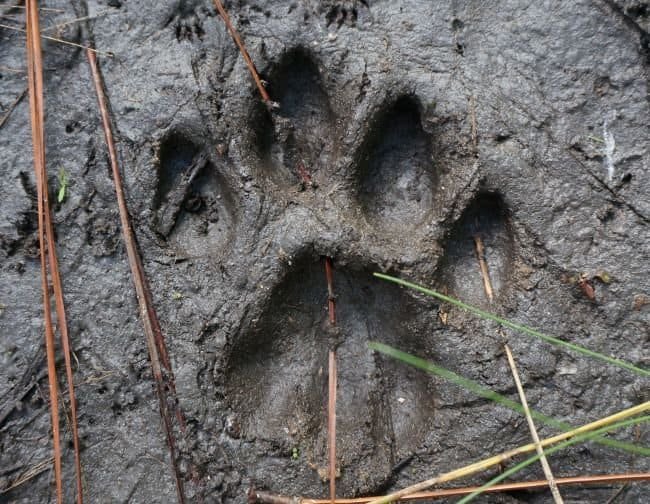
We never saw the panther that made them, but seeing those tracks was pretty exciting. After all, one of the reasons we had come to explore Fakahatchee was the possibility of encountering wildlife you simply don’t see every day.
The area is also known for its fishing, with anglers reporting excellent opportunities in the lakes. It’s definitely a place we’d like to spend more time exploring on a future visit.

Big Cypress Bend Boardwalk
There are several ways to explore this wild corner of South Florida, often called the “Amazon of North America.” One of the easiest is the 0.6-mile Big Cypress Bend Boardwalk along U.S. 41, the Tamiami Trail.
The boardwalk winds through a magnificent stand of old-growth cypress before ending at a large viewing deck overlooking a gator hole. On the day we visited, there was hardly anyone around, so of course we had to stop.

A hard-packed gravel path leads from the parking area to the boardwalk. Along the way, interpretive signs identify many of the plants and animals found in this unique ecosystem. There is also a plaque noting the area’s designation as a National Natural Landmark.
Once on the boardwalk, the opportunities for wildlife viewing seem endless. The roughly 2,000-foot walkway passes through cypress swamp and ends at an observation platform overlooking one of the small lakes.
Several great blue herons and white egrets were fishing along the edge of the water when we visited. Then our attention shifted upward.
A pair of bald eagles was circling overhead, seemingly engaged in a courtship display. There is also a nest near the boardwalk, making this a particularly exciting spot for birdwatching.
The boardwalk is an easy way to experience the cypress strand without having to wade through the swamp. And with the wildlife we encountered during our visit, it was well worth making the stop.

East River Paddling Trail
The East River Paddling Trail offers a completely different way to experience Fakahatchee Strand Preserve State Park. The launch is about one mile east of the Big Cypress Bend Boardwalk and five miles west of Highway 29.
The paddle trail stretches 5.5 miles one way, winding through small lakes and mangrove tunnels toward Fakahatchee Bay. The tidal, brackish water eventually connects with the Ten Thousand Islands, creating an incredible paddling route through South Florida’s coastal wilderness.
The water is generally easy to navigate, but don’t expect a clearly marked trail. There are no trail markers, so paddlers need to be comfortable navigating the route on their own.
Wildlife is another big part of the experience. Keep an eye out for alligators, turtles, wading birds, and other wildlife along the waterways. Some areas also offer opportunities to fish for species such as snook and tarpon with the appropriate saltwater fishing license.

Final Thoughts: Exploring Fakahatchee Strand Preserve State Park
The Fakahatchee Hilton turned out to be everything we had hoped for—and the journey to get there was just as memorable. Walking the old tram through the quiet Fakahatchee wilderness, watching alligators in the lake, spotting birds along the trail, and finally reaching that little cabin in the middle of nowhere made this one of our favorite Florida adventures.
Fakahatchee Strand Preserve State Park really does feel like another world. The combination of cypress swamps, tropical vegetation, wildlife, and historic tramways gives you a glimpse of Old Florida that is getting harder to find.
If you’re looking for an off-the-beaten-path adventure, take a drive down Janes Memorial Scenic Drive and explore some of the trails that lead into the preserve. And if you’re lucky enough to find the Fakahatchee Hilton, take your time and enjoy the solitude. Just remember that the cabin is private property.
We are already planning our return. Next time, we’d like to try the Moonlit Fakahatchee Tram Tour and explore more of this incredible preserve.
For us, Fakahatchee may just be one of Florida’s best-kept secrets.
Have you explored Fakahatchee Strand Preserve State Park? We’d love to hear about your experience with the Fakahatchee Hilton or your favorite part of the preserve. If you’re planning a visit, tell us what adventure you’re looking forward to!