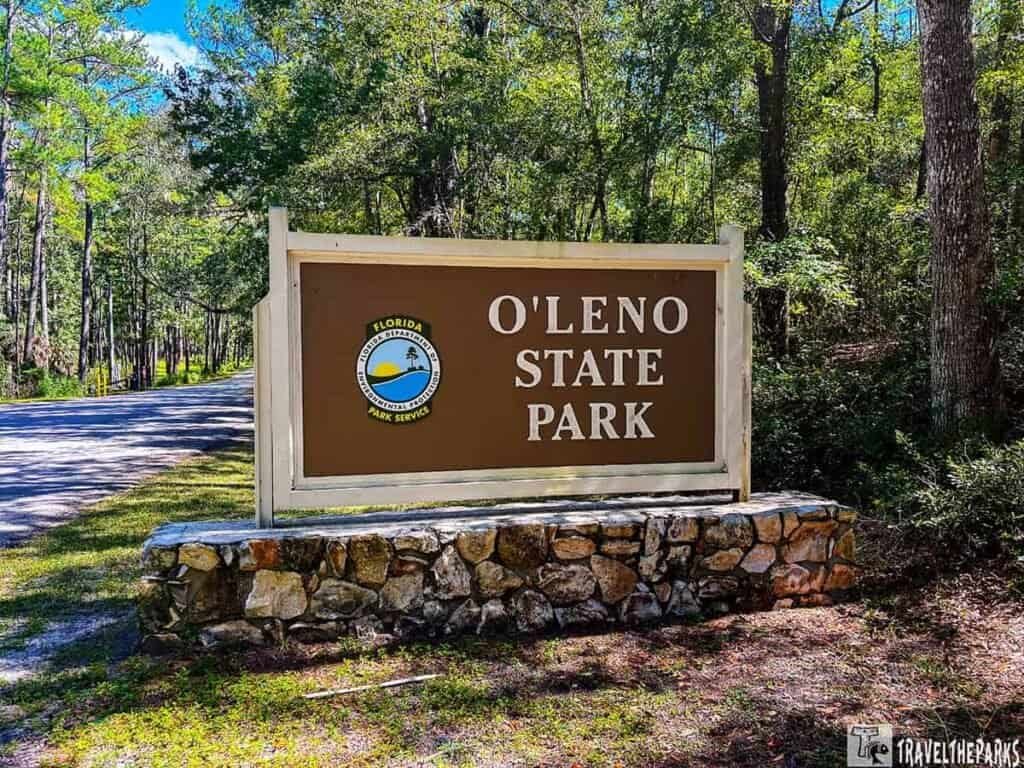
O’Leno State Park hiking offers one of the most unique outdoor experiences in Florida. Located about six miles north of High Springs, this historic state park combines scenic hiking trails, peaceful camping, and one of the state’s most fascinating natural wonders—a river that disappears underground.
We’ll be upfront—the first time we said the park’s name out loud, we went with “Oh-Leno.” A ranger set us straight before we’d even killed the engine. It’s pronounced “Oh-LEE-no,” and once you know that, you’ll sound like a local before you even hit the trails.
Covering more than 6,000 acres of sandhills, hardwood hammocks, river swamps, and pine forests, O’Leno State Park Florida is one of Florida’s original nine state parks. The park still has a relaxed, old-Florida feel where towering live oaks shade campsites, hikers wander quiet forest trails, and families gather beneath historic picnic pavilions built nearly a century ago.
The park’s biggest attraction is the Santa Fe River sink, where the river flows peacefully through the forest before suddenly disappearing into a massive limestone sinkhole. From there, the water travels underground for about three miles before reappearing at nearby River Rise Preserve State Park. Standing beside the sink and watching an entire river vanish into the earth is one of those experiences that’s difficult to appreciate until you see it for yourself.
Disclosure: This post may contain affiliate links. If you make a purchase through one of these links, I may earn a small commission at no additional cost to you. These commissions help support the blog and allow me to continue creating travel guides. Thank you for your support! Read the full disclosure policy here.
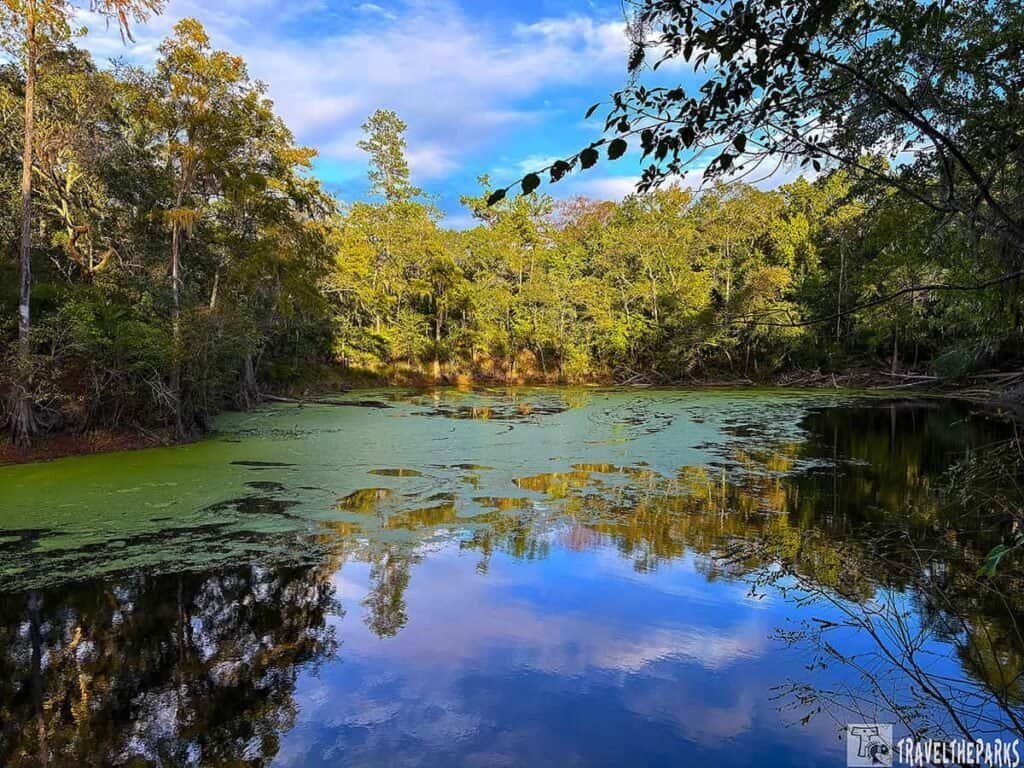
Table of Contents
A Little Backstory: The Town That Was
Long before it became one of Florida’s most beloved state parks, this land was home to a small settlement called Keno. When the community established a post office during the 1870s, federal officials objected to the gambling-inspired name, so it was shortened to Leno.
For a time, the community prospered with sawmills, businesses, and a hotel serving travelers. That changed in the 1890s when the railroad bypassed the town. Residents gradually moved away, leaving behind a ghost town that locals began referring to as “Old Leno.” Over time, the nickname evolved into O’Leno, the name the park still carries today.
During the 1930s, the Civilian Conservation Corps transformed the abandoned property into one of Florida’s earliest state parks. Their craftsmanship is still visible throughout the park in the native stone structures, picnic pavilions, cabins, and the iconic suspension bridge that continues to welcome visitors nearly a century later. Walking across the bridge feels like stepping back into Florida’s early conservation history.
Today, it’s easy to admire these historic structures without realizing they were built by hand during the Great Depression. Knowing the park grew from a vanished lumber town into a protected natural area adds another layer of appreciation to every trail, bridge, and picnic shelter you’ll discover while exploring O’Leno State Park.
Best Things to Do at O’Leno State Park
During both of our O’Leno State Park hiking trips, we found there was plenty to do beyond watching the Santa Fe River disappear underground. Here’s a rundown of our favorite experiences, on the trails and off.
Walk to the River Sink
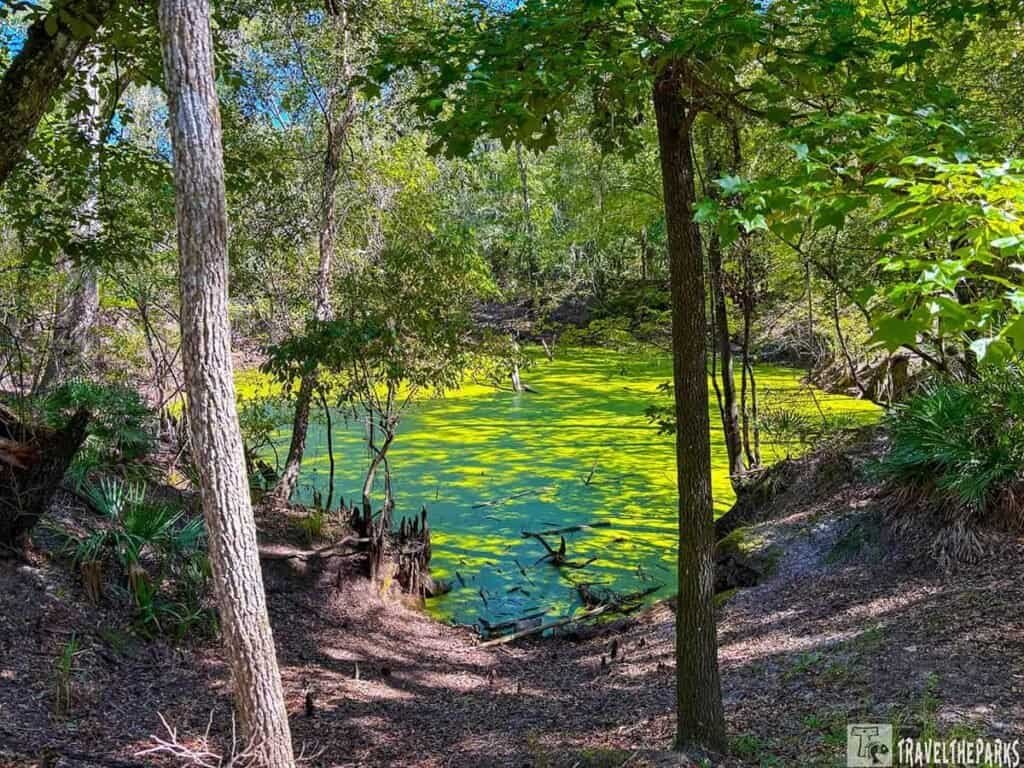
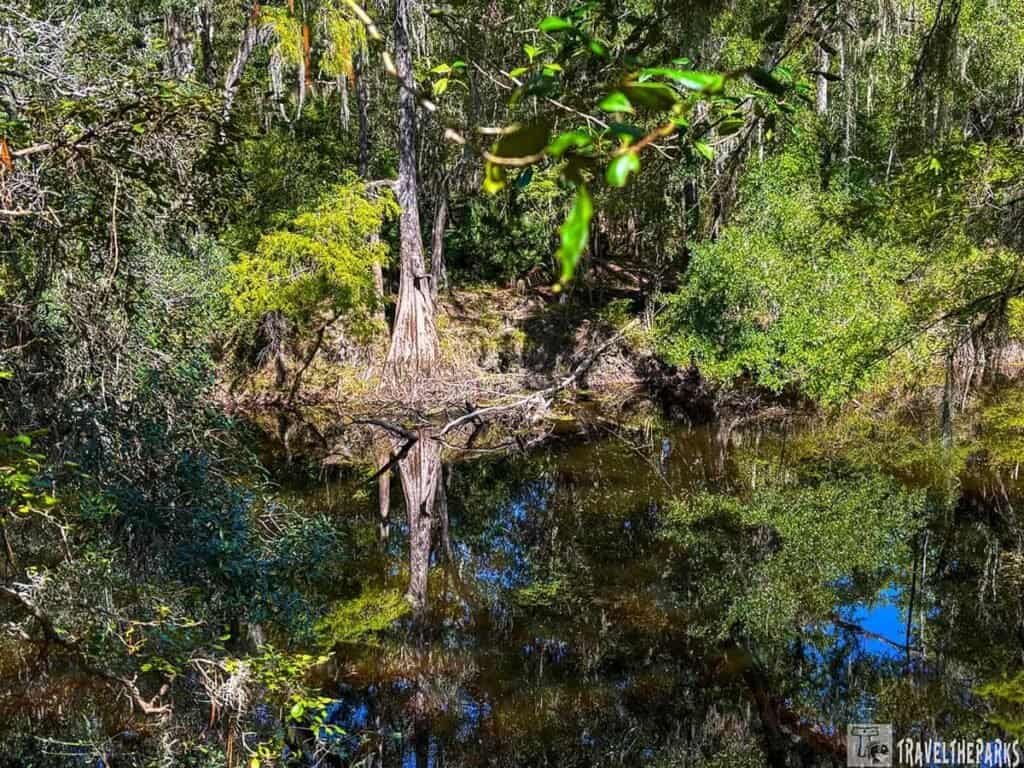
The park’s main attraction is the Santa Fe River Sink, where the river flows into a massive limestone opening and continues underground for nearly three miles. It may not look like a dramatic swirling cauldron pulling water into the earth. During our visits, the sink appeared almost still, with pond weeds floating across the surface and a quiet, almost mysterious feel.
That was part of what made it so interesting. Standing there and realizing an entire river was slowly disappearing beneath the ground felt a little unreal. We found ourselves staying longer than we expected, simply taking in the fact that this calm stretch of water was about to begin an underground journey.
Cross the Historic Suspension Bridge
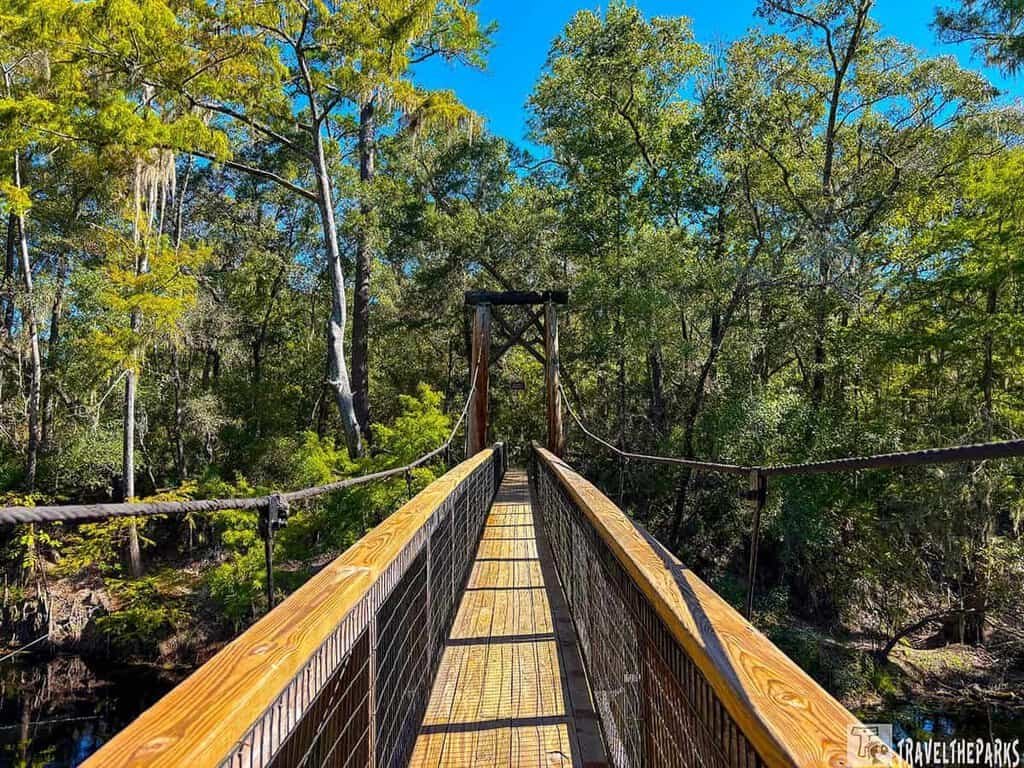
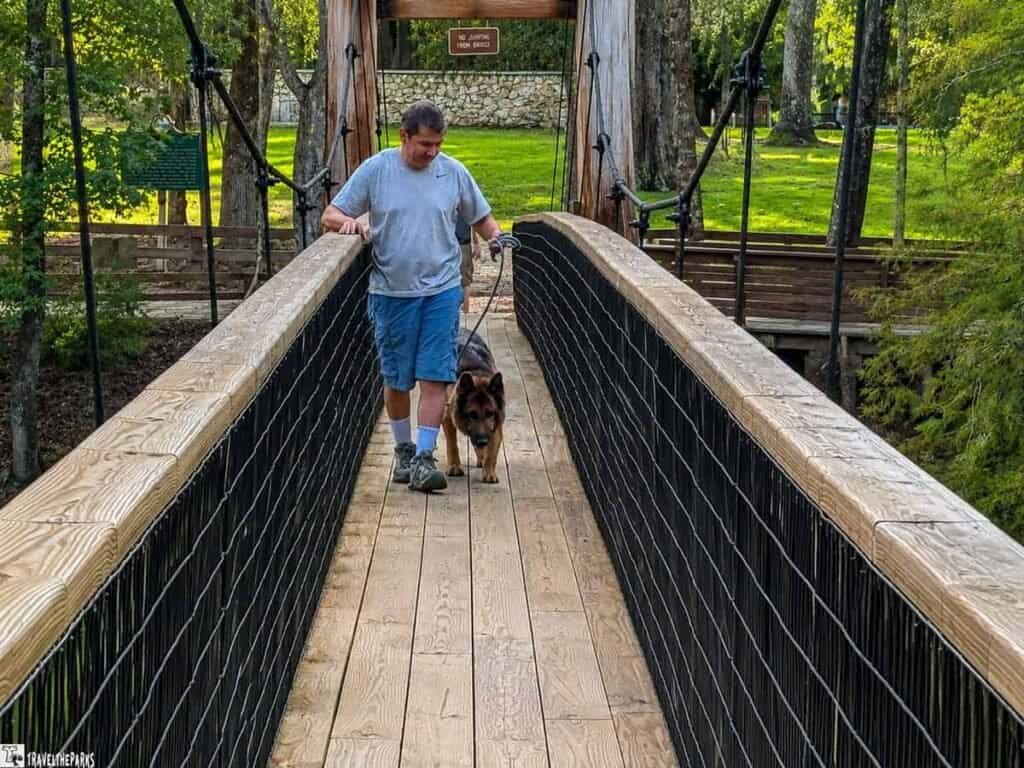
The suspension bridge was built by the Civilian Conservation Corps in the 1930s and has become one of O’Leno’s most recognizable landmarks. It also serves as the starting point for several trails throughout the park.
Crossing it is part of the fun. It’s solid and scenic, with just enough bounce to remind you it’s a suspension bridge, but never enough to make you nervous. Our dog Sage, however, was not impressed. He carefully made his way across and let us know this was definitely not his favorite part of the hike.
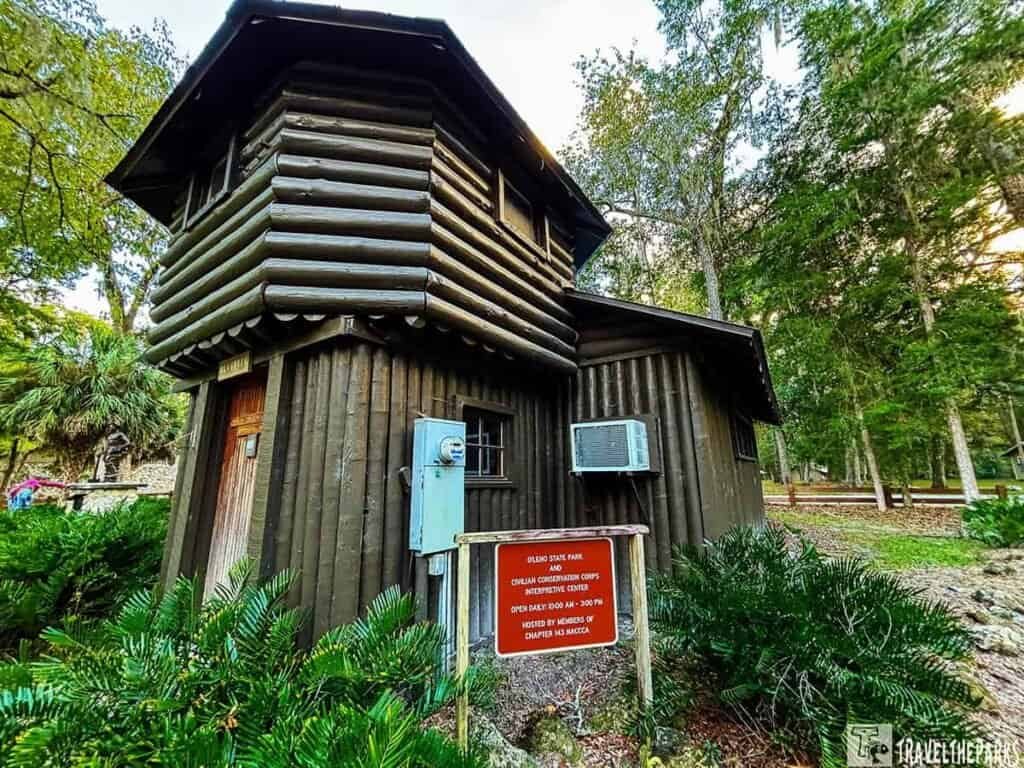
Explore the CCC Museum and Historic Mill Area
The disappearing river gets most of the attention, but O’Leno’s history runs deeper than that. This park was among Florida’s first state parks developed by the Civilian Conservation Corps in the 1930s, and you’ll still see their handiwork scattered throughout the grounds.
The CCC Interpretive Museum is worth a stop, whether you’re heading out on the trails or wrapping up for the day. Inside, you’ll get a look at how the Corps’ young workers built the park during the Great Depression—roads, bridges, pavilions, and other structures that are still standing today.
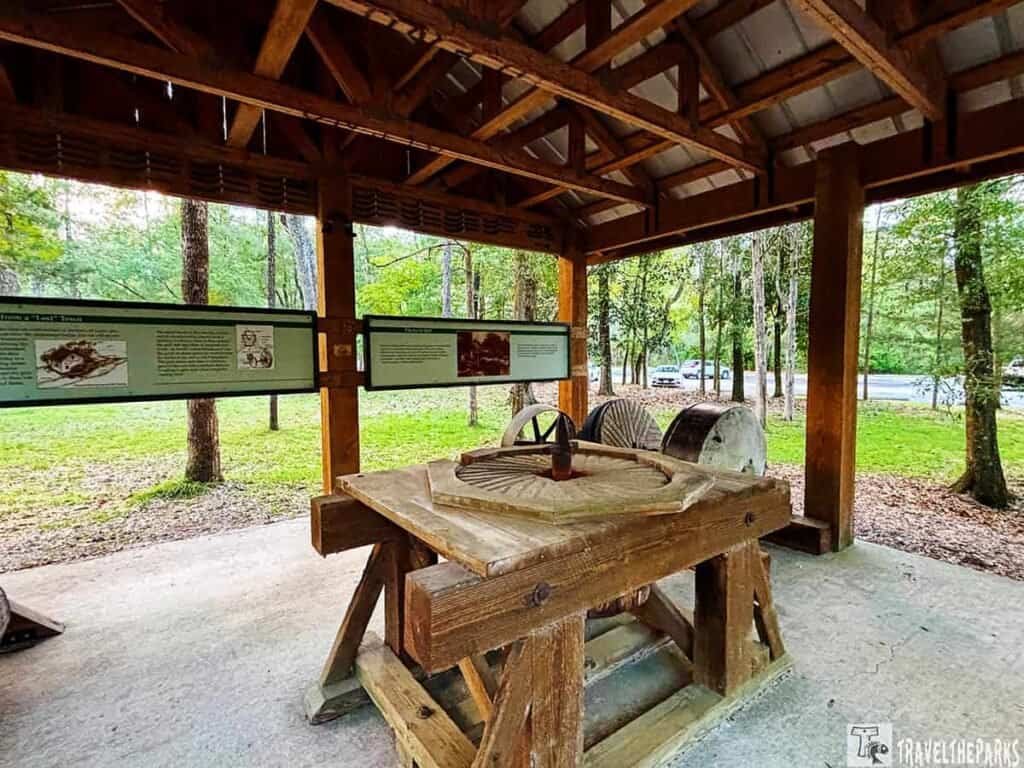
Take a few minutes to wander over to the old grist mill site along the river, too. It dates back to O’Leno’s pre-park days, when this was still a working town instead of a hiking destination. There isn’t much left standing, but the interpretive signs do a good job of bringing the place back to life.
We stood there looking out over the water, trying to imagine the buzz of activity that once filled this spot. It’s hard to picture now. These days, all you hear are birds and the breeze through the trees, but the river once powered the mills that kept the town going.
Hike or Bike the Trail System
If you enjoy hiking, you’re in the right place. O’Leno State Park hiking includes more than 20 miles of trails that connect with neighboring River Rise Preserve State Park. The routes wind through hardwood hammocks, pine forests, sandhills, and along the Santa Fe River, with options ranging from short nature walks to longer adventures.
We’ll share more about the specific trails later in this guide.
Paddle or Fish the Santa Fe River
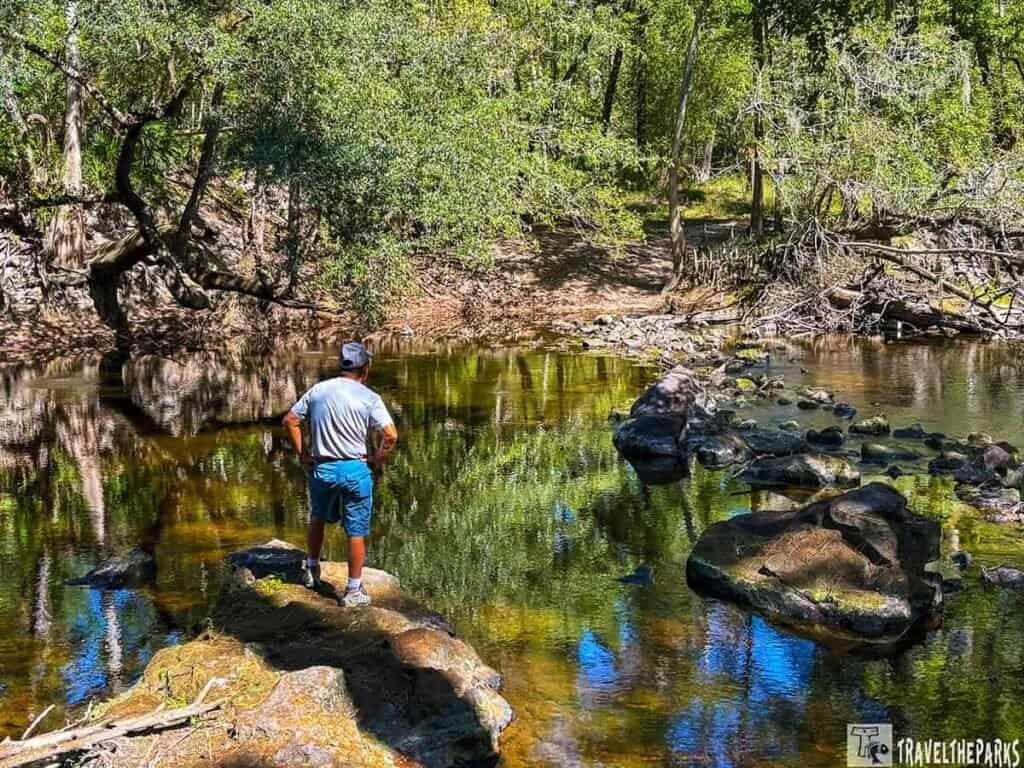
When water levels are higher, the Santa Fe River is a popular place for canoeing, kayaking, and fishing. During both of our visits, however, drought conditions had the river running much lower than normal, so paddling wasn’t really an option.
We gave fishing a shot. Didn’t catch anything. But honestly? Standing there by the water, not another soul around, just listening to the birds and the breeze? That felt like a win anyway.

Cool Off at the Swimming Area
When Florida’s summer heat kicks in, the swimming area near the suspension bridge can be a refreshing place to cool off after spending time on the trails. The water has that dark, tea-colored look common in Florida rivers, caused by tannins from decaying leaves and vegetation.
We’ve visited twice, though, and both times the water level was low enough that we decided against swimming. Drought conditions had left the swimming hole looking less than inviting, so we kept our feet dry.
One thing to remember: this is still a wild river. Alligators are part of the Florida landscape, so pay attention to posted signs and give wildlife plenty of space.
Watch for Wildlife
Bring a pair of binoculars if you have them. O’Leno is part of the Great Florida Birding and Wildlife Trail, making it an excellent place to spot birds throughout the year. We also saw turtles, and it’s common to see white-tailed deer, gopher tortoises, and other wildlife while exploring the park.

Hiking O’Leno State Park Trails
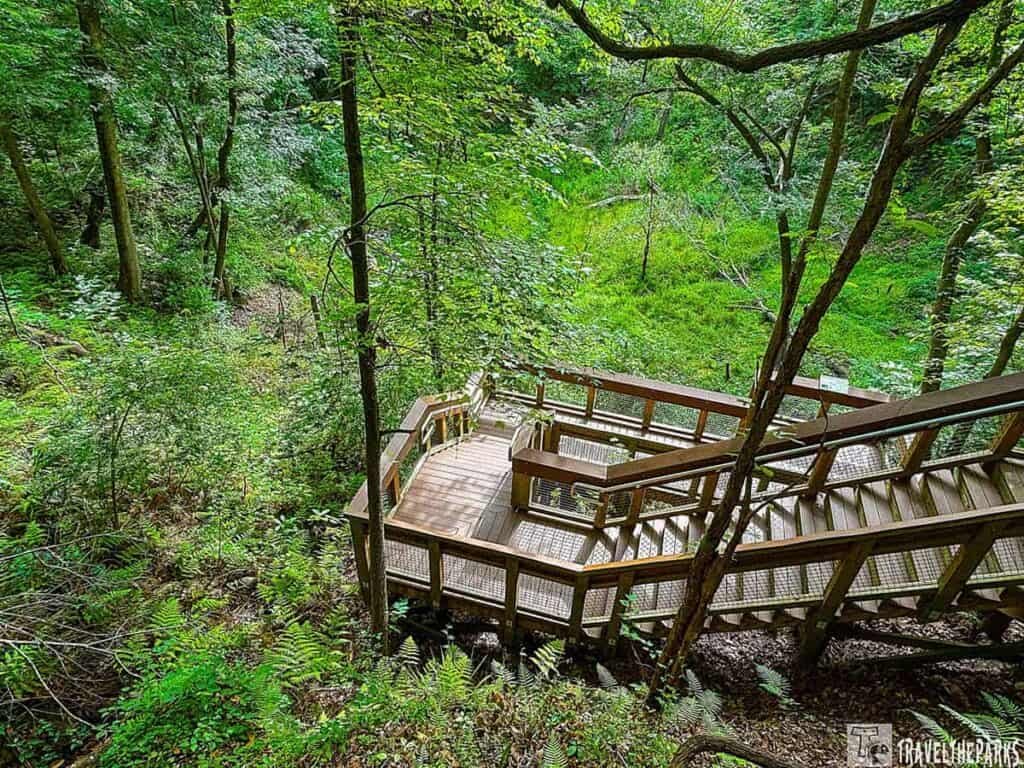
We’re not going to sugarcoat it: some of these trails are tougher than they look on paper. It’s not hills—this is Florida, we don’t get those. It’s the soft sand, roots that pop up out of nowhere, and uneven ground that makes some sections more challenging than expected. Somewhere around mile two, we started calling it our stealth workout. By the time we made it back to the car, our legs knew it too.
The trails at O’Leno wind through hardwood hammocks, pine forests, sandhills, and along the Santa Fe River. If you’re mapping out your own O’Leno State Park hiking trip, here’s what a few of the main trails are actually like.
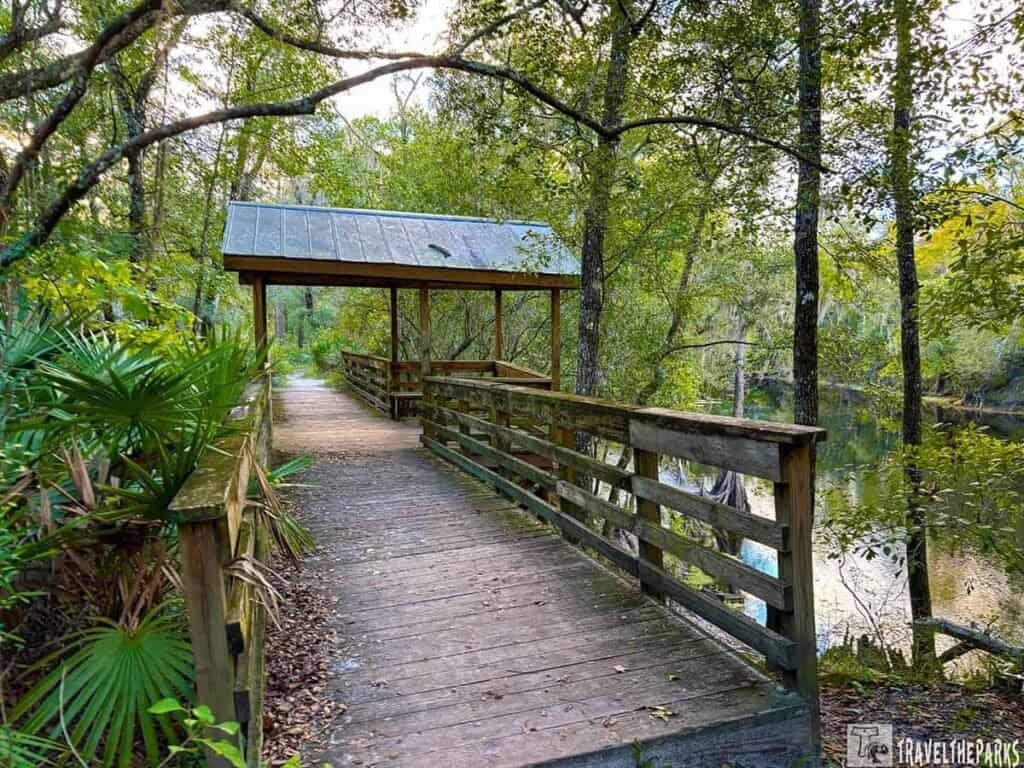
Suspension Bridge to River Sink via Limestone Trail — 2.2 miles round trip | Moderate
We started at the swinging bridge, like many visitors do. Built by the CCC in the 1930s, the wooden planks still shift a bit as you cross—just enough that you notice. Stop in the middle and you get a clear view of the Santa Fe winding through the park below.
From the bridge, we followed the Limestone Trail toward the River Sink. The trail passes exposed karst rock and several smaller sinkholes before reaching the overlook. This is where O’Leno separates itself from many other Florida parks. You’re standing above the point where the Santa Fe River disappears underground for almost three miles before resurfacing at River Rise Preserve.
The trail itself isn’t difficult because of elevation, but the sandy sections and tree roots make it a little more challenging than the mileage suggests.
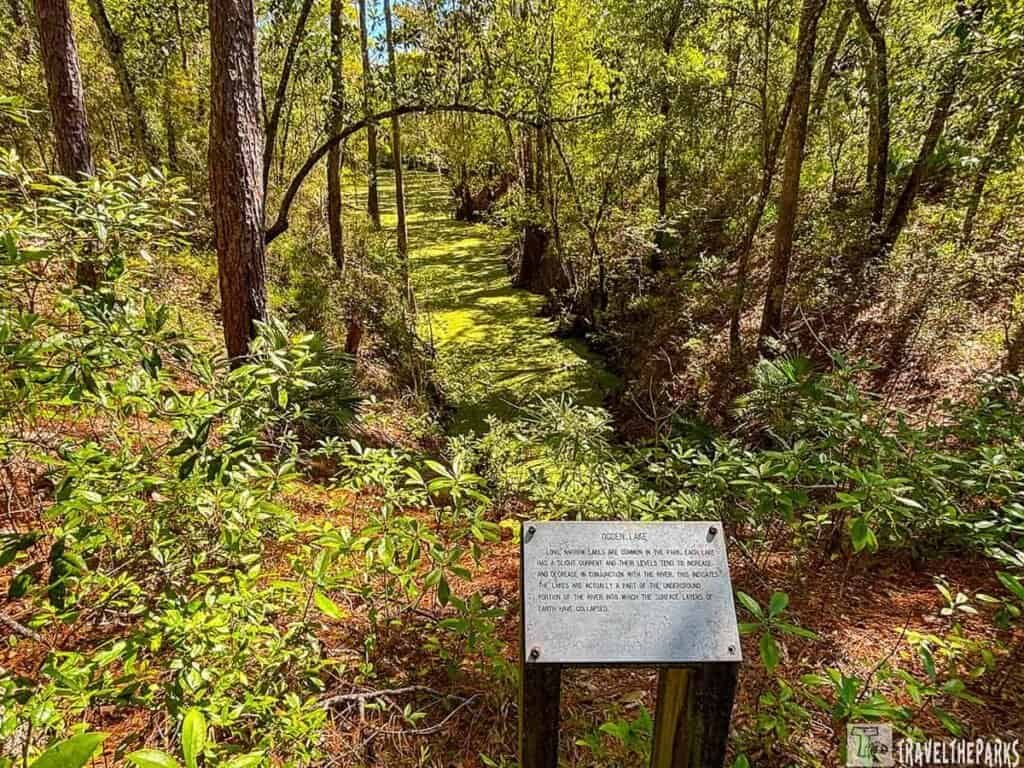
Dogwood Trail — 1.3 miles | Easy
Looking for something a little slower? Dogwood Trail is a shaded loop through hardwood hammock that follows beside the park road. It doesn’t demand as much from your legs, making it a nice option for stretching your legs.
We found that going slower here paid off too. It gave us a better chance of spotting birds, turtles, and other wildlife along the way.
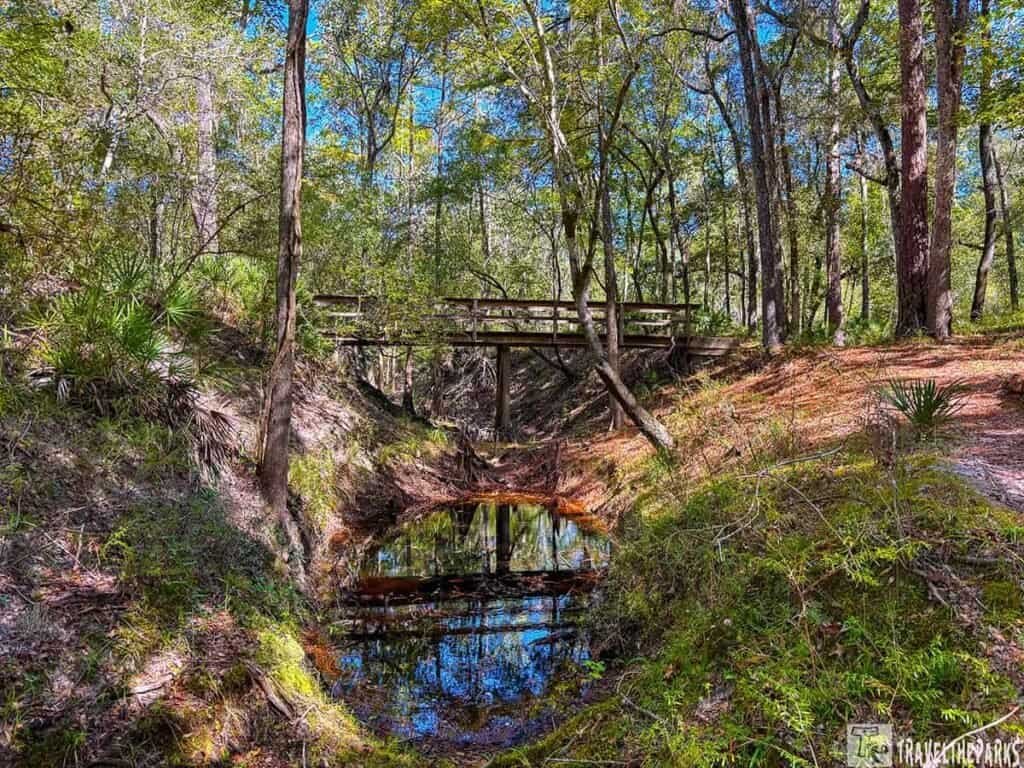
Paraner’s Branch Trail — 4.4 miles | Easy to Moderate
We took the Paraner’s Branch Trail too, and this one felt like a completely different experience. At nearly four miles, it’s longer than the trails around the River Sink, but it also takes you into quieter parts of the park that many visitors never see.
Along the way, more sinkholes appear, along with exposed limestone terrain that hints at just how much is happening beneath your feet. We barely saw another person out there, which made it feel like we had a little corner of O’Leno to ourselves.
Our dog Sage was in heaven. She’s got endless energy and seemed to love every extra step of that trail. We did learn one thing the hard way, though—the bugs can be brutal during rainy season. Mosquitoes and ticks are nothing to mess with out there. Bring plenty of repellent and check yourself and your pets afterward. We did, and still found a few unwanted hitchhikers.
With that preparation, the trail’s absolutely worth the effort. We spotted deer grazing near the pond, herons doing their slow-motion hunting thing along the water, and more turtles than we could count.
Hiking Tips for O’Leno State Park
A couple of things are worth knowing before you hit the trails. Gators live here, so the River Sink is definitely a look-don’t-swim area. Bring plenty of water, especially during Florida’s summer heat, and don’t underestimate the trails. They may look easy on a map, but soft sand, exposed roots, and the occasional soggy patch can make them work harder than expected.
Also worth remembering: this is a wild area. Alligators are present, so swimming at the River Sink is off-limits. And don’t expect much cell service once you’re under the trees—honestly, that’s part of the appeal.
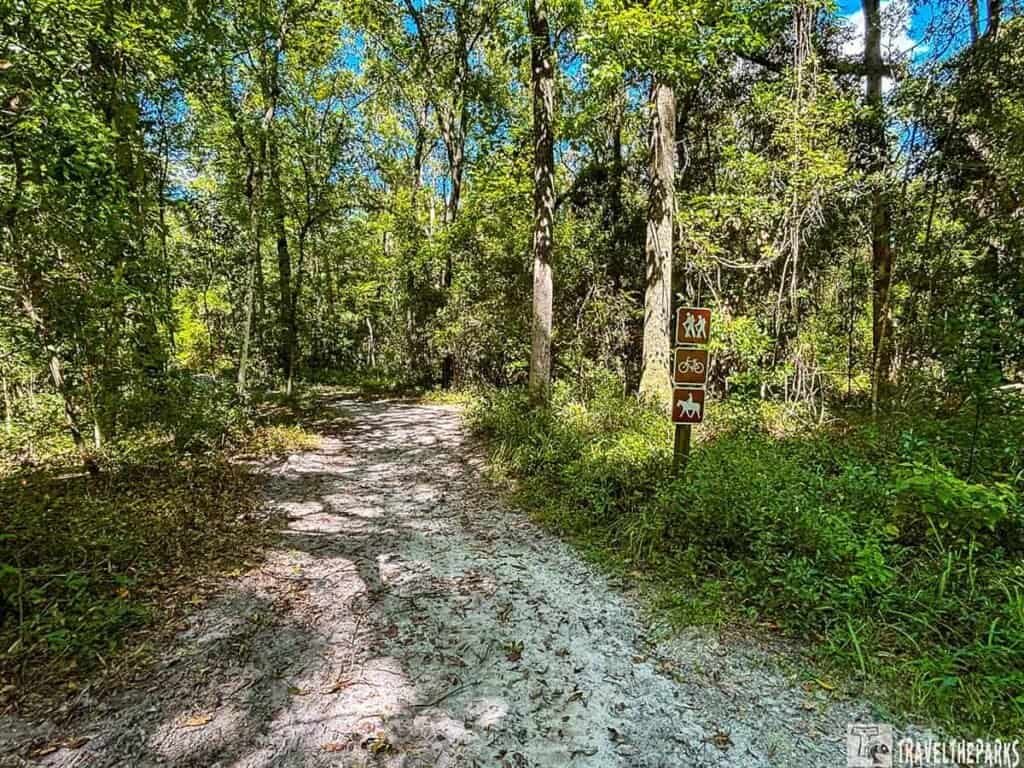
Know Before You Go Hiking at O’Leno State Park
A couple of things are worth knowing before any O’Leno State Park hiking trip.
- Location: O’Leno State Park is located on U.S. 441, about six miles north of High Springs, Florida.
- Hours: The park is open daily from 8 a.m. until sunset. Gates are locked overnight.
- Fee: There is a $5 per vehicle entrance fee. Cash is handy, but credit cards are accepted.
- Trail Closures: Check current park alerts before your visit. Trail sections, including the River Trail, have closed periodically for maintenance.
- Late Arrival: If you plan to arrive after hours, call the park before 5 p.m. There is a gate code required for overnight access.
- Check Alerts: We always check park alerts before leaving home. Closures, prescribed burns, and other updates can change conditions before your visit.
- Pets: Leashed dogs are welcome on trails and at campsites. Check current park rules before visiting since pet access can vary by Florida State Parks.
- What to Bring: Bring bug spray, plenty of water, and comfortable hiking shoes. The shaded trails help, but Florida humidity does not care about your plans.
- Best Time to Visit: The best time to visit O’Leno State Park is during Florida’s cooler months, from October through April. Temperatures are more comfortable for hiking, and you’ll have fewer issues with mosquitoes and humidity. Summer visits can still be enjoyable, but be prepared for heat, afternoon storms, and more insects.
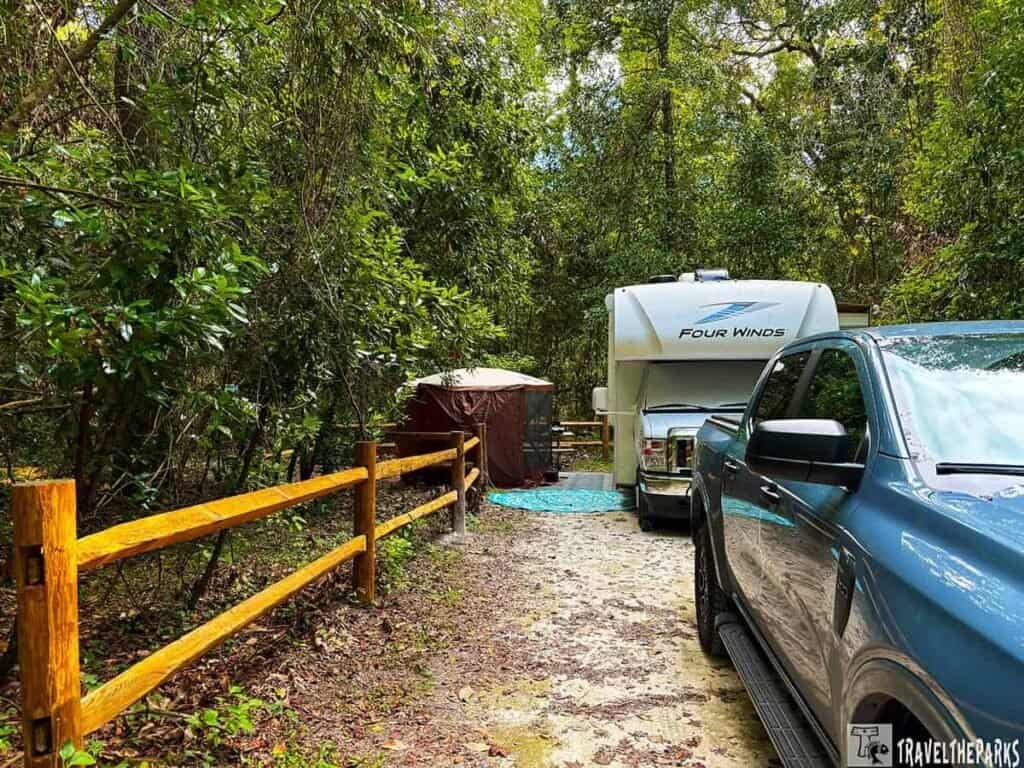
Camping at O’Leno State Park
The campground at O’Leno is shaded, quiet, and exactly the kind of place we find ourselves wanting to come back to after a long day on the trails. You’re not squeezed into some packed RV lot here. It’s towering oaks, trails right outside your tent flap, and the kind of quiet where you actually notice the birds instead of tuning them out.
There are two loops, Dogwood and Magnolia, and both have sites with water and electric hookups, a picnic table, a fire ring, the usual. If you’re driving I-75 and don’t feel like sleeping under gas station lighting, it’s a solid place to pull off for the night.
One thing worth knowing if you’re towing anything big: the campground roads narrow down in spots, and a few of the turns aren’t forgiving. Tent campers won’t notice any of that, and with all that shade overhead, it’s honestly hard to beat.
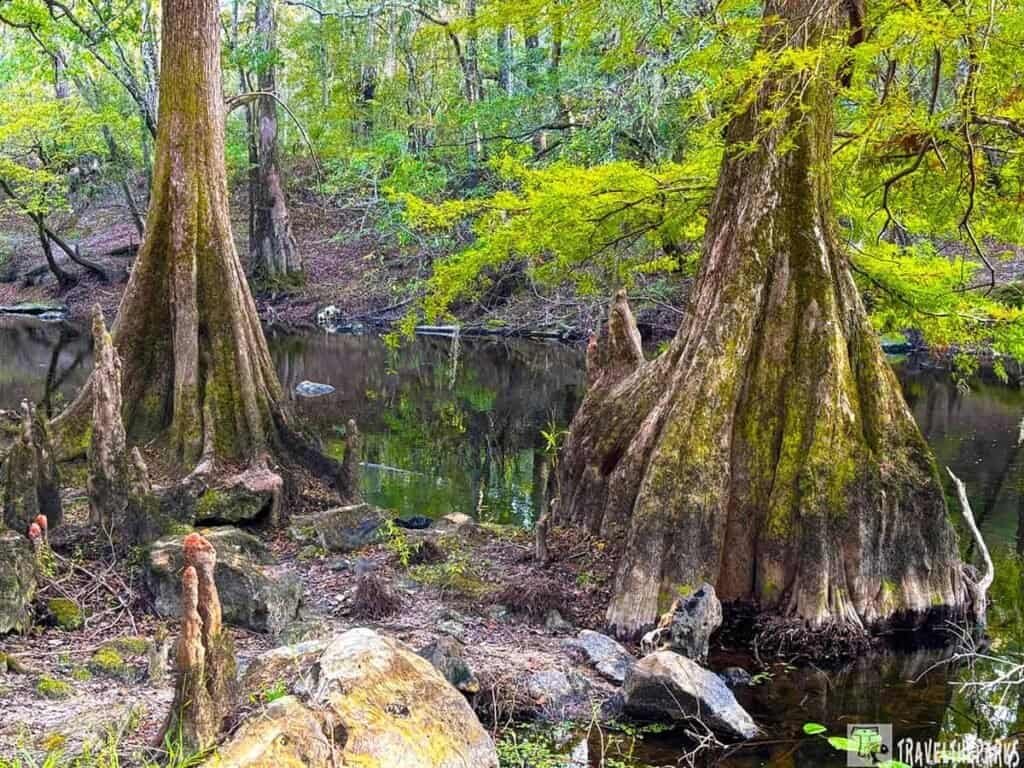
Dogwood and Magnolia Loops
If you’re planning an overnight stay, you’ve got two loops to choose between, and they each have a different feel.
Dogwood Loop is closer to the park entrance and has more of that old-school camp vibe. The sites sit back in the trees, the roads stay unpaved, and it’s usually the quieter of the two—solid choice for tents or smaller trailers.
Magnolia Loop is typically the better fit for RVs. It’s easier to access and sits closer to the river. Just keep in mind that the roads are narrow and bumpy in spots, so if you’re driving something big, plan on taking those turns slow and giving yourself extra room when you back in.
Neither loop has sewer hookups at the individual sites, but there is a dump station on the main road when you pull out of the park.
One thing we picked up from other campers: ticks are around, especially on the trails. We kept bug spray close and made a point to check ourselves and our dog after every hike. Even with that, we still found a few hitchers, so don’t skip that step.

Exploring More of North Florida
Camping at O’Leno puts you in a pretty sweet spot for checking out other parts of North Florida. If you’ve got a few extra days tacked on, there are some solid options within a short drive.
Ichetucknee Springs State Park isn’t far away. It’s the one with the crystal-clear spring runs where people spend the day tubing and paddling through some seriously beautiful scenery. We’ve done that float before, and it’s about as relaxing as it gets.
Stephen Foster Folk Culture Center State Park is one we’ve camped at more times than we can count. We love the historic carillon bell tower, and the little pioneer village of cabins is worth wandering through on its own. On weekends they’ve usually got folks out demonstrating old Florida crafts, blacksmithing, weaving, that kind of thing, plus trails and a museum that give you a real feel for the state’s cultural side, not just the natural one.
Put them together with O’Leno and you’ve basically got a North Florida loop built for people who like camping, springs, a little history, and not being in much of a hurry.
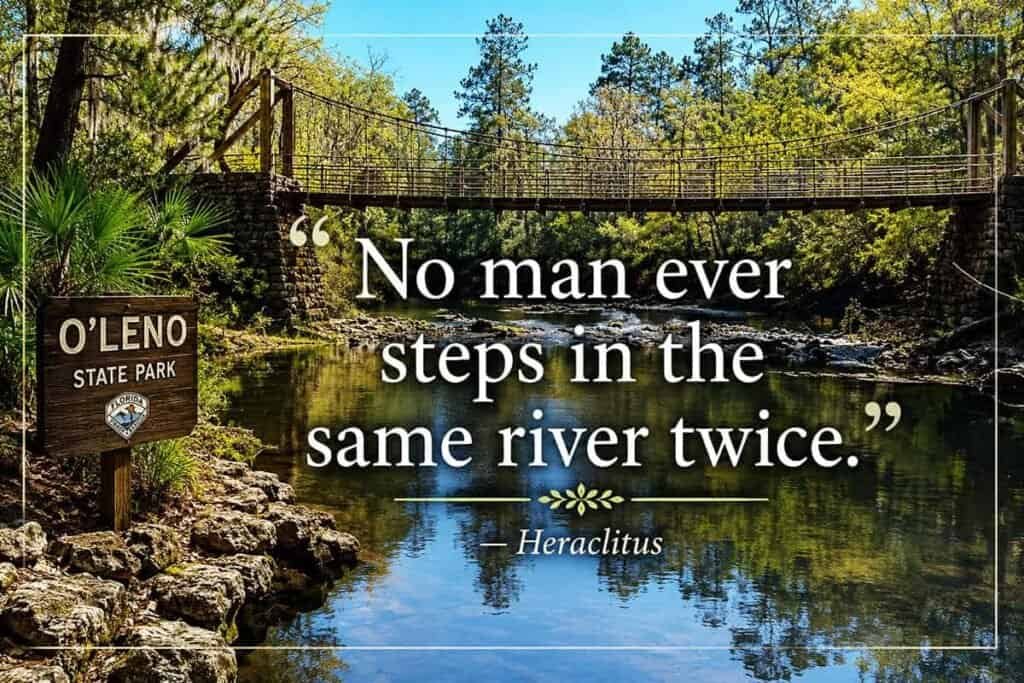
Final Thoughts: O’Leno State Park Hiking
O’Leno State Park surprised us. We showed up expecting to see a disappearing river, snap a few photos, and head on to the next stop. Instead, we stayed longer than planned, wandered farther down the trails, and found ourselves slowing down enough to simply enjoy the quiet.
That’s really O’Leno’s charm. It isn’t flashy or packed with bucket-list attractions. It’s a place where a river disappears underground just because Florida’s geology is wonderfully strange, where the remains of a once-busy town have given way to peaceful picnic areas, and where a suspension bridge built by Civilian Conservation Corps workers nearly a century ago still carries visitors across the Santa Fe River—just with a little bounce to keep things interesting.
We left already talking about when we’d come back, and that’s probably the best review we can give. Sometimes the parks you remember aren’t the biggest or the busiest—they’re the ones that make you slow down long enough to appreciate where you are.
Have you visited O’Leno State Park? Did you make it to the river sink, or was there another spot that became your favorite? We’d love to hear about your experience in the comments.