Here’s the thing about northeast Alabama—most people just pass right through. And honestly, we almost did too. There’s no big billboard sign or famous skyline pulling you off the interstate for Russell Cave National Monument in Alabama.
Right near the Tennessee border in the small town of Bridgeport, this cave has been here for thousands of years—long before we showed up, and it’ll still be here long after we’re gone.
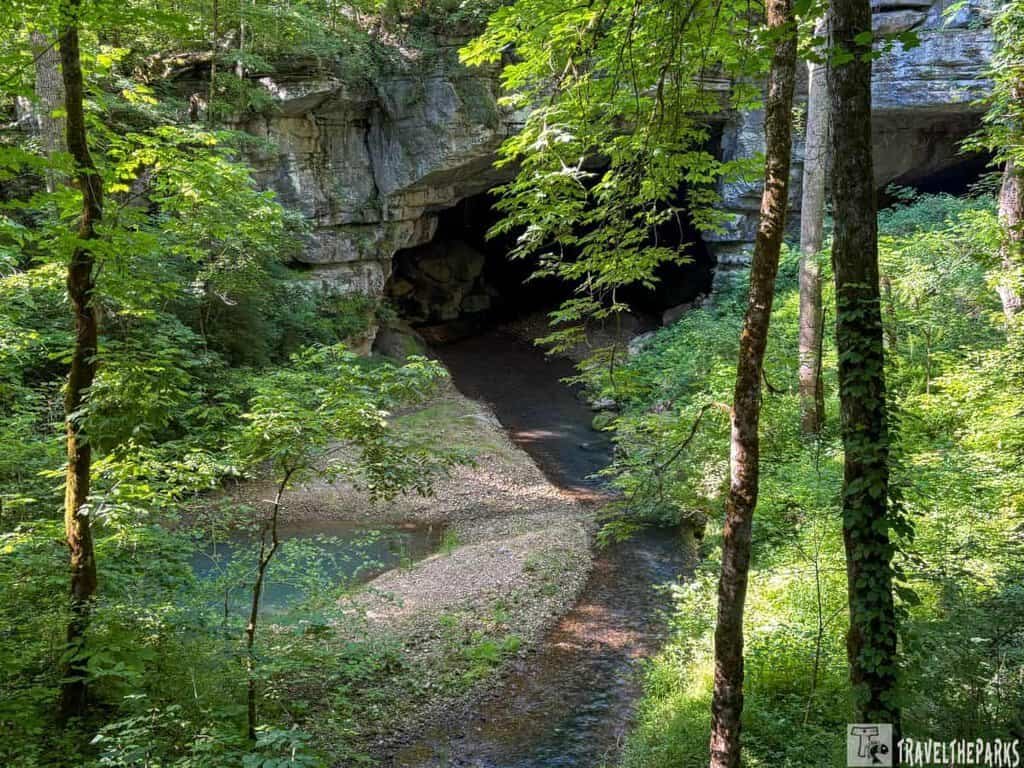
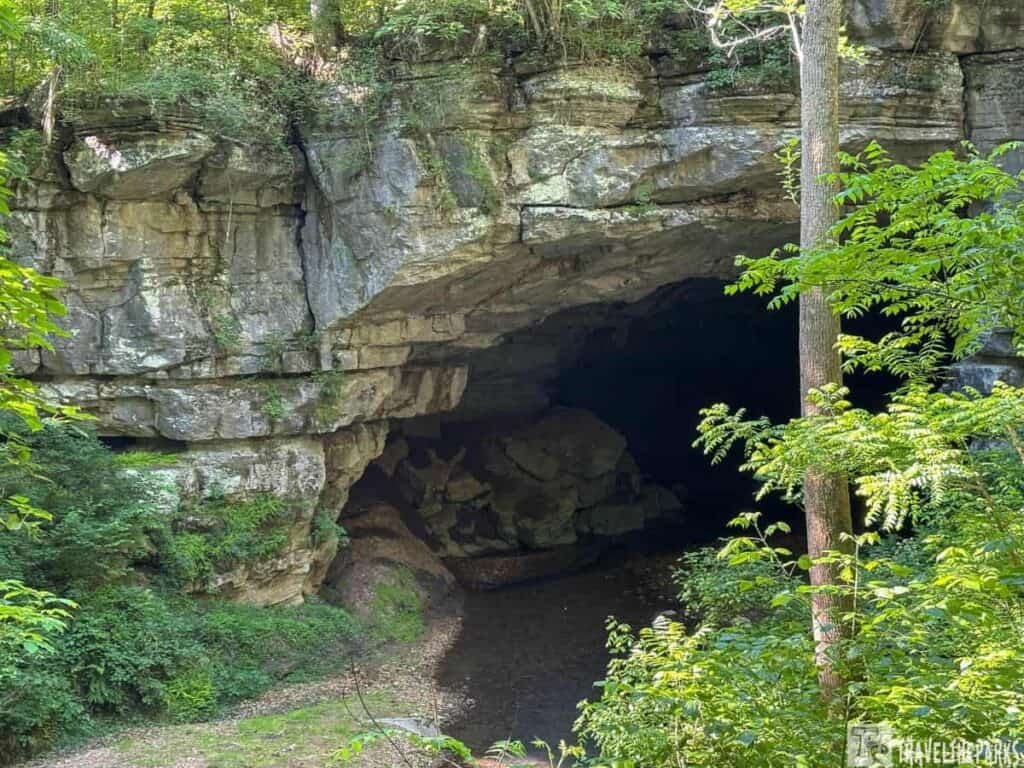
This cave is one of those places that doesn’t compete for attention—it doesn’t need to. Stand at the wide, sheltered entrance, looking at the stone walls that once protected families through winters long before recorded history, and the place speaks for itself.
This post may contain affiliate links, meaning if you purchase something through one of these links, we may earn a small commission at no extra cost to you! Read the full disclosure policy here.
Table of Contents
So what actually makes this cave such a big deal?
Fair question. On the surface, it’s a cave. Indeed, it’s quite large; the mouth on the hillside is wide and theatrical, looking as though it was constructed for dramatic effect. However, it’s still just a cave. What makes Russell Cave genuinely remarkable isn’t the cave itself. It’s the twelve thousand years of human life recorded in its floor.
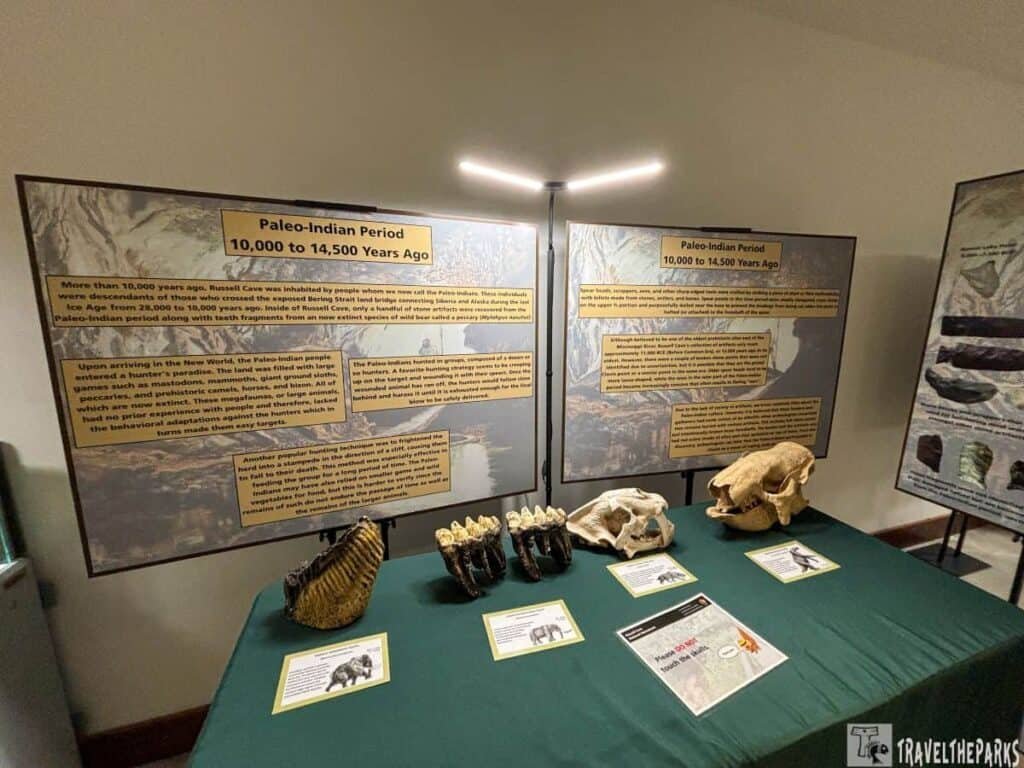
Starting in the 1950s, archaeologists began carefully excavating layer after layer of artifacts from the cave’s soil. What they found was astonishing: evidence of nearly every major cultural group that had ever called this corner of the Southeast home. Paleoindian hunters. Archaic peoples. Woodland and Mississippian communities. Each group had used this cave—likely as a winter shelter—and each had left something behind. Stone tools. Pottery. Bone fragments. Burial remains. The cave floor became, essentially, one of the most complete prehistoric timelines in the entire region.
As one of the Alabama Native American history sites offering this kind of unbroken cultural record in a single location, there really isn’t anything else quite like it in this part of the country. That’s not a tourism pitch. That’s just what the archaeological record shows.
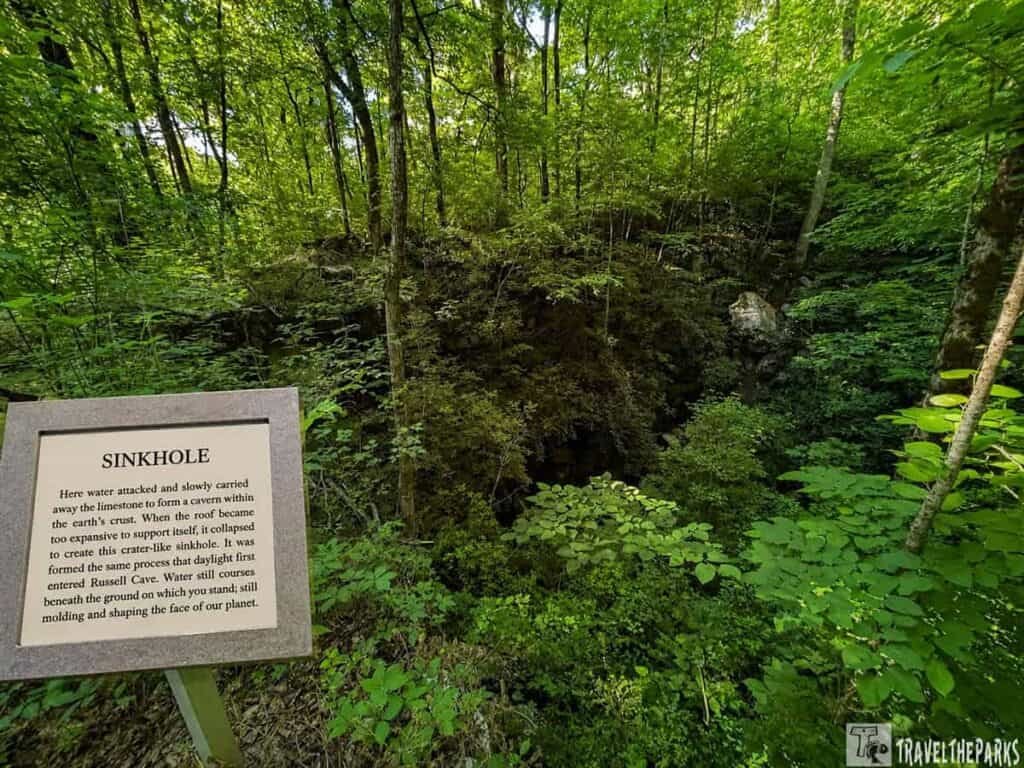
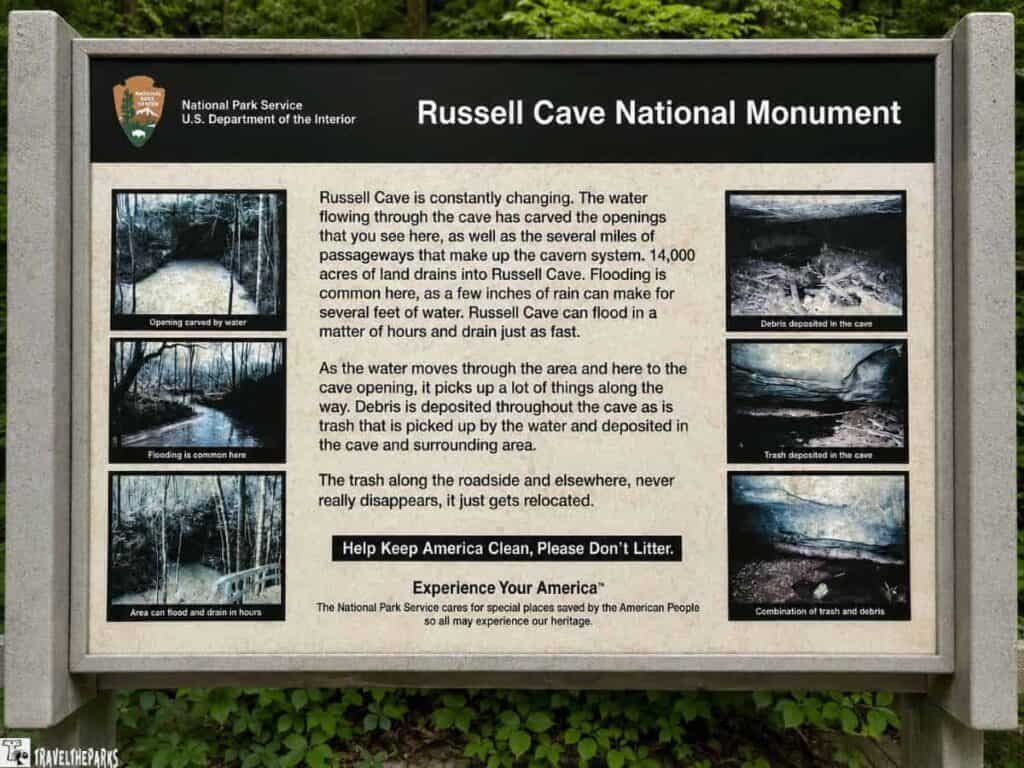
The National Geographic Society purchased the land in the late 1950s and donated it to the American people in 1961. The National Park Service has managed it ever since, protecting both the archaeology and a surprisingly rich natural ecosystem—including a rare scorpion species found almost nowhere else on Earth.
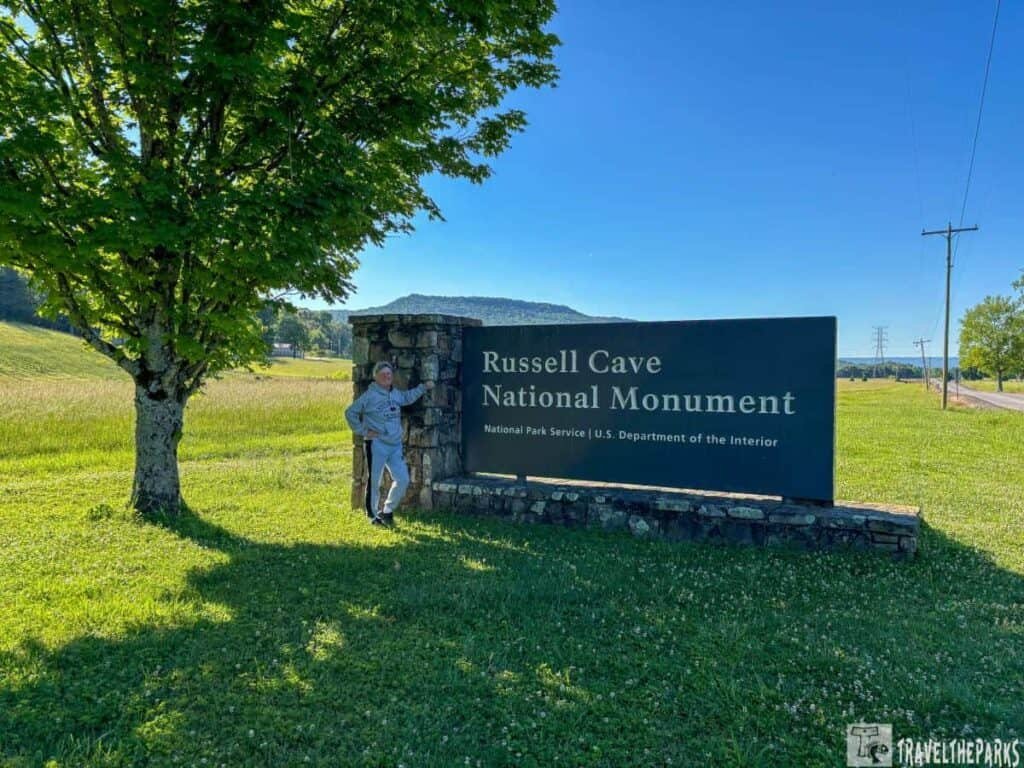
Know Before You Go: Russell Cave National Monument in Alabama
- Location: Tucked away in Bridgeport, Alabama, right near the Tennessee border—easy to miss if you’re not looking for it.
- Operating Hours: Open daily 8:00 AM to 4:30 PM (CST). Closed on Thanksgiving, Christmas, and New Year’s Day. Check the park’s official webpage for updates or seasonal changes.
- Admission: Free. Like many national monuments, there’s no entrance fee.
- Visitor Center: Start here. It gives helpful context on the cave’s role in Alabama Native American history sites and what you’re about to see.
- Cave Access: You can’t go deep inside the cave, but the overlook and entrance area still give you a powerful sense of the space.The short trail to the cave is easy and well-maintained, making it a good option if you’re looking for light Russell Cave National Monument hiking.
- Time Needed: Plan for about 1–2 hours unless you’re taking your time reading exhibits and walking the full trail.
- Best Time to Visit: Spring and fall are ideal for comfortable weather, especially if you’re combining this with other Alabama national historic sites.
- Pets: Welcome on trails & boardwalk (leashed).
- Accessibility: The visitor center is accessible, but the trail to the cave includes some uneven terrain.
- Cell Service: Spotty at best—download directions ahead of time.
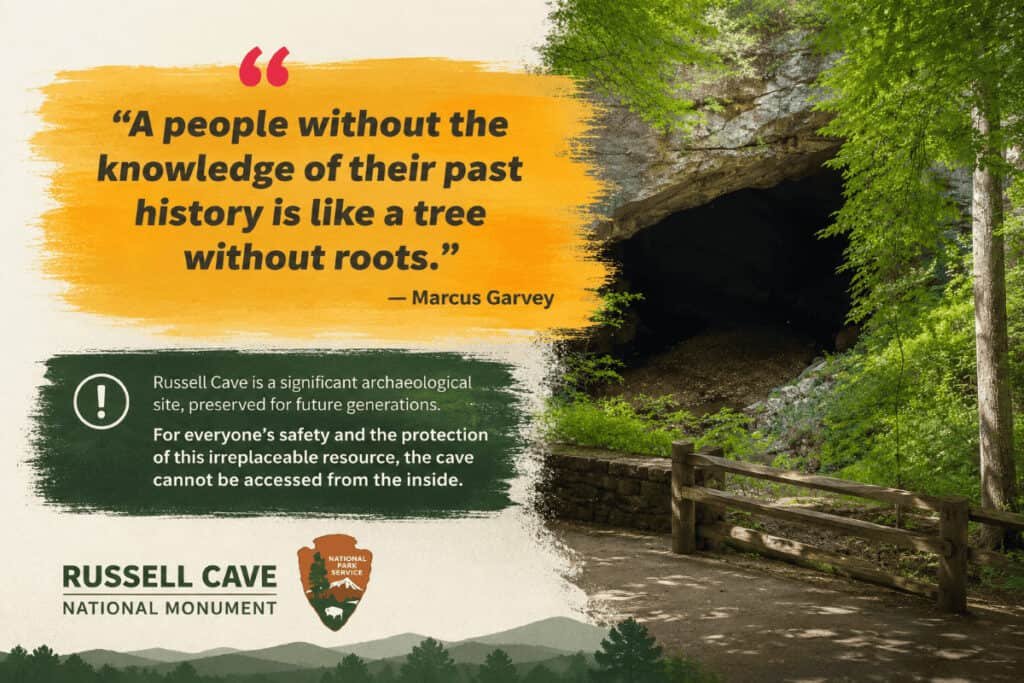
Things to Do at Russell Cave National Monument
People sometimes worry there isn’t enough here for a full visit. I’d push back on that. Come curious, take your time, and talk to the rangers—and you’ll find there’s more here than it first appears.
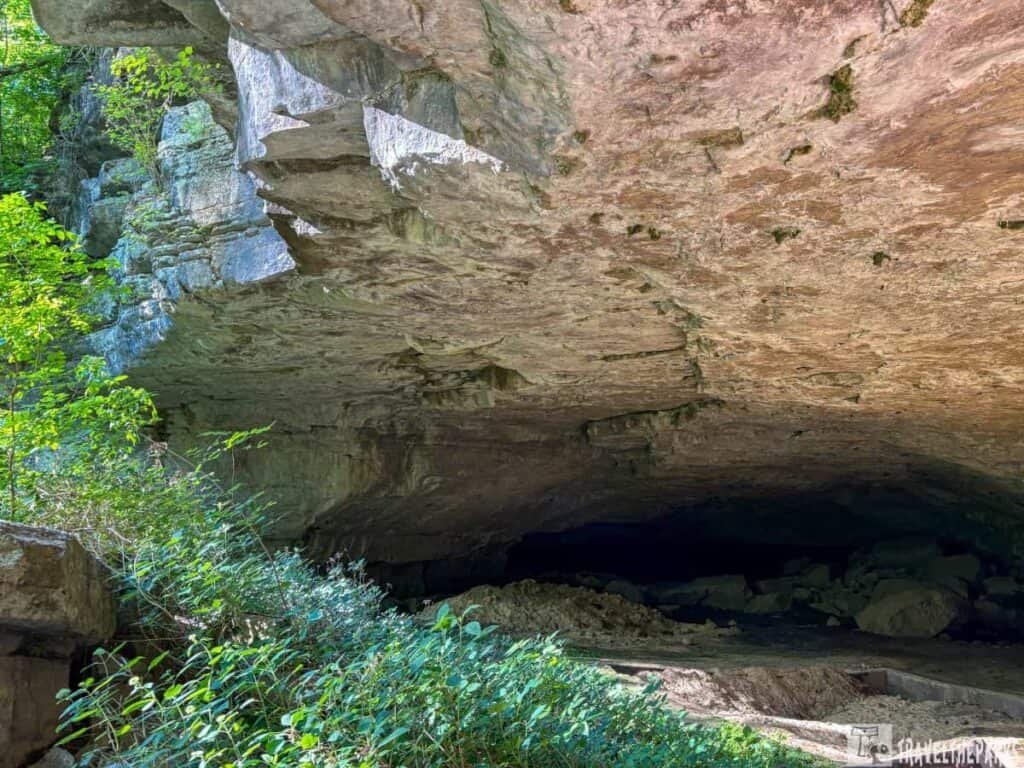
Walking the Cave Shelter Itself
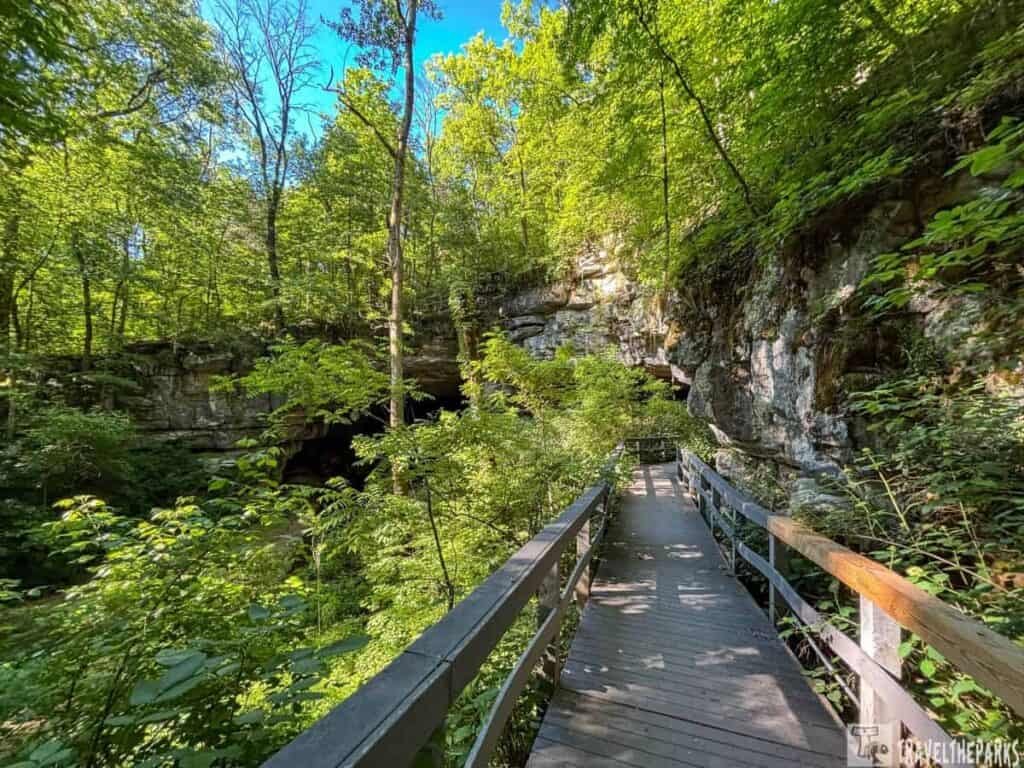
A short boardwalk led us through the forest from the visitor center down to the cave entrance. You’re not going deep underground—the accessible area is the wide, sheltered mouth where the excavations took place. Rangers are stationed here and are genuinely knowledgeable. Ask them questions. They love this place, and their answers add layers to what you’re seeing that a sign never could.
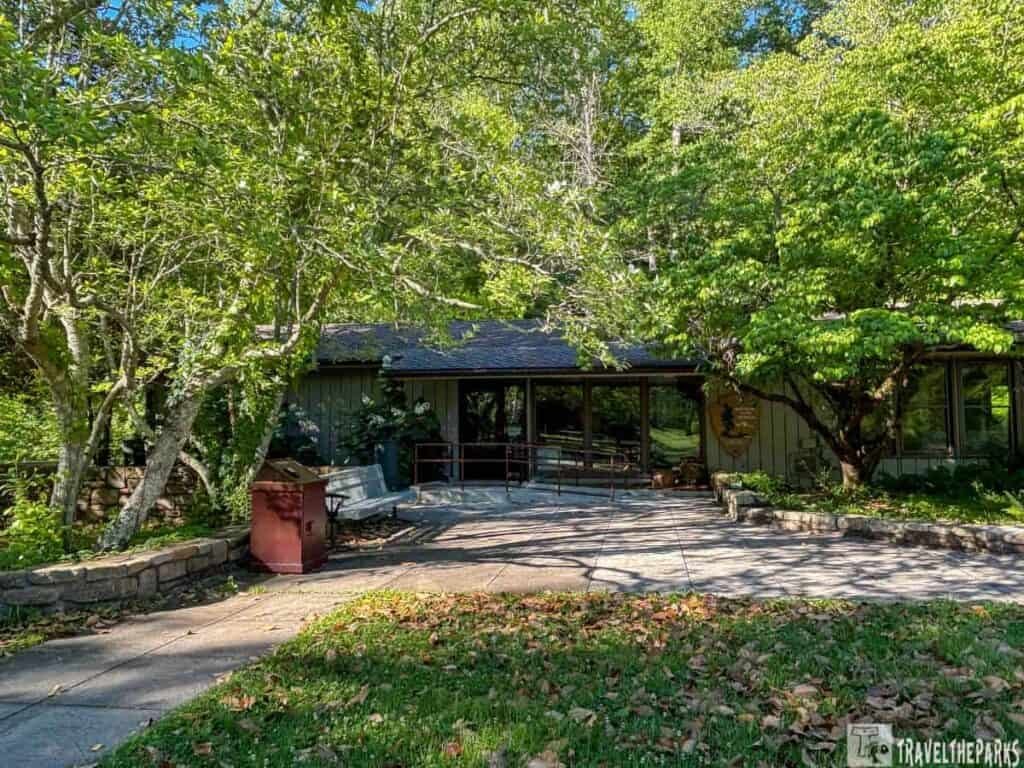
The Visitor Center and Museum
Don’t skip this before heading out to the cave. The exhibits walk you through each cultural period represented in the archaeological record. A short documentary film also offers more background on the importance of this discovery. It’s worth thirty minutes of your time.
It was a little strange being the only people in the whole park—until a film crew showed up, marching toward the cave to shoot scenes for a movie set in the Star Wars universe. Kind of magical, honestly. And there, tucked among their gear, was a stormtrooper mask peeking out like it was waiting for its cue. Not something you see every day.
Russell Cave National Monument Hiking
There are two main trails in the park, and walking them really gave us a sense of how this valley once provided everything needed to survive.
We started on the Nature Trail, taking our time with the interpretive signs along the way. They highlight the plants Native American communities once used for food and medicine. It’s an easy 0.6-mile paved loop—simple walking and great for families. The boardwalk through the trees is especially nice in the fall.
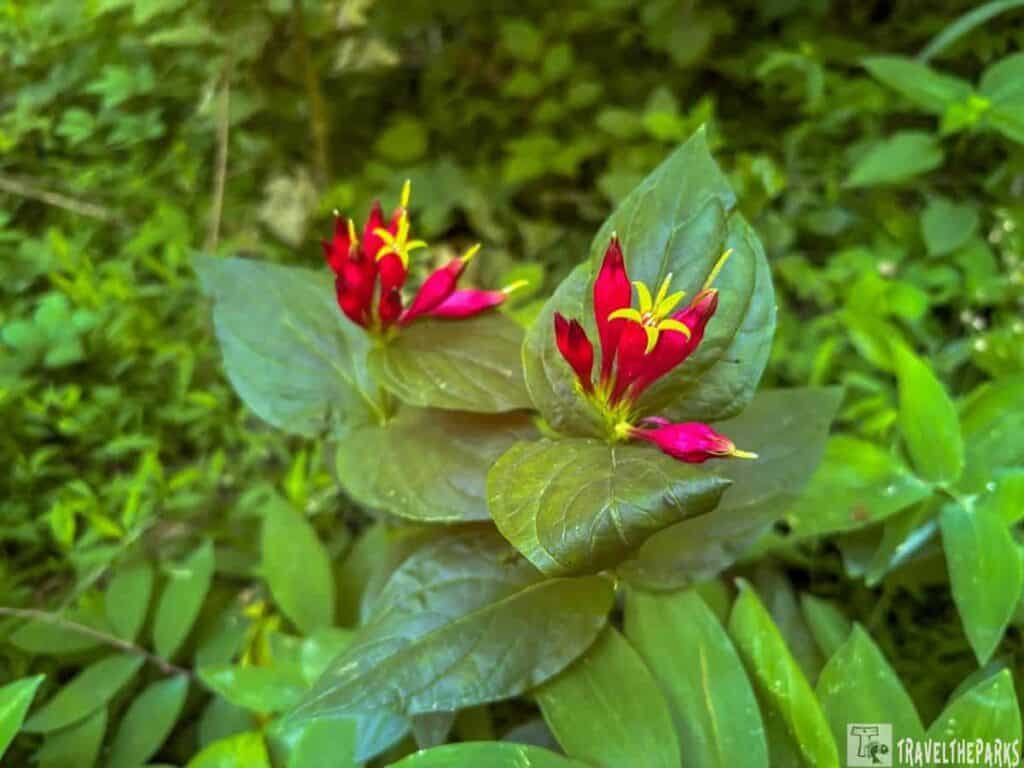
The Backcountry Trail is 1.2 miles of unpaved dirt heading up toward Montague Mountain. Nothing strenuous, but the terrain is wilder and more rewarding. You’ll likely have it to yourself. Wildflowers show up along this route in spring, and truly, the solitude alone is worth it.
Birdwatching
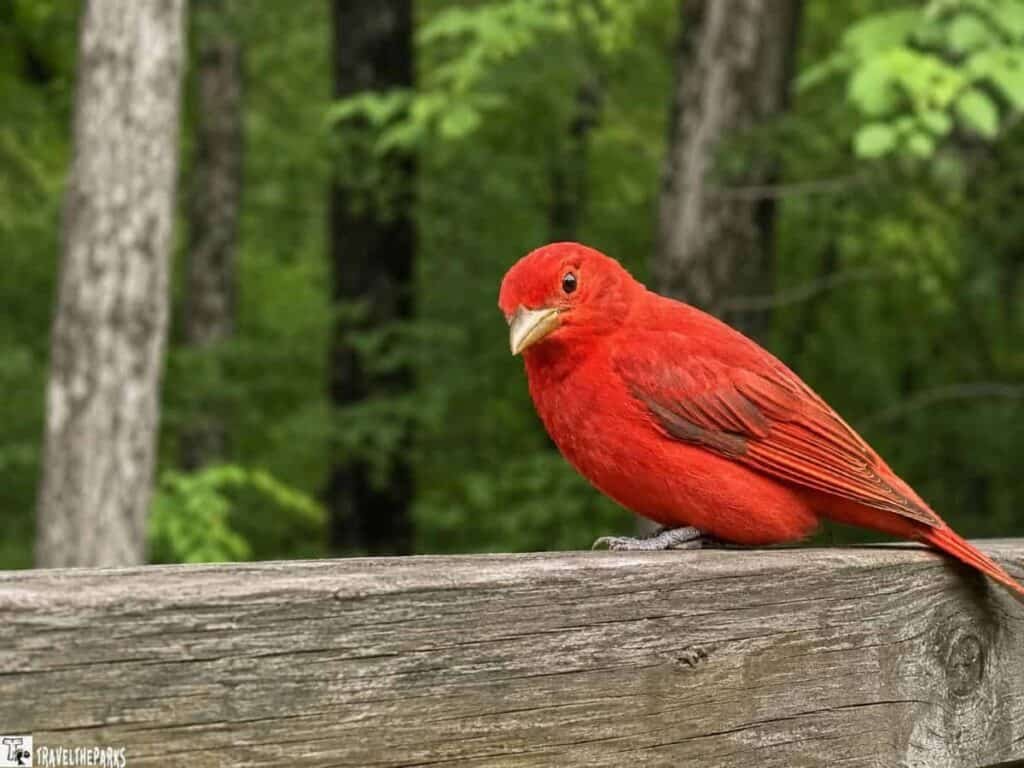
Bring binoculars if you own a pair—Russell Cave sits on the North Alabama Birding Trail, and the wooded valley delivers. Tanagers, yellow-billed cuckoos, and during migration a solid parade of warblers move through here. Not a birder? You might leave wanting to be one.
The Annual Native American Festival
Every first weekend in May, the grounds come alive in a way no exhibit ever could. There’s storytelling, flute music, dancing—and the whole thing is free. It gives Russell Cave a dimension that no display case or documentary film can replicate. Plan around it if you can.
Junior Ranger Program
Kids and Russell Cave are a surprisingly good match. Pick up the Junior Ranger activity booklet when you arrive, let them work through it as you explore, and watch them hand it in at the end like they’ve accomplished something—because they have. The badge is official NPS issue. My kids wore theirs for three days straight.
Love exploring caves? So do we.
Russell Cave National Monument is an incredible place to begin, but if standing in a spot that’s been around for thousands of years stirred something in you, that sense of deep history, you’ll want to keep exploring.
We’re lucky to have access to some incredible cave systems across the country, and no two have felt the same. Wind Cave National Park is wild in its own way—one of the most complex cave systems out there, with those boxwork formations you just don’t see anywhere else. Not far from it, Jewel Cave National Monument stretches on for miles and still somehow feels under the radar. Then there’s Carlsbad Caverns National Park, which honestly just stops you in your tracks. The Big Room is one of those places that doesn’t quite make sense until you’re standing in it. And a little closer to home, Florida Caverns State Park is a nice change of pace if you’re used to Florida meaning beaches. If Russell Cave lit that spark, these places will keep it going.
What to Bring to Russell Cave
A visit to Russell Cave doesn’t require a lot of gear, but a few things can make the experience more comfortable. We recommend comfortable walking or hiking shoes, especially if you plan to explore the trails around the cave.
A small daypack is handy for carrying water, snacks, sunscreen, and the other little things we tend to bring along on day trips. A reusable water bottle is another must-have, particularly when Alabama’s temperatures start climbing.
Don’t forget bug spray and sunscreen if you’re spending time outside. We also like having a portable power bank tucked into our daypack. Between taking photos, checking maps, and navigating to the next stop, our phones seem to lose battery faster when we’re traveling.
Final thoughts: Russell Cave National Monument in Alabama
Some places earn their reputation through scale. Big landscapes, dramatic overlooks, the kind of scenery that fills a camera roll in twenty minutes. Russell Cave National Monument in Alabama isn’t that kind of place—and that’s exactly what makes it special.
It earns its place through depth. Twelve thousand years of human life recorded on a single cave floor. A quiet forested valley that fed and sheltered generation after generation long before anyone thought to name it. A park that hands you all of that for free, with no crowds and no fuss, on any given morning of the week.
I’ve stood at a lot of historic sites over the years and come away feeling like I’d read a good information board. Russell Cave felt different. It’s one of those places that actually recalibrates something—your sense of time, your sense of just how long people have been finding their way through this world. That doesn’t happen often. When it does, it’s worth noting.
Have You Been to Russell Cave?
If you’re building out an Alabama itinerary, or even just passing through the northeast corner of the state, make the detour. Pack a lunch, give it time, and let the place do its thing. Among all the Alabama National Historic Sites we’ve visited, this one sits in a category of its own.
We’d love to hear about your visit. Did you catch the May festival? Spot something great on the birding trail? Bring the kids? Drop a comment below and tell us about it — your experience might be exactly what someone else needs to hear before they make the trip.