Ah, Virginia!! Along the way, we made it a point to visit a few historical places during our road trip to Virginia, as we wanted to embrace the history of this country. Visiting Historic Jamestowne was especially exciting, and we could almost hear the stories of 1607. This is the year the first English settlers established America’s first permanent colony. This remarkable place, which is on the James River, combines rich history with hands-on archaeology and activities that are so immersive that you leave the place transformed. A trip to Virginia’s Historic Triangle is not just a study of America’s history but is in fact an unforgettable experience that lets you travel in time.
This post may contain affiliate links, meaning if you purchase something through one of these links. We may earn a small commission at no extra cost to you! Read the full disclosure policy here.
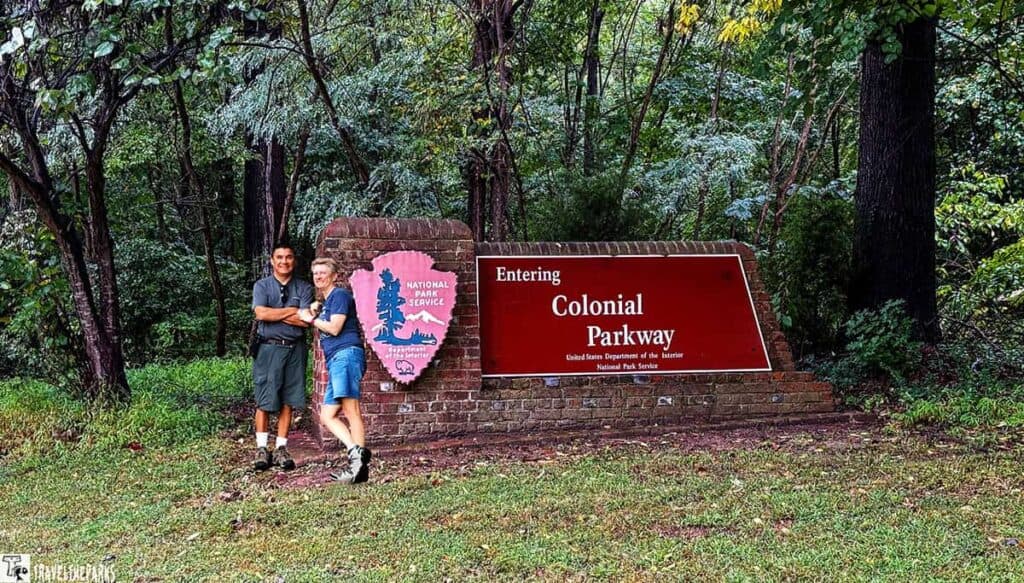
Table of Contents
Part of Virginia’s Historic Triangle-Colonial National Historical Park
The Jamestown Settlement and Historic Jamestowne are part of Virginia’s renowned Historic Triangle. A group of five significant colonial communities that includes:
- Jamestown:
- Jamestown Settlement: a living-history museum featuring re-creations of a Powhatan village, the three ships that brought the colonists, and a 17th-century fort, along with galleries that explore the convergence of Indigenous cultures, English, and African cultures.
- Historic Jamestowne: the original site of the 1607 James Fort and town, where ongoing archaeological digs and preserved ruins offer a direct link to America’s first permanent English settlement.
- Colonial Williamsburg: a vibrant living history museum and 18th-century town. It is brought to life by costumed interpreters, original buildings, and reconstructed sites.
- Yorktown Battlefield: The final battle was fought here during the American Revolution. This marked the decisive American victory over British forces in 1781.
Connected by the scenic Colonial Parkway, these three sites form a powerful and immersive look at America’s founding story—from colonization to independence. Many visitors choose to explore all three for a comprehensive historical journey through early America.

Visiting Jamestown Settlement vs. Historic Jamestowne: What’s the Difference?
Planning a trip to Jamestown, Virginia, but confused about the difference between Jamestown Settlement and Historic Jamestowne? Both sites bring early colonial history to life—but in unique ways. Here’s what you need to know to decide which to visit (or how to experience both!). This post will cover Colonial National Historical Park.

PRO Tip: Bring your America the Beautiful Pass if you have one. It covers your NPS entrance fee, though you’ll still need to pay for Preservation Virginia access.
Know Before You Visit Historic Jamestowne — Colonial National Historical Park
Planning a trip to Historic Jamestowne? To make the most of your visit, here’s everything you need to know before you go—from tickets and parking to must-see spots and hidden gems.
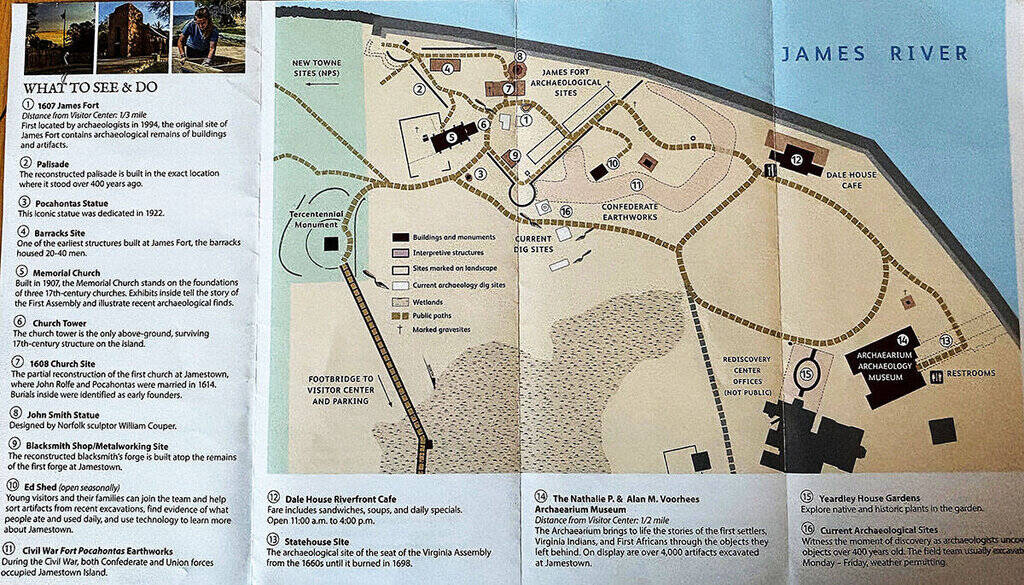
- Entrance Fee: $30 per vehicle (7-day pass includes Yorktown Battlefield); free with National Parks Pass. Preservation Virginia Access Fee: $15 (required for entry to James Fort, Archaearium, and excavation sites) See Map.
- Operating House: Open daily: 9 AM to 5 PM, year-round, except Christmas Day, Thanksgiving Day and New Year’s Day. The Voorhees Archaearium is open from 9:30 AM to 5:00 PM. The 1608 Glasshouse is open from 8:45 AM to 5 PM.
- Best Time to Visit: Spring & Fall: Ideal weather, great for walking tours. Summer: Hot/humid—bring water, hats, and sunscreen. Winter: Fewer visitors, but some outdoor exhibits may be limited. Weekdays (especially mornings) are less busy than weekends.
- Parking: free at the Visitor Center; overflow lots available during peak seasons.
- Guided Tours: Free ranger-led walks daily; archaeology tours (April–October) offer hands-on learning.
- Weather: Wear sunscreen and insect repellent; trails can be muddy after rain. Wear comfortable shoes; the site has uneven paths, brick walkways, and grassy areas. Bring plenty of water.
- Amenities: restrooms at the Visitor Center and Dale House Café; water fountains available.
- Accessibility: Paved paths to major sites; wheelchair loans at the Visitor Center.
- Nearby: Pair your visit with Jamestown Settlement (separate admission) or the Colonial Parkway linking to Williamsburg and Yorktown. Colonial National Historical Park Map.
- Pets: Leashed pets allowed on trails but not in buildings.
Historic Jamestowne: The Real Archaeological Site
Founded in 1607, Jamestown was the first permanent English settlement in North America. The colonists faced harsh conditions—swampy land, disease, limited food, and tense relations with Indigenous peoples. The winter of 1609–1610, known as the “Starving Time,” was the colony’s darkest period. Trapped by a Powhatan siege and running out of supplies, only 60 of about 300 colonists survived.
However, Jamestown endured. Tobacco, new settlers, and the first assembly in 1619 boosted the colony’s growth. Jamestown is both a symbol of English expansion and a site of struggle, survival, and deep historical complexity.
Historic Jamestowne (also called Jamestown Island) is the actual archaeological site of the original 1607 colony. Unlike the nearby Jamestown Settlement (a living history museum and replica village), Historic Jamestown is where the actual history happened. Here, you can walk the grounds where Captain John Smith and Pocahontas once stood. It was interesting peering into excavated wells and burial sites. We even got to speak with archaeologists working to uncover new secrets from the soil.
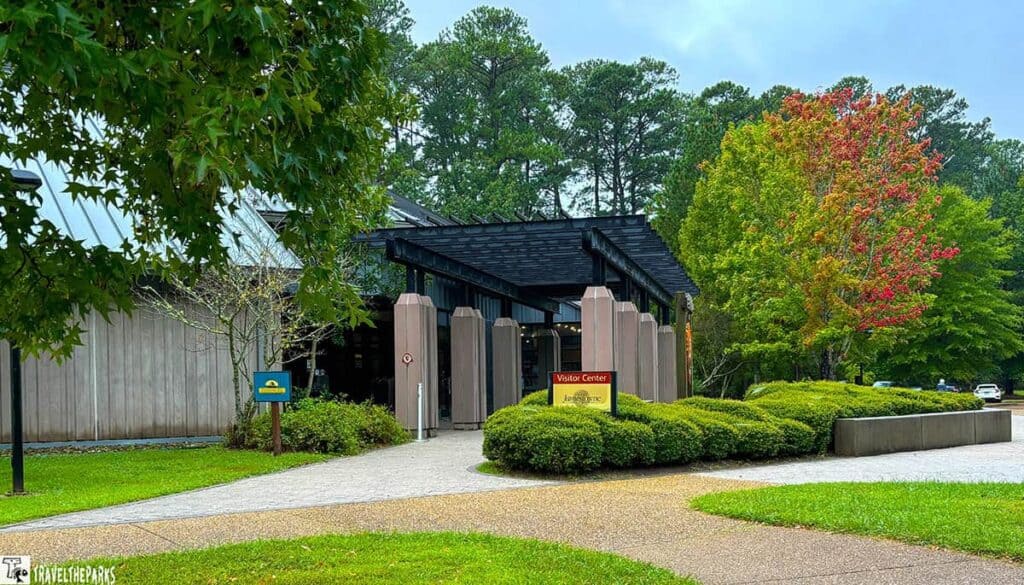
Guide to Visiting Historic Jamestowne: Start at the Visitor Center
We always begin our day by going to the visitor center. At this park, the modern facility is designed to provide the essential context and dramatic story that made our exploration of the historic site far more meaningful. A must-see is the introductory film. It is a short 15-minutes. It sets the stage perfectly for the adventure ahead.
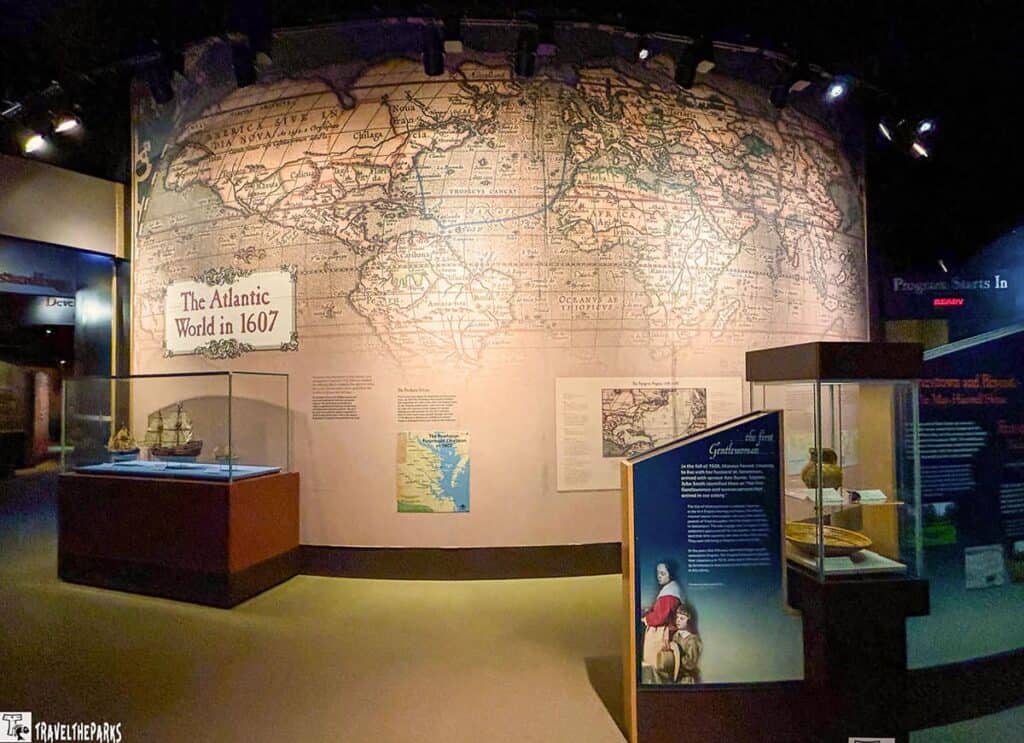
The exhibit hall is a wonderful timeline, although it is not organized chronologically. By walking around the exhibit hall, you will understand that Jamestown was not a single event but a dynamic, often brutal, 92-year period as the English capital. This context allows you to walk out onto the island and see the layers of history—from the triangular outline of the 1607 fort to the 1680s church tower—and then understand how they all fit together in the epic story of America’s beginning. It is only then that we proceed to walk among the original ruins, observe active archaeological digs, and discover the foundations of America’s first permanent English colony.
What to See When Visiting Historic Jamestowne, Virginia
Certainly, nobody could say that they have been to Historic Jamestowne without going along a self-guided walking tour on the original colony site in the Colonial National Historical Park. You’ll be introduced to Old Towne and New Towne in this immersive experience, illustrating early American life. New Towne: Walking Tour Map click here, Old Towne: Walking Tour Map click here.
Pro Tip: Give yourself 2–3 hours to fully explore this area—especially if you want to catch a ranger talk, view the archaeology lab, or simply take in the powerful sense of place.
Walking Through History: Old Towne and New Towne at Historic Jamestowne
Stop #1: Governor Yeardley’s Property (New Towne Map)
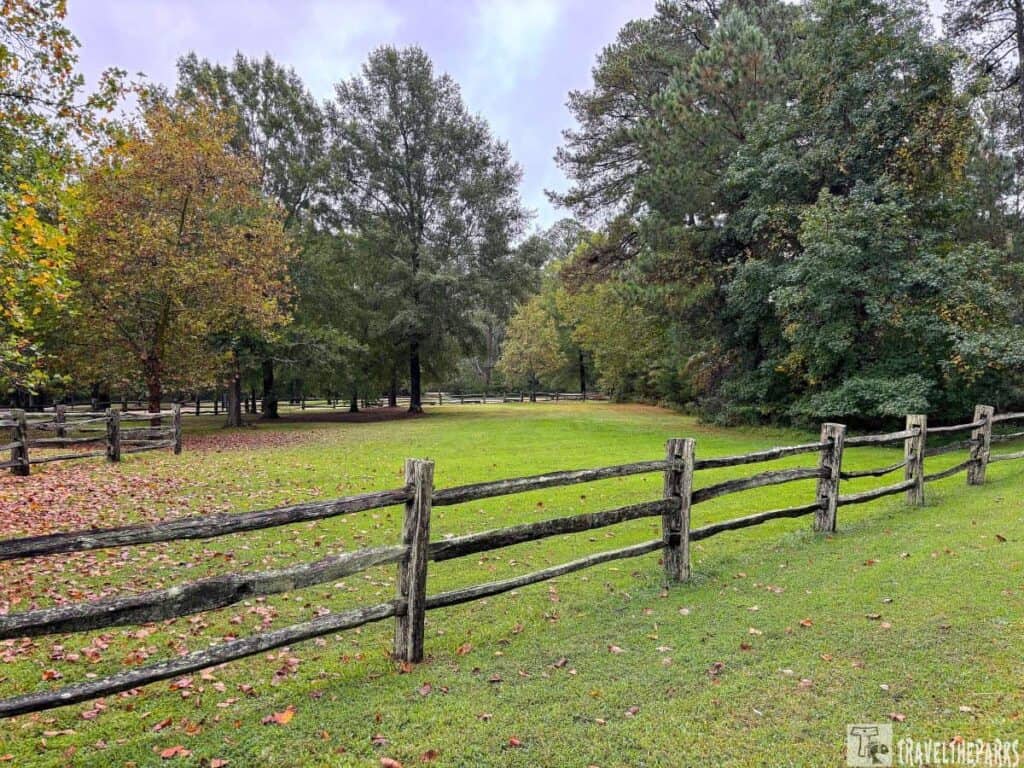
Governor Yeardley’s Lot 1620s Marker: A historical marker just outside the visitor center in the New Towne section states: George Yeardley arrived in Jamestown in 1610, rising to governor by 1618. In 1619, he issued the Great Charter, establishing Virginia’s first representative government. By 1620, he owned a 7.25-acre lot here, which became his home site. A 1625 record lists his household: Yeardley, his wife, three children, and 24 servants, including eight of the first nine documented Africans at Jamestown, along with livestock and three boats. What we could see was a fenced area representing the lot. Brick foundations found nearby may be from his home; other remains suggest servant dwellings to the east.
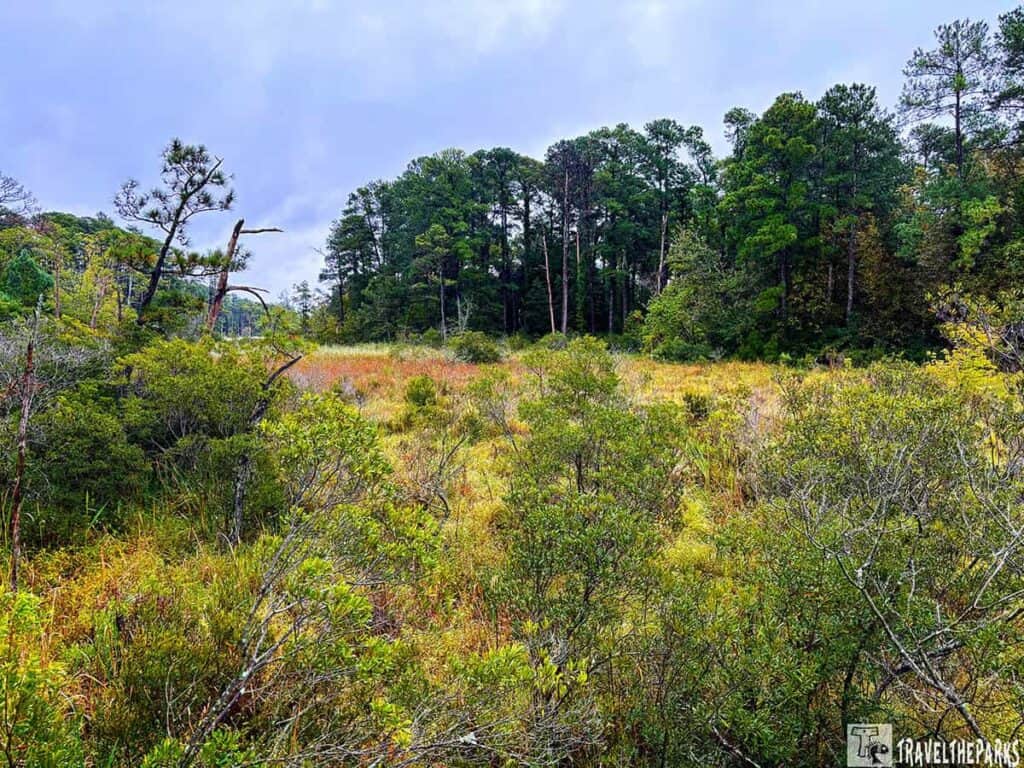
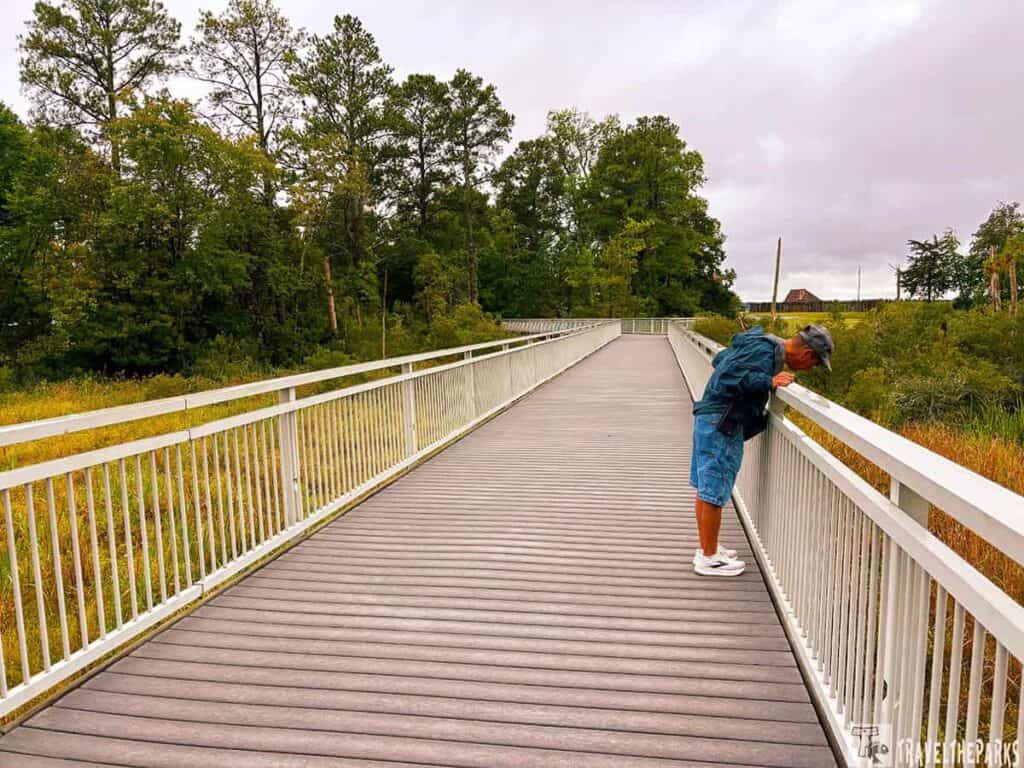
Continuing along the path, we crossed a footbridge that spans a swampy area. The Pitch and Tar swamp earned its name from the natural tar and pitch present in the sap of the pine trees that thrive in this area. These substances were crucial to the early Jamestown settlers. They were pioneers in utilizing pitch and tar to waterproof their ships and seal barrels. It became a significant natural resource, supplying the essential materials. This ensured wooden vessels remained seaworthy and cargo secure during extensive ocean journeys.
Stop #2: Tercentenary Monument (New Towne Map)
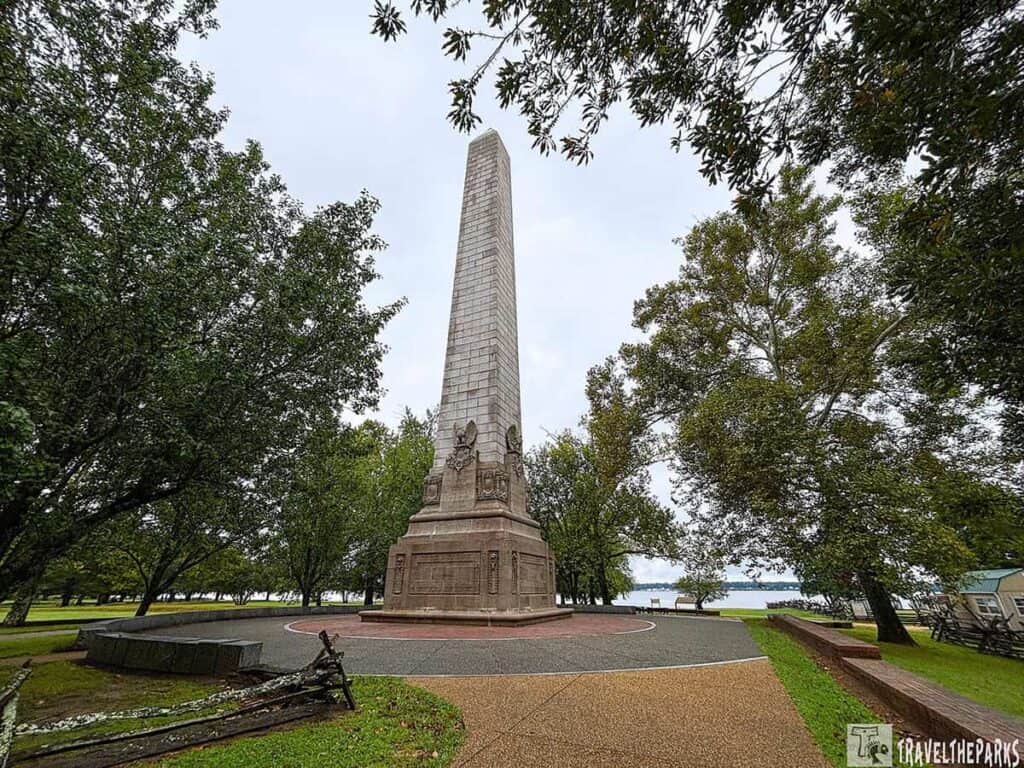
The Tercentenary Monument is a grand granite obelisk (104 feet) that was constructed in 1907 to commemorate 300 years since the establishment of Jamestown. Erected by the U.S. government, this monument serves as a tribute to the initial English settlement that arrived in this area. From this point, the paths split: the left leads to New Towne, while the right heads towards Old Towne. I aimed to explore the history of this founding in chronological sequence, so we started our journey in Old Towne.
Self-Guided Exploration of Old Towne on a Visit to Historic Jamestowne (Map)
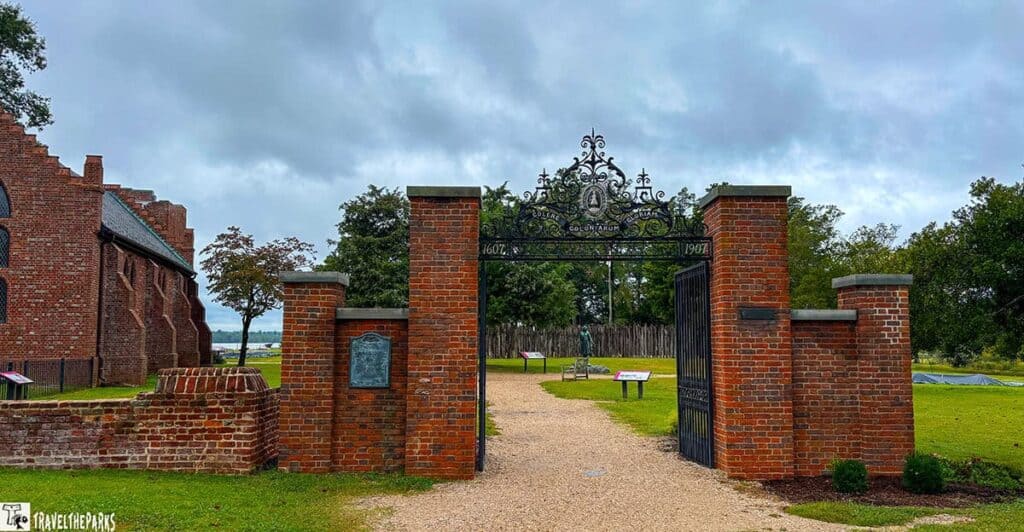
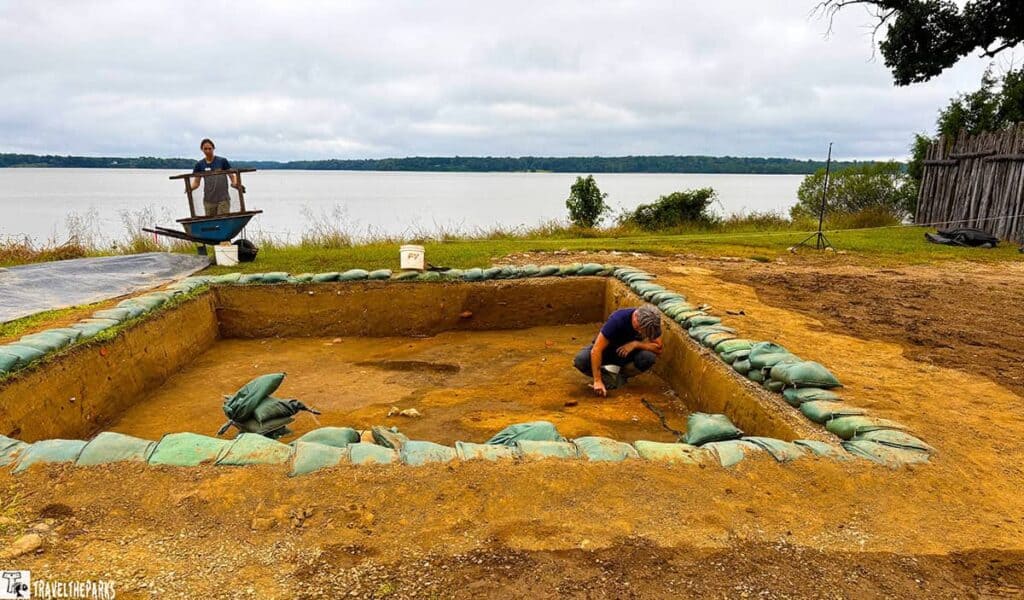
Preservation Virginia/Jamestown Rediscovery manages the Old Towne section of the park. As we walked the grounds, we had the rare chance to see archaeologists actively excavating parts of the site—an ongoing effort that continues to reshape what we know about the former colony.
Stop #1 1607 James Fort
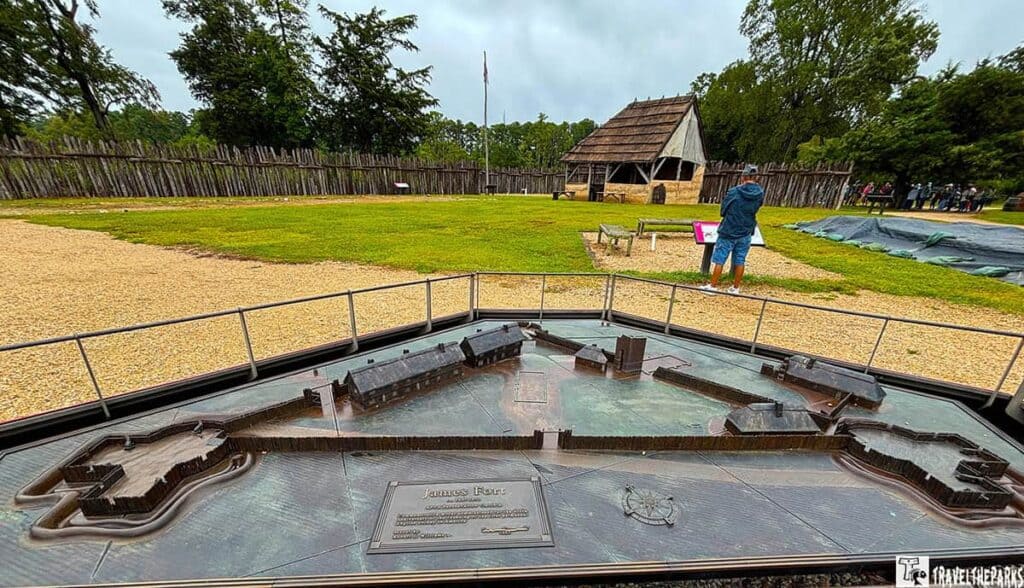
Standing on the spot of the original 1607 James Fort in Jamestown was the most impactful experience for me. By following the outline of the initial triangular fort, you’re transported through what life was like inside the wooden palisade walls of the fort. Recreated features and interpretive markers make the layout come alive, with ongoing excavation by Jamestown Rediscovery unearthing new understanding of this turning point in history. Nothing is visible above ground, but archaeology has uncovered the original triangular footprint of the fort, including post holes, building foundations, and even personal effects left behind by the settlers.
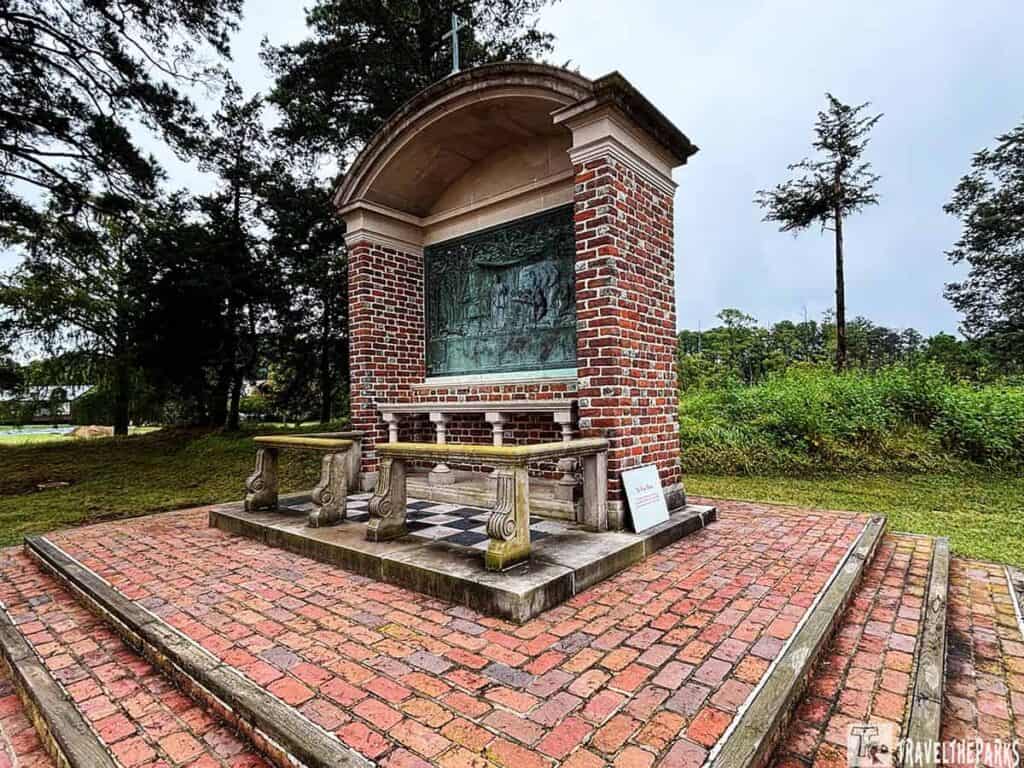
The Hunt Shrine is dedicated to Reverend Robert Hunt, the colony’s first Anglican minister. He provided spiritual counsel and worship during the trying early years of Jamestown. The 1922-created shrine contains a sandstone relief of the outdoor communion of 1607 and a quote by John Smith acknowledging Hunt’s soothing influence. Set along the James River, the shrine is an acknowledgment of the human spirit that preserved the struggling colony.
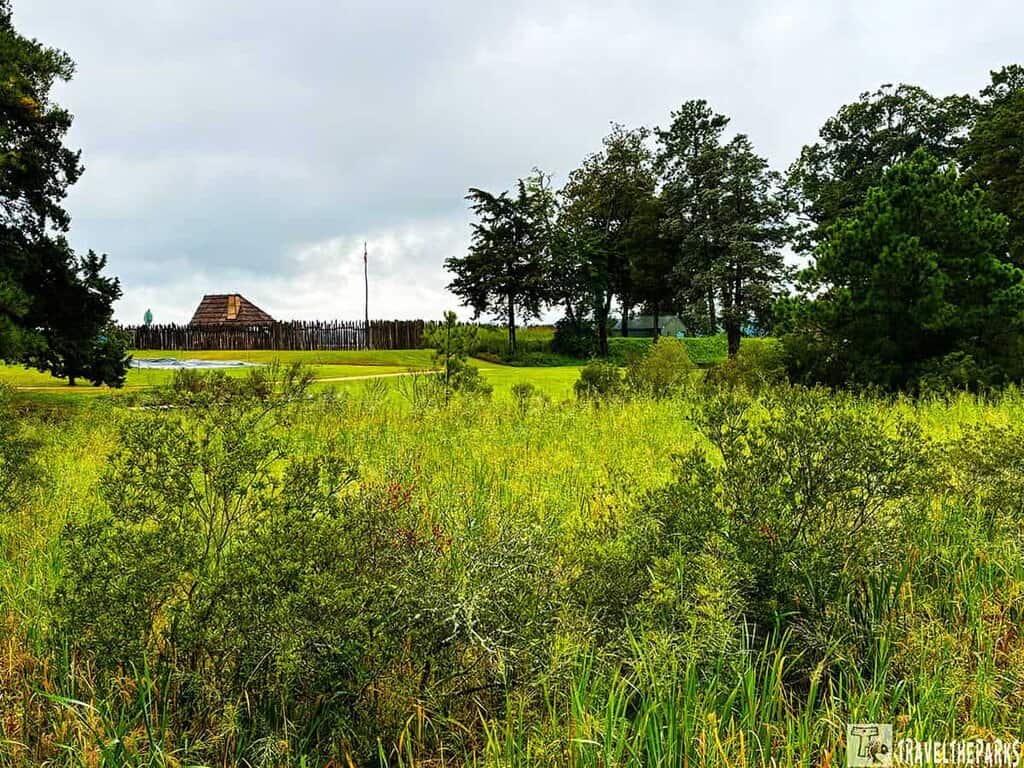
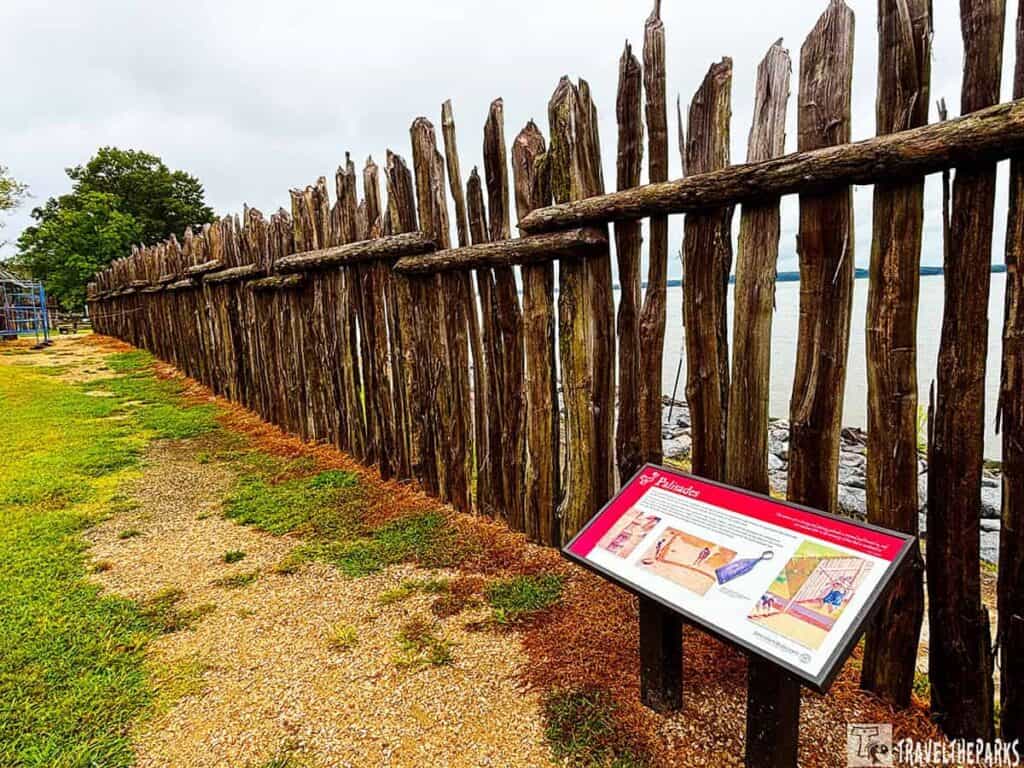
Stop #2: The Pallisade
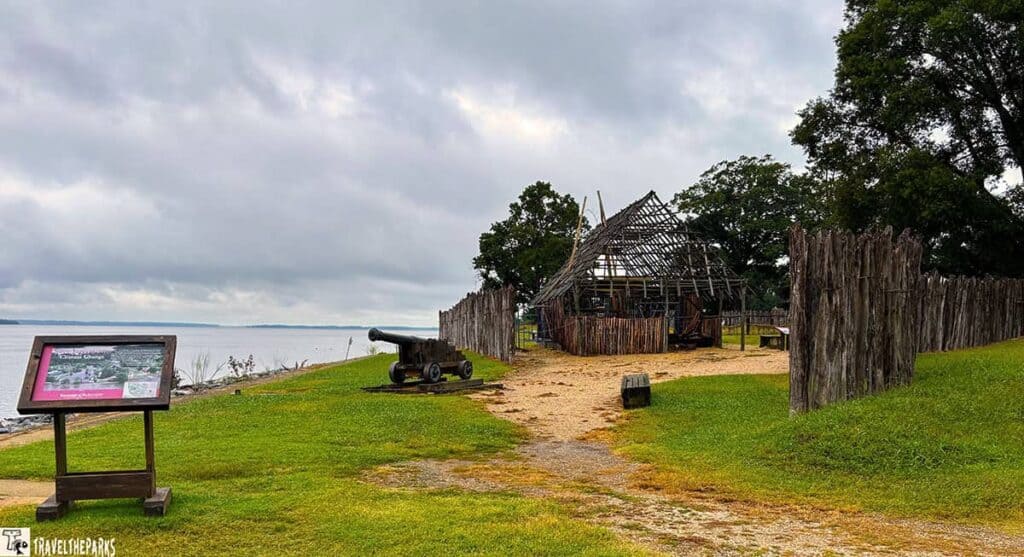
The tall, sharpened log walls (palisades) were essential for defense, while the simple, thatch-roofed barracks illustrated the rudimentary living conditions the early soldiers and gentlemen adventurers endured.
Stop #3: Pocahontas Statue
The next stop is a well-known bronze sculpture of Pocahontas. Dedicated in 1922, the sculpture commemorates Pocahontas, the daughter of Powhatan, who was involved with contact between Powhatan and English colonists during the first years of Jamestown.
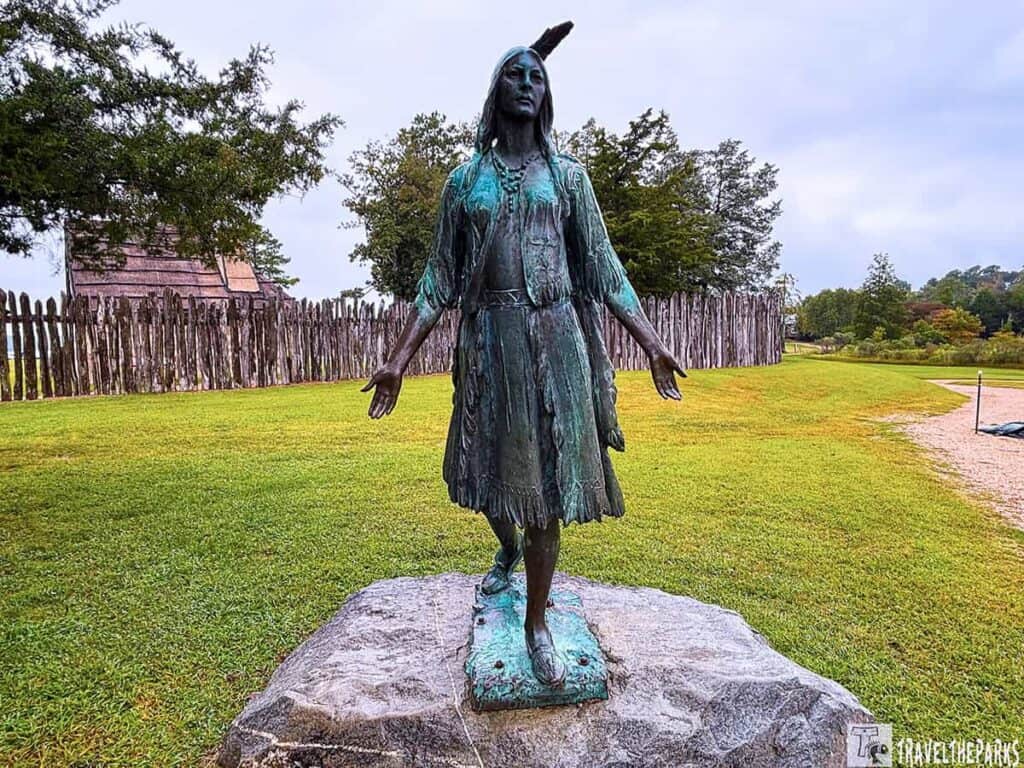
Education and the media prefer not to see her true hardships. They typically depict Pocahontas romantically. She was a bridge between two cultures (middleman). In England, she took on the name Rebecca and died there in 1617. Her statue commemorates her lasting impact and the overlooked indigenous point of view. It reminders us to look at her accurate history.
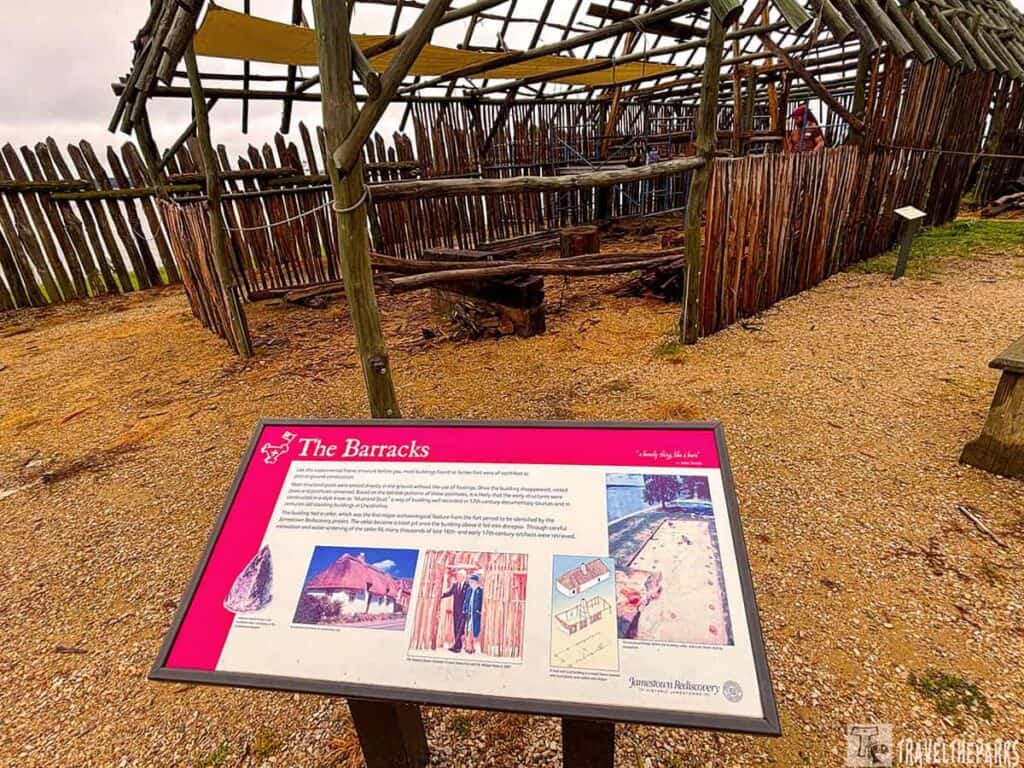
Stop #4: Reconstructed Barracks Site
Leaving the church behind, we passed by the reconstructed palisade walls and mud-and-stud barracks. These buildings, based on archaeological evidence and historical records, give you a powerful sense of the cramped, fortified reality of life in the first years of the Jamestown settlement (c. 1607-1610).
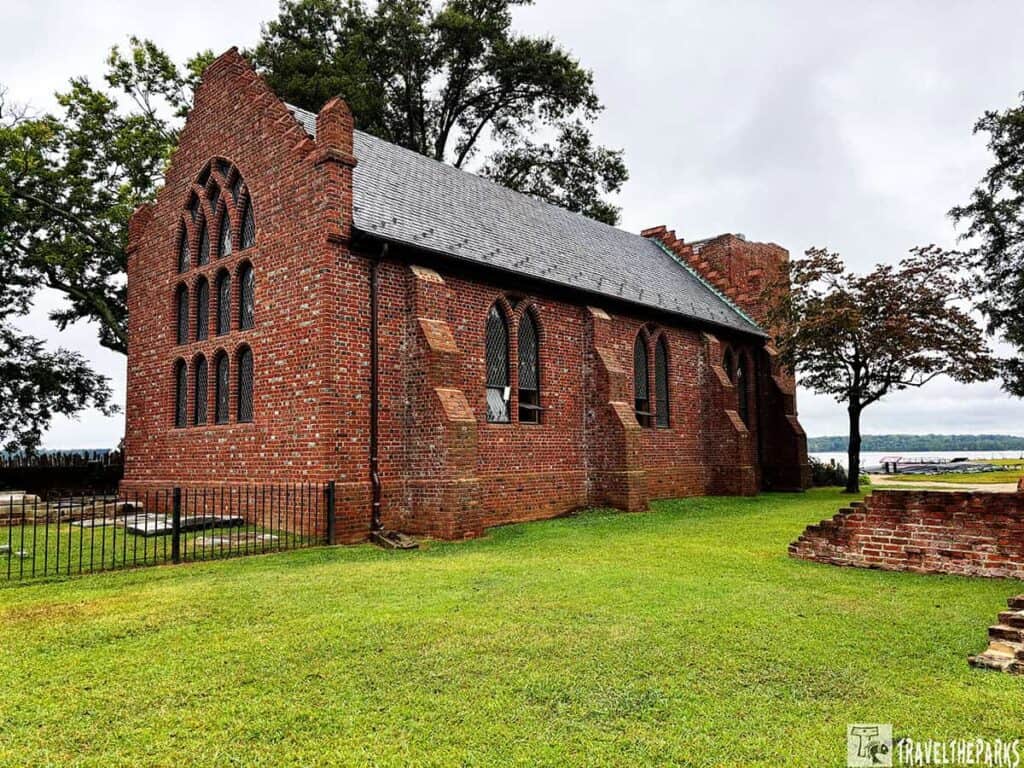
Stop #5: Guide to Visiting the 1907 Memorial Church at Historic Jamestowne
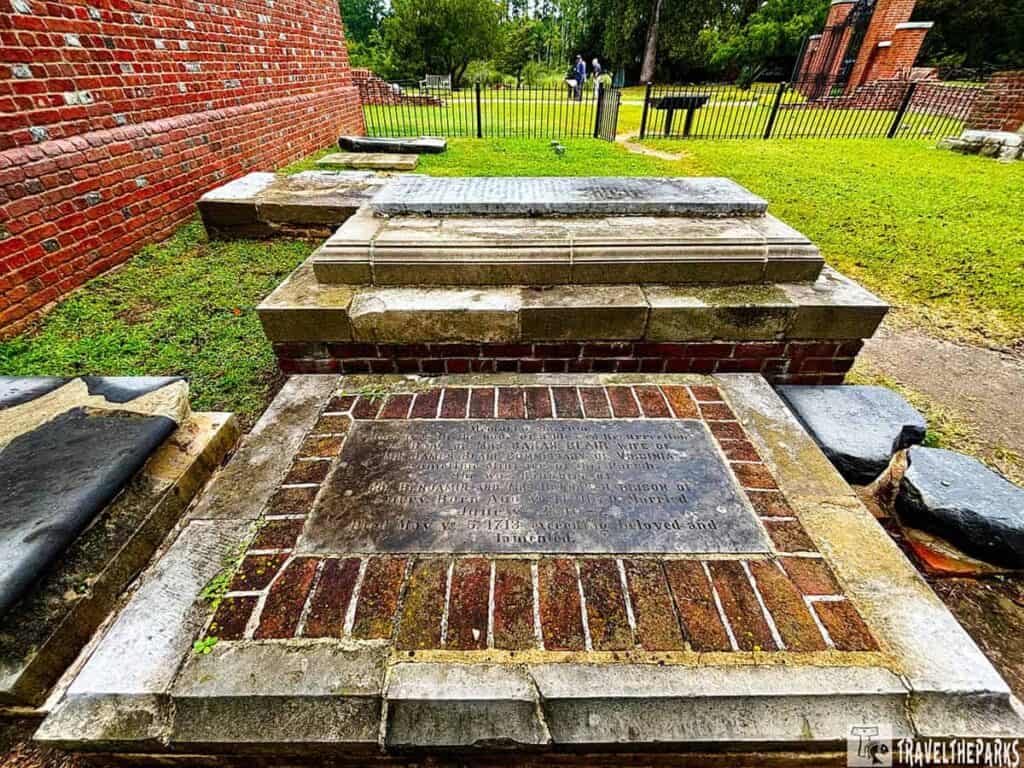
We paused at the cemetery encircling the church before going inside, taking note of the names and dates of the colonists buried there. It was a poignant reminder of the individuals who lived and died to establish this foothold in America.
When you walk into Memorial Church, you enter the center of Jamestown’s religious history. The church was built in 1907 by the National Society of the Colonial Dames of America to honor the first permanent English settlers and the founding of the Anglican faith in America. This brick church is located where four earlier churches once stood. One of these was the church where the first General Assembly met in 1619. Thus, marking the start of representative government in early America.
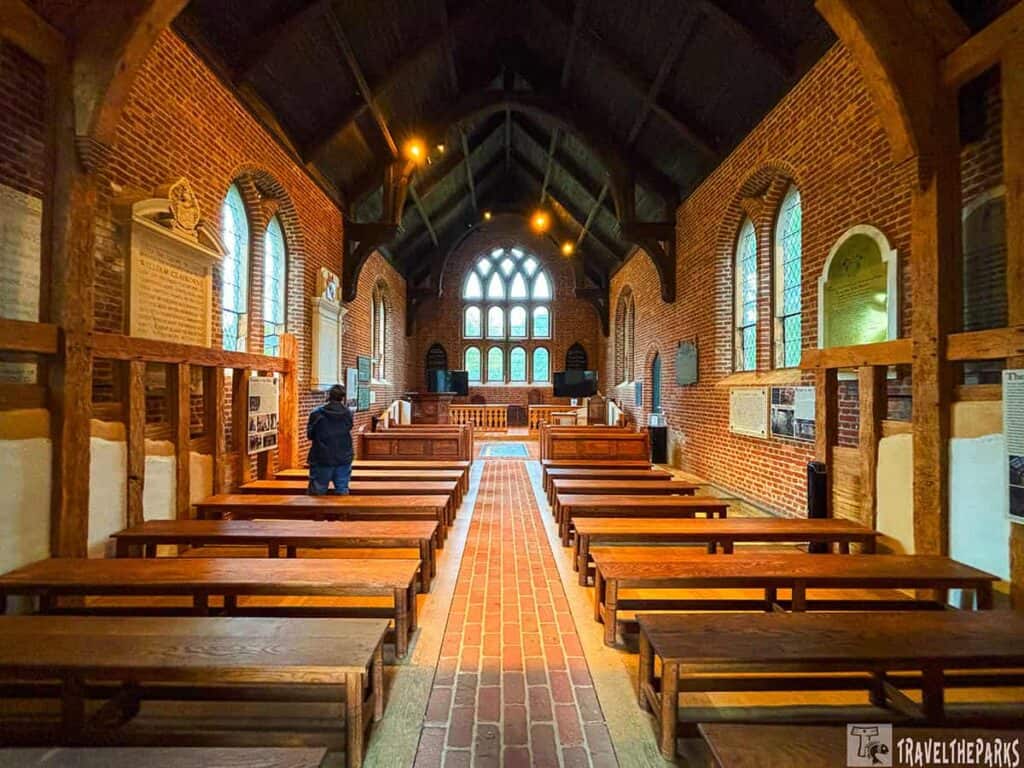
Inside, glass windows cast a soft light across the brick walls. Marble commemorative plaques honoring figures like John Smith and Pocahontas line the walls. I had to remind myself I was standing in the very spot where early colonists used to meet for worship, hold town discussions, and make important decisions.
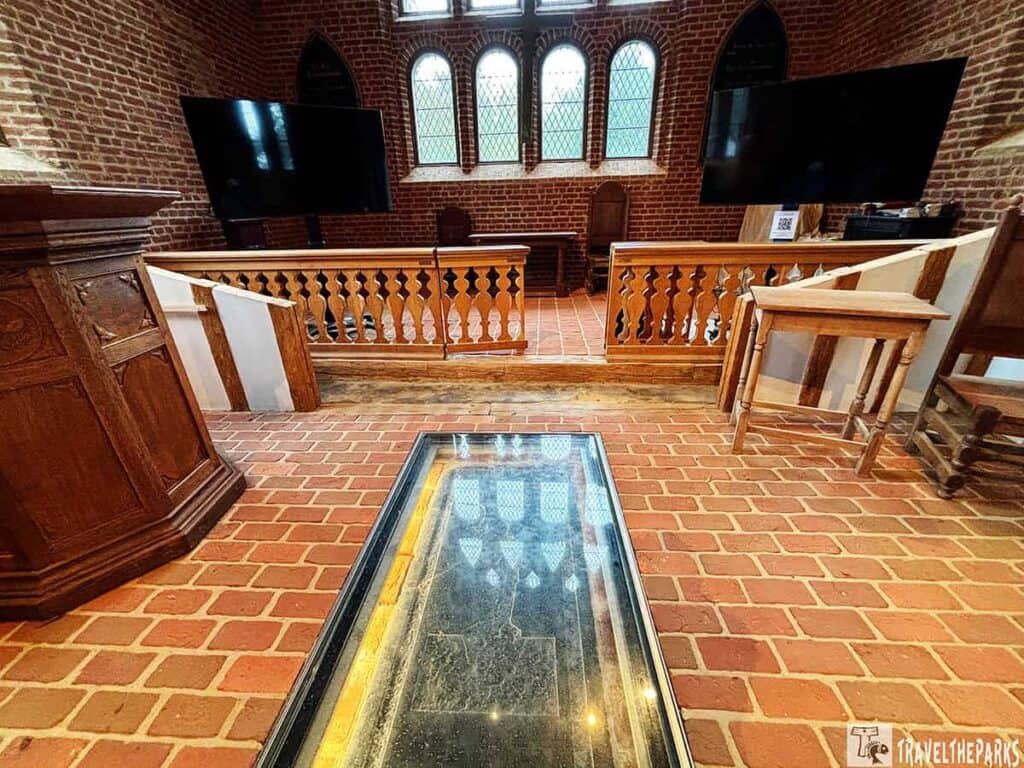
The Grave of George Yeardley, or is it?
I though this was the most significant find here. It was totally unexpected inside the church. It is thought that the burial of a high-status man is in the chancel, marked by a modern ledger stone. Extensive forensic and archaeological analysis by Jamestown Rediscovery points to this being the grave of Sir George Yeardley, a former Governor and a pivotal figure who convened the first General Assembly in 1619. The position and the analysis of the remains make him the prime candidate.
NOTE: A recent study in early 2025 used DNA from the remains to compare with living descendants, ruling out Yeardley, as no genetic match was found. So who is it??
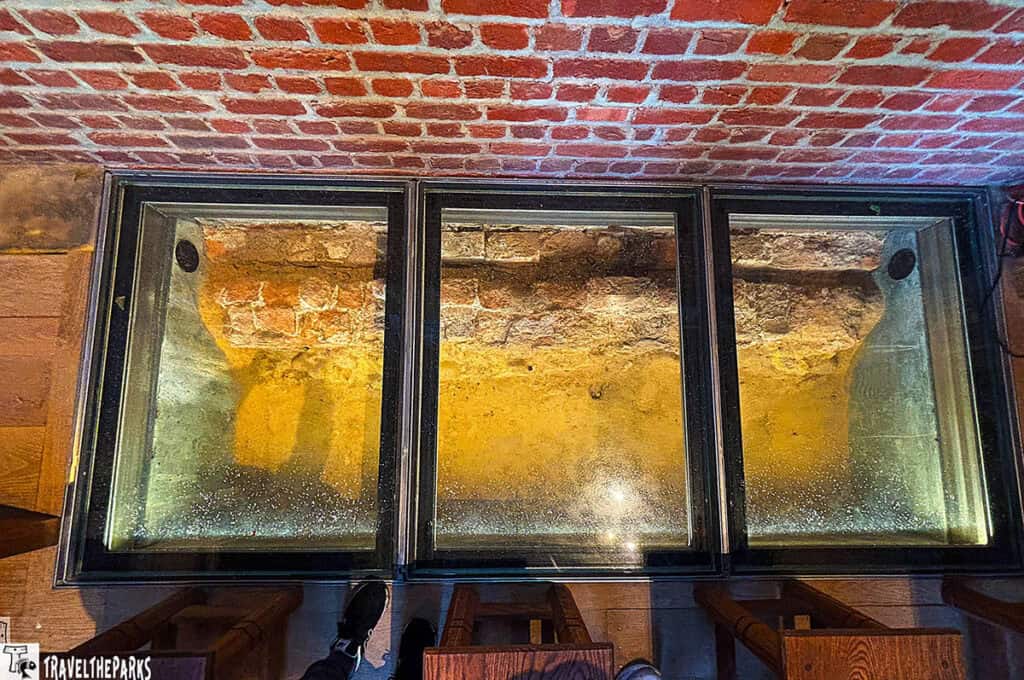
We learned that underneath the floor lie the original foundations of the earlier churches. The 1907 church was constructed directly on the original brick foundations of the 1617 church. Large sections of the modern floor are clear, allowing you to look down and see the excavated red-brick foundations of the 1617 church beneath your feet.
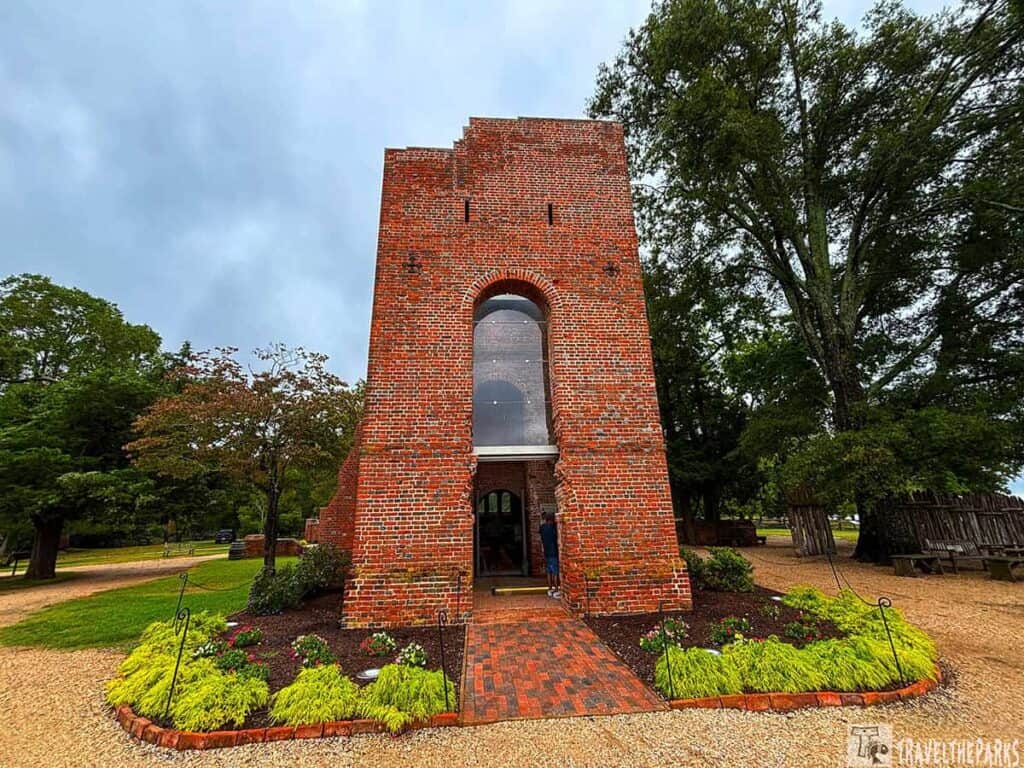
Stop #6: The Iconic 17th-Century Church Tower
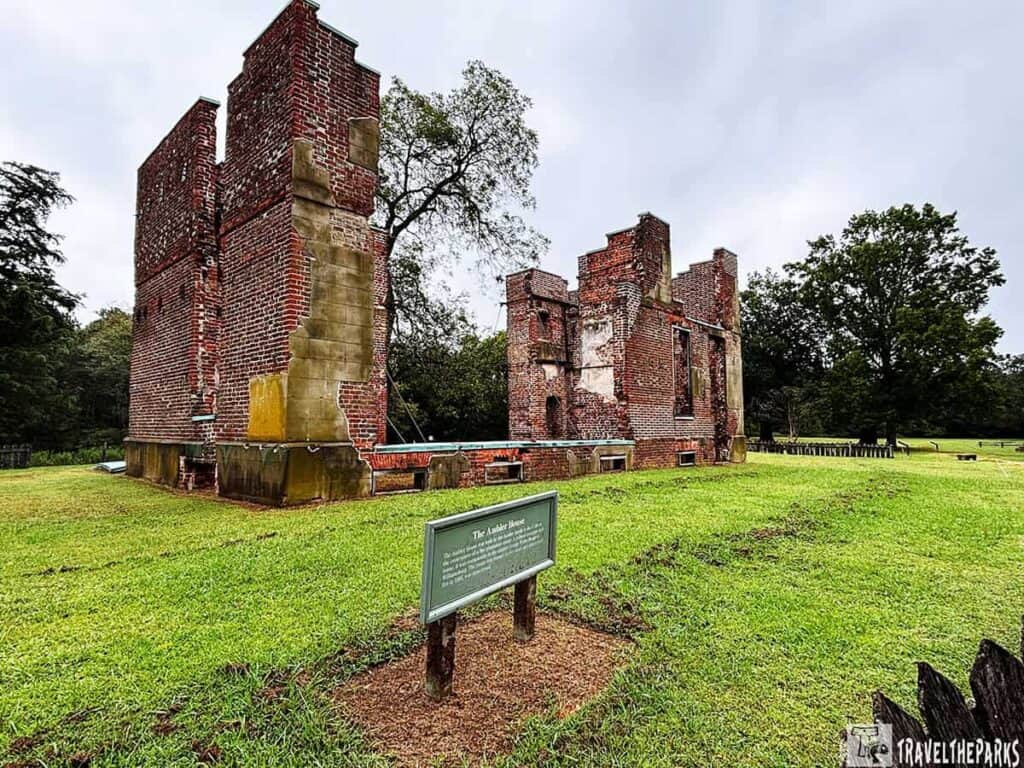
When you visit the 1907 Memorial Church, you are actually seeing two major historical structures in one location. As you exit, we walked behind the memorial church to see its most famous companion: the old brick church tower, built around 1680. This sturdy, 18-foot-tall structure is the only surviving above-ground building from the 17th century in Jamestown. It was built as a bell tower and entrance for a larger, never-completed church. It has stood as a solitary sentinel over the island for nearly 350 years, making it the most enduring symbol of the Jamestown settlement.
Interesting Fact: The First Church crudely constructed of wood, was where Pocahontas and John Rolfe were married.
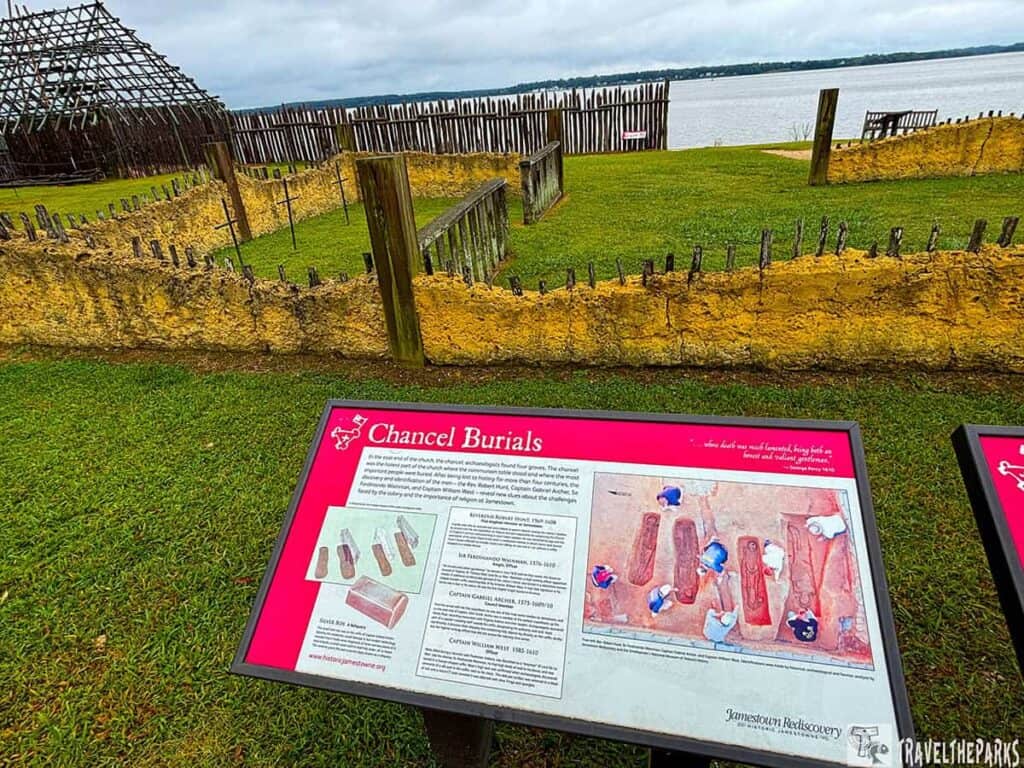
Stop #7: The 1608 Church Site – The First Substantial Church
As you walk through the historic James Fort site,we came upon a series of small, dark, rectangular outlines in the soil, marked by crushed shell. This is the archaeological footprint of the 1608 church. It was a simple, timber-framed structure, measuring about 30 by 15 feet, built under the leadership of Captain Christopher Newport in 1608. This is the location of the wedding of Pocahontas (Rebecca) to John Rolfe in 1614.
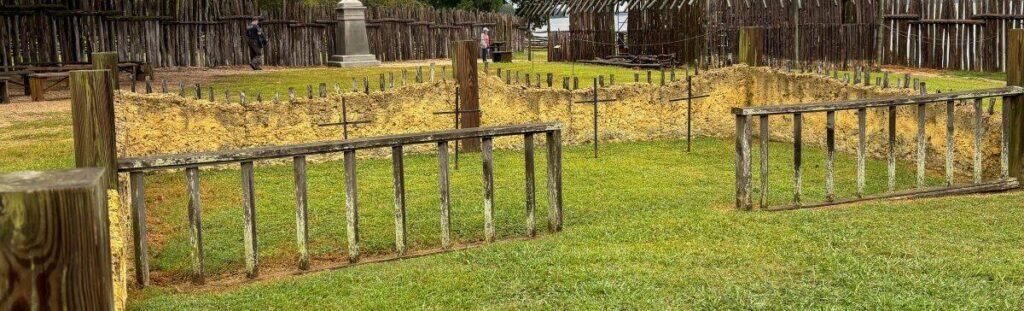
This is an active archaeological site, where researchers from Jamestown Rediscovery continue to make discoveries. Through forensic analysis, they have identified the graves of several important early colonists, including Captain Bartholomew Gosnold and Reverend Robert Hunt, the colony’s first chaplain. Each identified grave adds a new, personal chapter to our understanding of the challenging lives of the first settlers.
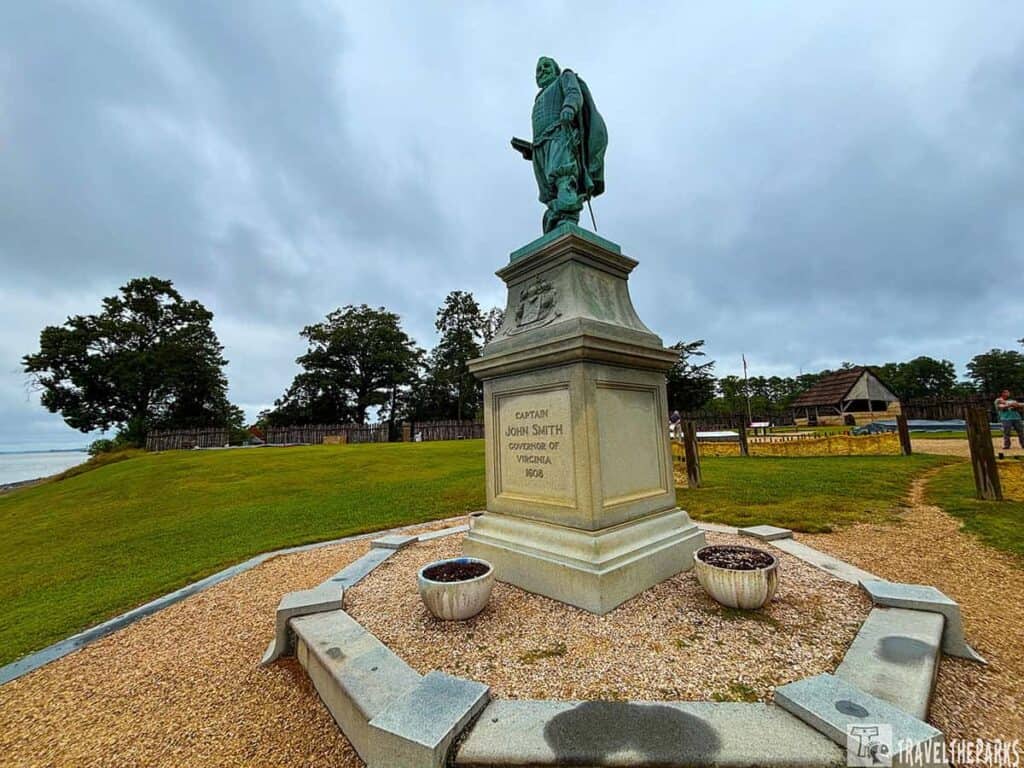
Stop #8 John Smith Statue
Just a few steps from the James River, a statue of Captain John Smith overlooks the land he strove to claim for England in 1607. Dedicated in 1909, the bronze statue shows Smith looking confidently out towards the river, in commemoration of his role in mapping the Chesapeake Bay and shepherding the struggling Jamestown colony through its early years.
Smith was a bold but contentious leader—soldier, explorer, and sometimes acerbic commander. His leadership during the colony’s most difficult moments, including the infamous “Starving Time (1609–1610),” held Jamestown together from falling apart.
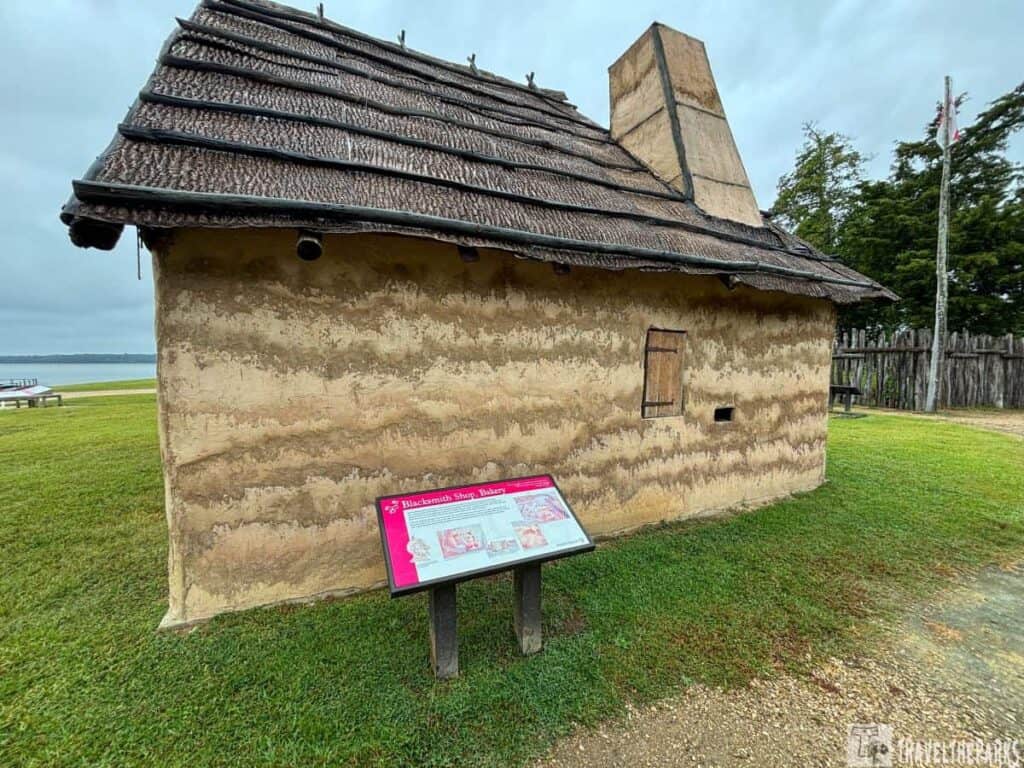
Stop #9: BlacksmithShop/Metalworking Site
This is the industrial hub of the early settlement, where the blacksmith and other metalworkers practiced one of the colony’s most vital trades. A permanent structure protects the forge’s archaeological remains, while interpretive panels explain the smithing process and the crucial items made here. For the full sensory experience, witness a live “Forged in Iron” blacksmithing demonstration, which vividly shows how this fiery, skilled trade shaped daily life in the early fort.
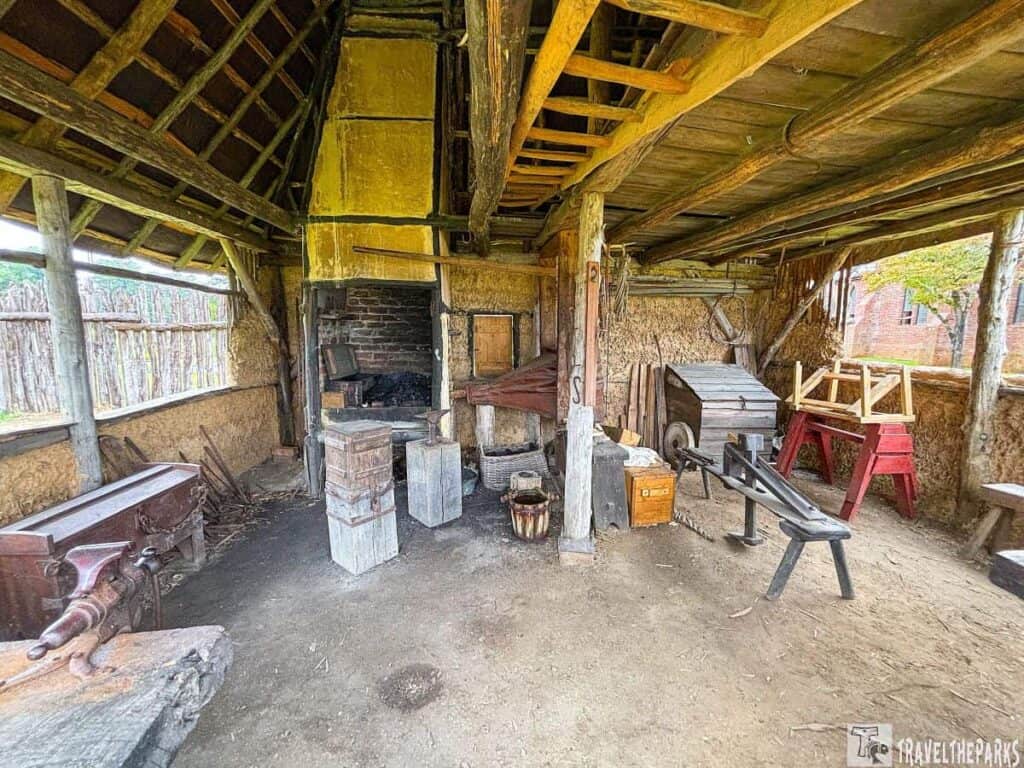
Stop #10 is the EdShed. It’s an educational shelter at Historic Jamestowne, run by Jamestown Rediscovery (in partnership with the National Park Service) and designed for kids and families. We skipped this as a large homeschool class was in session.
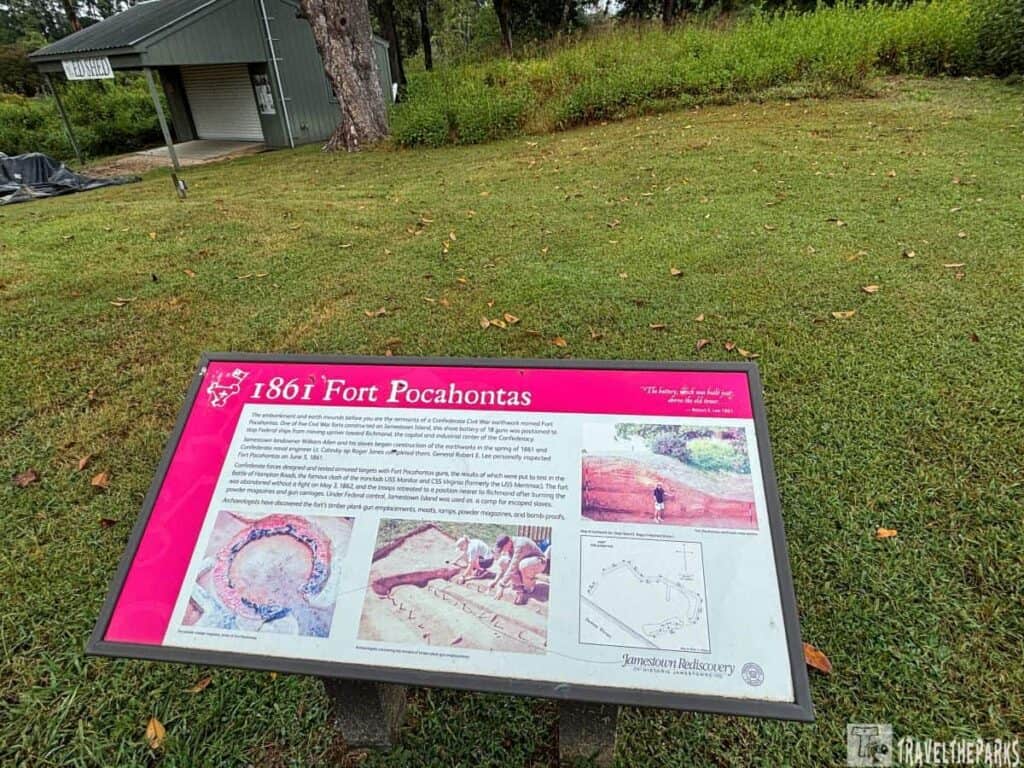
Stop 11: Civil War Fort Pocahontas Earthworks
As we explored the eastern end of the Old Towne, the landscape changed dramatically. Here, you will encounter the massive, grass-covered earthworks of Fort Pocahontas, a powerful reminder that Jamestown’s strategic importance spanned centuries. Both Confederate and Union soldiers were here during the Civil War. The earthworks were designed to absorb cannon fire and provide defensive positions for soldiers and artillery.
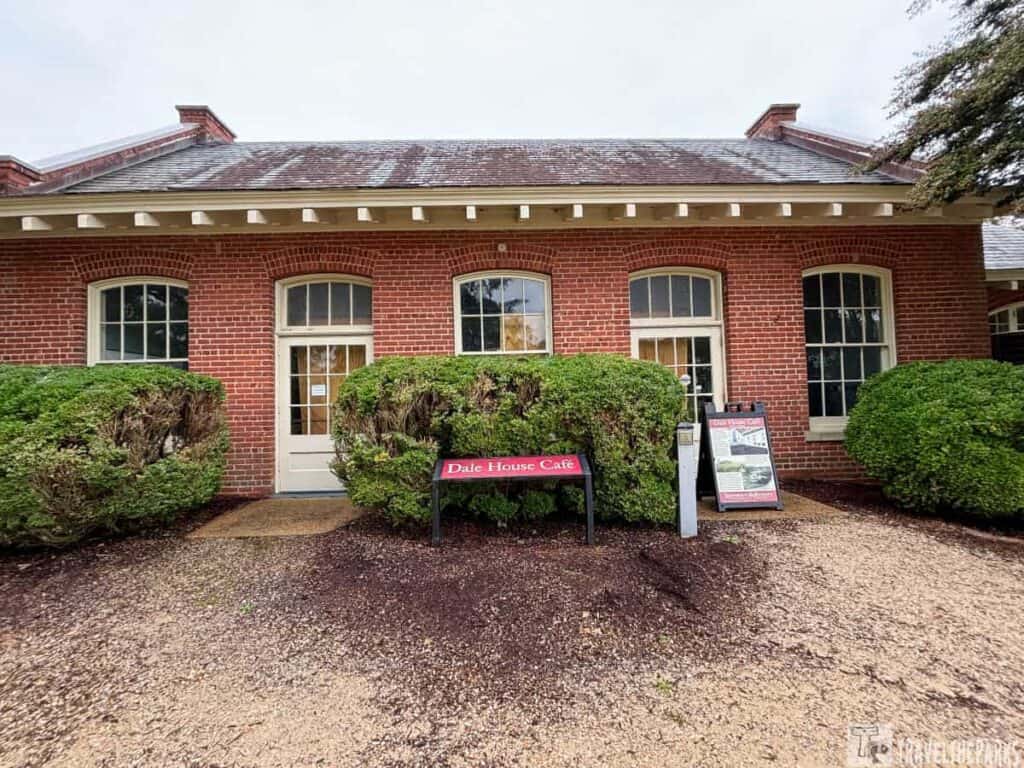
Stop #12: Dale House Café
After visiting the field excavations and the memorial chapel at Historic Jamestowne, unwind at the Dale House Café. Offering scenic river views, substantial sandwiches, daily soups, and delightful homemade desserts, it’s an ideal place to refresh.
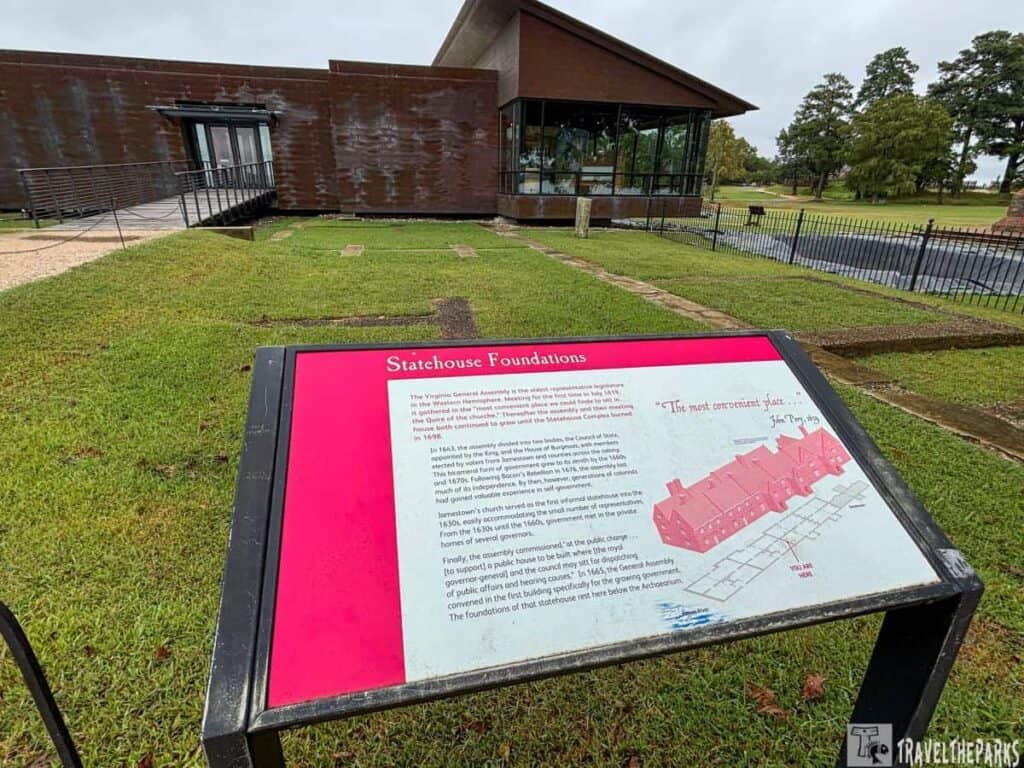
Stop #13: Original StateHouse Site
We found the site of the original Statehouse. This was where Virginia’s first representative government convened in 1619. The wooden structure was the meeting place for the House of Burgesses. Apparently, the first elected legislative assembly in English America. It marked a pivotal moment in the development of democracy. Though only the foundations remain, interpretive displays help you imagine the lively debates and decisions that shaped the colony—and ultimately, the future United States.
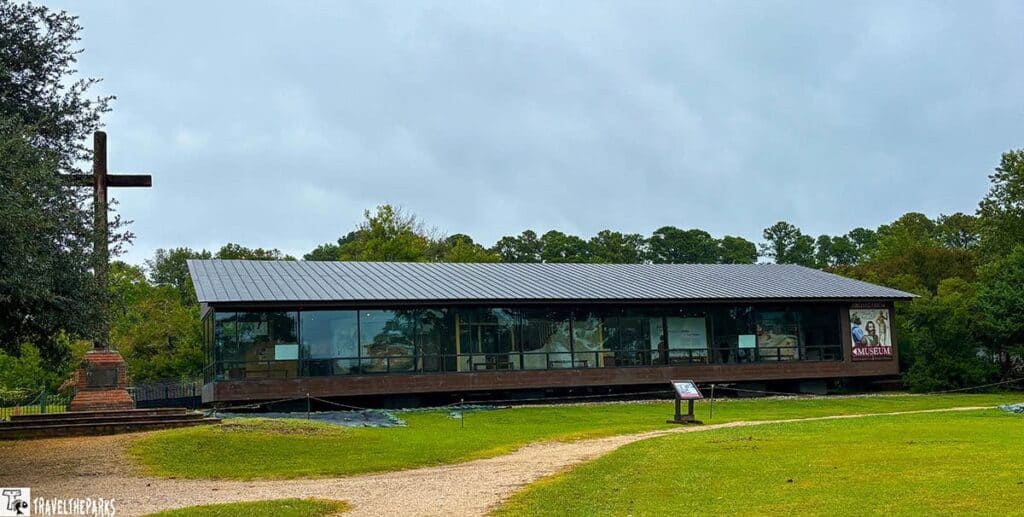
Stop #14: Nathalie P. & Alem M. Voorhees Archaearium Museum
Another key highlight for us was the Nathalie P. & Alan M. Voorhees Archaearium Museum (pronounced “Ark-ee-air-ee-um”). We love visiting historical museums. Surprisingly, we learned that they built this facility on top of the remains of Jamestown’s final Statehouse and an even older cemetery. Creepy right?
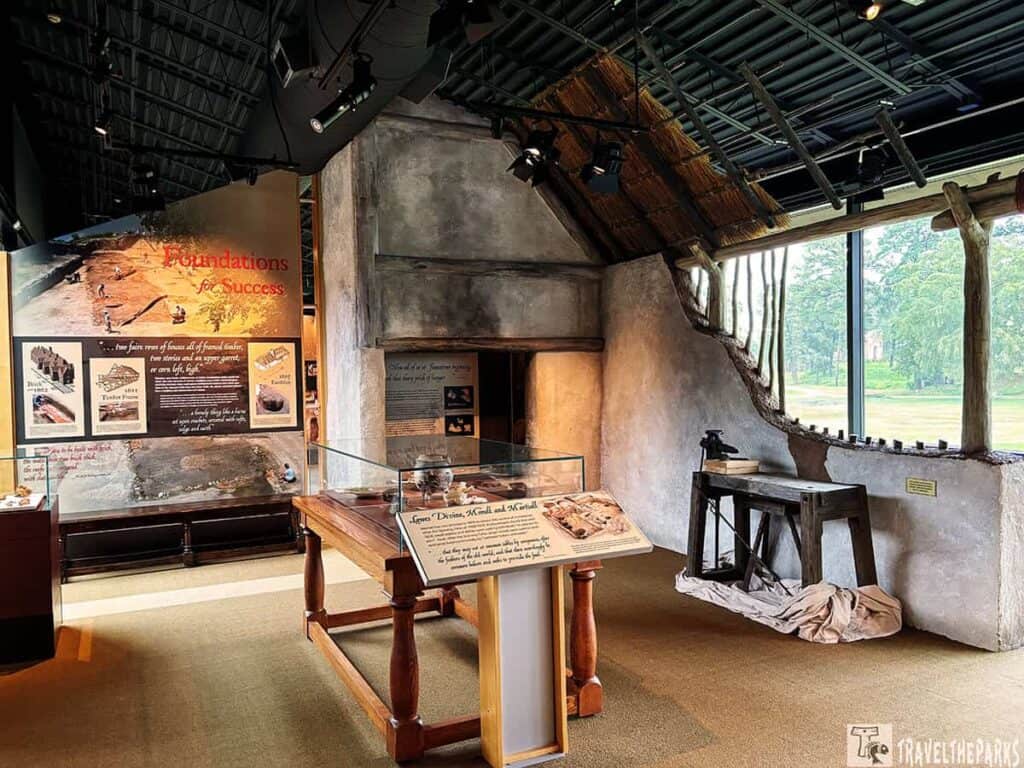
Inside, this small museum displays over 4,000 objects that have been recovered at this site. Artifacts such as tools, armor, pottery, and even bones. It gives interesting yet unsettling insights into the life and death of the colonists.
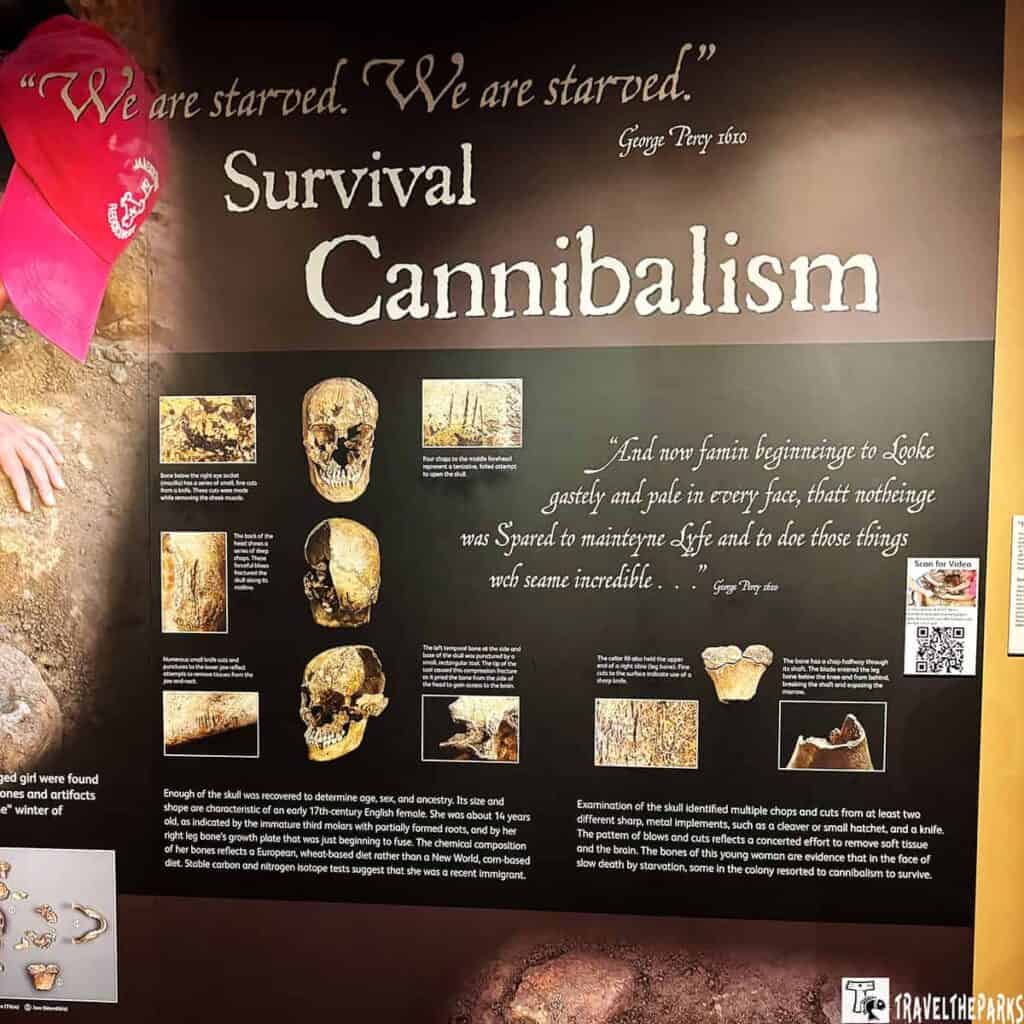
A Tale of Survival, Starvation, and the Dark Winter of 1609
One section of the museum shows archaeological proof that certain settlers turned to cannibalism as a means of survival. This starkly illustrates the extent of their desperation. In the dark winter of 1609, trapped, the colonists faced dwindling food supplies. In their dire situation, they began consuming horses, dogs, and even rats. When those resources were exhausted, some individuals resorted to cannibalism. Archaeological evidence comprises the remains of a 14-year-old girl named “Jane.” Emphasizing this harsh reality, cut marks on her skeleton show she was butchered.
Today, the museum offers visitors a chance to see a reconstruction of Jane’s face. It prompts reflection on the limits of human endurance. It’s a haunting yet significant chapter in America’s history.
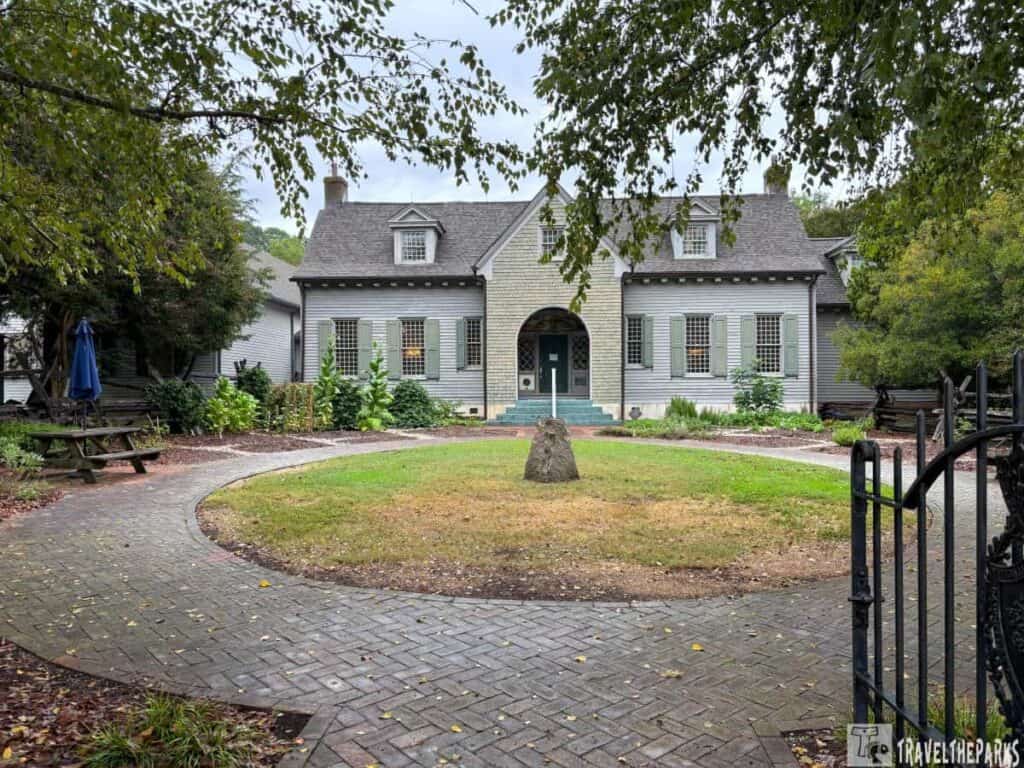
Stop #15: Yeardley House Gardens
AT the Yeardley House Gardens we explored the gardens. It’s a beautifully maintained space that offers a different perspective on colonial life. This garden is a living exhibit representing the shift from sheer survival to established society in Virginia.
Historic Jamestown New Towne Walking Tour (Refer to NPS Map)
Continuing our self-guided walk into New Towne, where brick outlines mark the foundations of homes, taverns, and government buildings built during the colony’s expansion in the 1600s.
- Stop # 10: Bland Warehouse: A reconstructed 17th-century brick warehouse used to store tobacco and trade goods, showcasing Jamestown’s growing commercial activity.
- Stop # 11: Marable House/Workshop: Archaeological remains of a combined residence and workshop where craftspeople lived and worked.
- Stop # 12: Merchant Rowhouse: Foundations of a merchant’s home along a bustling street of shops and residences, highlighting Jamestown’s early urban development.
- Stop # 13: Jackson House: The remains of a modest colonial home reflecting typical 17th-century living conditions.
- Stop # 14: May-Hartwell House: Archaeological site revealing a two-story brick home belonging to prominent colonial families, illustrating wealth and status.
- Stop #15–Kemp, Sherwood, and Pierce Properties: Three adjacent properties belonging to prominent colonists, including Richard Kemp (Secretary of the Colony) and James Sherwood (a planter). These sites showcase elite residences. Shows the layout of family homes and workshops in a close-knit colonial neighborhood.
- Stop #16: Rowhouse: Foundations of a multi-room brick rowhouse, demonstrating the shift toward denser, urban-style housing as the colony grew.
- Stop # 17: Governor Harvey Property (Industrial Area): Site of industrial activities including a pottery kiln and evidence of early manufacturing such as blacksmithing and shipbuilding, essential to the colony’s survival.
- Stop # 18: Governor Harvey House (later Governor Berkeley House): A grand residence that housed two colonial governors: John Harvey and later Sir William Berkeley. This site reflects the power and influence of Virginia’s leadership.
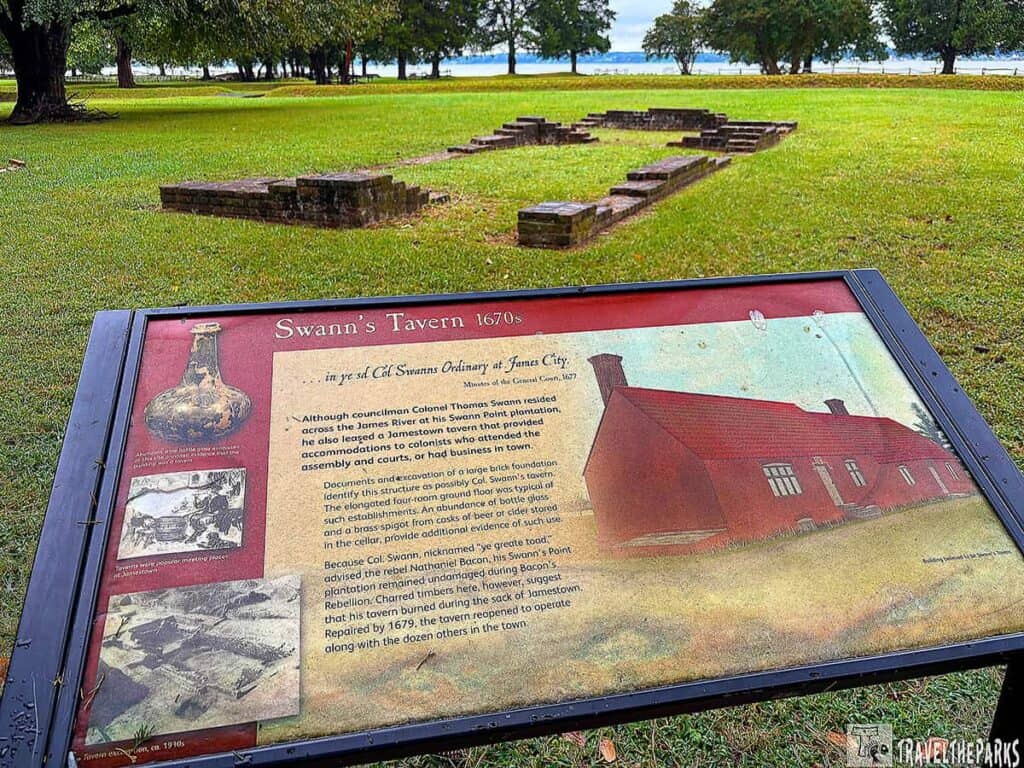
- Stop # 19: Colonel Swann Tavern: Remains of a 17th century tavern serving as a social hub for settlers, offering food, drink, and community gathering. Colonel Thomas Swann was the proprietor.
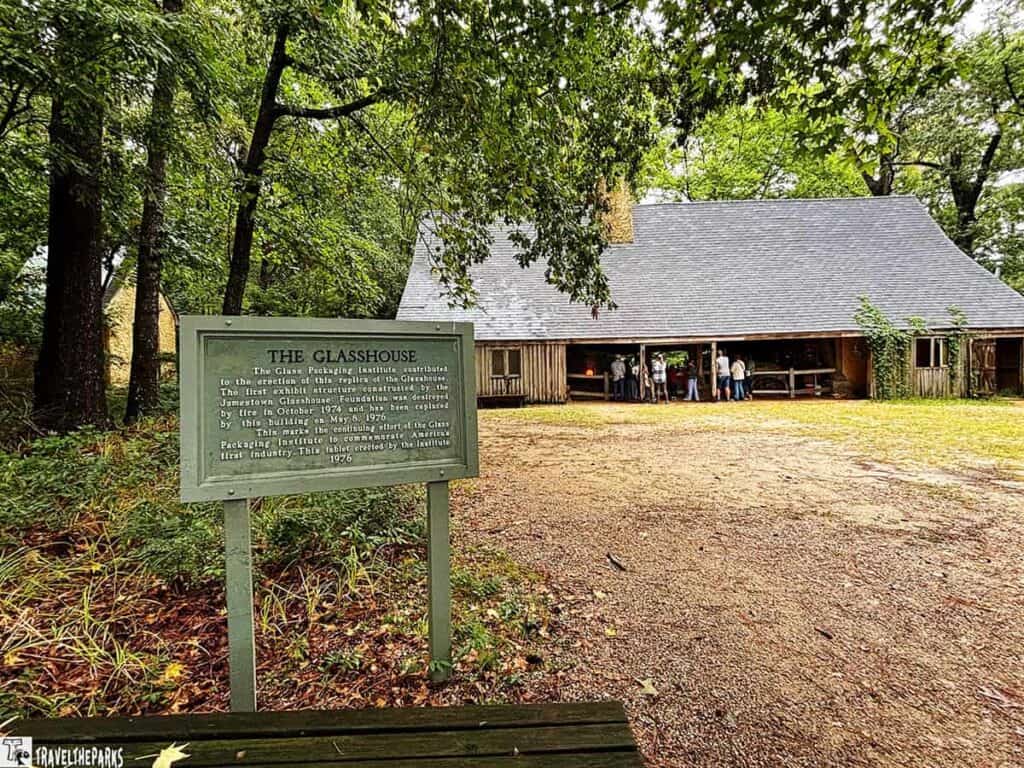
The Glasshouse (Just Down the Road)
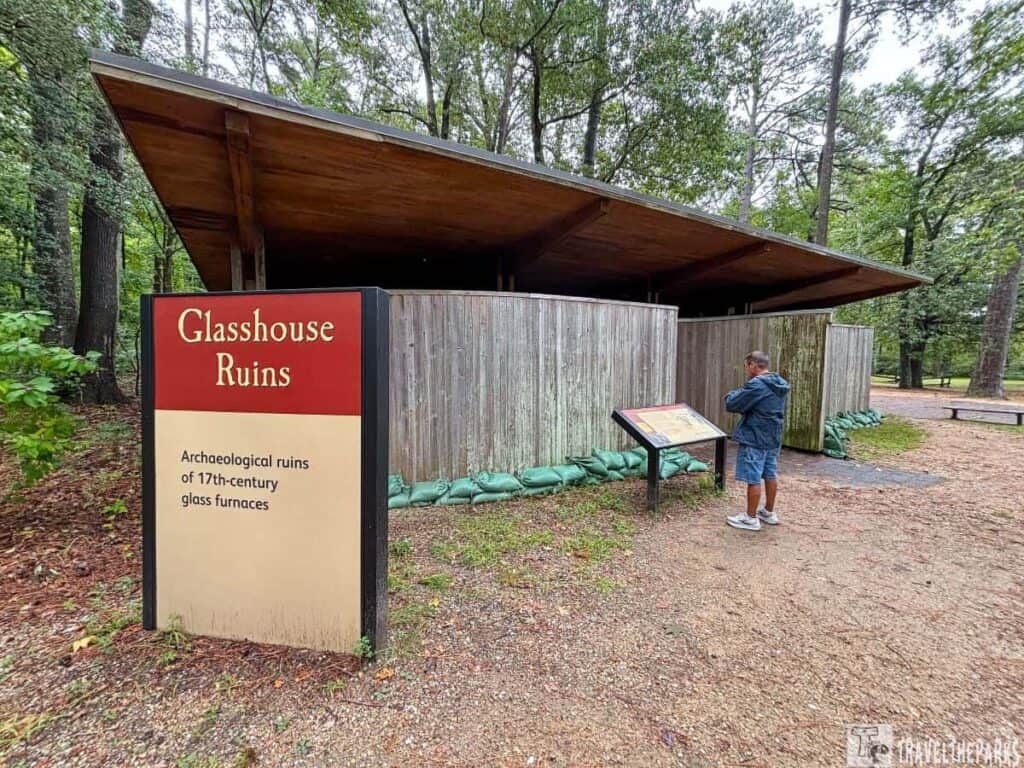
We ended our visit to Historic Jamestowne with a stop at the nearby Glasshouse—a perfect finale for anyone fascinated by colonial craftsmanship. Though technically part of Jamestown Settlement, the Glasshouse is just a short walk away. In the 1930s, excavations uncovered the furnaces of the original colony from 1609. Inside, they offer live glassblowing demonstrations using 17th-century techniques. We watched skilled artisans shape molten glass much like the first English glassmakers did here in 1608. With its fire-lit atmosphere, it’s a memorable yet fitting way to close out our journey through America’s first permanent English colony.
Things to Do Around Jamestowne
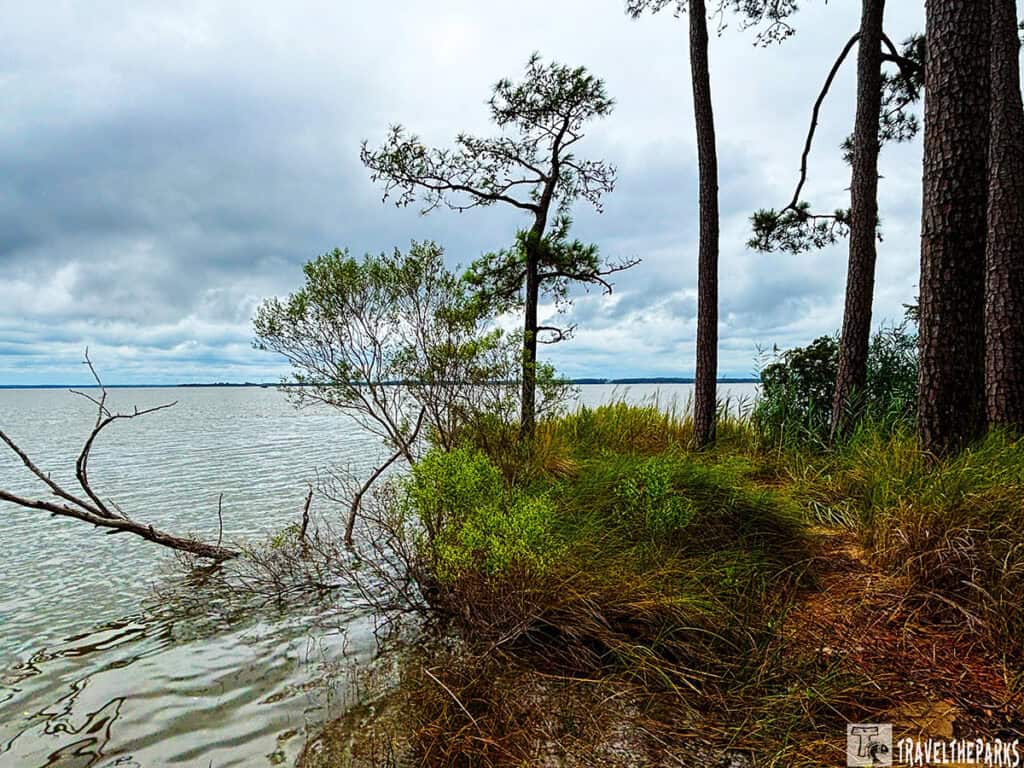
- Drive, hike or bike the Island Loop Drive or Trail: A 3- to 5-mile scenic route winds through woods, marshes, and along the James River. Stop and hike the Black Point Trail, perfect for stretching your legs or birdwatching.
- Bring a picnic lunch. There are areas with tables and shaded views of the water. It’s a relaxing way to take a break.
- Visit Jamestown Settlement: If you want costumed interpreters, a re-created fort, and full-scale replicas of the ships Susan Constant, Godspeed, and Discovery, this living history museum is just a few minutes away and pairs well with your Historic Jamestown visit.
Reflection: Grit and Guts at Jamestown
This trip had me reflecting a bit and sharing my thoughts. Most of us cringe at the thought of an outhouse or going without running water, but for many people today, that’s still their everyday life. For them, imagining what life was like in Jamestown isn’t such a stretch. For the rest of us, it feels like a distant, almost unimaginable memory.
I really admire the courage of those early settlers who made the journey to a completely unknown land, not knowing what awaited them. It’s because of their sacrifices and determination that we were able to move forward as a nation. This country was built by individuals who gave up so much — and their stories remind us of the strength it takes to start something new.
Final Thoughts: A Guide to Visiting Historic Jamestown—Colonial National Historical Park
Stepping into Historic Jamestowne at the Colonial National Historical Park was like walking through the birthplace of English America. The tales tell the stories of survival, ambition, and cultural clashes that shaped a nation. For me, visiting Historic Jamestowne was like walking through the pages of early American history. If you’re looking for meaningful exploration, historic visiting Jamestowne delivers a deeply engaging and educational experience. It’s not just about what happened here—it’s about how those events continue to shape the American story.
We’d love to hear from you—have you visited Historic Jamestowne? Share your favorite stops or tips in the comments below!