Table of Contents
Updated August 2024
Discover the top things to do in Key Biscayne National Park! Known officially as Biscayne National Park, this iconic destination offers more than just pristine beaches. Spend your day snorkeling vibrant coral reefs, boating through mangroves, and fishing in rich waters, all surprisingly close to the Miami skyline. With free entrance and no park pass required, it’s an easy and affordable adventure. Plus, it pairs perfectly with a trip to the Everglades, only 40 minutes away. Explore our list of 9 can’t-miss activities.
Note: While commonly referred to as Key Biscayne National Park, the official name is Biscayne National Park. This guide covers the same incredible park you’re searching for!
This post may contain affiliate links, meaning if you purchase something through one of these links, we may earn a small commission at no extra cost to you! Read the full disclosure policy here.
Exploring Florida’s Only Underwater National Park
Florida is home to three remarkable national parks—Everglades, Dry Tortugas, and Biscayne National Park. What sets Biscayne National Park apart is that 95% of its 173,000 acres are underwater, protecting vibrant marine ecosystems like the Florida Coral Reef and a stretch of maritime history known as the Maritime Heritage Trail. This unique trail features six historic shipwrecks dating back to the early 1800s. Recently, the Fowey Rocks Lighthouse, built in 1878 to guide ships safely into the Port of Miami, was added to the trail, preserving a beacon that once lit the way for countless vessels.
Planning: What to Know Before You Visit Key Biscayne National Park
- Operating Hours: Dante Fascell Visitor Center: Open daily from 9:00 AM to 5:00 PM. Convoy Point Grounds: Open daily from 7:00 AM to 5:30 PM. Navigable Waters: Accessible 24 hours a day. Elliott Key & Boca Chita Key: Open for camping; accessible only by boat.
- Entrance Fee: None; the park is free!!
- Pet Policy: Convoy Point Grounds and Elliott Key: Pets are permitted on a leash no longer than 6 feet. Boca Chita Key: Pets are not allowed, even on boats docked at the harbor. Dante Fascell Visitor Center: Pets are not permitted inside.
- Best Time to Visit: Winter (December–February): Mild temperatures and lower humidity make this an ideal time for outdoor activities. Spring (March–May): Pleasant weather continues, with blooming flora enhancing the park’s beauty. Fall (September–November): Fewer crowds and comfortable temperatures, but be mindful of the tail end of hurricane season. Summer (June–August): Hot/humid conditions prevail, with increased chances of afternoon thunderstorms and, of course, lots of mosquitoes.
- What to Bring: I recommend bringing food, snacks and drinks for a picnic by the water. There are no concessions on-site or on the island tours. Additionally, bring water in a refillable water bottle, sunscreen, bug repellent, binoculars, and a camera. There is a Walgreens in Homestead if you forget sunscreen or bug spray. A water-refilling station is on the lower level of the visitor center. I suggest bringing a swimsuit or wetsuit, towel, and hat if you plan to snorkel, kayak, or canoe.
1. Dante Fascell Visitor Center: The Heart of Biscayne National Park
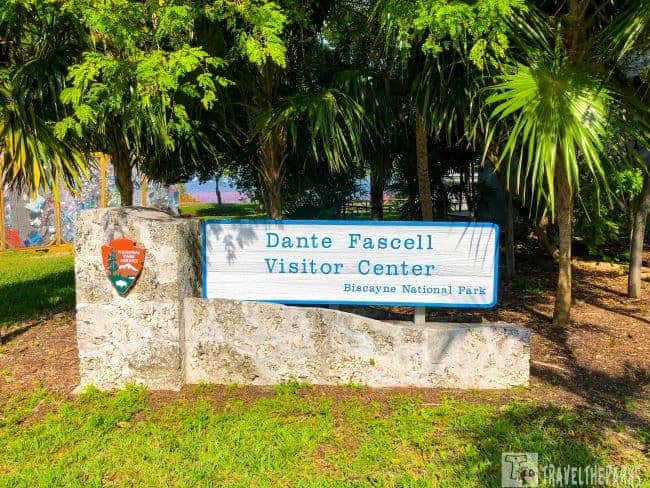
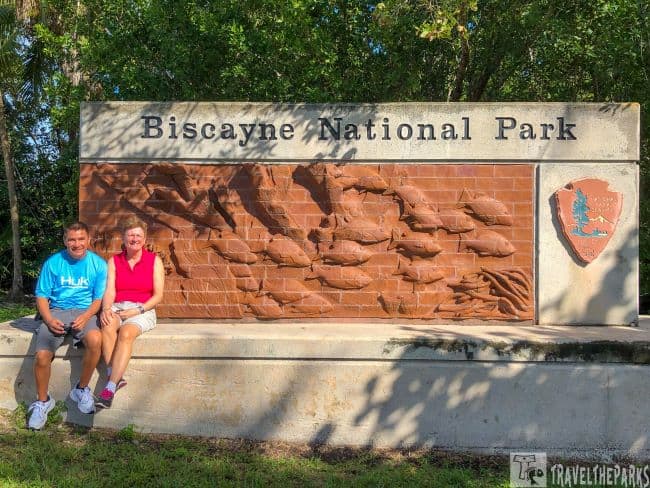
Just a 20-minute drive (9 miles) from Homestead, the park entrance is easily reached via scenic back roads that pass by palm farms and rural landscapes. The park sign sits at a small roundabout — we made a quick stop here to snap our signature photo, though parking is limited.
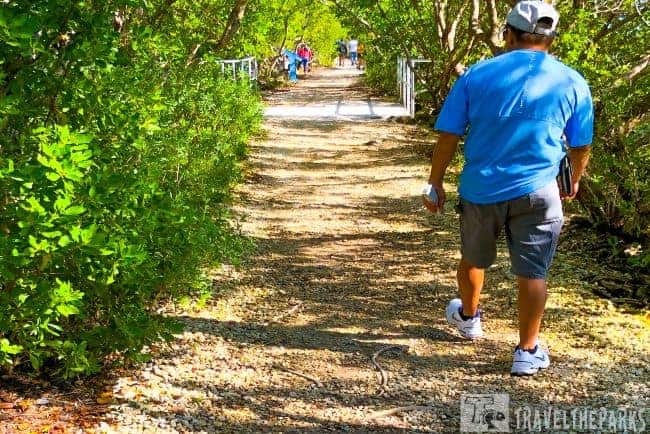
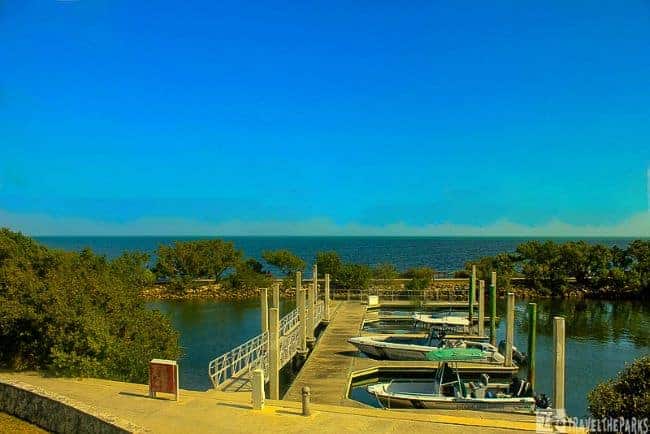
A short 1/4-mile drive down the park road along Biscayne Bay leads to the Visitor Center, which has ample parking. Behind the center, a small harbor is tucked into a mangrove-protected cove. The first floor houses restrooms and equipment rentals, while outside, an interpretive trail tells the story of the devastation Hurricane Andrew brought to the park.
Take the stairs to access the second level. Inside, they have several very interesting educational displays highlighting the terrestrial and marine ecosystems that you find within the park. In the theater, a short 20-minute film gives insight into the history of the park. The tour desk and a small bookstore are also on this level. The rocking chairs on the Visitor Center porch provide a splendid view of the harbor and bay, a restful reprieve in the afternoon.
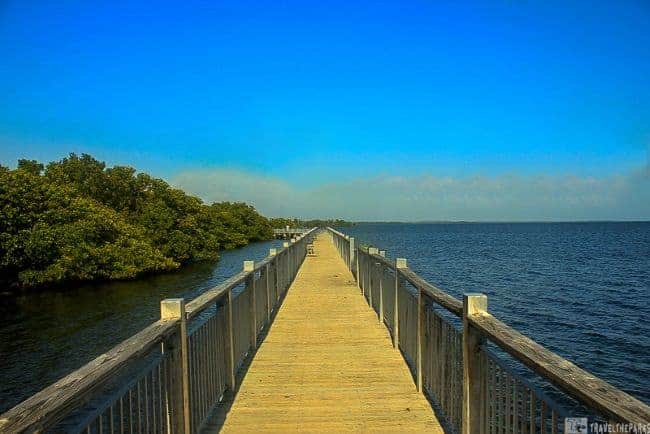
An easily accessible boardwalk runs along the shallow Biscayne Bay, leading to a jetty lined with mangroves. If time permits, take a ranger-led tour of the facility. There are benches to sit on and just soak in the view. Scattered along the shoreline are a few picnic tables and barbecue grills.
2. Must-Do Experiences in Key Biscayne National Park: Choose a Key Biscayne Institute Tour
To get a good appreciation of what Key Biscayne offers, I highly recommend taking a tour. The Key Biscayne Institute is an approved National Park Service concessionaire that can provide boat tours. Visitors can choose from various tours at the Key Biscayne Institute. The tour desk is on the second level of the visitor center.
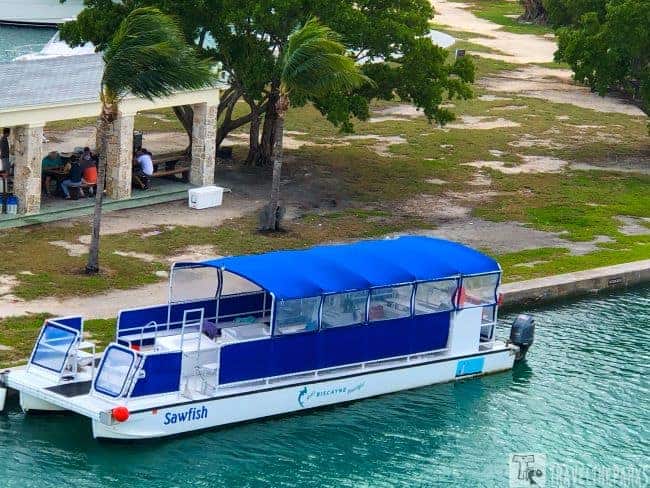
I have to give a shout-out to the volunteers that operate the tour desk tour of the Key Biscayne Institute. On the morning of our tour, we had an issue with our car battery. Check-in is 30 minutes before the tours depart. One of the wonderful volunteers I spoke with on the phone assured us we would arrive within 5 minutes of our Boca Chita Key tour. They held the boat for us. This is by far the best service as they went above and beyond to calm our fears of missing our tour.
Best Things to Do in Key Biscayne National Park -On the Water
Key Biscayne is a perfect place for water activities. You can go snorkeling and see colorful fish and coral reefs up close. Another fun thing to do is paddleboarding, where you stand on a board and paddle through the calm waters. If you’re feeling adventurous, you can also try kayaking and explore the mangroves. And don’t forget about simply relaxing on the beautiful beaches and soaking up the sun. So if you love the water, Key Biscayne is the place to be!
3. Snorkeling Tours of the Bay
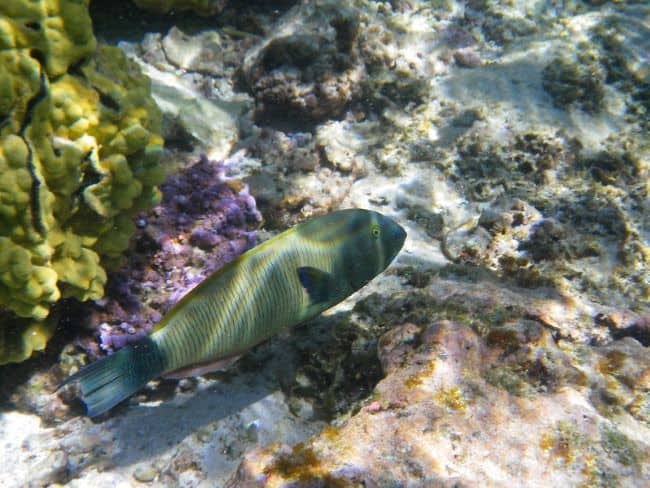
Consider doing a snorkel tour, since the vast majority of the park is underwater. Not only do you get to experience the Florida Keys Reef system, but you also get out on the water to see more of the actual park. A 30-minute boat ride takes you past Elliott Key, getting to the main reef. On the boat ride, occasionally pods of dolphins ride the boat wake. Other times, you will see loggerhead turtles, stingrays, or even a shark! It’s impossible to know what’s coming.
Upon arrival at the reef, they give a brief orientation. They outfit you with the correct gear before entering the water. Then it is into the crystal-clear waters for a little adventure. Everywhere you can look, giant brain corals, swaying sea fans, unique sponges, and colorful fish surround you. The water depth is anywhere from 8 to 12 feet, good for all levels of snorkelers. Take care not to touch the delicate corals. This is a fragile ecosystem.
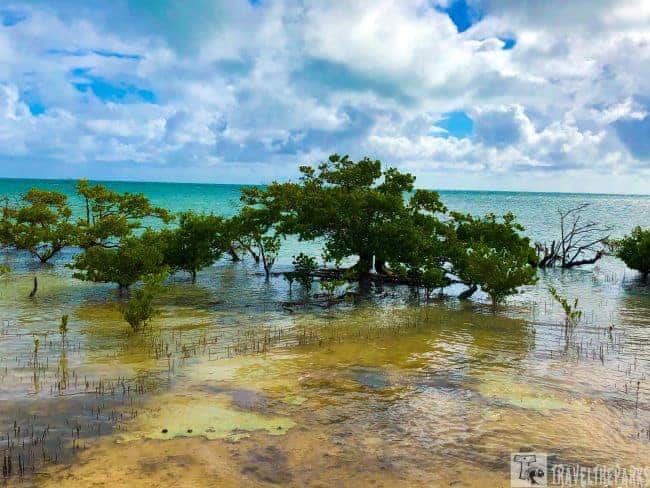
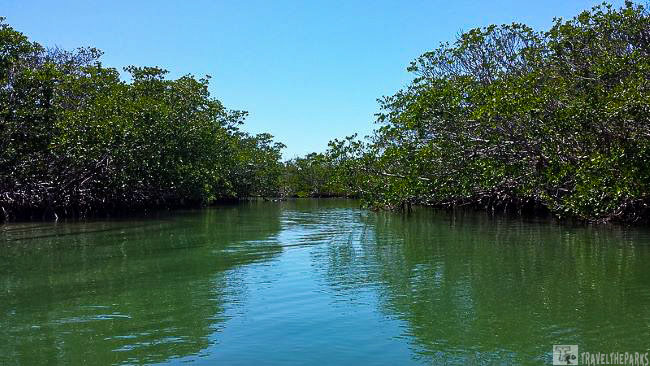
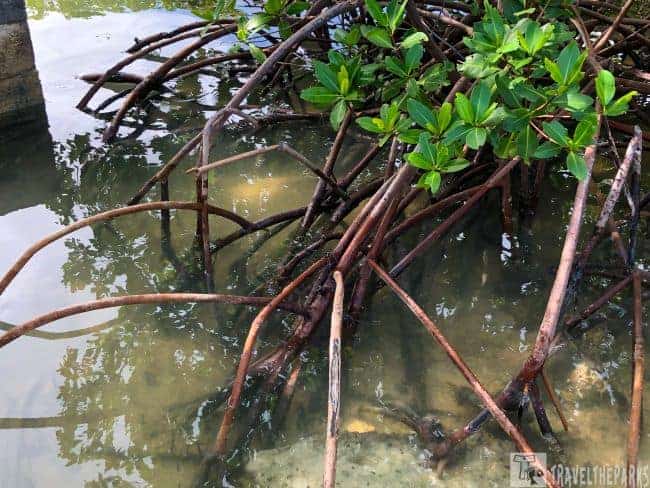
An alternative snorkel tour may be offered if weather conditions are not ideal. The website states it can be a wreck, reef or bay-side snorkel. The mangrove forest snorkel is a unique experience. Mangrove forests are important in tropical waters from an ecological standpoint. The mangrove acts as the ideal nursery for much of the juvenile fish. It provides vital protection for many native fish species that spawn in the roots. Snorkeling here, you will see stingrays, mangrove snapper, young mullet, and grunts. The roots solidify the shoreline, stopping damaging waves from taking away the sand. If we want to protect the fish on the reef, we need to sustain the mangrove habitat.
4. Kayaking Adventures: Get Out on the Water!
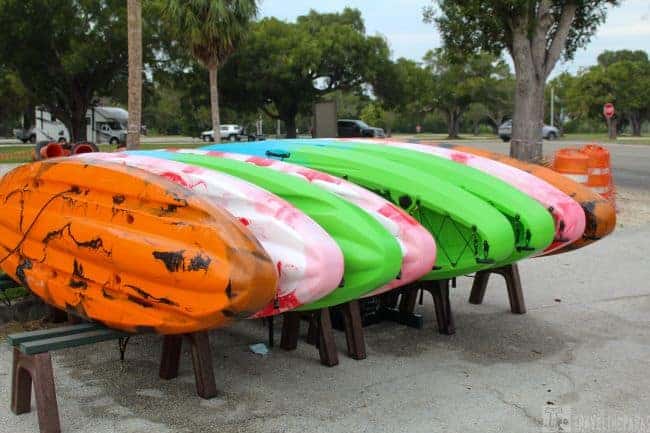
The tours provide you with everything – canoes, paddles, life jackets – just show up. You’re good to go. We found kayaking was a great way to spend a morning. Paddling through the mangrove forest, our guide stopped often to talk about marine life and natural history. For us, it was a laid-back paddle trip – and it’s really not too much of a workout. Even a novice will enjoy this trip. I think most of the longer day trips that are offered may be a bit more intense and for experienced paddlers only. I must say that the bay is a kayaker’s paradise.
5. Saltwater Fishing
The Florida Keys are renowned for their elusive bonefish, challenging permit, and the acrobatic tarpon — a true angler’s paradise. Fishing in the park requires a Florida saltwater fishing license. Anglers are allowed to fish around the island, but swim areas and marinas are off-limits.
Within the grass flats, mangrove channels, and offshore reefs, there is a wide variety of species to target. Park authorities strictly enforce saltwater fishing regulations, and it’s important to note that harvesting lobster is prohibited within park waters.
6. Boca Chita Key Boat Tour
This is one of the park’s most popular tours, so it’s wise to book early through the institute’s website, as space on the boat is limited to 25 passengers. At approximately $40 per person, it’s an excellent value.
The one-hour boat ride to the island was enjoyable, with insightful commentary from a marine biologist and guide. The captain warned we might get wet — a bit of an understatement! On our windy day, the last seats in the middle of the boat were all that remained. Thankfully, our light rain gear kept us mostly dry, despite the choppy waves.
Along the way, you can spot the Turkey Point Nuclear Plant, and sometimes dolphins make an appearance. On our trip, the heavy waves kept wildlife sightings to a minimum, but the ride itself was scenic and memorable.
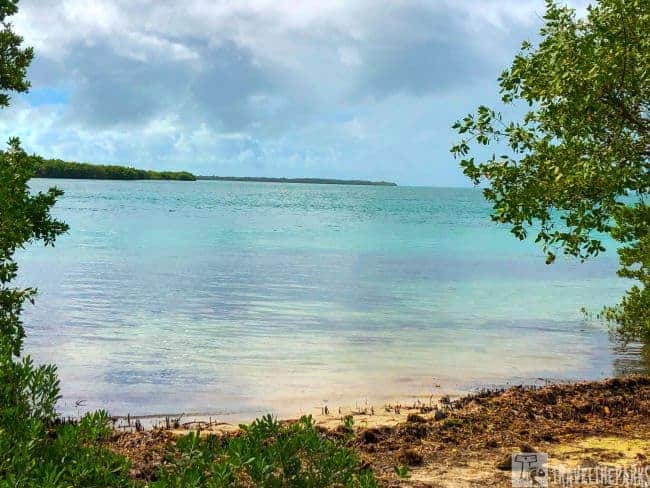
Boca Chita offers a protected harbor with covered picnic tables and grills, providing welcome shelter from the sun and occasional showers. However, upon arriving at the island, we were taken aback by the scene at the marina. Large yachts blared loud music, generator cords created an obstacle course, and towels and kids’ bikes cluttered the boardwalk. Trash overflowed the receptacles, confirming what we’d read in earlier reviews — weekend crowds can be overwhelming. Visiting during Christmas only added to the congestion, with the marina basin packed full of boats.
What things can I do at Boca Chita Island?
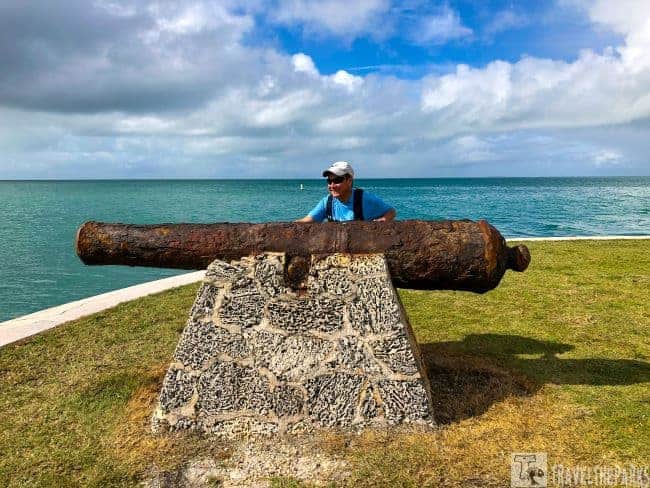
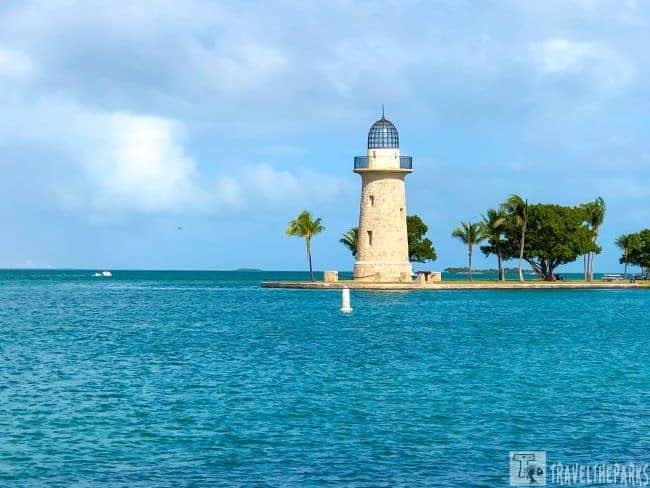
You’ll have about one hour to explore Boca Chita Island, and the highlight is the 50-foot lighthouse. The tour operator unlocks it upon arrival, though it’s only open for a short window each day. We took the climb up the steps, which offered a unique perspective of the island and, on a clear day, even a view of the Miami skyline.
The lighthouse was built in the 1930s by Mark Honeywell purely as a decorative structure — it was never a functioning lighthouse. Our knowledgeable park ranger shared fascinating stories about the island’s history, making the visit even more memorable.
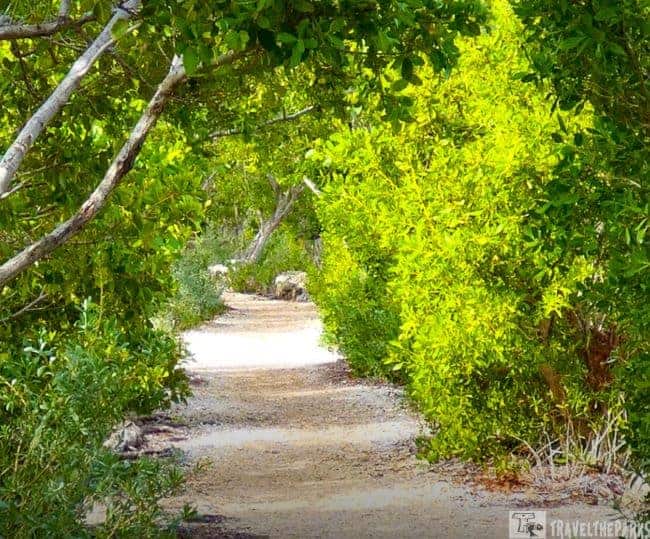
We completed the short island trail in about 10 minutes. Originally, it formed a full loop around Boca Chita, but today it’s an out-and-back route, as Hurricane Irma washed away a small footbridge. Adventurous visitors can wade through the channel to complete the loop.
The bathrooms are well-maintained by park rangers, though there is no running water, so plan accordingly. On the north side of the island, there’s a small beach area. We didn’t see anyone swimming, as the weather was uncooperative, but in warmer conditions, the shallow waters are ideal for swimming and snorkeling. If you’re visiting on a sunny day, it’s worth bringing your beach essentials to enjoy the water.
Campers can stay overnight on Boca Chita Island, where you’ll find restrooms, picnic tables, and grills. However, there are no wash sinks, showers, or running water, so plan accordingly.
7. Elliot or Adams Key Tours
Elliott Key lies about 7 miles offshore from the Visitor Center and is considered more family-friendly compared to Boca Chita. The harbor is shallower, but the camping area is expansive — you can camp almost anywhere except near the marina. Facilities include restrooms with sinks, cold-water showers, picnic tables, and grills.
The Key’s main trail runs 7 miles from north to south, with only a couple of spots offering excellent views of the bay. There’s also a shorter, roughly one-mile trail that cuts across the island. While the trails are well-marked, some sections can be overgrown, so be prepared. With the warm weather, mosquitoes can be relentless, so bring plenty of bug spray.

Adams Key is open for day use only and is accessible exclusively by boat. Facilities include a picnic pavilion and toilets. Once a getaway for the rich and famous, the island now offers a small loop trail through a hardwood hammock for visitors to explore.
The marina has a small dock, most of which is reserved for NPS employees who live on the island. Two homes on Adams Key provide housing for these staff members, giving the island a quiet, managed atmosphere.
8. Stiltsville Scenic Tour
The Institute offers a 3-hour boat tour from the Deering Estate, but be sure to book in advance — tours are only offered on the 1st and 3rd Sundays from 12:00 PM to 2:30 PM. While you can try showing up, seats are limited and the boat may already be full.
Your ticket includes entry to the Deering Estate, but the entire tour is by boat. These are not house tours — you will remain on the boat for the duration of the experience.
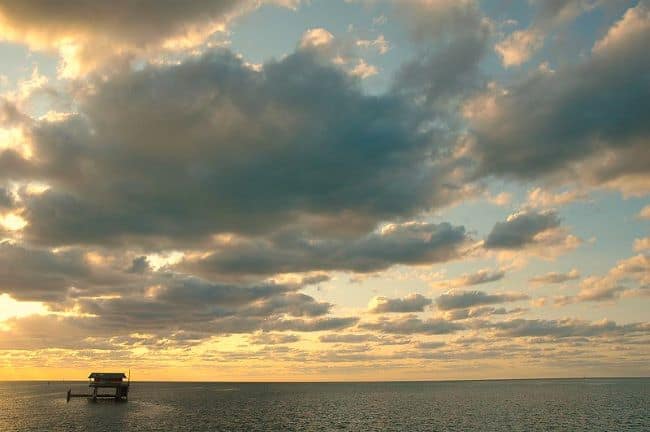
Stiltsville, built in 1933, began as a collection of houses featuring restaurants, bars, and nightclubs that attracted Miami’s social crowd. Many of the bars served alcohol during Prohibition, making them technically illegal. At its peak, there were 27 homes, but today only 7 remain, as hurricanes have taken a heavy toll over the years.
In 1985, Stiltsville was incorporated into Biscayne National Park, and new construction within the park was discontinued. Today, the Stiltsville Trust manages the remaining homes, and access is restricted — you can only explore them with a permit.

9. Deering Estate-The Rich & Famous
You can combine a visit to the Deering Estate with a Stiltsville or Boca Chita tour for a full-day adventure. The estate offers daily museum tours at 10:30 AM and 3 PM, and Nature Preserve Tours at 12:30 PM from October through May.
During our visit, the guided house tour was beautifully decked out for the Christmas season, with spectacular holiday decorations. The tour guide shared the rich history of the estate. Originally, the Richmond House served as a hotel, but when the railway bypassed it, the estate never grew into a lodging hub. Highlights included a wine cellar, upstairs bedrooms with private baths, and, most impressive of all, the sweeping views from the balcony across the sprawling green lawn to the bay — truly a picture-perfect scene for southern Florida.

I highly recommend the Nature Preserve tour at the Deering Estate. The guides are exceptionally knowledgeable about the flora and fauna, sharing details about the endangered habitats spread across the estate’s ten acres of lawns and traditional plantings. Highlights include a visit to a Native Tequesta burial mound, an intriguing archaeological site.
Take the time to wander the Deering Estate and soak in this stunning piece of Miami history, set within a truly beautiful waterfront location.
Planning Resources for Key Biscayne National Park
- Lodging options available – Key Biscayne National Park–visit this website to see the options available in the park. Remember to book well in advance.
- Free RV Guide to Key Biscayne – RV Resorts & Campsites in Biscayne National Park.
- Deering Estate Website – plan your day at the Deering Estate
- Campground information is available on the official park website
- Map of Biscayne National Park–a great resource to plan your trip and understand the location of the keys.
- Key Biscayne National Park Official Site–Plan your visit, get updates on weather and general information.
- Outdoor Activities – Planning your outdoor activities-what to do and when to do them.
- Key Biscayne National Institute Tours-website to book tours before your trip.

Final Thoughts: A Guide to the Best Things to do in Key Biscayne National Park
Key Biscayne National Park has much to offer the traveler, whether it is for the day or an entire week. I am amazed by this park’s efforts to protect one of the world’s most famous live coral reefs. This is a wonderful place for a nature walk that will refresh your spirit. This is a must-see for anyone interested in the national parks. Birdwatching, nature, and gorgeous water are the reasons you should go!
Have you visited Key Biscayne? What was your favorite part of the experience? Drop a comment below — we’d love for you to share your highlights with us!