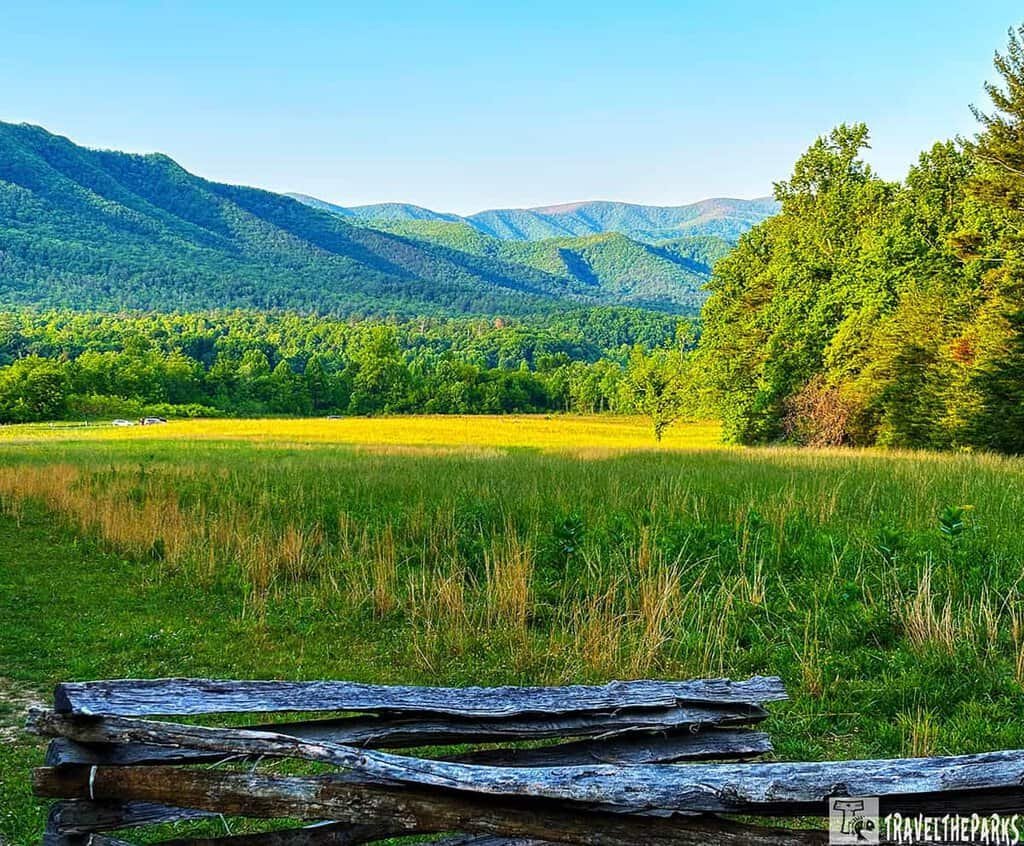
We got there before most people had finished their coffee. Honestly, the mist was still hovering over the meadow when we pulled in. You’ve seen it that low, heavy kind that makes the whole valley look like it hasn’t woken up yet either. This Cades Cove travel guide is basically what we know now that we didn’t know before we went.
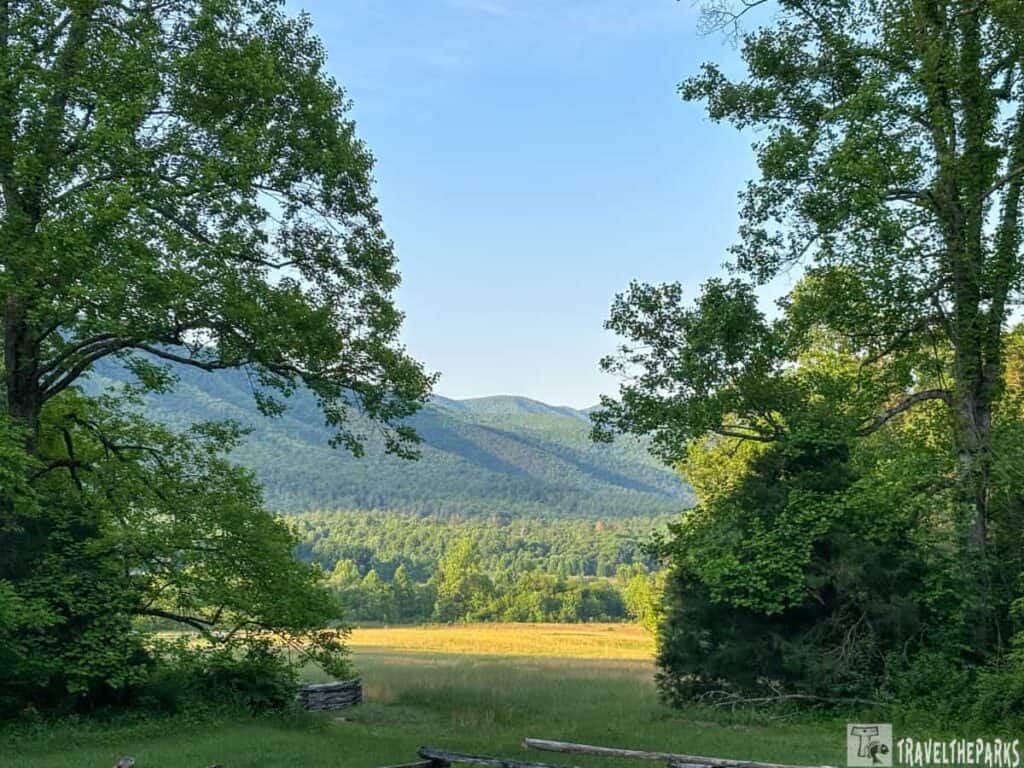
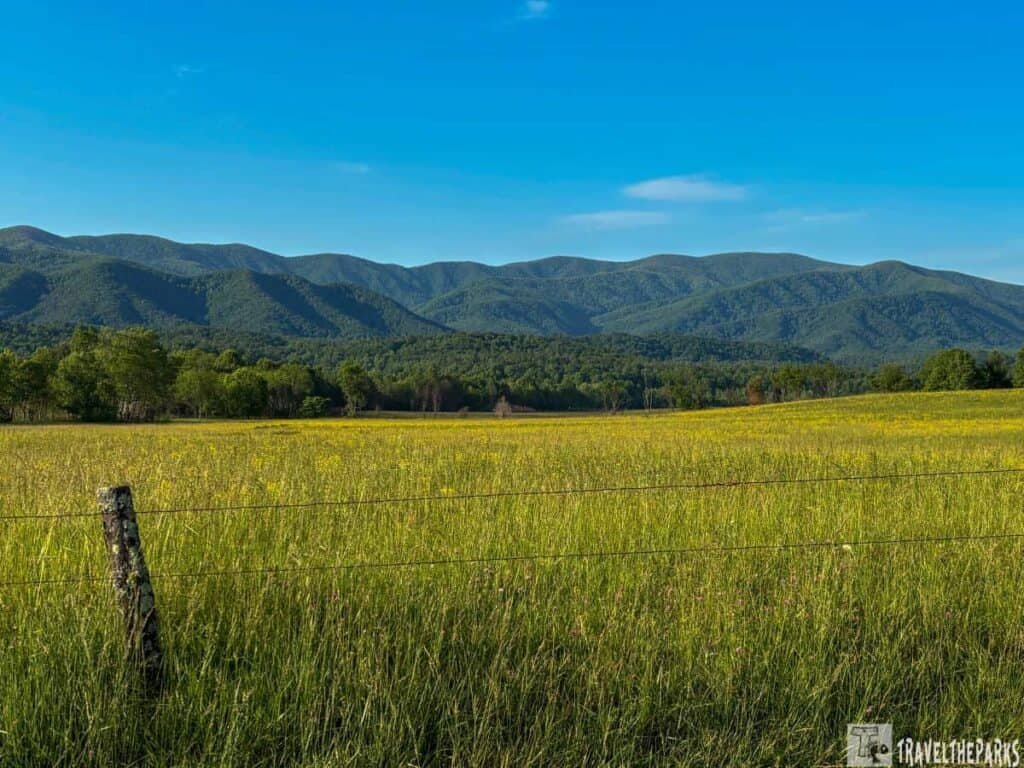
We didn’t really say much. Just got out of the car and stood there. The mountains behind Cades Cove stack up in these ridiculous layers, and at that hour, it’s almost too much to look at. We’d heard it gets crowded. The 11-mile Loop Road backed up with cars by 9 AM, people angling for the same black bear photo. But right then, there was nobody. Just us and whatever was moving at the tree line.
That’s the thing about this place—it’s been here since before the park existed, pioneer homesteads still standing, bears still wandering through like the last 200 years are none of their business.
This post may contain affiliate links, meaning if you purchase something through one of these links, we may earn a small commission at no extra cost to you! Read the full disclosure policy here.
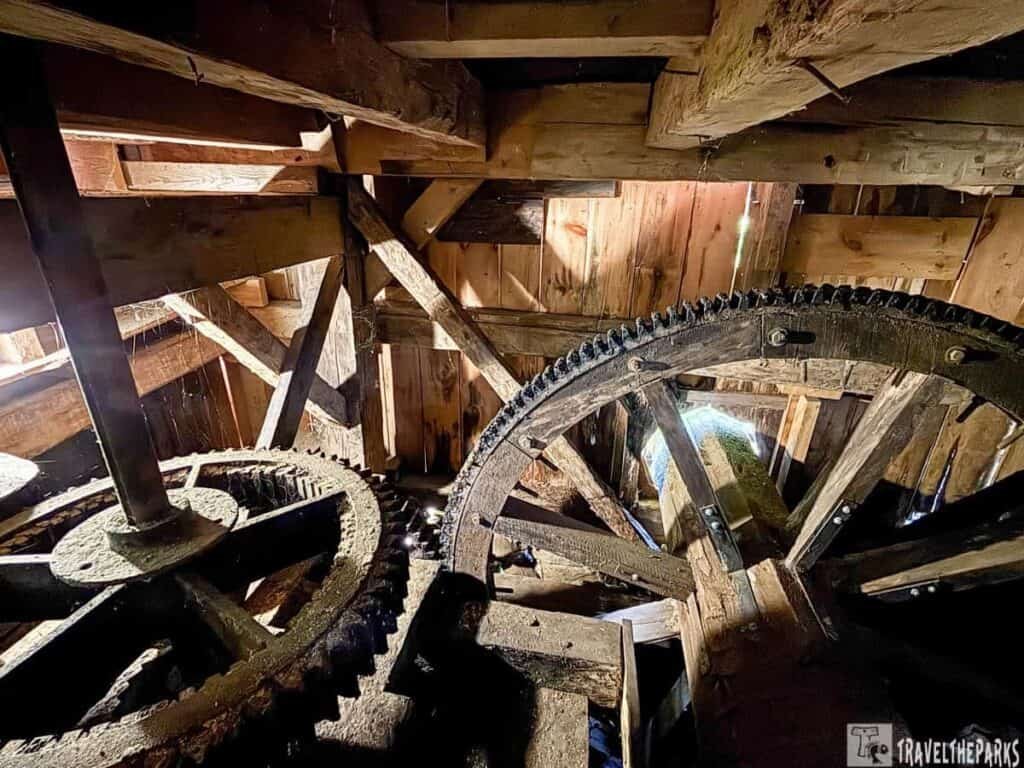
Table of Contents
Cades Cove Overview
By 1830 there were 271 people living here, which doesn’t sound like a lot until you see what they actually built—farms running along the valley floor, a couple of churches, a grist mill, a sawmill, the whole infrastructure of a community that fully intended to stick around. And they did, for over a century, until the 1930s when the federal government established Great Smoky Mountains National Park and the families who’d worked that land for generations had to go. Most of what they left behind is still there.
PRO Tip: Arrive early! Especially in the summer, to miss the crowds. Crowds fill most parking spots by mid-morning. Since there aren’t many services nearby, bring essentials like water,and snacks, also fill up your gas tank. Always visit the National Park Service (NPS) website to get the latest updates on road closures, weather warnings, or wildlife activity, as conditions in the mountains can change quickly.
Go Know Before You Go: Cades Cove Travel Guide Essentials
Visiting Cades Cove was just one highlight of our trip to Great Smoky Mountains National Park: An Ultimate Guide. Before exploring the natural beauty and historic charm of Cades Cove, be sure to review these key details for a safe and well-prepared trip.
- Operating Hours: Cades Cove Loop Road is open daily from 8 AM to sunset, weather permitting. From May to September, the loop is closed to motor vehicles on Wednesdays until 10 AM. for biking and walking only.
- Fees & Pass Requirements: Entry fee it’s free. However, as of March 2023, a $5 parking fee applies if you plan to stop for longer than 15 minutes. However, driving through is free. Tags are available online or at visitor centers.
- The visitor center is open from mid-April through October. On Wednesdays, automobiles are not allowed. The road is open to bike riders, horses, and foot traffic.
- Best Time to Visit: Spring (April–June): Ideal for wildflowers, mild weather, and active wildlife. Great for photography and hiking. Fall (October): Offers spectacular foliage and crisp mountain air—but expect larger crowds.
- Pets: Cades Cove allows pets, but they must be on a leash no longer than six feet. Pets are NOT allowed on trails, except for the Cades Cove Campground roads and the Oconaluftee River Trail (outside Cades Cove). Please clean up after your pets and never leave them unattended.
- Limited Cell Service: And don’t trust your phone out there. Signal’s basically a lie. Paper maps or download the NPS app allows offline access to maps and information.
- We learned a few things after the first time. Binoculars. You’ll see why. Sunscreen and bug spray even when it doesn’t feel that hot. Water. Snacks. More snacks than you think because there’s nowhere to buy anything once you’re on the loop. Comfortable shoes. Even if you’re just planning to stay in the car, you won’t. And don’t trust your phone out there. Signal’s basically a lie. Paper map or download something before you go.
Top Things to Do in Cades Cove
- Cruise the Cades Cove Loop Road (11-mile scenic drive)
- Visit the Cades Cove Visitor Center
- Hike to Abrams Falls
- Visit at Sunrise or Sunset for Photography
- Join a Ranger-Led Program
- Enjoy a Picnic Lunch
- Go Horseback riding
Overview of a Self-Guided Tour of Cades Cove
The Loop Road is 11 miles, one way, and nobody is in a hurry—which you’ll figure out about three minutes in when the car in front of you stops for a deer and nobody honks. Figure on two to four hours, give or take. Could be longer if you’re like us and end up wandering through every old cabin or taking a random trail that looks interesting. Bookmark this Cades Cove travel guide before you head out—the loop moves fast and you won’t want to miss a stop.
Here’s a tip somebody gave us that turned out to be gold. Wednesdays from May through September, they shut the loop road to cars in the morning. Just bikes and people walking. If you can swing a Wednesday, do it. Whole different feeling.
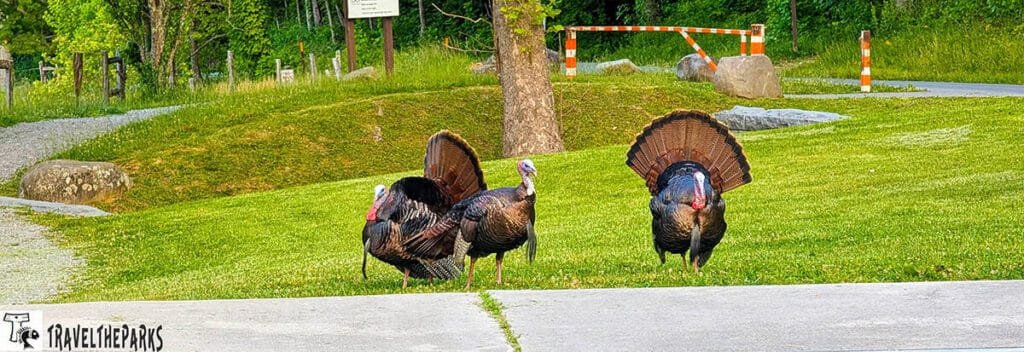
Stop #1: Orientation Center: we actually pulled in. Grabbed the self-guiding tour brochure for a dollar—worth it, since it matches the numbered signs you’ll see along the road, same as this Cades Cove travel guide does. While we were there, three gobblers were doing their thing in the parking area, completely unbothered by us. Good omen.
Don’t go over 20. Use the pull-offs. That’s the main thing. Summer and fall weekends? Forget it. Traffic nightmare. Weekday mornings are the secret. Oh, and two roads let you bail out early if the loop’s driving you nuts. Sparks Lane by the start and end. Hyatt Lane in the middle. Both go two ways so you can actually turn around.
Cades Cove Travel Guide: Key Stops and Their Histories
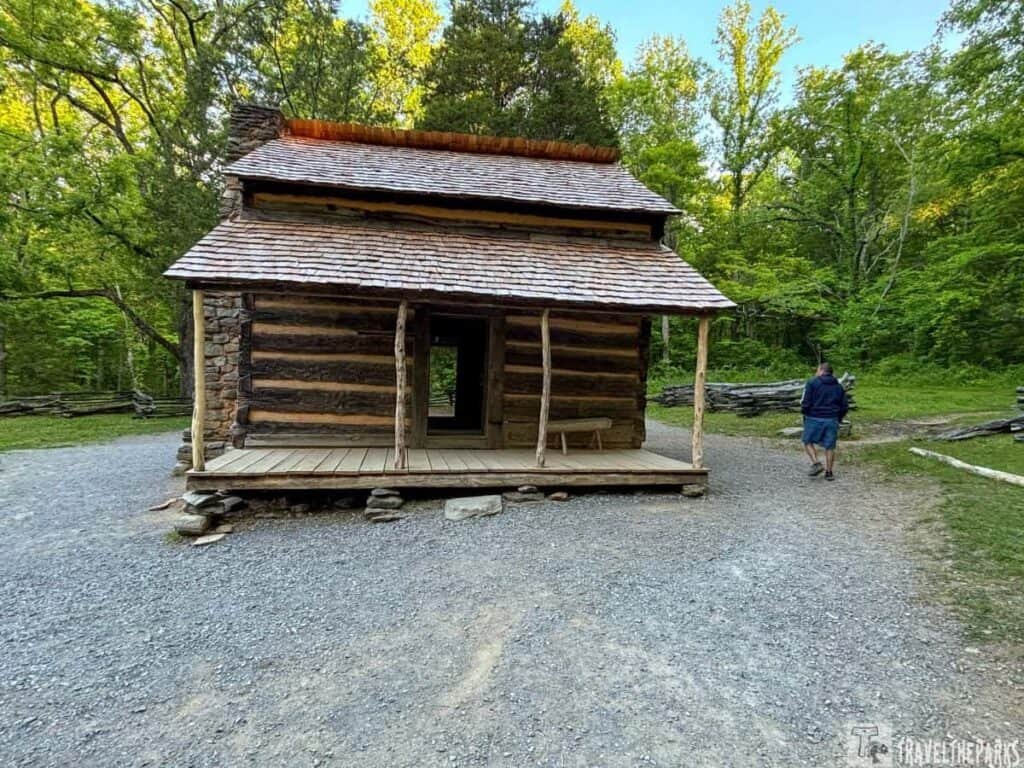
Stop #2: John Oliver Place: That first place you hit on the loop is John Oliver’s cabin. Short walk from where you park. Built around 1820-something by a guy named John Oliver—he and his wife Lucretia showed up in 1818, right after that war with Britain. Place is old. Oldest log home in the entire park, they say.
What got me? No nails. Just notched logs fitted together. All native wood. You look at it and think, how’d they even do that.
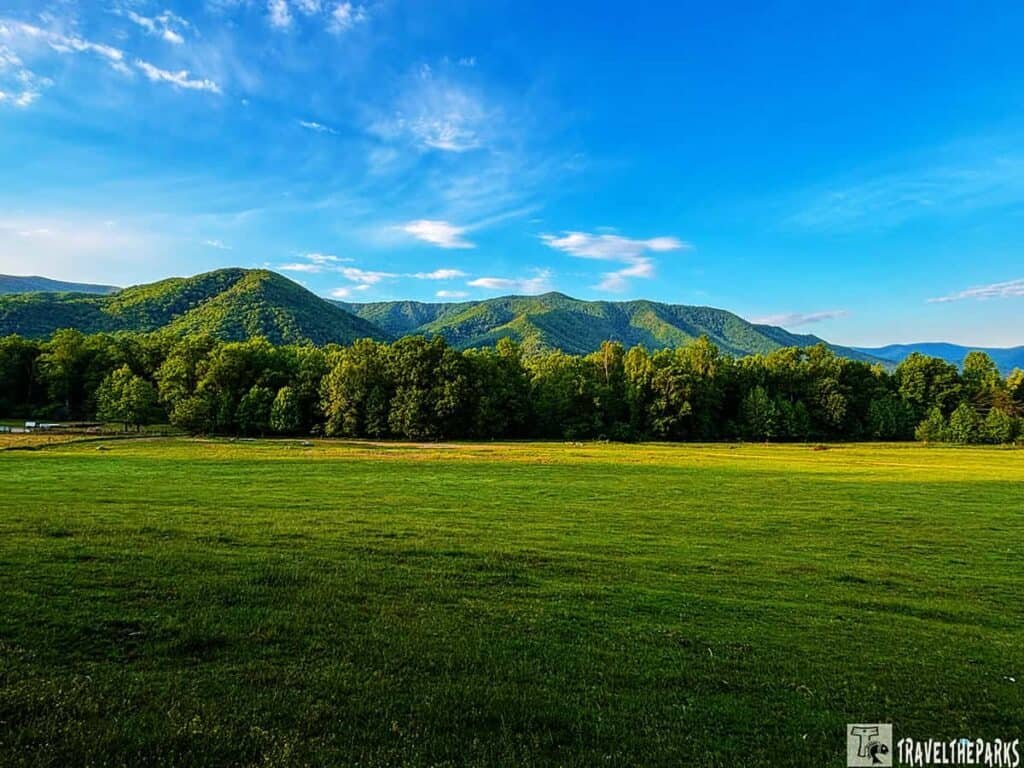
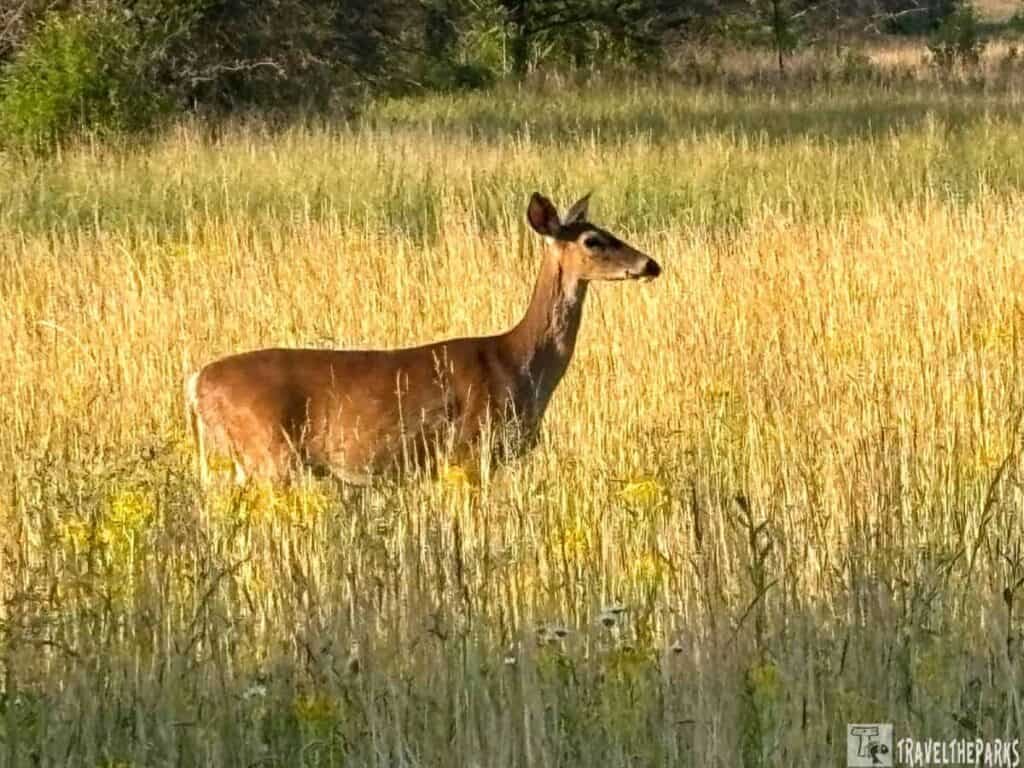
The cabin’s still there. Beside it, just open fields. We saw deer hanging out, a couple of turkeys. Nothing fancy.
But yeah, those two came out here to this remote valley, dealt with cold winters, not much to eat, nobody around. Just them. You stand there and it kind of hits you what that must have been like.
NOTE: The loop road is one-way, so be sure to be courteous to other drivers and pull off at designated areas. Please do not stop in the middle of the road.
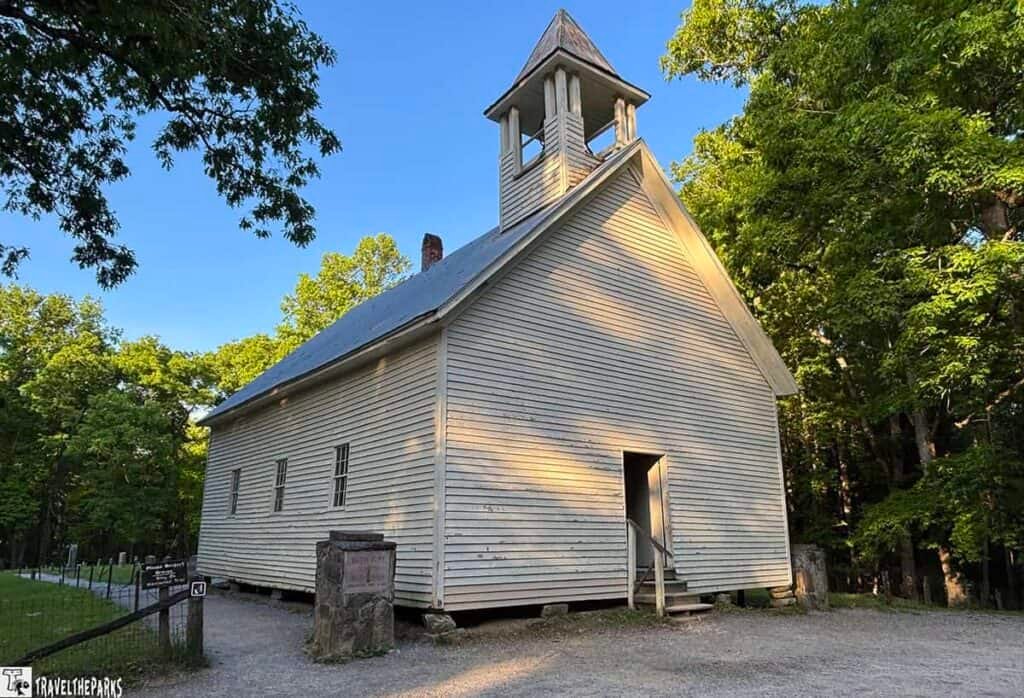
Stop #3: Primitive Baptist Church and Cemetery (built around 1841).
Turn onto the little dirt road off the main loop. The first thing you’ll see is the Primitive Baptist Church. Oldest one in Cades Cove—started in 1827. The white building standing now went up in 1887. It’s on the National Register.
Graveyard around it. Civil War folks buried there, plus families who built the place, like the Olivers.
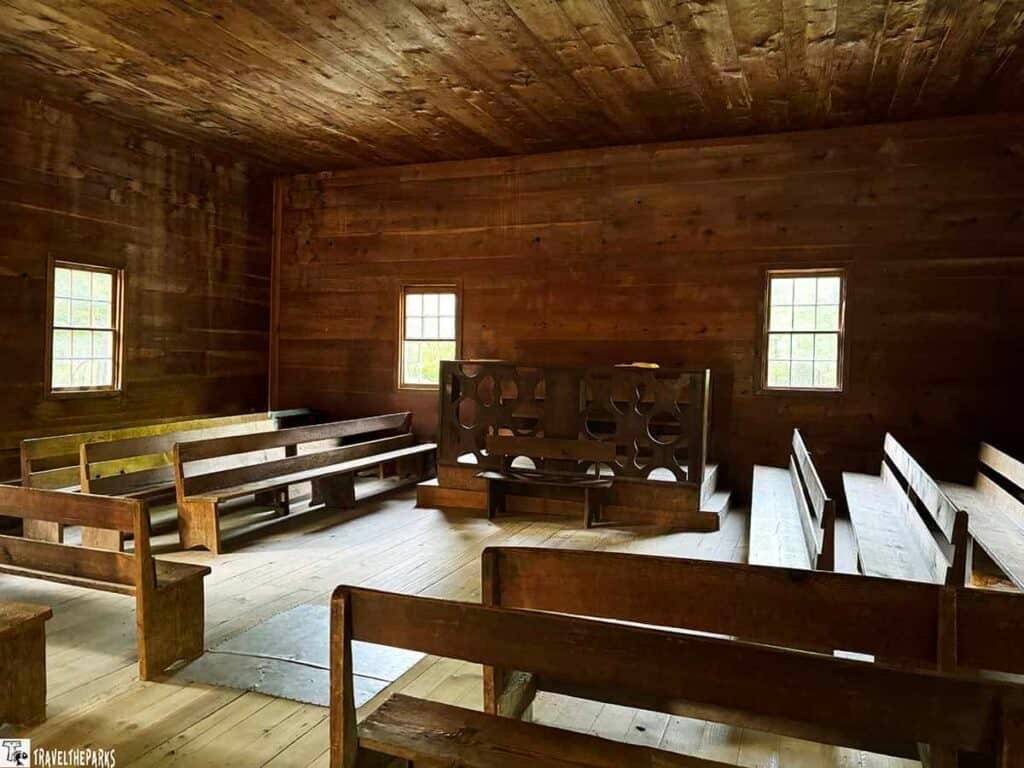
Three churches total in the cove, but this one’s the oldest and probably the most known. Back in the 1800s, it had the biggest crowd on Sundays. Simple log design at first — fitting for a humble farming valley. Services ran for over sixty years, except for a pause during the war.
Interesting Fact: The church stopped holding services during the Civil War because it supported the Union. The pastor went into hiding, and church services started again after the Civil War ended.
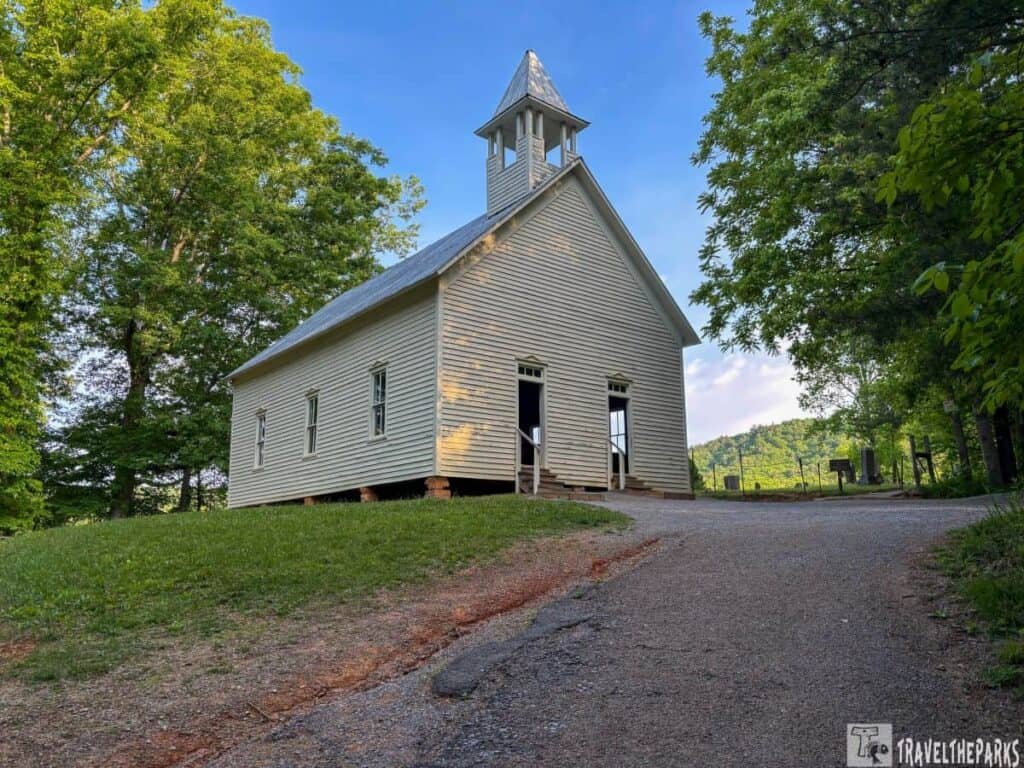
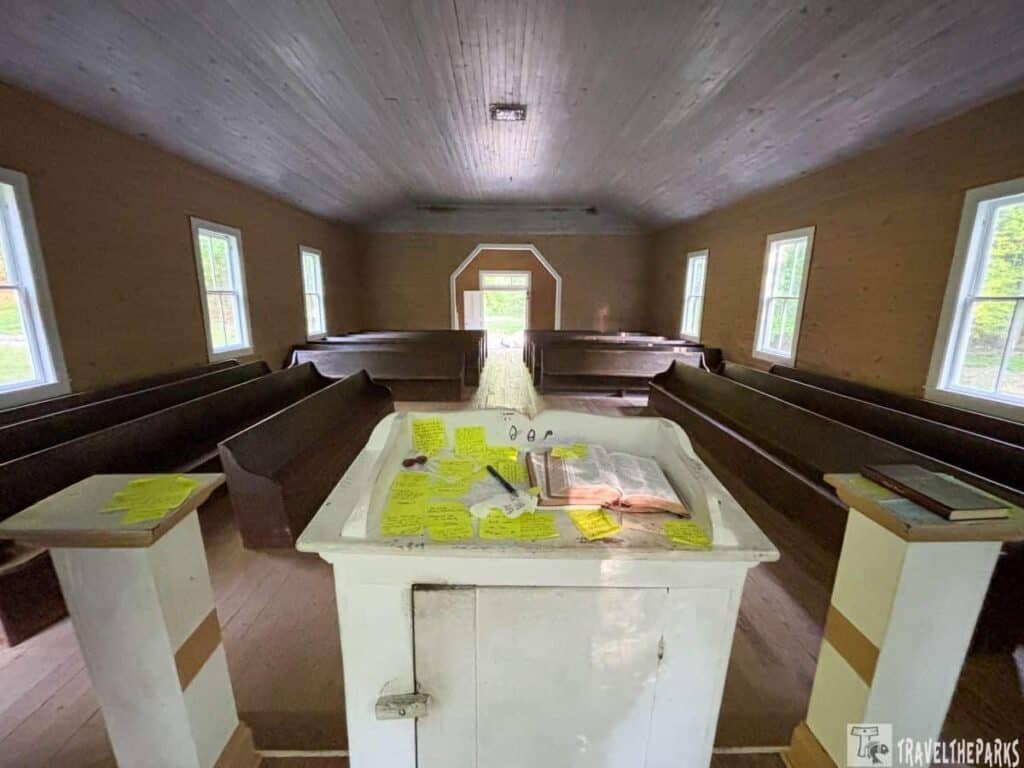
Stop #4: Methodist Church (circa 1820):
The Methodist congregation here goes back to around 1820—a log building, dirt floor, firepit in the middle, which sounds miserable in January and probably was. They split from the Baptists at some point over theological disagreements nobody fully agrees on anymore, built their own community, and by 1902 had this little white frame church designed by John D. McCampbell, who was apparently both a carpenter and a preacher, which seems like a useful combination. Notice the two front doors. That wasn’t decorative—men came in one side, women and children the other, and that’s just how Sunday morning worked in Appalachian churches of that era.
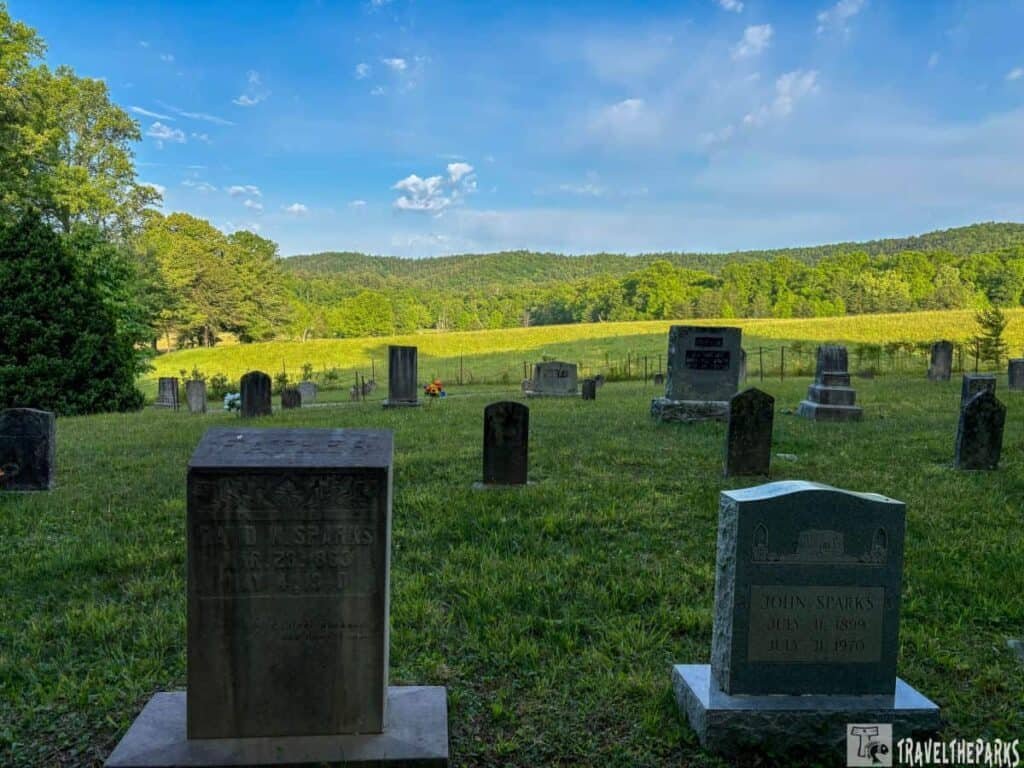
Stop #5: Missionary Baptist Church (circa 1841)
This one started in 1839. Some folks in the Primitive Baptist church—the cove’s first, from 1827—broke off over a disagreement. They wanted to do missionary work, spread things beyond the valley. The other side said no. So they got booted.
About 40 people formed the Missionary Baptist Church. Grew to 115 by the late 1800s. The building you see now? White frame, went up in 1915. Before that, an 1894 replacement. Before that, the original.
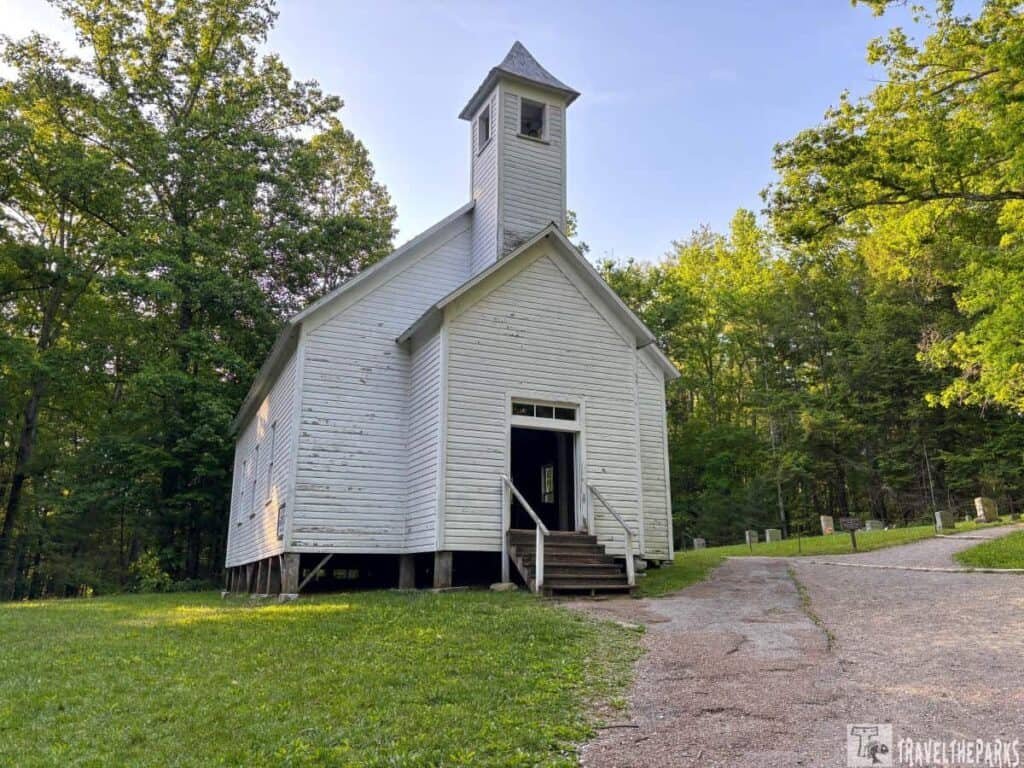
No services during the Civil War, like the others. After the war, they came back but left out anyone who’d sided with the Confederacy. Families got split over all that.
Oh, and there’s daffodils out front in spring. Some CCC guy in the 1930s planted them to spell “Co. 5427.” Still comes up every year.
Stop #6: Elijah Oliver Place
Elijah Oliver was John’s son. Born 1824. Built his place about a 1/2 mile from the parking area—you walk in.
He ran off during the Civil War but came back. Later became a deacon at the Primitive Baptist Church.
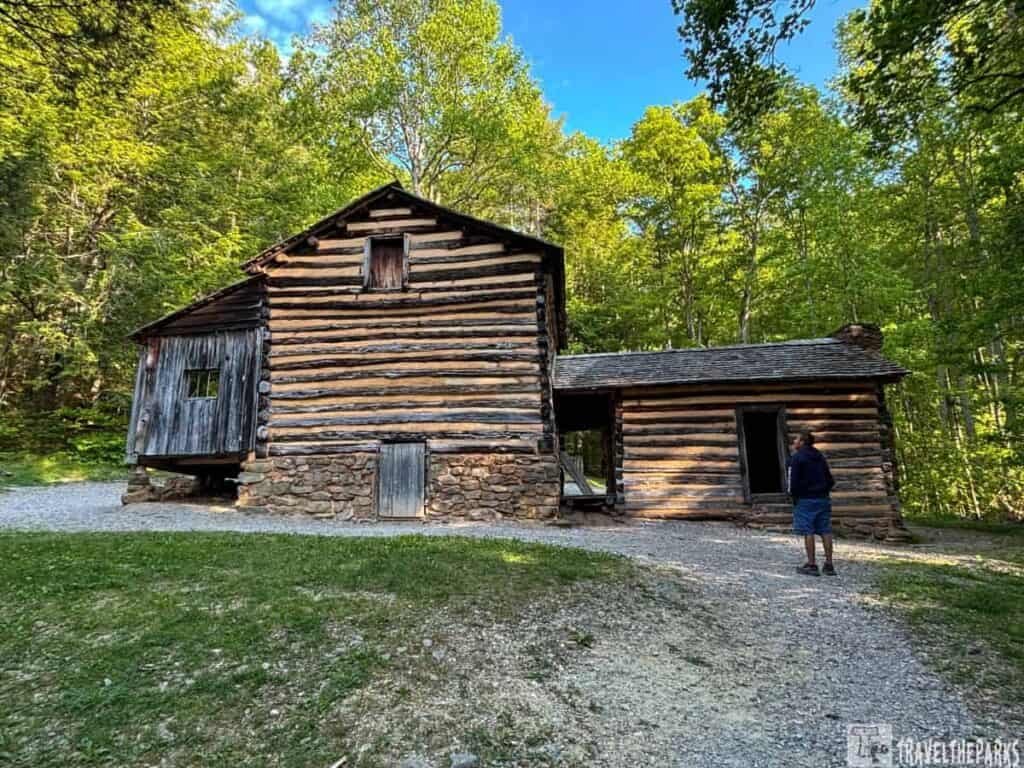
The homestead’s from 1865. Has this little “Stranger’s Room” just for travelers passing through. People back then were big on hospitality. Also still has a springhouse, corn crib, and smokehouse. Nothing fancy, but you get the idea.
Pro Tip: arrive before 9 AM. for the quietest experience and best lighting for photos.
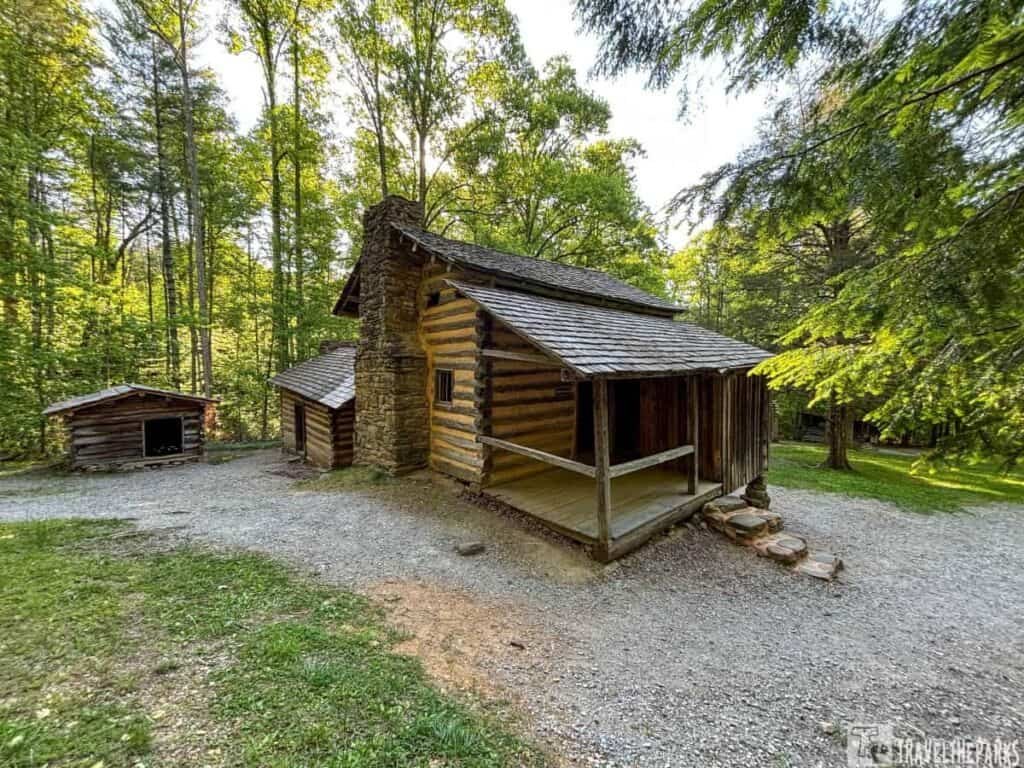
Stop #7: Abrams Falls Trailhead
We almost skipped Abrams Falls. Mostly because we weren’t sure about the crowds. And yeah, the parking lot does fill up stupidly early. But we got lucky.
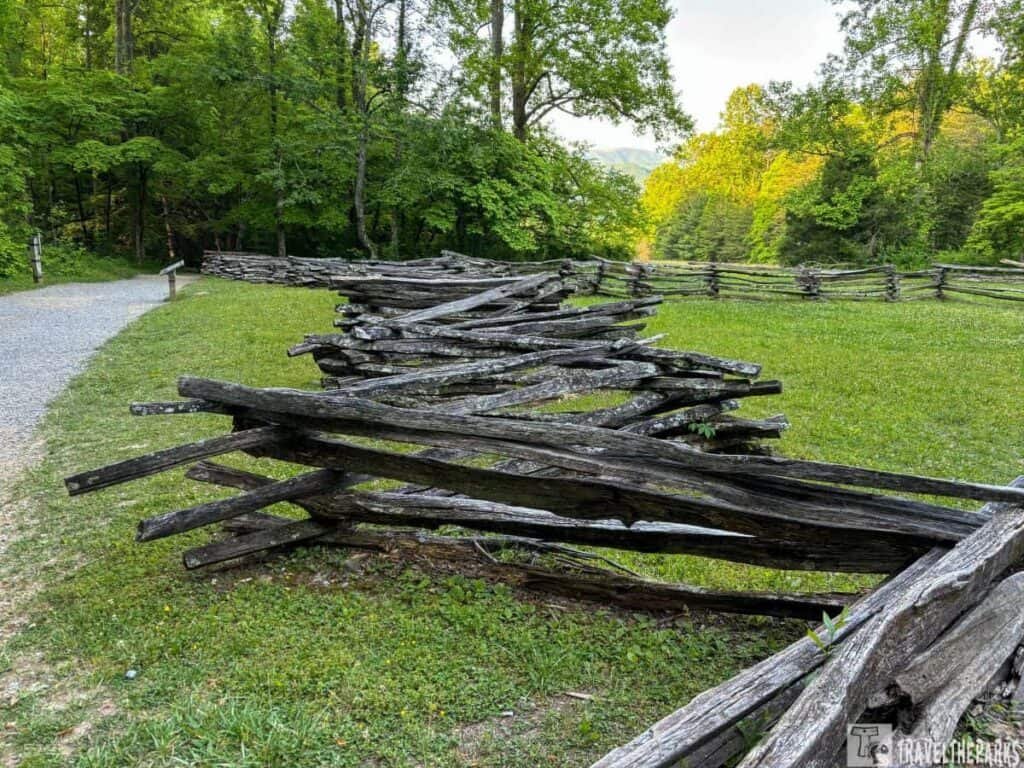
It’s a moderate hike. Some roots, some rocks. Nothing wild. Most of it winds through dense forest, but the stretches along Abrams Creek are the kind of pretty. It makes you slow down without meaning to. The falls themselves are only about 20 feet, but the water comes over that ledge with real weight to it. Deep pool at the bottom. Named after Chief Abram.
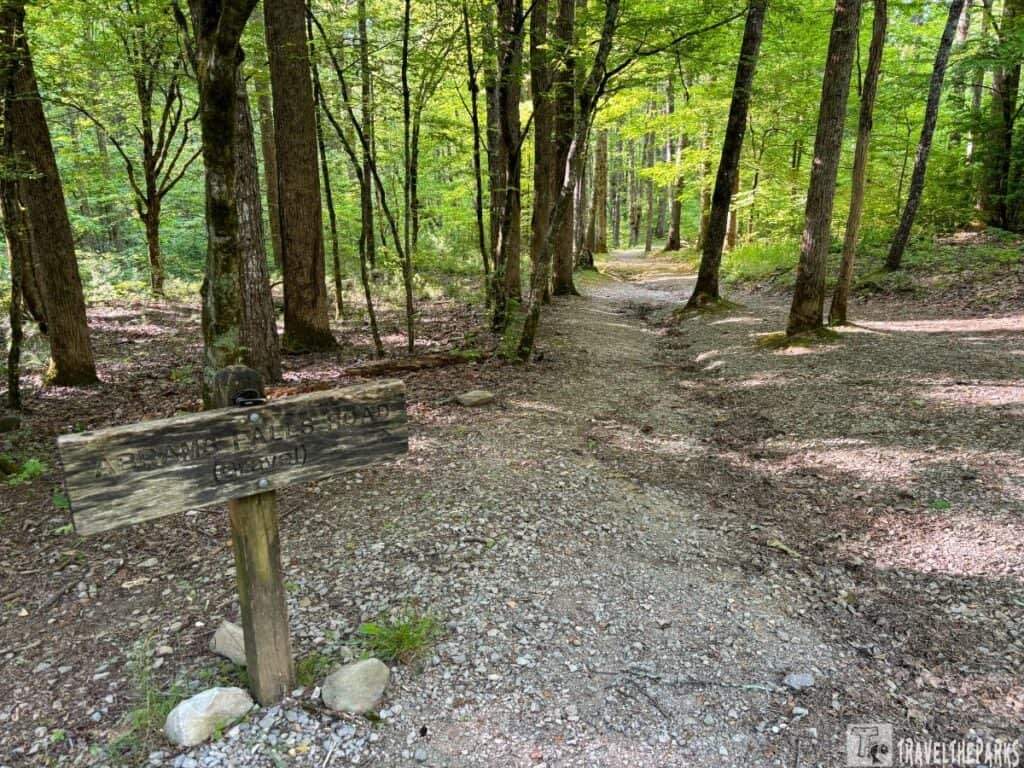
Took us maybe two and a half hours. If you go in spring, the green is almost too much. In a good way.
PRO Tip: The rocks around the falls are extremely slippery. Exercise caution and resist the urge to swim, as strong currents and underwater hazards have made this spot dangerous in the past.
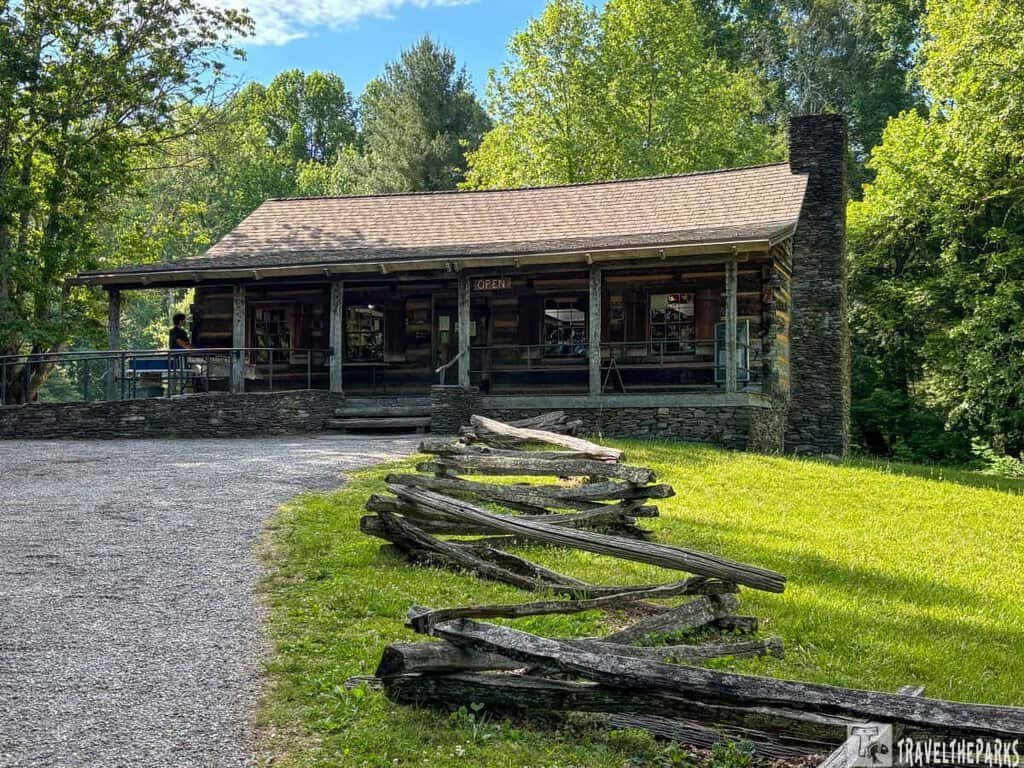
Stop #8: Cable Mill Visitor Center
You’ll hit the Cable Mill Visitor Center about halfway around the loop. It’s worth stopping.
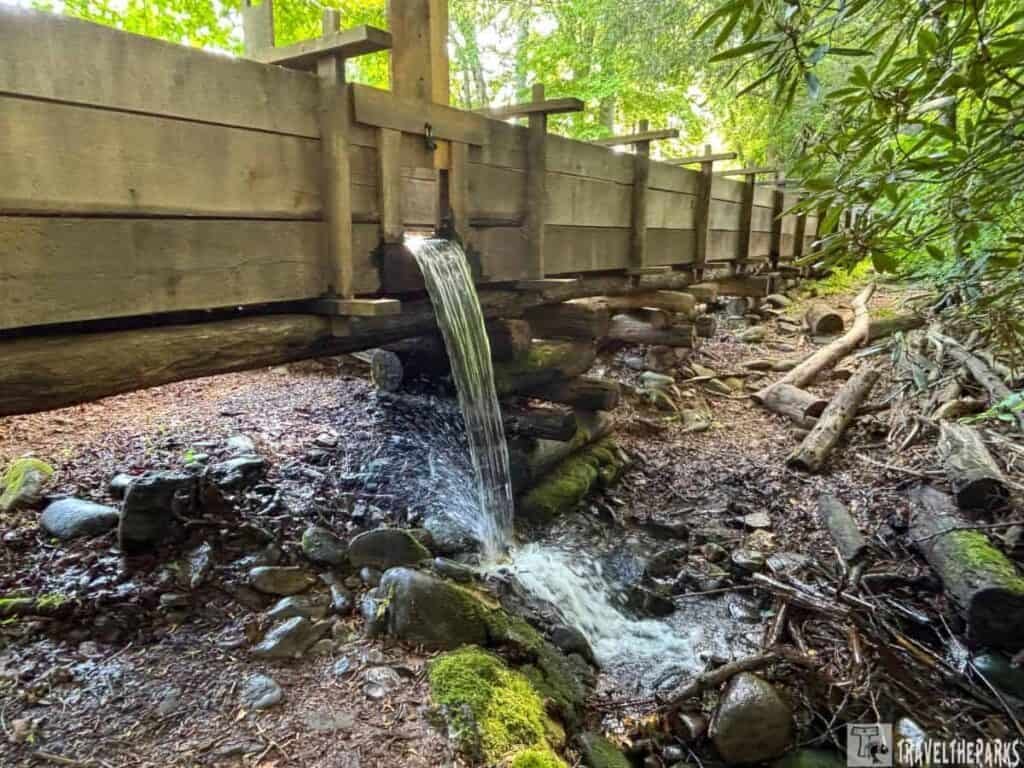
The main thing is the old gristmill. John Cable built it in 1867, and it still runs on water. Back then, folks brought their corn here to get ground up, had their lumber sawed—it was a busy little spot.
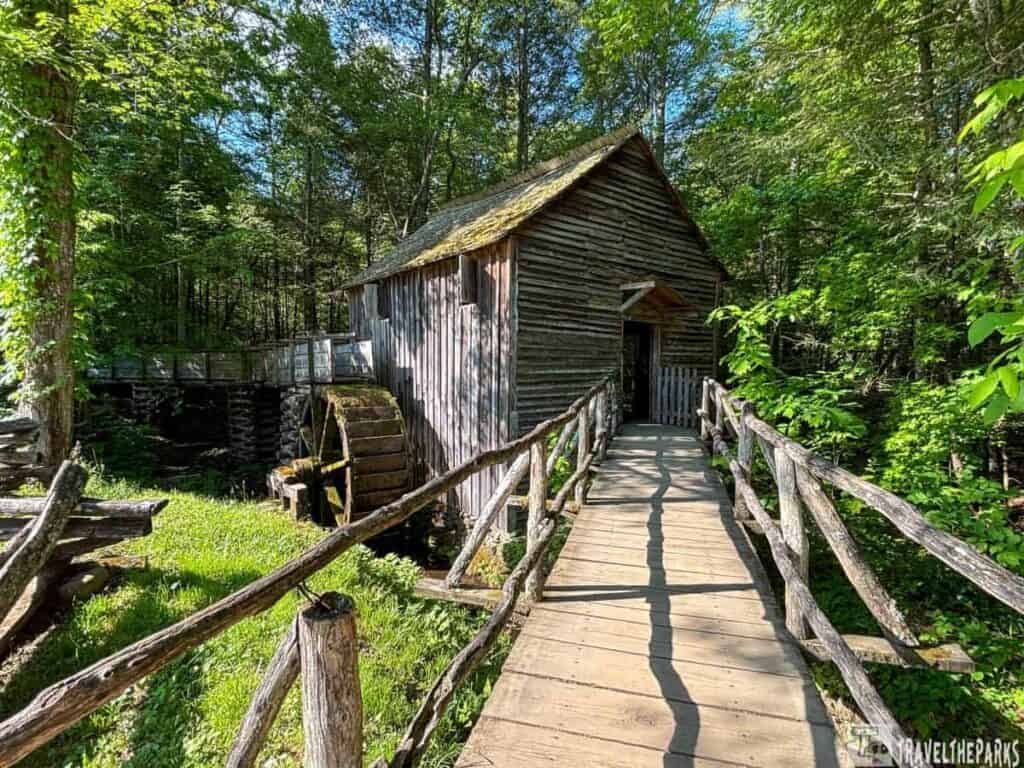
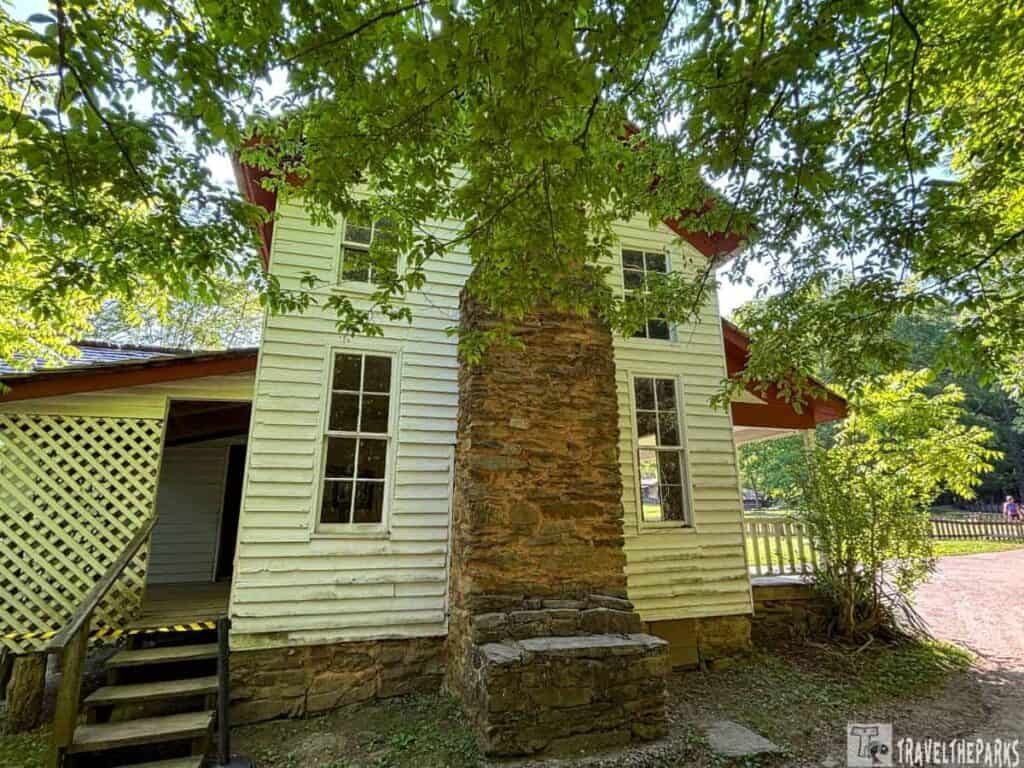
Around the mill, there’s a blacksmith shop, a smokehouse, some barns, and the Gregg-Cable House. That one started as a store, then somebody’s aunt lived there until 1940.
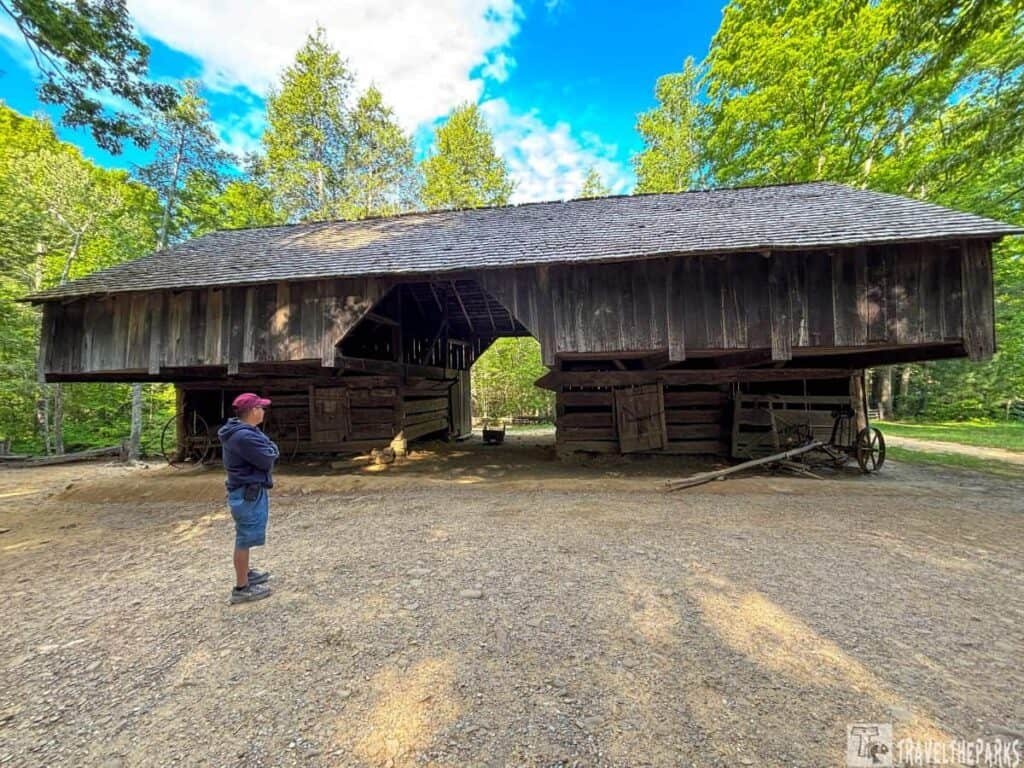
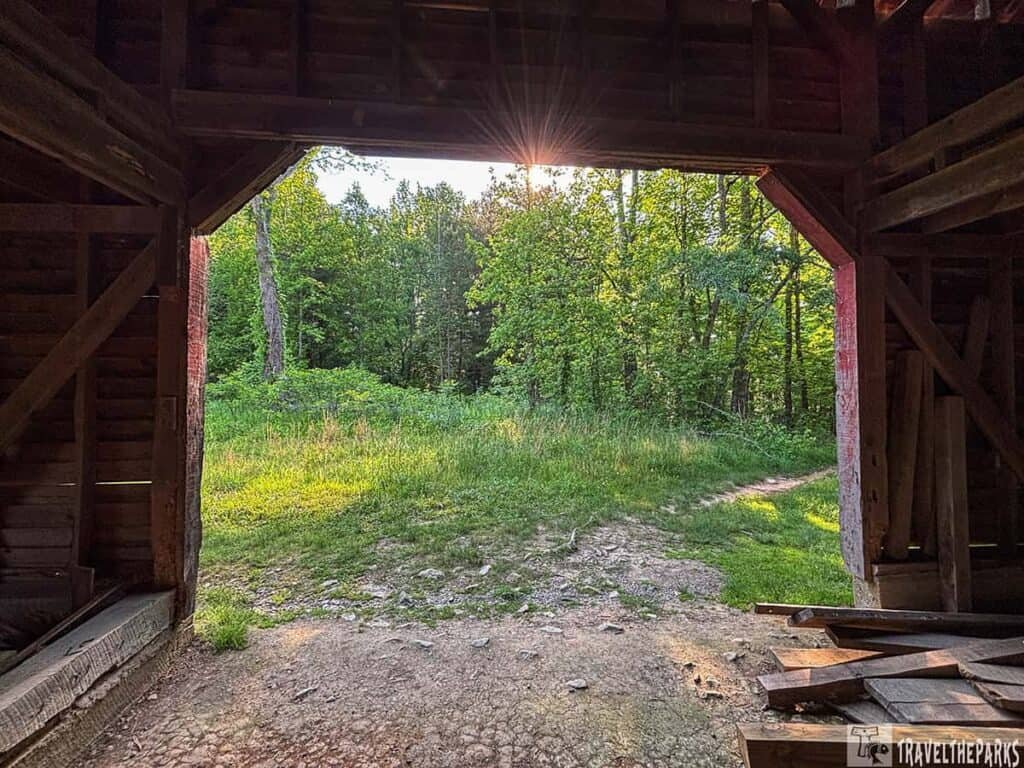
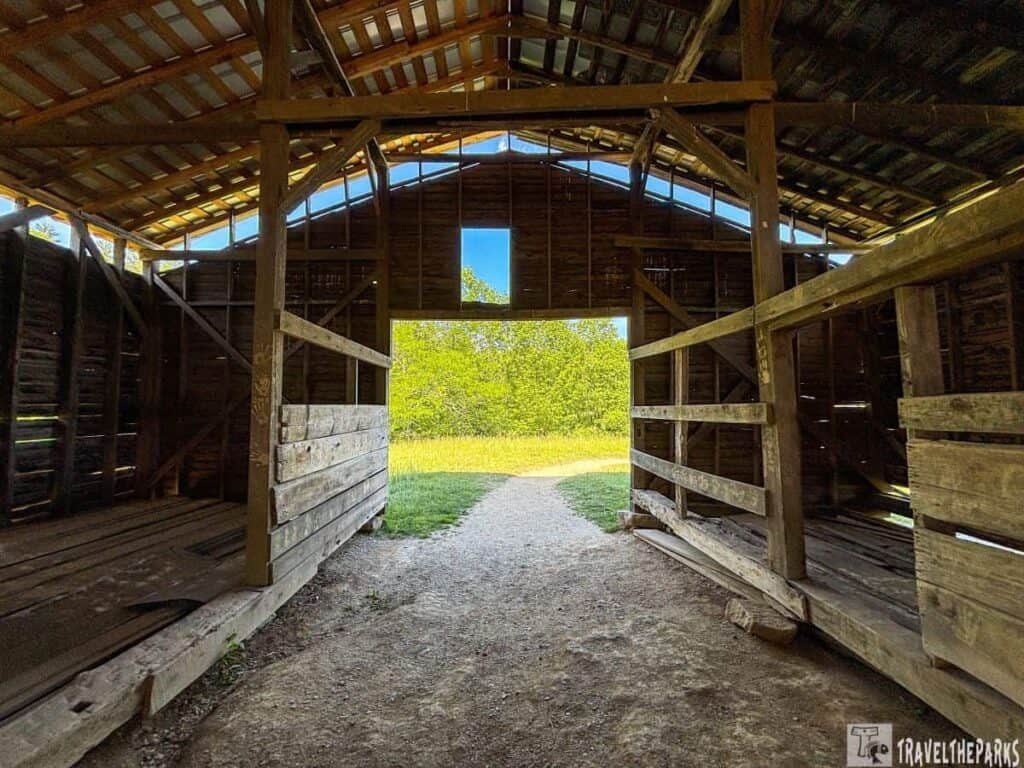
There’s also this cantilever barn. Weird looking at first, but the design made sense—kept animals and supplies up off the ground, safe from weather and critters. Clever, really.
The visitor center is open from mid-April to October and includes restrooms, exhibits, and a small gift shop. It’s a magnificent spot to stretch your legs and experience the agricultural roots of Cades Cove.
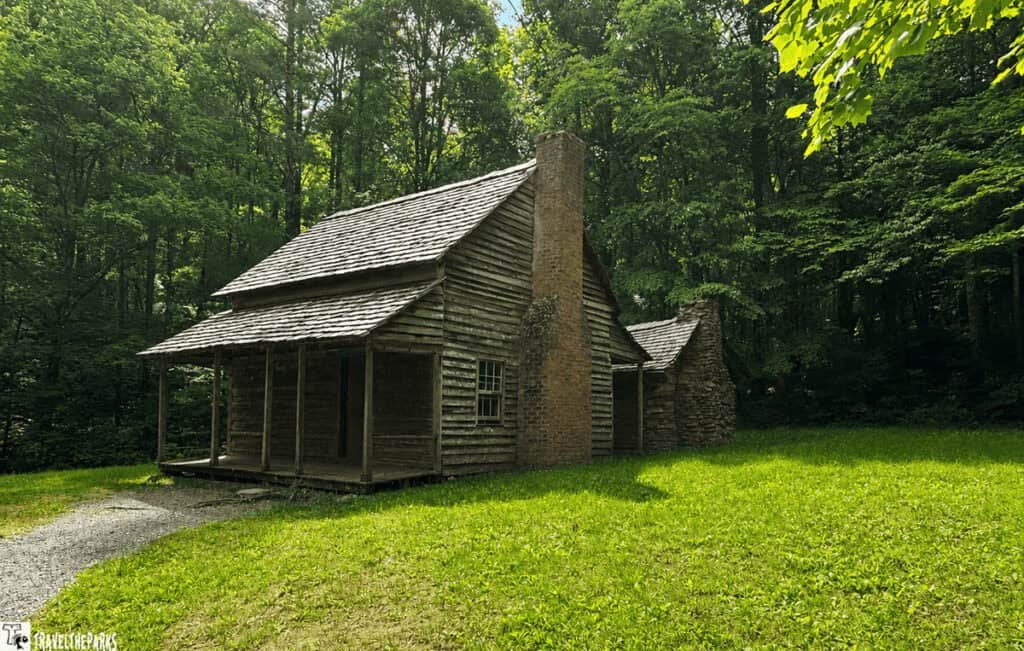
Stop #9: Henry Whitehead Place
Constructed circa 1898, the Henry Whitehead Cabin is Cades Cove’s only surviving example of a ‘transitional’ lodge. It features a blend of traditional logs and milled lumber, alongside a handcrafted brick fireplace, which was quite uncommon during that period. Henry Whitehead restored the cabin for Matilda, his wife, after her first husband deserted her. The cabin exemplifies the self-sufficiency and ingenuity of the Whitehead family, who were early 20th century homesteaders and farmers within the park, as well as the remains of the civilization that occupied the park.
Stop #10: Cades Cove Nature Trail
There’s a short, half-mile loop trail right there. Easy. In spring, the dogwoods are something else.
Good spot to just get out of the car and move around a little. You get a feel for the woods and creeks that kept those early folks going.
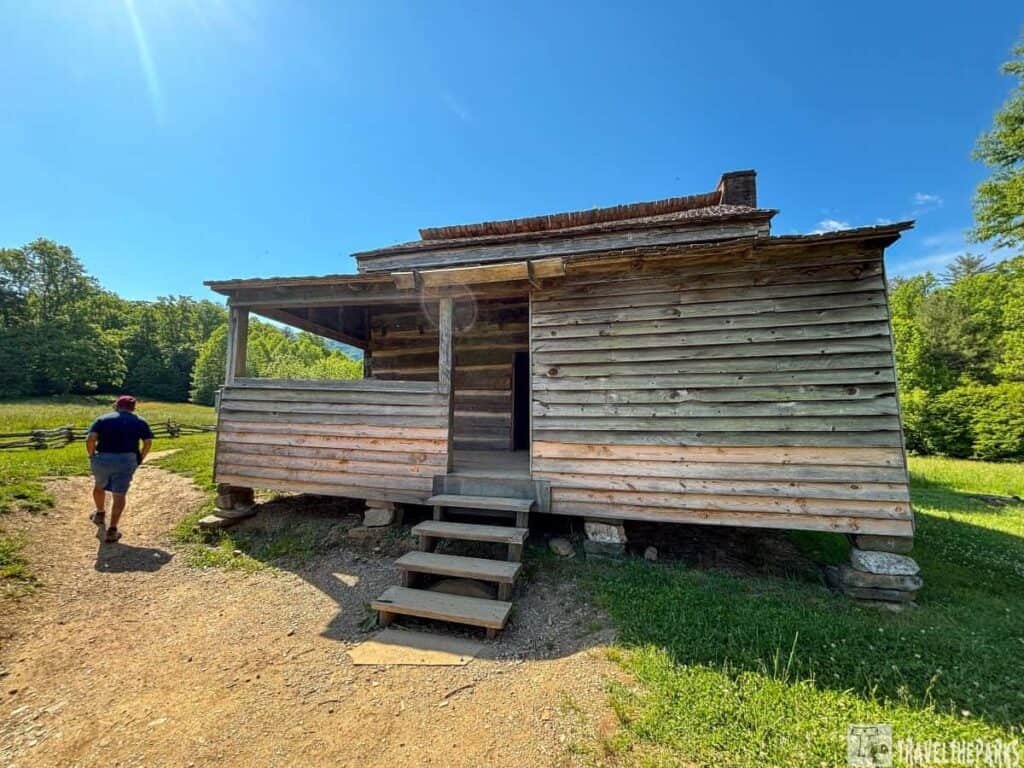
Stop #11: Dan Lawson Place
Dan Lawson, a farmer, married into the prominent Oliver family. Lawson was a key figure in Cades Cove, serving as postmaster and justice of the peace, roles that made him a community pillar during the valley’s peak in the 1850s. He built this simple cabin in 1856. This homestead includes a cabin, a granary, and a smokehouse. The cabin’s standout feature is its traditional stone fireplace, essential for cooking hearty meals and warming the home through harsh Appalachian winters.
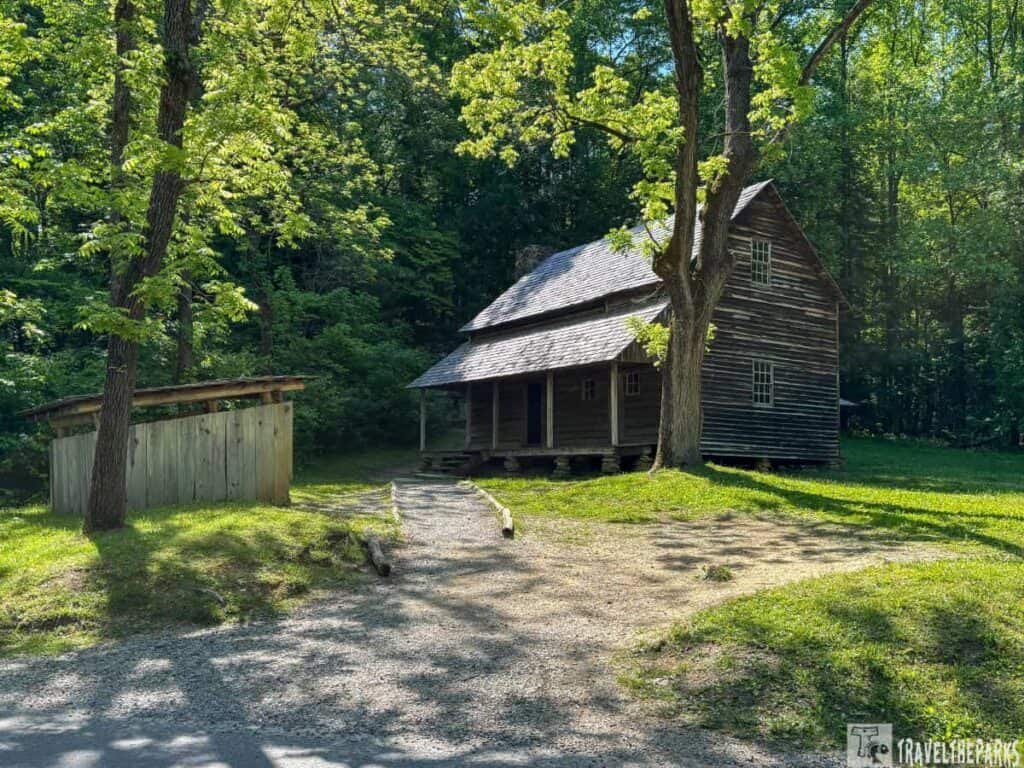
Stop #12: Tipton Place
Owned by Colonel William “Fighting Billy” Tipton, his daughters Lucy and Lizzie inhabited the home. His daughters worked as schoolteachers. The wounded war veteran built the two-story home in the 1870s. Also on site are a carriage house, a smokehouse, a woodshed, and a replica of a double-cantilever barn. A bee gum apiary is beside the house. We found the barn to be fascinating. The design allowed overhang protection for his outside animals and equipment. It had a center aisle between the pens large enough to accommodate a wagon and provided shelter from the elements to the stalled animals.
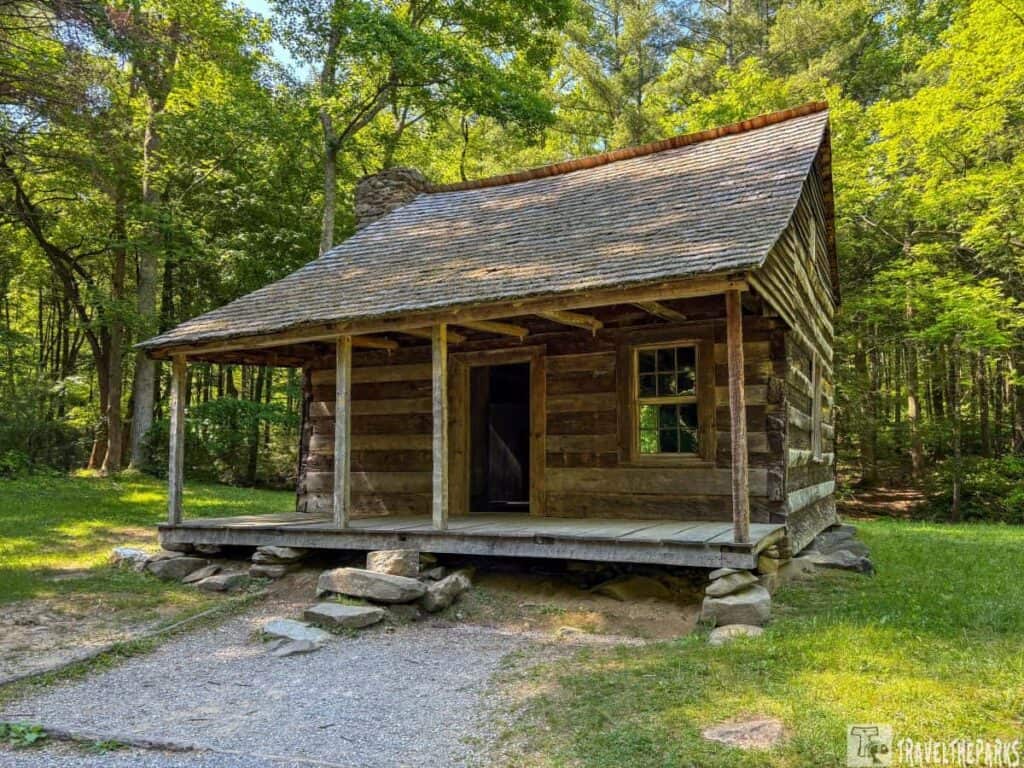
Stop #13: Carter Shields Cabin
The Carter Shields Cabin belonged to a guy named George Washington Shields,—went by “Carter.” Civil War veteran. Got banged up pretty badly at Shiloh in 1862. One of the bloodiest fights of the entire war.
He came back from Kansas after the fighting ended and lived here from 1910 to 1921. Only 11 years. But the cabin’s still standing.
Be Respectful of Wildlife
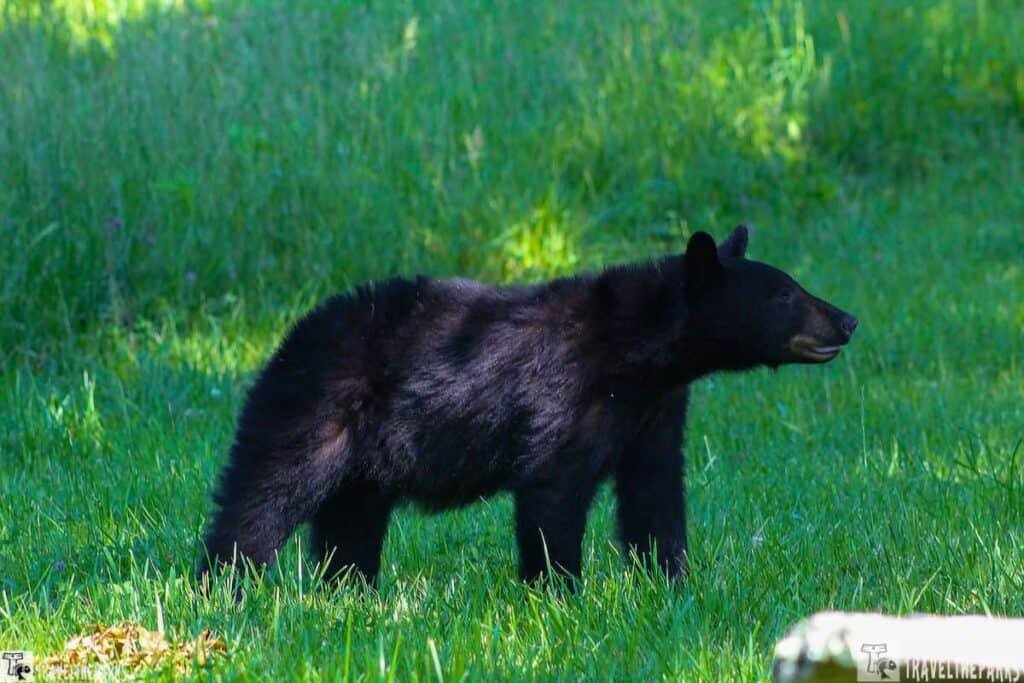
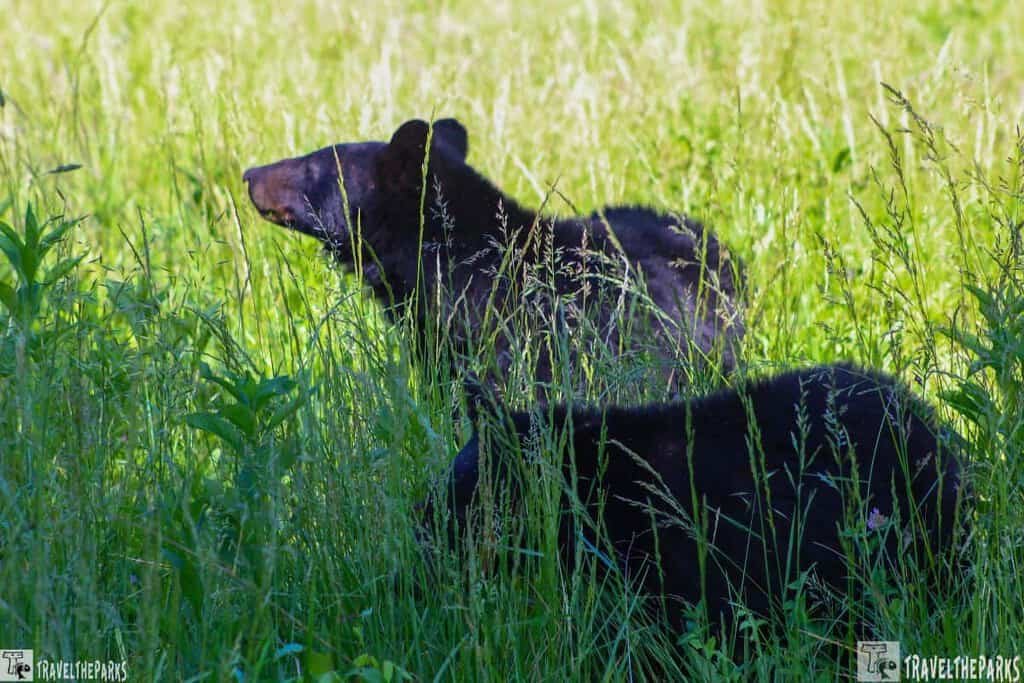
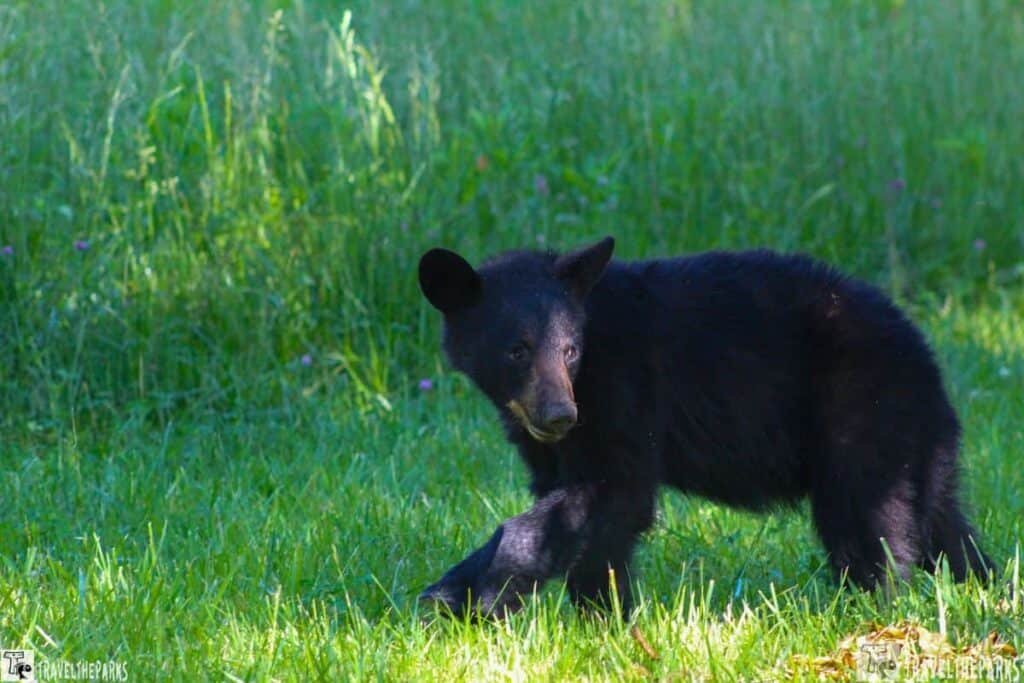
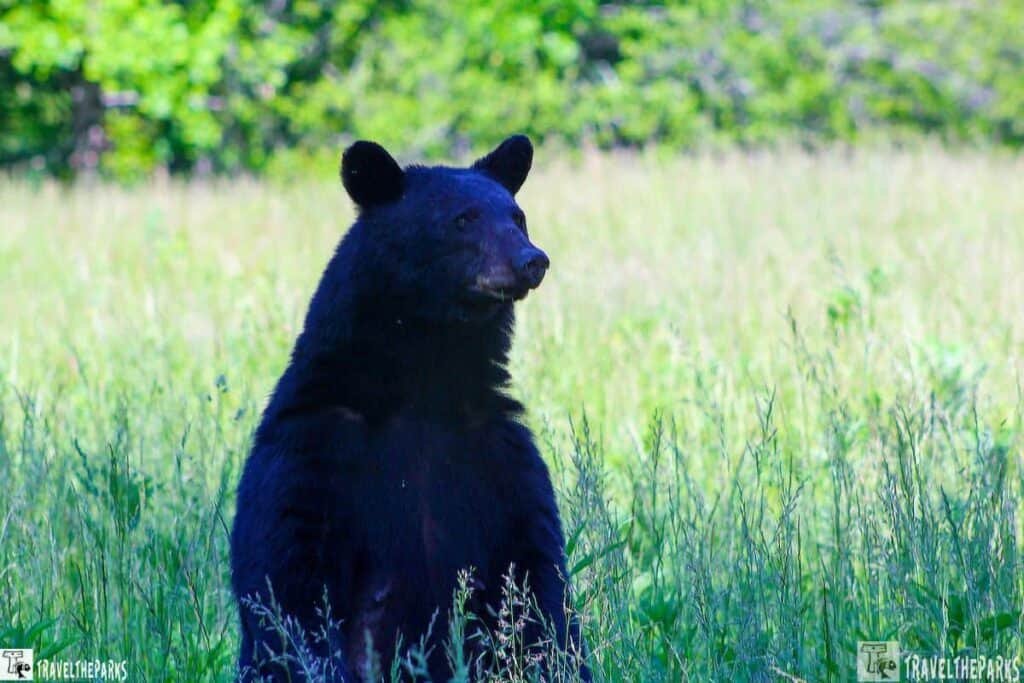
We ran into a few wildlife jams while we were there. One thing this Cades Cove travel guide can’t stress enough—be cool around the animals. It’s actually against the law to get within 50 yards of them, especially the bears. We saw people coming awfully close. That said, the cove is a great spot to see deer and black bears if you’re lucky.
One thing we figured out: Forge Creek Road. It’s a one-way gravel road, open seasonally, and way less crowded. About halfway around the loop, you turn right onto it. Eventually it turns into Parsons Branch Road—steep, remote, about 8 miles of gravel. Drops you out at US-129 near Deals Gap, where all the Tail of the Dragon folks go.
We hung a left onto 129 South toward Robbinsville. Stopped at Fontana Lake Dam on the way back to Bryson City. Worth the detour.
Cades Cove Travel Guide: Where We Stayed in the Great Smoky Mountains
Finding the right home base can make your trip to the Smokies so much better. We’ve learned that staying near the part of the park you plan to explore most saves precious time and stress. Here’s a look at our personal experiences staying on both the North Carolina and Tennessee sides.
For a Cades Cove-Focused Trip: Townsend, TN (“The Peaceful Side”)
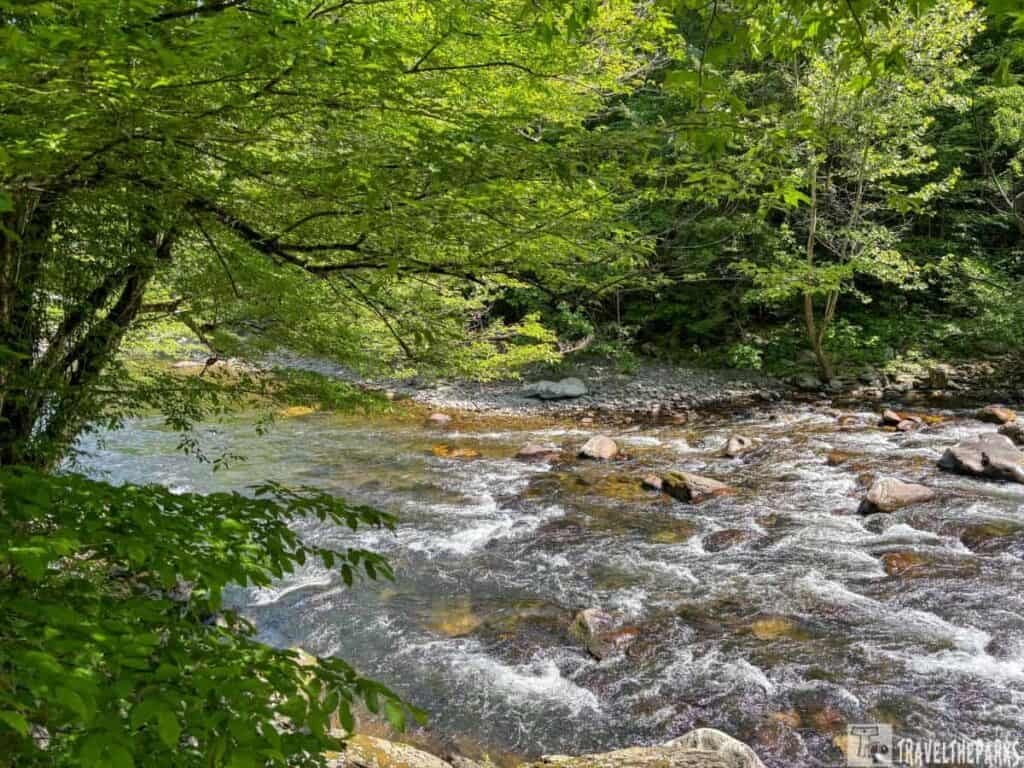
On our latest trip, we based ourselves in Townsend, TN, and it was a revelation. The drive to the Cades Cove entrance was incredibly short and scenic.
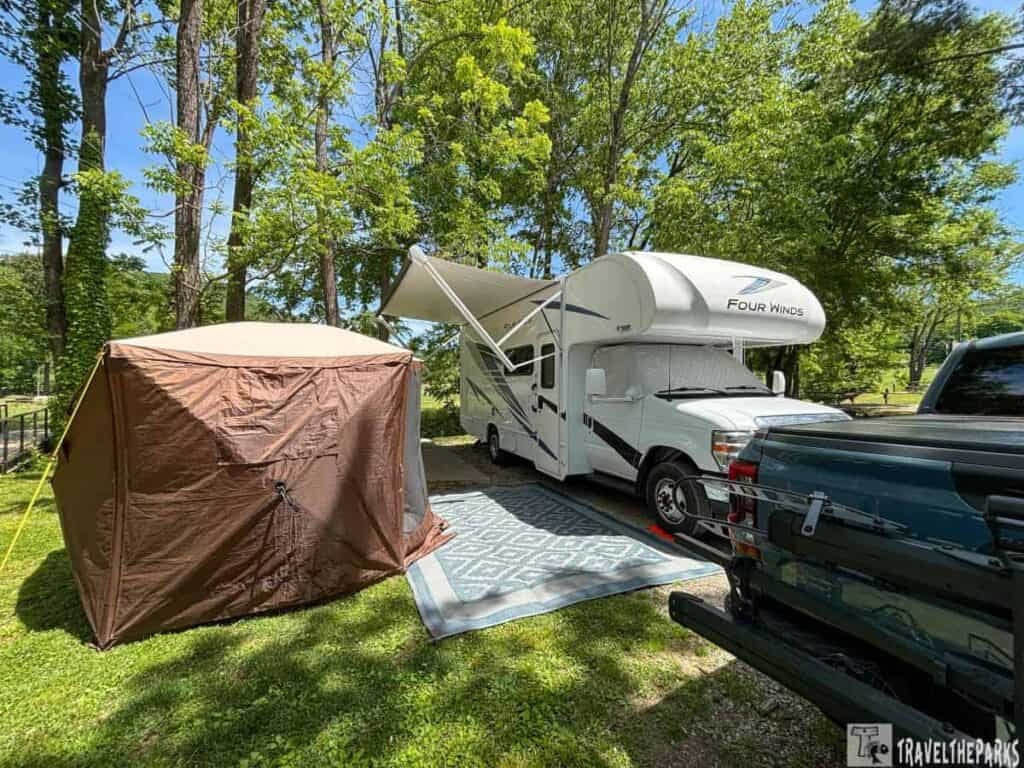
We stayed at Riverstone Campground. Nothing fancy—just a quiet spot by the river. Woke up to the sound of water every morning, made coffee, took our time. The best part? We could get to the Loop Road early without dragging ourselves out of bed at some ridiculous hour.
Townsend itself is low-key. No crowds, no fuss. After a long day of walking and driving the loop, it was nice to come back to something slow.
For a Bryson City/Deep Creek Adventure
On our first trip to the area, we stayed on the North Carolina side at the Deep Creek Tube Center & Campground, just minutes from the Bryson City entrance. It was the perfect base for a completely different Smokies experience—think tubing down the creek, chasing waterfalls on the Deep Creek trails, and relaxing evenings by the fire. It’s a fantastic, family-friendly option if your itinerary focuses on the southern part of the park.
Why We Skipped Camping Inside Cades Cove: While the Cades Cove Campground is popular for its location, we’ve found it can be a bit too crowded and noisy with the constant loop road traffic. We also need to have electricity to run the A/C for Sage. For a more serene nature experience, we prefer the riverside spots in Townsend or the Elkmont Campground on the other side of the park.
PRO Tip: Your choice depends on your adventure! For Cades Cove, stay in Townsend. For waterfalls and tubing, look near Bryson City. And book well in advance, especially for autumn visits—the best spots fill up fast!
Best Hiking Trails in Cades Cove: From Waterfalls to Mountain Vistas
Although the scenic drive is the primary draw, the greatest way to enjoy Cades Cove in all its glory is by walking. These trails range from leisurely family walks to arduous day-long excursions, something for every level of adventurer.
Rich Mountain Loop Trail
If you really want to get away from people and don’t mind working for it, there’s the Rich Mountain Loop. It’s 8.5 miles and no joke—plan on 5 to 7 hours. Starts right at the John Oliver cabin (that’s Stop #2) and climbs up Cerulean Knob.
The payoff? You look down on the whole cove from way up there. Worth every step, honestly. Spring brings wildflowers, and fall brings all that color. Either way, you’ll want to stop and take a million pictures.
Schoolhouse Gap Trail
Bring water. Bring snacks. This one’s a real hike, not a stroll.
We almost missed this one. Trailhead’s on Laurel Creek Road, maybe 2.5 miles before the loop starts. Four miles round trip.
Spring was full of flowers. Follows an old roadbed, so it’s not steep. Our legs didn’t hate us after.
Final Thoughts: Cades Cove Travel Guide: Discover Appalachian History
For us, Cades Cove wasn’t a checklist. It was the car going quiet when a deer stepped out. Or touching the logs on that old John Oliver cabin and wondering who lived there. Or finding a random spot for lunch that just worked.
The best stuff happened when we stopped for no good reason. Light looked nice on the field. Or we saw a little trail and just took it. Nothing big. Just those moments you can’t plan.
Our biggest tip remains to start your day early. Beating the crowds isn’t just about logistics—it’s about gifting yourself a few quiet, unhurried moments to truly appreciate the place before the world wakes up.
We put this Cades Cove travel guide together hoping it helps to have a meaningful experience. Cades Cove has a special way of sticking with you long after you’ve left, and we hope you leave with your own favorite memories.
Have you visited Cades Cove? What was your favorite part? Share your tips and stories in the comments below!