Truthfully? We have always wanted to add this Georgia state park to one of our road trips. We’d been putting off Cloudland Canyon State Park for years—always meaning to, never quite fitting it into our scheduled stops. Then on our Nashville, St. Louis, and Memphis trip, we finally pointed the RV north on I-75 and went.
That was a mistake only in the sense that we should have gone sooner. Way sooner. In fact, it turned out to be one of our favorite places on this road trip.
For us, it was easy to include Cloudland Canyon State Park in our itinerary because of its proximity to Chattanooga & Chickamauga National Military Park. The park is in Rising Fawn and runs along the western side of Lookout Mountain. The park contains deep-carved gorges, beautiful waterfalls, and rim views that extend into Tennessee and Alabama.
Our guide presents everything you need to know before you go: the best waterfalls and hiking trails, and camping areas which you will need for your weekend activities.
This post may contain affiliate links, meaning if you purchase something through one of these links, we may earn a small commission at no extra cost to you! Read the full disclosure policy here.

Table of Contents
Need to Know Before You Go: Cloudland Canyon State Park
- Park hours and gate code: The park is open daily from 7:00 AM until 10:00 PM Day visitors need to be out by 10 PM. When you check in, overnight guests are given a gate code, ensuring you won’t be stranded if you’re out late.
- Entrance Fees: If you’re camping or staying overnight, the fee is included with your reservation. A parking pass is required for day visitors. The fee runs around $10 per vehicle (Georgia State Parks pass required).
- Best time to visit: Spring for waterfalls and wildflowers. Fall for foliage and cooler hiking weather. Summer for milder temperatures compared to lower elevations. Winter for fewer crowds and stronger waterfall flow.
- Dogs are welcome but leashed: Pets need to stay on a leash no longer than six feet. One honest note: we’d think carefully before bringing a large dog on the Waterfalls Trail. The metal stairs are genuinely awkward and potentially dangerous for them.
- Cell service is unreliable: We discovered this mid-descent on the Waterfalls Trail when we went to pull up the trail map and got nothing. Download offline maps before you arrive, or grab a paper map from the Visitor Center — they’re free and worth taking.
- A few simple essentials can make your visit much more comfortable. We recommend comfortable walking shoes, sunscreen, bug spray, a refillable water bottle, and a hat, especially during the warmer months. If you plan to explore the nature trail, bring binoculars. too—they’re great for spotting birds and other wildlife along the way.
Camping at Cloudland Canyon
Staying overnight truly enhances your visit to Cloudland Canyon. After the day-trippers leave, the park and especially the trails become quiet at night, and then you wake up the next morning with a cup of coffee in hand and various trail options right outside your door. The range of options—from full-hookup RV sites to backcountry campsites to cozy cottages—means there’s a setup for just about every kind of traveler.
PRO Tip: Book early—especially in fall. All lodging—including backcountry sites—can be reserved online through Georgia State Parks, up to 13 months in advance. Standard campsites run around $44 per night for a premium site; yurts and cottages are higher and vary by season. Joining the Friends of Georgia State Parks program gets you free day-use admission at all state parks plus discounts on lodging—for any multi-night stay, membership pays for itself fast.
RV Camping: Our Home Base
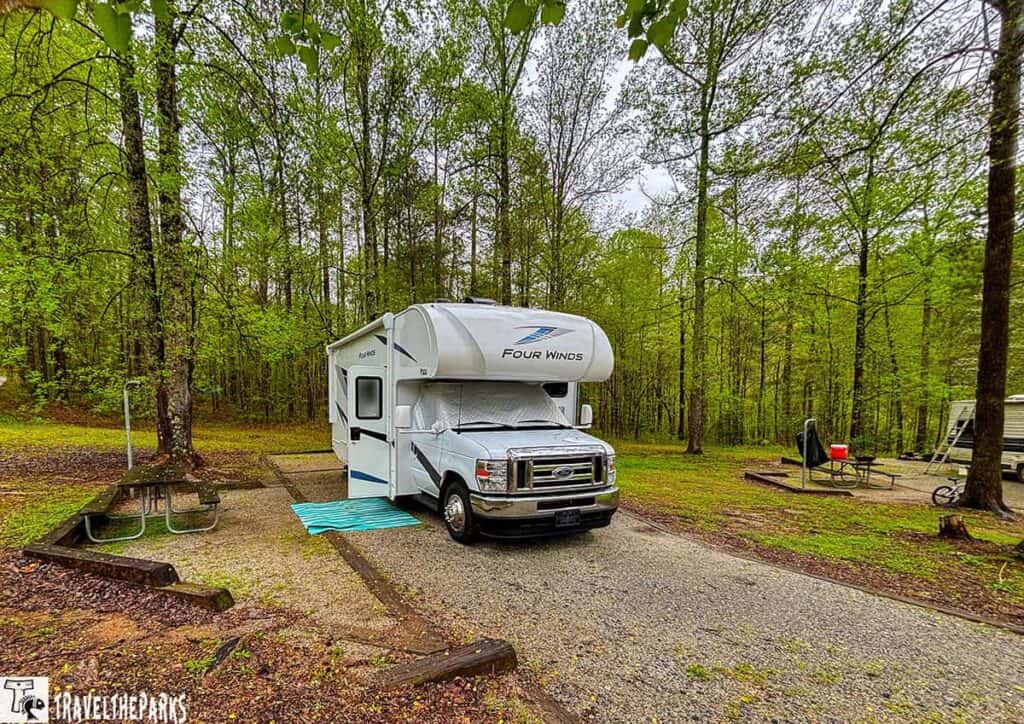
We came in our Class C motorhome, and it was a genuinely great setup for a park like Cloudland Canyon. We’d been curious how an RV stay would feel compared to tent camping somewhere this scenic, and the answer is: pretty fantastic, actually.
The East and West Rim Campgrounds have 72 spaces, which come with 20-, 30-, and 50-amp electrical hookups and water. Each site also has a fire ring and a picnic table. Most pads can accommodate rigs up to 50 feet long, perfect for our motorhome with a tow vehicle. The facilities include modern restrooms with showers and a dump station. The campground host sites come with full hookups, plus sewer. We chose the West Rim Campground for the shade trees.
What we didn’t expect was how close we’d feel to the park itself. We found ourselves on the trails in a matter of minutes. For us, this meant we could plan our day by leaving the campground early, hiking for a couple of hours, returning to the rig for lunch before going out again in the afternoon. That rhythm—having a comfortable home base to return to in between—made the entire visit better than we expected.
There is no Wi-Fi in the park. So, plan your streaming and navigation before you arrive. The park also enforces quiet hours at night, which honestly we appreciated—it made for genuinely restful evenings.

Tent Camping at Cloudland State Park
For those arriving by car and sleeping under canvas, the park offers two distinct tent camping options depending on how immersed you want to feel.
- Walk-in Sites (West Rim): There are 30 walk-in only sites that require a short carry from the parking area. These sites are tent-only. They have more separation from neighbors than the West Rim campground loops. They’re good for tent campers who want a quieter, more removed experience without committing to the backcountry.
- Backcountry Campsites: Thirteen backcountry sites dot the park’s more remote corners, and hikers must reach all of them on foot. A couple of campsites are located just a few steps from a small creek. Just to be fair, some of the backcountry sites are right next to the park border. Therefore, you may occasionally hear farm and road sounds. It is not to be confused with a wilderness in the sense of being completely isolated.
- Pioneer campsites: Four group-style pioneer sites accommodate up to 25 people each. These are a solid option for scout troops, large family outings, or group retreats that want a shared outdoor experience.

Cloudland Canyon State Park: Cottages & Yurts
- The park’s ten yurts are one of its most distinctive lodging options. They are a popular choice for groups or families who want a comfortable base without renting a full cottage (sleeps-6). These circular canvas-sided structures are fully climate-controlled—heated in winter, air-conditioned in summer. Each comes furnished with beds, electricity, and a private deck. No private bathrooms—guests use the nearby shared campground restrooms. They’re clustered in their own Yurt Village near the West Rim Trail.
- Cottages: If the comforts of home are what visitors want while staying close to one of Georgia’s most beautiful state parks, then one of the 16 cottages might be the best option for them. With a two-bedroom layout for eight, a full bathroom, a kitchen, and a fire pit at the rear, these cottages are distinctive. Some cottages are along the canyon rim and thus offer a view of the canyon right from the front porch.
Cloudland Canyon Hiking Trails: Our Honest Breakdown
The park boasts over 64 miles of trails. These count hiking, mountain biking, and horse paths. Most folks focus on just three hikes. State Park Trail Map.

Waterfalls Trail: Distance:
~1.8 miles round trip | Difficulty: Strenuous
Obviously, for the majority of people, come here lured by the waterfalls of Cloudland Canyon. This is the one everyone puts on their list, and it delivers—but we want to be upfront about what you’re getting into.
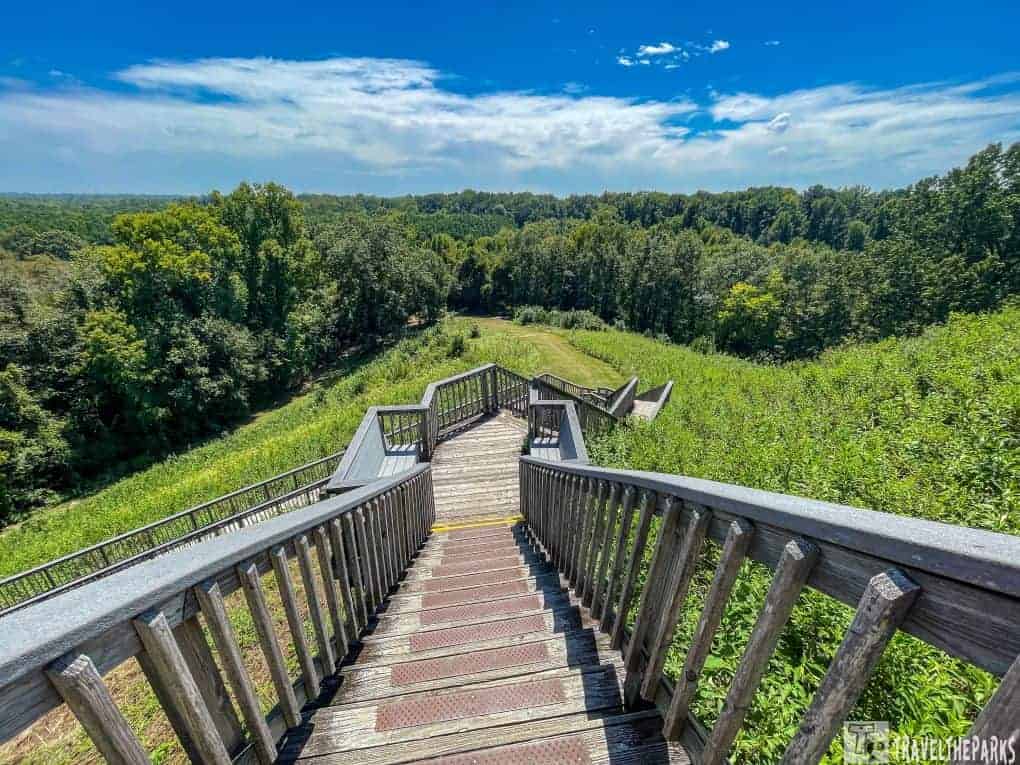
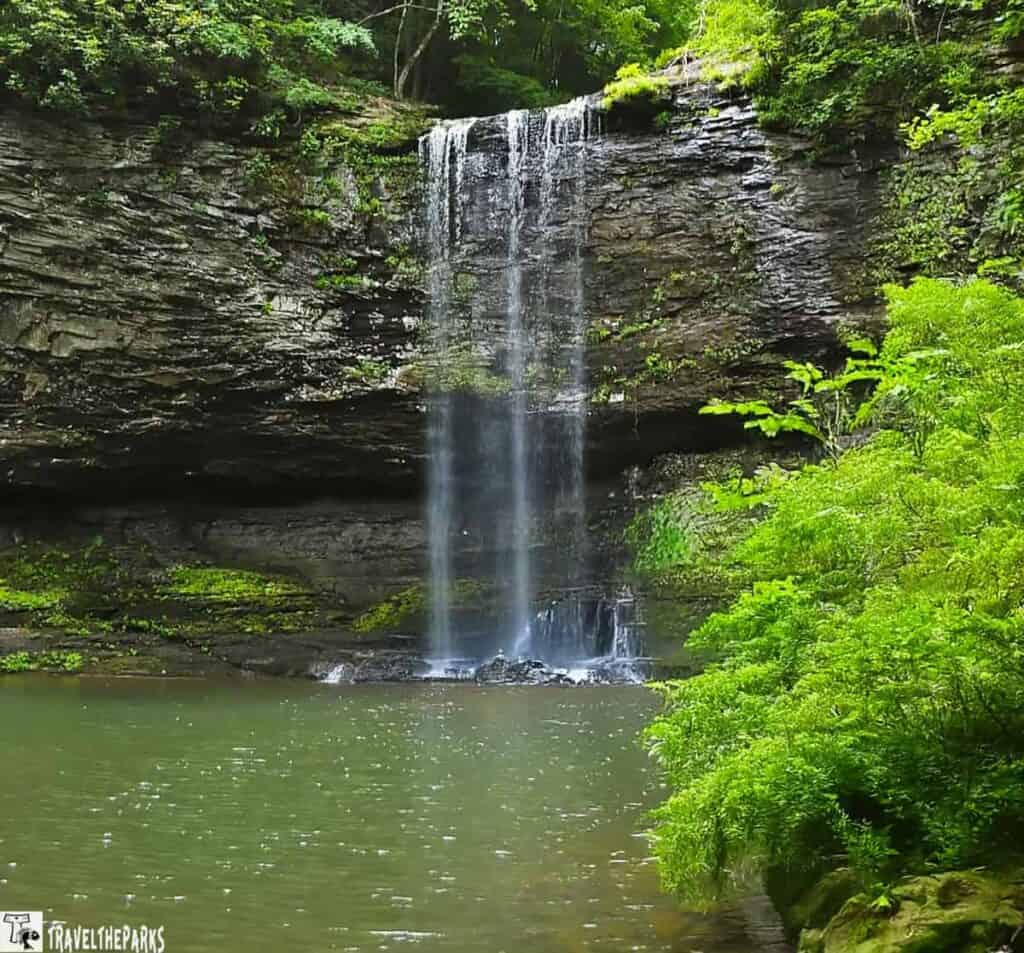
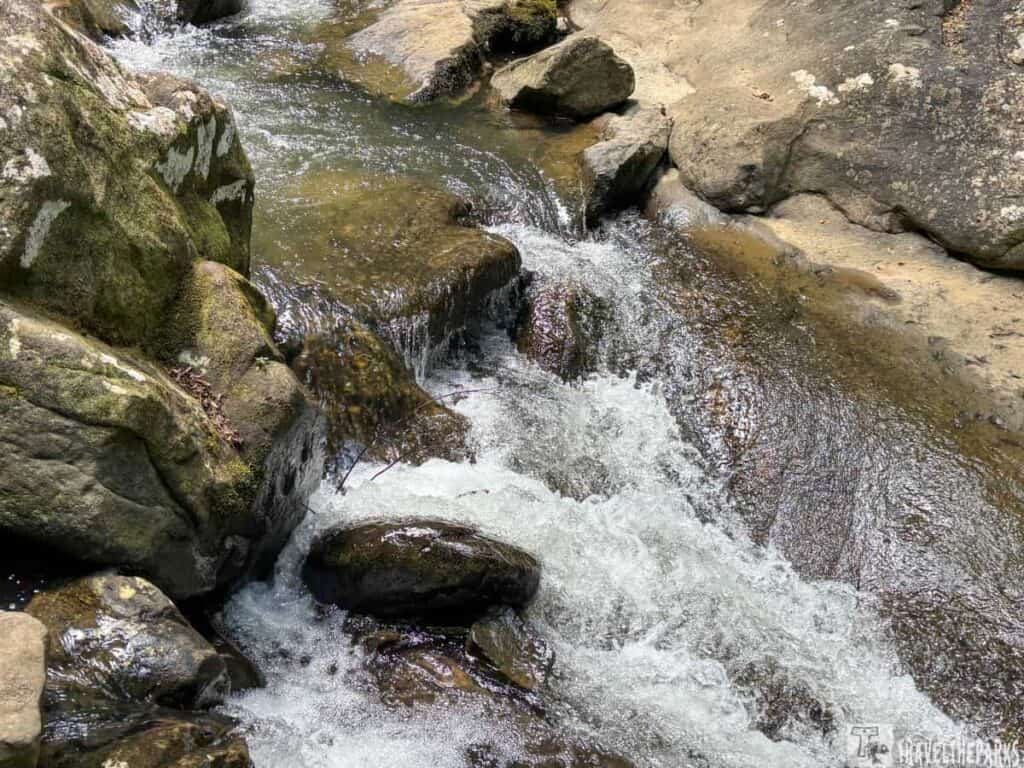
The canyon dropped away in front of us before we’d even made it to the stairway, and we both went quiet in that way you do when something is just genuinely bigger than you expected. The trail descends into the canyon by what kind of feels like an endless metal staircase. There are 600 of them. Of course, we tried to count them again on the way back up. Let’s just say we didn’t make it too far before needing to catch our breath while also reassessing our life choices. At the bottom, you’re rewarded with two waterfalls. Cherokee Falls comes first, opening up to a wide pool. Its broad rock face makes for perfect photos. Just a short distance away, Hemlock Falls almost feels a little more isolated, even with the small crowd.
We did both falls on our first visit. No regrets. But we also both agreed afterward that “strenuous” was a serious understatement. Come prepared for a real workout, especially on the return climb.

Things we wish we’d known:
- Bring more water than you think you will need. The staircase climb back up is no joke.
- If you’re bringing a dog, know that the stairs make this genuinely difficult. Small dogs may need to be carried.
- Spring is the best time to see strong water flow. By late summer, the falls can slow to a trickle depending on recent rainfall.
- Arrive early on weekends, as parking fills up faster than you’d think.

West Rim Loop: Distance:
~5 miles round trip / Difficulty: Moderate to strenuous
Okay, so the Waterfalls Trail gets all the attention. Everyone talks about it. But the West Rim Loop? This one surprised me.
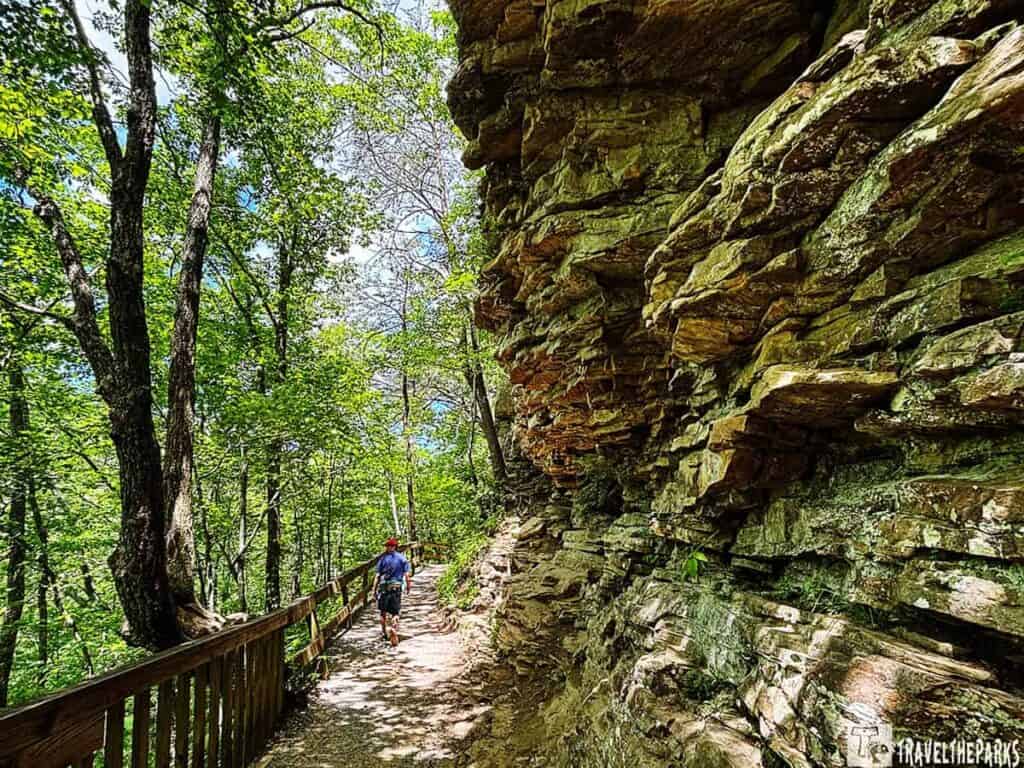
I guess it’s not exactly a hidden gem. I think Backpacker magazine featured it a while back. However, it sure felt like one while we were out there. Unlike the Waterfalls Trail dropping down into the gorge, instead this one follows the rim. So, you’re not killing your knees on stairs the whole time. What you lose in steep descents, you gain in views that just go on and on.
On our second morning, we did this hike at sunrise. I still think about it. Most impressive was the way the light hit the canyon walls. This morning the mist is hanging low in the gorge. It created one of those moments where you just stand there and stare. It was the kind of thing that makes you feel weirdly grateful just to be there.
A couple things to know: the trail gets rocky and care is needed as some parts of the trail are rooty. I tripped a few times, so keep an eye on your feet. And if you’re bringing little ones, just be mindful. Parts of the rim have railings, but other sections are wide open. It reminded me of the Grand Canyon, which doesn’t have guardrails either.

Overlook Trail: Distance:
~1 mile round trip | Difficulty: Easy
We almost skipped this one our first time because it felt too easy to bother with. That would have been a mistake. The Overlook Trail runs flat along the rim from the Interpretive Center to the main canyon overlook—and then to a second overlook further along. The views looking down into the gorge are genuinely spectacular. There are benches along the way. They are perfect for anyone who wants the payoff without the staircase commitment. If you’re short on time, this is the trail to do. If you’ve got more time, do all three.
Other Trails at Cloudland Canyon
- Meadowlands Trail: Distance: ~ 1 mile round trip | Difficulty: Moderate
- Two Mile Backcountry Loop: Distance: ~ 2 miles round trip | Difficulty: Moderate with an elevation gain of 220 ft.
- Sitton’s Gulch Trail: Distance: ~6 miles round trip | Difficulty: Strenuous with an elevation gain of 1000 ft.
- Five Points Recreation Area: Distance: ~10 mile round trip | Difficulty: Moderate with an elevation gain of 800 ft.
- Cloudland Connector Trail: Distance: ~7 miles | Difficulty: Hard with an elevation gain of 560 ft.

Beyond the Trails: More Things to Do at Cloudland Canyon State Park
We spent most of our first trip hiking, which felt right. But Cloudland Canyon has a lot more going on.
Interpretive Center: Start here for trail maps, fossil and animal displays, flora and fauna information cave tour sign-ups, and fishing pole rentals. The staff know which spots are less crowded on any given day.
Exploring caves: This aspect was quite unexpected for us. Being a limestone area, the park has a network of caves underneath it that are accessible during the season for guided wild caving tours (April, June, July, September, and October). It is about $45 per head and you are required to book the tour in advance. It would be nice to do it sometime, but for now, it’s the main thing on our wish list.
Mountain Biking: The Five Points Recreation Area—a former coal mining site that the park converted—has a trail network ranging from beginner-friendly green loops to technical black diamond runs, plus the 14-mile Cloudland Connector Trail for endurance riders. Bike rentals are available at the Visitor Center.

Disc Golf: This park has a full 18-hole disc golf course near the Meadowlands Trail for $4 per person. You can find discs for purchase at the Visitor Center. We watched a family play a full round while eating lunch near the trailhead one afternoon, and everyone looked like they were having a genuinely good time.
Fishing: The eight-acre catfish pond near the Meadowlands Trail. It is stocked regularly with fish. It does not require you to have a fishing license. What a perfect idea if you have kids who are tired of hiking.
Geocaching: The park has geocaches scattered throughout, which is a great way to get kids motivated to explore beyond the main trailheads. There are over ten hidden around the property.
Final Thoughts: Cloudland State Park in Georgia
We only had a two-night stay at Cloudland Canyon State Park as part of our Nashville, St. Louis, and Memphis road trip. The park still managed to become one of the highlights of the entire journey. That’s saying something on a trip that covered a lot of ground.
Standing at the rim of that canyon, looking down into the gorge with the waterfalls somewhere below and the plateau stretching out toward Tennessee, we both had the same thought: this deserves more than a two-night stay. It’s the kind of place that could easily fill a full week. We’re already talking about coming back with more time to spare—maybe in the fall when the hardwoods are turning. Maybe to finally do that cave tour.
If you’re planning a road trip through the Southeast, add Cloudland Canyon. Don’t skip it. It’s the kind of stop that turns a good road trip into a great one.
We’re glad we finally went. We just wish we’d booked a full week instead.
Have you visited Cloudland Canyon State Park? We’d love to hear about your experience — drop a comment below and let us know what trails you tackled or where you stayed!