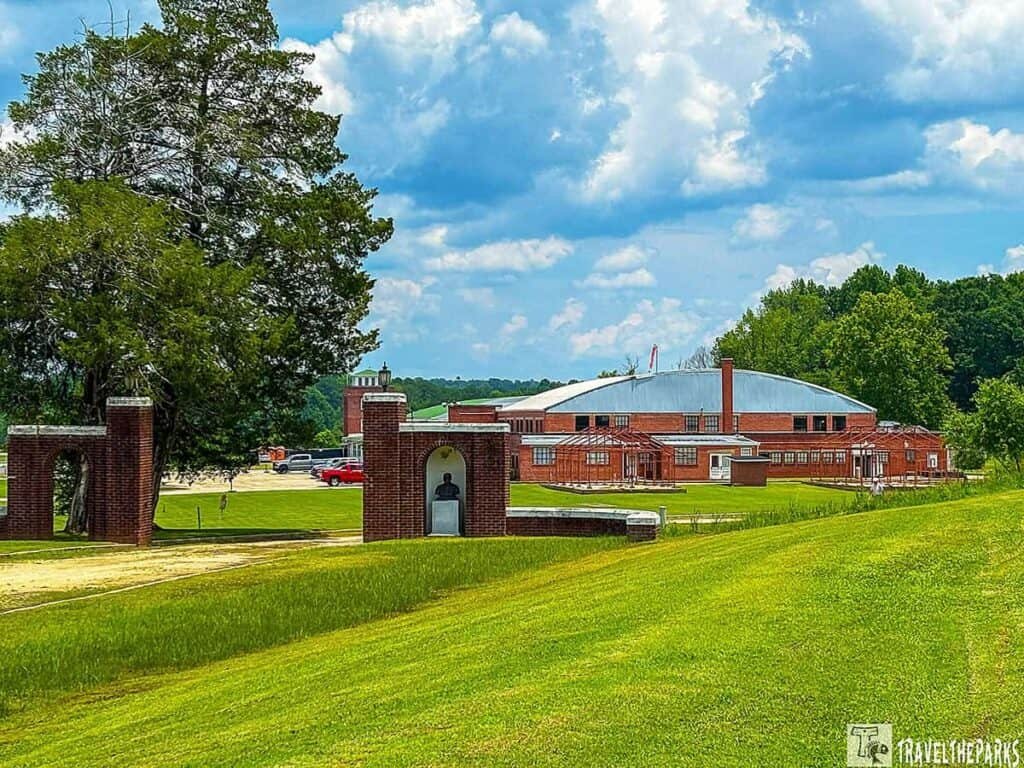
Step into the story—literally—at Chickamauga and Chattanooga National Military Park, where Civil War history isn’t just told, it’s felt. Straddling the rugged border of Georgia and Tennessee, this hallowed ground holds the echoes of two battles that changed the course of the war—and the country. Today, it’s part museum, part monument, and all adventure. Hike the same ridges where soldiers dug in. Gaze out from mountain overlooks that once decided fates. Wander trails lined with silent cannons and towering memorials that still whisper stories of courage and chaos.
Whether you’ve got an afternoon or a full day, this park rewards the curious—history buffs, road-trippers, families, wanderers. It’s not just a stop on the map; it’s a chance to stand where history pivoted. So before you go, get the lay of the land—what to see, where to walk, and why this place still matters. Here’s everything you need to know to make the visit unforgettable.
This post may contain affiliate links, meaning if you purchase something through one of these links, we may earn a small commission at no extra cost to you! Read the full disclosure policy here.
Table of Contents
Touring Chickamauga and Chattanooga National Military Park
I’ll be honest—I underestimated this place before I arrived. I knew it was a Civil War battlefield. Some planning pays off big at this park. The place spans over 5,000 acres and crosses two states. It helps to know what awaits before you show up. Here’s what we found out.
It’s not one park. It’s several.
The name hints at one spot, but it spreads out. Chickamauga & Chattanooga National Military Park holds separate sites across southeast Tennessee and northwest Georgia. You drive from one to the next. Each one feels unique.
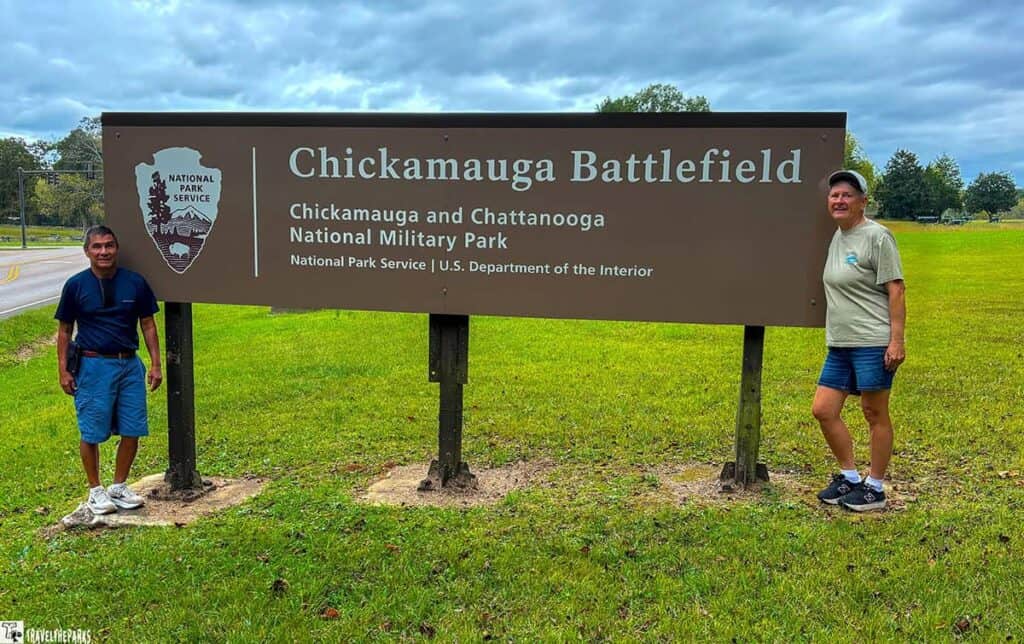
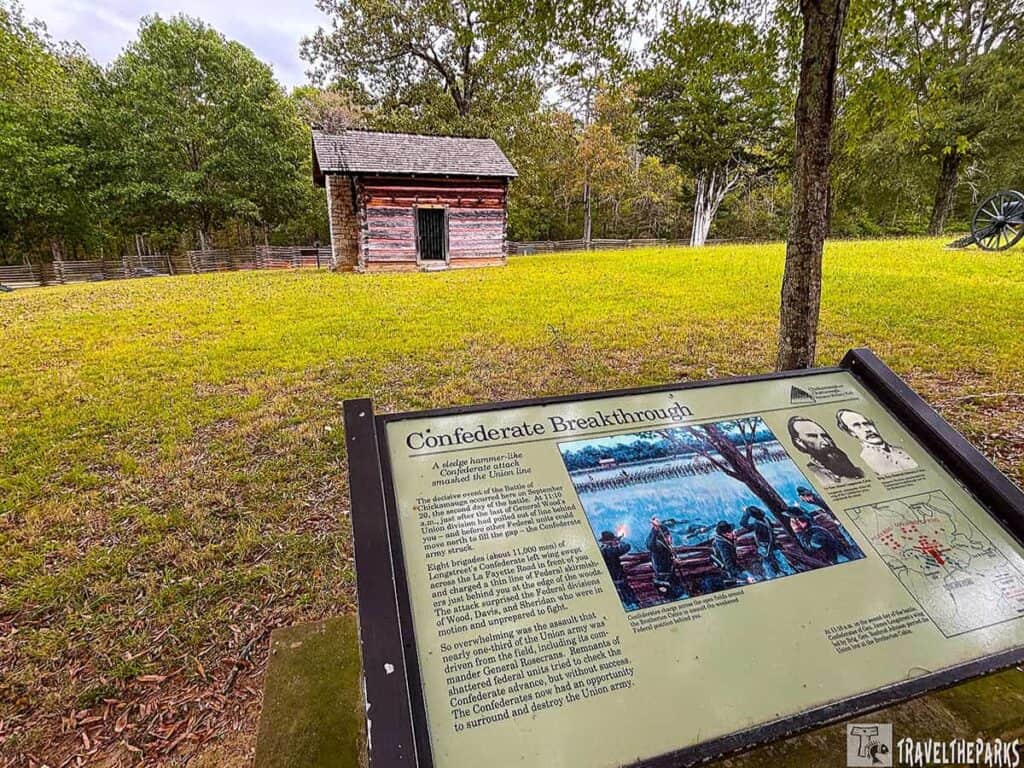
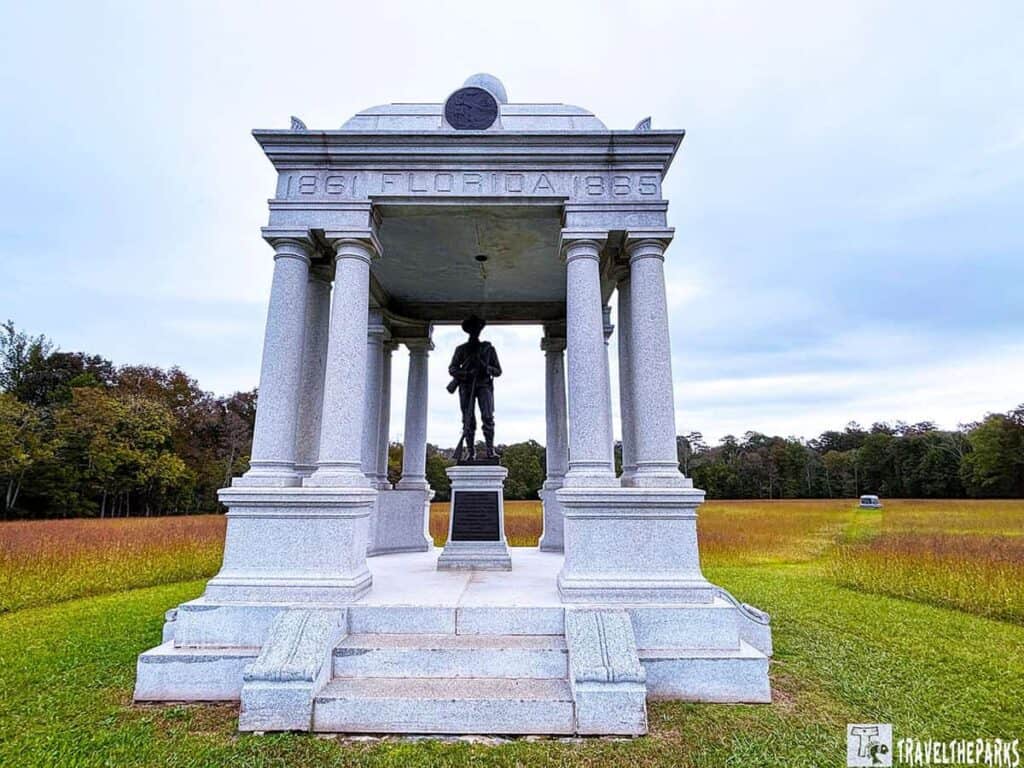
Key parts include Chickamauga Battlefield in Fort Oglethorpe, Georgia. It lies ten miles south of Chattanooga. In September 1863, soldiers engaged in heavy fighting here. Woods, fields, and hills turned bloody. Today it is silent, filled with monuments that stand as quiet sentinels. The key sites are a visitor center and a seven-mile drive loop.
Lookout Mountain Battlefield crosses into Tennessee. Point Park clings to the mountain’s edge. Panoramic views showcase where the “Battle Above the Clouds” took place. Overlooks show why the spot was so strategic. It has its own visitor center.
Missionary Ridge cuts through Chattanooga homes. Pull-offs have interpretive signs for information. Orchard Knob rises as a small hill in town. Signal Point watches the Tennessee River from the north. Cravens House sits on Lookout Mountain down a steep, windy road.
All tie into one park. See them all if you can. And you absolutely need a car to connect them.
Know Before Your Visit to Chickamauga and Chattanooga National Military Park
- Entrance fees: The park is free except for Point Park on Lookout Mountain. This section charges $10 per person for anyone sixteen and older. Kids under sixteen walk in free. If you carry an America the Beautiful pass—Annual, Senior, Access, or Military—it’s accepted here. You pay at automated machines when you arrive.
- Operating Hours: Both visitor centers are open 8:30 to 5 daily, closed Christmas and New Year’s Day. The grounds themselves stay open from sunrise to sunset.
- Download the NPS app before you go. It has maps and audio tours that work offline.
- Cell service drops out in parts of Chickamauga. A paper map is your backup.
- QR codes at some stops link to info. Don’t count on them working everywhere.
- Restrooms are at both visitor centers and a few spots along the Chickamauga tour. Plan your stops.
- Parking is easy at most sites. Missionary Ridge requires pulling off onto side streets in places—be respectful of residents.
- We spent about two and a half hours at Chickamauga and wished we’d had more. The scattered sites require driving time between them—figure thirty minutes from Chickamauga to Lookout Mountain, another twenty to Missionary Ridge, and so on. Plan accordingly.
Things to See and Do at Chickamauga and Chattanooga National Military Park
1. Exploring the Chickamauga Battlefield Visitor Center:
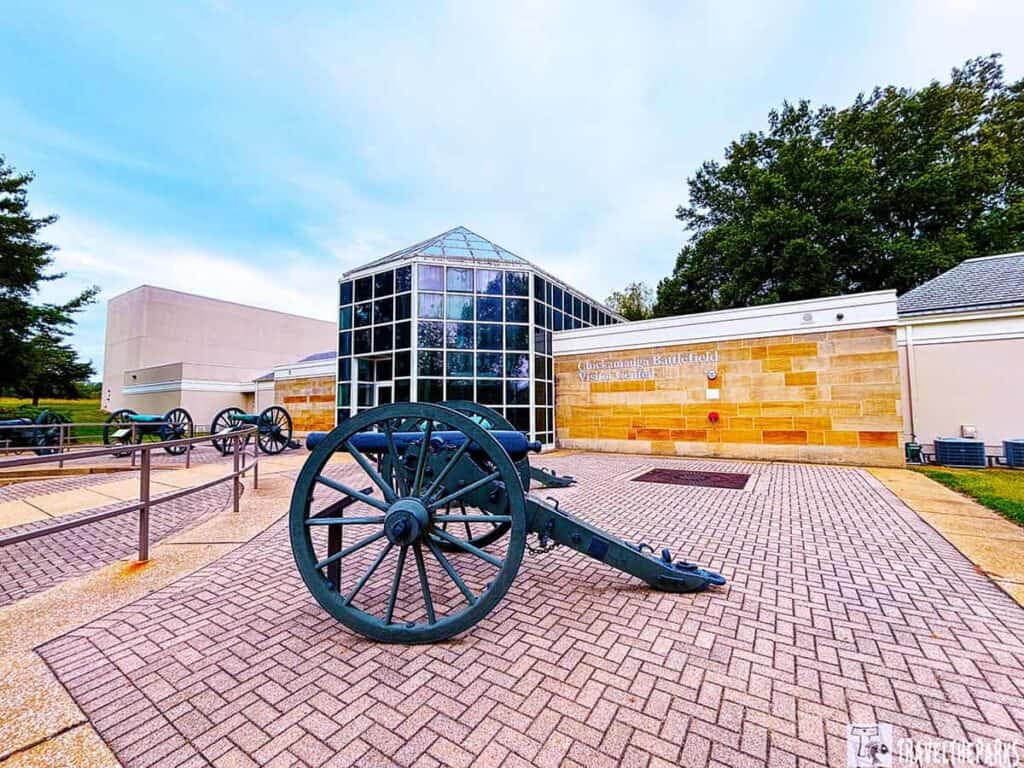
Here’s something I learned the hard way at other parks: visitor centers aren’t just restrooms and gift shops. At Chickamauga Battlefield, this is where your experience begins. It is located at 3370 Lafayette Road, Fort Oglethorpe, GA.
For us, this was our starting point on the Georgia side. You walk in, grab a map, and give yourself fifteen minutes for the film. It runs every half hour and covers the basics without dragging—just enough context to make the driving tour mean something.

The exhibits are worth poking through. There’s a gun collection that fills multiple cases—hundreds of firearms spanning centuries, if that’s your kind of thing. Even if it’s not, you’ll find yourself looking anyway.
But the real reason to stop here? The rangers. They actually know this battlefield—not just dates and names, but the minor details, the stories that don’t make it onto interpretive signs. Ask them something specific. See what happens.
1. Chickamauga Battlefield Driving Tour
At the visitor center, we got the map for the driving tour. You’ll need this as the cell service gets sketchy once you leave the visitor center. Get a map for the driving tour. Tuck it into your pocket. Follow the numbers. The Chickamauga Battlefield auto tour is a seven-mile drive that can take anywhere from an hour to three hours, depending on how many stops you make.
There’s an audio tour you can listen to by dialing a phone number, or download the park’s free app that brings the battle’s stories to life. There are QR codes with additional information at many of the stops. However, the cell service gets sketchy at many of the stops.
Stops you shouldn’t rush past:
- Reed’s Bridge: Where Confederate forces crossed the creek the morning of September 18, kicking things off.
- Brotherton Farm: The gap in the Union line where 11,000 Confederates broke through. Standing there, you can almost feel it.
- Snodgrass Hill: Union commander George Thomas made his stand here, holding the line long enough to earn the nickname “Rock of Chickamauga.” Walk up to the top. Feel the slope. You’ll understand.
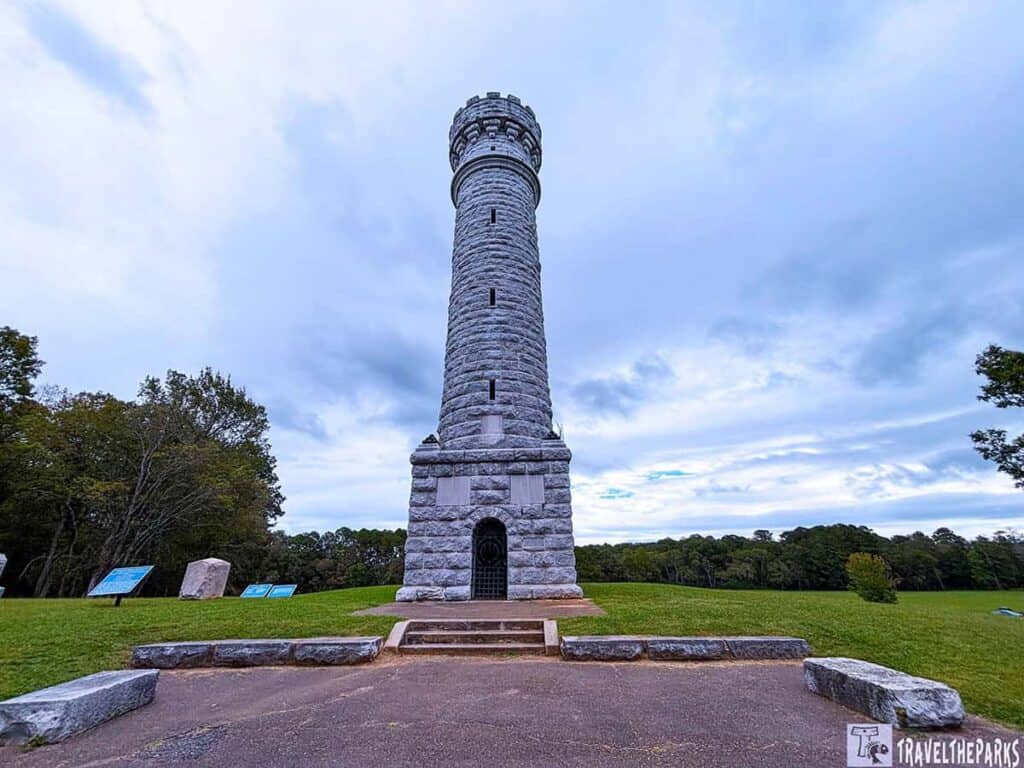
- Wilder Tower: Climb this stone structure. The view from the top across the fields gives you perspective you can’t get from ground level.
PRO Tip: Remember to get out of the car. The driving tour is great, but the people who just speed past and miss the best parts. There are over fifty miles of trails here. There are battlefield walks, wooded paths, quiet stretches where the only sounds are birds and the wind. Park somewhere and just walk. Let it sink in. Cyclists and horseback riders have dedicated routes too, if that’s your style.

2. Stand atop Lookout Mountain’s “Battle Above the Clouds”
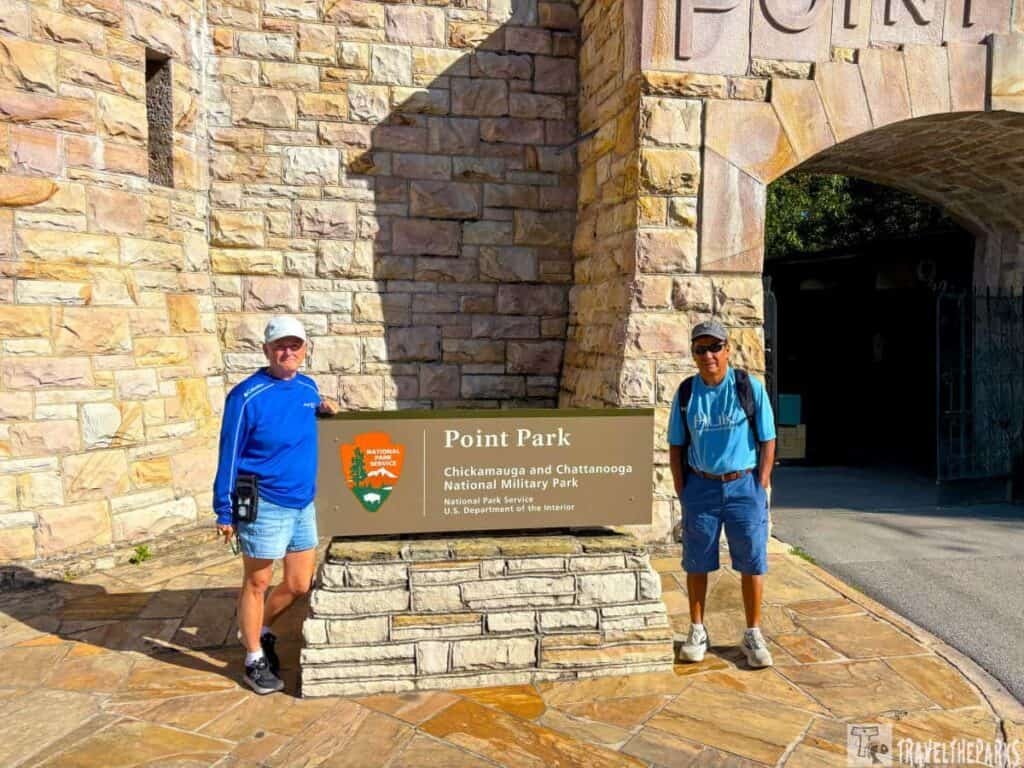
We took the Lookout Mountain Incline Railway up to Point Park, as it is such a short walk. First stop was at the Lookout Mountain Battlefield Visitor Center: 110 Point Park Road, Lookout Mountain, TN. It sits across from the Point Park entrance. No way to miss it. The large painting inside stops people in their tracks. Thirteen feet high. Thirty feet wide. Covers a full wall. The film the “Battle Above the Clouds,” in bold, wild style. You will stare longer than planned. Good. Take the time.

Rangers here can answer questions about top overlooks and monuments. Stop in before entering Point Park. It takes just minutes. You leave a lot smarter.
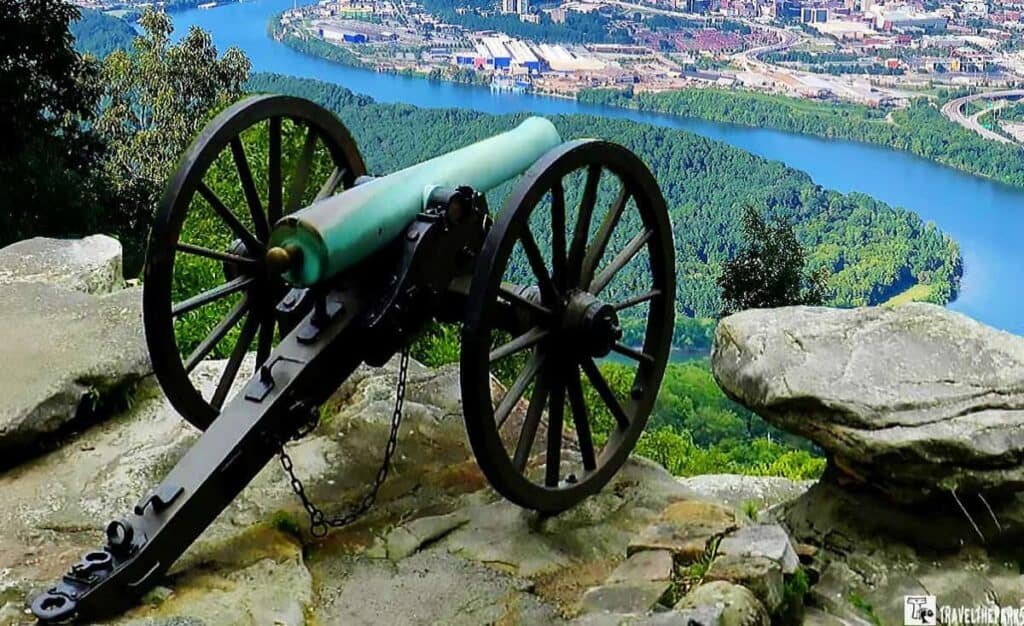
Next, we headed into Point Park, where Union forces staged their dramatic “Battle Above the Clouds” in 1863. Point Park is the main attraction here. The overlooks are genuinely stunning. Panoramic views looking down at the river and the city, imagining troops trying to fight up this slope. There’s a short walking loop with interpretive signs. The road up is narrow and winding in spots. Take it slow. It’s worth it.
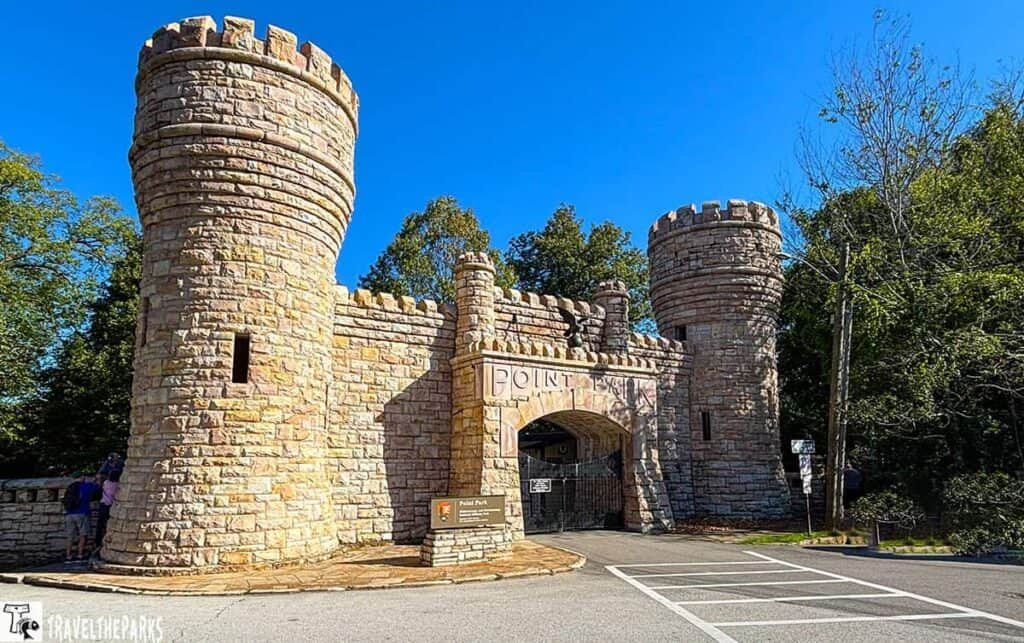
Monuments you shouldn’t rush past:
- Ochs Overlook at Point Lookout is the one to aim for. It’s about a five-minute walk from the entrance along a paved path, ending at a stone structure perched right on the edge of the cliffs. Inside is a small museum, but the real exhibit is what’s outside those windows.
- The Ochs Museum and Observatory: Down the path toward Point Lookout, this small stone building holds exhibits on the battle and the park’s history. It’s not huge—you won’t spend an hour in here—but it’s worth poking your head in.
- The New York Peace Monument: You can’t miss it. This towering stone structure dominates the center of the park, and it’s not just another Civil War memorial. What makes it different is what it stands for: reconciliation.
- The Civil War Cannons: Scattered along the edges of the park, you’ll find three batteries of cannons positioned where artillery once guarded the mountain. They’re aimed out over the valley like they’re still watching for movement below.

3. Visit the Cravens House
This old home on Lookout Mountain acted as a headquarters and hospital in the area’s battles. Restored to match its 1863 look, it shows civilian life in wartime chaos. Check the schedule for guided tours. Unfortunately, we did not get the chance. It’s down the hill from Point Park, accessed on a narrow road that barely fits one car. Drive slowly, but make the trip. The house survived the battle and adds deep history with more incredible views of Chattanooga.
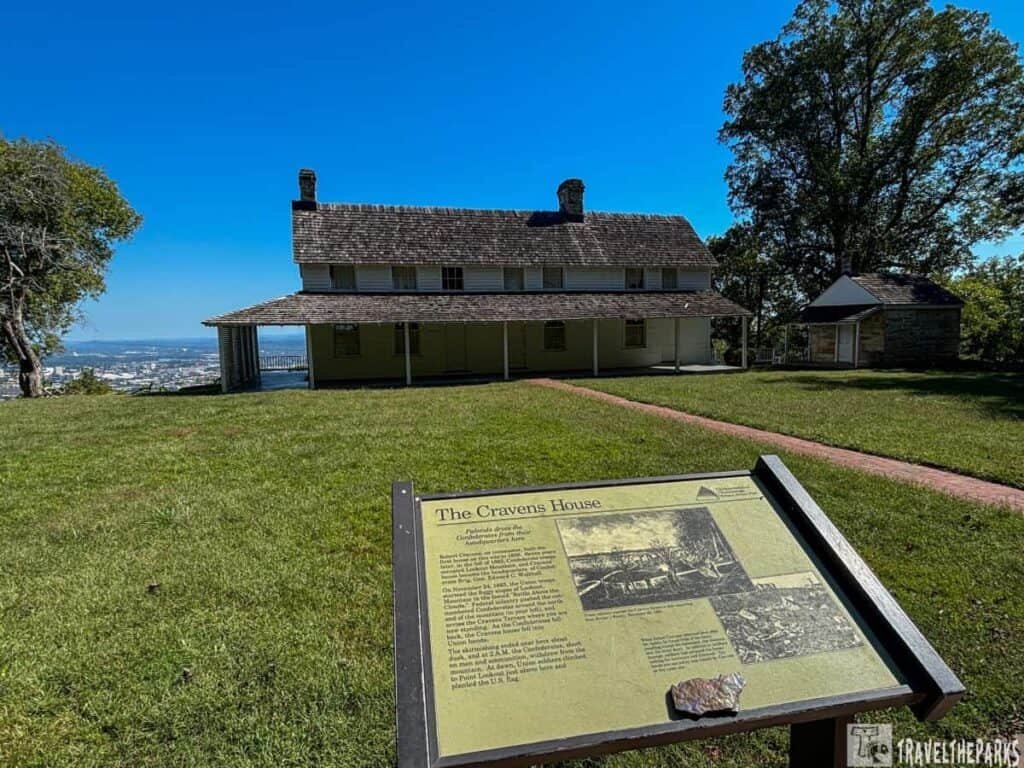
4. Explore Missionary Ridge’s Historic Trenches
We drove the Missionary Ridge expecting a battlefield. Instead, we saw miles of house-lined streets.
The attack ran from Rossville Gap on the Georgia line to Tunnel Hill at the ridge’s north end. Union troops smashed the Confederate line in November 1863, turning the tide of the Chattanooga Campaign.
We hiked parts of the Missionary Ridge Trail, then walked to trenches dug by Confederates long ago. Sherman Reservation marks where William Tecumseh Sherman pushed his men uphill. Looking west toward Chattanooga, we shared the soldiers’ exact view—just steep enough to respect what took place here. Earthworks and artillery positions still stand out. The overlooks still stun. But it’s that clash—old blood and new mailboxes—that really hits home.
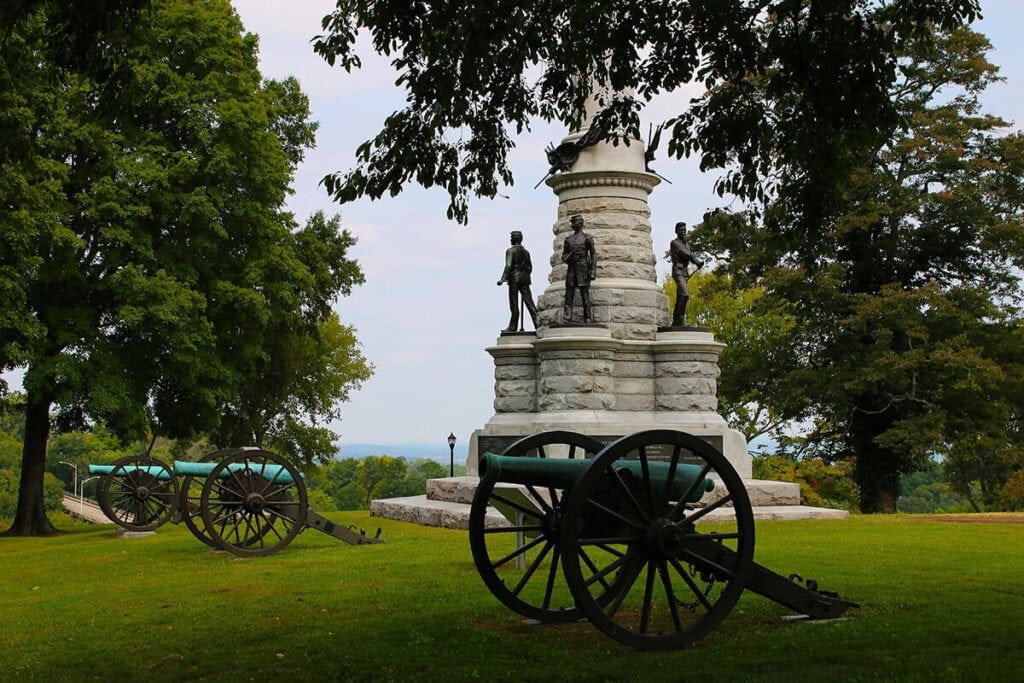
All park properties along the ridge are open daily from sunrise to sunset. Go in the late afternoon. Let the light hit those trenches. Let the quiet settle in.
What stays with us, though, is the quiet: kids’ bikes leaned against porches, mailboxes near monuments—daily life layered over sacrifice.
5. Visit Orchard Knob
We nearly missed Orchard Knob. It sits small—a hilltop park in a Chattanooga neighborhood. This spot was Ulysses S. Grant’s command post in the Missionary Ridge battle. From there, he saw his troops rush the Confederate lines. He sent orders that shifted the fight. We parked, walked the short path to the top, and stood where Grant stood. Monuments dot the grass, marking units that fought that day. It took ten minutes. Maybe fifteen. But standing there, looking toward Missionary Ridge rising in the distance, we felt connected to that moment in a way bigger sites don’t always deliver. Quick stop. Absolutely worth it.
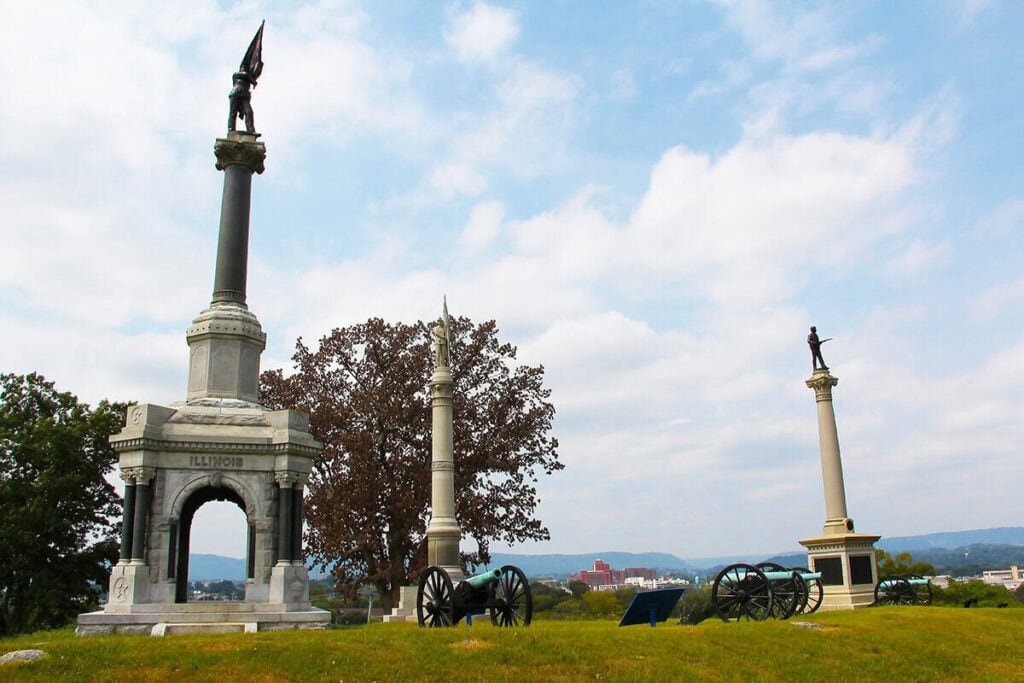
6. Stand at Signal Point
We crossed the river and climbed Signal Mountain to reach Signal Point. Silence wraps around you up there, deep in your bones. The view matches its name perfectly: armies signaled across the valley to guide troops and seal Chattanooga’s fate. We gripped the rail and scanned the twisting river below, the distant city, ridges rolling like waves. You spot it all from here. How troops moved. How signals traveled. It helps to put the whole complicated puzzle of this campaign together. It’s not a busy spot. Just an overlook with interpretive signs and a lot of sky. We stayed longer than we than planned. Sometimes that’s the best kind of stop.

7. Moccasin Bend National Archeological District
We almost skipped Moccasin Bend. Please don’t make this mistake. This peninsula that juts into the Tennessee River has 12,000 years of unbroken human history, from Archaic period hunters, through Woodland mound builders, Mississippian town residents, Cherokee families during the Trail of Tears, to Union soldiers shooting across the river at Lookout Mountain. Our journey started on the Blue Blazes Trail, a tranquil, flat, mile and a half stretch of woods where, thousands of years before the first Europeans set eyes on the Tennessee River, paleo-era projectile points were discovered. From there we continued along Brown’s Ferry Federal Road, the very road on which Cherokee families marched on the Trail of Tears and Union soldiers marched a year later to relieve the Confederate siege.
8. Attend a Living History Event or Ranger-Led Program
Chickamauga and Chattanooga National Military Park runs events all year. They make history feel real. Reenactors in living history shows display Civil War drills, clothes, and weapons. Ranger’s lead programs that tell more about the battles. You get many ways to improve your trip. These events pull you right in. They let you learn about the Civil War from experts and history buffs.

9. Hike the scenic trails
This park goes beyond history. It rewards walkers with fresh discoveries. We tied our boots tight and saw a new side of it.
On Lookout Mountain, Glen Falls Trail awaits. It’s a fair hike out and back. It follows a creek past thick woods to a small falls. Nothing wilds. Just quiet spots that slow your steps. Cravens House Trail links Point Park to an old Civil War house. Few of those stand today. The path climbs steadily. Views pay off the effort. We went top to bottom. It spared our knees but gave full sight.
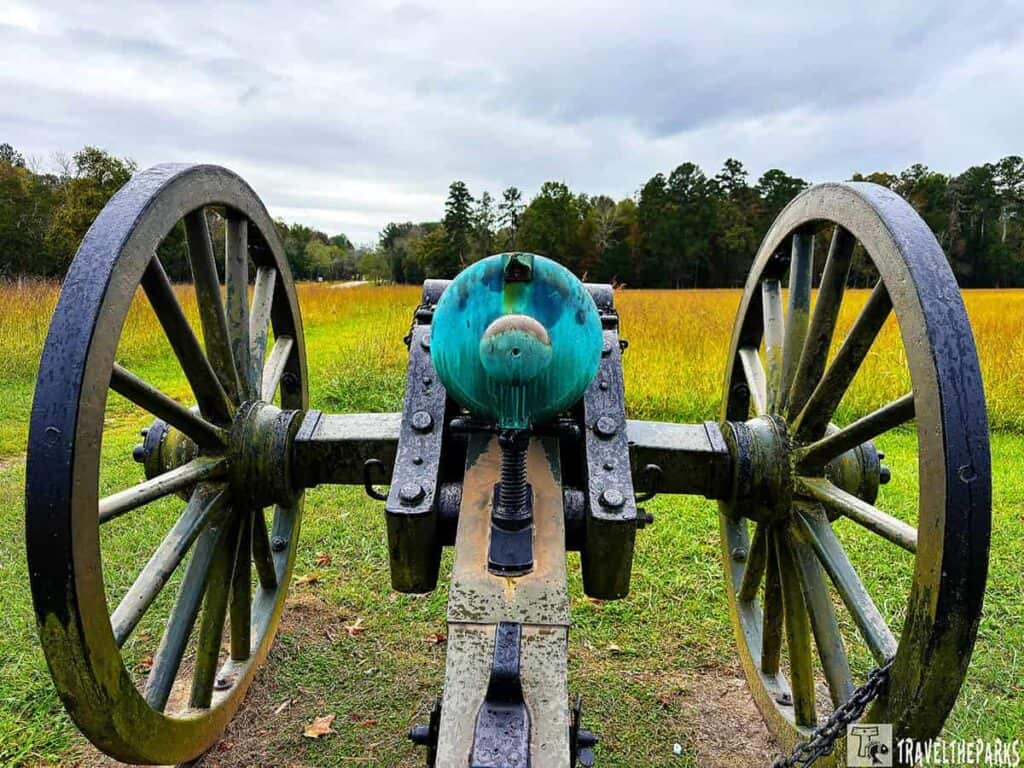
At Chickamauga, trails snake through woods and fields with restored cannons. No hard climbs. Flat paths, clear signs. Great for short walks between car stops. We completed parts by Snodgrass Hill and Brotherton Farm. Quiet sank in. No people. Only grass, trees, and metal cannons over bare land.
What to Bring: Exploring Chickamauga and Chattanooga National Military Park
This is not a theme park. There are no food stands every hundred feet. Pack accordingly.
- Bug spray: The rangers warn everyone about ticks. Listen to them.
- Water: More than you think you need. Keep extras in the car.
- Snacks: The visitor centers don’t sell much food, and you’ll get hungry.
- Phone charger: Audio tours and navigation drain batteries fast.
- Sun protection: Hats, sunglasses, sunscreen. Lots of open fields.
- Your National Parks Passport if you collect stamps. Two visitor centers, two stamps.
- Full gas tank. You’ll cover ground between sites, and stations aren’t always convenient.
Final Thoughts: Explore Chickamauga and Chattanooga National Military Park
This park doesn’t perform for you. It just sits there—across two states, across multiple sites—waiting for you to meet it halfway. The monuments stand in fields where men died. The trails wind through woods that once echoed with chaos. Soldiers once viewed the same vistas from the ridgelines and river overlooks.
It takes effort to see it all. The sites aren’t neatly packaged in one location. You have to drive, to search, to piece together the story across miles of modern roads and neighborhoods. But that effort is part of it. You earn understanding here.
Come early. Come curious. Leave yourself room to wander between the pieces.
Have you visited Chickamauga & Chattanooga? We’d love to hear about your favorite spot in the comments below.