Like most people, the Gateway Arch was at the top of our St. Louis list—and it delivered. But we nearly drove right past something that ended up meaning even more to us. Just 10 miles southwest of downtown, sitting quietly off the road in Grantwood Village, is the Ulysses S. Grant National Historic Site. If you’re looking for memorable places, the Ulysses S. Grant National Historic Site is well worth a visit. We didn’t know much about it going in. By the time we left, it was the highlight of the entire spring trip.
We rolled our Class C into Cahokia RV Parque just across the river in Illinois, which made the drive out to White Haven an easy one. After a full day at the Gateway Arch, we carved out a spring morning for the Grant site—mostly on a whim, if we’re honest. Free to enter, run by the National Park Service, and carrying more genuine American history than we were prepared for. We walked in as casual visitors. We walked out changed a little.
This post may contain affiliate links, meaning if you purchase something through one of these links, we may earn a small commission at no extra cost to you! Read the full disclosure policy here.

Table of Contents
Know Before You Go: Ulysses S. Grant National Historic Site
- Address: 7400 Grant Road, St. Louis, MO 63123 (Grantwood Village), phone: (314) 842-3298
- Operation Hours: Daily 9:00 AM—5:00 PM. Closed Thanksgiving Day, Christmas Day, and New Year’s Day.
- Admission Fees: FREE—no entry fee, no parking fee. Free on-site parking lot—no fee.
- House Tours: Free ranger-led tours. No reservations are required. Tours offered hourly from 10:00 AM, last tour at 4:00 PM. Groups of 15 or more must call ahead.
- Tour duration: 90–120 minutes for film and house tour, and museum.
- Grant’s Farm is directly adjacent (separate attraction, parking fee applies)
- Best Time to Visit: We found that weekday mornings offered the quietest experience. The site tends to be busier on weekends and during school field trip season (spring and fall), but even then, the crowds rarely feel overwhelming. The grounds are lovely in any season, though the summer heat can be intense, so bring water if you plan to walk the property.
- Pets: Leashed dogs are welcome on the grounds, so feel free to bring your four-legged travel companions along.
RV & PARKING NOTE The Ulysses S. Grant National Historic Site has a free, easy-access parking lot—one of the few NPS sites where parking a Class C motorhome is genuinely stress-free. We pulled right in with no trouble at all. No shuttle is required for this one. Note that the adjacent Grant’s Farm (a separate, privately operated attraction) charges $12 for parking, but the NPS site itself is always free.

What is the Ulysses S. Grant National Historic Site?
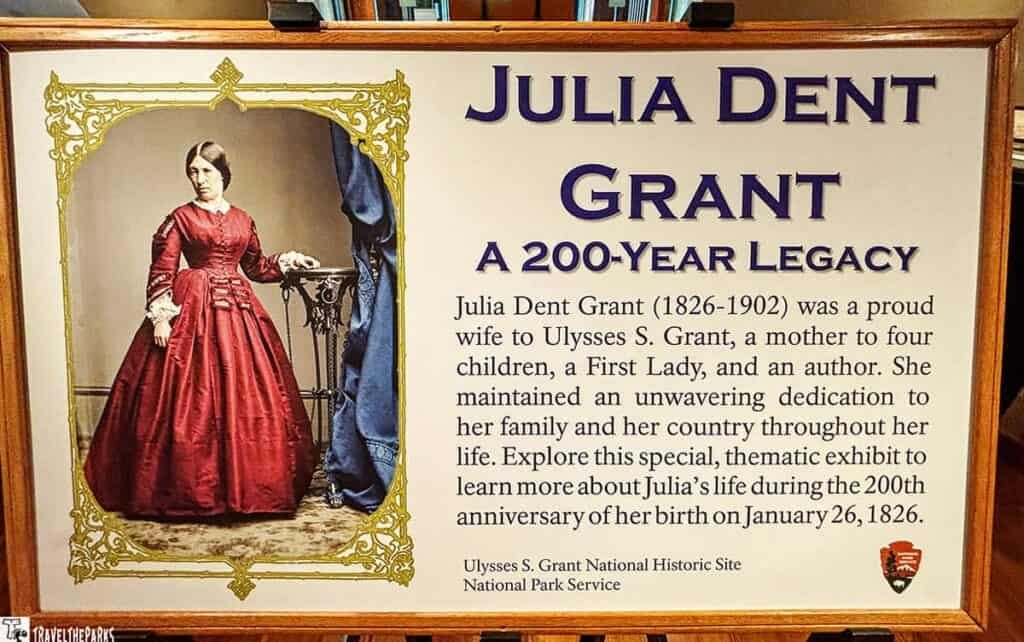
White Haven was once the center of an 850-acre plantation. What survives today is about 9.65 acres of it, tucked into what is now Grantwood Village, Missouri—and those acres carry a lot of history. This is where Ulysses Grant first laid eyes on Julia Dent, at her family’s home. Where they lived together from 1854 to 1859, raised their kids, and spent years dreaming about the retirement they’d eventually come back here to enjoy. They never quite made it. That detail alone stuck with us.
The story the site tells isn’t a simple one. I must say the National Park Service doesn’t try to sugarcoat it. Yes, it’s the story of one of the greatest military commanders in American history and a complicated two-term president. But it’s also the story of Julia’s family plantation, the enslaved people who worked it, and the layers of contradiction that defined Grant’s life long before the war. We’ve been to a lot of NPS sites. We haven’t been to many that are this honest about all of it.
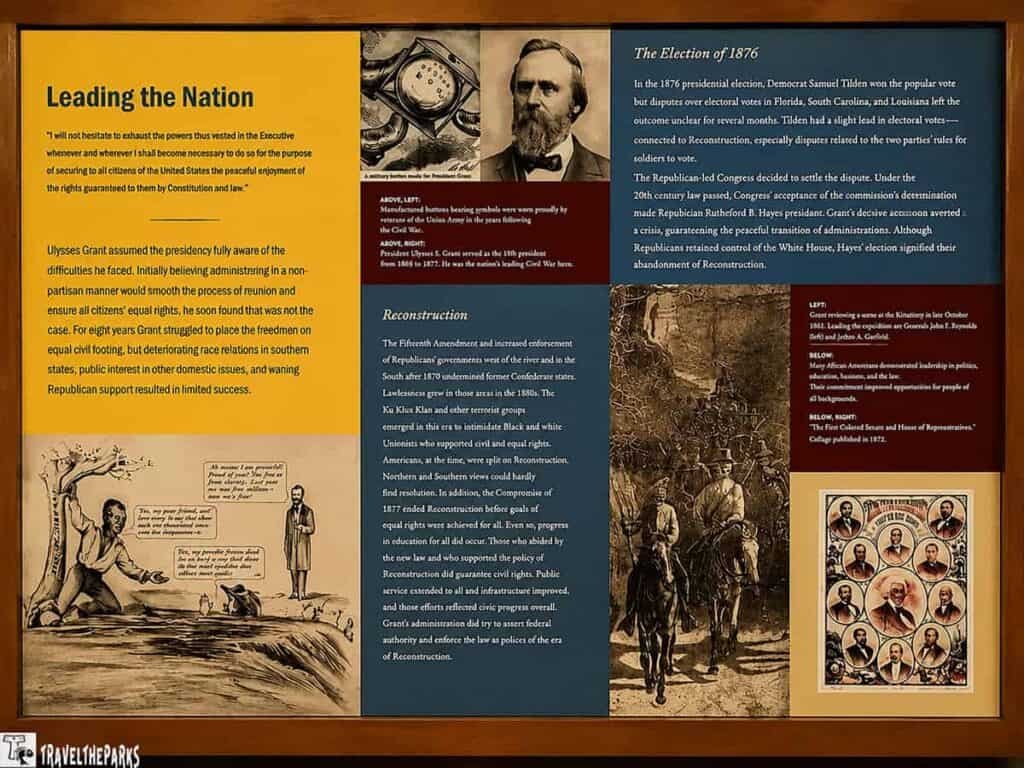
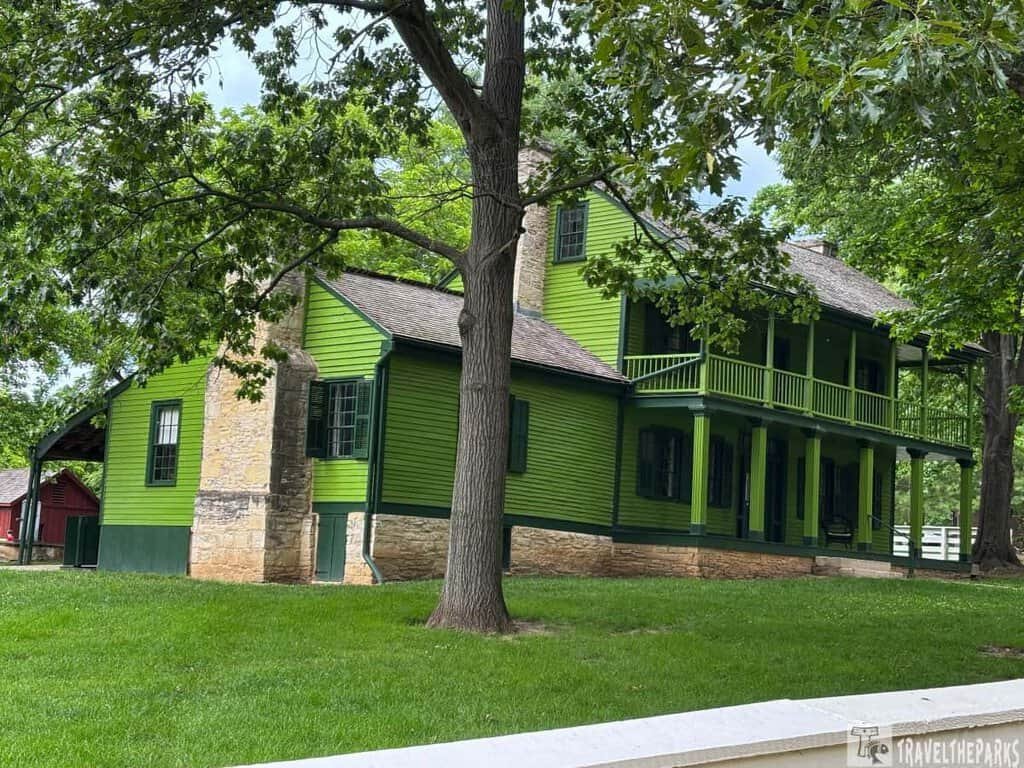
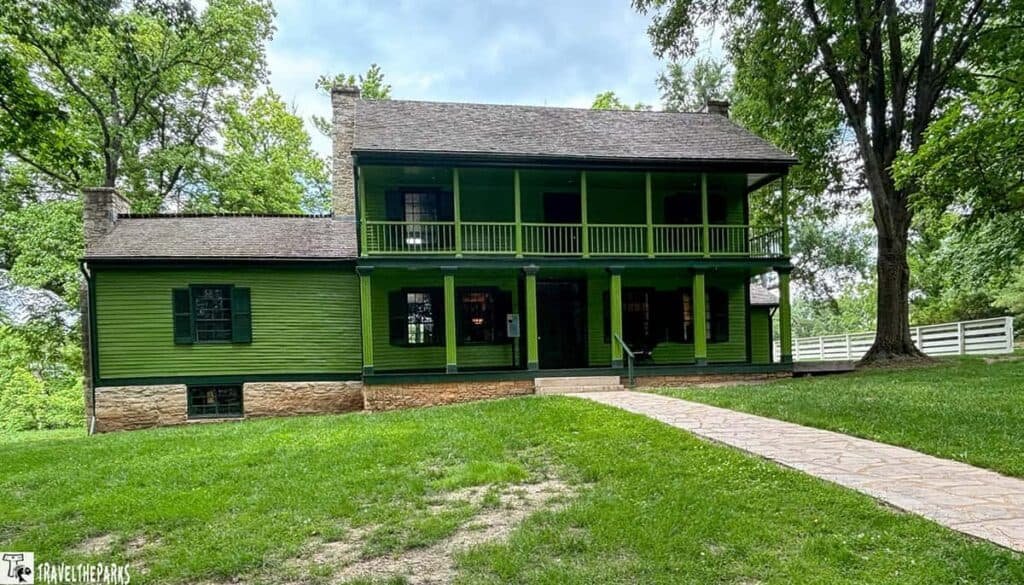
On the ground, there are five restored historic structures, all brought back to roughly how they looked in 1875. The main house is painted Paris Green—the exact color Ulysses and Julia picked out themselves in 1874. Grant’s horse stable has been turned into the main museum. And there’s a solid visitor center with an introductory film that we’d genuinely recommend watching before you do anything else on the property.
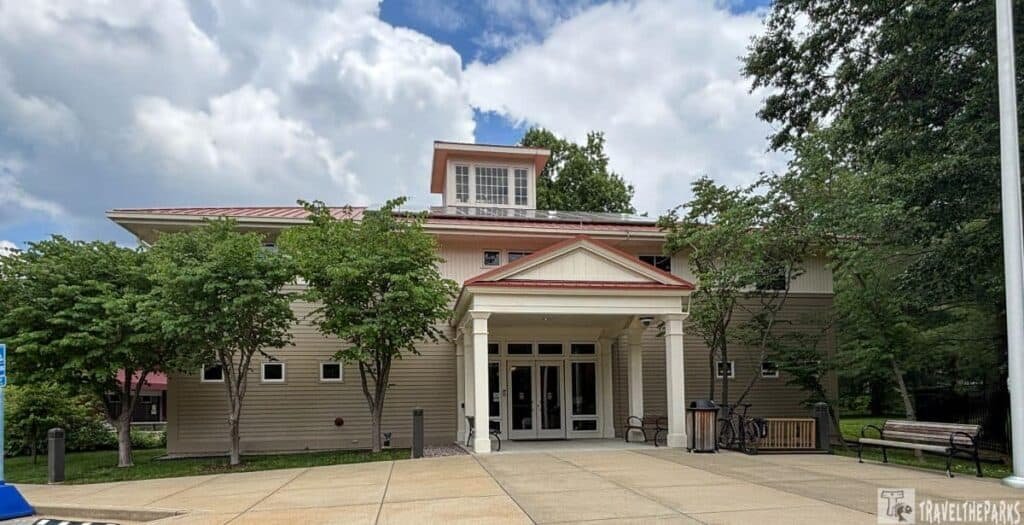
Start at the Ulysses S. Grant Visitor Center
We pulled into the free parking lot and headed straight to the visitor center to grab our house tour tickets. Tour spots are limited and free. The ranger at the desk told us they can fill up on busy spring weekends, so arriving early is the smart move. The visitor center itself is well laid out, with exhibits on Grant’s life, his time at White Haven, and the history of slavery on the plantation that set the stage beautifully for everything we’d see on the tour.
PRO Tip: Arrive at opening time (9:00 AM) on spring weekends to secure your free house tour tickets before they fill up. Tours run every 30-minutes starting at 9:30 AM, with the last tour at 4:00 PM. Most visitors who take in the film, the house tour, and the museum should budget between 90 minutes and 2 hours for the full experience—which is exactly what we did.
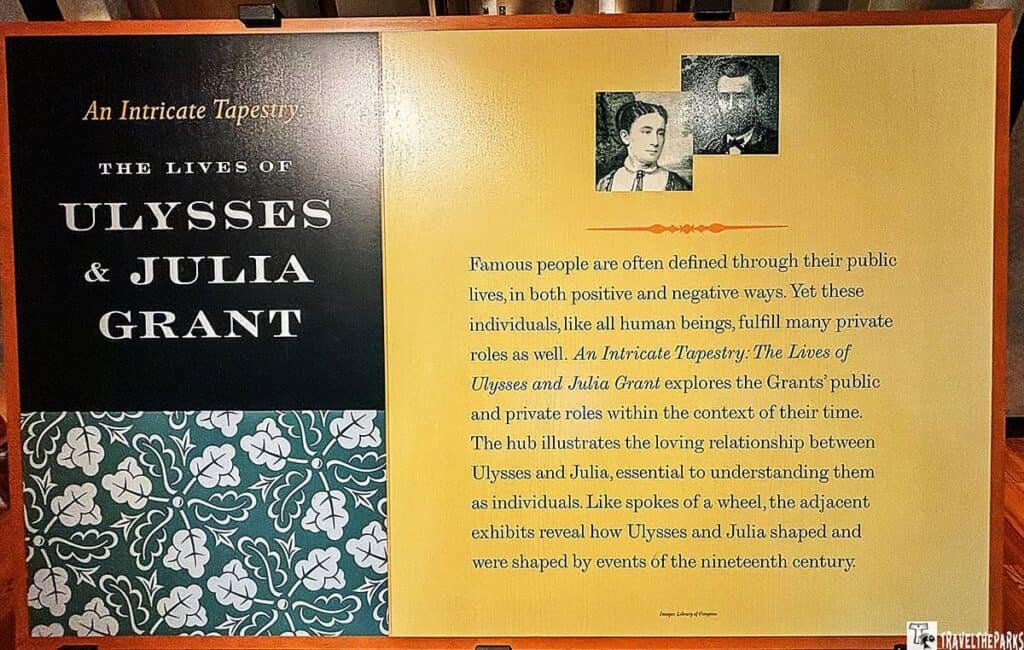
Introductory Film on Grant’s Legacy
Before the house tour, we settled in for the short, 20-minute introductory film. It was genuinely excellent—far better than the typical NPS orientation film. It covers Grant’s full arc: his early life, his meeting with Julia at White Haven, his Civil War command, his presidency, and the complicated legacy of a man who freed the one person he is known to have personally enslaved and who became one of the strongest civil rights presidents in American history. We came in knowing the basics of Grant’s story and left feeling like we truly understood the man.
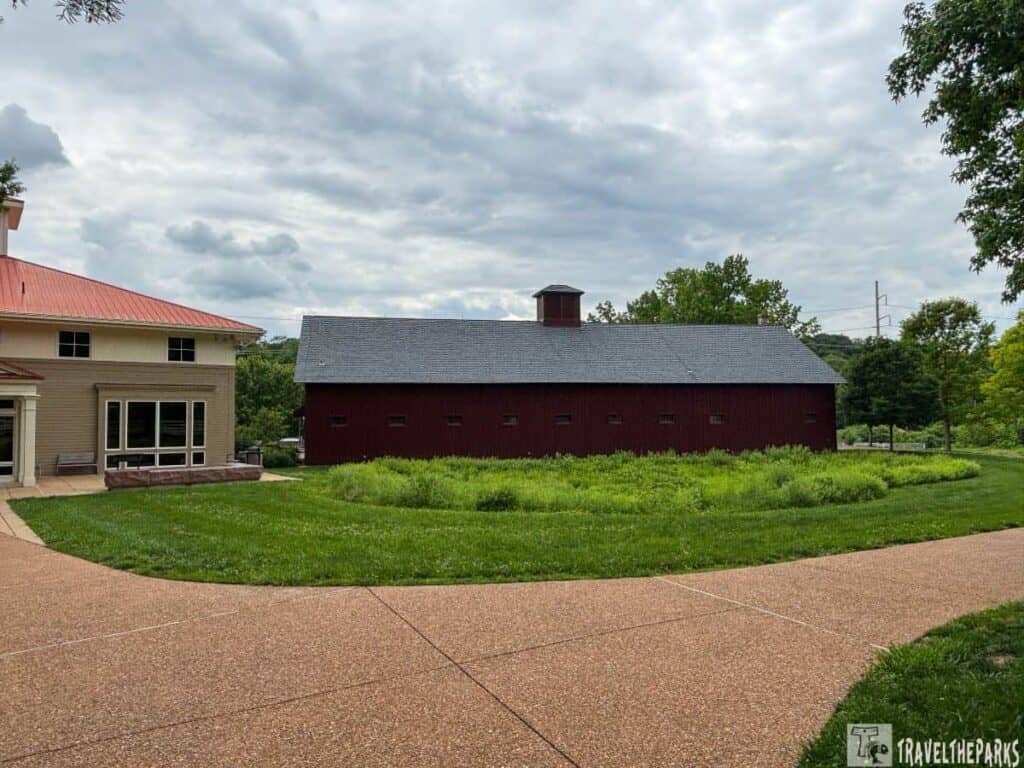
Visit the museum in the historic stables
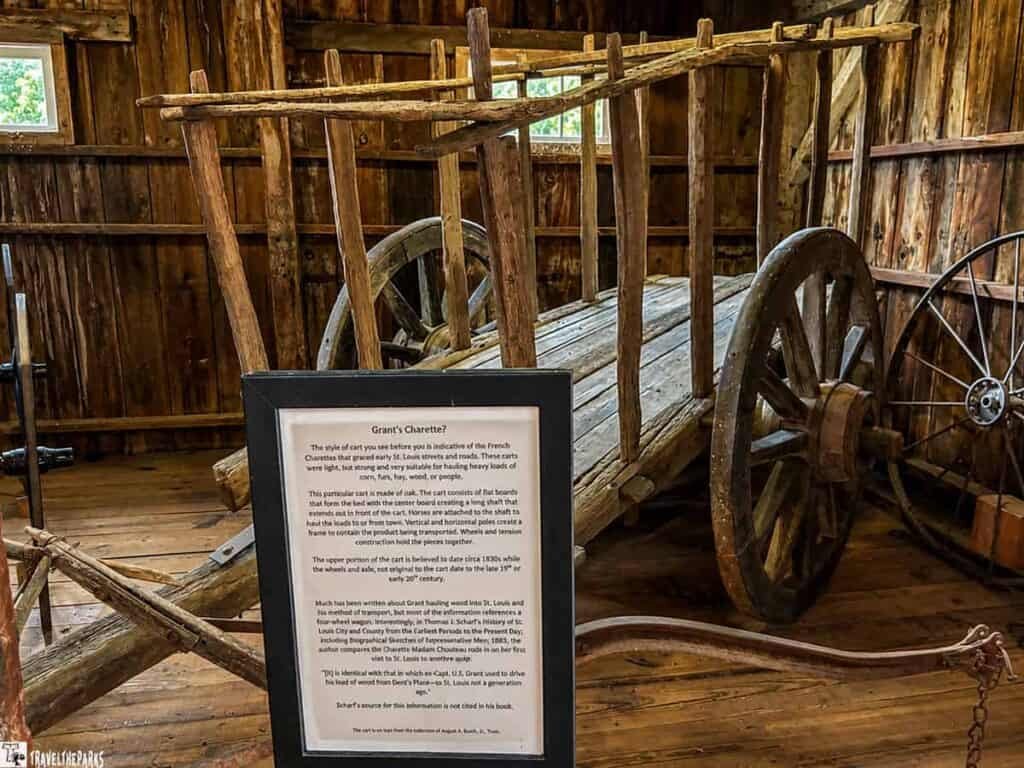
We headed over to the museum after the film—it’s set up inside the old horse stable that Grant designed, which is cool in itself. We had no idea what we were walking into, but it completely caught us off guard in the best way. The exhibits don’t pull any punches. They dig into the real history of White Haven—not just Grant the general or Grant the president, but the whole messy, complicated truth of the place. We ended up in there for a good 45 minutes, maybe more. Neither of us wanted to leave.
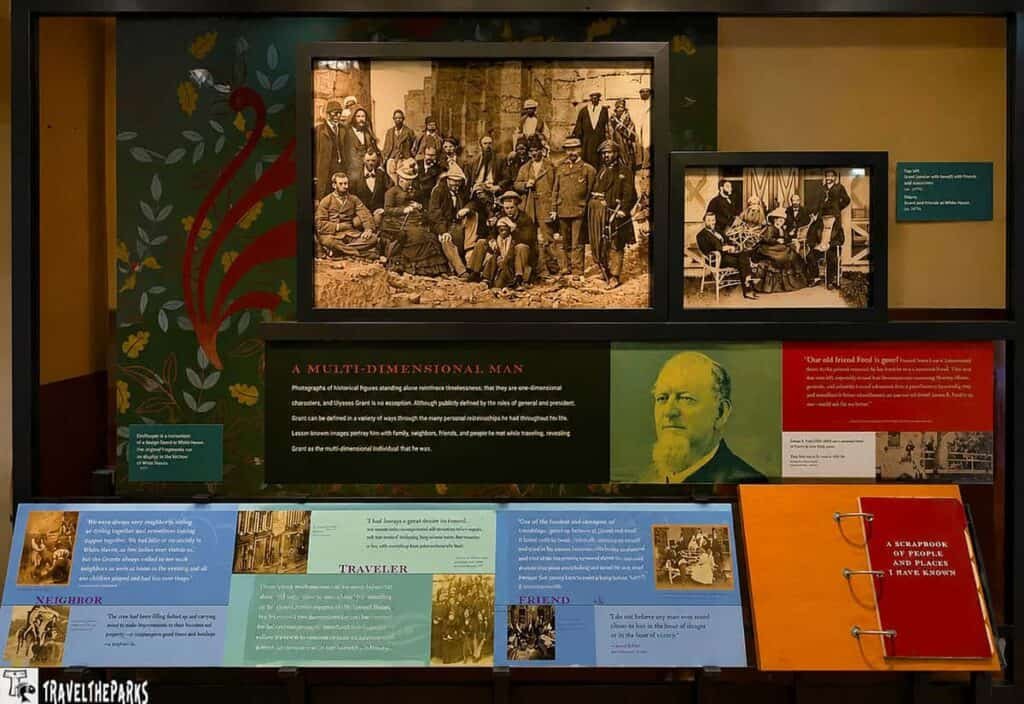
One story in particular stopped us cold and hasn’t really left us since. At some point Grant came to own an enslaved man named William Jones, likely through his marriage to Julia. In 1859, with the country hurtling toward Civil War, Grant walked into the St. Louis courthouse and filed papers to free him. He didn’t have to. At that point, he was facing financial difficulties and could have been sold. He chose not to. The original manumission document is right there in the museum. In Grant’s own handwriting, his signature, a human being’s freedom recorded on a single piece of paper. Standing in front of it, we both went quiet. It’s one of those moments that only travel can give you — the kind that reminds you why you go.
And before you head out—if you’re an NPS passport collector, don’t leave without grabbing your stamp at the visitor center desk!
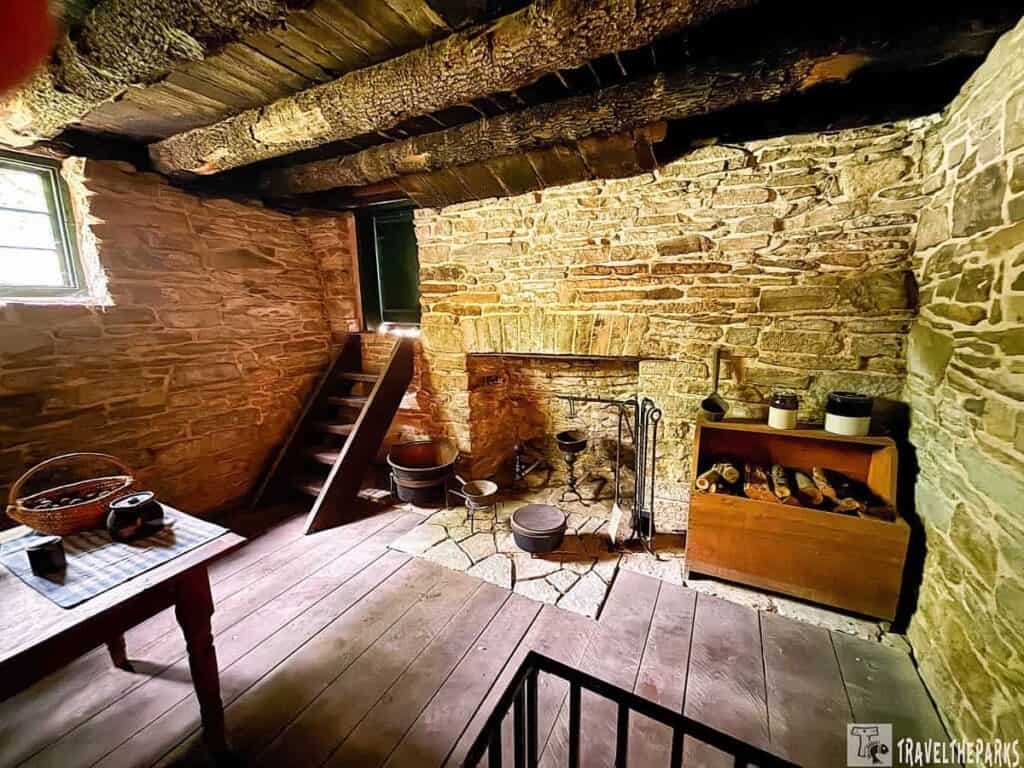
Self-Guided Walk of the Grounds
After the museum, we weren’t quite ready to leave. Neither of us usually lingers on the grounds at NPS sites. For us, there’s always another stop, another state line calling. But something about this place made us slow down.
The grounds are small. Actually, less than 10 acres. They’re well-kept and genuinely peaceful. You can walk the entire property in about 20 minutes, less if you’re not stopping to read every interpretive marker. We stopped at all of them.
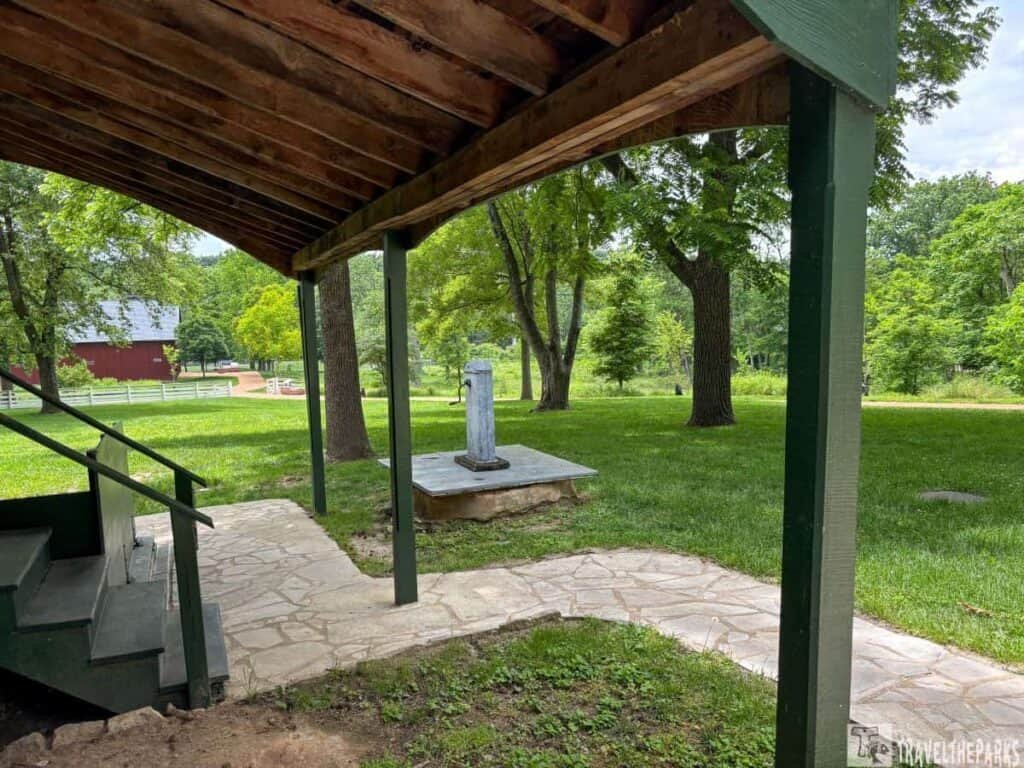
All five of the historic structures on the property have been restored to reflect how they would have looked around 1875, which gives the whole place a quiet, preserved quality — like you stepped off Grantwood Village’s quiet streets and backward into a specific afternoon in American history.
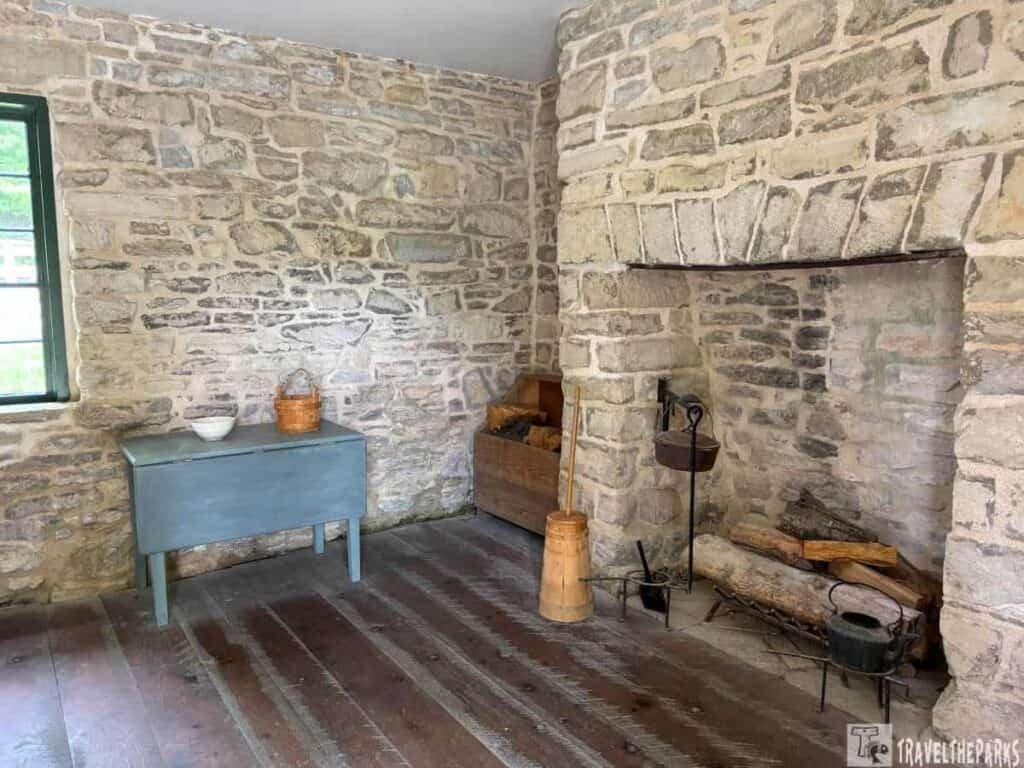
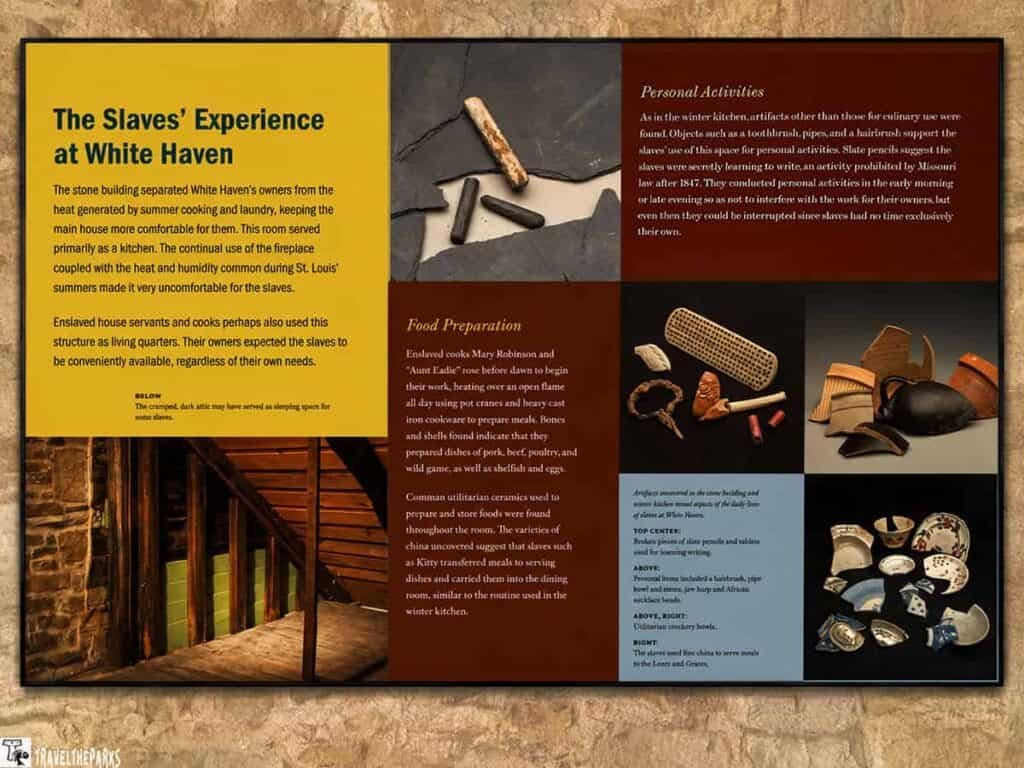
The Stone Summer Kitchen
Small and easy to walk past. Don’t.
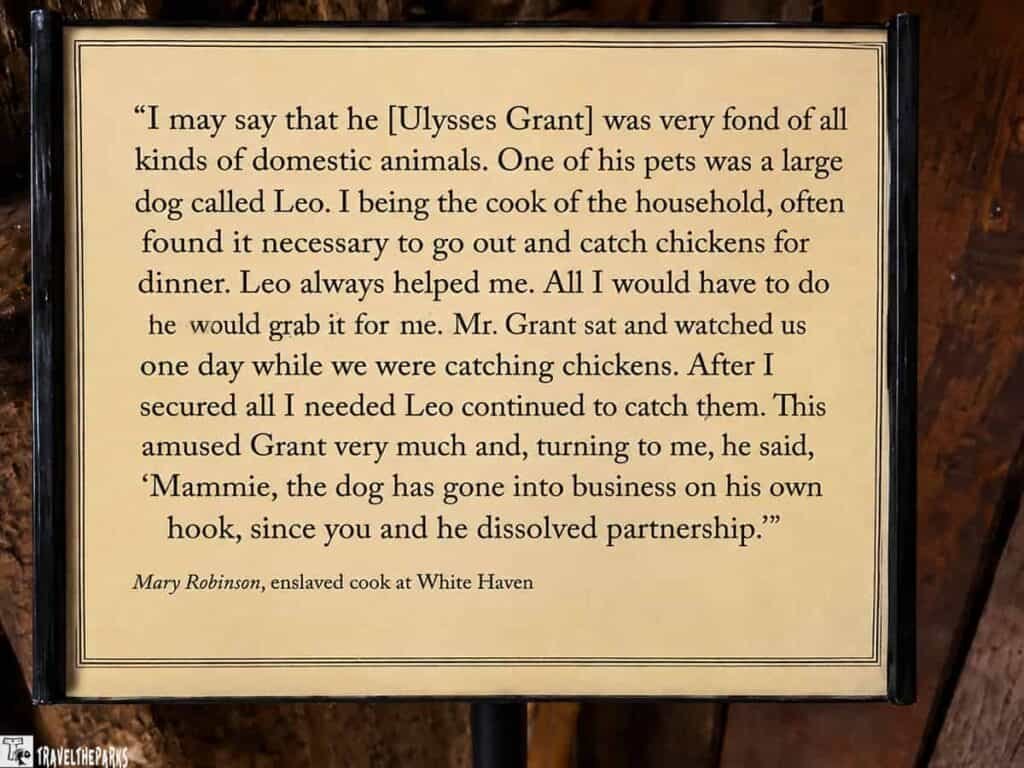
The interpretive exhibits inside focus on the enslaved people who worked this plantation—their lives, their labor, their names where names are known. There’s a video exhibit in particular that we’re still thinking about. The NPS doesn’t let this part of the story live in the margins here, and it shows.
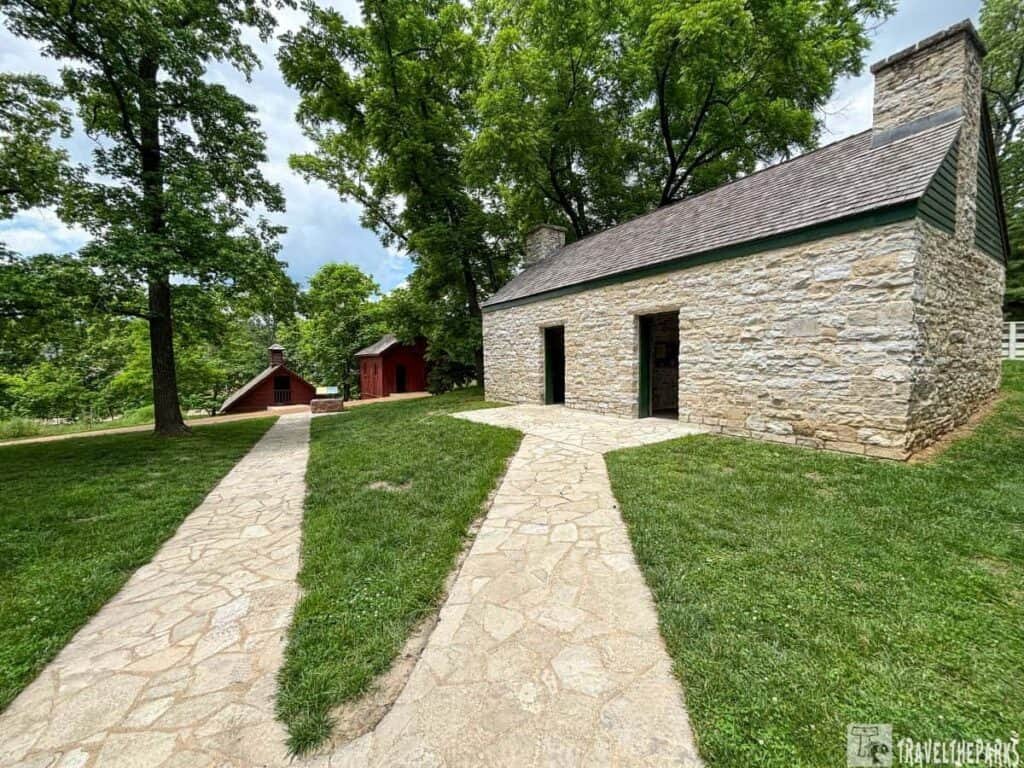
The Icehouse and Chicken House
Quieter stops—less dramatic, more grounding. They’re what makes White Haven feel complete rather than curated. This wasn’t just a historic home. It was a working farm, and these buildings make that real in a way that words on a panel can’t quite do on their own.

A Few Things to Know Before You Walk
The landscape itself is simple. Lawns, trees, a few benches. But knowing what happened here gives it weight. This is where Grant spent years just trying to make things work, long before anyone knew who he was going to become. Standing on those grounds with all of that context feels different from reading it in a book.
Pro Tip: Leashed dogs are welcome, which plenty of RVers will appreciate. And if you’re visiting in summer, bring water. Missouri heat is not a suggestion.
Ranger-Led House Tour of White Haven: What You Need to Know
This is the part we almost skipped. We’d already spent time in the visitor center, watched the film, and wandered through the museum for longer than we planned. We almost talked ourselves out of the house tour—”we’ve probably seen the main stuff”—and we would have been wrong. The ranger-led tour of the main house at the Ulysses S. Grant Home in St. Louis is genuinely excellent, and that’s not something we say lightly. We’ve done a lot of NPS house tours. They range from “mildly interesting” to “I learned more than I expected to.” This one lands firmly in the second category, and it stays there.
The tours start every hour, beginning at 10:00 am. The last tour is at 4:00 pm. As usual, the park provides all of this to you for free. Pick up your pass at the reception desk in the visitor center as soon as you arrive.
Inside White Haven: What the Tour Actually Feels Like
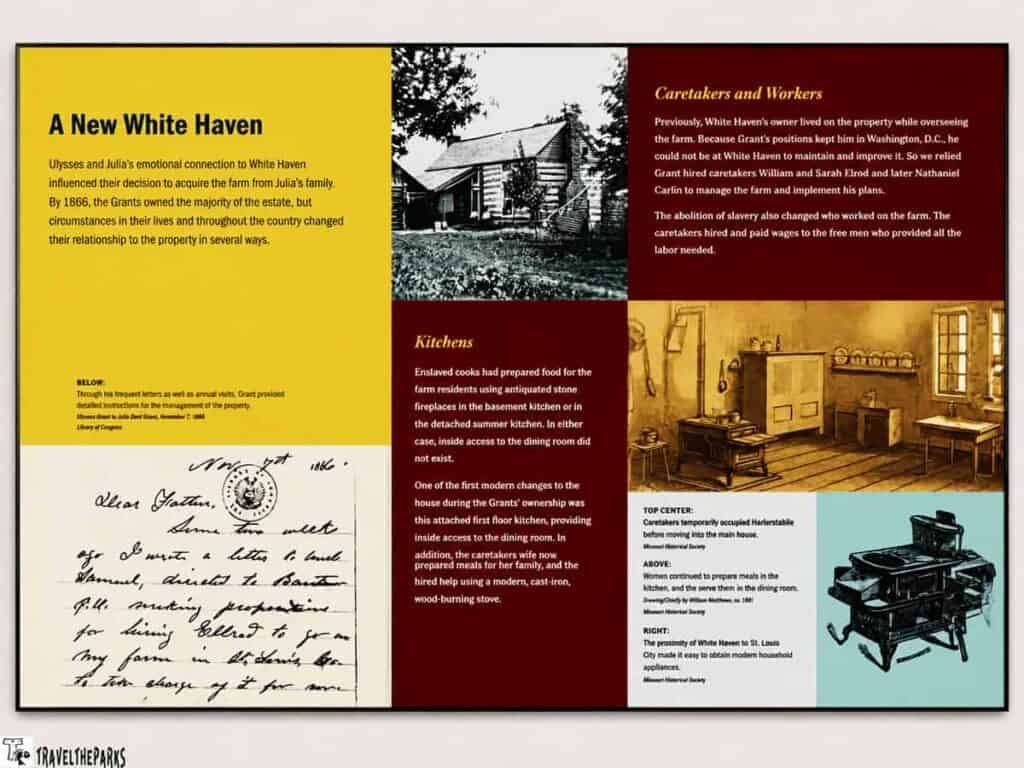
Our ranger clearly had a lot of feelings about Ulysses Grant—the good kind. She talked about him and Julia the way you talk about people you’ve spent years with, which, for an NPS ranger at this site, is probably exactly what’s happened.
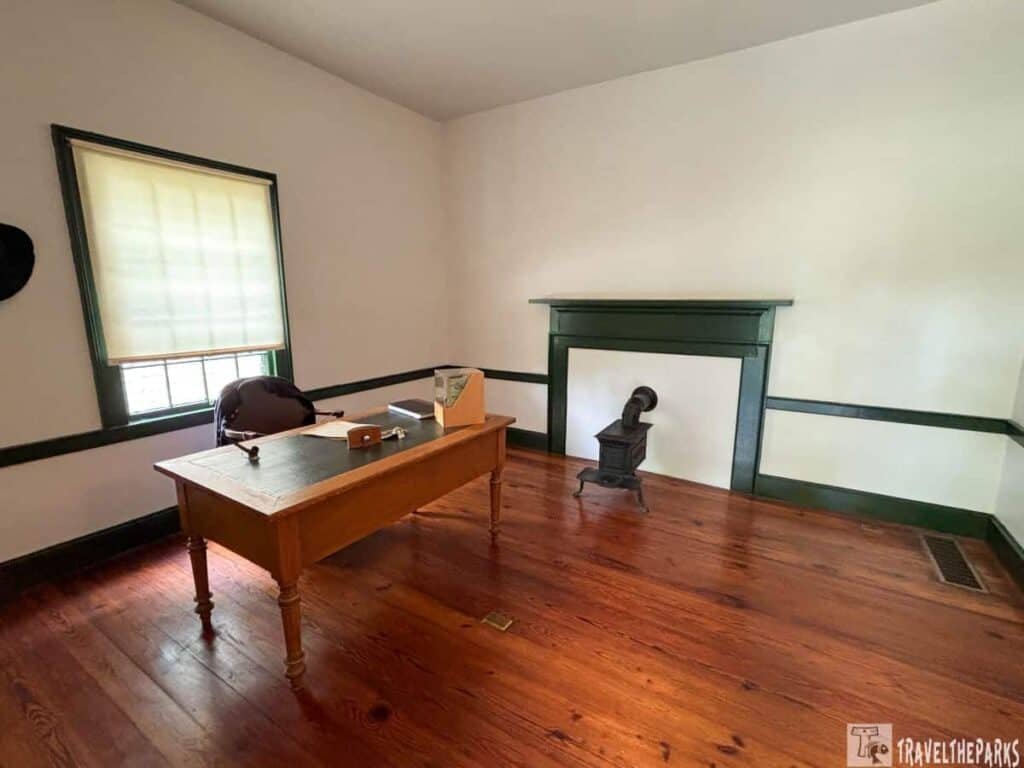
The house stops you first. That Paris Green exterior—the exact shade Ulysses and Julia picked out themselves in 1874—is not what you expect when you pull up to a Civil War-era plantation home. It’s almost cheerful. Inside, it doesn’t feel staged the way house museums sometimes do — too perfect, too rope-lined, too dead. The rooms feel lived in somehow. Like the Grants had somewhere to be and just hadn’t made it back yet.
What the tour does really well is hold the whole truth of the place without flinching. This is a beautiful home. It was also built on the labor of enslaved people. Grant is one of the prominent figures in American history. He was also a man full of contradictions. The ranger doesn’t resolve that tension for you—she just lays it out honestly and lets you stand in the middle of it. By the end, we weren’t thinking about Grant the general or Grant the president. We were thinking about two people who picked out green paint together and hoped they’d grow old here.
They never made it back. That detail follows you out the door.
The fact that Grant NHS Missouri preserves that story, in this much detail, this honestly, is something worth making time for. Our advice: don’t skip the house tour thinking you’ve already covered enough ground. This is the centerpiece of the visit. Budget your time accordingly.
While you’re there: Grant’s Farm next door
We went in thinking animals. We left talking about a log cabin.
Hardscrabble is the thing. Grant built it himself in 1856—with his actual hands, not with money or contractors—during one of the harder stretches of his life, before anyone knew who he was going to become. It’s the only structure a U.S. president built before taking office that’s still standing. We’d just spent a morning at White Haven hearing about that period of his life: the failed farming years, the financial struggles, the quiet humiliation of a man who would later command armies. Seeing the cabin he built with his own hands after all that context? We stood there longer than we planned to.
The farm has its own story running alongside Grant’s—the Busch family has owned it since 1903, so you get this odd and strangely wonderful collision of 19th-century American history and Anheuser-Busch lore. The Clydesdales are there. They are, in fact, as big as you think they are.
One thing we’d tell you: the parking situation will catch you off guard if you’re not ready for it. The NPS lot and the Grant’s Farm lot are completely separate—different entrances, different fees. We almost assumed our free NPS parking covered both. It does not. Sort that out before you pull in.
PRO Tip: Do the NPS site first. Give it your full morning. Then walk next door and let Grant’s Farm be the easier, breezier second half of the day. It earns that spot in the lineup.
What to Pack for Your Visit
A few things worth throwing in the bag before you head out:
- A reusable water bottle—especially in summer
- Comfortable walking shoes
- A light layer for the air-conditioned visitor center and museum
- Sunscreen and a hat for the grounds walk
- Your National Parks Passport for the stamp at the visitor center
- Binoculars if you enjoy getting a closer look at the historic structures and grounds
- A portable phone charger—you’ll be taking more photos than you expect
Final Thoughts: Ulysses S. Grant National Historic Site
We pulled out of the Ulysses S. Grant National Historic Site a little quieter than we went in. That happens sometimes, at the best historical sites. The ones that don’t just inform you—they ask something of you. They put you in front of the full weight of a story and let you sit with it.
We came to St. Louis for the Gateway Arch. We’ll go back for the Arch again. But when someone asks us what surprised us most about that trip—what we didn’t see coming — the answer is easy. It’s a morning at a 9-acre property in Grantwood Village, a free parking spot, a 20-minute film, a single piece of paper in Grant’s own handwriting, and a walk through a Paris Green house that two people once picked out the paint color for together, hoping they’d grow old there.
The Ulysses S. Grant NHS is free to visit and easy to access by RV. The National Park Service genuinely runs it well. It’s about as honest with American history as any site we’ve visited. It deserves more attention than it gets. Put it on your list. Go in without expectations. Give yourself a full morning.
You won’t regret it—and you probably won’t walk out entirely unchanged either.
Have you visited the Grant Historic Site St. Louis, or is White Haven on your travel radar? Drop a comment below—we’d love to hear what brought you there, or what questions you still have about planning your visit.