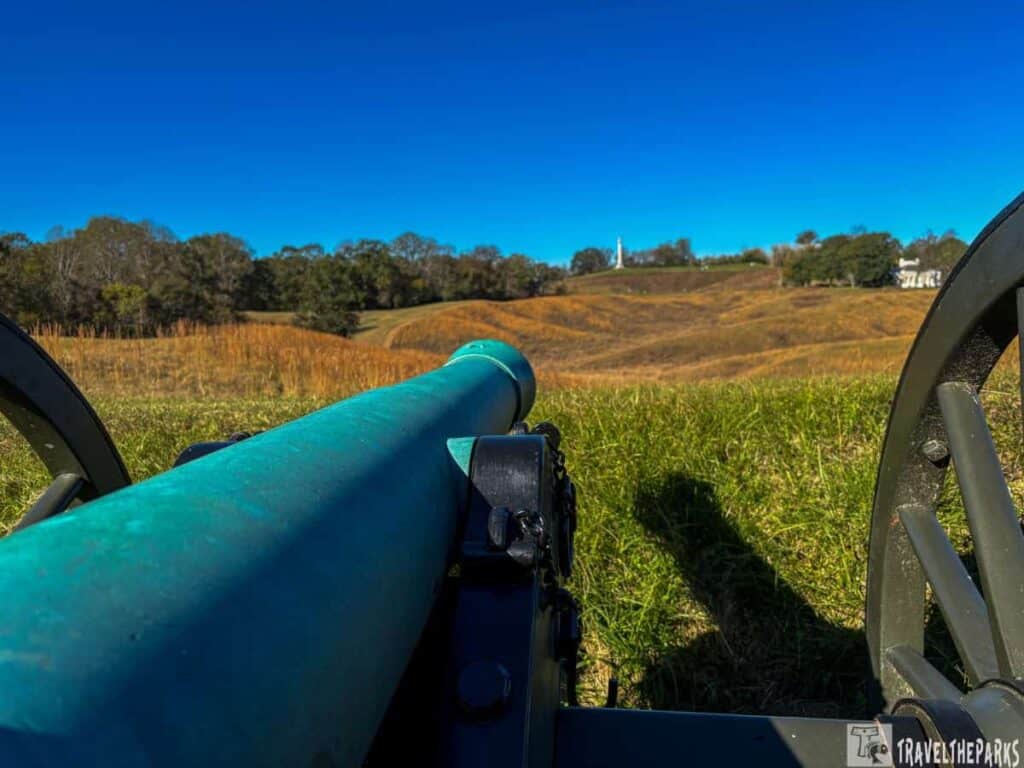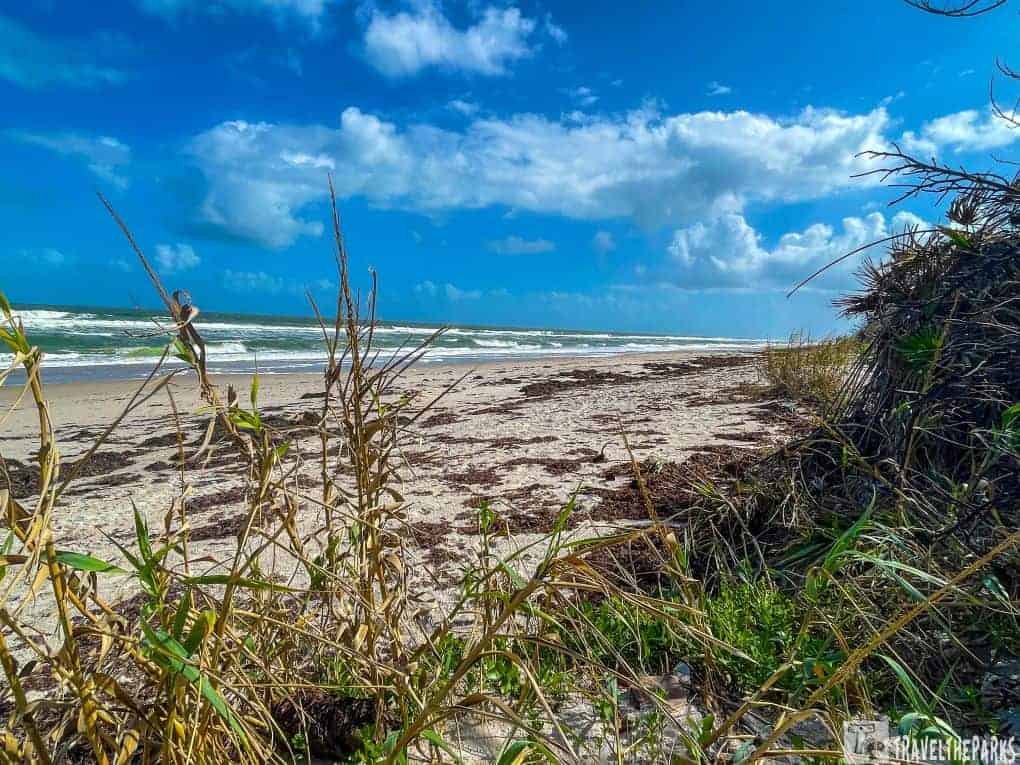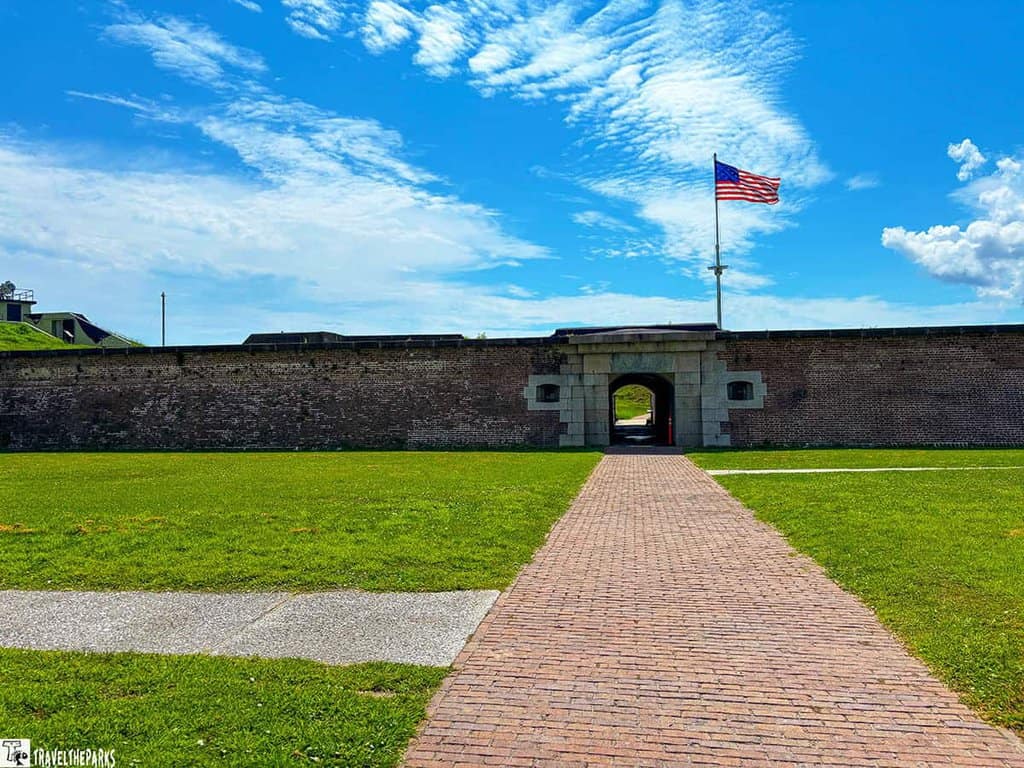
When we mapped out our East Coast road trip, Fort Sumter was at the top of our must-see list. But funny enough, it was exploring Fort Moultrie—just across the harbor on Sullivan’s Island—that really stuck with us. Fort Moultrie sits quietly across the harbor on Sullivan’s Island. Talk about a hidden gem! It’s a totally different vibe – and honestly? That’s what made it unforgettable for me.
We didn’t just read signs or snap photos there—we kind of felt the history. You walk through it. Learning about the first fort made of palmetto logs during the Revolution all the way to the large, concrete bunkers from World War II. And the view of Charleston Harbor? Incredible.
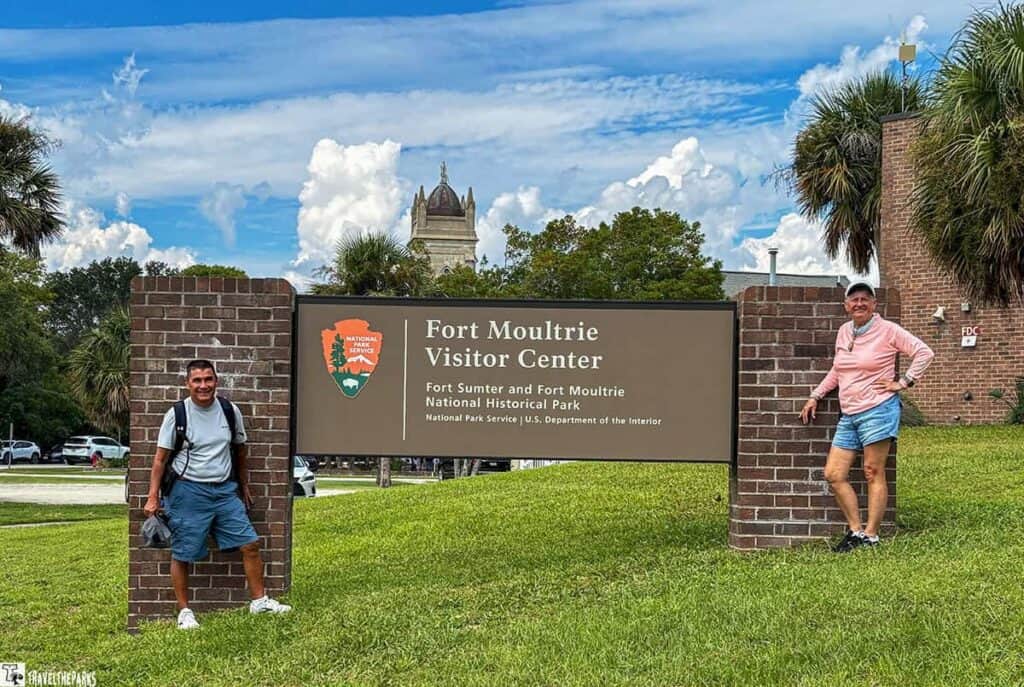
Fort Sumter and the USS Yorktown were awesome, no doubt. But at Fort Moultrie, it felt like we were alone with the past. Just us, the wind, and this weirdly deep sense of connection.
This post may contain affiliate links, meaning if you purchase something through one of these links, we may earn a small commission at no extra cost to you! Read the full disclosure policy here.
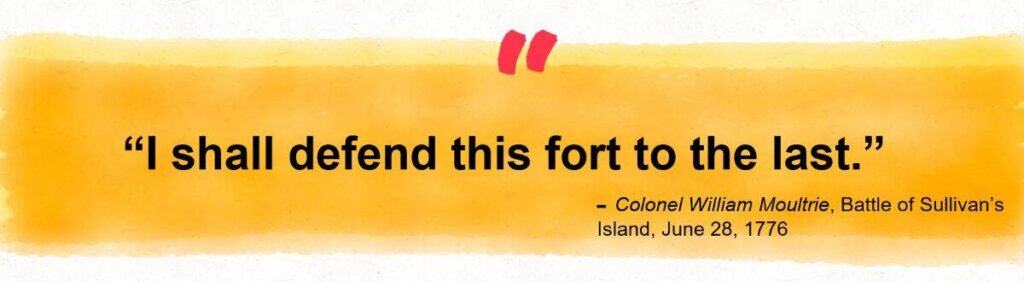
Table of Contents
What to Know Before You Explore Fort Moultrie
- Hours & Admission: open daily from 9:00 AM to 5:00 PM, except on major holidays like Thanksgiving, Christmas, and New Year’s Day.
- Admission is very affordable: Adults: $10 (16+), free for kids (National Parks Pass accepted) (check the National Park Service website for current fees).
- Visitor Center includes a small museum, restrooms, and a gift shop. Open daily 9:00 AM–5:00 PM. Plan about 1.5 to 2 hours for a full experience.
- Free parking is available at the visitor center, but it can fill up during peak weekends and holidays.
- What to Bring: Comfortable walking shoes are a must—there are grassy areas, uneven stone surfaces, and some steps. Water and sunscreen are recommended, especially if visiting during the warmer months. There’s limited shade in the open fort areas. Bring a camera or smartphone—the views of the Charleston Harbor and nearby Fort Sumter are fantastic.
- Accessibility: Many areas of Fort Moultrie are accessible, though some historic structures and stairs may not be. The visitor center and restrooms are wheelchair accessible.
- Best Times to Visit: Spring (March–May) or Fall (September–November) have milder temps and lower humidity. Summer weather is hot/humid with little shade. Mornings and late afternoons are ideal for avoiding the midday heat and crowds. If you love photography, visit around sunrise or golden hour for the best lighting and fewer people.
- Pet Policy: Leashed pets allowed in outdoor areas (grass ramparts, battery walkways). Pets NOT permitted inside the visitor center or museum exhibits.
PRO Tip: If traveling with pets, the shaded Sullivan’s Island Beach (5-min drive) allows leashed dogs year-round before 10 AM and after 6 PM.
The Birth of Fort Moultrie
Before it was a national park site, Fort Moultrie was a desperate, unfinished bastion of palmetto logs and sand. Its moment of truth came in 1776, when a powerful British fleet sailed into Charleston Harbor, expecting an easy victory. Instead, they were met with a furious cannonade from Colonel William Moultrie and his determined patriots. In a stunning upset, the colonists repelled the invasion, scoring the war’s first decisive victory for the American cause and giving a massive, much-needed boost to the nation’s morale. The fort, of course, was named for the hero who led its defense—a man who would later become governor of South Carolina.
Things to Do at Fort Moultrie National Monument
Don’t just think of Fort Moultrie as another old fort. There is plenty to explore! It’s all about getting involved and discovering. Here’s how we enjoyed our visit.
Don’t Skip the Visitor Center: Your Key to Understanding the Fort
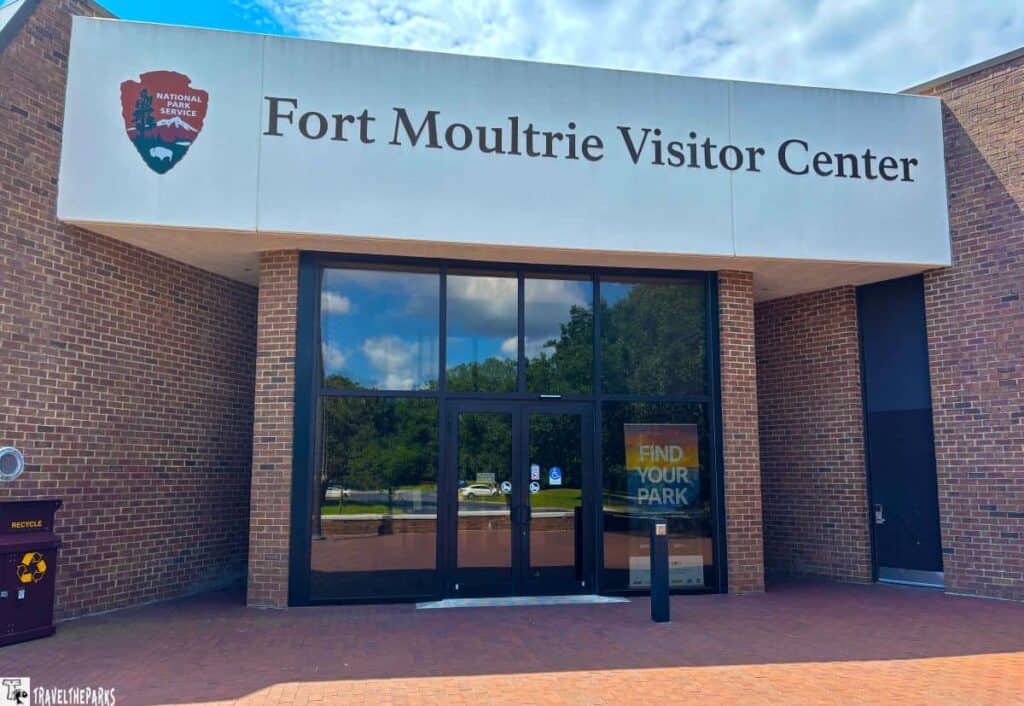
As always, we started our exploration of the fort with a stop in the visitor center. Although small, the exhibits here are well done. We popped in, thinking we’d just grab a map and be on our way. Instead, we spent a good 30 minutes here, and it was worth it. First, we watched the short introductory film. Next, we walked through the museum. Laid out in chronological order, the exhibits give you the historical context of American coastal defense. Beginning with the first makeshift fort of palmetto logs in 1776 all the way to the final concrete additions for World War II.
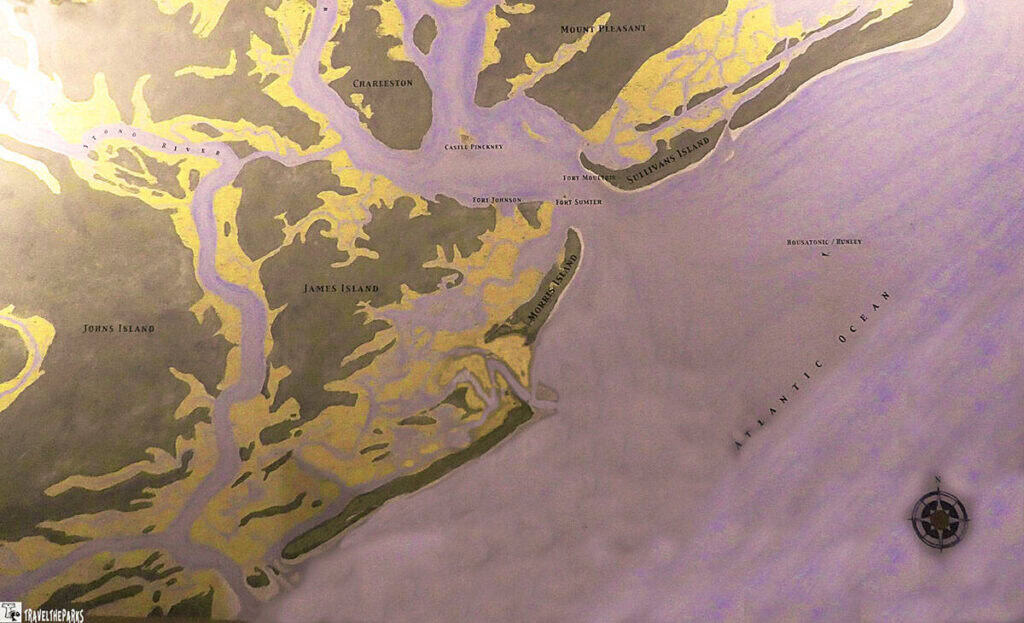
I am very much into maps. One wall had a big, beautiful and very artistic map, which really drew my attention. This was not a simple map; it was showing how the whole Charleston Harbor story looked like in one picture. We, my husband and I, literally spent five minutes looking at it, tracing the routes with our fingers and naming Fort Sumter, James Island, and John’s Island. It really helped us understand the concept of “coastal defense” right before our eyes. That one map transformed the harbor from a nice view into a strategic game board, completely changing how we viewed the rest of the fort.
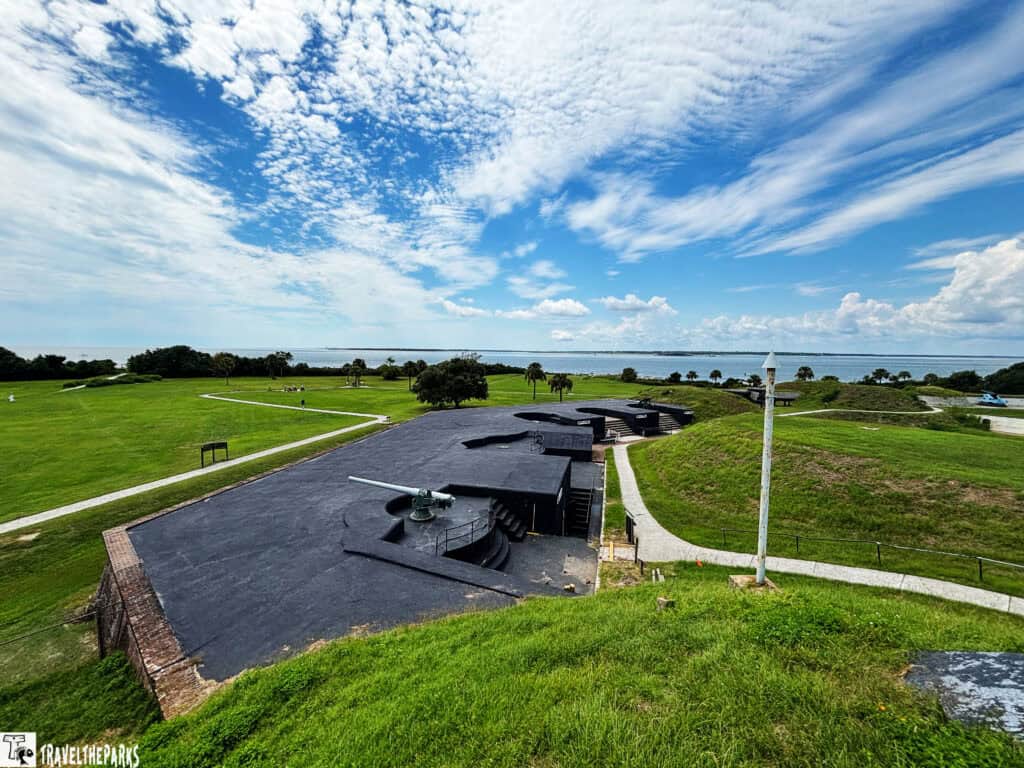
Take a Self-Guided Walking Tour of Fort Moultrie National Monument
The most wonderful thing about Fort Moultrie is that you can explore at your own pace. The trails are well-marked, and the Visitor Center map is easy to follow. If you like hearing tales, the guided tour is worth every penny. Signs lack the ability to make history come alive; rangers make the stories real. Plan for at least 2-3 hours to fully appreciate both the Visitor Center and the walking tour.

Stop #1: World War II (1944)
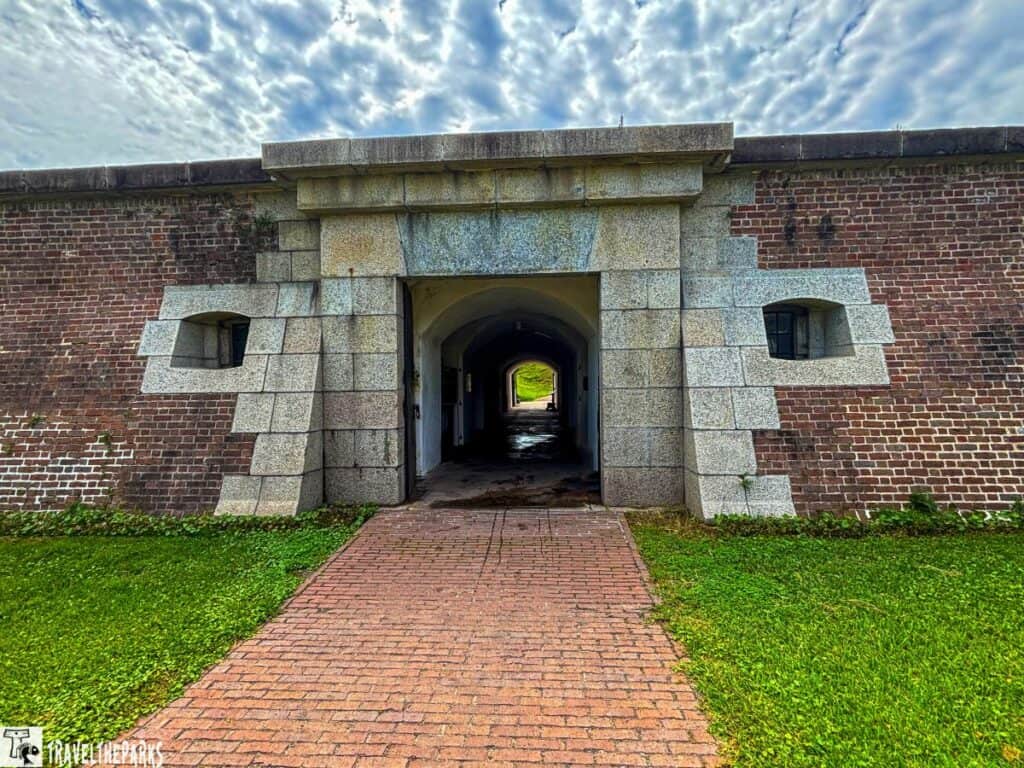
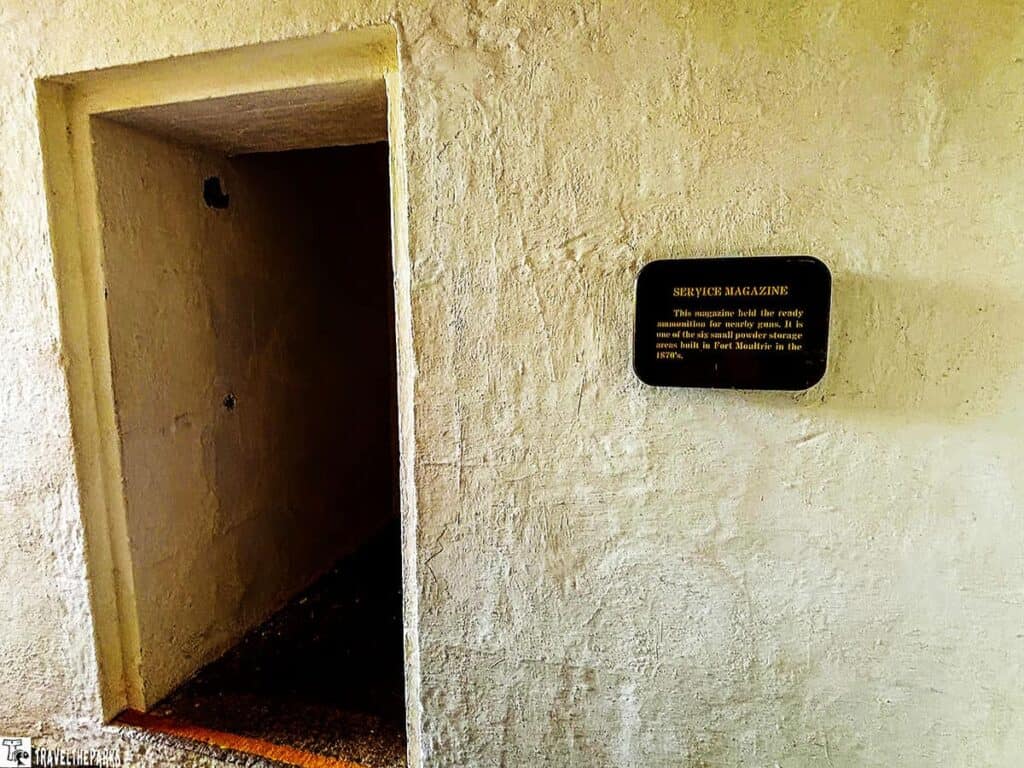
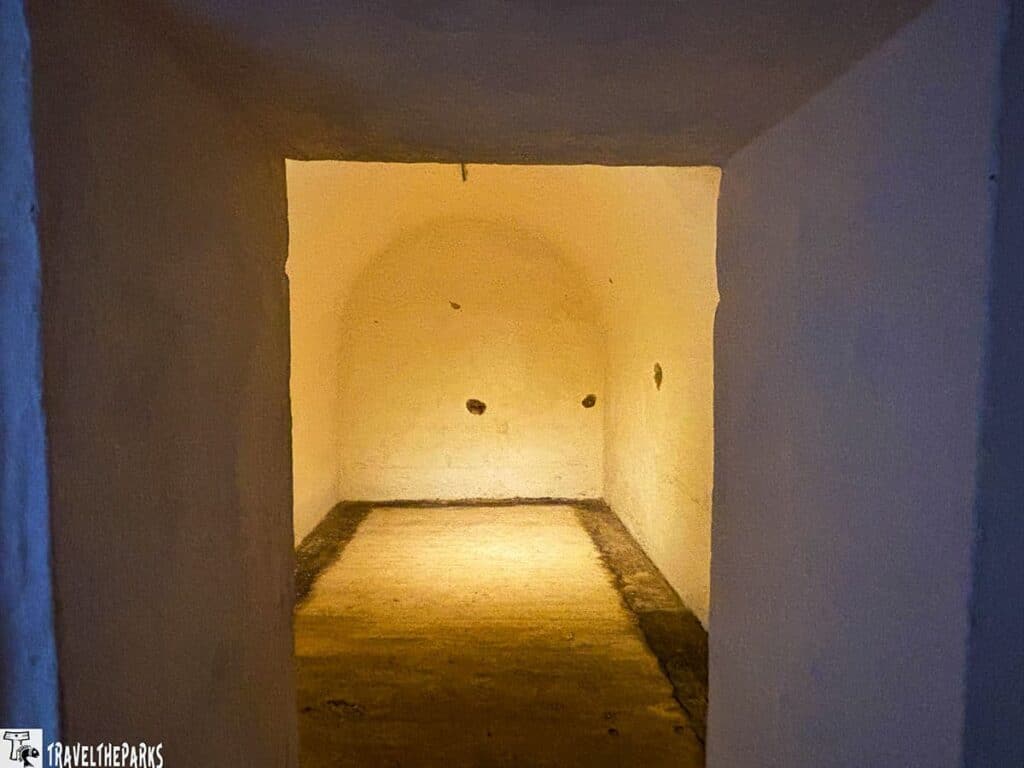
We began our exploration by stepping through the historic Sally Port, the fort’s main entrance. Our first pause was at the Service Magazine, a testament to the evolving needs of warfare. After the brutal lessons of Civil War bombardments, Army engineers in the 1870s constructed these permanent underground magazines and connecting tunnels. Their purpose was simple yet vital: to safely store ammunition and allow for its rapid delivery to the gun positions during an attack, keeping the fort’s defenses supplied under fire.
World War II-era Harbor Entrance Control Post
From this 19th-century innovation, we fast-forwarded to the 20th century, arriving at our next major stop: the World War II-era Harbor Entrance Control Post. Completed in 1944, this concrete bunker served as the technological nerve center for Charleston’s defenses. From here, personnel monitored all ship traffic, directed anti-submarine patrols, and coordinated the harbor’s complex defenses, representing the final chapter in Fort Moultrie’s long history.
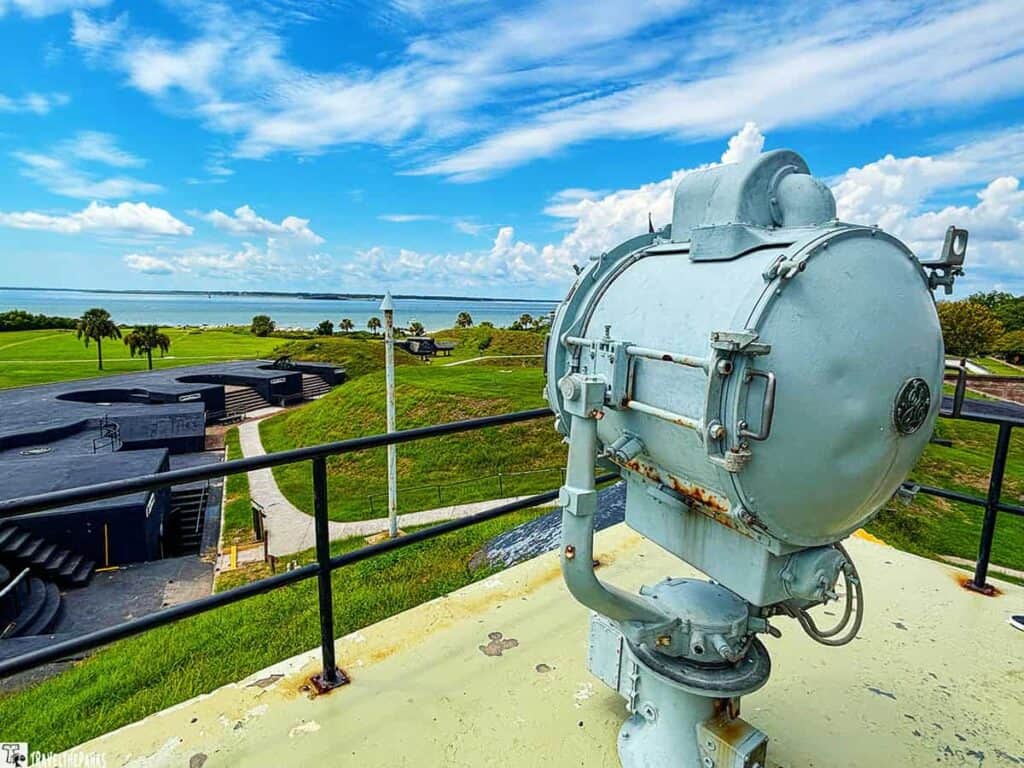
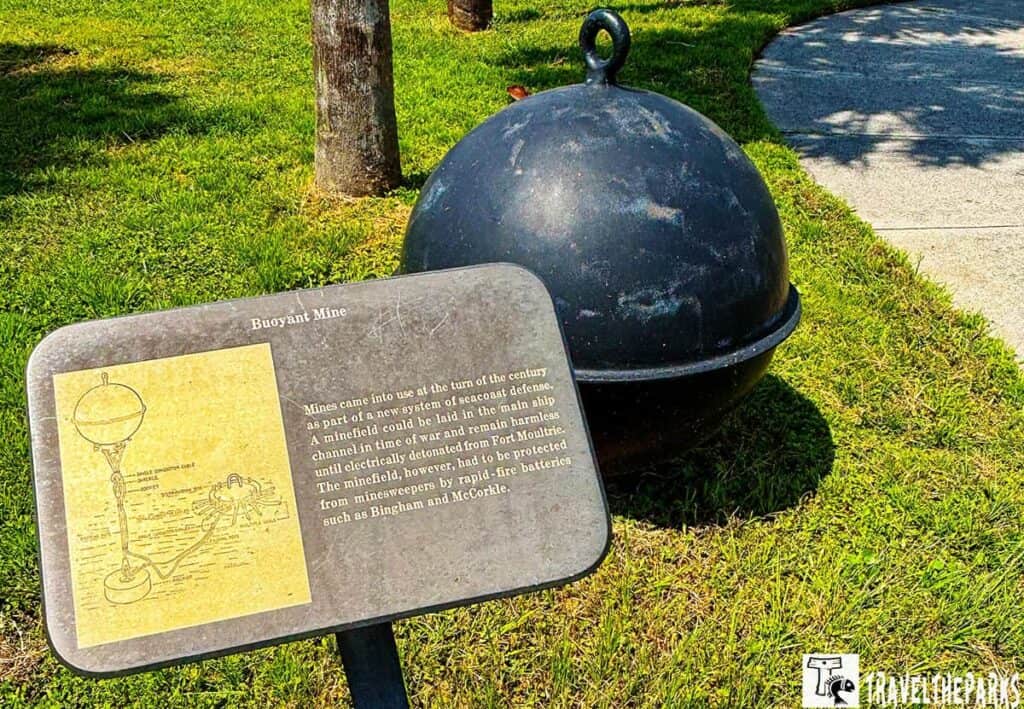
Deep inside the Harbor Entrance Control Post (HECP), Fort Moultrie’s story is told in concrete. The air is cool and still; this is a contrast to the outside air. This was the technological nerve center where personnel monitored every single ship—friend or foe—entering Charleston Harbor. Using advanced (for its time) radar and communications, they controlled the underwater minefields and coordinated all harbor traffic to protect against the genuine threat of German U-boats. It’s a stark, fascinating contrast to the 18th-century fortifications and a powerful reminder that the age of coastal defense ended not with cannons, but with top-secret technology.
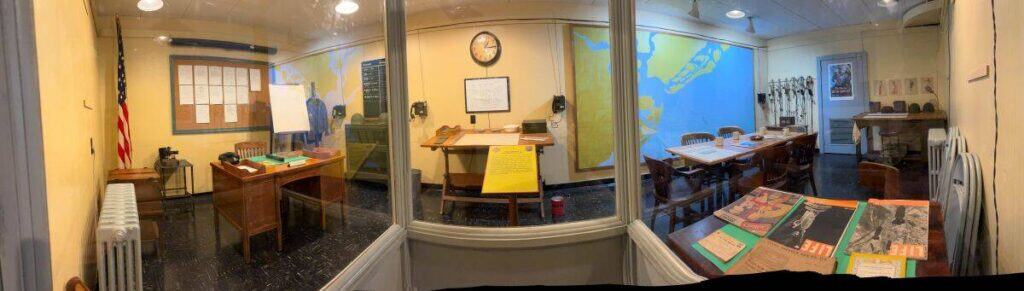
The antique furniture, vintage Life magazines strewn on a desk, and patriotic posters still on the walls impart a time-capsule nature to these 1940s rooms. This is not for show but a door into the past. You can almost sense the anticipation and nearly hear the soft crackle of a radio humming with news, bringing a deep connection to the past in a truly unique way.

Stop #2: Harbor Defense 1898-1939
Heading back outside into the heat, we found the narrative of the fort shifting from brick and mortar to concrete and steel. This era, known as the Endicott Period, saw Fort Moultrie transform into a sophisticated network of specialized artillery.
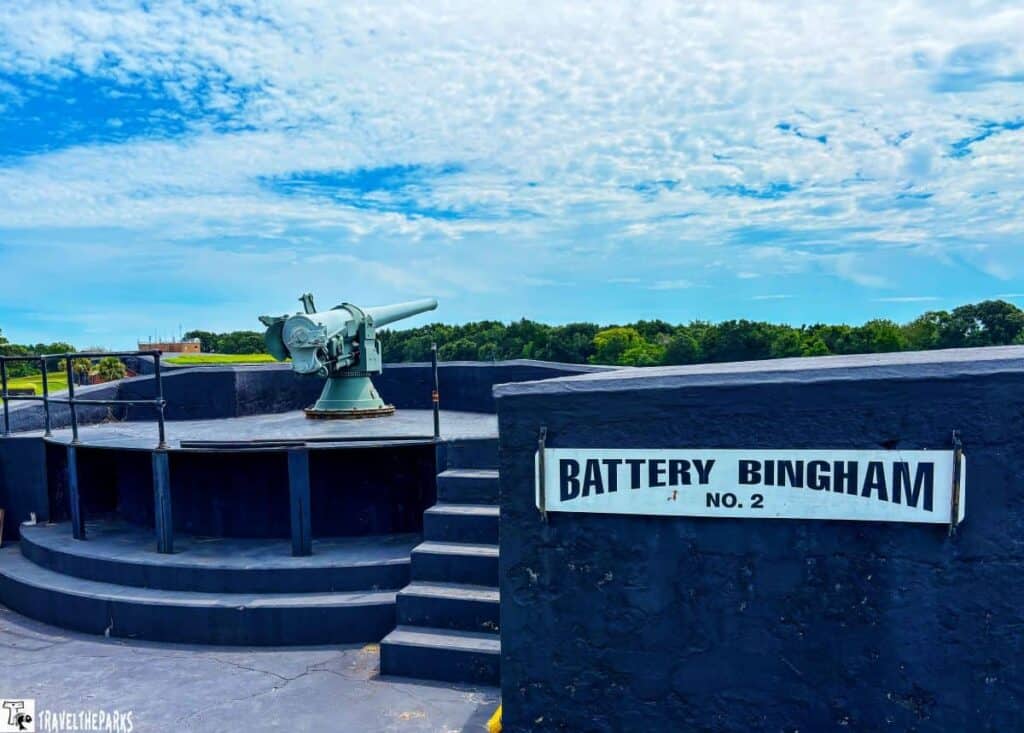
Every puzzle needs its heavy hitters. Bingham and McCorkle took care of things up close, but the real muscle came from the giant rifles at Batteries Logan, Thomson, and Gadsden on Sullivan’s Island. These giants could fire shells for miles across the water, and they joined forces with Battery Huger at Fort Sumter. They combined to create a dangerous crossfire, which made approaching Charleston very difficult. When you stand here among these old concrete giants, you can almost feel the raw, deliberate power behind this early 20th-century defense.
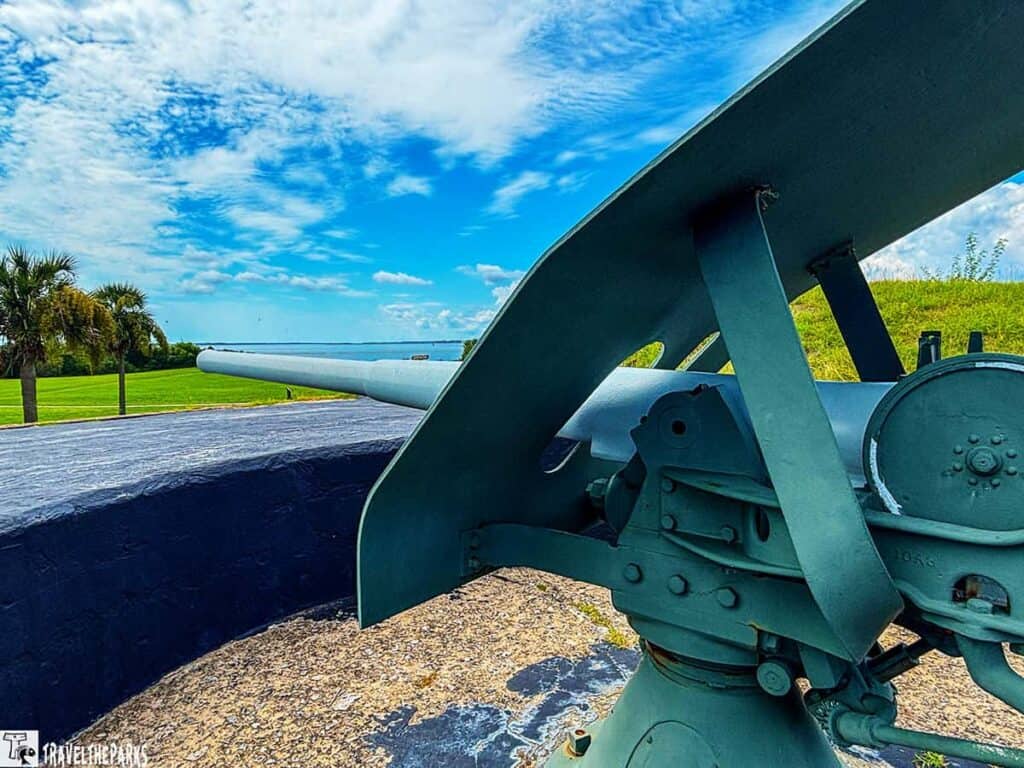
Stop #3: 1870s Modernization
In the 1870s, Fort Moultrie was completely upgraded using brutal lessons learned from the Civil War. The result was a fort rebuilt for a new era of warfare.
The most visible changes were the massive new 15-inch Rodman cannons designed to dominate the seaways. But the most crucial upgrades were defensive. Engineers built buried concrete ammunition storage and personnel shelters. Unlike older, vulnerable brick forts, this design could take direct hits from shells.
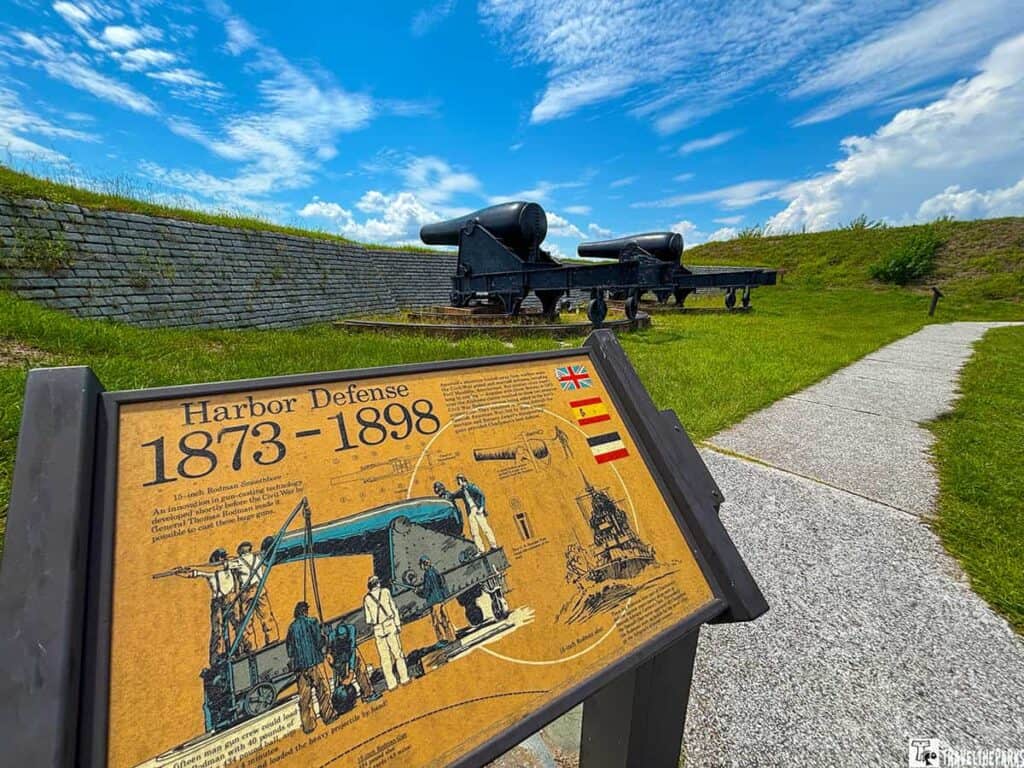
The two powerful weapons you see here are the authentic guardians from this period of transformation. They represent Fort Moultrie’s new post-Civil War identity, standing watch from 1873 to 1898. They mark a pivotal chapter, bridging the age of old-fashioned muzzle-loaders and the dawn of the modern, steel artillery that would soon follow.
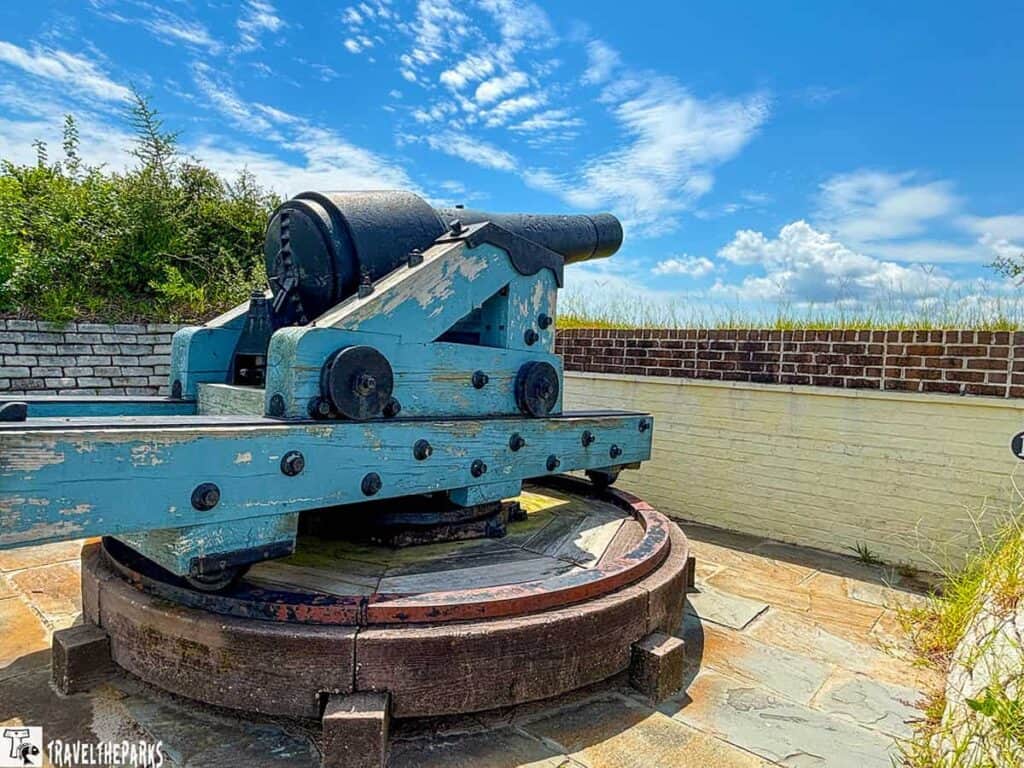
Stop #4: Civil War (1860s)
The Civil War wasn’t just a political conflict; it was a laboratory for rapid and brutal technological change in coastal defense. New, more powerful rifled cannons and ironclad warships like the USS Hunley suddenly made old brick fortifications dangerously obsolete.
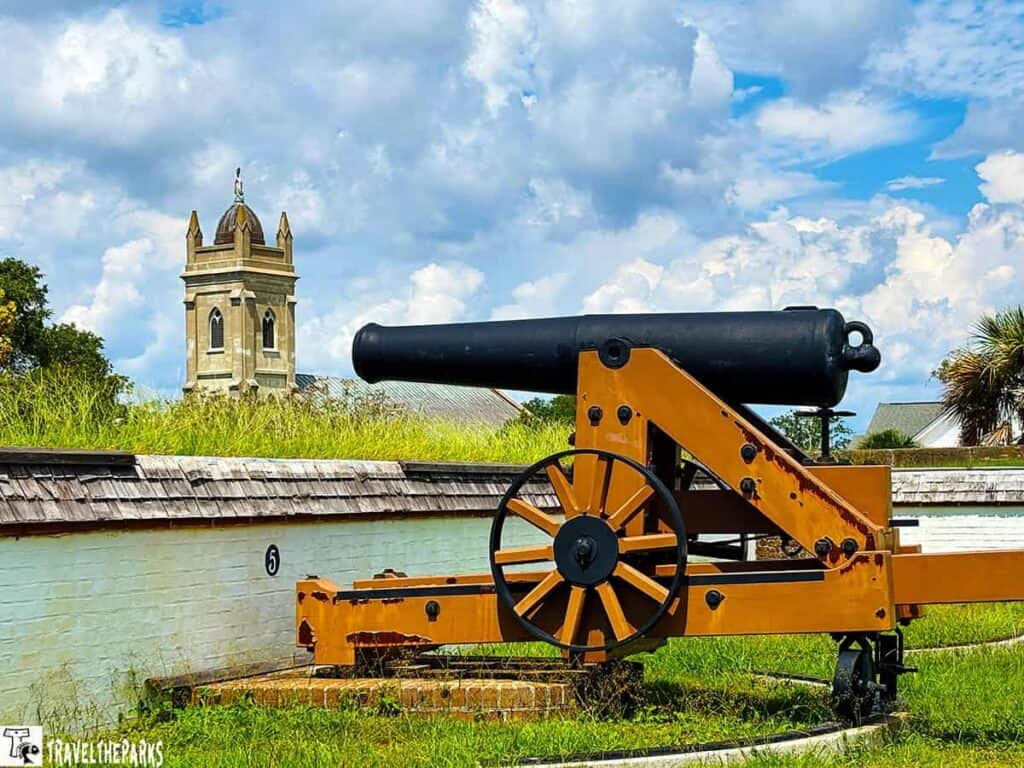
While the Confederates held Fort Moultrie, they scrambled to keep up. They kept changing the fort’s layout and brought in better weapons, all trying to match the Union’s growing naval power. Every upgrade, every patch they made—those moves didn’t just show how quickly things were changing. They also revealed the fort’s weaknesses, giving the U.S. Army a pretty clear idea of what needed fixing next.
Stop #5: Fort Moultrie III: An Era of Brick and Relative Peace (1809-1860)
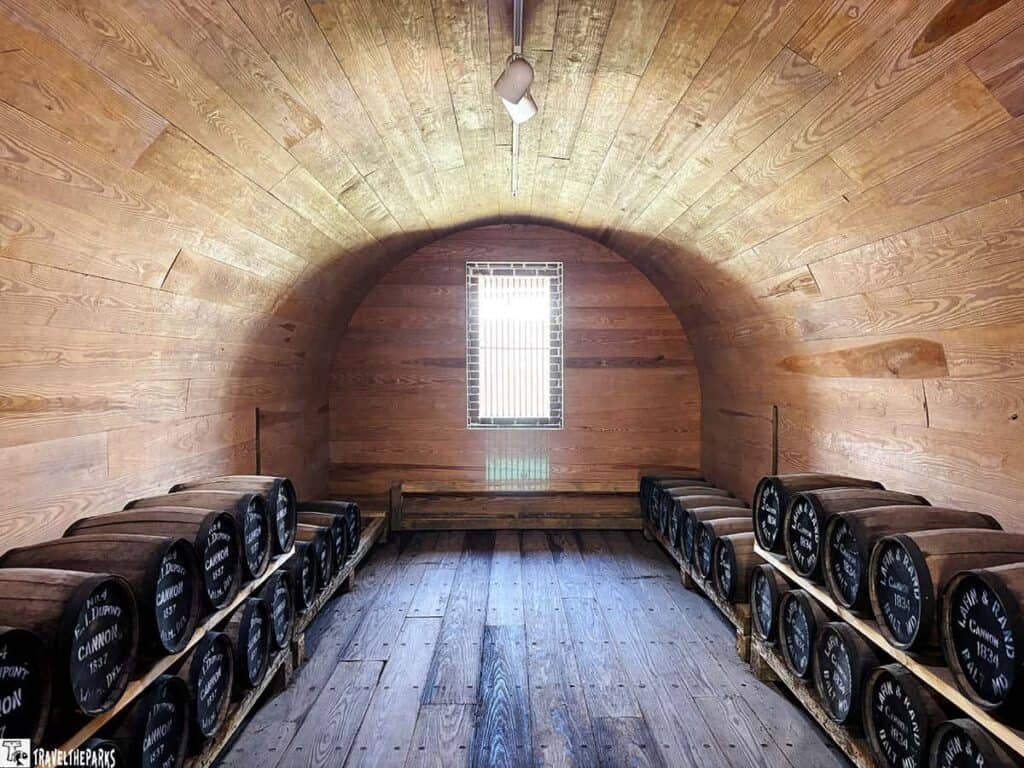
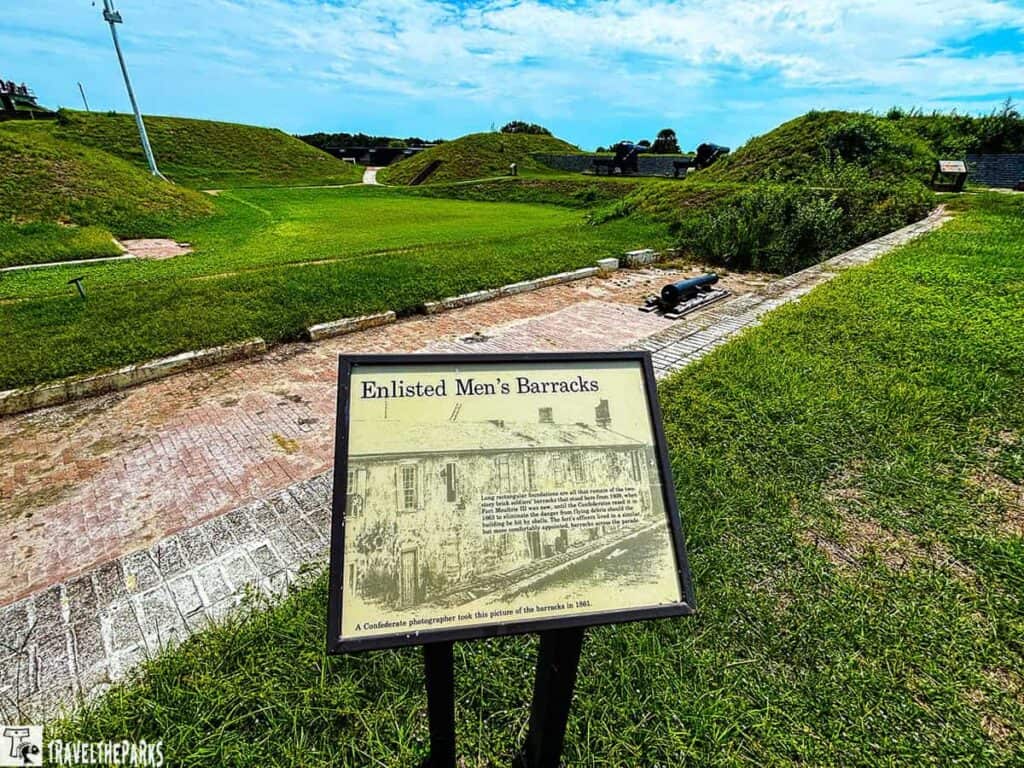
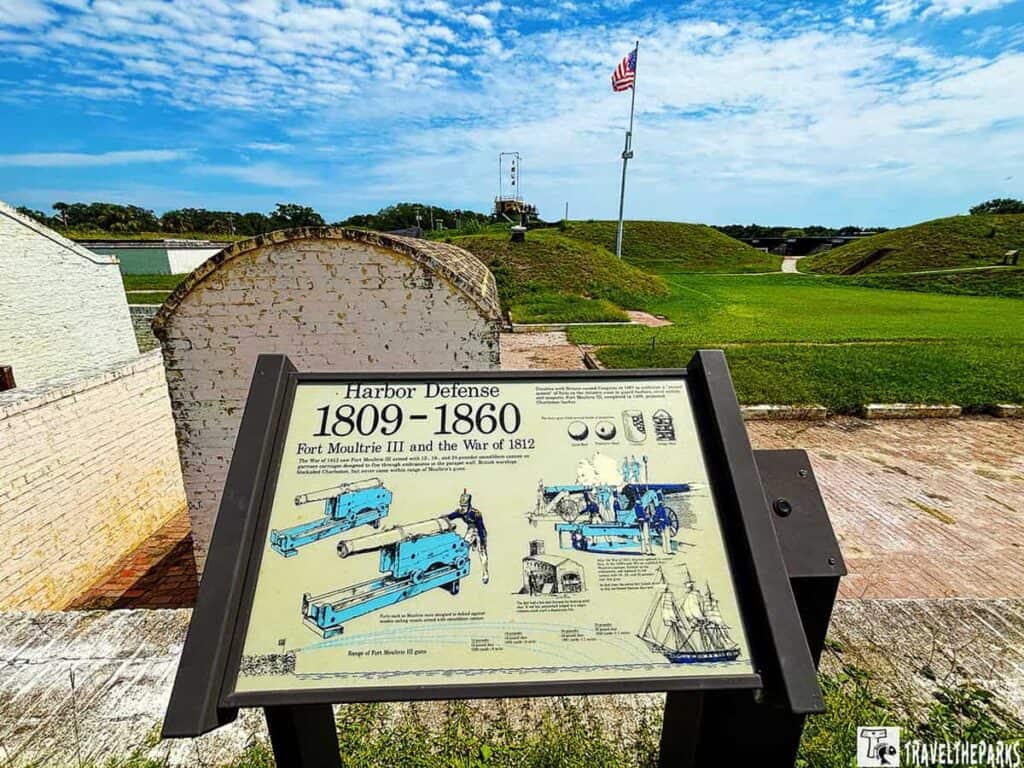
After a hurricane wrecked Fort Moultrie II in 1804, the U.S. didn’t waste any time. They got to work on something stronger: a brick fort that could actually last was completed by 1809. This wasn’t just a quick patch job. It was part of the “Second System” of national defense, which basically meant, let’s build forts that can take a punch. They built enlisted men’s barracks to accommodate 500 soldiers.
One of the real treasures at Fort Moultrie is its original 1809 powder magazine. When the Civil War hit, Confederate soldiers piled sand over it to shield it from Union cannon fire. That move saved the magazine, even while Fort Sumter’s walls took a beating and crumbled. Today, you can still walk through the powder magazine.
Stop #6 Fort Moultrie II (1794)
After the Revolutionary War, the U.S. kicked off its first big push to defend the coast. Charleston was right in the center of it all. Work on the second Fort Moultrie started in 1794. Most of the labor came from enslaved people as the country scrambled to prepare for trouble with Britain and France. Things didn’t go smoothly—money ran out, a hurricane hit—but they still finished the fort in 1798. For a little while during the “Quasi-War” with France, the place was on high alert. Then the crisis passed and everyone moved on. The fort didn’t get much attention after that. In 1804, another hurricane rolled through and wiped it out, ending the story of Fort Moultrie II almost as quickly as it began.

Stop #7 Fort Moultrie I: The Palmetto Log Fort (1776)
It’s hard to imagine that they built the first fort here with palmetto logs and sand. Turns out the spongy palmetto logs were a brilliant solution. They merely absorbed the cannonballs. Colonel William Moultrie used the fort to defend against a powerful British fleet on June 28, 1776. Against all odds, they were victorious. It provided the Patriots’ first major morale boost in the South. It’s why the palmetto tree remains proudly rooted on the South Carolina flag.
Stop #8 Cannon Walk
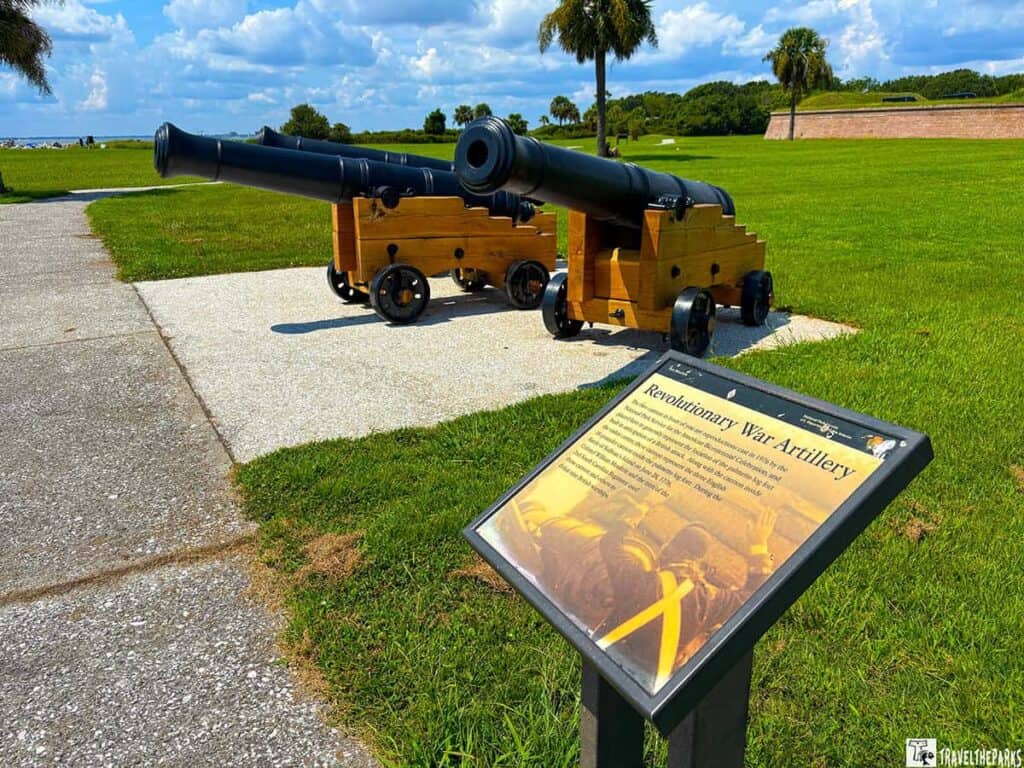
Tucked away near the fort’s entrance, the Cannon Walk is one of Fort Moultrie’s most fascinating exhibits. This isn’t just a random collection of old guns; it’s a physical timeline that lets you walk through the entire evolution of American coastal artillery, from the Revolution to the World War II era.
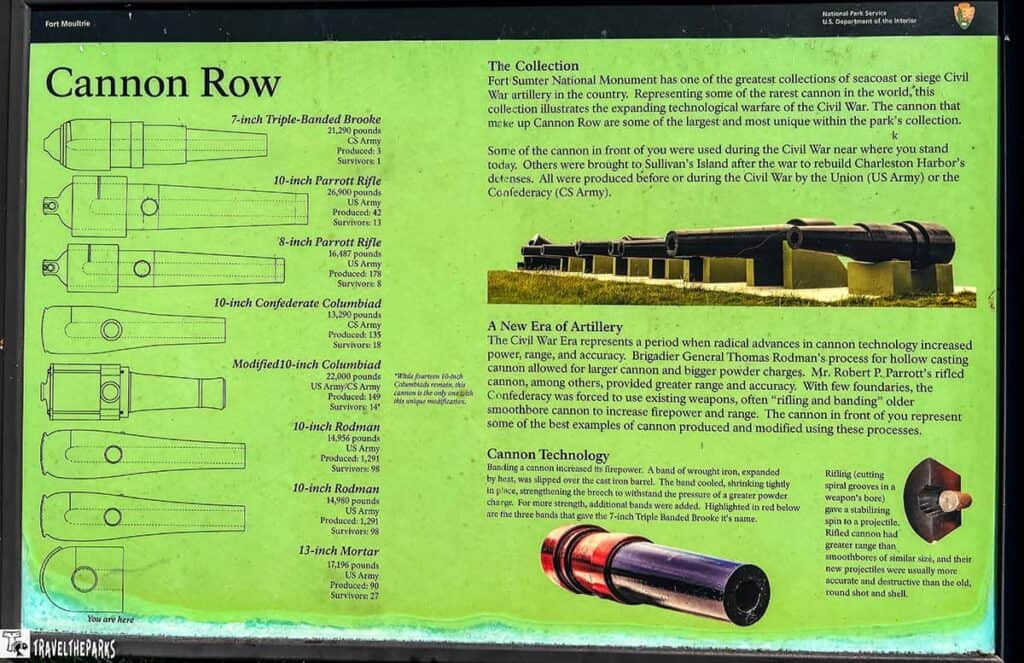
While we walked past these quiet sentinels, the means of national defense were changing right before our eyes. The story unfolds through the simple, sturdy cannons of the 18th century, not much different from those that once protected the palmetto-log fort. Then, it transitions to the massive, sophisticated rifles of the Endicott Period—like the 15-inch Rodman cannon, a giant designed to launch 400-pound shells.
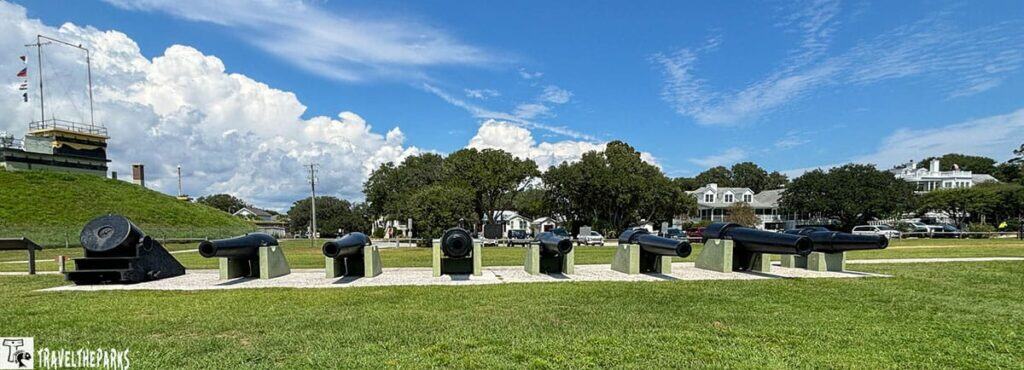
Our walk ends with the more modern, long-range guns of the 20th century. It’s a stunning visual summary of the fort’s 171-year history and the changing art of defending a coast. I highly recommend walking along, and not just by, the plaques and taking a moment to read them. Looking at the development of these weapons from one side to the next makes the technological journey very real.
Stop #9 Battery Jasper: The Enduring Guardian (1898-1943)
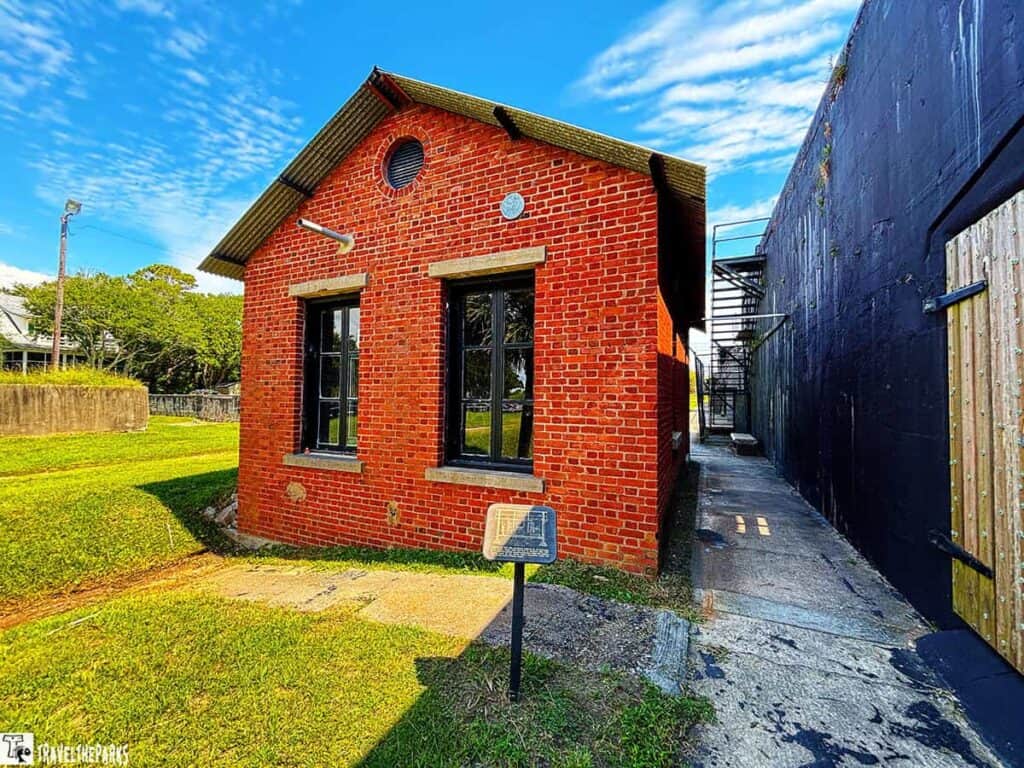
Our last stop was Battery Jasper. This is a very large black concrete battery that got its name from Sergeant William Jasper, a local hero of the American Revolutionary War. The military quickly prepared it during the Spanish-American War, constructing it in 1897-98. The battery had four extremely powerful 10-inch “disappearing guns.”
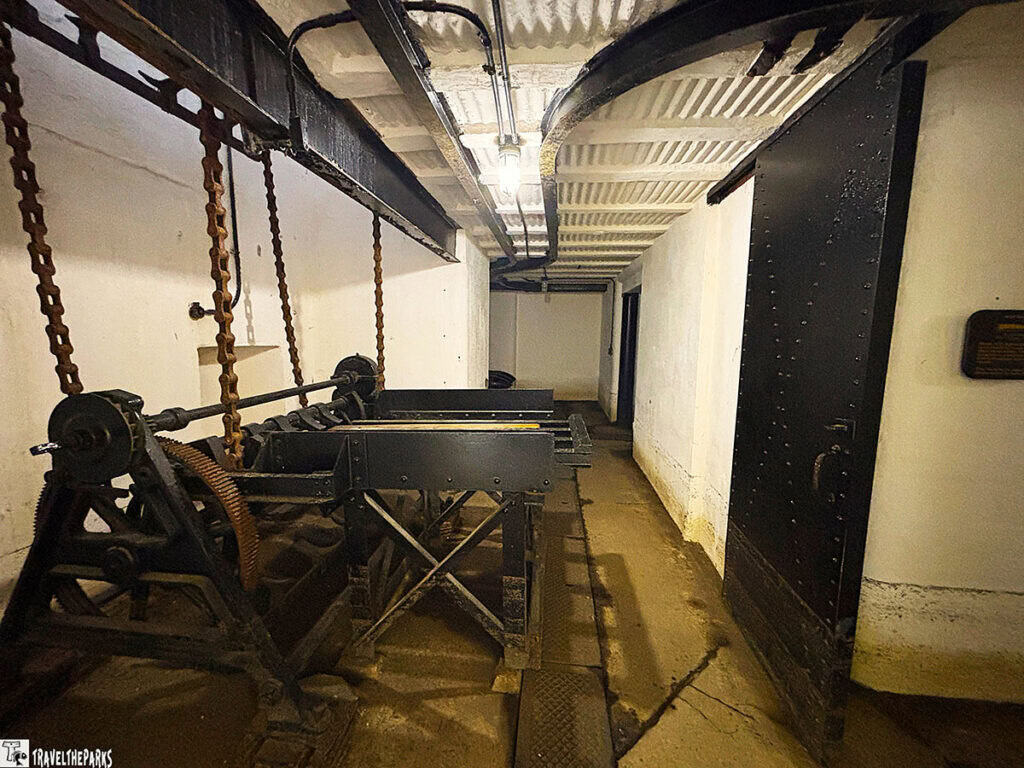
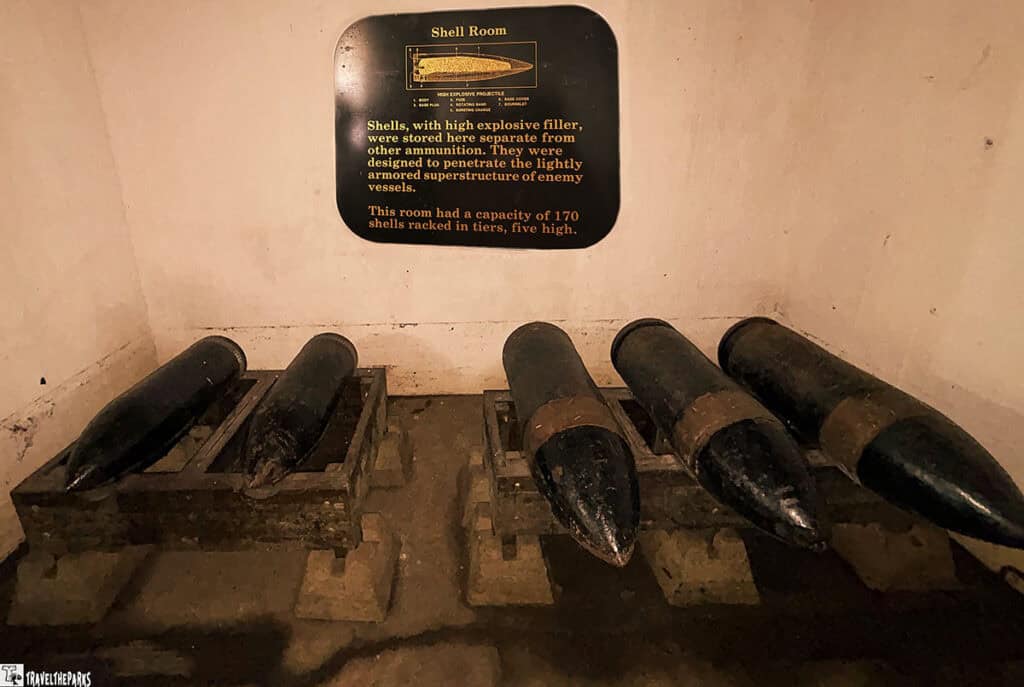
These ingenious guns could be raised to shoot over the wall, then lowered to reload safely, making them hard to hit. We finished our tour of the restored gun emplacements of Battery Jasper, including the magazine, the shell room, and the gun deck.
Unfortunately, the one-story brick building next to the battery, which was built in 1910 to house the generators for the lights and the ammunition hoists, is still closed to the visitors.
Connecting the Dots: Graves, Guns, and a Harbor View
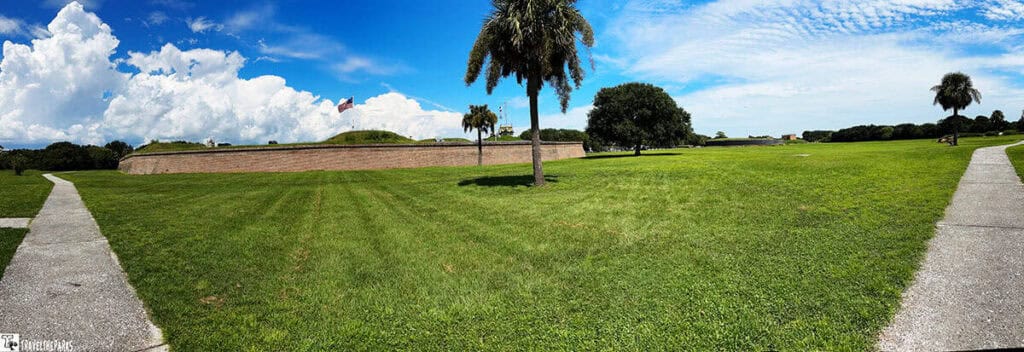
Before leaving, we followed a path down to the beachfront. Standing on the shore, we looked out across the water, with Fort Sumter silhouetted against the horizon. It was a perfect, silent moment, connecting the dots between the past and the present.

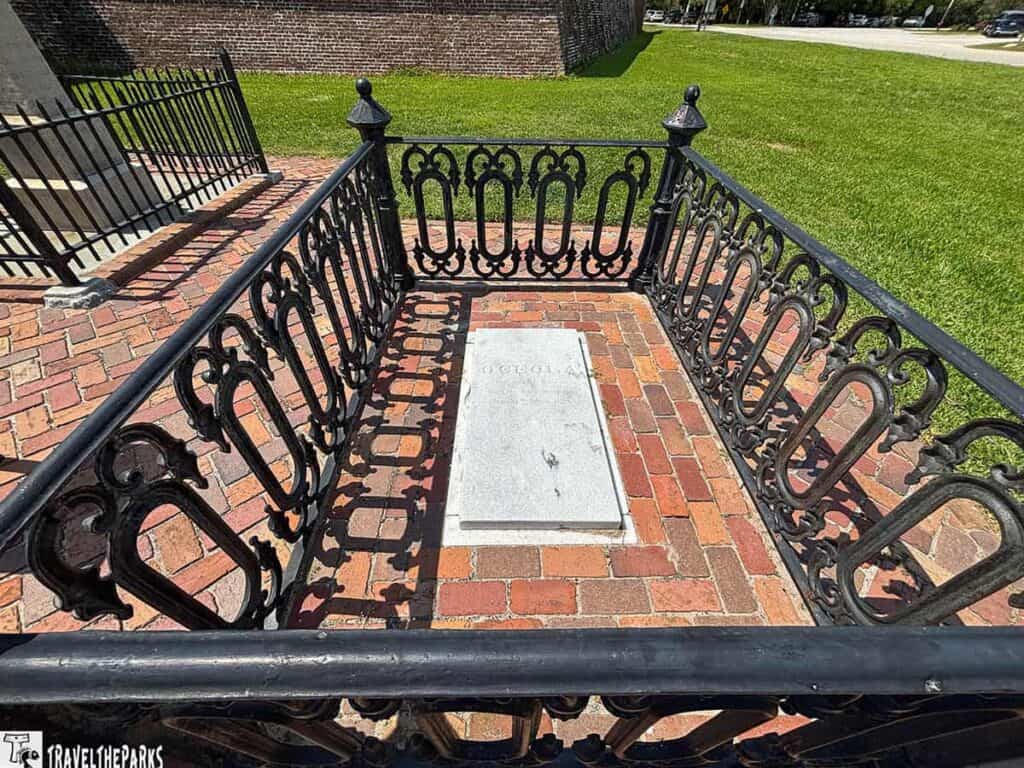
On our way back, our walk through history became deeply personal when we paused at the simple, poignant grave of Chief Osceola—a powerful moment. With our connection to Osceola County, it was a sobering reminder of the complex stories woven into this land. Near the visitor center, we paid our respects at the memorial for William Moultrie, the namesake of this enduring fort.
Final Thoughts: Exploring Fort Moultrie: A Step-by-Step Walking Tour and Guide
I never imagined that I would be so enthralled by the different eras that this fort spans. As I toured Fort Moultrie, it wasn’t just learning from the history books; it was a dramatized history that I could see and feel. This place left a stronger impression than I could have ever anticipated.
If Charleston history is what you’re passionate about, then don’t let your trip end at Fort Sumter. Make sure to visit Fort Moultrie, too. It’s not merely a substitute; it’s the full, long, and detailed story. While Sumter may show you one pivotal moment, Moultrie gives you the entire book—a historical journey you can experience for yourself, complemented by the sea breeze of the Lowcountry. It was more than just a visit; it was a connection, and it’s a memory I’ll always carry with me.
What part of American history are you most excited to explore on your travels? Share your favorite historical site or an upcoming visit in the comments below—we’d love to hear from you!