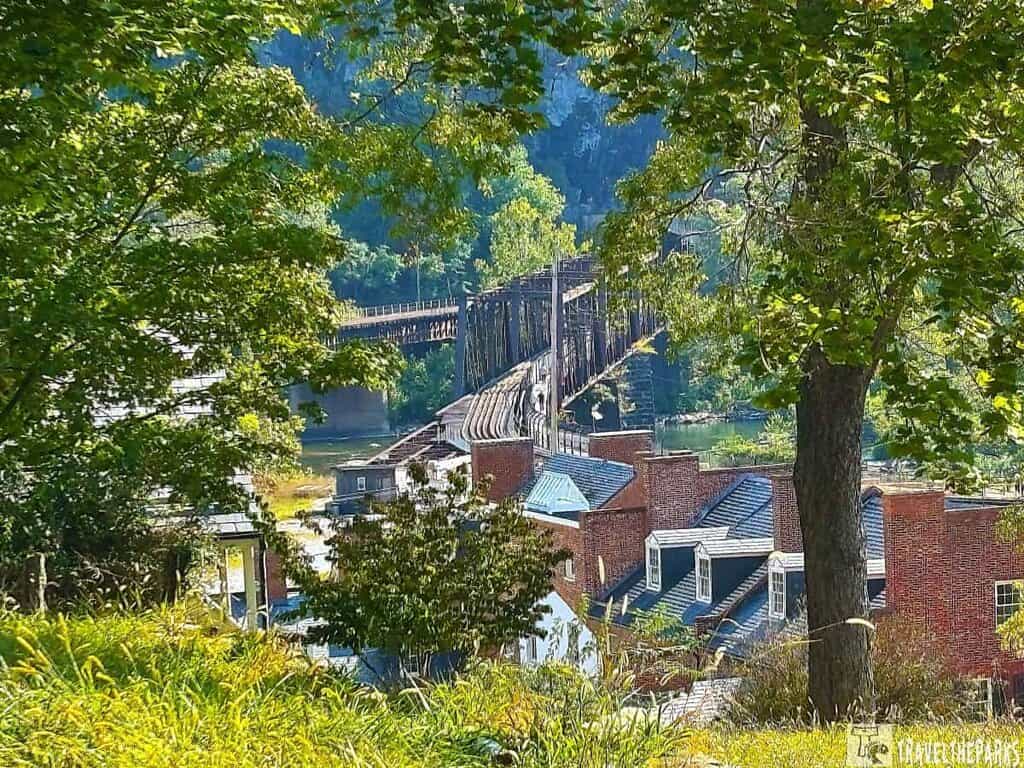
On our RV road trip up the East Coast, we want to find destinations that combine the past and can be explored on foot. That is exactly what we found in Harpers Ferry, a storybook treasure. For those interested in visiting Harpers Ferry, a complete itinerary is essential. Located at the point where the Potomac and Shenandoah Rivers meet, this small town has a kind of magic that is very difficult to describe — a little bit of the past, a little bit of adventure, and pure charm. On these cobblestone streets, we immediately felt that we had discovered something extraordinary.
Here, we are divulging our entire Harpers Ferry travel plan — the hikes that took our breath away, the hidden corners in which we stayed longer, and the small instances that reminded us of the reason we chose to go on the road.

This post may contain affiliate links, meaning if you purchase something through one of these links, we may earn a small commission at no extra cost to you! Read the full disclosure policy here.
Table of Contents
Where is Harpers Ferry? How do I get there?
Harpers Ferry is in the eastern part of West Virginia. Harpers Ferry is an easy day trip from Washington, DC.
Directions to Harpers Ferry by Car:
- From Washington, D.C. (60-miles, 1.5 hour drive): Take Interstate 270 North toward Frederick, MD. Continue on I-270 for ~25 miles, then merge onto US-15 North toward Point of Rocks. After 10 miles, turn left onto US-340 West (signs for Harpers Ferry/Charles Town). Follow US-340 West for 8 miles. Take Exit 35 for Harpers Ferry/National Historical Park. Follow the signs to the Harpers Ferry National Historical Park Visitor Center.
- From Baltimore, MD (85-miles, 2-hour drive): Take I-695 West (Baltimore Beltway) toward Towson. Merge onto I-70 West toward Frederick/Hagerstown. Take Exit 52 to merge onto US-340 West toward Charlestown/Harpers Ferry. Follow US-340 West for 8 miles, then take Exit 35 for Harpers Ferry/National Historical Park. Follow the signs to the Harpers Ferry National Historical Park Visitor Center.
- From Frederick, MD (40-miles, approx. 1-hour drive): Take Route 340 South directly into Harpers Ferry.
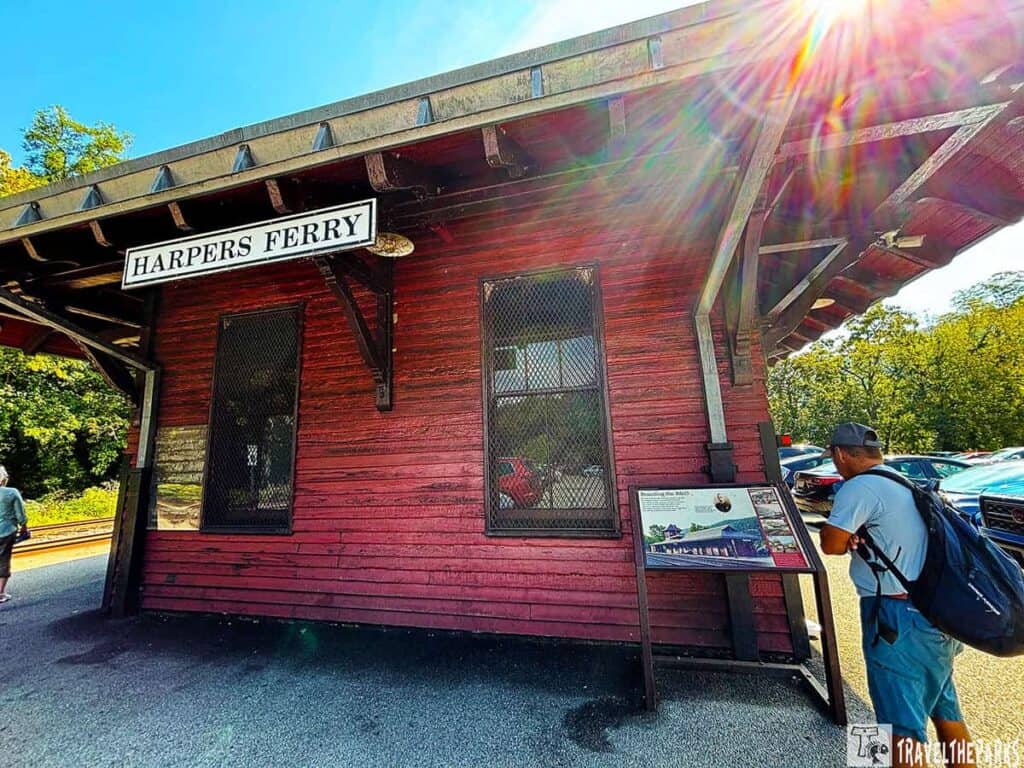
By Train: If you’re traveling by train, you can take the Amtrak Cardinal Line, which stops at the Harpers Ferry Train Station. This station is a short distance from the historical park and offers a scenic and stress-free way to get there. Alternatively, the MARC Train runs Monday–Friday (no weekend service). Check schedules at MARC. Brunswick Line from Washington Union Station to Harpers Ferry Station.
Historic Overview of Harpers Ferry
Harpers Ferry’s story begins in 1747. A millwright named Robert Harper saw the promise of this spot where two rivers meet. By 1761, he had set up a ferry service across the Potomac. The town soon took his name.
The federal government recognized the area’s strategic value. In 1796, it purchased the land and built the U.S. Armory and Arsenal. This became a cornerstone of early American industry, producing muskets and rifles for the young nation.
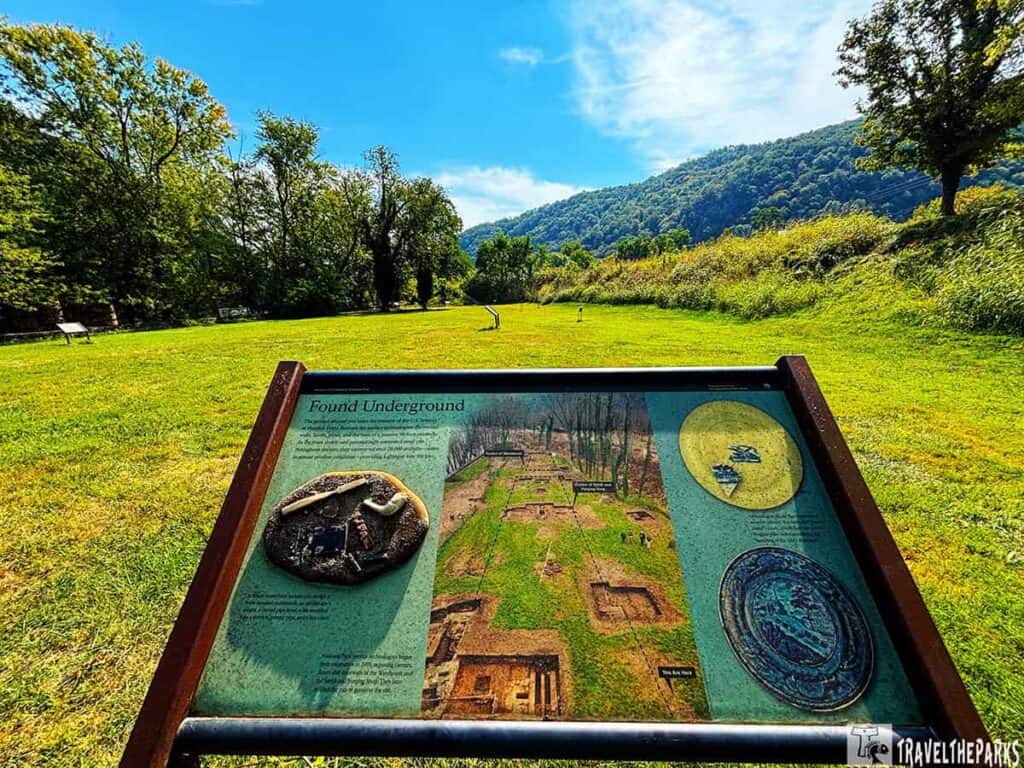
In 1859, Harpers Ferry became the stage for one of America’s most dramatic events. Abolitionist John Brown led a raid on the armory, hoping to spark a slave uprising. U.S. Marines under Robert E. Lee quickly ended the attack and captured Brown. His trial and execution, however, set the nation ablaze. They strengthened Northern opposition to slavery and deepened Southern fears. The road to civil war had begun.
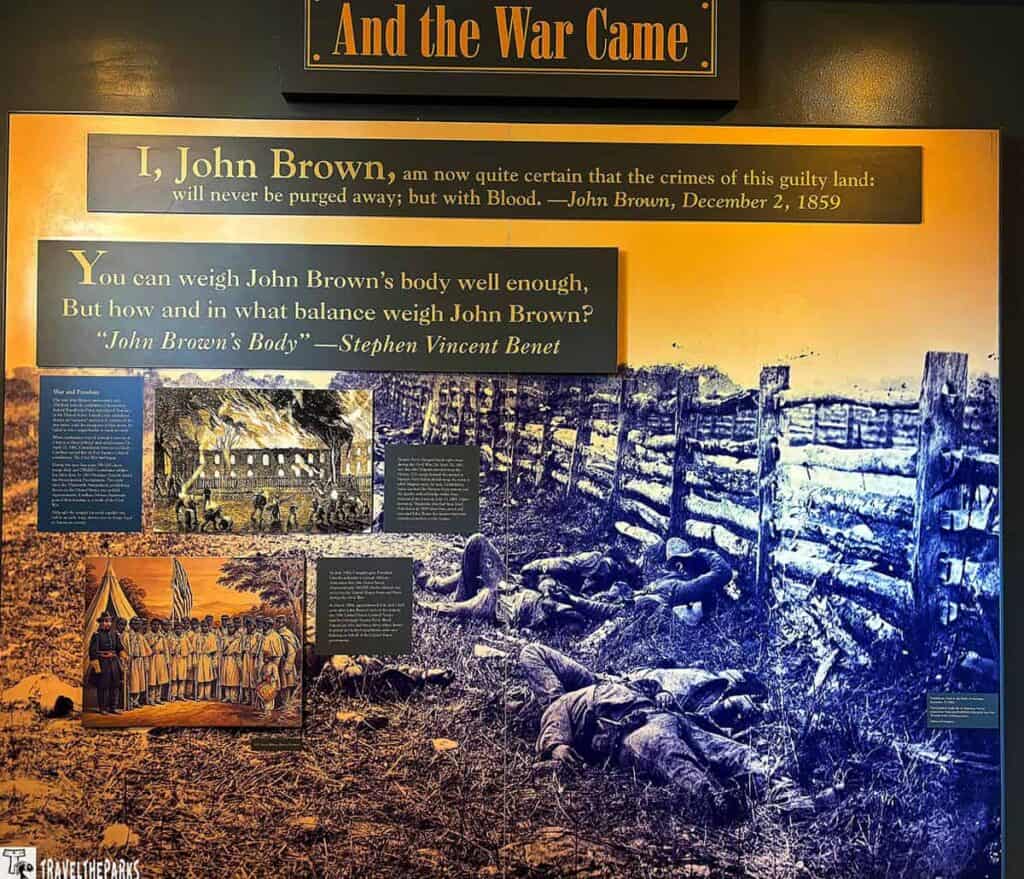
When war finally came, Harpers Ferry was caught in the middle. Its location made it a prize — and a target. The town changed hands eight times during the conflict. The most famous battle came in 1862, when Confederate General Stonewall Jackson captured 12,000 Union soldiers in one of the war’s largest surrenders.
By the end of the Civil War, Harpers Ferry lay in ruins. The armory was destroyed, the town wrecked, and its once-busy economy was gone.

What You Should Know for Your Harpers Ferry Itinerary
- Parking: Limited parking is available in the Lower Town Historic District. Use the FREE National Park Service shuttle from the visitor center to avoid limited downtown parking in Harpers Ferry.
- Entrance Fees: Per Vehicle: $15 (valid for 7 days), Per Individual (on foot, bike, or motorcycle): $10 (valid for 7 days). If you are an American the Beautiful Annual Passholder or have a Senior Pass or Access Pass, you can enter the park for free. Get your park passport stamps at the Bookshop, Lower Town.
- Harpers Ferry National Historical Park is open all year, except on Thanksgiving, Christmas, and New Year’s Day. Visitor’s Center, museums, and exhibits’ hours are 9 AM–5 PM. The park shuttle bus runs from 9 AM to 5:30 PM.
- Best Time to Visit: Harpers Ferry is stunning year-round, but if you’re hoping to avoid sizeable crowds, consider visiting in the spring or fall. Visit in spring or fall for mild weather and vibrant foliage. Summer weekends can be busy. The summer months can be busy, especially on weekends, so plan accordingly.
- Footwear: wear sturdy shoes for steep, uneven terrain and historic cobblestone streets.
- Pet Policy: Pets must be kept on a leash no longer than 6 feet at all times. Good news! Our pets can join us on most trails and in the outdoor areas throughout the park, including the historic Lower Town.
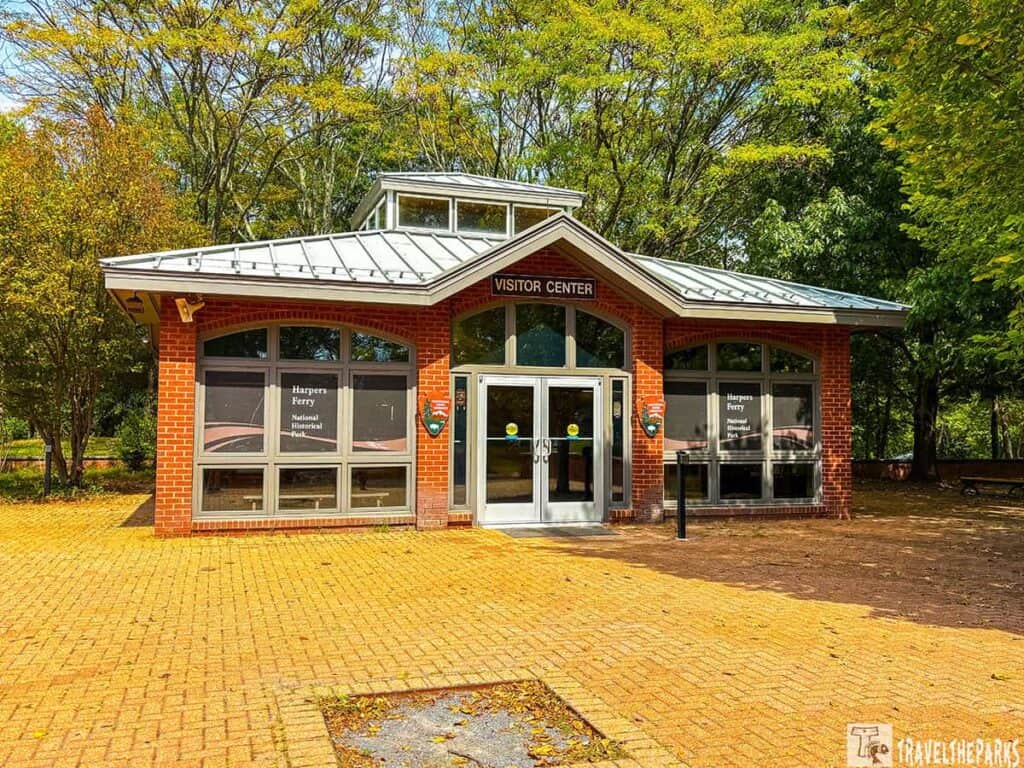
1. Begin at the Main Harpers Ferry National Historical Park Visitor Center
Our Harpers Ferry itinerary kicked off at the main Harpers Ferry National Historical Park Visitor Center — otherwise known as “the place where you figure out what you’re actually doing.” This is also where you park. Thanks to our annual park pass, parking was free (which always feels like winning the travel lottery); otherwise, it’s $20 per vehicle.
Now, don’t come expecting a grand museum experience — there aren’t any indoor exhibits here. Think of it more than a launchpad for your adventure. We grabbed our trail maps, hopped on the free park shuttle, and headed down to Lower Town. That’s where the real action begins — complete with cobblestones, history, and the classic NPS Lower Town Information Center, which does have the kind of exhibits that make your inner history nerd happy.
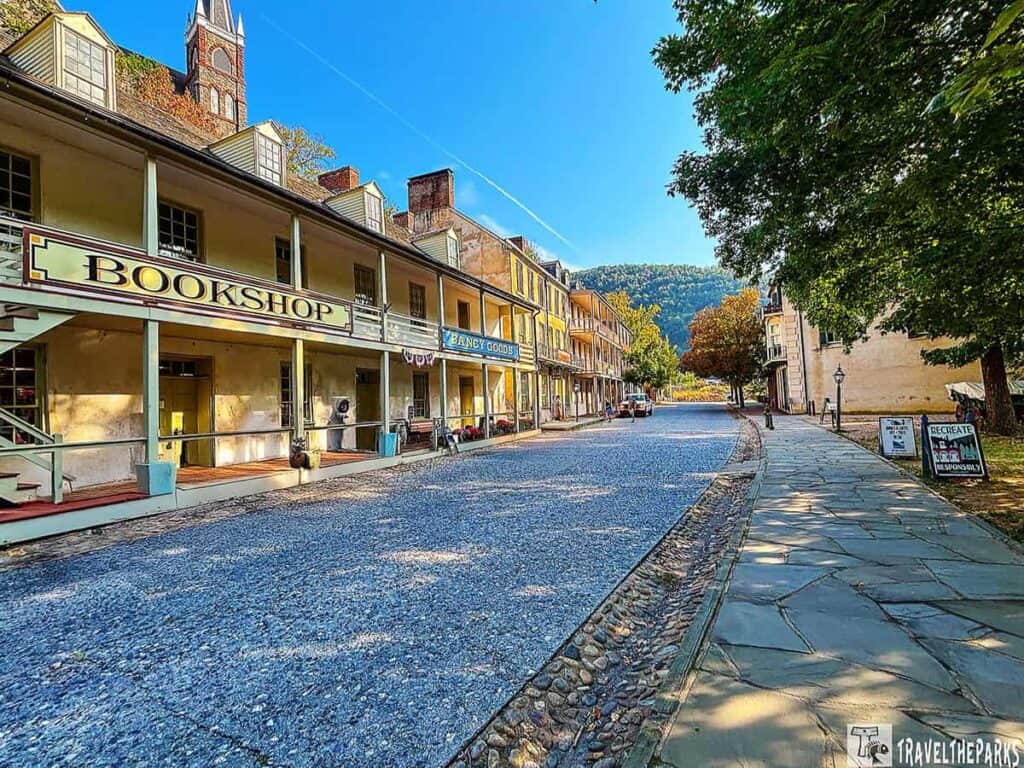
The Best Things to Do in Harpers Ferry’s Lower Town
- Stroll the Historic Streets: Experience the charm of one of the 19th-century cobblestone streets of Lower Town with the river views and shops and preserved buildings.
- Visit the Lower Town Information Center: Take the first step here to see the exhibits and maps and get an introduction to the town’s history of the Civil War and the industrial era.
- John Brown’s Fort: It is the landmark of Harpers Ferry, the place where in 1859 John Brown made his historic stand.
- The Point Overlook: Go to the end of the town and see the confluence of the Potomac and Shenandoah Rivers. The place is perfect for pictures.
- St. Peter’s Roman Catholic Church: a beautifully restored Gothic church and one of the few buildings that survived the war.
- Jefferson Rock: Take the short hike uphill to the scenic overlook, which, deriving from “one of the most stupendous scenes in nature,” was the admiration of Thomas Jefferson.”
- Shenandoah Street Exhibits: Enter the historic buildings with living history displays that evoke 1800s Harpers Ferry. For a deeper dive into Harpers Ferry’s history, check out our Self-Guided Walking Tour of Lower Town — it’s the best way to experience each spot at your own pace.
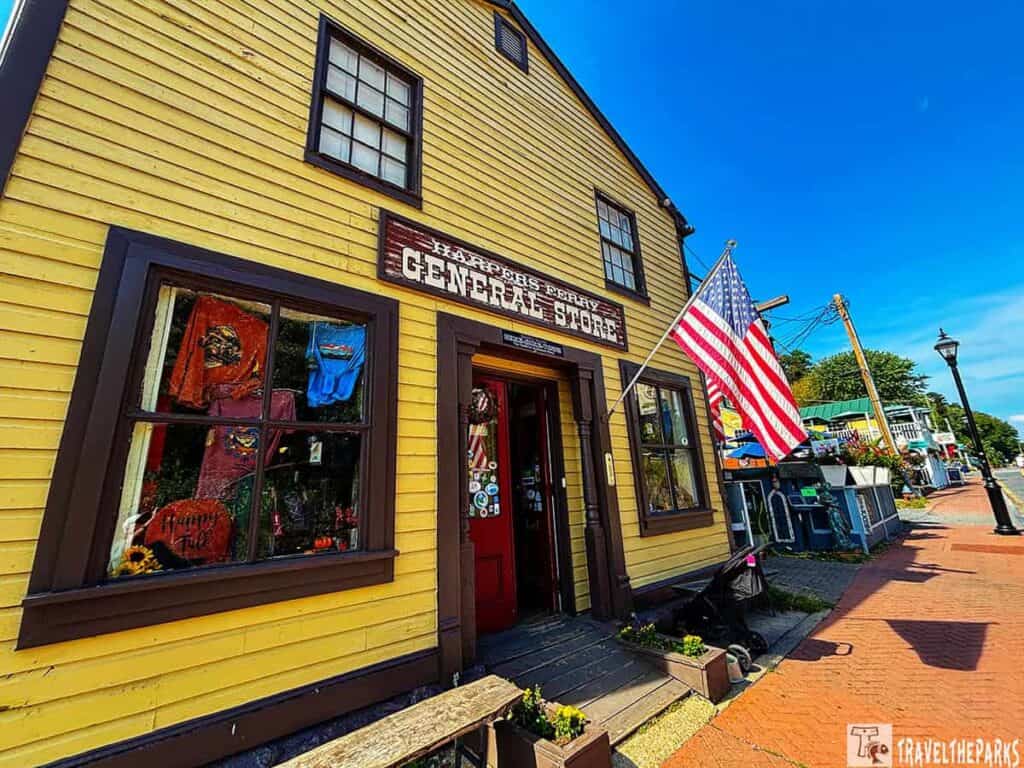
- Explore Local Shops & Treats: Visit an old-fashioned candy store, take a coffee break, or browse the quirky gift shops for a souvenir.
- Hike the Maryland Heights Trail (if time allows): across the river, this trek is the most visited one and offers a stunning view of the Lower Town.

Must-See Highlights of Harpers Ferry National Historical Park
We are highlighting only the must-see sights for a perfect one-day itinerary in Harpers Ferry National Historical Park, which is packed with history. Explore Harpers Ferry’s lower town with our ultimate Harpers Ferry self-guided walking tour.
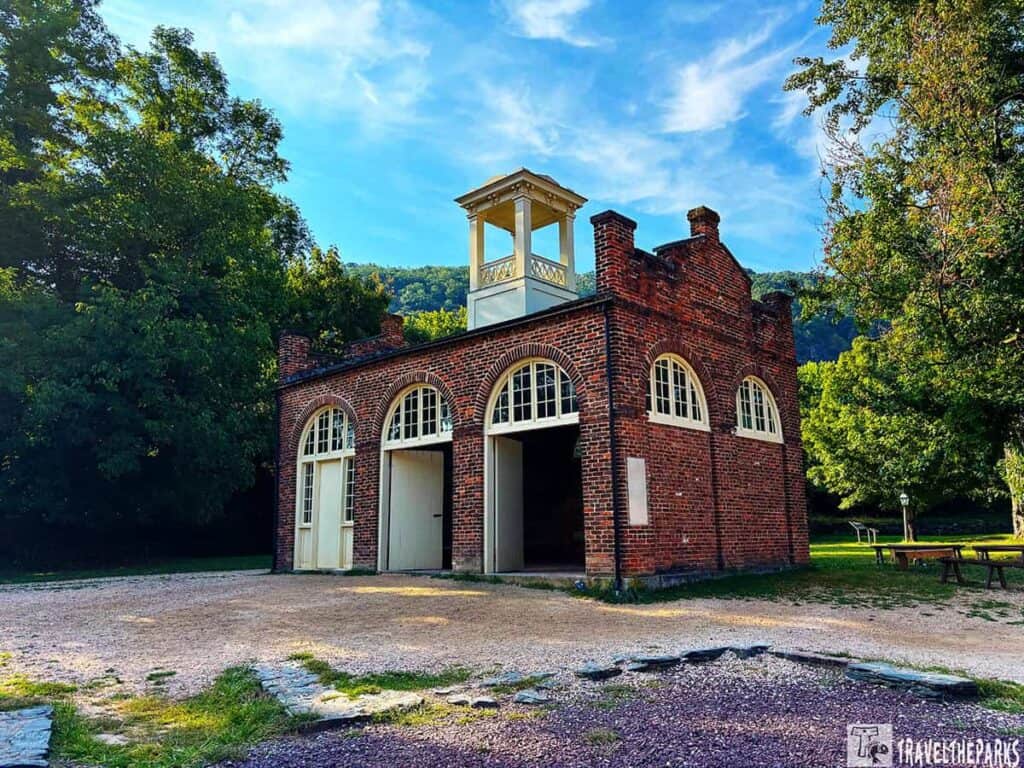
Witness the Spark at John Brown’s Fort
At present, the National Park Service keeps the record of John Brown’s Fort, which was relocated to Harpers Ferry from Chicago in 1968, as one of the main historic landmarks. It’s the one place that we could not have missed. It’s the most well-known building in Harpers Ferry! Experiencing John Brown’s last stand in that small engine house was really overwhelming. The museums gave us an insight into how this isolated incident was a major factor in the Civil War.
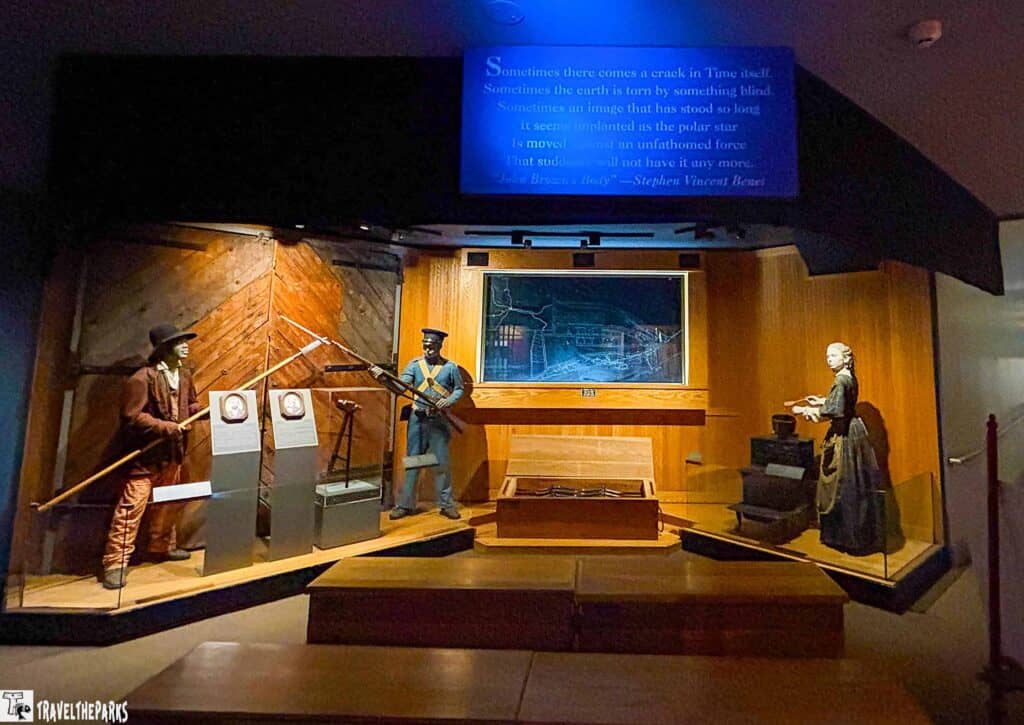
Just across the street is the John Brown Museum, which talks about the 1859 raid as well as the events before and after it. The exhibition also uncovers the background and rise of slavery in the United States. During the raid, John Brown and 18 of his followers took control of the armory. U.S. Marines led by Robert E. Lee attacked the building, killing ten of Brown’s men, who were among the dead, including two of his sons. Brown was taken and later put to death, which led to a dispute in the country and tension between the North and the South escalating to the breaking point.
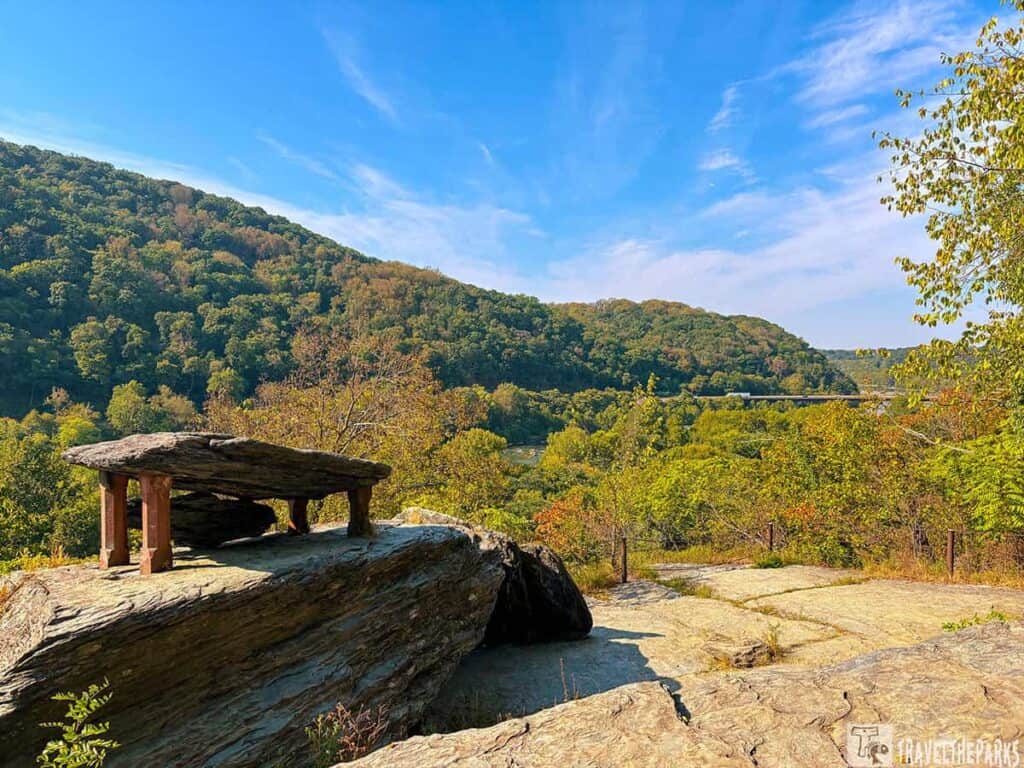
Appalachian Trail: Plan to Jefferson Rock In Harpers Ferry
We just had to check out the famous Appalachian Trail (AT) that goes right through Harpers Ferry. It is one of the most renown long-distance trails in the world, but we didn’t have time to hike the whole trail. So we only stopped by the Appalachian Trail Conservancy Headquarters to get maps and find out more about the 2,190-mile route of the trail.

We were able to have a short walk along the AT to Jefferson Rock, which is only 0.25 miles. The trail passes by two historic churches on the way, adding a little local history to the scenery. The trail is very short, but the view from the top is amazing. This is where the Potomac and Shenandoah Rivers confluence meets. Being there is like being in a painting. The rivers are coming together below, and it is very obvious why Thomas Jefferson referred to it as “one of the most stupendous scenes in nature.”
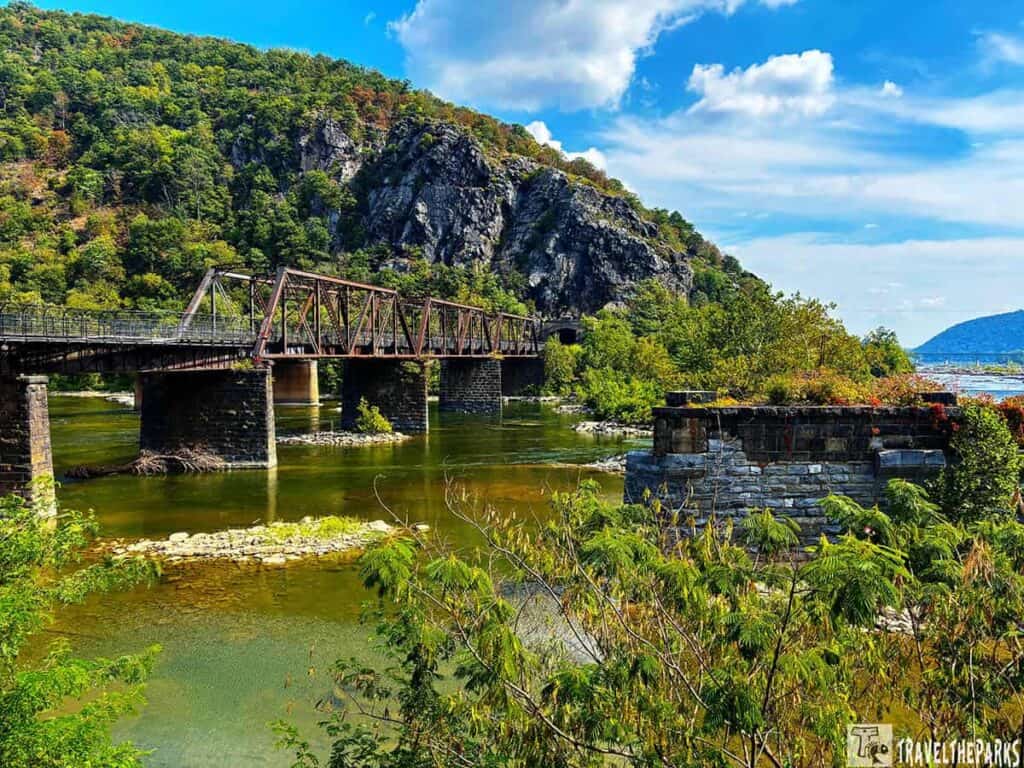
Capture the Iconic View of “The Point”
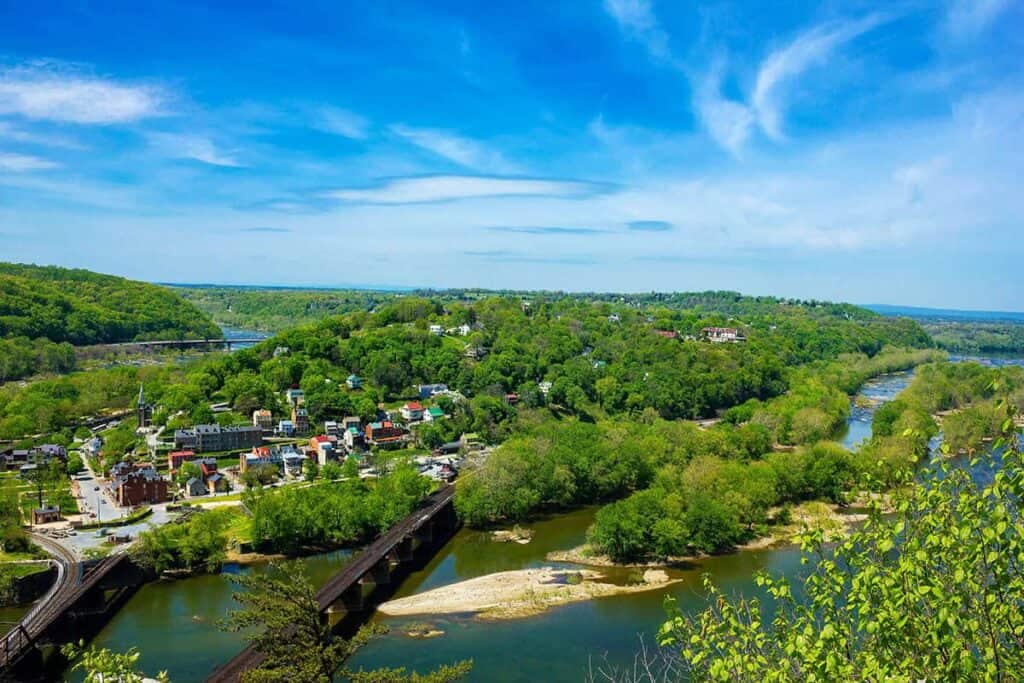
This is the photo we’ve been waiting for! We made the short walk to the very tip of the town, where the Potomac and Shenandoah rivers converge. The sweeping panoramic view of the water, bridges, and surrounding cliffs is absolutely breathtaking and explains the town’s strategic importance at a glance.
Hiking Harpers Ferry: A Day Trail Itinerary
As part of our trip to Harpers Ferry, we decided to hike some of the amazing trails that they have there. Harpers Ferry has several trails that enable you to enjoy nature and also offers some beautiful vistas. We started with the Maryland Heights Trail, which is a strenuous 3.5-mile hike. It was definitely worth it, as we could view amazing panoramic vistas of the Lower Town, and the Potomac and Shenandoah Rivers. On the hike, we passed the remnants of Civil War fortifications, including artillery positions used to defend Harpers Ferry during the war. Remember to bring water, snacks, and sturdy shoes—the rocky descent can be tough on knees.
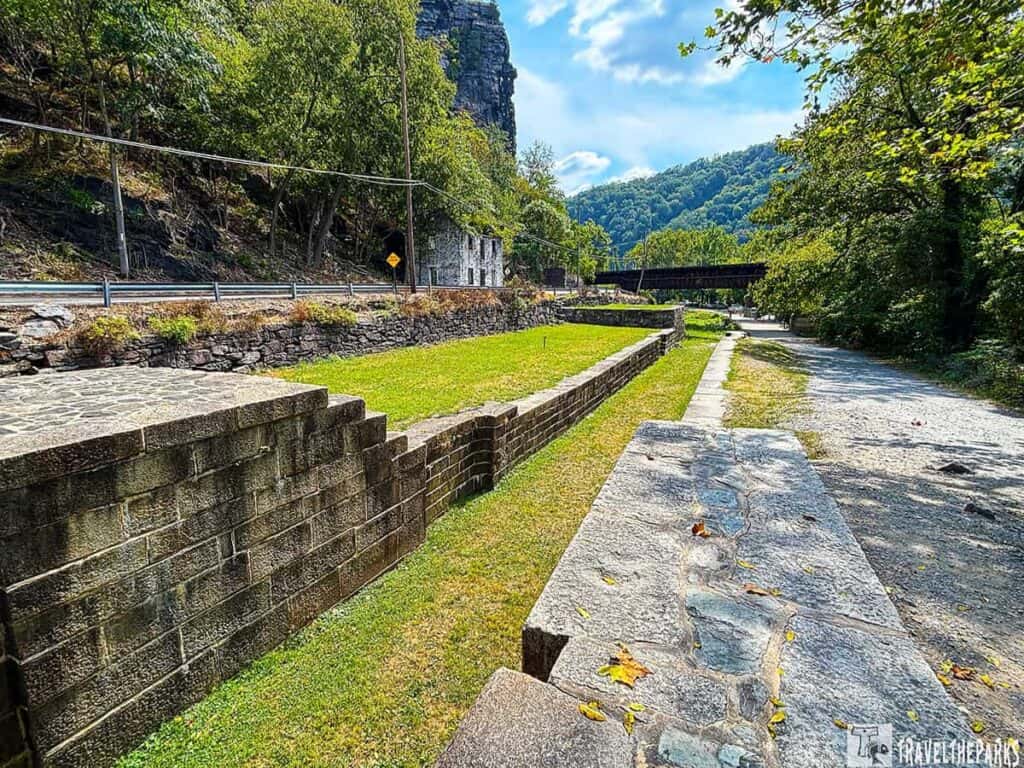
- We also got to climb a section of the Loudoun Heights Trail. This 7.5-mile trail provides magnificent views of the Shenandoah Valley and Potomac River basin. We started our trek from the river access parking lot. We made it as far as the first overlook before having to turn back.
- We enjoyed walking across the historic B&O Railroad Potomac River Bridge, where we got amazing views of the rivers and the surrounding landscape, which led us to Maryland’s C&O Canal. If you prefer a less active day, you can walk along the Chesapeake & Ohio Canal Towpath. It’s a scenic and flat trail, perfect for a leisurely walk or bike ride along the river.
Harpers Ferry Self-Guided Driving Tour
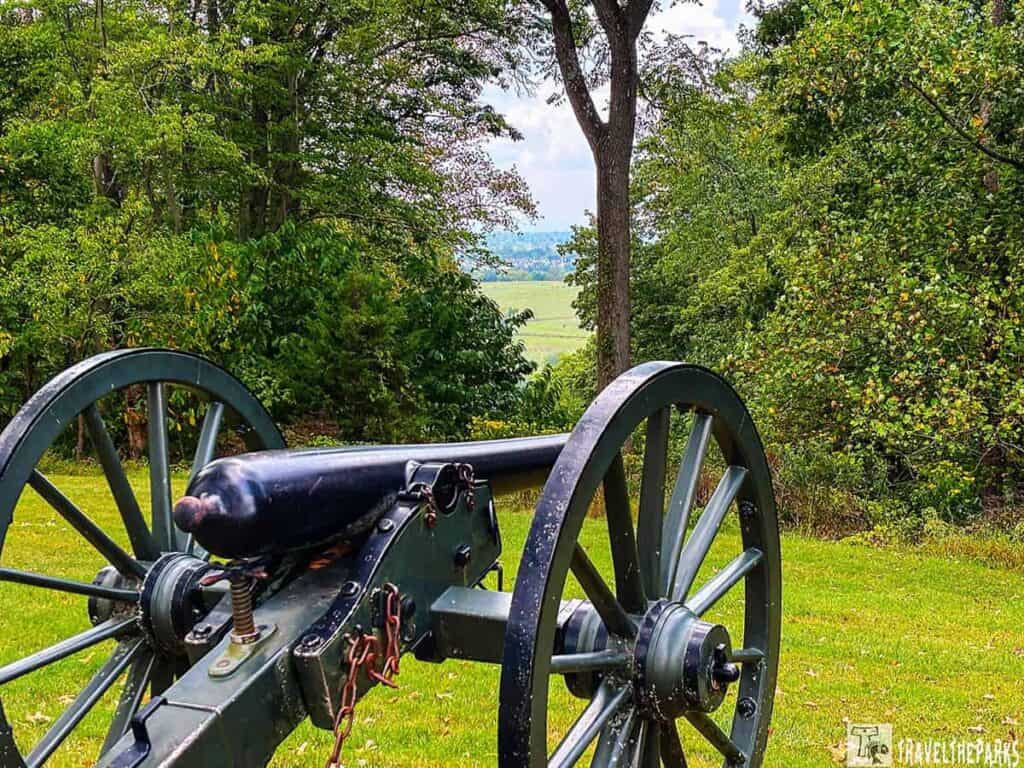
If time is not on your side or you are going to explore by RV, then the self-guided driving tour would be the best option for you to see the historical Harpers Ferry’s highlights without the need to get out of your car. Following the route, these are the major stops:
- Bolivar Heights: With the view of the Shenandoah River and Lower Town, here was the site of several Civil War battles. Interpretive signs help bring the past back to life.
- Schoolhouse Ridge North: Presently, Confederate General Stonewall Jackson used this point to locate his troops during the 1862 siege. Take a picture and get a bit of the history here.
- Murphy-Chambers Farm: This charming farm was taken during the war and can still reveal some earthworks and cannon placements. Besides its long history, it is a very calm place.
- Camp Hill: Camp Hill which had been the place for Storer College during the past, is Harpers Ferry’s Civil War history connected with the after-war period of education and civil rights through this area.
Aside from the opportunity of stopping at each of the places, the route gives you the chance to see wide views of the rivers, the town, and the hills around which indeed let you feel how important from a strategic point of view was Harpers Ferry.
A Guide to Riverside Adventures in Harpers Ferry
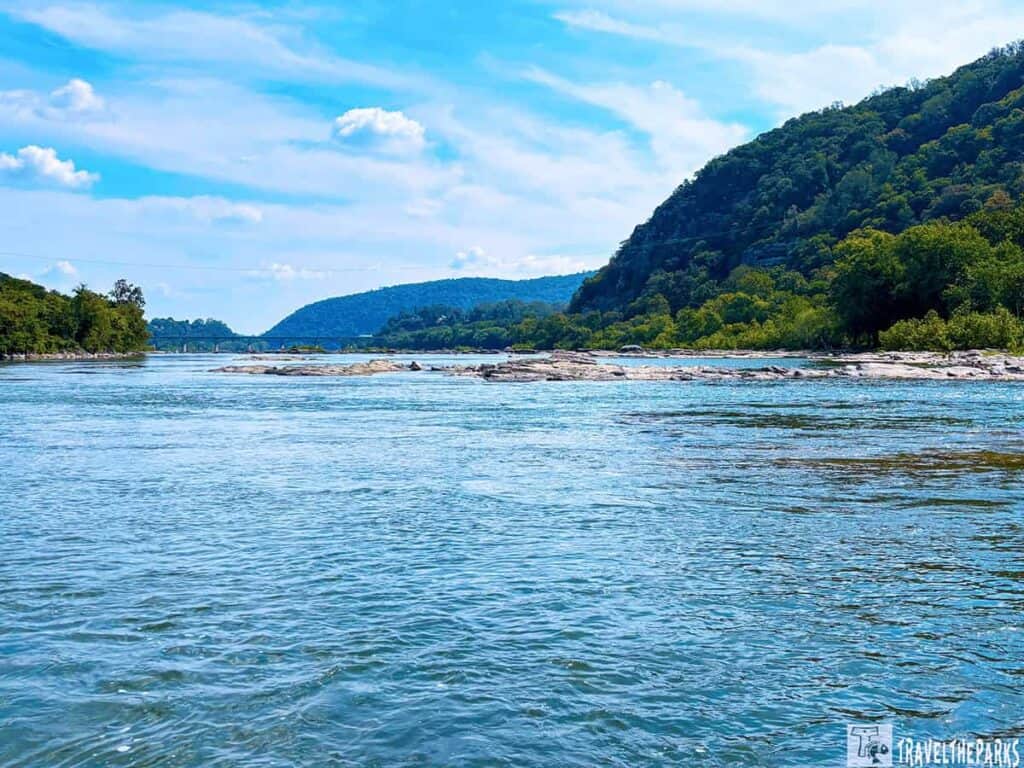
Definitely, one cannot come to Harpers Ferry and not go for the outdoor activities. The Potomac and Shenandoah rivers form a natural playground that is perfect for water-based activities.

Our one adventure goal was to tackle the heart-stopping whitewater rapids on the Potomac. We had heard rave stories about how the bends and twists in the river ensure a unique rush. However, during our fall visit, we found the water levels were not high enough to ensure a safe yet thrilling run. Nature has thus reminded us who’s boss on these adventure rides truly are, and we have scheduled that rush to when the river could give us a better run.

When we travel, we enjoy renting kayaks. This way we can appreciate the scenery and do some fishing. To satisfy our love of fishing, we spent some time on the riverbank. We caught a few smallmouth bass from the Shenandoah River. If you want to spend time on the river, there are local outfitters nearby that provide tubing, kayaking, and rafting equipment for both the Shenandoah and Potomac Rivers. Harpers Ferry is a magnificent spot for countless outdoor activities.
PRO TIP: Pair outdoor adventures with historical deep dives for a well-rounded Harpers Ferry experience. Don’t miss golden hour from the B&O Bridge—it’s pure magic!
Where to Enjoy Local Dining and Treats in Lower Town-Harpers Ferry
After spending the day walking through history, hiking to overlooks, and soaking in the charm of this little riverside town, we were more than ready to eat-and Harpers Ferry did not disappoint.
We kicked off with a true local favorite. We highly recommend Cannonball Deli, a local favorite with a laid-back vibe and a fun bit of history behind its name. Casual, affordable, and full of character. This is the place where gyro sandwiches and pizzas can really hit the spot. The staff make you feel like you have been coming there for years. On a nice day, get a table outside and take in all the action of Lower Town.
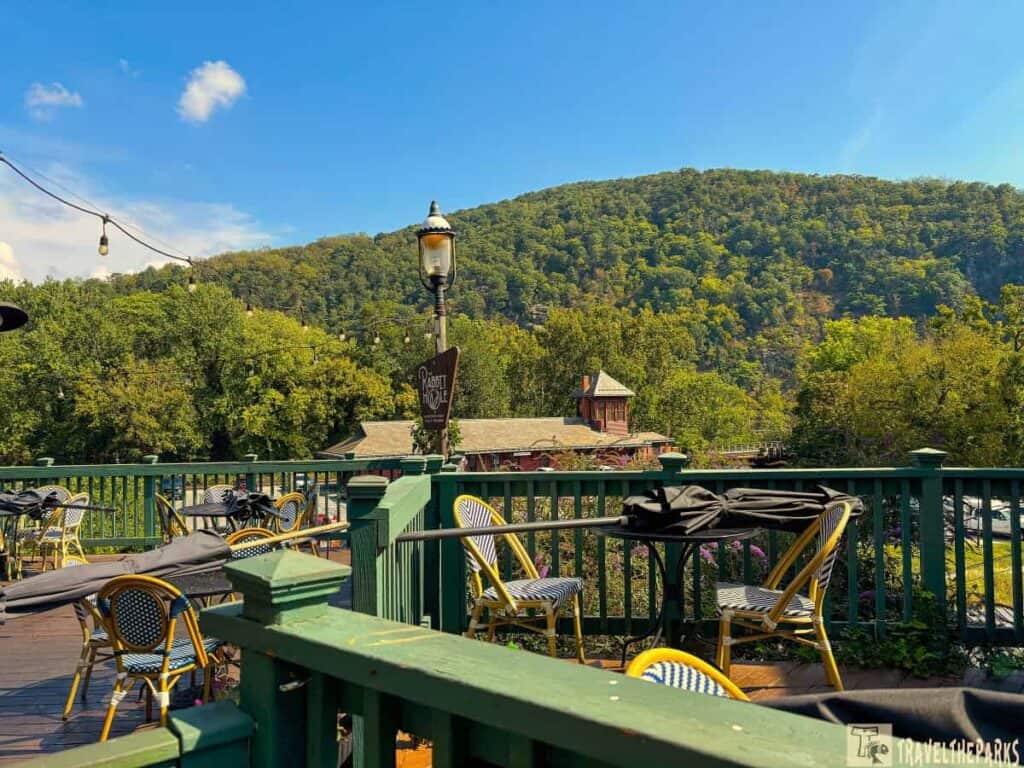
Just a few strides down the road, The Rabbit Hole Gastropub provides an entirely different atmosphere-a cozy tavern with creative comfort food, craft cocktails, and a balcony overlooking the river. It’s a great place to end up after a long day of exploring. The view itself is worth it, but the burgers and truffle fries don’t hurt either.

And one of the most interesting dining experiences for Harpers Ferry has got to be Isabella’s Pizza & Subs, a restaurant set up inside a historic red railway caboose. Just up the road near the tracks, this is a very fun stop for lunch or a casual dinner, especially if you’re traveling with kids or just love unique finds along the roadside.

If you have a sweet tooth-and who doesn’t?-pop into True Treats Historic Candy. It’s half candy shop, half time machine: shelves stacked high with sweets from various eras, ancient honey drops to Victorian chocolates. A perfect mix of history and sugar rush, we left with far more “souvenirs” than we planned.
Nearby Attractions to Add to Complete Your Itinerary
- Antietam National Battlefield (20 minutes away): Visit the site of the bloodiest single-day battle in U.S. history.
- Charles Town, WV: Tour historic sites like the Jefferson County Museum or try your luck at Hollywood Casino.
- Shepherdstown, WV: A quaint college town with boutique shops and the Contemporary American Theater Festival.
What to Bring: Come prepared for a great day by packing the essentials. Bring plenty of water and energizing snacks for your adventures. Wear comfortable walking shoes and dress in weather-appropriate clothing, as exploring the park involves a fair amount of walking. Finally, be sure to have your smartphone with the NPS App downloaded for offline access to maps and tours, as cell service can be unreliable, or grab a physical map from the visitor center.

Final Thoughts: Our Guidebook Itinerary for Harpers Ferry National Historic Park
The best Lower Town experience is a relaxed, self-guided exploration. This guide will assist you in uncovering the highlights of Harpers Ferry.
Nowhere else captures America’s historical journey quite like this town. Harpers Ferry is rich in fascinating history and provides excellent outdoor activities for everyone.
By maintaining it as a national park, we make sure that future generations can learn about this significant part of American history. This lovely town is perfect for adventurers and a fantastic place for those looking for a peaceful getaway. If you concentrate your visit on the principal attractions in Harpers Ferry, you’re sure to make unforgettable memories.
Looking for more local travel ideas on the US East Coast? Check out our other blog posts, such as Shenandoah National Park or Antietam.
Did Harpers Ferry steal your heart with its riverside trails and Civil War stories? Share your favorite memories, hidden gems, or tips for future travelers in the comments below!