
Table of Contents
Update August 2026
So I finally did it—took a walking tour of Washington’s monumental treasures last month. And yeah, I get the hype now. America’s capital? Popular for a reason. I just started walking. No big plan. Ended up on this amazing walking tour of Washington DC monuments without even realizing I was doing one.
The National Mall is where everything hits you. I did a self-guided tour of DC’s national monuments because I hate being rushed. Best decision. You stop when you want. Sit on the steps of the Lincoln Memorial. Watch the tourists take the same photo you just took. These are must-see monuments on a DC walking tour for sure but the real magic is how quiet it gets at certain corners.
If you’re thinking about a monument walk in the National Mall, just go. Don’t overthink it. Start at the Capitol, walk west, and let the monuments find you. That’s what I did. No regrets.
This post may contain affiliate links, meaning if you purchase something through one of these links. We may earn a small commission at no extra cost to you! Read the full disclosure policy here.
Noteworthy Memorials: Discovering History, Honor, and Reflection
Some places just hit different. The Lincoln Memorial? Quiet and heavy in a good way. The Washington Monument? Bigger than you think from photos. I took this walking tour through D.C., and honestly, it stuck with me.
You’ll spend most of your time on the National Mall — that long green stretch right in the middle of everything. Pennsylvania Avenue here, Constitution there, Independence Avenue and the Potomac River sort of wrapping around the whole thing. Walking is still your best bet if you really want to feel the monuments. But if your feet give out? Grab a trolley tour. The narrated ones let you hop on and off all day. Also, grab the National Mall App before you go—or print a park brochure from their site. The self-guided trail signs are easy enough to follow, but the app helps when you’re turned around.
Walking tour of Washington DC monuments: What You Need to Know Before You Explore
- Admission Fees: Most of the monuments and memorials in Washington, D.C. are free to visit. That includes the Lincoln Memorial, Washington Monument, Vietnam Veterans Memorial, and World War II Memorial. The one exception? If you want to go to the top of the Washington Monument, you’ll need a timed ticket. Reserve it ahead of time or grab it at the ticket office—but the grounds themselves are always free.
- Hours of Operation: Most monuments and memorials are open 24/7. A few, like the Washington Monument, keep set hours (typically 9 AM. to 5 PM.).
- Accessibility: Most memorials are wheelchair accessible, though some areas can be tricky—especially during crowded times. Always check specific facilities before you go.
- Public Transportation: Getting to the National Mall and surrounding monuments is easy. The Smithsonian Metro Station drops you right near many of the main sites, and buses are available if you’re covering longer distances.
- D.C. weather keeps you guessing. Summers can be brutal. Winters are cold and sometimes snowy. Every time we’ve visited, we’ve needed our Storm Jacket because of those sudden heavy rains. Check the forecast before you head out for your walking tour of Washington DC monuments—or just pack a jacket to be safe.
When’s the best time to hit up the DC monuments?
Spring and fall. Easy. April through June, then September to November.
Why? The weather’s actually nice—not that sticky, sweaty summer mess D.C. is famous for. And fewer people. Way fewer.
Here’s a trick nobody tells you: go early morning. Like, sunrise early. Or late evening after dinner. The monuments are practically empty then. Plus, they light everything up at night, and it’s gorgeous. Honestly, I liked the Lincoln Memorial better at 10pm than at noon.
Summer? Ugh. June to August is a zoo. Hot, crowded, long lines. You’ve been warned.
If you’re planning a walking tour of Washington DC monuments (and you should), pick May or October. You’ll thank me later.
Stop 1: Monument walk in the National Mall – Discovering the Heart of Washington, D.C
If you have kids, consider a Ranger-led activity as they are free too. I love my NPS Passport Books. However, the Junior Ranger booklet has a page to put stamps on 8 of the monuments or just use the park brochure or a blank paper. The bookstore or information center at each location has the National Park Passport Cancellation Stamp.
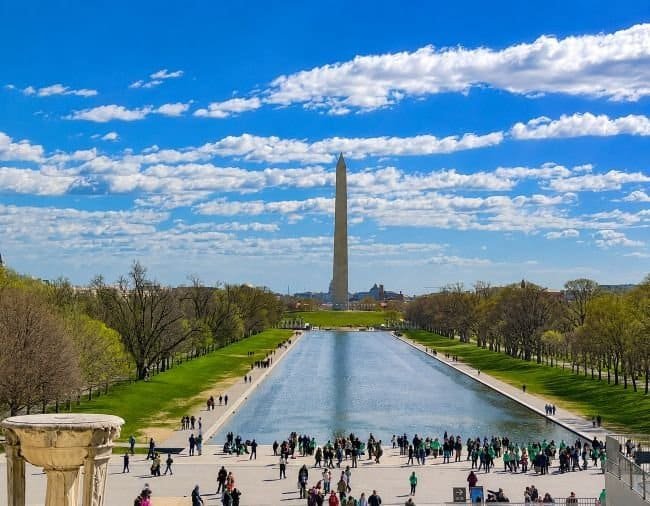
So here’s where you start your monument walk in the National Mall—right in the middle of everything. The Mall is basically this giant green strip, runs about two miles. And on either side? Monument after monument. The big ones. Start by looking way out toward the U.S. Capitol. Pretty incredible view. Then just start walking toward the Washington Monument. You can’t miss it—that giant white obelisk thing. It’s basically the city’s logo at this point.
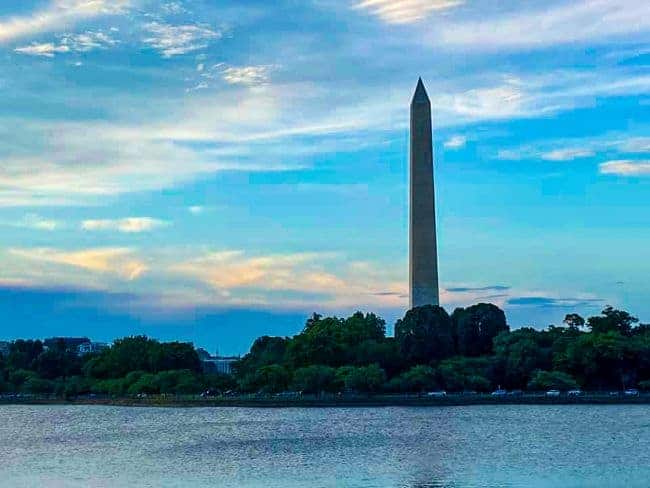
Stop 2: The Washington Monument
So, the Washington Monument? It’s the big one. You’ll see it from basically anywhere on the Mall.
Here’s the deal—they started building it way back in 1848. Then the Civil War happened. Money ran out. So everything just… stopped. For years. They finally finished the thing in 1884 and dedicated it the year after.
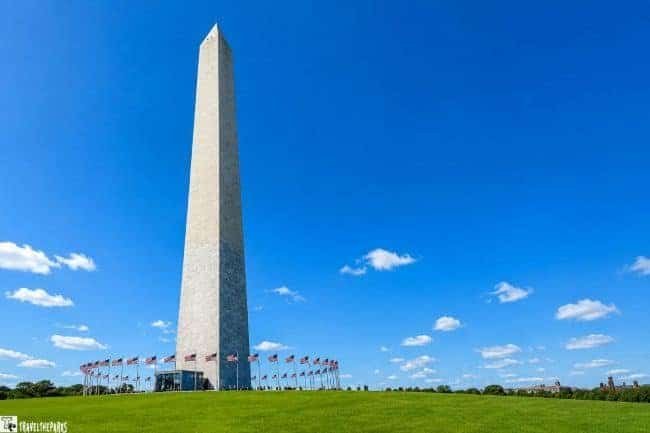
A few quick facts:
It’s 555 feet tall. Well, 555 feet and 5⅛ inches if you want to be exact. One of the tallest things in D.C., no contest.
They built it to honor George Washington—first president, obviously.
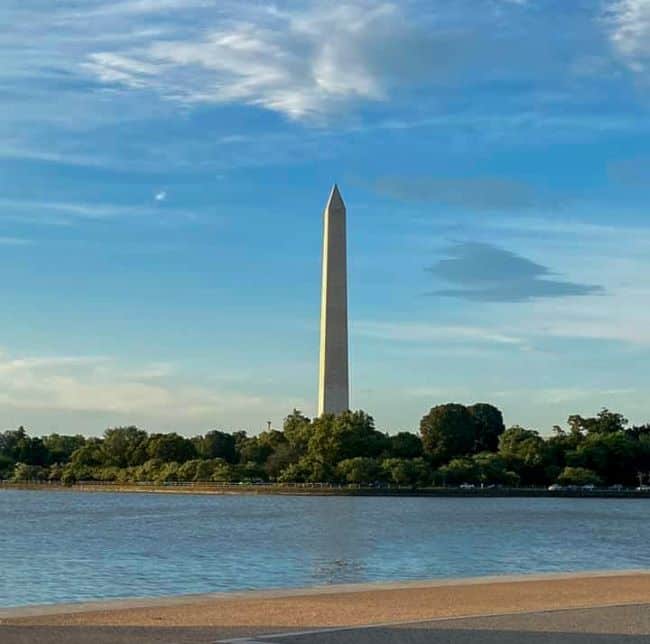
Going up?
You’ve got options. There’s an elevator that takes you 70 feet up to an observation deck. Great views of the Tidal Basin up there. Or if you’ve got the legs for it? 896 steps. Your call.
From the top, you can see the reflection pool. The water shimmers. Makes for a solid photo.
Hours & tickets: 9 AM. to 4:45 PM. daily. You’ll need a reservation — grab one online at Recreation.gov.
Over the years, this monument has become an icon. You’ll understand why when you’re standing under it.
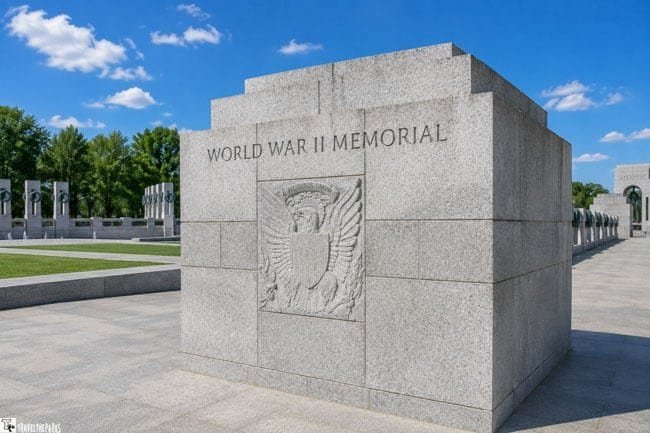
Self-guided tour of DC’s National Monuments—Stop 3: World War II Memorial
This one hit me differently.
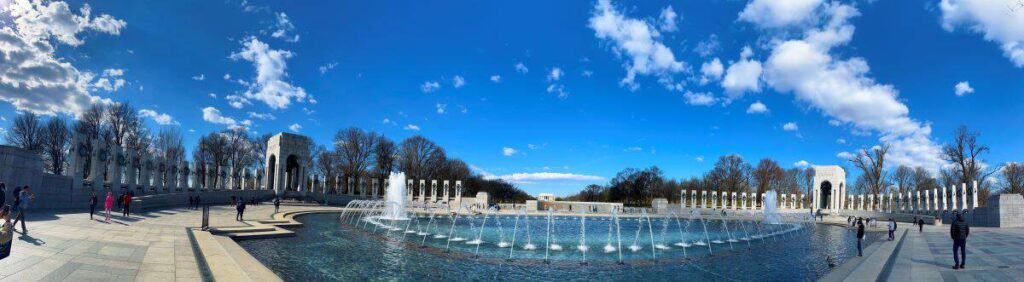
The World War II Memorial opened in May 2004 — pretty recent compared to the others on the Mall. It honors the 16 million Americans who served. And over 400,000 who never came home.
Yeah. 400,000.
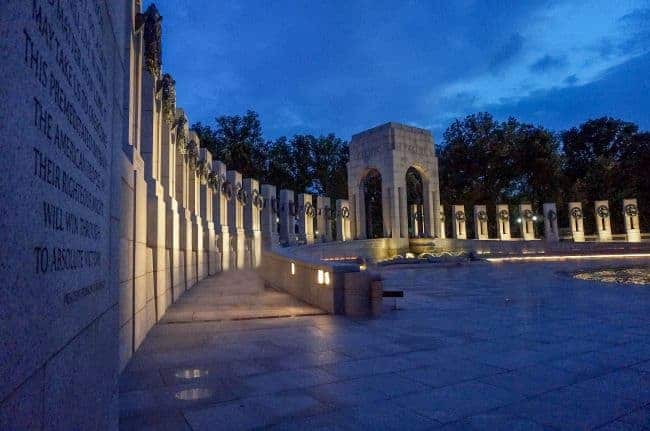
You walk through it, and you feel it. The designers knew what they were doing. There are 56 pillars arranged in a semi-circle—one for each state and territory back then (48 states plus eight territories). Then you’ve got these two big arches, 43 feet tall, one for the Atlantic victory and one for the Pacific.
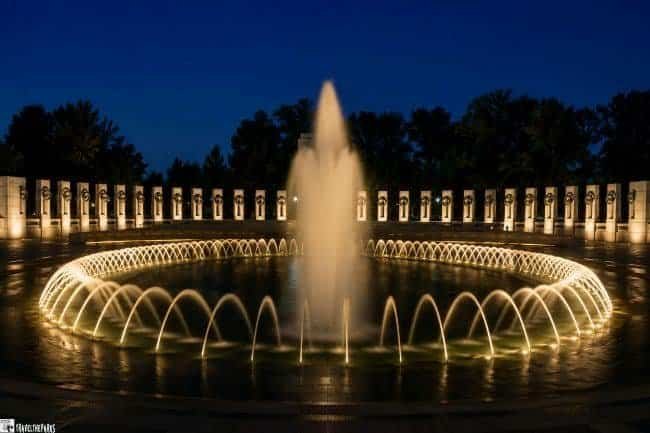
In the middle? A fountain. Quiet. Peaceful. At night they light it up and it’s gorgeous.
But the part that got me was the Freedom Wall. Covered in gold stars — over 4,000 of them. Each star represents 100 American lives lost. So that’s 400,000 people.
Right there on the wall, it says: “Here we mark the price of freedom.”
You read that and you just… stop. No joke, I stood there for a while.
People call them “The Greatest Generation.” After seeing this memorial? Yeah. I get why.
Stop 4: Vietnam Memorial—Wall of Faces: Honoring Heroes and Their Stories
This one is quiet. Really quiet.
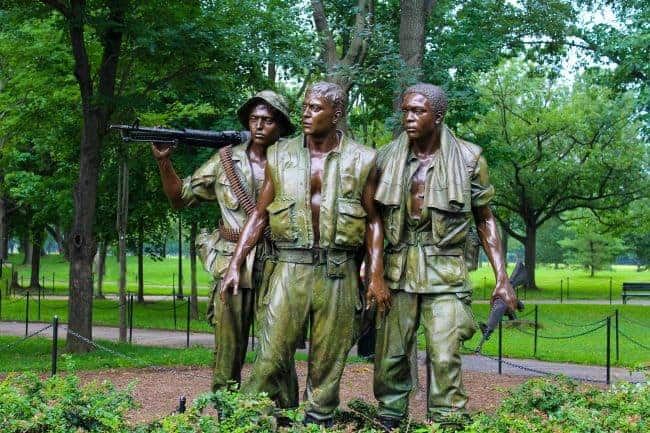
The Vietnam Veterans Memorial honors the guys who served and the ones who didn’t come home—plus the ones still missing. Over 58,000 names. All carved into two black granite walls.
Here’s something you might not know: a college student designed it. Maya Lin was 21. Just a kid, really. Yale. She won a national competition. Can you imagine? They dedicated the memorial in 1982, and now it’s one of the most visited spots in D.C.
The walls form a V-shape. One end points toward the Lincoln Memorial. The other points toward the Washington Monument. I don’t think that was an accident—like you’re standing between two giants, remembering the ones who got stuck in the middle.
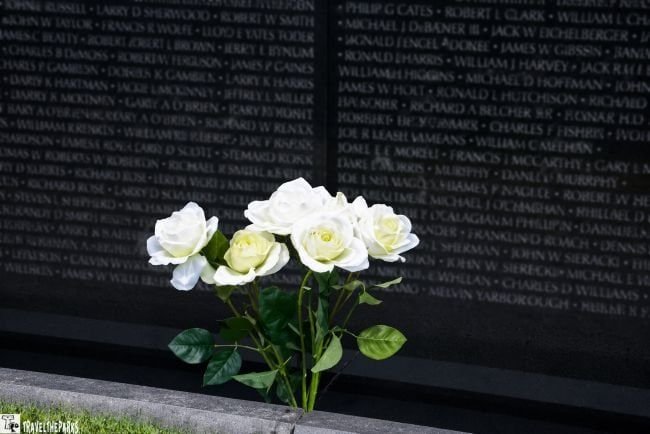
The names aren’t random. They go in chronological order by the date each person died or went missing. There’s a directory on site if you’re looking for someone specific.
I’m not gonna lie—this place hits hard. It’s not loud or flashy like some of the other memorials. It just… is. And that’s what gets you. Veterans come here to cry. Families leave notes and flowers, and dog tags. It’s become this place of healing, somehow.
Today, I just stood there for a while. Thinking about all those names. All those lives.
Freedom isn’t free. You already know that. But seeing it written out—58,000 times—that’s different.
Stop 5: Vietnam Women’s Memorial – Honoring the Unsung Heroes
Most people blow right past this one. Don’t.
It’s small. Easy to miss. But it matters.
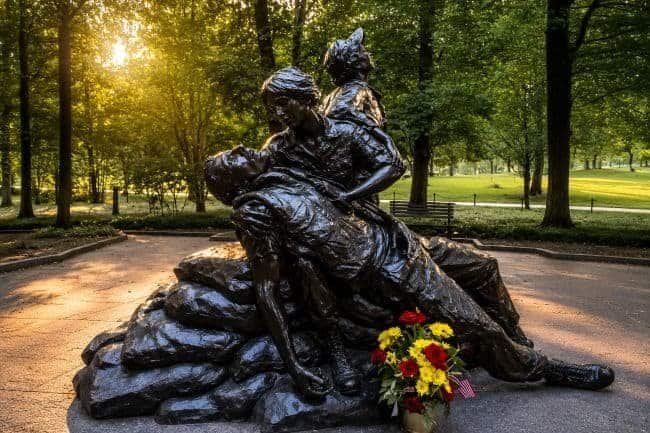
So here’s the deal—the Vietnam Women’s Memorial went up in 1993. Took them long enough, right? The main Vietnam Wall had been there since ’82. A sculptor named Glenna Goodacre did the work. She was from New Mexico. Dunno why, but that stuck with me.
Anyway. You’re gonna see three bronze statues. Life-sized.
One’s a nurse. She’s holding some wounded guy. One’s kneeling, holding a flag—looks devastated, honestly. And the third one? She’s just… staring up at the sky. Like she’s waiting. Hoping someone comes home.
That third one wrecked me a little.
Underneath, on the granite, they carved 265,000 names. That’s how many women served in Vietnam. And eight of them died over there. Eight. Just… eight. Feels like too many and not enough at the same time, you know?
There’s no big speech here. No grand announcement. The memorial just sits there. Quiet. Near the main Vietnam Wall. Together they tell the total story—not just the fighting, but the healing. The waiting. The going home alone.
War isn’t just about the guys with guns. Never was.
So yeah. Stop here. Even for five minutes.
Stop 6: Korean War Memorial – Reflecting on the Past, Remembering the Heroes
This one surprised me.
Not gonna lie — I didn’t know much about the Korean War before I got here. Kinda embarrassing to admit. But this memorial? It teaches you without trying too hard.
So here’s the deal. It’s at the southwestern end of the National Mall. They dedicated it in 1995 — July 27th, to be exact. That’s the anniversary of the armistice. The day the fighting stopped. Sort of.
Anyway.
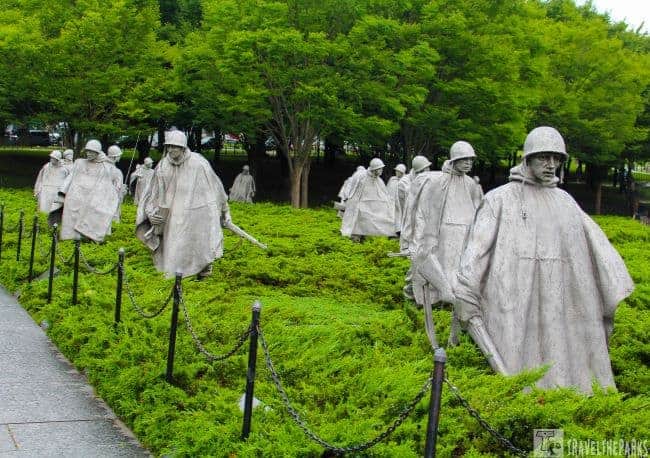
You’re gonna see 19 soldiers. All steel. All over seven feet tall. They look like they’re on patrol — walking through some juniper bushes. It’s this whole scene, not just a statue. Like you walked into their world by accident.
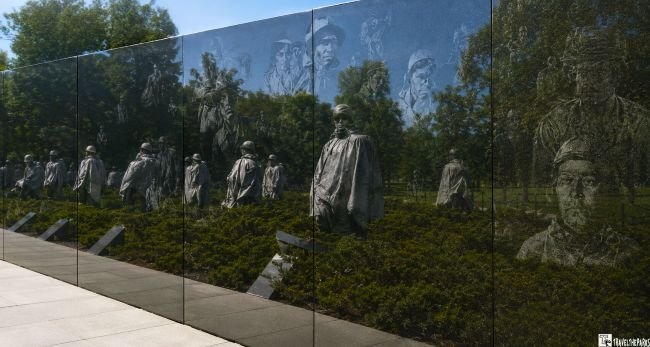
The statues are set up in a triangle. And on one side? There’s this black granite wall. It’s got faces of real soldiers etched into it — not just drawn, but actually sandblasted from photos. You look at those faces and then back at the steel statues and it hits you. These were real people. Not just names on a wall.
The whole thing feels kinda eerie. In a good way. Like they’re still out there. Still walking.
I stood there for a while just counting them. Nineteen. Each one representing way more than nineteen, you know?
If you’re doing a monument walk in the National Mall, don’t rush through this stop. Sit on one of the benches. Look at the reflections in the wall. Let it sink in.
The Surreal Mural Wall of the Korean War Memorial: An Artistic Tribute to Heroic Sacrifice
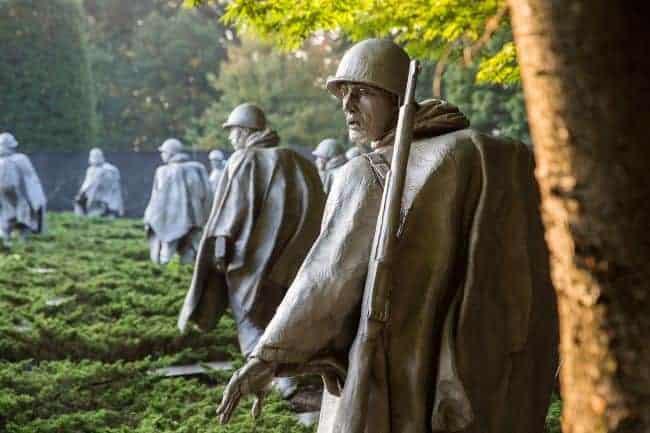
So the statues? Yeah, those get all the attention. But the wall? That’s what got me.
The soldiers—there’s 19 of them, right? Each one represents a different branch of the military. Army. Navy. Marines. You can tell by their gear if you look close.
38 Faces, One Mountain
But here’s the thing nobody talks about: the wall shows way more than 19.
Step back a few feet. Just… back up. You’ll see 38 faces looking back at you. Not statues this time—etched into polished black granite. They’re faint. Ghost-like. That’s on purpose.
Those 38 images? They create a mountain range across the stone. And yeah, that mountain is the 38th parallel. The dividing line. The whole reason we were there in the first place.
What the Wall Tells You
The wall also lists the numbers. Casualties. Missing. Wounded. I won’t rattle them off here—you can read them yourself. But also? 22 country names. The ones who fought alongside us in the UN forces. People forget it wasn’t just America over there.
Korea is called the “Forgotten War.” I’d heard that phrase before. Never really got it until I stood there.
There’s this inscription above the Pool of Remembrance. Three words: “Freedom Is Not Free.”
I dunno. That hit different.
The reflecting pool underneath is quiet. Still. You look at your own face in the water, then back at those 38 ghost faces on the wall. And you realize—they were someone’s brother. Someone’s kid. Someone’s whole world.
This memorial isn’t loud. It doesn’t try to be. But it sticks with you.
Stop 7: Lincoln Memorial – 16th President, One Lasting Impression
End of the mall. Western side. You’ll know it when you see it.
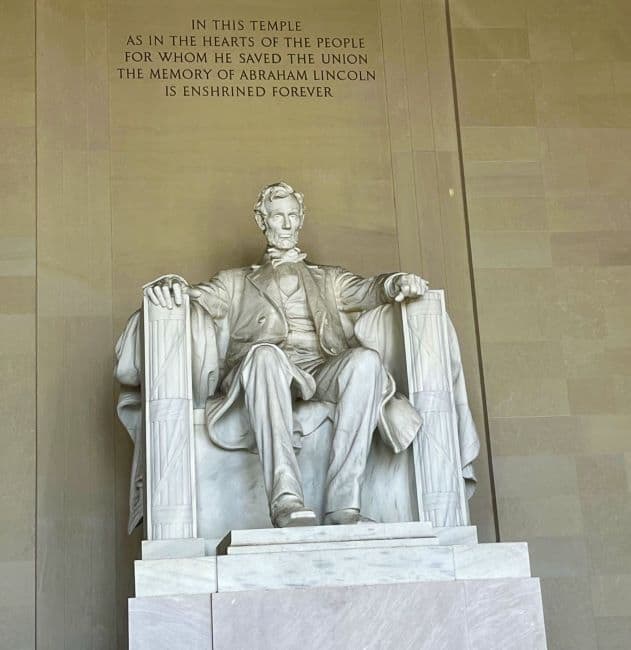
This one’s for Abraham Lincoln. Our 16th president. Dedicated back on May 30, 1922. Been standing there ever since, watching over everything.
Inside? A massive statue. 19 feet tall. Lincoln just… sitting there. Thinking. Or maybe praying. Hard to tell. But his eyes? They’re looking straight out past the reflection pool, all the way to the Washington Monument.
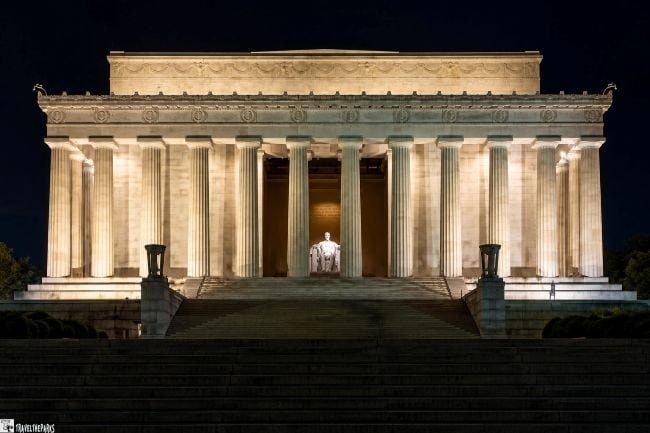
Two speeches are carved into the walls around him. The Gettysburg Address. And his second inaugural address. You’ve probably read both in school. But seeing them carved in stone? Different feeling.
The statue itself is made from 28 blocks of white Georgia marble. Doesn’t look like blocks, though. Looks like one solid piece. That’s the trick.
Directly behind the Lincoln statue is an inscription that reads:

I sat on the steps for a while. Watched people take photos. Kids running around. And then I looked up at his face again. Dude has been staring at that monument for over a hundred years. Wonder what he thinks about all this.
Anyway. It’s a fine tribute. Simple. Strong. Kinda like the man himself.
Stop 8: Martin Luther King Jr. Memorial—A Tribute to a Mountainous Man of Dreams and Change
North of the Lincoln Memorial. Just a short walk.
And then you see him.
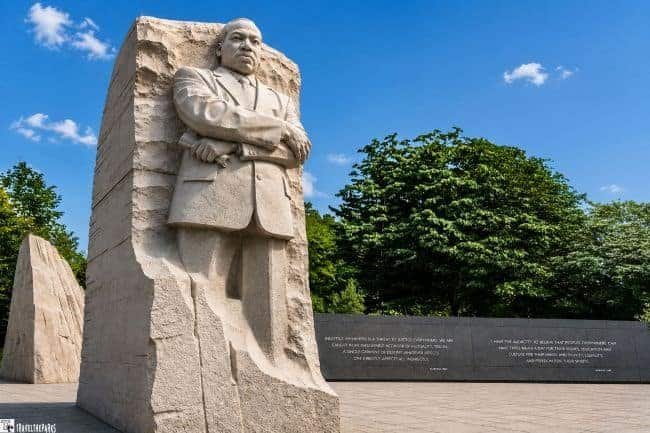
Thirty feet tall. Carved right out of granite. Martin Luther King Jr.—arms crossed, looking out like he’s still got work to do. Because honestly? He does.
They dedicated this in August 2011. Took a while to get it right, but they did. They call the statue the “Stone of Hope.” Comes from that famous line—you know the one. “Out of the mountain of despair, a stone of hope.”
Here’s the cool part. To actually reach the statue? You walk between two smaller white stones first. Like you’re coming through that mountain. Symbolic and everything. I didn’t catch that until someone pointed it out.
King’s standing there facing the Lincoln Memorial. Not an accident. That’s where he gave the “I Have a Dream” speech back in ’63. The March on Washington. Hundreds of thousands of people. And he just… spoke. Changed everything.
Behind him, there’s this big curved wall. The Inscription Wall. Fourteen quotes carved into it—from his speeches, his writings. Not just the famous ones either. Some are quieter. More personal. I stood there reading each one.
He fought to end segregation and discrimination, got arrested but kept going, kept talking, kept dreaming.
The man was mountainous. In every sense.
If you go, don’t just take a photo and leave. Walk through the stones. Read the quotes. Look at his face. Then look over at Lincoln. Two guys, different centuries, same fight.
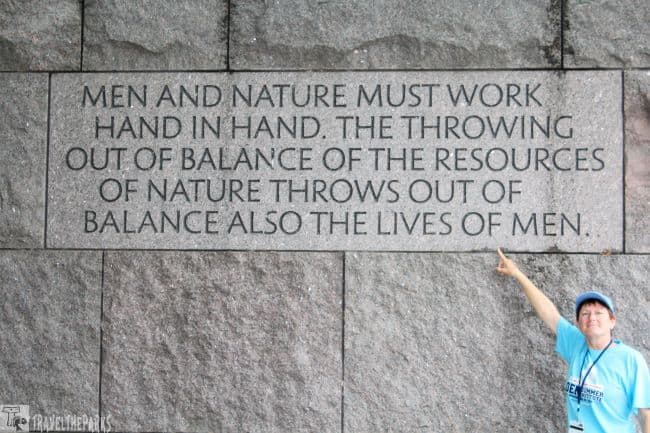
Stop 9: Franklin Delano Roosevelt Memorial – Envisioning the New Deal and Shaping a Nation’s Destiny
West Potomac Park. The famous Cherry Walk. That’s where you’ll find this one.
Dedicated May 2, 1997. FDR. Our 32nd president. Only guy ever elected to four terms. Can you imagine? Four elections.
Anyway.
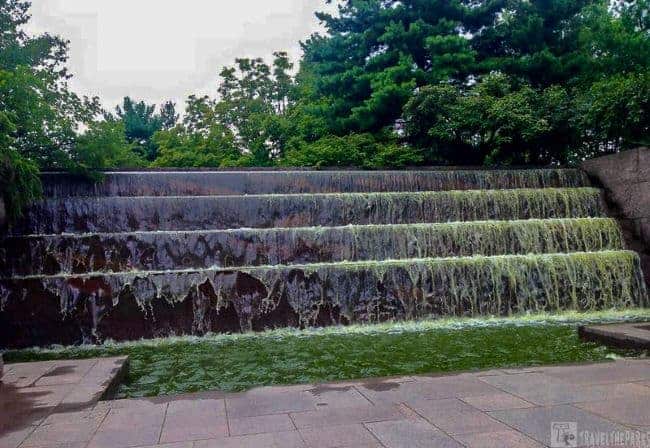
The memorial is split into four outdoor rooms. One for each term. Smart design, honestly. Each room has statues, water features, quotes carved into the walls—all of it meant to feel like a journey. Because that’s what his presidency was. A long, hard journey.
A Walk Through Four Terms
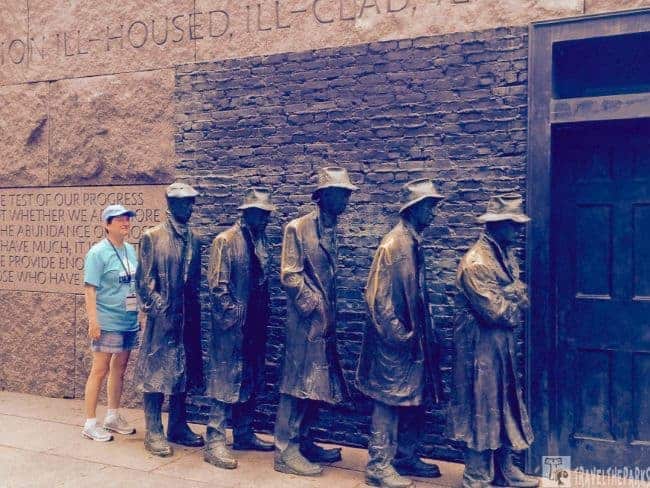
I wandered through all four rooms. Didn’t rush. Some quotes stopped me cold. Others made me think. And the sculptures? They’re not just standing there looking pretty. They show people in line. People waiting. People struggling. That’s the Depression era. You feel it.
What I Learned Standing There
Here’s something I didn’t know before I went—FDR was our longest-serving president. Died in office during his fourth term. Also didn’t know he got polio at 39. A few years before becoming president. The memorial doesn’t hide his wheelchair. It’s right there.
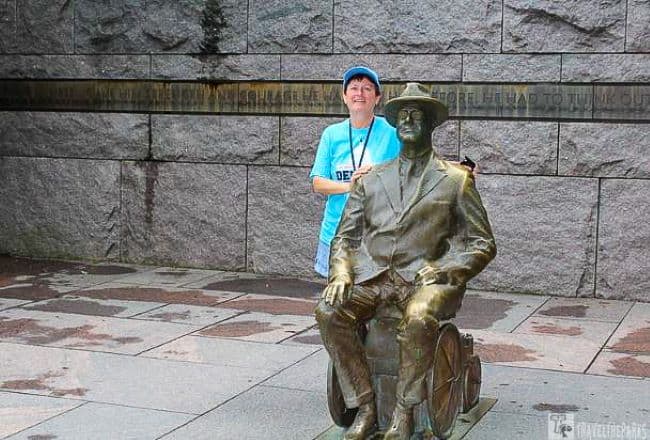
The main room has this huge bronze statue—17 feet tall—of FDR sitting with his dog. Fala. Scottish Terrier. Looked very loyal. Very serious.
And Eleanor? She gets her own tribute, too. Rightfully so.
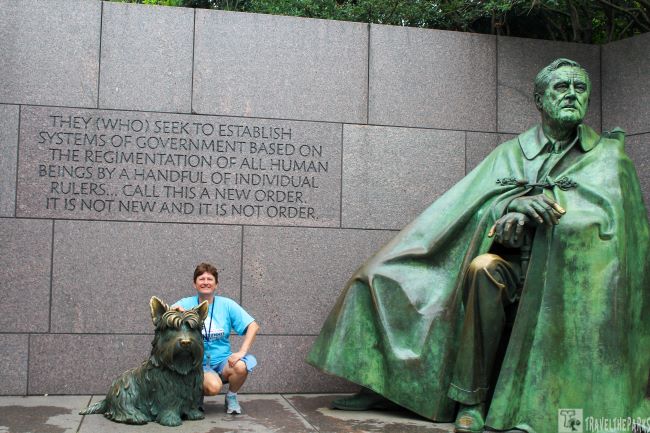
The quotes on the walls… man. You read them and realize how much he carried. The Great Depression. The New Deal. All those programs we still have today—Social Security, unemployment insurance—that came from him. Laid the foundation.
Then World War II happened. Economy bounced back. But FDR’s health didn’t. He died before the war ended.
I stood there for a minute, just taking that in. Four terms. A world war. Polio. A country on its knees twice. And he just… kept going.
Stop 10: Jefferson Memorial – Third President, One Big Legacy
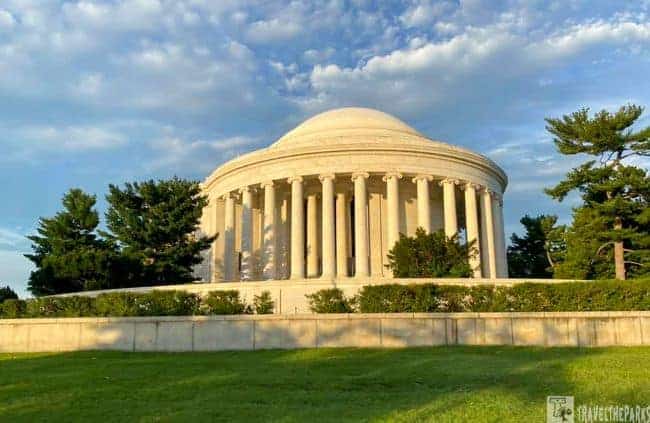
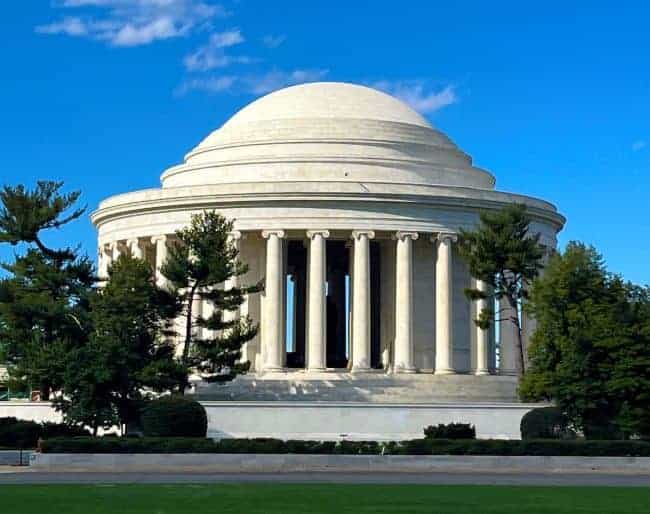
West side of the Tidal Basin. Easy to spot from across the water.
John Russell Pope designed it. Same guy who did the National Archives. Finished in 1943. Middle of a war, and they still found time to build this thing. Guess they wanted it done.
What You See First
Columns. Lots of them. A big domed roof. Looks kinda like the Roman Pantheon. That was on purpose. Jefferson loved that building.
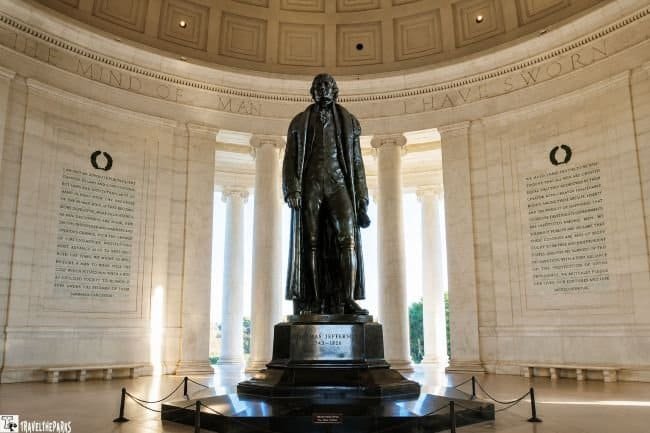
Walk inside and—bam—there he is. Bronze statue. 19 feet tall. Looking straight ahead like he’s got somewhere to be.
Behind him? Quotes on the walls. Famous ones. The Declaration stuff. “We hold these truths to be self-evident.” You know the lines.
Look Up
The ceiling is domed. Painted with murals. Scenes from his life—writing the Declaration, being governor of Virginia, being president. Easy to miss if you’re just staring at the statue. Don’t.
Best Time to Go
Cherry blossom season. No contest. The trees around the Tidal Basin turn pink and white. Hundreds of them. Japan gave them as a gift back in 1912. The memorial looks incredible reflected in the water with all those petals floating around.
Crowded, though. Fair warning.
What I Thought
I spent a good hour just walking around. Reading the quotes. Looking at the murals. Learning stuff I’d forgotten—like how he founded the University of Virginia. Or that he was a total nerd about architecture and farming.
The exhibits inside are worth your time. Not just a statue and go. There’s real context.
Anyway. Third president. Declaration guy. Louisiana Purchase. Complicated guy too—and the memorial doesn’t hide all of it. But standing there by the water? You understand why they built it.l – Third President, One Big Legacy.
Washington Monumental Treasures Honorable Mention: Exploring More Iconic Stops in the Nation’s Capital
There are many monuments and museums that make Washington, D.C. a special place, and each one serves as a powerful reminder of the history and values that have shaped the United States.
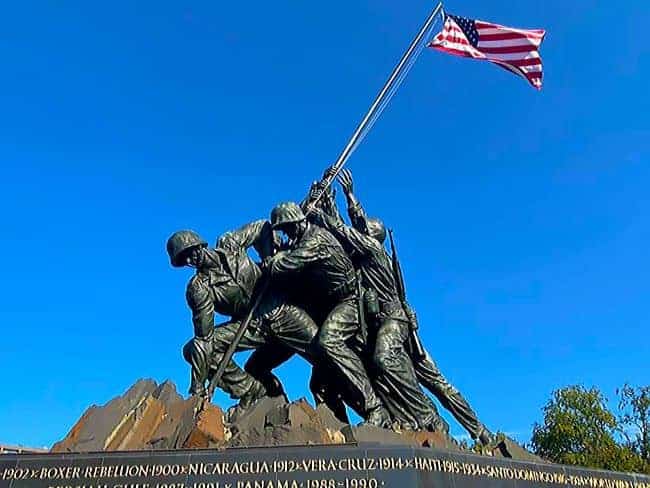
Stop 11: U.S. Marine Corps War Memorial–Honoring Heroes at the Iwo Jima Memorial
The Iwo Jima Monument, also known as the Marine Corps War Memorial, is a military monument in Arlington, Virginia, just across the Potomac River from Washington, D.C. This monument was dedicated on November 10, 1954, the 179th anniversary of the Marine Corps. It has since become a symbol of the bravery and sacrifice of the Marines and all members of the U.S. Armed Forces.
The monument features a bronze statue of six U.S. Marines raising the American flag on Mount Suribachi during the Battle of Iwo Jima in World War II. This statue is based on a famous photograph taken by Joe Rosenthal during the battle. The statue stands 78 feet tall, including the base, and weighs approximately 100 tons.
The U.S. Marine Corps War Memorial is in a prominent position in Arlington Ridge Park, overlooking the National Mall and the Lincoln Memorial in Washington, D.C. It is a powerful tribute to the courage and sacrifice of the Marines, and serves as a reminder of the ongoing commitment to defending the values and freedoms that make the United States great.

Stop 12: Arlington National Cemetery – A Sacred Resting Place of Heroes
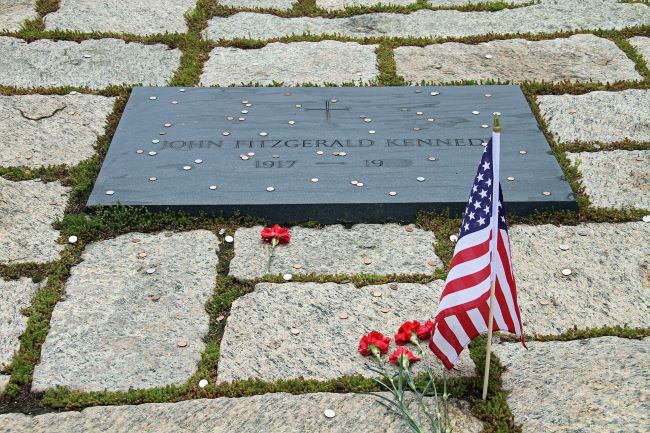
It is our nation’s largest military cemetery and stands as a testament to those who have served our country. What to see? The John F. Kennedy burial, at Robert E. Lee House, and the Tomb of the Unknown Soldier. Memorials in honor of the Space Shuttle Challenger & Columbia Memorials, Nurses Memorial, and many more. Download the app to help you navigate the grounds. You could easily spend a day seeing everything.

Arlington National Cemetery is a United States military cemetery in Arlington County, Virginia, just across the Potomac River from Washington, D.C. The cemetery is the final resting place for over 400,000 active-duty service members, veterans, and their families, and is considered one of the most hallowed grounds in the United States.
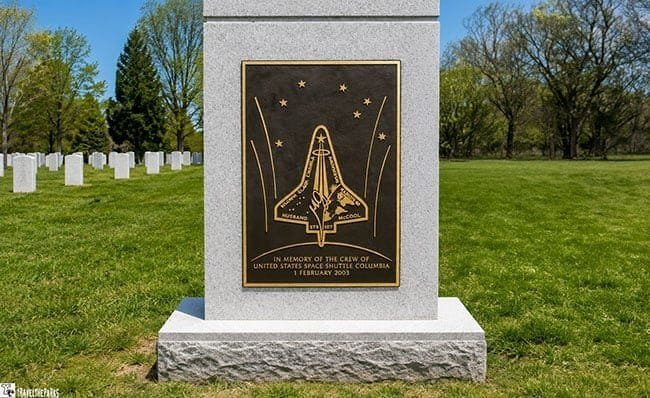
The cemetery was established during the Civil War in 1864 on the grounds of Arlington House, the former estate of Confederate General Robert E. Lee. Today, the cemetery covers 624 acres and is the final resting place for military personnel from all branches of the U.S. Armed Forces, including the Space Force, and their families.
More than Just a Cemetery: The Profound Significance of Arlington National Cemetery
Arlington National Cemetery is also the site of many important memorials and monuments, including the Tomb of the Unknown Soldier, the Memorial Amphitheater, and the Women in Military Service for America Memorial. Visitors can take guided tours of the cemetery, attend wreath-laying ceremonies, and visit the graves of some of the most prominent figures in American military history, including President John F. Kennedy, General George Patton, and Admiral Robert E. Peary.
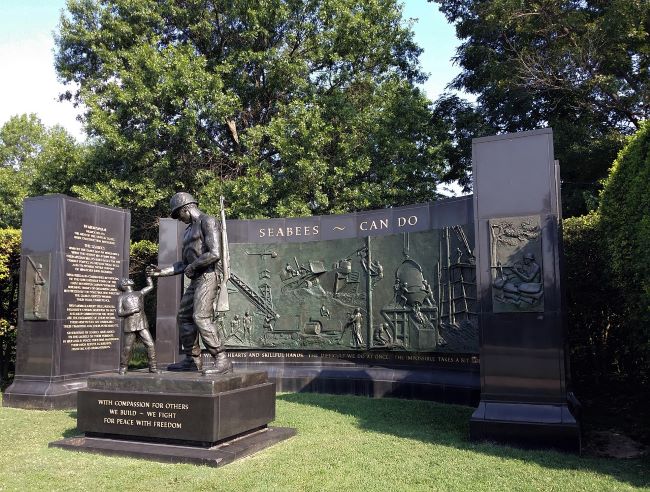
Arlington National Cemetery is a solemn and sacred place, and serves as a reminder of the sacrifices made by those who have served and died in defense of the United States. It is a symbol of the country’s commitment to honoring and remembering its service members and their families.
The Tomb of the Unknown Soldier: A Monument of Unyielding Respect and Honor
The Tomb of the Unknown Soldier is a monument dedicated to the memory of unidentified soldiers who have lost their lives in wars. It is a symbol of gratitude and respect for the sacrifices made by these unknown soldiers and for all who have served and died for their countries. Established in 1921, it signifies all those that did not make it home. The sarcophagus holds the remains of an unidentified American soldier from World War I. They guarded the tomb by the United States Army’s 3rd Infantry Regiment, known as The Old Guard, and the changing of the guard ceremony is a popular attraction for visitors.
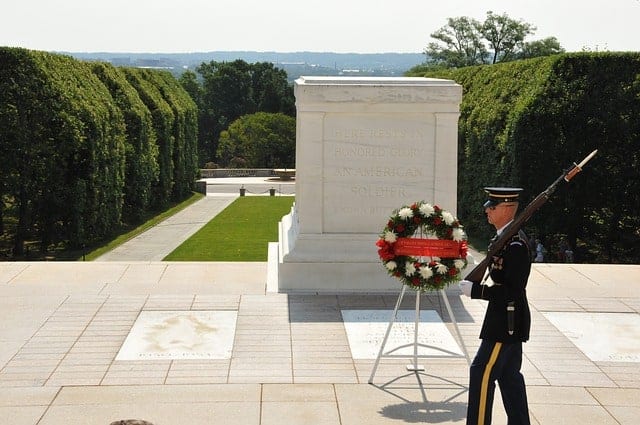
Inscribed on the back of the Tomb are the words, “Here rests in honored glory, an American soldier known but to God.” I paid my respects watching the changing of the guard. The 30-minute ceremony left me feeling emotionally charged.
Whether you agree or disagree with the morality of war, reflecting on another person’s intent makes one question their philosophy. I took a quiet, thoughtful walk by myself to see the Kennedy gravesite and the eternal flame. Robert E. Lee’s house is on the hill above the Kennedy gravesite. Visiting Arlington National Cemetery, you feel grateful to be a citizen in this glorious country. It is a surreal experience.
Stop 13: Smithsonian Institution Museums – Unveiling the World’s Knowledge and Artistry
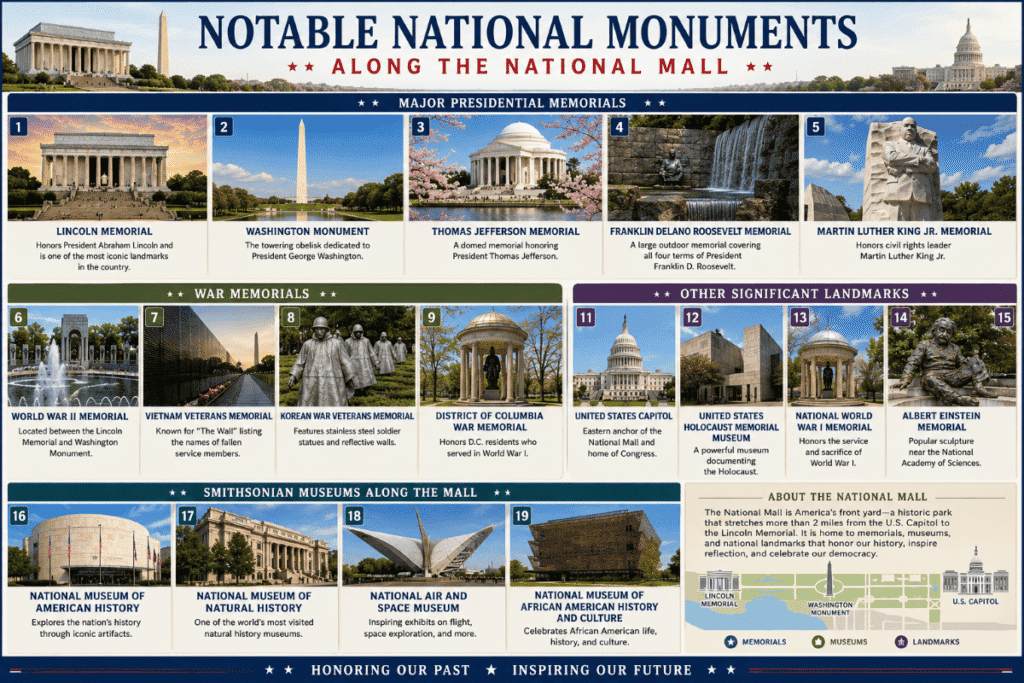
All these museums are popular stops in Washington, DC. The Smithsonian Institution is a group of 17 museums, galleries, and research facilities. The Smithsonian is the world’s largest museum and research complex, and its collections include over 154 million objects, artworks, and specimens.
Admission to all Smithsonian museums is free, and they are open every day of the year except for Christmas Day. They offer a range of exhibits, programs, and educational activities for visitors of all ages.
Unearth the Wonders of Life: Exploring the National Museum of Natural History
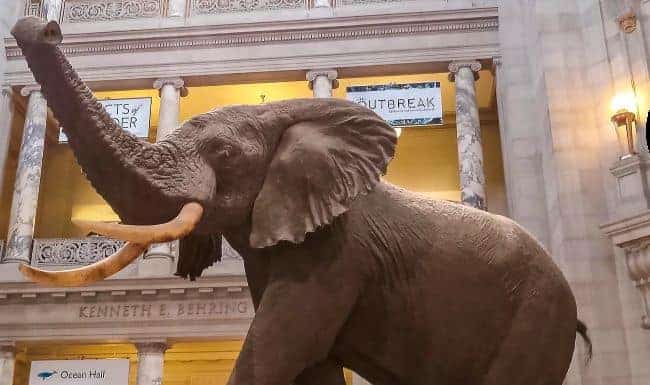
The Natural History Museum is my favorite. Everyone needs to go. It’s free and fabulously educational. It is one of the most visited museums in the world, with over 7 million visitors each year.
The museum’s collection includes over 145 million specimens, artifacts, and specimens related to natural history and the biological and cultural diversity of the planet. Choose from dinosaurs, life in the ocean, forensic anthropology, mammals, human origins, or the many other exhibits. For instance, as an educator, I am passionate about geology. They have a fascinating collection of fossils, meteorites, the Hope diamond, and other rocks & minerals.

The butterfly exhibit is magical. Entering the pavilion, I wandered through the habitat and walked among the butterflies, observing their colorful wings and intricate patterns up close. They designed the exhibit to simulate a tropical rainforest environment, with lush vegetation, a running stream, and a variety of flowers and plants that serve as food and habitat for the butterflies.
Some of the museum’s most famous exhibits include the Hope Diamond, the world’s largest collection of preserved insects, and the Hall of Human Origins, which explores the evolution of humans and their relationship to other primates.
Don’t miss the dinosaurs. Amazingly, these gigantic animals roamed the earth some 67 million years ago. The fully intact 40-foot T-Rex biting into a Triceratops will delight the kids.

These museums have something to offer for everyone: a diverse world of knowledge and discovery
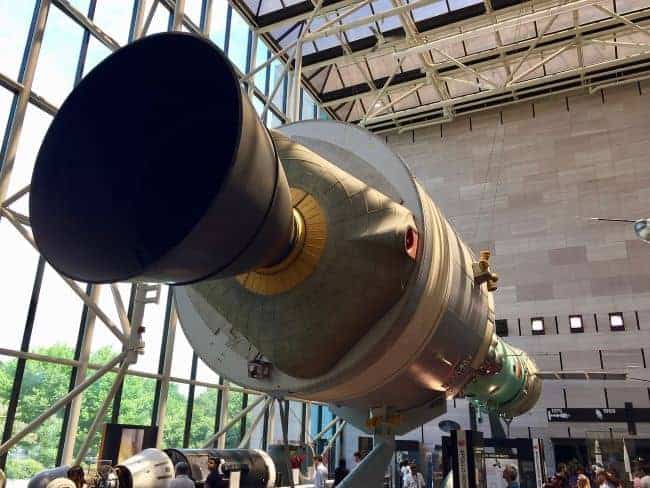
- National Air and Space Museum -you will see the lunar landers, Apollo 11 capsule, Japanese bombers, and the Wright Brothers exhibit.
- National Museum of African American History and Culture-This museum is dedicated to preserving and sharing a rich history and culture of African Americans in the United States.
- Smithsonian American Art Museum–extensive collection of paintings, photos, and sculptures by famous American artists.
- United States Holocaust Memorial Museum-A very eye-opening experience reading on the suffering inflicted and other atrocities.
- National Museum of American History–Transportation, science, pop culture, military, and presidential history all in one place.
- National Museum of the American Indian-historical artifacts that tell the story of the indigenous people.
- National Academy of Sciences– take your picture with the bronze statue of Albert Einstein. Lunch tours are great!
- National Portrait Gallery–The museum’s collection includes portraits of presidents, First Ladies, politicians, artists, scientists, and other notable individuals.
- National Postal Museum-over 6 million objects related to postal history, including stamps, postal uniforms, vehicles, mailboxes, and more.
- Hirshhorn Museum and Sculpture Garden-features a collection of modern and contemporary art, including paintings, sculptures, photographs, and mixed media works.
- Freer Gallery of Art and Arthur M. Sackler Gallery–are important museums that offer visitors a chance to explore the rich artistic traditions of Asia and America through their diverse collections and engaging programs.

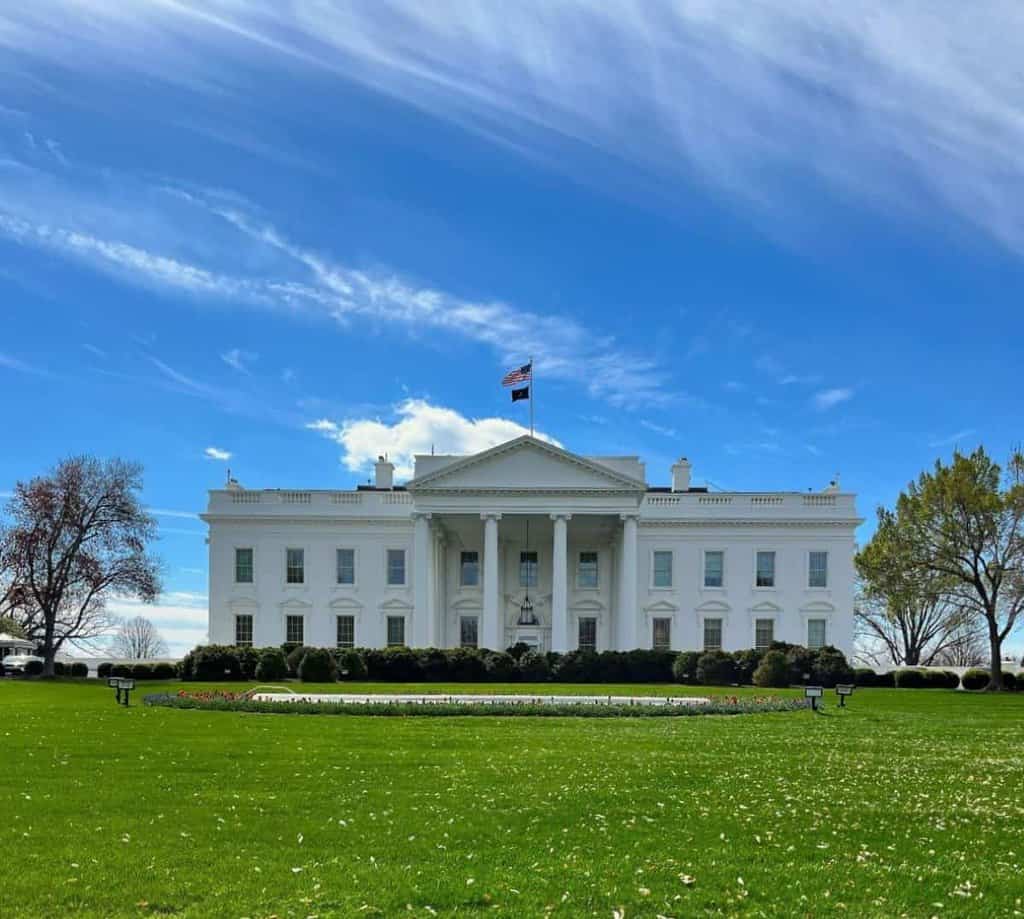
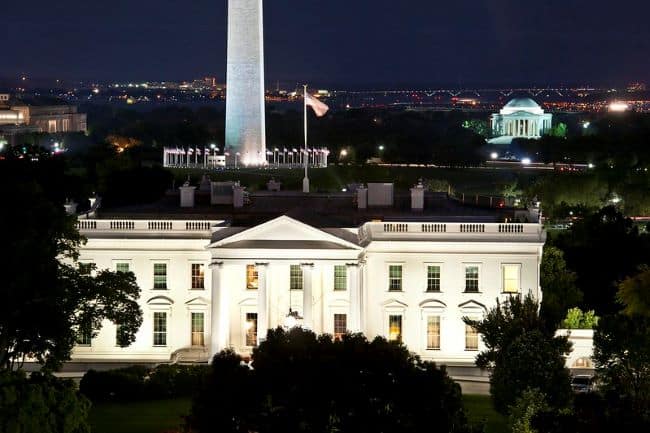
Stop 14: The White House – Presidential Park: A Glimpse into the Heart of American Democracy
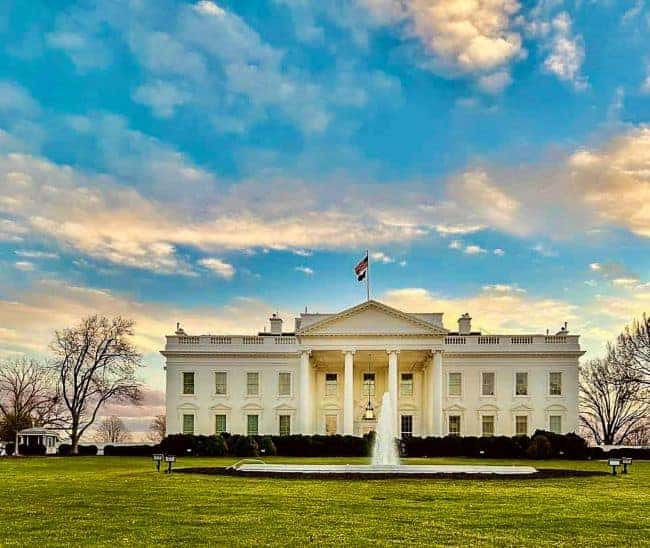
A short walk across Constitution Avenue brings you to this iconic building with its green lawn and garden fountains. The White House is at 1600 Pennsylvania Avenue and is the official residence of the President of the United States. The self-guided tours access the East Wing. You can tour the Blue Room, Red Room, and Green Room; the State Dining Room; and the China Room. Each room has security and secret service. You must place tour requests through your congressional representative or embassy at least 21 days in advance. I recommend submitting the request 90 days in advance if you know you will go to D.C. I wish we had taken the time to plan a tour. Next time!
Stop 15: The US Capitol Building & The National Archives – Where History, Democracy, and Records Unite
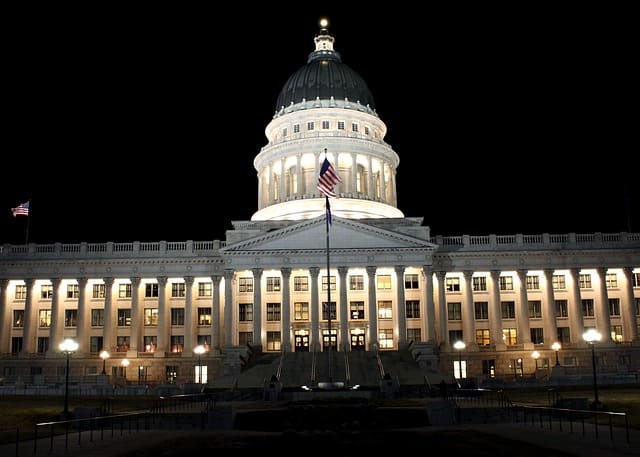
The United States Capitol Building is the home of the United States Congress and the seat of the legislative branch of the U.S. federal government. It is located on Capitol Hill in Washington, D.C., and is one of the most recognizable landmarks in the city.

The Capitol Building was designed by architect William Thornton and was first occupied by Congress in 1800. The building has undergone several renovations and expansions over the years, including the addition of the iconic dome in the mid-1800s.
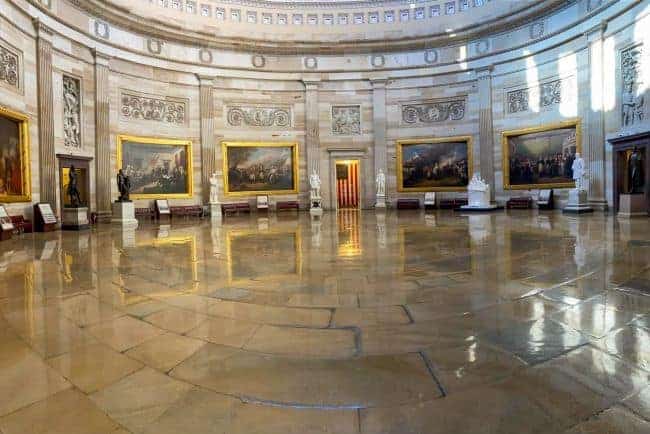
The building features a central rotunda, which is decorated with artwork and statues commemorating important people and events in American history. The building also houses the chambers of the House of Representatives and the Senate, as well as offices for members of Congress and various congressional committees.
The Capitol Building is open to the public for tours, which can be arranged through the office of a member of Congress. Visitors can explore the historic halls and chambers of the building, as well as learn about the history and function of the U.S. Congress. The tours are free and last about 40 minutes. At the visitor center, walk around the museum. Check out all the statues, there are two from each state. You can also walk through the Capitol underground tunnel to the Library of Congress across the street.
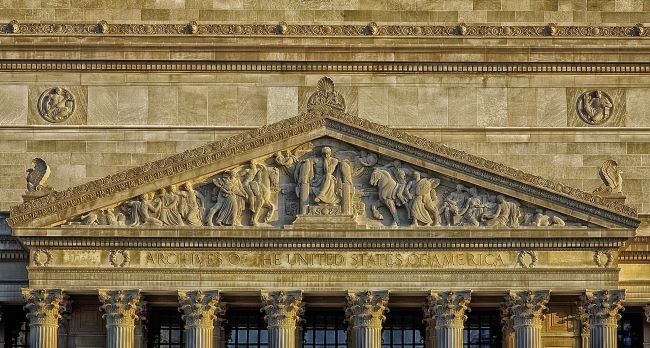
The National Archives – Guardians of the Nation’s Story
The National Archives and Records Administration (NARA) is an independent agency of the U.S. federal government responsible for preserving and providing access to the historical records of the United States. If you want to see the Declaration of Independence, combine this tour with a visit to the National Archives. I recommend visiting on a weekday. Otherwise, you can expect an endless wait.

The National Archives holds records dating back to the founding of the United States, including the Declaration of Independence, the Constitution, and the Bill of Rights. It also houses records related to military service, immigration, naturalization, federal court cases, and more.
Besides preserving and maintaining records, the National Archives provides public access to these records through its research rooms, online databases, and traveling exhibits. Researchers, genealogists, historians, and other interested individuals can access records at the National Archives and at its regional facilities across the United States.

The Library of Congress – A Treasure Trove of Knowledge and Cultural Heritage
The Library of Congress is the largest library in the world and serves as the national library of the United States. The act of Congress established it in Washington, D.C., in 1800.
The Library of Congress houses more than 170 million items, including books, manuscripts, maps, photographs, films, sound recordings, and other materials related to American and world history and culture. The collection is continually expanding through acquisitions, donations, and other means.
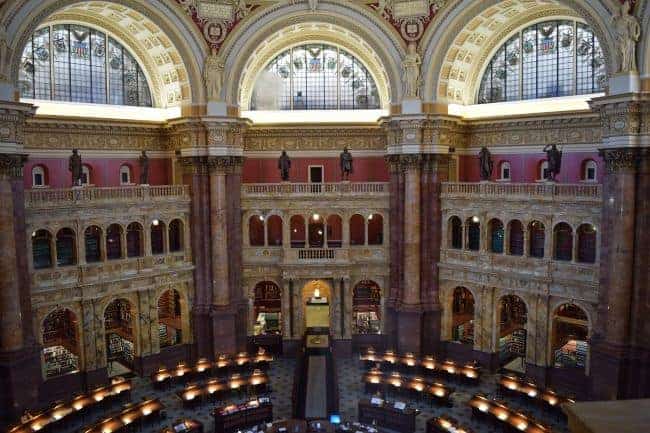
In addition to its role as a library, the Library of Congress is also the research arm of the U.S. Congress and serves as a source of information and research for members of Congress and their staffs. The library’s collection includes materials from all over the world, and its staff of experts can help researchers find and access the resources they need.
The Library of Congress also provides a wide range of public programs, exhibitions, and educational resources. These include tours of the library’s facilities, online exhibits and digital collections, and educational programs for students and teachers.
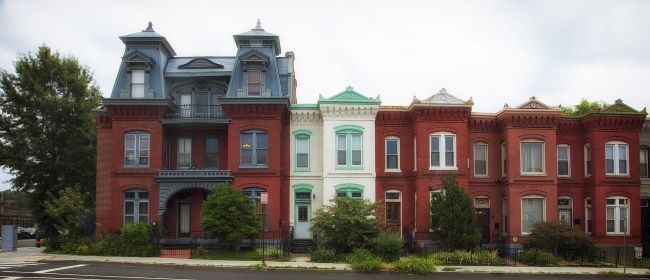
Stop 16: Embassy Row – A Self-Guided Tour of Diplomatic Elegance
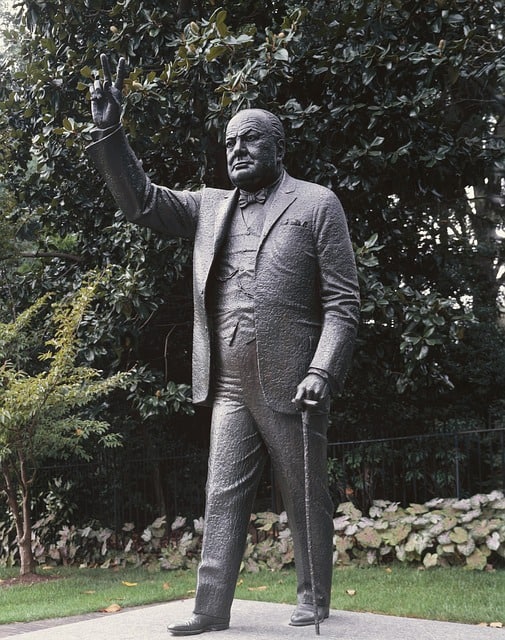
Embassy Row is along Massachusetts Avenue, where delegations of foreign countries are housed. I took this as a walking tour, but be warned, it’s uphill. A few of the embassies are in pretty colored row houses, each building has its unique architecture. These buildings were originally mansions built for millionaires in the 19th century. Some embassies are easier to identify, the British embassy has a statue of Winston Churchill. Another way to identify the countries is by recognizing the flags and the diplomatic license plates.
I am amazed by the sheer number of monuments and historical places there are in Washington, DC. This is an incredible city!! If you get the chance to visit, try to stay more than a day or two. Give yourself time to enjoy world-class dining, chic shopping, and see other historical landmarks.
Note: Shenandoah National Park is an easy day trip from Washington
Important Reminders for Your Monumental Journey in Washington, D.C
- Parking is limited and expensive in the city. The best ways to navigate the city is by walking or taking the Washington Metro.
- Remember to wear comfortable shoes, you will hike a suitable distance.
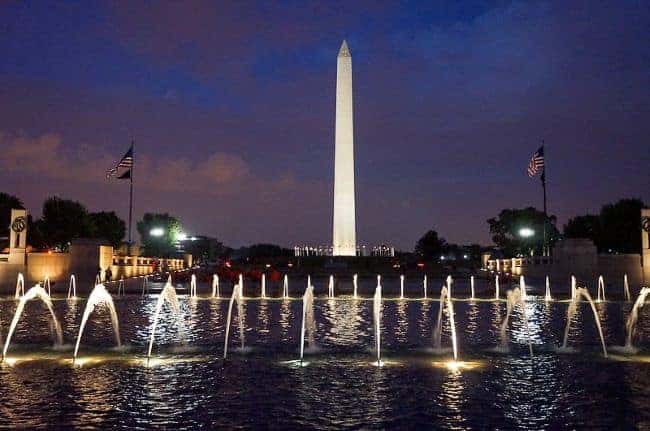
- One of the best times to see the monuments is to visit the National Mall during the evening hours. Since the memorials are open 24/7, why not see them when crowds have usually died down?
- Worried about security? The park is well lit and heavily patrolled at night.
- Do your research ahead of time. If you plan to visit any government buildings, be aware of the security requirements or book tour tickets in advance.
- When to go? If possible, plan your trip in the spring to coincide with the Cherry Blossom Festival. These spectacular trees in full bloom along the Tidal Basin are a sight to behold!!
Final Thoughts on A Walking Tour of Washington’s Monumental Treasures
This is a worthy stop on any East coast road trip. Whether you are with a tour group or solo traveler to Washington, DC, walking the monuments is a must-do for any visitor. In the end, a walking tour of Washington’s monumental treasures is not just a sightseeing adventure—it’s a journey of discovery!
Do you have any tips for things to do in Washington, DC? Please share in the comments below!


Father Vint
I love Washington. The museums are so cool for kids. I found this info brought back good memories thank you for sharing.