Table of Contents
Some road trips are about the destination. This one is about everything in between.
We spent eleven days exploring the Dakotas on a South Dakota and North Dakota road trip, and we quickly realized these two states are far more diverse than we expected. One moment we were standing deep underground inside a cave, and the next we were watching a herd of bison block the road like they owned the place. Along the way, we drove scenic mountain highways, explored historic Old West towns, walked through colorful badlands, and discovered some of the most underrated landscapes in the country.
From the rugged formations of Badlands National Park and the granite peaks of the Black Hills to the sweeping prairie of Theodore Roosevelt National Park, this Dakotas road trip itinerary combines national parks, scenic drives, wildlife viewing, and unique roadside stops into one unforgettable adventure.
This is the exact route we followed over eleven days. Use it as a complete South Dakota to North Dakota road trip itinerary, or customize it based on your own schedule and interests.
Disclosure: This post may contain affiliate links. If you make a purchase through one of these links, I may earn a small commission at no additional cost to you. These commissions help support the blog and allow me to continue creating travel guides. Thank you for your support! Read the full disclosure policy here.
South Dakota North Dakota Road Trip Overview
Before planning this trip, our impression of the Dakotas was pretty simple: wide-open prairie, long drives, and not much in between.
We were wrong.
What we found was an incredible mix of landscapes and experiences—colorful badlands, pine-covered mountains, underground cave systems, scenic byways, historic western towns, abundant wildlife, and some fascinating pieces of American history.
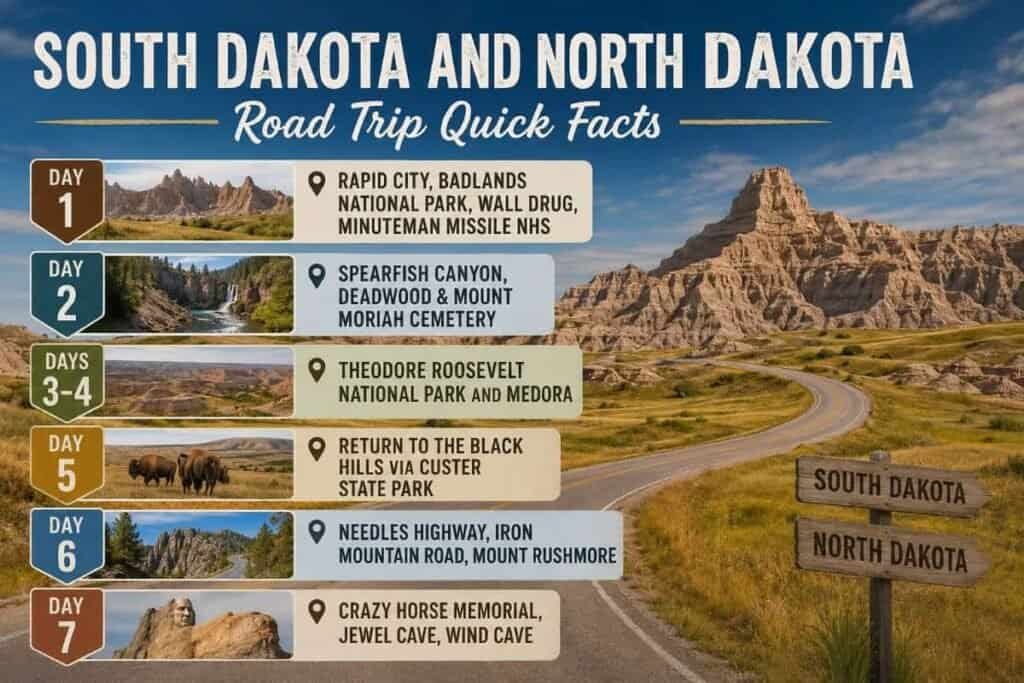
This road trip through the Dakotas follows the route we personally took over eleven days. We used Rapid City as our base for exploring western South Dakota and Medora, North Dakota, as our base for Theodore Roosevelt National Park. This approach kept hotel changes to a minimum while allowing us to experience the highlights of both states without spending every day behind the wheel.
Interactive Dakotas Road Trip Map
Follow our exact South Dakota and North Dakota road trip route with every stop included in this itinerary.
Day 1: Rapid City, Badlands National Park, Wall Drug & Minuteman Missile National Historic Site
Drive time: Approximately 2.5 hours of actual driving (plan longer because you’ll want to stop often).
We began our Dakotas road trip itinerary in Rapid City, which makes an ideal starting point thanks to its airport, restaurants, and easy access to western South Dakota’s top attractions.
Before leaving town, spend some time downtown checking out the life-sized bronze statues of every U.S. president before heading east toward Badlands National Park.
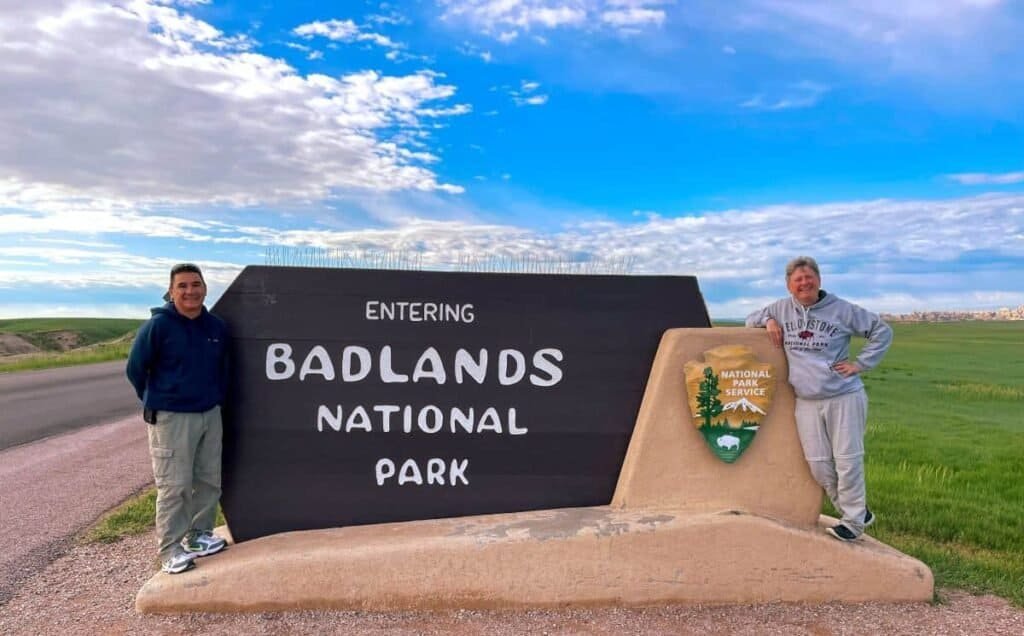
Badlands National Park
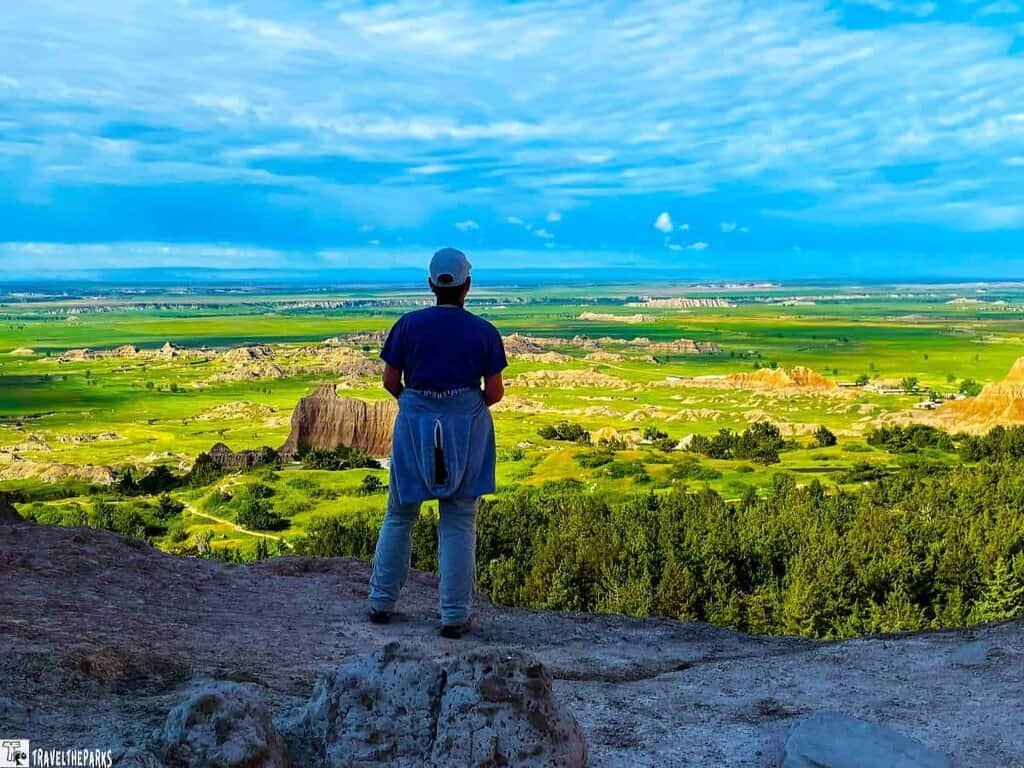
Nothing prepares you for your first view of the Badlands. One moment you’re driving through open prairie, and the next the landscape drops into a maze of striped buttes, towering spires, and rugged canyons.
We found ourselves stopping at nearly every overlook because each one revealed a completely different view.
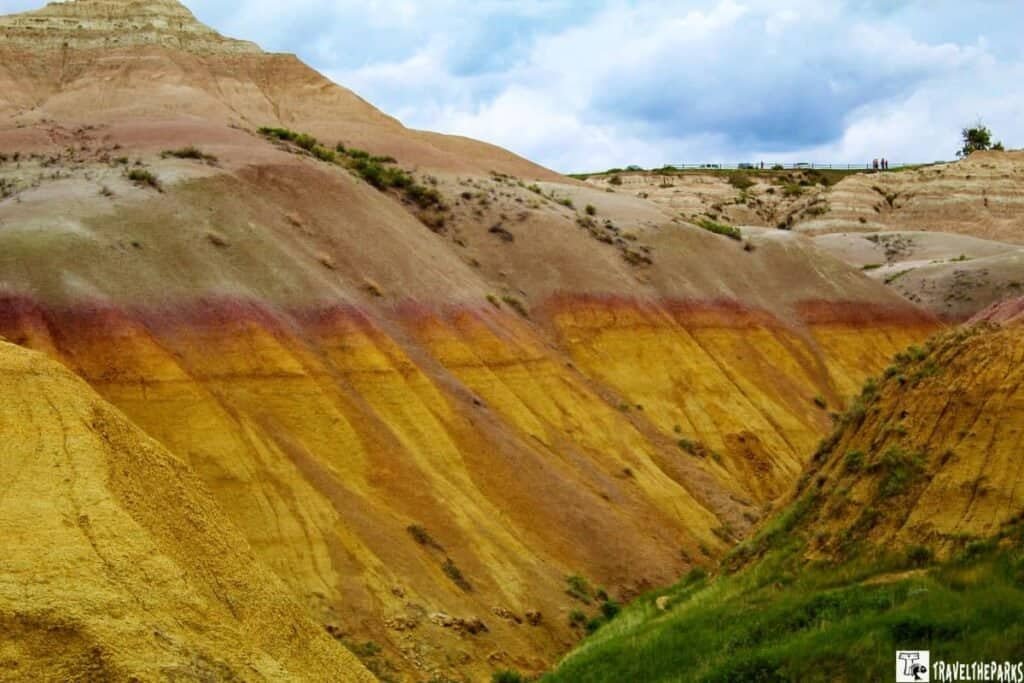
The best way to explore is along Badlands Loop Road (Highway 240), where highlights include Yellow Mounds Overlook, Door Trail, and the Notch Trail. The ladder climb on the Notch Trail was one of our favorite moments, with sweeping views waiting at the top.
The Badlands were shaped over millions of years by layers of sediment, wind, and water. The landscape also holds deep significance for the Lakota people, who called the area Mako Sica, meaning “bad lands.”
Wildlife is everywhere here, so keep an eye out for bison, bighorn sheep, prairie dogs, and pronghorn.
Don’t Miss: Drive the full Badlands Loop Road, stop at Yellow Mounds Overlook, hike the Notch Trail if you’re comfortable with the ladder, and slow down for wildlife sightings.
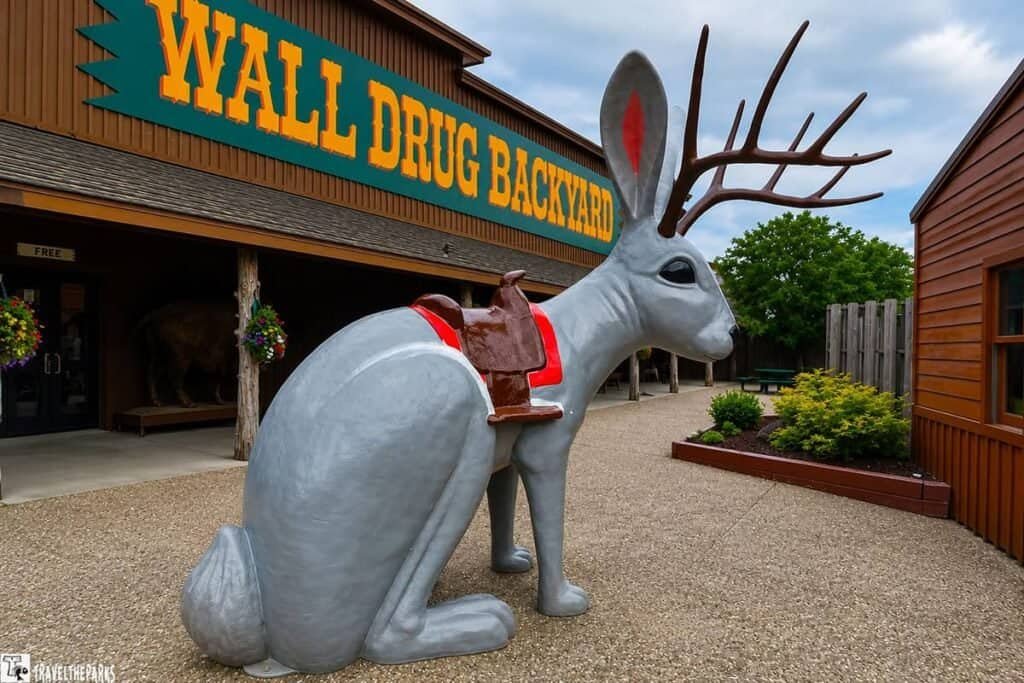
Wall Drug
After leaving the Badlands, follow the signs—and the hundreds of billboards—to Wall Drug.
What began as a small pharmacy offering free ice water during the Great Depression has become one of America’s most famous roadside attractions. Today, Wall Drug is part souvenir shop, part restaurant, part Western-themed museum, and completely over-the-top.
We spent about an hour wandering around, browsing the shops, and enjoying the quirky atmosphere. And yes, the famous doughnuts are worth trying.
Don’t Miss: Grab a coffee, see the giant jackalope, and try the homemade doughnuts..
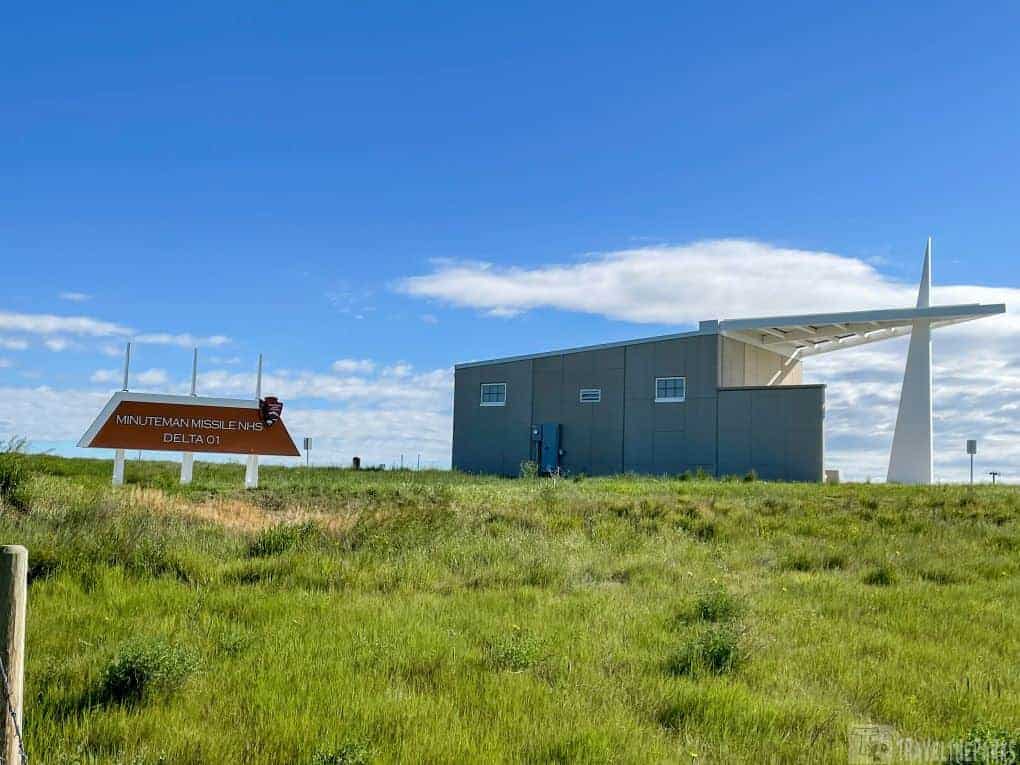
Minuteman Missile National Historic Site
Just west of Badlands National Park, Minuteman Missile National Historic Site offers a completely different experience.
The quiet South Dakota prairie once hid hundreds of nuclear missiles during the Cold War. Today, visitors can explore one of the remaining launch facilities and learn about the decades-long tension between the United States and the Soviet Union.
The Delta-01 Launch Control Facility tour is the highlight. Standing underground where Air Force officers monitored nuclear weapons is a sobering reminder of how close the world came to catastrophe.
Don’t Miss: Reserve the Delta-01 tour early because spaces are limited. Recreation.gov.
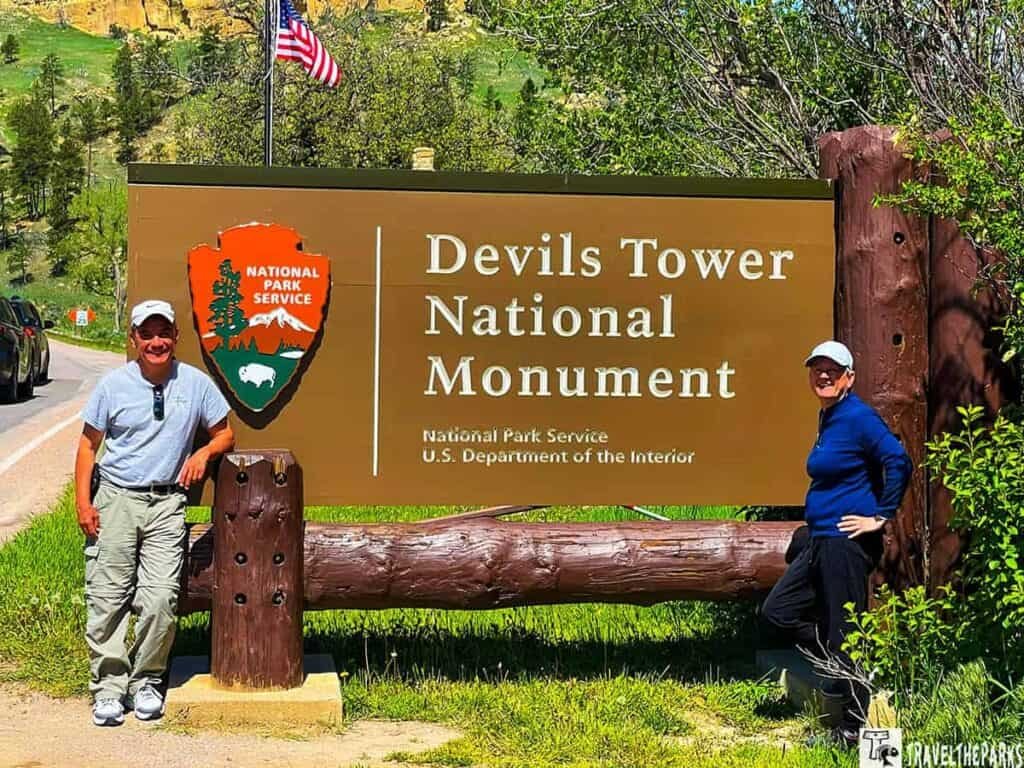
Day 2: Exploring the Black Hills on Your South Dakota Road Trip
Optional Detour: Devils Tower National Monument
Optional Detour: Devils Tower National Monument
Day two takes you from the open prairie into the pine-covered Black Hills, combining one of the region’s most scenic drives with waterfalls, wildlife, and Old West history.
If you have the time, start with an optional detour to Devils Tower before making your way back through Spearfish Canyon and ending the day in historic Deadwood.
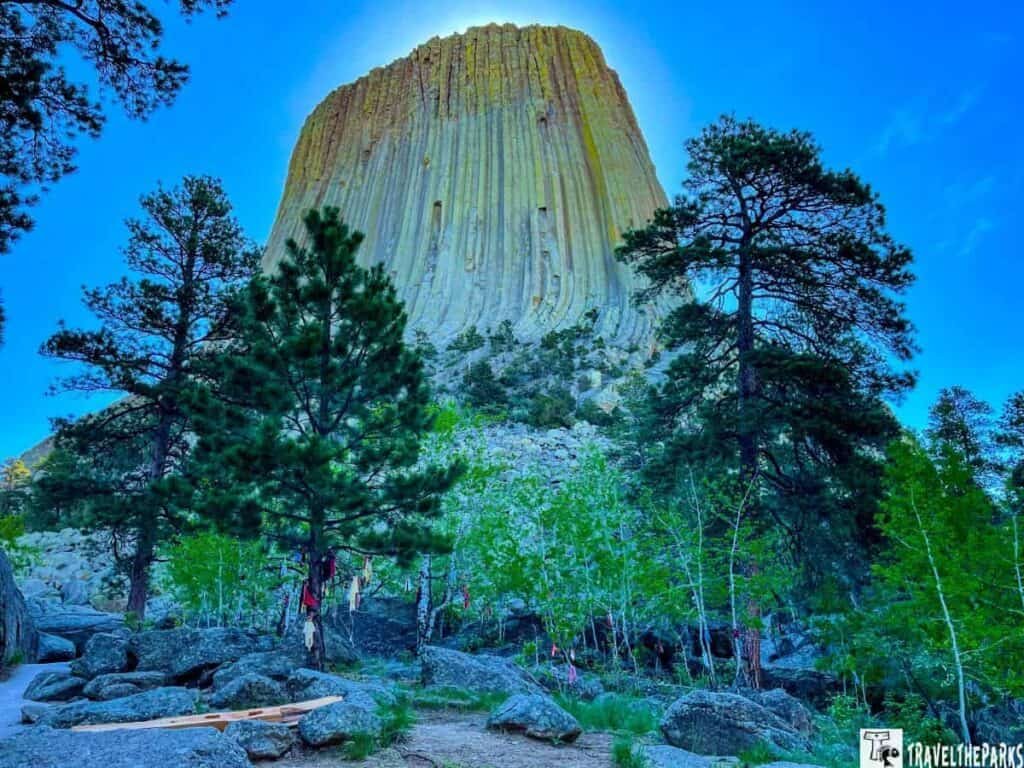
Optional Detour: Devils Tower National Monument
If your schedule allows, Devils Tower is worth the extra drive into northeastern Wyoming. Rising 867 feet above the surrounding prairie, the massive rock formation is even more impressive in person than photos suggest.
Designated America’s first national monument in 1906, Devils Tower remains a sacred place for many Northern Plains tribes. We walked the easy 1.3-mile Tower Trail around the base, where every turn offered a different perspective of the towering columns. Prairie dogs near the visitor center provided plenty of entertainment along the way.
Don’t Miss: Walk the Tower Trail for changing views of the monument and watch for prairie dogs near the visitor center.

Spearfish Canyon Scenic Byway
From Devils Tower, continue back into South Dakota and enter Spearfish Canyon Scenic Byway, one of the most beautiful drives in the Black Hills.
Towering limestone cliffs, pine forests, and Spearfish Creek create incredible scenery around every curve. We stopped at Bridal Veil Falls, which sits right beside the road, and Roughlock Falls, where a short walk leads to one of the prettiest waterfalls in the canyon.
One unexpected highlight was spotting mountain goats high on the canyon walls, so keep your eyes on the cliffs as you drive.
Don’t Miss: Drive the entire canyon, stop at Bridal Veil and Roughlock Falls, and watch for mountain goats.
D.C. Booth Historic National Fish Hatchery
Before arriving in Deadwood, we made an unplanned stop at the D.C. Booth Historic National Fish Hatchery—and it became one of the surprises of the day.
Established in 1896, the hatchery is one of the oldest in the country and offers a fascinating look at early fish conservation. Walking through the historic buildings and feeding enormous trout was unexpectedly fun, and admission is free.
We also included a guided fly-fishing trip on Rapid Creek with Dakota Angler & Outfitter, which became one of our favorite experiences of the trip. Even as beginners, the guides made it approachable and enjoyable.
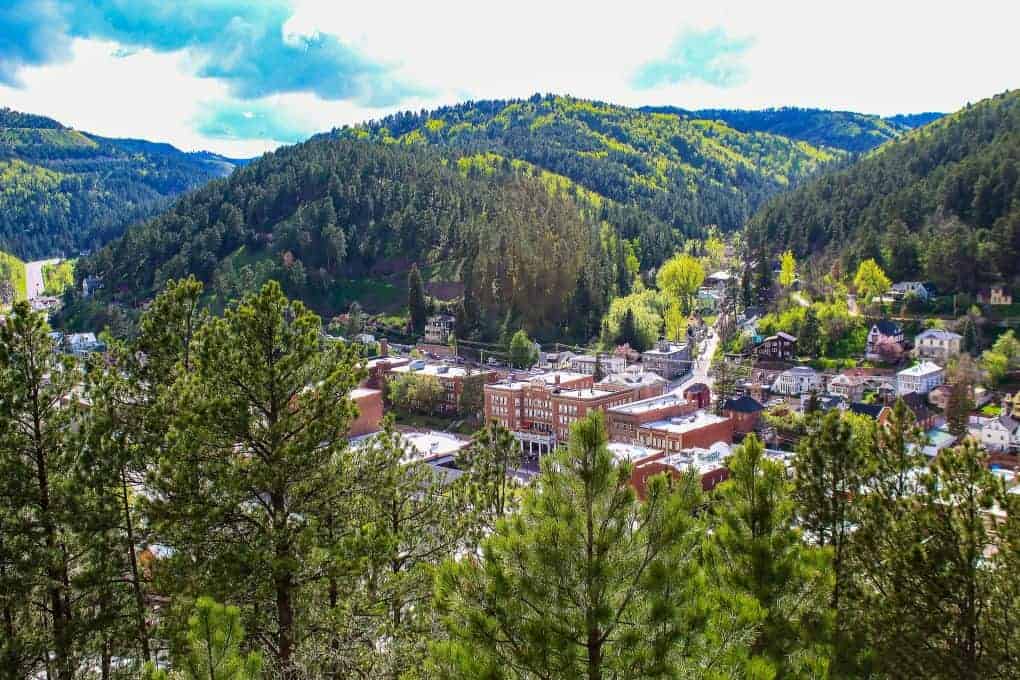
Deadwood & Mount Moriah Cemetery
By late afternoon, the forests and waterfalls of the Black Hills give way to the Old West atmosphere of Deadwood.
A National Historic Landmark, Deadwood still feels connected to its 1876 gold rush past. We walked historic Main Street, visited the No. 10 Saloon where Wild Bill Hickok was killed, and ended the day at Mount Moriah Cemetery, the final resting place of Wild Bill and Calamity Jane.
The hilltop cemetery offers sweeping views over Deadwood and is a peaceful way to end a busy day.
Don’t Miss: Walk Main Street, visit the No. 10 Saloon, and visit Mount Moriah Cemetery before sunset.
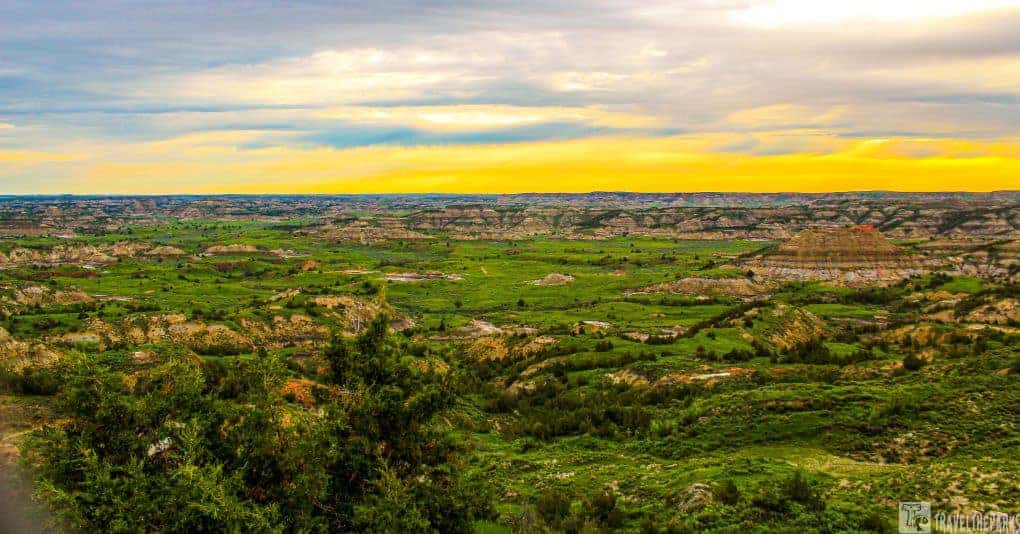
Days 3–4: North Dakota Road Trip Adventure at Theodore Roosevelt National Park
This is the longest drive of the trip, but don’t skip it. Theodore Roosevelt National Park became one of the biggest surprises of our Dakotas road trip itinerary and deserves more than a quick stop.
Two days gave us time to explore both park units, hike several trails, and experience the wildlife that makes this corner of North Dakota special.
Theodore Roosevelt National Park: South Unit
The South Unit near Medora is the perfect introduction to the park. The scenic drive winds through colorful badlands where wildlife sightings are almost guaranteed.
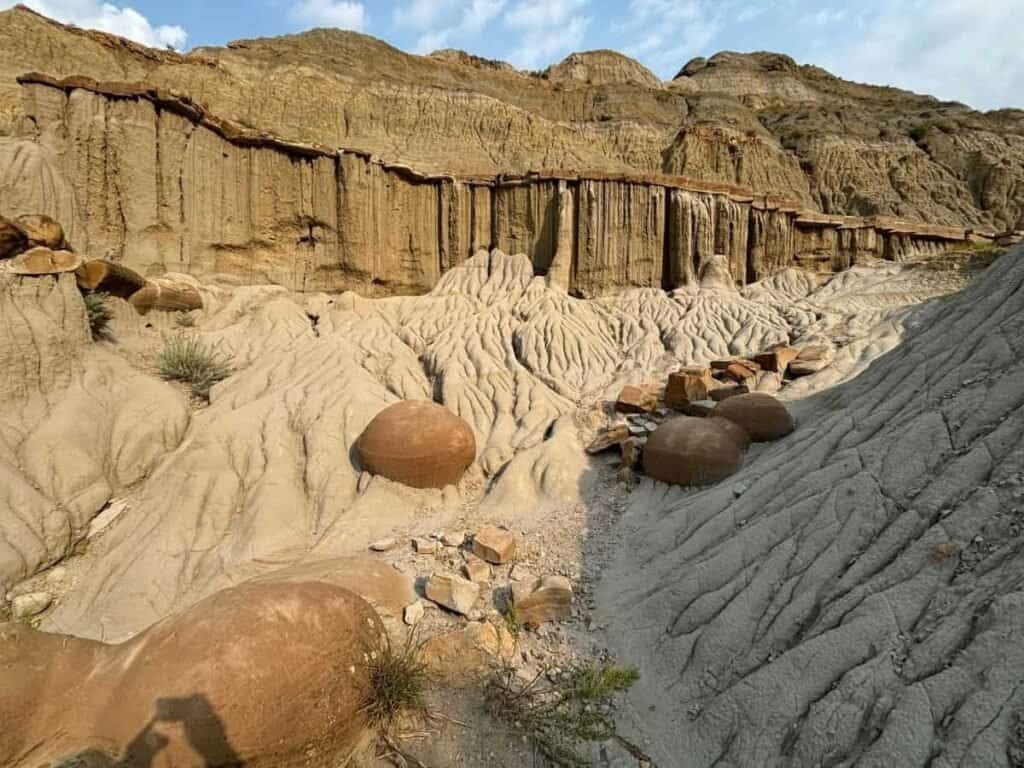
During our visit, we spotted bison beside the road, prairie dogs popping from their burrows, wild horses roaming the hillsides, and a distant coyote. Here, traffic jams are usually caused by animals deciding they have the right of way.
Don’t miss Wind Canyon Trail, where a short walk leads to sweeping views of the Little Missouri River. The Maltese Cross Cabin also provides a glimpse into Theodore Roosevelt’s years as a rancher in the Dakota Territory.
Theodore Roosevelt National Park: North Unit
The North Unit requires more driving, but the quieter experience is worth it.
We especially enjoyed the Caprock Coulee Trail, which combines dramatic overlooks, unique rock formations, and fewer visitors. Oxbow Overlook is another highlight, offering one of the best views in the park.
Roosevelt came to this landscape in 1883, and his experiences here helped shape the conservation philosophy that later influenced his presidency.
Don’t Miss: Drive the South Unit Scenic Loop, hike Wind Canyon and Caprock Coulee, visit the Maltese Cross Cabin, and allow plenty of time for wildlife stops.

Medora
Tiny Medora makes the perfect base for exploring Theodore Roosevelt National Park.
After full days outdoors, we enjoyed wandering downtown, grabbing dinner, browsing local shops, and experiencing the town’s Old West atmosphere. During summer, the Medora Musical is one of the area’s biggest attractions.
Don’t Miss: Explore downtown Medora, visit Chateau de Mores, and catch a sunset in the park.
Day 5: Returning to South Dakota’s Black Hills Road Trip Highlights
After exploring North Dakota, return south toward the Black Hills through one of South Dakota’s greatest destinations.
Although it is a state park, Custer State Park belongs on every South Dakota and North Dakota road trip itinerary because of its scenery, wildlife, and incredible drives.
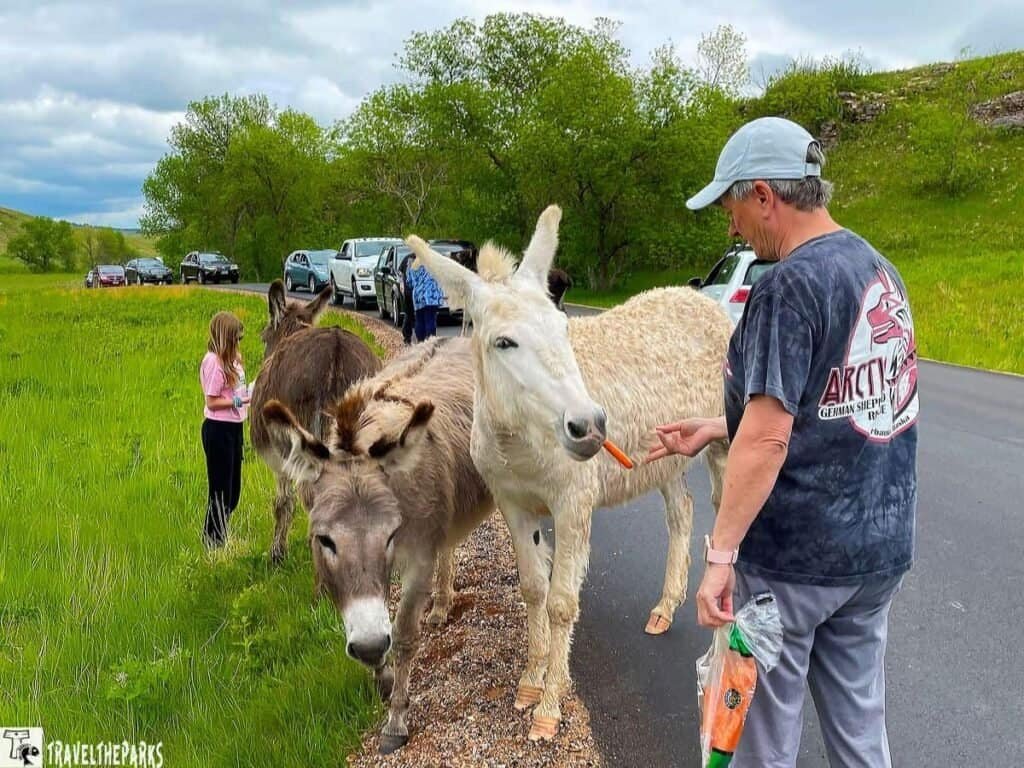
Custer State Park
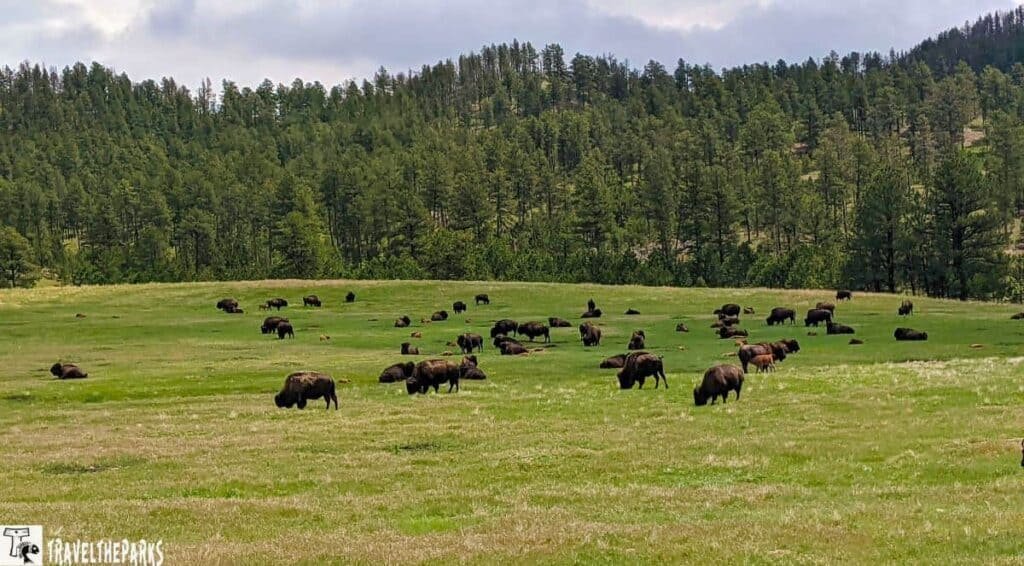
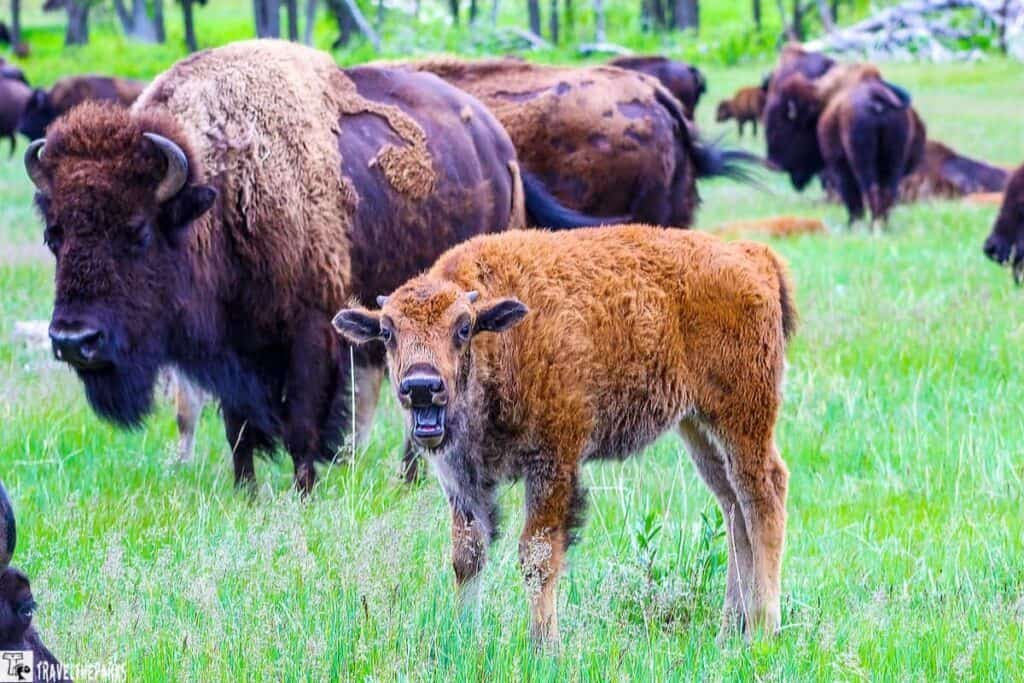
Covering nearly 71,000 acres, Custer State Park combines granite peaks, open prairie, and one of the largest publicly owned bison herds in the country.
The 18-mile Wildlife Loop Road is the highlight. Visit early morning or late afternoon for the best chance of seeing bison, elk, pronghorn, prairie dogs, and the park’s famous begging burros.
The park also carries important history. The 1874 expedition led by George Armstrong Custer confirmed gold deposits in the Black Hills, triggering a rush of settlement and conflict with the Lakota people.
Don’t Miss: Drive Wildlife Loop Road during golden hour and never approach bison outside your vehicle.
Day 6: Scenic Drives on Your South Dakota and North Dakota Road Trip
This is one of the most scenic days of the entire South Dakota North Dakota road trip.
Today combines two incredible mountain drives with one of America’s most recognizable landmarks.
Needles Highway
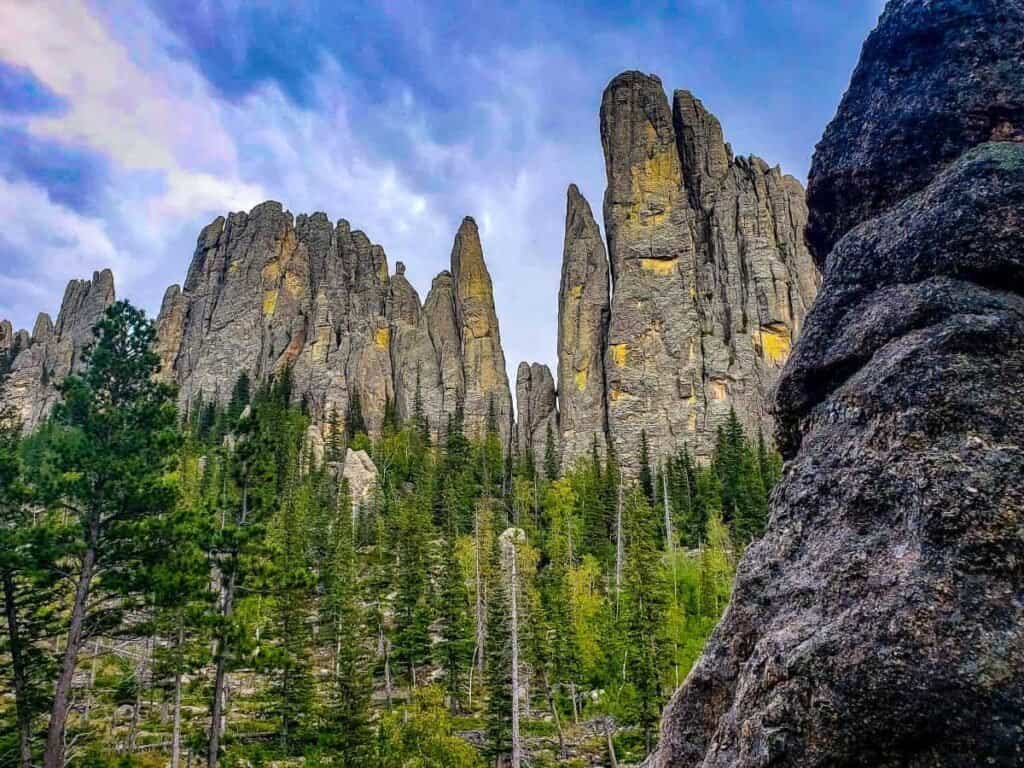
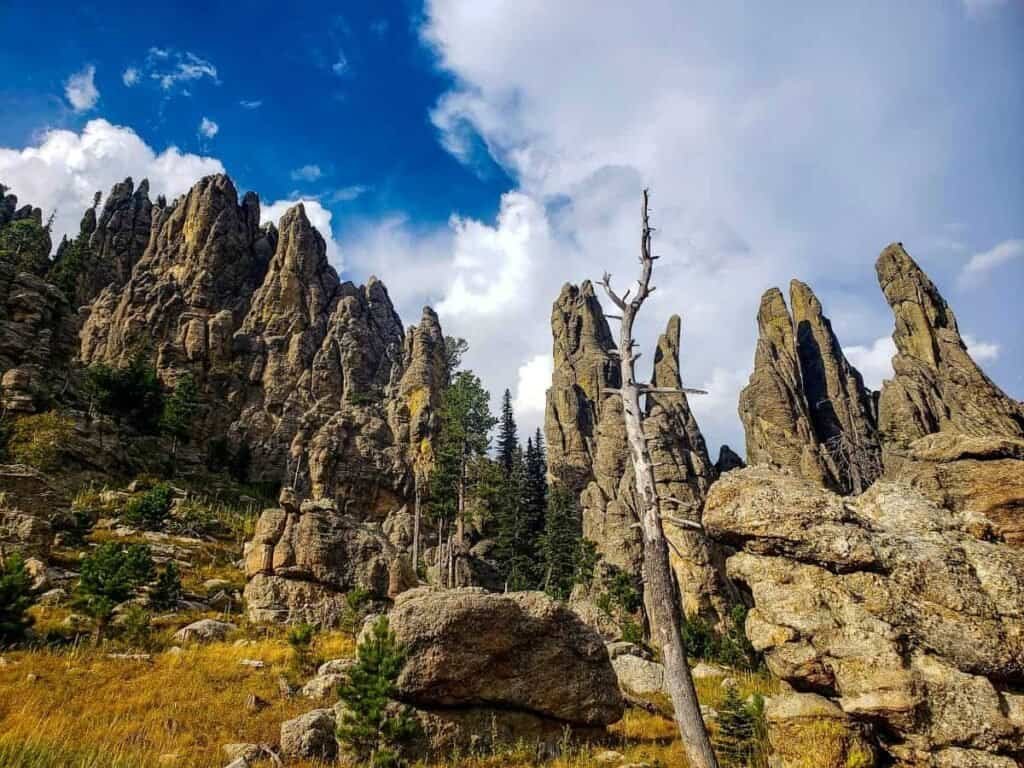
Needles Highway is a 14-mile route through Custer State Park filled with granite spires, narrow tunnels, and dramatic curves.
Designed by Governor Peter Norbeck in the 1920s, the road was created as a scenic experience rather than simply a way to reach another destination.
We stopped at Cathedral Spires Viewpoint, where we were lucky enough to spot a mountain goat climbing among the rocks. We continued to Sylvan Lake, often called the crown jewel of Custer State Park, and walked the 1.1-mile Shore Trail before hiking to Elk Mountain Lookout.
Between viewpoints, the lake, and the hike, this easily became a full day of exploring.
Don’t Miss: Cathedral Spires, Sylvan Lake, and the Elk Mountain Lookout hike. Check vehicle size before driving—some tunnels are only 8 feet wide.
Iron Mountain Road
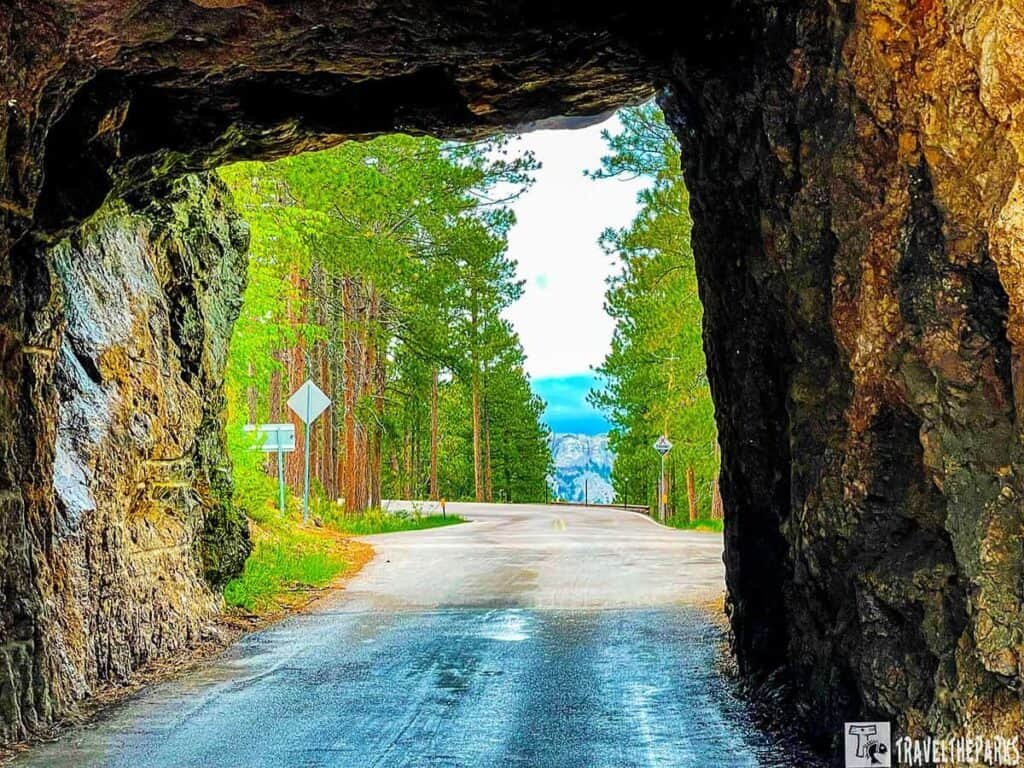
Iron Mountain Road adds another layer of engineering and scenery with 17 miles of winding road, 314 curves, 14 switchbacks, and three pigtail bridges.
The famous tunnels were intentionally designed to frame Mount Rushmore in the distance, creating one of the most memorable scenic reveals in the Black Hills.
Don’t Miss: Stop at the tunnel viewpoints for the Mount Rushmore views.

Mount Rushmore National Memorial
Mount Rushmore is one of those places that is easy to underestimate until you stand in front of it.
The 60-foot faces of Washington, Jefferson, Roosevelt, and Lincoln were carved by Gutzon Borglum and a crew of workers beginning in 1927. Fourteen years of work transformed the granite mountain into one of America’s most recognizable landmarks.
Arrive early for fewer crowds, walk the 0.6-mile Presidential Trail, and consider returning for the summer evening lighting ceremony.
Don’t Miss: Presidential Trail, early morning arrival, and the evening ceremony.
Day 7: Final Stops on Your Dakotas Road Trip Itinerary
The final day explores three places that reveal very different sides of the Black Hills: Native American heritage, underground landscapes, and the prairie ecosystem above.
Crazy Horse Memorial
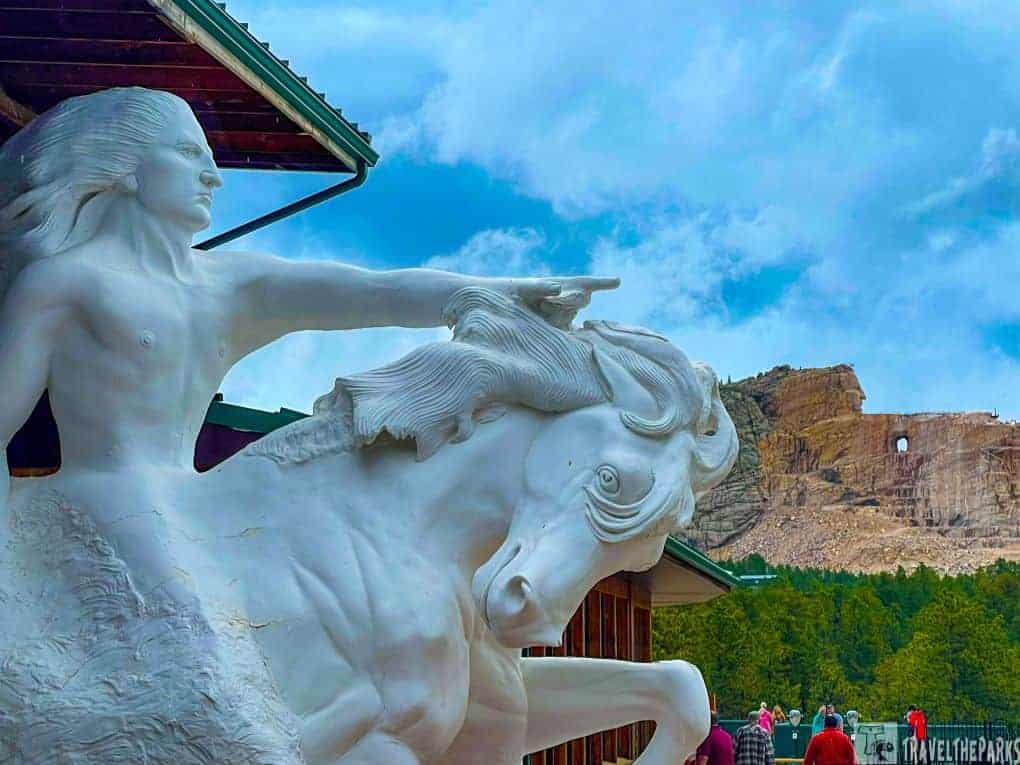
Started in 1948, Crazy Horse Memorial remains a work in progress and will eventually become the world’s largest mountain carving.
The project began after Lakota elder Henry Standing Bear invited sculptor Korczak Ziolkowski to create a monument honoring Native American heritage. Unlike Mount Rushmore, it has been funded entirely through private donations and visitor support.
The bus tour to the base provides the best appreciation of the scale, while the Indian Museum of North America adds important cultural context.
Don’t Miss: Take the bus tour and spend time in the museum.

Jewel Cave National Monument
Jewel Cave is one of the longest cave systems in the world, with more than 220 miles mapped and new passages still being discovered.
We took the Scenic Tour, which includes more than 700 stairs and showcases soda straws, stalagmites, cave bacon, and sparkling calcite formations.
The moment when the ranger turned off the lights and the cave went completely dark was unforgettable.
The cave stays at 54°F year-round, so bring a jacket.
Don’t Miss: Reserve a tour ahead of time and dress warmly.
Wind Cave National Park
Finish the trip at Wind Cave, the world’s first cave designated as a national park.
Below ground, the cave is famous for its rare boxwork formations. Above ground, the park protects a beautiful stretch of prairie filled with bison, elk, pronghorn, and prairie dogs.
We took the Garden of Eden Tour and finished with the Rankin Ridge Trail, where the fire tower offers sweeping views across the Black Hills.
Don’t Miss: Take a cave tour and hike Rankin Ridge Trail for one final panoramic view.
Where We Stayed on Our Dakotas Road Trip
Instead of changing hotels every night, we based ourselves in just two locations, which made this road trip much more relaxing.
For the South Dakota portion of the trip, we stayed in Nemo, a small community tucked in the Black Hills. It was a great central base, putting us within an hour or so of attractions like Mount Rushmore, Custer State Park, Spearfish Canyon, Deadwood, Crazy Horse Memorial, Jewel Cave, Wind Cave, and the Badlands.
When it was time to explore North Dakota, we moved to a centrally located Airbnb near Dickenson, giving us easy access to Theodore Roosevelt National Park and the surrounding attractions without having to repack every day.
If you prefer fewer hotel changes and don’t mind taking a few scenic day trips, this two-base itinerary is an easy and efficient way to experience both Dakotas.
The Essentials we Packed on Our South Dakota and North Dakota Road Trip
- Start by packing layers of comfortable, weather-appropriate clothing, including moisture-wicking base layers, or rain jacket, and sturdy hiking boots for exploring the Badlands, Black Hills, and Theodore Roosevelt National Park.
- Don’t skimp on sun protection: pack reef-safe sunscreen, UV-blocking sunglasses, and lip balm with SPF—the prairie sun is stronger than many visitors expect.
- If you’re visiting during the colder months, include warm layers, hat, gloves, and a heavy coat.
- Carry a lightweight backpack for water, snacks, binoculars, and your camera while exploring trails and scenic overlooks.
- For tech essentials, bring a power bank, a rugged phone case, and download offline maps before heading into remote areas where cell service can be unreliable.
- A reusable water bottle and a collapsible cooler are road-trip essentials, especially if you’re planning long drives between destinations.
Final Thoughts on Our South Dakota and North Dakota Road Trip
The Dakotas don’t shout. They don’t rely on flashy attractions or crowded destinations. Instead, they reward travelers who slow down and pay attention.
Over eleven days, we explored landscapes that felt completely different from one another: the colorful formations of Badlands National Park, the granite peaks of the Black Hills, the underground worlds of Jewel Cave and Wind Cave, and the wide-open prairie of Theodore Roosevelt National Park.
What surprised us most was the variety. This South Dakota and North Dakota road trip was never just about checking places off a list—it was about the unexpected moments in between. The bison stopping traffic. The mountain goat appearing on a trail. The silence inside a cave. The sunset that makes you stay five minutes longer than planned.
Our biggest advice: don’t rush. Build extra time into your itinerary because the moments you remember most are often the ones you never planned.
Have you explored the Dakotas? Which stop on this itinerary is calling your name? We’d love to hear about your experience in the comments below.