You know what’s wild? Deep in the swampy heart of Everglades National Park, surrounded by sawgrass and mangroves, there’s a piece of Cold War history that feels frozen in time. If you’re interested in unique historic sites, the Nike Missile Site Everglades National Park is a must-see. We’re talking about the HM-69 Nike Missile Site—one of the most unexpected stops along the Homestead to Flamingo Road Trip through Everglades National Park.
And that’s what makes this site so interesting. You’re not taking a special trip just to see an old missile base. HM-69 fits naturally into a day spent driving from Homestead to Flamingo, where you’ll encounter everything from pine rocklands and sawgrass marshes to mangrove forests and the coastal wilderness of Florida Bay.
This post may contain affiliate links, meaning if you purchase something through one of these links, we may earn a small commission at no extra cost to you! Read the full disclosure policy here.
Table of Contents
Wait, a Missile Base in the Swamp?
Yeah, we had the same reaction.
Picture this: it’s 1962. The Cuban Missile Crisis has the whole country holding its breath. Miami sits just 230 miles from Cuba, and military strategists are sweating bullets. If Soviet missiles launched from Castro’s backyard, South Florida would have practically no time to react.
So the Army did what any logical branch of the military would do—they built a nuclear missile installation right in the middle of a national park.
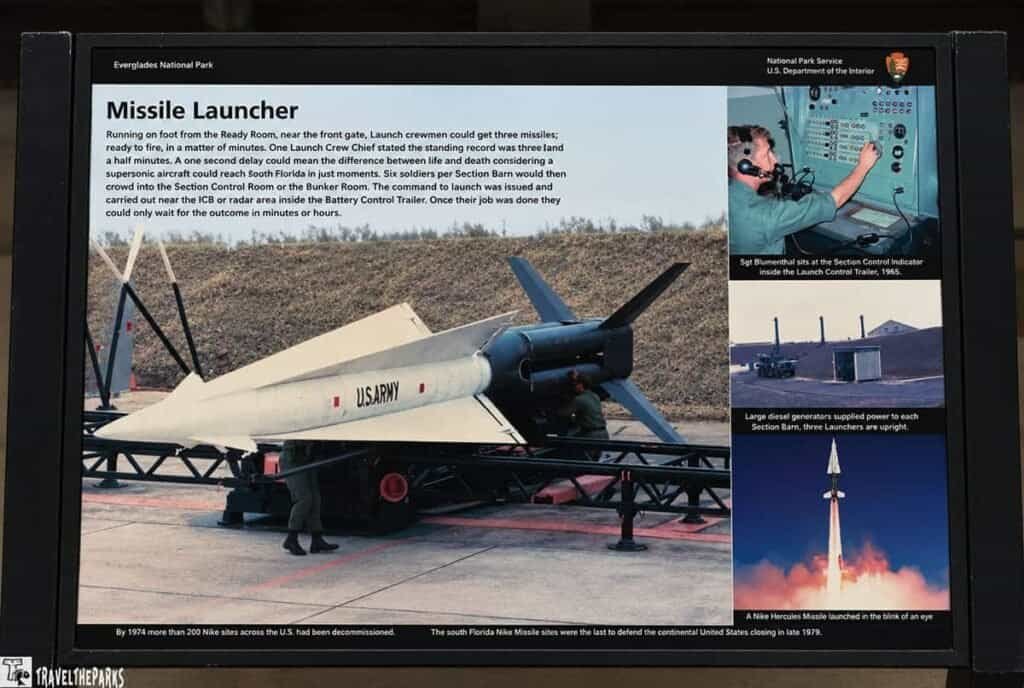
By 1965, the Everglades Nike Missile Base—officially designated HM-69—was fully operational. And we’re not talking about a handful of soldiers in a tent. This was a sprawling complex with three massive barns storing Nike Hercules missiles, some armed with warheads packing up to 40 kilotons of power. For perspective, that’s roughly three times the punch of the Hiroshima bomb.
Twenty-two buildings spanned the site: barracks, a missile assembly building, a guard dog kennel with some seriously mean canines, and blast-protected control centers where soldiers sat ready around the clock. Around 150 young men lived here, swatting mosquitoes, dealing with oppressive humidity, and praying they’d never get the order to launch.
The Cuban Missile Crisis Connection That Changed Everything
Here’s where the story gets even more interesting. Before HM-69 even existed, soldiers were camping in tents just outside the park boundary, their equipment constantly failing in the swampy conditions. Park officials eventually granted the Army permission to build inside the park itself—which seems almost unthinkable today, but shows just how rattled everyone was.
President Kennedy personally flew down to Homestead Air Force Base in November 1962 to thank the 52nd Air Defense Artillery. He awarded them a Meritorious Unit Commendation, an honor usually reserved for combat units. That’s how seriously the military took the threat.
The base stayed active until 1979, then sat abandoned for years—almost forgotten, swallowed back up by the Everglades—until the park recognized its historical weight and began preserving it.
What You’ll Actually See on the Tour
So here’s the good news: you can walk through this place yourself. But here’s the thing—the only way to see the actual missile site is to take the ranger-led tour. You can’t just wander in on your own. The tour meets at the Daniel Beard buildings before traveling to the missile site, so that’s your starting point.
The Nike Missile Site Everglades tour runs seasonally, typically from December through April. Tours are free with park admission, and the rangers who lead them genuinely love telling this story.
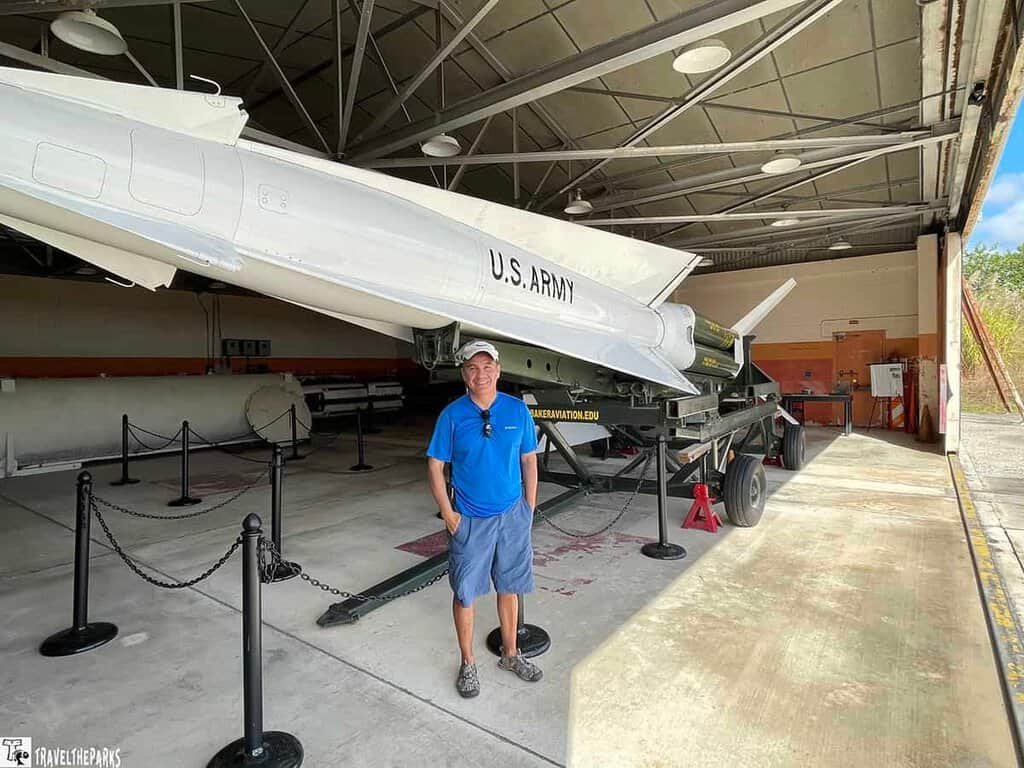
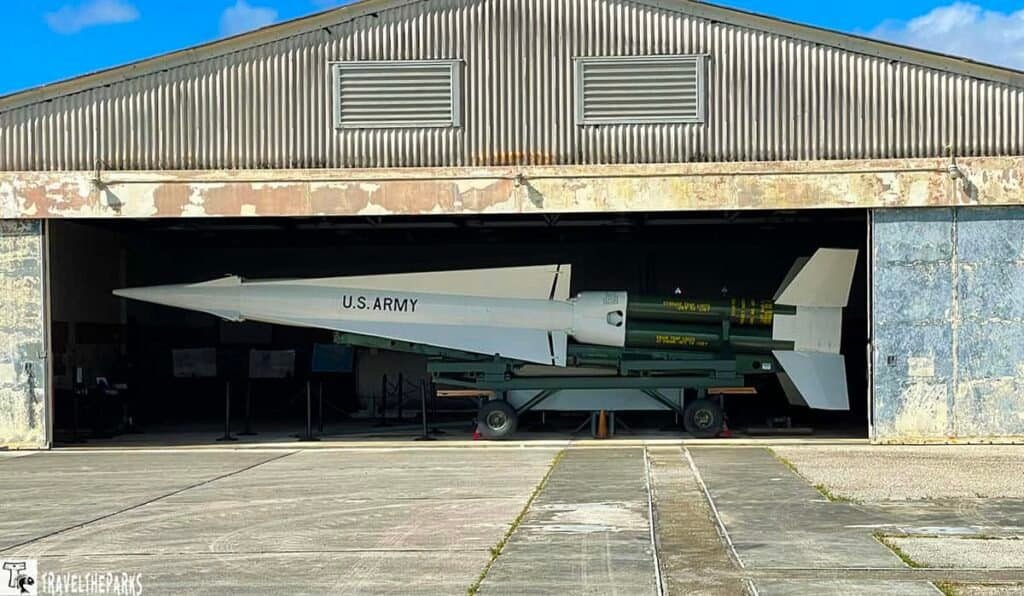
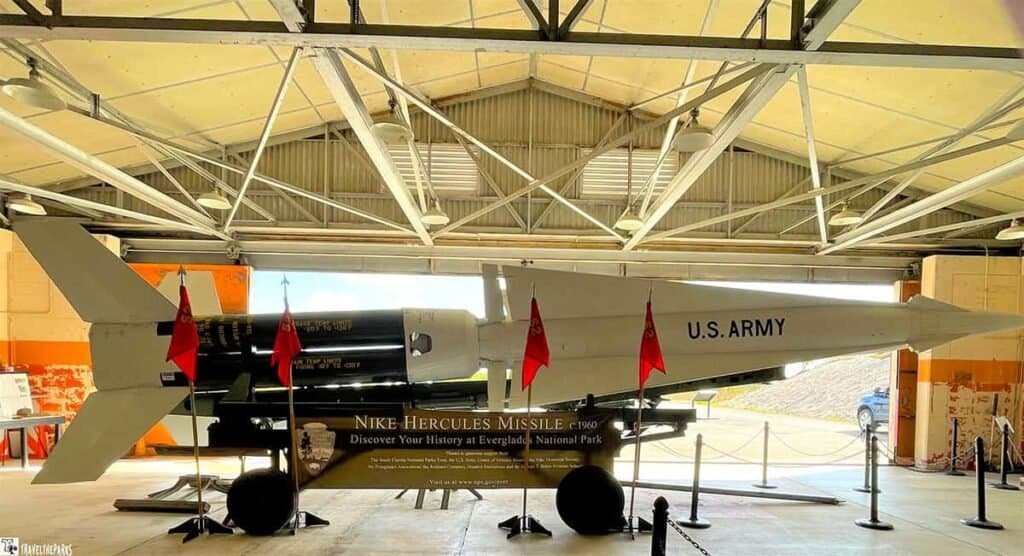
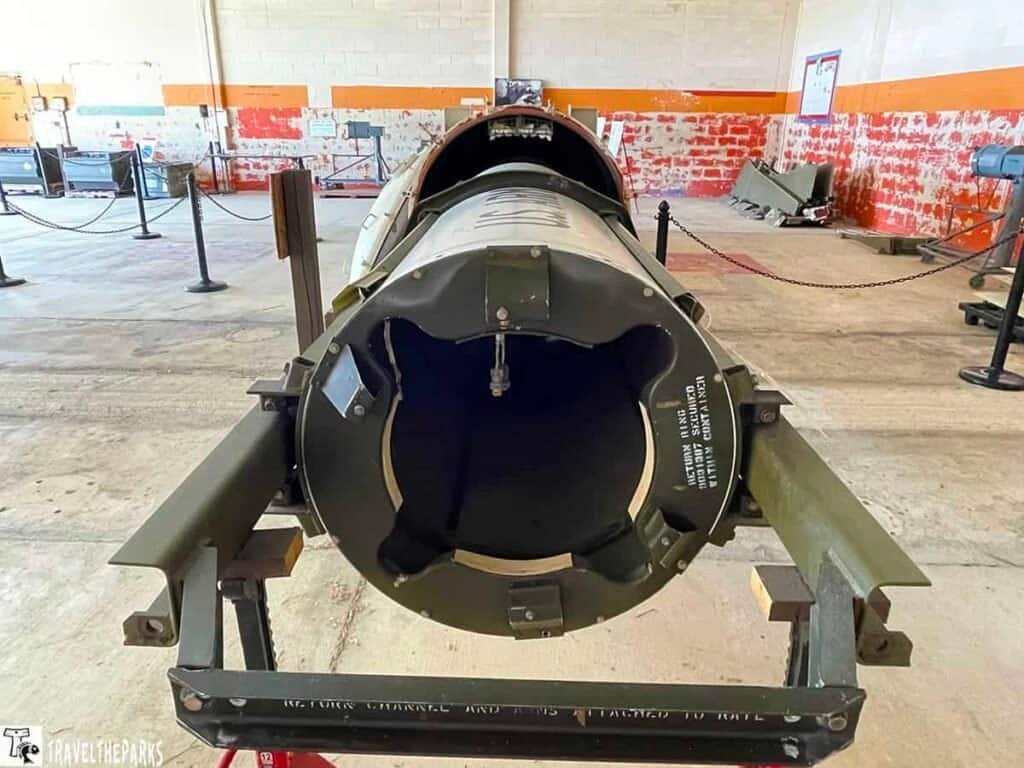
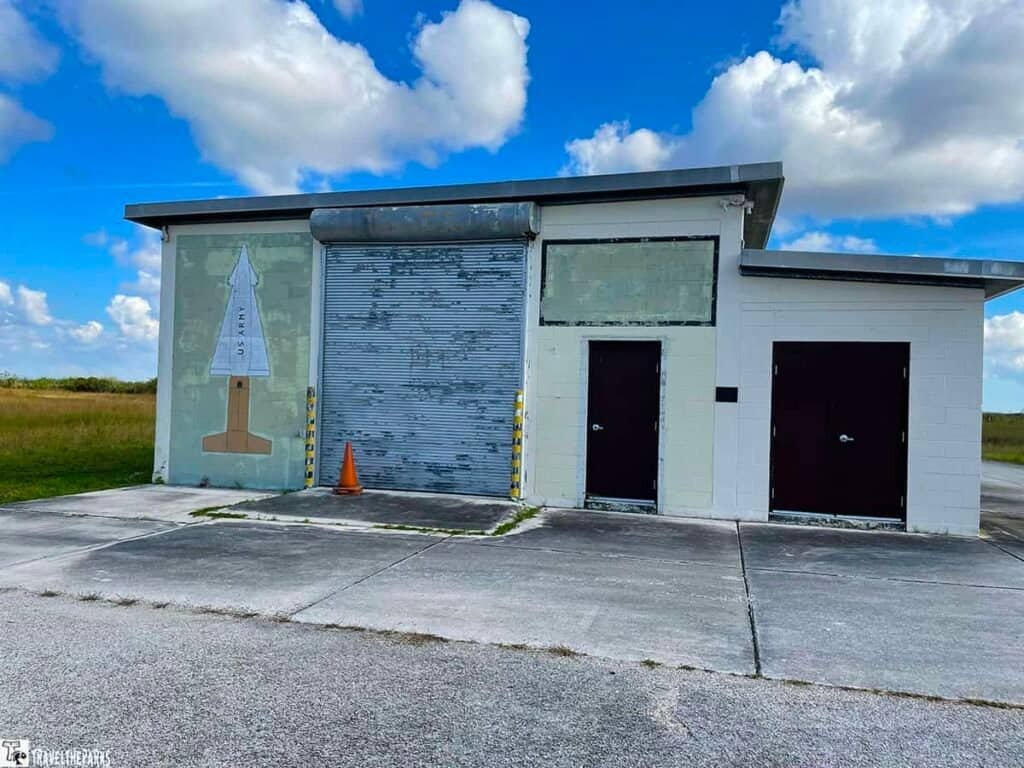
Once you’re on-site, you’ll get an up-close look at three hangar buildings and bunkers that made up the heart of the operation. But the real showstopper? The missile assembly building. This is where the Army kept the missiles themselves, and it holds missile equipment and electronic parts that haven’t been touched in decades. The highlight of the ranger-led tour is stepping into that building and seeing a restored 1960 Nike Hercules Missile on display—one of just four that were housed here.
And here’s the wild part: the base never fired any missiles. Not a single one. All that readiness, all those young soldiers living on edge, all that tension—and those rockets never left the ground. Standing there in that building, you realize how close things got, and how grateful we should be that cooler heads prevailed.
Pro tip: There’s no shade available, no water available, and no restroom facilities during the tour. You’re out in the open Florida sun with nothing but concrete and swamp around you, so plan ahead. We also recommend checking tour times with the park rangers at Royal Palm before driving the 14 miles to the site. Nothing worse than making that trek only to find out you just missed the window
And Yes, There Were Guard Dogs
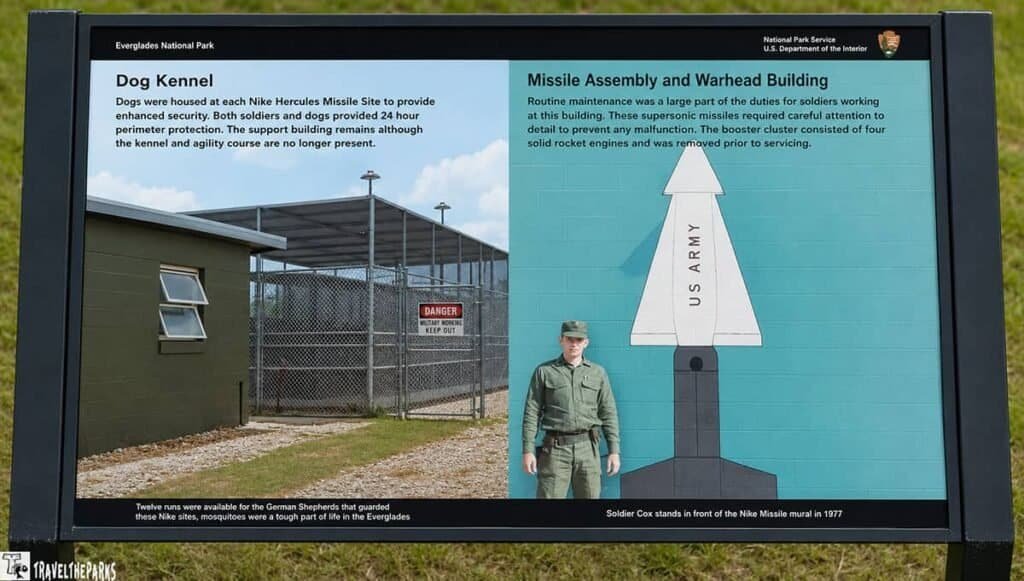
The missiles weren’t the only security system at HM-69. The base also had a guard-dog kennel, with military dogs patrolling the perimeter and helping protect this highly classified installation. Think about that for a minute: armed Nike Hercules missiles, soldiers on constant alert, and trained guard dogs keeping watch in the middle of the Everglades. It sounds like something out of a Cold War movie, but it was very real. The kennel was one of the 22 buildings that made up the missile site.
Why This Place Sticks With You
What makes the HM-69 Everglades National Park site so haunting is how untouched it feels. When the base was decommissioned in 1979, it was basically left as-is. Buildings crumbled. Equipment rusted. Nature started reclaiming the concrete. But enough remained that the park was able to stabilize and preserve the site, adding it to the National Register of Historic Places in 2004.
Walking through HM-69, you get this strange sense of stepping into a time capsule. These missiles weren’t for show. They were live, aimed skyward, manned by kids barely out of high school who knew that any alert could be the real thing. One veteran described it as being “eyeball to eyeball” with the enemy, and their restraint kept things from spiraling into catastrophe.
The volunteers who lead tours often have personal ties to this history—some are veterans themselves. Their stories bring those tense days into sharp focus in a way no textbook ever could.
Planning Your Visit
- Location: The tour meets at the Daniel Beard buildings off Long Pine Key Road in Everglades National Park, then travels to the missile site from there.
- Season: December through April. Summer tours don’t happen—the heat and bugs make it brutal.
- Tour Schedule: Winter Season (December through March): The HM-69 Nike Missile Site is open for scheduled visitor programs during the winter season, with the ranger-led tour typically offered at 2 PM and lasting about 90 minutes. The site may also have an open house program during this season, but schedules can change because of staffing and park operations. Check with the Ernest F. Coe Visitor Center or the park’s calendar before making the drive to HM-69. Don’t assume a program will be running just because you’re visiting during the winter season.
- Summer Season (April through November): The National Park Service does not offer its regular ranger-led tour during the hotter months. The site may be accessible through programs operated by the Everglades National Park Institute. Check evernpi.org for current tour availability and reservations.Cost: The ranger-led program is free, but you’ll need to pay the standard Everglades National Park entrance fee.
- What to bring: Water. Lots of it. Bug spray that actually works. Good walking shoes. A camera. And maybe just a few minutes to sit with the weight of where you’re standing.
Another Cold War Site Worth Visiting
If the Cold War history at HM-69 interests you, there’s another National Park Service site that tells a fascinating part of the story from a very different perspective. Minuteman Missile National Historic Site in South Dakota preserves the launch facilities and underground control center of America’s Cold War nuclear missile program.
We visited Minuteman Missile National Historic Site and were struck by how different the experience was from HM-69. Here in the Everglades, you’re standing among aboveground missile barns and concrete structures surrounded by sawgrass and tropical vegetation. In South Dakota, the story moves underground and into the Great Plains, where Minuteman missiles stood ready as part of America’s nuclear deterrent.
If you’re interested in military history, Cold War history, or the stories hidden inside America’s national parks, our guide to Hidden by Time: Minuteman Missile National Historic Site is worth a look.
Final Thoughts: The Cold War Relic Hiding in Plain Sight at Everglades National Park
So next time you’re making the drive from Homestead to Flamingo, weaving through sawgrass marshes, pine flatwoods, and coastal mangroves, carve out time for this detour. If you’re planning the entire route, our Homestead to Flamingo road trip guide breaks down the stops, trails, wildlife viewing areas, and other places worth seeing along the way.
HM-69 is a reminder that Everglades National Park holds more than alligators and birdlife—it holds stories of fear, readiness, and a world that came terrifyingly close to the edge.
The missiles aren’t aimed at Havana anymore. But standing there, you’ll feel the ghost of that tension hanging in the humid Florida air. It’s weird. It’s sobering. And honestly? It’s unforgettable.
Have you visited the HM-69 Nike Missile Site in Everglades National Park? We’d love to hear what you thought of this fascinating piece of Cold War history!