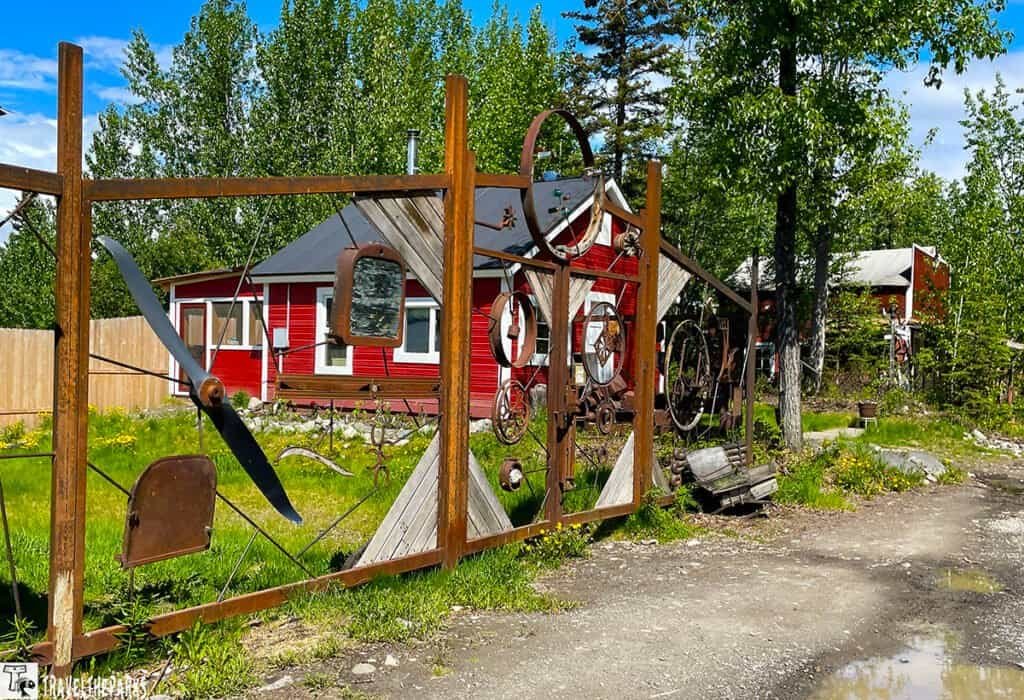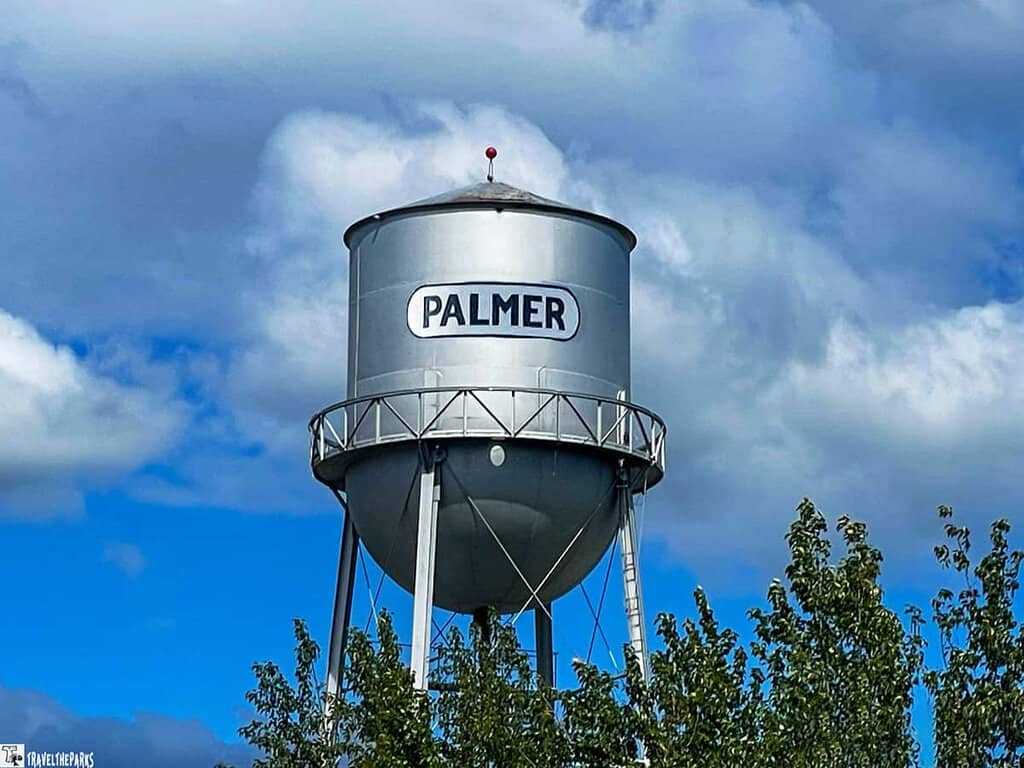
If you’re planning a road trip through Palmer, Alaska, you might be surprised by what you find. And not in the dramatic way Alaska usually surprises people. Palmer has a small-town feel that’s harder to place than most. There’s an independence here, a quiet self-sufficiency, but it doesn’t come with the eccentricity of Talkeetna or the frontier edge you feel up in Fairbanks. Palmer sits somewhere in the middle of all that. Rooted. Practical. A little harder to read at first.
It’s a place where life feels intentional. The wide-open landscapes are still there, but so is a sense of order — tidy farms, preserved colony homes, people who seem genuinely invested in where they live. The town has an unusual origin story that shaped a lot of that, which we’ll get to. But you notice the result before you know the reason. Palmer doesn’t announce itself. It just holds up.
This post may contain affiliate links, meaning if you purchase something through one of these links, we may earn a small commission at no extra cost to you! Read the full disclosure policy here.
Table of Contents
Know Before You Go
Before you load up the cooler and hit the Glenn Highway, here are the things we wish someone had told us:
- Location: Matanuska Lakes SRA is at Mile 36.4 of the Glenn Highway, just west of Palmer. Look for the turnoff heading north — there’s no Kepler Drive; just the main highway marker.
- Camping: The park has 9 RV sites and 8 tent campsites. Tent sites are set back from the RV area—blessedly quieter and more private. Vault toilets are on-site and well-maintained. Water is available. No hookups.
- Firewood: Not provided. Bring your own or grab some in Palmer before you arrive. Trust us on this one.
- Fishing: The Alaska Department of Fish and Game stocks with rainbow trout and Arctic grayling the lakes — Matanuska, Kepler, Canoe, Irene, and Long. An Alaska fishing license is required.
- Boats: Only electric motors are allowed on the lakes. No gas-powered motors. Canoes and kayaks are a great call here.
- Trails: The campground connects to the Matanuska Greenbelt — a network of over 30 miles of trails that link to the Crevasse Moraine Trail System. Excellent for hiking and biking.
- Stay Limit: 7-day maximum camping limit. This is a state park — fees apply at the pay station on arrival. Pick your site, pay up, enjoy.
- Wildlife: Moose sightings in the area are common. Keep food secured and maintain a respectful distance. Yes, moose are actually more dangerous than they look.
- Cell Service: Spotty at the campground. Download your maps and playlists before you get there.
- Palmer is 10 minutes away: Groceries, gas, restaurants, and coffee are all a quick drive east on the Glenn.
- Gas up in Palmer before heading further north. The next stretch gets thin on services.
Matanuska Lakes Campground: Your Base for the Palmer, Alaska Road Trip
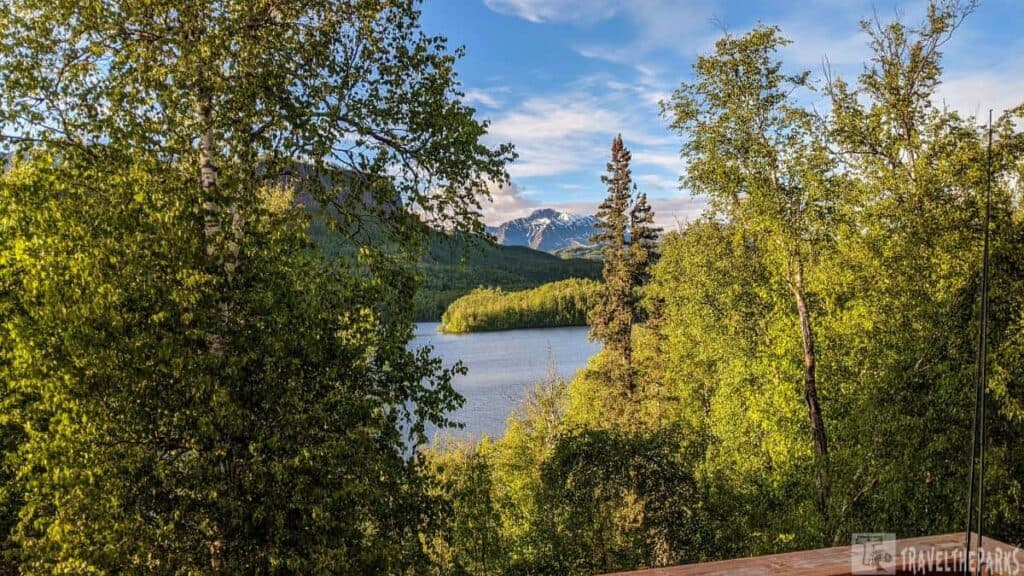
We camped at Matanuska Lakes State Recreation Area—technically at mile 36.4 of the Glenn Highway, though you won’t miss the turnoff. It used to go by Kepler-Bradley Lakes, and some maps still show it that way, so don’t let that throw you. The campground sits inside Alaska State Parks, and the tent sites in the back are genuinely nice: spread out, quiet, surrounded by spruce, with a lake close enough that you can hear the water if you go to bed with the tent unzipped. Palmer’s downtown is about ten minutes east, which means cold brew and musk oxen are equally accessible from your campfire. We did not take this for granted.
PRO Tip: Mosquitoes are not a myth. At Matanuska Lakes campground, especially in the evening, they are an organized army. DEET is your friend. So is a headnet if you’re too proud for bug spray.
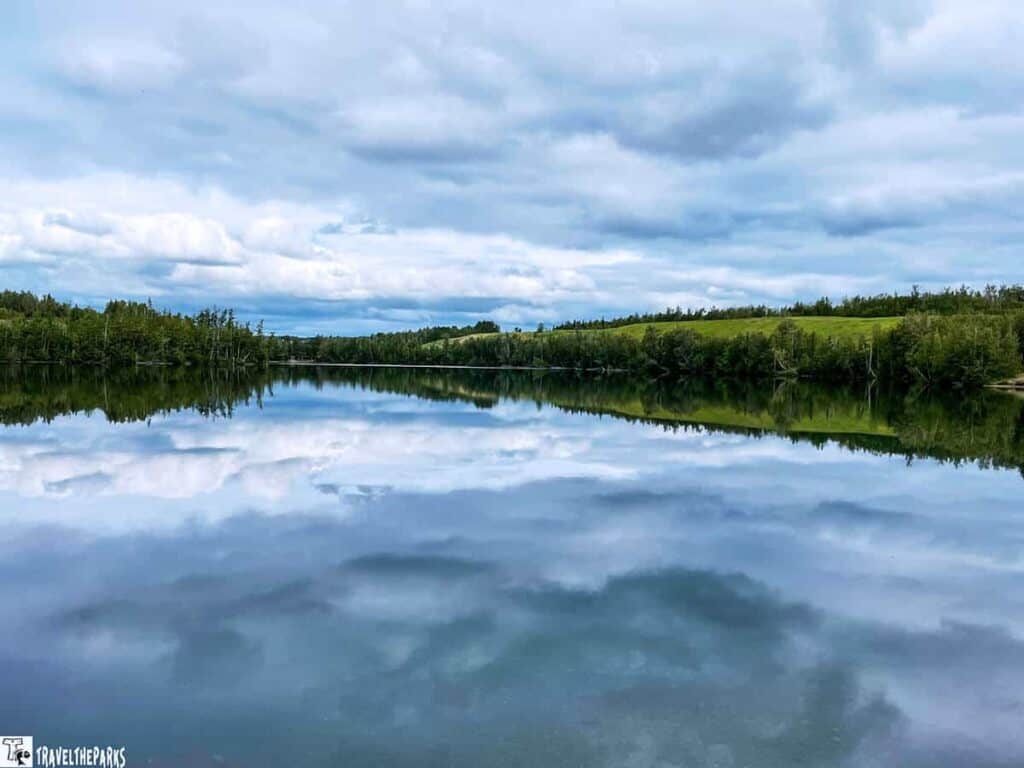
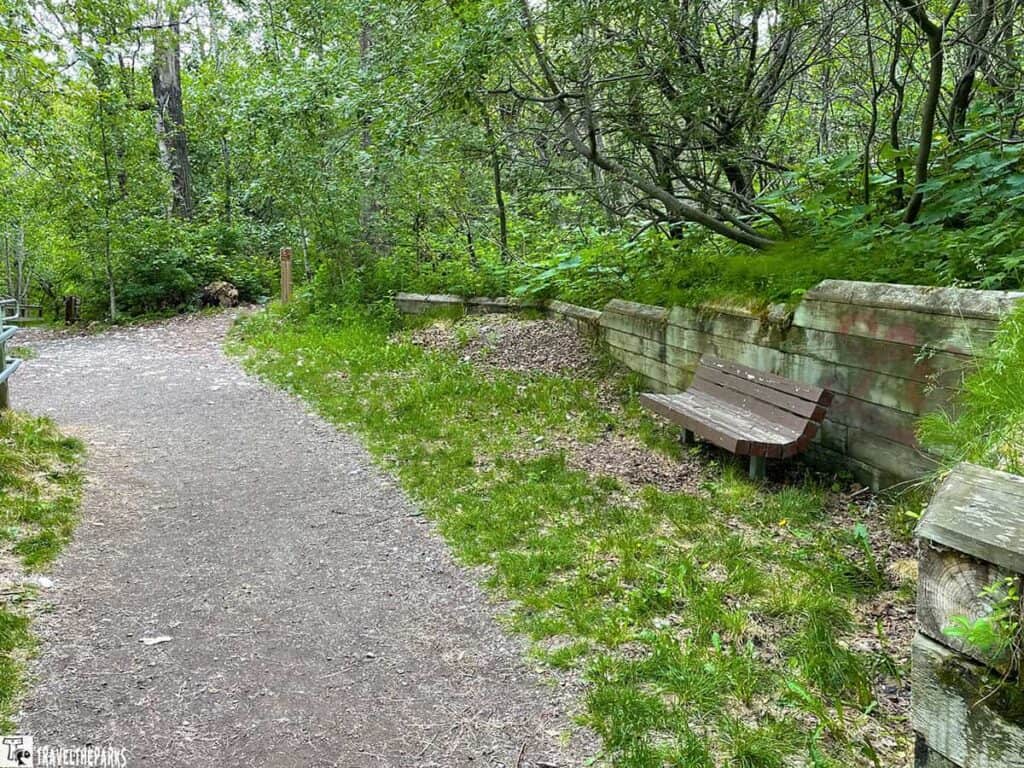
The night before, we had every intention of walking the trail down to Matanuska Lake. It sounded perfect—a quiet evening stroll through the spruce, maybe catch the light on the water. What we did not account for was the mosquitoes. The moment we stepped onto that trail, they found us, and they were not subtle about it. We’re talking a full aerial assault—thick clouds of them, organized, relentless, deeply committed to ruining our evening. We lasted maybe four minutes before we turned around, retreated to the RV, and sealed every gap we could find.
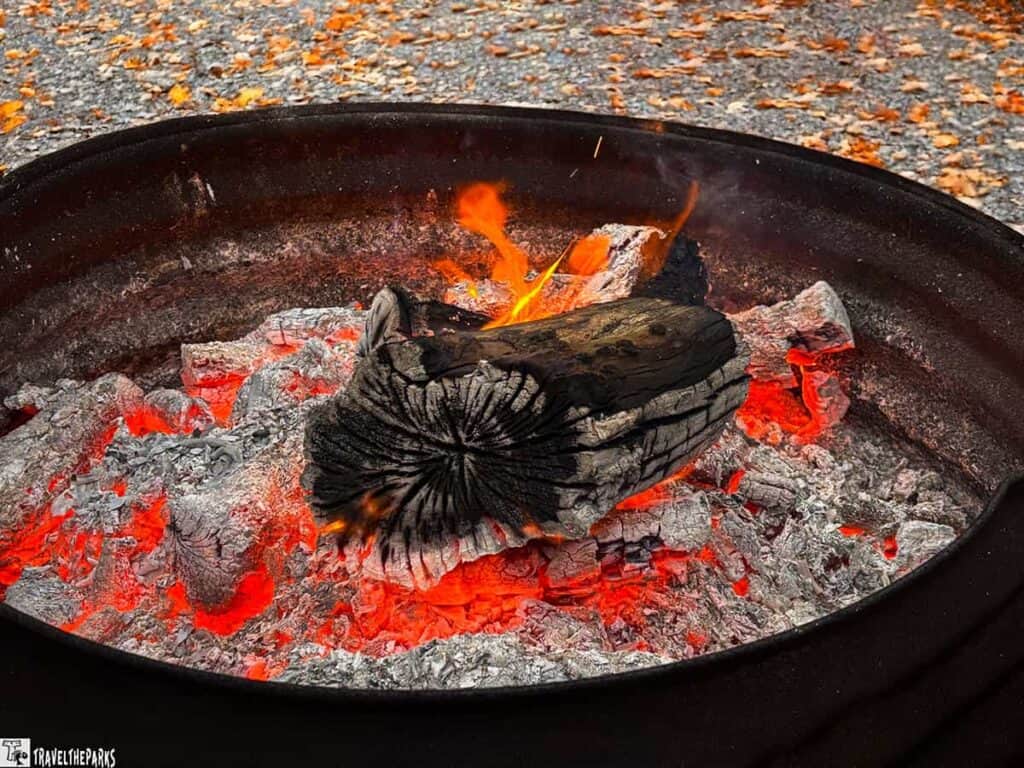
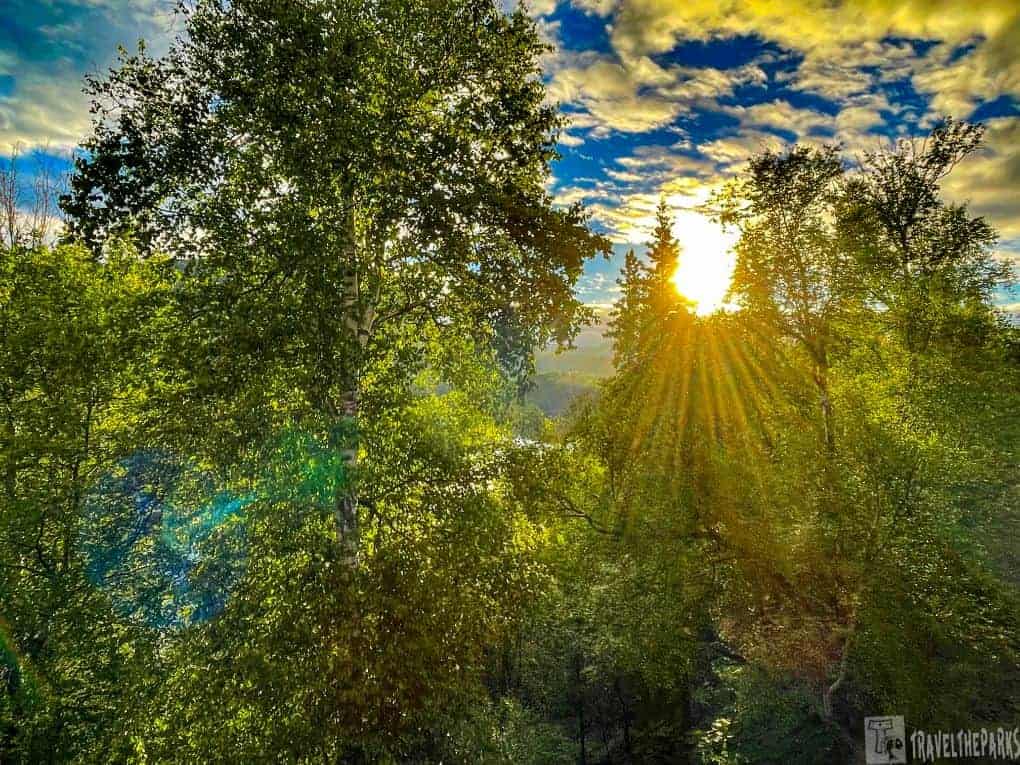
Instead, we built a campfire and did something we hadn’t planned on: sat outside and watched the summer solstice from camp. If you haven’t experienced a solstice night in Alaska, here’s what happens—nothing. The sun does not set. It just kind of wanders toward the horizon, thinks about it, and then decides against it. That evening it skimmed the treeline in a low golden loop, and the light went soft and amber for hours without ever going dark. We stayed out way longer than made sense, just watching it. There are worse ways to spend a night in Alaska.
Morning: Wake Up at Matanuska Lakes
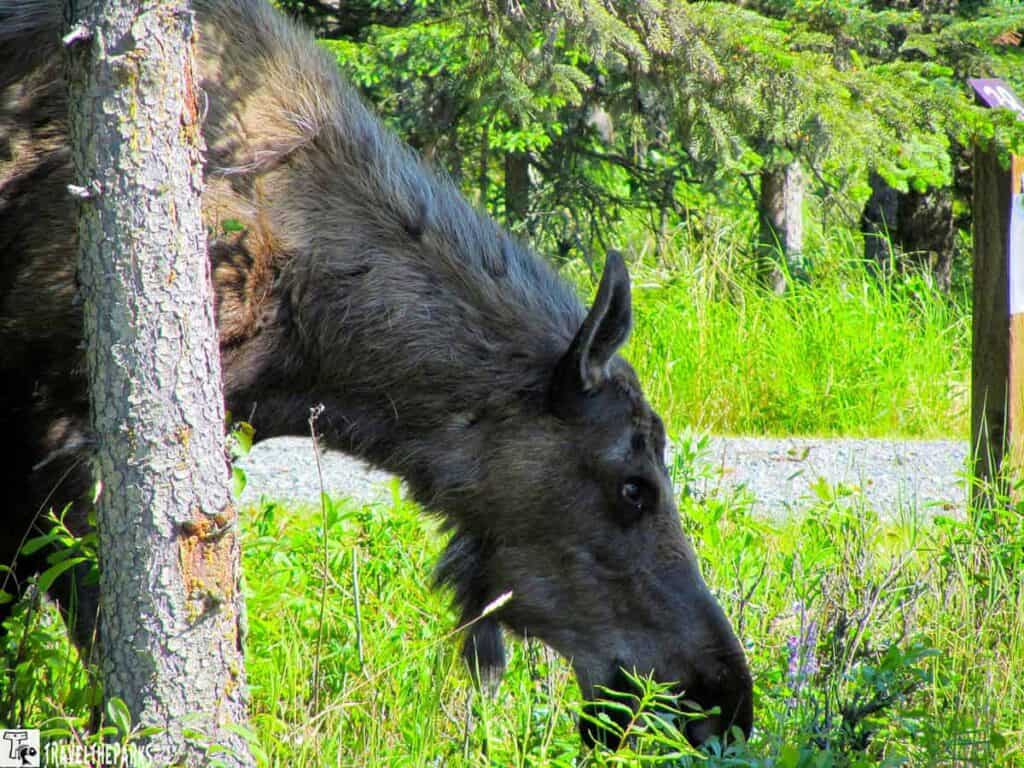
The next morning we woke up to a sound none of us had set as an alarm—a moose calling, close and low. I pulled back the curtain, and there he was, standing right outside the RV window, looking in like he owned the campground and we were the guests. Which, honestly, is probably accurate. He was stunning. Big, calm, completely unbothered. I watched him for a few minutes, half thrilled and half quietly worried he’d wander toward the Glenn Highway. That’s not an irrational fear up here—285 moose were struck on Alaska’s highways that year alone. Thankfully, he turned and headed back into the spruce, and that was that. Best alarm clock we’ve ever had.
My mom, however, did not have a great night. Over breakfast she informed us that the mosquitoes had been relentless—buzzing, biting, the full experience—while somehow the rest of us slept through it completely unbothered. We were puzzled until someone noticed the RV window had been left cracked open just enough. The mosquitoes had found it immediately and apparently made a beeline straight for her bunk. She was gracious about it. We felt terrible. We also quietly noted that the window situation was entirely not our fault, which did not help as much as we had hoped.
Starting the Palmer Alaska Road Trip: How We Got Here
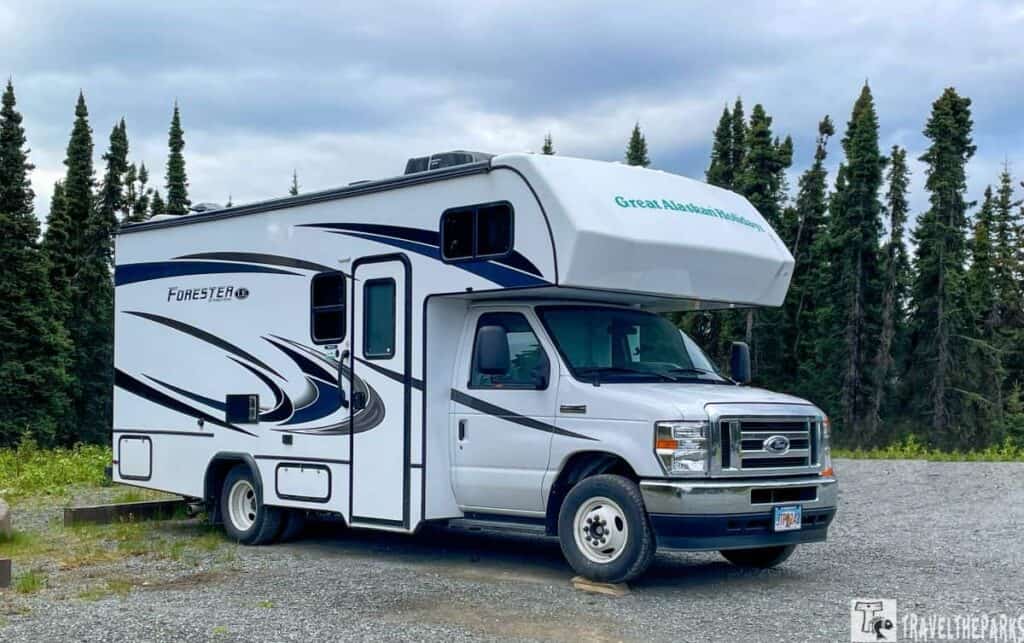
Our first Alaska road trip had us rolling into Palmer in a rented RV from Great Alaskan Holidays RVs in Anchorage. We’d been driving up from the city along the Glenn Highway—one of the most stunning stretches of pavement in North America, with the Matanuska Glacier peeking into view at just the right moments—and Palmer felt like a natural place to breathe, regroup, and eat something that wasn’t trail mix.
On our second trip, we stayed in Sutton—a smaller community just east of Palmer—at an Airbnb that gave us a quiet home base without the full RV logistics. We drove back into Palmer each day, and honestly, it was a great setup. We knew the town a little better, we’d packed better bug spray, and we got a lot more done.
Eagle Nature Center: Things to Do in Palmer, AK Before Noon
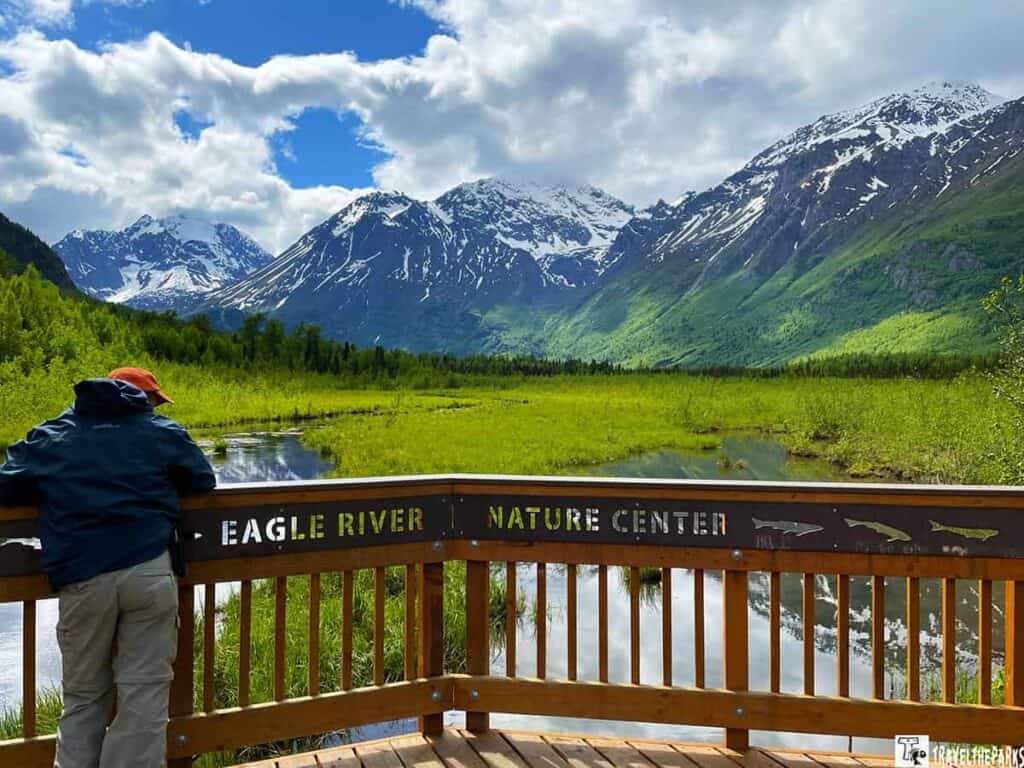
The nature center sits at the end of Eagle River Road, so this isn’t one of those places you just happen to pass. You go there on purpose. And judging by the full parking lot when we arrived, a lot of locals do too. It’s a popular trailhead, and there was much more activity than we expected.
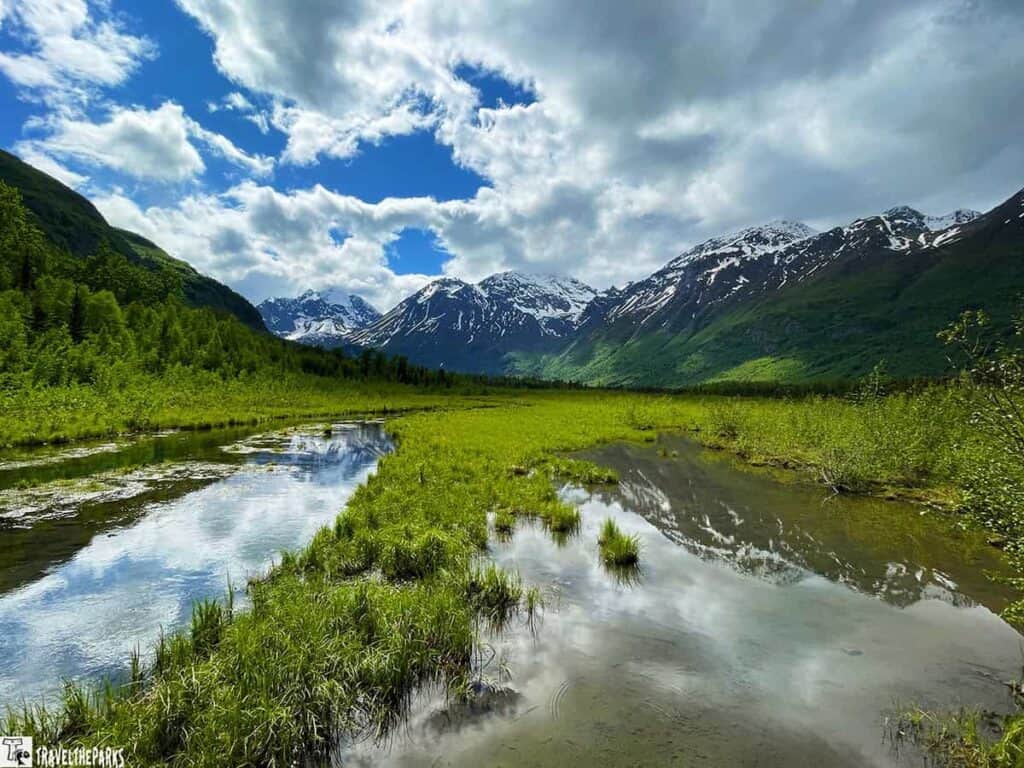
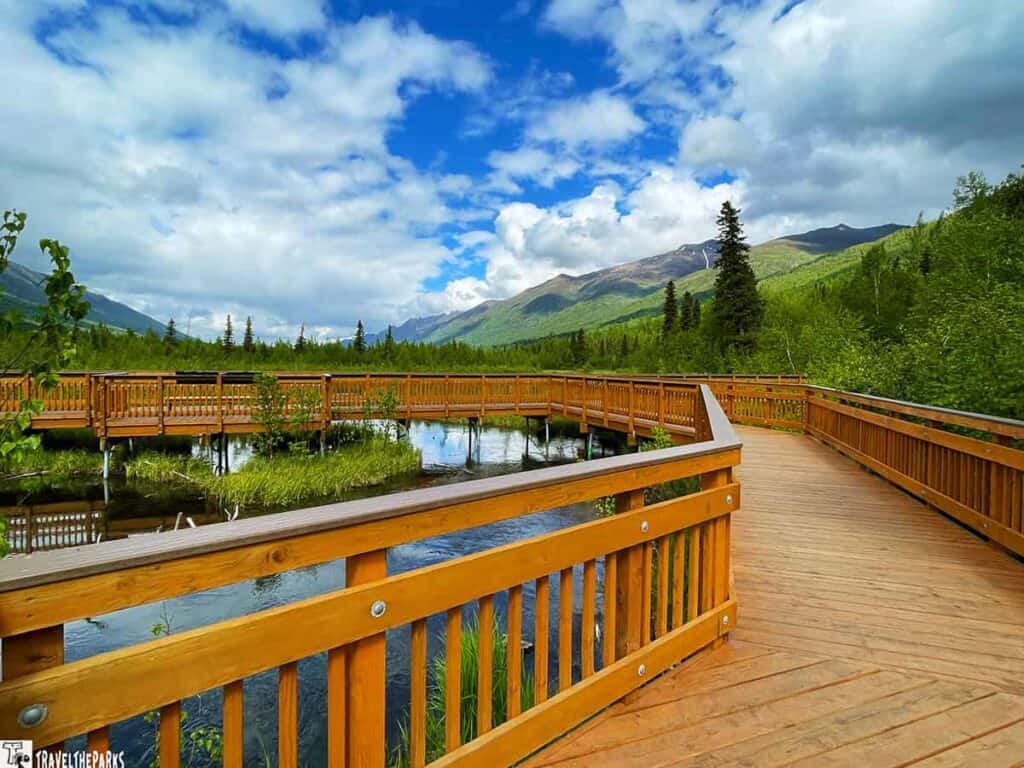
Even with people around, it still felt peaceful once we got walking. There’s an easy boardwalk and gentle trails through boreal forest and wetlands, with mountain views opening up in the distance. It never felt overly developed or staged. Just a place to walk, slow down, and pay attention.
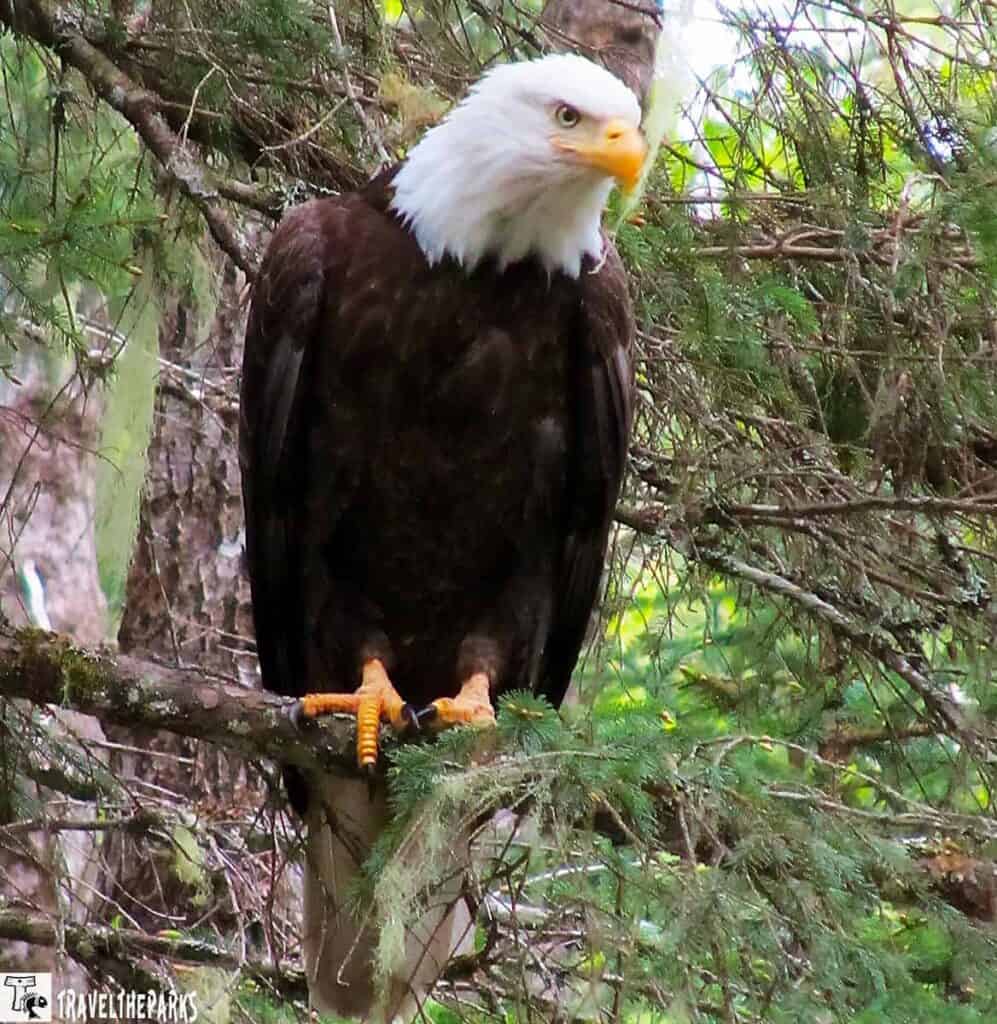
And then the birds. We’re bird people, but you don’t have to be. Bald eagles perched in the trees like they owned the place. Swans on the water. Some kind of loon diving and resurfacing somewhere else entirely. It felt less like watching wildlife and more like being allowed into it for a little while.
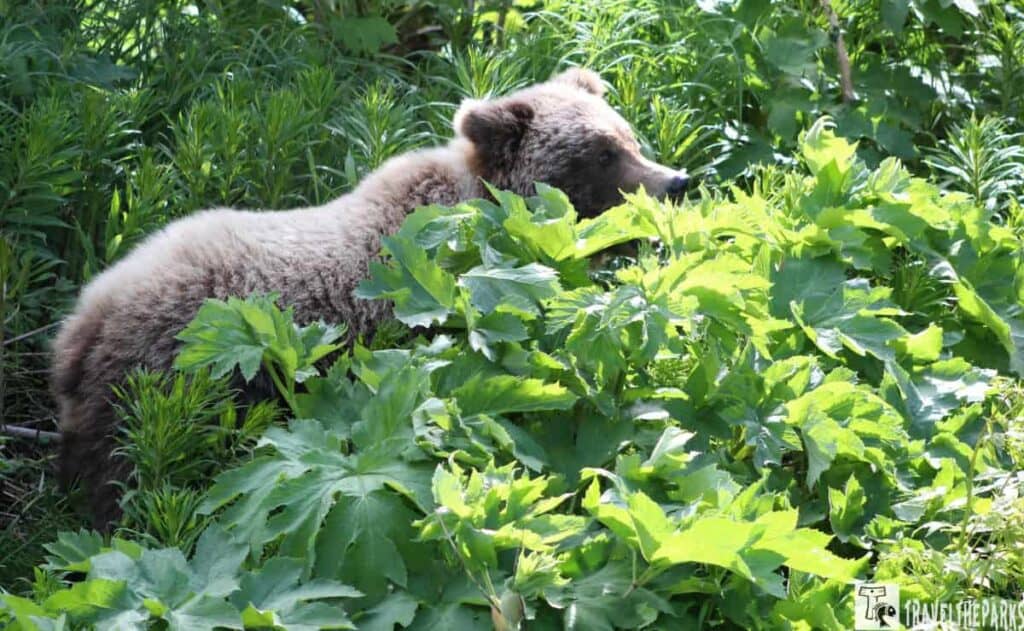
One thing very much worth mentioning—bears are part of the experience here too. We saw plenty of signs of activity, and it was something we stayed aware of the whole time. It added a little edge to the walk, but also made the place feel even wilder and more real.
What we liked most was that it didn’t try too hard. It wasn’t polished or overly curated. Just trails, wetlands, wildlife, and a place that clearly matters to the people who use it.
We left feeling weirdly good. Not in a cheesy way. Just settled. Like we’d started the day right without even trying. If you’re camping at Matanuska Lakes or passing through on a Palmer Alaska road trip, go early, take your time, and keep your eyes open.
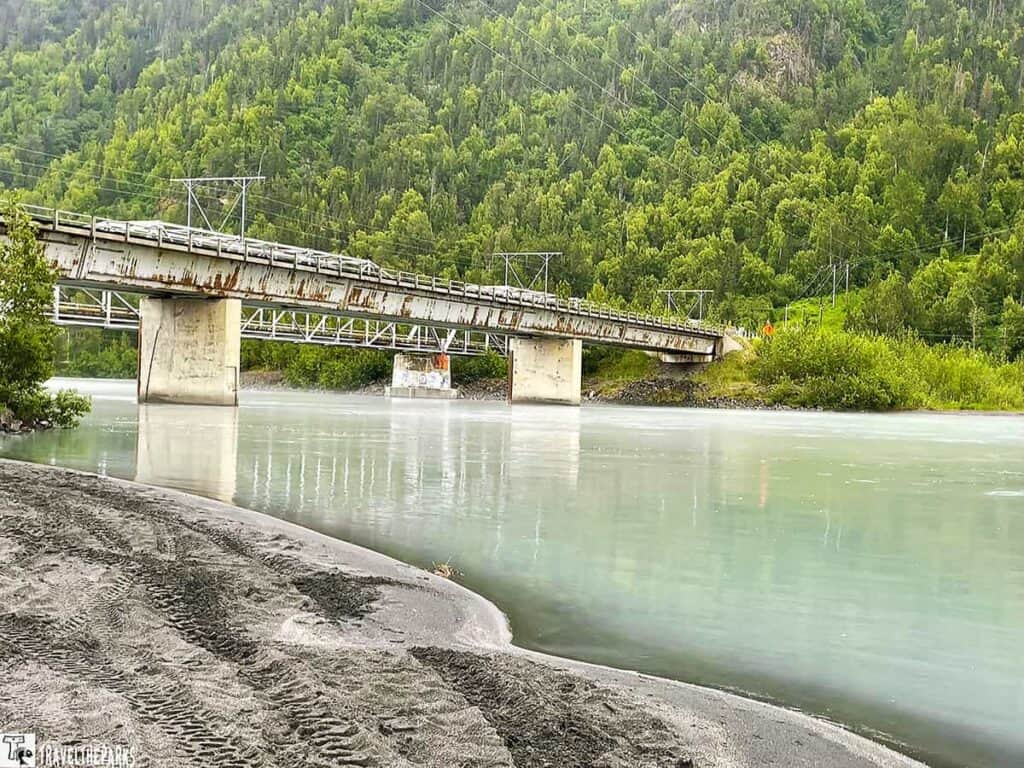
The Knik Bridge: A Quick Stop on Any Mat-Su Valley Road Trip
A quick detour from the main road leads to the Knik River flats near the bridge. It’s a wide expanse of silty river flats and braided channels stretching toward the mountains. Less a formal scenic overlook and more a rugged access area that locals actually use—some even camp out on the flats.
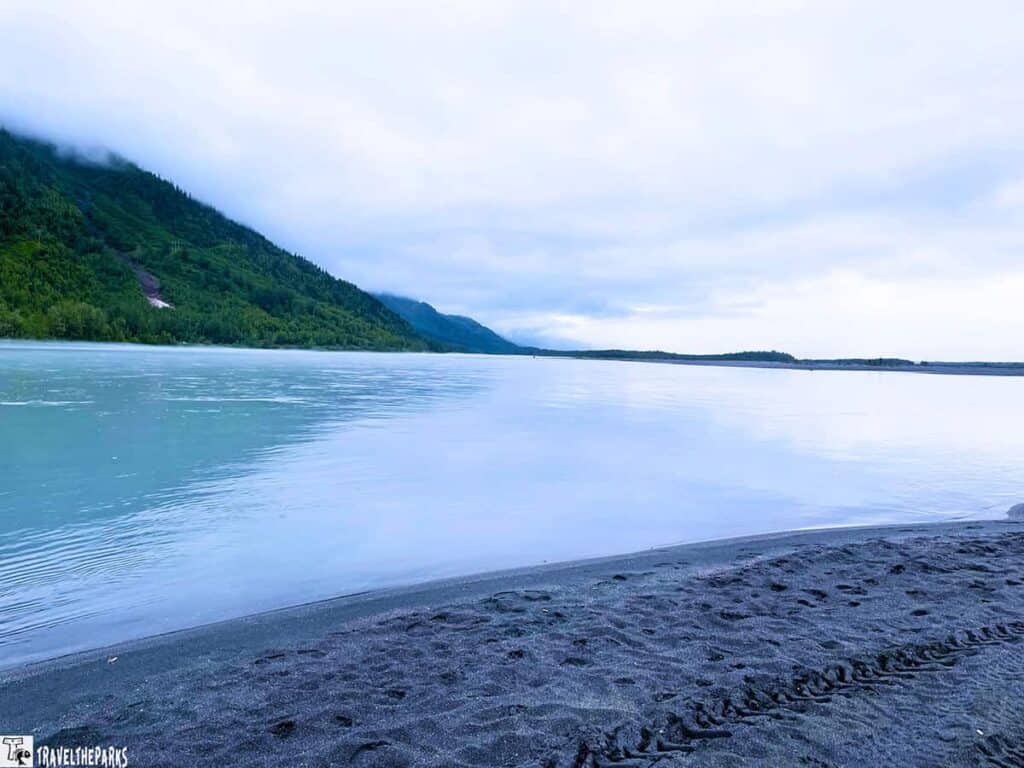
There’s something about standing there watching the river spread across the glacial outwash plain, with the Chugach rising in the background, that can stop you for quite some time. It may take thirty seconds to understand what makes people settle in Alaska. After taking twelve pictures, you eventually have to leave, because the journey continues.
Palmer Museums: More Interesting Than We Expected
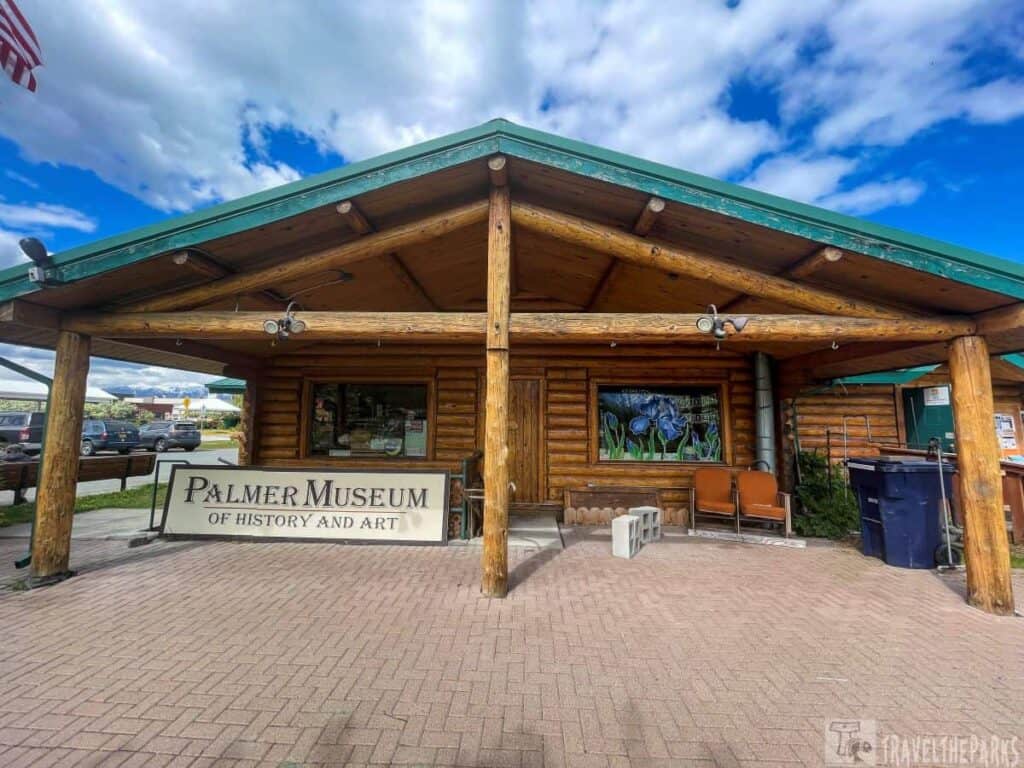
Palmer has a couple of small museums. Nothing fancy. But they’re worth the hour.
The Palmer Museum & Visitor Center is the main one. It covers how this town even got started, which is weirder than you’d think. Back in 1935, during the Great Depression, the federal government literally relocated farming families from the Midwest to the Matanuska Valley. Packed them up and sent them north. It was a social experiment kind of thing. And the baffling part? Their descendants still farm here. Same families. Same land. You don’t expect to walk into a small Alaska town and find a piece of Depression-era history like that. But there it is.
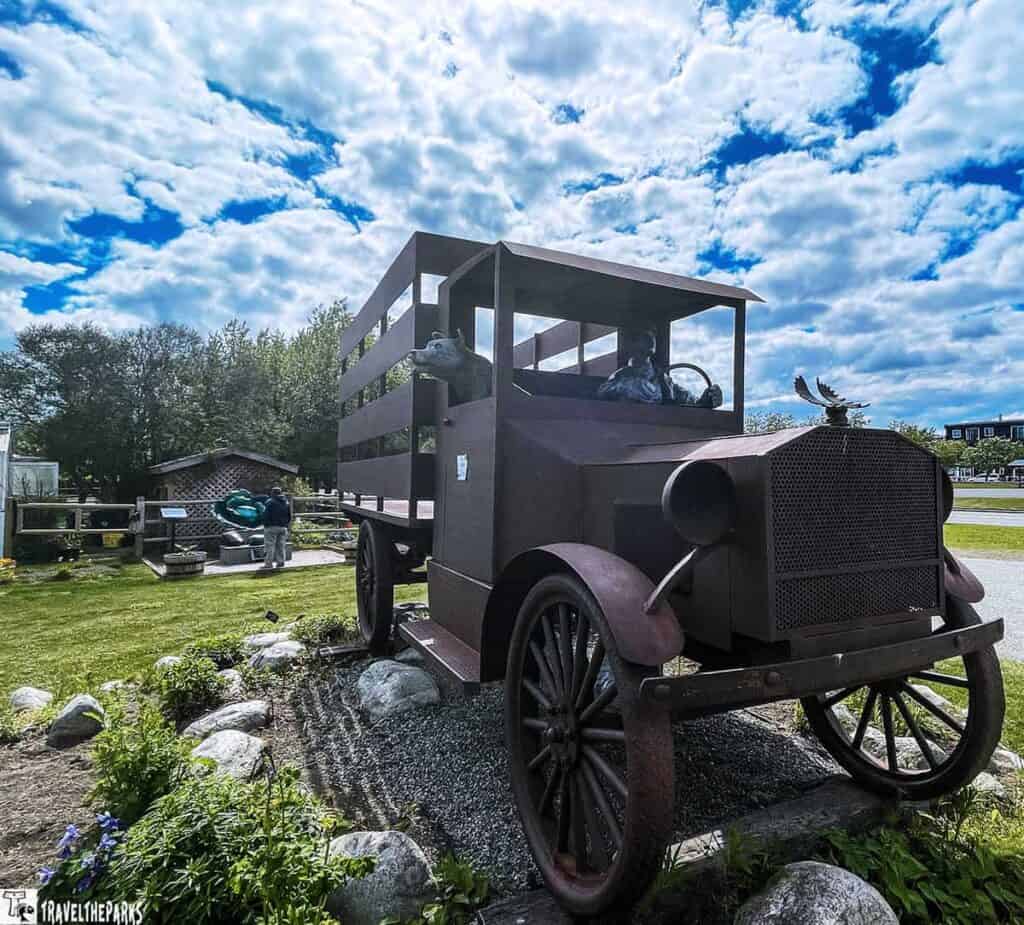
The museum itself is small. Low key. A few rooms. But the story sticks with you. It’s odd and kind of fascinating, and most people have no idea it happened.
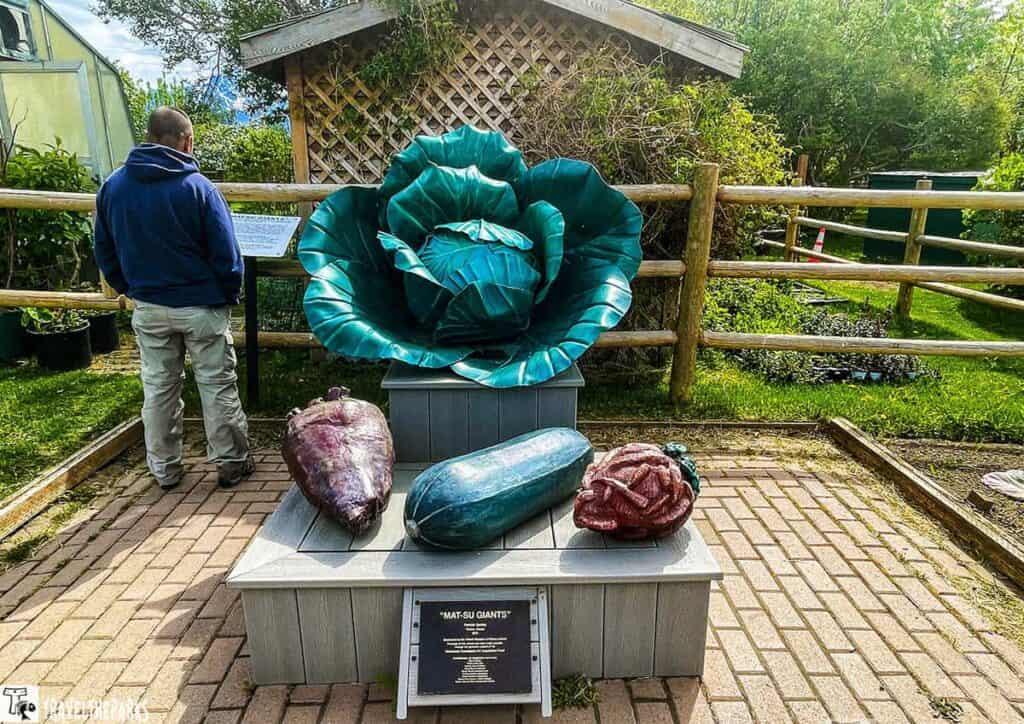
Oh, and there’s a vegetable garden out back. Doesn’t sound exciting, but here’s the thing—Palmer is famous for giant vegetables. The long summer daylight hours make cabbages the size of bowling balls and pumpkins you could hide a toddler behind. The museum garden grows some of these monsters. When we were there, they had a cabbage that looked like it was trying to take over the world. We took a photograph. We laugh and move on. But it’s a nice touch.
Colony House Museum
Then there’s the Colony House Museum. Just a preserved farmhouse from that same period. Original building. Simple. You can walk through and see how these families lived. The docents are volunteers, and they’re genuinely excited to talk about it. Not in a rehearsed way. They just clearly care about the story.
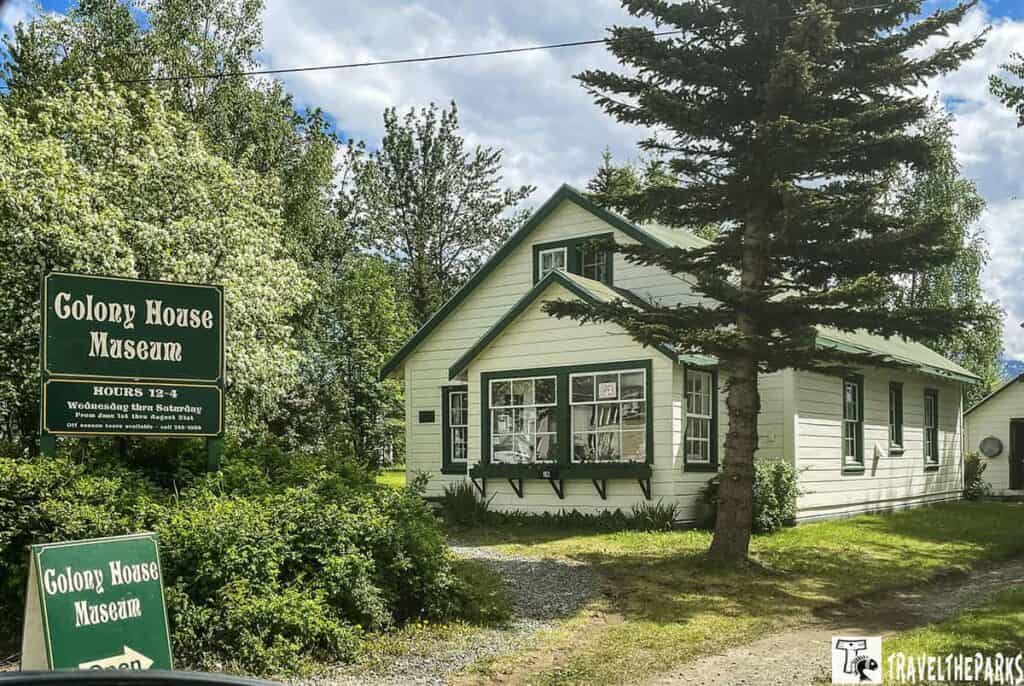
We went in with low expectations. It’s a farmhouse museum. How interesting can it be? But we came out having actually learned something. That’s always a win on a road trip. You’re not expecting to get smarter. You just want coffee and a bathroom. Palmer gave us both, plus a history lesson we didn’t ask for.
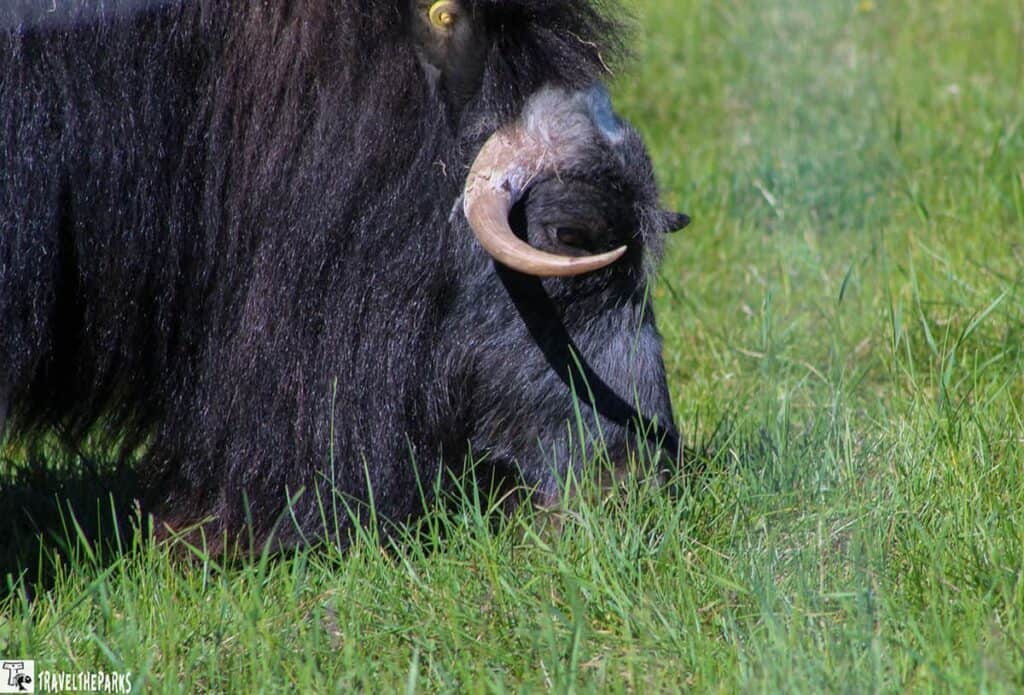
The Musk Ox Farm: Just Go
Look, we’ll be honest—we were mildly skeptical of the Musk Ox Farm before our first visit. It sounds like something you’d stop at ironically. You will not stop at it ironically. Musk oxen are genuinely prehistoric-looking, somehow both enormous and fluffy, and watching them lumber around while a knowledgeable guide explains their role in Alaska’s ecosystem is quietly captivating.
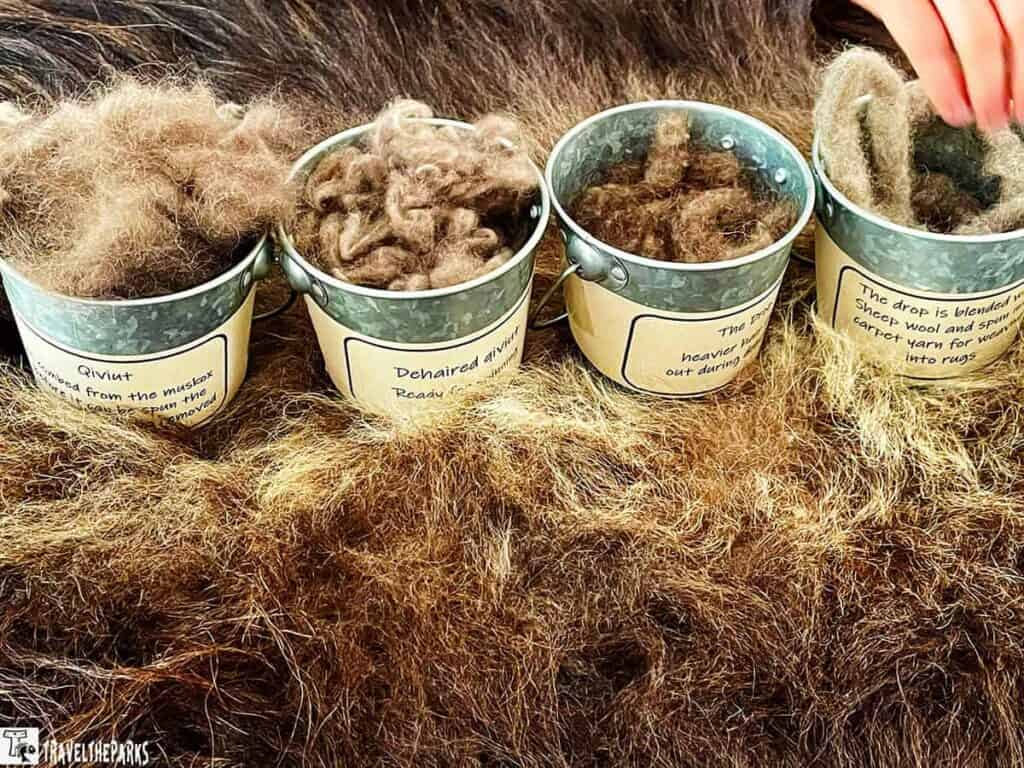
The farm also harvests qiviut—the undercoat fiber of the musk ox, which is one of the softest and warmest natural fibers in the world. The gift shop sells qiviut goods, and yes, the prices will make your eyes water. It’s worth it if you’re a fiber person. If you’re not a fiber person, you will briefly become one.
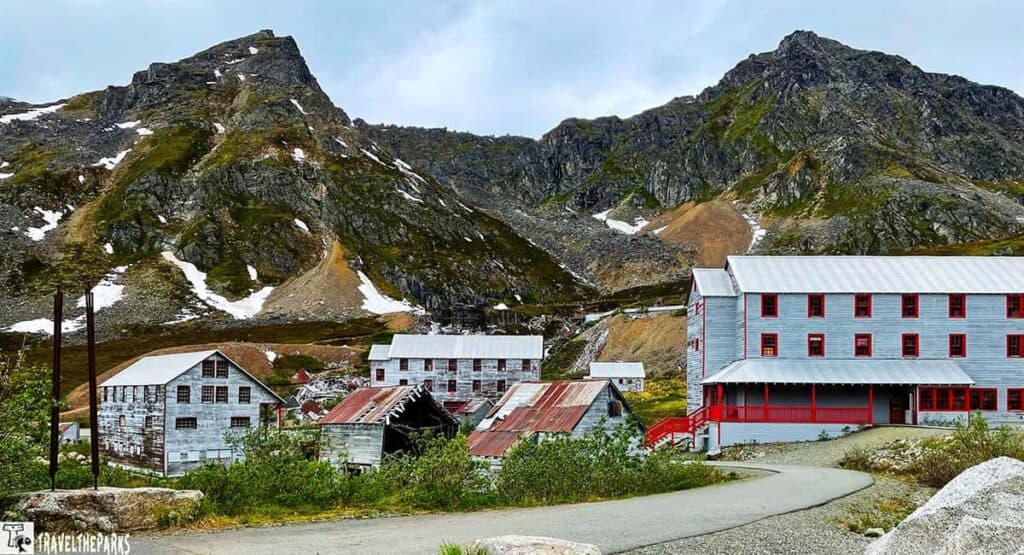
Independence Mine: The Palmer, Alaska Road Trip Detour That Earns Its Drive
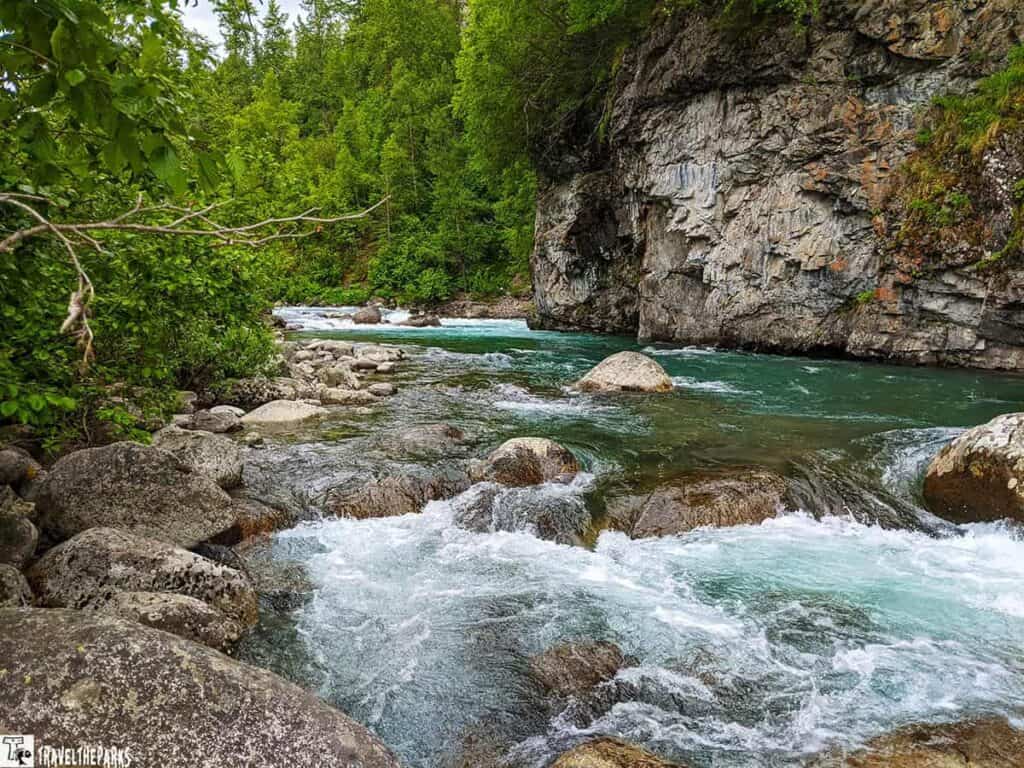
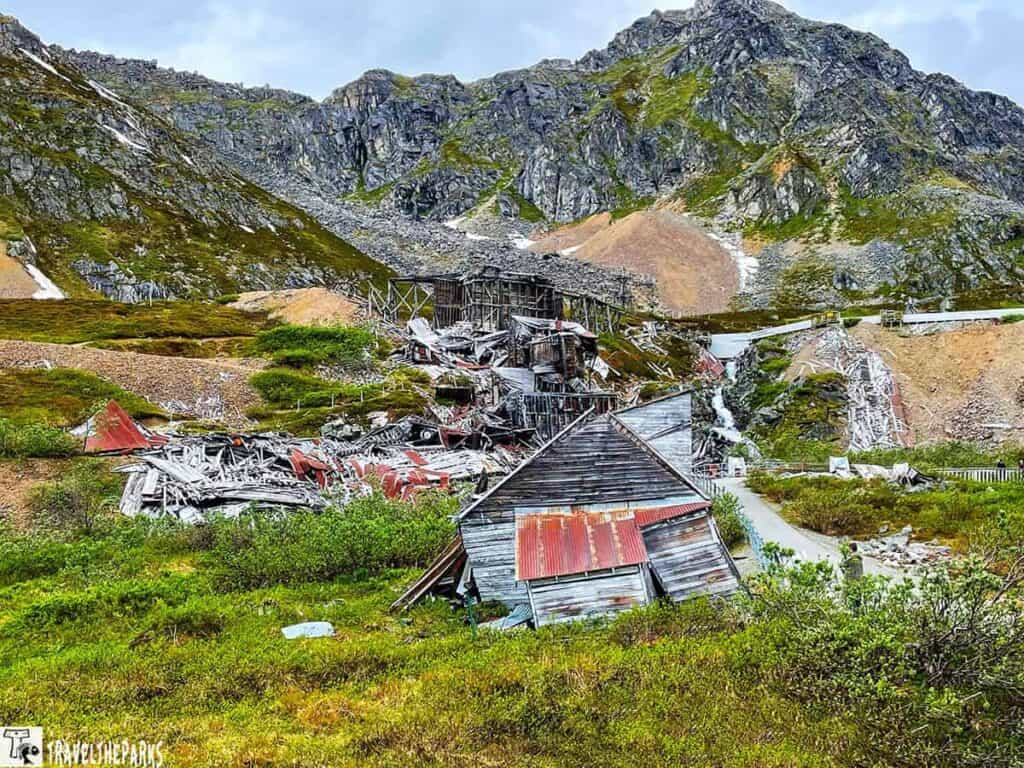
We explored Independence Mine State Historical Park as part of our day in Palmer. It’s about 19 miles up Hatcher Pass Road from town. Genuinely, the drive alone is worth doing. Hatcher Pass is just wildly pretty. Wide-open alpine tundra. Wildflowers in the summer. Somewhere around mile 8, we felt like we had left the normal world behind. We stopped just to take in the fast-flowing waters of the Little Susitna River.
The mine itself is a state historical park. It’s an old gold mining operation from the early 1900s. There are a lot of original buildings still standing on the hillside. You can walk around on your own self-guided or do a ranger-led tour. Either way, the views from the top are incredible. You look out over the Matanuska Valley, all the way to Palmer. It’s hard to leave. We remained frozen, looking like fools with our mouths hanging open.
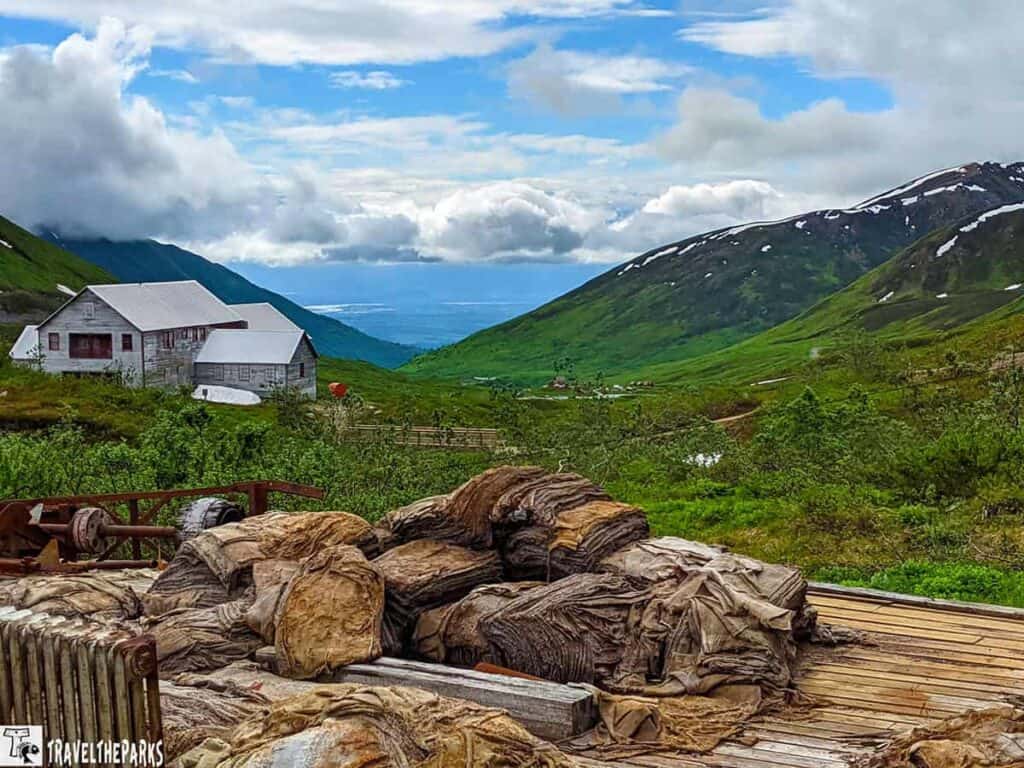
PRO Tip: We have a separate post on Independence Mine if you want all the details. There’s more to say about it than fits here.
Matanuska Lakes Trails & Dock Fishing: Palmer AK Day Trip Highlight
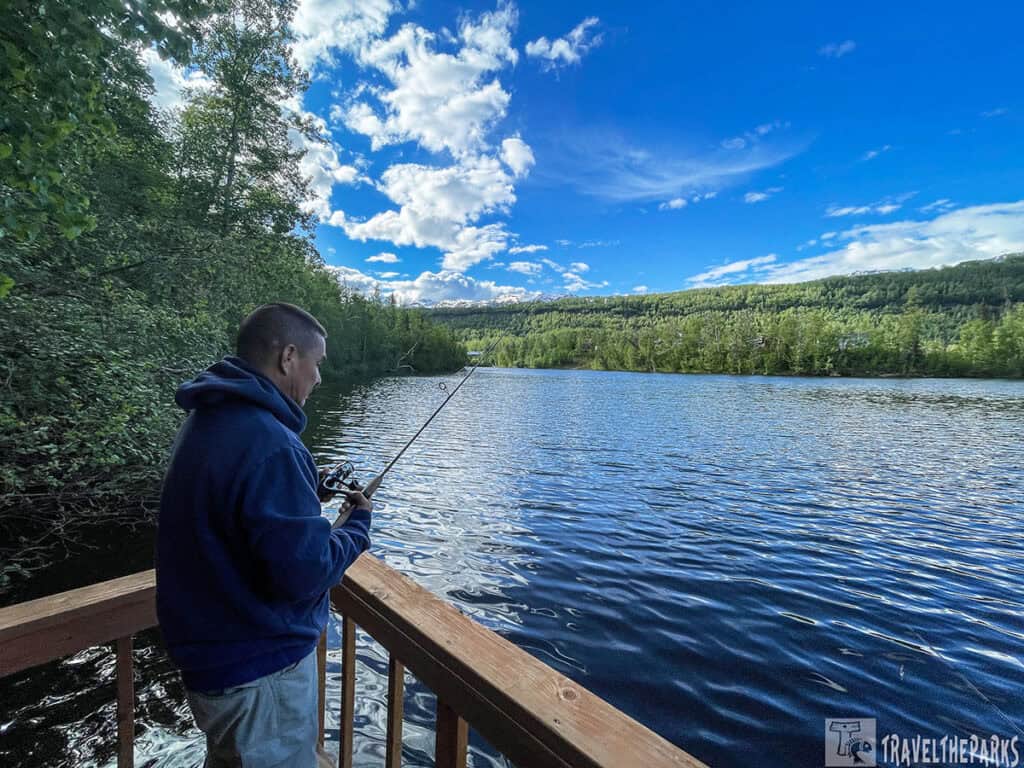
The second time around, we came prepared. Bug spray, better shoes, and zero illusions about what we were getting into. The trails at Matanuska Lakes are not going to challenge you—they wind through birch and spruce, flat and easy, with Pioneer Peak sitting out there in the distance doing all the dramatic, heavy lifting. Honestly, that’s exactly what you want after a full day of driving and sightseeing. Nobody needed a workout. We needed a walk, and that’s what it was.
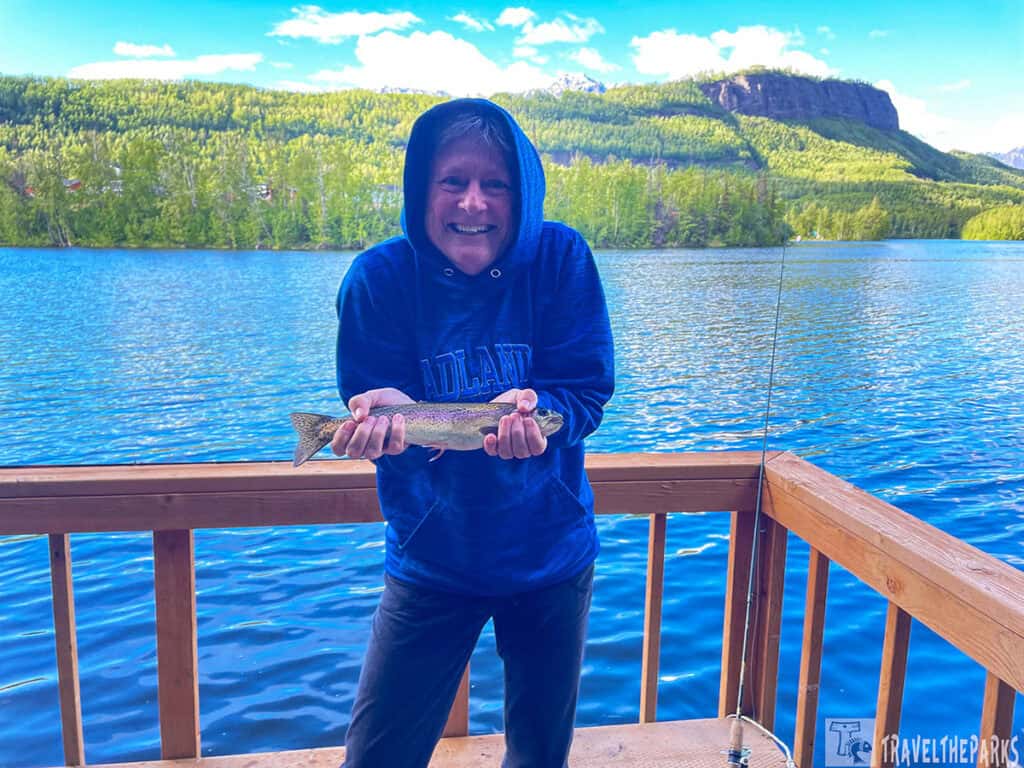
The fishing dock is a simple setup over one of the lakes. We didn’t catch anything remarkable, but that’s almost beside the point. There’s something genuinely restorative about sitting on a dock in Alaska with your feet dangling over cold, clear water and the Talkeetna Mountains doing nothing in the background but looking majestic.
Eating in Palmer: Palmer Alehouse & The Nosy Goose
We ate at both of these places on each trip. Nothing bad to say about either.
The Palmer Alehouse has a solid menu. Good local beer on tap. The inside is comfortable and a little dim, which feels right after a day of driving and hiking. Locals actually eat there, which is always a good sign.
The Nosy Goose is more casual. More of a community spot. The kind of place where you might end up talking to the people at the next table about where they’re from and how long they’ve been in Alaska. The food is hearty. Portions are generous. We ate there twice and have zero complaints. That says more than any online review.
PRO Tip: Don’t skip dessert. Just don’t.
Where Palmer Fits on a Bigger Alaska Road Trip
Palmer ended up being one of those places we kept returning to throughout the trip rather than just passing through. It sits right on the Glenn Highway, which means it connects naturally to pretty much everything else on an Alaska road trip—the Matanuska Glacier is up the road. Wrangell-St. Elias and Valdez are further southeast. Denali is north, and the Kenai Peninsula is a solid day’s drive south. We hit all of it on our 10-day trip and have posts on each one if you want the full picture.
From Anchorage, it’s about 45 minutes northeast—close enough to feel like a warm-up, far enough to feel like you’ve actually left. Coming down from Denali, it’s a natural last stop before the city swallows you back up. Either way, don’t just grab lunch and leave. We did that on the way in once and spent the whole drive back wishing we’d stayed longer.
Evening: Back at Camp Before the Light Fades
Even by eight or nine in the evening, the sky still had that low golden color that makes you lose track of time completely. We’d made it back to Matanuska Lakes by early evening, pulled chairs down toward the water, and just kind of sat there while the lake went quiet. The spruce trees darkened around the edges first. At some point someone paddled a kayak across Kepler Lake—slowly, no rush—and a loon started up somewhere out in the middle. We didn’t talk much. There wasn’t really anything to add.
The fire caught on the third try, which we consider a moral victory. That’s pretty much an ideal Alaskan evening—no cell service required, no elaborate plans, just the kind of quiet that reminds you why people drive thousands of miles north in the first place.
Final Thoughts on the Palmer, Alaska Road Trip
Palmer is not trying to impress you, which is part of why it does. It’s a farming town that happens to sit inside one of the most dramatic landscapes on the continent, and it doesn’t seem particularly bothered by that fact. The history is odd and worth knowing. The food is better than the size of the town suggests. And the mosquitoes at Matanuska Lakes are a genuine force of nature — particularly if someone in your group leaves an RV window cracked, which we are still not taking responsibility for.
Both of our trips left us feeling like we’d gotten a real look at the texture of Alaskan life—not just the dramatic peaks and glaciers, but the smaller moments: fishing off a dock, watching musk oxen chew grass, drinking a cold beer in a bar full of people who’ve lived through forty winters, and waking up to find a moose peering through your RV window like a furry, 1,200-pound landlord. That stuff sticks with you.
Have you been to Palmer or camped at Matanuska Lakes? We’d love to hear from you! Drop a comment below — your tips, favorite spots, or that one moment where a moose photobombed your sunrise coffee. Alaska stories are always welcome around here.