Here’s the funny thing about road trips: the stops that surprise you the most are usually the ones that stick with you the longest. Pulling into the Tuskegee Airmen National Historic Site on a mild Alabama morning, we had no idea we were about to spend two and a half hours glued to history we wish we’d learned a lot more of in school.
Yeah, this wasn’t that.
We were driving through eastern Alabama. You know the stretch—trees, more trees, and then a gas station with surprisingly good boiled peanuts. We saw a brown historic marker for “Tuskegee Airmen National Historic Site.” I thought, “Oh, that’s the Red Tails, right?” Both of us agreeing, “Yeah, let’s just pop in real quick.”
Two hours later, we were still there. And neither of us was mad about it.
We really like historic sites on road trips. Always have. We’ll go out of our way for a battlefield or an old schoolhouse or pretty much anything with a plaque. Earlier that same day, we’d visited Tuskegee Institute—that’ll be a separate post, but spoiler, it was great. So when we saw the airfield was only a few miles away, it felt like an easy add-on. One more stop before finding lunch.
Famous last words, I guess.
This post may contain affiliate links, meaning if you purchase something through one of these links, we may earn a small commission at no extra cost to you! Read the full disclosure policy here.
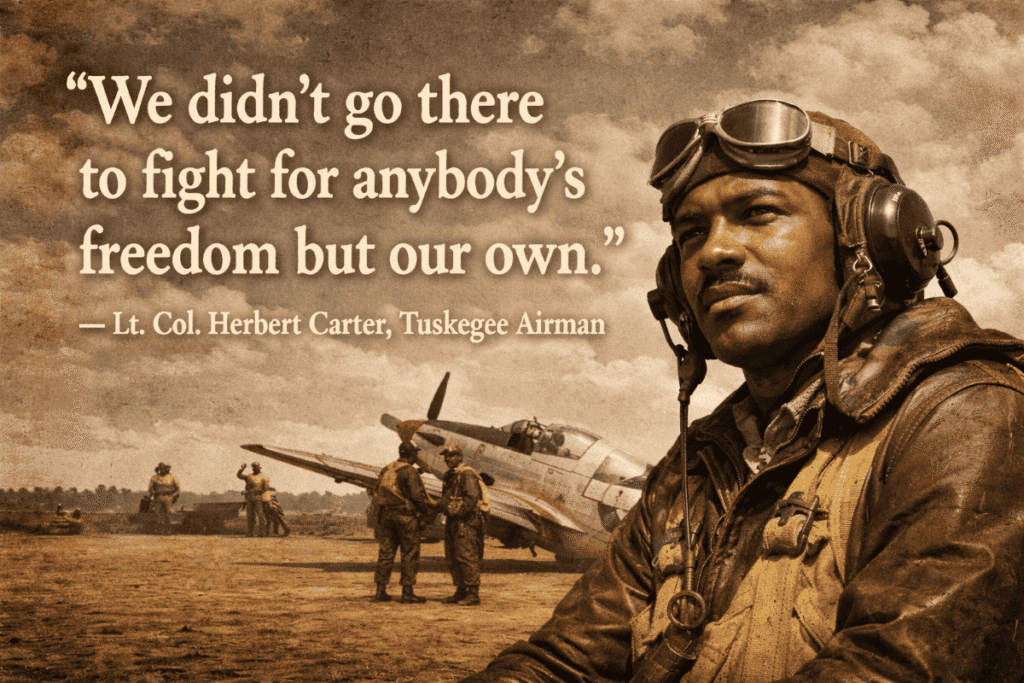
Table of Contents
The Story Behind This Red Tails Historic Airfield in Alabama
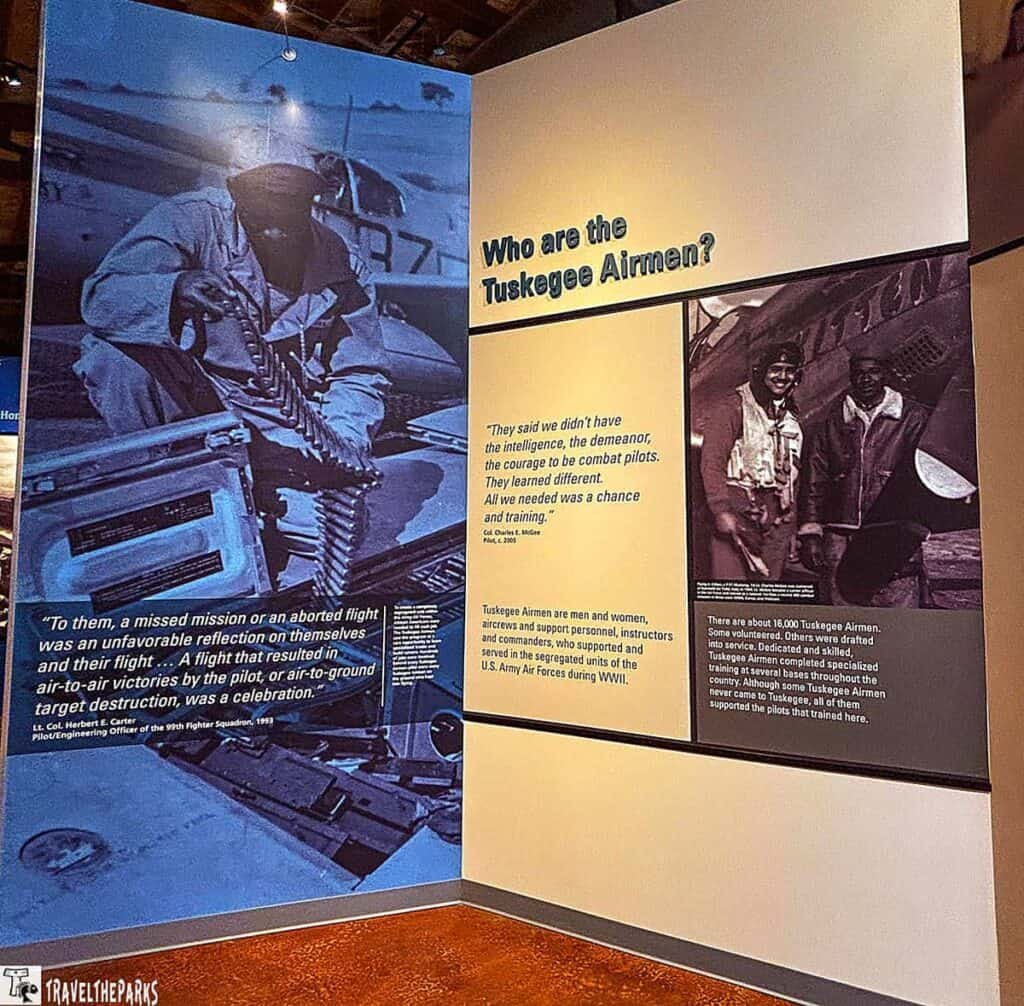
During World War II, the U.S. Army was not exactly rushing to let Black men fly combat aircraft. The general attitude from the military brass ranged from skeptical to flat-out dismissive. So the Army Air Corps created a separate training program at Tuskegee, Alabama—effectively saying, “Fine. Prove us wrong.”
They did. Spectacularly.
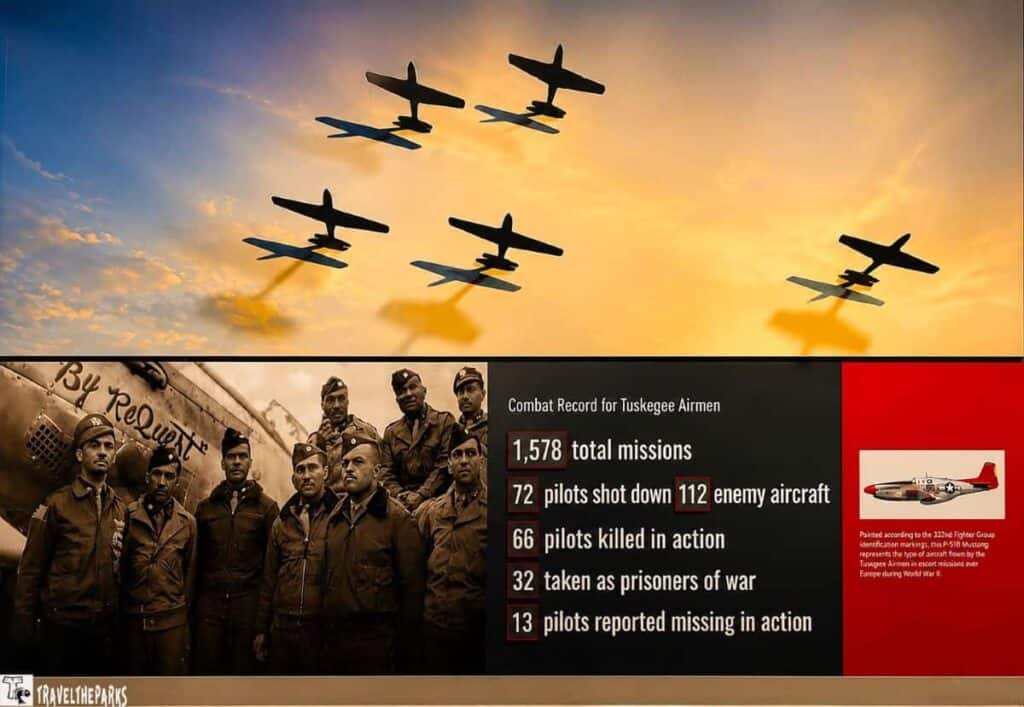
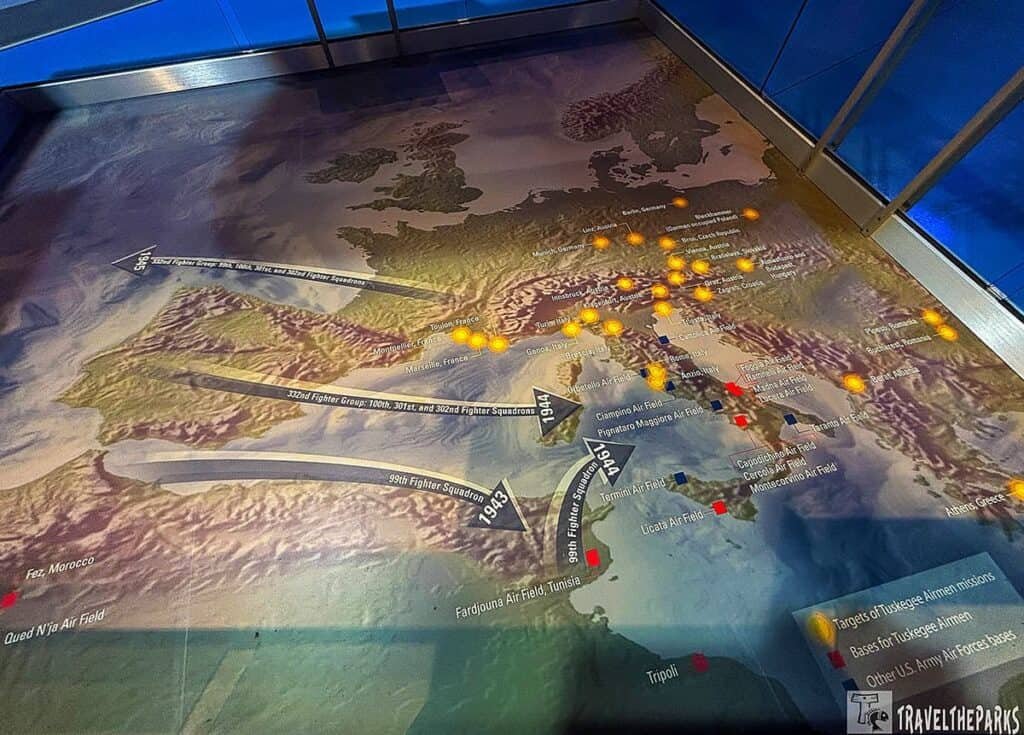
So here’s what they did. The guys training here, plus the women keeping the planes in the air back on the ground. They flew over 15,000 missions. Europe. North Africa. Mediterranean. That number is hard to wrap your head around.
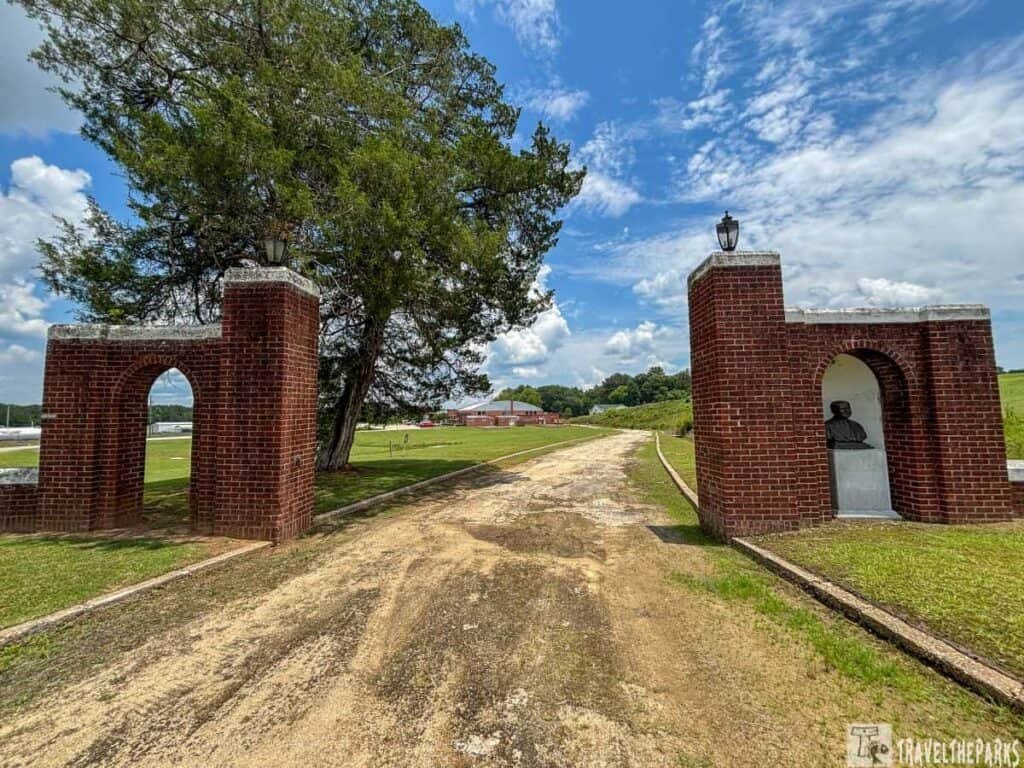
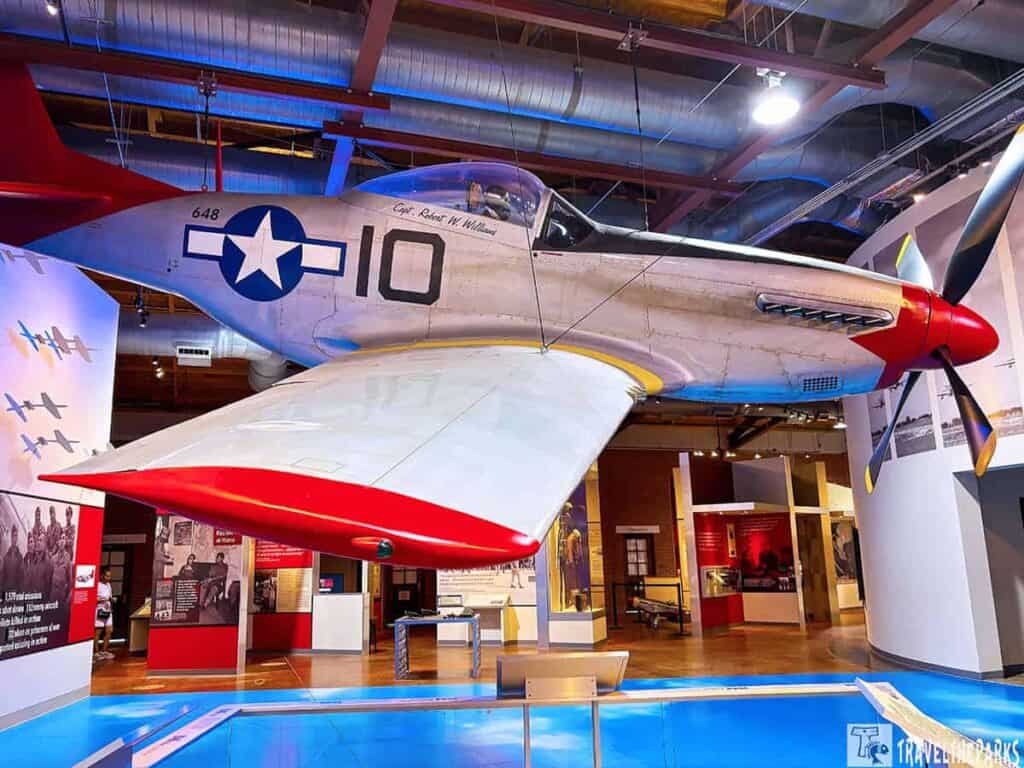
The Red Tails—the 332nd Fighter Group with the painted tails—they got really good. Like, bomber crews would specifically ask for them. “Give us the Red Tails.” That’s not nothing.
And they built that reputation right here. On this airfield. In a state where they couldn’t always sit at the same lunch counter as the white men they were fighting alongside. That part still gets me.
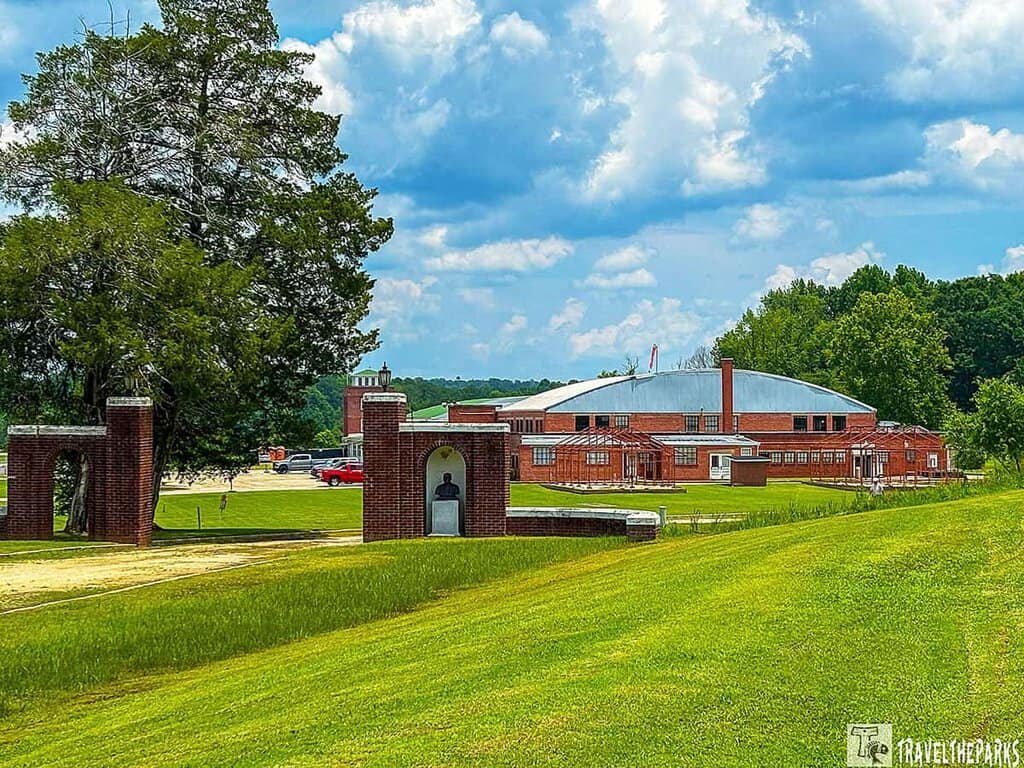
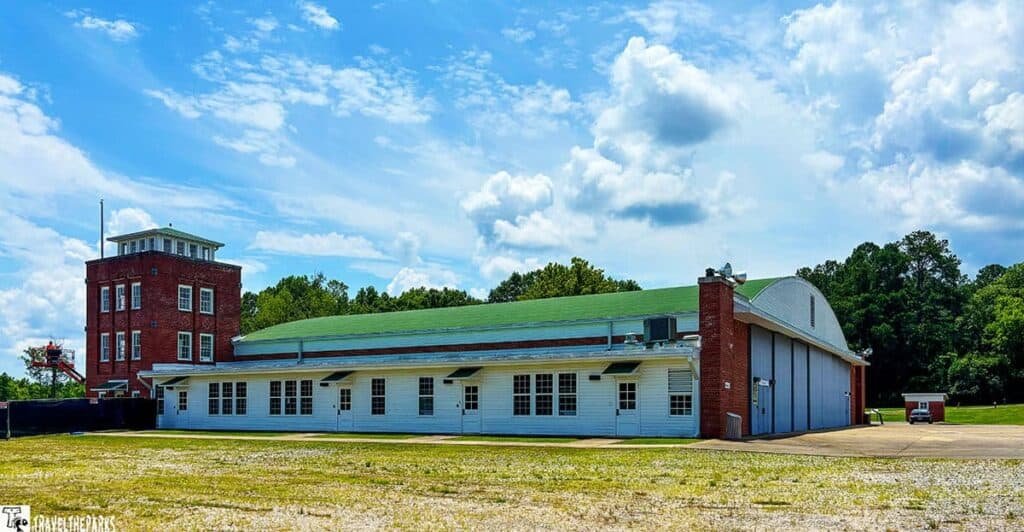
The place is called Moton Field. Looks almost the same as it did back then. Walking around, you get this feeling. Not dramatic. Just… thin. Like the past is right there. You can’t really explain it. But you’ll feel it.
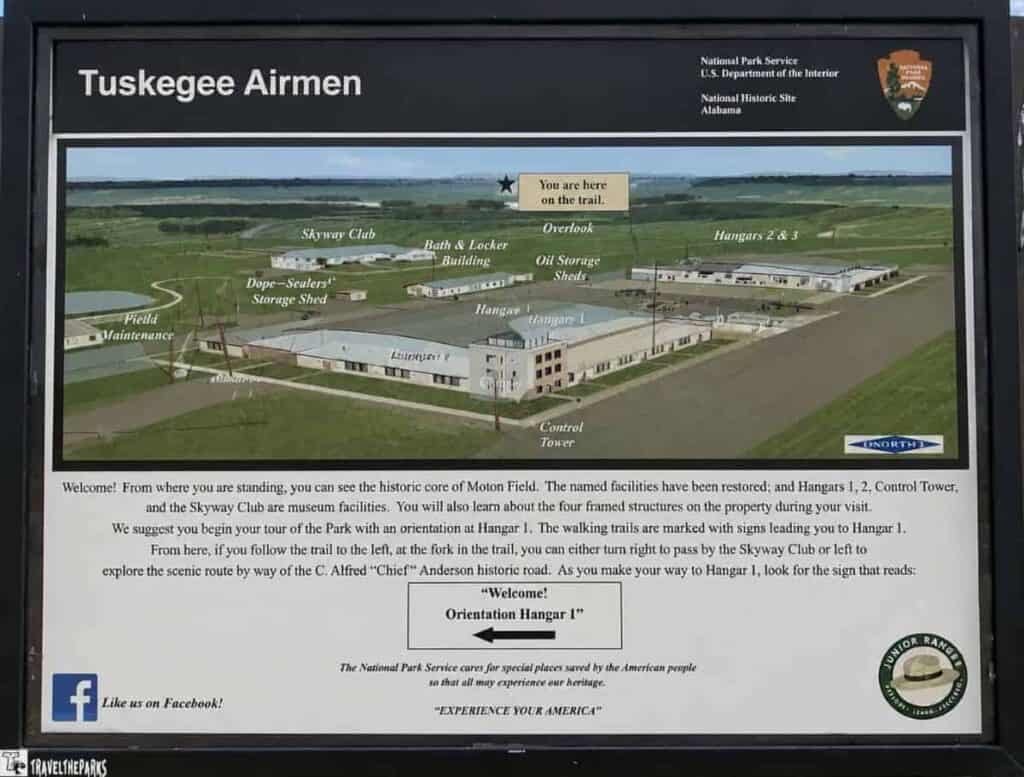
What We Actually Did While Visiting the Tuskegee Airmen National Historic Site
Funny enough, the best view isn’t some separate scenic lookout point—it’s just the parking lot. It sits up on a little rise, and from your car you can already see most of the site laid out below: the hangars, the old control tower, the tarmac. We ended up eating lunch right there on the tailgate before walking down to anything. Gave us a minute to just look at the place before getting into the details of it. Somebody mentioned that if you stand up there long enough and the wind’s right, you can almost convince yourself you’re hearing engines.
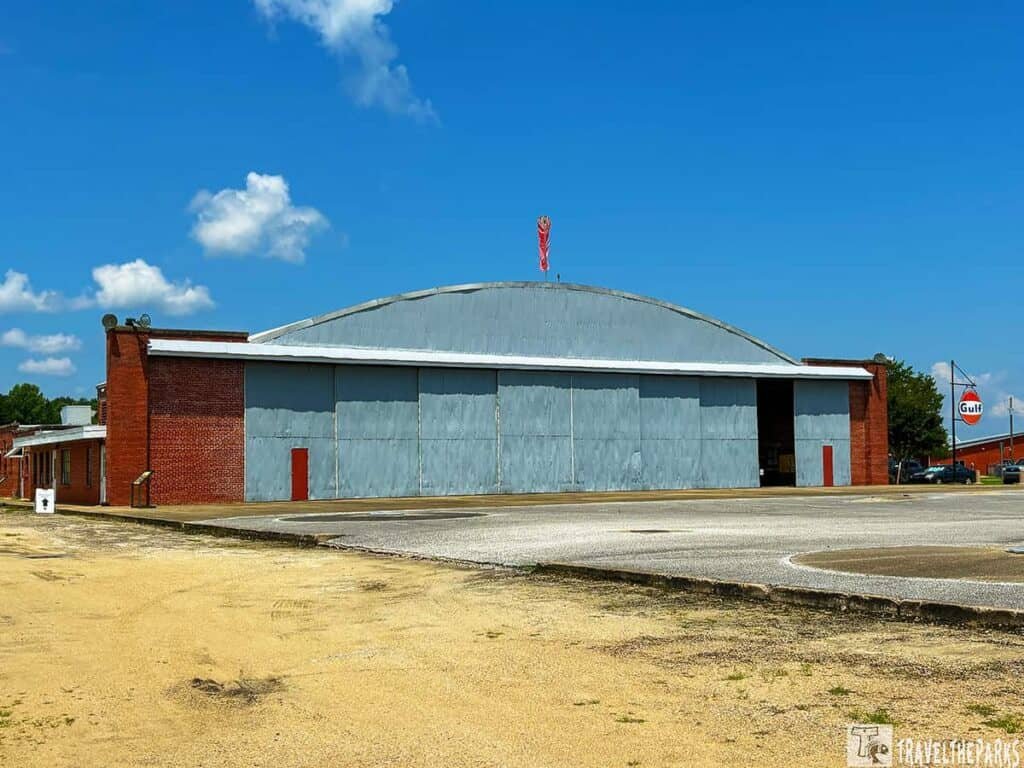
Inside Hangar 1: The Trainer and the Tools
Our tour was focused on Hangar 1 and Hangar 2, along with the historical land surrounding them. Rangers can be found at both of them, and trust me, they have an enthusiasm for the history here that is contagious enough for you to sit down and listen to everything they have to say.
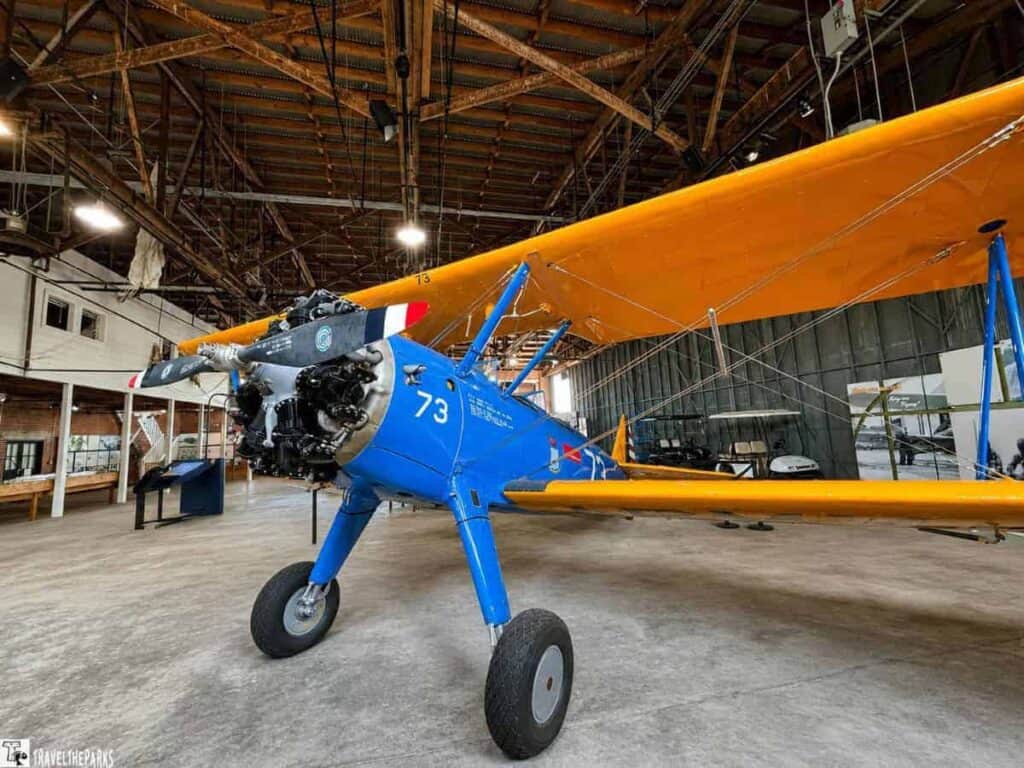
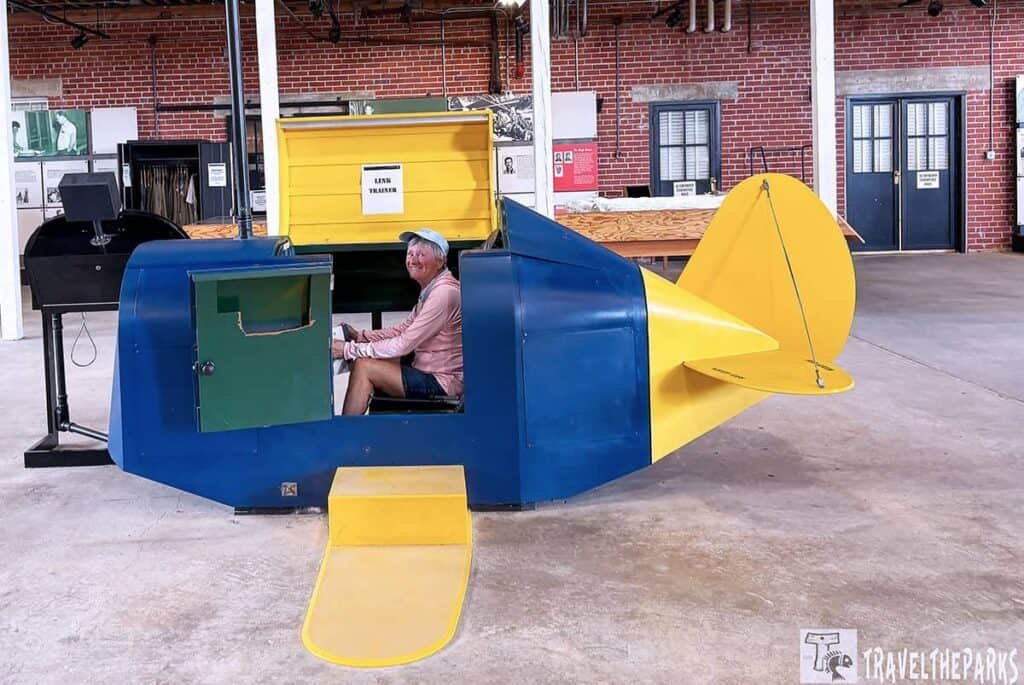
Hangar 1 doesn’t really feel like a museum once you’re inside it. Feels more like an old workshop somebody just stepped out of for a minute. There’s aircraft parked under the high windows, metal still polished up, but what everyone actually stops for is the Link Trainer — fully restored, sitting right there in the middle of it all. This was a simulation device used by airmen during their training sessions, and it is something akin to a carnival ride that got a job as an aircraft instructor. It’s this compact, blue contraption that looks almost playful, but watching the ranger demonstrate how it worked—how they could throw a pilot into every kind of storm and mechanical failure without ever leaving the ground—is absolutely mind-blowing.
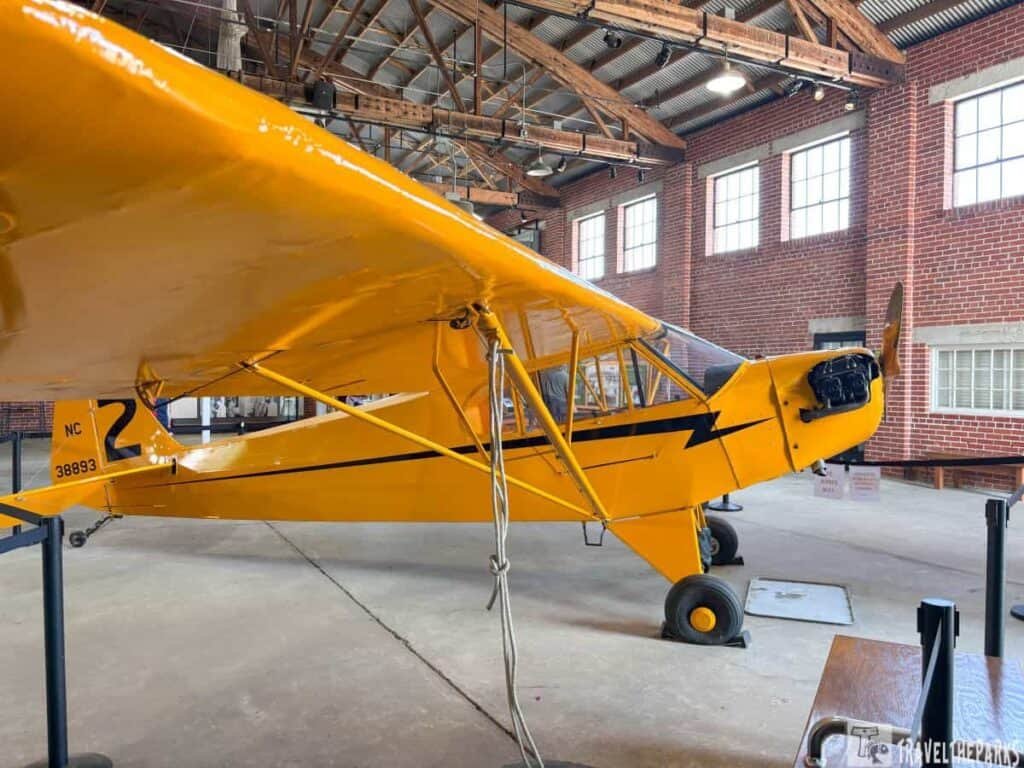
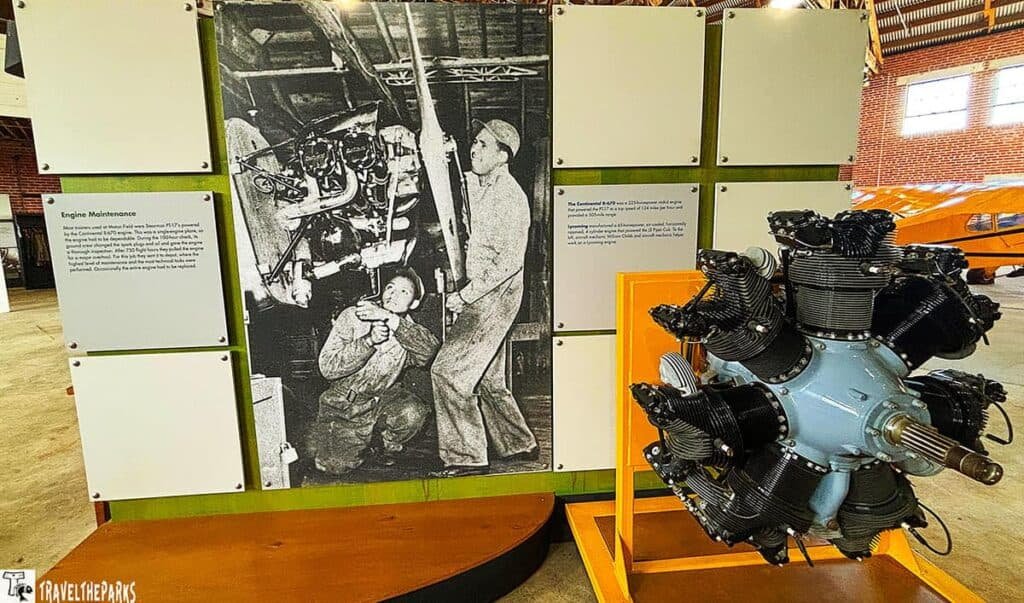
We stood there for a good while, just trying to wrap our heads around the fact that these young men learned to navigate by the seat of their pants inside that little box, long before computers made simulation easy. The hangar also holds the tools of their trade: the maintenance pits, the workbenches, and the well-worn instruments that tell the story of the ground crews who kept those planes in the air, often working through the night.
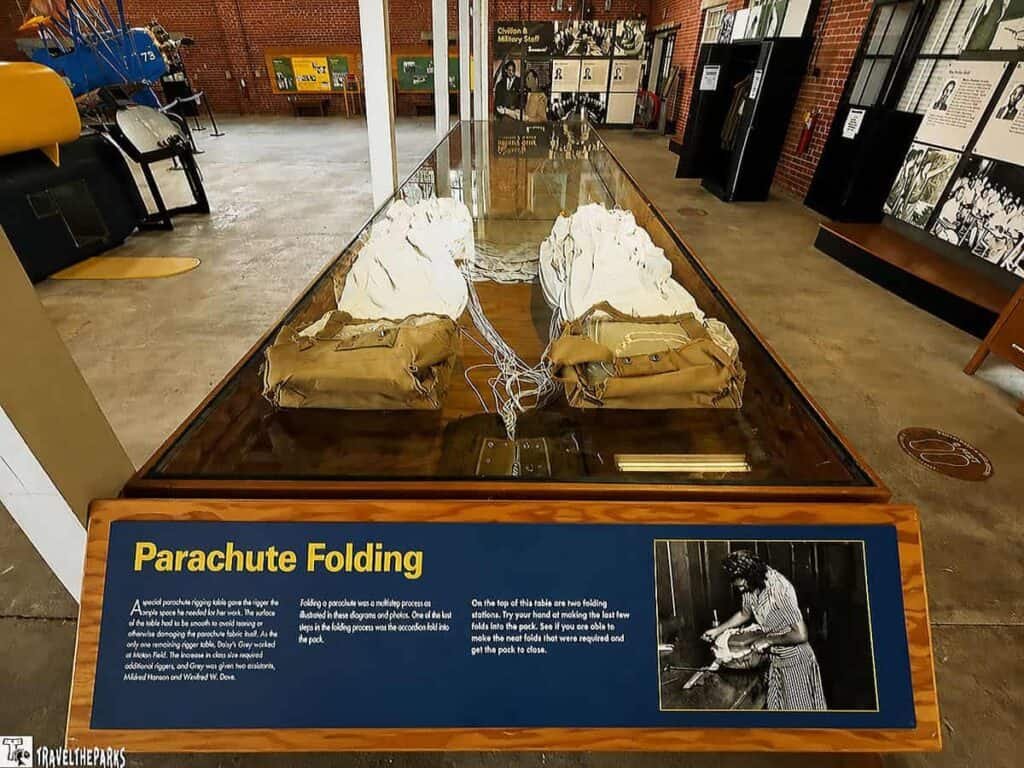
The Wing Construction Exhibit
One of the exhibits that really stopped us in our tracks was the cutaway wing display, showing exactly how these aircraft were actually built. The wooden ribs and fabric skin underneath look almost flimsy up close—paper-thin, honestly—and it’s strange to think that something built this way was expected to hold together at speed, under stress, in combat.
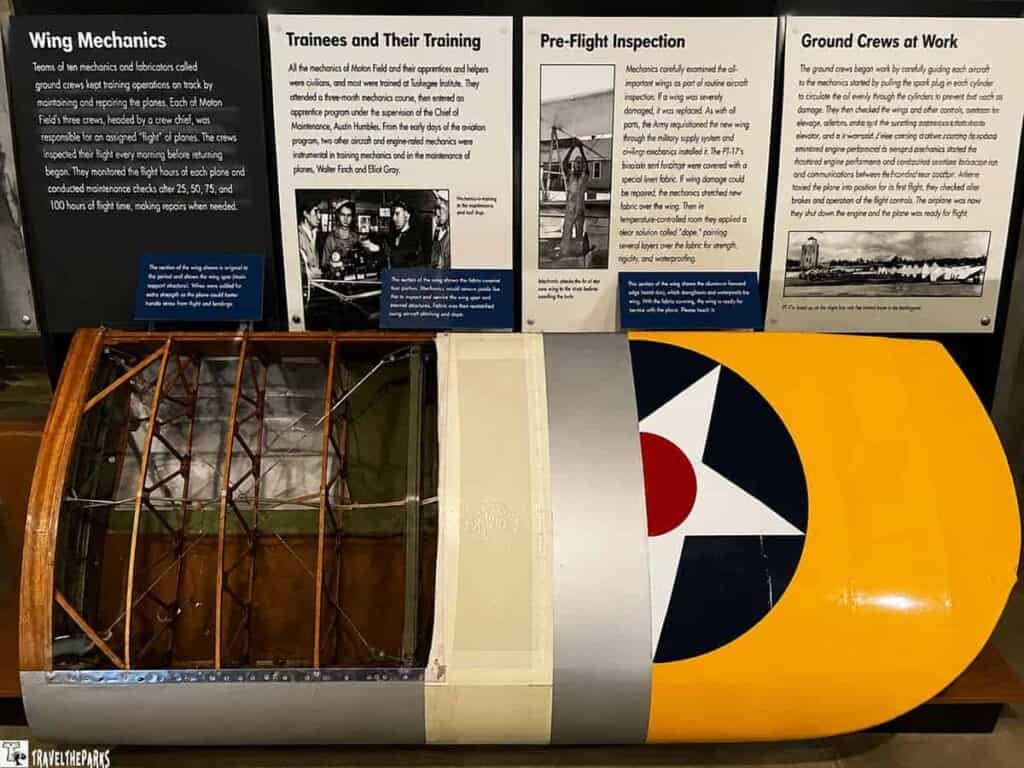
The fabric covering was treated with a substance called dope, a kind of lacquer that, once applied and dried, pulled the material taut and gave it a hard, almost shell-like finish. Without it, the wing surface would’ve stayed loose and floppy — useless for actually flying. Seeing the layers laid bare like that, rib by rib, fabric by fabric, makes you realize how much trust these pilots had to put in a structure that, by today’s standards, looks almost handmade.
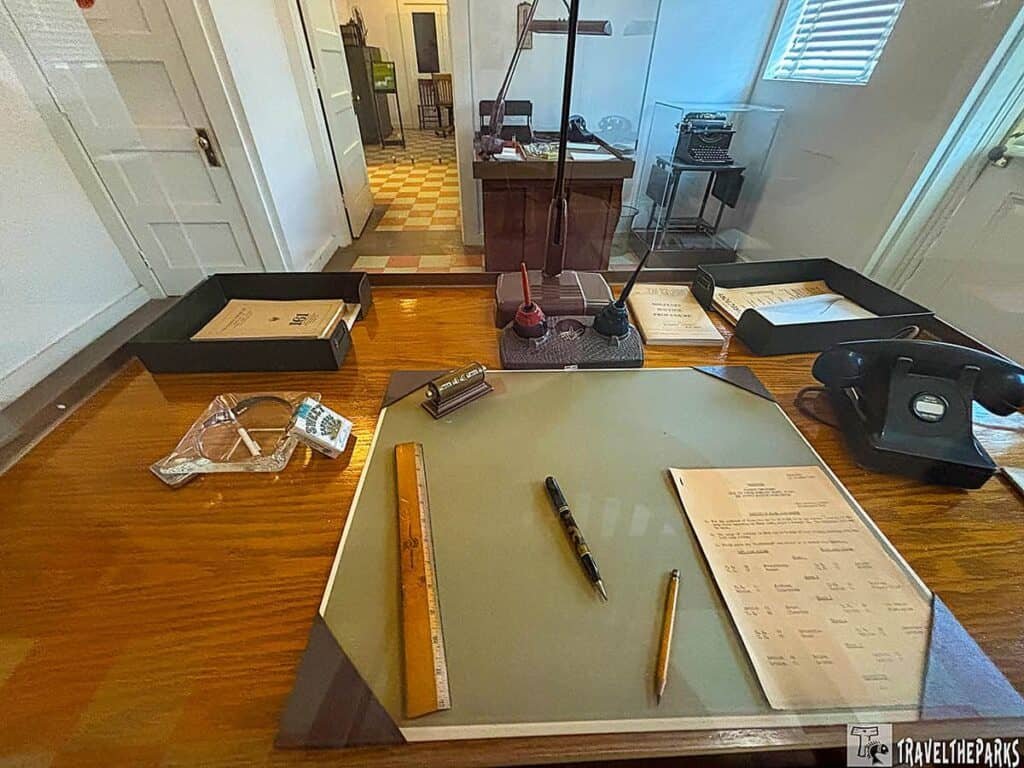
It’s a small exhibit, but it reframes everything else you see in the hangar. These weren’t hardened, modern machines. They were close to the edge of what materials and engineering could manage at the time, and the men who flew them knew it.
Hangar One also has the Tea Room—accessed from outside the main building. Just a little café spot for base staff back then. Bummer it was locked up when we visited.
Inside Hangar 2: The Story on Screen
Hangar 2 is set up differently. It’s more like a theater and archive combined. It has a different kind of energy. It’s quieter, more reflective, and that’s where you’ll find the main film—a documentary about the Tuskegee experience that several fellow visitors called the highlight of their trip. We grabbed a seat and let the story unfold. One reviewer on a travel site described it as difficult to watch emotionally but deeply educational, and that tracks perfectly.
It does not shy away from anything. The film gives the truth, including the prejudice, the lack of expectation, and the incredible perseverance that went beyond all that.
It’s one thing to read about this in a textbook. It’s another to actually hear the airmen’s voices, see their faces, watch footage of their everyday lives playing out in front of you. When the credits rolled, nobody in the room said anything for a second — that kind of quiet where everyone’s just sitting with it. This is really the part of the visit that gives you the “why” behind everything else you see in the other hangar.
Inside Hangar 2 Exhibits
But the documentary isn’t all Hangar 2 has to offer. We ended up spending almost as much time in the rest of the space as we did in Hangar 1. Along the walls, there are rows of photos and short bios of individual airmen—not just the famous names, but a lot of guys most visitors have never heard of.
Reading a few of these one by one, instead of skimming, changes how the whole place hits you. You start picturing actual people instead of a general idea of “the Tuskegee Airmen.” A few cases hold uniforms, flight gear, and small personal items—letters, medals, that kind of thing. Nothing flashy, but seeing a real flight jacket up close, worn and creased in specific ways, does more than any plaque could.
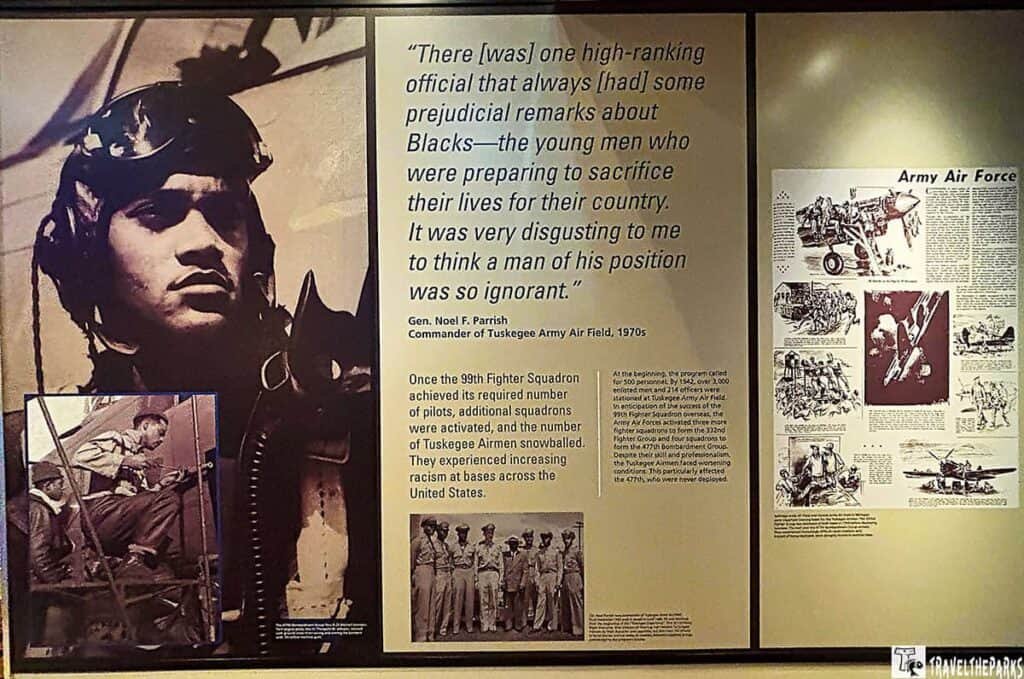
A handful of exhibits pull back to show the broader picture—how Jim Crow didn’t stop at the base gate. Black servicemen dealt with it everywhere, including on military installations. Meanwhile, German POWs held in the U.S. were covered under Geneva Convention rules, which in some cases meant better quarters and meals than the Black soldiers training right next door. That part stayed with me.
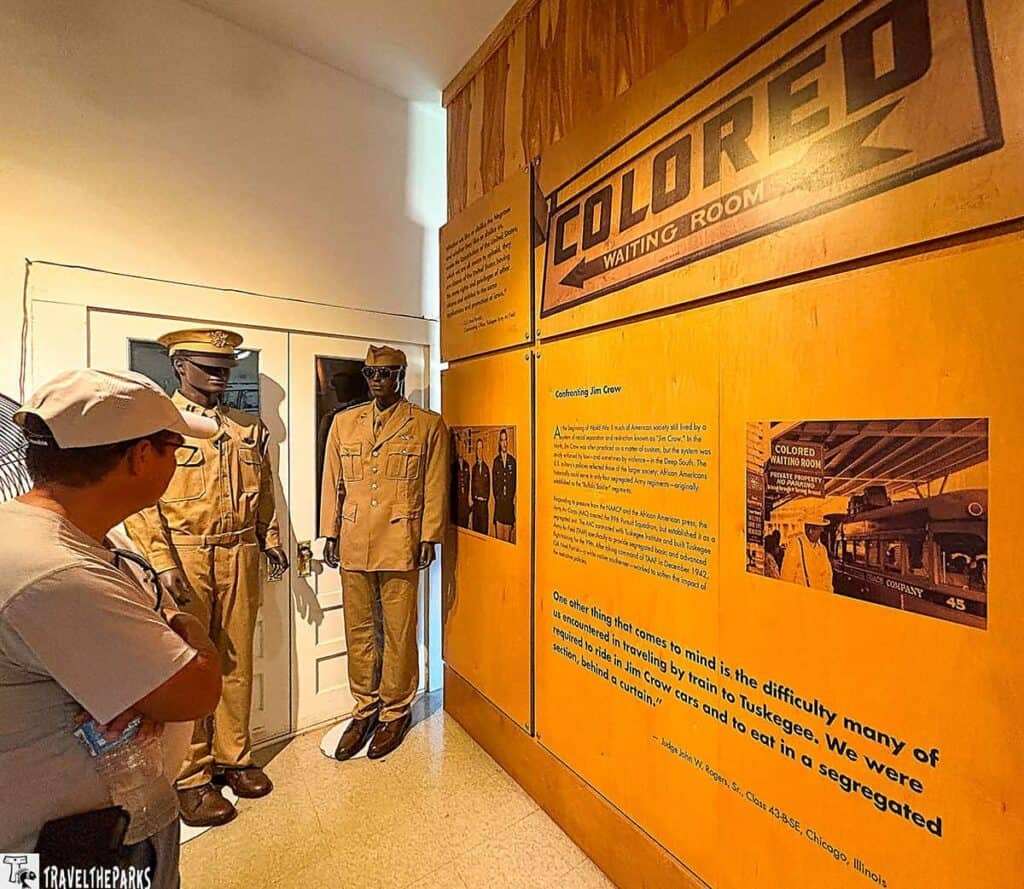
There are also a few exhibits about the support staff—the nurses, mechanics, and administrators who kept the program running.
Scattered through the hangar are pieces of equipment tied to daily life on base—radios, tools, the practical stuff that doesn’t usually make it into the history books. It rounds out the picture: less “heroic narrative,” more what an actual workday looked like. There are also a few stations set up for visitors to dig deeper—touchscreens, reference binders, that sort of thing—if you want more detail than the wall placards give you.
The Outbuildings: Walking the Same Ground
After the film, honestly, we needed air. The grounds stay open dawn till dusk, so we just wandered, no real plan. Walking past the old hangars and out onto the cracked taxiways, you start to feel why this place matters so much to the people who actually flew out of here. Weeds pushing up through the concrete in spots—somehow that made it feel more real, not less. You can see the hangers from the outside, with their massive sliding doors, and you start to appreciate the scale of the operation that ran here. The breeze, the heat, the wide-open fields—it all connects you to the physical reality of their training.
Moton Field had more than just the main hangars. Past the two main hangars, there are a handful of smaller structures scattered across the property — old support buildings that once handled everything from supply storage to base administration. Most aren’t open for full tours, but you can walk right up to them, and a few have exterior plaques explaining what each one used to be.
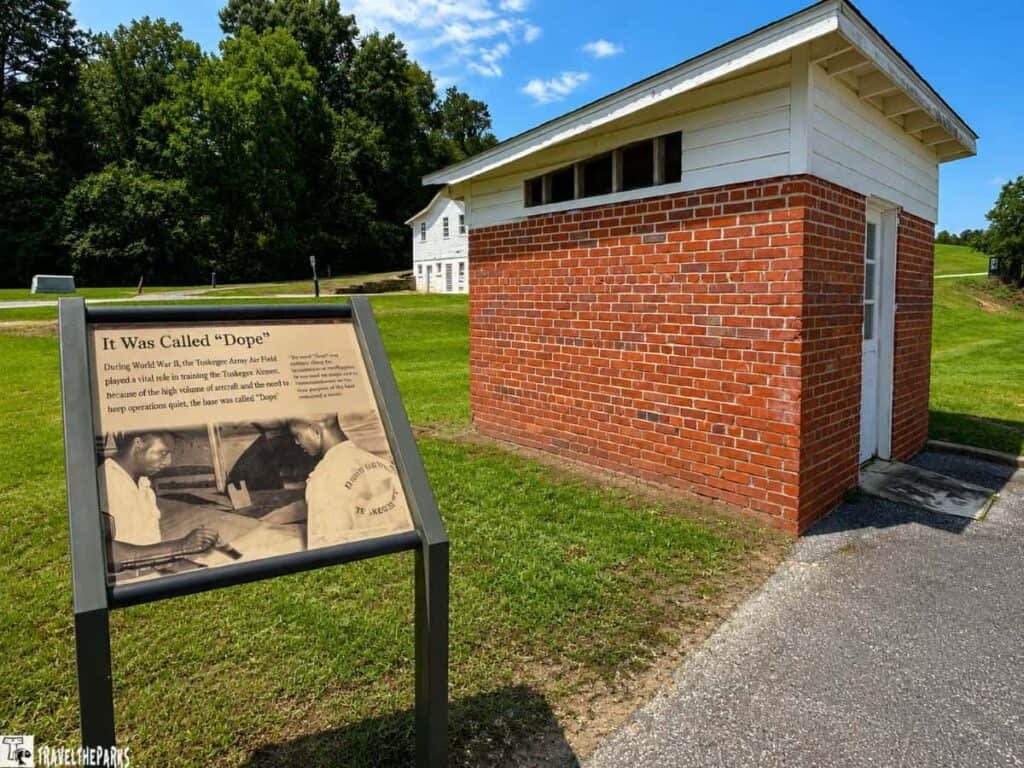
The old Warehouse/Vehicle Storage building still stands—white, boxy, and not open to walk through. Back then, they kept support vehicles in it overnight and used it as a drive-through maintenance bay during the day. Now the Park Service stores grounds-keeping equipment in there.
The Cadet Building/Army Supply Building didn’t make it—torn down in 1982. You’ll see its outline marked on the ground, just a footprint showing where it used to sit.
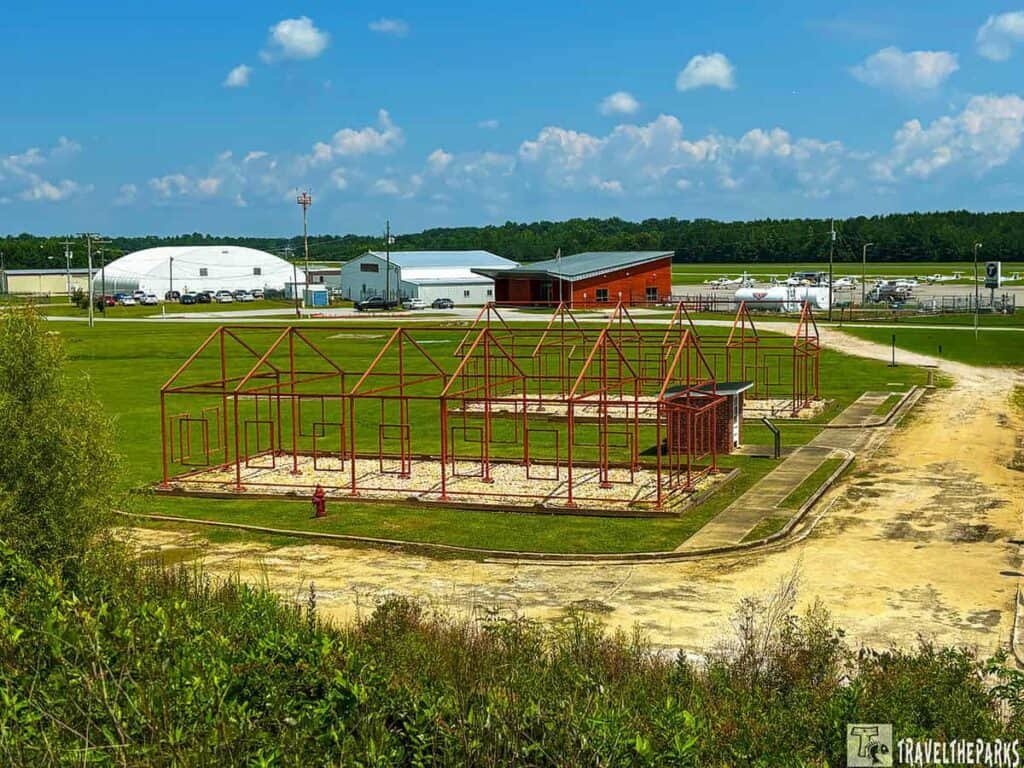
The Bath and Locker House went up during the second construction phase and had separate facilities for the women mechanics who worked on the planes.
The Skyway Club started as a rec building, later became a dormitory, and now serves Park Service purposes.
What surprised us on our visit?
Visiting Tuskegee Airmen National Historic Site, a few things caught us off guard—in the best way. First: there is no admission fee. None. Zero dollars. This is a National Park Service site, and it is completely free to visit. We mention this not to encourage penny-pinching road trippers (though we are absolutely those people) but because free access to a site this significant feels exactly right.
Secondly, the crowd size, or more exactly, the absence of them. It was so silent when we visited that it was possible to stroll at our own pace. We could also read every exhibit panel without having to push anyone and even have genuine talking with the park staff. It is something extraordinary on a road trip, for sure.
Third, and this one really got us: the buildings. They are preserved with just enough restraint to feel authentic. This is not a Disney-fied reconstruction. The hangars feel used. The history feels lived in. That matters.
Know Before You Go to the Airfield
Before you roll in expecting a quick walkthrough, here’s what you’ll want to know about visiting Tuskegee Airmen National Historic Site stop:
- Hours: Monday through Saturday, 9 AM–4:30 PM, closed Sundays only. We almost showed up on a Sunday. Closed on Thanksgiving, Christmas, and New Year’s Day. Check the official park website for updates.
- Cost: Free. They have a donation box. We threw in a few dollars.
- Time needed: Plan for at least an hour and a half. We took two and a half hours. You could do it faster, but you’d miss a lot.
- Temperature inside: The hangars don’t have full air conditioning. We went in the spring, so it was mild. But I’ve heard summer gets warm in there. Bring water just in case.
- Parking: Plenty of space. No issues.
- Pets: Allowed on grounds on leash; not permitted inside hangars.
- National Parks passport stamp available—bring your book!
- Short film: They show a 28-minute movie, Tuskegee Airmen: Sacrifice and Triumph. It’s worth watching. Excellent overview, and the seats are comfortable.
- Combining with other things to do in Tuskegee, Alabama: Besides the airfield and the Tuskegee Institute, it’s a small town. There’s not a ton else, but these two sites together make for a solid half-day.
- Groups of 10 or more can pre-register through the NPS website, which the rangers appreciate. If you’re traveling with kids, ask about the Junior Ranger program—badge-earning is always a crowd-pleaser, whether the kid is 8 or 38.
Final Thoughts: Tuskegee Airfield road trip stop
We’ve been to a lot of historic sites over the years. Some feel like a lecture. Some feel like they’re trying too hard to make you cry. This one didn’t. The rangers were friendly and low-key. The exhibits let you move at your own pace.
We want to be clear about something: this is not a light or breezy visit in the way a state park or a scenic overlook might be. Here, history carries real weight. The injustice the Airmen faced was real, and the obstacles were real. The courage required to overcome them was real. This site handles all of that with dignity and care, but you will feel it. That’s appropriate. That’s the point.
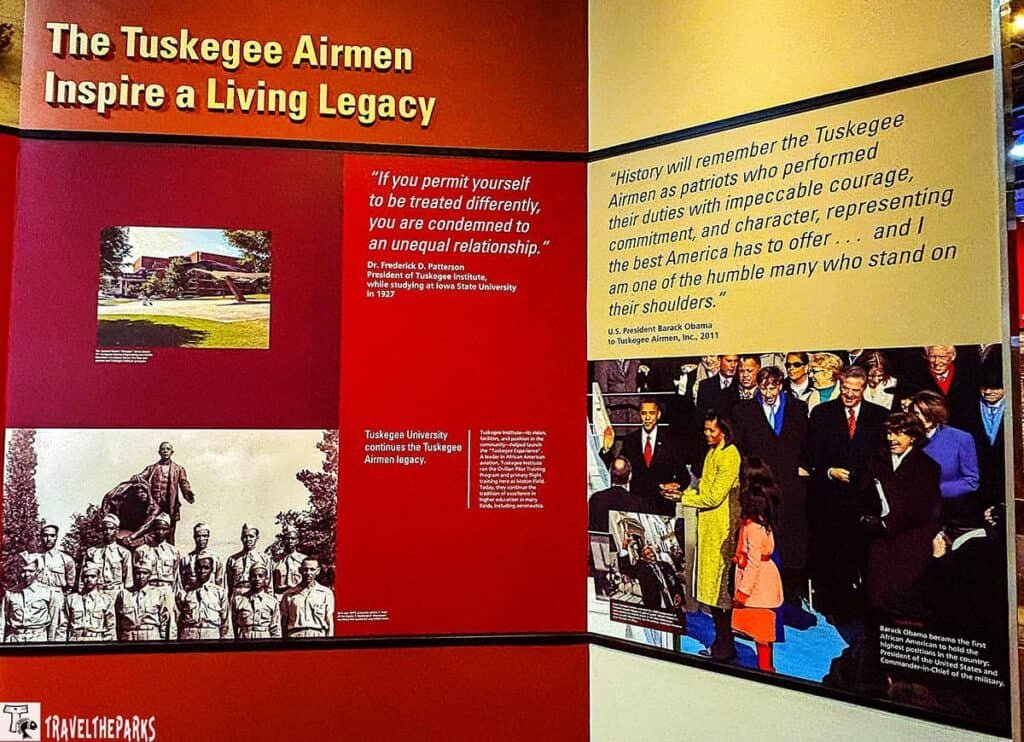
We left quieter than we arrived. We also left genuinely grateful that we stopped—both for the knowledge and for the reminder that extraordinary things can happen in ordinary-looking places next to a two-lane road in Alabama.
Have you visited Tuskegee Airmen National Historic Site? Drop a comment below and tell us about your experience—what surprised you most, what you wish you’d known, or which road trip this was part of. We’d love to hear from fellow road trippers who’ve made this stop.