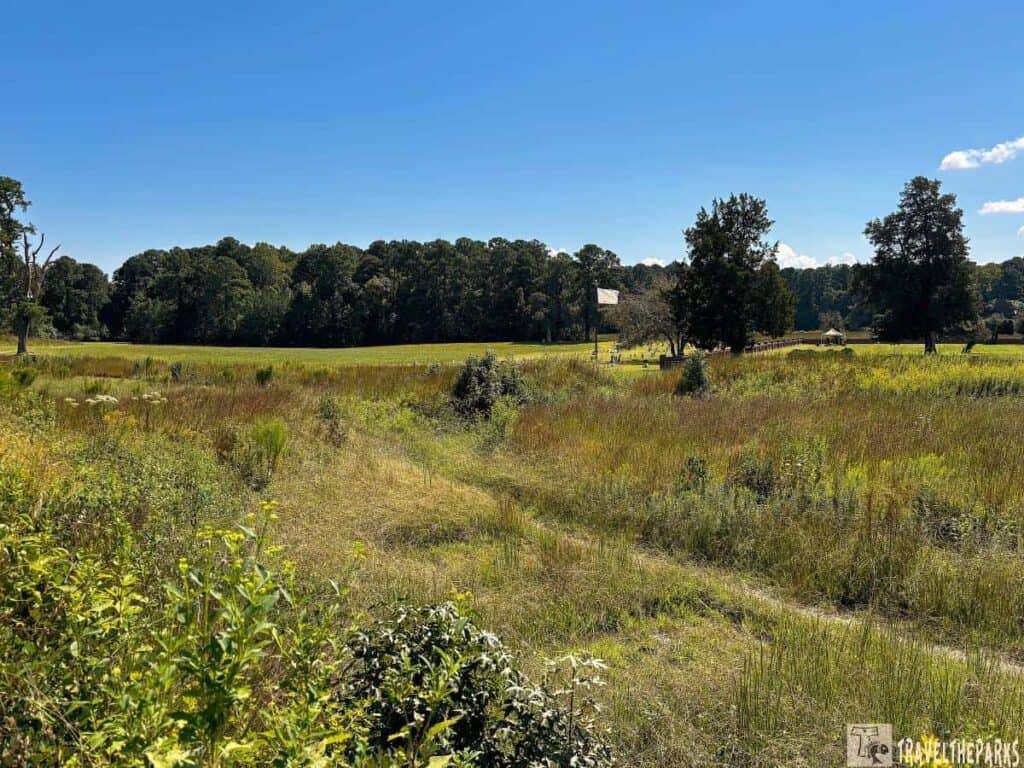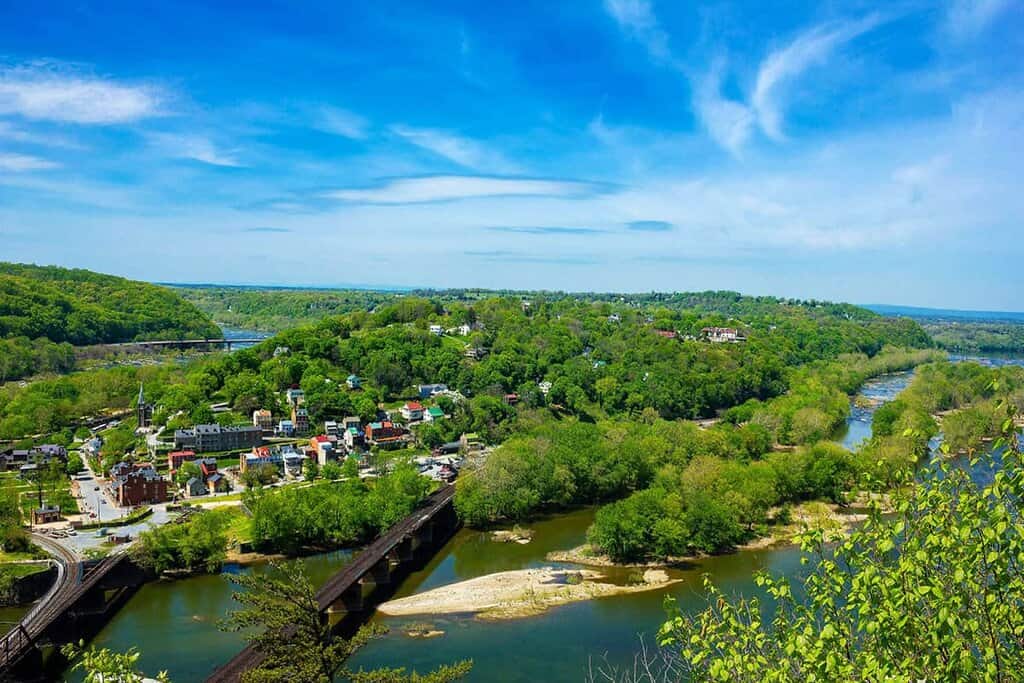
During our summer road trip to a family wedding in the Poconos, we stumbled upon one of the most fascinating stops of our journey: Harpers Ferry, West Virginia. We discovered that the best way to experience this town, where the Potomac and Shenandoah rivers meet, was on foot. That’s why we’ve crafted the perfect Harpers Ferry self-guided walking tour. Our Harper’s Ferry itinerary was packed with history, beautiful views, and we added a few practical tips to help you plan your own visit.
This post may contain affiliate links, meaning if you purchase something through one of these links, we may earn a small commission at no extra cost to you! Read the full disclosure policy here.
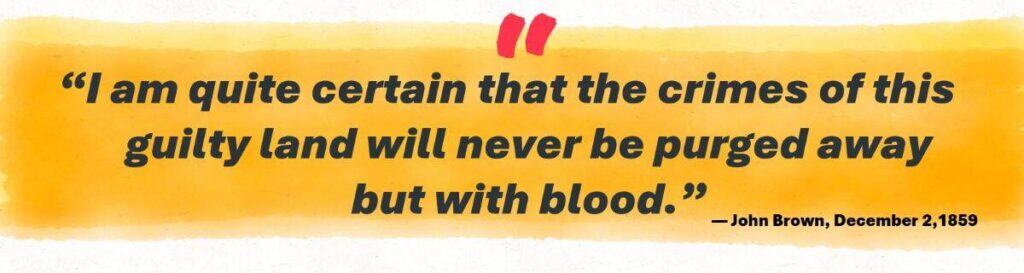
Table of Contents
Getting to Harpers Ferry: Your Easy Guide
Tucked into the mountains of West Virginia where two rivers meet, Harpers Ferry is the perfect simple escape from DC and Baltimore. Here’s the lowdown on how to get there. Think the Eastern West Virginia, right on the Maryland border. It’s only about:
- 2 hours from Baltimore, MD
- 1.5 hours from Washington, DC.
By Car (The Flexible Choice) You can’t drive into the historic Lower Town! You’ll park at the main Visitor Center and take a quick, free shuttle down.
- From DC: Jump on I-270 N to US-340 W. Follow signs for Exit 35 to the park.
- From Baltimore: Take I-70 W to US-340 W and cruise to Exit 35.
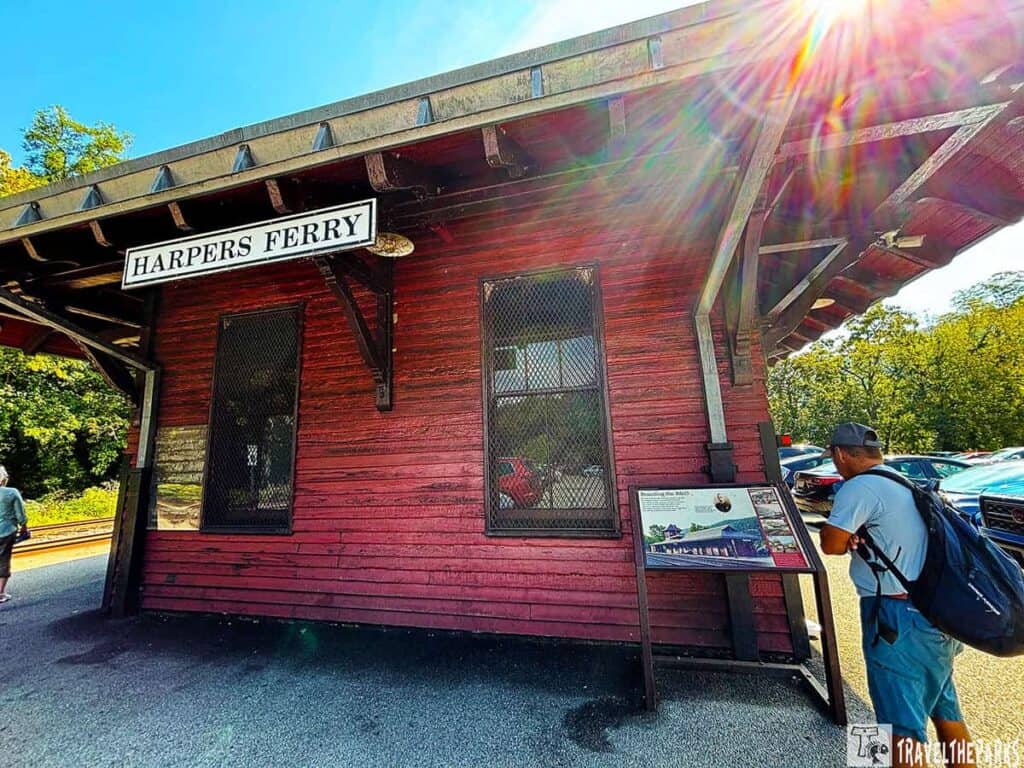
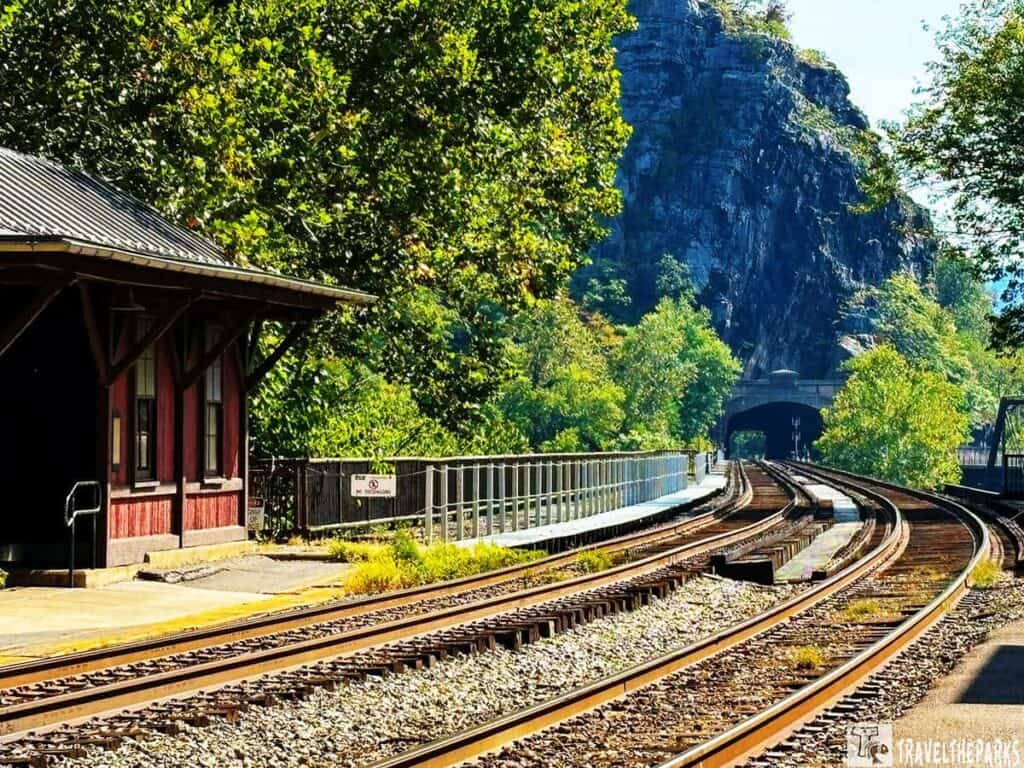
By Train (The Secret Winner): For a totally stress-free trip, take Amtrak. The Cardinal line stops at the adorable station right in the historic Lower Town. You step off the train and are already where you need to be—no shuttles, no parking hassles. It’s a scenic and relaxing way to travel.
A Brief History of Harpers Ferry
In 1747, a millwright named Robert Harper purchased some land and started a ferry service in 1761, naming the town after himself. The federal government saw how important the location was and took over the site in 1796 to build the U.S. Armory and Arsenal, which played a big role in early American industry by making muskets and rifles.
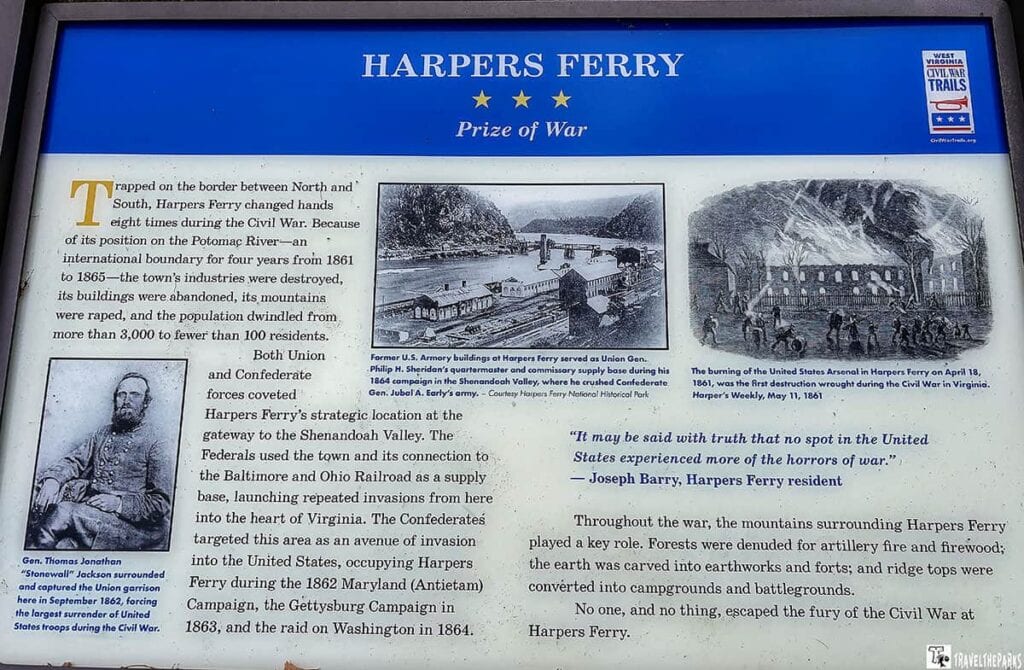
During the Civil War, it was torn apart between the Union and Confederate forces as a result of its changing hands violently eight times. Harpers Ferry was an absolute mess. The biggest seizure was in 1862 during the Antietam Campaign when Confederate General Stonewall Jackson cut off the town and compelled the surrender of more than 12,000 Union soldiers, the largest single Union surrender of the war.
After the war, Harpers Ferry was destroyed. In 1861, as they withdrew, Union soldiers set fire to the armory to prevent the Confederates from using it, and the town was heavily bombarded during the war. By 1865, it had become just a mere fraction of what it had once been.
Harpers Ferry becomes a National Historic Park
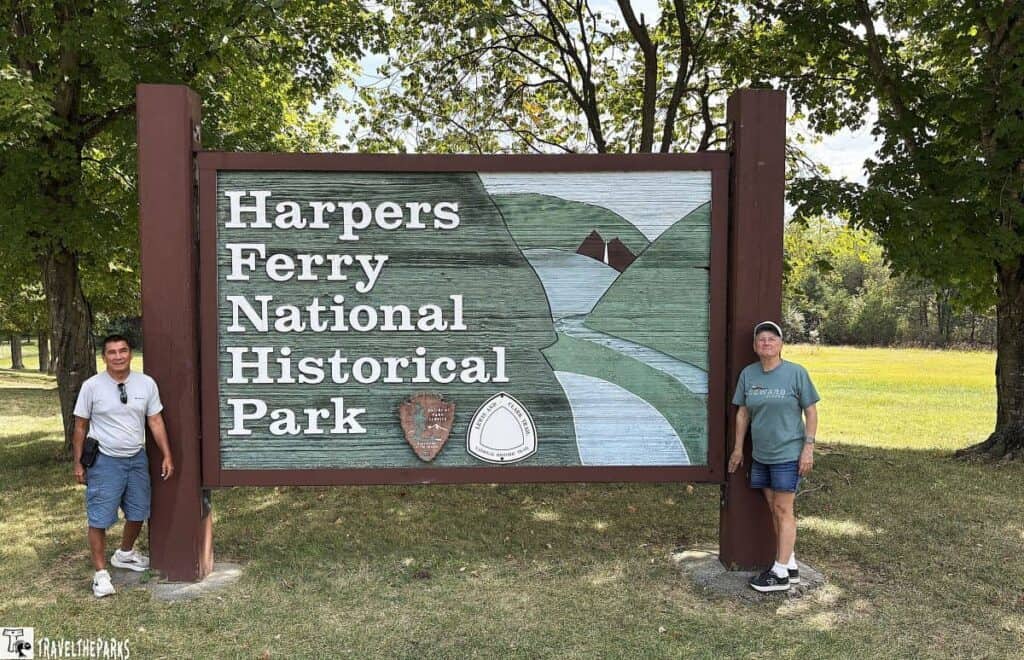
In the 20th century, the decline of Harpers Ferry that was caused by floods and economic changes, kept going until the National Park Service started saving the historic buildings. Now, as the Harpers Ferry National Historical Park, it is a place for visitors to think over the difficult and complicated past, not just a memorial of one incident. The past of Harpers Ferry, which went along the way of the United States, includes everything of the transition from industry to insurrection, from the fight on the fields to the struggle for equal rights.
Your Harpers Ferry Cheat Sheet: Parking, Passes & Pro-Tips
- Parking & The Shuttle Secret: Forget the hunt for a mythical spot in the tiny Lower Town! The real hack is heading straight to the main Visitor Center. Park for free and catch the NPS shuttle—it’s not only easy, but the ride down offers gorgeous views. Trust me, this is the only way to go.
- Entry Fees & Pass Perks: Your car gets you in for $15 for a full week. Prefer to walk or bike in? It’s $10 per person.
- Heads up for Passholders: don’t forget your “America the Beautiful” pass! Your annual, senior, or access pass covers the entry fee. And stamp collectors, your must-stop is the Bookshop in Lower Town for your official Park Passport stamp.
- Timing Your Adventure: The park is open 365 days a year, closing only for Thanksgiving, Christmas, and New Year’s Day. The visitor center, museums, and shuttle bus typically run from 9 AM to 5 PM.
- The Sweet Spot: For epic foliage and thinner crowds, aim for spring or fall. Summer weekends are spectacular but draw the biggest crowds, so plan for an early start!
- The #1 Thing People Forget: Listen up, this is important: Wear sturdy shoes! This is a mountain town with steep, uneven paths and original cobblestone streets. Your fashionable sneakers might not cut it—supportive footwear is non-negotiable for happy exploring.
Your Harpers Ferry Itinerary: A Step-by-Step Self-Guided Tour
We’ve put together the perfect plan to explore one of America’s most historically rich landscapes. Let us guide you to the can’t-miss spots!
- Time Needed: We recommend 3-4 hours at a comfortable pace.
- Our focus: history, scenic views, and iconic landmarks.
- What We’ll Do: A mix of paved paths, historic buildings, and a few steep climbs rewarded with breathtaking views.
Stop 1: Start at the Main Visitor Center (The Launch Pad)
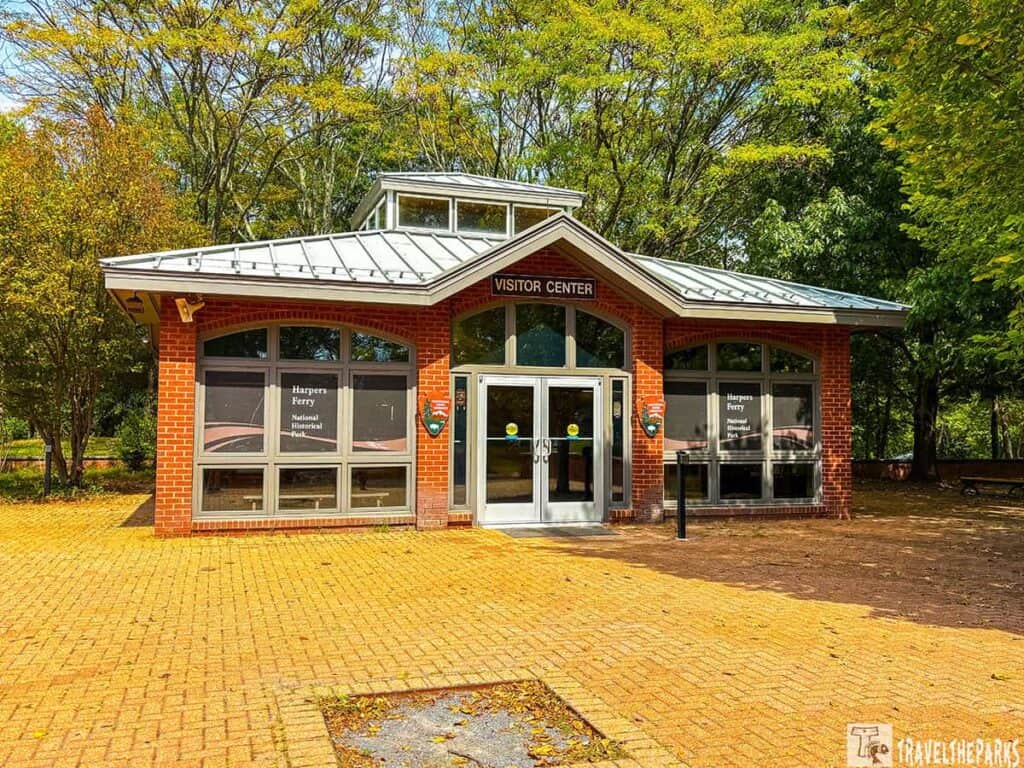
Our Harpers Ferry itinerary began at the main Harpers Ferry National Historical Park Visitor Center. This is also where you park; having an annual pass made parking free for us; otherwise, it’s $20 per vehicle. Don’t expect a traditional museum here, as there are no interior exhibits. We used it as a practical first stop to pick up trail maps before catching the shuttle down to Lower Town. This center is unlike others, lacking indoor exhibits, so we immediately got our maps and took the FREE park shuttle to Lower Town. That’s where you’ll find the classic NPS Lower Town Information Center, complete with informative exhibits.
Stop 2: Explore Lower Town & The Information Center (The Heart of History)
After a quick shuttle ride from the main Visitor Center, our Harpers Ferry self-guided walking tour truly began the moment our feet hit the cobblestone streets of Lower Town. It’s an incredible feeling—like being instantly transported to the 19th century.
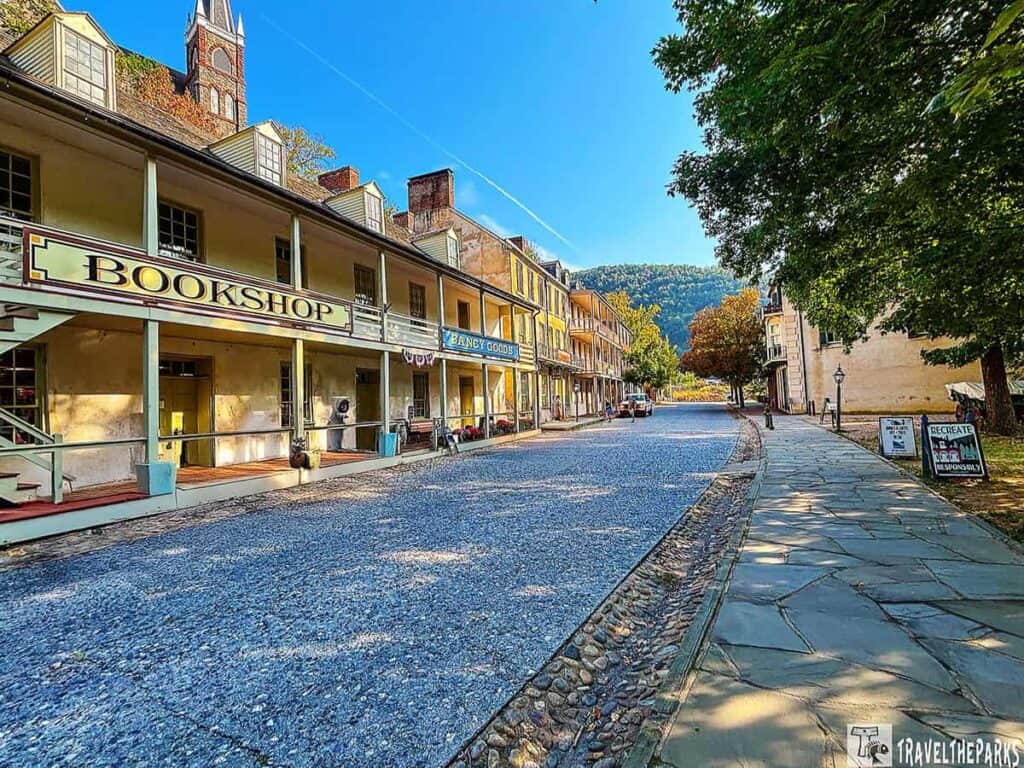
The area is very charming, with the restored buildings that hug the steep streets. However, the main point of interest is that very past which is still alive. Before heading to the famous sites, we made a crucial stop at the Building A: Lower Town Information Center.
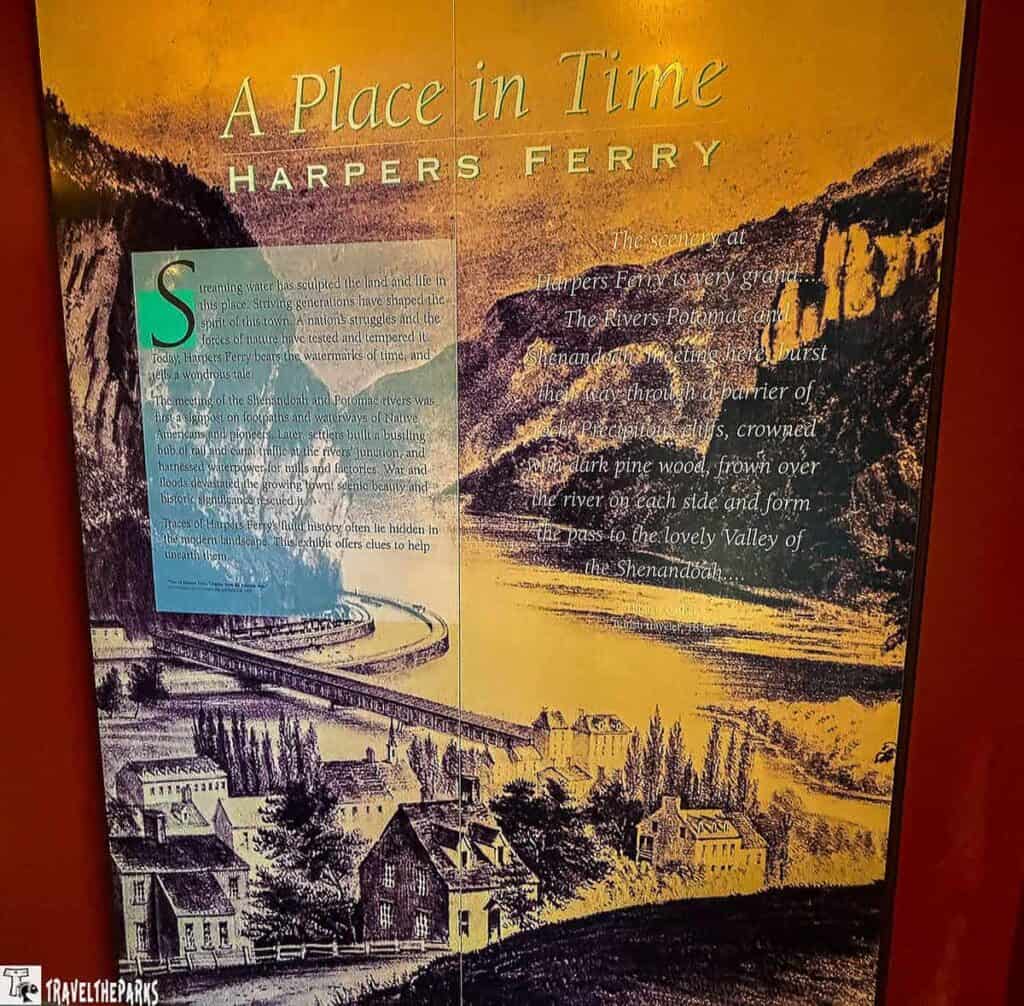
This is your strategic starting point for the walk ahead. Inside, the excellent “Place in Time” exhibits provide the essential context that will make everything else you see more meaningful. They vividly illustrate the town’s critical role in the Civil War and the fiery abolitionist movement that centered here. We also highly recommend watching the short film they offer; it’s a perfect primer.

Taking this time at the Information Center gave us a powerful foundation, transforming the charming town around us from a simple collection of old buildings into a landscape of dramatic national stories. It’s the best way to equip yourself for the exploration to come.

Stop 3: Walk the Historic Streets: A Journey Through Time
From the Information Center on Shenandoah Street, our Harpers Ferry self-guided walking tour led us deeper into the heart of history. The following route connects the dots between industry, commerce, war, and the fight for freedom, all within a few compact blocks.
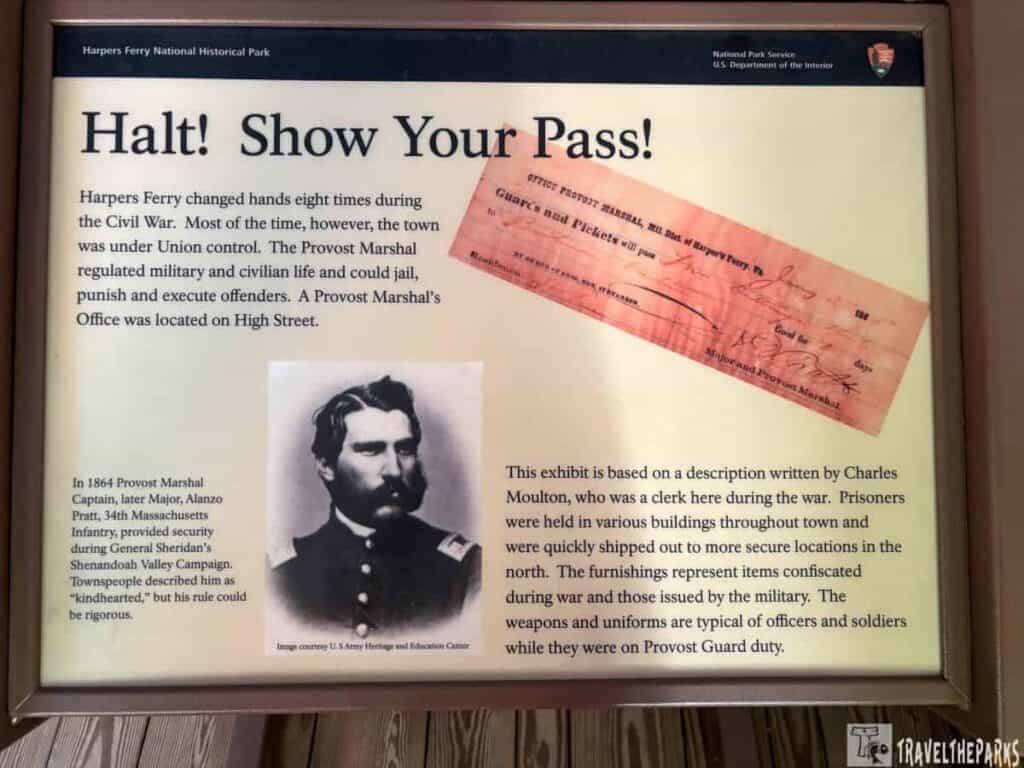
Building B: The Provost Marshal’s Office (1st Floor)
We initially came across a building that seemed to have two distinct characters. The ground floor was the Provost Marshal’s Office, the central point of the Union military government, which was in charge of the town.
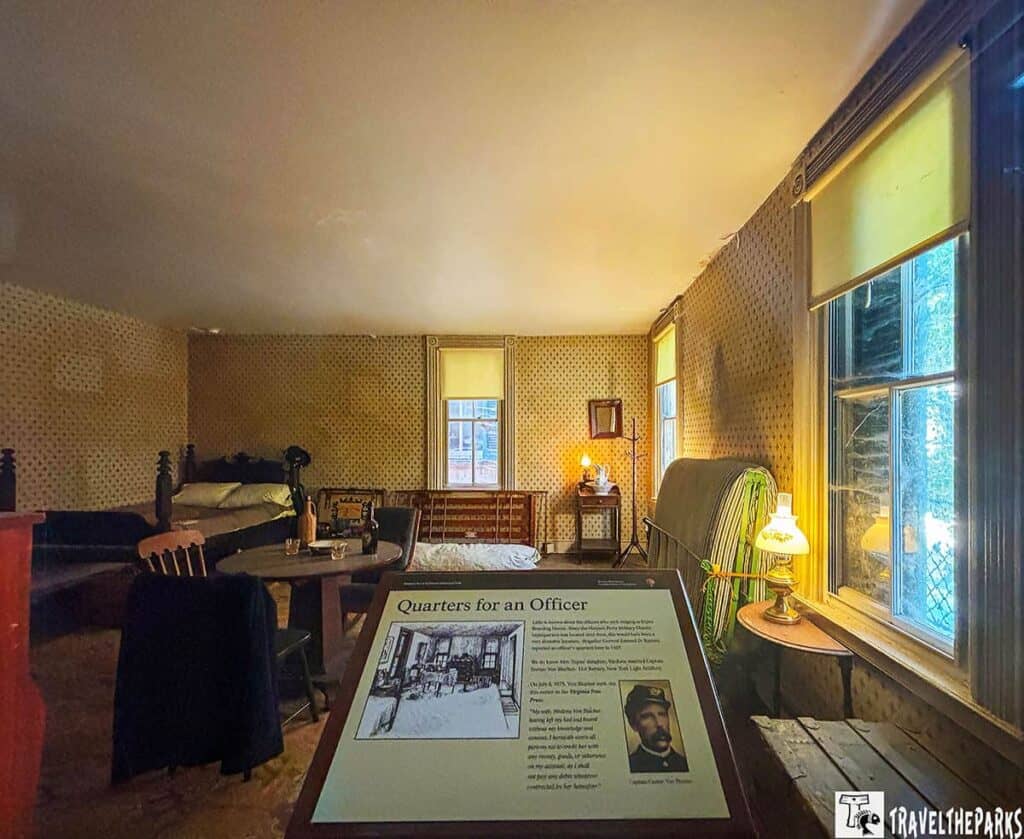
Building B: Mrs. Strips Boarding House (2nd Floor)
On the second-floor boarding house, we saw the small, temporary, and somewhat depressing living quarters typical of those times, which were in sharp contrast with the powerful and official environment downstairs.
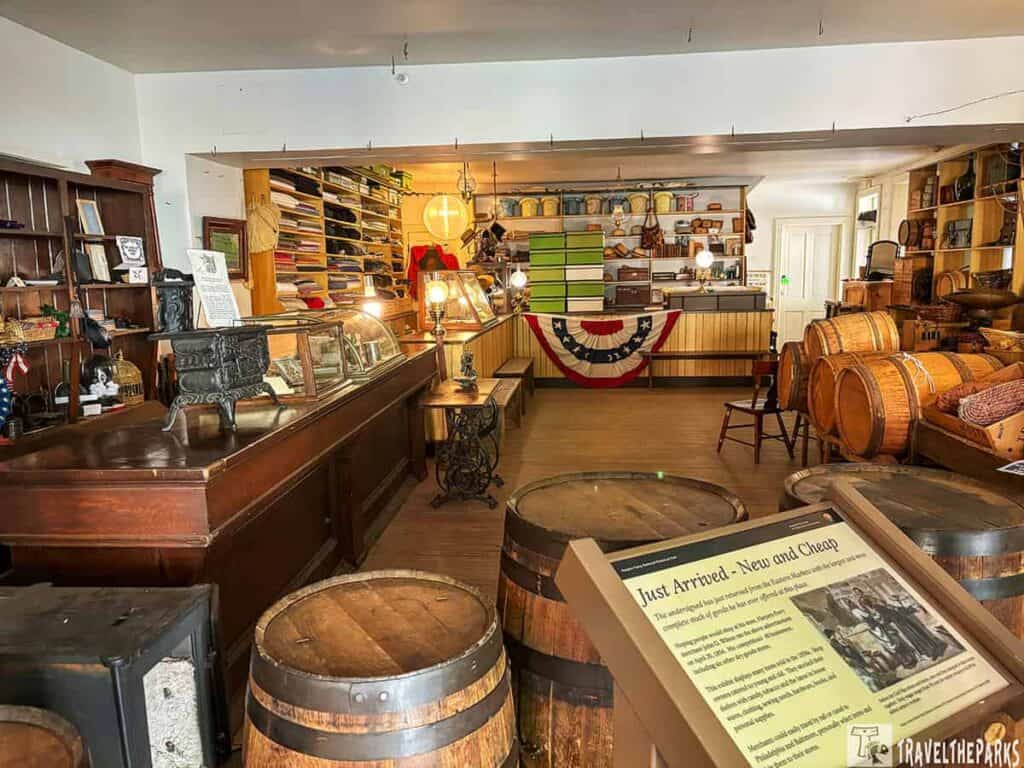
Building C: Dry Goods Store
The next-door dry goods store was a place that we looked into visualizing the residents buying their everyday necessities.
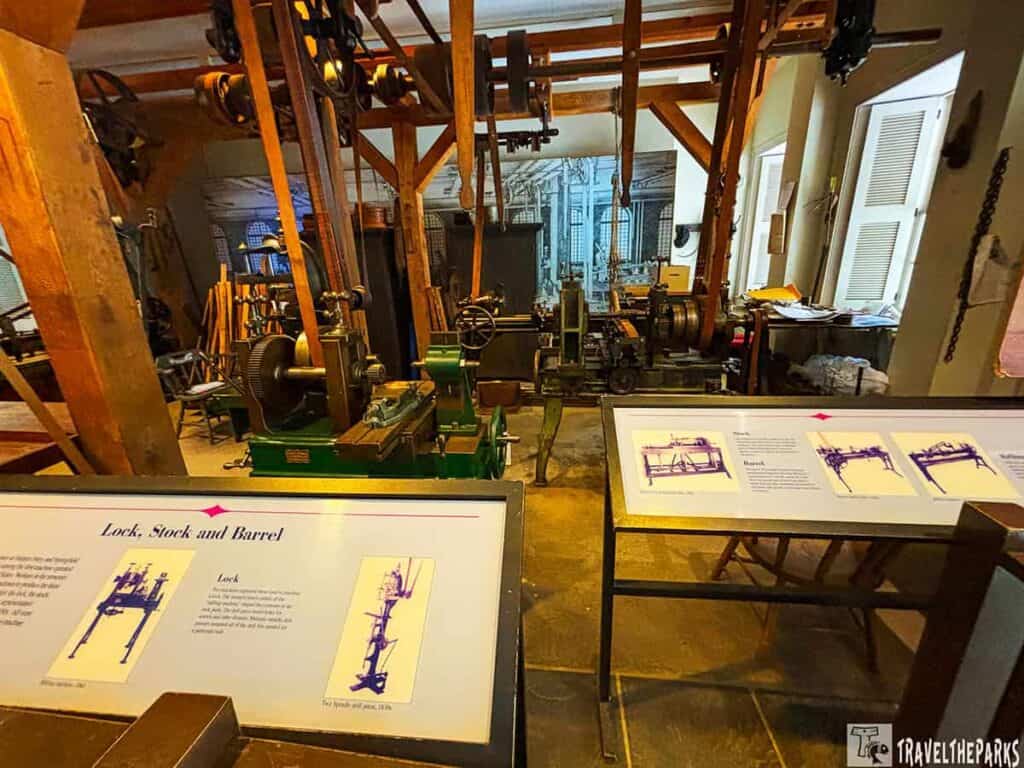
Building D: Industry Museum
Directly across the street, the Industry Museum perfectly takes the baton from here by answering the “why” question of Harpers Ferry. We found out how the U.S. Armory became the game-changer in the entire manufacturing process by merely adopting the concept of interchangeable parts, and this is what made the town the prize of the war.
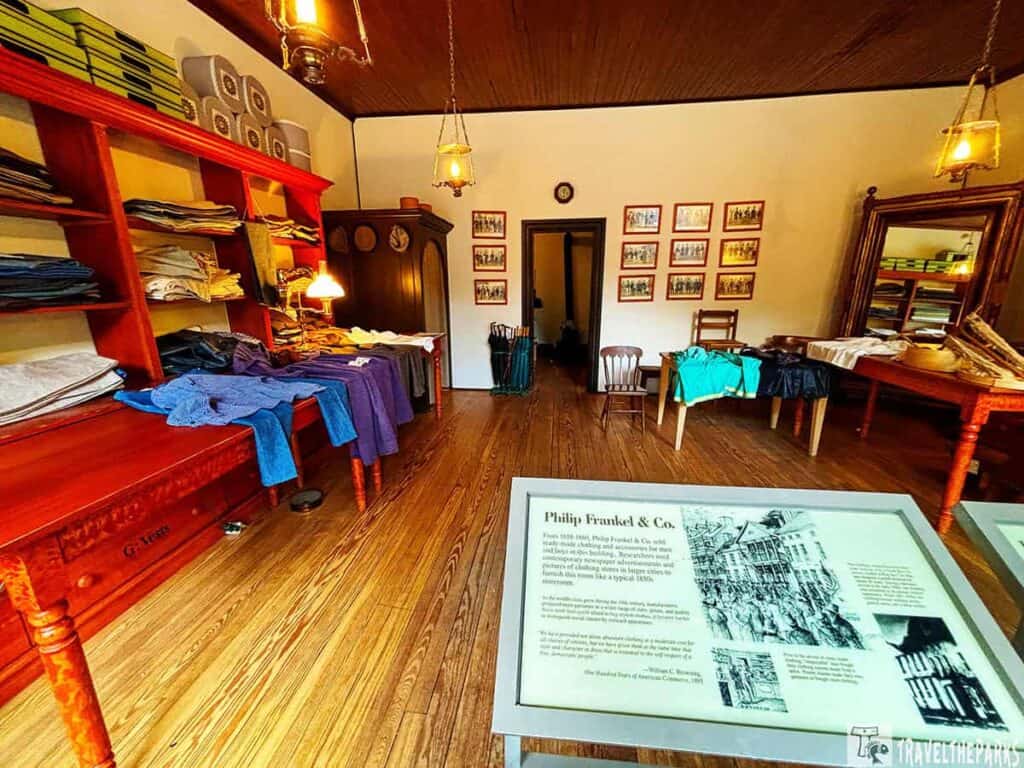
Building E: Phillips, Frankel & Co.
By the hearth of the army workers, the armory employees were in the middle of the bustling commercial life which was represented by Phillips, Frankel & Co.
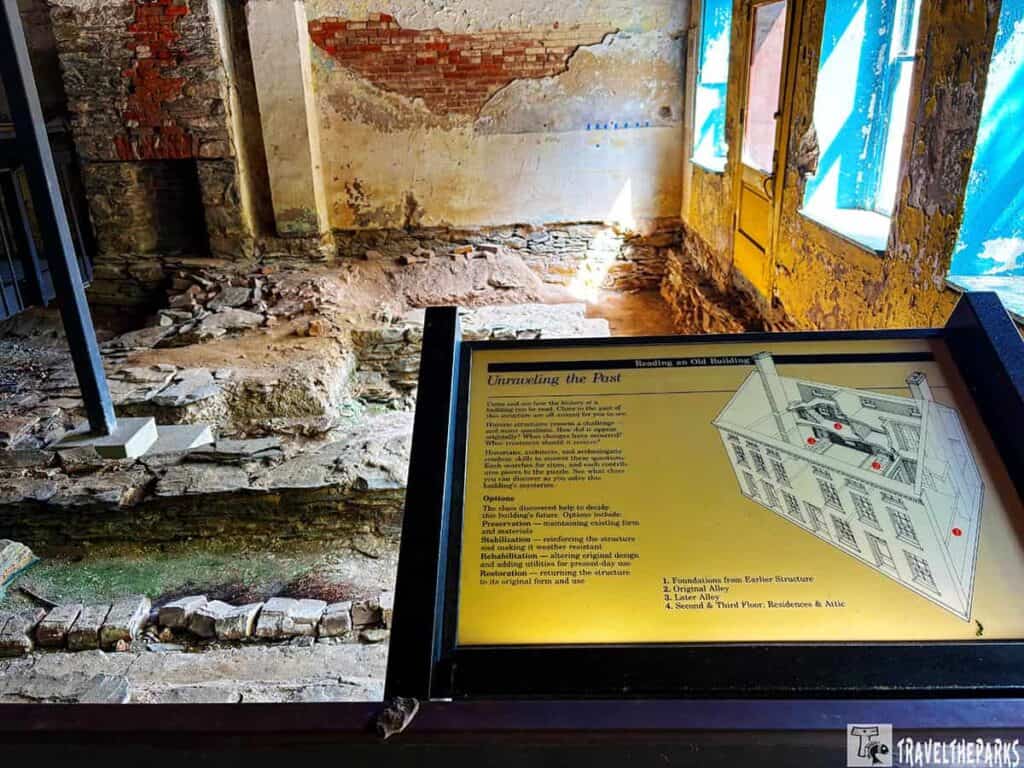
Building F: Reading an Old Building: Restoration Museum
This is a perfect spot to do the exercise of “reading” an old building—study the architectural features, the location of the doors, and try to figure out the comings and goings of 19th-century customers.
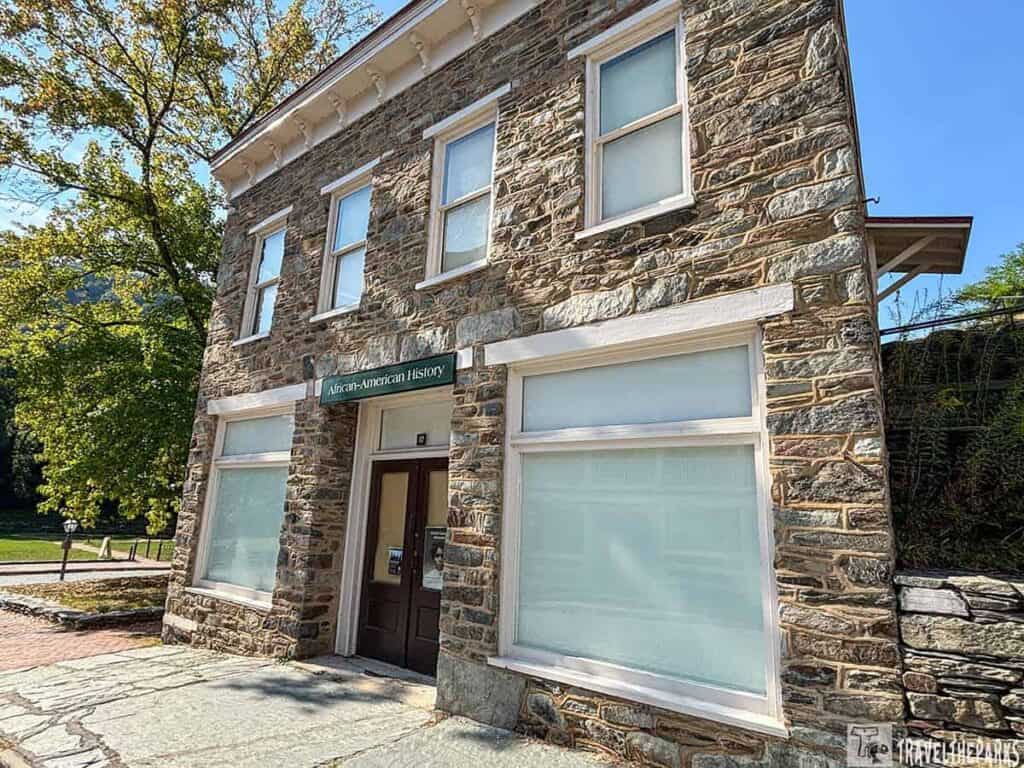
Building G: Black Voices: African American History
The introduction of this exhibit is indispensable. It changes the focus of the narrative to speak about the lives of the free and enslaved African Americans who lived, worked, and fought for freedom here, thus giving an important and, most of the time, overlooked view of the town’s past.
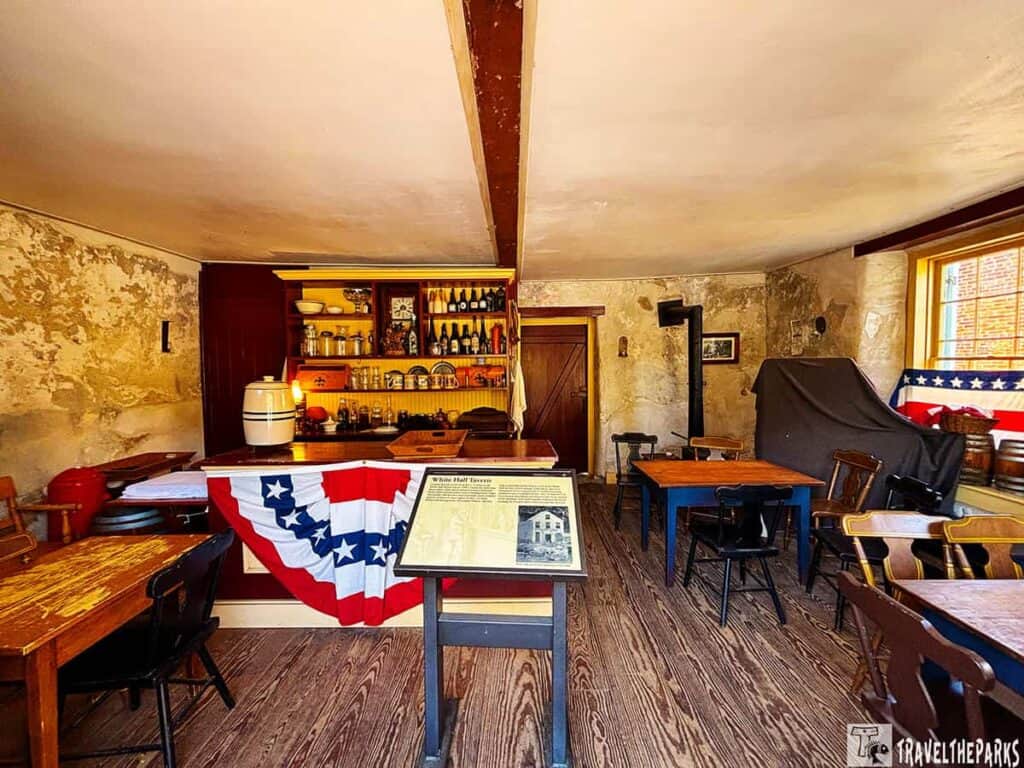
Building H: White Hall Tavern
Then we went past the White Hall Tavern, which, in essence, was the typical 19th-century inn where travelers, soldiers, and townspeople would have met to eat, drink, and share news.
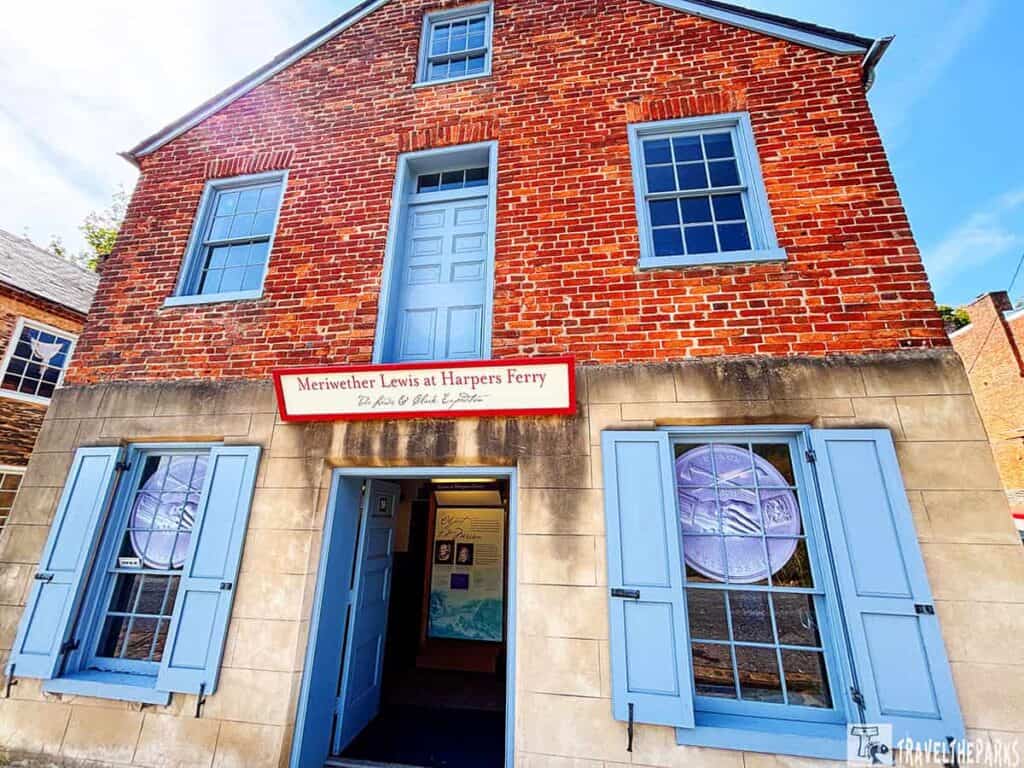
Building I: Meriwether Lewis at Harpers Ferry
Before setting out on his famous expedition, Meriwether Lewis came to Harpers Ferry in 1803 in order to buy arms and special equipment from the armory. This brief moment puts a stop in the chain of events connecting Harpers Ferry to the grand narrative of westward expansion.
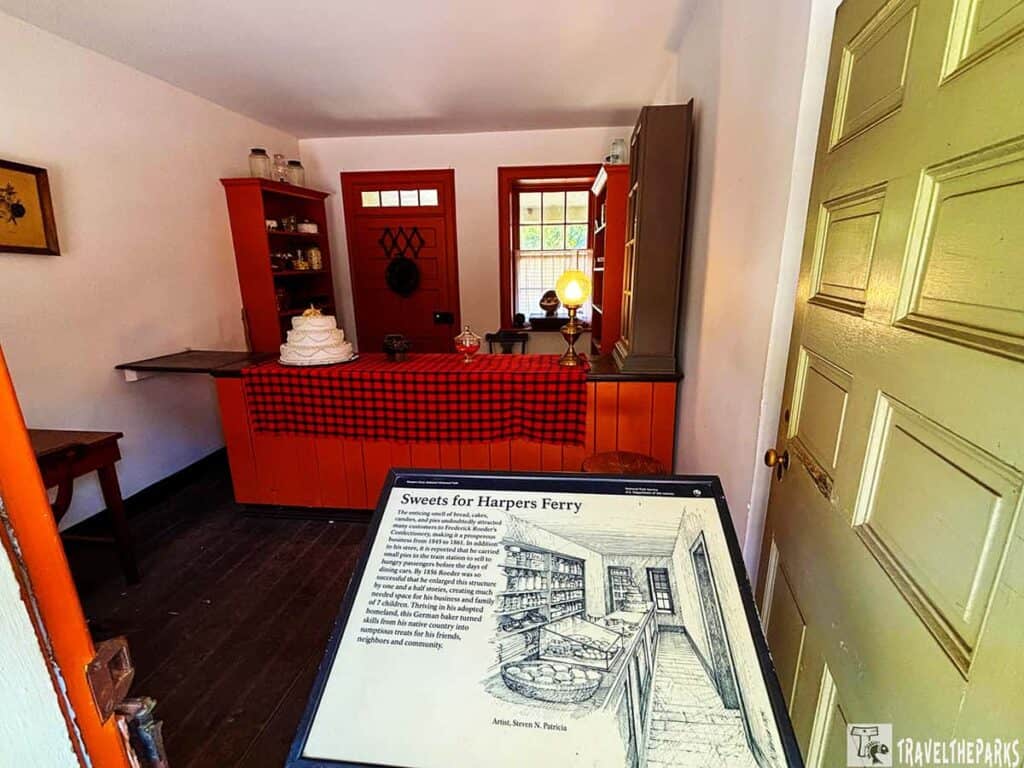
Building J: The Confectionery
The Confectionery was a sweet counterpoint to the heavy history. It is a representation of the better side of 19th-century life, where one could stop for a sweet.
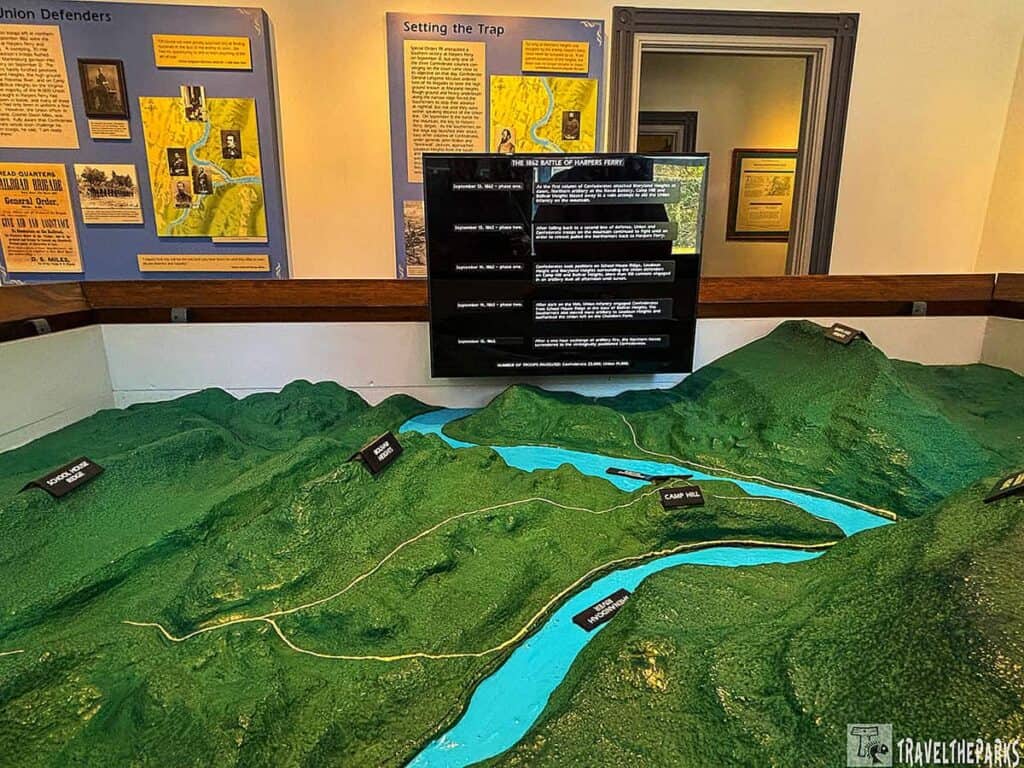
Building K: 1862 Battle of Harpers Ferry & Building L: A. Burton Fine Watch Repair
The local historic resources hold an important place in the community, and the depiction of the 1862 Battle of Harpers Ferry represented them in this photo, and Blacksmith L.A. Burton Watch and Jewelry Repair examples. The 1862 Battle of Harpers Ferry site features a sign explaining the town’s unprotected state. Near this point, A. Burton Fine Watch Repair being the exactness as well as the armory which helped the development of this culture is a kind of sign.
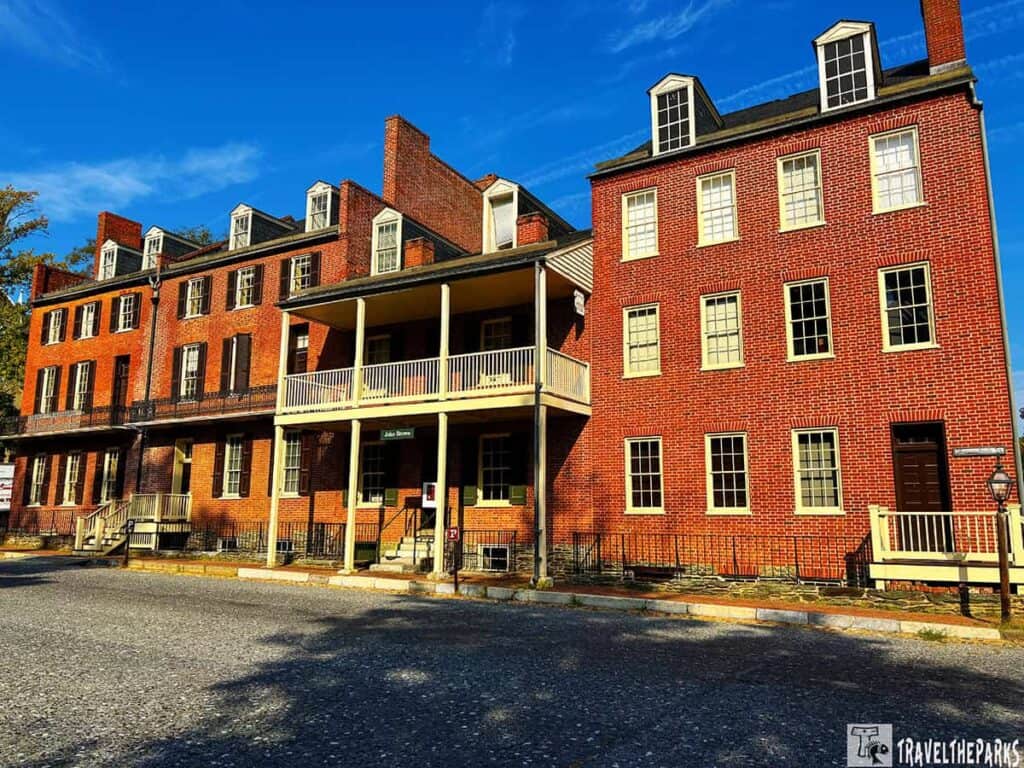
Building M: Storer College & The Niagara Movement
From the hill, we looked at the Storer College site. It was among the first schools in the U.S. that opened its doors to the formerly enslaved African Americans. It was also at Storer College in 1906 when W. E. B. Du Bois and the Niagara Movement met, a groundbreaking moment that eventually led to the formation of the NAACP and the modern Civil Rights Movement.
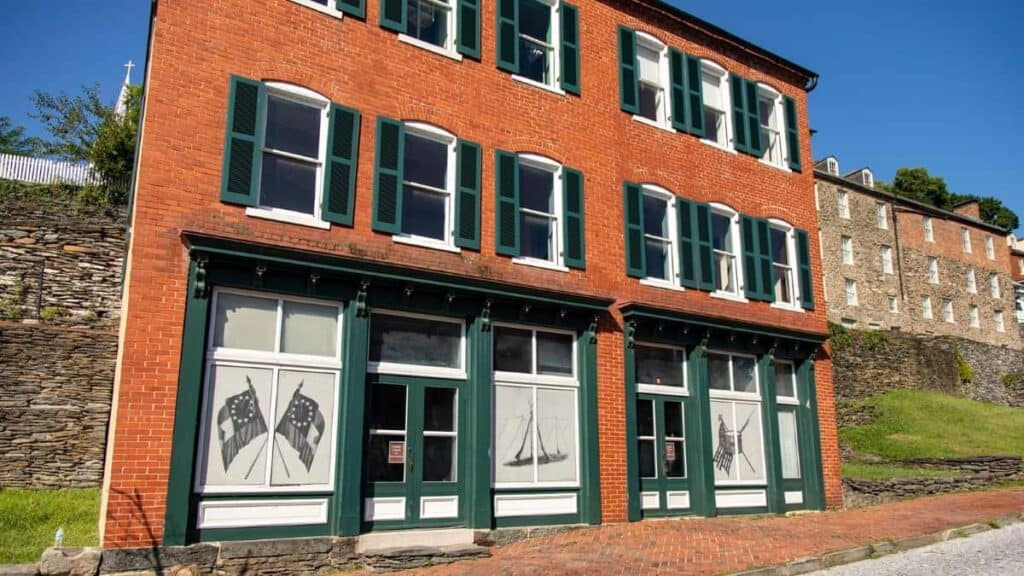
Building N: Civil War Museum
Our tour of this part of the city ended at the Civil War Museum, which unites all the elements we have talked about. The incidents detailed in the museum depict the town’s ordeals through repeated battles and changes of control that made it scarred yet resilient, a suitable ending to this deep dive into its history.
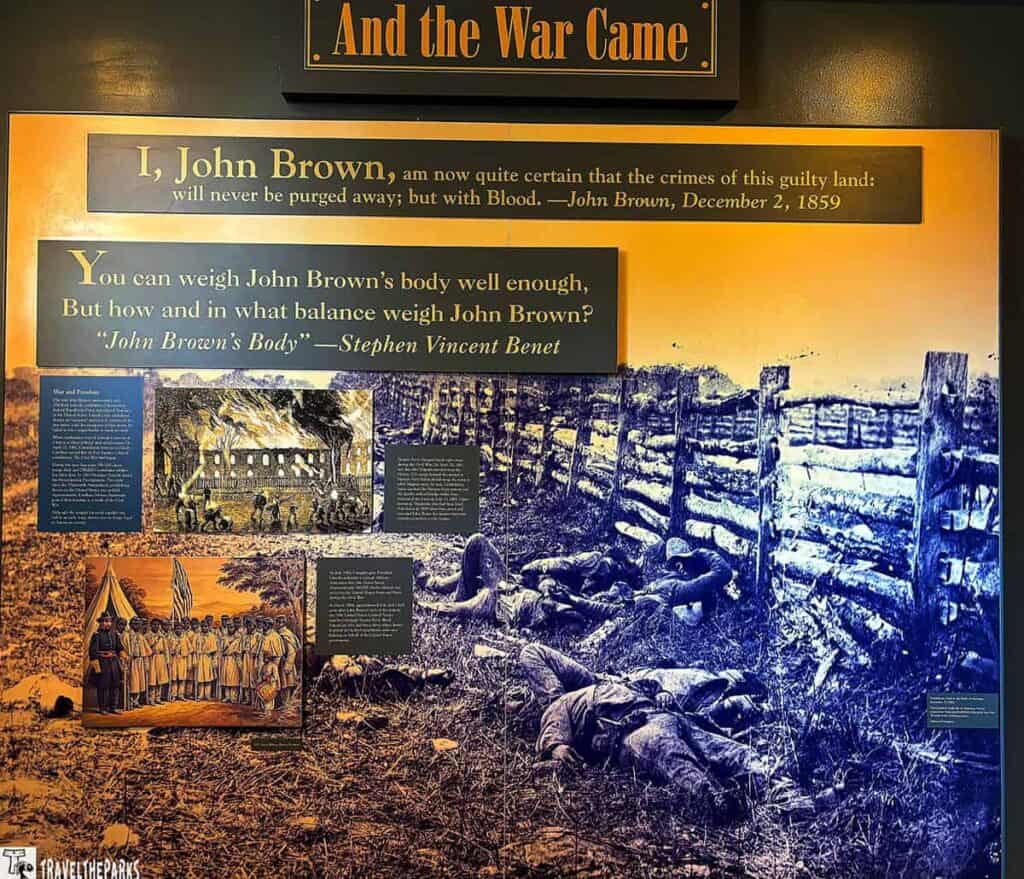
Stop #3: Stand on Sacred Ground at John Brown’s Fort
No Harpers Ferry self-guided walking tour is complete without a visit to the most visually striking place in the park: the structure commonly referred to as John Brown’s Fort. This is the place where the concept of a nation divided over the issue of slavery turned to bloodshed, forever changing the course of history.
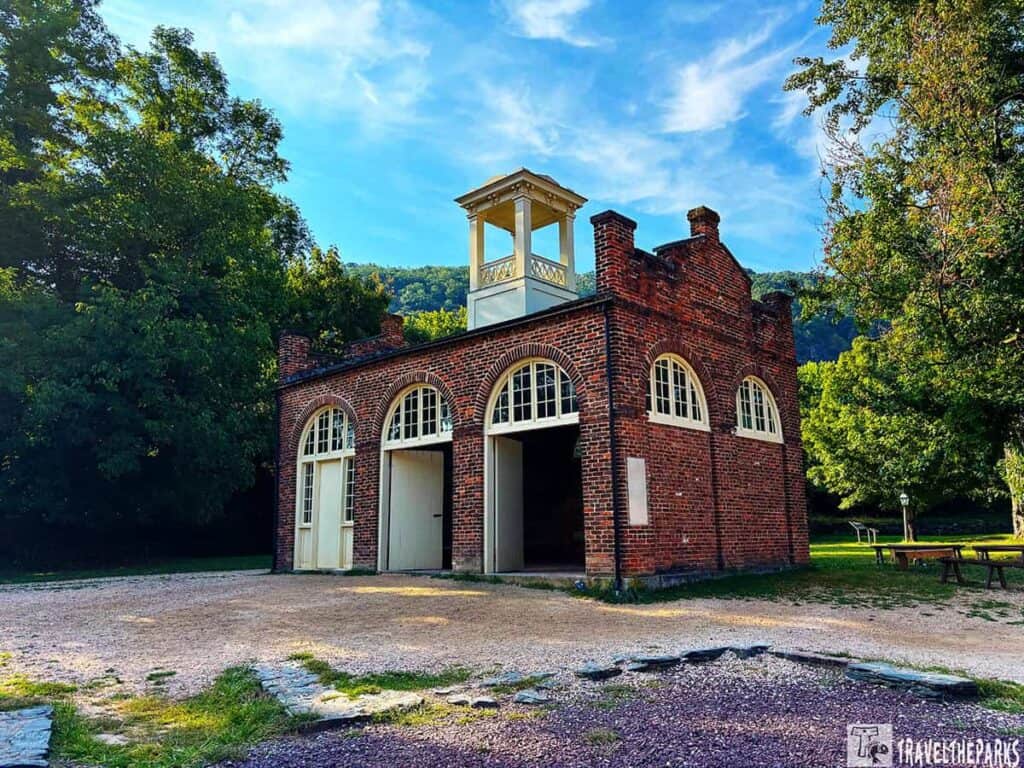
The modest brick fire engine house seems to be almost too plain for such a landmark event that literally shook the earth here. In October 1859, the radical abolitionist John Brown and his band of 21 men forcibly confined themselves inside this building after taking over the U.S. Armory. His daring strategy was to capture the 100,000 guns and arm slaves for a general uprising.
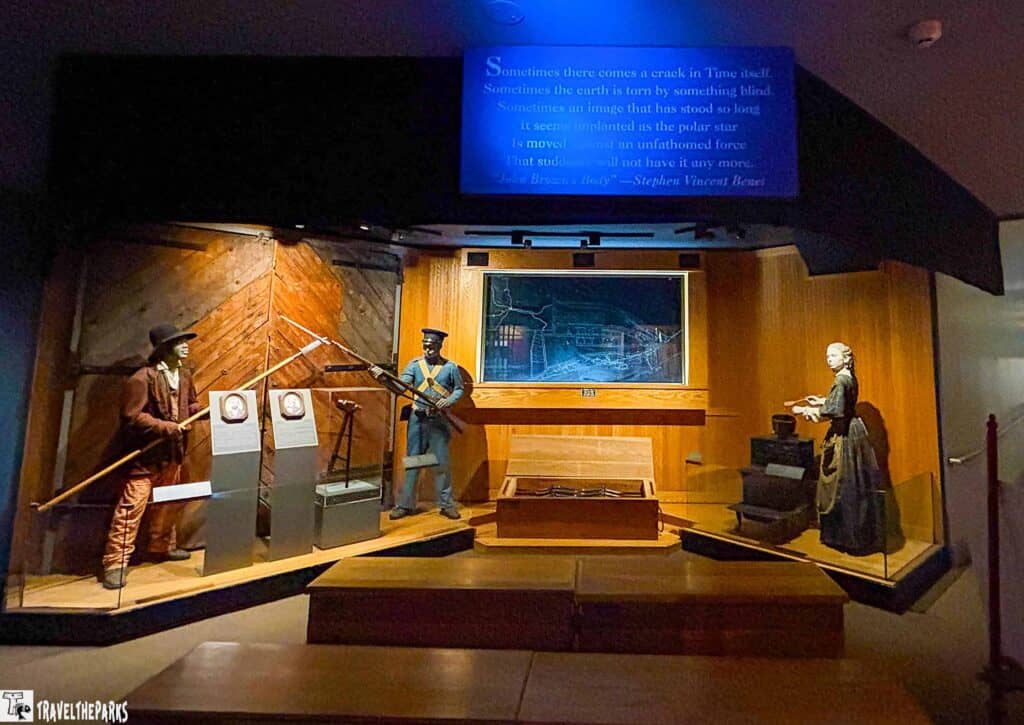
The assault was unsuccessful. Within 36 hours, U.S. Marines, led by Brevet Colonel Robert E. Lee and Lieutenant J. E. B. Stuart, forced their way in. The fighting was of short duration and ferocious. As a result, the majority of Brown’s men were taken or killed.
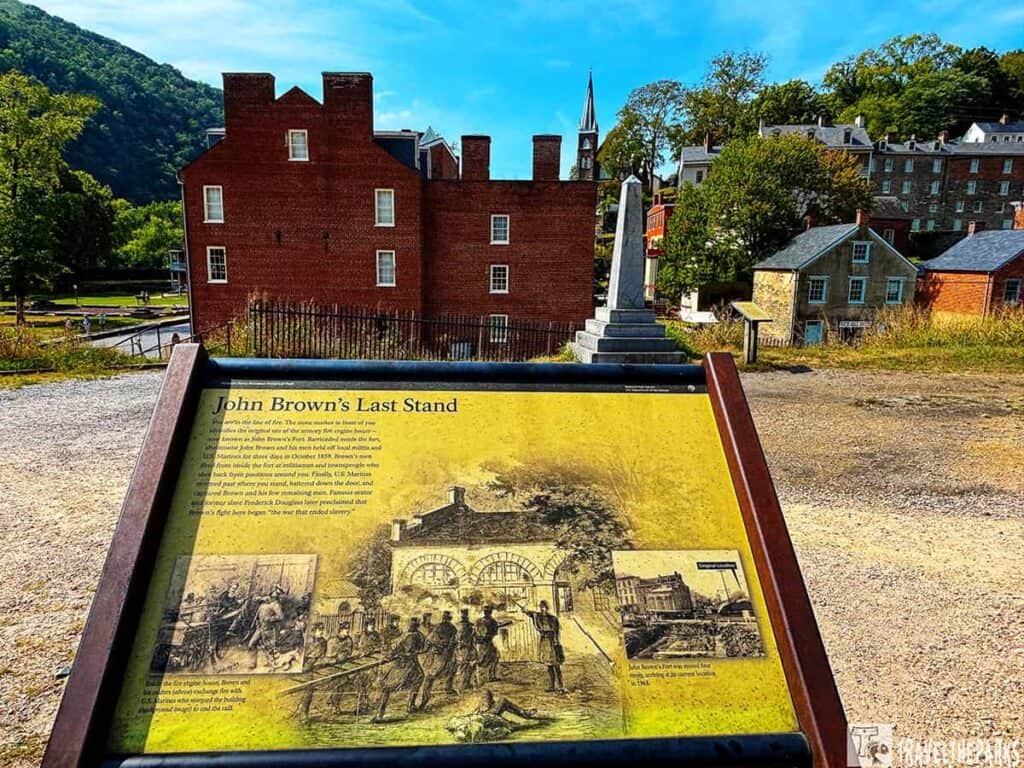
As we stand here, we’re confronting the profound division that split a nation. Both the North and South used John Brown’s raid as powerful propaganda. We can see how Southerners viewed him as a treacherous terrorist, while Northern abolitionists hailed him as a martyr. His execution became a crucial spark, igniting the sectional tensions that led to the Civil War just 16 months later.
Remarkably, the building itself has traveled. After the war, it was moved several times and even displayed at the Chicago World’s Fair. It finally returned here in 1968. Seeing it today reminds us how this small structure has cast a long shadow over American history.
Stop 4: The Hike to Jefferson Rock & the Churches
The trail leaving Lower Town follows the famous Appalachian Trail. As we climbed the stone steps, we passed two churches that stood as both structural and spiritual pillars of the community through its most turbulent times.
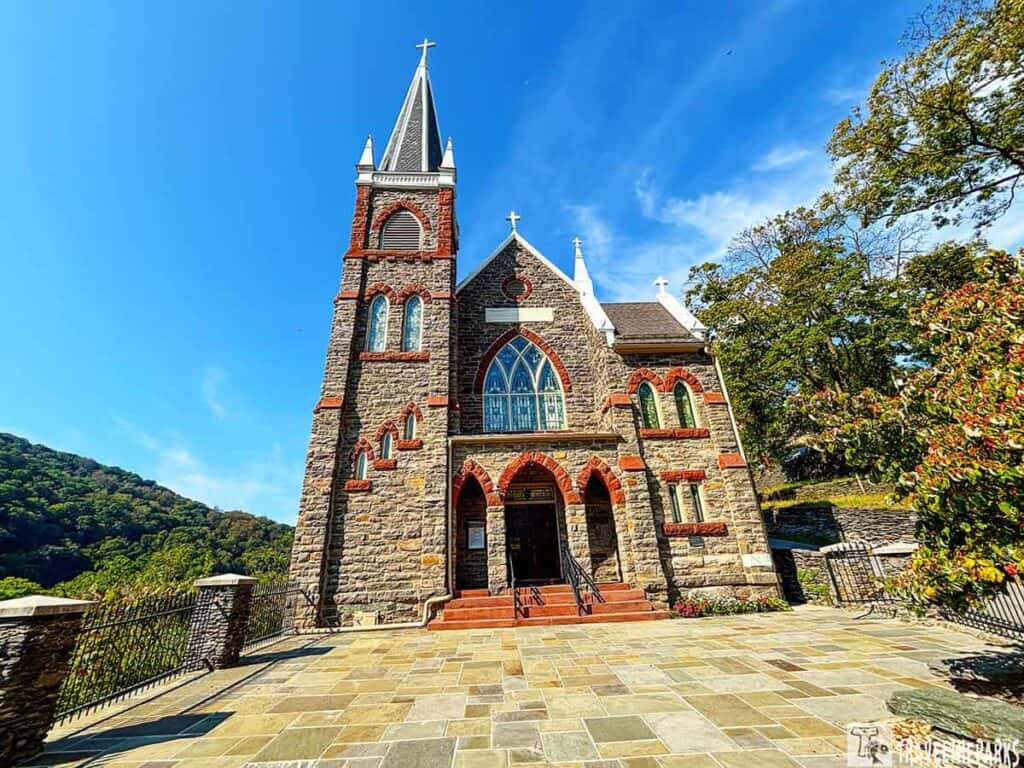
- St. Peter’s Roman Catholic Church: the only church in the town that could survive the Civil War even without a single shot fired. It is said that the church was saved from destruction because it was serving both sides. Therefore, it was flying the flags of both the Union and the Confederates.
- St. John’s Episcopal Church: This church was built in 1852 but saw its congregation flee during the war, after which it was used as a hospital and a stable.
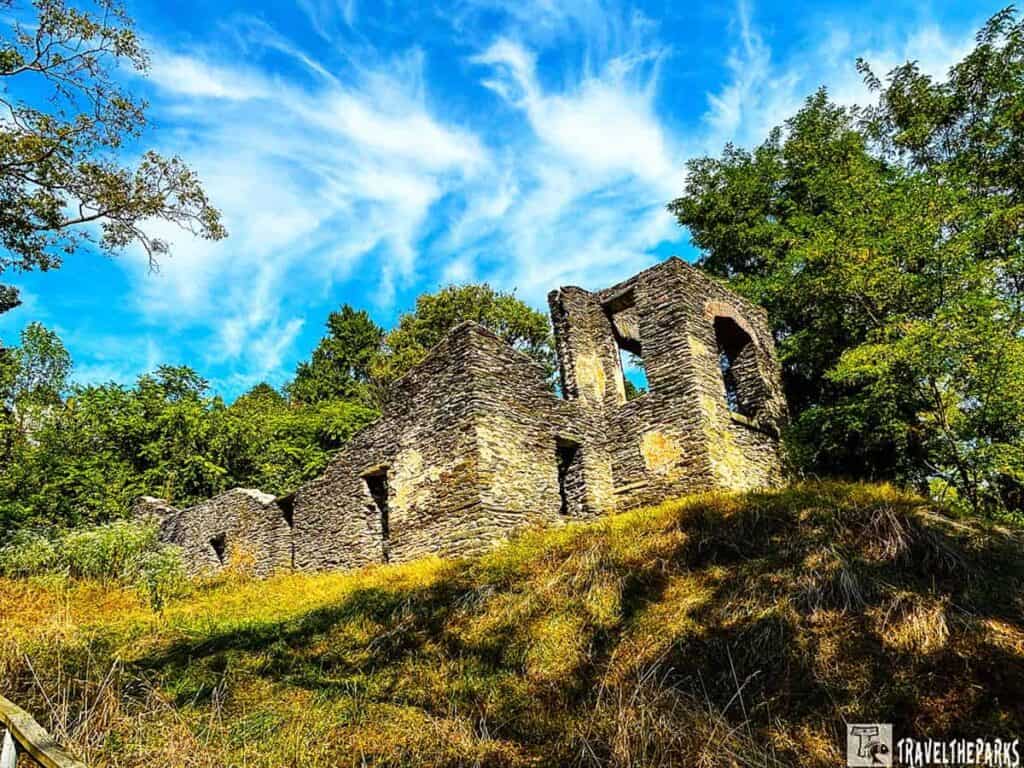
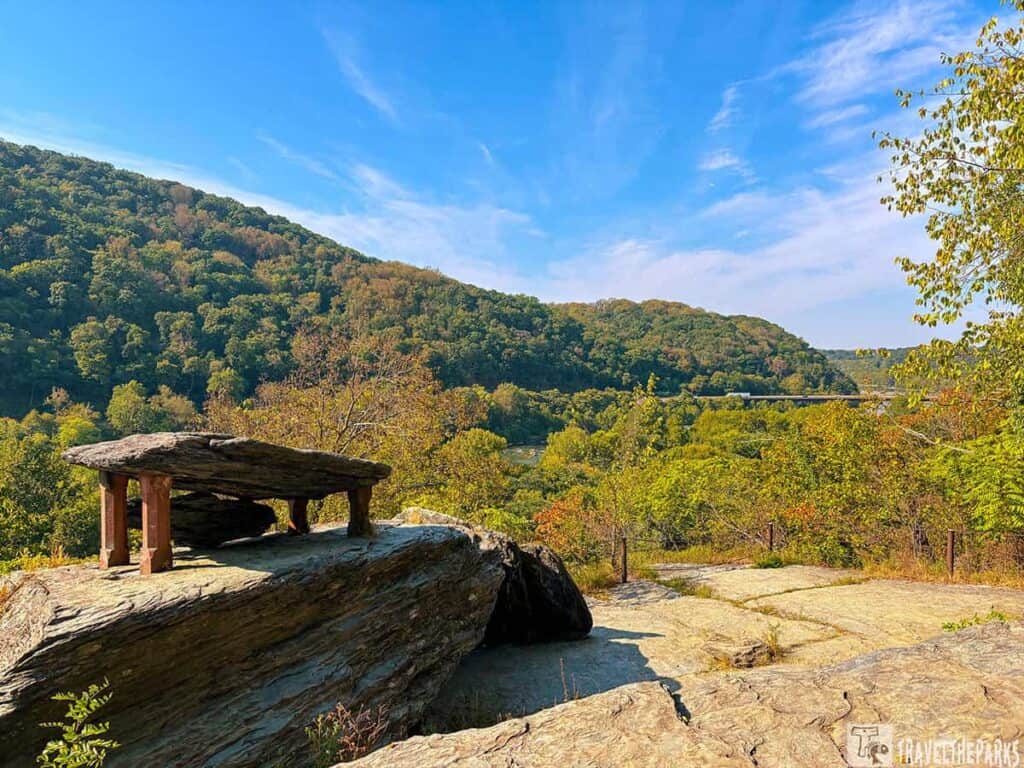
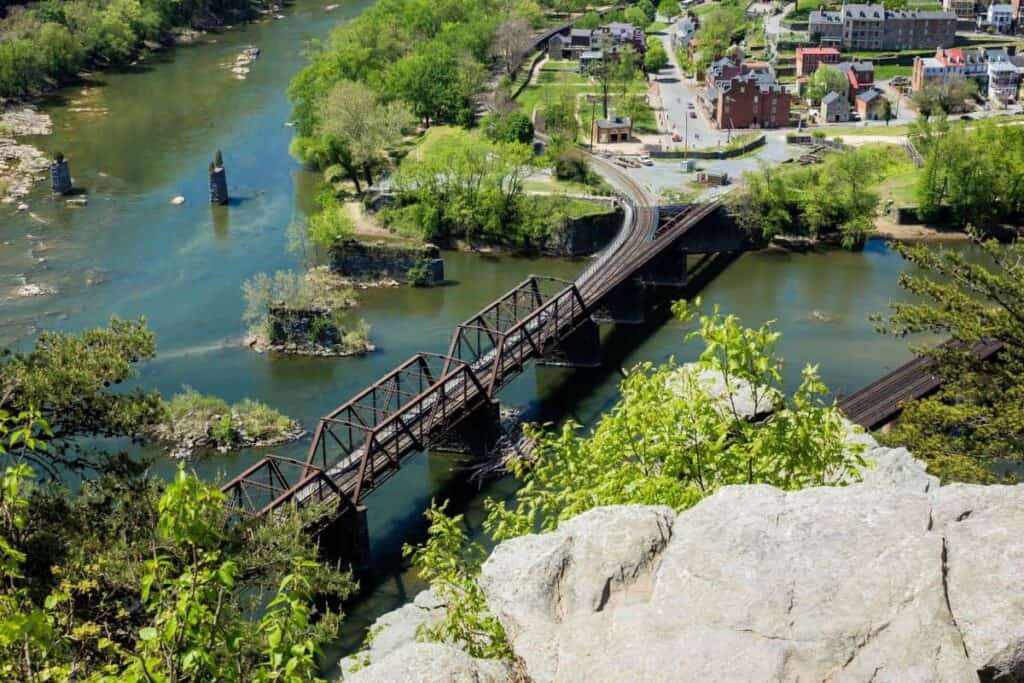
As we neared the end of the trail, we arrived at Jefferson Rock. There, the stunning view of the Potomac and Shenandoah rivers joining was our well-earned reward. The sight is so powerful that in 1783, Thomas Jefferson called it “perhaps one of the most stupendous scenes in nature.” We couldn’t agree more.
Beyond the Main Street: Key Stops on Your Harpers Ferry Walking Tour
Just a short stroll from the main streets, we next arrive at two essential stops—the Armory Site and The Point—that unlock the story of Harpers Ferry. By including them on our walking tour, we gain a deeper understanding of the town and its remarkable past.
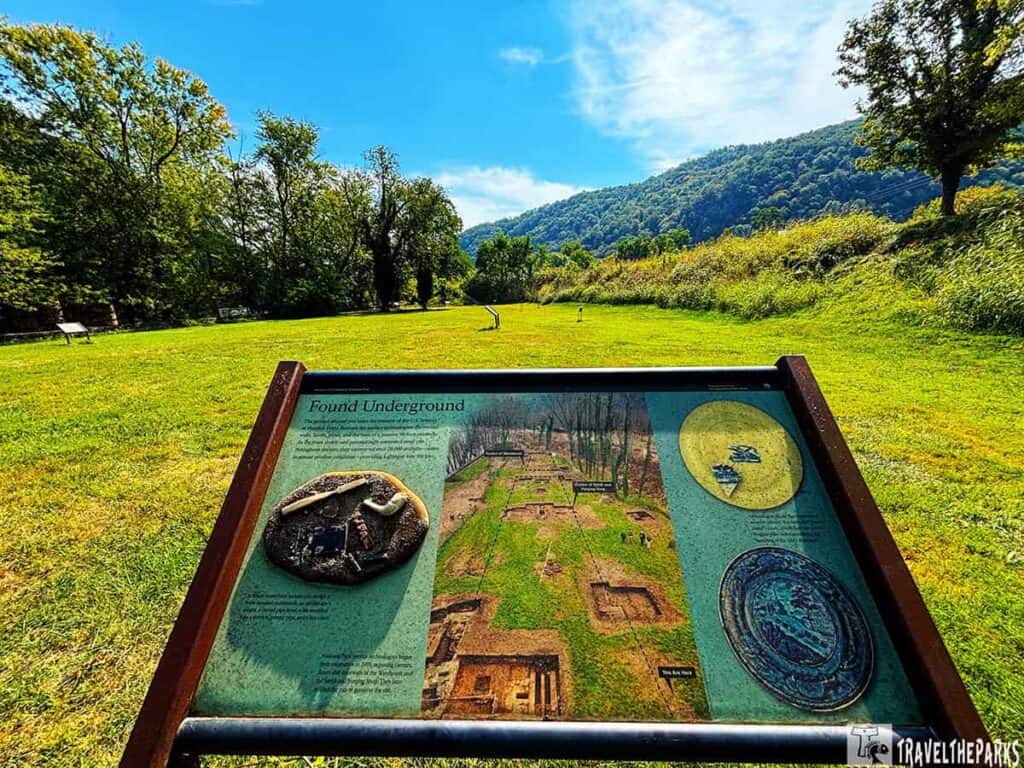
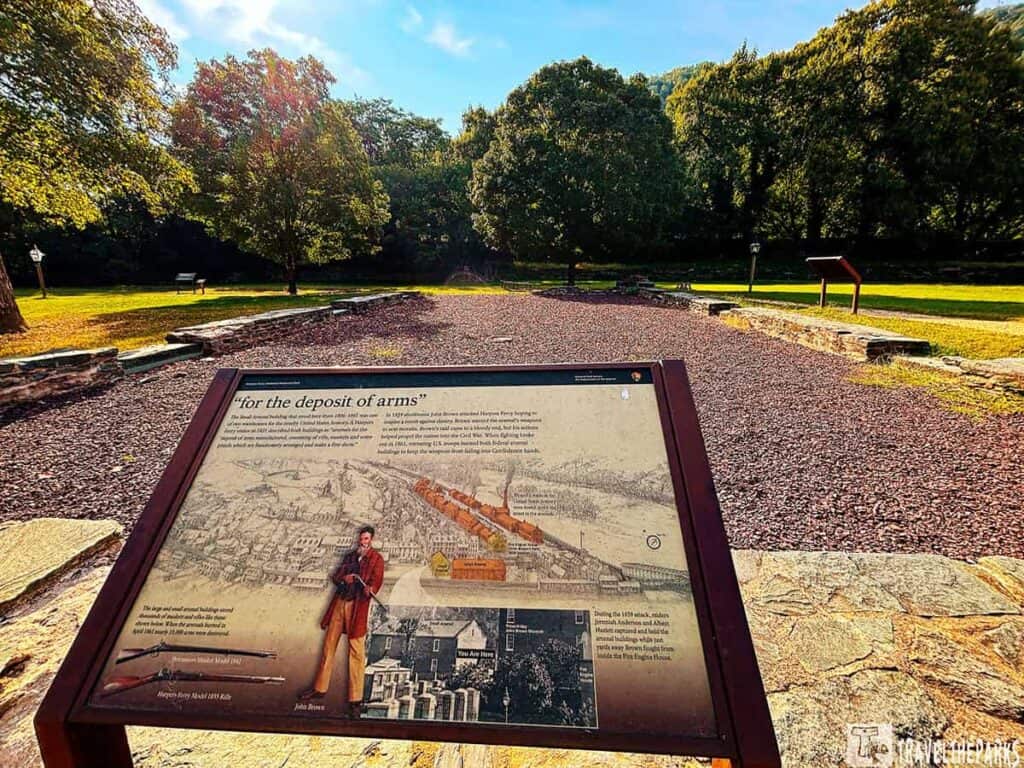
As our tour continues, we visit the historic Armory Site. Here, as we wander through the remnants of one of the nation’s first federal armories, the preserved foundations begin to tell a powerful story. It’s easy to see why this rifle-making factory became a primary target for John Brown’s raid and a fiercely contested prize during the Civil War. Ultimately, it’s a place where America’s industrial and military past becomes a tangible reality we can walk through together.
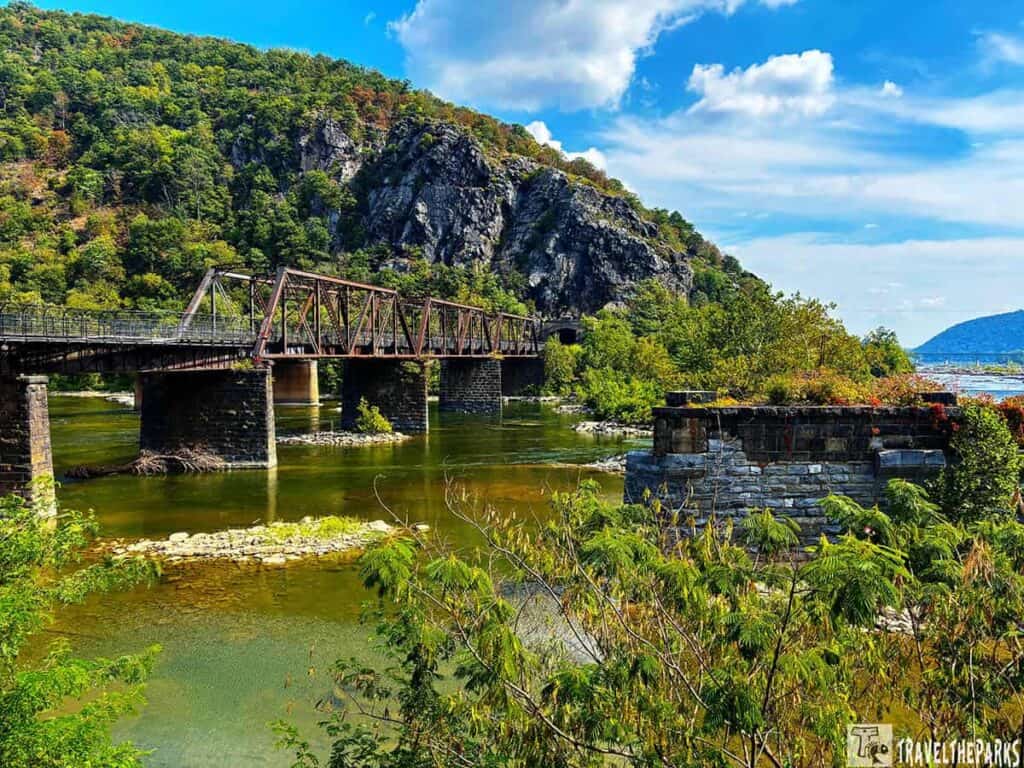
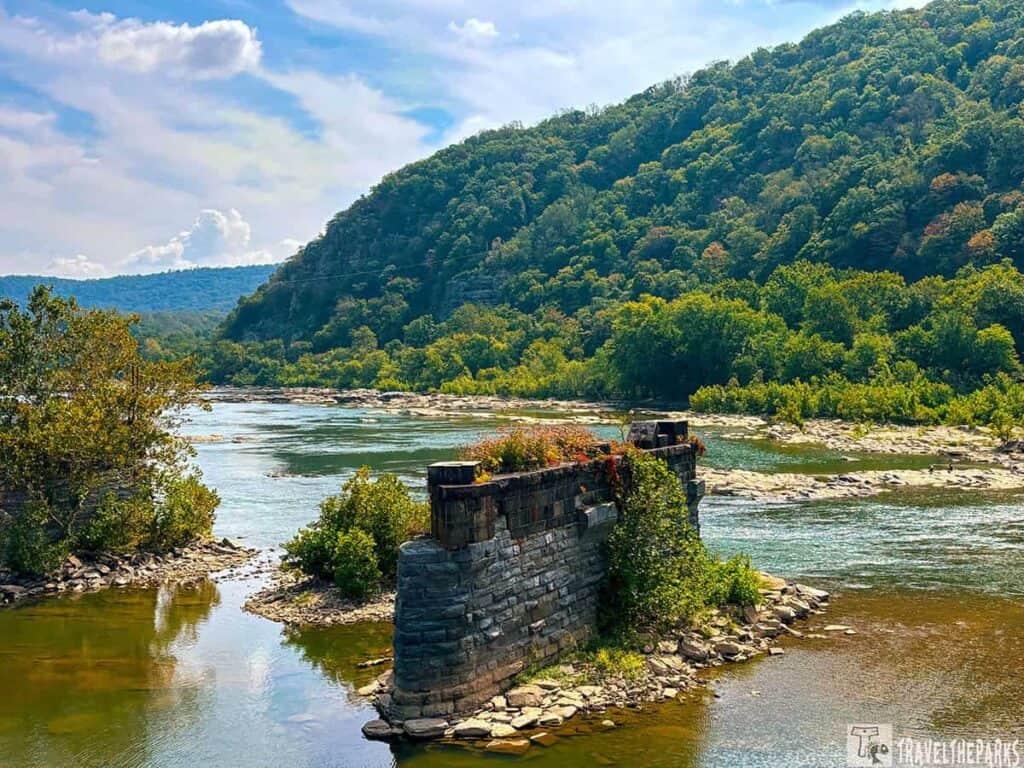
A definite highlight of our visit was “The Point,” which we loved. This well-known spot has a view of the point where the Shenandoah and Potomac rivers converge. Standing here, you’re treated to a wide-angle view that defines Harpers Ferry. This panorama instantly reveals why this location was so coveted. It’s easy to see why this location was so highly prized—its commanding military significance is matched only by its breathtaking beauty, making it one of the most unforgettable viewpoints in West Virginia.
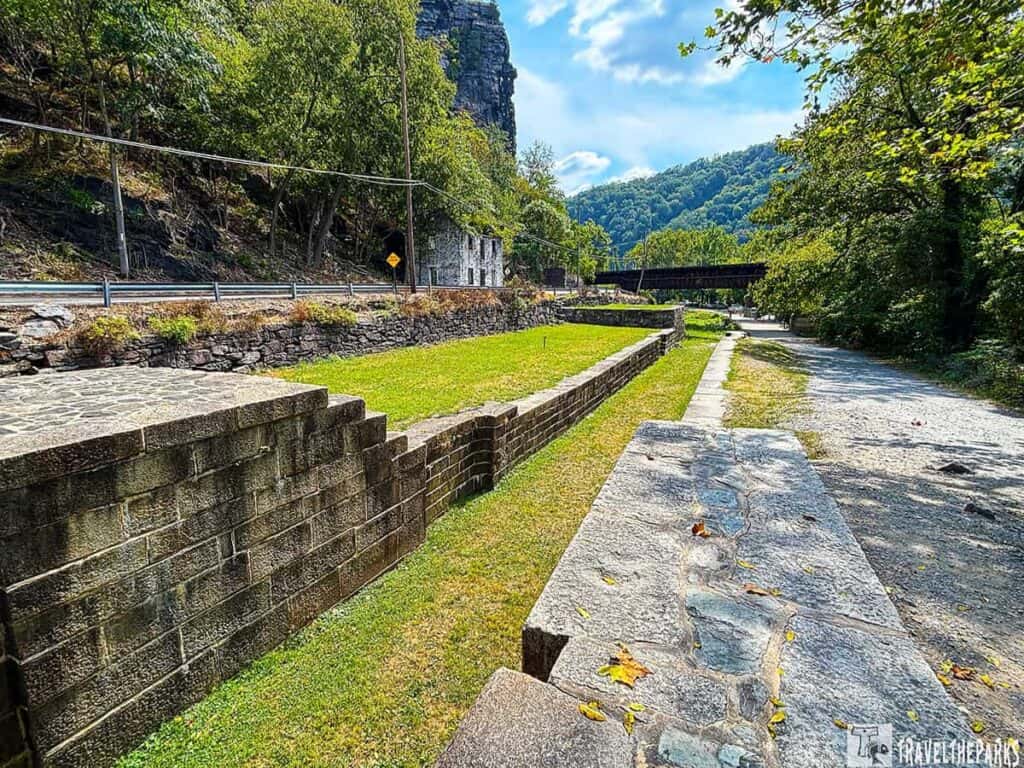
Stop 5: Cross the B & O Railroad Bridge (A Change of Perspective)
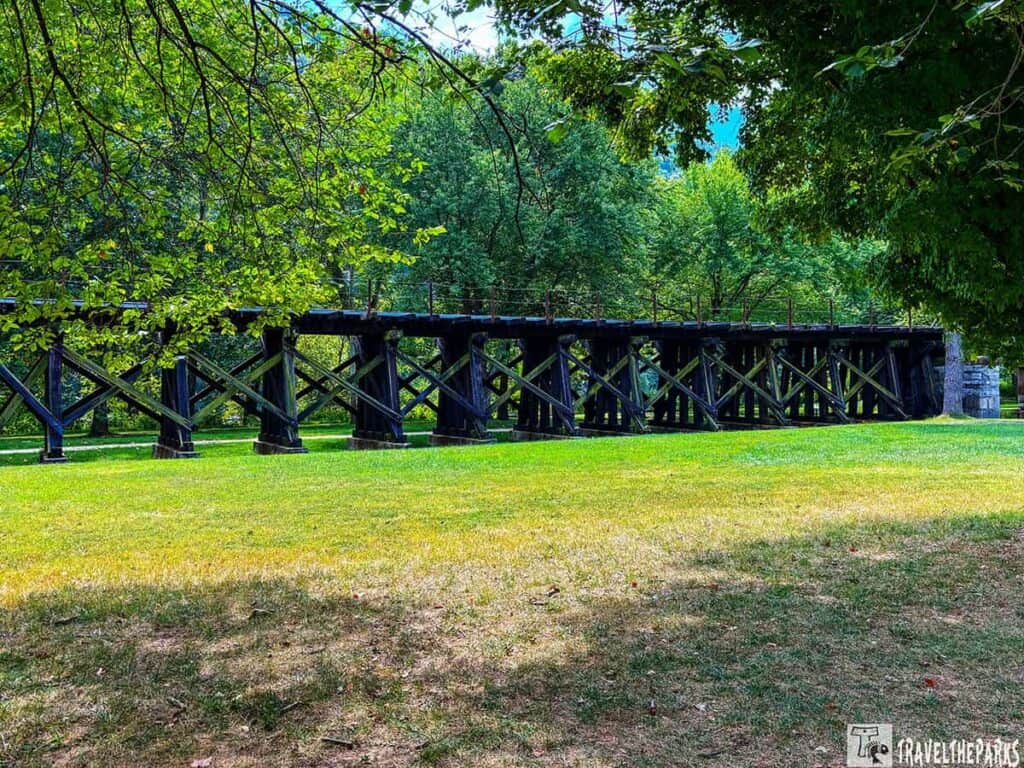
We continued the Harpers Ferry walking tour onto the historic B & O Railroad Potomac River Bridge. As we walked this pedestrian path, we were constantly scanning the water below for smallmouth bass. The water was so clear that we could see a few huge bass that were hiding. At the river’s confluence, only one group of rafters was spotted. From this unique perspective of the famous river confluence, you can really see how the landscape determined the town’s fate.
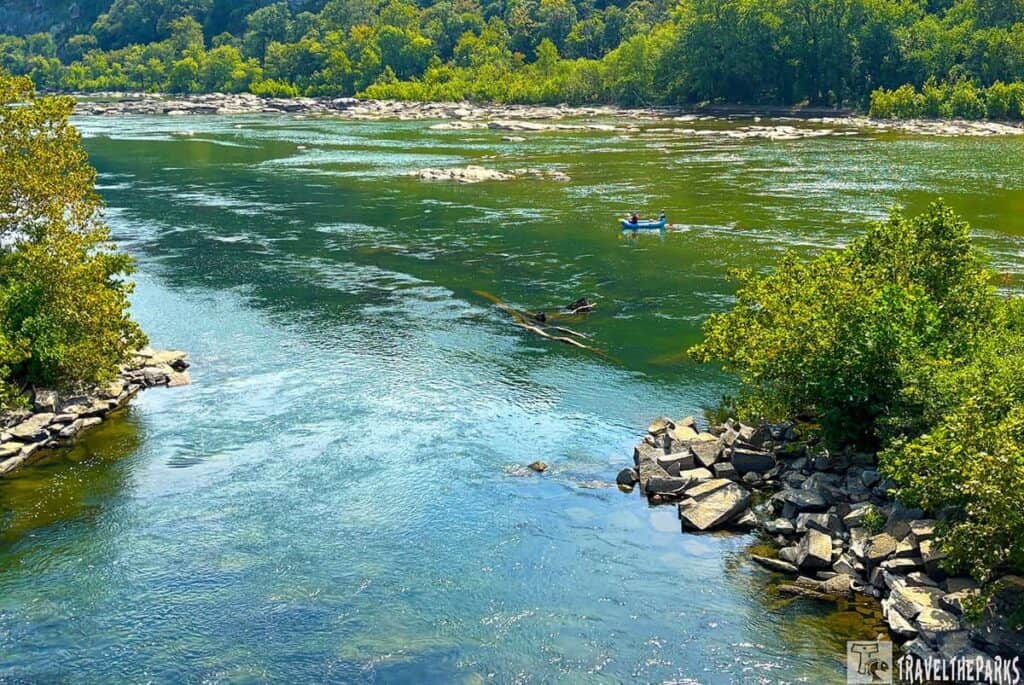
On the other side of this bridge was the C&O Canal towpath, and by walking through this part, we felt like we were in the footsteps of the 19th-century boatmen and mules. This canal, we already knew from a trip to Cuyahoga Valley National Park, was the major commercial artery that connected Washington, D.C., to the western resources at Cumberland, Maryland. It’s a genuine connection to the industrial era that was the first to bring Harpers Ferry to the forefront.
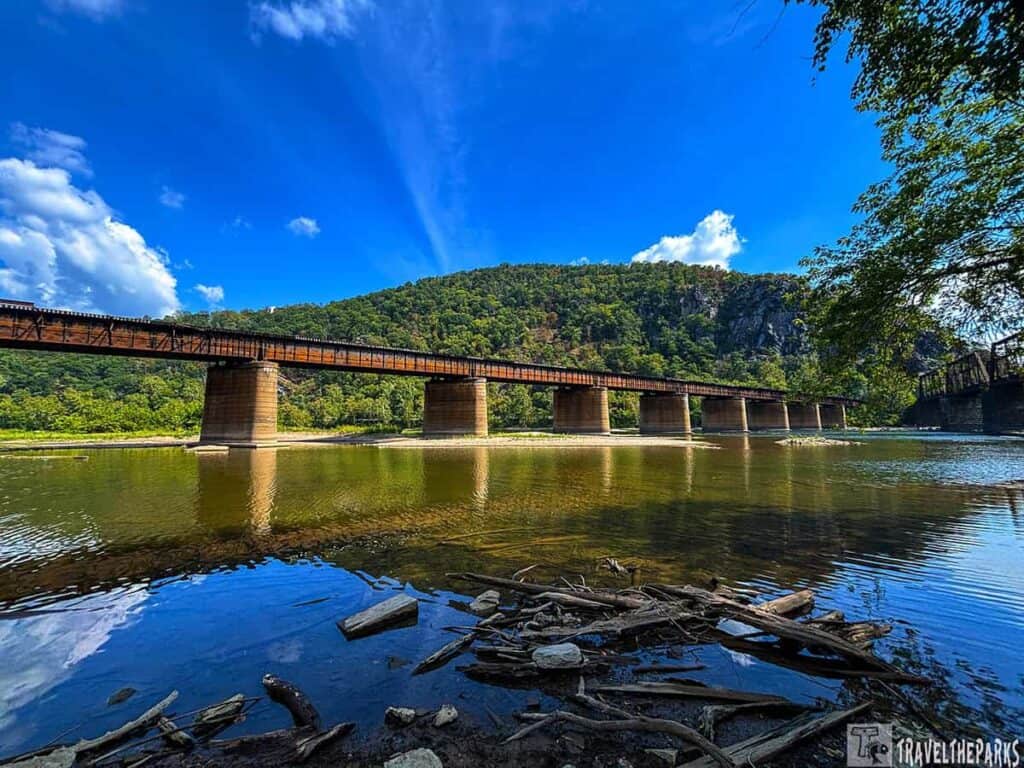
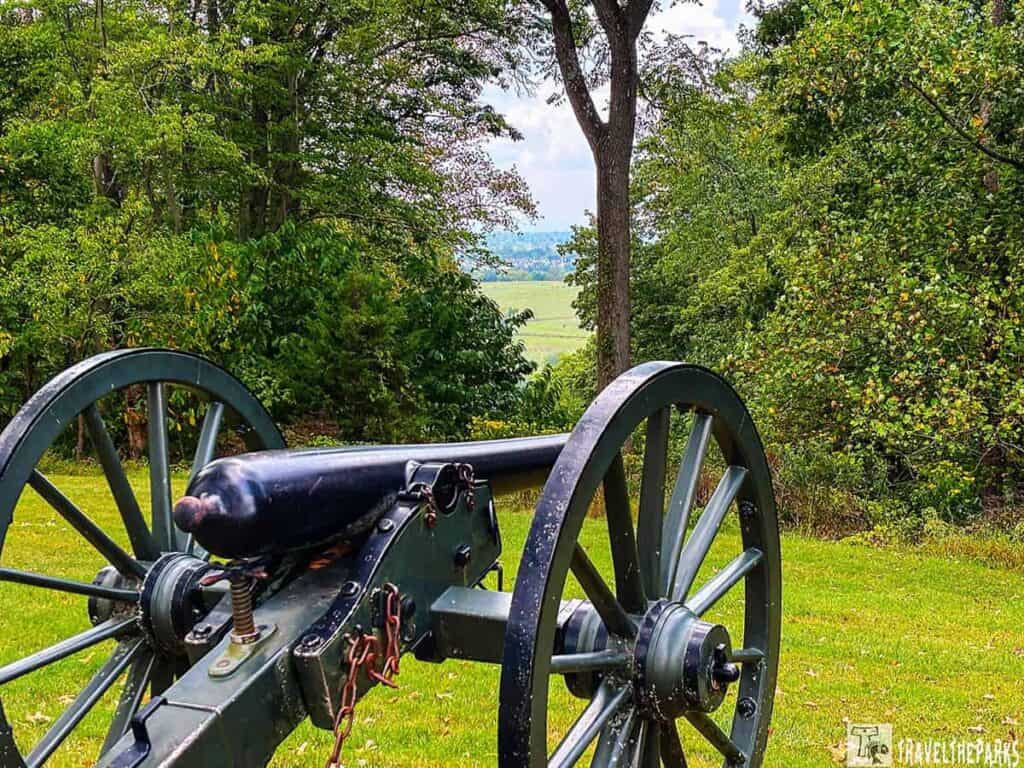
From here, we continued along the Maryland Heights Trail. For serious view-seekers, this strenuous hike climbs to the cliffs overlooking the town. From these commanding heights, Union forces once fortified their position during the Civil War, controlling the town with strategic artillery. The climb is challenging, but the view makes it worthwhile.
What to Bring on Your Walking Tour
For our ultimate Harpers Ferry self-guided walking tour, be sure to bring comfortable walking shoes, plenty of water, and weather-appropriate clothing, as the routes include hills, historic streets, and riverside paths. A small backpack is helpful for carrying snacks, sunscreen, and insect repellent, while a hat and sunglasses provide added comfort on sunny days. Keep your phone fully charged for maps, photos, and any digital tour materials, and consider bringing a printed map as a backup. Binoculars can also enhance your views of the scenic river confluence and surrounding overlooks.
Final Thoughts: Wrapping Up Our Harpers Ferry Walking Tour
As our walking tour draws to a close, we’ve journeyed through the layers of American history. We’ve witnessed the industrial might of the armory, explored battle strategies that shaped the nation, and reflected on John Brown’s ill-fated raid. We’ve taken in the landscapes that inspired Thomas Jefferson and stood where rivers converge and history was made, gaining a deeper understanding of how this small town holds a significant place in our country’s story.
We hope this self-guided experience lets you connect with Harpers Ferry at your own pace. Each step along the cobblestone streets, across the railroad bridge, and through the historic buildings reveals another chapter in the rich story of this remarkable national historic park.
We’d love to hear about your experience! What was your favorite moment on the tour? Share your thoughts and photos with us in the comments below.