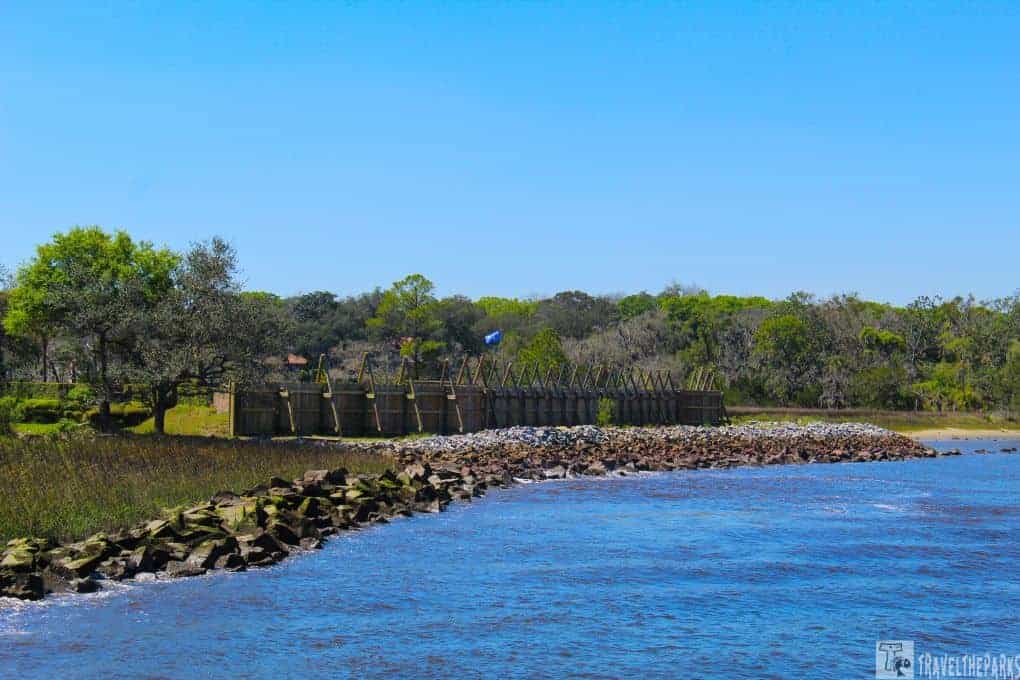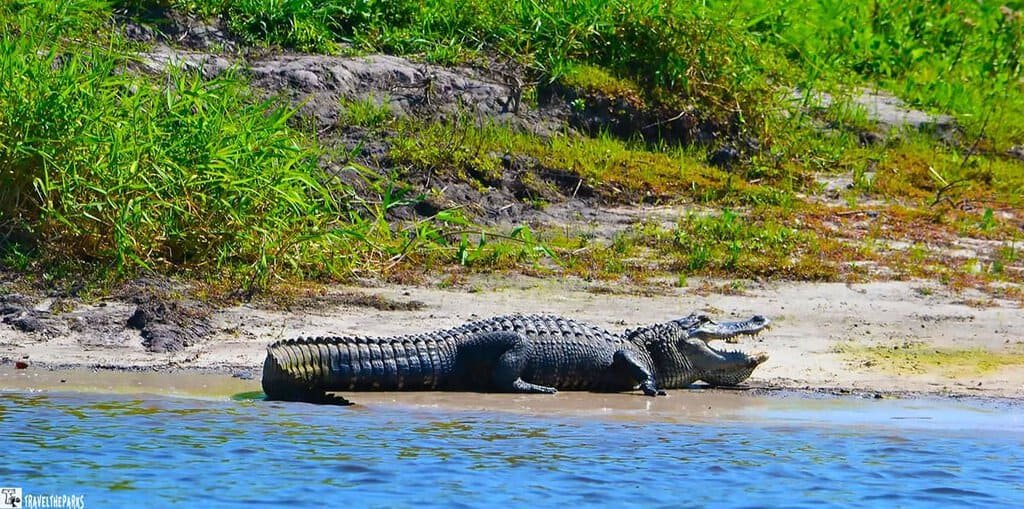
You know how Gainesville is all about the Gators? Turns out, the real ones live south of town .
La Chua Trail sits on the north end of Paynes Prairie Preserve State Park, and calling it a wildlife hotspot is an understatement. On a good day, you’ll spot over a hundred alligators sunning themselves along the banks . And we’re not talking about the kind you see on a football helmet.
The trail runs about a mile round-trip, starting on pavement, then transitioning to a wooden boardwalk that takes you right over Alachua Sink—the drainage point where the prairie’s water disappears into the Florida aquifer . From there, you can continue onto a grassy path if conditions allow, but honestly, the boardwalk alone delivers plenty of action.
Birds? Over 300 species have been reported here . Sandhill cranes, wood storks, great blue herons, bald eagles—they’re all in the rotation. And if the prairie’s dry enough, you might catch the wild bison and horses that roam the basin . It’s a lot of wildlife packed into a very short walk. The name La Chua comes from an old Spanish cattle ranch established in the 1600s, making it one of the earliest ranches in the colonial era . The trail itself sits at the historic crossing point of the prairie, following routes that have been used for centuries.
This post may contain affiliate links, meaning if you purchase something through one of these links, we may earn a small commission at no extra cost to you! Read the full disclosure policy here.
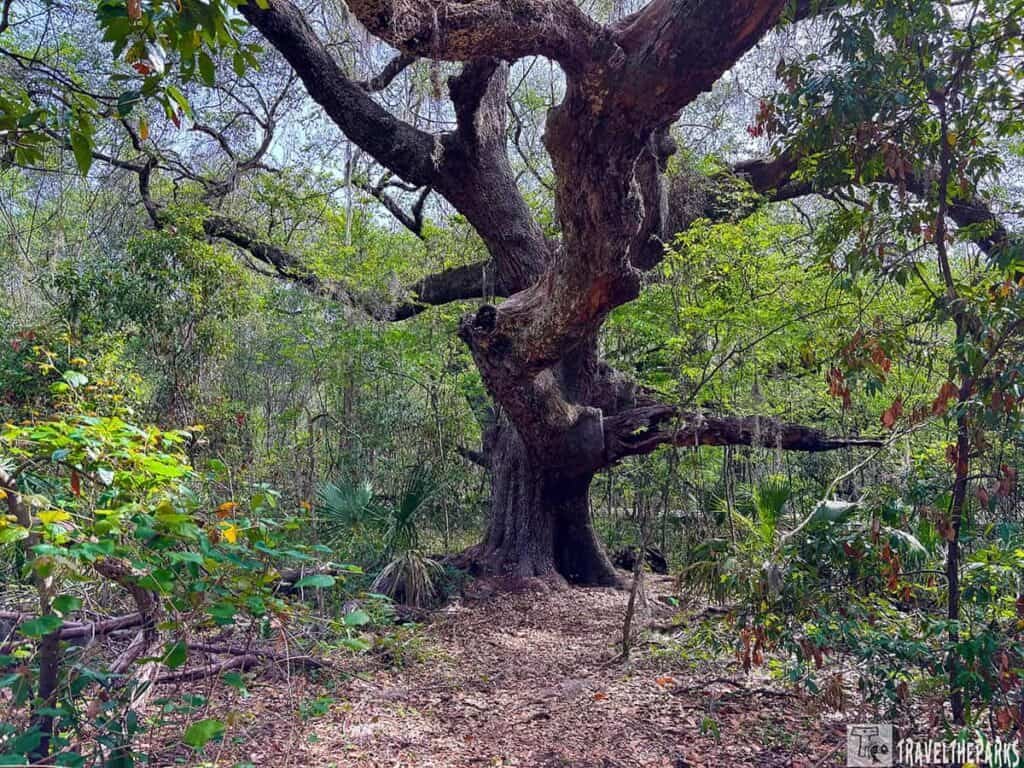
Table of Contents
A Brief History
Paynes Prairie has been a gathering place for a long time. Evidence of human activity here goes back nearly 12,000 years to Paleo hunters chasing megafauna across the basin. Fast forward to the 1700s, and the Alachua band of the Seminole clan made this area their stronghold under Chief Ahaya, known as the Cowkeeper. The prairie takes its name from his son, Payne.
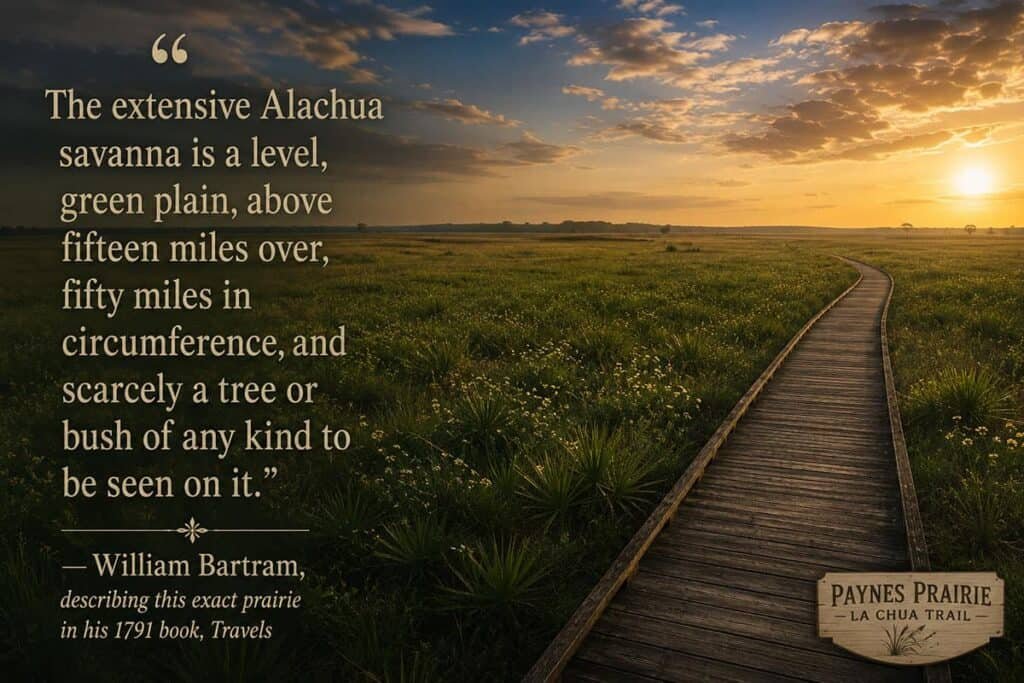
In 1774, botanist William Bartram visited and documented the area in his famous book, “Bartram’s Travels.” He noted the prairie’s use by the Seminole and wrote about the incredible number of alligators he saw.
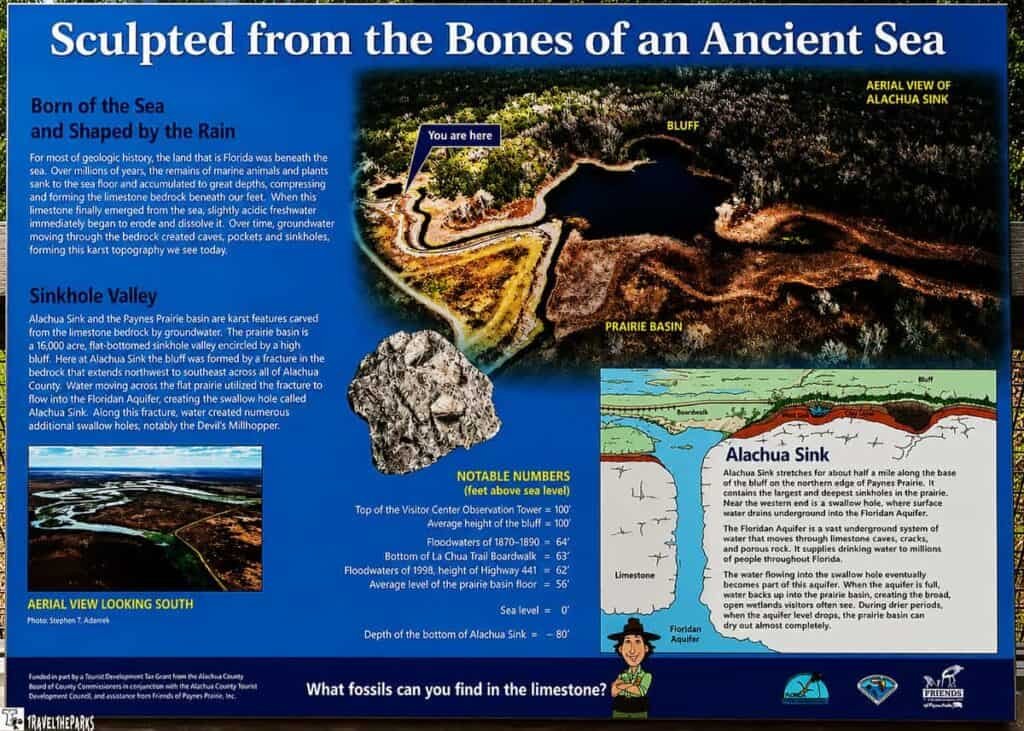
At times, the basin has flooded so dramatically that it formed Alachua Lake. From 1871 to 1891, the water was deep enough for steamboats to navigate. Eventually, the sinkhole at the bottom of the prairie unclogged, draining the water back underground.
In 1970, the state purchased the land and established Paynes Prairie as the Florida Park Service’s first state preserve . It became a National Natural Landmark in 1974.
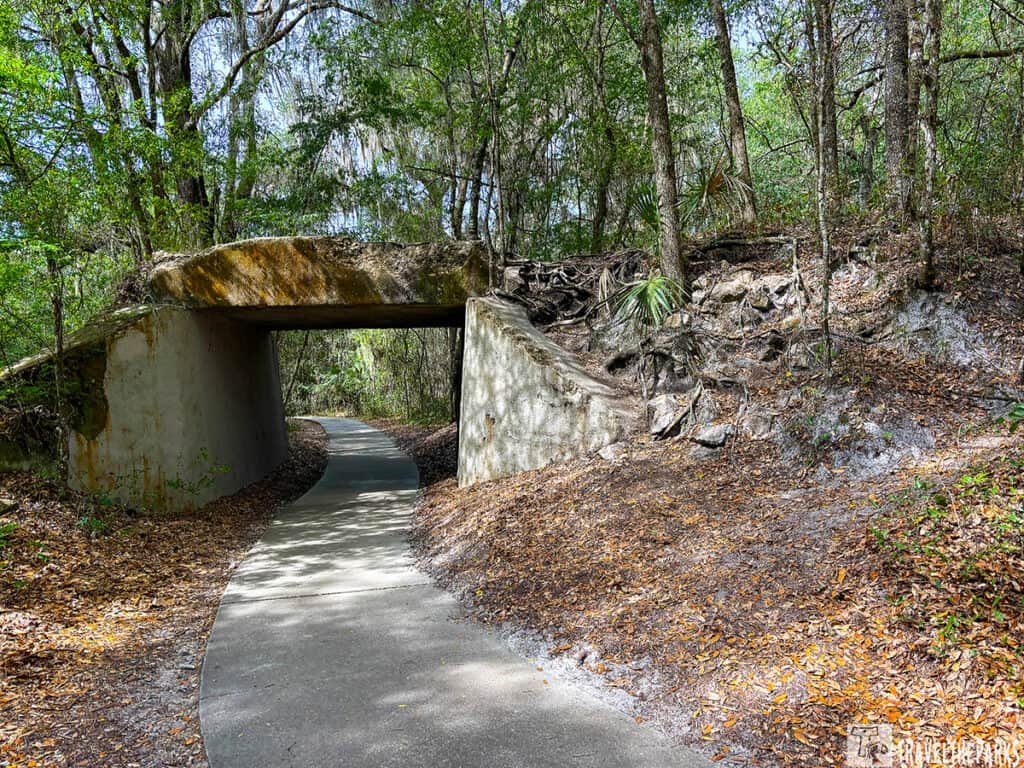
The La Chua Trail runs along the old railroad route built in the late 1800s, and remnants of that history still show up in the landscape.
What to Expect: La Chua Trail in Paynes Prairie State Park
The Walk
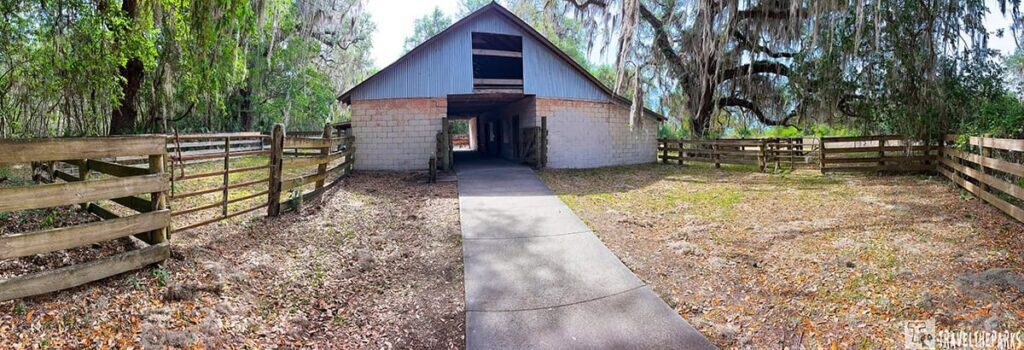
The trail starts out paved. You’ll pass under an old railroad trestle and walk through an old cattle barn before hitting the boardwalk. That’s when things get interesting.
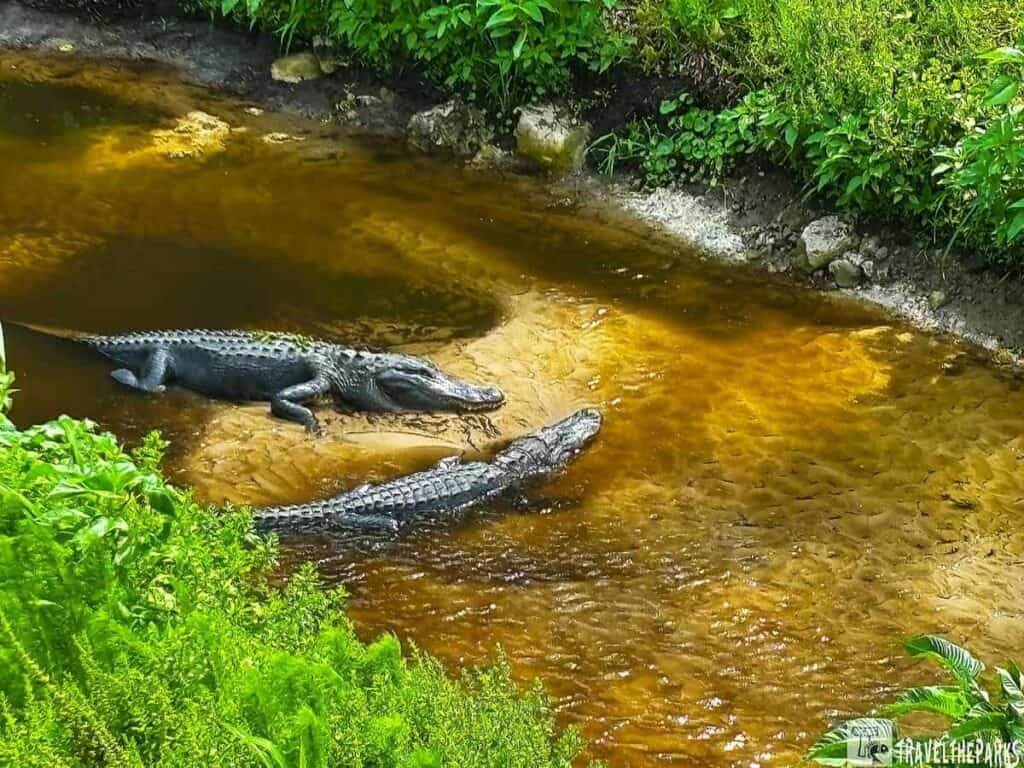
The boardwalk runs above the wetlands, giving you an elevated view of the water below. This is prime alligator real estate. On many visits, you’ll spot them lounging on the banks, floating in the water, or sometimes stacked up like logs in the sun.
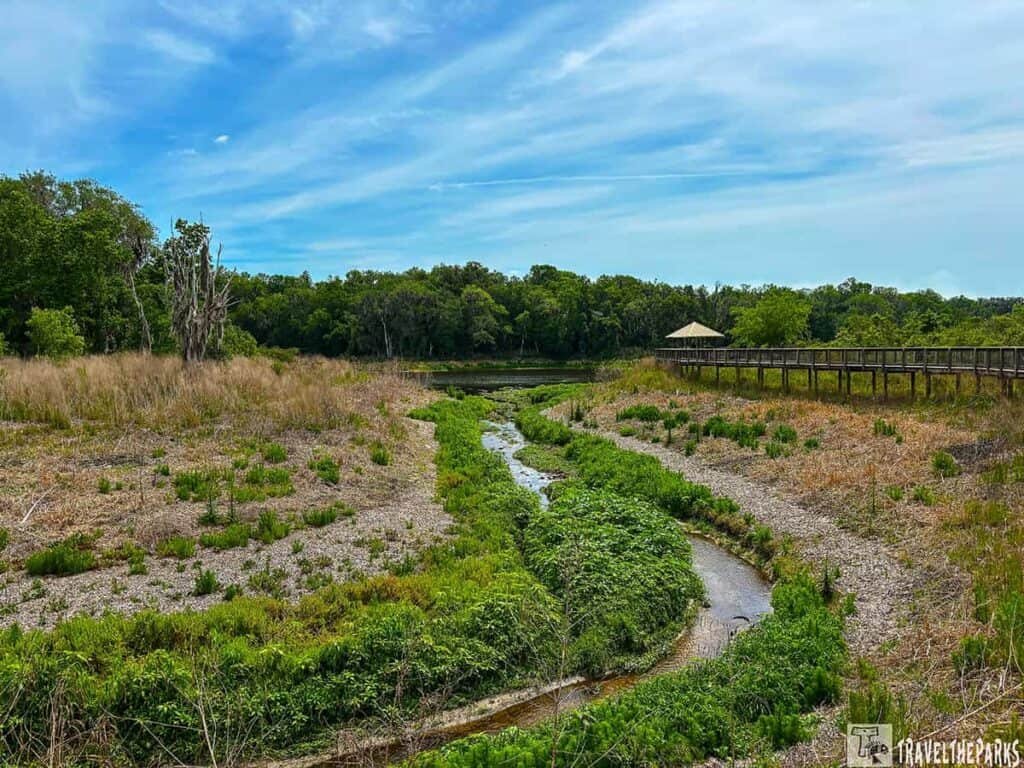
At the end of the boardwalk, you reach Alachua Sink. This is where Paynes Prairie drains into the Floridan Aquifer. If the sinkhole plugs up, the prairie floods. If it clears, the water disappears. It’s a constant cycle that keeps the landscape shifting between marsh and dry prairie.
Now, here’s the thing about Florida—it’s either flooding or drying out. During our visit, a drought had shrunk the water levels considerably. Instead of a sprawling wetland, the alligators were packed into whatever smaller ponds remained around the sink. And let us tell you, that many reptiles in tight quarters makes for some serious tension.
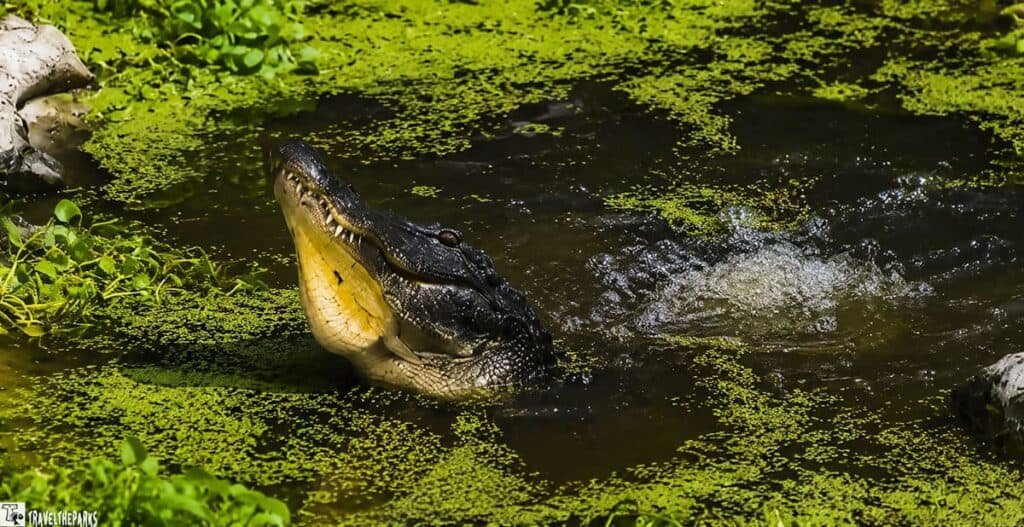
We’d never heard alligators bellow like that before. Deep, rumbling calls that seemed to travel through the ground more than the air. The males were posturing, splashing, and generally letting each other know who was boss. We even heard from other hikers that, with the drought concentrating so many alligators into a few remaining pools, there had been some predation. We didn’t witness anything ourselves.
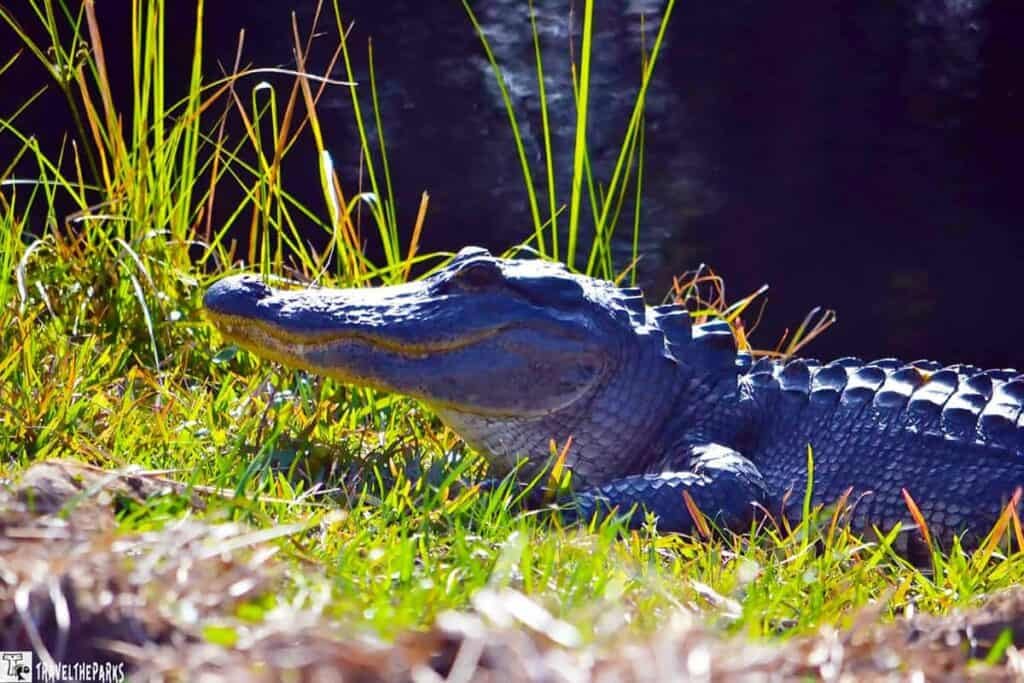
The most memorable moment came on the open prairie section. We were walking along, minding our own business, when a good-sized gator crossed the path maybe twenty feet ahead of us. It wasn’t stalking us or anything dramatic—it was just relocating, probably trying to find a quieter spot away from the chaos at the sink. It moved with that weird, deliberate waddle they do on land, and we just stood there and let it pass. You don’t argue with something that’s been around since the dinosaurs.
Wildlife
Let’s be honest—the alligators are the headliners. During cooler months, they haul out to warm up, and you can spot dozens at once. On a dry year, you might see more of them in one place than you bargained for. But they’re not alone.
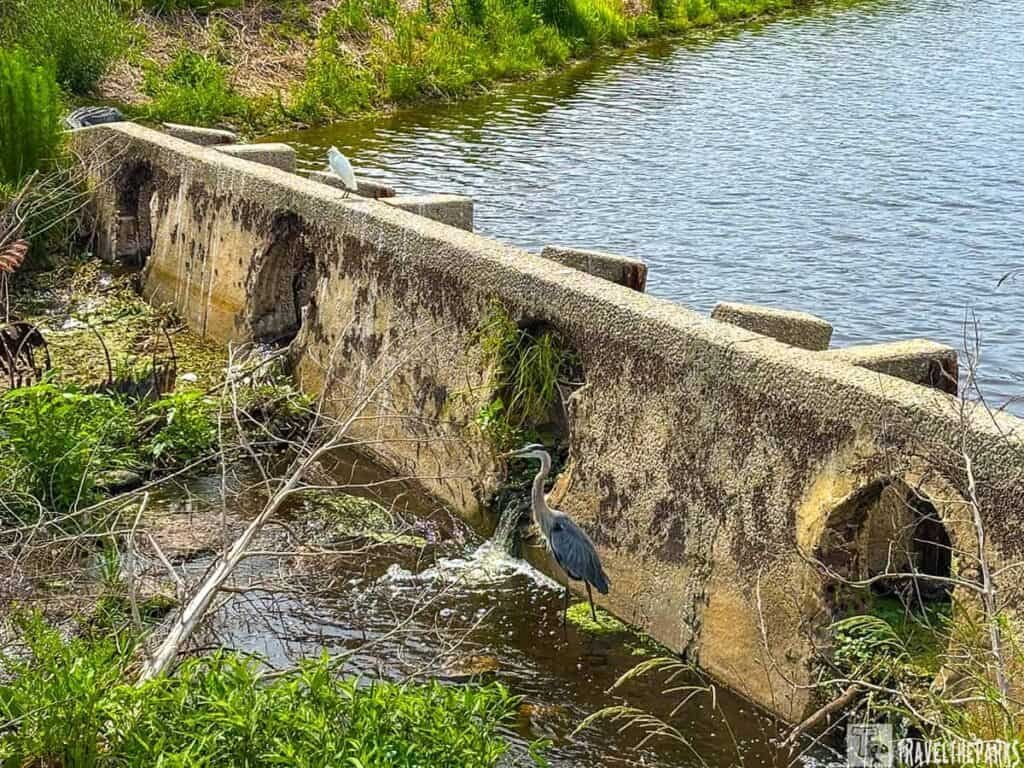
Birders love this place. Sandhill cranes, great blue herons, wood storks, egrets, and bald eagles are regulars. The endangered snail kite has also been spotted here.
If the prairie is dry enough, you might see the park’s bison and wild horses grazing in the distance. They were reintroduced to help restore the natural ecosystem, and they’ve thrived.
The Rim Trail Option
If the boardwalk leaves you wanting more, the Rim Ramble Loop Trail is the perfect next step. It’s only a mile and a half, and it kicks off from the same trailhead—so you can just keep going. But here’s the twist: instead of open marsh, this one ducks into the shade of the upland forest, tracing the edge of the prairie like a completely different world. And if you time it right, you might catch one of the park’s ranger-led hike. Definitely worth checking the schedule before you head out—it adds a whole other layer to the experience.
We’d recommend it—just stay aware of your surroundings. Wildlife has the right of way here, and on occasion that includes an alligator crossing the trail.
Know Before You Go
- Location: 4801 Camp Ranch Rd, Gainesville, FL 32641
- Fees: $4 per vehicle, $2 for walk-in or bike
- Hours: The park opens at 8 a.m. daily, but the La Chua Trail gate can close before sunset, sometimes earlier depending on alligator activity, so don’t plan a late-afternoon start. Check the official website for alerts.
- Trail Length: About 1 mile round-trip on the main boardwalk, with extended grassy trail available when conditions allow
- Best Time to Visit: Cool, dry days in winter and late spring. Alligators are most visible when they’re sunning themselves . Early morning and late afternoon offer the best wildlife activity .
- What to Bring: Binoculars, sunscreen, water. The boardwalk is unshaded and Florida sun is relentless .
- Pets: No dogs allowed on the prairie. Alligators see small animals as potential meals, and that’s not a risk worth taking .
- Kids: Stay on the boardwalk if you have small children. The grassy trail beyond can be unpredictable .
- Safety: Keep your distance from alligators. They’re not aggressive by nature, but they’re wild animals. Feeding them is illega
Final Thoughts:
La Chua Trail isn’t chasing you with dramatic overlooks or a brutal elevation climb. It just puts a dozen alligators in front of you and lets you figure out on your own whether that’s enough.
Turns out, it is.
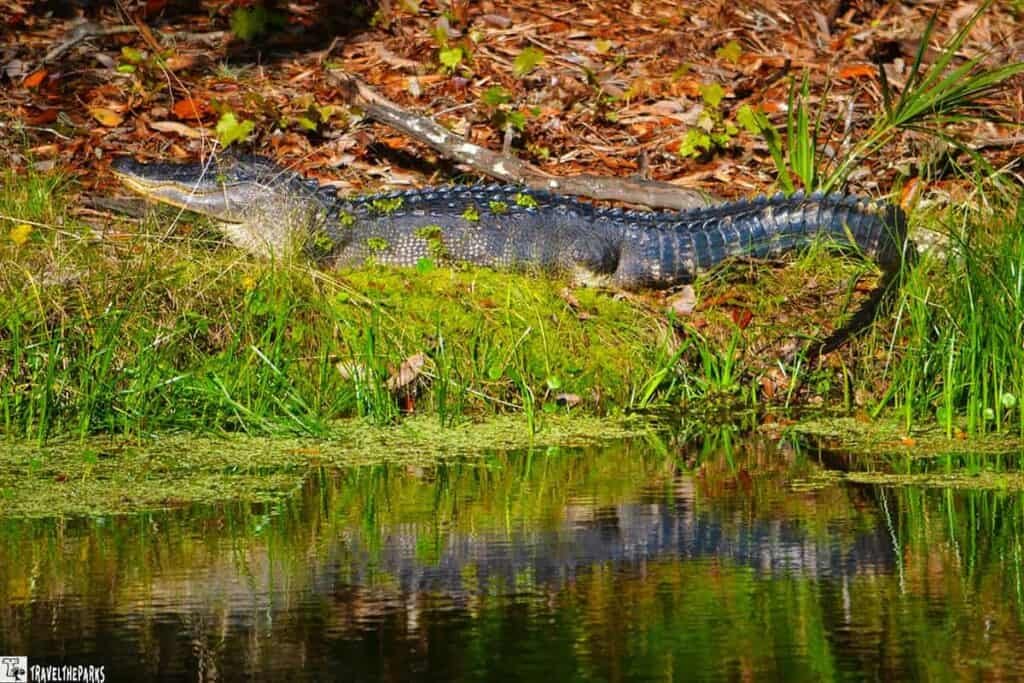
Stand on that boardwalk for a minute, look down at the gators stacked up in the water below, and it hits you—this is Florida with nothing dressed up about it. Not a theme-park version, not staged for a photo. Just a wetland basin that’s been running the same routine for thousands of years, long before anyone built a trail next to it.
We’ve walked a lot of trails around this state, and La Chua is one of the rare ones that actually delivers what the brochure claims—then keeps going past it. Not many one-mile walks leave you feeling like you just came back from a safari, but this one does.
Get there early. Bring the binoculars. Keep your distance from the gators. And do everyone a favor—leave the dog in the car, or better yet, at home.
If you’re wondering whether the gator count really hits triple digits, go on a cool winter morning and count for yourself. Just don’t lose track and walk off the boardwalk. They’re not friendly. Have you walked La Chua Trail? Tell us how many alligators you counted, we’re keeping a very unofficial tally.