Hiking is one of our favorite ways to experience Rocky Mountain National Park. We’ve explored several trails here, from easy walks around mountain lakes to longer hikes that really make you work for the views.
We’ve also learned that hiking at this elevation is different from hiking back home. A trail that looks manageable on paper can feel much harder once you’re gaining elevation, especially when the weather decides to change its mind.
In this guide, we’re sharing some of the best hiking trails in Rocky Mountain National Park that we’ve experienced, along with a few challenging options we think are worth knowing about. We’ll cover easier walks, moderate hikes, and more demanding trails so you can choose what fits your time and comfort level.
One note: We didn’t hike Longs Peak ourselves, so we’ll tell you what we know about this challenging route without pretending we have firsthand experience.
For us, that’s what makes a good hiking guide more useful. We’re sharing what we actually experienced, along with the information we’d want before choosing our next trail.
This post may contain affiliate links, meaning if you purchase something through one of these links, we may earn a small commission at no extra cost to you! Read the full disclosure policy here.
Table of Contents
Before You Hit the Trail
Hiking in Rocky Mountain National Park takes a little planning, especially during the busy season. Some trailheads require access during the park’s timed-entry hours, and popular areas such as Bear Lake can fill early.
Before heading out, check the current timed-entry requirements, shuttle information, trail conditions, weather, and road closures. Elevation is another factor to consider. We learned that firsthand when I experienced altitude sickness during our visit.
For everything you need to know about entering the park, reservations, shuttles, and planning your visit, see our complete guide to Visiting Rocky Mountain National Park.
Quick Guide to Hiking Trails in Rocky Mountain National Park
Rocky Mountain National Park has hiking trails for just about every level, from easy walks around mountain lakes to strenuous mountain climbs. We like having a quick look at the options before deciding how much hiking we want to tackle on any given day.
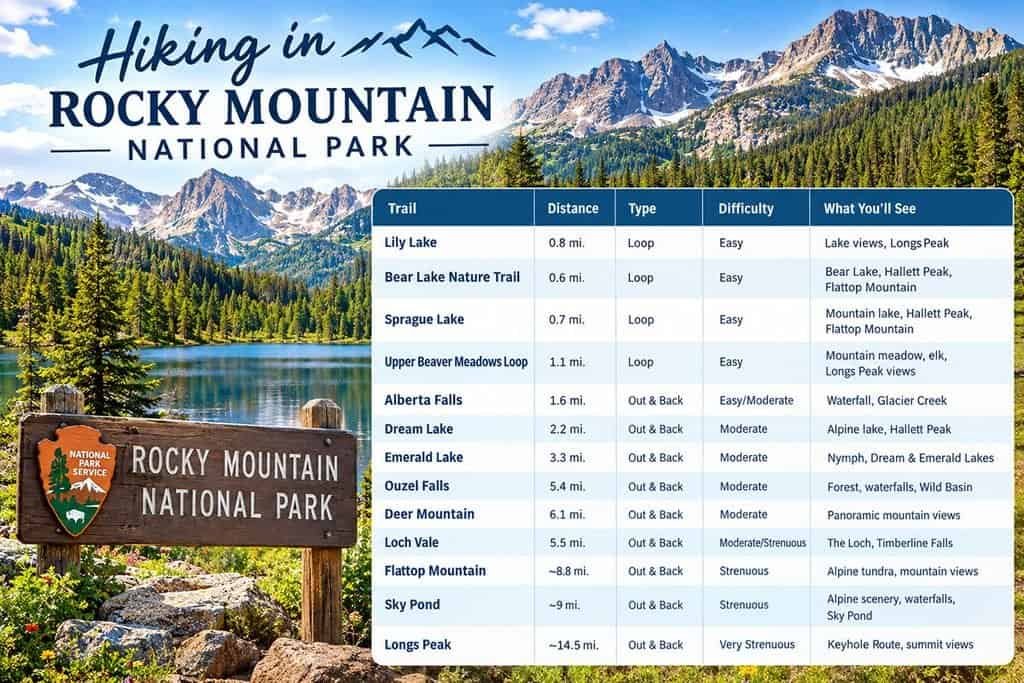
A note about our experience: We’ve hiked most of the trails we’ll cover here, so we’re sharing what we actually experienced along the way. Longs Peak is the exception. We didn’t hike it ourselves, so we’ll cover it as a challenging option using current park information rather than pretending we have firsthand experience.
Lily Lake Trail — 0.8 Miles, Loop | Easy
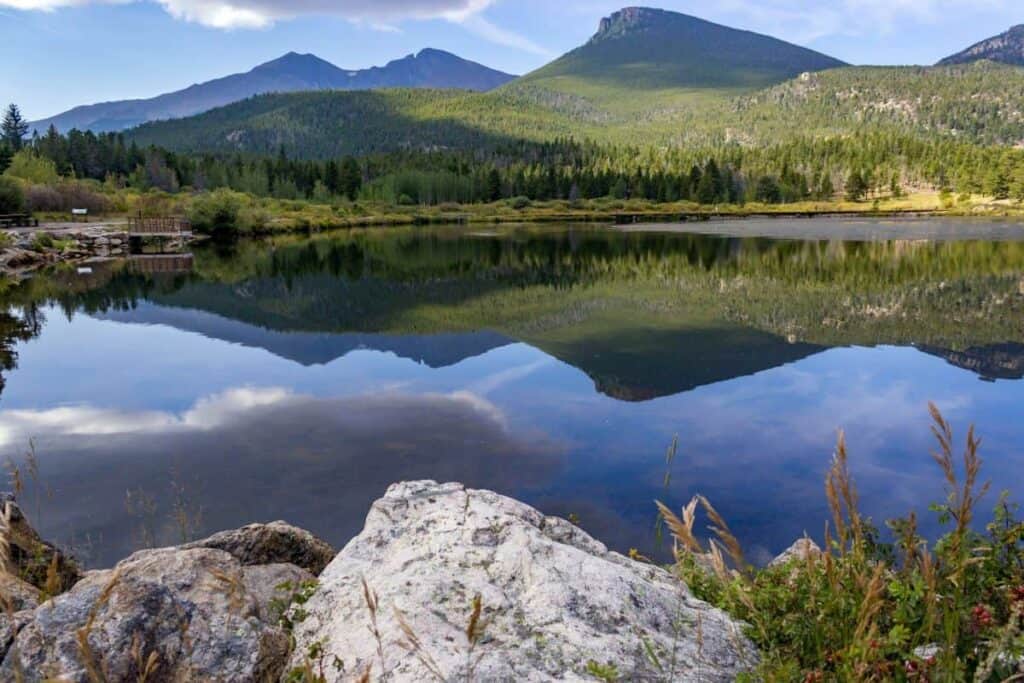
If you’re looking for an easy walk with beautiful mountain views, Lily Lake is a great place to start. Located along Highway 7 ( Peak to Peak Scenic Byway) just outside the park, the trail makes an easy loop around the lake with very little elevation gain.
The trail is relatively flat, making it a good choice for families, casual walkers, and anyone who wants an easy outing. The views of Longs Peak are one of the highlights, and the lake gives you plenty of opportunities to stop and enjoy the scenery.
We like trails like this because you don’t have to work hard to get a great view. You can take your time, enjoy the lake, and keep an eye out for wildlife and birds along the way.
TravelTheParks Tip: Don’t rush this one. The trail is short, but the scenery is worth slowing down for.
Upper Beaver Meadows Loop — 1.1 Miles, Loop | Easy
Upper Beaver Meadows is a nice option if you want an easy walk through a broad mountain meadow without taking on a major climb. The loop has minimal elevation gain and gives you a chance to enjoy the open landscape, wildlife, and mountain views.
The meadow is also a good place to slow down and look around rather than simply focusing on getting to the end of the trail. Depending on the season, you may see elk, birds, wildflowers, and views toward the surrounding mountains.
TravelTheParks Tip: This is a good choice when you want a quieter alternative to some of the park’s more popular trailheads.

Sprague Lake Trail — 0.7 Miles, Loop | Easy
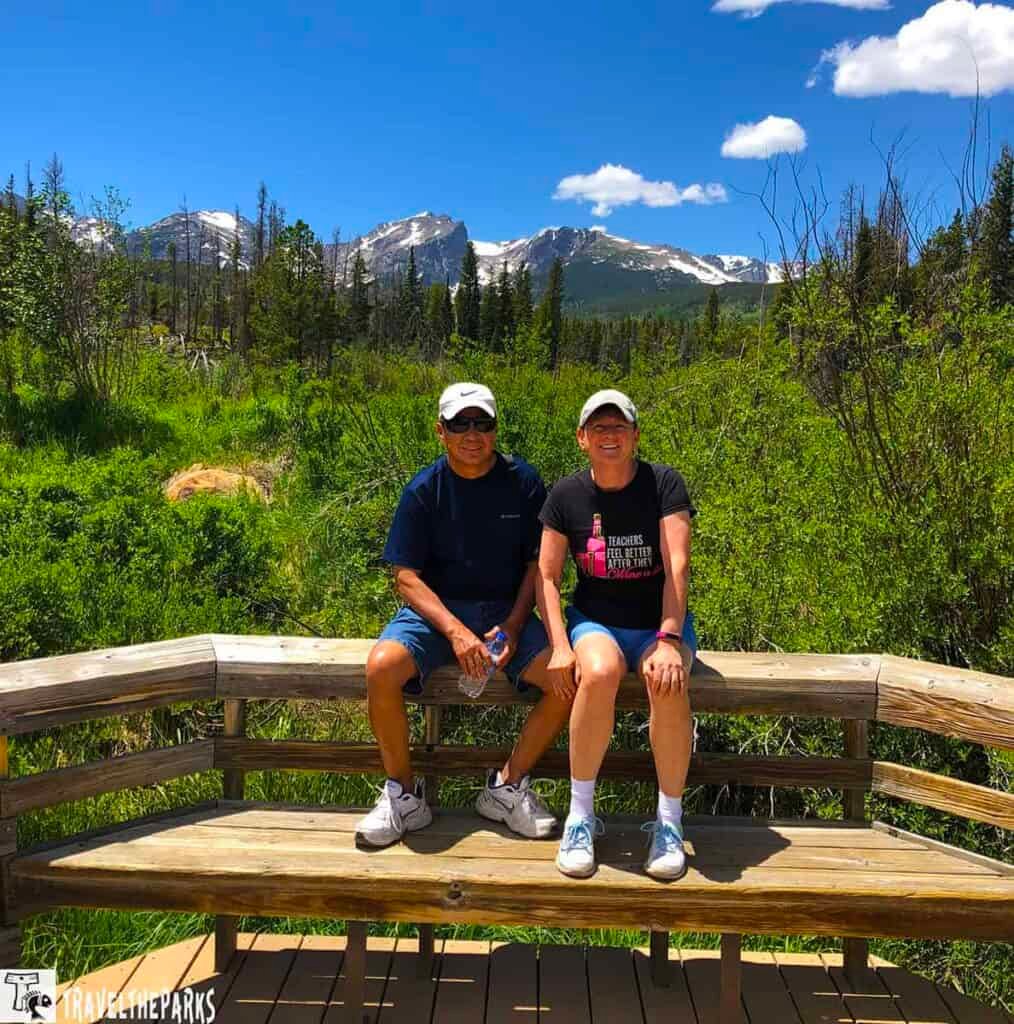
Sprague Lake was one of our favorite easy walks in Rocky Mountain National Park. The loop around the lake is just 0.7 miles, with relatively little elevation gain, making it an easy way to get out of the car and enjoy the scenery.
We walked the loop during our visit and found that the views got better as we made our way around the lake. The surrounding mountains, including Hallett Peak and Flattop Mountain, provide a beautiful backdrop.
The lake itself is also a peaceful place to stop for a few minutes. On a calm morning, you may even get mountain reflections on the water.
For us, Sprague Lake was exactly the kind of trail we like to include in a national park itinerary. It’s short, scenic, and doesn’t take up half the day.
TravelTheParks Tip: Don’t turn around after the first few minutes. Keep walking the loop. Some of our favorite views came farther along the trail.
Bear Lake Nature Trail — 0.6 Miles, Loop | Easy
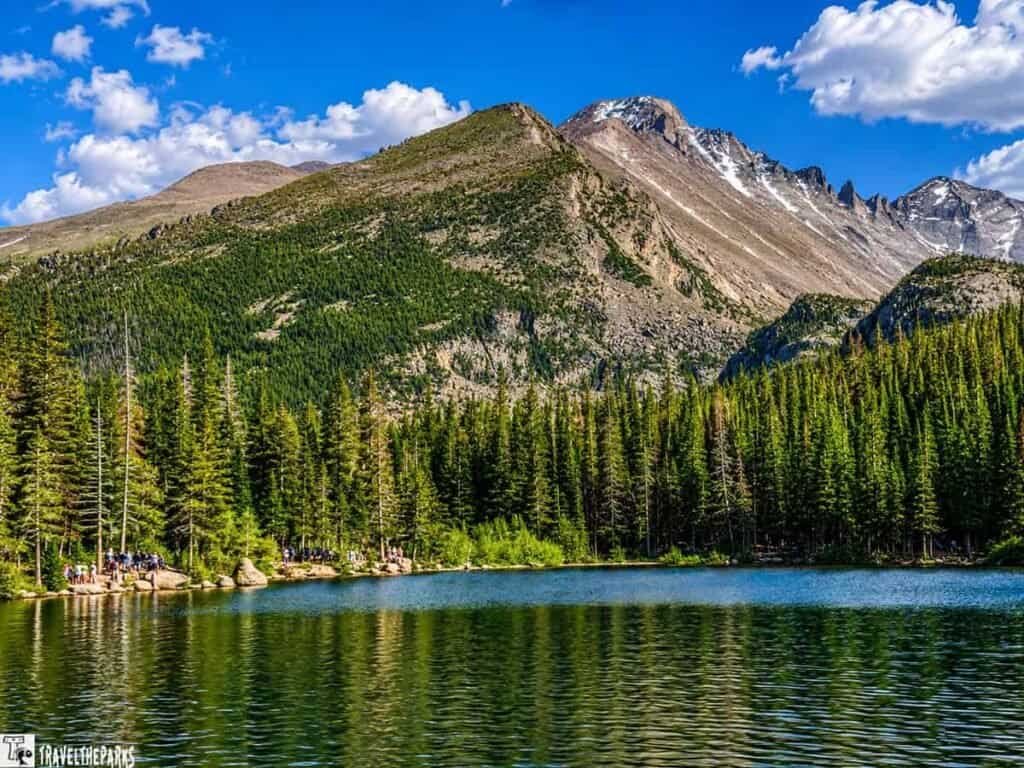
Bear Lake is one of the most popular places in Rocky Mountain National Park, and the easy 0.6-mile loop around the lake makes it accessible to a wide range of visitors.
The trail offers views of Bear Lake with Hallett Peak and Flattop Mountain rising above it, while Longs Peak can be seen in the distance.
We actually didn’t get to hike this trail ourselves. When we arrived, the parking area was already full, so we changed our plans and headed to Moraine Park and Sprague Lake instead.
That experience is worth mentioning because Bear Lake can be extremely busy. If this hike is on your must-do list, check the current timed-entry and shuttle requirements and plan to arrive early.
TravelTheParks Tip: Have a backup plan. We did, and it turned into a pretty good day anyway.

Other Popular Hikes From Bear Lake and Glacier Gorge
One of the great things about hiking in Rocky Mountain National Park is that several popular destinations branch from the same trailhead areas. You don’t have to choose just one trail.
Dream Lake — 2.2 Miles, Out and Back | Moderate
Dream Lake is a popular destination from Bear Lake, with the trail climbing through the forest to the beautiful alpine lake. At 1.1 miles each way, it’s a manageable step up from the easy Bear Lake loop, although the elevation gain makes it more challenging than the distance suggests.
Alberta Falls — 1.6 Miles, Out and Back | Easy to Moderate
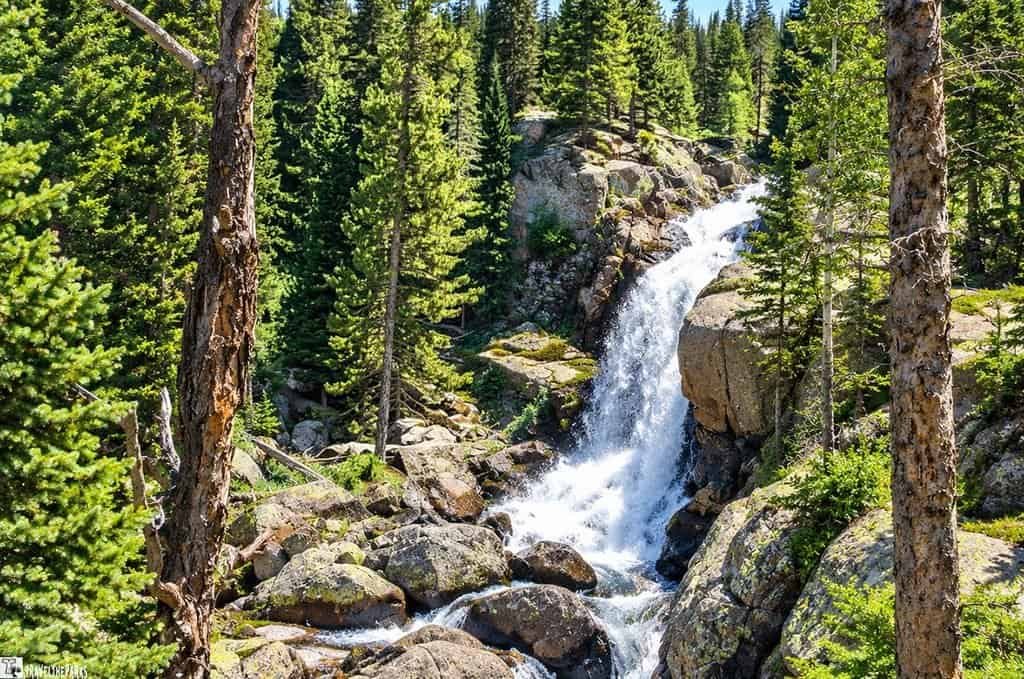
Alberta Falls is another popular short hike, with Glacier Creek rushing through a narrow granite gorge before dropping over the falls. The exact distance varies depending on which starting point you use, so we’d check the current NPS trail information before heading out.
Moderate Hiking Trails in Rocky Mountain National Park
If you’re ready for something more than a short lake loop, Rocky Mountain National Park has plenty of moderate hikes that take you deeper into the landscape. These trails involve more distance, elevation gain, or both, but the payoff can be well worth the extra effort.
Emerald Lake Trail — 3.3 Miles, Out and Back | Moderate
Emerald Lake is one of the most popular hikes in Rocky Mountain National Park, and for good reason. The trail takes you past Nymph Lake and Dream Lake before reaching Emerald Lake, with mountain scenery getting better along the way.
The trail begins at Bear Lake and climbs steadily as you make your way toward the three lakes. You’ll get views of surrounding peaks throughout the hike, with Hallett Peak and Flattop Mountain dominating the scenery.
It’s a relatively short hike by Rocky Mountain National Park standards, but the elevation makes it more challenging than the mileage might suggest.
If you’re visiting during a busy time of year, remember that Bear Lake is one of the areas where parking and access can be difficult. Check the current shuttle and timed-entry requirements before heading out.
TravelTheParks Tip: Don’t judge this hike by the mileage alone. The elevation and steady climb can make those 3.3 miles feel like more.

Ouzel Falls — 5.4 Miles, Out and Back | Moderate
The Ouzel Falls Trail in the Wild Basin area gives you a completely different feel from the busy Bear Lake area. The trail winds through forests and along the North St. Vrain Creek before reaching the waterfall.
Along the way, you’ll also pass Copeland Falls and Calypso Cascades, so there are several places to stop and enjoy the scenery before reaching Ouzel Falls.
We enjoyed the changing scenery along this trail. The forest, rushing water, and waterfalls made the hike feel like more than simply walking from the trailhead to a destination.
Wild Basin is also a good area to keep an eye out for wildlife. As always, sightings are never guaranteed, but the quieter setting gives you plenty of opportunities to watch and listen as you hike.
TravelTheParks Tip: Give yourself more time than the mileage suggests. There are several scenic spots along the way that are worth stopping for.

Deer Mountain — 6.1 Miles, Out and Back | Moderate
If you’re looking for a hike with a bigger payoff at the top, Deer Mountain is worth considering. The trail climbs steadily through the forest before opening up to broad views from the summit.
At 6.1 miles round trip, this is a longer hike than the easy lake trails, and you’ll gain significant elevation along the way. The climb is the challenge, but the views make the effort worthwhile.
Weather is another consideration at higher elevations. Conditions can change quickly, so check the forecast before you start and be prepared for cooler temperatures and changing weather.
TravelTheParks Tip: Don’t let the relatively moderate rating fool you. At Rocky Mountain’s elevation, a steady climb can feel considerably harder than the same hike at lower elevations.

Challenging Hiking Trails in Rocky Mountain National Park
Ready to step things up? These hikes require more time, more elevation gain, and a little more preparation. They’re also where Rocky Mountain National Park really starts showing off its high-country scenery.
We haven’t done every hike in this category ourselves, so we’ll be clear about which ones we experienced and which ones we’re including based on current park information.
Loch Vale — 5.5 Miles, Out and Back | Moderate to Strenuous
The hike to The Loch is a great option if you’re looking for a longer trail with plenty of scenery along the way. The trail climbs through the forest before opening up to views of the surrounding mountains and the beautiful alpine lake.
The official distance to The Loch is 2.75 miles one way, making this a 5.5-mile round trip. The elevation gain and rocky sections make it more demanding than the easy lake walks we’ve covered, but you don’t have to tackle a huge summit to get a rewarding mountain experience.
The trail also passes Alberta Falls early in the hike, giving you an impressive waterfall before continuing toward The Loch.
For us, this is the kind of hike where the journey is just as important as the destination. There’s plenty to see along the way, so there’s no need to race toward the lake.
TravelTheParks Tip: Give yourself plenty of time and pay attention to how you’re feeling as you gain elevation. Rocky Mountain National Park can make a moderate hike feel considerably harder than the mileage suggests.
Sky Pond — About 9 Miles, Out and Back | Strenuous
If you’re looking for a serious day hike with big scenery, Sky Pond is one of the hikes that belongs on your radar.
The trail takes you through some spectacular high-country scenery, including waterfalls, alpine lakes, and dramatic mountain formations. You’ll pass The Loch and continue toward Timberline Falls before reaching Sky Pond.
It’s a long and demanding hike, with significant elevation gain and some rocky, uneven sections. Weather can also change quickly at higher elevations.
This isn’t a hike we’d recommend simply because someone says it’s one of the park’s “must-do” trails. Your experience, fitness, the weather, and how you’re handling the elevation all matter.
TravelTheParks Tip: Start early and check conditions before heading out. A beautiful sunny morning doesn’t guarantee the same weather several hours later.

Longs Peak — About 14.5 Miles, Out and Back | Very Strenuous
Longs Peak is in a completely different category from the other hikes in this guide. At 14,259 feet, it is the highest peak in Rocky Mountain National Park and one of Colorado’s best-known mountain challenges.
The standard Keyhole Route is roughly 14.5 miles round trip and involves substantial elevation gain. The route includes steep climbing, exposed sections, scrambling, and difficult terrain. It’s not a casual day hike.
And this is where we’ll make an important distinction: we didn’t hike Longs Peak ourselves. We’re including it because it’s an iconic Rocky Mountain National Park hike that many experienced hikers consider, but we’re not going to pretend we have firsthand experience.
Conditions are a major consideration. Snow, ice, thunderstorms, wind, and rapidly changing weather can turn an already difficult route into a dangerous one. Anyone considering Longs Peak should check current NPS conditions and carefully evaluate whether the route matches their experience and abilities.
TravelTheParks Tip: Don’t choose Longs Peak simply because you want to say you climbed the highest mountain in the park. Know what you’re getting into before you start.

Planning for Longs Peak
Longs Peak is not a hike to approach casually. The Keyhole Route involves significant elevation gain, exposed terrain, scrambling, and sections where a fall could have serious consequences. We haven’t hiked Longs Peak ourselves, so we’re relying on current park guidance here rather than personal experience.
The safest time to attempt the route is generally during the summer climbing season, when snow and ice are less likely, but conditions can change quickly even in summer. Check the current weather and trail conditions before setting out, and be prepared to turn around if conditions deteriorate.
You’ll also want plenty of water and high-energy snack foods, along with rain gear and warm insulating layers. Sun protection is important at higher elevations, so pack sunglasses and sunscreen, too. A hat is also useful when you’re spending hours above treeline.
Weather can change dramatically as you gain elevation. Strong winds, thunderstorms, snow, and ice are all possible, even when conditions look pleasant at the trailhead.
And don’t let the word hike make this sound like a straightforward walk uphill. The Keyhole Route includes steep and exposed sections, loose rock, and scrambling. It requires good physical conditioning and experience with challenging mountain terrain.
TravelTheParks Tip: Longs Peak should be approached as a serious mountain climb, not simply the longest hike on our list. Know the route, check conditions, and be willing to turn around if the mountain isn’t cooperating.

Final Thoughts: Hiking Trails in Rocky Mountain National Park
One of the things we love about Rocky Mountain National Park is that you don’t have to be an experienced mountain hiker to enjoy the trails. A short walk around Sprague Lake can be just as memorable as a longer day on the trail. It really depends on what you’re looking for.
We’ve enjoyed trails that range from easy lake loops to longer hikes through forests, meadows, and higher elevations. And we’ve also learned that the elevation deserves respect. I experienced altitude sickness during our visit, so I know firsthand that a trail can feel very different here than it does at home.
Our best advice is to choose a trail that matches your experience, fitness level, available time, and the conditions on the day you visit. Don’t pick a hike just because it’s labeled a “must-do.” There’s nothing wrong with turning around or choosing an easier trail.
And remember, you don’t have to conquer a mountain to have a great day in Rocky Mountain National Park. Sometimes a beautiful lake, a quiet meadow, or a short trail with a great view is exactly what you need.
If you’re planning your first visit, be sure to check out our complete guide to Visiting Rocky Mountain National Park, where we cover timed entry, getting around the park, scenic drives, where to stay, camping, and more.
If you’re adding Rocky Mountain National Park to a larger Colorado road trip, our 10-Day Colorado National Park Itinerary shows how we combined all four Colorado national parks into one road trip, including our drive over Trail Ridge Road.
And if that scenic drive is on your list, don’t miss our detailed guide to Driving Trail Ridge Road in Rocky Mountain National Park, where we break down the route and the stops we enjoyed along the way.
For us, there are still plenty of trails left to explore. That’s a pretty good reason to go back.
Have you hiked any of these trails in Rocky Mountain National Park? Which one would you add to our list? Tell us about your favorite hike in the comments!