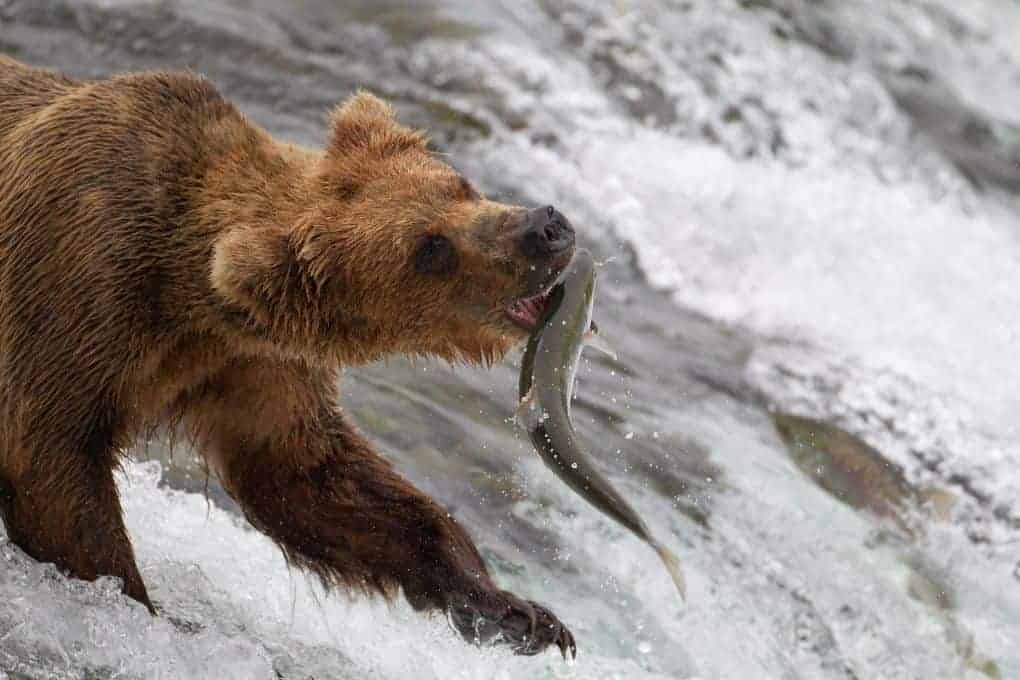
Planning an epic bear-viewing adventure to Beautiful Brooks Falls in Katmai was high on our Alaska bucket list. Brooks Falls is famous for its spectacular brown bear viewing, especially when salmon make their annual run up the Brooks River. Watching bears fish in the rushing water is one of those wildlife experiences that is hard to describe until you see it for yourself.
We had already experienced bear viewing at Lake Clark National Park, but Brooks Falls was different. I was hoping for the ultimate Bearapalooza—bears everywhere, salmon jumping, and those iconic moments of bears standing on the falls waiting for their next meal.
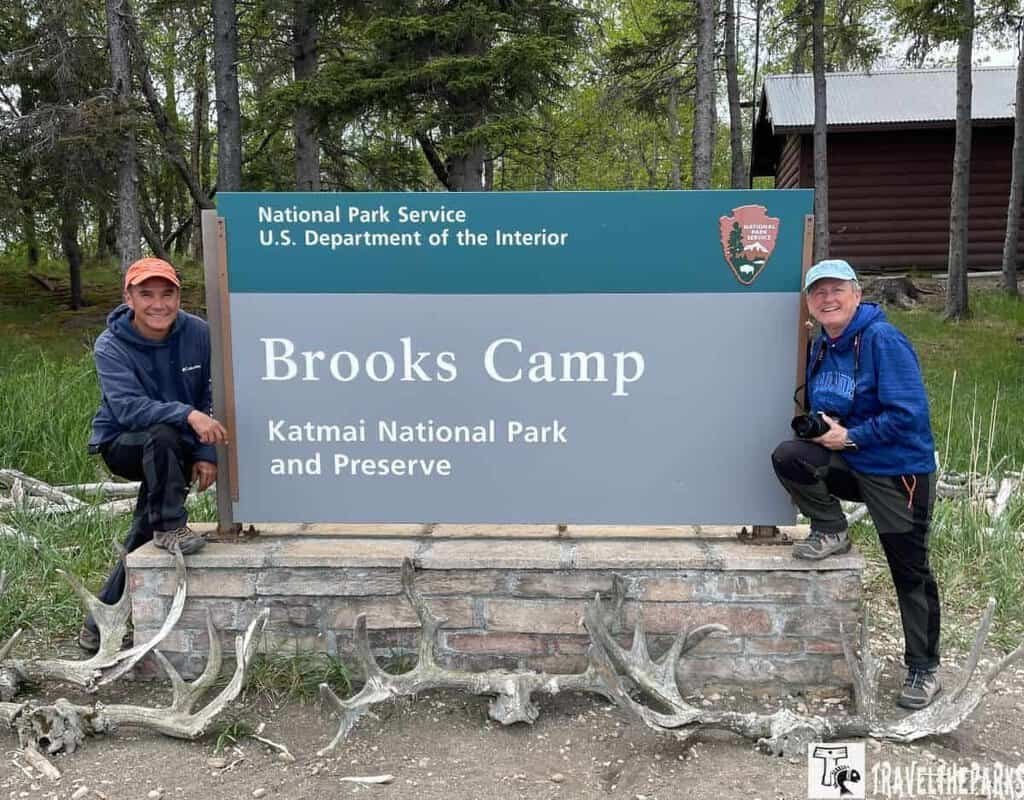
Our visit didn’t quite unfold that way. We arrived early in the season, before the salmon run was in full swing, so we didn’t see the massive concentration of bears we had imagined. What we did discover, however, was that Brooks Falls and Brooks Camp offer much more than a single bear-viewing moment. From walking the trails and watching wildlife to fishing the Brooks River and exploring the area around camp, our two nights in Katmai became an unforgettable Alaska adventure.
In this guide, we’ll share what we learned about planning a trip to Brooks Falls, including when to go, how to get there, where to see the bears, and what you can expect once you arrive.
This post may contain affiliate links, meaning if you purchase something through one of these links, we may earn a small commission at no extra cost to you! Read the full disclosure policy here.
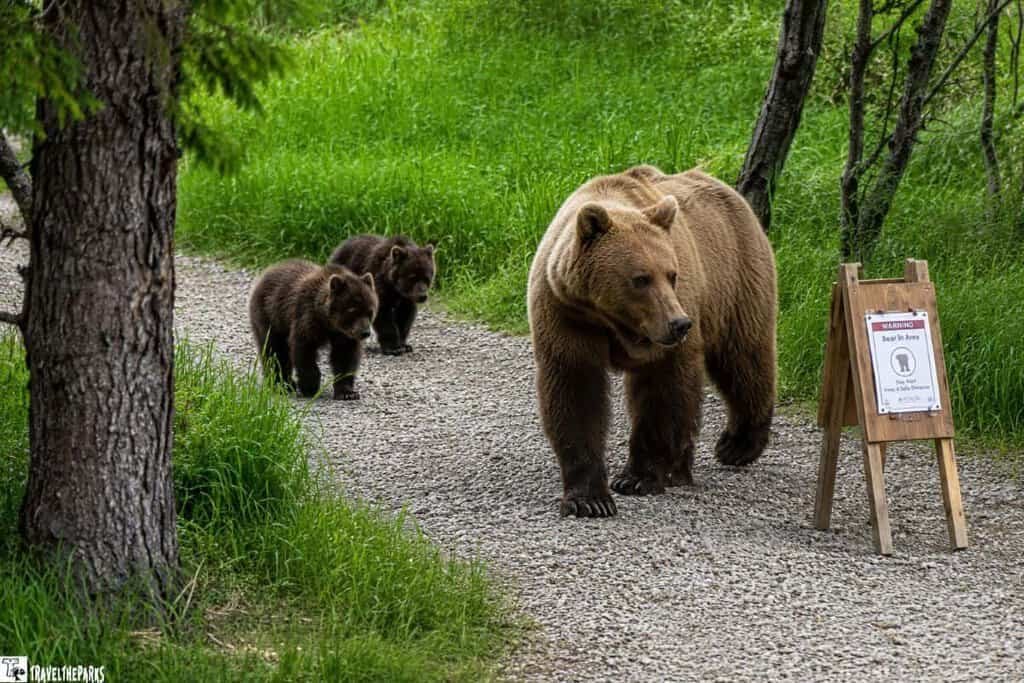
Table of Contents
Discovering Brooks Falls in Katmai National Park
Brooks Falls is one of Alaska’s most famous brown bear viewing destinations. Located on the Brooks River between Brooks Lake and Naknek Lake, the falls become a gathering place for brown bears when salmon make their way upstream.
Katmai National Park and Preserve protects more than 4 million acres of wilderness in southwestern Alaska. The park was established in 1918 following the massive volcanic eruption of Novarupta, and today it is perhaps best known for its exceptional brown bear habitat and salmon-filled rivers.
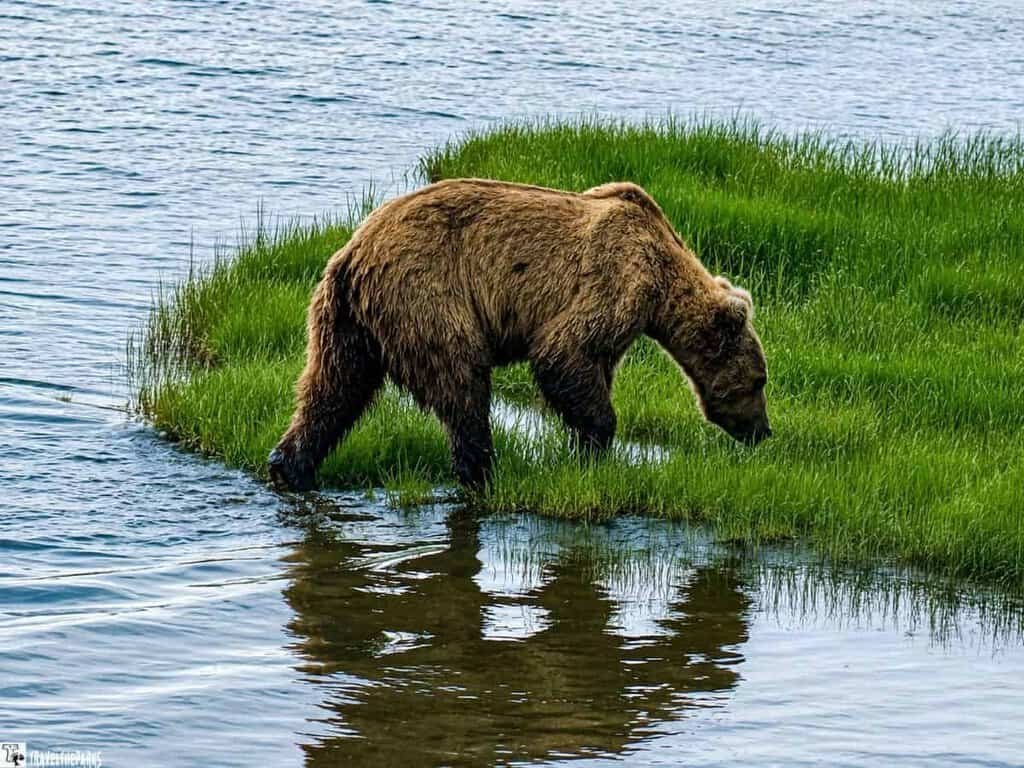
The Brooks River supports several species of salmon, including sockeye, coho, and Chinook. When the salmon are running, brown bears gather along the river to feed. Some wait at the falls for salmon to leap upstream, while others fish from the river or move along the shoreline.
That concentration of bears is what makes Beautiful Brooks Falls in Katmai such a sought-after wildlife experience. But there’s an important thing to understand when planning your trip: the number of bears and the amount of salmon activity can vary considerably depending on when you visit.
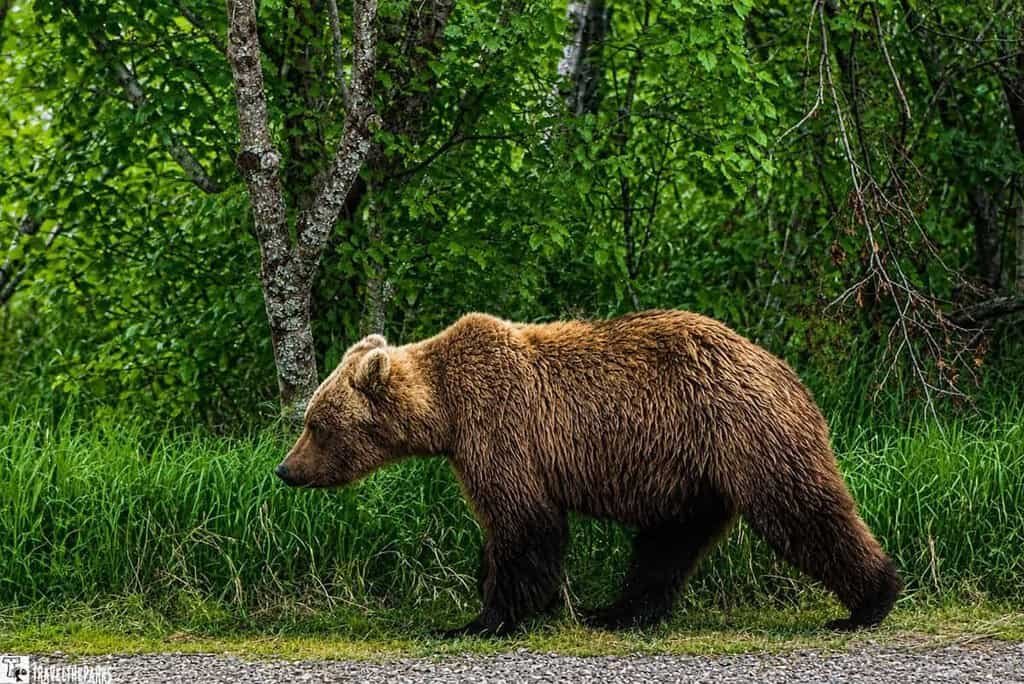
When we arrived, there were bears around Brooks Camp, but the salmon run hadn’t reached its peak. We didn’t get the huge bear spectacle I had pictured in my head. That experience taught us an important lesson about planning a Brooks Falls trip—timing matters.
When Is the Best Time to See Brown Bears at Brooks Falls?
The best time to see brown bears at Brooks Falls is during the summer salmon runs, when bears gather along the Brooks River to feed. July and August are generally the most popular months for bear viewing, as salmon activity is typically strong and more bears may be concentrated along the river.
That doesn’t mean you won’t see bears outside the peak period. The timing and strength of the salmon runs can vary from year to year depending on water conditions, temperatures, and other environmental factors. Early and late-season visits can also mean fewer visitors, although bear activity may be less predictable.
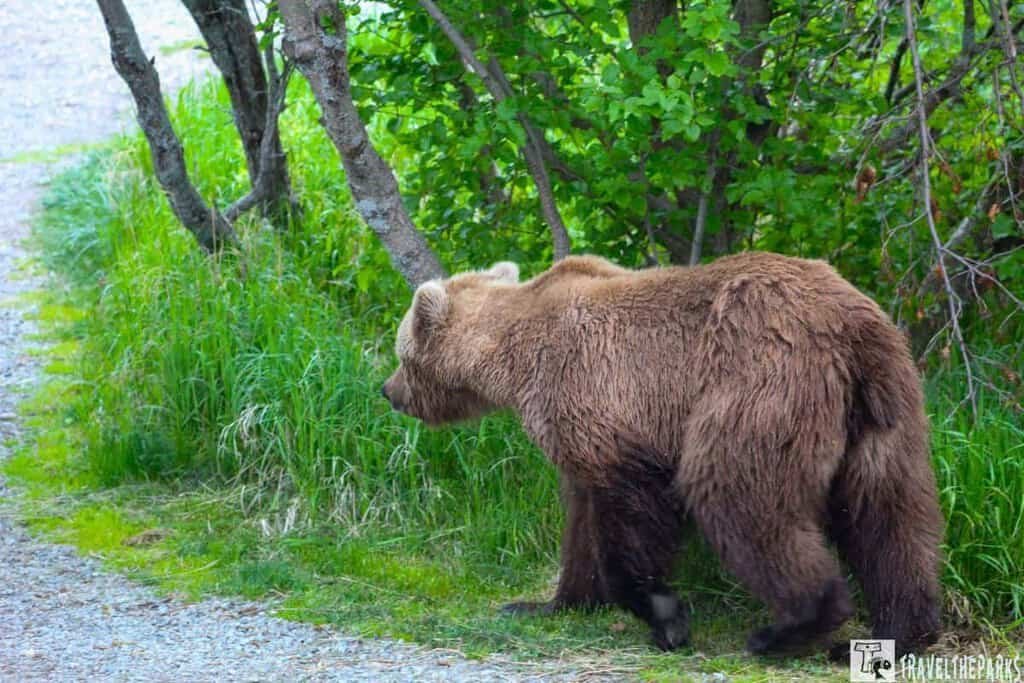
We visited Brooks Camp in late June 2023, and our experience was a good reminder that nature doesn’t always follow the calendar. A colder-than-normal spring delayed the salmon run by several weeks, and we saw fewer bears at Brooks Falls than we had hoped. We did, however, see bears around Brooks Camp and along the Brooks River, and those encounters were still incredible.
How to Enter the Brooks Lodge Lottery
If staying overnight at Brooks Camp is part of your Beautiful Brooks Falls in Katmai adventure, planning well ahead is essential. Brooks Lodge uses a random lottery because demand for its limited accommodations is extremely high.
The application period is generally held in December for the following season. For the 2027 season, applications were accepted from December 1 through December 30, 2025. Each person may submit only one application, and all eligible applications have an equal chance in the random drawing.
Brooks Lodge Lottery information and application
When applying, you’ll select the dates you’re willing to travel and provide your contact information. Flexibility with your dates can improve your chances of receiving a reservation, so consider listing multiple dates if your schedule allows.
We were fortunate to have our application selected in early 2022. Getting that reservation was exciting because it meant we could spend two nights at Brooks Camp instead of trying to experience Brooks Falls as a rushed day trip.
Brooks Lodge Lottery Rules
The rules can change from year to year, so always check the current lottery information before applying. Current published rules include:
- One application per person. Duplicate applications are disregarded.
- The person applying must actually travel on the reservation.
- If any night of your stay falls in July or September, the maximum stay is three nights.
- Each party can win only one July or September date through the lottery.
- Each room accommodates a maximum of four people.
- A maximum of five rooms can be requested per application, for a maximum party size of 20.
- If selected, a 50% deposit is required within the time specified in the reservation notice.
Important: Don’t copy the old “50% deposit within 7 days” wording into the article. The current 2027 lottery rules state that the deposit is due within 3 days, while other current reservation information can have different payment timelines.
Don’t Win the Lottery? Don’t Give Up
Not getting selected doesn’t necessarily mean your Brooks Falls trip is over. Brooks Lodge says that remaining dates may become available after the lottery process, and waitlisted applicants may be contacted if space opens. Some dates can also become available to the public after the lottery has been processed.
You can also visit Brooks Camp as a day trip rather than staying overnight. Brooks Lodge currently offers day trips, and transportation to Brooks can be arranged from Anchorage or King Salmon.
How Much Does a Trip to Brooks Falls Cost?
A trip to Beautiful Brooks Falls in Katmai isn’t inexpensive. You’re paying for the remoteness of the destination, limited accommodations, and the transportation required to reach this corner of Alaska. For us, however, the experience was worth the expense—even though we visited before the salmon run peaked and didn’t see the bear spectacle we had hoped for.
Your total cost will depend on whether you stay at Brooks Lodge or visit as a day trip, where you travel from, and how you arrange transportation. If you’re staying overnight, you’ll need to budget for accommodations, transportation to Brooks Camp, meals, and potentially additional activities such as fishing.
Because prices change, we recommend checking current rates and transportation options when planning your trip rather than relying on older prices from our visit.
How to Get to Brooks Falls in Katmai
Getting to Brooks Falls is part of the adventure. There are no roads connecting Brooks Camp to the Alaska road system, so visitors must arrive by air or water.
Most travelers make their way to King Salmon, which serves as the primary gateway to Brooks Camp. From King Salmon, you can continue to Brooks Camp by floatplane or water taxi, depending on the season and your arrangements.
Our Journey to Brooks Camp
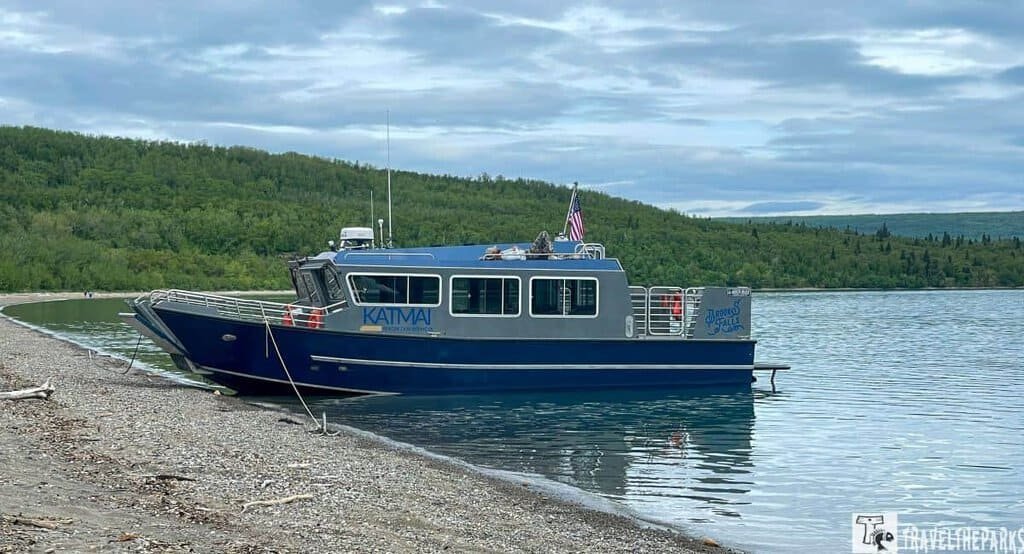
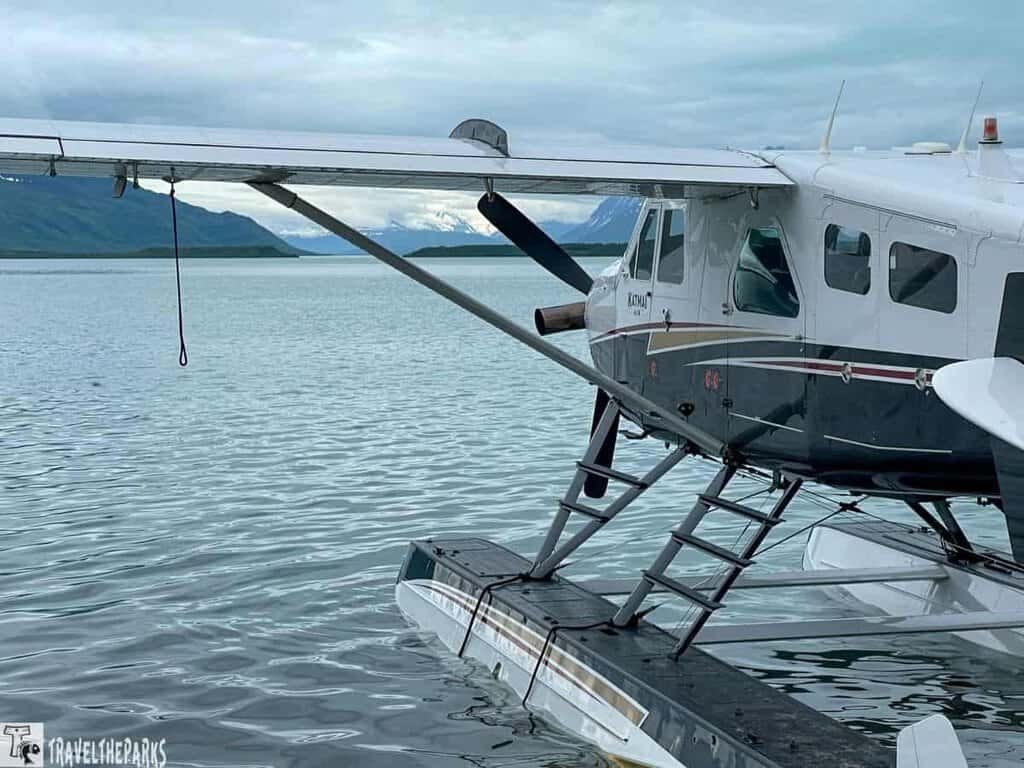
We began our journey in Anchorage before flying to King Salmon and continuing on to Brooks Camp. We arranged our trip through Katmailand and traveled from Anchorage to King Salmon, then continued to Brooks Camp by floatplane with Katmai Air.
The flight from King Salmon to Brooks Camp is short, but arriving by floatplane gives you an immediate sense of just how remote Katmai really is. After landing on Naknek Lake, we walked the short distance to Brooks Camp, where we checked in and completed the required bear-safety orientation.
Once you’re at Brooks Camp, the famous Brooks Falls viewing area is about 1.2 miles from the camp, following a well-marked trail along the Brooks River. The walk itself is part of the experience—you may encounter bears, birds, and other wildlife along the way.
Other Ways to Reach Brooks Camp
You can also arrange transportation to Brooks Camp from Anchorage, King Salmon, or other Alaska communities, depending on the operator and season. Day trips are available for travelers who don’t stay at Brooks Lodge, making it possible to experience Brooks Falls without winning a lodge reservation.
Planning tip: Transportation and accommodations should be arranged well ahead of your trip, particularly during July and August. Brooks Falls is remote, and there aren’t many last-minute options once you’re in the area.
Bear Orientation at Brooks Camp: What You Need to Know
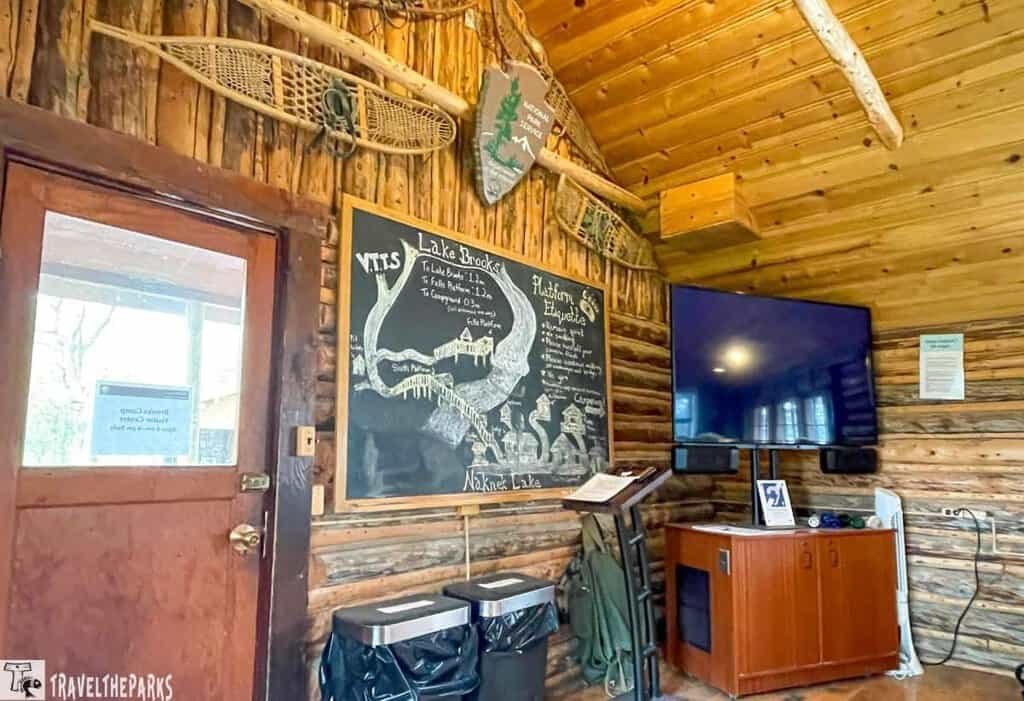
Before exploring Brooks Camp, all visitors must complete the required bear-safety orientation. The short orientation explains how to behave around bears and what to expect while hiking, fishing, and moving through the Brooks Camp area.
When we arrived, we watched the Brooks Camp bear-safety video followed by a brief question-and-answer session. The rangers covered important guidelines, including maintaining a safe distance from wildlife, properly handling food and scented items, and what to do if you encounter a bear on the trail.
The orientation isn’t something to worry about—it is actually a helpful introduction to living alongside the bears that call Brooks Camp home. And there’s a fun bonus at the end: you’ll receive a bear-safety pin to show that you’ve completed the orientation.
Planning tip: Pay attention during the orientation. The information isn’t just about checking a box before heading to Brooks Falls. You’ll use what you learn throughout your stay.
Brooks Camp Viewing Platforms: Your Front-Row Seat to the Bears
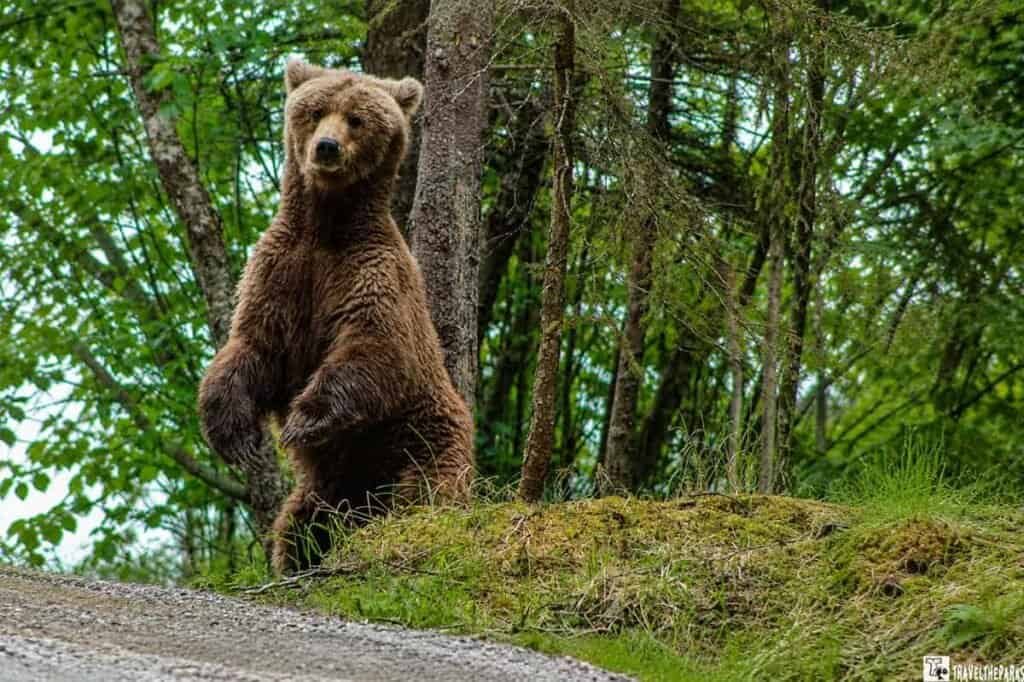
The Brooks Camp viewing platforms give visitors a safe place to watch brown bears fishing for salmon along the Brooks River. There are two main viewing areas, each offering a different perspective.
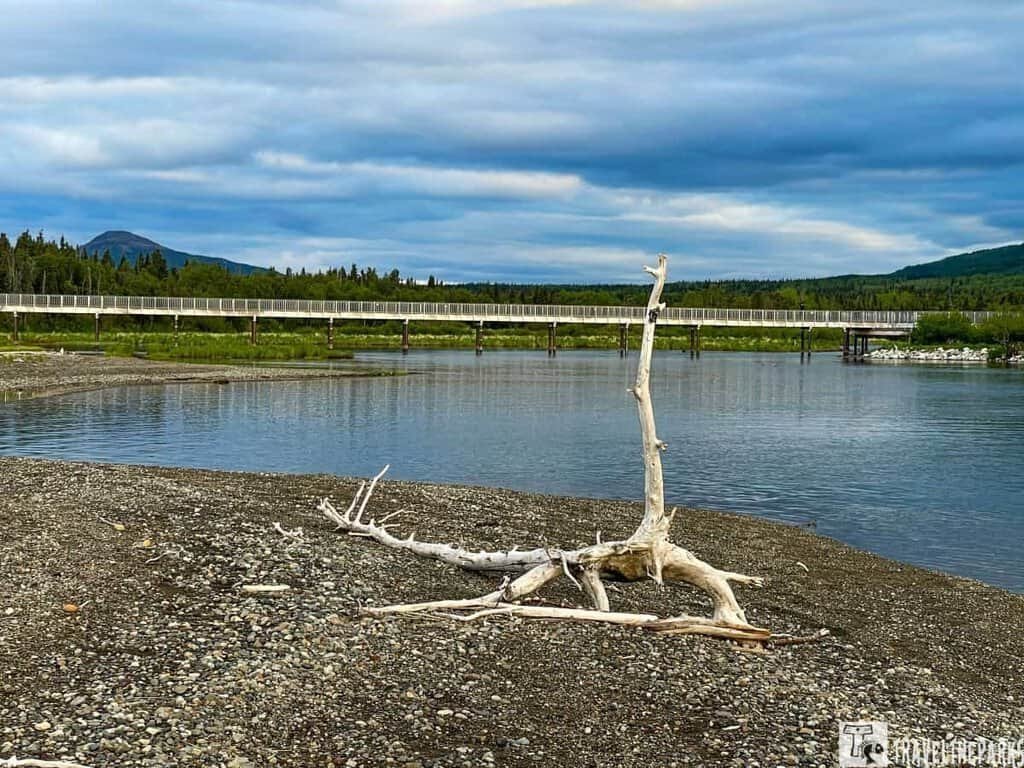
Lower River Platform: Located near Brooks Camp, the lower platform is actually the bridge crossing the Brooks River. It has north and south viewing areas and is a great first stop for watching bears moving between the river and the falls.
Upper River Platform: About 1.5 miles from Brooks Camp, the trail follows the Brooks River to the upper viewing area. Here you’ll find the Brooks Falls Platform and Riffles Platform, both popular spots for watching bears during the salmon run.
The Brooks Falls Platform is the famous spot you’ve probably seen in photographs, where bears stand at the falls and wait for salmon to leap upstream. During the peak summer season, expect crowds and potentially long waits.
The Riffles Platform, just downstream from the falls, provides another perspective and can be a good alternative when the falls platform is busy.
TIP: Don’t overlook the area around Brooks Camp. We often walked the beach and campground area early in the morning and in the evening, when bears were frequently moving along the shoreline.
What Wildlife Can You See at Brooks Camp?
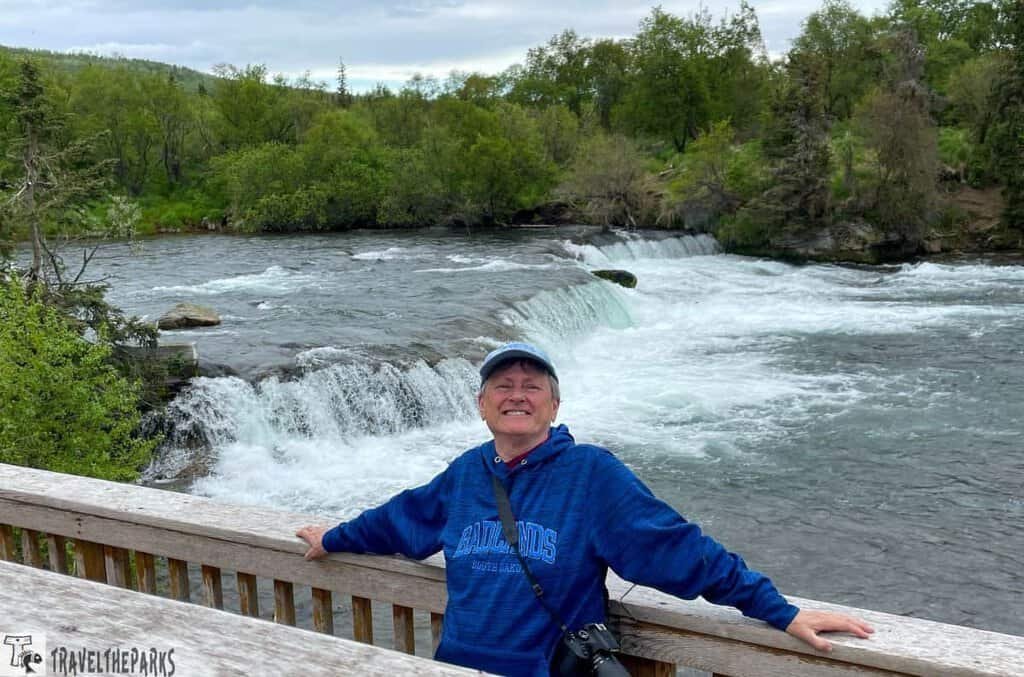
Brown bears may be the stars of Brooks Camp, but they aren’t the only wildlife you might encounter. Katmai National Park is home to wolves, moose, caribou, beavers, porcupines, river otters, bald eagles, and hundreds of bird species.
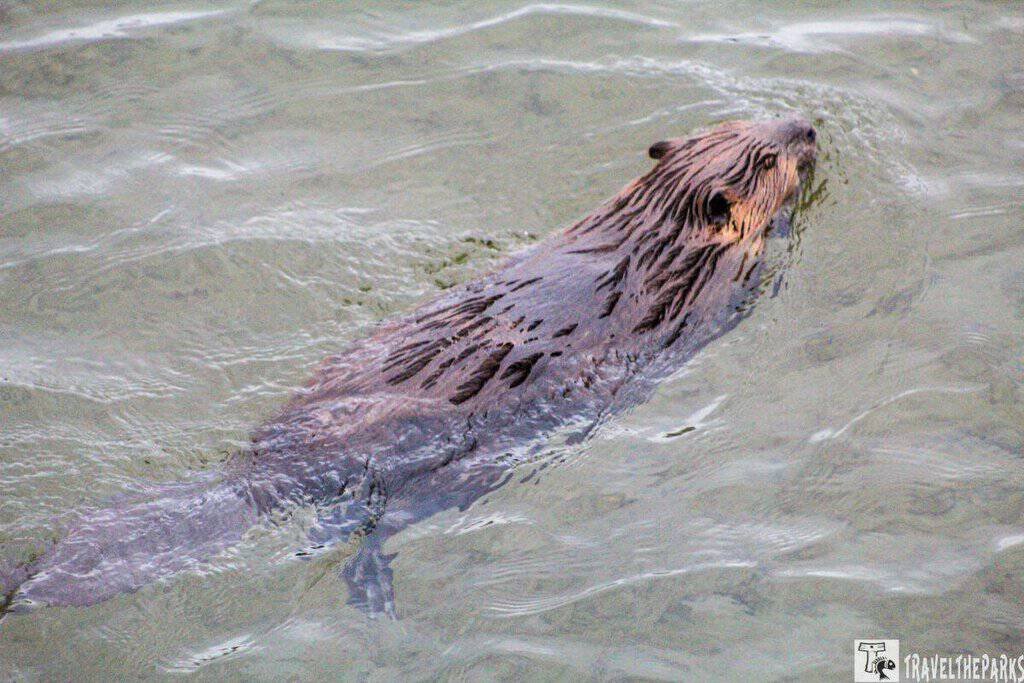
During our visit, we didn’t see the huge numbers of bears we had hoped for, but we still had plenty of wildlife encounters. Common mergansers, beavers, porcupines, and snowshoe hares were frequent sights around Brooks Camp. Bald eagles were also easy to spot, either perched in the trees or soaring above the river.
Wolves occasionally appear around the Brooks River, particularly when salmon are running, although sightings are never guaranteed. Lynx and wolverines are much more elusive, so consider yourself very lucky if you spot one.
Katmai is also an excellent destination for birdwatchers, with more than 270 bird species recorded in the park. So while the brown bears may be the reason you make the journey to Brooks Camp, keep your eyes open—you never know what else might appear along the river or trails.
Hiking the Brooks Falls Trail in Katmai National Park
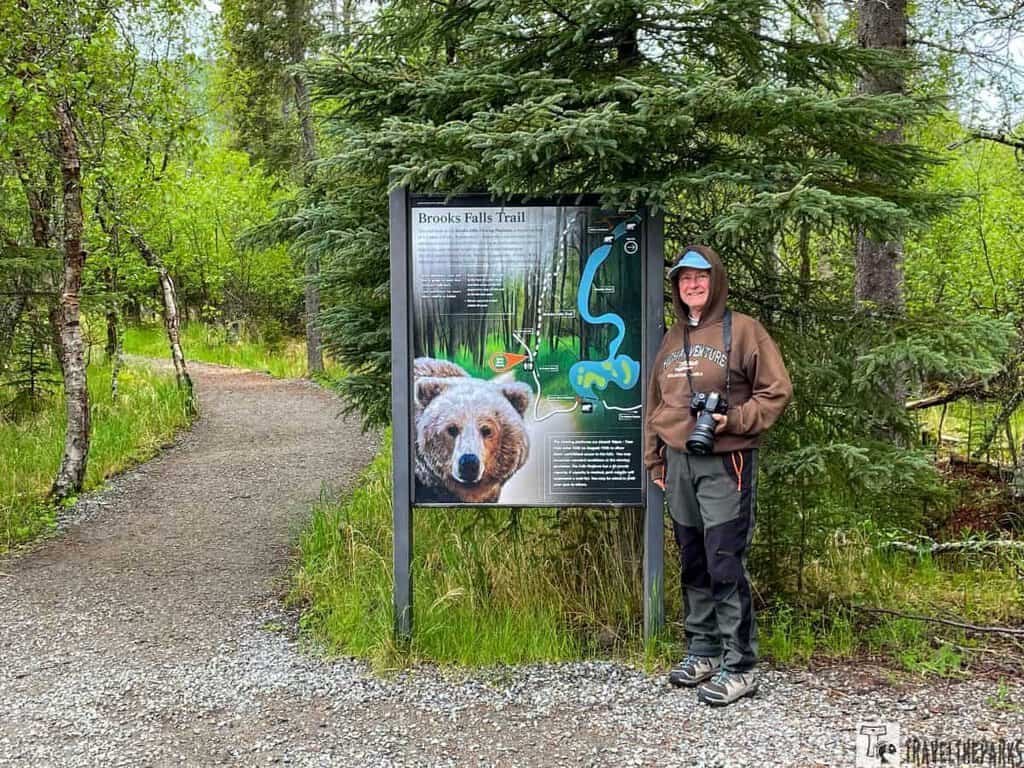
The Brooks Falls Trail is an easy 1.2-mile round-trip gravel trail connecting Brooks Camp with the upper viewing platforms at Brooks Falls. The mostly level trail winds through the boreal forest alongside the Brooks River.
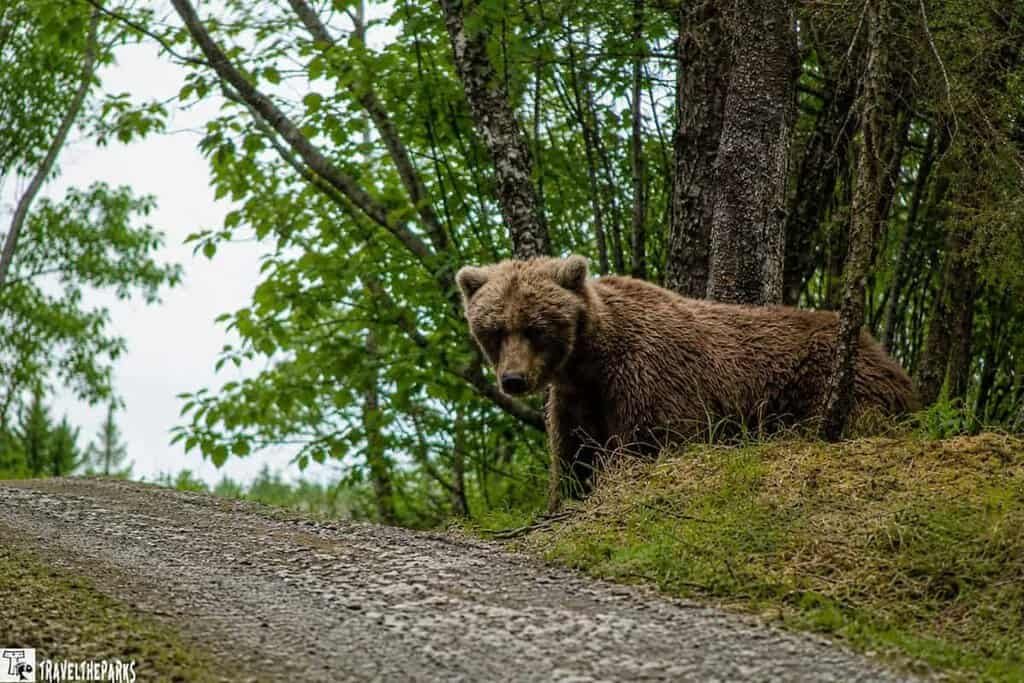
The trail itself is part of the wildlife experience. Bears regularly use the same route, particularly during the busy salmon season, so encounters are possible as you walk between Brooks Camp and the falls. During our late-June visit, we didn’t encounter any bears on the trail, but we still followed good bear etiquette by talking and making noise as we walked.
At the end of the trail, you’ll reach the Brooks Falls and Riffles viewing platforms, where you can watch bears fishing during the salmon run. July and August are generally the busiest months for bear activity, but wildlife sightings are never guaranteed.
TIP: Give yourself plenty of time to walk the trail. The distance is short, but bear encounters, trail closures, and waiting for access to the viewing platforms can make the journey take considerably longer than the mileage suggests.
Hiking the Lake Brooks Road Trail
For a quieter hiking experience away from the crowds at Brooks Falls, consider the Lake Brooks Road Trail. The 1.9-mile round-trip trail follows the gravel road from Brooks Camp toward Lake Brooks.
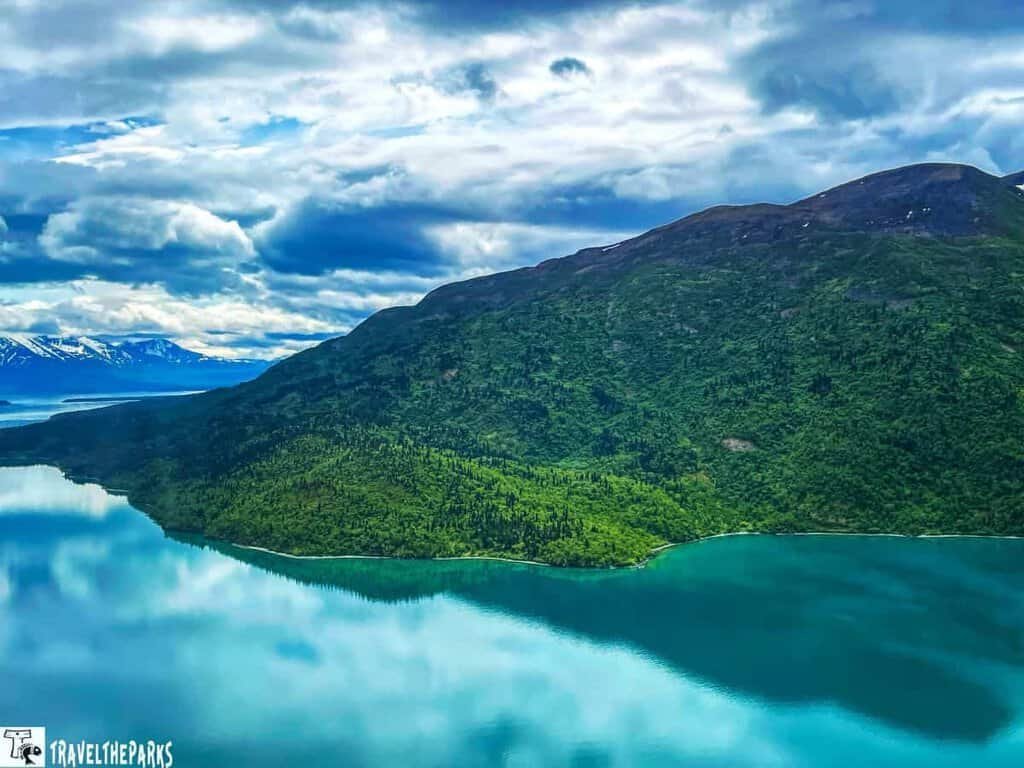
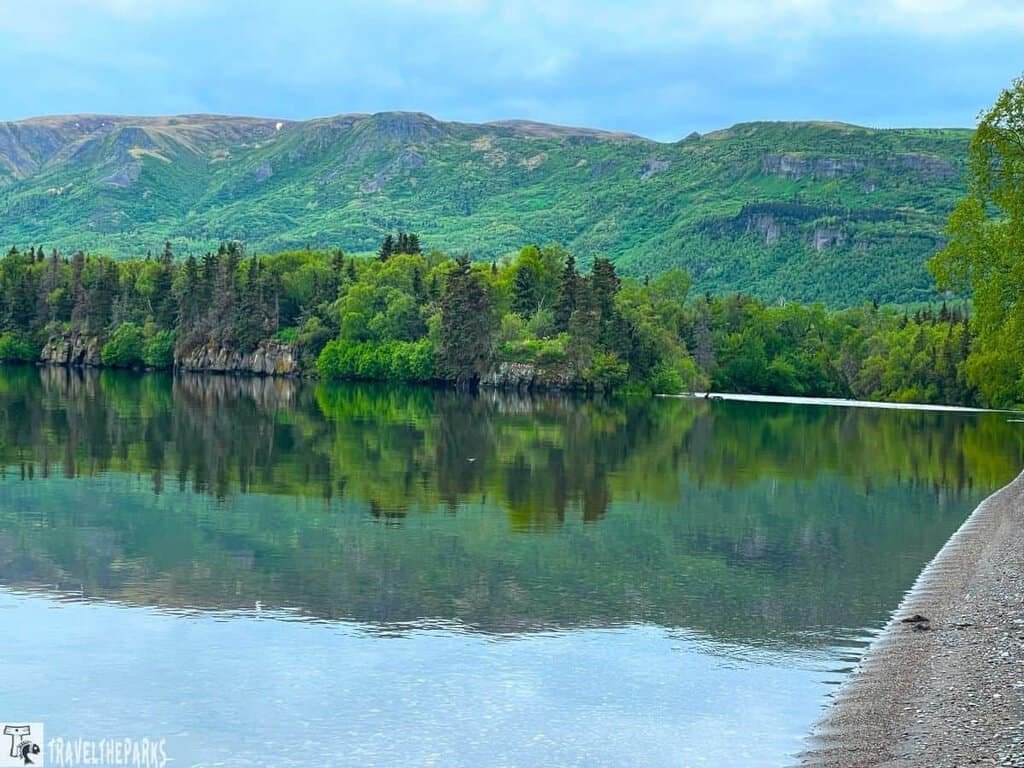
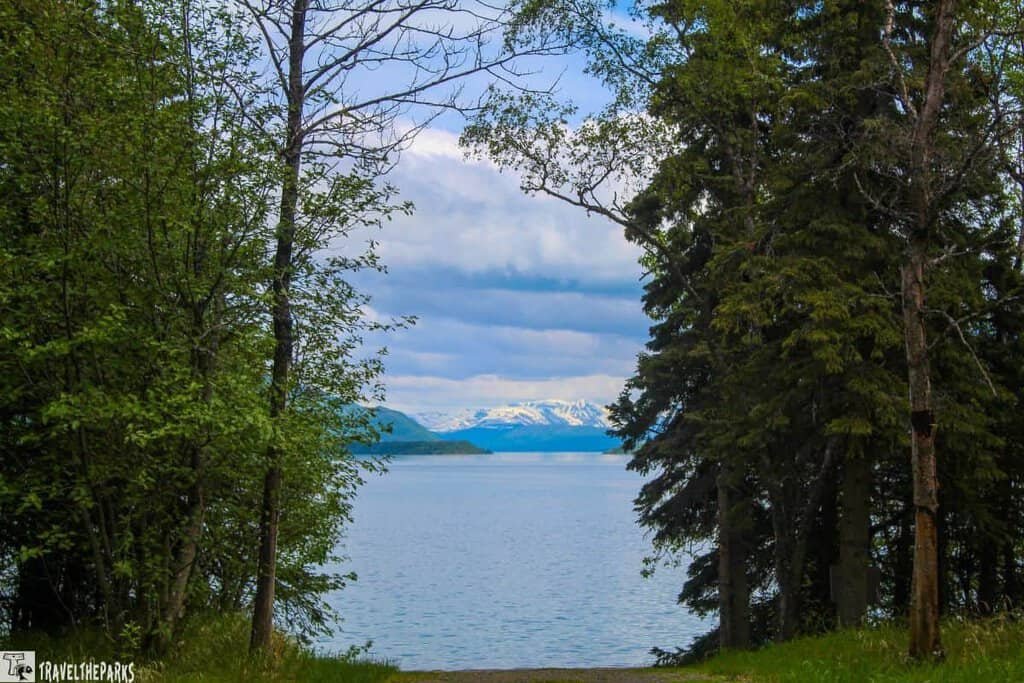
The trail offers a completely different experience from the busy Brooks Falls area. When we hiked it early in the morning, the lake was perfectly calm, creating a mirror-like reflection of Dumpling Mountain. We didn’t encounter another person, but we did see plenty of snowshoe hares and a pair of common mergansers.
TIP: This is a good choice if you want some solitude and scenery beyond the Brooks Falls bear-viewing crowds. Bring plenty of mosquito repellent, especially during the summer.
More Things to Do at Brooks Camp
Dumpling Mountain Trail: For a challenging hike with spectacular views, the trail climbs about 1.5 miles one way toward Dumpling Mountain, gaining roughly 800 feet. As you climb above the trees, you’ll get panoramic views over Brooks River, Brooks Lake, and the surrounding wilderness. We didn’t make it to the summit—the elevation was more than we wanted to tackle—but even the lower portions offered beautiful views.
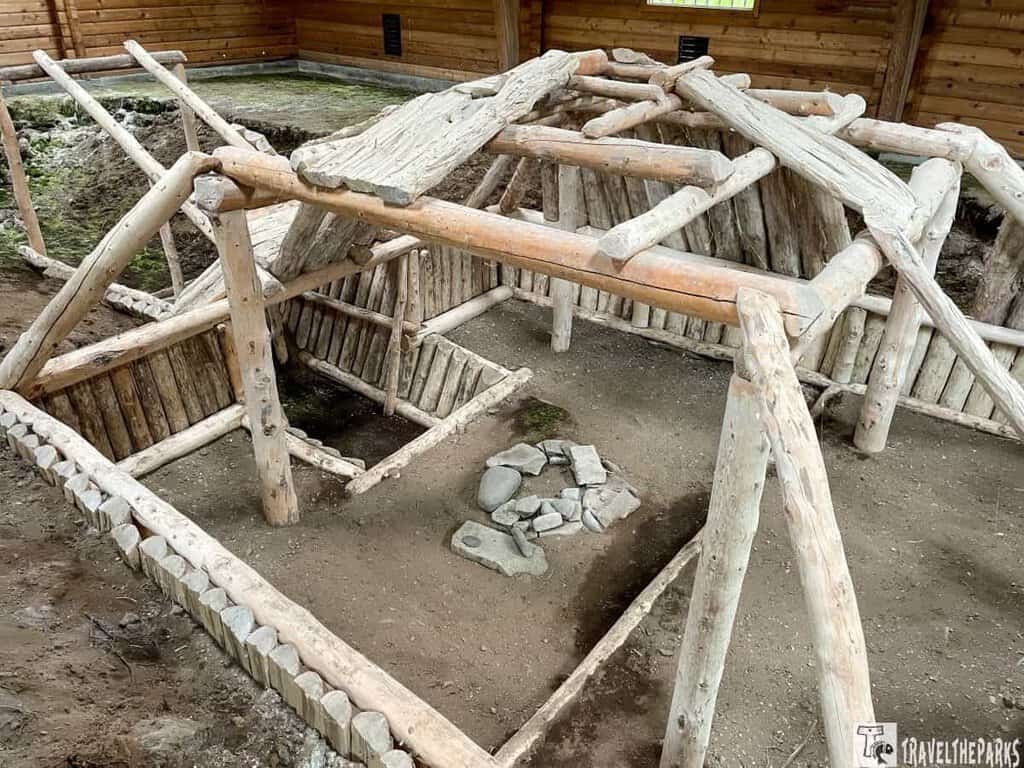
The short 0.25-mile Cultural Site Trail near Brooks Camp offers a glimpse into the area’s 9,000 years of human history. You can walk the trail on your own, but the daily ranger-guided walk provides access to the reconstructed prehistoric house inside the exhibit building and adds valuable context about the people who have lived in this region for thousands of years.
The site is part of the Brooks River Archeological District, a National Historic Landmark. The guided walk is well worth considering if you’re interested in Katmai’s cultural history and want a break from bear viewing.
Valley of Ten Thousand Smokes: For a completely different side of Katmai, consider the Valley of Ten Thousand Smokes. The area is accessible from Brooks Camp by the scheduled bus tour or by a challenging backcountry hike. Read our complete Valley of Ten Thousand Smokes guide.
Dining at Brooks Lodge
If you’re staying at Brooks Lodge, meals are served in the Lodge Dining Room, where guests can enjoy breakfast and dinner in a relaxed wilderness setting. During our two-night stay, we had the all-you-can-eat breakfast and dinner buffet, and the food was surprisingly good. Strawberry pancakes at breakfast and teriyaki salmon at dinner were two of our favorites.
Coffee and tea are available throughout the day, and the dining room is also a great place to strike up conversations with other guests. We enjoyed swapping stories about wildlife encounters and adventures around Alaska.
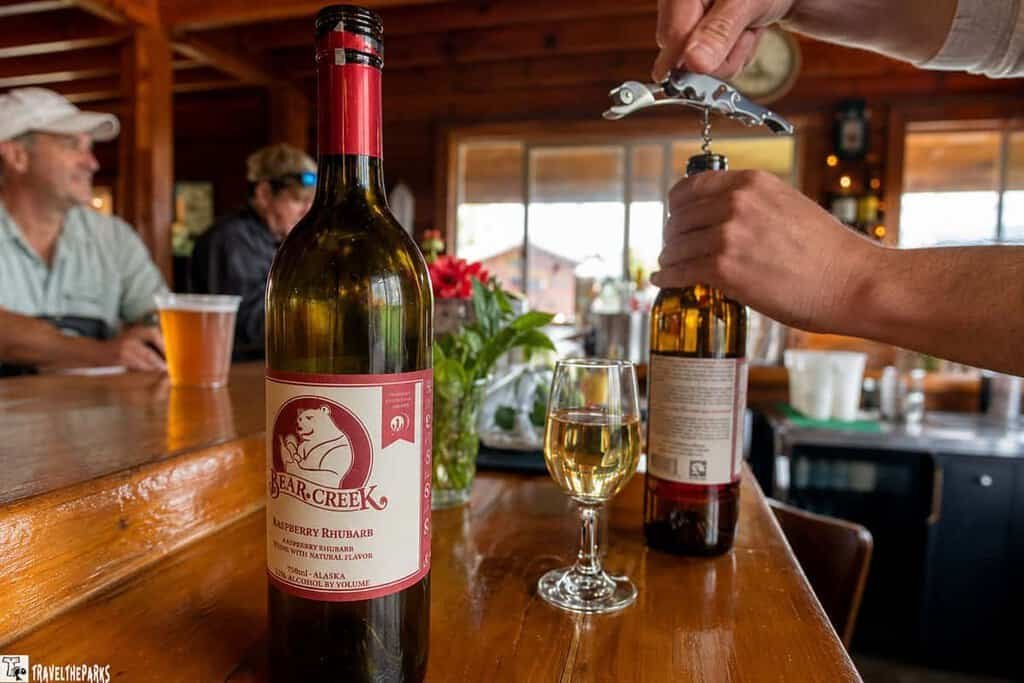
The lodge bar is another gathering spot in the evening, offering beer, wine, and cocktails. During our late-June visit, we enjoyed relaxing by the fireplace and chatting with fellow travelers after a day of exploring Brooks Camp.
TIP: Bring your camera to breakfast! I learned that lesson the hard way after leaving my good camera in the cabin one morning.
Where Can You Stay at or Near Brooks Falls?
Accommodation near Brooks Falls is limited, so it’s important to plan ahead. Your main options include:
- Brooks Lodge: Located at Brooks Camp inside Katmai National Park, this is the most convenient option for visitors who want to spend several days exploring the area. The lodge offers private cabins and meals.
- Katmai Wilderness Lodge: Located on the Katmai coast, this private lodge offers all-inclusive stays with accommodations, meals, and guided activities.
- Grosvenor Lodge: Located on the Naknek River, this private lodge offers all-inclusive packages and can arrange guided fishing and wildlife experiences.
- King Salmon Lodge: Staying in King Salmon gives you more flexibility and is a common base for visitors taking day trips to Brooks Camp.
TIP: Brooks Lodge is extremely popular during the summer bear-viewing season. If staying at Brooks Camp is a priority, plan well ahead and enter the annual lodge lottery when applications open.
Staying at Brooks Lodge
Brooks Lodge offers cabin-style accommodations that provide a comfortable, authentic Alaskan experience. Our rustic cabin had two sets of bunk beds, a small desk, a toilet room, and a standing shower. The beds were comfortable, the heater kept the cabin toasty, and everything was exceptionally clean.
There were only a few electrical outlets, so a power strip is handy if you have multiple devices to charge. Given the remote location, internet and cell service may also be limited or unavailable. For us, that was part of the appeal—it gave us a chance to disconnect and spend more time enjoying Katmai.
Camping at Brooks Camp
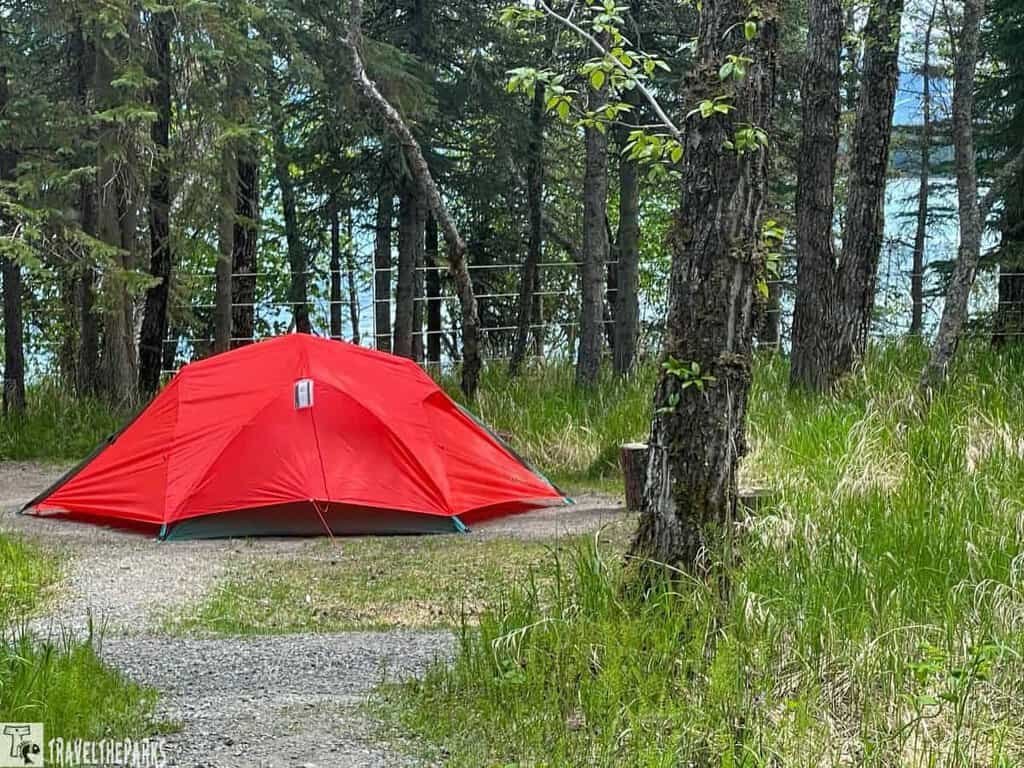
If staying at Brooks Lodge is outside your budget, the Brooks Camp Campground offers a more affordable way to spend several nights in Katmai National Park. The campground has 60 sites and operates seasonally, with reservations available through Recreation.gov. Sites can fill quickly during the summer.
Three cooking shelters provide picnic tables and fire rings, while bear-proof food storage is provided for campers. All food and scented items must be properly secured because brown bears regularly move through the Brooks Camp area.
The campground also has vault toilets, a fuel storage area, and an electric fence surrounding the camping area. Paid showers are available at the lodge.
TIP: Mosquitoes and black flies can be annoying, particularly during summer. Bring insect repellent and a mosquito head net. You’ll be glad you did.
Brooks Lodge Trading Post: What You Can Get
The Brooks Lodge Trading Post, operated by Katmailand, is a handy resource for visitors staying at Brooks Camp. You can pick up snacks, beverages, toiletries, souvenirs, clothing, fishing licenses, tackle, and camp stove fuel.
For campers, the Trading Post also offers canoes, kayaks, fishing gear, chest waders, binoculars, and single-burner stoves for rent. Bear-resistant containers, showers, and towels are also available for campground guests.
The Trading Post is also where you can arrange sightseeing, flightseeing, and guided fishing trips, as well as check in and out if you’re staying at Brooks Lodge.
TIP: Don’t count on the Trading Post as a fully stocked grocery store. Bring the food and personal items you’ll need for your stay, especially if you’re camping.
Frequently Asked Questions About Planning a Trip to Brooks Falls
What should I bring to Brooks Falls?
Pack for changing Alaska weather, including rain gear, layers, sturdy walking shoes, insect repellent, and a mosquito head net. Sunscreen, binoculars, a camera, and a refillable water bottle are also useful.
If you’re camping or heading into the backcountry, you’ll need additional equipment and should plan carefully for food storage and bear safety. Supplies at Brooks Camp are limited, so don’t rely on the Trading Post for everything you need.
Are guided tours available at Brooks Falls?
Yes. Visitors can participate in ranger-led programs and guided activities at Brooks Camp. You can also arrange guided fishing, flightseeing, and other excursions through Katmailand.
How far is Brooks Falls from Brooks Camp?
The Brooks Falls viewing area is about 1.2 miles from Brooks Camp via the Brooks Falls Trail. The walk itself is relatively easy, but bear activity, trail conditions, closures, and waits at the viewing platforms can make the trip considerably longer.
Can I stay overnight at Brooks Falls?
Yes. Visitors can stay at Brooks Lodge or camp at Brooks Camp Campground. Reservations for Brooks Lodge are highly sought after, while the campground provides a more budget-friendly option.
When is the best time to visit Brooks Falls?
July and August generally offer the best opportunity to see large numbers of brown bears fishing for salmon, although the exact timing of the salmon run varies from year to year. Wildlife sightings are never guaranteed.
Do I need a reservation to visit Brooks Falls?
A reservation is not necessarily required simply to visit Brooks Camp, but lodging, transportation, and popular tours should be arranged well in advance. If you want to stay at Brooks Lodge, the annual lottery is particularly important to understand.
Final Thoughts on Planning an Epic Bearapalooza Adventure to Beautiful Brooks Falls in Katmai
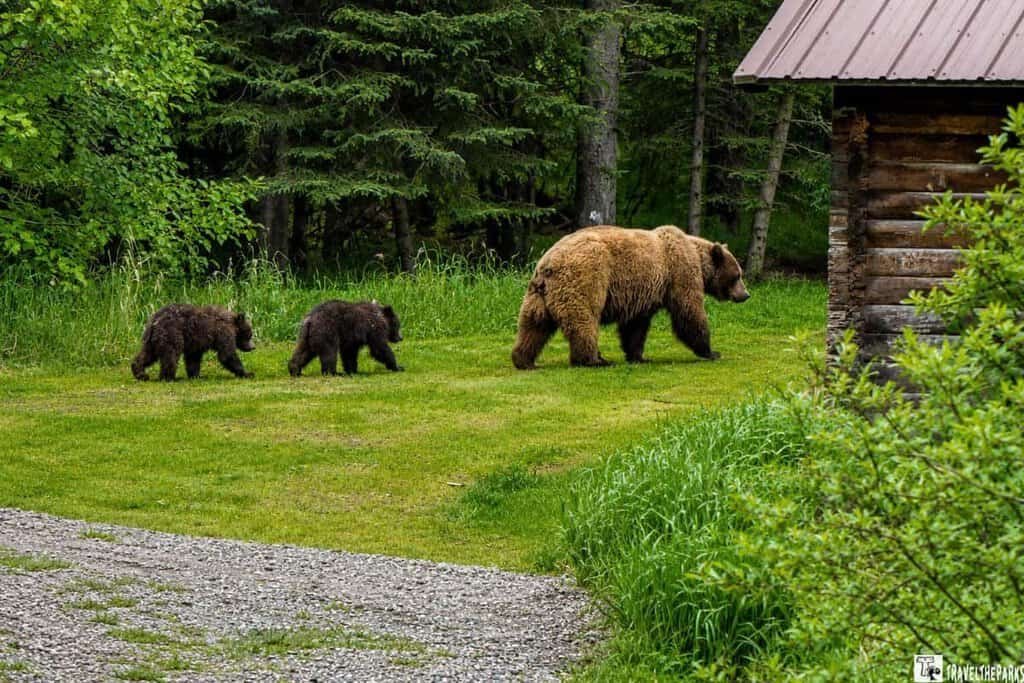
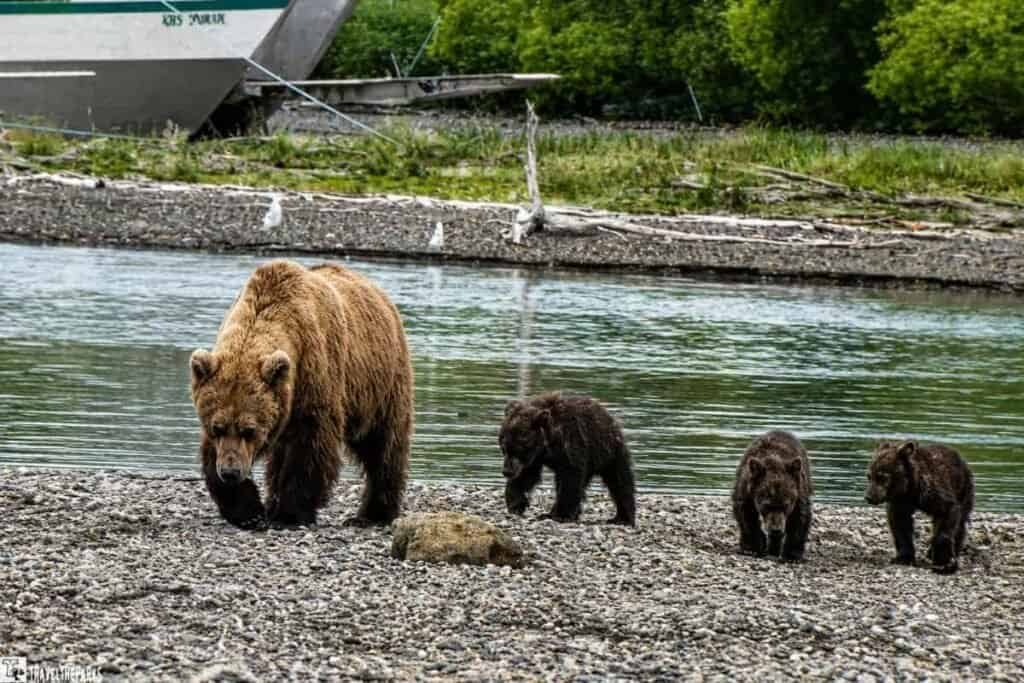
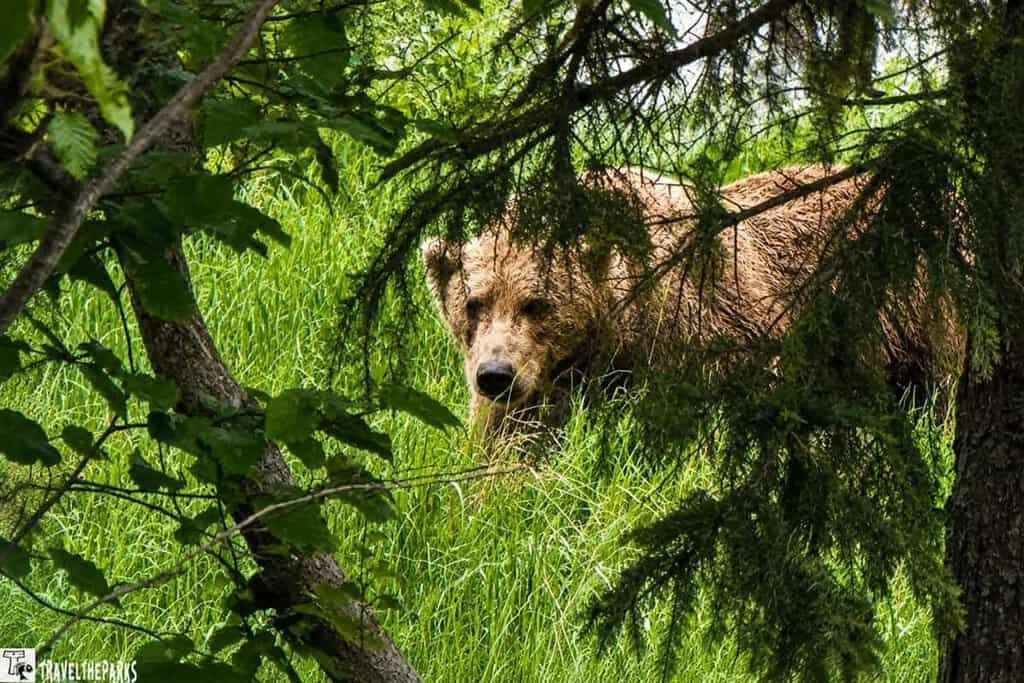
Brooks Lodge was the final stop on our 10-day Alaskan road trip adventure, and our time at Brooks Camp was an experience we will never forget. Watching 901 and her cubs wander through camp was mesmerizing. Although we arrived during a cold, wet June with a late salmon run and fewer bears at Brooks Falls than we had hoped to see, we wouldn’t hesitate to do it all again.
Following the bears on Explore.org has made many bear lovers dream of visiting Brooks Falls. We had been following some of these famous bears since 2012. Grazer, Walker, Chunk, and, of course, our favorite Otis are just a few of the bears that have captured our hearts.
For anyone planning a visit, the annual Brooks River Bear Guide published by Katmai’s rangers is a wonderful introduction to the bears you’ll see at Brooks Falls.
We feel incredibly lucky to have experienced Katmai firsthand. From the remote journey to Brooks Camp to walking the trails, fishing the Brooks River, and watching bears along the river, every part of the adventure exceeded our expectations.
If you’re planning a trip to Brooks Falls, what are you most excited to see? Have you visited Katmai? We’d love to hear about your experience in the comments!