Some road trips are about the scenery. Some are about food. This one turned into something else—a rolling education along the American civil rights trail, one stop at a time, each one adding something to the last one didn’t quite finish saying. The Freedom Riders National Monument in Anniston, Alabama, was already on the list before we left home.
We came in from the northwest—a few nights at David Crockett State Park in Tennessee, then south into Alabama. The drive wasn’t long, but we’d been thinking about this stop since Memphis.
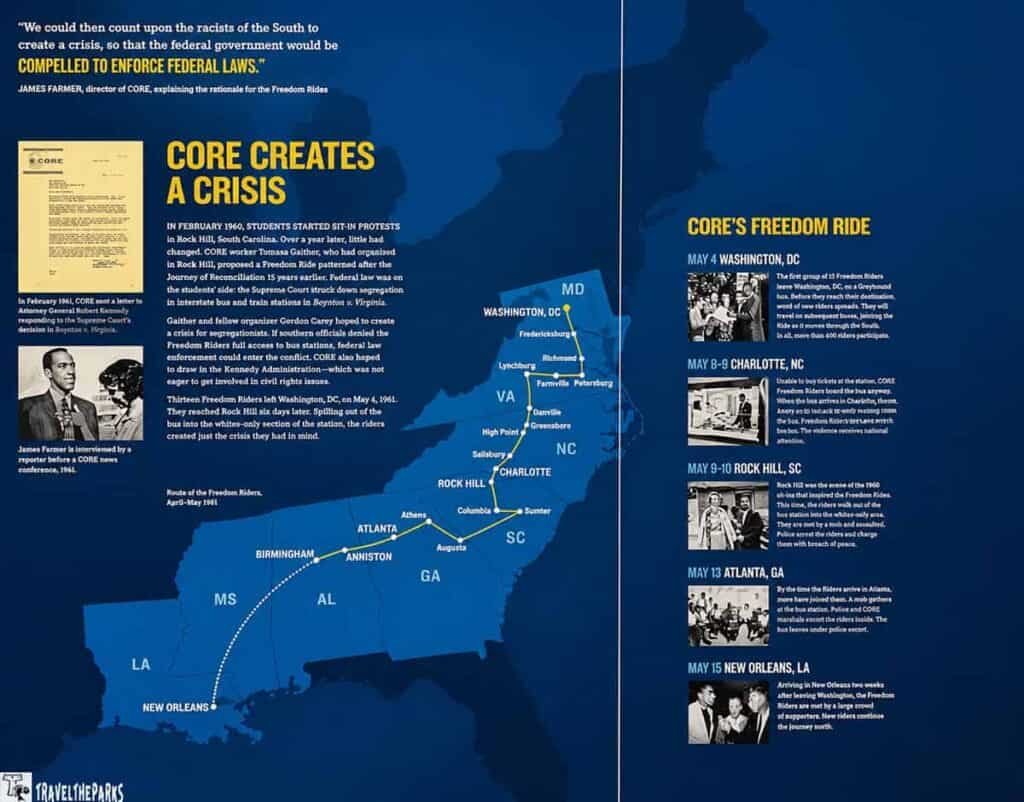
That’s the thing about the National Civil Rights Museum—it doesn’t let you just move on. It points you somewhere. For us, it pointed here, a quiet street in Anniston. It’s a story most people outside of Alabama don’t know nearly well enough.
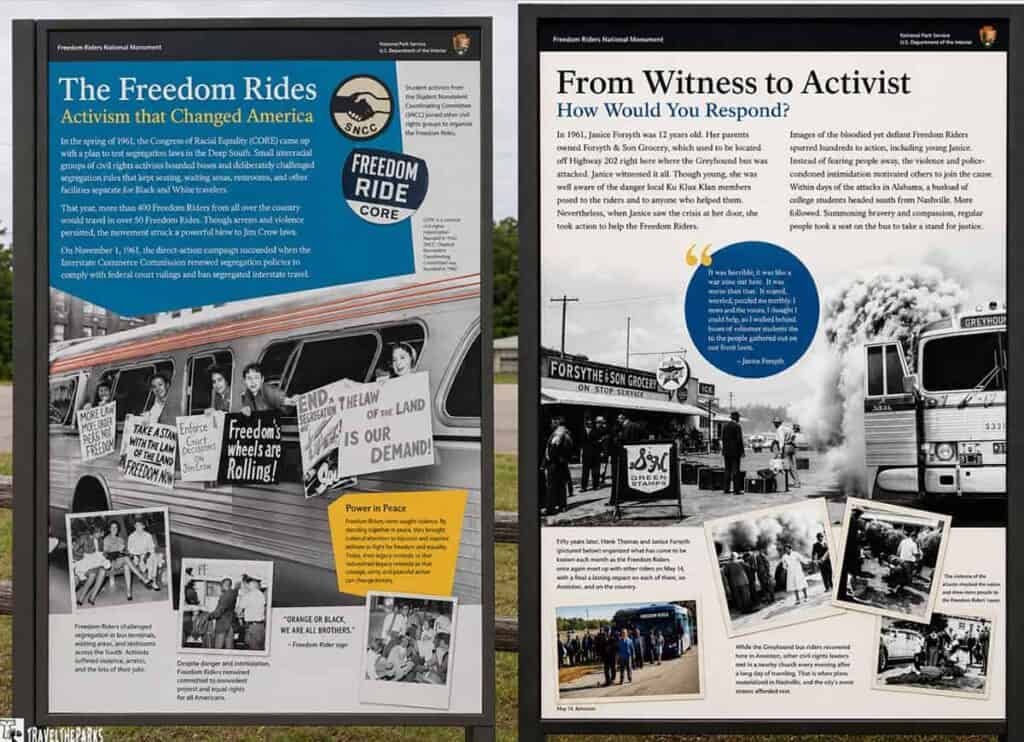
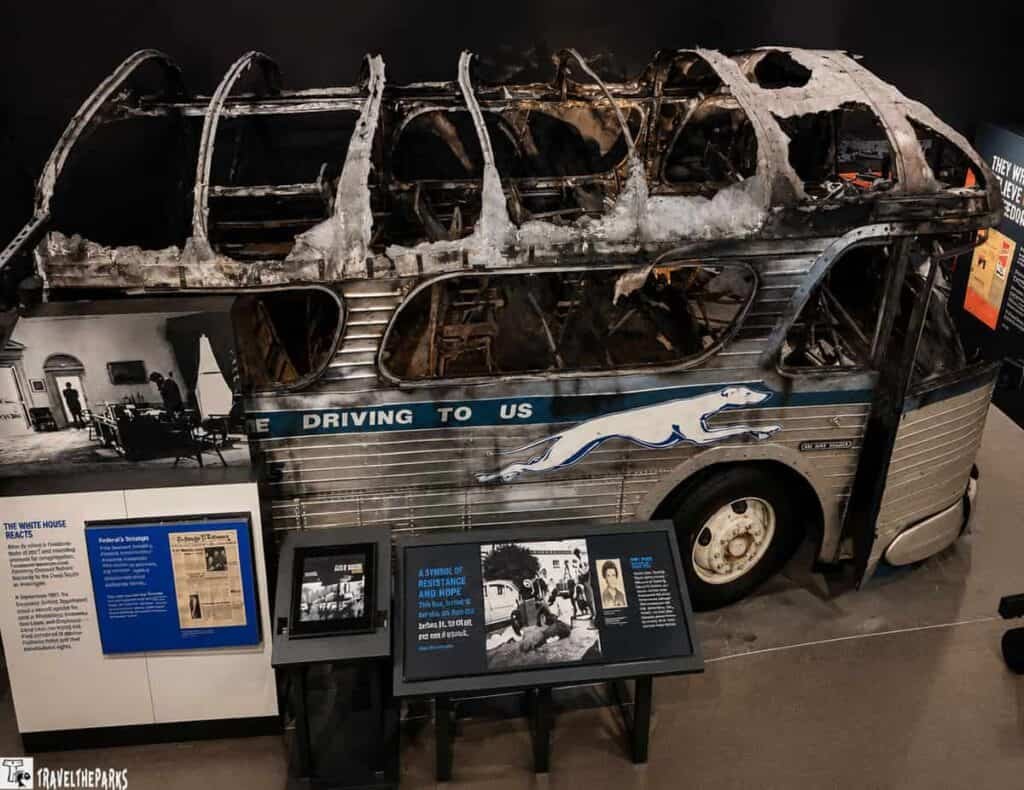
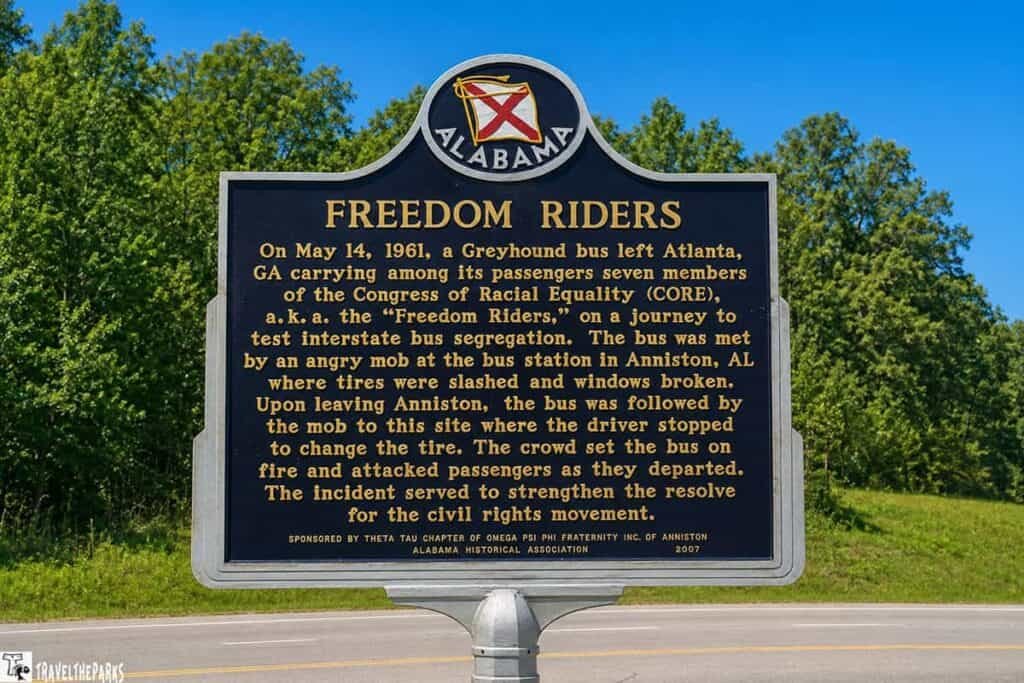
Mother’s Day, 1961. A bus carrying Freedom Riders. Black and white passengers sitting together, testing a federal law the South had decided not to follow. It pulls into Anniston and is met by a mob. Bats, pipes, slashed tires. The bus got away, barely. Six miles out of town the tires gave out. The mob caught up. Someone threw burning rags through a broken window.
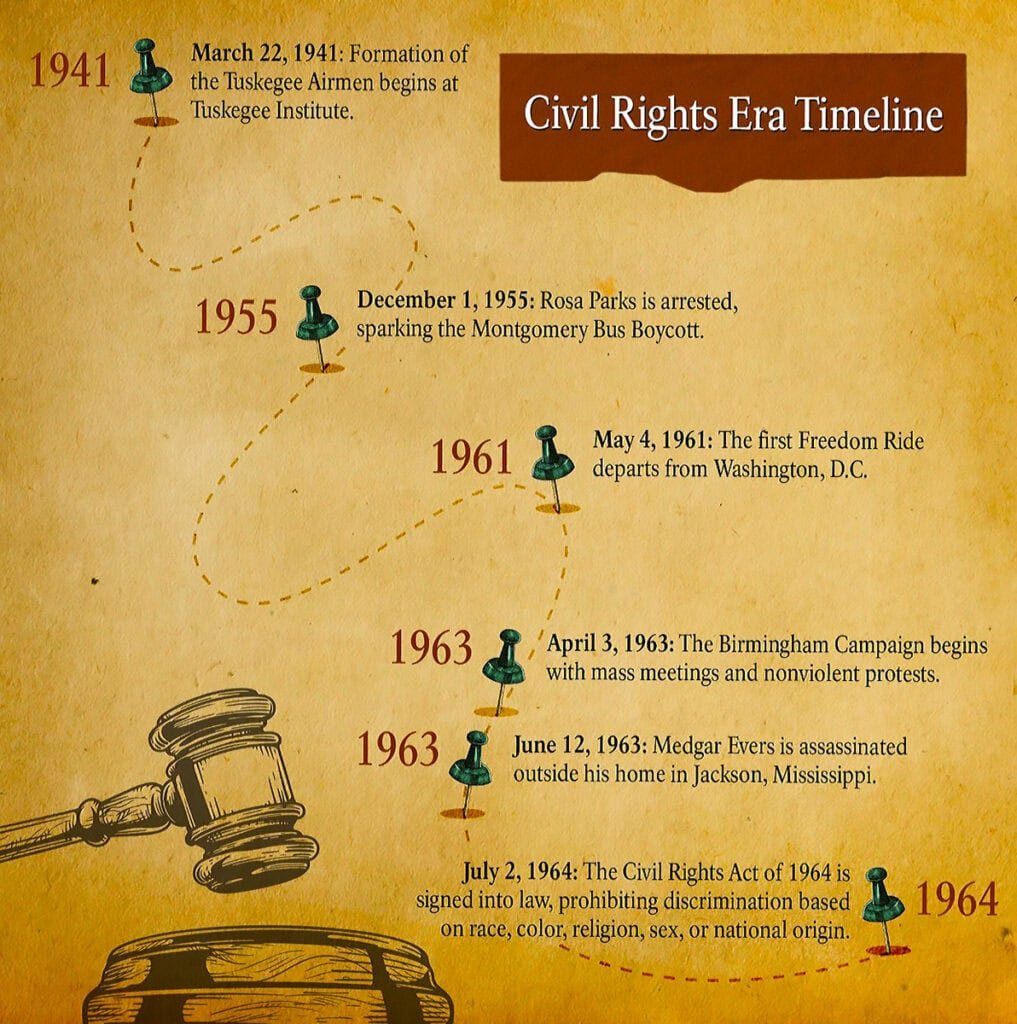
The photographs were in newspapers by Monday morning. The country saw them. Things moved after that.
There are two places in Anniston where that day still lives. We went to both.
This post may contain affiliate links, meaning if you purchase something through one of these links, we may earn a small commission at no extra cost to you! Read the full disclosure policy here.
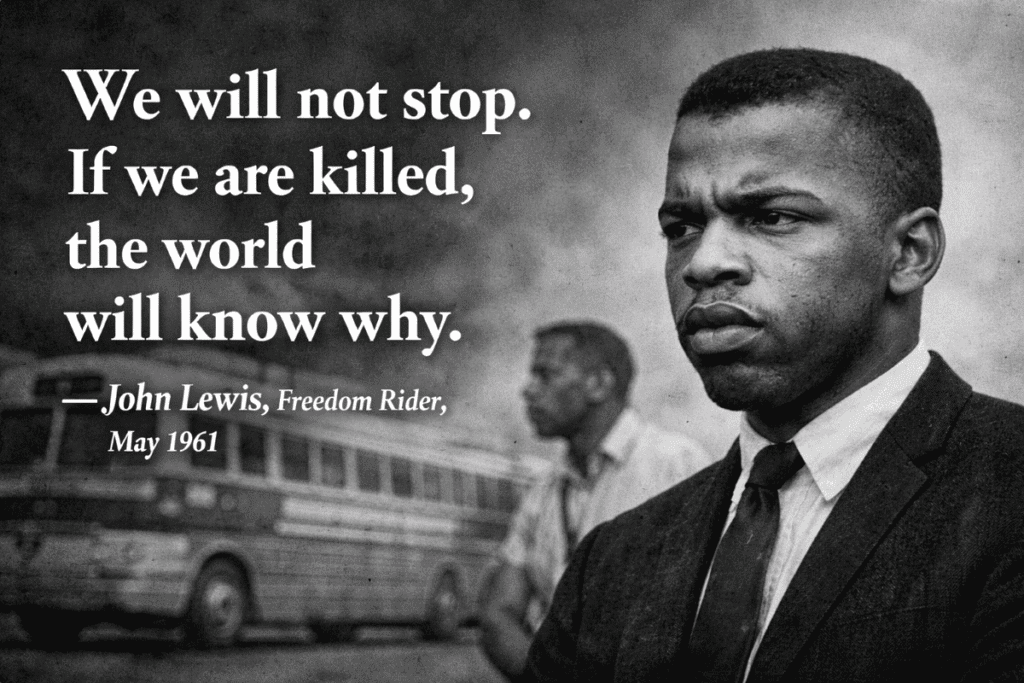
Table of Contents
Know Before You Go: Freedom Riders National Monument
- Main Address: Anniston Greyhound Bus Depot: 1031 Gurnee Ave, Anniston, AL 36201 | Phone: 205-568-3963
- Second Site: Bus Burning Site: Old Birmingham Highway / State Route 202, approximately 6 miles west of Anniston. Look for the Alabama historical marker. Small gravel pull-off only. No designated parking lot.
- Visitor Center Hours: Anniston Greyhound Bus Depot: Tuesday–Thursday 10:00 AM–4:00 PM only. Outdoor exhibits accessible when visitor center is closed. Calhoun County Chamber of Commerce (1330 Quintard Ave): Monday–Thursday 8:00 AM–5:00 PM, Friday 8:00 AM–4:00 PM. Passport stamps and brochures available at both locations.
- Admission fees: FREE—no entrance fee required at either site.
- Parking: Greyhound Depot: Street parking on Noble Street—two-hour limit, free. Large RVs should park on a main street and walk down. Bus Burning Site: Gravel pull-off only. Not suitable for large rigs. No overnight parking at either location.
- Time to Allow: 1–2 hours for both sites combined. The Greyhound Depot and murals take 45–60 minutes. The Bus Burning Site is a brief but powerful stop—15–20 minutes, not because there is little to see, but because the site speaks for itself quickly.
- NPS Passport Stamp: Available at the Greyhound Bus Depot Visitor Center and at the Calhoun County Chamber of Commerce. The vestibule at the Chamber is open 24 hours for stamps and brochures.
- Nearby Camping: Cheaha State Park in the Talladega National Forest is approximately 25 miles southwest and offers improved campgrounds. A solid base for exploring the broader civil rights trail through Alabama.
- Cell service is available at both sites, which matters if you’re using the NPS app or pulling up maps on the go.
What is the Freedom Riders National Monument?
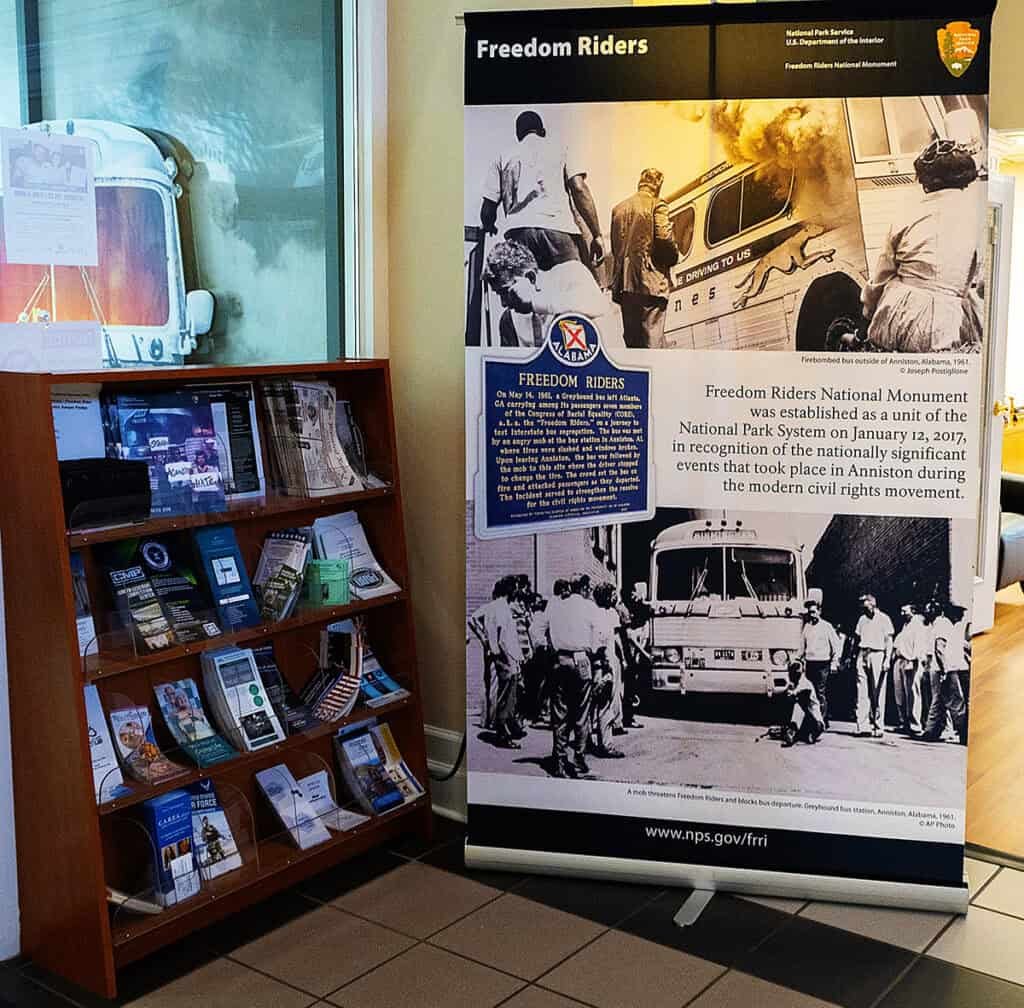
President Obama established the monument in January 2017, one of the last acts of his presidency, and it protects two separate sites in and around Anniston.
The first is the old Greyhound Bus Depot in downtown Anniston—the place where a mob of around 75 people met the bus on May 14, 1961, armed with bats and pipes, slashing tires and smashing windows while police stood by and watched. The second is the field six miles outside of town on Old Birmingham Highway where the slashed tires finally gave out, the mob caught up, and someone threw a bundle of flaming rags through a broken window.
Both sites are still there. Both are part of the national monument. And they are not the same kind of experience—which is exactly why visiting both matters.
The Two Sites: What to Expect at Each
Stop One: The Anniston Greyhound Bus Depot
The visitor center at the Greyhound Bus Depot is only open Tuesday through Thursday, 10:00 AM to 4:00 PM. Worth knowing before you drive across Alabama on a Wednesday and find the depot locked. If your schedule doesn’t line up, the outdoor murals and interpretive panels are there any time. The Calhoun County Chamber of Commerce also has brochures and passport stamps during regular business hours Monday through Friday—a solid backup.
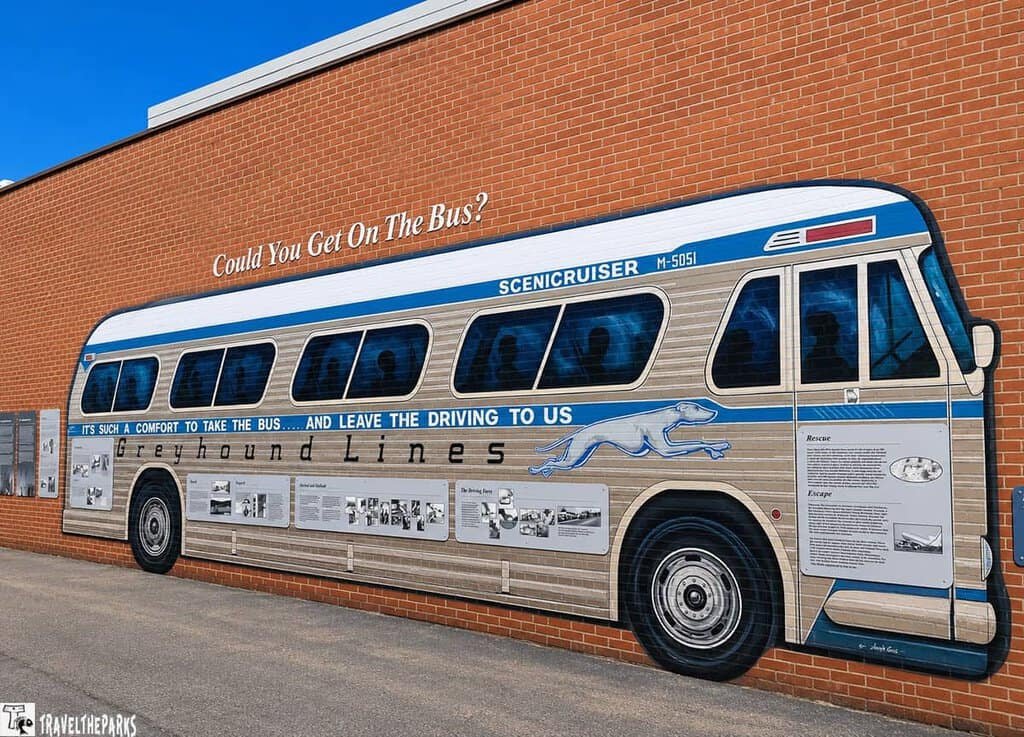
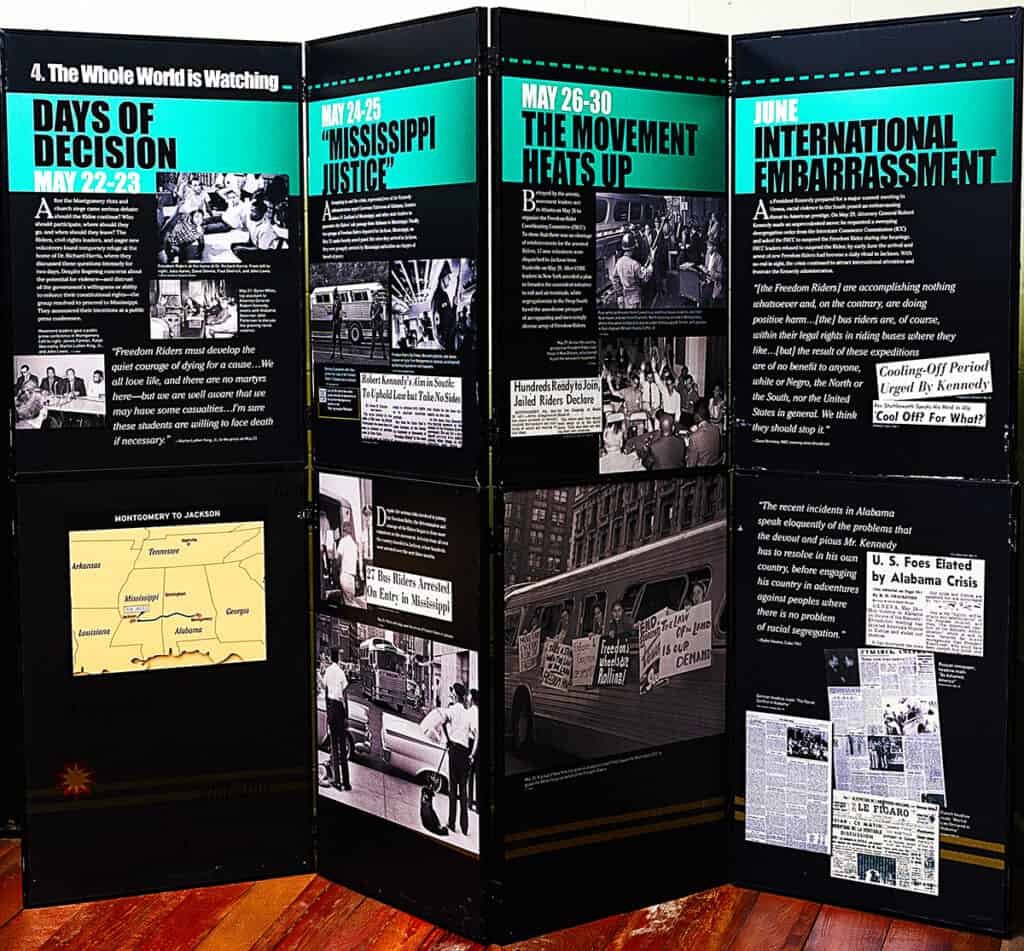
As for the depot itself, it’s still a work in progress. The NPS is turning it into a full interpretive center, so don’t show up expecting to walk through the building. What you can see is the original facade, a large mural called “Could You Get on the Bus?” painted by artist Joseph Giri, and a series of panels that lay out what happened here in plain, direct language. No softening. No summarizing. Just what happened.
There is also an audio box near the mural. Hank Thomas—the last living survivor of the bus burning—was on that Greyhound when it left Atlanta and still on it when it caught fire. You can hear him tell it in his own words. We stood there longer than we expected to.
A few blocks down Noble Street is the former Trailways Station. A second bus of Freedom Riders stopped here the same day. They weren’t firebombed, but they were beaten and harassed all the way to Birmingham. A mural and marker tell that part of the story. Five minutes on foot. Worth the walk.
PRO TIP: Park on Noble Street—two-hour free parking, easy to find. If you’re in a larger rig, park on a main street and walk down to the depot. It’s a flat, short walk.
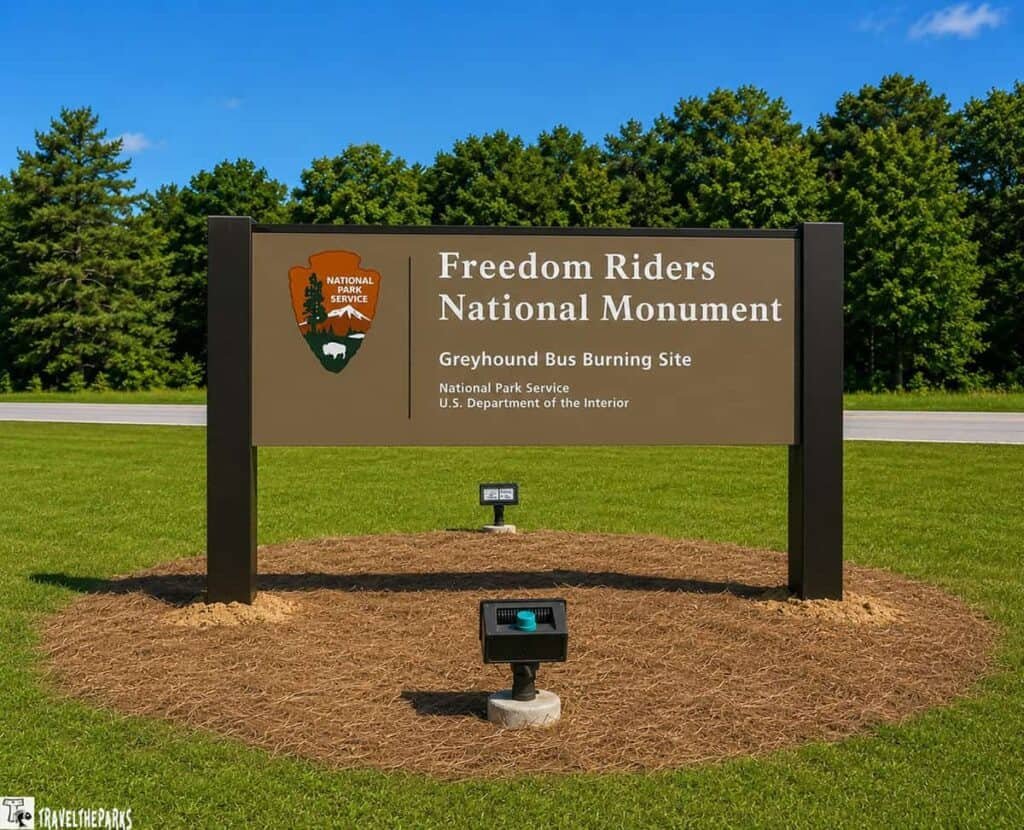
Stop Two: The Bus Burning Site
West of downtown, six miles down Old Birmingham Highway, you’ll find a quiet road and an open landscape. There is a small Alabama historical marker on the side of the road. A gravel pull-off just big enough for a few cars. That is where the bus stopped. That is where the fire started.
There are no large facilities, and no interpretive kiosk here. There are plans to build an elaborate park with an interpretive center. Currently, there’s a sign, a field, and the road stretching out in both directions. It is a lot of open space to hold a lot of history. We parked and stood there for a while without saying much.
The photographs taken here by freelance photographer Joseph Postiglione on that afternoon in 1961—the bus in flames, passengers staggering out, smoke filling the frame—ran in hundreds of newspapers by Monday morning. The entire nation witnessed them. New regulations from the federal government, barring segregation in interstate travel, were issued soon after. Standing on the side of that road, it is not hard to understand why.
RV NOTE: The pull-off at the Bus Burning Site is gravel and small. A tow vehicle or passenger car is fine. Do not attempt it in a large motorhome or with a trailer. Park in Anniston and drive out separately if needed.
While You’re There: The Anniston Civil Rights Trail
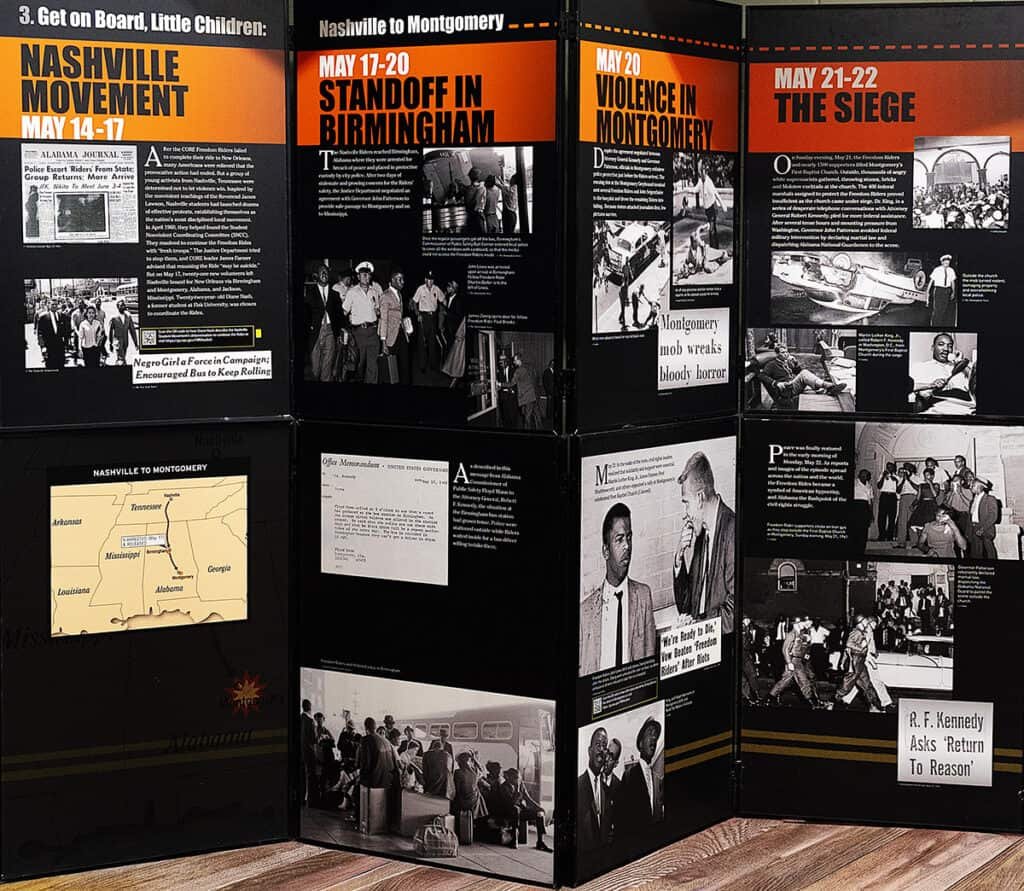
The two monument sites sit inside a broader nine-stop Anniston Civil Rights and Heritage Trail. You don’t have to do all nine to get something out of it, but a few stops are worth building in.
The former Anniston Memorial Hospital is one. After the bus burned, the injured Freedom Riders were taken there. They were initially refused treatment. There is a marker. It is a hard stop, but an important one.
The former Trailways Station on Noble Street, you already know about—second bus, same day, same story playing out a few blocks over.
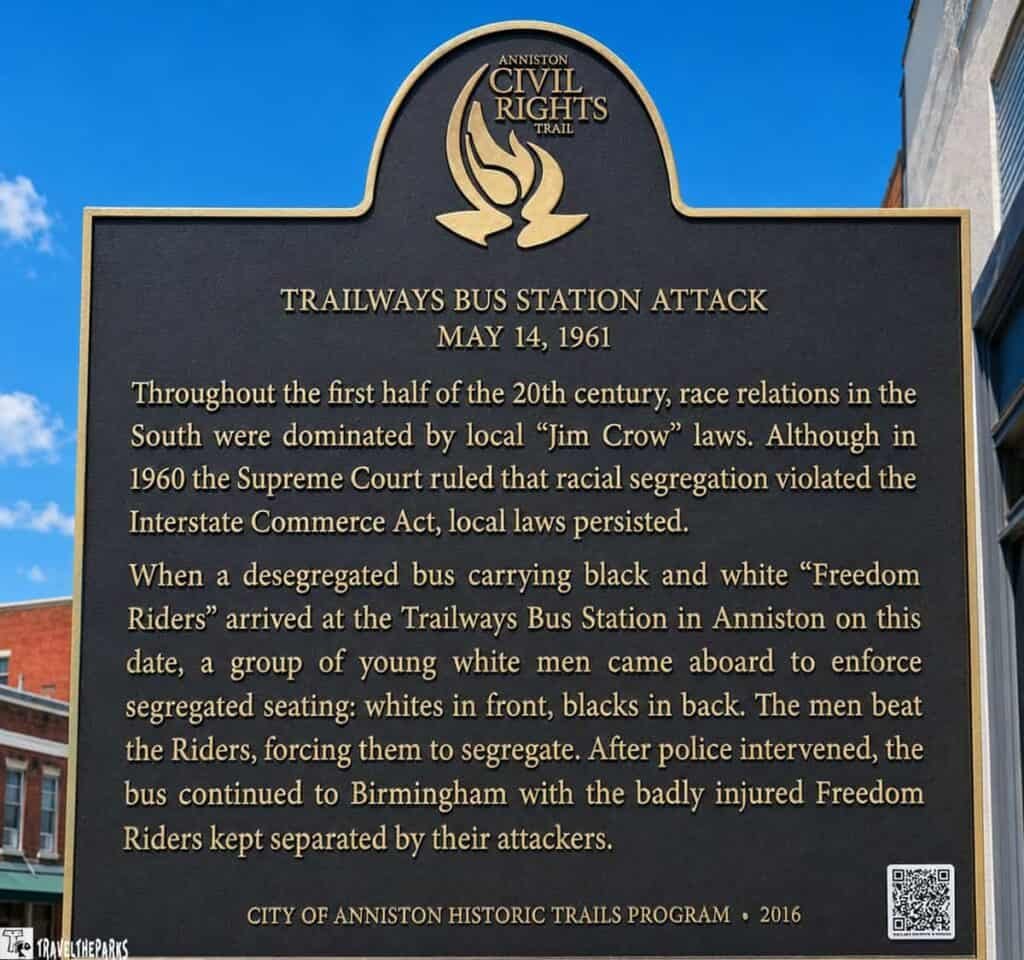
The rest of the trail fills in the broader picture of what Anniston was and what it went through. Markers and murals, mostly. Nothing that requires a lot of time, but everything that adds up.
Grab a trail map at the Calhoun County Chamber of Commerce before you leave town, or download it from the NPS website before you arrive. It takes maybe an extra hour to follow it properly. That hour is worth it.
Tips for Your Visit Freedom Riders National Monument
- Check the visitor center hours before you go. Tuesday through Thursday, 10 AM to 4 PM—that’s a narrow window. Missing it doesn’t ruin the visit, but you’ll want to know in advance.
- Do the depot first, then drive out to the Bus Burning Site. Sequence has an impact. The depot gives you the context. The field gives you the weight.
- Bring water. Both sites are outdoors, and there are no food or drink facilities at either location.
- Wear comfortable shoes. The depot area involves some walking between sites, and the ground at the Bus Burning Site is uneven gravel.
Read more before you go
This is a story that rewards some homework. A few books worth reading before or after your visit:
- Freedom Riders: 1961 and the Struggle for Racial Justice by Raymond Arsenault: The definitive account. Dense, thorough, and absolutely worth it. The basis for the PBS American Experience documentary of the same name.
- Walking with the Wind: A Memoir of the Movement by John Lewis: Lewis was there. He was beaten for it. His memoir covers the full arc of a life spent in the struggle. Read it.
- My Soul Is Rested: Movement Days in the Deep South Remembered by Howell Raines: An oral history of the civil rights movement, including firsthand accounts from participants. The Freedom Riders section is particularly powerful.
- The Children by David Halberstam: Focuses on the Nashville student movement, which fed directly into the Freedom Riders campaign. Good context for understanding who these people were before they got on the bus.
Continuing the Civil Rights Trail
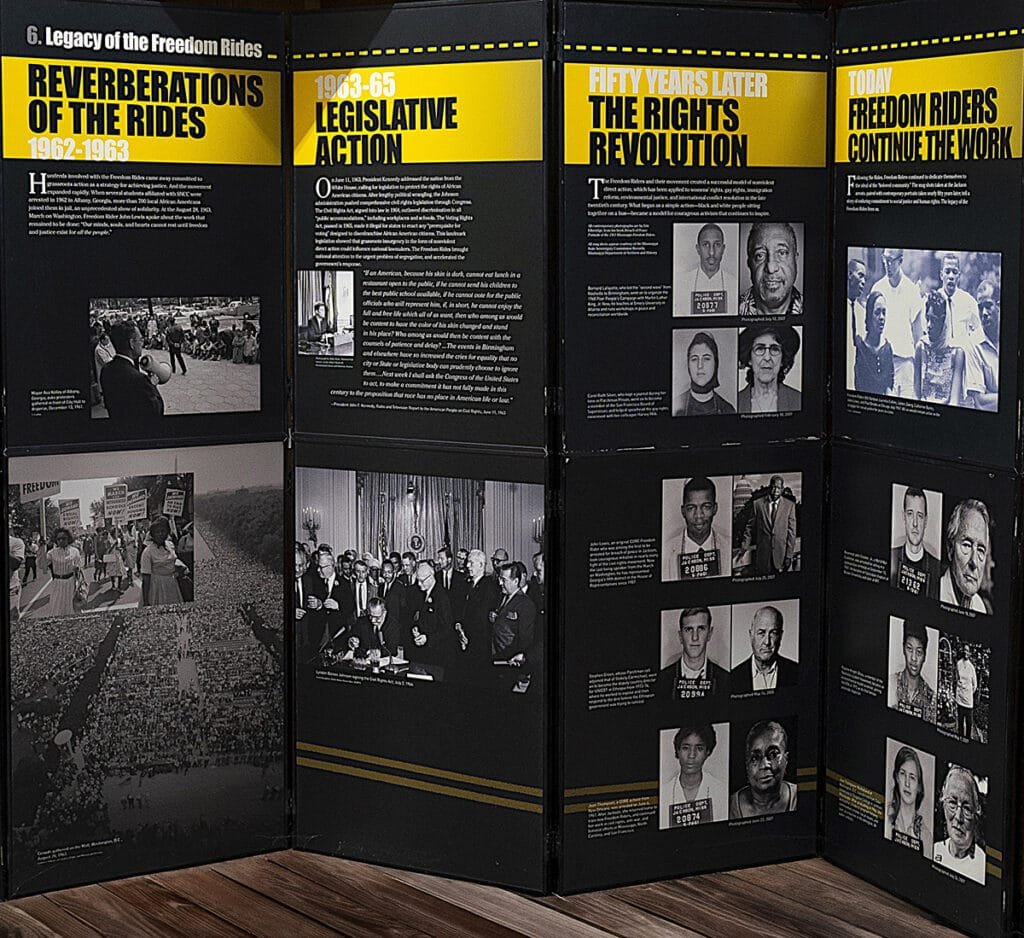
This monument is just one part of a bigger story that unfolds across Alabama’s National Park Service sites. Birmingham lies not even an hour away from Anniston to the west, and the Birmingham Civil Rights National Monument continues from where the story of Anniston left off. Selma is further—about two hours southwest—but the Edmund Pettus Bridge and the National Voting Rights Museum are there waiting.
We’ve been threading this trail across several trips now. Anniston is the only site that takes us by surprise, perhaps because it is not as big or loud as the other sites. Nothing about it announces itself. It just puts you on the side of a road in Alabama and lets you think about what happened there.
Final Thoughts: Freedom Riders National Monument
We rolled out of Anniston heading west toward Birmingham, quieter than we went in. That seems to be the pattern on this particular stretch of road trip.
The Freedom Riders National Monument is not a big, polished museum experience. It is still being developed and the facilities are limited. But that almost works in its favor. There is something about standing at a gravel pull-off on a two-lane highway, looking at a field and a historical marker, knowing what happened there, that a fully built interpretive center might actually soften. The rawness of it is part of the point.
Go. Do both sites. Take the trail map. Read the panels. Stand still for a minute at the Bus Burning Site and let it be what it is.
It is free to visit, easy to reach from almost anywhere on the Alabama civil rights trail, and one of those places that stays with you well past the drive home.
Have you visited the Freedom Riders National Monument, or is Anniston on your civil rights trail road trip list? Drop a comment below — we’d love to hear what brought you there, or what questions you have before you go.