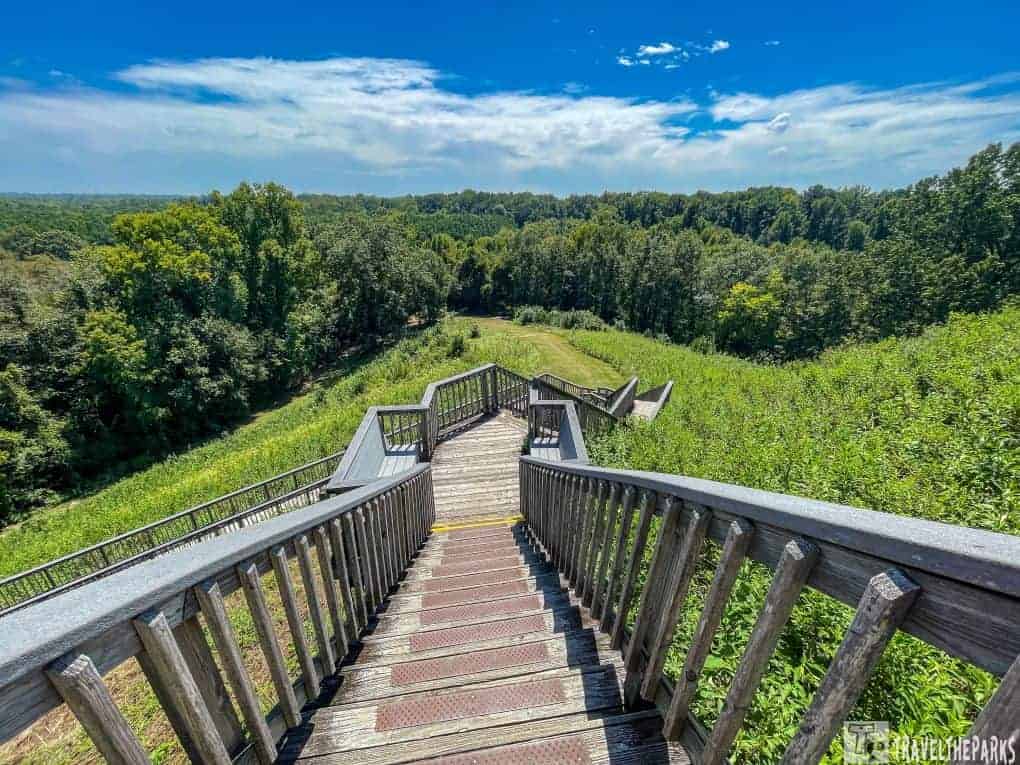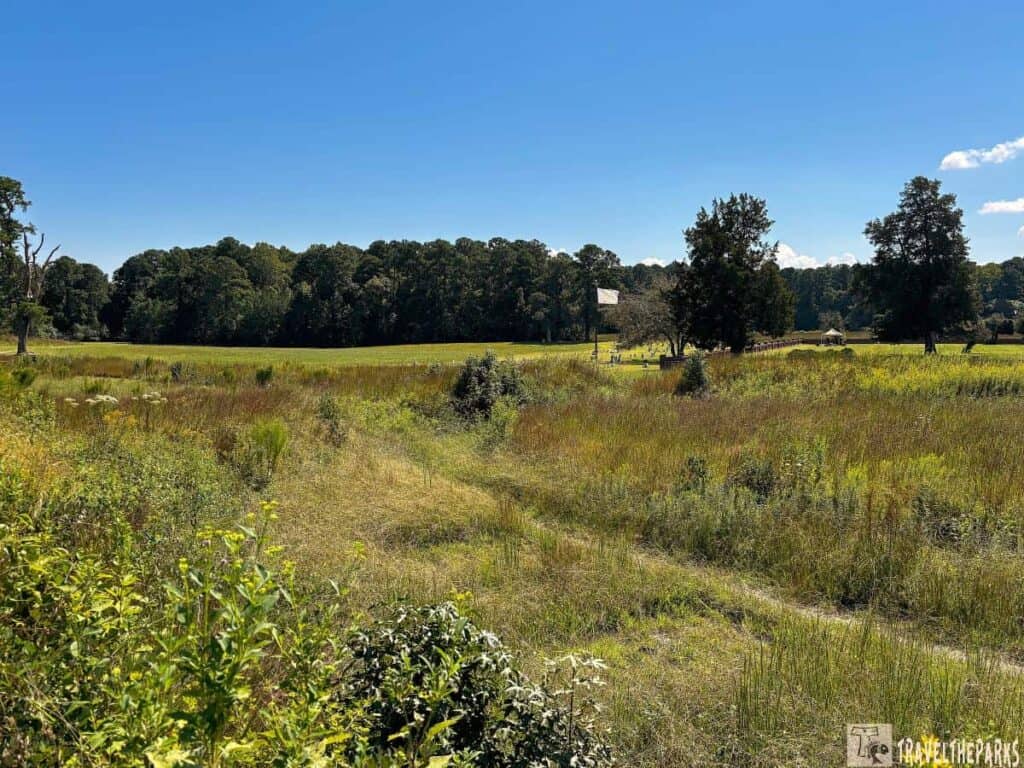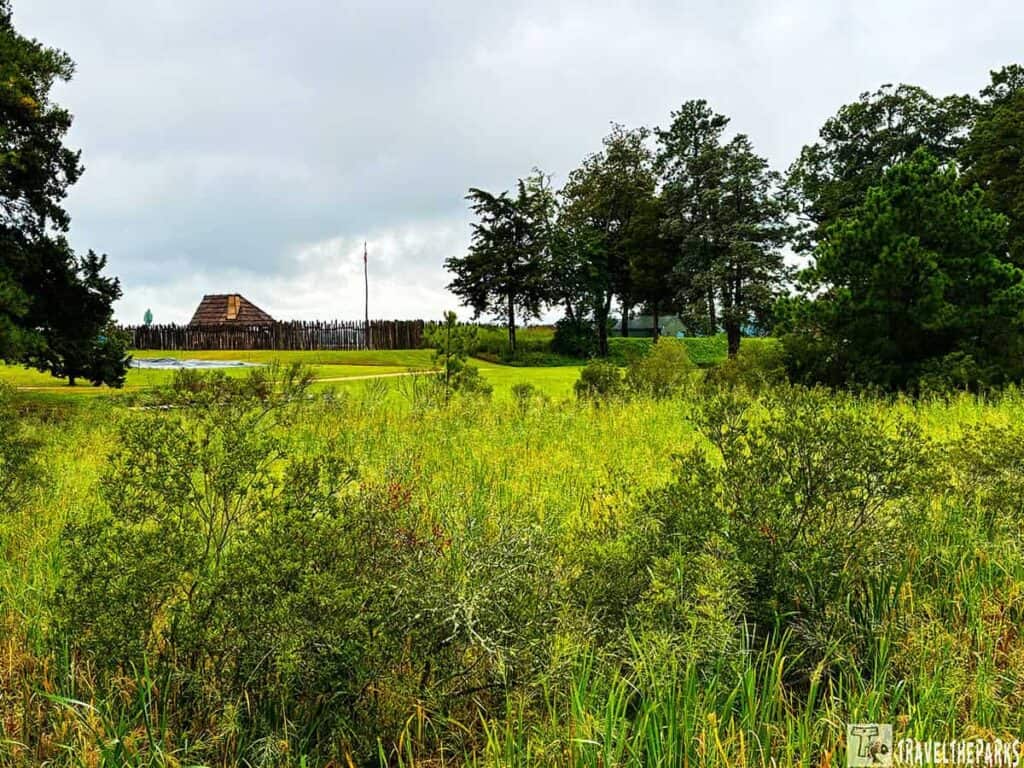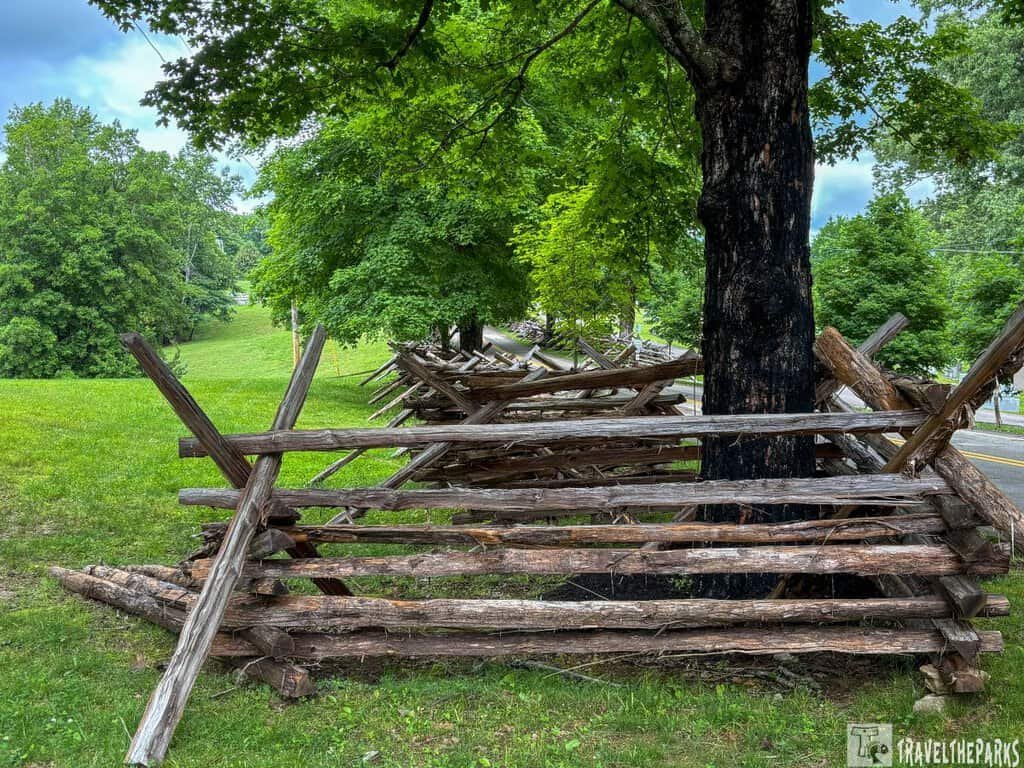
We didn’t plan to spend two hours at a Civil War battlefield on a random Tuesday. We had vague plans involving lunch and maybe a gas station stop for the RV somewhere past Nashville. However, there it was on the map: Fort Donelson National Battlefield. Visiting Fort Donelson National Battlefield turned out to be a highlight of our unexpected afternoon. This place was accessible at no cost and located directly beside the Cumberland River in Dover, Tennessee—the type of side-trip that could really make for an exciting road trip.
So we pulled in. And we stayed a lot longer than expected. Turns out, this place has some genuinely fascinating history, superb river views, and its pet-friendly to boot.
This post may contain affiliate links, meaning if you purchase something through one of these links, we may earn a small commission at no extra cost to you! Read the full disclosure policy here.
Table of Contents
The Quick Background (We Promise It’s Interesting)
Fort Donelson was where Ulysses S. Grant started off as a nearly unknown Union general, and it became the point from which he rose to fame. Grant and his forces encircled the Confederate stronghold located along the Cumberland River in February 1862. After several days of fighting—including a naval assault, a Confederate breakout attempt, and some genuinely brutal winter weather—the Confederate commander asked Grant about terms of surrender.
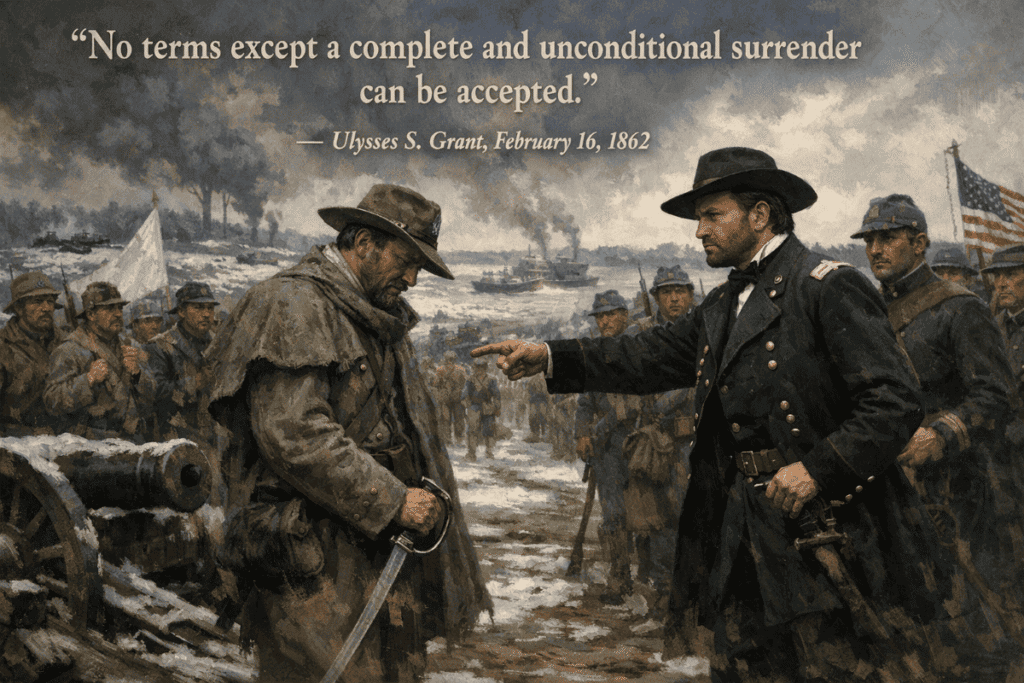
Grant’s reply became one of the most quoted lines of the Civil War: no terms except a complete and unconditional surrender. The press ran with it immediately, dubbing him “Unconditional Surrender” Grant—and also noting, not coincidentally, that his initials happened to be U.S. Grant. The man was practically born for the job.
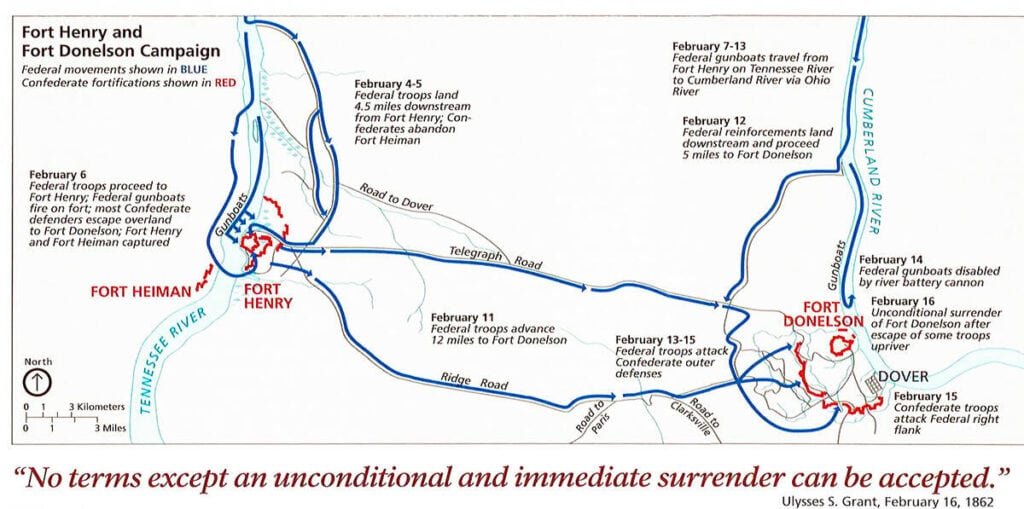
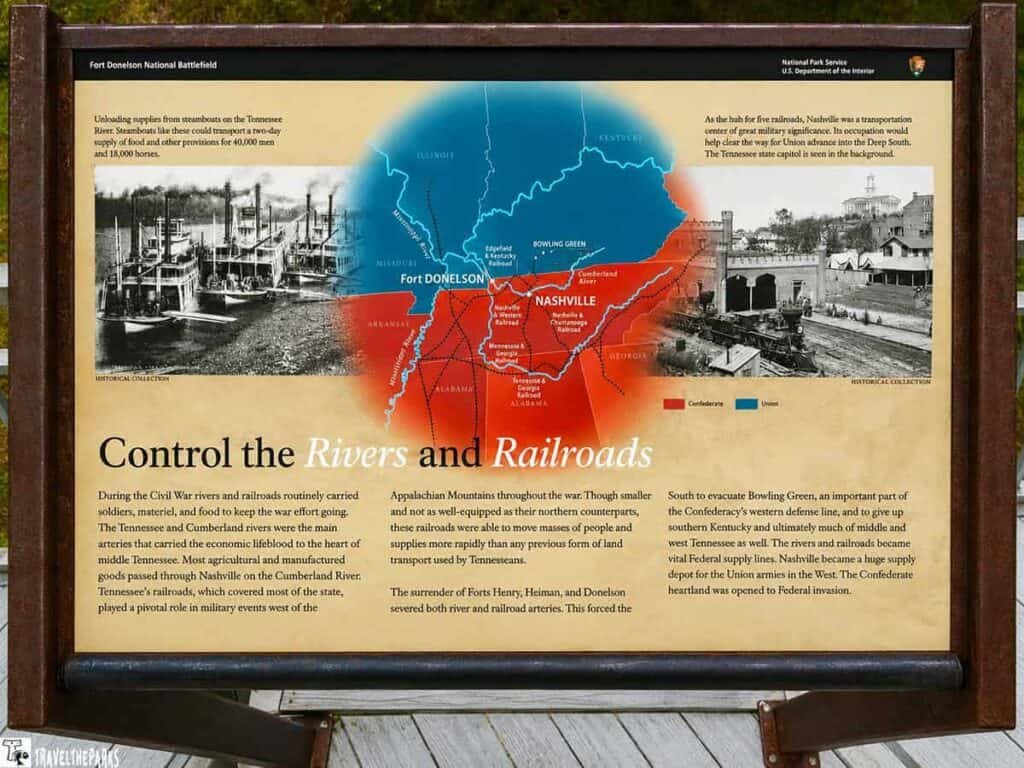
The victory itself was enormous. Taking Fort Donelson in February 1862 opened the Cumberland River to Union control, quickly led to the fall of Nashville, and gave the North its first real win in the Western Theatre. Some historians go as far as saying this was where the Confederacy started losing the war. Whether you agree with that read or not, this was undeniably a turning point—and visiting the site makes you feel just how significant it really was.
Know Before You Go: Visiting Fort Donelson National Battlefield
- Entrance Fees: Entry is completely free—no passes, no fees, no catch. Just show up.
- Operating Hours: The park is open year-round from sunrise to sunset. The tour road permits vehicles from 8 AM until closing. The visitor center and Dover Hotel are open daily 8:30 AM to 4 PM, except Thanksgiving, Christmas, and New Year’s Day. Fort Donelson National Cemetery is open daily from 8 AM to 5 PM. Check the official park website for alerts.
- There is no food or coffee inside the park. Grab snacks before you arrive—Dover has few options nearby.
- Cell service is decent in most spots, but download an offline map just in case if you plan to hike the full trail.
- Spring through fall is the sweet spot for visiting. Summer gets muggy and can push past 80 degrees, and winter tends to be cold and wet. That said, a quiet gray winter day out here has its own kind of atmosphere.
- Cannon firing demonstrations happen periodically—check the NPS event schedule before you go if that’s on your list.
- Dogs are welcome on the trails on a leash. Check posted signage at the cemetery entrance for specific rules there.
- The drive from Nashville is roughly 90 minutes. From Memphis, plan on about two and a half hours. It pairs well with a stop at Land Between the Lakes if you want to make a full day of it.
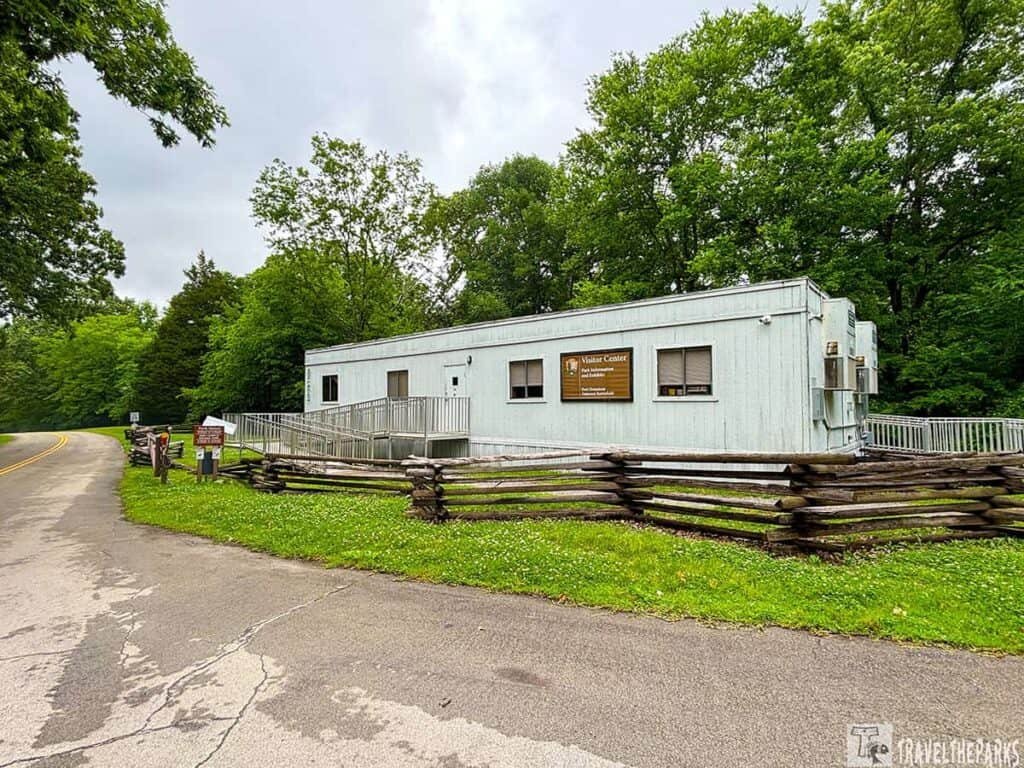
Things to do: Visit Fort Donelson National Battlefield
Start at the visitor center
The visitor center is your first stop, and a good one. Rangers are on hand, there’s a film that gives solid context on the battle, and you can grab a map for the driving tour. Renovations are underway at the building. Exhibit availability may be impacted during your visit, but the park staff’s excellent service compensates for any limitations. Friendly, knowledgeable, and genuinely enthusiastic about the history here.
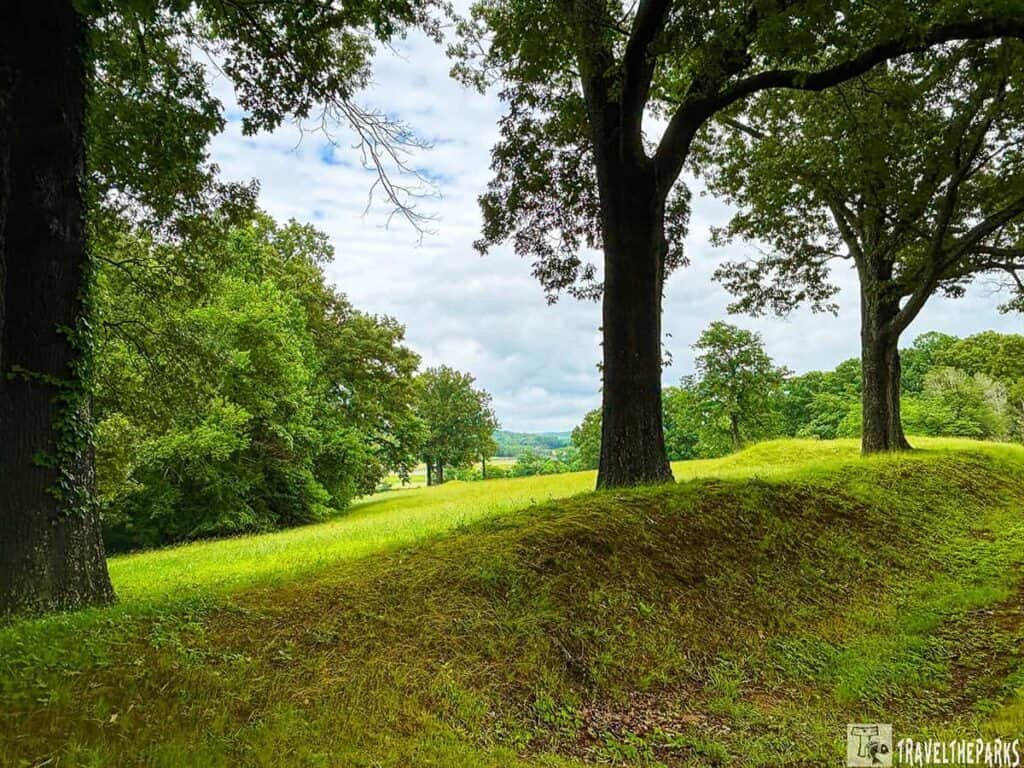
Fort Donelson Scenic Driving Tour
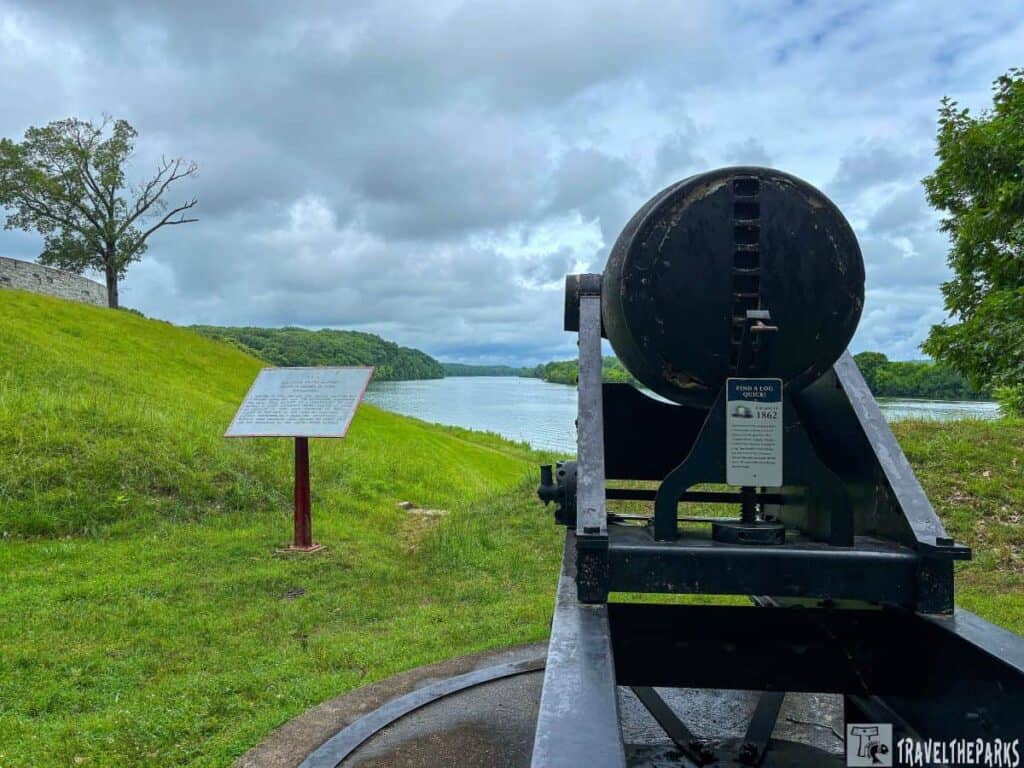
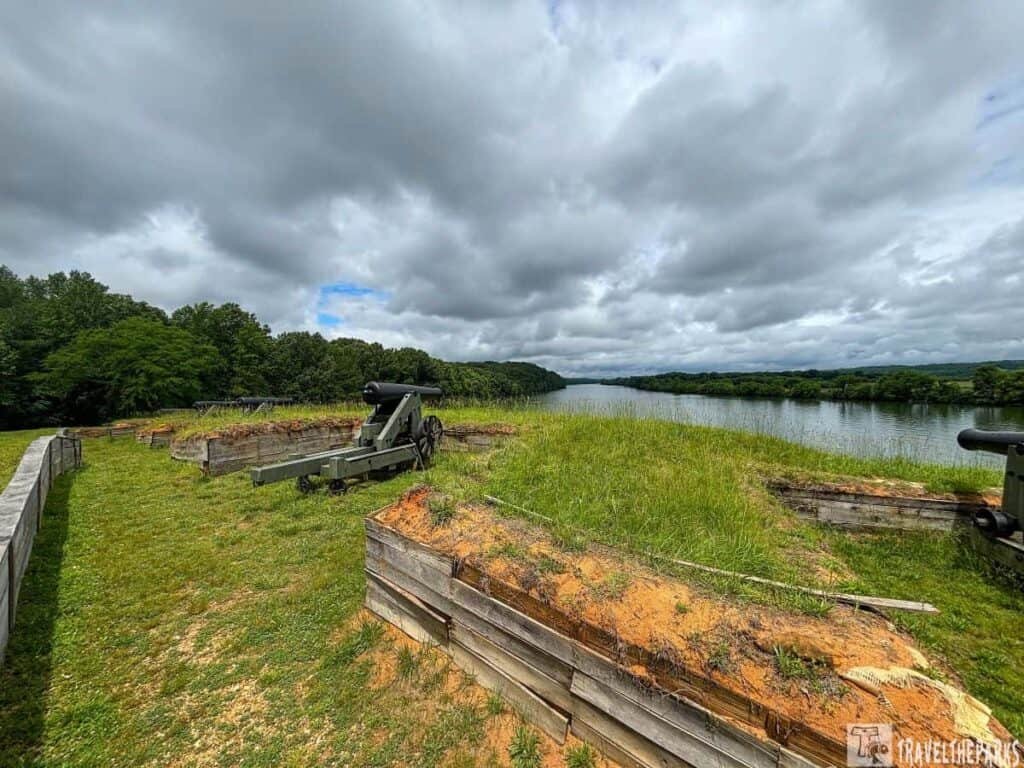
The self-guided driving tour winds through eleven points of interest across about six miles. You can cover the whole thing comfortably without rushing. The Confederate river batteries are a highlight—massive cannons still positioned on the bluff overlooking what is now Lake Barkley (the Cumberland River was dammed in the 1960s, which changed the landscape but didn’t dim the drama). Standing up there, it’s easy to picture why Union gunboats had such a rough time getting close.
The Eleven Stops on the Fort Donelson National Battlefield Tour
- Stop 1: Confederate Monument: A good place to get oriented before the driving starts. The monument itself, raised in the 1930s, sets the tone for a battlefield where memory and terrain still argue with each other a little.
- Stop 2: Fort Donelson: This is the fort in name only now—grassy mounds where fifteen acres of earthen walls once stood. It’s worth remembering the fort itself never actually saw combat; the real fighting happened outside its lines.
- Stop 3: Log Huts: A quieter stop that hints at the everyday misery of a winter siege. Soldiers on both sides were dealing with cold, wet weather long before the shooting started, and this is where that reality sinks in.
- Stop 4: River Batteries: The showstopper. Heavy cannons still sit on the bluff above what’s now Lake Barkley (the Cumberland got dammed in the ’60s, reshaping the shoreline but not the sightlines). Stand here and the Union gunboats’ rough afternoon makes a lot more sense.
- Stop 5: Smith’s Attack: Marks where Union General C.F. Smith pushed his men up a steep, exposed slope against entrenched defenders—one of the more physically brutal moments of the battle, and the ground still shows why.
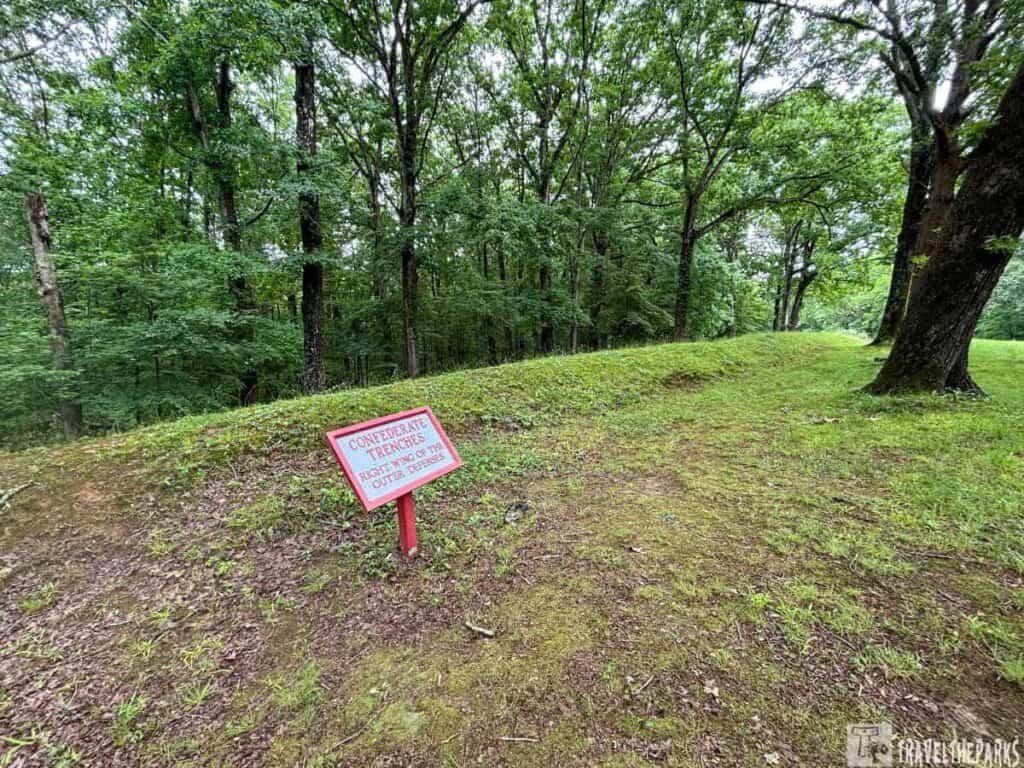
Along the Outer Lines (Stops 5–9)
The middle stretch of the tour follows the siege lines where most of the actual fighting happened, and the stops come more spread out here.
- Stop 6: Union Camp: A rare glimpse of the ordinary side of war: where Grant’s troops bedded down, often without blankets or fires, in the freezing days before the surrender.
- Stop 7: Graves’ Battery: One of the outer artillery positions that helped Confederate forces punch a temporary hole in the Union lines during the breakout attempt on February 15th.
- Stop 8: French’s Battery: Connected to Graves’ Battery by a walking trail, this stop covers the other half of that same push—useful if you want the fuller shape of the failed Confederate escape attempt.
- Stop 9: Forge Road: A lower-key stop, but it traces the route Confederate troops used as they tried to slip past Union lines—context that makes the surrender feel less sudden and more like the last option on a shrinking list.
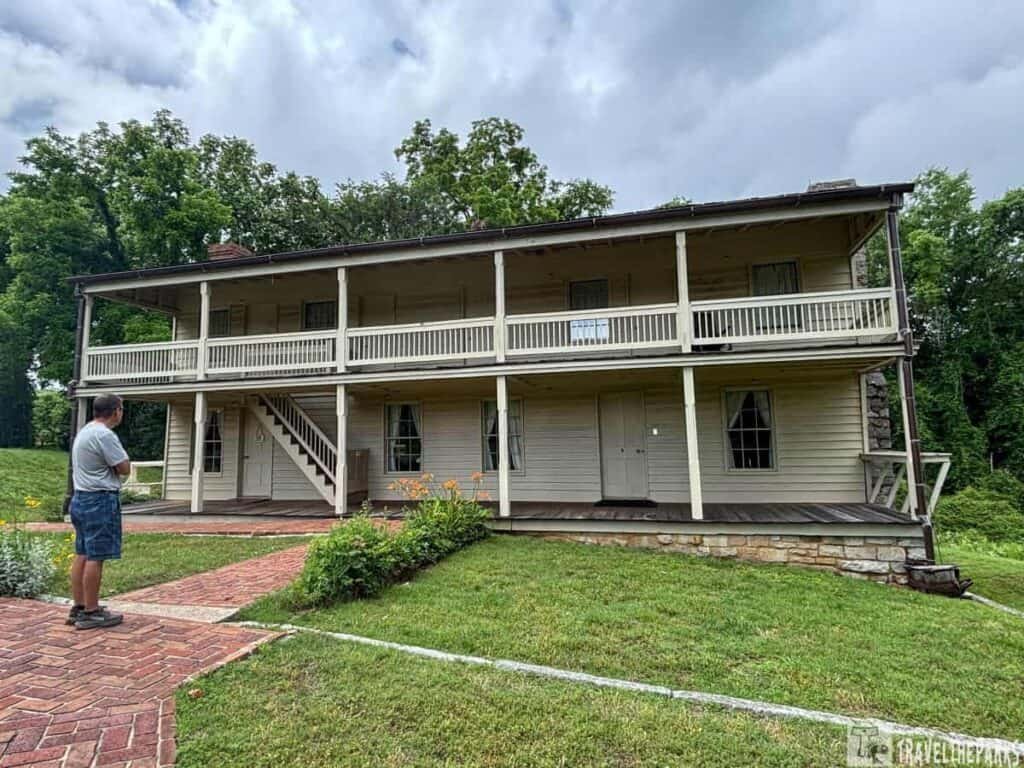
Stop 10: The Dover Hotel: aka the Surrender House
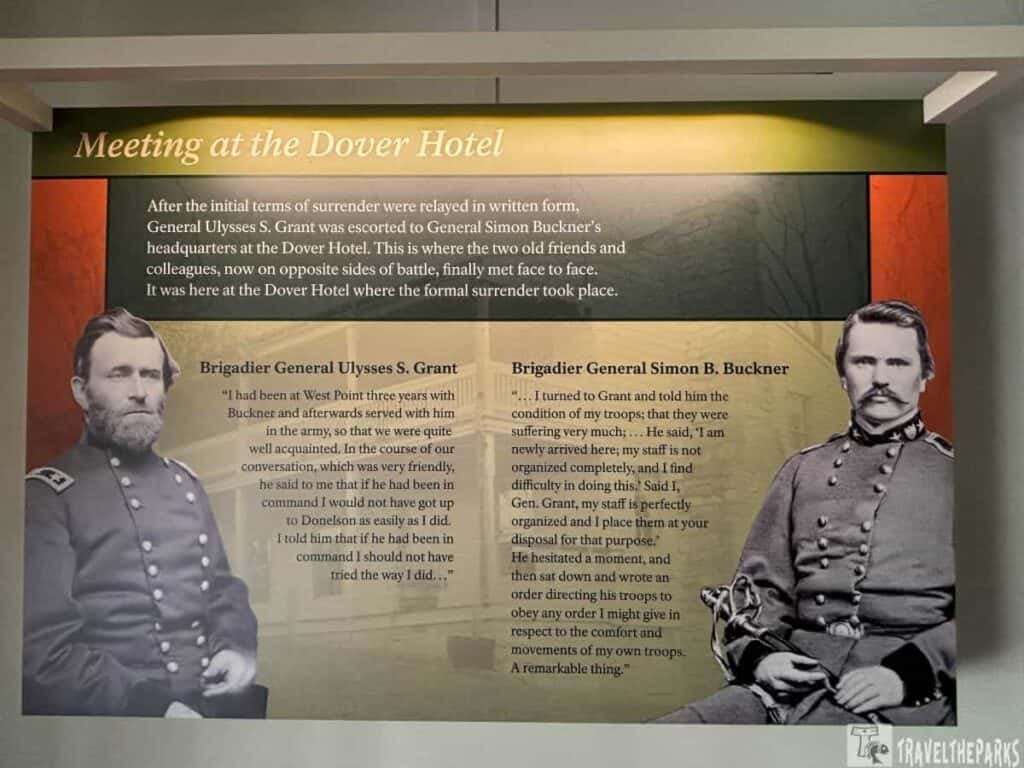
This is where the surrender actually happened. Where it actually ended. This modest building is where Confederate General Simon Buckner asked for terms and Grant answered with the demand that earned him the nickname “Unconditional Surrender.” Here the Confederate commander, General Buckner, surrendered Fort Donelson to Grant on February 16, 1862, by giving up the fort and the entire garrison to the Union Army. It’s a modest house, both in size and how it looks. No grand architecture, no dramatic backdrop. Just a modest hotel in a small Tennessee town where one of the defining moments of the Civil War quietly happened.
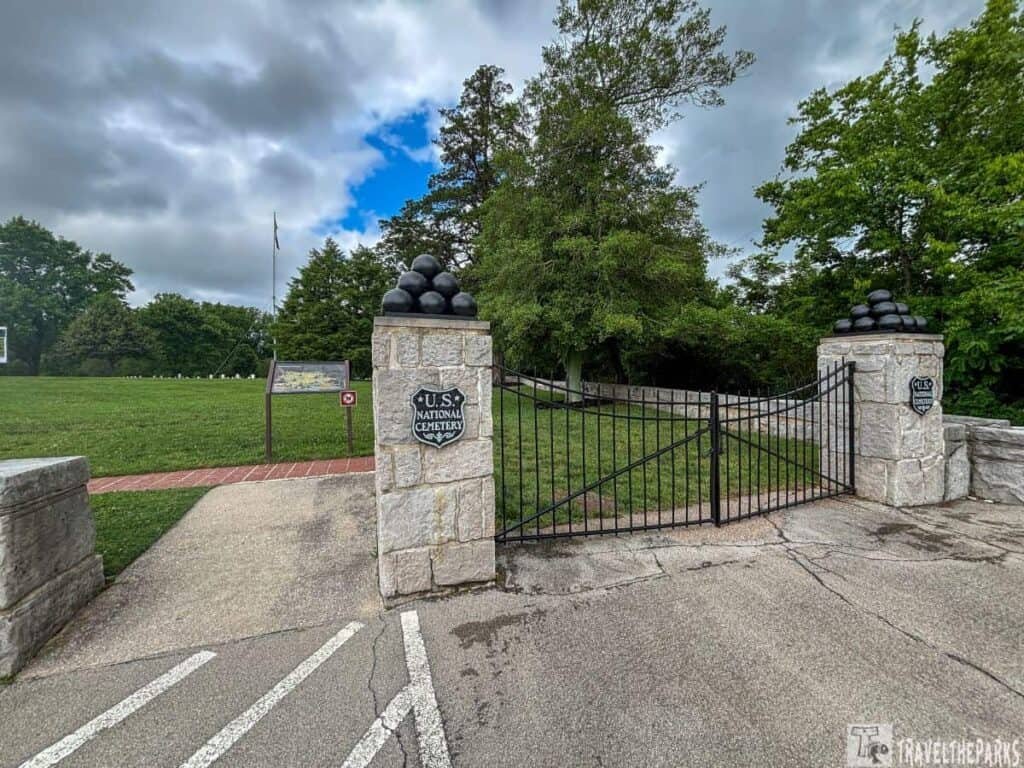
Stop 11: Fort Donelson National Cemetery
The tour’s closing stop, and a natural gut-punch after eleven points of tactics and terrain—row after row of graves that put a human cost on everything you just walked through. The national cemetery is actually right next to the battlefield and contains the graves of 670 Union soldiers who were reburied here in 1867, in addition to veterans of later wars. Besides that, it is quiet, well-maintained, and a quick visit will be sufficient for you.
Trails and the Cumberland River
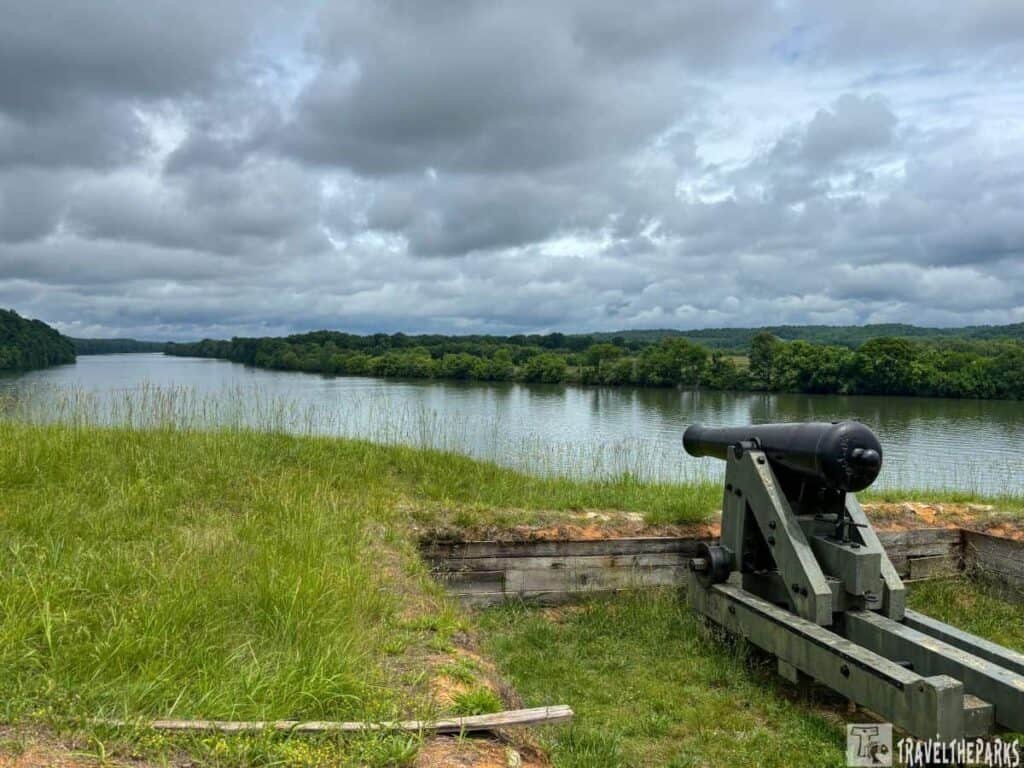
If stretching your legs is needed, Fort Donelson National Battlefield offers a six-mile trail system linking almost all the significant sites. You can cover the entire trail by hiking, walking some parts, or simply driving around and getting out at the viewpoints. In any case, the river scenes are truly lovely. One or two visitors even said they saw a bald eagle from the bluffs, so be sure to look upward.
- Donelson Trail (3.2-mile loop): Most people end up on this one whether they mean to or not, since it’s the trail that ties the whole network together. It passes close enough to several driving-tour stops, river batteries included, that you can hit the same spots on foot at a much slower pace, catching details a car window would blur past.
- Graves’ Battery to French’s Battery Trail (2 miles round trip): Stops 7 and 8 sit along what used to be the outer defensive line, and there’s no road linking them—just this trail. If you want to actually stand at both, walking is the only way to close that gap.
- River Circle Trail (~1 to 1.4 miles): Peels off from the Donelson Trail right around the river batteries and runs along the Cumberland’s south bank for a while before curving back up to rejoin it. If the river views are what you’re after, this short loop is basically where they live.
- Cemetery Spur Trail (2.2 miles round trip): A side trip off the Donelson Trail out to the national cemetery, Stop 11 on the driving tour. Not much of a workout, but it’s a different experience walking in on foot than pulling up in a car—worth doing if you’ve got the time.
Final Thoughts on Visiting Fort Donelson National Battlefield
Fort Donelson is the kind of stop that sneaks up on you. We came in not knowing much, and we left having genuinely learned something—and having stood in the exact spot where a Confederate general handed over an entire fort to a man who would eventually become president. That’s not nothing.
It’s not a glitzy attraction. You won’t find a gift shop crammed with expensive coffee mugs, nor will you stand in line for an hour to get in. There are no mobs jockeying for position to take a snapshot either. The ranger we spoke with knew the battle like he’d been there himself. The driving tour does a fine job of letting the landscape carry the story.
If you’re anywhere near western Tennessee as part of a Nashville road trip—or routing through the middle of the state — this is a stop worth making. Budget two to three hours if you want to do it right, and don’t skip the bluff overlook at the river batteries. You will not regret the detour.
Have you been visiting Fort Donelson National Battlefield yourself? Drop a comment and tell us how it went. Which stop on the driving tour stuck with you most? Did you time it right for a cannon demonstration, or catch an eagle circling the bluffs? And the Dover Hotel—did it give you that same quiet, unsettled feeling it gave us? We love hearing from fellow travelers who’ve made the detour to this stretch of Tennessee, so share your story in the comments below.