While traveling through the Midwest on our road trip, making stops at Nashville, Memphis, and later St. Louis, we only had one place in mind in which we didn’t want to rush: Shiloh. Visiting Shiloh National Military Park was an experience we wanted to savour and take our time exploring.
Tracing the history of America through the Midwest and South, Shiloh National Military Park is one of the few places that really need us to be silent and think deeply. Located in the deep woods of southwestern Tennessee, it is more than a battlefield; it is the place where the country’s idea of war was changed forever. On the two days of the battle in April 1862, almost 24,000 men were killed, wounded, or missing, a figure that stunned the nation, which was used to swift, yet decisive victories. Shiloh serves as the solemn, pivotal chapter in this historical journey.
This post may contain affiliate links, meaning if you purchase something through one of these links, we may earn a small commission at no extra cost to you! Read the full disclosure policy here.
Table of Contents
Know before you go visiting Shiloh National Military Park
At first, we really didn’t grasp the extent of the differences between Shiloh battlefield and the other battlefields we had visited. In fact, the area’s more rural, scattered nature and, in many respects, it has that cozy atmosphere. A little planning beforehand was a great help to us.
- Operating Hours: The park is open daily from sunrise to sunset. The visitor center and the Corinth Civil War Interpretive Center are open daily from 9:00 AM to 5:00 PM. Check the National Park Service page for current hours, closures, and any entrance passes.
- Entrance Fees: No entrance fee or pass is required. Many RV travelers appreciate free entry, but verify any passes you might need for park facilities.
- Parking and RV considerations: There are pull-offs and parking areas suitable for RVs at main viewpoints and the visitor center. Some areas require a short walk from the lot, so you may want a compact daypack for essentials.
- Best time to go: Spring and fall offer milder weather and active ranger programs, but the site is open year-round with seasonal variations. Summer in West Tennessee can be brutally humid—reminiscent of what the soldiers endured in 1862.
- Getting there: The park is near Shiloh, Tennessee, with access via scenic driving routes from nearby towns like Savannah and Pittsburg Landing. The driving routes through the park let you stop at overlooks and key landmarks.
- Accessibility: Some areas are wheelchair accessible, while others require footing over uneven terrain. Check the current accessibility notes on the official site.
- What to bring: water, bug spray, sunscreen, hat, snacks, and sturdy walking shoes. We also carry a compact first-aid kit and a small umbrella for brief showers.
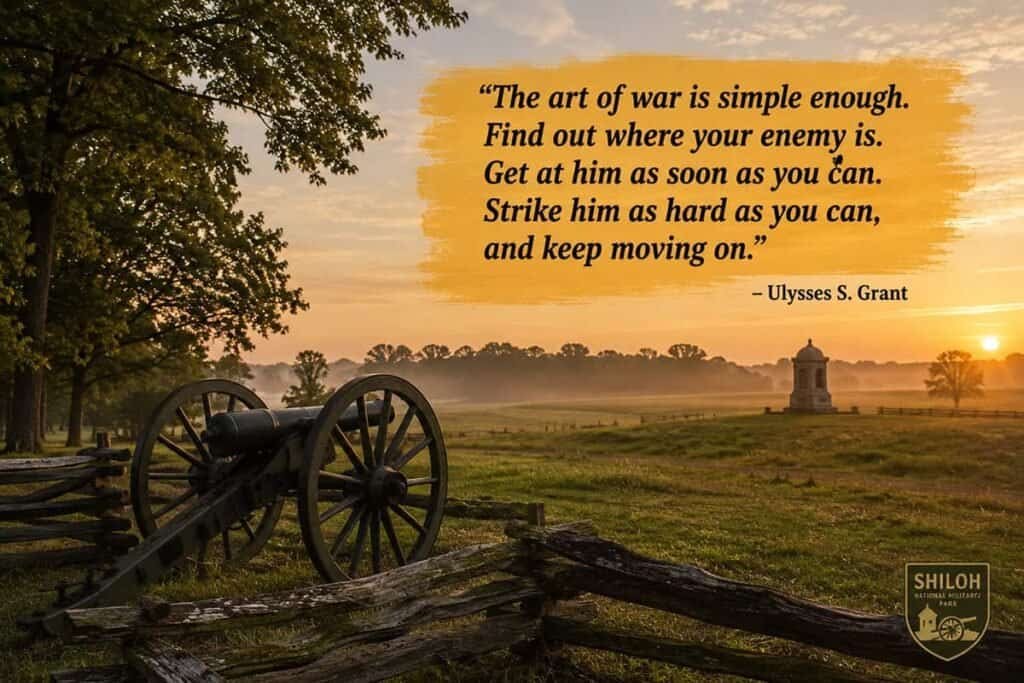
What Really Went Down at Shiloh
You can’t walk these trails without knowing the backstory.
By the start of 1862, Grant had just seized Forts Henry and Donelson, shoving Confederate forces out of Kentucky. Johnston pulled his men back to Corinth, Mississippi, to protect the railroads and plot a surprise attack. Meanwhile, Grant parked his army at Pittsburg Landing and sat tight, waiting for more troops.
Johnston didn’t wait for him to be ready.
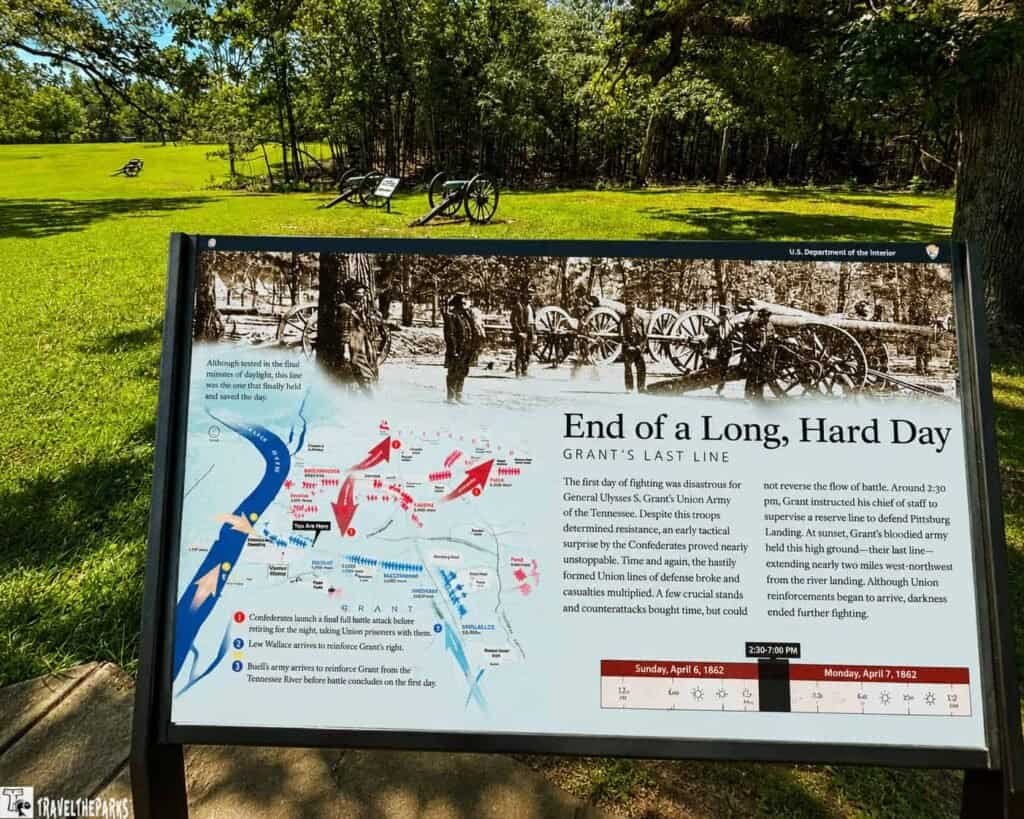
On April 6, his troops stormed the Union camp near Shiloh’s little church. What followed was absolute horror: nearly 24,000 soldiers ended up dead, wounded, or missing over two days. Johnston died that first afternoon, still the highest-ranking American officer ever killed in combat. By the second day, Union reinforcements finally showed up and forced the Confederates to retreat.
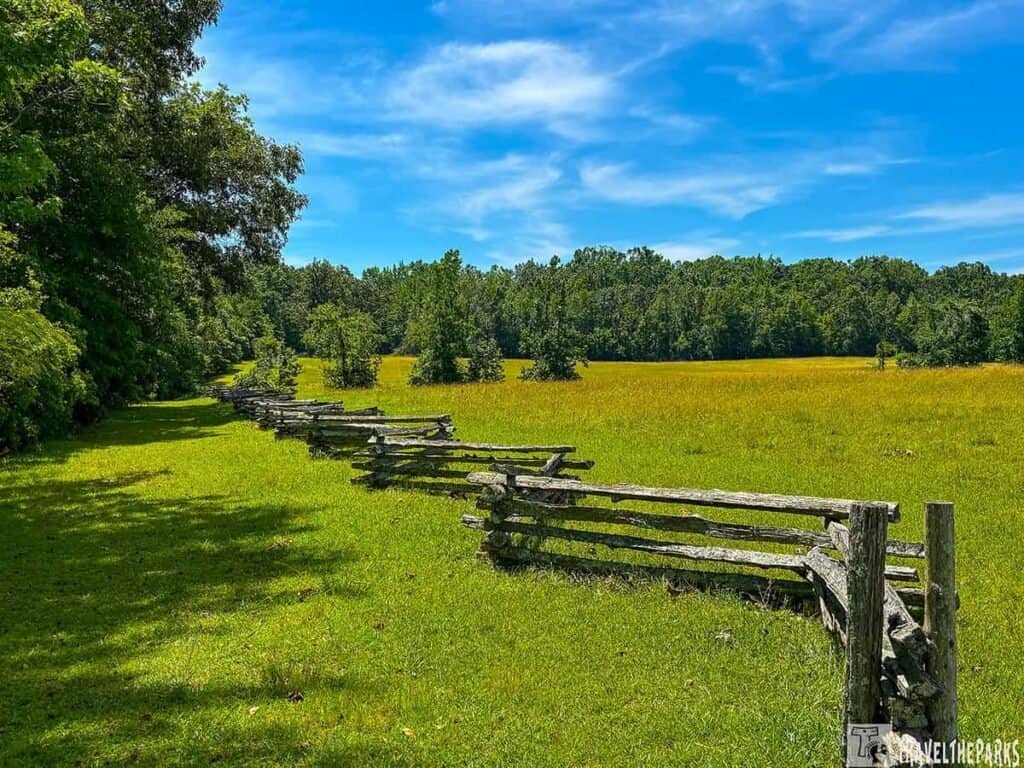
But don’t call it a win for anyone. Both sides walked away scarred and hollow.
It took thirty years, but veterans from both sides eventually convinced Congress to preserve the land. Shiloh became an official military park in December 1894, one of America’s very first. The War Department managed it until 1933, when the National Park Service took over.
Out here, surrounded by monuments in the middle of nowhere, you’d never guess this was the site of a war-changing battle. But that lonesome, off-the-map feeling? That’s exactly what sets Shiloh apart from the big-name battlefields everyone talks about.
Things to Do When Visiting Shiloh National Military Park
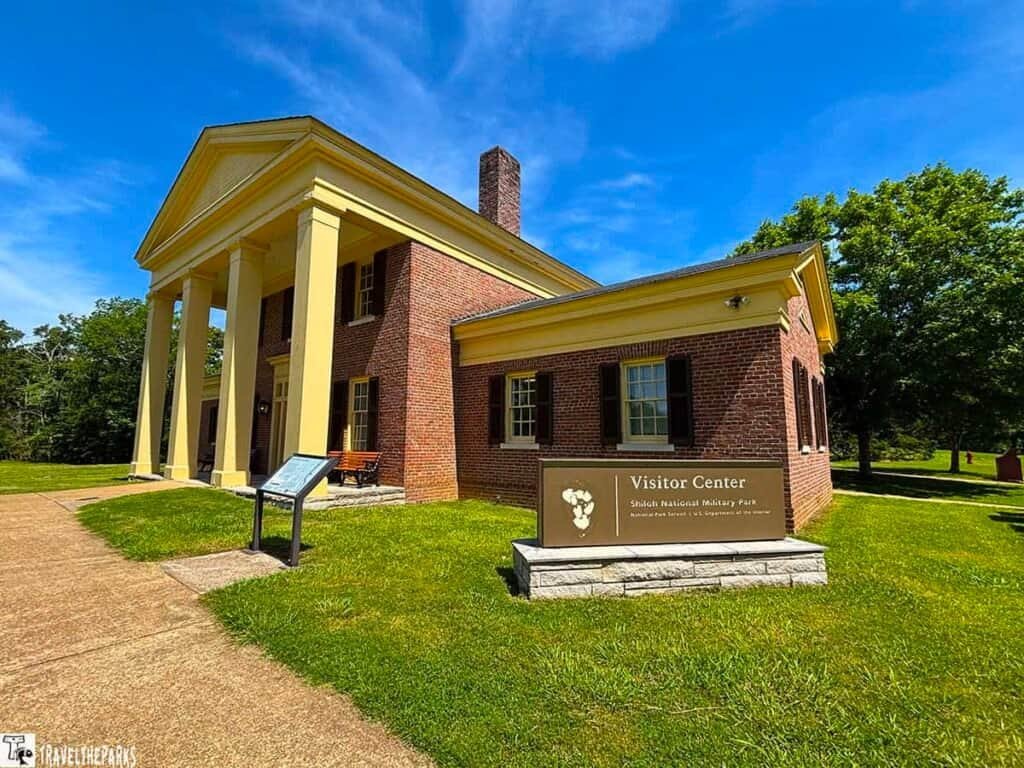
Visitor Center: Start where the story starts
We’ve learned this at other parks too—beginning at the visitor center changes everything. We made the mistake of nearly skipping the film. Don’t. So make sure you watch the 25-minute film, Shiloh: Fiery Trial. It gives essential background for the surrounding scenery that you are going to experience. Besides it telling about the Confederates’ surprise attack on the first day (April 6) and the Union’s counterattack on the second day. It helped us figure out the confusion during those first two days by both watching the film and seeing the exhibits before we went onto what now seemed like very peaceful ground.
Ranger staff are happy to answer questions and can recommend a route depending on how much time you have, whether you’re driving the battlefield or planning to walk some of the trails.
Before leaving the visitor center, we also stopped by the bookstore to browse the Civil War books and pick up our National Park Passport stamp. If you’re collecting stamps, don’t forget to get yours before heading out on the battlefield tour.
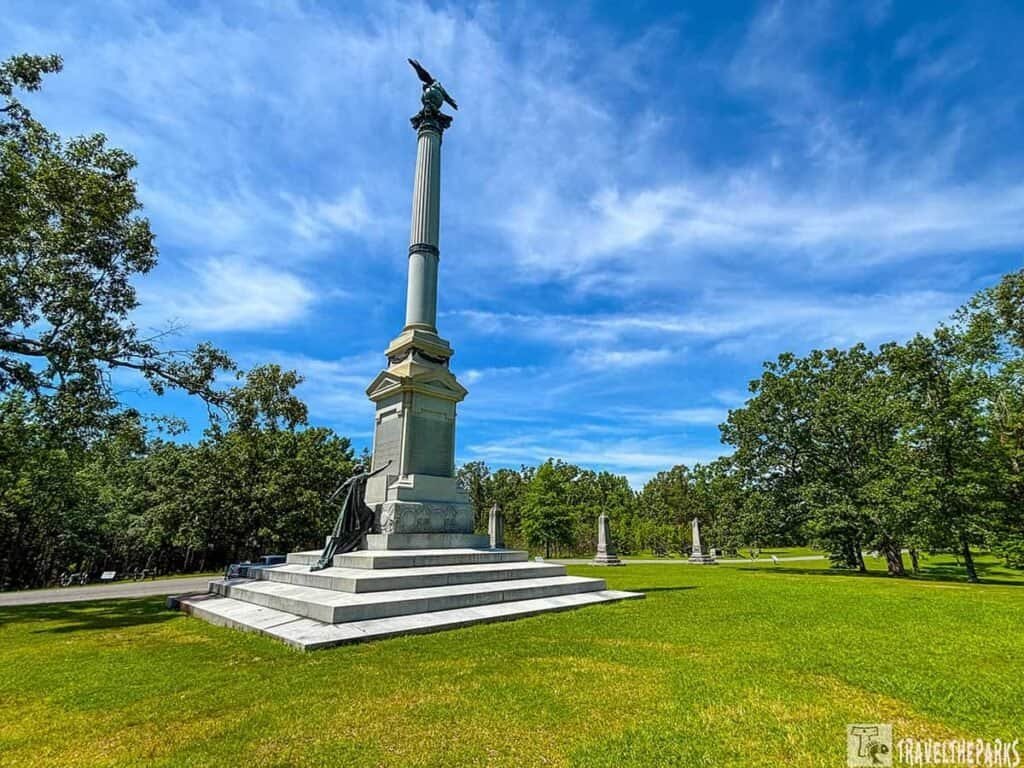
The Battlefield Tour Road (2-3 hours)
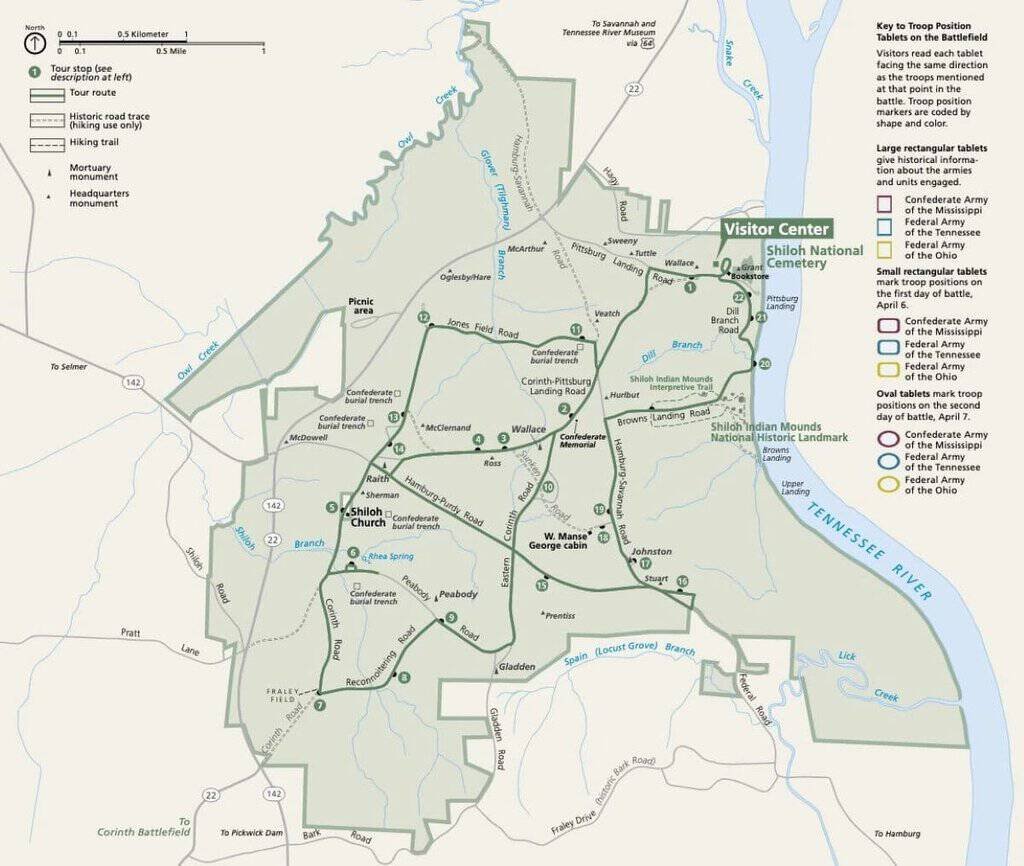
The 10-mile self-guided auto tour of the battlefield is the backbone of the park. We experienced very weak mobile networks while doing the self-guided auto tour. Having downloaded the NPS map offline and picked up the paper brochure helped us stay on track. If you are planning a guided tour of Shiloh National Military Park, we recommend bringing your own guide (just in case).
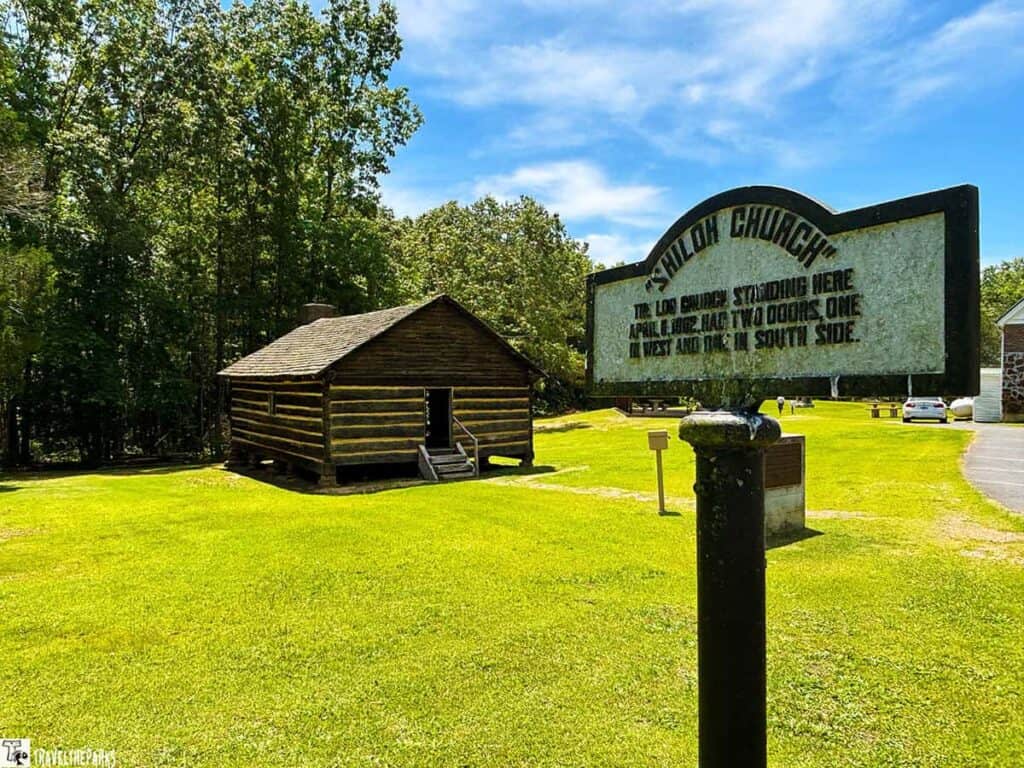
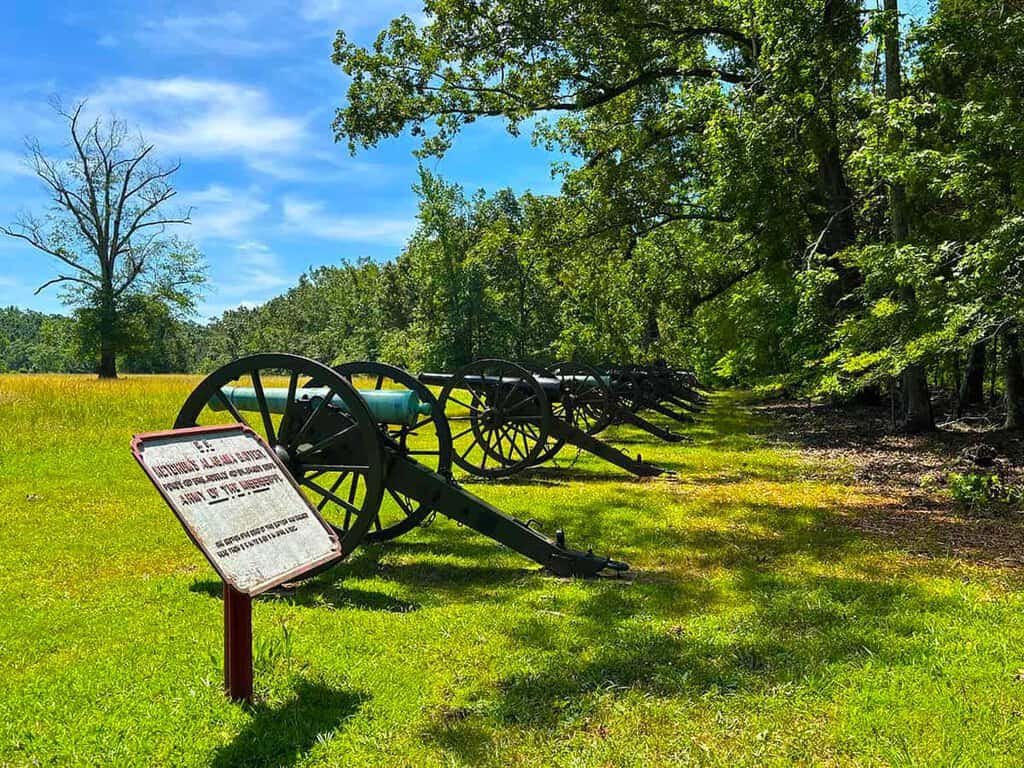
It’s bigger than it looks on a map. We thought we’d “see it quickly”—we were wrong. With over 5,000 acres and 150 monuments, Shiloh can be overwhelming. Between the driving tour stops and getting out to walk places like the Hornet’s Nest, we easily spent several hours here without rushing.
We ended up walking more than expected. Some of the most meaningful spots aren’t ones you just glance at from the car. Shiloh doesn’t feel crowded or rushed. In fact, some areas we had completely to ourselves. That space gives you time to stop, read, and really take in what happened here.
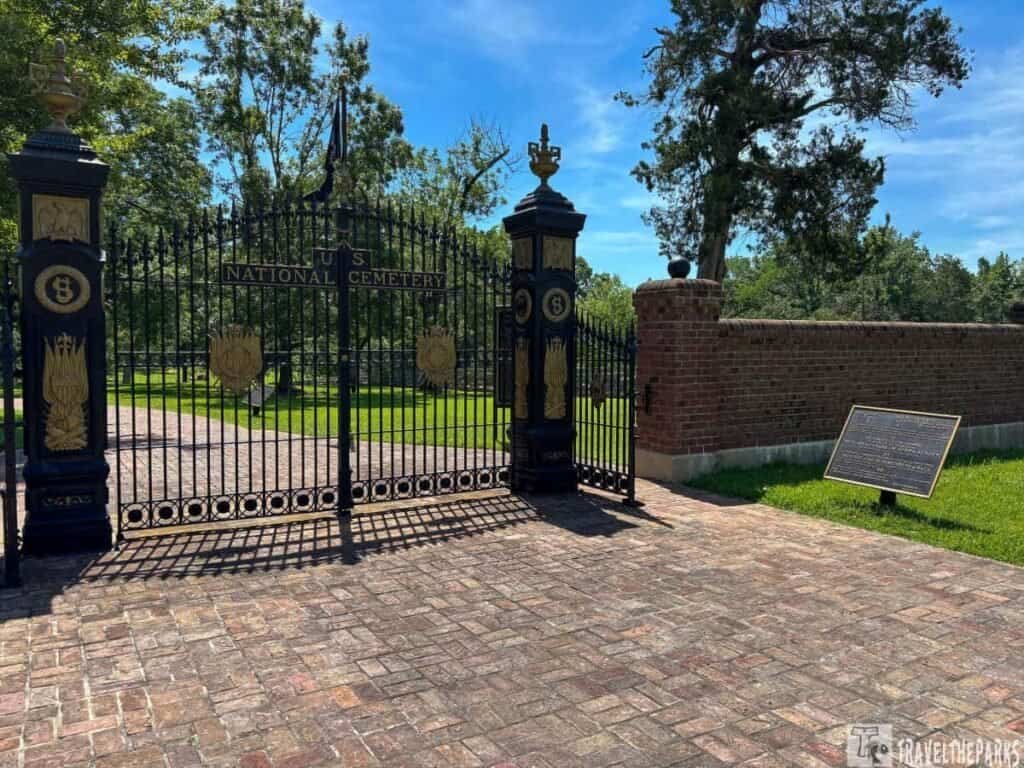
Shiloh National Cemetery (15 minutes)
This is one of the oldest national cemeteries, and it is close to the visitor center. This cemetery holds the remains of over 3,500 Union soldiers, with 2,400 of them unidentified.
Of all the battlefields we’ve seen, for some reason, Shiloh touched us and felt quite different. However, it is difficult to put into words unless you actually stand here.
Battlefields such as Gettysburg or Vicksburg still carry an enormous impact because of their size and fame. But Shiloh was completely unexpected for us. Perhaps it is the silence, or the woods closing in on the trails, or even how the Tennessee River peacefully flows past Pittsburg Landing. Whatever it is, it will linger in your mind.
We’ve hit spots like Chickamauga, Kennesaw Mountain, and Fort Donelson. Each one shares a unique story. Shiloh hits differently. It’s a key shift, full of real feelings and no sugarcoating.
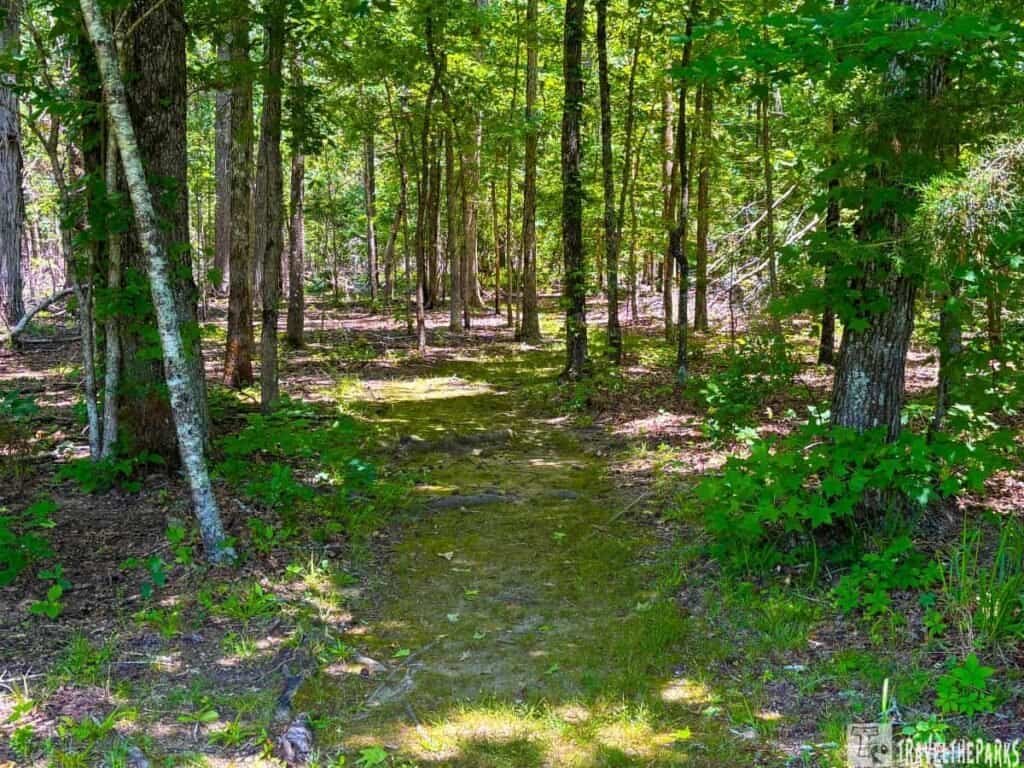
The Trails
To truly appreciate the guide to Shiloh National Military Park, you must get out of the car. The Hornet’s Nest Trail is a short, looped path that walks you through the sunken road, allowing you to see the Confederate approach and the Union defensive line exactly as it was.
One stop many visitors miss is the Shiloh Indian Mounds. Long before soldiers fought here in 1862, Native Americans built these ceremonial earthworks overlooking the Tennessee River. They don’t take long to visit, but they add another fascinating chapter to the story of this landscape. We’ll share more about them in a separate guide.
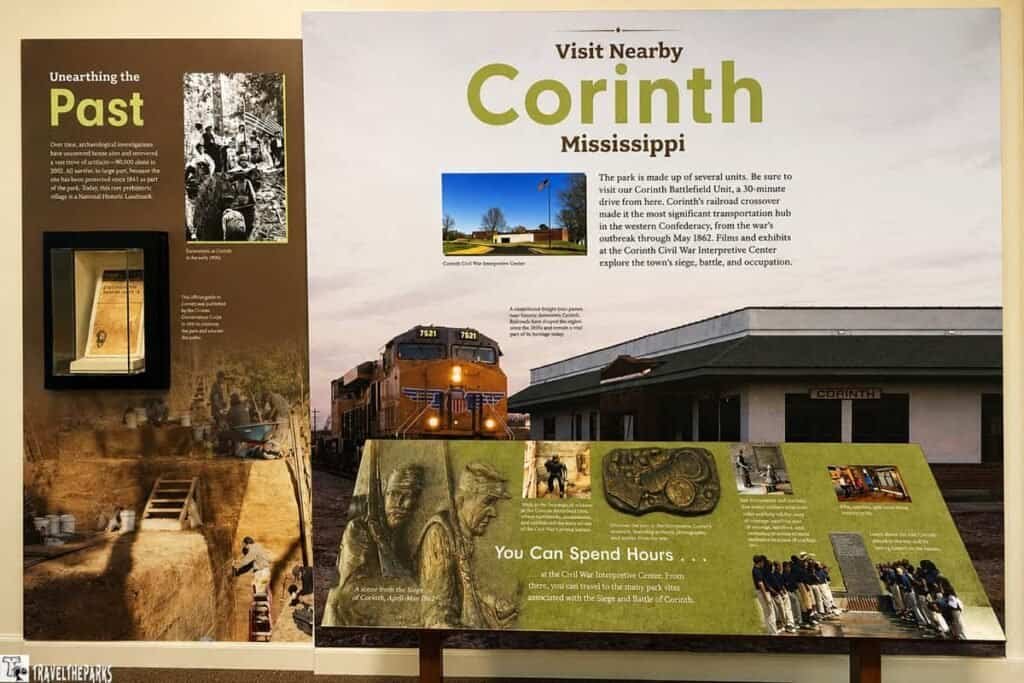
Corinth Civil War Interpretive Center (about 1.5 hours)
We almost drove past it. Shiloh gets all the attention, but twenty minutes (23 miles) southwest of the battlefield—just over the Mississippi line—sits the Corinth Civil War Interpretive Center. We’re glad we turned in.
Here’s what clicked once we got inside: Shiloh happened because of Corinth. Two major railroads crossed here, making it one of the most critical pieces of ground in the Western Theater. The Confederates lost it after Shiloh. The Union spent weeks taking it, and then the Confederates fought hard to get it back that fall. This is a story that starts on the battlefield doesn’t end there—it ends here.
The detail starts before you even walk through the door. Replica artifacts are pressed into the concrete path from the parking lot—a canteen, a worn-out shoe. It was like someone dropped them mid-march and never came back. We stopped to look before we even got inside.
The exhibits cover the war’s causes, the Shiloh campaign, and the siege that followed. But what stayed with us was the contraband camp story—thousands of enslaved people who fled to Corinth seeking freedom behind Union lines, building an actual community from nothing. Streets, a church, a school, a hospital, over 6,000 people starting over. The Center gives that story the space it deserves.
Before you leave, step into the courtyard out back. A long, shallow pool runs alongside stone panels tracing the country from the 1770s through the 1870s. It’s quiet, it’s thoughtful, and it ties the whole visit together.
We spent about ninety minutes and left understanding the Shiloh campaign in a completely different way. It’s free, easy to fit into a day trip, and fills in threads the battlefield alone leaves hanging. Don’t skip it.
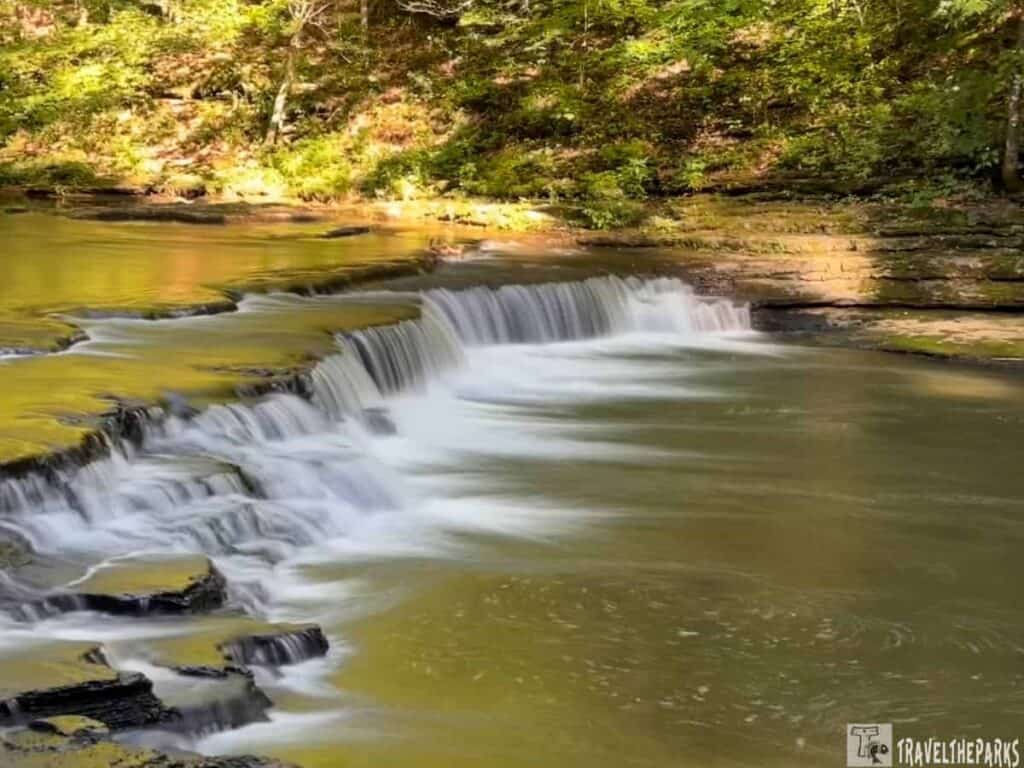
Where We Camped: Davy Crockett State Park
If you’re planning a night or two near Shiloh, David Crockett State Park in Lawrenceburg, Tennessee is one of our favorite places to land. The park sits along Shoal Creek on the same ground where Davy Crockett himself ran a gristmill and distillery back in the early 1800s—so even the campground comes with a good story attached.
We camped here and would do it again without hesitation. Our site had good tree cover, the facilities were clean, and the whole campground had a relaxed vibe that made it easy to unwind after a long day on the battlefield. There’s something about getting a fire going and just sitting with a cold drink that makes everything better—and this place delivers that.
This park became a perfect addition to a planned bigger road trip. Using Davy Crockett State Park as our home base was a really good idea, and visiting Shiloh didn’t seem to be an imposition at all, as it was naturally a part of our route from Nashville to Memphis. If you are still going to St. Louis and the Gateway Arch, adding this stop is very easy and definitely worth it.
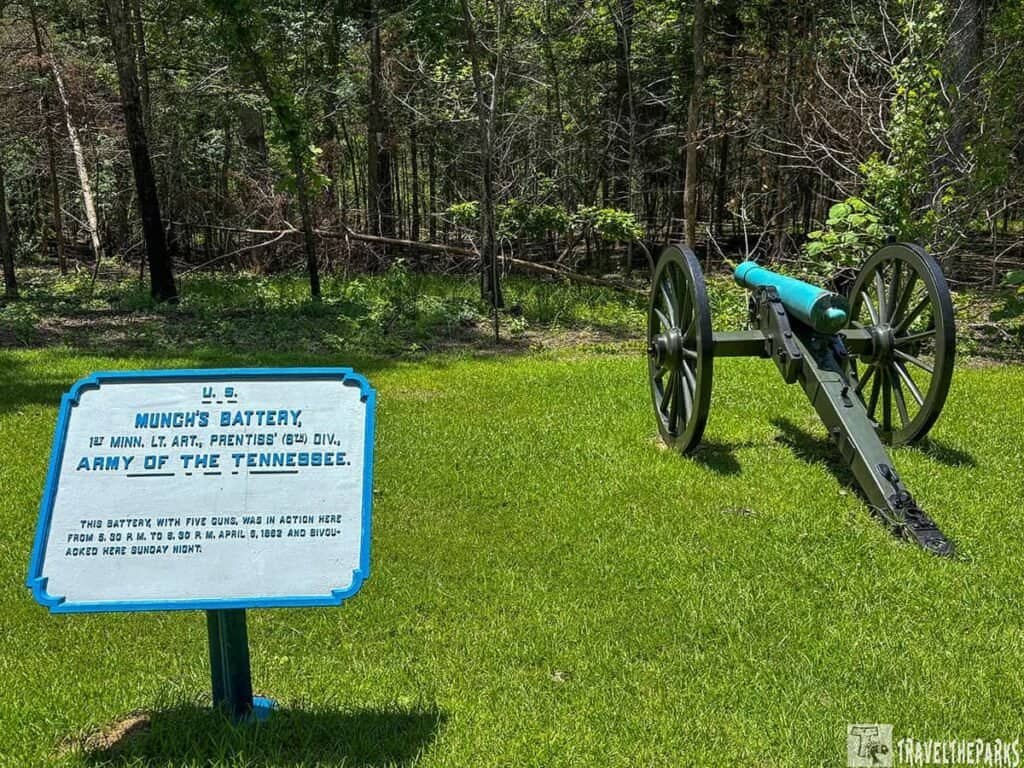
Final Thoughts: Visiting Shiloh National Military Park
For us, visiting Shiloh National Military Park wasn’t just another stop on our road trip itinerary. Instead, it was about experiencing the exact spot where American history changed direction. Although Ulysses S. Grant had already earned the nickname “Unconditional Surrender” Grant at Fort Donelson, Shiloh became the battle that truly tested his resolve and changed the course of the Civil War.
As much as we enjoyed Nashville’s nightlife and Memphis’ blues scene, Shiloh became the pause we didn’t know we needed. It’s a chance to see history through the eyes of ordinary men who were thrown into extraordinary situations.
When you travel to Nashville or Memphis, allocate time for Shiloh. It might not top your list. But it’ll linger in your mind long after.
Have you visited Shiloh National Military Park? We’d love to hear what stop hit you the hardest or what surprised you most—drop it in the comments below.