Table of Contents
Updated: April 2026
When most people plan a Yellowstone National Park trip, they zero in on Old Faithful and Canyon Village. Grant Village in Yellowstone rarely makes the shortlist. That is precisely why we love it.
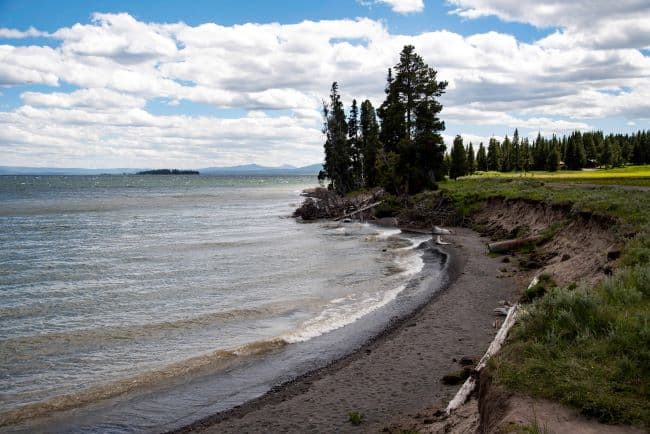
Sitting on the southwestern shore of Yellowstone Lake, just 22 miles from the South Entrance, Grant Village is one of the quieter corners of America’s oldest national park. It is not the flashiest address in Yellowstone. There are no erupting geysers in the front yard, and the lodging will not be confused with a boutique hotel. What it offers instead is something arguably more valuable: a central, uncrowded base from which you can reach nearly every major attraction in the park without fighting the traffic and crowds that pile up around Old Faithful and Canyon.
We have stayed in Grant Village more than once. Every time we come back, we wonder why more people do not choose it.
This post may contain affiliate links, meaning if you purchase something through one of these links, we may earn a small commission at no extra cost to you! Read the full disclosure policy here.
Need to Know Before You Go: Grant Village, Yellowstone
- Best time to visit: Late June through September for full access to trails, kayaking, and ranger programs. Early summer can mean lingering snow on higher trails.
- Location: Grant Village sits on the southwestern shore of Yellowstone Lake, 22 miles north of the South Entrance on the Grand Loop Road.
- Getting There: From Jackson, WY, take Highway 89 North through the South Entrance. Grant Village Road turnoff is 19 miles inside the park. From Cody, enter via the East Entrance, follow the Grand Loop Road to West Thumb Junction, then turn toward Grant Village.
- Visitor Center Hours: Open late May through September, daily 8:00am to 7:00pm. Rangers are on hand for questions, backcountry permits, and fishing licenses.
- Entrance Fee: Yellowstone charges a standard park entrance fee. An America the Beautiful Pass covers entry for the year and pays for itself quickly if you visit more than one national park.
- Cell Service: Limited throughout the park. Download offline maps, trail guides, and any reservations before you arrive. This is non-negotiable advice.
- Dining: Two on-site options—the Lake House and the Grant Village Dining Room. The General Store covers deli items, groceries, snacks, and camping supplies. There is a soda fountain if you need ice cream after a long hike. You will.
- Gas: The service station at Grant Village is convenient but priced accordingly. Fill up in Jackson or another gateway town when you can.
PRO Tip: This is active grizzly territory. Carry bear spray at all times on trails. Check the ranger station before heading out on any backcountry route, particularly Riddle Lake, which sits in a designated bear management area.

The History of Grant Village: A Park Within a Park
Grant Village takes its name from Ulysses S. Grant, who put his signature on the act that created Yellowstone. The world’s first national park—on March 1, 1872. The village itself is a far more recent addition.
Building took decades—work started in the sixties and the place didn’t open fully until 1982. The point was simple: give southern-entrance visitors somewhere to go and stop funneling everyone through the same handful of spots up north.
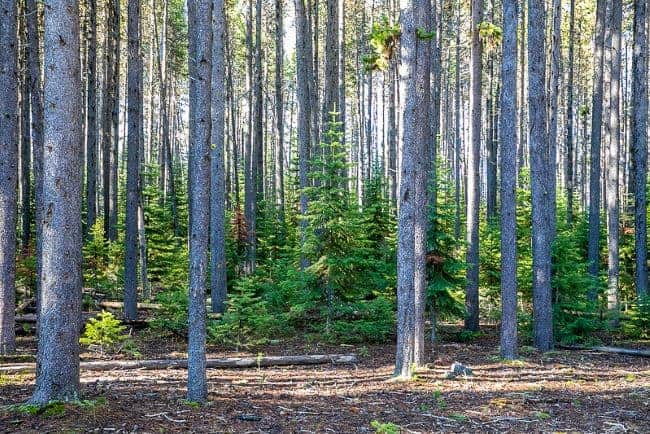
Why here specifically? West Thumb Geyser Basin is basically next door, and people have been making their way out there since the early 1900s. The old routine looked nothing like today’s—you’d wander the basin, eat your lunch, then hop a ferry across the lake to the hotel on the far shore. That ferry eventually went away, and at some point the park service decided the thermal areas needed breathing room from all the foot traffic. Suddenly the whole southern lakeshore had no real infrastructure to speak of. Grant Village filled it.
Getting it built wasn’t simple. The chosen site cut into serious grizzly habitat, and that forced planners to pull back from what had been a much more ambitious development. The bear made its point. What ended up getting built is smaller and quieter than originally envisioned. Which, honestly, suits the place. It does its job without making a spectacle of itself, and it never gets as slammed with visitors as the villages farther north.

Grant Village Visitor Center: Start Here
We always hit the Visitor Center first when we get to a national park. Twenty minutes every time, and it almost always makes the rest of the trip better. Grant Village is no different.
The visitor center runs from late May through September, 8 to 7 daily. Most of the exhibits revolve around the 1988 wildfires—still the biggest fire event in the park’s recorded history. But the exhibit doesn’t dwell on the burning. It’s really about what came next. Fire isn’t just destruction out here; it’s how the forest resets itself. The 1988 fires got as bad as they did because a brutal drought met the kind of winds that turned a dozen smaller fires into one thing. The regrowth you can see right around Grant Village now is basically a continuation of that same exhibit, just outside. It’ll be generations before the forest is fully back.
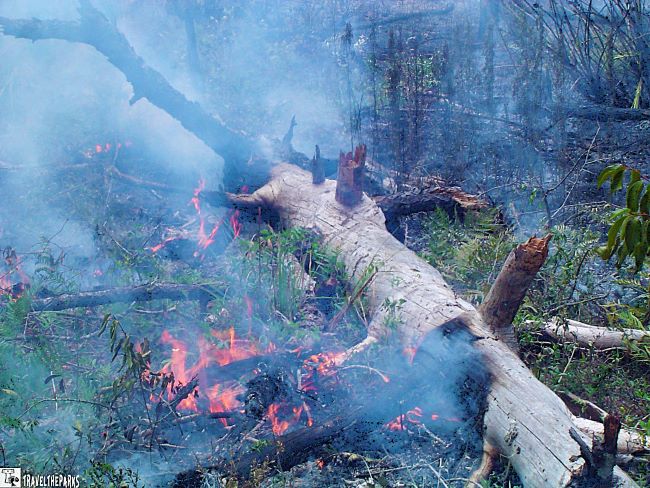
Before you leave, watch the short film,”Ten Years After the Fire.” It changes how you look at everything on the drive through the park. Worth sitting through completely.
For the practical stuff: backcountry permits, fishing licenses, passport stamps, Junior Ranger books for the kids. The bookstore is legitimately good—maps, field guides, books specific to Yellowstone. Useful on a rainy afternoon when nobody wants to be back in the car.

Yellowstone Lake: The Reason to Be Here
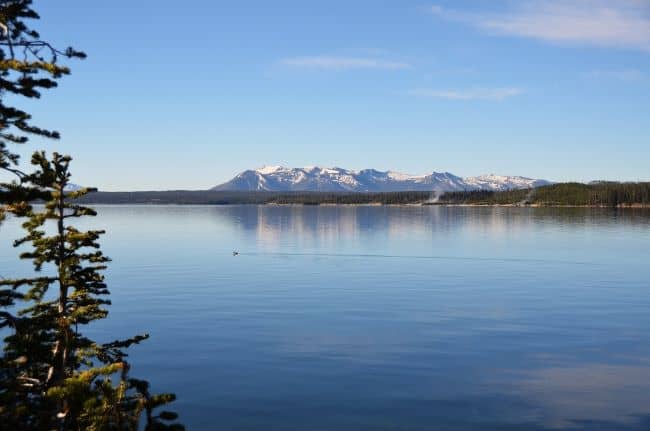
The numbers alone don’t quite do it justice, but here they are anyway: 7,733 feet above sea level, 136 square miles, nearly 400 feet at its deepest. Largest high-elevation lake on the continent. You read that and think, okay, big lake. Then you actually stand at the edge of it.
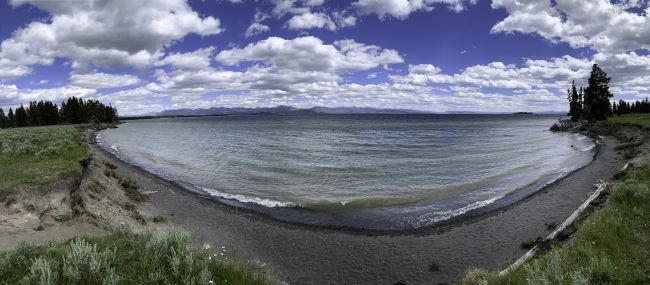
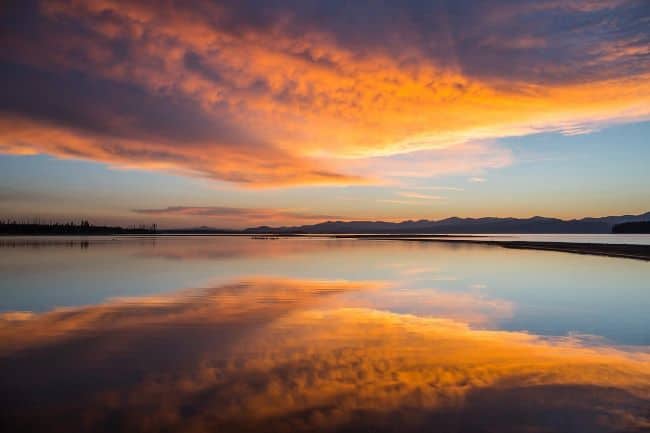
It doesn’t feel like a lake. The far shore is so distant that it disappears into the haze. On a still morning the water goes mirror-flat and the sky just… continues downward into it. No obvious seam. We’ve been to a lot of places in Yellowstone, and this view, right from the Grant Village shoreline, is one that stops you mid-sentence.
Walk the shore at sunset if you do nothing else. The pines come right down to the water, and the light gets ridiculous in the best way.
Then go to the campfire program. Nightly at 9:30, the amphitheater behind the campground. Ranger talks, actual fire, the whole thing. Dress warmer than you think you need to—it drops fast after dark — and bring bug spray because early summer mosquitoes here have opinions. We’ve caught these programs all over the park, and Grant Village’s are as good as any. Beats staring at a phone with one bar trying to load something that doesn’t matter.

Every morning we stayed at Grant Village, we walked the shoreline before breakfast. Mule deer and river otters were regular company. It is the kind of quiet that reminds you why national parks exist.
West Thumb Geyser Basin: Geysers on the Edge of a Lake
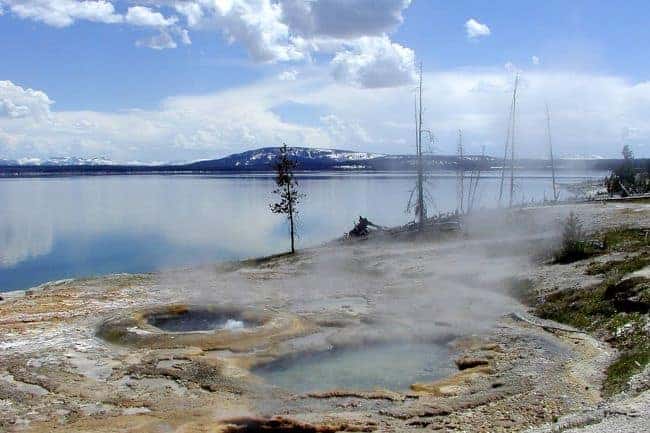
Drive five minutes south and you’re at West Thumb Geyser Basin. No other thermal area in the park looks like this. Everywhere else, the geysers and hot springs exist in their own contained world. Here they spill right down to the edge of Yellowstone Lake—some of them actually continue into the water, visible just under the surface as you walk past. Behind all of it, across the lake, the Absarokas. It’s a lot to take in at once.
There’s a boardwalk that loops through in a figure-eight. Do the whole thing. An hour, maybe a little less if you move. Get close to the pools when you can—the color is the thing people don’t expect. Deep blue at the center, then it shifts through green, then this warm orange-yellow rim where different bacteria have staked out their temperature preferences. It sounds like a science class description, but in person it looks almost artificial, like someone turned a dial too far.
The Fishing Cone—A Story Worth Knowing
The most famous feature at West Thumb is the Fishing Cone, a thermal spring that sits partly submerged in the lake. In Yellowstone’s early days, visitors discovered they could catch a trout from the lake and cook it by lowering it—still on the line—directly into the Fishing Cone’s superheated water. The practice was popular enough that early guidebooks mentioned it as a recommended activity. The park service eventually put a stop to it. Today the cone is relatively quiet but still impressive, and the story is exactly the kind of detail that makes Yellowstone’s history genuinely entertaining.

Hiking Near Grant Village, Yellowstone
Trailheads for some of the most rewarding hiking trails can be accessed from Grant Village. They are not the popular hiking routes one accesses around Old Faithful. The ones here are such that the visitor encounters moose before other visitors.
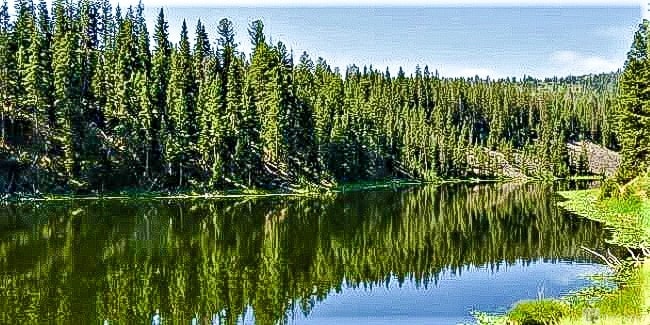
Shoshone Lake via Dogshead Trail — Moderate
So Shoshone Lake is the second biggest lake in Yellowstone, but hardly anyone talks about it. There’s no road to get there. You either hike in or kayak in from Lewis Lake. That alone keeps it from getting overrun.
The trailhead for Dogshead is about five miles south of Grant Village. The hike’s 5.8 miles round trip, mostly through forest. Takes maybe two or three hours at an easy pace. You can just turn around and come back, or make a longer loop if you take the Lewis Channel Trail.
And yeah, we found the lake at the end is totally worth it. Quiet, clear, feels like you’re way out there—even though you’re still in one of the busiest parks in the country.

Riddle Lake Trail — Easy
In our case, it would be an easy return hike of 4.8 miles. Green forests, open meadows, and some wetland areas are expected on your way. The terrain is flat, and we found it quite easy to navigate.
As for the wildlife, it could be called the home of moose. Another interesting thing about the location. Riddle Lake is said to be one of the best places to see waterfowl in the south of the park, especially ospreys, bald eagles, white pelicans, and trumpeter swans. Not far from the end of the lake, there is also a small sandy beach where we ate lunch.
One more thing — since you’re hiking in a bear management area, make sure you call the ranger station at Grant Village before you head out. They’ll tell you if the trail’s even open. Sometimes they close it temporarily if grizzlies are active.
And yeah, remember to bring bear spray. But don’t just carry it—actually know how to use it.
The trailhead’s about 2.3 miles down the South Entrance Road.
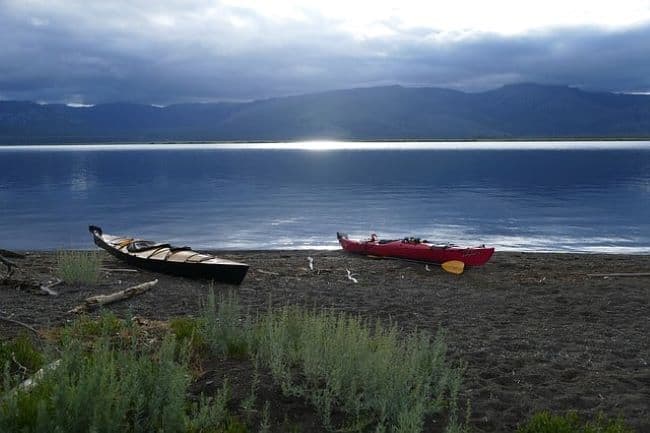
Kayaking Yellowstone Lake: The Best Way to See the West Thumb
Get on the water. That’s the one. We did a guided kayak from the marina with Kayak Adventures. Honestly, it’s the morning I think about most when that trip comes up.
Quick safety thing, some paddling basics, then you’re out there. Two-person kayaks. And the lake just—opens up. Standing on the shore, you know it’s big. Floating on it is something else entirely. We followed the western edge, West Thumb then Potts, steam coming off the water the whole way where the thermal stuff runs right underneath. Flat calm that morning. We barely had to work.
Stop over at the underwater geysers near West Thumb if you can. Looking straight down into that water from a kayak is weird in the best way. There’s no good way to describe it.
Our guide talked about the geology, the wildlife, and how the hydrothermal system works under the basin. Didn’t feel like a tour script. Lunch on a little beach, crouched over tracks in the sand trying to figure out what had been through. We saw eagles, ospreys, otters, elk, moose—the kind of list that sounds like you’re exaggerating until you realize you wrote it all down at the time.
What to Bring on the Water
- Water shoes or sandals you do not mind getting wet—you will step in the shallows getting in and out
- Neoprene socks in early summer when the water is very cold.
- Layers: long underwear, fleece, and rain jacket that can be added or removed as conditions change
- A dry bag for your lunch, phone, and camera
- Polarized sunglasses : the glare off the lake on a clear day is significant
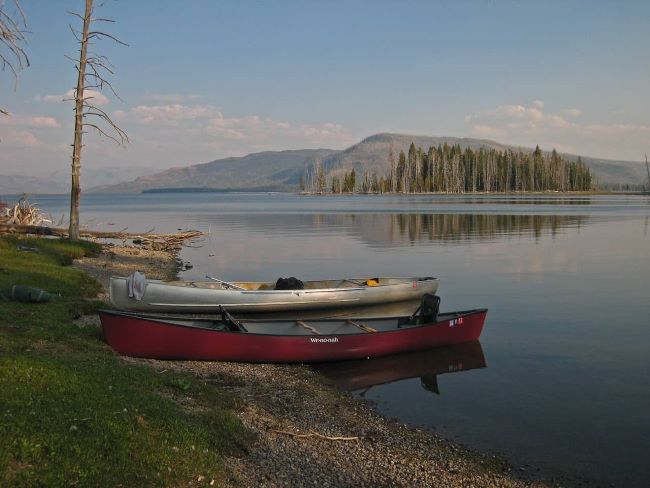
All boats on Yellowstone Lake require a permit, available at the marina and ranger stations. You can launch your own boat, rent one, or book a guided tour. Reservations are required for guided trips. Make them before you arrive.
Grant Village Amenities: What You’ll Find on the Ground
- Grant Village General Store: Ready-made deli meals, fresh produce, groceries, camping supplies, Yellowstone apparel, footwear, and a soda fountain with diner seating. The ice cream is non-negotiable after a long day on the trail.
- Grant Village Mini Store: Attached to the gas station for quick travel items and supplies on the go.
- Post Office: Mail your postcards from Yellowstone. It is a small thing that people genuinely appreciate receiving.
- Gas Station: Priced for convenience. Fill up before you arrive when possible, but it is here when you need it.
- Picnic Area: A well-shaded wooded picnic area near the campground with plenty of tables, resident chipmunks, and the kind of quiet that makes a packed lunch taste better than it has any right to.
- Marina: Boat launch, inspections, permits, guided tours, and fishing trip bookings. All boats entering Yellowstone waters require inspection before launching.
- Amphitheater: Evening ranger programs at 9:30pm. Free with park admission. Bring a blanket.

Grant Village Campground: Make It Your Base Camp
Big place. Over 400 sites. Popular for a reason.
It’s wooded, so you get shade and some privacy—which is good, because the sites are closer together than some people like.
No hookups. None. The park says RVs up to 40 feet, but if you’ve got a big one, good luck. Tent campers are fine.
Each site has a bear box, a grill over a fire pit, and a picnic table. Flush toilets everywhere. There’s even a dishwashing station.
Showers are in a separate building just outside the campground entrance. Same building has laundry. You get two shower credits per day per camping party. You can walk to the main area, but most people drive.
Book early. It fills up fast in July and August.

Grant Village Lodge: Honest Expectations, Good Results
Let’s be straight about what this place is and isn’t.
It’s not fancy. Not even close. The lodge has six two-story buildings, 50 rooms, and they were renovated in 2015. The rooms are clean. They work. They’re comfortable in that college dorm kind of way—you’ve got what you need, nothing you don’t.
So what are you getting in exchange for no luxury? You’re staying inside Yellowstone. That means quiet mornings before the crowds roll in. Wildlife hanging around the lake before breakfast. You can be at West Thumb for sunrise without a long drive. Cell service is spotty everywhere in the park, honestly, and that’s kind of a good thing. A few days of actually unplugging somewhere this beautiful beats Wi-Fi any day.
If you want more character, go find one of those old rock cabins the Civilian Conservation Corps built—those are elsewhere in the park. But if you just want a solid hotel room on the south end of Yellowstone Lake, Grant Village Lodge works just fine.

Dining at Grant Village: Two Good Options
There are two options for dining in the village: the Lake House and the Grant Village Dining Room.
The Lake House
This is the more laid-back of the two restaurants, and honestly, it’s the one we keep going back to. It’s a short walk from the lodge, right on the shore of Yellowstone Lake. The breakfast views are ridiculous—almost distracting. The food is straightforward American stuff, done right. Big portions. Prices are reasonable for a national park. Get there early because it fills up fast.
Grant Village Dining Room
The dining room is the fancier option. Pricier, too. It’s a little more ambitious with the menu. Reservations are a good idea, especially in July and August. The room itself is big and has lake views. The wine and craft beer list is actually worth a look. We always try to order local wines and regional beers when we travel, and they’ve got some solid choices here. Food’s consistently good. Just be ready to spend a bit more.

Tips for Your Visit to Grant Village, Yellowstone
- Book lodging and campsites as early as possible. Yellowstone accommodations sell out months in advance for peak summer dates.
- Download offline maps before you arrive. Cell service in the southern park is unreliable at best.
- Carry bear spray on every trail and know how to deploy it. This is grizzly country. It is not a suggestion.
- Check trail conditions at the visitor center before heading out. Riddle Lake and other bear management areas can be seasonally restricted.
- Bring layers regardless of the season. Yellowstone weather changes fast at elevation, and the evenings are cold even in midsummer.
- Get up early. The first two hours after sunrise are when wildlife is most active and the crowds are thinnest.
- Attend the evening campfire program at the amphitheater. It is free, informative, and a genuinely good way to end a day in the park.
- Gas up in Jackson or another gateway town before entering the park when possible.
- If you are fishing, pick up your Yellowstone fishing license at the visitor center. Regulations here are different from standard Wyoming state fishing rules.
- Get your national park passport stamped at the visitor center before you leave.

Mileage and Driving Times to Grant Village
- From Jackson, WY 2.5 hours 77-miles
- From Old Faithful, 1 hour 20-miles
- Mammoth Hot Springs 1.5 hours, 49-miles
- West Park Entrance 1.25 hour 48-miles
- From East Park Entrance, 1.25 hours, 52-miles
- From Salt Lake City, UT 6.5 hours 370-miles
- Idaho Falls, ID 3 hours 156-miles
- Bozeman, MT 2.25 hours 110-miles
Final Thoughts on Location Spotlight: The Beauty of Grant Village in Yellowstone
Grant Village is not the most glamorous address in Yellowstone. It will not show up on many “best of” lists alongside Old Faithful and the Grand Canyon of the Yellowstone. That is part of what makes it worth choosing.
What it offers is something the busier nodes of the park struggle to provide: a quiet, well-positioned base from which Yellowstone opens up at its own pace. The lake is at your door every morning. West Thumb is ten minutes away. Old Faithful, Canyon, and the Grand Teton are all within comfortable reach. The wildlife does not thin out just because there are fewer people around to watch it.
Have you been to Grant Village? Share what you liked best? We would love to hear from you! Please comment below.