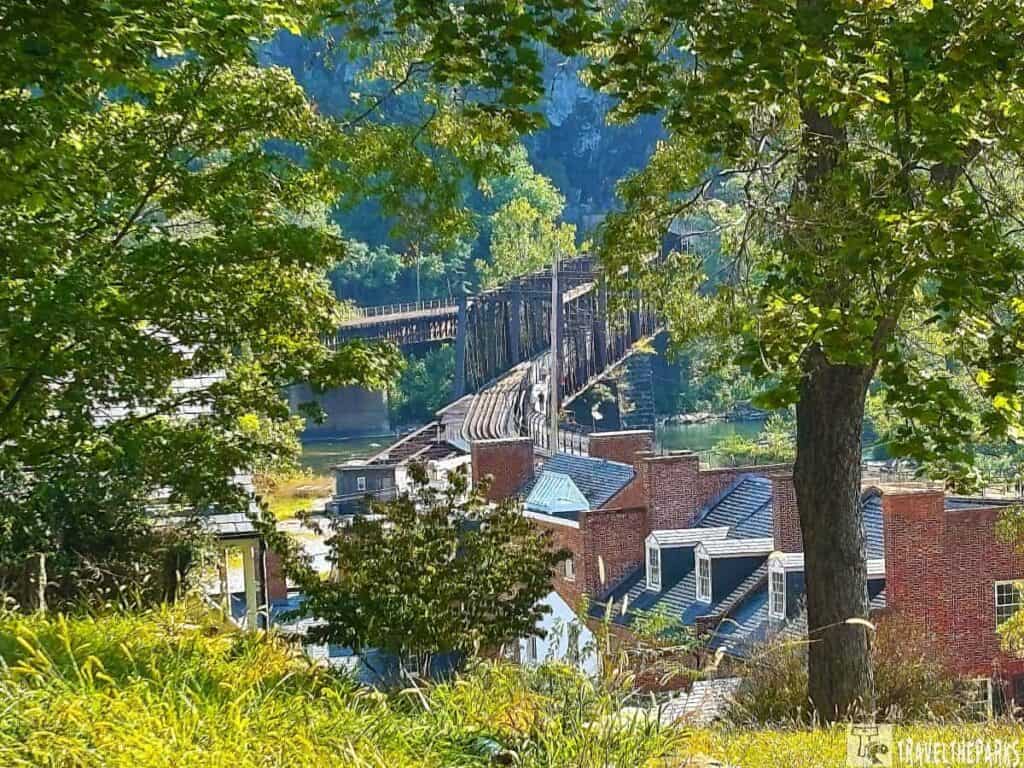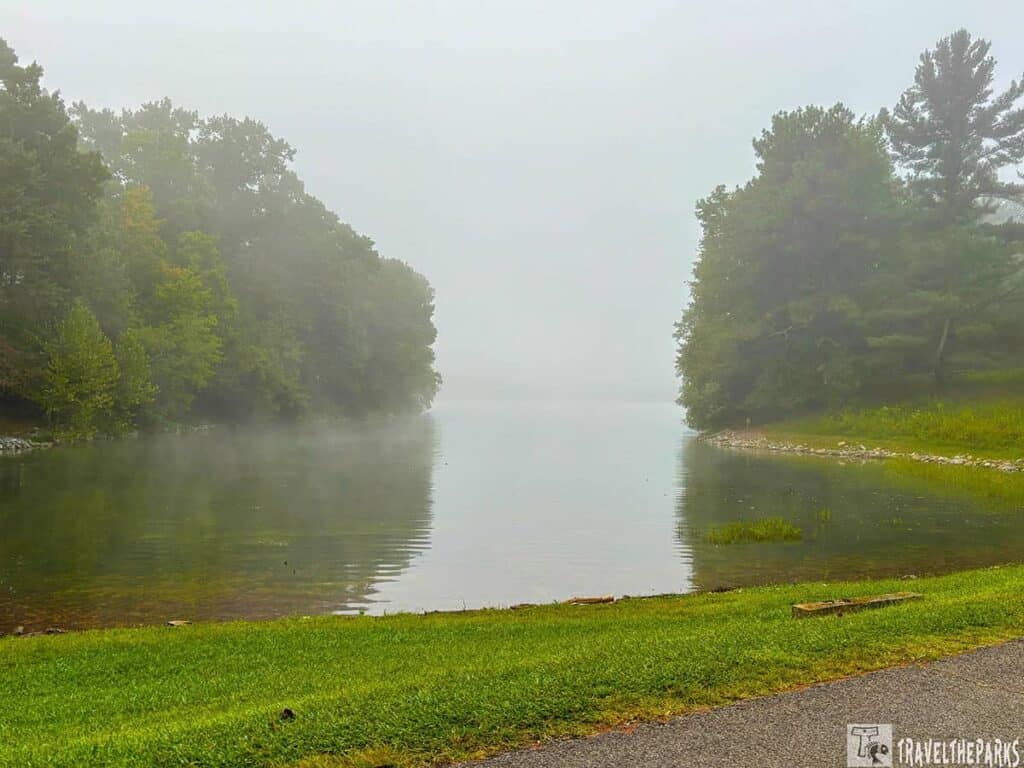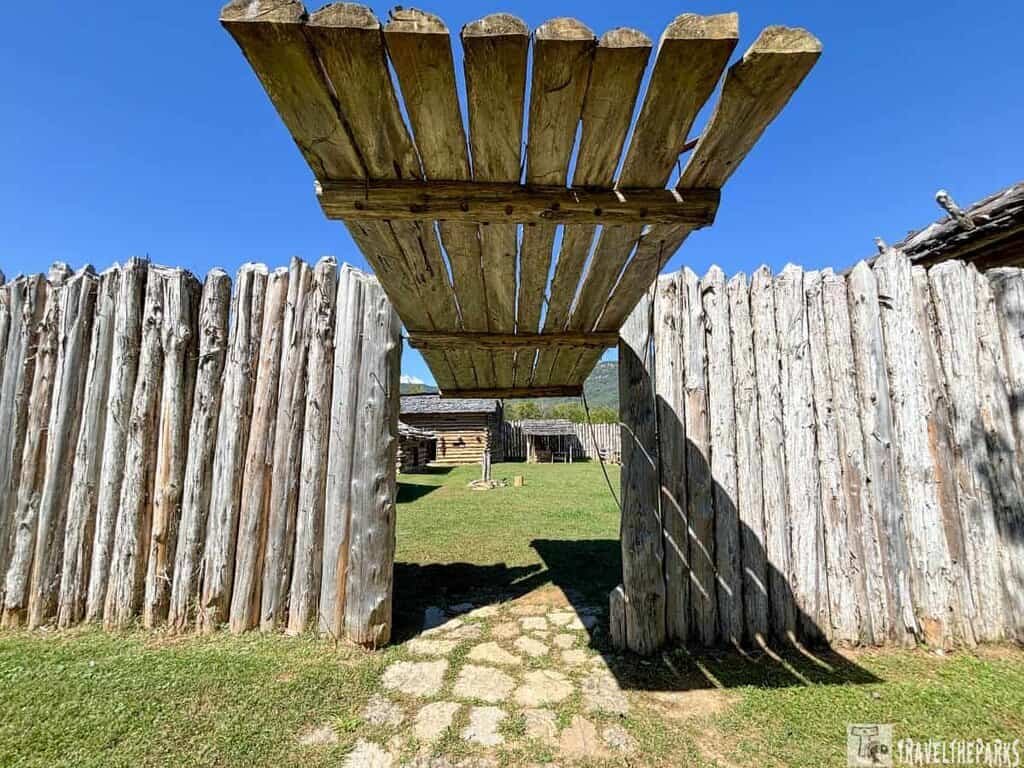
There’s a moment, somewhere between wandering through the wooden raised door into the fort and catching the smell of wood smoke drifting from an open hearth, when the 21st century simply fades away. That’s what Martin’s Station in Wilderness Road State Park does to you — and honestly, we weren’t prepared for how much we enjoyed it.
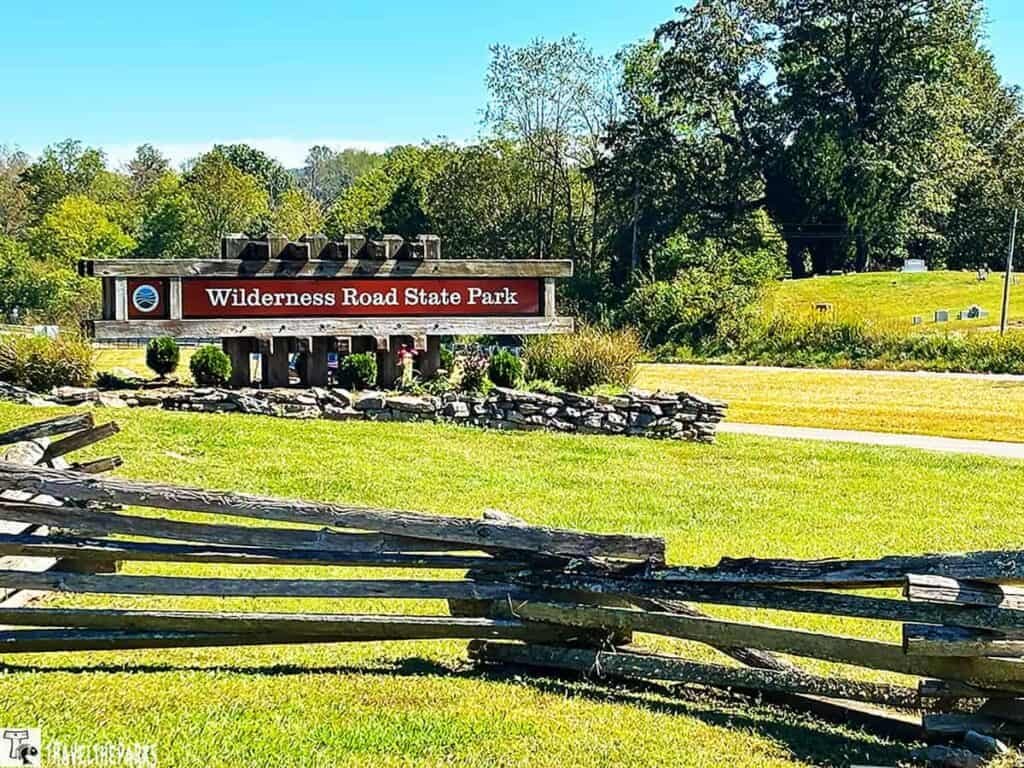
Tucked into the far southwestern corner of Virginia, right at the point where the state brushes up against Kentucky and Tennessee, Wilderness Road State Park sits on one of the most historically significant stretches of land in all of America. This is where Daniel Boone passed through. Where Joseph Martin built his frontier outpost. Where more than 300,000 settlers made the leap from the known world into the wild unknown. And today, it’s where your family can step right into that story.
If you’re planning a trip to Cumberland Gap National Historic Park, add a side trip to Martin’s Station, Virginia. The frontier reenactment experience is an extraordinary Wilderness Road State Park day trip. This place delivers something that very few historic sites can: the genuine feeling of being somewhere that actually mattered.
This post may contain affiliate links, meaning if you purchase something through one of these links, we may earn a small commission at no extra cost to you! Read the full disclosure policy here.
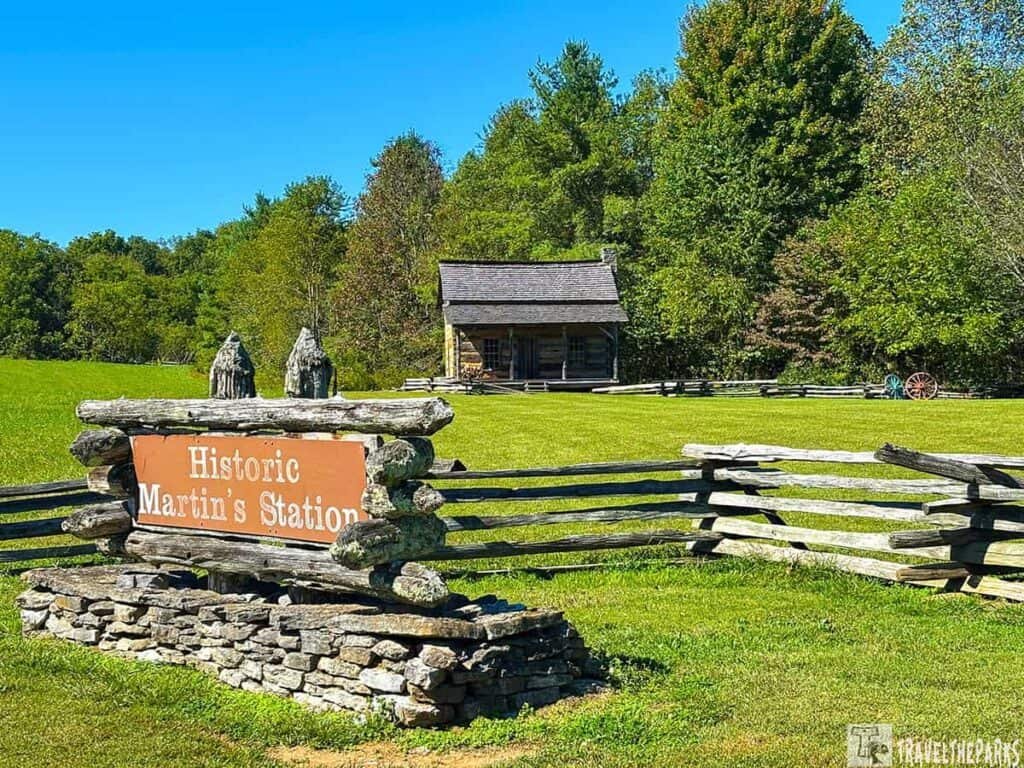
Table of Contents
The Story Behind Martin’s Station
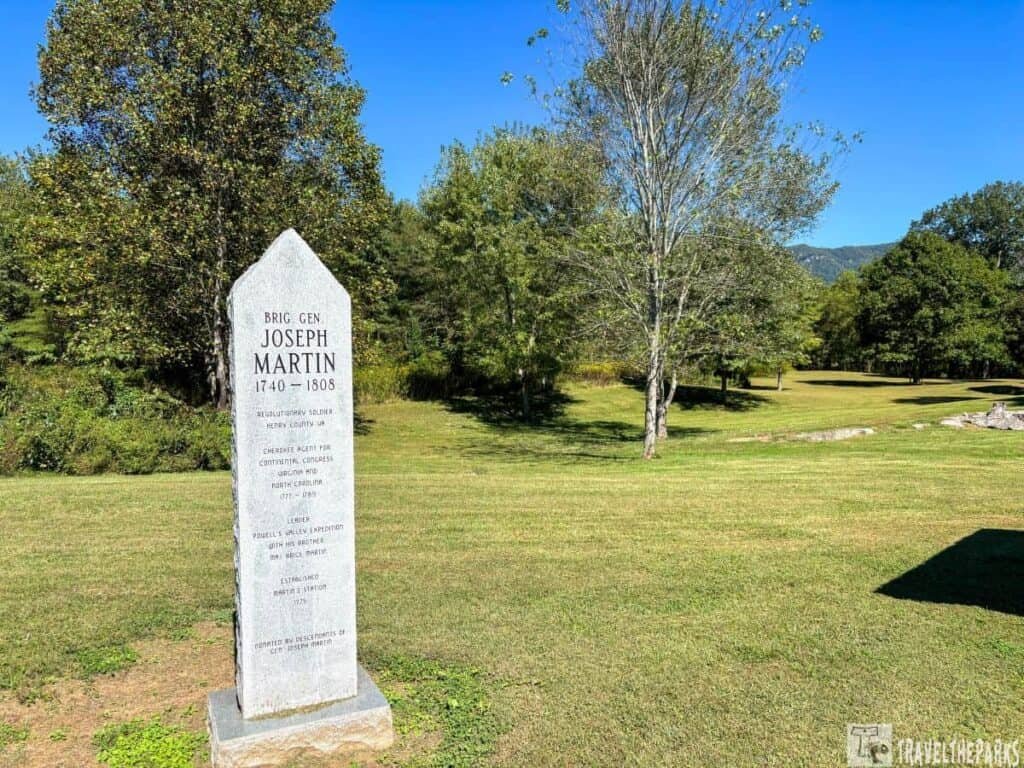
Most people know Daniel Boone. Fewer people know Joseph Martin — and that’s a shame, because Martin’s story is extraordinary. In 1769, Martin penetrated as far as the present Powell Valley in southwestern Virginia and constructed the farthest-out western frontier fort in the entire country. It was the sole fort for the entire distance of some 200 miles along the Wilderness Road connecting Virginia and the Kentucky settlements. It was a lonely but vital lifeline for all the pioneers seeking the West.
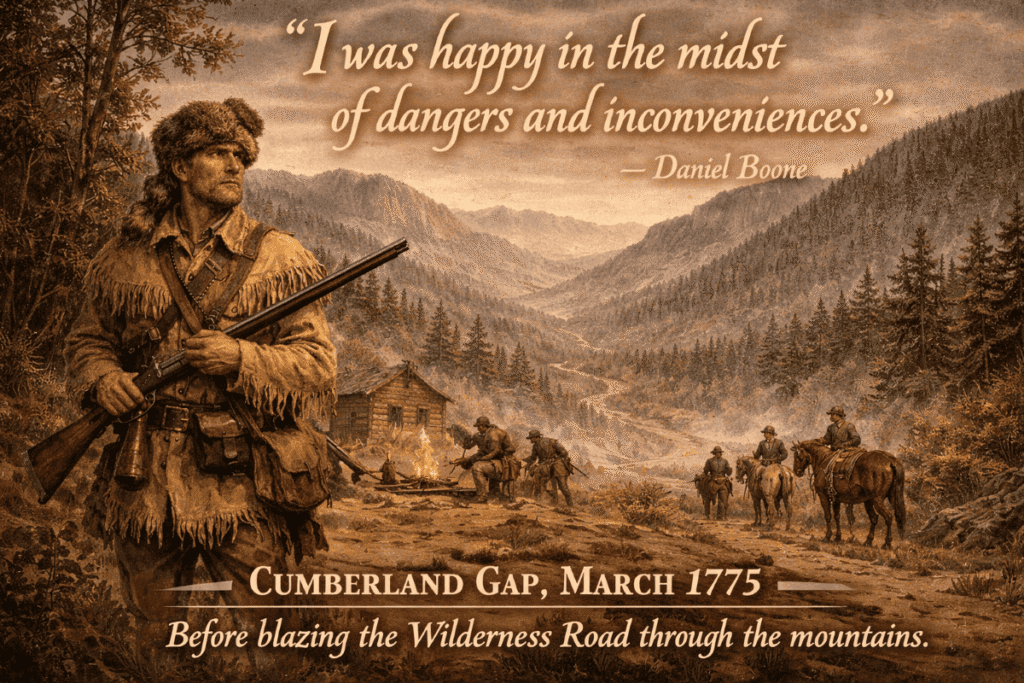
The Cherokees burned it down several times. Martin rebuilt it. He built five forts in total, forging relationships with Native American leaders and serving as Virginia’s Superintendent of Indian Affairs. His neighbor and friend was Patrick Henry. His association with Daniel Boone was close, as indicated by the fact that in March 1775, Boone stayed at Martin’s Station to gather 40 to 50 more pioneers before continuing through the Cumberland Gap into Kentucky.
Today’s reconstructed fort stands just a few miles from the original site in Rose Hill, Virginia. It was built starting in 2000 under the guidance of park manager Billy Heck, a lifelong reenactor who had dreamed of bringing Martin’s Station back to life for years. The result is widely considered the most authentic reconstructed frontier fort in America.
Planning Your Day Trip: Know Before You Go: Martin’s Station, Virginia
Ready to embark on your own adventure? Here’s everything you need to know to plan your visit.
- Location: Wilderness Road State Park, 8051 Wilderness Rd, Ewing, VA 24248
- Park Hours: Martin’s Station living history Virginia programs run from May 1 through November 1, Wednesday through Sunday, 10 a.m. to 5 p.m. The station is closed Mondays and Tuesdays during the regular season, with exceptions for Memorial Day and Labor Day. The visitor center is open daily from 8 a.m. to 4 p.m. from mid-March through late December. Always check the official park calendar before you go.
- Admission and Parking: There is a small parking fee upon entry — check the Virginia State Parks website for current pricing, as fees are updated periodically. The Martin’s Station living history museum is included with park admission. It’s a genuinely affordable family outing, given how much there is to do and see.
- Best Time to Visit: Spring and fall are magical here. The valley scenery is stunning in October, and the fall encampment events bring extra reenactors, demonstrations, and activities. Summer visits are wonderful too, but come early in the day — the valley can get warm by afternoon and the trails are more enjoyable in the cooler morning hours.
- Pet Policy: Leashed pets are generally welcome in Virginia State Parks on trails and in most outdoor areas. We’d recommend calling ahead at 276-445-3065 to confirm the pet policy specifically for the living history areas on the day of your visit, as reenactment events may have specific guidelines.
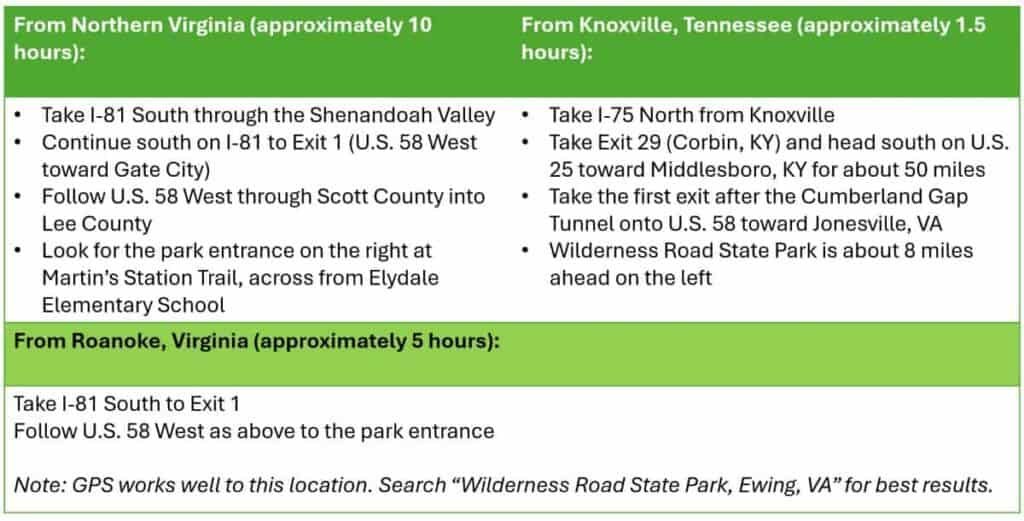
Getting There: Directions to Wilderness Road State Park
The park is located at 8051 Wilderness Road, Ewing, VA 24248 — right at the intersection of Routes 58 and 923, five miles west of Ewing and about 10 miles east of Cumberland Gap National Historical Park.
Fair warning: this is southwestern Virginia, which means it’s beautiful and remote. Plan your drive time accordingly and enjoy the scenery — the approach through Powell Valley is spectacular.
What to See, Do, and Experience at Martin’s Station in Wilderness Road State Park
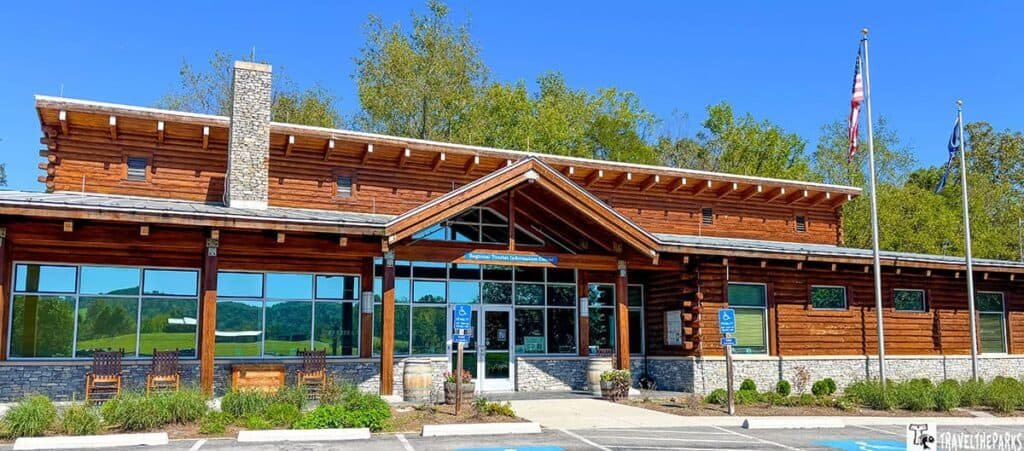
Start at the visitor center
Don’t skip this. Seriously. Before you head out to the fort, step inside and watch “Wilderness Road, Spirit of a Nation,” an award-winning 18-minute docudrama that tells the full story of the Wilderness Road, Joseph Martin, and Daniel Boone. We went in thinking we’d give it a quick glance and stayed for every minute. It sets the stage for everything you’re about to see and gives the kids context that makes the living history experience land so much harder. The visitor center also has a frontier museum and a gift shop with genuinely unique regional items.
Martin’s Station: The Fort Itself
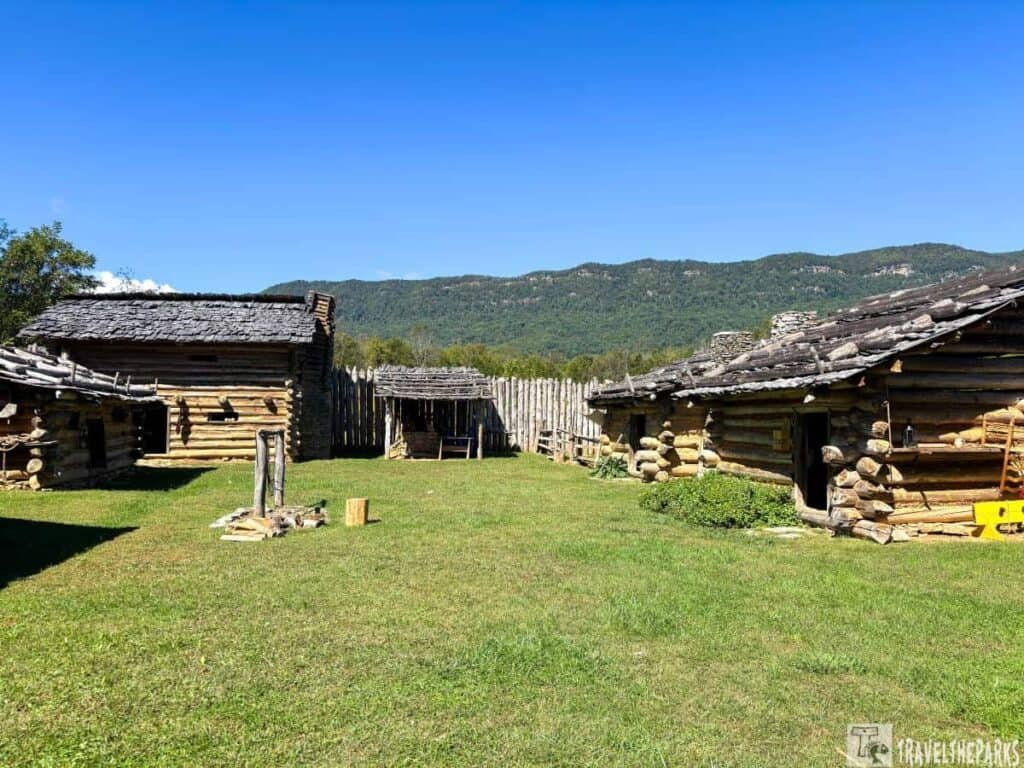
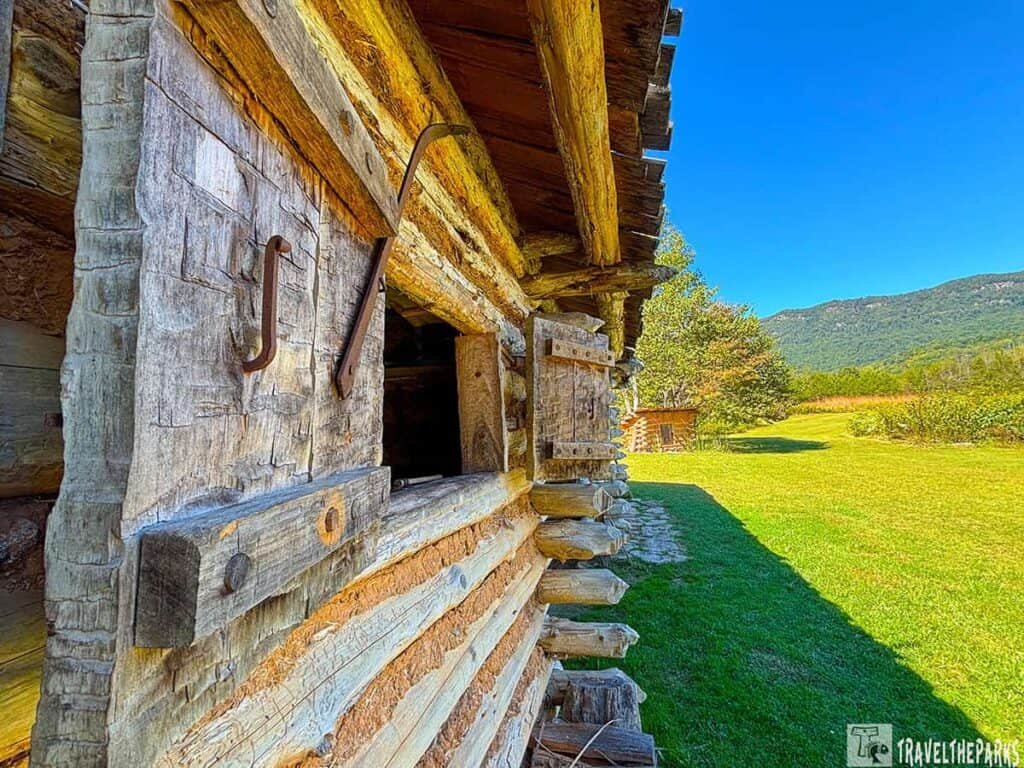
This is the heart of the Martin’s Station historical experience, and it earns every bit of the hype. Walk through the gate and you’re in a fully reconstructed 1775 frontier outpost — log cabins, a blockhouse, a kitchen, a blacksmith area, period furnishings, and costumed interpreters who inhabit the place like they’ve never left.
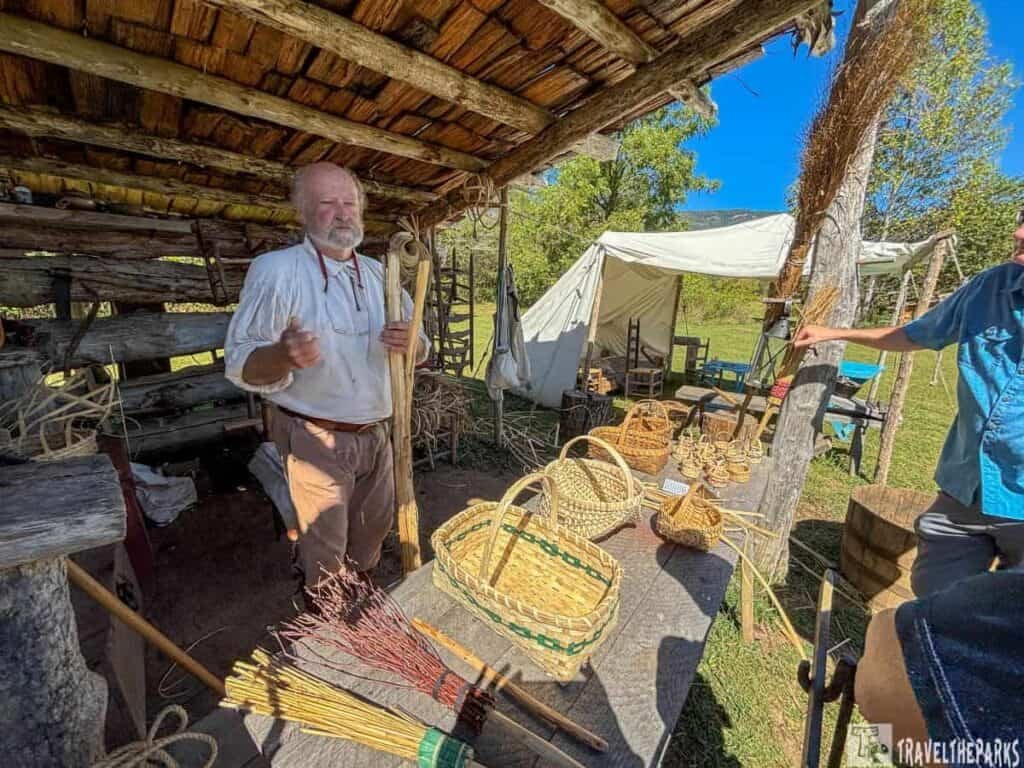
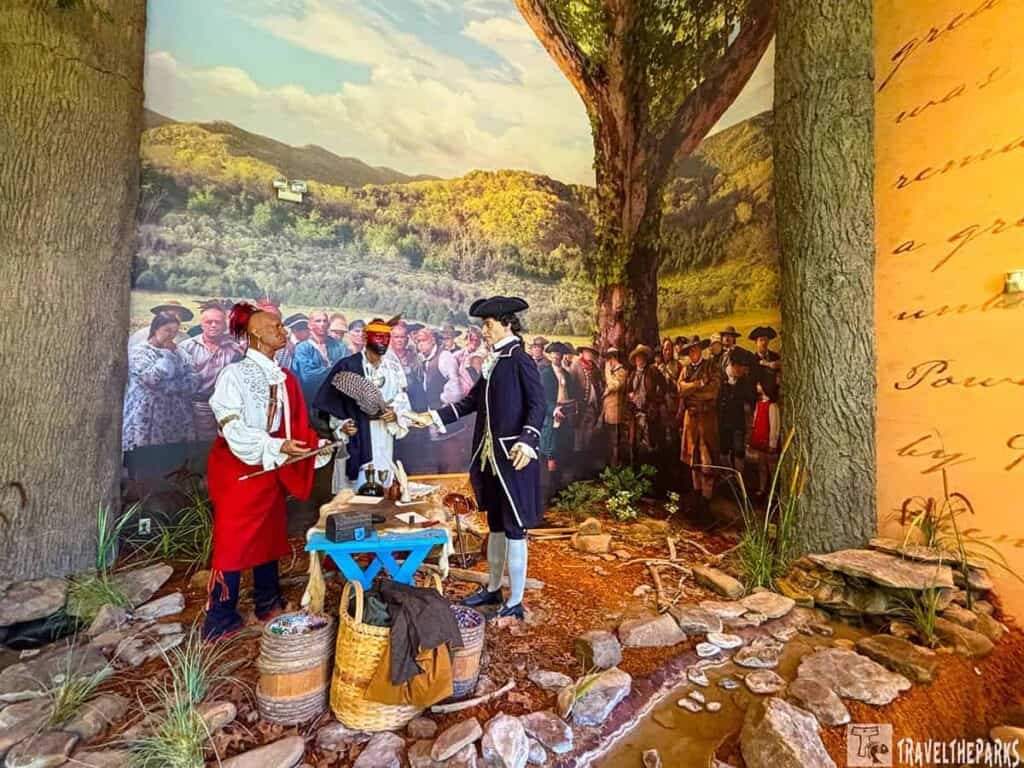
What makes this different from a typical museum is the human element. The interpreters here don’t recite scripts. They answer questions, demonstrate skills, and share stories with the kind of detail that only comes from people who genuinely love this history. We watched a blacksmith work a portable forge, talked with a woman spinning fiber by hand, and listened to an interpreter explain the Cherokee perspective on the settlers pushing through the Cumberland Gap. It was one of those rare experiences where learning felt effortless.
- Open-hearth cooking demonstrations: Watch period meals prepared over an open fire using tools and techniques from 1775. The smells alone are worth the visit.
- Blacksmithing: The sound of a hammer on an anvil echoes through the fort. Watch skilled craftsmen work as they would have on the frontier.
- Fiber arts: Spinning, natural dyeing, and weaving demonstrations show the patient, skilled work that kept frontier families clothed.
- Militia drills: During special events, watch volunteers in period uniform demonstrate the military discipline of frontier soldiers.
- Cherokee and Native perspectives: Some interpreters share the indigenous side of the story — the Powell Valley was Cherokee land, and that history is part of the full picture.
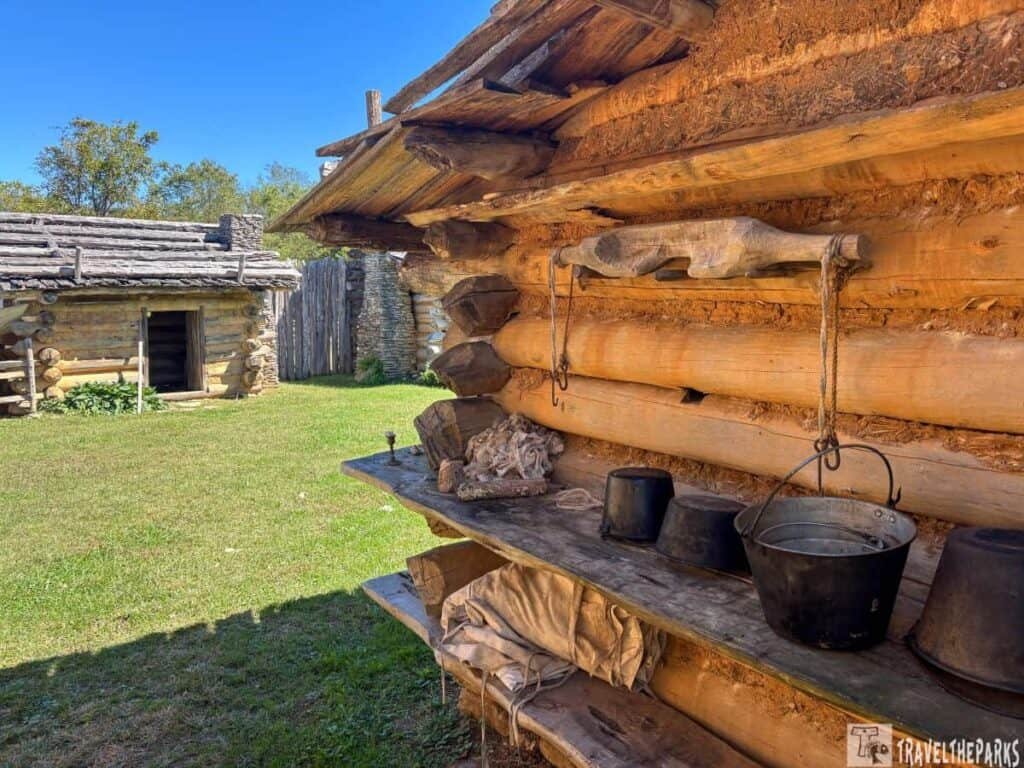
💡 Did You Know? Martin’s Station was the only outpost along the Wilderness Road between Virginia and the Kentucky settlements — a stretch of roughly 200 miles of wilderness. Every pioneer heading west passed through or near this fort. At its peak, Daniel Boone himself stopped here in March 1775 to pick up 40 to 50 additional pioneers before pushing through the Cumberland Gap toward Kentucky.
The Wilderness Road Trail
If you’re an avid hiker like we are, you’ll love the Wilderness Road Trail. The challenging route runs 8.5 miles. This trail connects the park directly to Cumberland Gap National Historical Park. Just imagine you are walking the same ground that 300,000 pioneers crossed in the late 1700s. It’s a real eye-opener when you realize the history of this trail. The trail is open to hikers, bikers, and horseback riders. Once you reach Cumberland Gap, you’ve got access to another 50-plus miles of trails. That is if your legs are still up to the challenge.
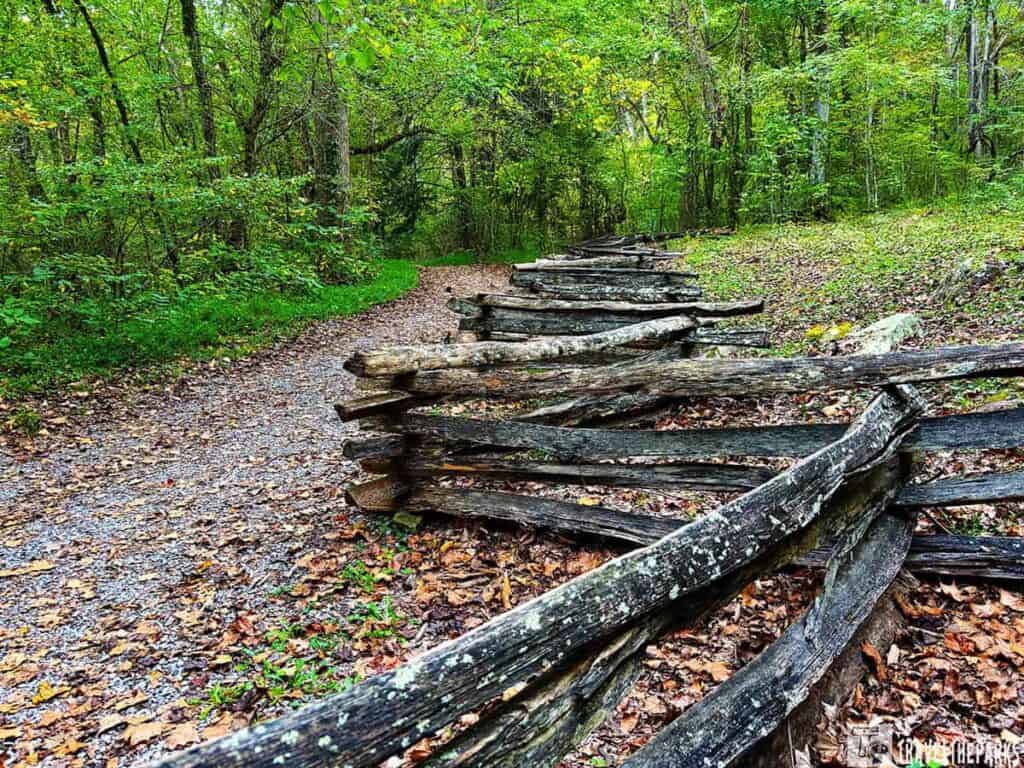
If a full 8.5 miles isn’t what you enjoy, don’t worry. The 0.9-mile Pioneer Trail winds past the fort with views up to the White Rocks that are worth every step, and the 1.1-mile Fisherman’s Loop follows Indian Creek, which is stocked with brown and rainbow trout. That one’s a favorite for families with younger kids.
Wildlife — Including Real, Actual Bison
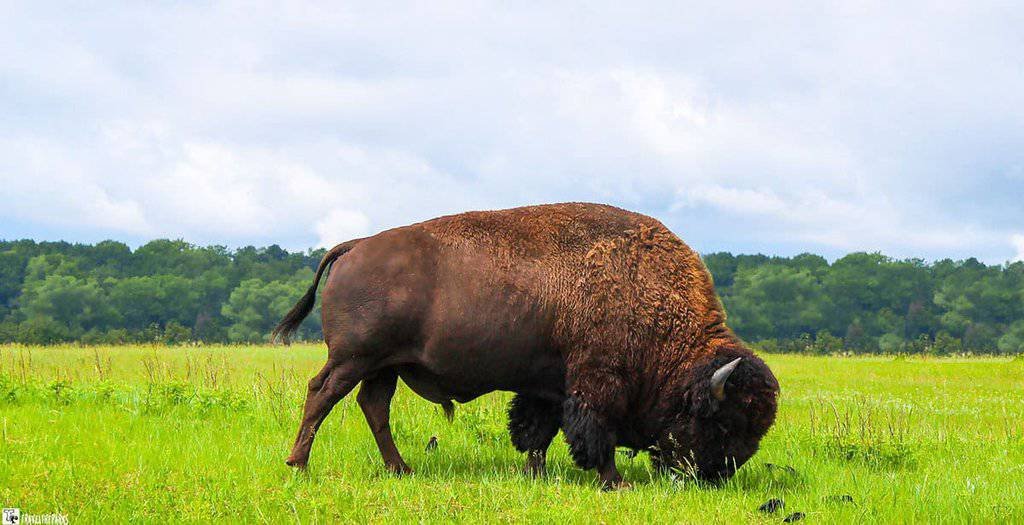
We weren’t expecting this, and it absolutely made our day: there are bison here. A small herd grazes right near the park entrance. It’s one of those quietly spectacular moments when you see a herd of bison in a mountain valley with a ridgeline rising up behind them. Beyond the bison, we also saw deer on the trail, heard wild turkeys in the treeline, and saw osprey near the creek. The Wilderness Road Trail is also a designated stop on the Virginia Birding and Wildlife Trail, so if you’re a birdwatcher, be sure to bring binoculars.
The Nature Center
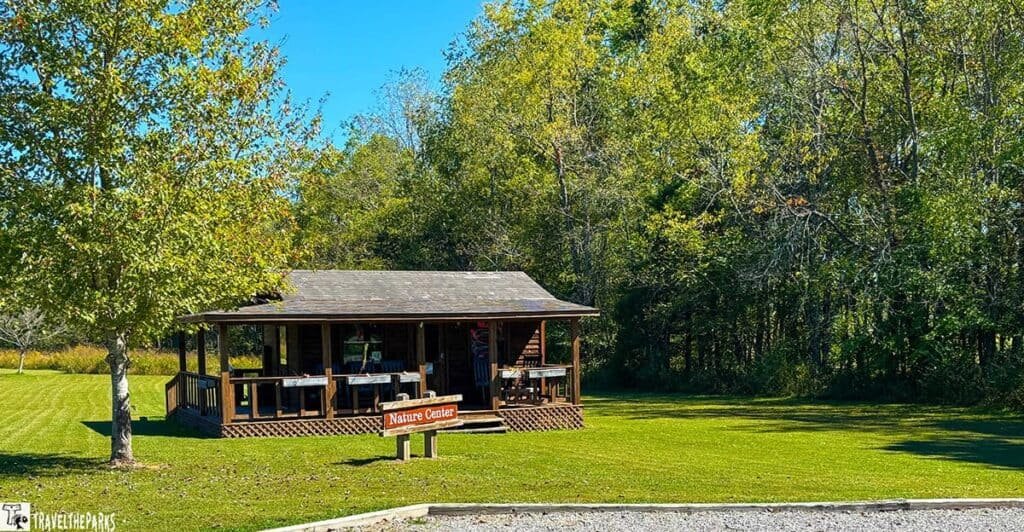
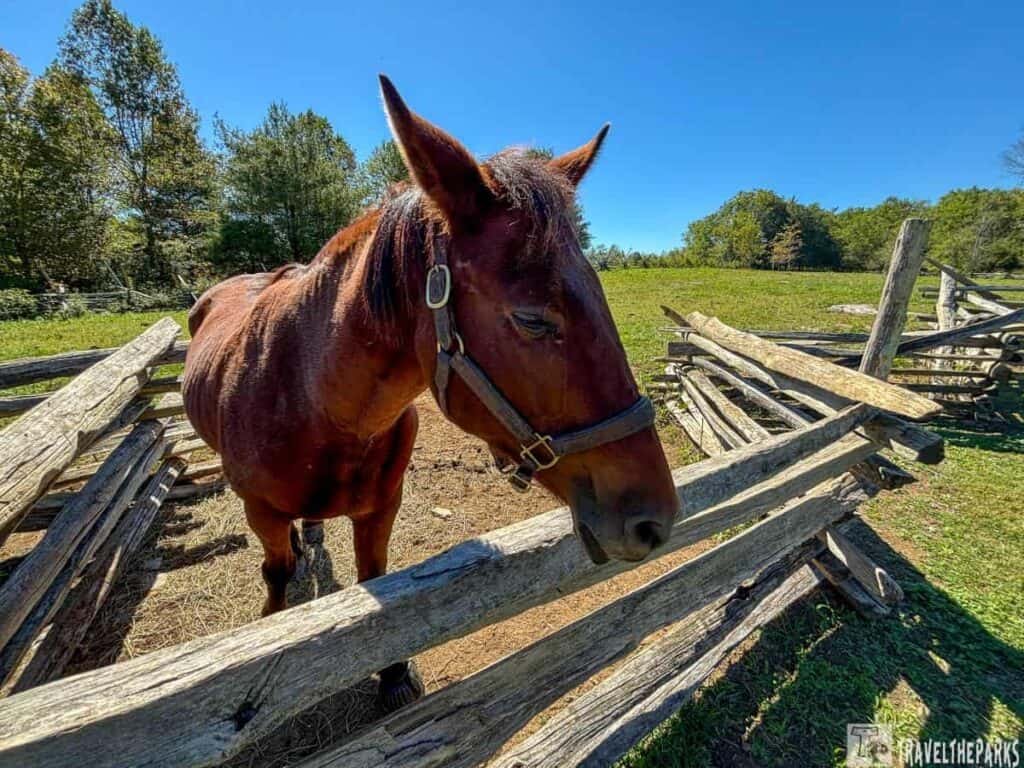
This one’s easy to walk right past, so we’re flagging it: the Nature Center sits just behind the visitor center and is open Fridays and Saturdays from 10 a.m. to 4 p.m., April through October. Inside, we found native animal pelts and skulls. We saw some eager young learners exploring items with their hands. We later observed them participating in guided hikes and craft activities, both facilitated by a nature interpreter.
Special Events Worth Planning Your Trip Around
The park runs a solid calendar of events throughout the year, and if you can time your visit around one of these, do it.
- Virginia: America’s First Frontier (May): The big one. More reenactors, more demonstrations, and the kind of energy that turns a good visit into a great one.
- Martin’s Station Fall Encampment (October): Step into an 18th-century harvest full of blacksmithing, gunsmithing, open-hearth cooking, and militia drills. Fall leaves frame the scene. We joined right in on this one.
- Wilderness Road Heritage Festival (October): Handmade Appalachian crafts, live music, and cultural demonstrations leaning into the deeper story of Southwest Virginia.
- A Frontier Christmas (December): The second Saturday in December. Simple, candlelit, and surprisingly moving — the holiday season as it actually looked in 1775.
Make a full day of it
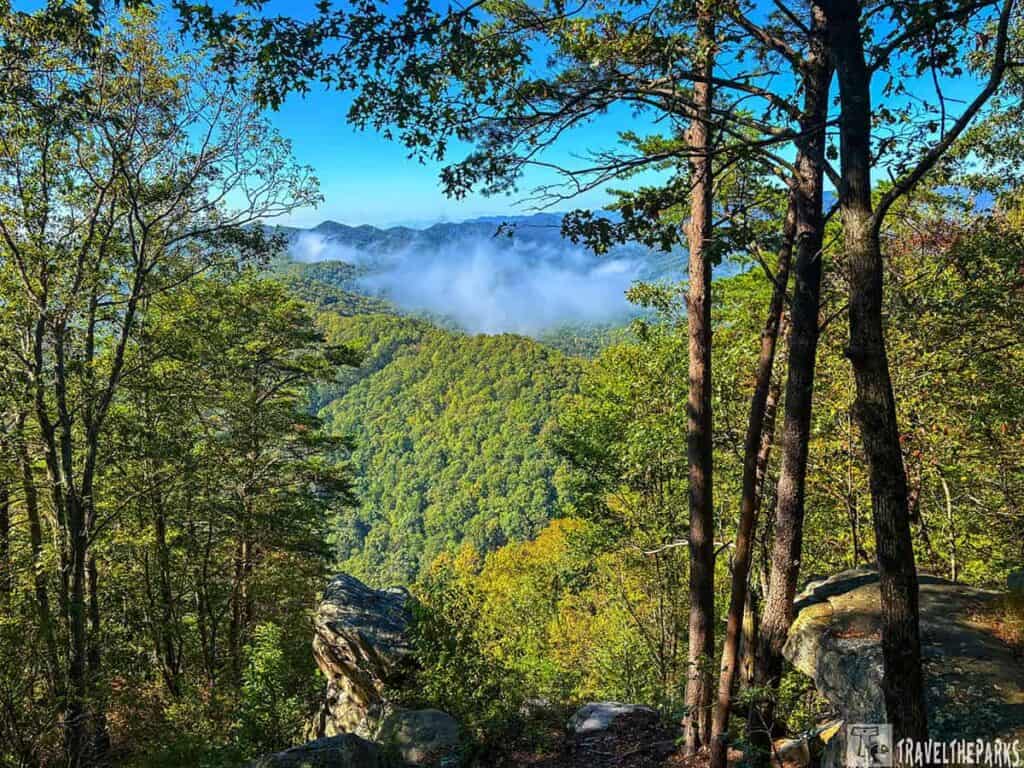
Ten miles west of the park sits Cumberland Gap National Historical Park, and combining the two makes for one of the best history-and-nature days we’ve had anywhere in the region. The Pinnacle Overlook at Cumberland Gap puts you 1,000 feet above a view that stretches into three states. Standing up there after a morning at Martin’s Station, thinking about the settlers who came through that gap, is something we still talk about.
Back at Wilderness Road, there are picnic shelters near the fort and along the trail, a 100-seat amphitheater that makes a lovely place to slow down, and undeveloped group camping if you want to turn your day trip into an overnight. Call the park at 276-445-3065 for camping reservations.
Final Thoughts: Martin’s Station in Wilderness Road State Park: Where Virginia’s Pioneer Past Comes Alive
We’ve been to a lot of living history sites. Some are polished and a little hollow. Martin’s Station is neither. The fort was built by people who cared about getting it right, and that shows in every log and every roofline. The interpreters are there because this history genuinely matters to them, and that comes through in every conversation. And the setting — a mountain valley that looks today much as it did when Joseph Martin first made camp here in 1769 — does something that no exhibit case or diorama ever could.
We left with more questions than we arrived with. That’s always the sign of a great visit.
If you’re anywhere within a reasonable drive of southwestern Virginia, put this one on your list. Go on a weekend when the reenactors are present, give yourself at least half a day, and let the place work on you. Martin’s Station in Wilderness Road State Park has a way of staying with you long after the drive home.
Have you visited Martin’s Station at Wilderness Road State Park? We’d love to hear what you thought — drop a comment below and tell us what you discovered.