Let’s be real: road trips aren’t always glamorous.
Between the breathtaking sunsets and wind-in-your-hair moments, there are flat tires, delayed schedules, and those unexpected hiccups that make you question every life choice that led you there. On our Midwest road trip, we found ourselves dealing with a failing set of trailer tires—not exactly the highlight of our adventure.
But here’s the thing about detours: sometimes they lead you exactly where you need to be.
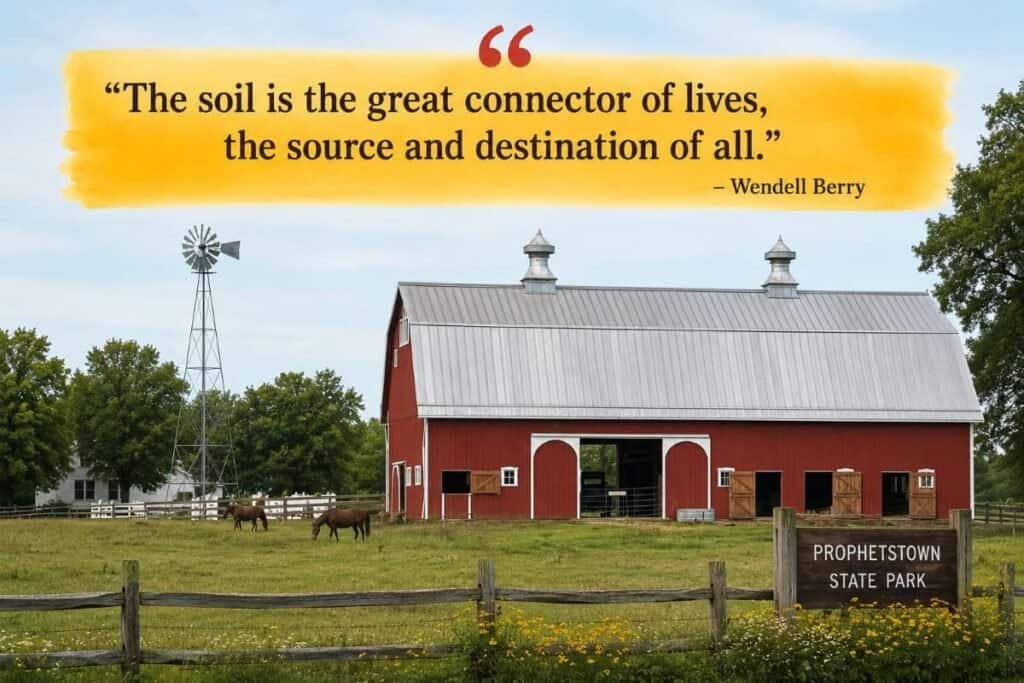
Prophetstown State Park was already on our radar as a quick overnight stop. But the Farm at Prophetstown State Park? That was the surprise we didn’t see coming—and honestly, it became one of the most memorable parts of our visit.
This post may contain affiliate links, meaning if you purchase something through one of these links, we may earn a small commission at no extra cost to you! Read the full disclosure policy here.
Table of Contents
Step Back in Time at The Farm at Prophetstown
Tucked within the park’s prairie landscape, The Farm at Prophetstown State Park offers a glimpse into rural Indiana life during the 1920s. This living history farm combines historic buildings, heirloom gardens, farm animals, and hands-on demonstrations to show visitors how families lived and worked nearly a century ago.
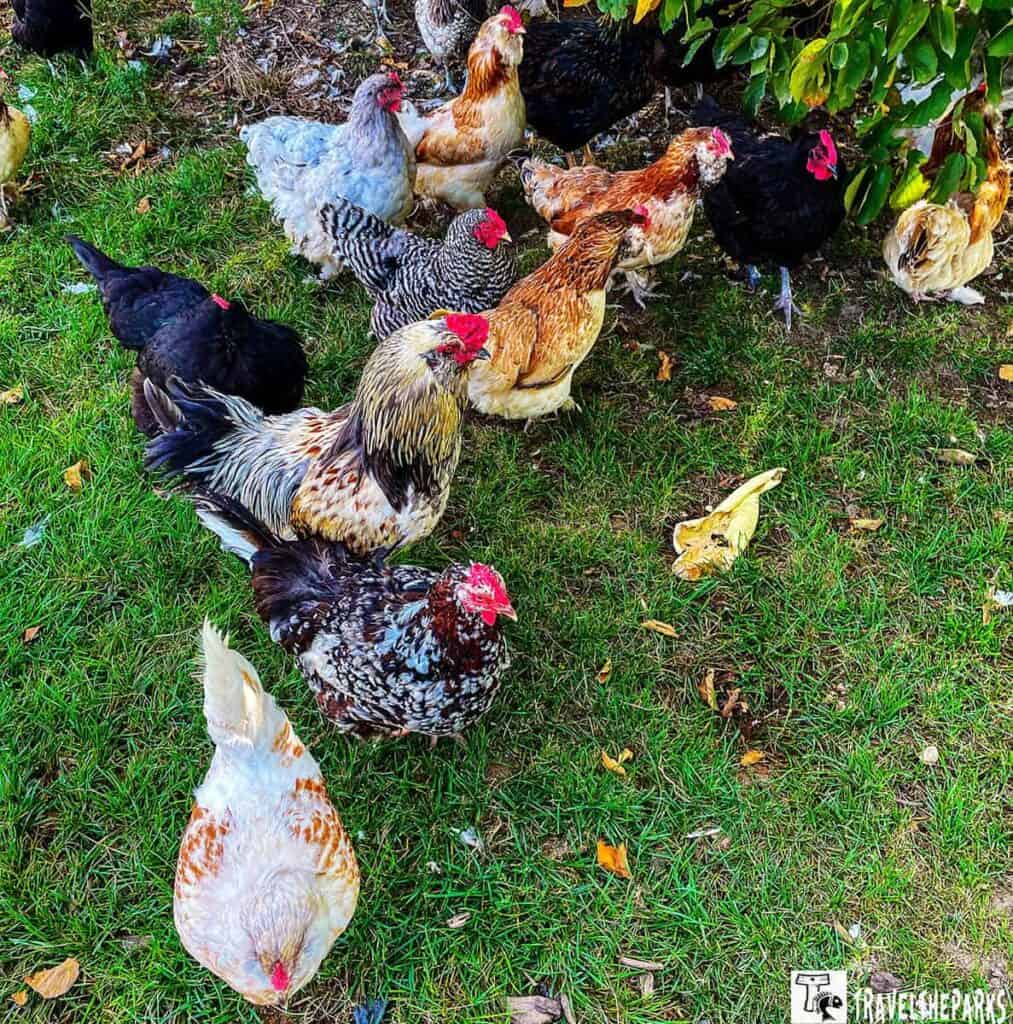
Think heirloom gardens filled with vegetables, historic homes furnished down to the smallest details, and farm animals with plenty of personality. The chickens came running the second I bent down—clearly, they know a soft touch when they see one.
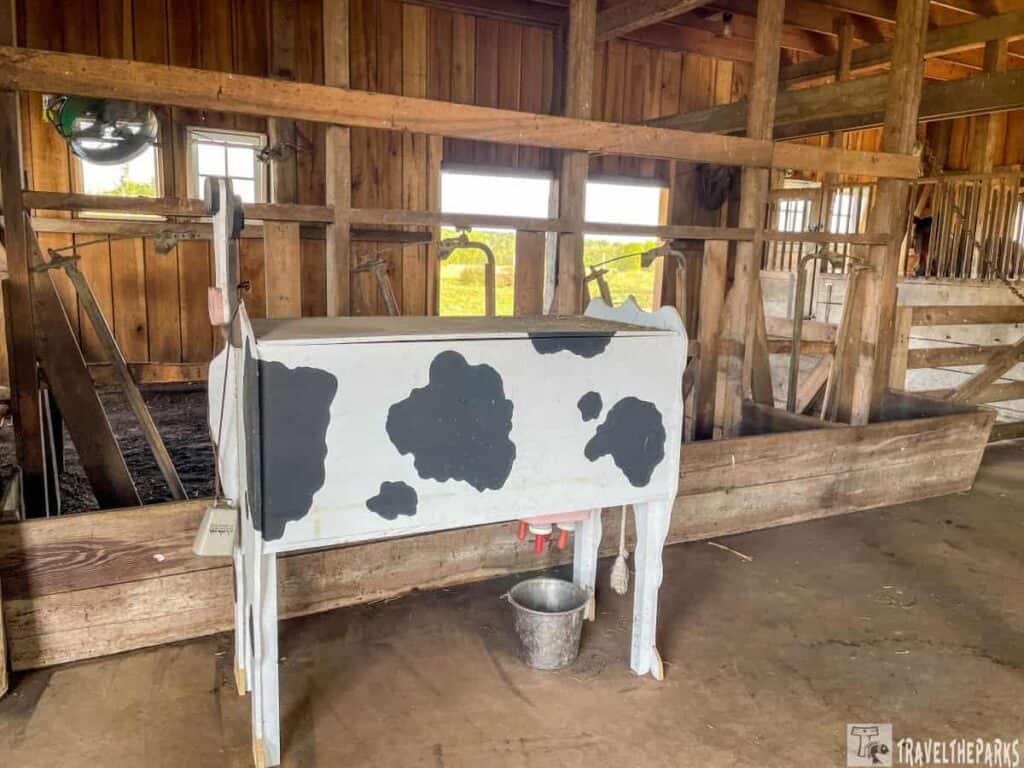
And then there are the demonstrations and hands-on experiences. You might watch a blacksmith work the forge, explore a historic farmhouse, or try your hand at the wooden cow Bessy’s milker.
That’s what makes The Farm so memorable. You’re not just looking at history. You’re experiencing it.
What Is The Farm at Prophetstown State Park?
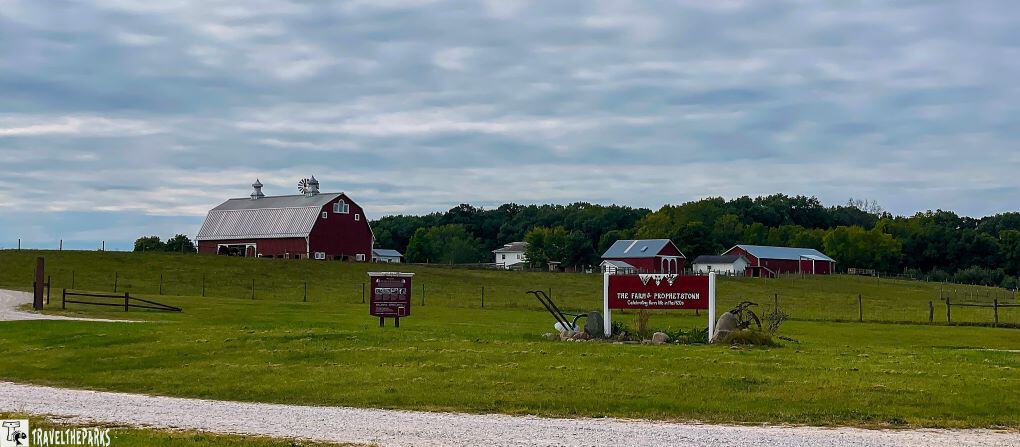
The Farm at Prophetstown is a living history farm that recreates rural Indiana life in the 1920s. Rather than simply looking at historic buildings, visitors can explore farmhouses, gardens, barns, and outbuildings while learning about the people, animals, and agricultural practices that shaped farm life during the era.
You’ll find heritage breed animals, heirloom gardens, historic homes, a working blacksmith shop, and hands-on experiences that make the history easier to understand.
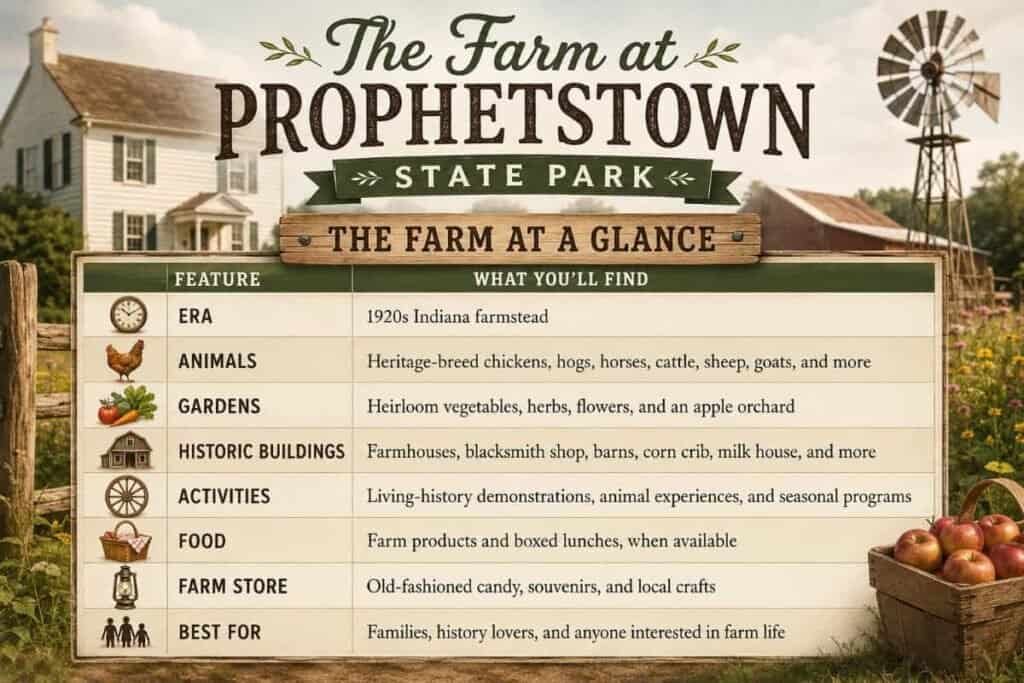
Know Before You Go: The Farm at Prophetstown State Park
- Hours: Open seasonally (spring through fall). Hours vary and may differ from general park hours. Always check the official website for the most current schedule before your visit.
- Entrance Fee: the Farm is FREE after paying the standard state park entrance fee: $7 for Indiana-registered vehicles, $9 for out-of-state vehicles.
- Dogs: For the safety of both farm animals and your pets, dogs are not allowed in the farm area—service animals are welcome.
- Best Time to Visit: Weekends typically offer more scheduled living history demonstrations. Visiting on a weekday or in the morning gives you the best opportunity to enjoy a quiet, uncrowded experience.
- Time Commitment: Plan for a minimum of 1.5 to 2 hours to fully enjoy the farm.
- PRO Tips: Wear sturdy, closed-toe shoes—you’re on an actual farm with uneven terrain. Bring hats, sunglasses, sunscreen and water. Most of the park has very little shade.
- Check the demo schedule upon arrival to not miss blacksmithing, milking, or chore times.
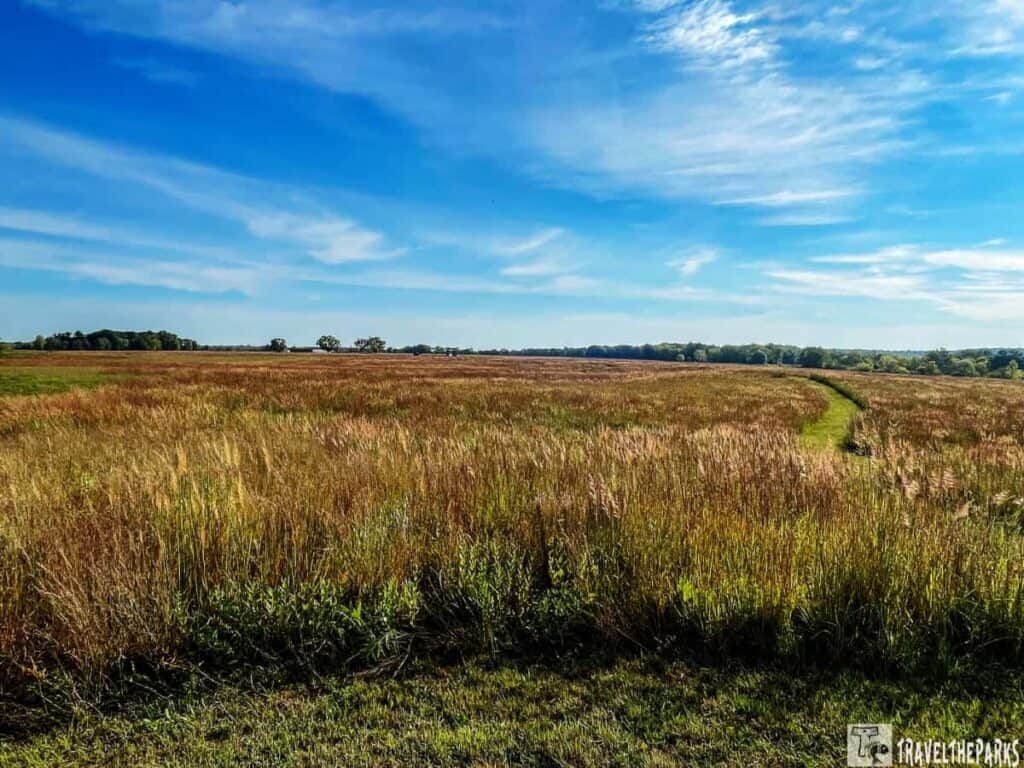
Walking to The Farm Through the Tallgrass Prairie
Camping at Prophetstown had its perks. After a quiet night at the campground, I was up early and ready to explore.
Barry, however, had a less exciting task ahead of him—getting our new trailer tires mounted. While he dealt with the not-so-glamorous side of road-tripping, I decided to take the opportunity to explore The Farm at Prophetstown on my own.
I started at the Visitor Center, where I looked through the exhibits and visited the live animals. After asking a ranger how to get to the farm, I was pointed toward a 0.75-mile trail through the tallgrass prairie.
A Walk Through the Tallgrass Prairie
That walk turned out to be part of the experience.
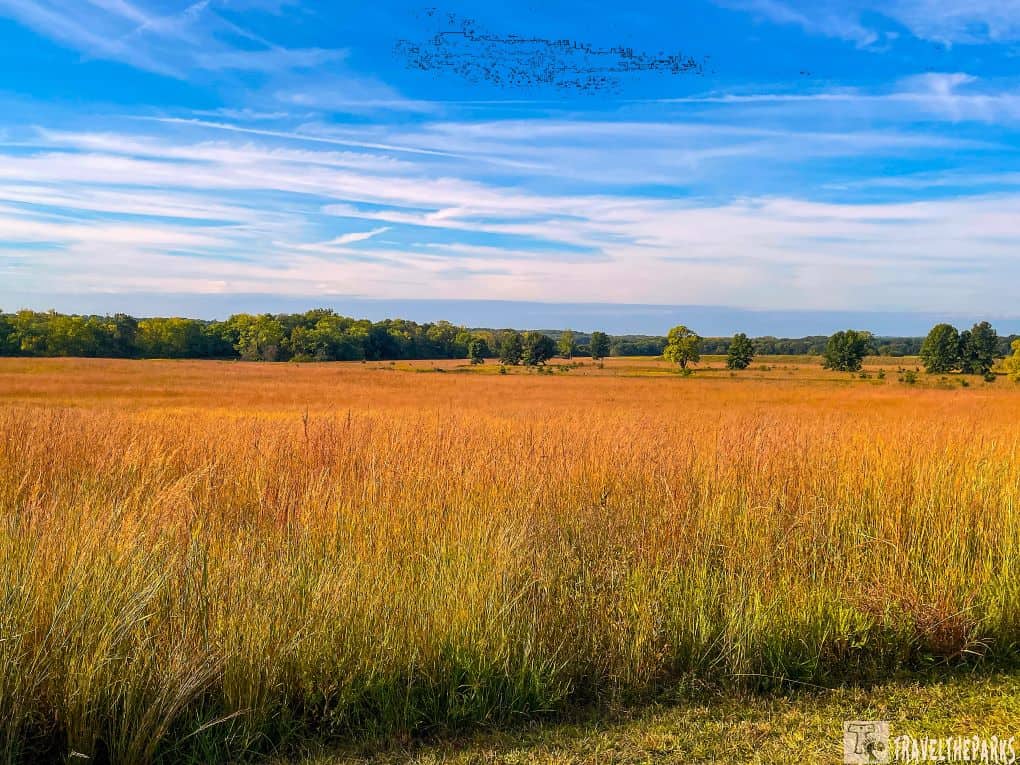
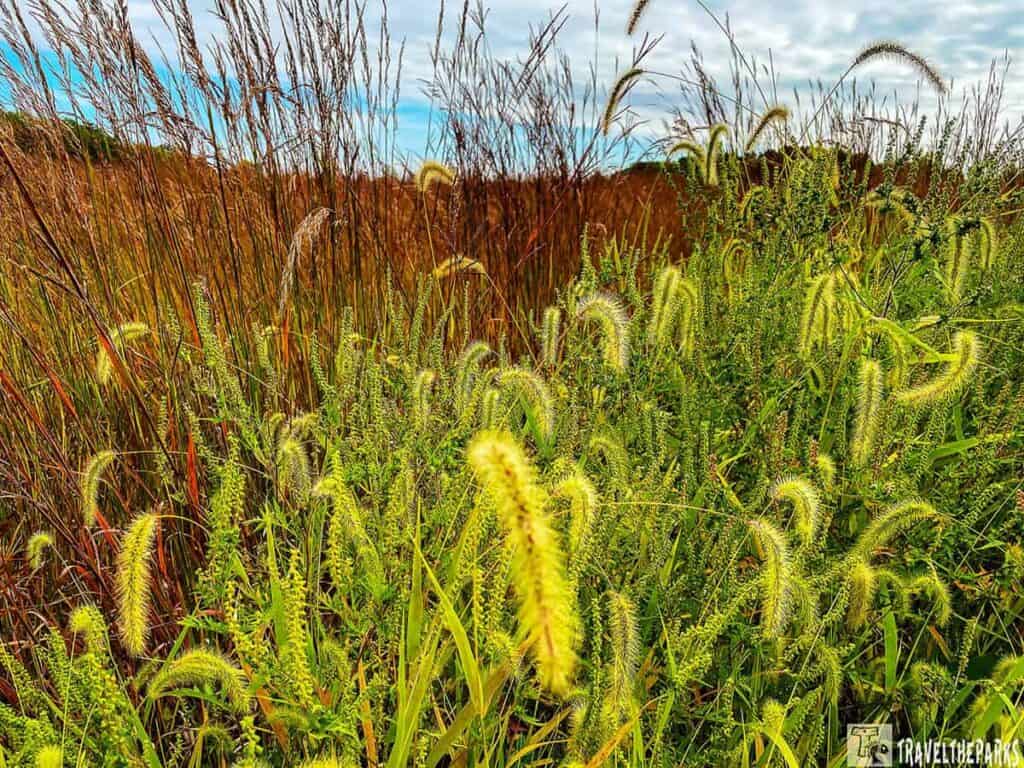
A wide grass path led through the prairie, surrounded by tall grasses swaying in the breeze. Butterflies flitted through the flowers, grasshoppers jumped from the path as I walked, and every so often I heard the call of a meadowlark.
There wasn’t much shade, but on that quiet morning I didn’t mind. The farther I walked, the more distant the campground, highway, and our tire troubles seemed.
At one point, I wasn’t even sure I was going in the right direction. Then the buildings of The Farm slowly came into view across the prairie.
It felt like I had discovered it rather than simply walked to it.
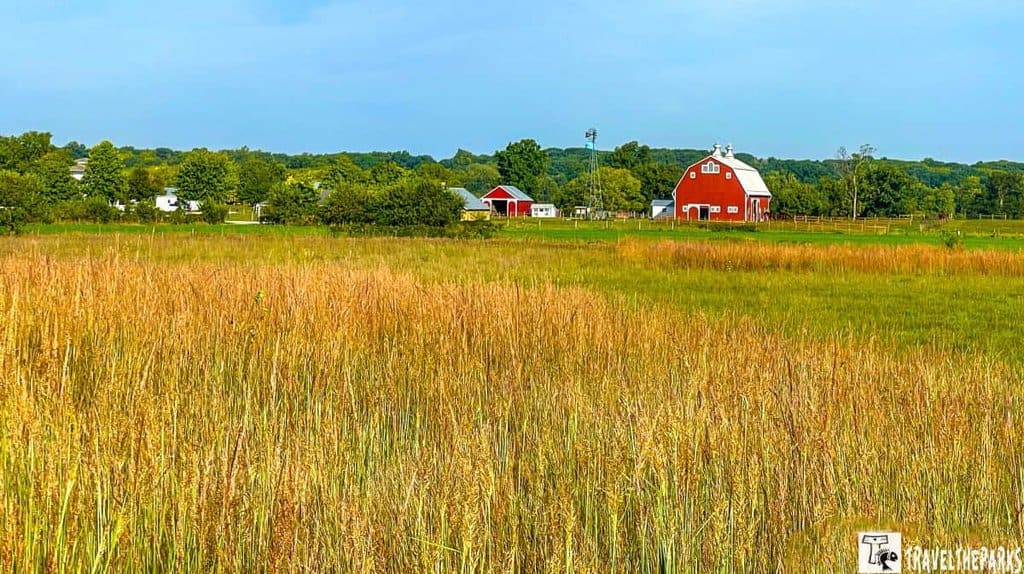
Arriving at The Farm
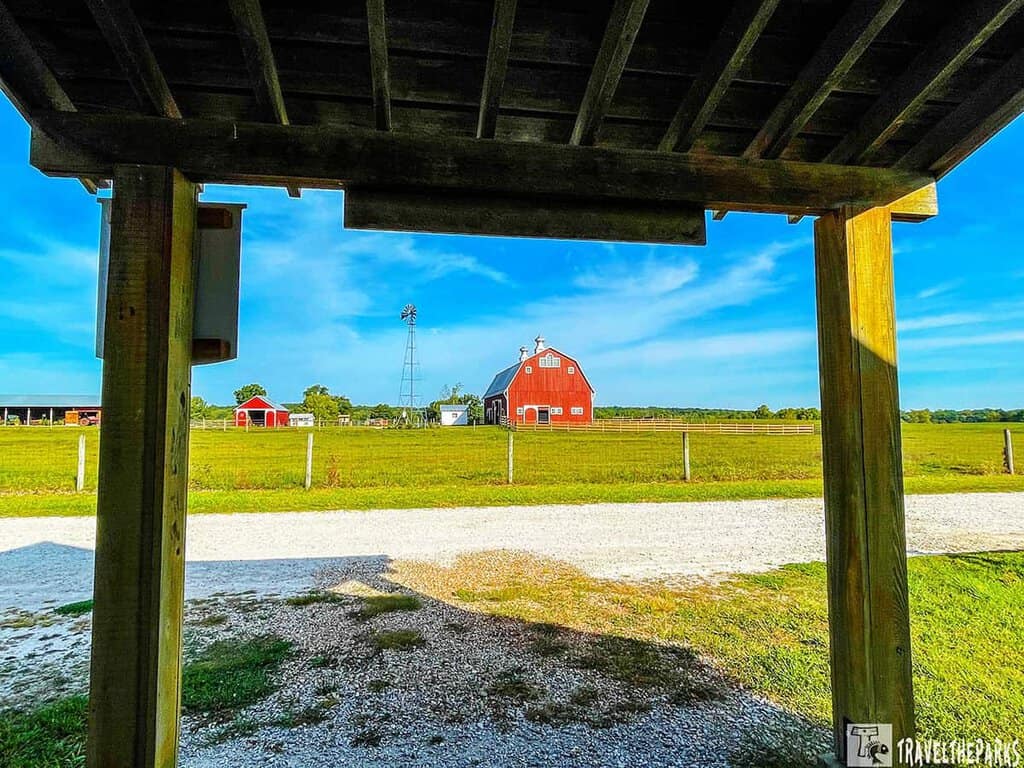
As I approached the orientation pavilion, the smell of fresh hay greeted me. Somewhere nearby, a rooster crowed, followed by the unmistakable moo of a cow.
After the quiet walk through the prairie, those sounds felt like the perfect welcome.
I stepped onto the gravel path and suddenly found myself surrounded by the sights and sounds of a working farm. The transition from prairie to farmstead made the experience feel even more special.
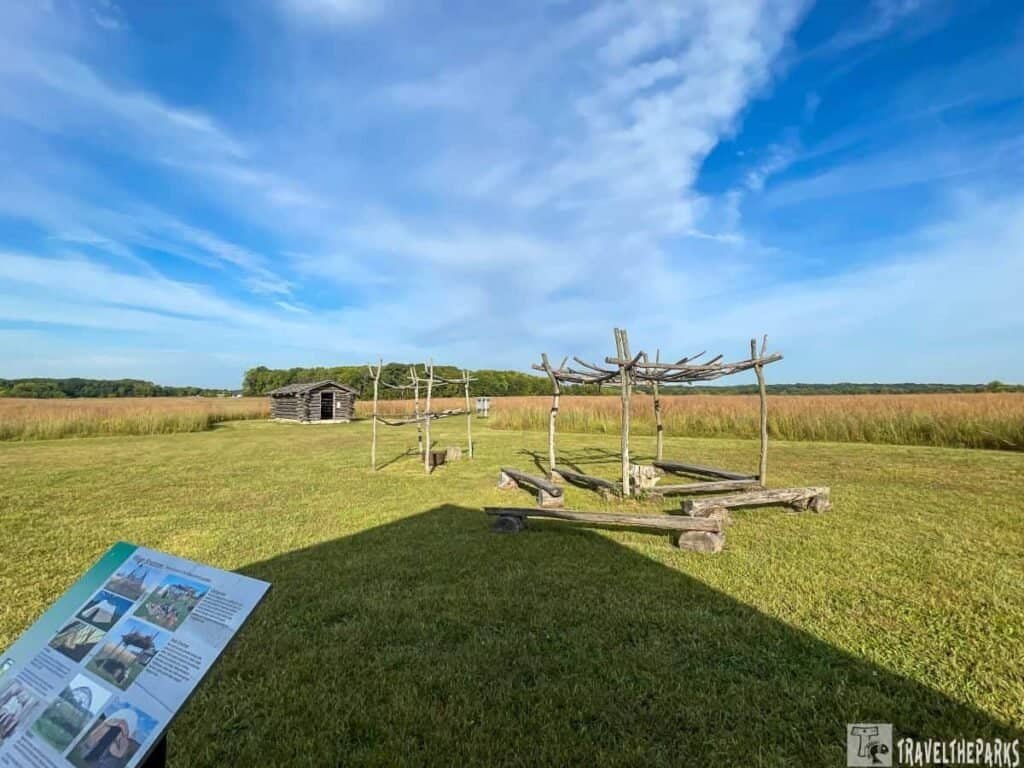
A Quick Stop at the Woodland Indigenous Village
Before exploring The Farm, I also took a short self-guided detour through the Woodland Indigenous Village.
The reconstructed village includes structures such as wigwam-style shelters, a granary, and a medicine lodge. It doesn’t take long to explore, but it’s worth adding to your visit if you have the time.
Looking back, I’m glad I didn’t simply drive over to The Farm.
That 0.75-mile walk through the tallgrass prairie was part of the experience. It gave me a chance to slow down, notice the wildlife and landscape, and leave the modern world behind for a little while.
And after dealing with trailer tires, that was exactly what I needed.
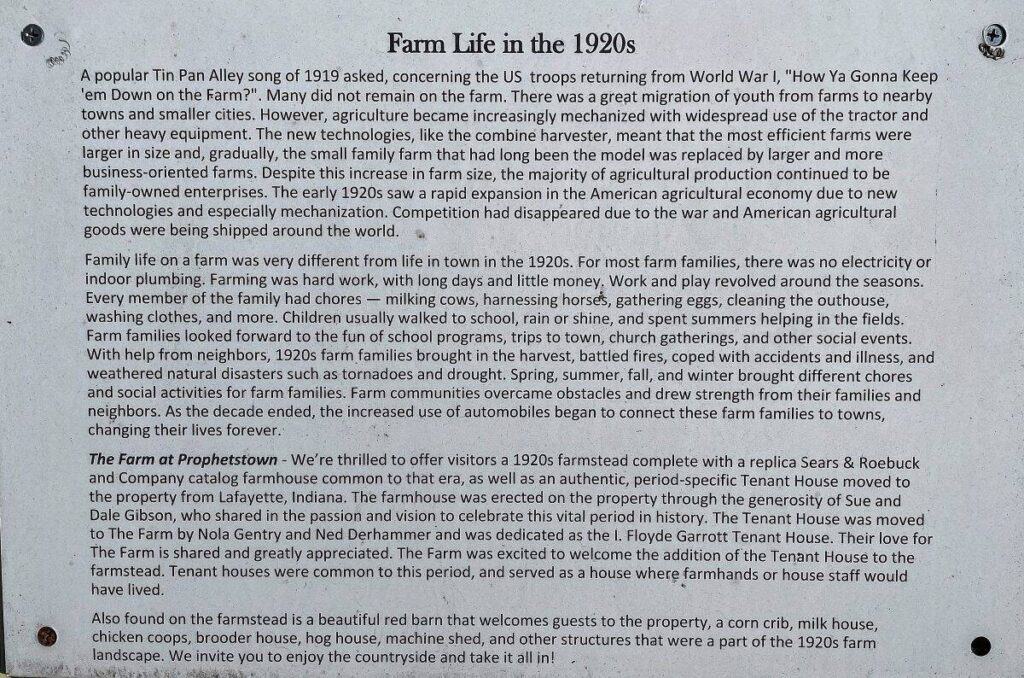
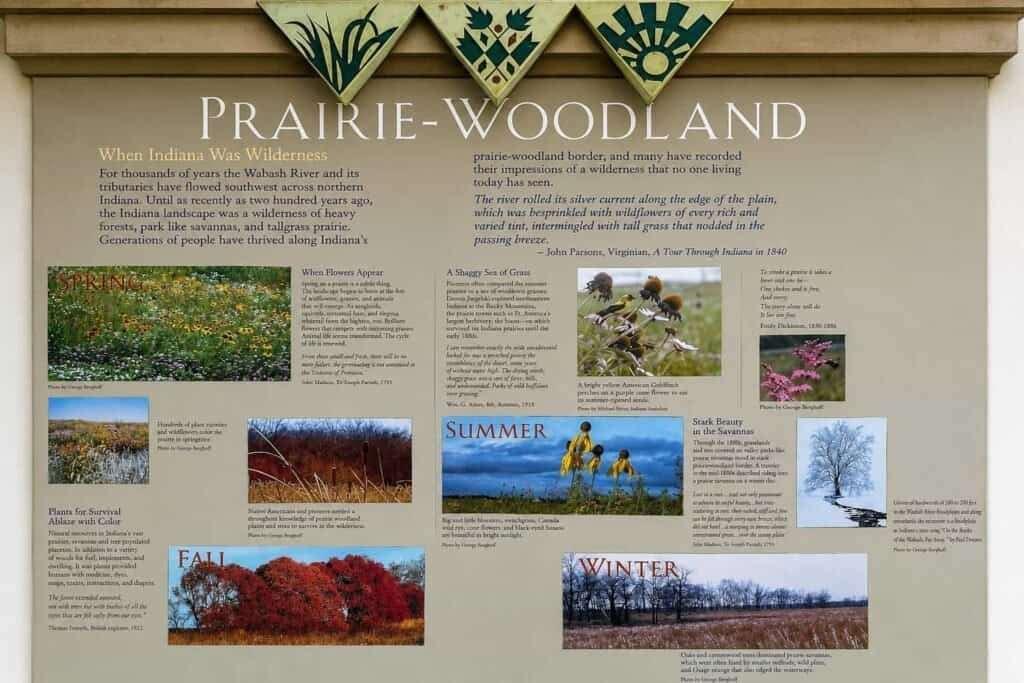
Don’t Miss the Orientation Kiosk: Your Historical Roadmap
I’ll admit it: I almost walked right past the orientation kiosk.
I was ready to get to the animals and start exploring. But I stopped to look at the informational boards near the entrance, and I’m glad I did. Taking a few minutes to read them gave me a much better understanding of what I was about to see.
The kiosk connects three important stories that come together at The Farm:
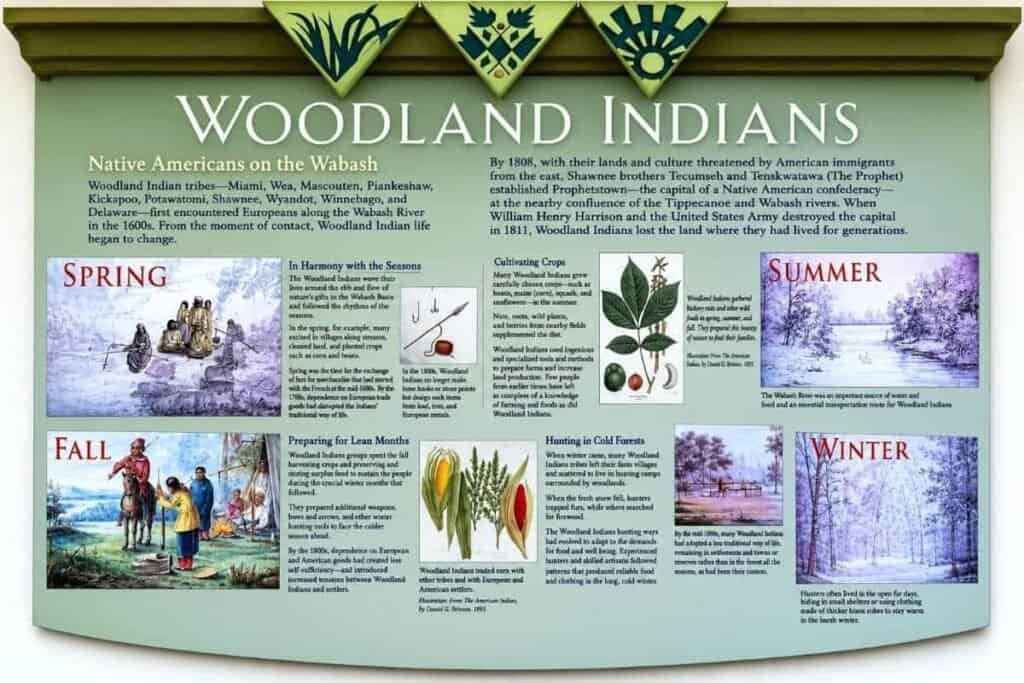
The Woodland Indians
The first story begins long before the 1920s farmstead. The displays introduce the Indigenous people who lived in this region and their connection to the land. It’s an important reminder that the history of this place stretches back long before the farm you see today.
The Tallgrass Prairie
The prairie surrounding The Farm is more than a pretty backdrop. The displays explain the importance of Indiana’s tallgrass prairie ecosystem and the efforts to restore this once-widespread landscape.
After walking through the prairie myself, I appreciated having that context. Those grasses and wildflowers suddenly felt like part of the story rather than simply scenery along the trail.
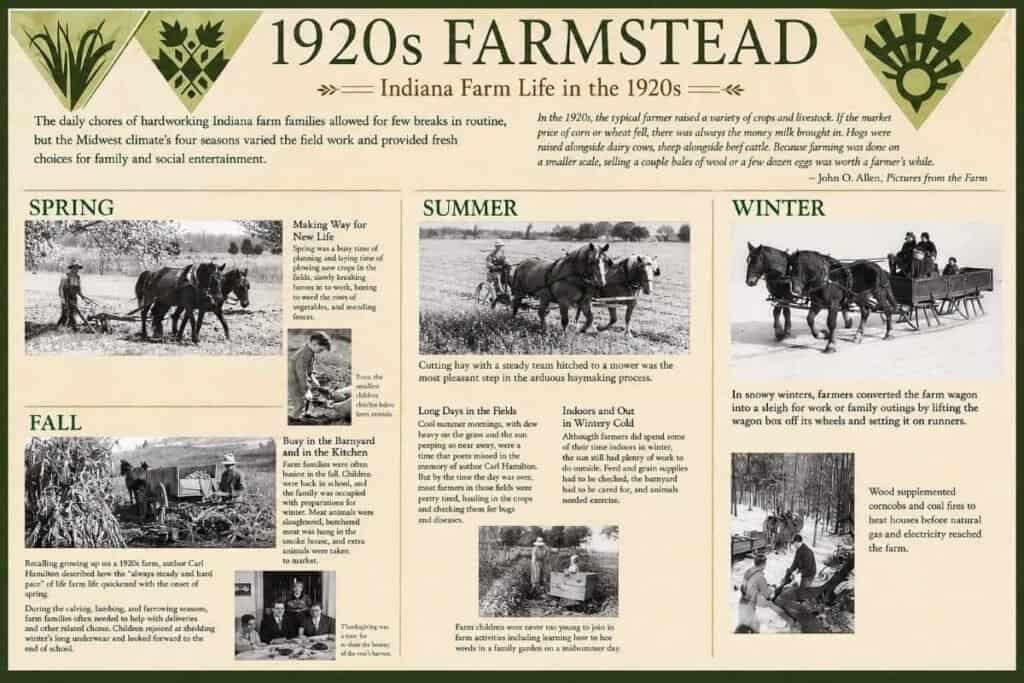
The 1920s Farmstead
Finally, the kiosk explains how The Farm fits into the story of Indiana agriculture. It helps put the homes, gardens, animals, tools, and outbuildings you’ll see into perspective and gives you a better idea of what daily farm life was like during the 1920s.
Why Stop Here?
You could certainly walk past the kiosk and head straight for the animals. But I think those few extra minutes are worth it.
Once I understood how the Indigenous history, prairie restoration, and 1920s farmstead were connected, I looked at The Farm a little differently. The gardens, livestock, historic buildings, and prairie weren’t separate attractions anymore. They were pieces of one much larger story.
Pro Tip: Stop at the kiosk before exploring The Farm and grab a map while you’re there. A few minutes of reading can make the rest of your visit much more meaningful.
Why the Seasonal Information Matters
What I found especially interesting was the kiosk’s focus on seasonal change. The displays explain how spring, summer, fall, and winter brought different challenges and responsibilities to the people who lived and worked on this land.
Planting in spring, tending crops through summer, preparing for winter, and making it through the colder months all shaped daily life. The same seasonal changes also affected the prairie and the Indigenous people who depended on the land long before the farmstead existed.
That perspective gave me a better appreciation for what I was about to see. The buildings, gardens, animals, and demonstrations weren’t just individual attractions—they were pieces of a much larger story about adapting to the land and the seasons.
Pro Tip: Take a quick photo of the informational boards with your phone. I found it helpful to have the information available as I explored the farmstead and prairie trails.
From Barnyard to Garden: Exploring The Farm at Prophetstown
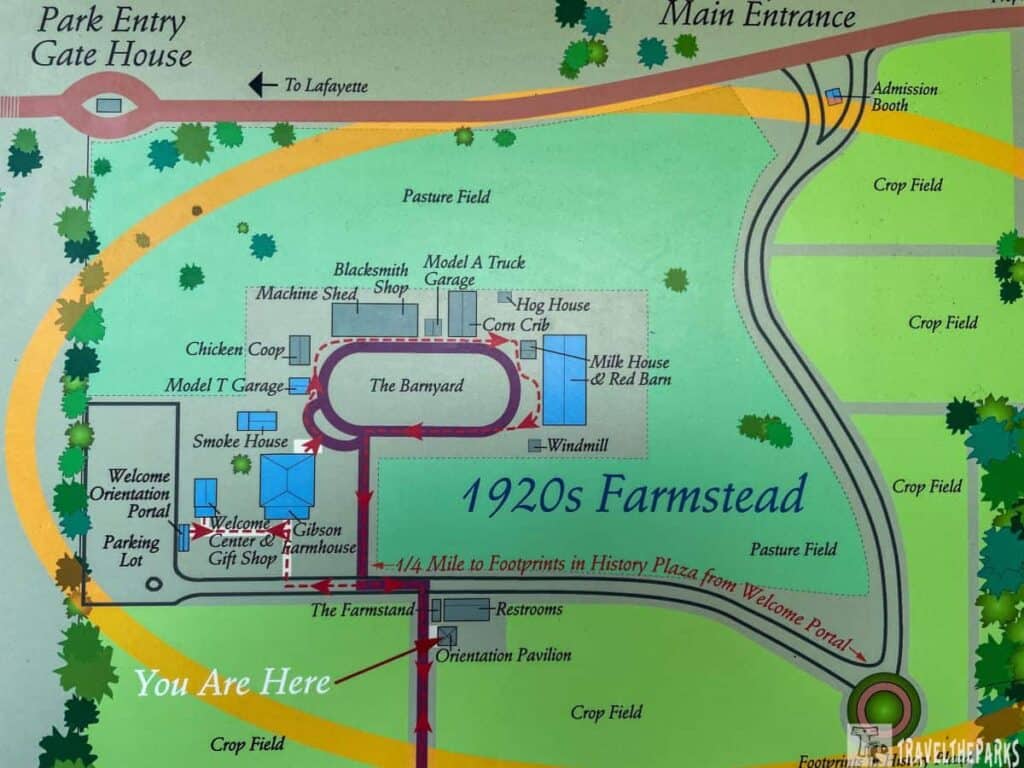
The beauty of The Farm at Prophetstown is that you don’t have to follow a rigid itinerary. The farm is designed for a self-guided visit, so you can wander from building to building, follow the map from the orientation kiosk, and spend more time at the places that catch your attention.
The Blacksmith Shop: A Glimpse Into 1920s Farm Life
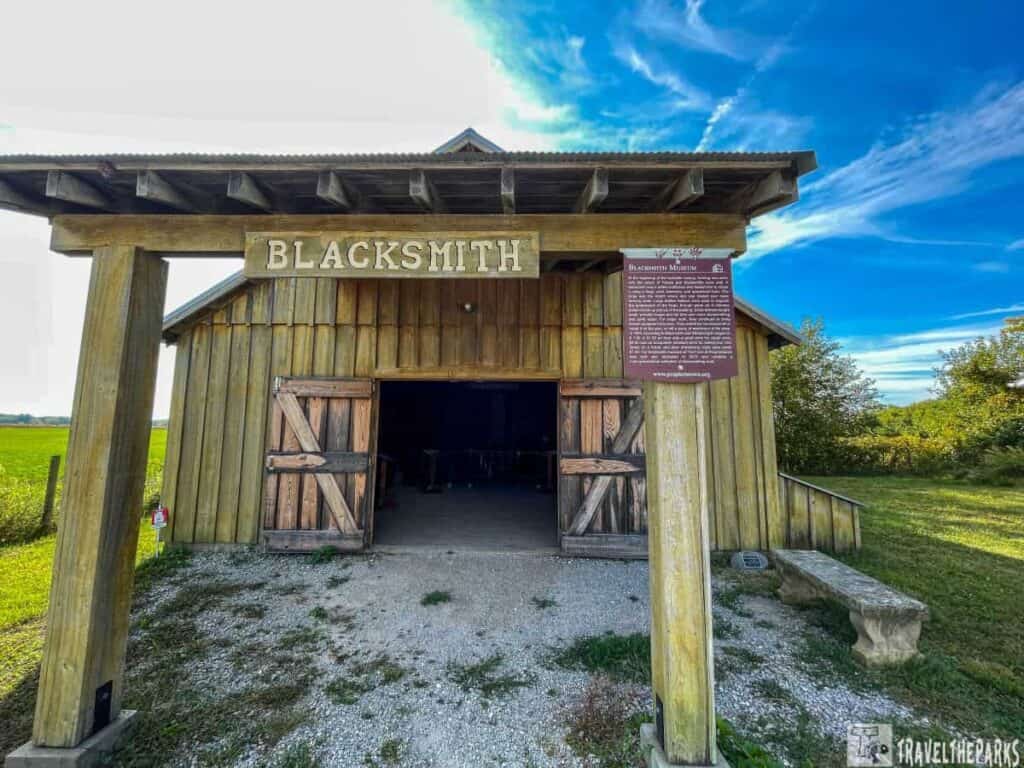
My first stop was the Blacksmith Shop. This isn’t simply a display of old tools. The shop demonstrates the important role a blacksmith played on a 1920s farm.
The tools and equipment represent the period, and when demonstrations are taking place, you can see the craft in action. The blacksmith was essentially the farm’s repair shop, making and repairing everything from nails and hooks to horseshoes, hoe blades, and hardware for wagons and buildings.
It made me appreciate just how much depended on these skills before modern hardware stores and equipment were readily available.
The I. Floyd Garrett Tenant House: A 1920s “Amazon” Home
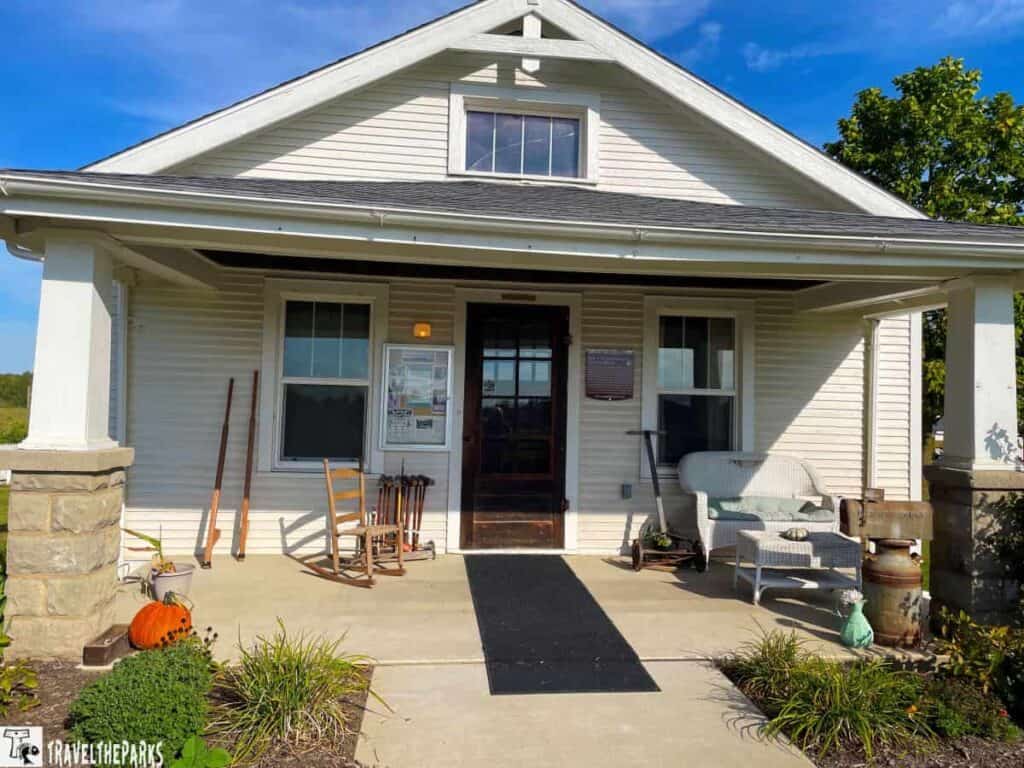
Next, I stepped into one of the most fascinating pieces of the Farm experience: the I. Floyd Garrett Tenant House.
Here’s the fun part. This isn’t just an old farmhouse. It’s a Sears Modern Home—a kit house ordered from the Sears, Roebuck and Co. catalog.
Yes, you could actually order a house through the mail.
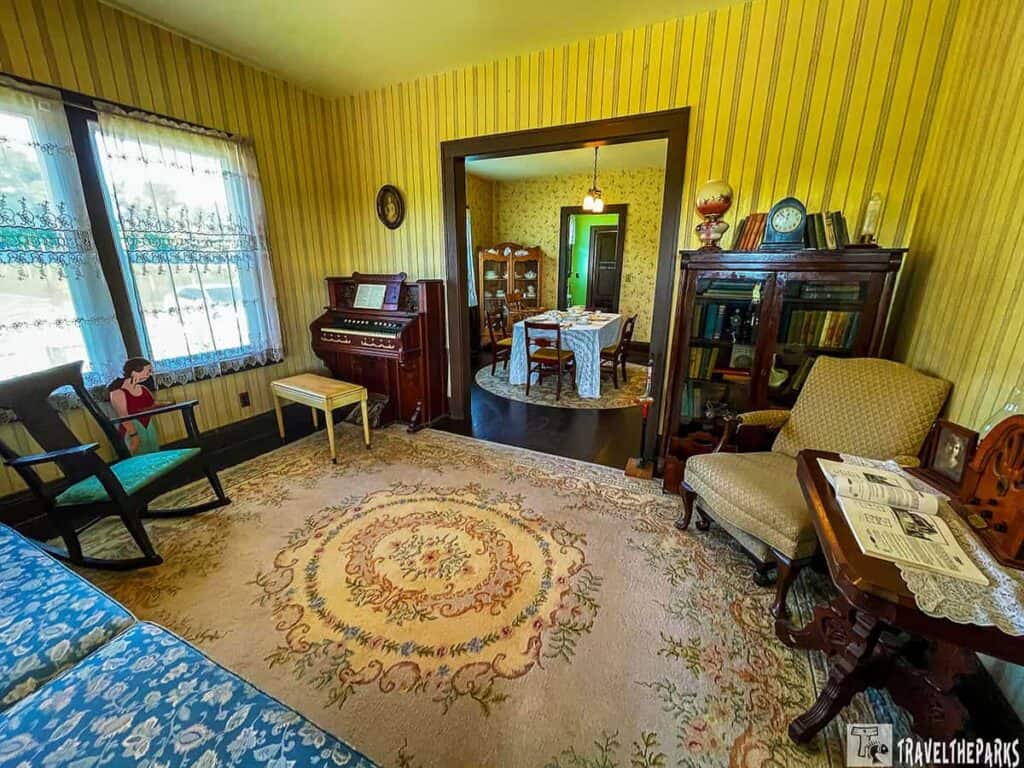
Sears sold hundreds of home designs during the early 20th century. This Hampton-style home was built in 1921 and is a fascinating example of how mail-order homes helped make modern housing available to American families.
Inside, I was struck by how complete the house felt. The details—from the built-in cabinetry to the decorative moldings—made it easy to imagine someone actually living here.
Don’t miss the Sears catalog on display. Seeing the original catalog connection makes the story of the house even more interesting.
The home also helps tell the story of the tenant farmer who would have lived and worked on the property, adding another perspective to life on a 1920s farm.
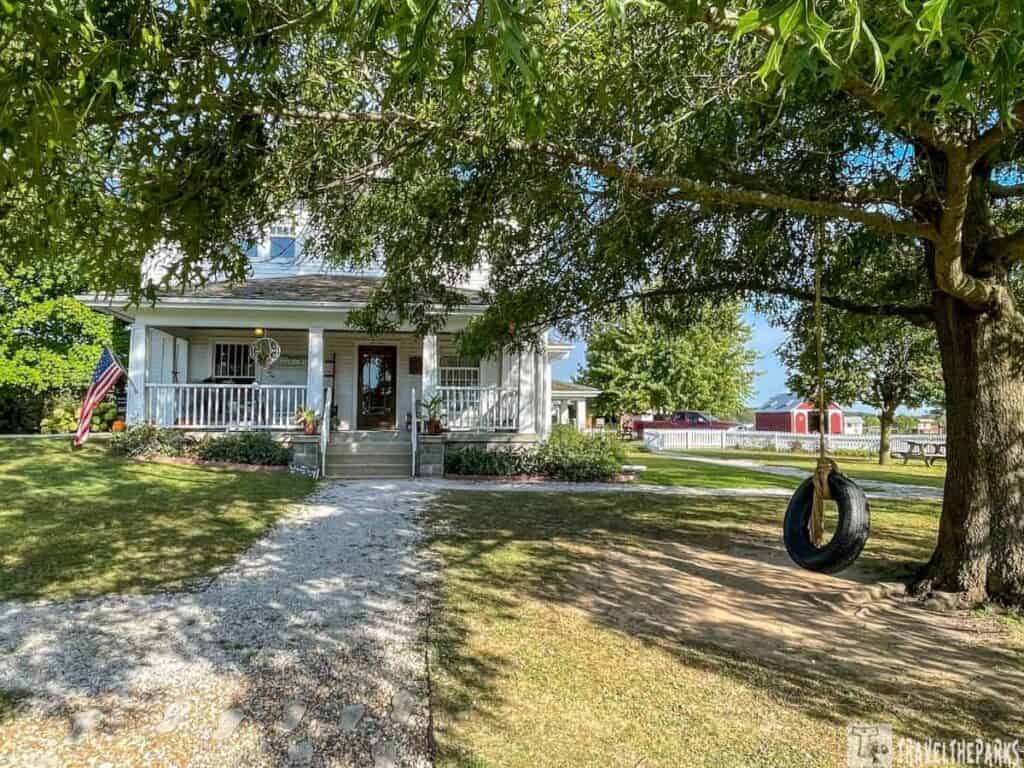
Gibson Farmhouse Tour: The Heart of the Experience
If the tenant house fascinated me, the Gibson Farmhouse felt more personal.
It reminded me of the farms where I worked as a kid in the Dutch community. There was something familiar about the furnished rooms, the kitchen, and the simple rhythm of the home.
Costumed interpreters led us through the replica Hillrose home and explained what daily life was like for a 1920s farm family. We saw the kitchen, parlor, and bedrooms and learned about the chores and challenges that shaped everyday life.
What I especially liked was being able to ask questions. That’s one of the things that makes living history different from simply walking through a museum. The interpreters help turn the objects and rooms into a story about real people.
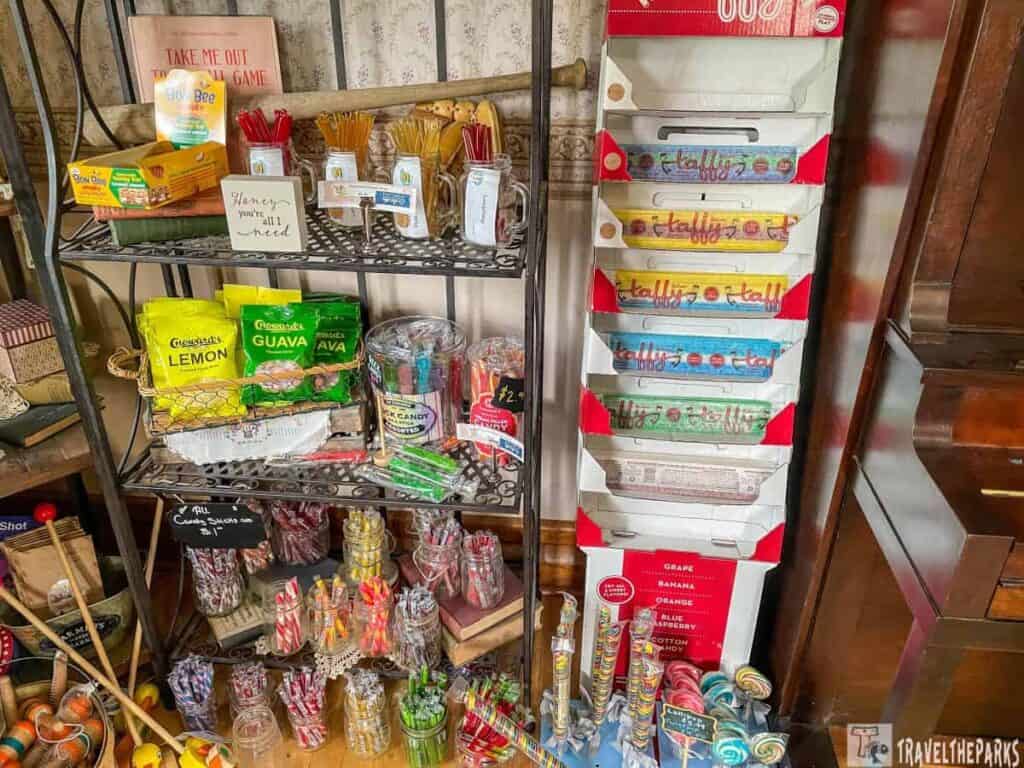
A Sweet Stop at the Farmhouse Store
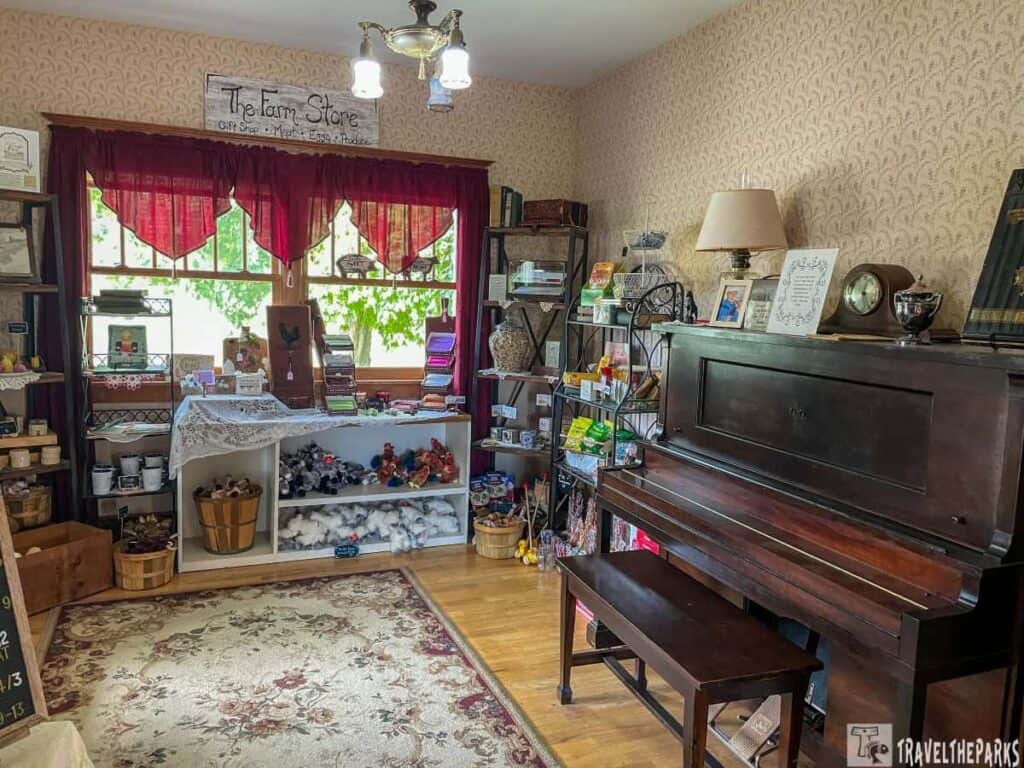
Before leaving the farm area, I stopped at the small farmhouse store near the entrance.
There are souvenirs, postcards, toys, and handmade crafts, but the vintage candy was what caught my attention.
Jars filled with caramel candies, taffy, candy sticks, and Necco Wafers brought back plenty of childhood memories. Of course, I couldn’t resist taking some home.
If you’re traveling with kids—or you’re simply a kid at heart—it’s worth a stop.
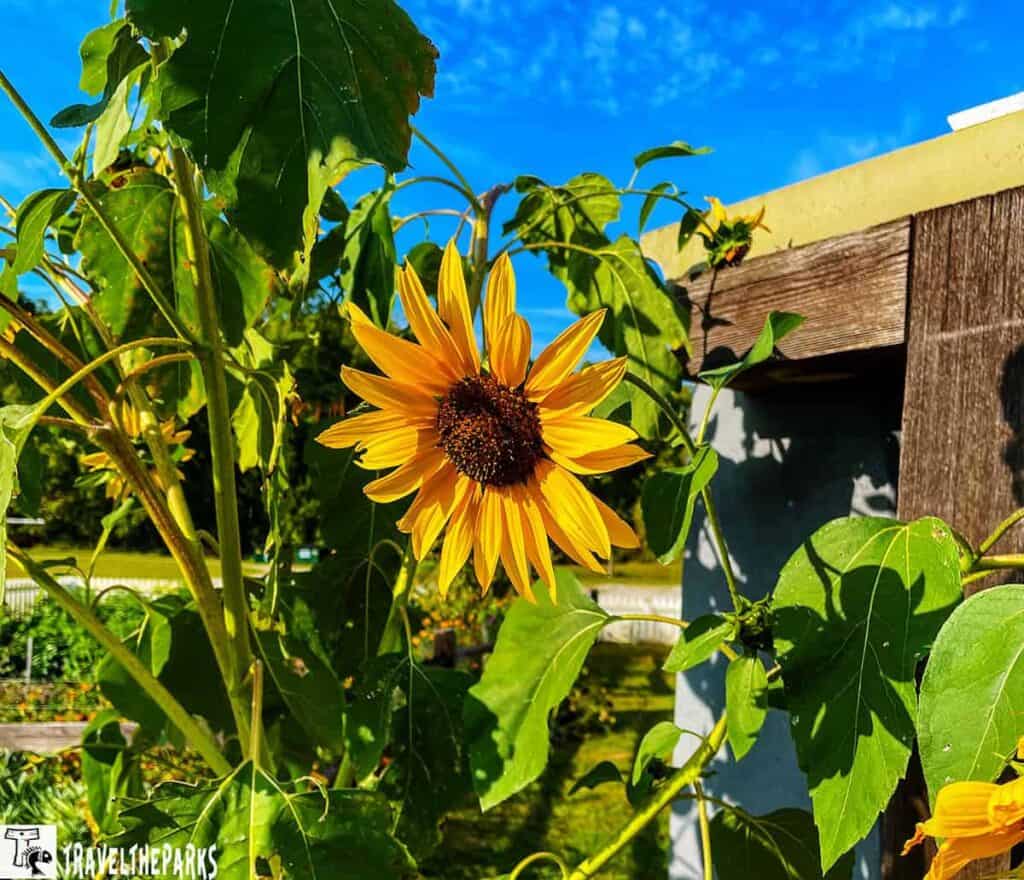
Heirloom Gardens and Orchard: From Soil to Table
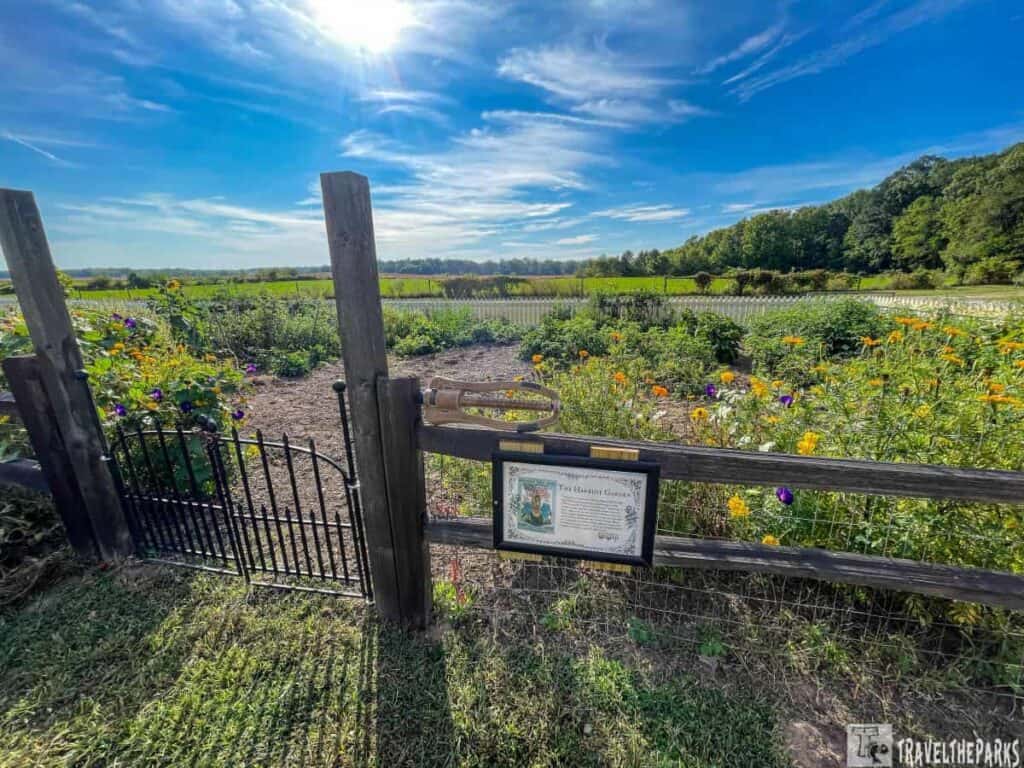
Behind the Gibson house, I wandered through the heirloom gardens and found two volunteers collecting herbs for the farm’s kitchen. We chatted for a while, and I learned that the gardens grow vegetables, herbs, and flowers from traditional heirloom seeds.
I liked seeing how the gardens connected directly to the farm’s story. These weren’t simply decorative gardens. They demonstrated the kinds of plants and growing practices that would have been part of farm life.
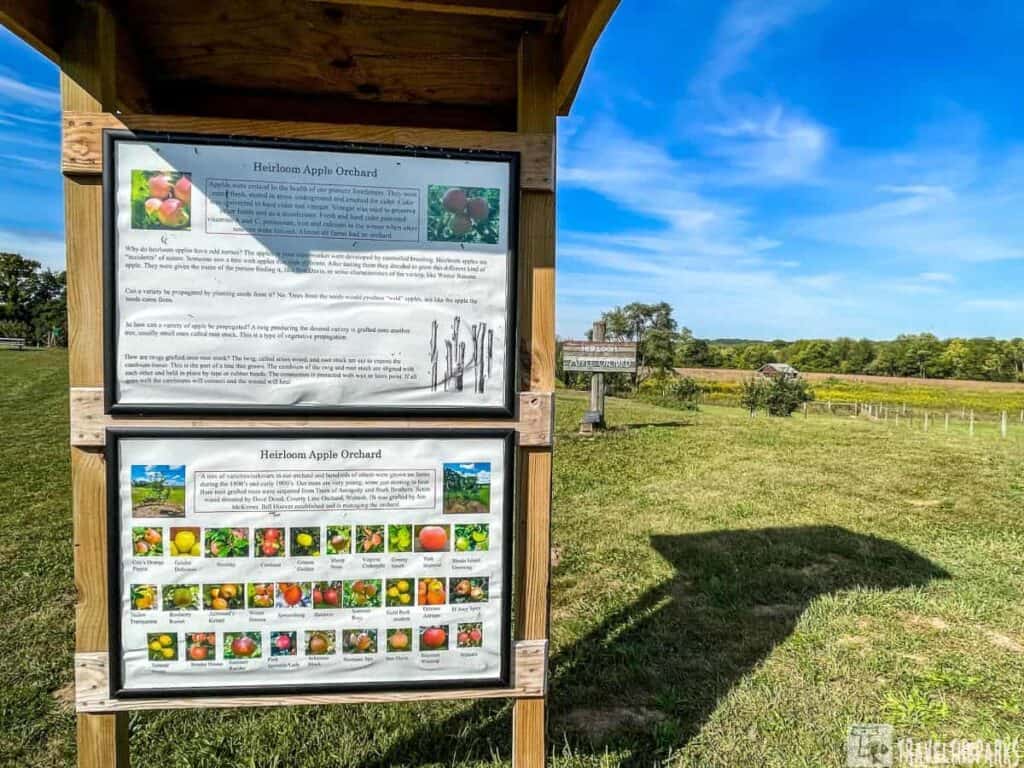
The small apple orchard was another interesting stop. It features older varieties of apples that were traditionally grown for eating fresh and storing through the winter.
Seeing the gardens and orchard helped bring home one of the biggest themes of The Farm: nothing existed in isolation. The gardens fed the household, the animals were part of the farm’s work and food system, and the buildings supported the entire operation.
The Takeaway
From the blacksmith shop to the farmhouse, the gardens to the orchard, The Farm at Prophetstown brings 1920s Indiana farm life together in a way that’s easy to explore at your own pace.
For me, the best part wasn’t any single building or attraction. It was seeing how all these pieces fit together—and getting a glimpse of a much slower way of life.
Prophetstown Farm: Pastures and Heritage Breed Animals
Let’s be honest: the animals are one of the highlights of The Farm at Prophetstown.
The historic buildings and heirloom gardens are fascinating, but there’s something special about standing at a fence watching a horse wander over or a pig happily wallow in the mud. These animals are part of the living-history experience, helping show what a 1920s farmstead would have looked like.
The Farm raises heritage breeds using traditional farming methods, and many of the animals have been rescued by local groups and now have a permanent home here.
Standardbred Horses: Meet Bob, Daisy, and Landon
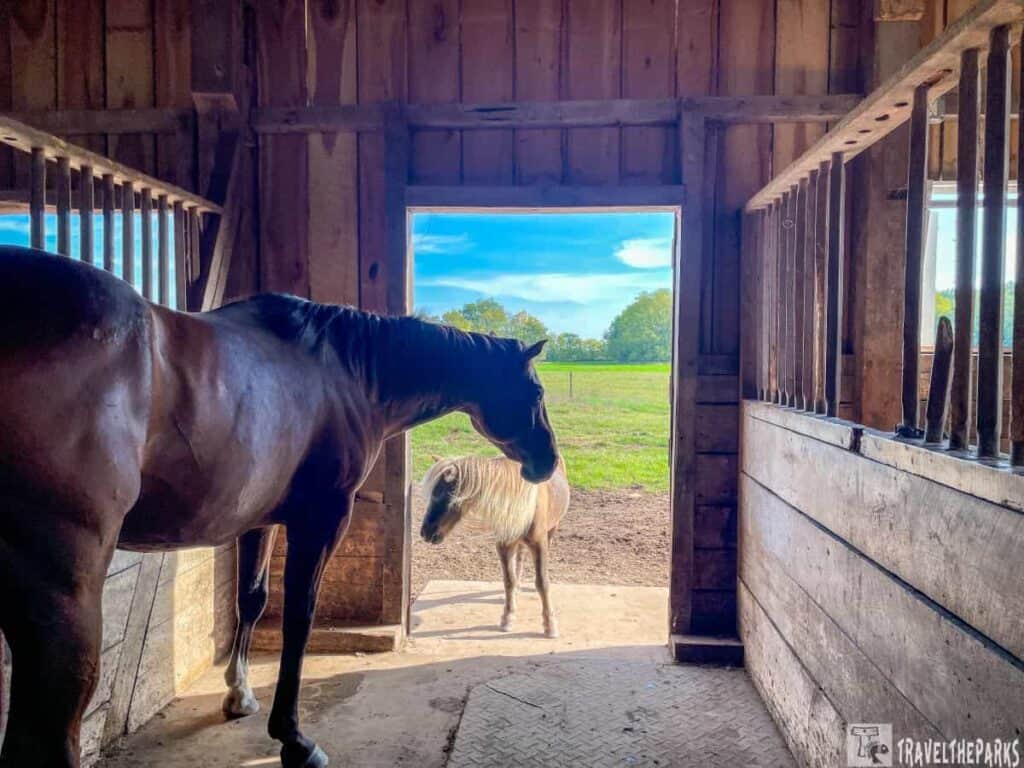
The horse pasture was one of my first stops, where I met Bob, Daisy, and Landon. These gentle Standardbred horses would once have been used for farm work such as pulling wagons and working the fields.
Today, they have a much easier job: enjoying the pasture.
Also keep an eye out for Mr. Bojangles, the miniature horse, and JJ, the donkey. They’re the farm’s resident mascots and add plenty of personality to the pasture.
Hereford Cattle: A Nod to the Past
Seeing the Herefords brought back memories for me because I worked with this breed when I was a kid.
Herefords originated in England and became popular as beef cattle because they were well suited to family farms. Their familiar red-and-white coloring makes them easy to spot as they graze in the pasture.
Berkshire Pigs: Muddy and Magnificent
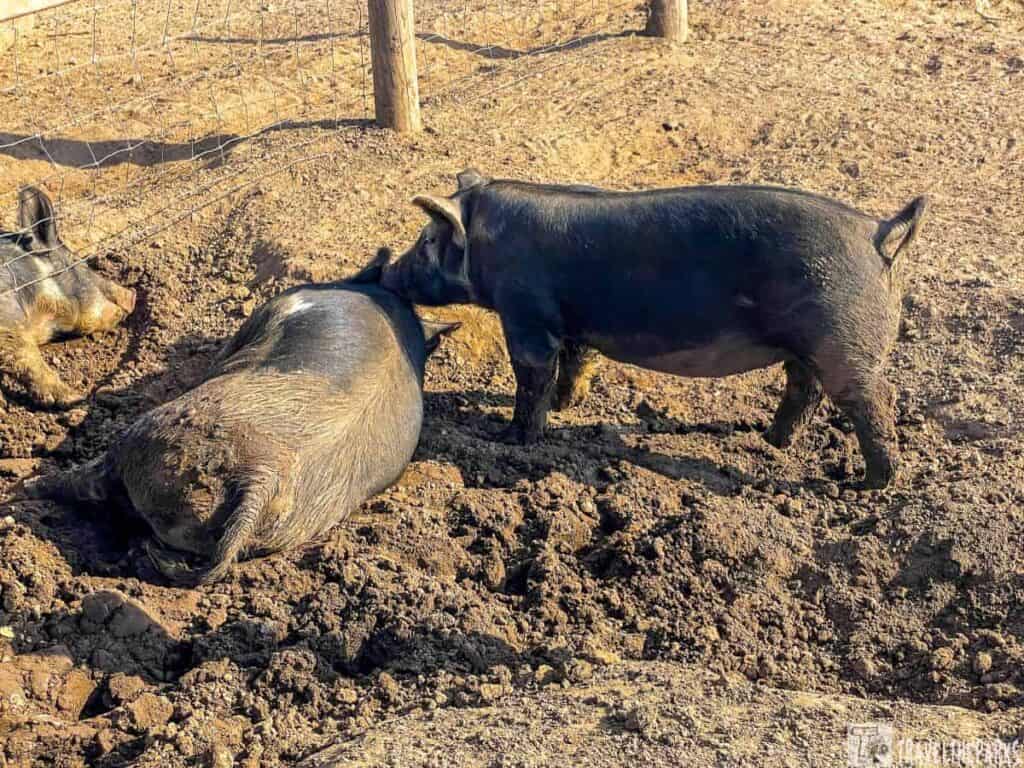
And then there were the Berkshire pigs—my personal favorites.
On the day I visited, they were doing exactly what happy pigs should do: rooting around, snorting, and wallowing in the mud. I could have watched them all day.
They reminded me of the pigs I saw at Oconaluftee in the Great Smoky Mountains. There’s just something entertaining about watching pigs completely ignore the world around them.
Chickens, Sheep, and Goats
The barnyard isn’t complete without chickens, and The Farm has more than 15 breeds. Chickens, ducks, and turkeys roam around the farm, and don’t be surprised if the chickens come running when you approach.
Sheep and goats are also part of the farm’s livestock. Each fall, the sheep are sheared, and visitors may get to see demonstrations of how the wool was traditionally processed and spun.
You can even purchase fresh eggs at the farm store, depending on availability.
A Personal Note—and a Pro Tip
I’m actually allergic to horses, but that didn’t stop me from enjoying them. I still stood at the fence and fed them. A few sneezes seemed like a small price to pay.
PRO TIP: Clean Your Hands
Handwashing stations are available throughout the farm. Be sure to wash your hands after touching animals, fences, or gates. It’s an easy step that’s especially important when visiting a working farm.
The Bottom Line
The animals add another layer to the experience at The Farm at Prophetstown. They’re not simply there for visitors to look at—they help demonstrate the role livestock played in a traditional farmstead.
And, of course, sometimes the best part is simply standing at the fence watching a muddy Berkshire pig do absolutely nothing productive.
That’s farm life.
The Outbuildings: The Working Side of the Farm
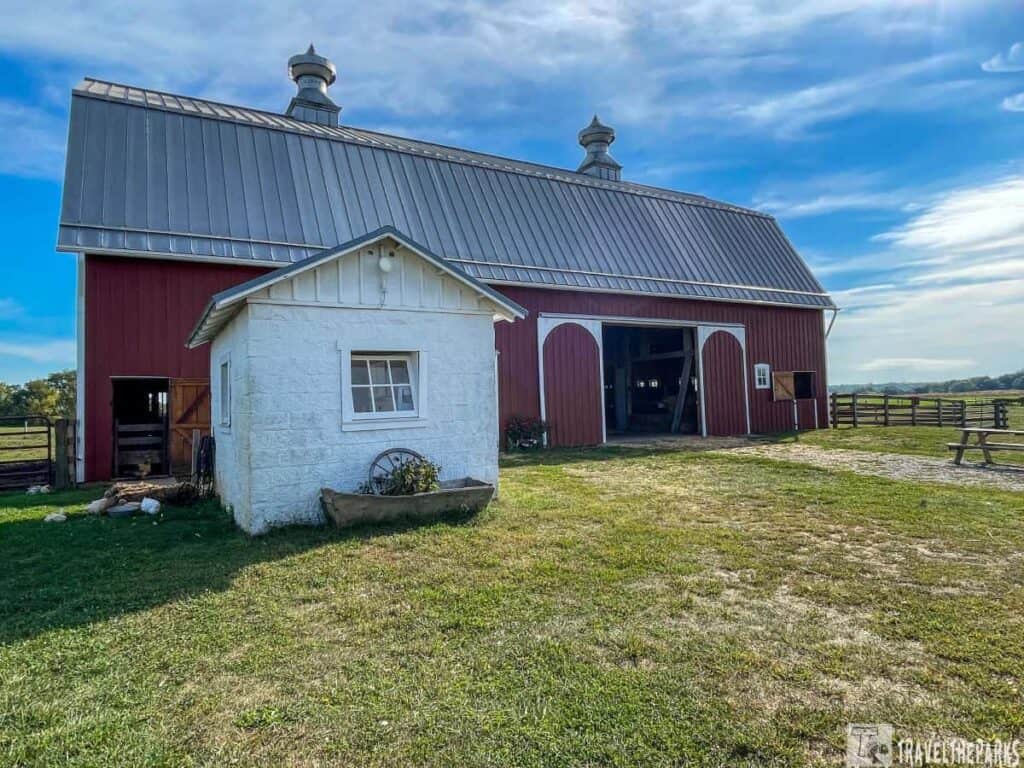
The historic homes get much of the attention at The Farm at Prophetstown, but the outbuildings are just as important. Each one had a specific job to do, and together they show how a 1920s farm operated as a largely self-sufficient operation.
Walking through them helped me understand just how much work went into everyday farm life.
The Corn Crib: Storage with a Second Life
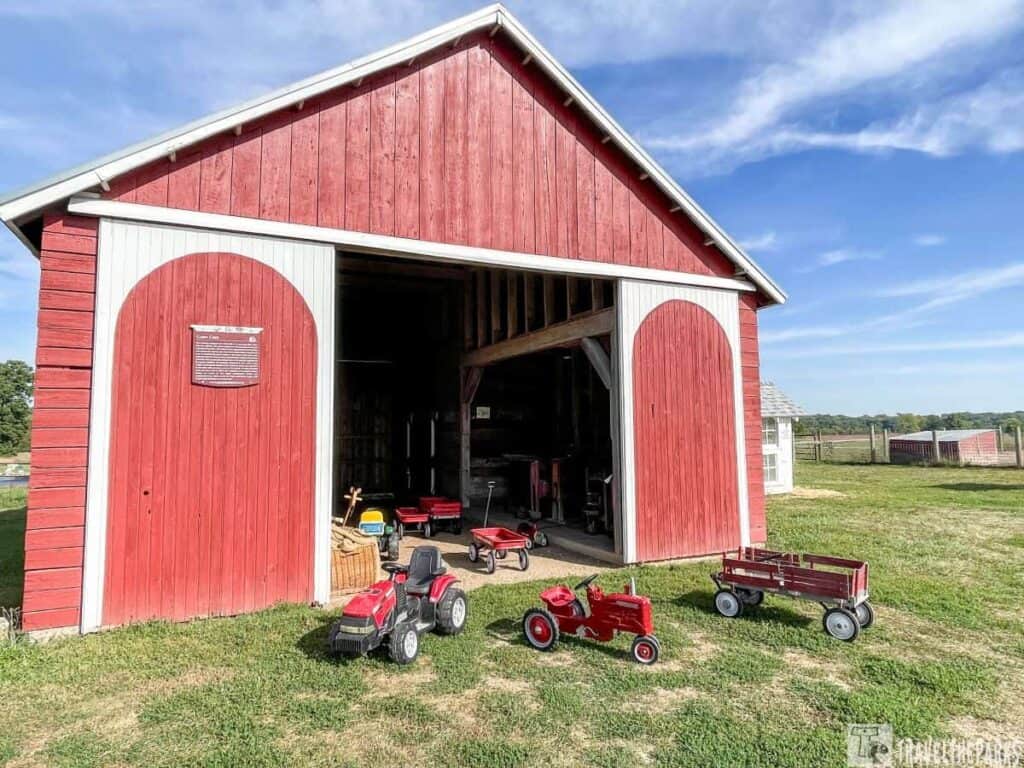
The corn crib was designed to dry and store harvested corn. Its slatted, tapered walls allowed air to circulate around the corn, helping prevent spoilage during storage.
The corn was important not only for the family but also for feeding the horses, cattle, and pigs through the winter.
Today, the corn crib has been turned into a fun play area for children, with miniature vintage-style tractors, kid-sized John Deere replicas, and Radio Flyer wagons. It’s a clever way to give younger visitors something to explore while preserving the history of the building.
The Milk House: Keeping Milk Cool
The small milk house was another essential part of the farmstead.
After milking, fresh milk was taken to the milk house where it could be filtered and cooled in water tanks. Before modern refrigeration, keeping milk cool was an important part of producing and storing dairy products.
Seeing the building helped put into perspective how much daily work went into something as simple as getting milk from the cow to the table.
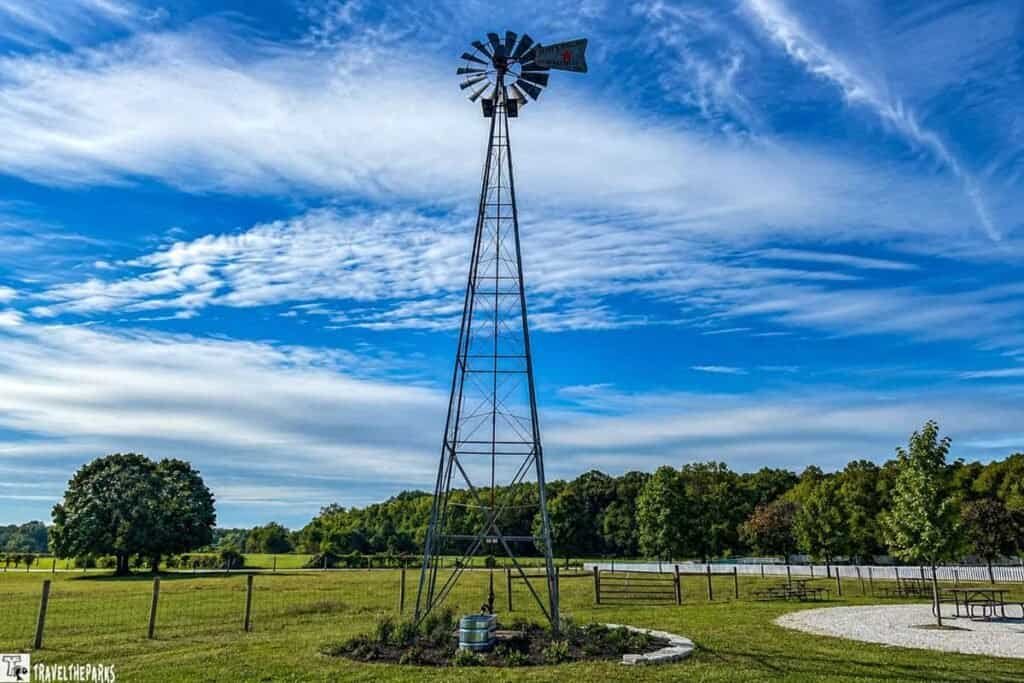
The Windmill: Providing Water
The large windmill overlooking the farm wasn’t simply a picturesque part of the landscape. It was used to pump water from a well for the livestock and household.
For a farm operating before widespread rural electrification, a wind-powered pump provided an efficient way to get water where it was needed.
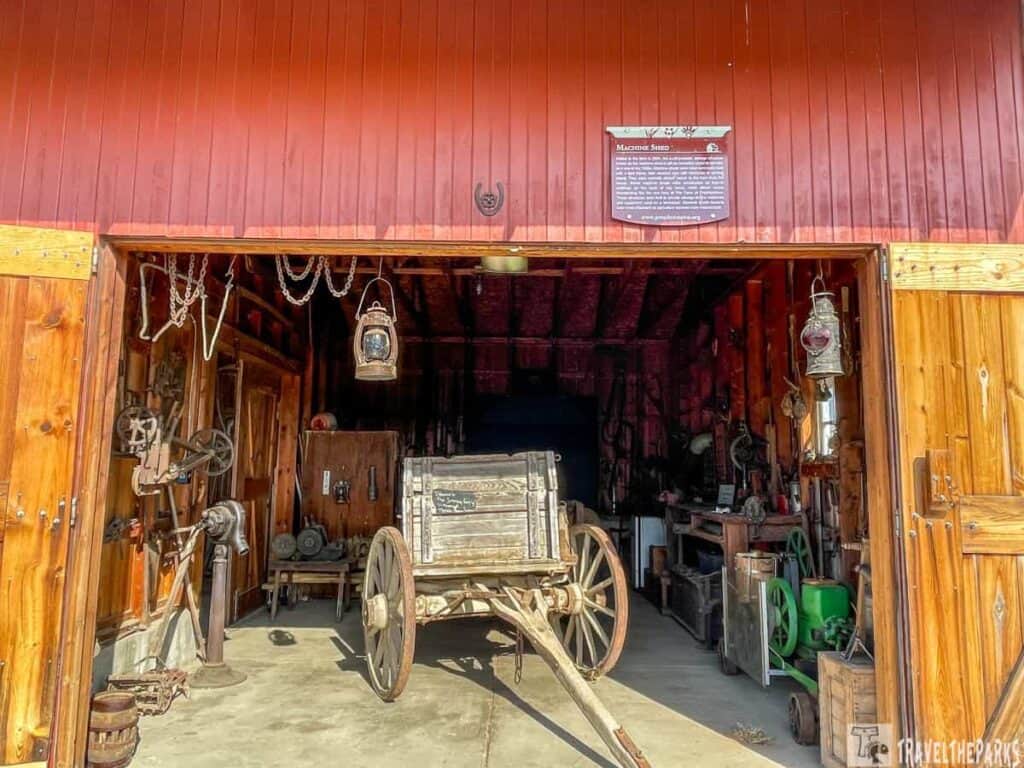
The Machine Shed: A Changing Farm
Inside the machine shed, you’ll find farming equipment that reflects the transition taking place during the early 20th century.
Steel-wheeled tractors were beginning to replace some of the work previously done by horses. Plows, rakes, wagons, and other tools show how quickly farming technology was changing.
It’s an interesting reminder that the 1920s weren’t simply an extension of the past. They were a period when traditional farming methods and new technology were beginning to overlap.
The Big Barn: The Center of the Farm
The large gambrel-roofed barn was the center of many farm operations.
The threshing floor was used for processing grain, while the hayloft provided storage for winter feed. Like the other buildings, the barn had a practical purpose and was an essential part of keeping the farm running.
Standing inside, with the smell of hay and the cool shade of the barn, was one of those moments when the 1920s farm experience really came together for me.
The Takeaway
The outbuildings may not be the first things you notice at The Farm, but they’re worth exploring. They show the practical side of farm life—the storage, water, equipment, livestock care, and food production that made the rest of the farm possible.
That’s what I like about The Farm at Prophetstown: the more you look, the more you understand how all the pieces fit together.
Final Thoughts: Is The Farm at Prophetstown State Park Worth Visiting?
Absolutely.
What I liked most about The Farm at Prophetstown is that it doesn’t feel like you’re simply walking through a museum. The historic homes, barns, gardens, animals, and demonstrations all work together to give you a better idea of what farm life was like in the 1920s.
I especially enjoyed the details—the Sears catalog inside the I. Floyd Garrett House, the heirloom gardens, the old-fashioned farm equipment, and of course, the animals. Even the farm store brought back memories with its selection of vintage candy.
For families, there’s plenty to keep kids interested. History lovers will find lots to explore, and anyone who enjoys slowing down and wandering at their own pace will appreciate the peaceful setting.
For me, The Farm was an unexpected highlight of our stop at Prophetstown. We originally came to the park because we needed to deal with our trailer tires. Instead, I ended up spending a morning walking through the prairie, exploring a 1920s farmstead, and remembering why I enjoy discovering places like this.
Sometimes the best travel experiences are the ones you didn’t plan.
Continue Exploring Prophetstown State Park
The Farm is only one part of Prophetstown State Park. If you’re planning a visit, check out our complete guide, Prophetstown State Park Travel Guide: Things to Do, Hiking & Camping, for information on the park’s hiking trails, camping, the Native American village, and other things to do.
Have You Explored The Farm at Prophetstown?
Have you visited The Farm at Prophetstown? What did you enjoy most—the historic homes, the animals, the gardens, or one of the hands-on demonstrations?
Tell us about your visit in the comments. We always love hearing which parts of a destination other travelers enjoyed most.
Planning a visit? We’d love to know what you’re most looking forward to!