Look, we enjoy a busy scene as much as anybody—festivals, ballgames, packed boardwalks, all of it. But after a long day behind the wheel of the RV, the last thing we want is to circle the campground looking for a spot or get woken up by someone’s generator cranking at sunrise. So we started seeking out the quieter side of the National Park System. We started chasing down the kind of places they don’t put on every postcard rack. Real lesser-known national parks. Off-the-beaten-path national parks for RV travelers who just want to unwind. Somewhere the trailhead lot isn’t a disaster, and the biggest disturbance is a squirrel having a worse day than you are.
This post is for anyone who wants to wake up in a National Park without waking up next to fifty other RVs. Let’s roll.
This post may contain affiliate links, meaning if you purchase something through one of these links, we may earn a small commission at no extra cost to you! Read the full disclosure policy here.
Table of Contents
What Makes a National Park Lesser-Known?
We look for three things when we call a park “lesser-known”:
Low annual visitation—under 300,000 people a year, ideally way less. If the parking lot fits fifty cars and forty of them are empty on a Saturday morning, we’re in the right place.
Easy RV access. That doesn’t mean paved roads all the way. But it also can’t mean twenty miles of washboard gravel with a sign that says “not recommended for trailers” hidden behind a bush. We learned that lesson once. Once.
And real quiet. Not suburban quiet. Not “I can still hear the highway” quiet. Quiet where you step outside to pee at 2 AM. and the only sound is your own feet on the dirt—plus maybe an owl sitting in a tree acting like it’s disappointed in you.
Look, these parks aren’t fancy. No gift shops on every corner. Probably not a restaurant for twenty miles, and the one gas station around closes at 6 PM. on the dot. But honestly? That’s the trade. You give up convenience and you get space. Actual space. The kind where you can sit on a rock and not see another person for an hour.
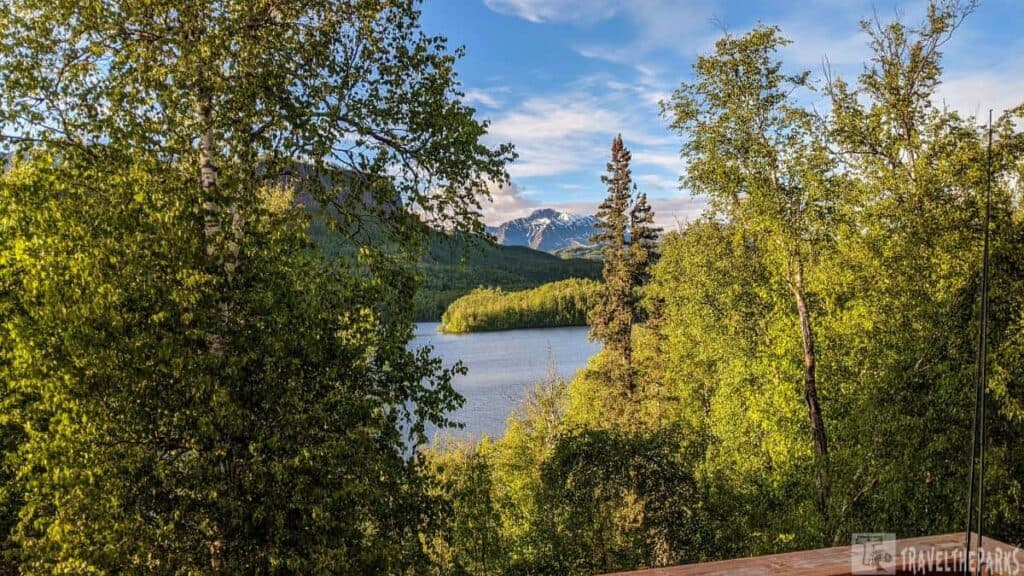
Top 10 Lesser-Known National Parks for Your RV Adventure
We’ve picked ten parks that work well for RVs, won’t overwhelm you with crowds, and each have their own weird, wonderful personality.
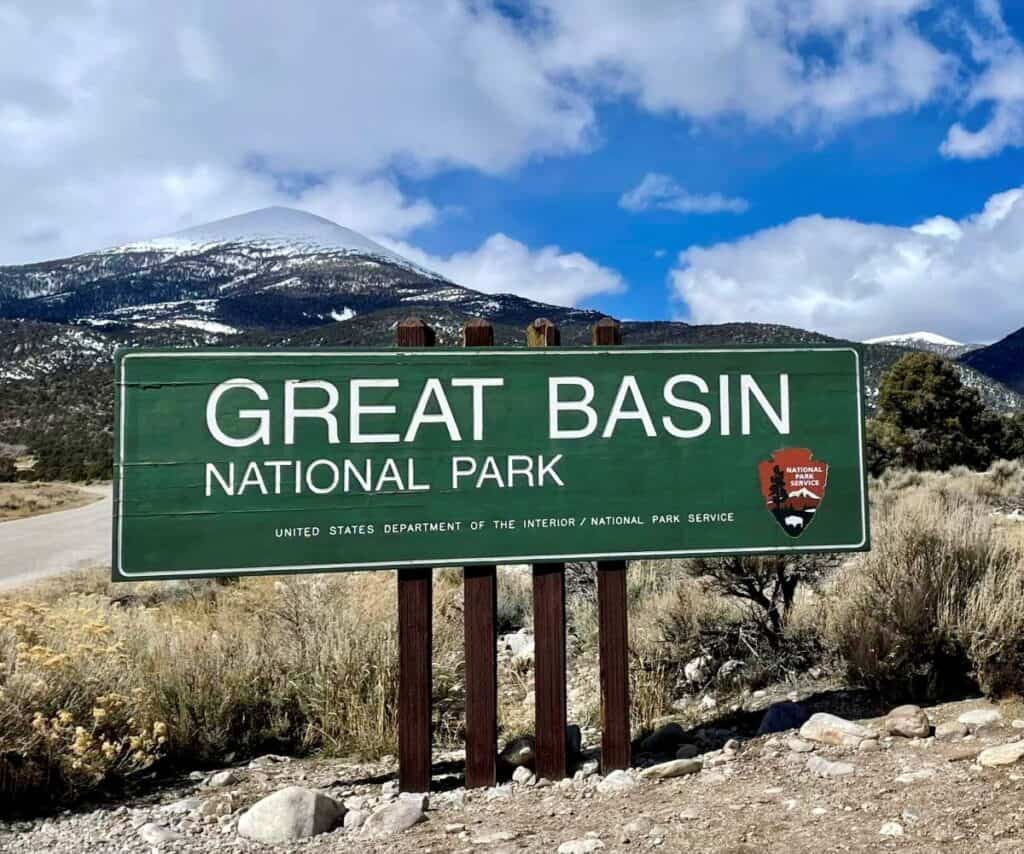
1. Great Basin National Park (Nevada)
Brief Overview: This park is way out there, tucked right against the Utah border in eastern Nevada. Not the kind of place you stumble upon. It’s a dark sky paradise, sure, but also home to these ancient bristlecone pines—some pushing 5,000 years old. You can tour Lehman Caves or hoof it up to Wheeler Peak. Air’s thin and crisp. And after dark? The Milky Way hangs so low and bright you’d swear you could reach out and touch it.
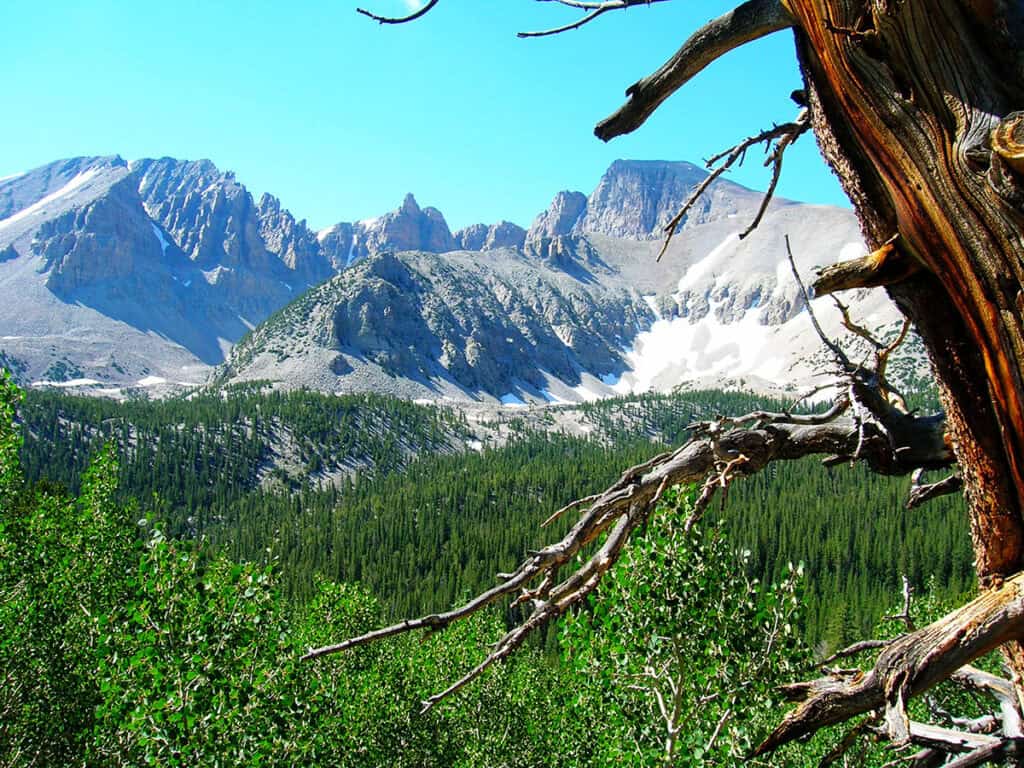
Brief History: People have been scraping out a life in the Great Basin region for over 10,000 years. The Fremont and Shoshone used to pass through, hunting and gathering with the seasons. The park itself didn’t become official until 1986—one of the newer ones, believe it or not. And Lehman Caves? Locals had been showing it off to tourists since the 1920s, long before the park ever swallowed it up.
Final Thoughts: We sat on a rock at 10,000 feet and watched the sky put on a show for two hours. No phones. No headlights. Just us and about a billion stars. This is exactly the kind of hidden gem national park we keep coming back for. Bring extra blankets—it gets cold even in summer.
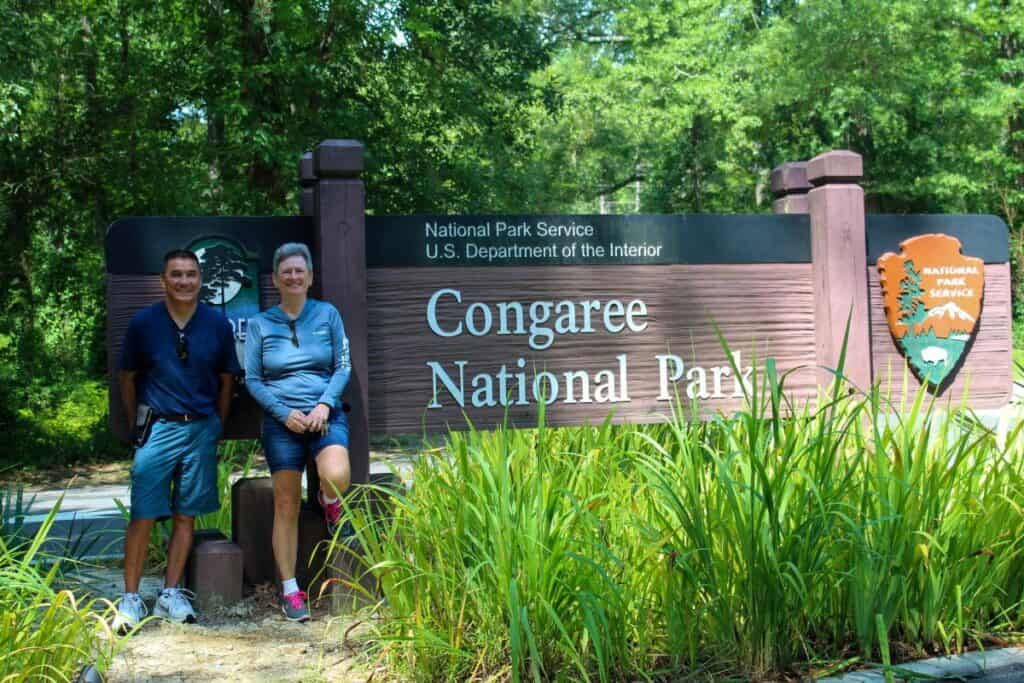
2. Congaree National Park (South Carolina)
Brief Overview: This place is basically a floodplain forest, which sounds about as exciting as watching moss grow. But then you see it—and you get why this counts as one of the most underrated national parks east of the Mississippi. Congaree National park is home to gigantic hardwoods—some of the tallest in the eastern U.S.—shoot up right out of swampy ground. You get around on a boardwalk, about two and a half miles in a loop, or by canoe if you’re feeling adventurous. And the mosquitoes? Legendary. Don’t mess around—respect them.
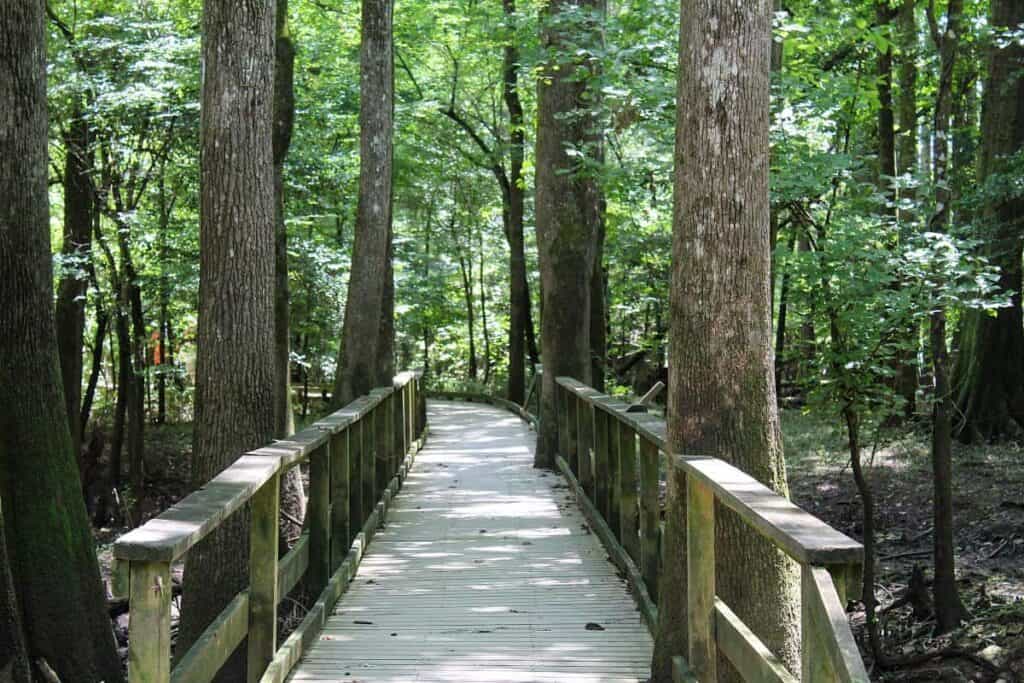
Brief History: Back in the day, the loggers went through this land like it was an all-you-can-cut buffet. But folks started trying to protect it in the 1970s. Became a national monument in ’76, then a full-on national park in 2003. This old-growth bottomland forest is one of the last of its kind left in North America.
Final Thoughts: We forgot bug spray once. Just once. Don’t be like us. The boardwalk is flat, easy, and gorgeous. If you go in summer, bring a head net unless you want to donate blood to the cause.
3. Dry Tortugas National Park (Florida)
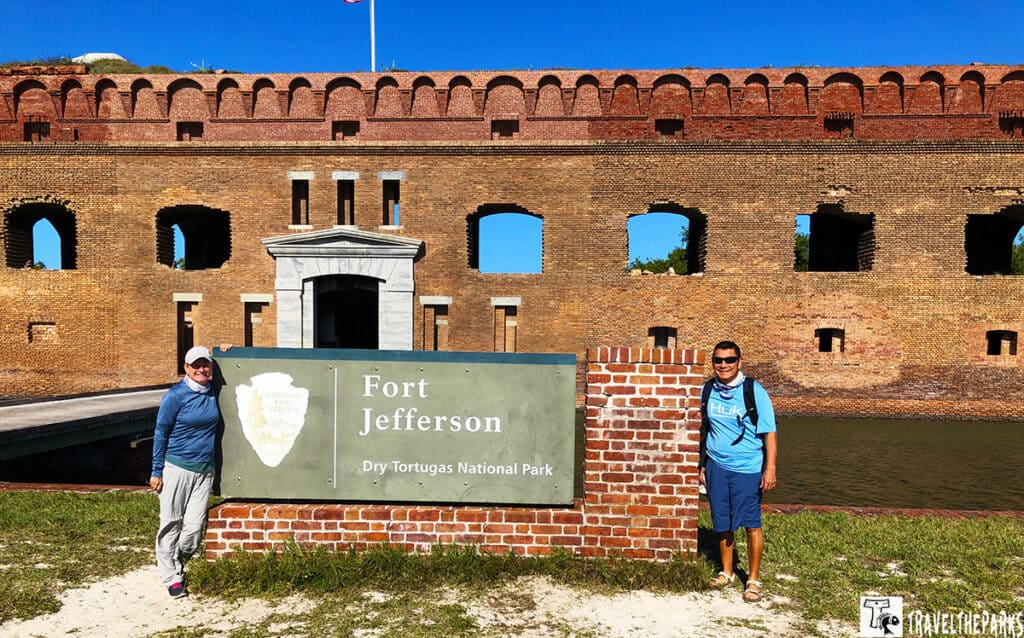
Brief Overview: Seventy miles past Key West, this park is mostly just open water and one massive old fort from the 1800s called Fort Jefferson. You’re getting there by seaplane or ferry—those are your only options. Snorkeling is unbelievable. No RV campsites out there, but you can pitch a tent on the island with a permit, or just park your RV in Key West and do a day trip.
Brief History: Spanish guy Ponce de León stumbled onto these islands back in 1513. They started building the fort in 1846 and kept at it until 1875, mostly to watch over the shipping lanes. Never did finish the thing. Later, they turned it into a prison—the most famous inmate being Dr. Samuel Mudd, the one tied up in the Lincoln assassination.
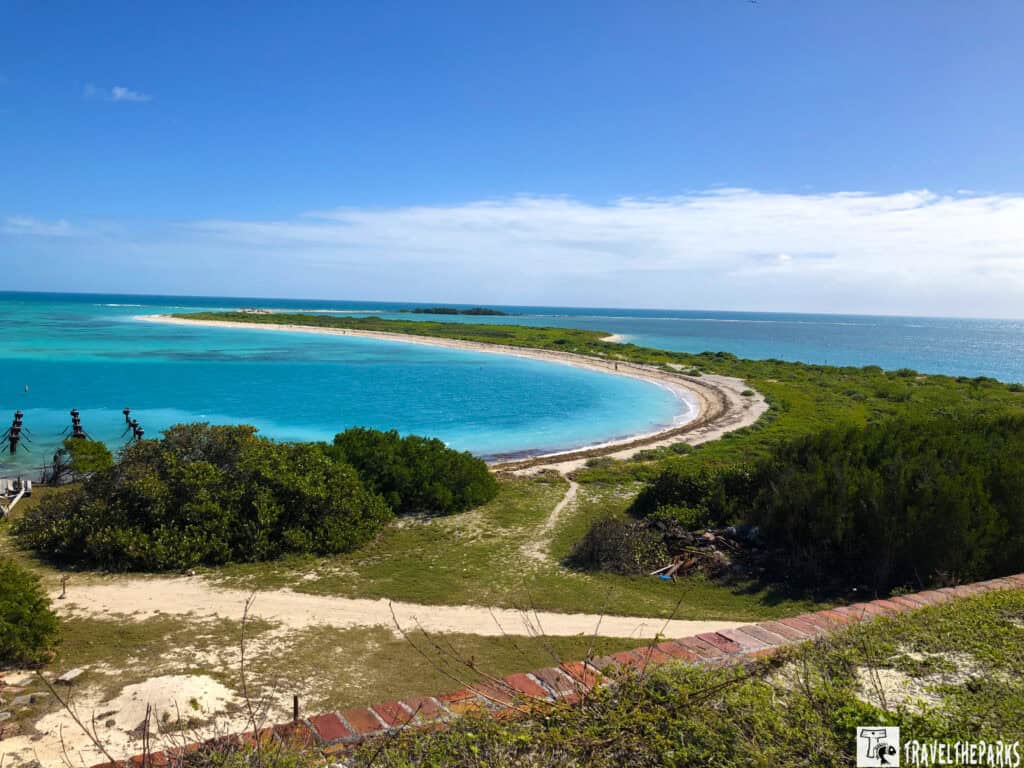
Final Thoughts: And yeah, it’s expensive to get here but worth every penny. The water is so blue it doesn’t look real—like somebody cranked the saturation knob on the whole world. That water is so blue you’ll swear someone messed with the settings. Now, this isn’t technically an RV campground—not even a little bit. But you can base your RV in Key West and day-trip out. Just book the ferry months ahead. Spots go quick.
4. North Cascades National Park (Washington)
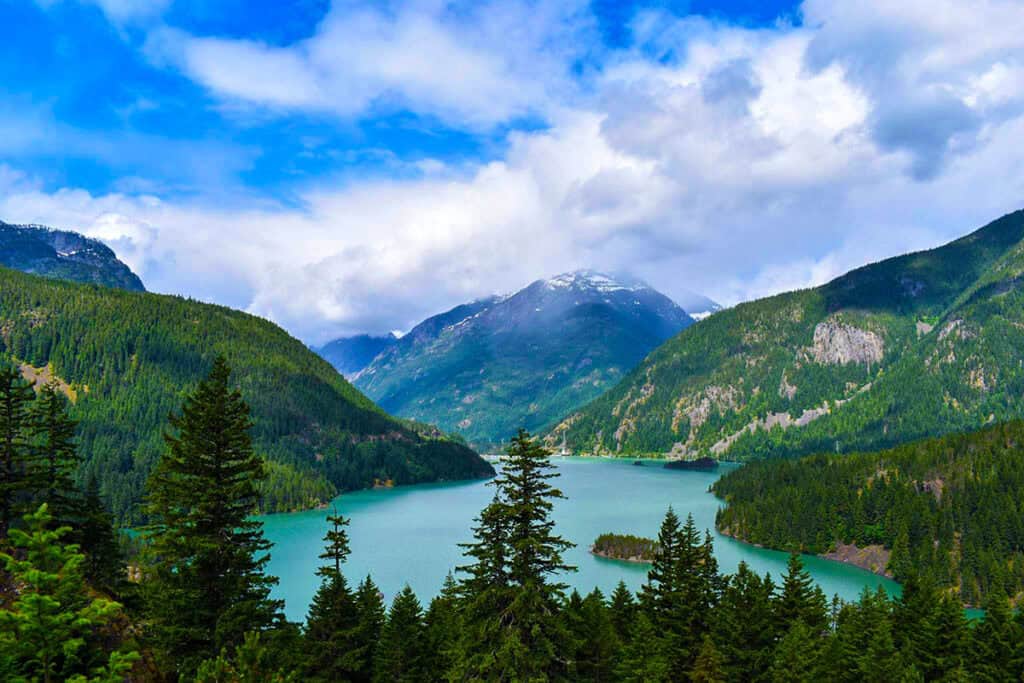
Brief Overview: Over 300 glaciers carve their way through this landscape, flanked by jagged peaks that look sharp enough to cut the sky. And the trails? You could spend a month out there and still leave a hundred miles unexplored. But don’t expect a breezy road trip—this corner of Washington stays wild, distant, and blissfully overlooked—one of the truly uncrowded national parks left in the lower 48. While Olympic and Rainier battle summer crowds, this place stays quiet, serving up sweeping views from SR 20 at almost every bend.
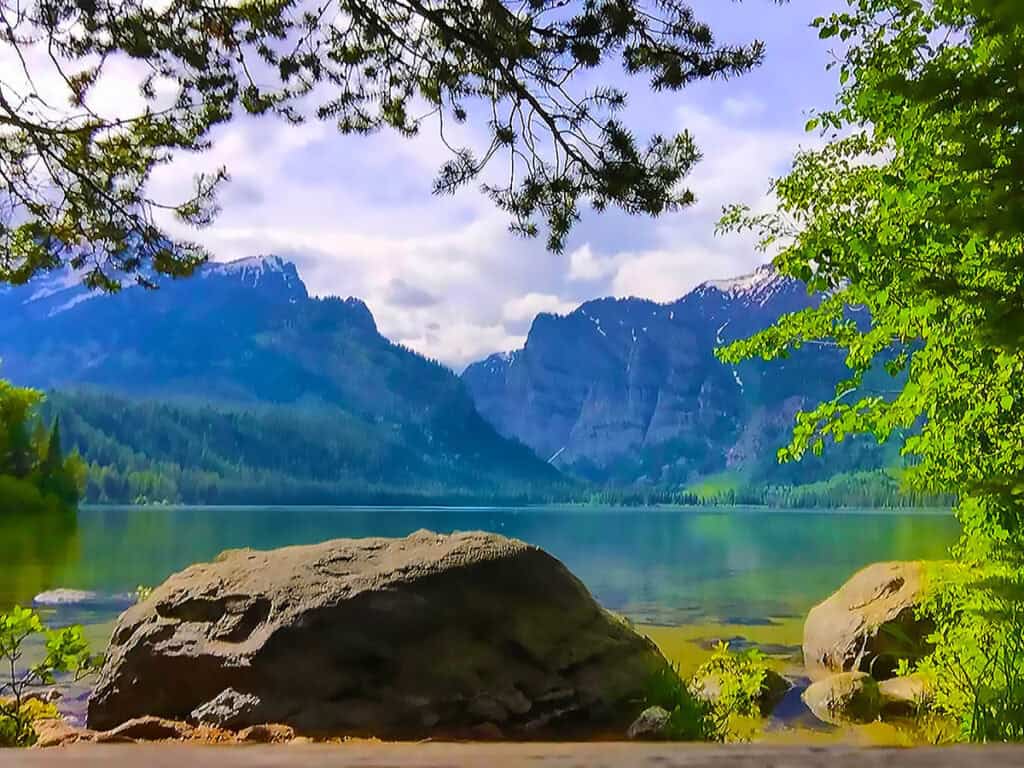
Brief History: So the Skagit, Sauk-Suiattle, Nlaka’pamux—they were here first. Way first. Thousands of years, we’re talking. Then 1968 rolls around and suddenly it’s a “park.” But here’s what’s interesting—most of the land around it? Still protected. Still wild. They don’t let you build much out there. Which honestly? Thank goodness.
Final Thoughts: We drove the North Cascades Highway on a July morning and saw maybe ten other cars. Ten. In July. The waterfalls pour straight off the cliffs onto the road. Pack layers—the weather changes faster than a toddler’s mood.
5. Capitol Reef National Park (Utah)
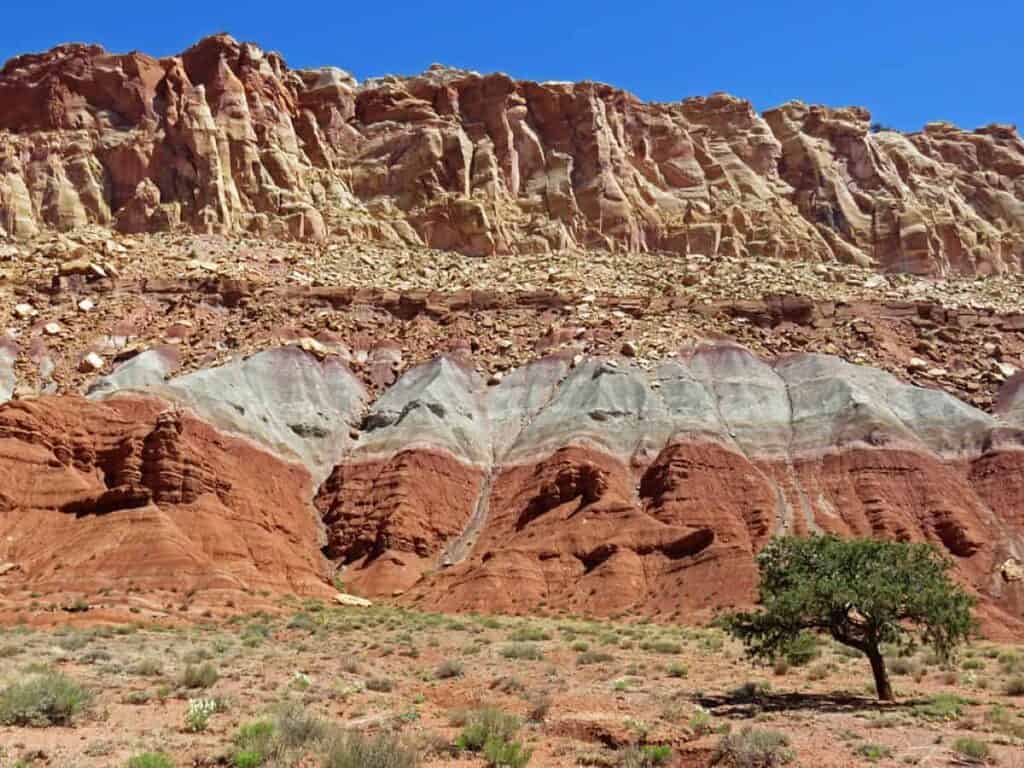
Brief Overview: Stuck between more famous neighbors (Zion, Bryce, Arches, Canyonlands), Capitol Reef somehow remains one of the most overlooked national parks in Utah. It has a “Waterpocket Fold”–a 100-mile wrinkle in the earth’s crust–plus orchards where you can pick fruit in season. The scenic drive, part of the Grand Circle is RV-friendly.
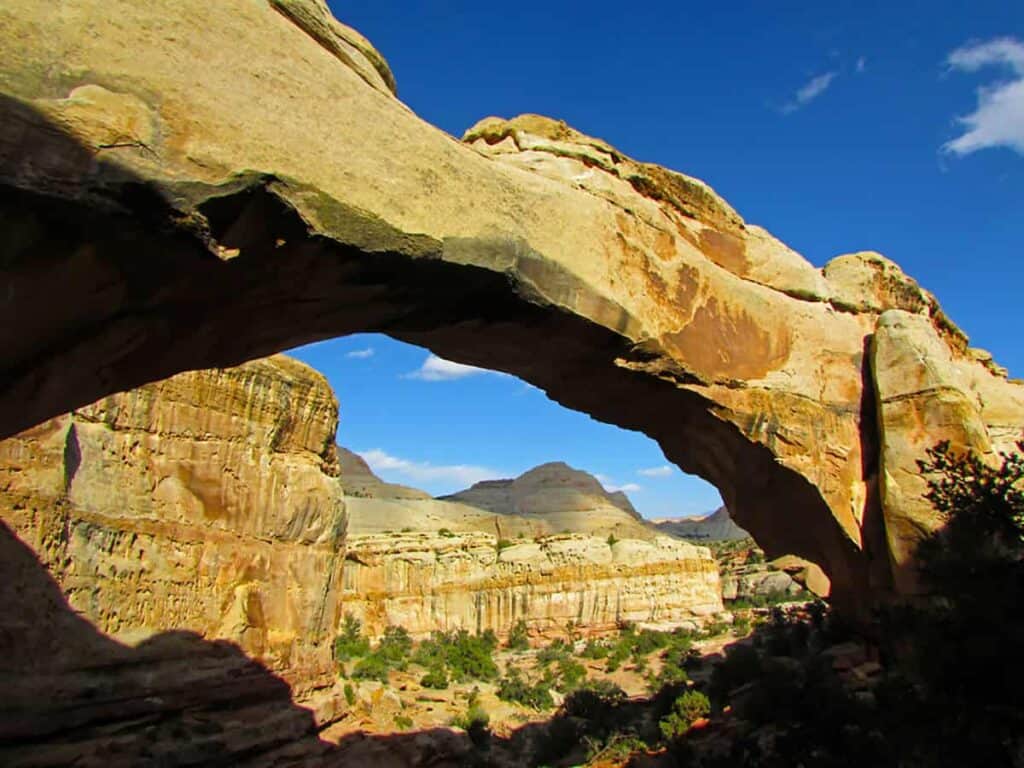
Brief History: So the Fremont people—they were around first. Way before anyone else. Until like, 1300 or something? And then—nothing. They’re just… gone. Fast forward. 1880s. Mormons show up. Start a little town called Fruita. And get this—the schoolhouse is still there. Original. The orchards too. Which is wild, because the park itself didn’t even become a park until 1971. So for almost a hundred years, it was just this little pioneer spot tucked in the middle of nowhere.
Final Thoughts: One thing I’ll say—the pie at Gifford Homestead is legit. Mixed berry’s the move. Don’t overthink it. The drive along UT-24? Totally RV-friendly. No hairpin turns, no white-knuckle moments. And Grand Wash—definitely do that one. It’s not a hike, really. More of a stroll. But the canyon walls rise up on both sides and it gets all quiet and echoey. Feels sacred, almost. Like a cathedral built out of rock.
6. Guadalupe Mountains National Park (Texas)
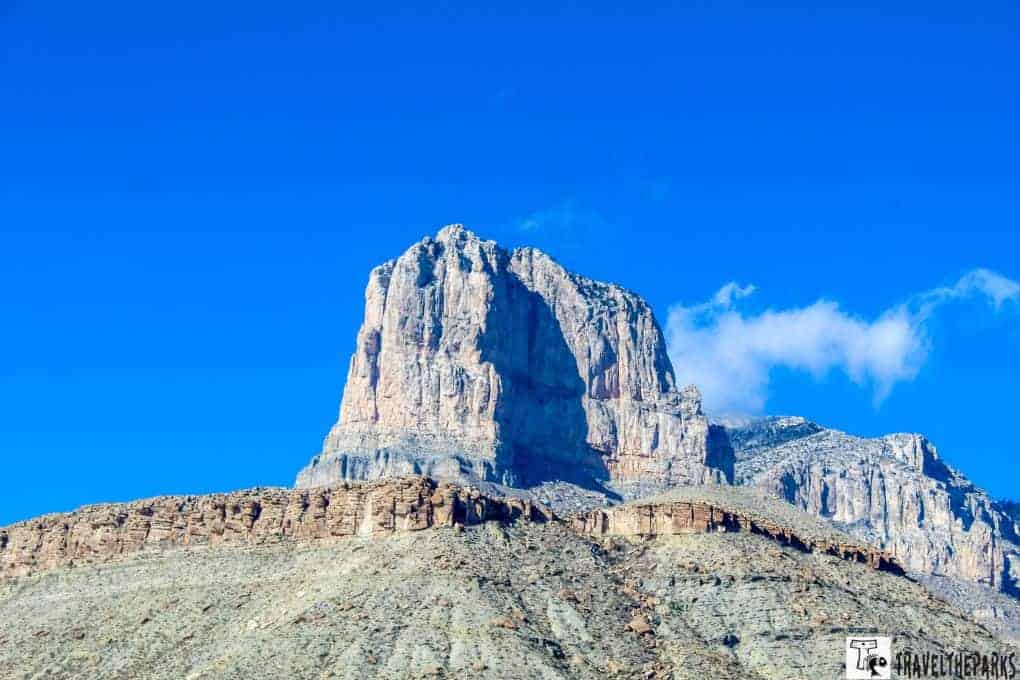
Brief Overview: Here’s the thing about this park—it’s got the four tallest peaks in Texas. Guadalupe Peak tops out at 8,751 feet. But honestly? It’s the remoteness that gets you. And the wind. Man, the wind. It’s beautiful though—in that stark, stripped-down way deserts are. McKittrick Canyon’s the real draw though. Fall rolls around and suddenly the whole place is on fire with color. Which is wild, because Texas isn’t exactly known for autumn foliage.
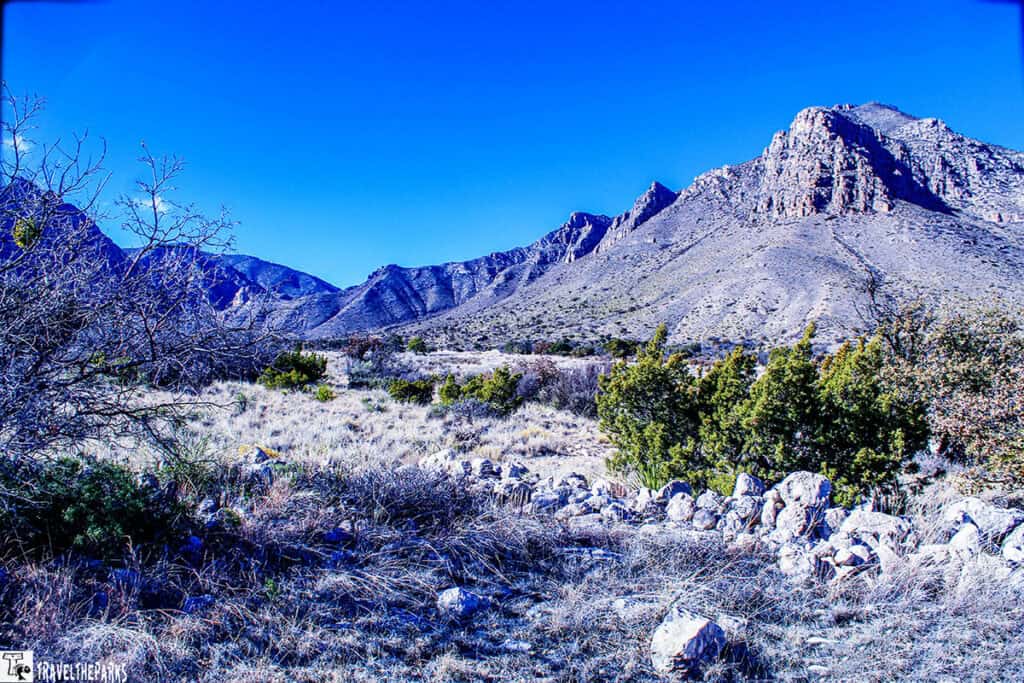
Brief History: Here’s the backstory. Mescalero Apache lived here first—called it home long before anyone else showed up. Then came the stagecoach days. Butterfield Overland Mail route cut through, carrying passengers and mail across this brutal, beautiful landscape. But the park? That took a while. 1972, finally. And it only happened because locals fought for it—one rancher in particular, J.C. Hunter Jr., just kept at it. Dude was persistent. We owe him one.
Final Thoughts: The wind. Oh man, the wind. It doesn’t stop. Ever. We’re talking 3 AM, lying in the RV, completely convinced we’re about to roll over like a flipped turtle. We didn’t. Obviously. But seriously—bring earplugs. You’ll thank me later. And the Guadalupe Peak trail? Brutal. Your thighs will hate you. But when you get to the top? Standing on the highest point in Texas? That view stays with you. Forever. Put it on your list.
7. Isle Royale National Park (Michigan)
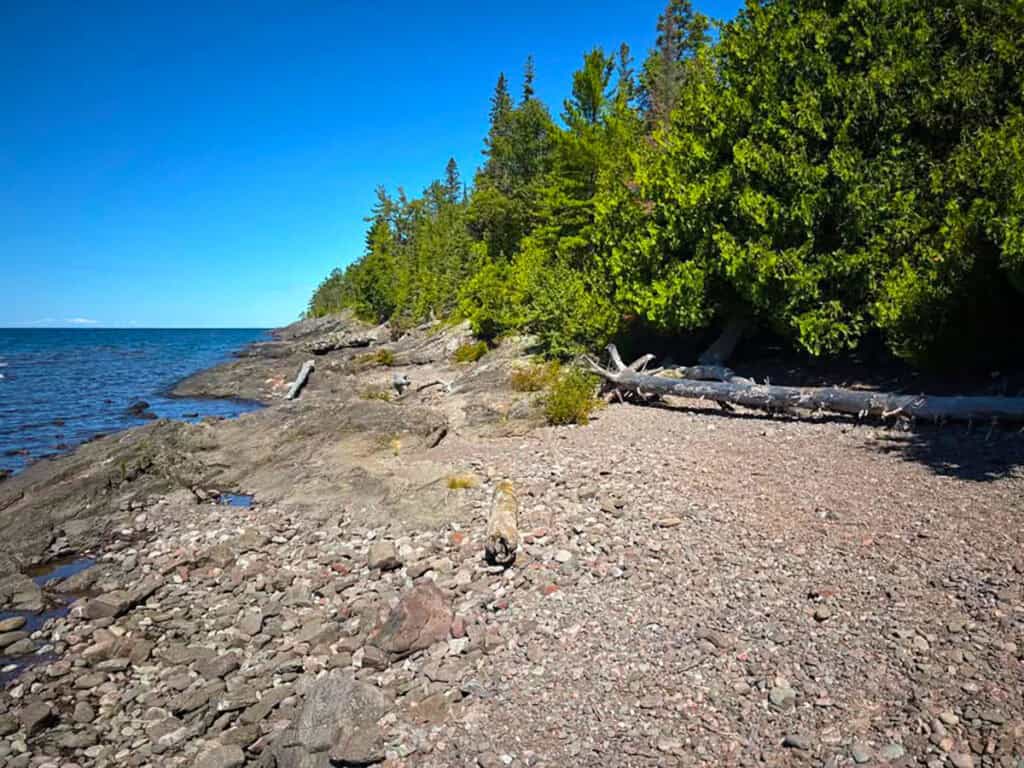
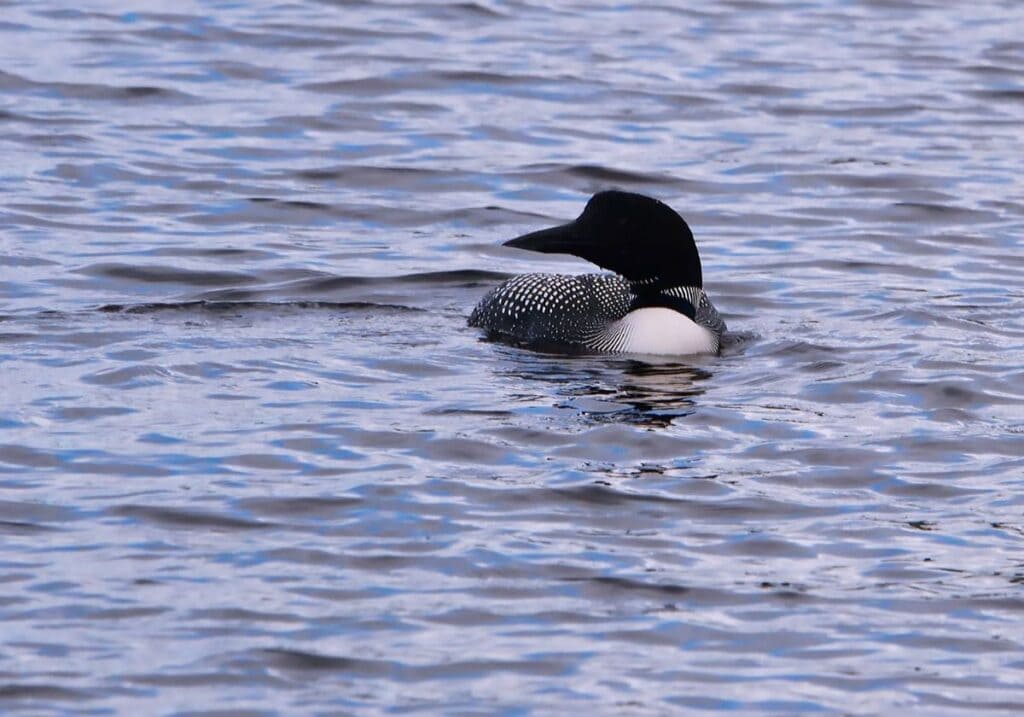
Brief Overview: Okay, this one’s different. Isle Royale is an island in Lake Superior—no driving in. Ferry, seaplane, or private boat only. The residents are wolves and moose, about 15,000 of them. Humans? Maybe a couple hundred on a busy day. That’s the appeal. Leave the RV in Houghton or Copper Harbor—yes, it feels like breaking the rules of an RV trip, but this place is worth bending them for.
Brief History: Copper’s what put this island on the map — Native peoples knew that long before European miners arrived in the 1800s. After that it was fishing, then tourism, then a national park designation in 1940. Later it picked up an International Biosphere Reserve designation too—which basically means ecologically important. Not bad for a remote island in Lake Superior.
Final Thoughts: Full confession—the RV stays on the mainland. Technically this isn’t an RV stop. But it’s too strange and too good to leave off the list. The forest is genuinely untouched—no landscaping, no lawnmowers, just wild and quiet and old. And the moose are enormous. Bigger than you’re picturing. They are not cute woodland creatures. Keep your distance.
This one’s a detour from the usual Midwest road trip route—and honestly, that’s what made it unforgettable. If this kind of detour is your thing, check out our Midwest Road Trip Guide—we’ve rounded up more hidden gems worth the side trip. The unplanned stops usually win.
8. Black Canyon of the Gunnison National Park (Colorado)
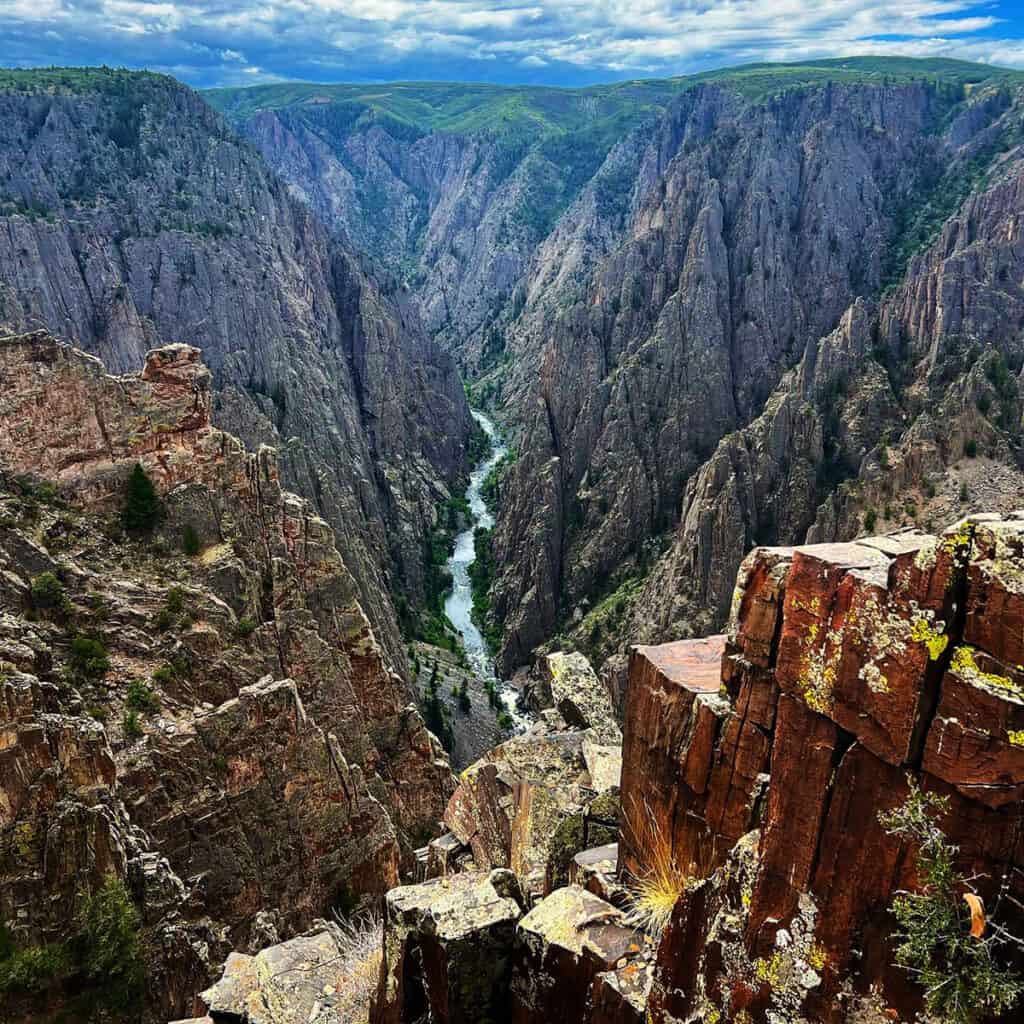
Brief Overview: So the Grand Canyon gets all the hype. But Black Canyon? It’s not wide—it’s narrow, steep, and honestly kind of dark. The walls shoot up almost 2,000 feet on both sides, and some spots at the bottom only get 33 minutes of sunlight a day. Barely half an hour. The south rim road is super accessible—pull-offs everywhere, even for RVs. And these Colorado views will literally make your stomach drop every time you look over.
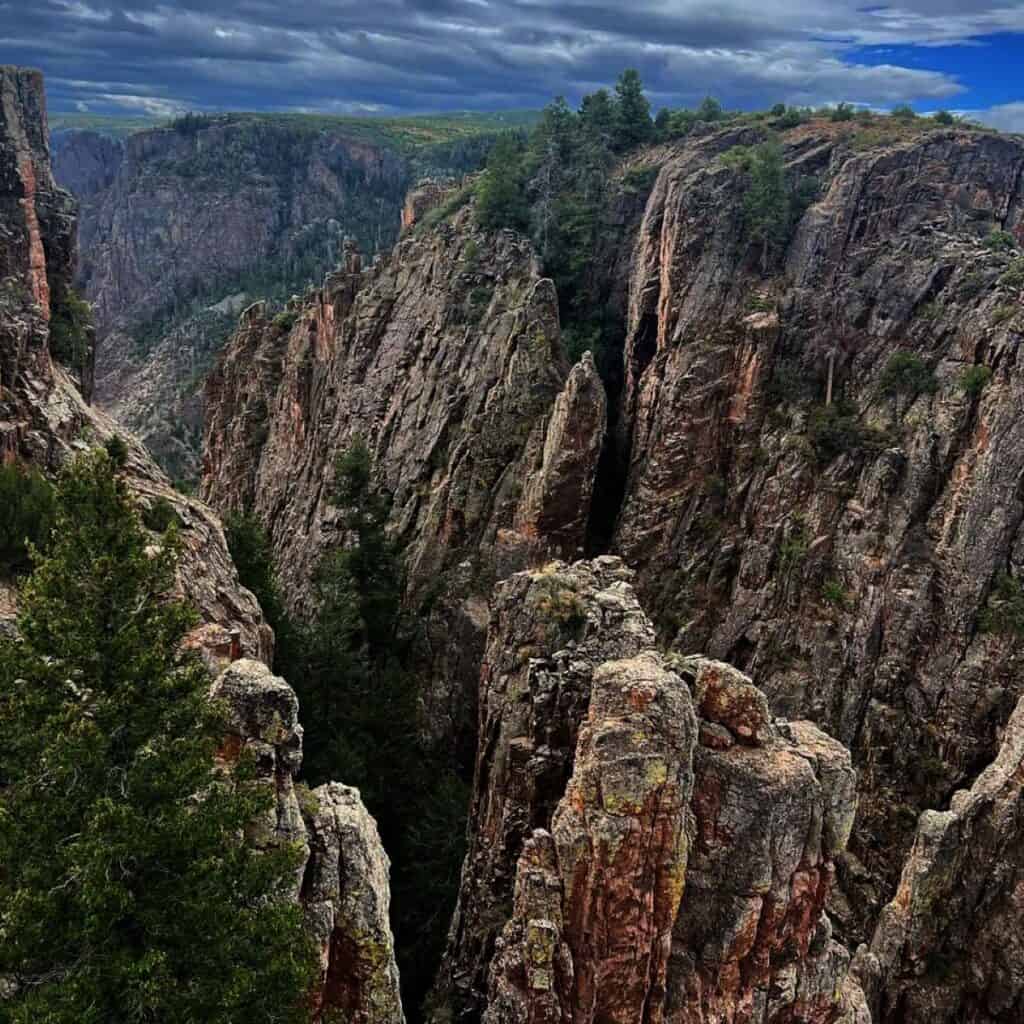
Brief History: The Ute people knew this canyon well—hard to miss it—but they didn’t settle there. Steep walls, almost no sun, not exactly prime real estate. Early explorers called it “the bottomless gorge,” which tracks. It earned national monument status in 1933, then got the full national park upgrade in 1999.
Final Thoughts: We walked up to the edge and—whoosh. Genuine dizzy spell. Had to grab the rail and take a step back. The rock is almost black, which gives the whole place a slightly ominous feel, and if you squint you can spot the river way down below—just a thin silver thread winding through all that dark. The drive in is completely manageable, even with an RV. The trails, though? They’ll test you. Loose rock, steep angles, real scrambling. I stayed up top with the view. No regrets.
9. Theodore Roosevelt National Park (North Dakota)
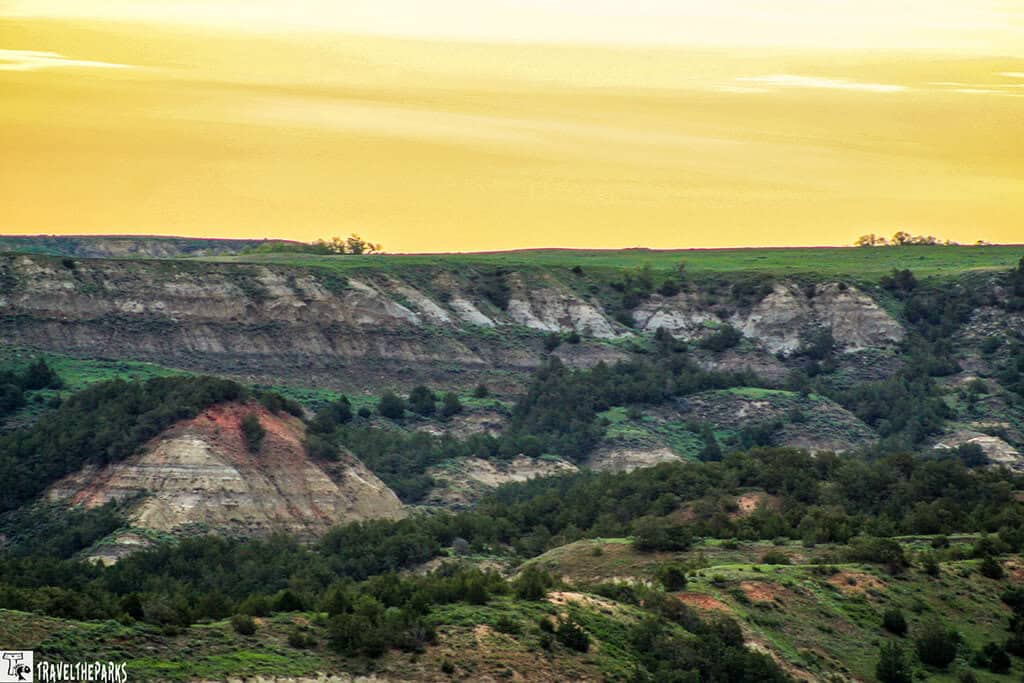
Brief Overview: Here’s what nobody tells you about Theodore Roosevelt—it grows on you slow. No big dramatic feature to anchor a photo. Just grass, wind, sky, and badlands that ease into prairie like they’ve always belonged together. Bison own the road and know it. Wild horses drift through when they feel like it. Prairie dogs run the whole operation from underground. The 36-mile loop is paved and RV-manageable with pull-offs to spare—just don’t be in a hurry. The bison make the schedule here, not you.
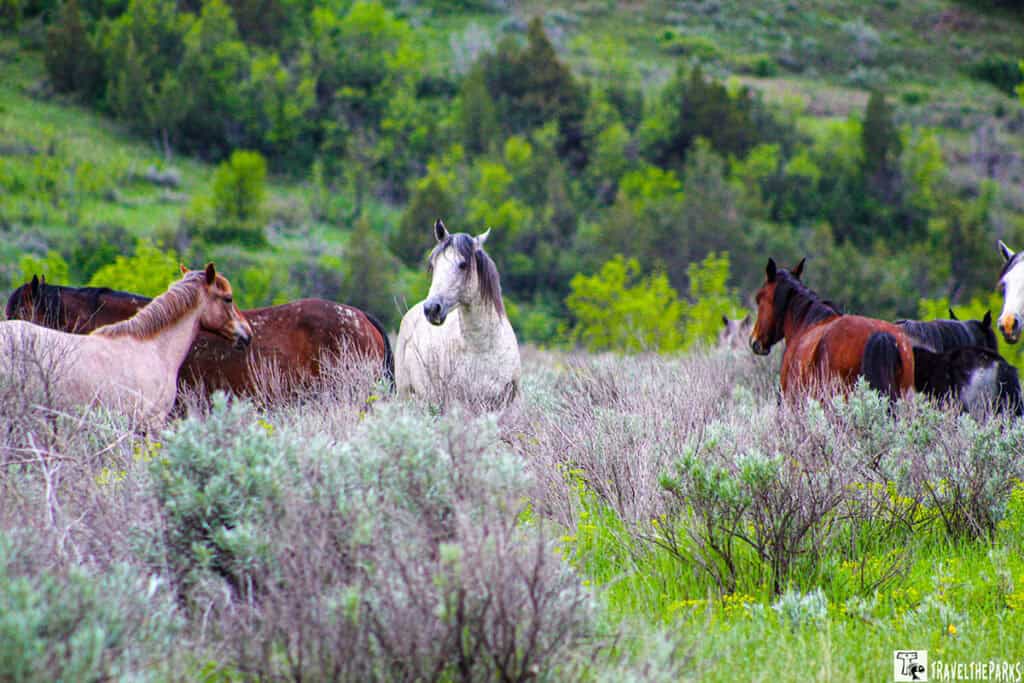
Brief History: So, long before Teddy Roosevelt, the Mandan, Hidatsa, and Arikara lived here. Fur traders followed. Then the railroad. Roosevelt landed in the 1880s looking for a hunt and found something he wasn’t expecting. The badlands rewired him—that’s not an exaggeration. The experience fed directly into the conservation legacy he built as president. Funny thing is the park didn’t get his name until 1947, well after he died. Still the right call.
Final Thoughts: The quiet is what gets you. Real quiet—not the fake quiet of a campground at midnight, but the kind that makes you stop mid-sentence. We watched a bison amble past maybe thirty feet out and felt genuinely small. Painted Canyon overlook earns every superlative thrown at it. The loop drive is low-stress and smooth—good intro territory if you’re newer to RV travel and want a confidence boost before tackling something bigger.
10. Lassen Volcanic National Park (California)
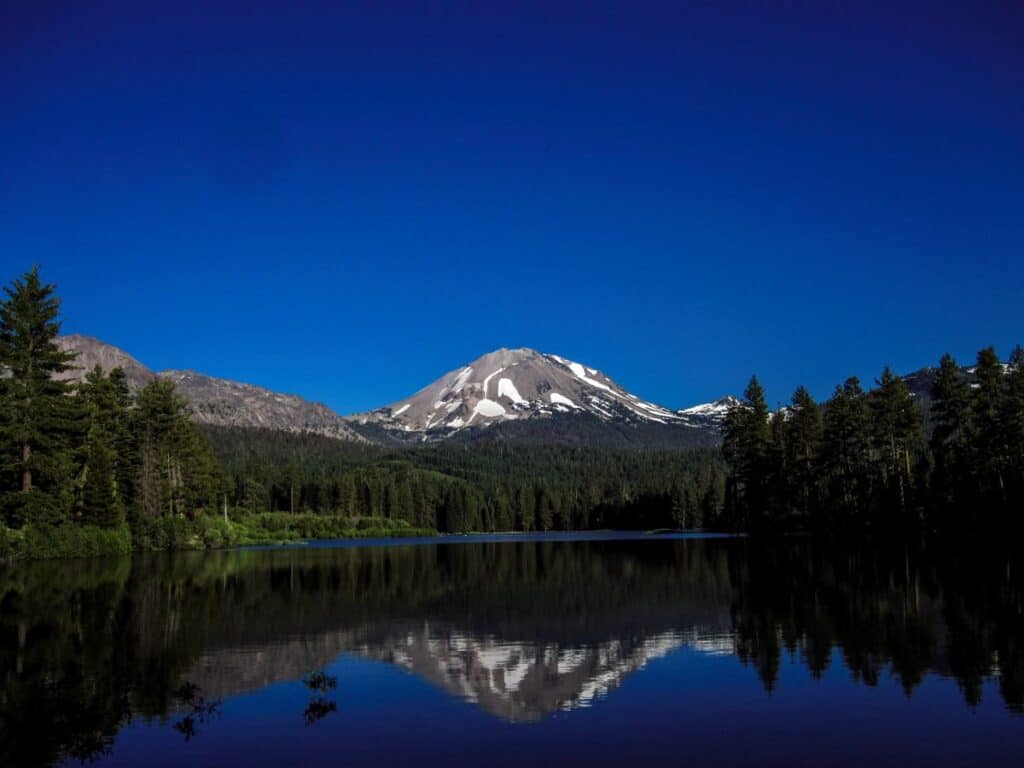
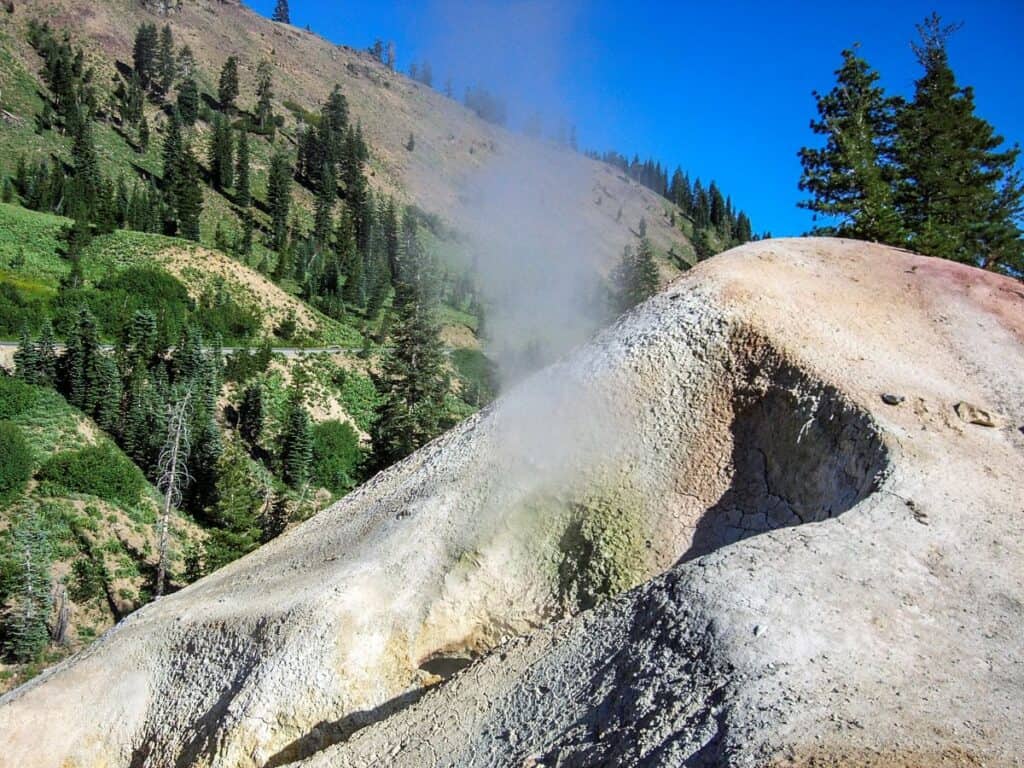
Brief Overview: This park has all four types of volcanoes—shield, plug dome, cinder cone, stratovolcano. All of them, one place. And it smells like it. Sulfur is everywhere, that unmistakable rotten egg scent hanging in the air while mud pots bubble underfoot and steam vents hiss along the trails. Highway 89 runs right through and handles most RVs fine—just slow to 10–15 mph on the tight curves. Rigs over 40–45 feet should check current conditions first. Take your time and you’ll be fine.
Brief History: The Atsugewi, Yana, and Mountain Maidu lived around this mountain for centuries like it was just part of the neighborhood—because it was. Then between 1914 and 1921, Lassen woke up and erupted repeatedly. They made it a national park in 1916 anyway, mid-eruption. Figured it would calm down eventually. It did.
Final Thoughts: One minute you’re walking through a normal pine forest, next minute—boiling mud, sulfur, ground hissing beneath your boots. The transition is jarring every single time. Strange, obsession-worthy place. Bumpass Hell trail is the non-negotiable must-do, but the parking lot is tiny and full by 9 AM. Early risers only. If Lassen’s on your California itinerary, it fits naturally into a broader Pacific Coast or Western National Parks road trip—one of those stops that ends up anchoring the whole route.
Planning Your RV Trip to These Parks
Let’s be real: driving a house on wheels into a remote, lesser-known national park takes a little planning. We’ve messed up enough times to save you some trouble, so here’s the stuff nobody thinks about until it’s too late.
- Reservations. Used to be you could just show up. Not anymore. Now you’re on Recreation.gov six months ahead for the popular ones. Dry Tortugas ferry? Book it the second you know your dates. People plan that a year out.
- Roads. Most of these parks are fine for RVs. The only trouble we hit was narrow campground loops in North Cascades and Lassen—low branches, tight squeezes. Now we call the ranger station. They actually pick up and tell you which loops to avoid.
- Dump stations & hookups. Assume you won’t have any. Plan to be self-contained. We hit free dump stations at truck stops or welcome centers. Boring but beats the alternative.
- Groceries. Stock up before you get there. Nearby towns are tiny—one gas station and a post office. We once paid six bucks for bread near Great Basin. Learn from us.
- Cell service. Forget it. Download offline maps. Tell someone your plan. And yeah, bring a paper map. The folding kind from 1995. Still works when satellites take the day off.
- Practical notes: Congaree and parts of Capitol Reef don’t have RV hookups, so check whether you need full hookups or are fine dry camping.
Benefits of Exploring Underrated National Parks
Why bother driving past the famous ones just to check out these lesser-known national parks? A few reasons.
- No crowds, no stress won’t burn an hour waiting for a shuttle or lap the parking lot like a vulture hoping somebody leaves. You just pull in, park, and start walking. Feels almost illegal, doesn’t it?
- Real quiet. Not that fake “suburban backyard” kind of quiet. We’re talking wind moving through pines, elk hollering across a valley, your own boots on dirt being the only thing you hear. Does something good to your head.
- Cheaper and easier. Campsites usually cost less, have better availability, and don’t feel like a blood sport. Some of these places don’t even charge an entry fee—Congaree and North Cascades, for example.
- You feel like an explorer. When there are maybe a couple dozen people in the whole park, the whole thing starts to feel personal. Not some checklist you’re burning through. It’s your own little adventure, and you don’t have to elbow strangers to have it.
- Better wildlife sightings. Animals don’t like crowds either. In the quiet parks, we’ve spotted foxes, elk, bighorn sheep, and even one black bear—from a safe distance, with plenty of room to back away slow.
Stuff That Earned Its Space
Every trip teaches you something new about what’s worth hauling around and what’s just dead weight. Here’s what earned its spot in the rig.
A water pressure regulator plus an extra-long hose bailed us out more than once when hookups turned out to be way farther from the site than we expected. Leveling blocks got used way more than we’d like to admit. And the surge protector basically paid for itself the day we fried a power cord out in Utah—lesson learned. We’re only linking stuff we genuinely used and would grab again.
We kept a tire pressure gauge sitting right on the dashboard and got in the habit of checking it before any mountain driving. Offline maps lived on our phones as backup, but honestly we still grabbed a paper map at every visitor center, because cell service disappears fast once you’re off the highway.
A portable jump starter saved us twice—once for our own rig, once for a neighbor whose battery had other plans. We always packed more water than we thought we’d need, along with easy, low-effort meals, since cooking in an RV loses its charm after a few days straight.
Folding chairs and a headlamp made evenings at the campsite so much easier, and a portable fire pit came in clutch on the trips where ground fires weren’t allowed. Layering was non-negotiable too—mornings up in the mountains start freezing, afternoons swing hot, and then it drops again by evening.
Round it out with sturdy hiking boots, sunscreen, bug spray, and a paperback for the slow nights, and you’re basically covered. Oh—and don’t skip a basic tool kit. Screwdrivers, pliers, duct tape, zip ties. We fixed more random stuff with that combo than we can even count at this point.
Final Thoughts: Off-the-Beaten-Path National Parks to Explore
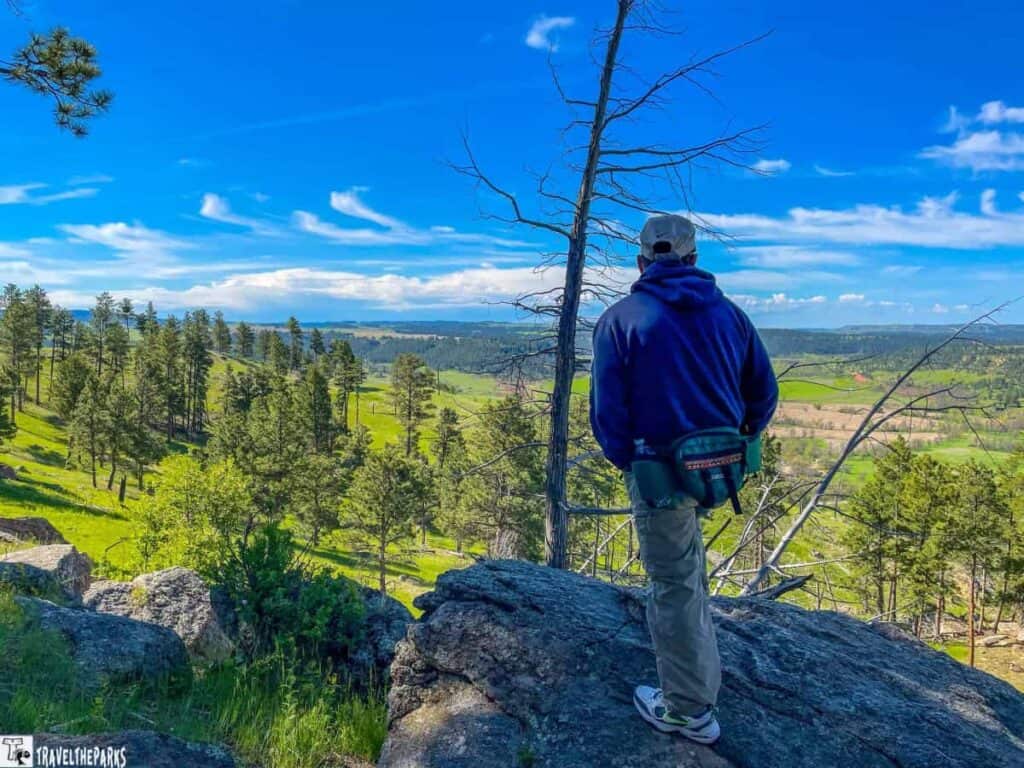
Can we talk about the pressure to hit the “big name” parks? Everyone’s like “you have to see Yellowstone, you have to do Yosemite.” And look—they’re great. They really are. But you don’t owe anyone a visit. There’s no national park police. No one’s checking. The best trips I’ve had? The ones where I just pointed the RV down some random road and ended up somewhere I’d never heard of. Trailhead had like two other cars. We parked right up front. No stress, no crowds, just quiet. That’s the real luxury of this life. It’s not about the rig or the gadgets or the length of your trailer. It’s the space. The silence. The fact that you can just… be.
What’s your favorite lesser-known national parks or similar spots? Spill it — I need more places to add to the RV bucket list