Somewhere between St. Louis and Memphis on our road trip, Trail of Tears State Park showed up on the map, and we needed a place to stop, anyway. It had hookups, and it was on the route, and that was the full extent of our research. We pulled in expecting a functional campground and ended up staying two nights without any real debate about it.
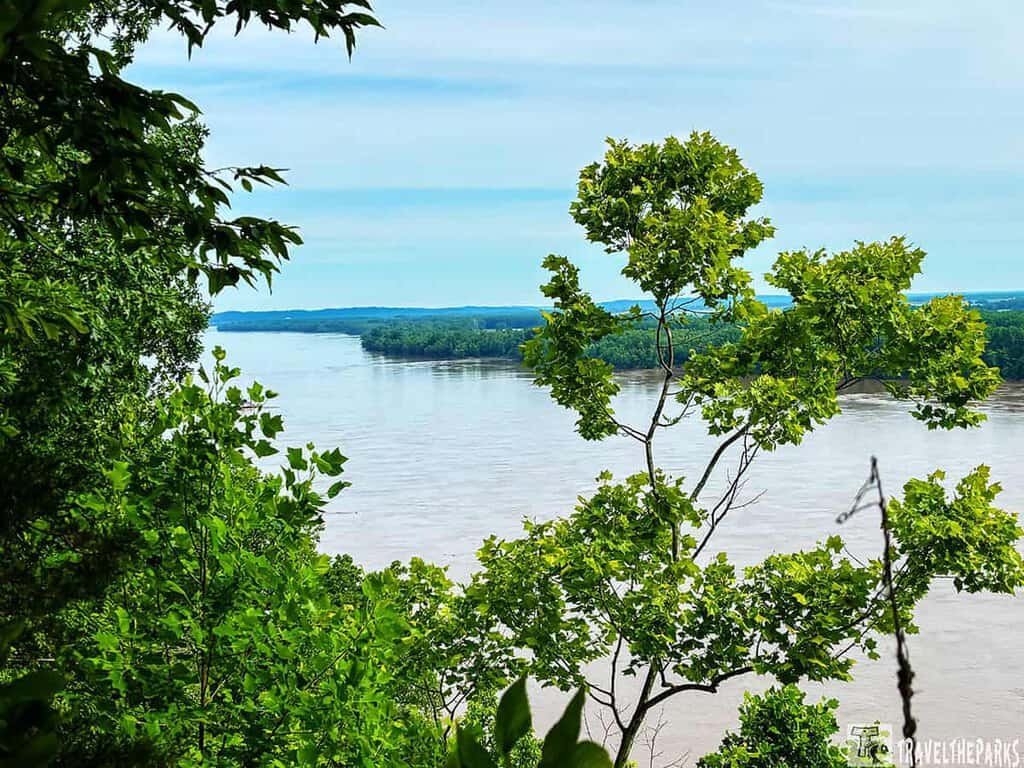
The park announces what it is right there in the name, so you arrive knowing this is not going to be purely about hiking and grilling hot dogs. And it isn’t. But it also sits on a bluff above the Mississippi River with decent trails, a quiet lake, and deer drifting through the campground at dusk like they pay rent. Both things are true at once, and somehow the park holds them together without it feeling forced.
This post may contain affiliate links, meaning if you purchase something through one of these links, we may earn a small commission at no extra cost to you! Read the full disclosure policy here.

Table of Contents
Need to Know Before You Go: Trail of Tears State Park
- Location: 429 Moccasin Springs Road, Jackson, Missouri. Sits in Cape Girardeau County on the eastern edge of Missouri, right along the Mississippi River. About 115 miles south of St. Louis and roughly 170 miles north of Memphis.
- Getting There: Roads into the park wind through small towns and rural stretches. They are paved and manageable, even for larger rigs. White-tailed deer cross without warning, especially at dawn and dusk. Consider yourself warned.
- Park Hours: Open daily. Day use area 7am to 10pm April through October; hours shorten in cooler months. Check Missouri State Parks for current seasonal hours.
- Admission: Missouri state parks charge no entrance fee. That is not a typo.
- Camping: Basic, electric, and full hook-up (sewer/electric/water) sites available, plus a group camping area. Reservations can be made up to 12 months in advance by calling 877-422-6766 or online through Missouri State Parks.
- Cell Service: Patchy in spots throughout the park. Download trail maps and reservation confirmations before arriving.
- Fishing: Both the Mississippi River and the 20-acre Lake Boutin offer fishing. A valid Missouri fishing license is required. The lake is stocked with bass, bluegill, and catfish. The river gives you catfish, perch, and carp.
- Pets: Welcome on trails and at campsites on leashes no longer than 10 feet. Not permitted inside any park buildings.
- One heads-up: The river campground sits close to active train tracks. Trains pass at night, and do blow their horns. Pack earplugs or embrace it as atmosphere. We went with the atmosphere. It took a while.
- Best Time to Visit: Spring for wildflowers and migratory birds along the Mississippi Flyway. Fall for foliage and cooler hiking. Winter brings bald eagles roosting along the river bluffs, which is genuinely worth the cold.
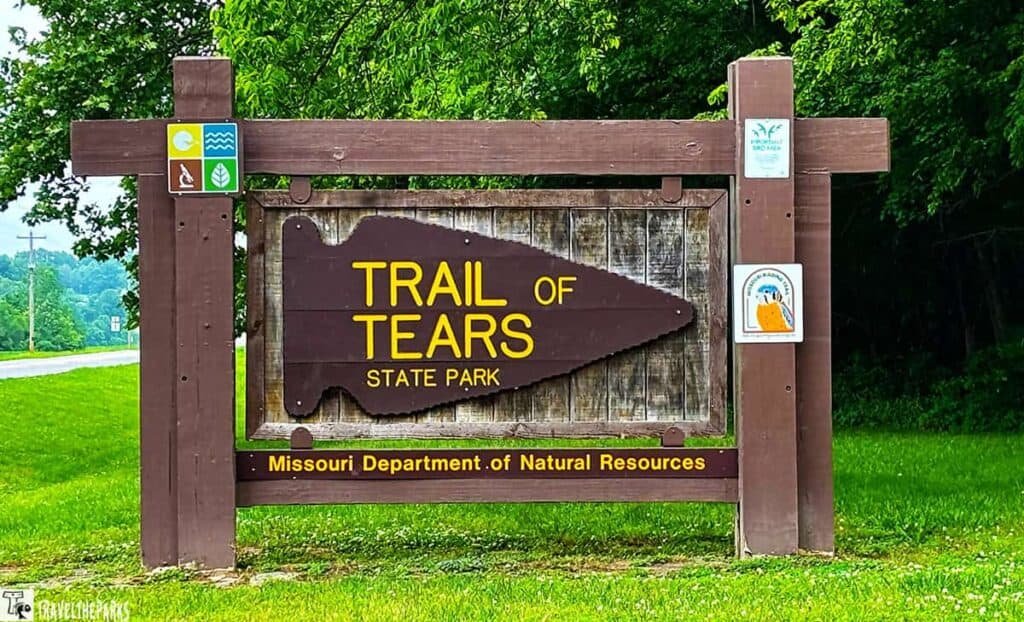
The History: Why This Park Exists
We will be straight with you—we knew the broad strokes of the Trail of Tears before we arrived, the way most people do from school. Originally, it was the Indian Removal Act of 1830 that, through its implementation, forced the removal of tens of thousands of Cherokee to Indian Territory. In 1838, over 16,000 Cherokees were forcibly removed by the U.S. Army. Their journey westward became known as the Trail of Tears. The casualties were so great that thousands died from cold, starvation, and disease before ever reaching their destination.
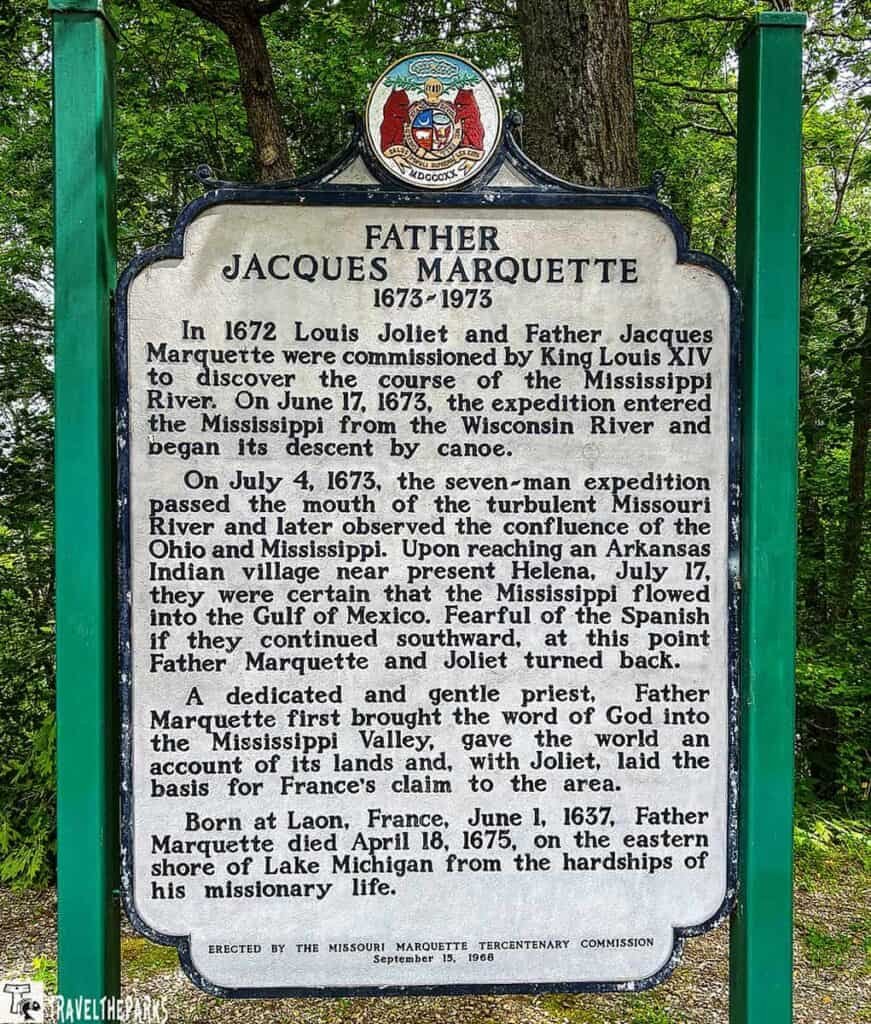
During the winter of 1838/1839, it was right here in Missouri that nine of the thirteen Cherokee detachments crossed the Mississippi River. The river was frozen in places. Groups were stranded for weeks waiting for conditions to improve. The story is not one that you will easily forget, and the park will not encourage you to feel at ease about it.
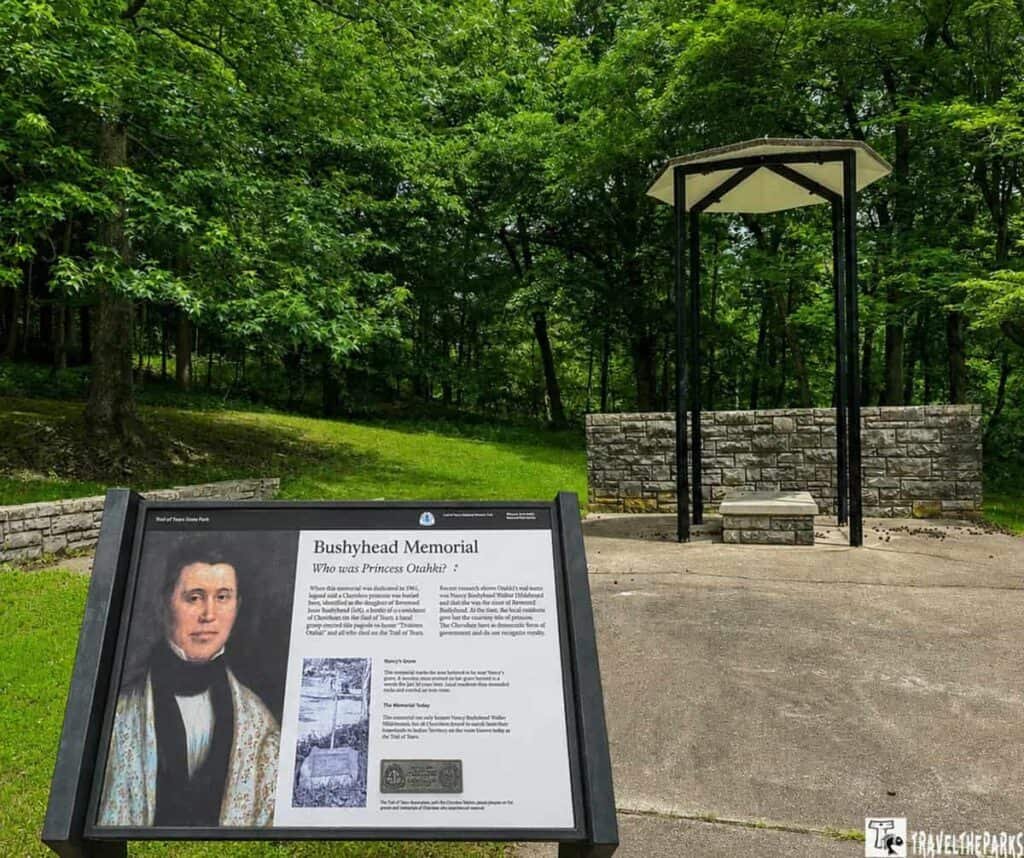
The Bushyhead Memorial in the park marks the area believed to be near the grave of Nancy Bushyhead Walker Hilderbrand, the sister of Reverend Jesse Bushyhead, who led one of the detachments. She died here on the trail and is buried somewhere within the park’s boundaries. The exact location is unknown, deliberately kept that way to protect her remains. It is a memorial not only for her but also for all those people who didn’t make it across this river.
It was set up as a memorial back in 1957, and while they take their mission seriously, they do not go on about it; they tell you what happened, leaving the rest to your own judgment.
The Visitor Center
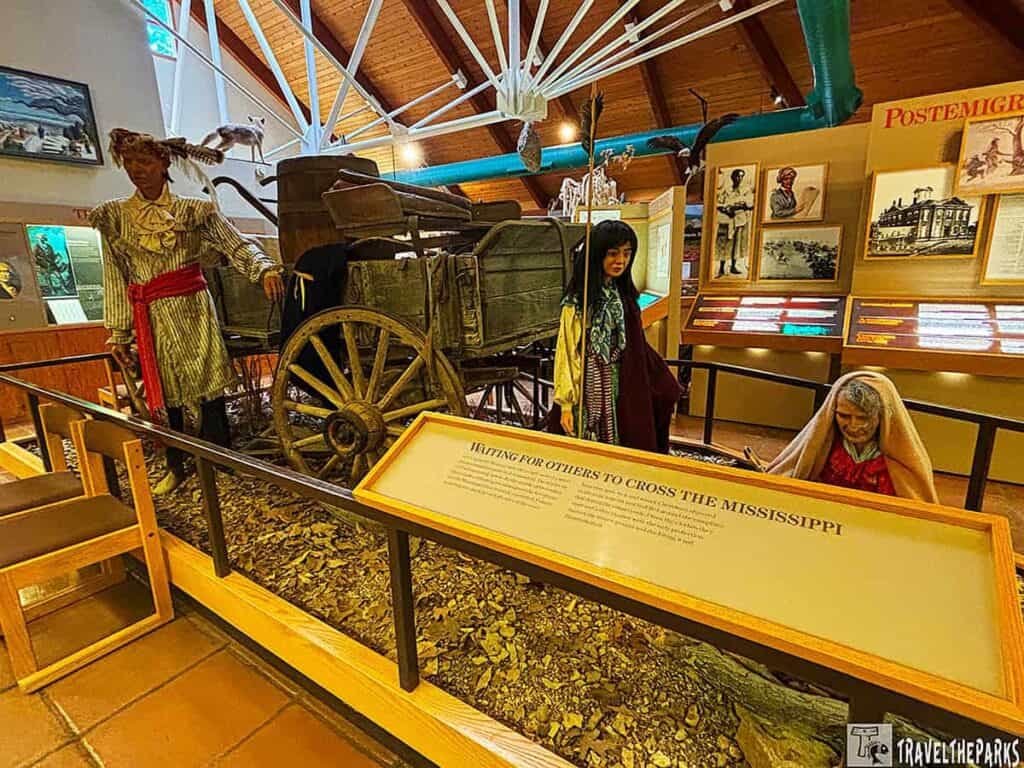
Do not skip the visitor center. It sits just past the main entrance and covers both the history of the removal and the natural side of the park, and it does both without feeling like a school assignment. There is a 23-minute documentary available on demand that we almost passed on because we wanted to get outside. We watched it anyway, and we are glad we did. It pulls no punches and uses Native American actors, which makes a difference in how the story lands.
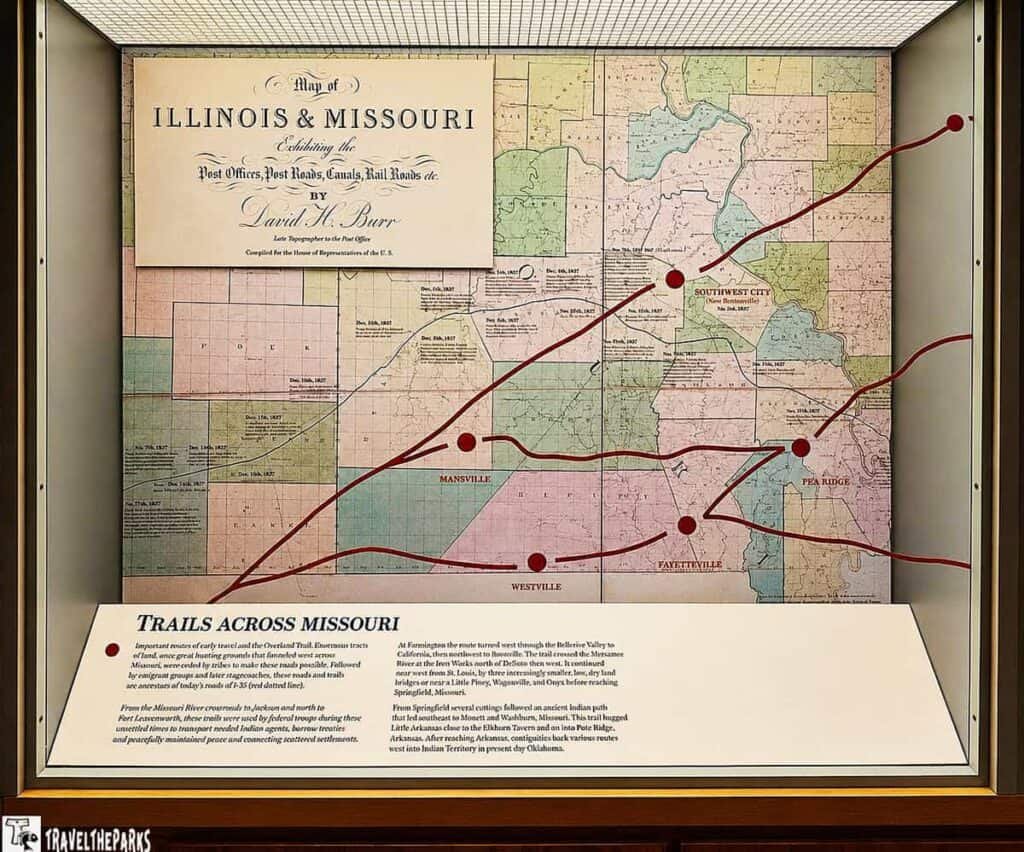
The rangers are worth talking to as well. We asked a couple of questions expecting the standard scripted answer and got a genuine conversation instead. They are very knowledgeable about their history, knowing more than just what is displayed on the exhibit plaques. If you are bringing your children along with you, then they will appreciate your questions. They are easy to understand for any age group and not oversimplified, which is difficult to do. Ask for a park map before you leave.
Camping at Trail of Tears State Park
The park has two campgrounds.
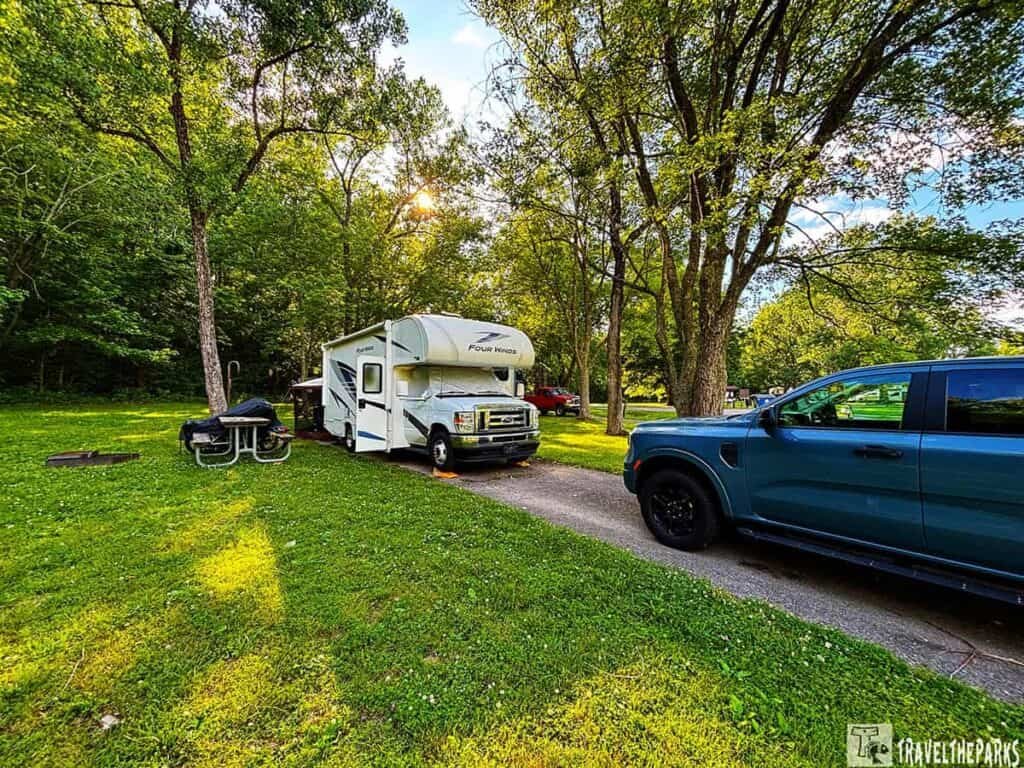
The river campground sits right along the Mississippi. And yeah, it’s as pretty as that sounds. Sites are roomy, well-shaded, and the view of the river in the evening is the kind of thing you don’t get at most campgrounds. The tradeoff? The train. It’s a real train with a real horn, and apparently it has somewhere important to be around 2 AM. We’re not saying do not stay there. Just bring earplugs if you’re a light sleeper.
The Lake Boutin campground is by the lake and the trailheads. We liked this one better for practical reasons. Quieter at night. Still shaded. Easy walk to the water. If you want to hit the trails early, this is the smarter choice. However, no utilities so it’s best for tent campers.
Both campgrounds have showers. At the river sites, the showers are about a quarter-mile away. That’s either a nice morning stroll or a minor annoyance, depending on how you feel about walking before coffee. We managed.
There are river campground has full hook-up sites too, and the roads inside the park handle RVs just fine. No scraping or weird turns.
Hiking Trail of Tears State Park
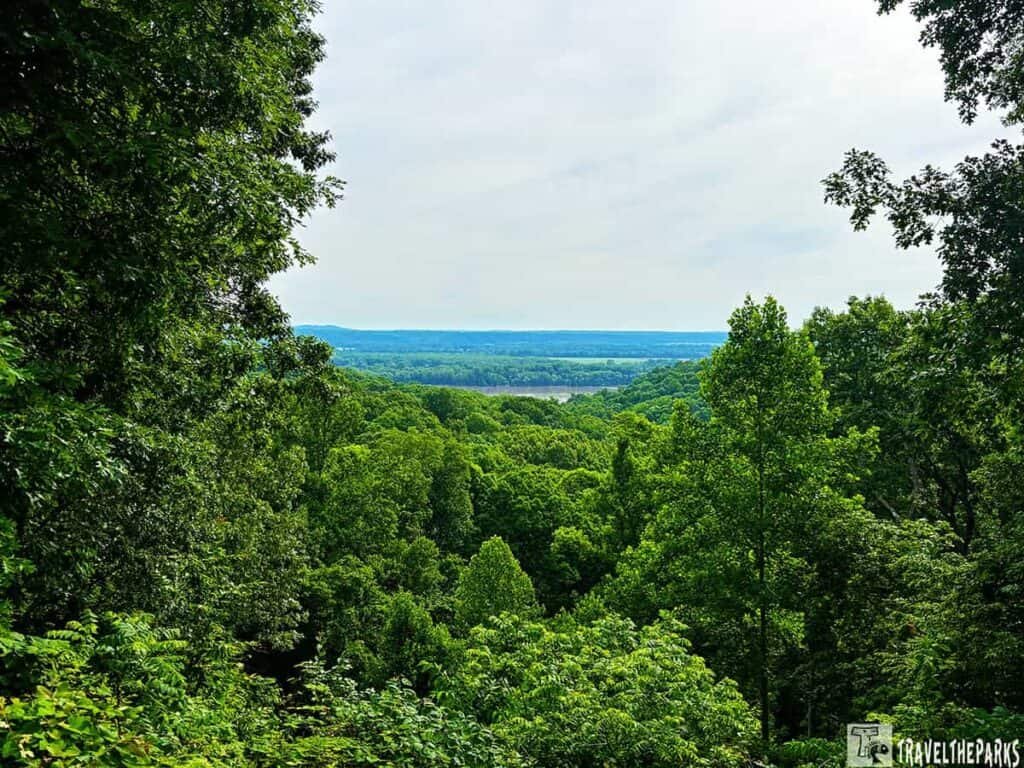
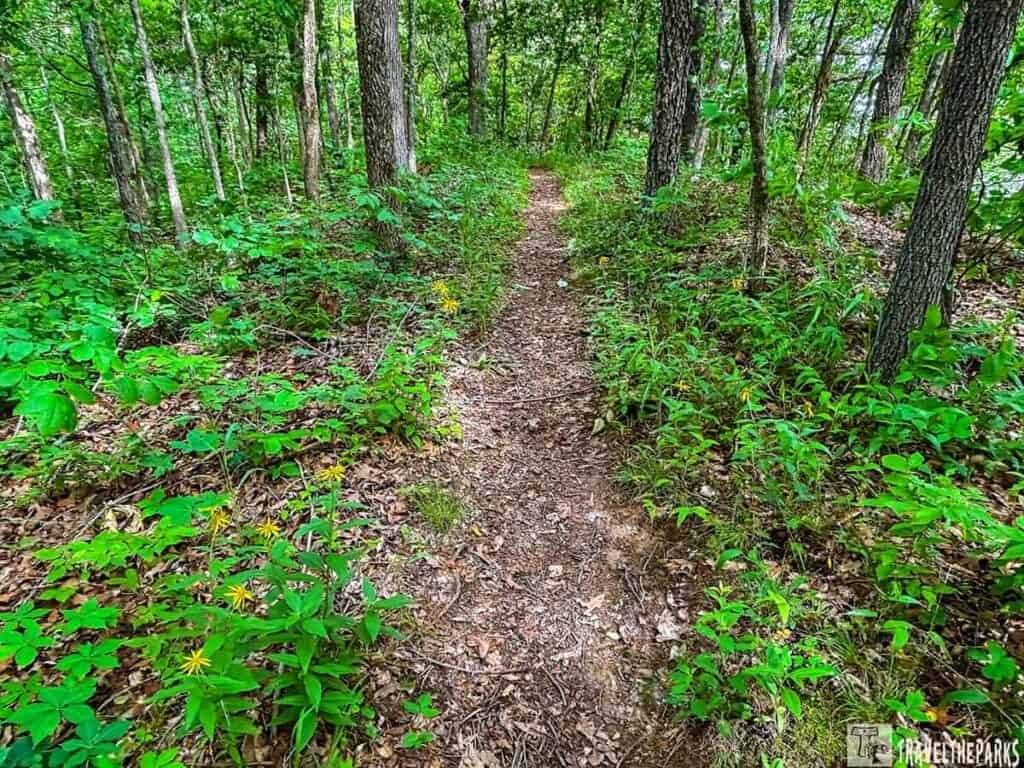
The park has about 14 miles of trails spread across four main routes. None of them are going to impress a hardcore hiker looking for a challenge. But a few give you views of the Mississippi that you just don’t see many other places. And the forest is quiet and shady. The kind of quiet that makes you walk slower without really meaning to.

Peewah Trail | 10 miles total | Moderate
Peewah is a Cherokee word meaning “come follow in this direction.” We weren’t quite sure whether that was cute or rather foreboding. In any event, the path runs through the Indian Creek Wild Area in four different loops. So you can choose how much you want to hike.
The green marked part is the shortest loop at only 1.5 miles round trip. This loop takes you out to a bluff overlook that is above the Mississippi River. The yellow loop is 3.4 miles long. This loop follows the river for a bit before turning back.
The red loop is just under six miles, and it is the one that AllTrails users consistently give the highest rating in the park. Horses are allowed on the entire trail, which sometimes means that you will have to share the path with a much bigger “animal” than you.
Sheppard Point Trail | 2 miles | Difficult
Short, but the park rates it difficult, and the rugged terrain earns that label. The trail climbs to the top of a bluff with views over the Mississippi River that feel well out of proportion to the effort required. This one is hikers only—no horses, no bikes, just you and whatever you packed for snacks. Definitely worth trying out if you’re interested in the scenery but don’t want to fully embrace Peewah.

Lake Trail | 2 miles | Easy to Moderate
A loop that winds around Lake Boutin and through the campground area, crossing small valleys and ridges along the way. Old homestead remnants show up along the route — clearings, overgrown roadbeds, barbed wire still threaded through tree trunks decades after the fences disappeared. Also the best trail for spotting the tulip poplars planted by park staff in the 1960s as part of a reforestation effort, which sounds like a small detail but is actually kind of interesting once you know to look for them.
Nature Trail | 0.5 miles | Easy
The shortest trail in the park and genuinely worth doing. Pawpaw trees—Missouri’s native banana, essentially—line the route alongside tulip poplars and spring wildflowers. If you see something that looks like a small green mango hanging from a tree in late summer, that is a pawpaw. You are allowed to try one. We did. Results were mixed but memorable.
Lake Boutin
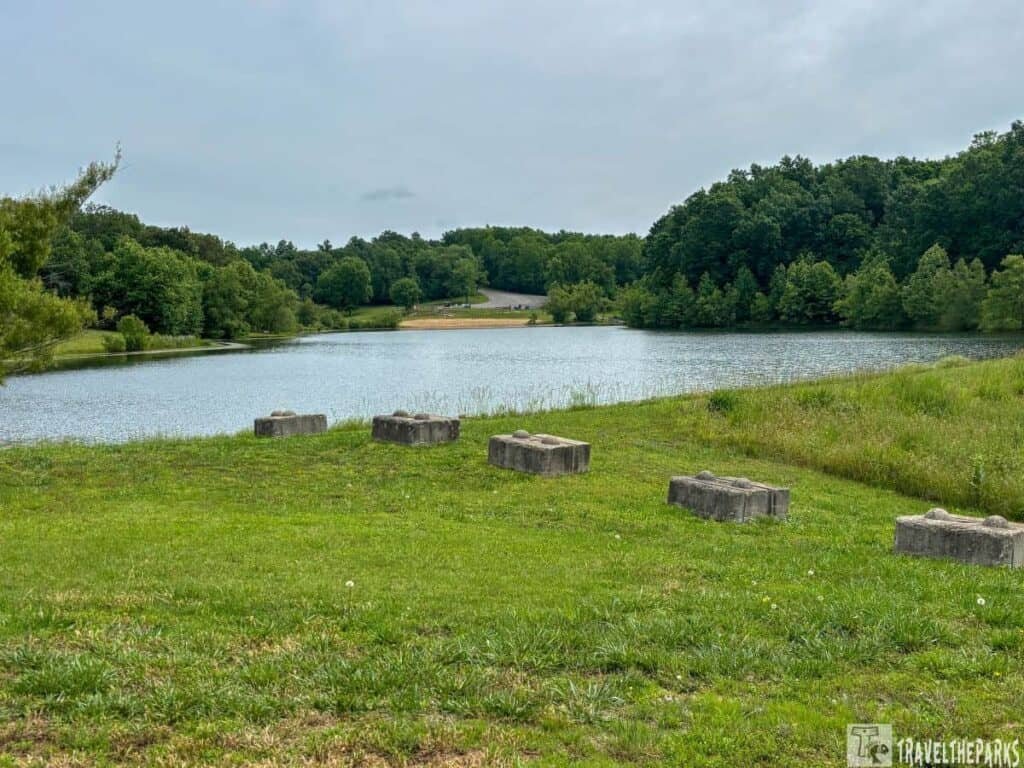
The lake is about twenty acres, right inside the park. People catch bass, bluegill, and catfish out of it. There is a sand beach area, boat access, and shoreline areas to accommodate visitors during peak times. We didn’t fish ourselves, but we saw a couple of folks sitting on the bank looking perfectly content.
PRO Tip: swimming areas have had seasonal closures because of conditions—check current park status before making it the centerpiece of anyone’s afternoon plans.

Birding: Surprisingly Serious Business Here
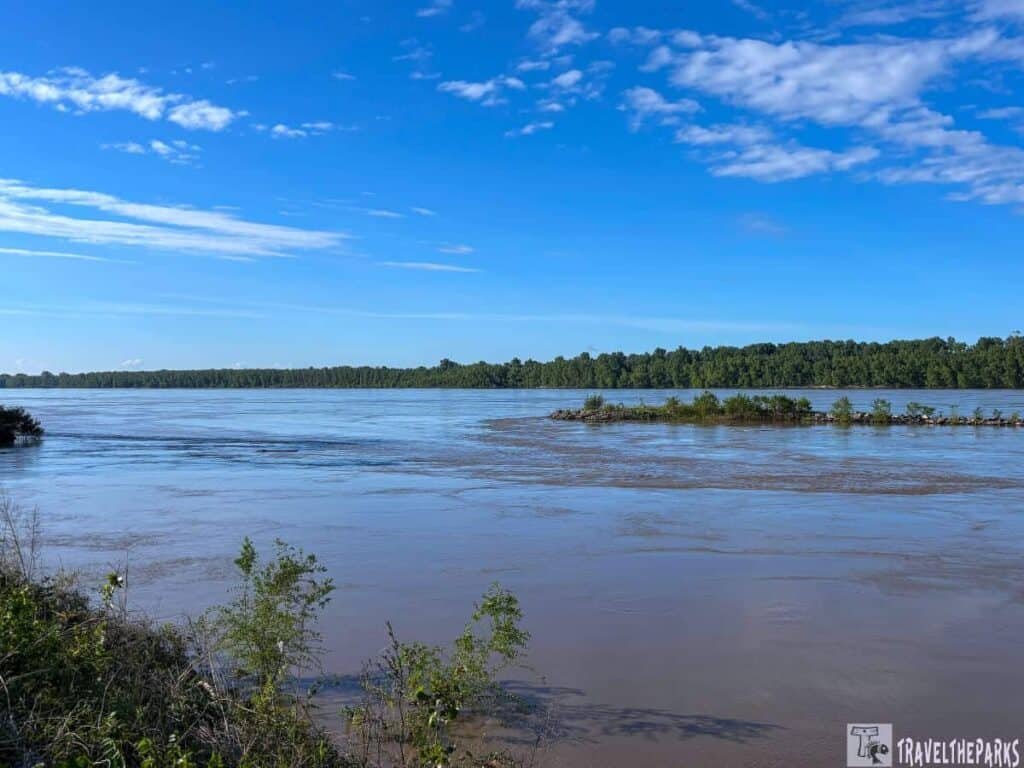
We are not hardcore birders. We want to be clear about that. But Trail of Tears sits along the Mississippi Flyway—a major migration route. We have seen bald eagles in Alaska and Florida enough times that they should not stop us in our tracks anymore. They still do. There is something about spotting one perched above a river that just does not get old, and Trail of Tears delivers in winter when they roost along the bluffs above the Mississippi in genuine numbers.
The National Audubon Society includes the park as part of the Great River Birding Trail, which, from what we understand, is kind of a big deal if you are a birder. More than 140 species have been recorded here—everything from warblers and tanagers to waterfowl and raptors—so even if you’re like us, just passing through, there’s a good chance you’ll notice something worth pausing for.
Other Things to Do at Trail of Tears State Park
- Metal Detecting: Trail of Tears is one of the few Missouri state parks that lets you do metal detecting in certain areas. If that’s your thing, this is basically your dream park.
- Horseback Riding: The full Peewah Trail is open to horses. They don’t rent them on-site, so you’ll need to bring your own. Or just wave at the riders as they pass. That’s what we did.
- Picnicking: Shaded spots all over the park, plus two covered pavilions. You can reserve them or just grab one if it’s empty. The Greens Ferry Shelter near the Bushyhead Memorial seats about 40 people and even has a fireplace. Fancy.
- Wildlife Watching: White-tailed deer are everywhere. Like, everywhere. Especially in the campground around dusk. We also saw wild turkeys, rabbits, squirrels, and a couple of box turtles on the trails. Drive slow on the park roads. Seriously.
Nearby Worth Knowing About
- Cape Girardeau: Approximately 10 miles west. They have food shops, fueling stops, places to eat, and a downtown area with a river where it is pleasant to take a walk in the evening. That’s what we did while having dinner there.
- Jackson, Missouri: Closer to the park than Cape Girardeau. It’s smaller and less crowded, perfect for grabbing a coffee and doing a little exploration if you have the opportunity after walking in the park.
- John Wesley Powell’s Fort d Historic Site, Cape Girardeau: This is an earthen Civil War fort. Interpretive kiosks and informational signs are scattered throughout the area. Admission is free. It takes only 15 minutes to get there from the park.
- Trail of Tears National Historic Trail: The park is connected to the greater Trail of Tears National Historic Trail, which extends across several states. In case you wish to follow a longer path, the NPS offers good guidance for planning your trip. Unfortunately, we could not visit all the points on our first trip to the park.

Tips for Your Visit
- Reserve campsites in advance, especially for weekends between May and October. Sites fill faster than you’d expect for a park this size.
- Download offline maps. Cell coverage is inconsistent inside the park.
- Pack bug spray for summer visits. The forest is lovely, and the mosquitoes know it.
- The visitor center documentary is 23 minutes long. Watch it. It reframes the rest of the visit.
- Deer are active at dawn and dusk on park roads. Drive accordingly.
- Binoculars are worth having, especially in winter when the eagles are working the river bluffs.
- Trekking poles help on Sheppard Point Trail, which earns its difficult rating on the way down as much as on the way up.
- A good rain layer is worth keeping accessible—the Mississippi River area has its own weather opinions and afternoon storms move in quickly.
- If you are camping at the lake sites, a headlamp is useful for the walk to the shower facilities.
- And if you are visiting in late summer, bring a small cooler for the trail. The humidity in this part of Missouri is not subtle, and you will drink more water than you planned.

Final Thoughts: Trail of Tears State Park Is Worth More Than a Fuel Stop
Trail of Tears State Park had everything we needed for a camping experience.
That being said, we got a great campsite along the Mississippi River, two days of amazing hikes across beautiful forests, an incredible amount of deer and other wildlife, and a visitor center where we were forced to look at the difficult past of Native Americans.
The Trail of Tears State Park doesn’t exist to provide its visitors with a positive experience. It’s a memorial that comes with awesome trails, a pretty lake, and no entrance fees. Needless to say, the park offers quite a novel experience than any other stopover point during a road trip.
Have you visited Trail of Tears State Park? Which trail did you hike and did the train wake you up too? Tell us in the comments — we would love to hear how your visit went.