Let’s be real—not every historic site makes you feel something. Some are beautiful but hollow, like a museum exhibit you admire and promptly forget. Yesterday, as we walked through the National Civil Rights Museum, we could feel the struggle, the courage, the resilience. And yet today, stepping onto the Tuskegee Institute in Alabama, that feeling only grew stronger. The Institute is just one of Alabama’s National Park Service sites. If you’ve ever stood in a place and felt the weight of what happened there pressing in from all sides—the sacrifice, the brilliance, the sheer defiant will—you know exactly what we’re talking about the moment you set foot on this campus.
The Tuskegee University historic campus isn’t some old relic. It’s alive. As we wandered the grounds and checked out the museums, the stories of Alabama African American history sites stayed with us. If you’re planning things to do at Tuskegee Institute or just visiting Tuskegee Institute for the first time, don’t rush it—you’ll want to take it all in.
This post may contain affiliate links, meaning if you purchase something through one of these links, we may earn a small commission at no extra cost to you! Read the full disclosure policy here.
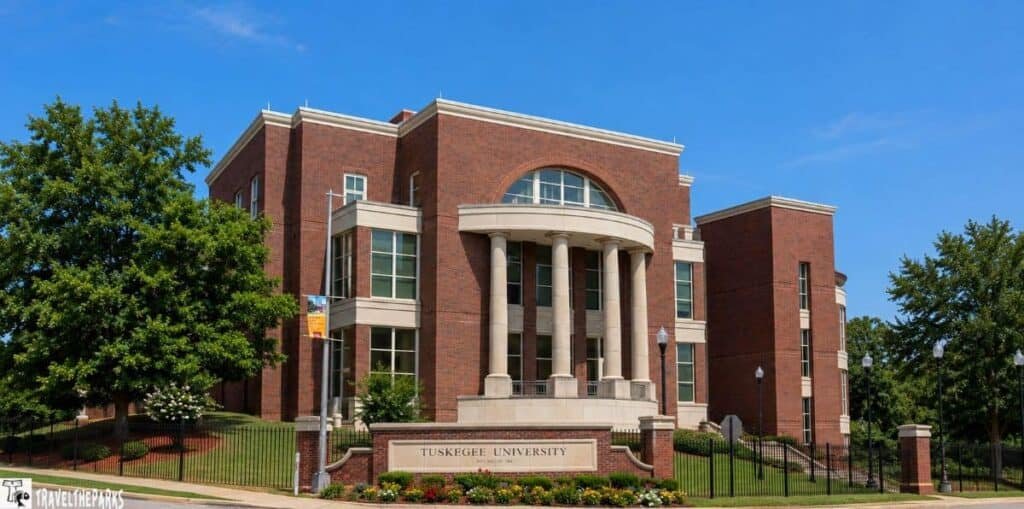
Table of Contents
Know Before You Go: Tuskegee Institute in Alabama
- Location: Tuskegee Institute NHS is right in Tuskegee, Alabama. The campus is easy to find, but take your time—you’ll want to soak it all in.
- Operating Hours: The visitor center is open daily 9:00 AM until 4:30 PM. It is closed on Sundays, Thanksgiving, Christmas, and New Year’s Day. The park itself is open daily 9:00 AM until 4:30 PM.
- Admission: Most of the historic site is free to explore, though some museum areas may have a small fee or suggested donation. Visitor Pass: Some buildings and museum areas may require a visitor pass from Tuskegee University Public Safety.
- Parking: Free lot at 1200 W. Montgomery St. (next to The Oaks).
- Temporary visitor pass before entering the security gates. Stop by the Tuskegee University Public Safety building (1103 West Montgomery Road) to get yours. Passes are issued Monday–Friday, 6 a.m. – 6 p.m.
- Tours: Guided tours of The Oaks (Booker T. Washington’s home) are available on select days. Check the schedule on the official park website. They bring the stories of the campus to life in a way self-guided walks just can’t.
- Campus Walking: The grounds are beautiful, but be ready to walk. Comfortable shoes are a must if you want to see the full historic district.
- Time Needed: Plan at least 2–3 hours to visit the museums, walk the campus, and catch a tour if you can.
- Photography: Allowed in most areas—perfect for documenting your visit or sharing your experience on social media.
- Accessibility: The visitor center is accessible, and there are paved paths, but some historic buildings may have limited access.
- Pets: You can bring pets onto the grounds, but keep them on a leash. Only service animals are allowed inside buildings.
A School Born from Impossible Circumstances
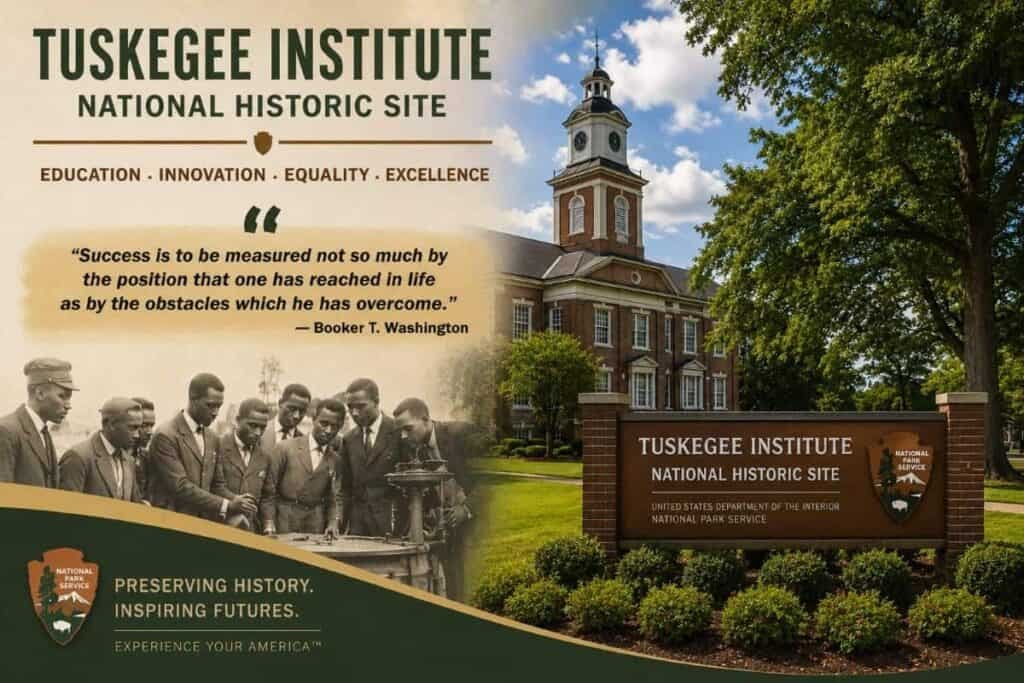
To understand why Tuskegee Institute National Historic Site matters, first you have to understand what it was built against. On July 4, 1881—a date deliberately chosen to symbolize freedom—thirty eager students, most of them children of formerly enslaved people, walked into the Butler Chapel African Methodist Episcopal Zion church for their very first class at the newly formed Normal School for Negroes. They didn’t even have a proper building yet.
Leading that school was Booker T. Washington. He himself was a formerly enslaved man—who had arrived in Alabama with a mission. His goal wasn’t just to open a school; it was to build one, literally. Washington had his students construct many of the campus buildings by hand, making their own bricks from clay dug out of the Alabama earth. Every building was a statement. Every fired brick was an act of defiance.
Things to Do at Tuskegee Institute in Alabama
Tucked away in central Alabama, about 40 miles east of Montgomery, the Tuskegee Institute National Historic Site isn’t exactly on the standard tourist circuit—and that’s a shame, because for anyone who cares seriously about American history, Black history, or the history of ideas, it belongs right at the top of your list.
So let’s talk about what’s there, what to expect, and why you absolutely need to make the trip.
1. The George Washington Carver Museum
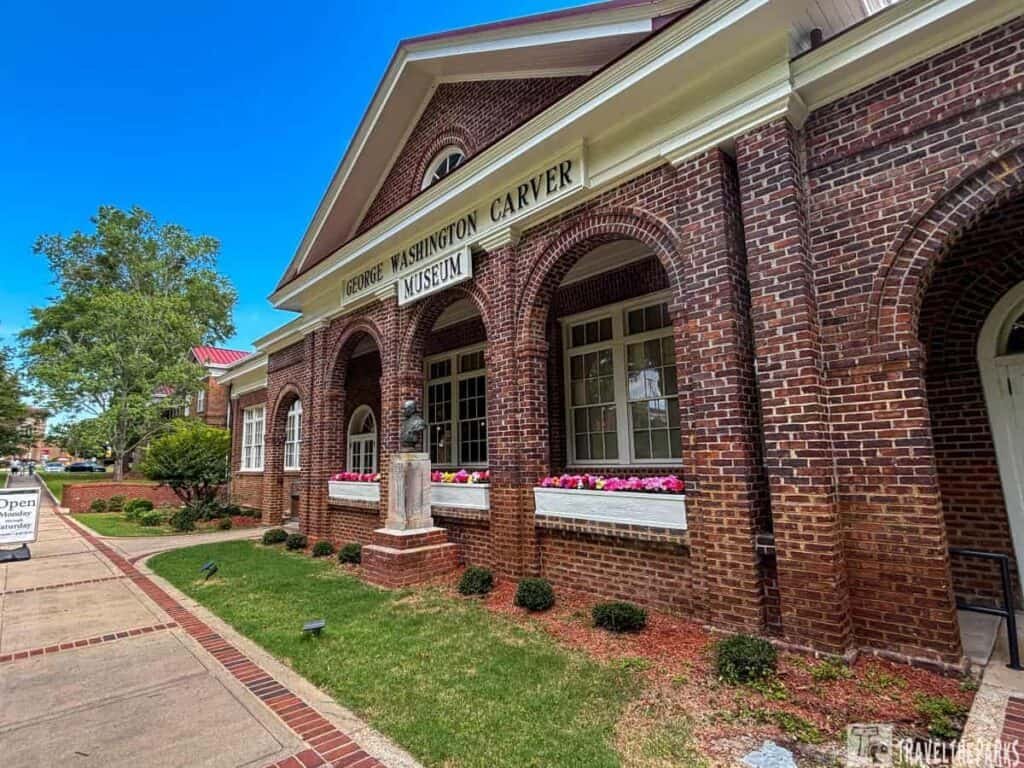
This is your first stop, and for good reason—it also serves as the National Park Service’s visitor center. The building itself is part of the story: constructed in 1915 as the campus laundry facility, it later became Carver’s laboratory before being converted into a museum in 1938. A large donation from Henry Ford, a known admirer of Carver, made the official dedication in 1941 possible.
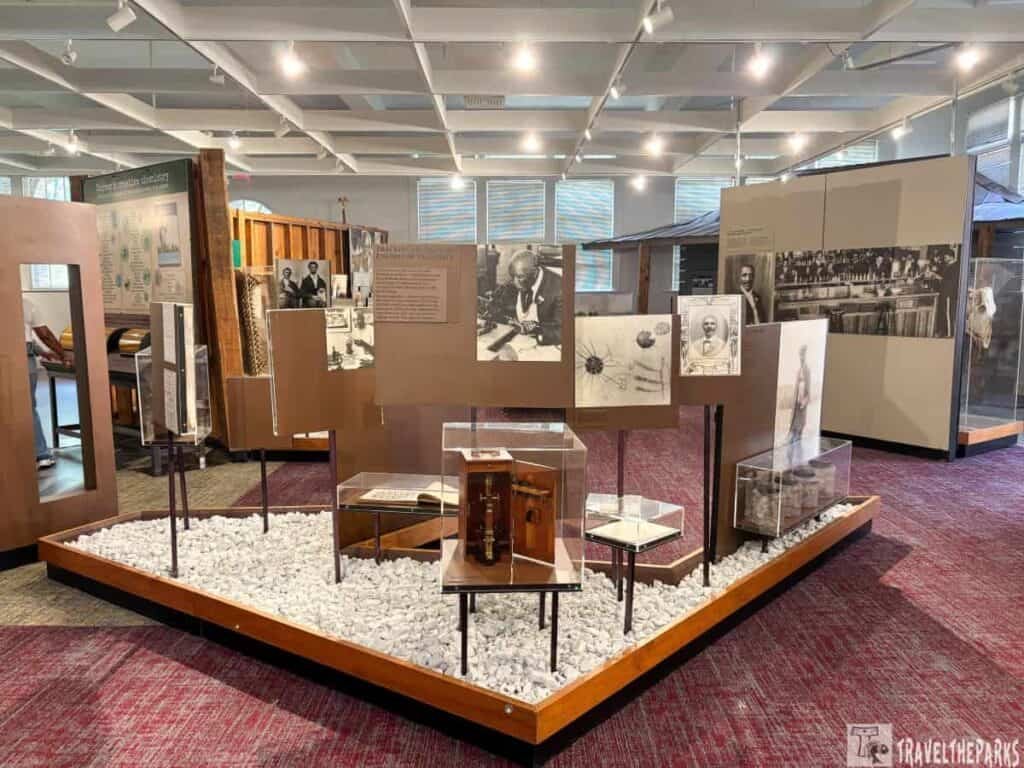
Inside, you’ll find exhibits that trace Carver’s entire life and career, from his harrowing early years (he was kidnapped by slave raiders as an infant) to his decades of agricultural innovation at Tuskegee. His laboratory equipment is on display, including some instruments he salvaged and repurposed—a reflection of his philosophy that great science doesn’t require great wealth.
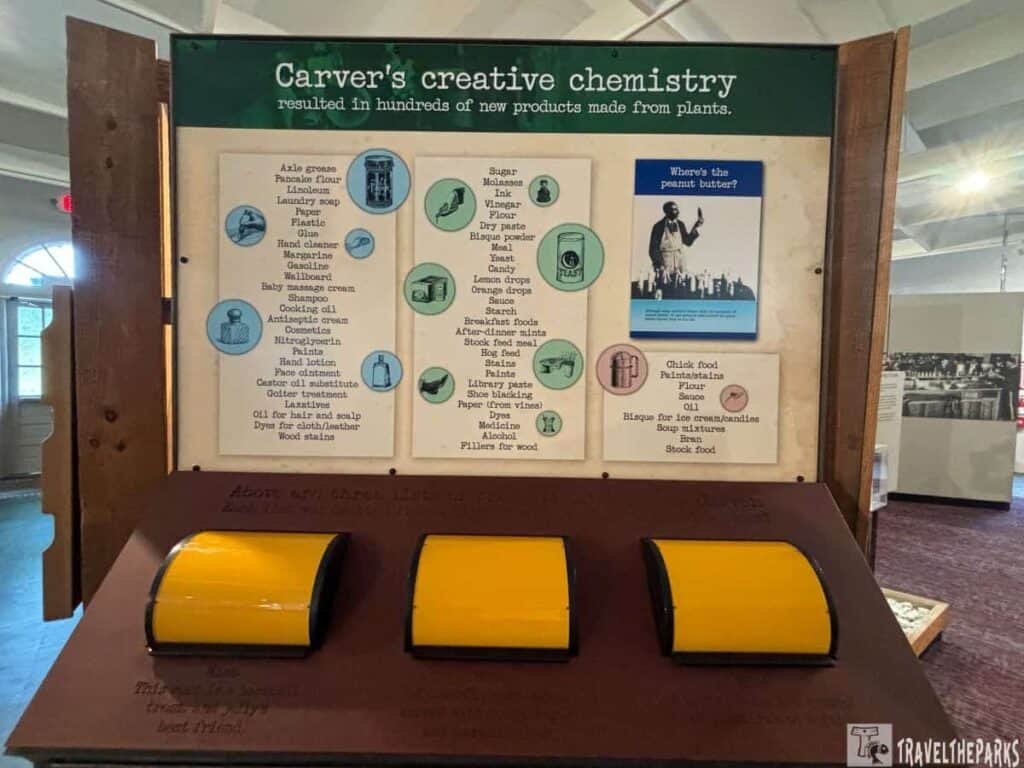
There are also samples of his hundreds of products derived from peanuts, sweet potatoes, and Alabama clay. It’s a fact that he didn’t invent peanut butter (contrary to popular belief), but what he did do was, perhaps, even more remarkable: he educated poor Southern farmers, Black and white, on how to grow various types of crops. Converting inexpensive yet plentiful raw materials into commercial products. He changed the agricultural economy of the American South. He was truly a brilliant man!
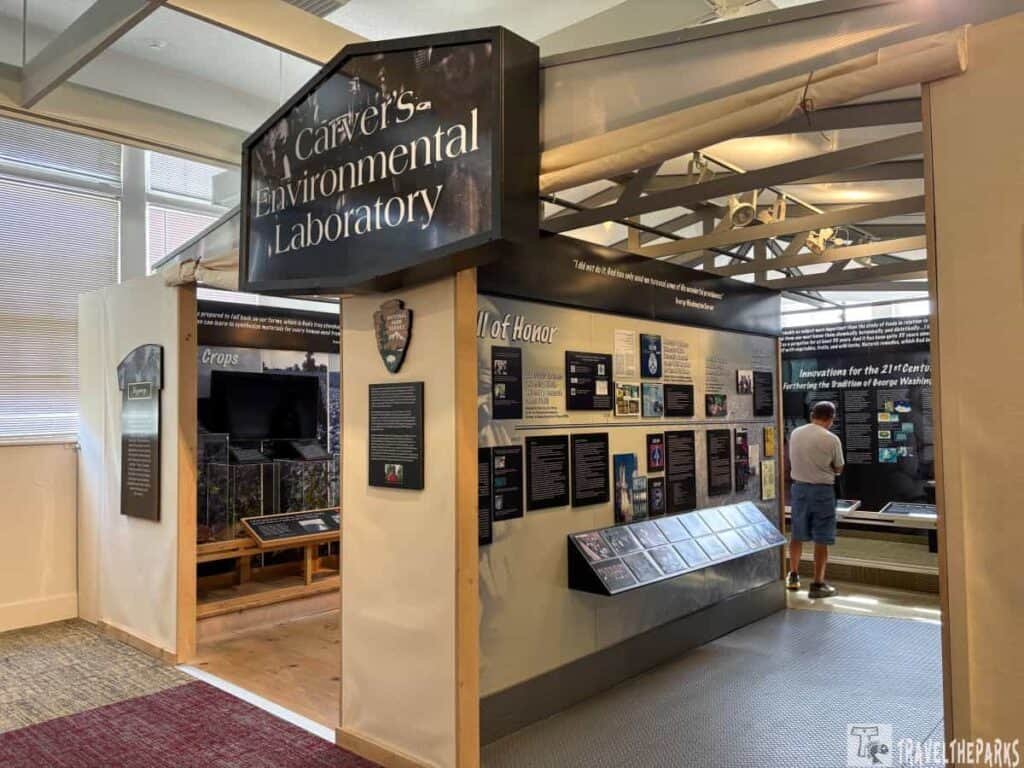
There are also two short films shown at the museum, each devoted to a distinct individual: one about Carver and one about Washington. Both are truly educational, and you should see them if you want to make the most of your visit to the grounds. You could be here anywhere from half an hour to one and a half hours, if you plan to really dig into it.
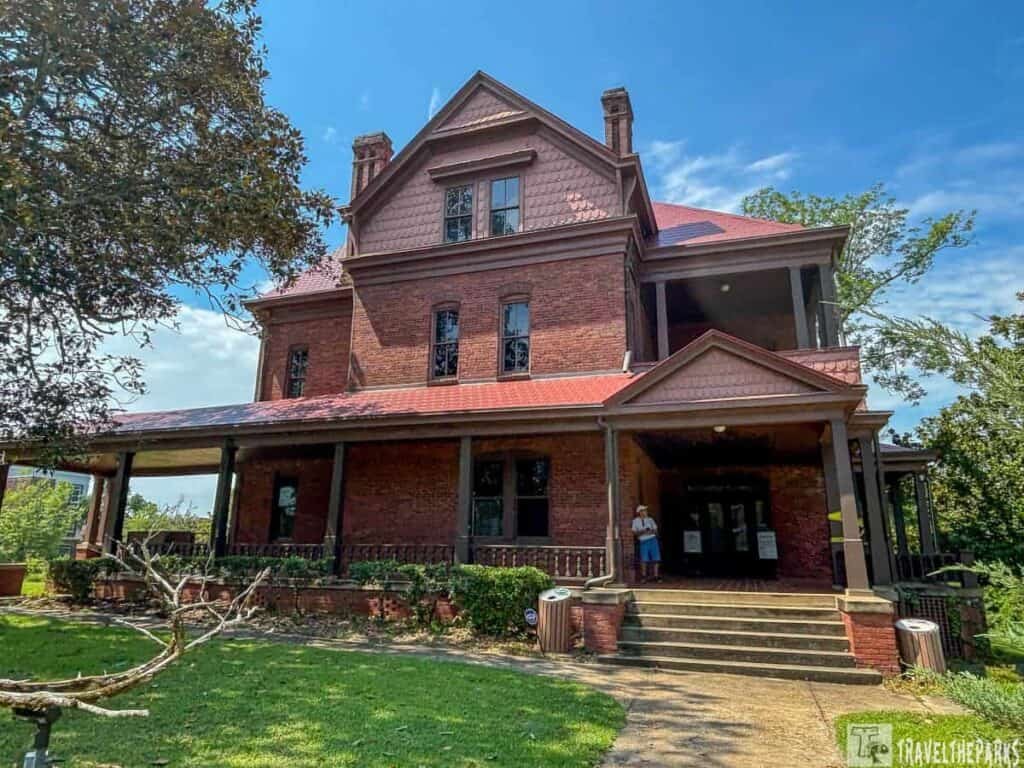
2. The Oaks: Booker T. Washington’s Historic Home
A short 0.3-mile walk from the Carver Museum brings you to The Oaks. This is the Queen Anne Revival-style house that Washington called home from 1900 until the day he died there in 1915. And when I say it’s worth your time, I mean it sincerely—this place is extraordinary.
You can only see the inside of the house on a ranger-guided tour. These run Tuesday through Saturday at 9:30 AM, 10:30 AM, 1:30 PM, 2:30 PM, and 3:30 PM. Tours are free and last about 45 minutes. Rarely crowded, there’s a limit of 15 people per tour. Occasionally, people have shown up and been the only visitor. This was our lucky day as we were the only ones on the tour.
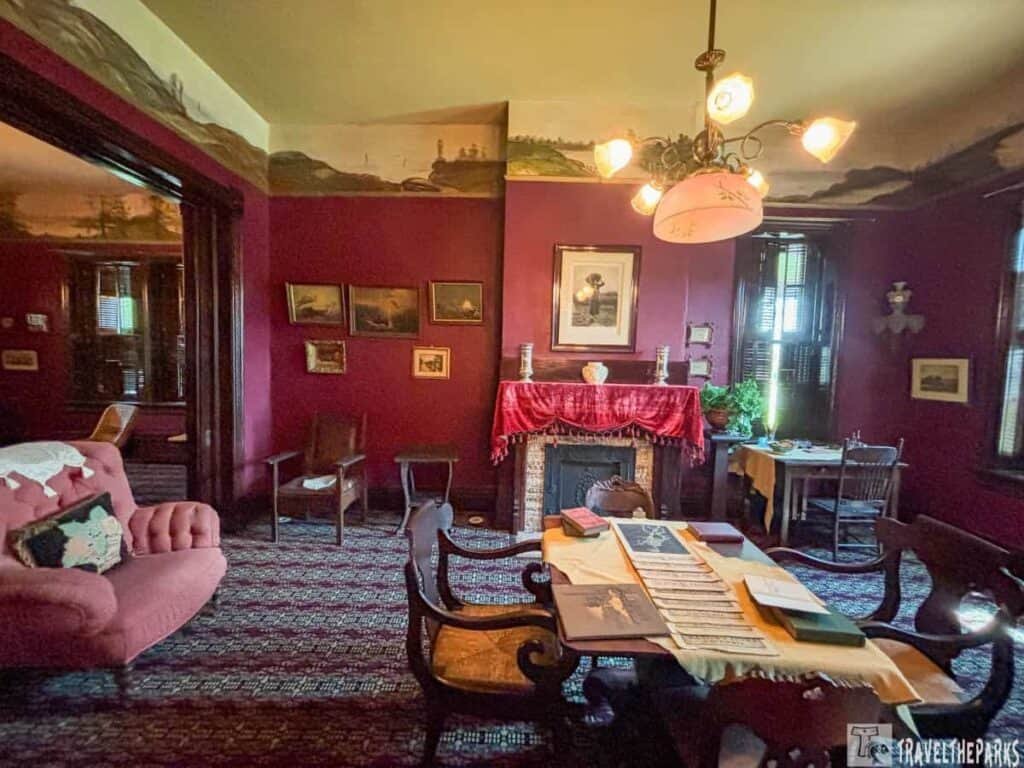
Our ranger guide said Robert Robinson Taylor designed the house. He was Tuskegee’s first trained architect. Back then, it was the first home in Macon County with electricity and steam heat. The campus power plant made the electricity. This shows Washington’s push for self-reliance in every part of the institute.
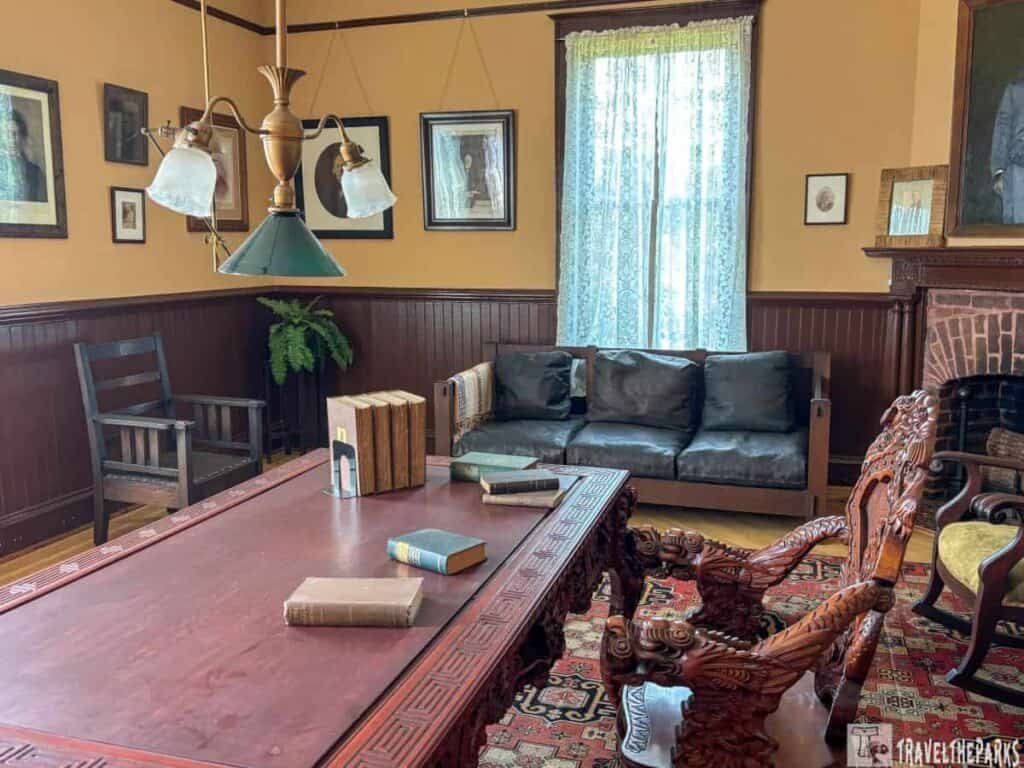
The color schemes that George Washington Carver created himself inspire the paint colors used inside, which makes the place very special. The color choices of one great man dwelling inside another’s house. Using very few watts bulbs, to give the effect of old 1900s technology, the light is purposely kept low. Washington’s private office on the second floor is even more touching. With its authentic furniture, including a chair and table given by the family of a Japanese student who studied at Tuskegee. It’s an indication of Washington’s fame being almost worldwide, even.
3. The Historic Campus District
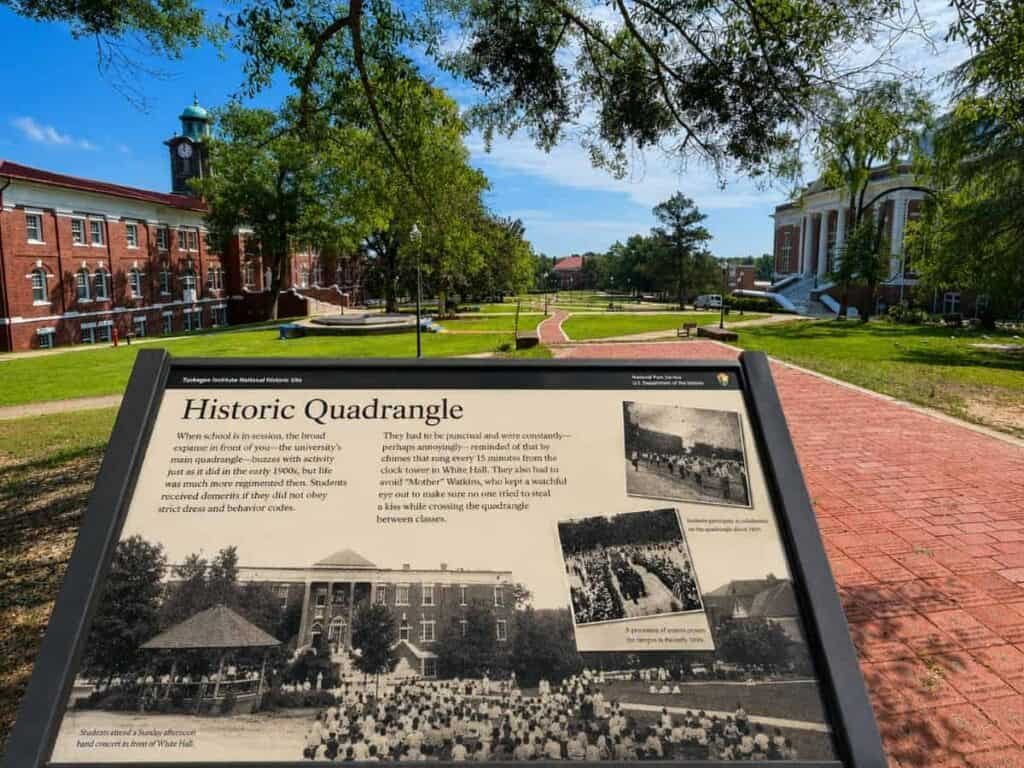
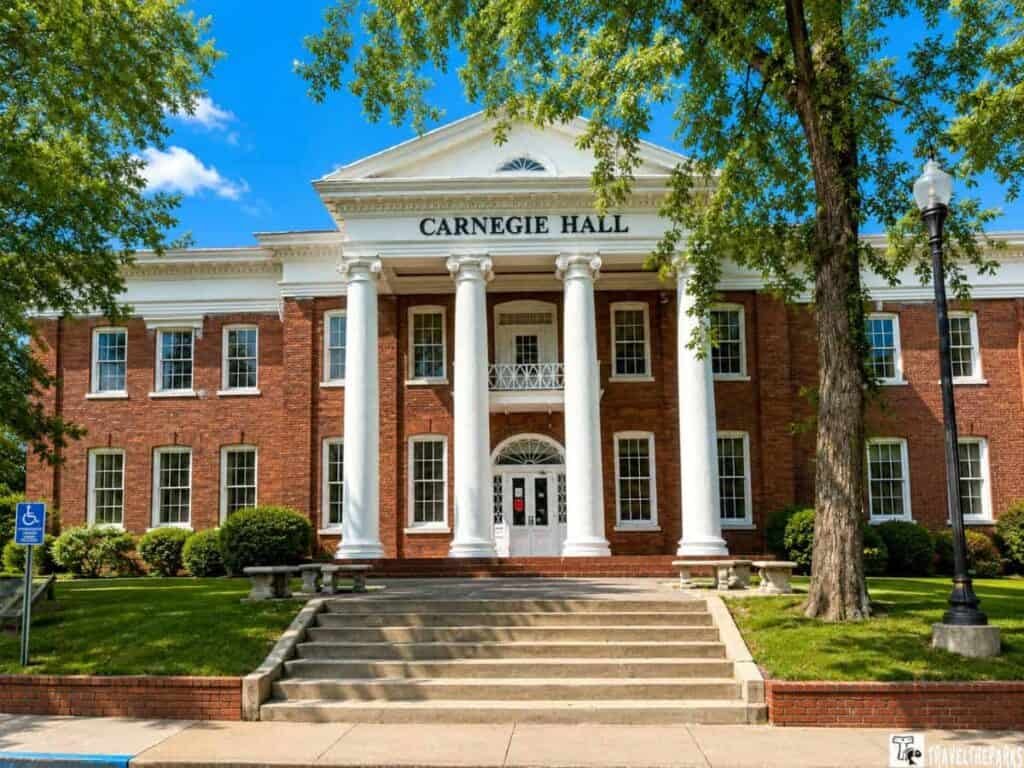
Here’s where Tuskegee really separates itself from most historic sites: the campus itself is the monument. The 50-acre Historic Campus District encompasses about 20 original structures from Washington’s era—dormitories, the old administration building, Carnegie Hall (yes, funded by Andrew Carnegie), Rockefeller Hall (yes, John D. Rockefeller), and more. Most are still in active use as classrooms, offices, and dorms, so they’re not open to tourists, but walking among them is its own experience.
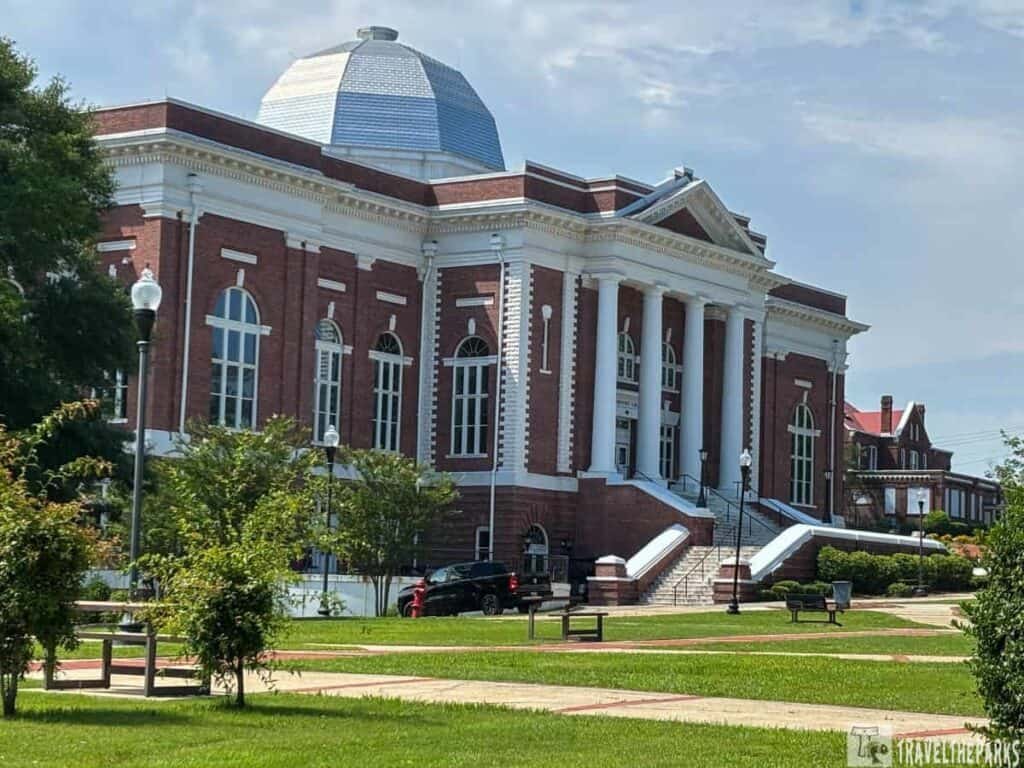
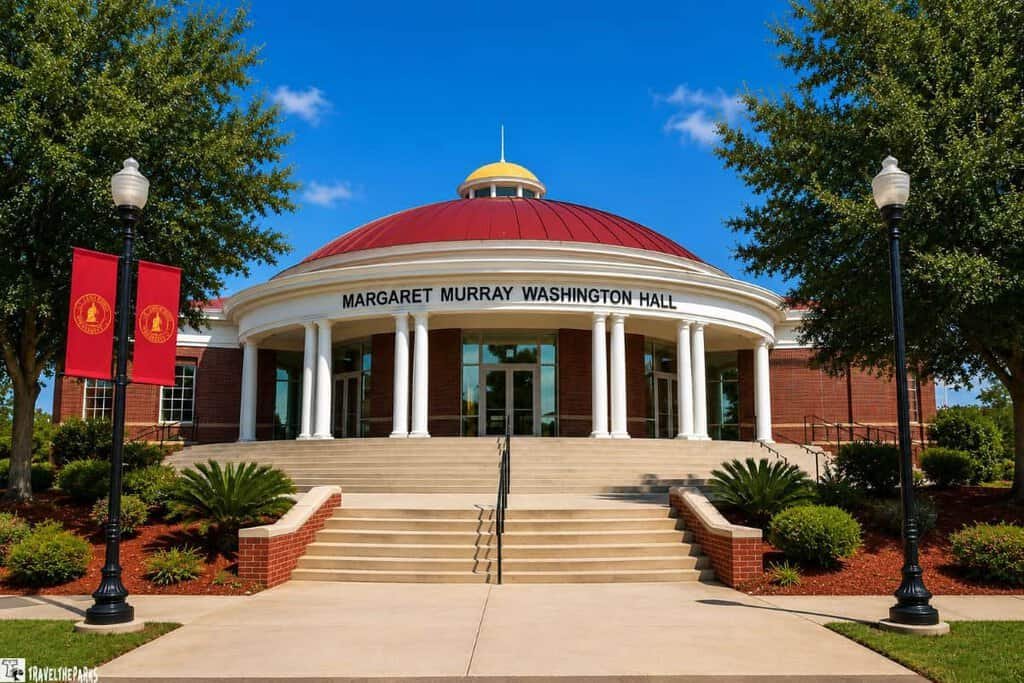
Pick up the free 35-page Self-Guided Tour Manual from Margaret Murray Washington Hall during business hours. It gives background on each building. Bring your phone. The NPS brochure at the Carver Museum has a campus map. It lists building details too.
A full walking tour hits all the historic sites. Wear comfy shoes. Start in the morning.
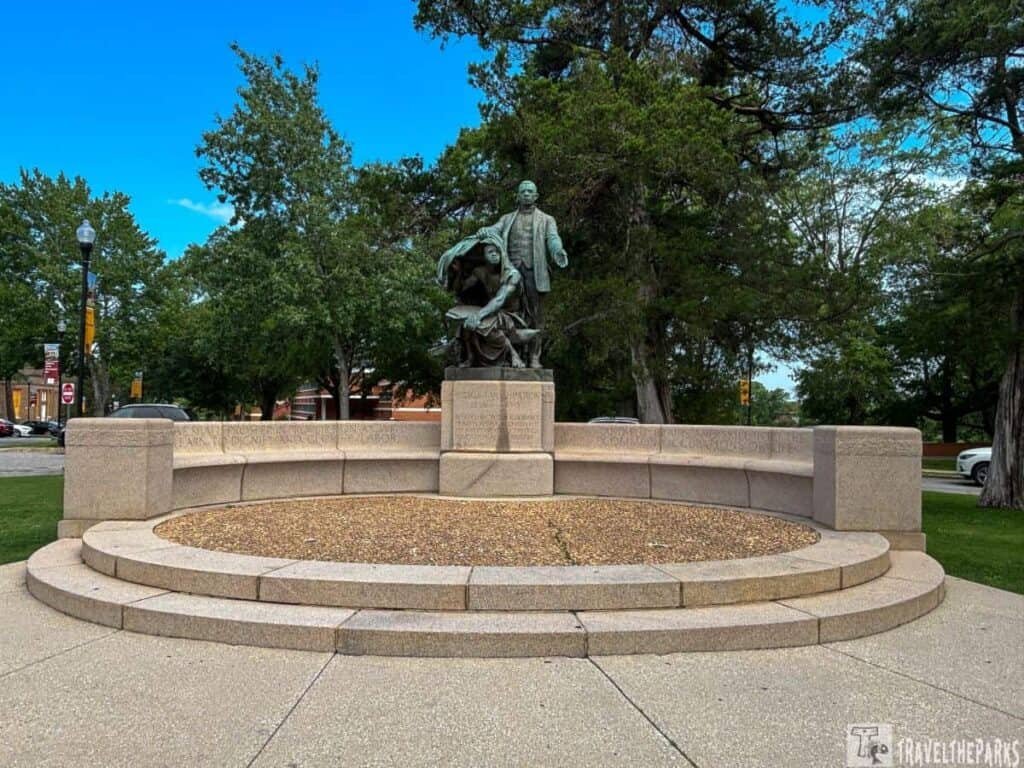
Check out the campus cemetery. See the Booker T. Washington Monument, too. It shows Washington lifting a veil off a kneeling figure. Among the most debated pieces of public sculpture in U.S. history is this one. Anyone who looks at it will realize just how complicated Washington’s legacy really is.
Booker T. Washington Monument: You’ll see a bronze statue called “Lifting the Veil of Ignorance.” Washington stands over a kneeling figure, lifting a veil from their face. It’s meant to show education setting people free. The inscription reads: “He lifted the veil of ignorance from his people.”
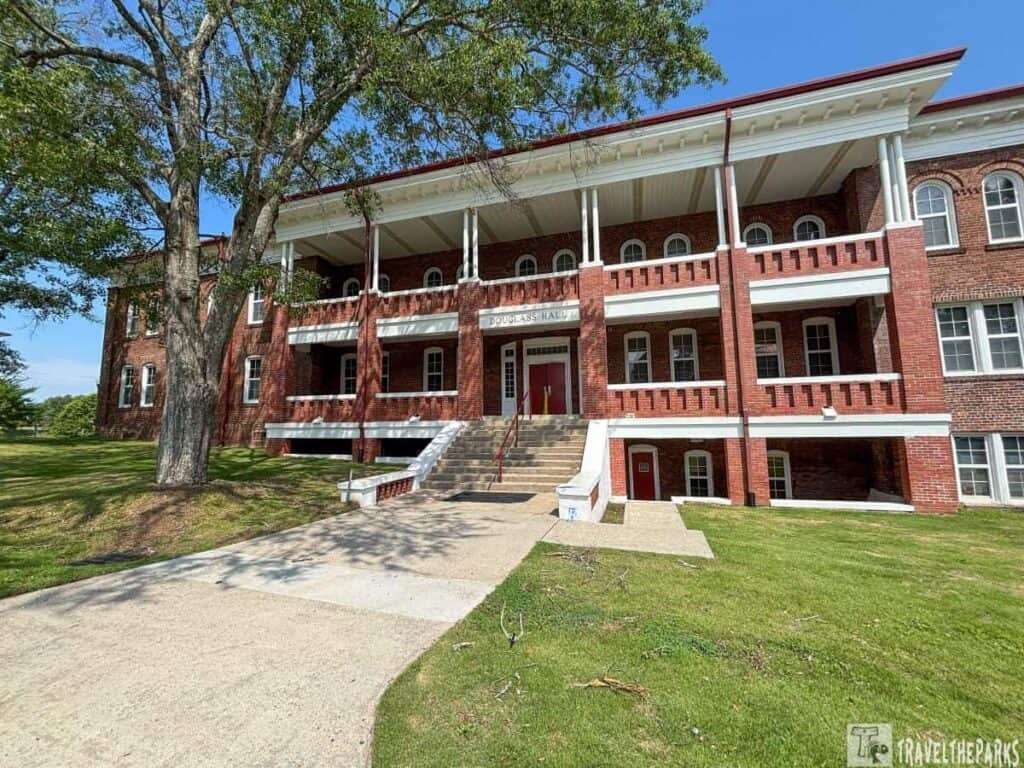
Historic Campus District: Buildings on the Walking Tour
The full walking route covers about three miles and takes roughly two hours. You’ll pass more than a dozen historic buildings, most still in active use as classrooms, offices, and dorms. Here are the highlights you’ll see along the way in no particular order:
Margaret Murray Washington Hall: The tour starts here. Pick up the during business hours. This building is named for Booker T. Washington’s third wife, a dedicated educator and administrator in her own right.
White Hall: A former men’s dormitory from Tuskegee’s expansion years.
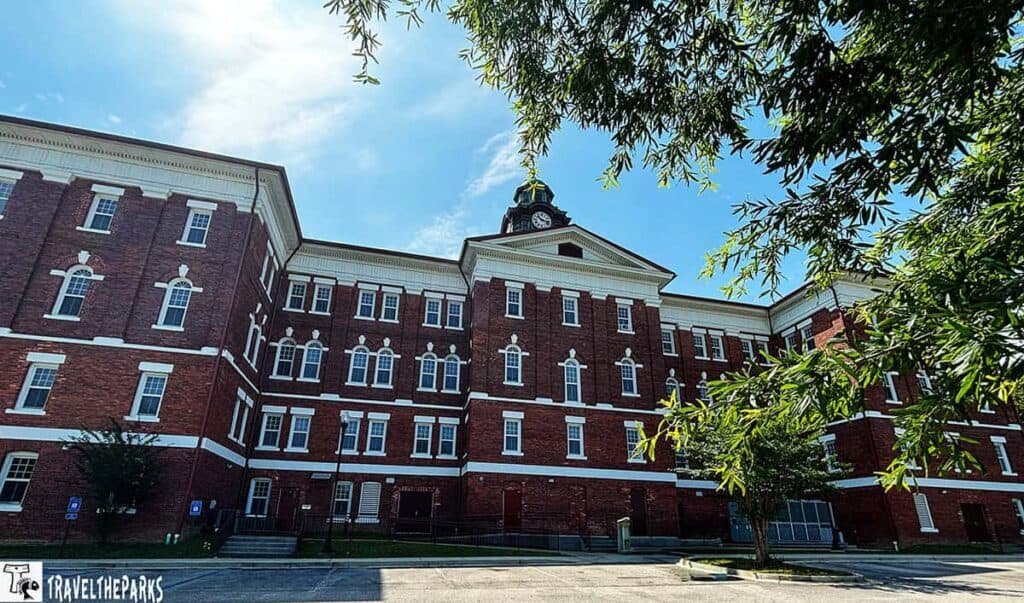
Carnegie Hall: Funded by industrialist Andrew Carnegie, this building was constructed to house the school’s growing academic programs. A testament to Washington’s ability to secure funding from Northern philanthropists.

Dorothy Hall/Kellogg Conference Center: Built in 1901 and named for a Philadelphia philanthropist, this building housed the school’s first domestic science program and was designed by Tuskegee students.
Old Administration Building: This was the main office building during Washington’s time. Like many early campus structures, students built it by hand using bricks they made themselves. It still holds that name today—Tuskegee University’s official address is 120 Old Administration Building.
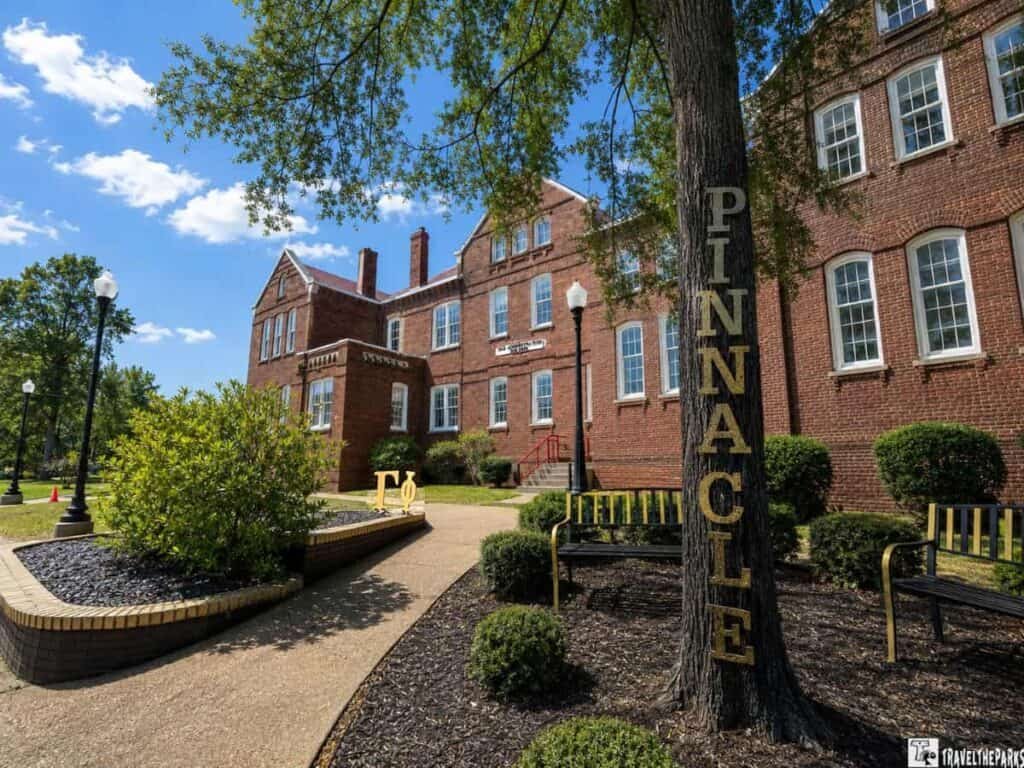
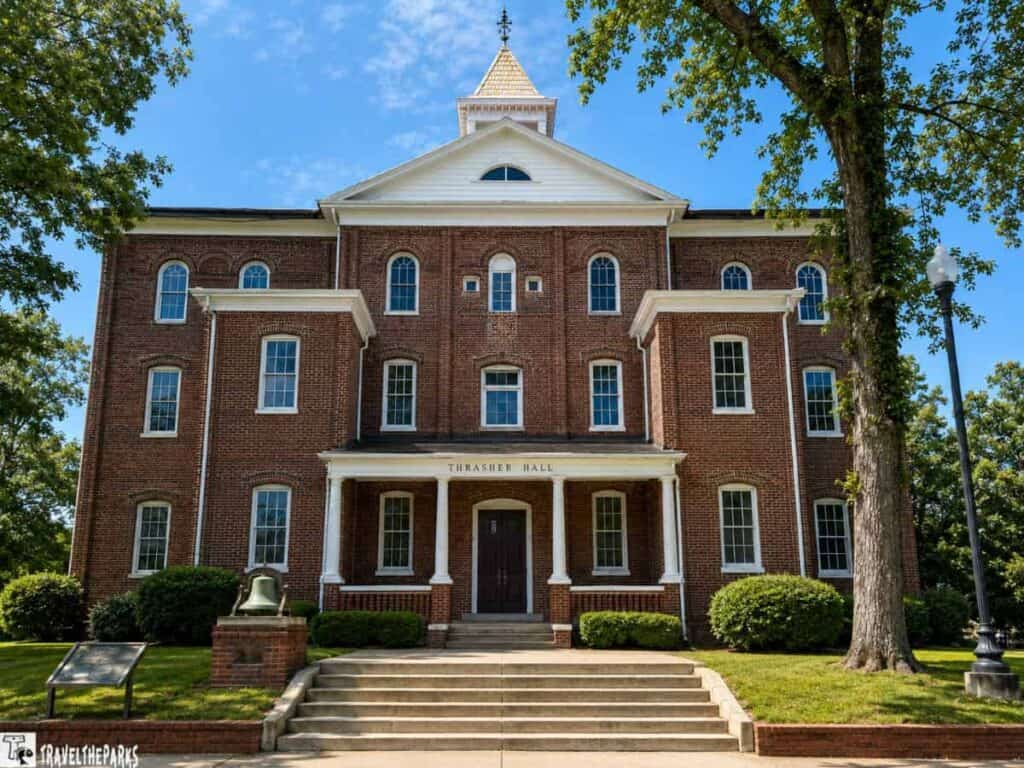
Thrasher Hall: This was architect Robert R. Taylor’s first brick project on campus, built in 1893. Students and teachers made the bricks and did the construction themselves. It originally held science labs and classrooms downstairs with a boys’ dormitory upstairs. Washington renamed it in 1903 for Max Bennett Thrasher, the editor who helped him publish Up From Slavery. A major renovation in the 1980s stripped the interior down to the outer walls, so the building you see today is mostly the original shell. The bell tower is long gone too. However, the historic bell is outside the building.
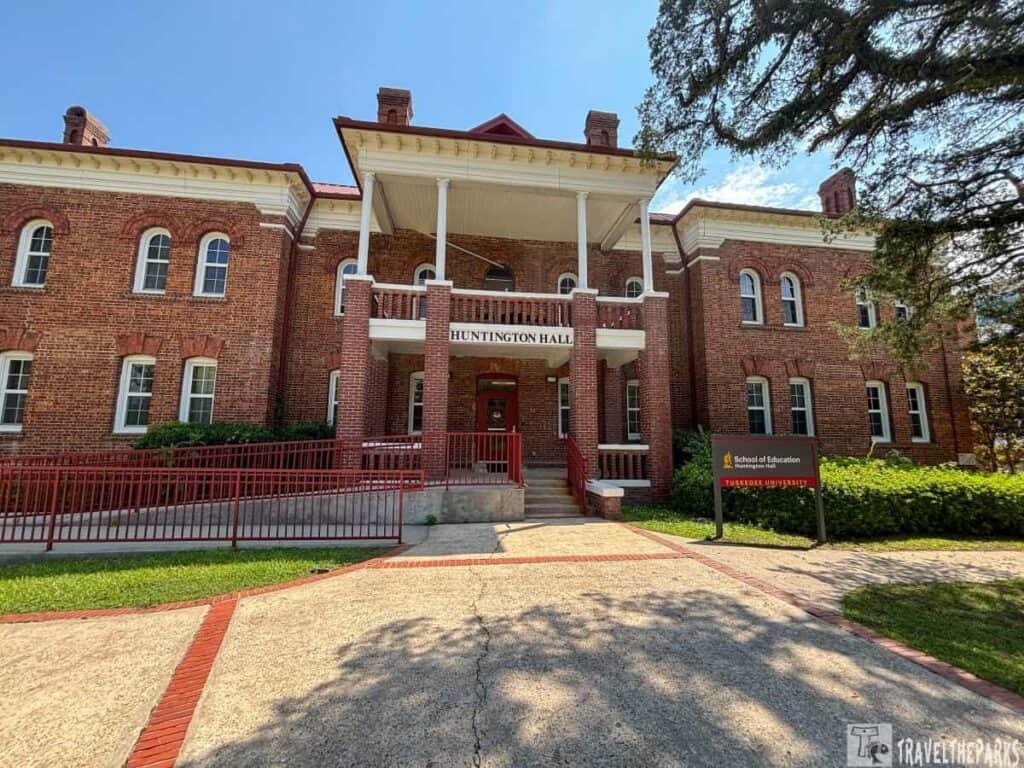
Final thoughts: Tuskegee Institute in Alabama
Nearly 26,000 people visit the Tuskegee Institute National Historic Site every year—a number that honestly feels low for a place this significant. Visitors range from school groups and prospective Tuskegee University students to African American heritage travelers, Civil War and Reconstruction buffs, HBCU enthusiasts, and general history lovers who’ve done their homework.
There’s something quietly radical about a place where every brick was fired by a student’s hands, where the paint colors on the walls were mixed by a genius who started with nothing, and where the campus is still full of students building their own futures a century and a half later. Go see it. Take your time. Let it land.
And while you’re exploring the history of Tuskegee, it’s impossible not to think of the wider story—freedom riders across the South, the brave Tuskegee Airmen who trained here, and other civil rights landmarks that together paint a picture of courage, determination, and change. Each site adds another layer to the history you can feel walking these grounds.
Have you visited Tuskegee Institute in Alabama? We’d love to hear your favorite spot or memory—share it in the comments below!