Visiting Etowah Indian Mounds is to stand in a place where you can feel the weight of history, where the past seems to whisper on the wind. The Etowah Indian Mounds State Historic Site in Cartersville, Georgia, is one of those places. Far from the bustling theme parks and coastal beaches, this quiet, grassy plateau overlooking the Etowah River offers a powerful yet humbling connection to a sophisticated civilization that thrived here centuries before European contact.
I recently spent a morning exploring this 54-acre National Historic Landmark, and it completely reshaped my understanding of pre-Columbian North America.
This post may contain affiliate links, meaning if you purchase something through one of these links, we may earn a small commission at no extra cost to you! Read the full disclosure policy here.

Table of Contents
Know Before You Visit Etowah Indian Mounds
- Hours & Fees: Open Tuesday–Sunday (closed Mondays). Check the official Georgia State Parks website for current hours and admission fees (typically around $6 for adults).
- Plan For: 1.5 to 2.5 hours to fully explore the museum and grounds.
- What to Bring: sturdy walking shoes, water, binoculars and a camera. The Georgia sun can be intense, so a hat and sunscreen are wise. Weather can change quickly, so pack a light jacket, along with a small backpack and snacks if you plan to hike.
- Best times to visit: Spring and fall offer mild temperatures and colorful surroundings. Summer can be hot; bring sun protection. Weekdays are less crowded than weekends.
- Accessibility: The path to the museum and around the base of the mounds is paved. But climbing the Great Temple Mound requires navigating several flights of stairs.
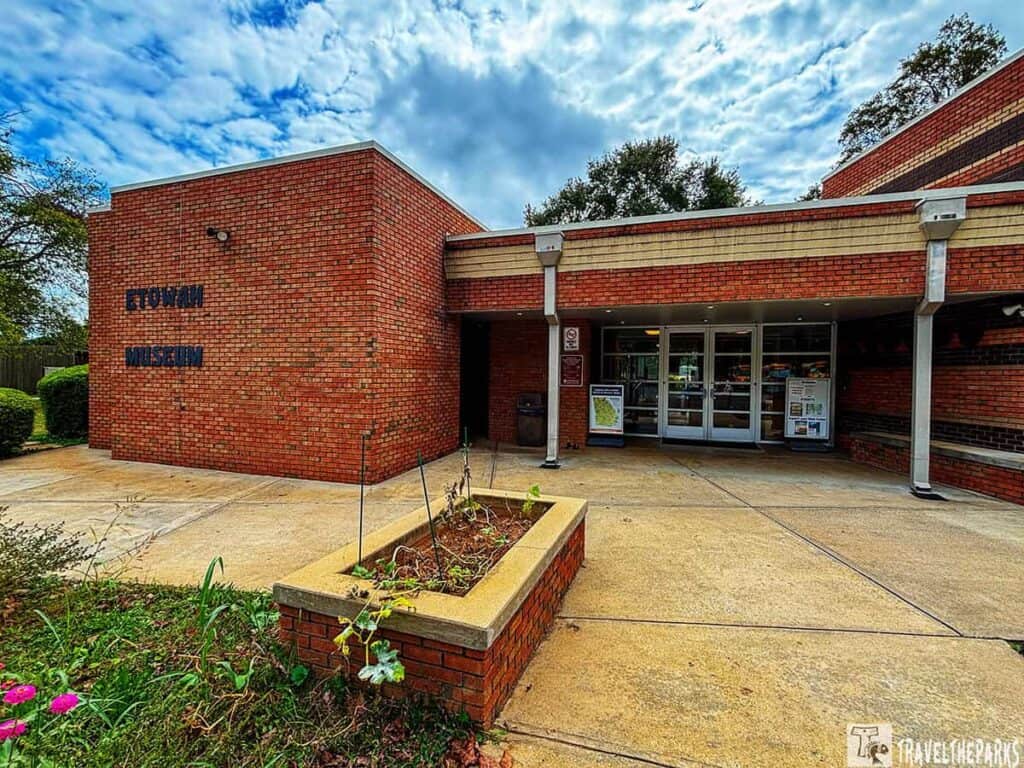
A Personal Portal to the Past: Connecting with Ancient America
I remember our first visit to the ancient mounds at Poverty Point in Louisiana. My first thought was that it would be boring, but a funny thing happened. Standing on that massive bird-shaped landform, looking across the vast concentric ridges, my imagination finally caught up with reality. This wasn’t just a ‘pile of dirt.’ It was the astronomical observatory, the capital building, and the cathedral of an entire world, all rolled into one. That ‘hill’ was a feat of engineering so ancient it predates the Romans, the Greeks, and even the use of stone at Stonehenge. The dirt wasn’t just dirt; it was the accumulated ambition of a thousand lives, carried one basketful at a time. I went to see a lawn and accidentally time-traveled into the heart of a forgotten metropolis that thrived before history, as we know it, even began.
PRO Tip: Start at the visitor center to watch the short introductory film and explore the exhibits. Allow at least 1–2 hours to explore the mounds and museum thoroughly. Respect the historic site: do not climb the mounds outside designated areas.
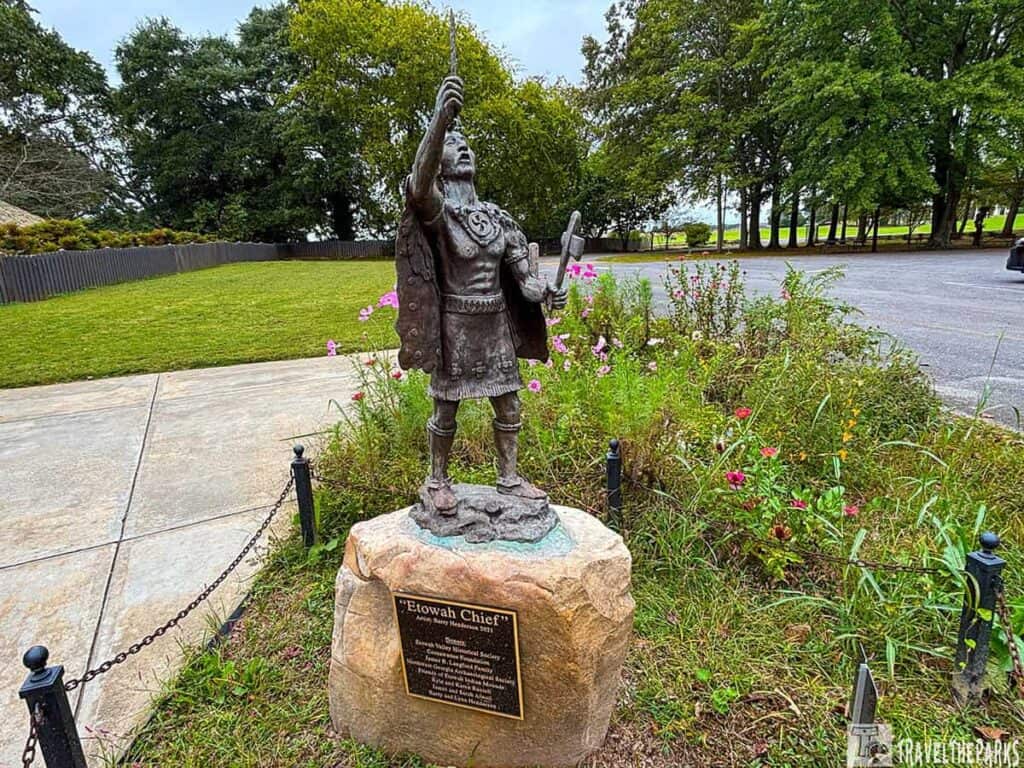
Etowah vs. Other Georgia Mounds: Kolomoki & Ocmulgee
Georgia contains ancient mounds that are among the most spectacular in the entire southeastern United States. These mounds are reflections of different times, different cultures, and different usages, ranging from places of ceremonial and political activities, the burial grounds and habitation sites that have existed for a long time. The comparison of these three mounds — Kolomoki, Ocmulgee, and Etowah — is below.
| Mound Site | Time Period | Key Features | Notable Facts |
|---|---|---|---|
| Kolomoki Mounds | Woodland (c. 350–750 CE) | Temple mounds, burial mounds, wooden post structures | One of the oldest and largest mound complexes in the southeastern US |
| Ocmulgee Mounds | Early Mississippian & earlier (c. 900–1700 CE) | Earthworks, ceremonial mounds, council houses | Found along the Ocmulgee River; long-term habitation site |
| Etowah Indian Mounds | Mississippian (c. 1000–1550 CE) | Large ceremonial mounds, a plaza with defensive walls | Served as the political and ceremonial center |
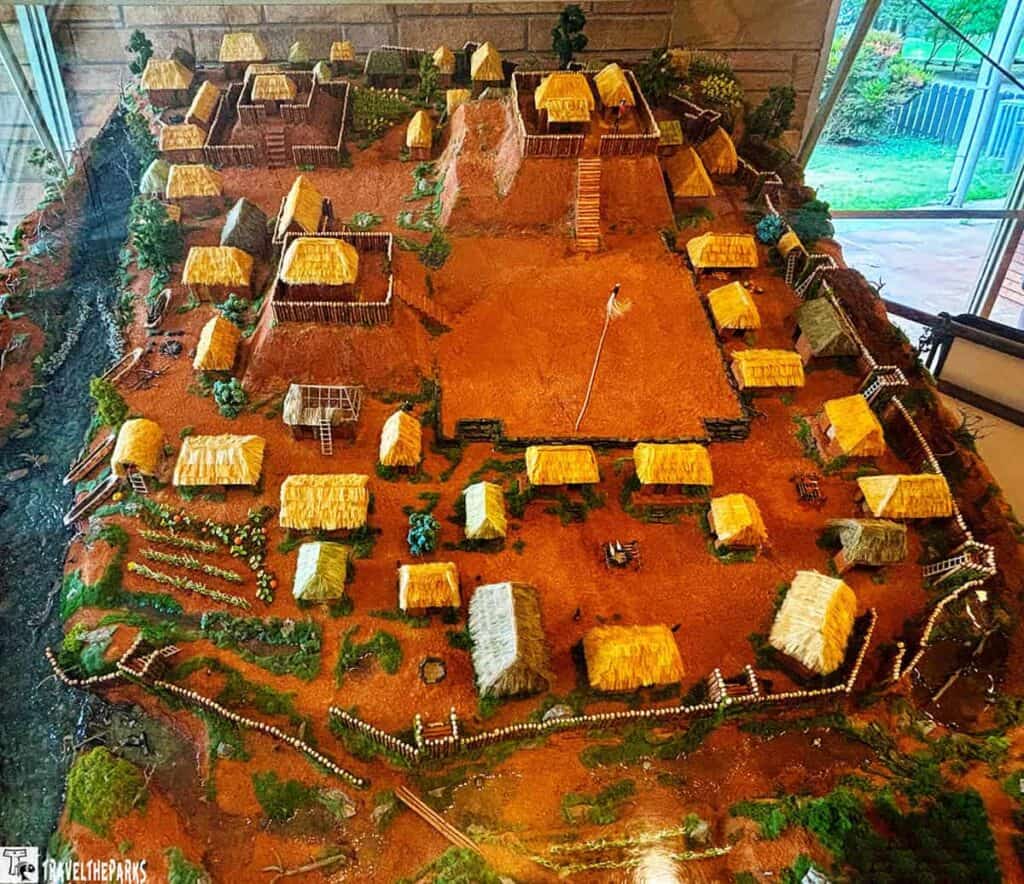
Step Inside the Museum: Etowah’s Artifacts Tell the Story
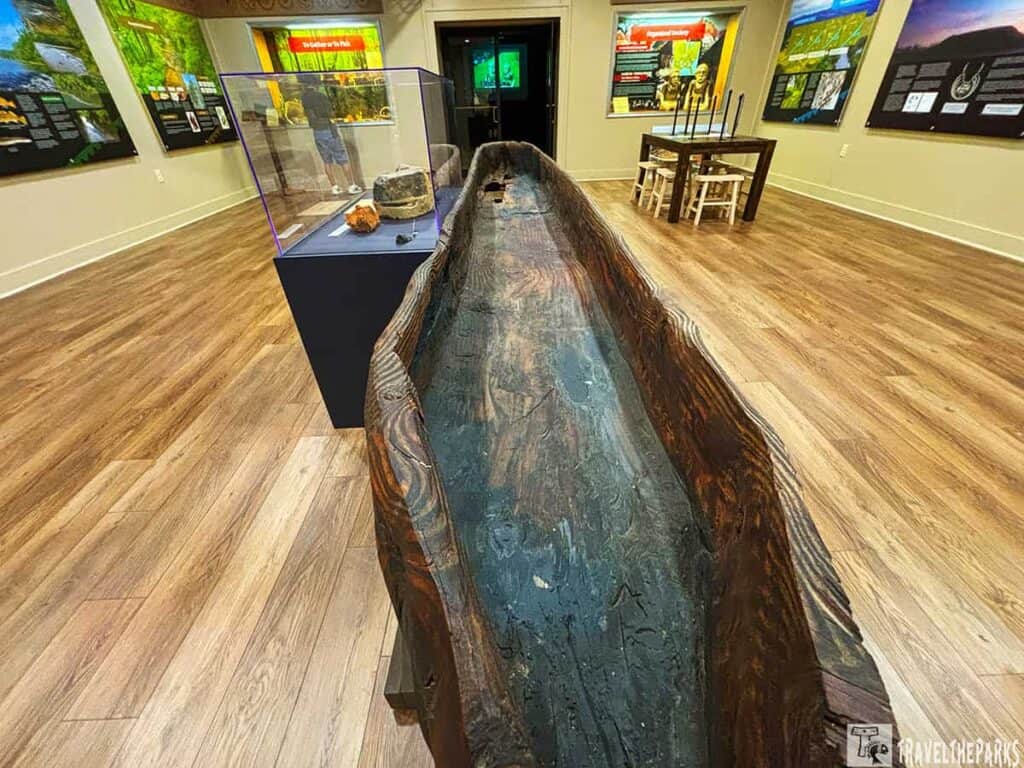
To start our visit, we headed over to the visitor center, which offered helpful insight into how Etowah fits into our ongoing series of mound sites. Even though the on-site museum is small, it’s fascinating and holds some of the most stunning and well-preserved artifacts, including shell beads, copper plates, tools, and ceremonial items. These pieces help bring the Mississippian people back to life, giving us a deeper understanding of their culture—far beyond what the size of the mounds alone can reveal. The educational exhibits clearly explain how this community lived, farmed, created intricate crafts, and connected with distant cultures through long-distance trade.
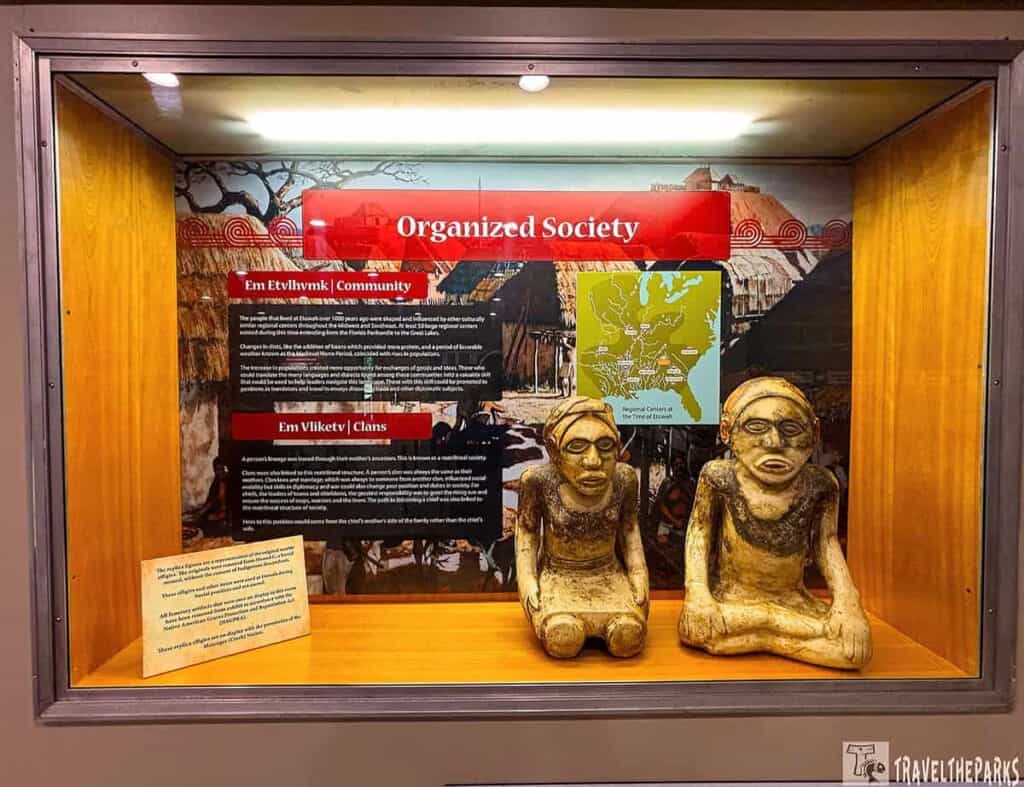
My jaw dropped at the intricately carved marble statues, which depict seated figures with incredible detail. Seeing the famous “Etowah God” effigy pipe and delicate shell gorgets (engraved neck ornaments) up close makes the abstract concept of a “lost civilization” feel vividly, tangibly real. These weren’t just survivors; they were artists, traders, and astronomers with a complex belief system.
Walking the Grounds: The Etowah Mounds Interpretive Trail
Following my museum visit, I began walking the 1.1-mile interpretive loop trail. This is where the history truly breathes. The path curls around the vast, empty plaza and follows the slow-moving Etowah River. It’s here that your imagination is given the keys to the city.
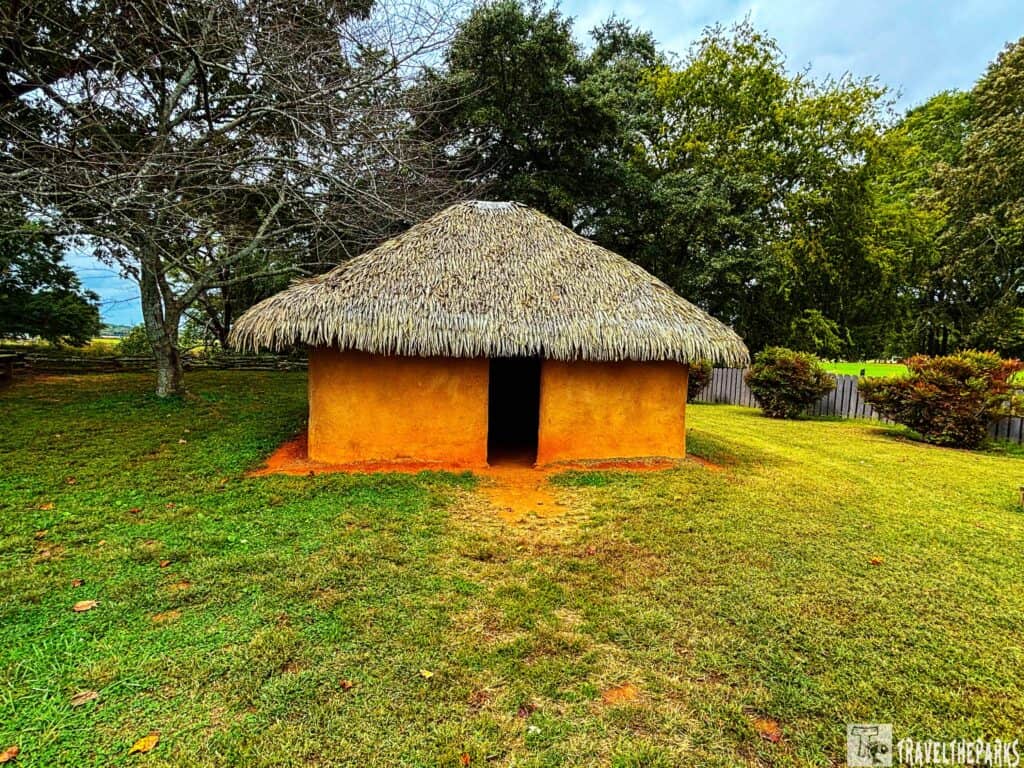
Interpretive signs guided me through the site. I could not help imagining the stout palisade walls that once formed a protective circle. Near the trailhead, lies a reconstructed wattle-and-daub house. Inside, I got a glimpse into daily life. Just outside stand benches in an interpretive circle. Today, a ranger conducts a talk for a group of middle schoolers. It makes a perfect outdoor classroom.
The Borrow Pit: A Monument to Labor
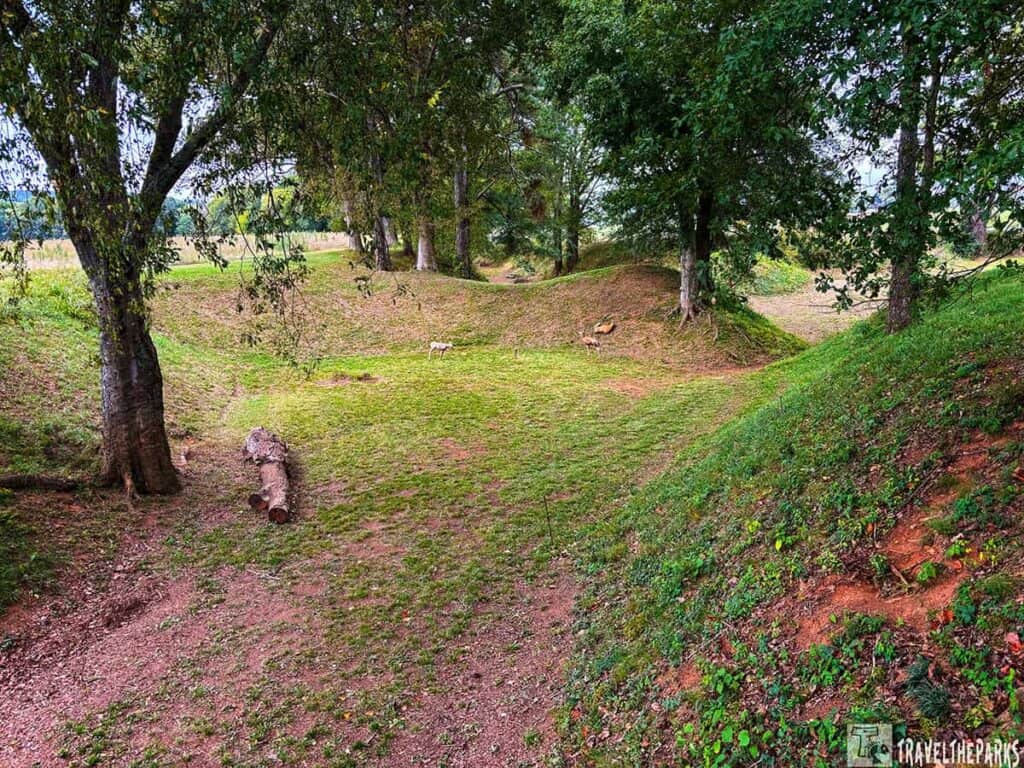
Further on, I passed the “borrow pit,” a gentle depression that tells its own story. This wasn’t a natural feature but a dry moat. The builders carefully removed thousands of baskets of earth to create it.
Imagine a dedicated team of 100 people, each carrying one basket and making a trip every 10 minutes. It would take them over two years of non-stop work, ten hours a day, just to move the earth for Mound A. And that doesn’t account for bad weather, farming seasons, or the time needed to construct the buildings that once stood on top.
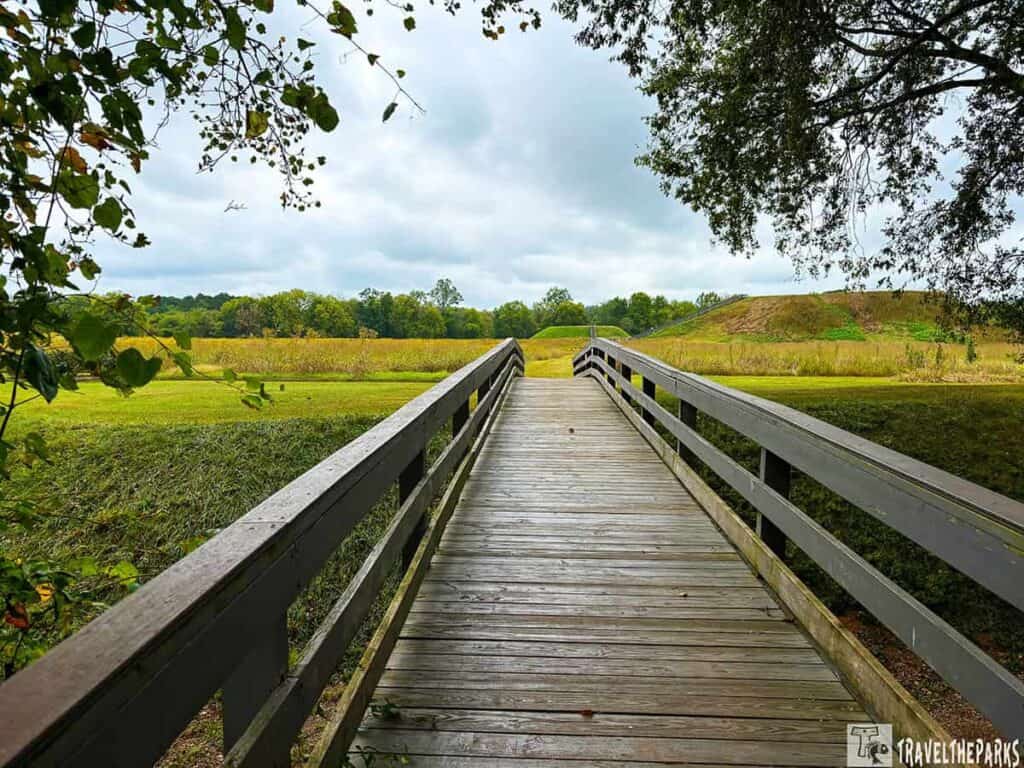
After the footbridge over the “borrow pit”, I continue down the trail. Here, I find a sign sharing the story of Chunkey. On the way down the trail, I came across a sign telling the story of Chunkey. It was a lively, competitive game that would have been so much fun in the plaza.
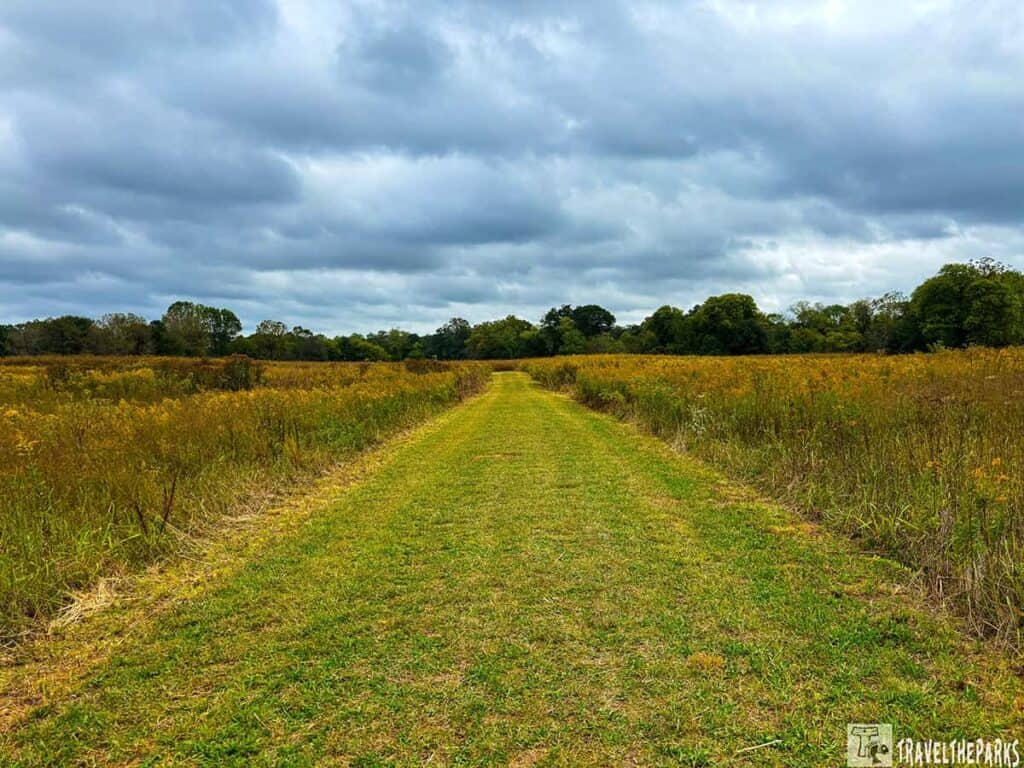
However, the real enchantment came just from my walking the trail. Maybe my imagination was working a bit overtime. But I was thinking I am walking on the very path that someone must have trodden 500 years ago. The air feels thick with humidity, sweat reminding me, thus making it a profoundly connecting experience. This place is an abiding mystery—a quiet echo of a world that once was.
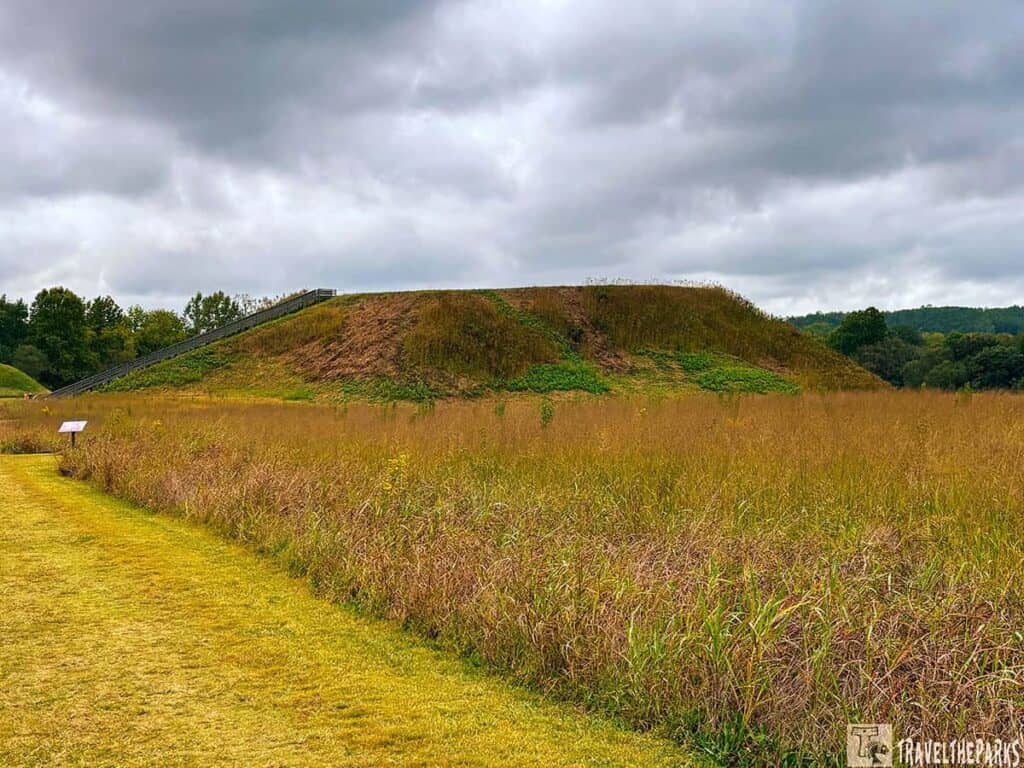
The Immense Central Plaza
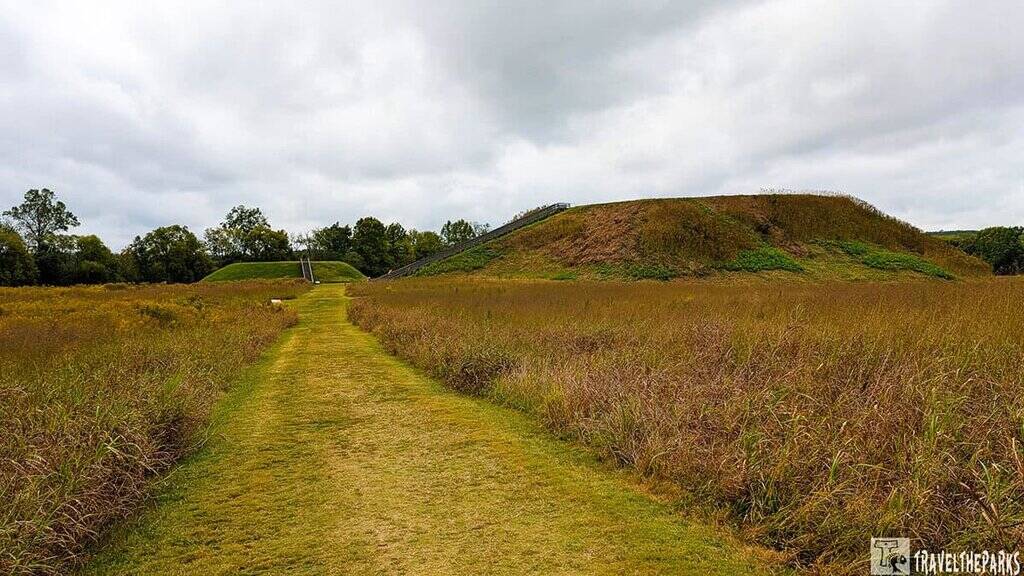
The vast, sunken plaza is the heart of the ancient city, and its scale is truly breathtaking. Today, the site stewards have sown much of the area with native grasses, restoring a view that closely mirrors what Etowah’s residents would have seen centuries ago. This simple act of restoration allows your imagination to fill the space effortlessly—you can almost hear the din of daily life, from bustling trade to the cheers for a heated game of Chunkey that would have echoed across these very grounds.
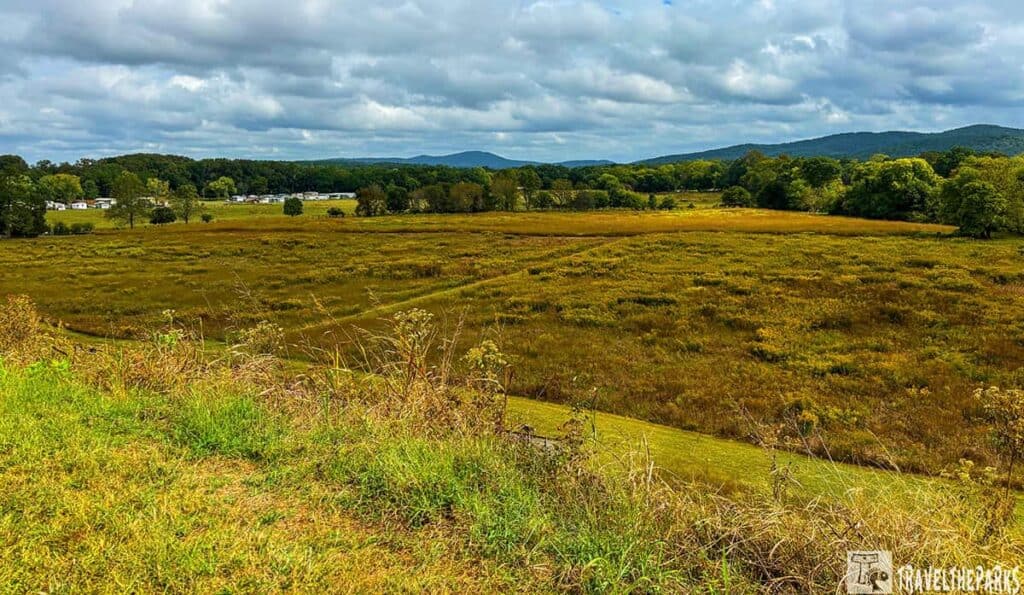
A Guide to the Mounds: Mound A, B, C, and Beyond
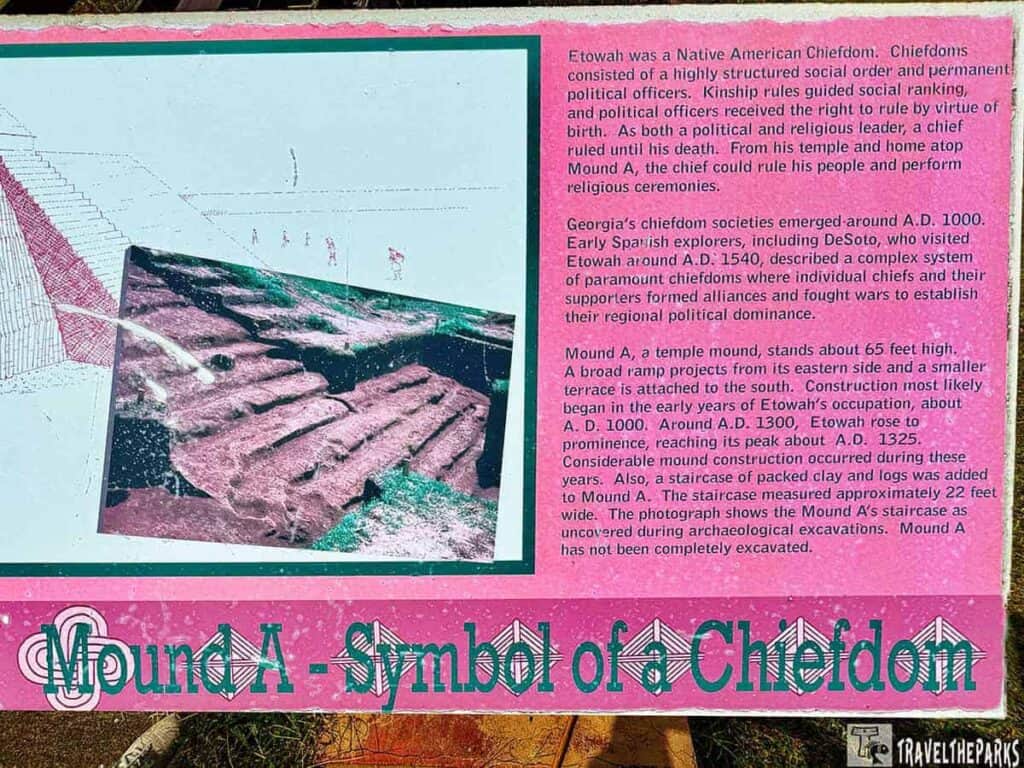
The most immediate and striking feature of the site is the mounds themselves. These are not natural rises in the landscape — they are monumental works of engineering, built basket-load by basket-load by the Mississippian people between 1000 and 1550 A.D.
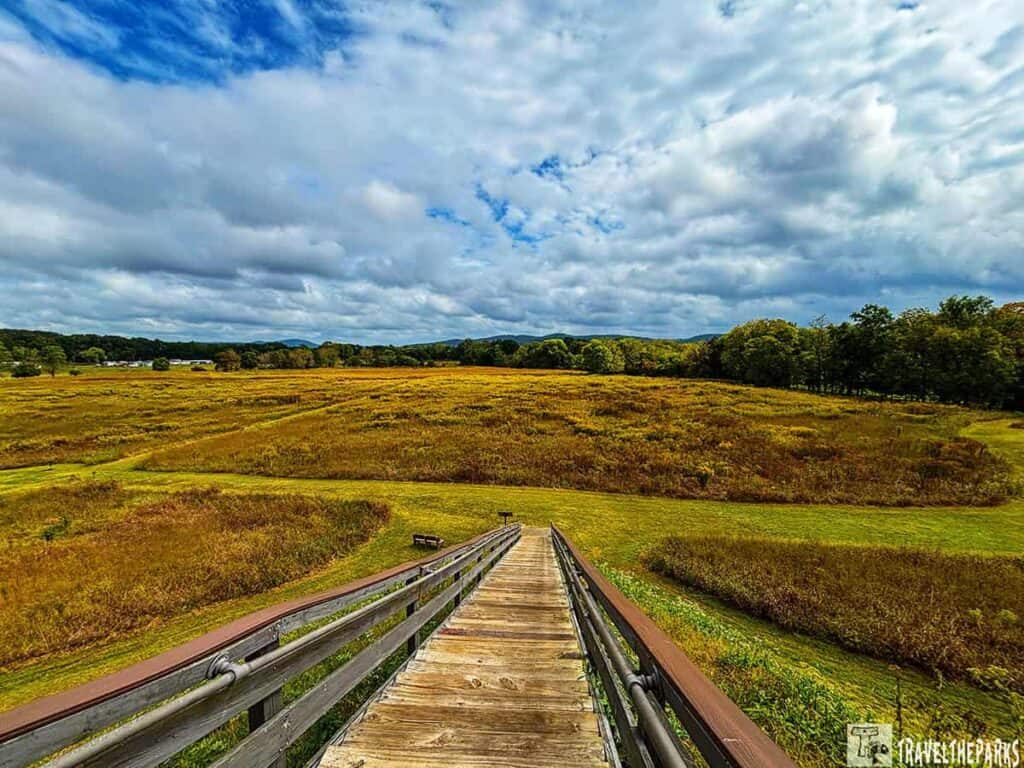
Far more than earthen hills, the Etowah Mounds stand as the lasting architecture of a complex and highly organized society. Each structure represents a distinct chapter in a story that unfolded centuries ago, turning the landscape into a physical record of power, spirituality, and everyday life.
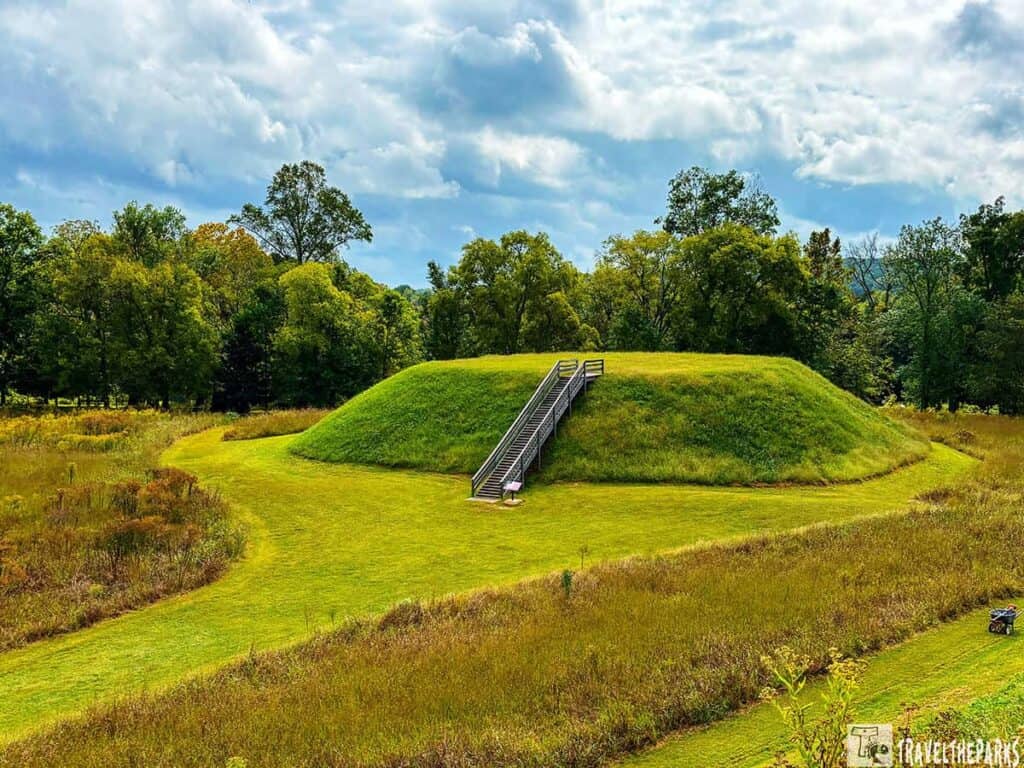
Mound A: the Great Temple Mound
Rising an impressive 63 feet, Mound A is the undeniable centerpiece of the site. Standing at the base of the towering earthen mounds, it’s impossible not to feel awe. As I climbed the steep staircase, I couldn’t help but think about the Mississippian people who made this same ascent centuries ago. For many, reaching the summit was likely a rite of passage. I paused at the top to catch my breath, but my reward was worth it — a sweeping view of the river and surrounding landscape. From up here, its purpose becomes immediately clear: this was the foundation of the chief’s home, a place of both strategic oversight and spiritual significance. Standing here, you’re not just atop a hill of earth; you’re at the very heart of a once-powerful chiefdom.
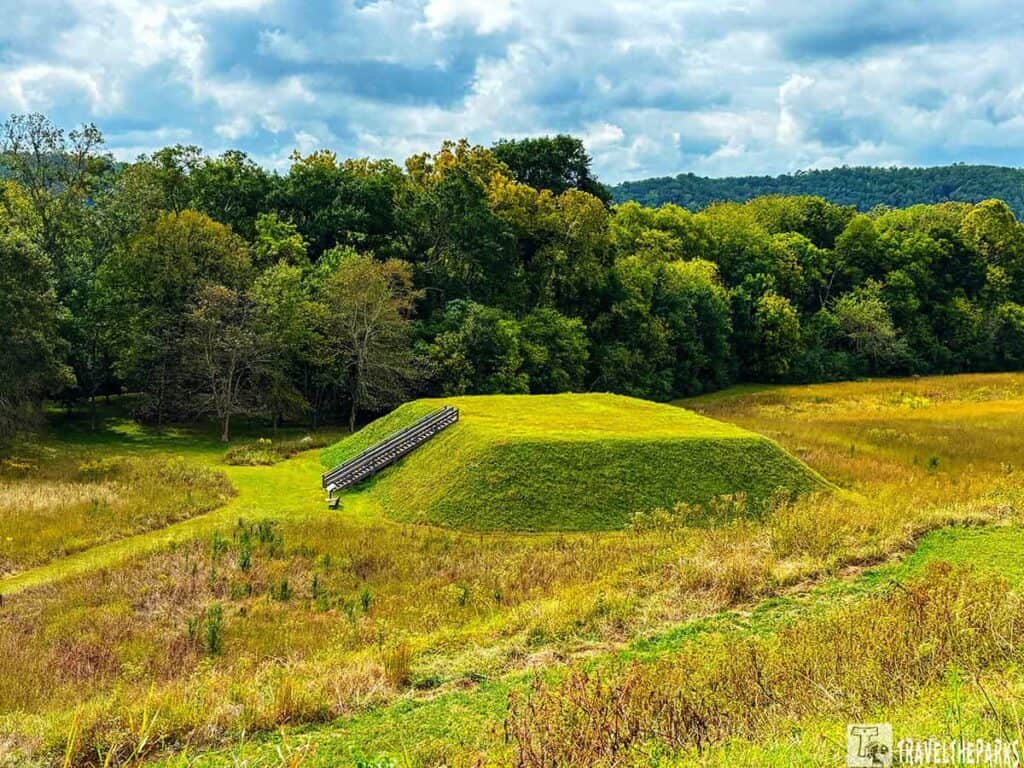
Mound B: A Neighbor in the Plaza (A.D. 1250 to 1325)
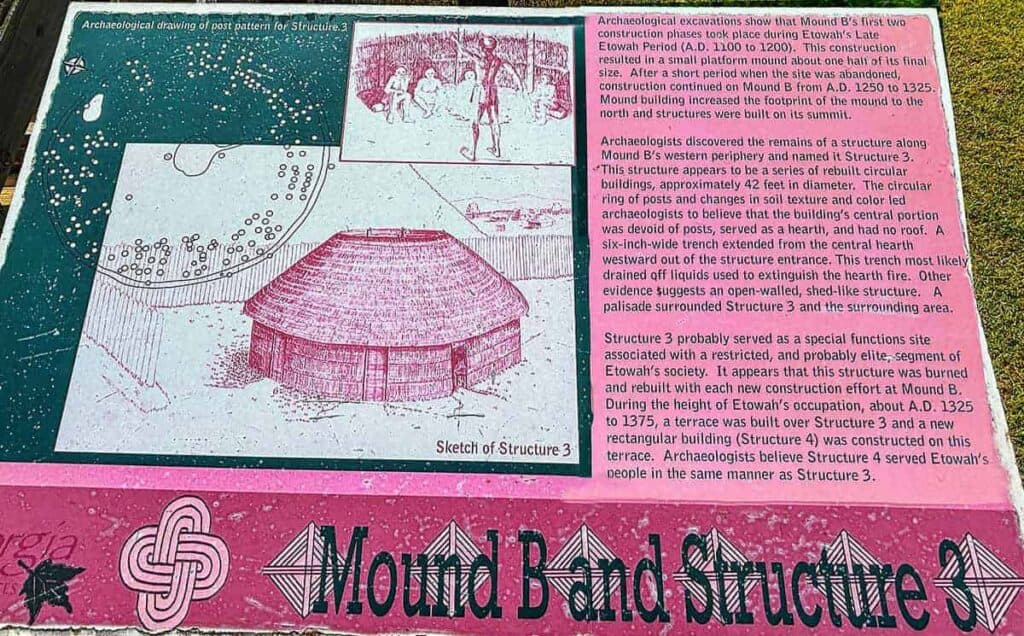
Mound B is smaller at 25-feet. It sits respectfully next to its larger neighbor. It likely supported the home of a high-ranking family or perhaps a building for community gatherings. Placed as it is, it gives the sense of a trusted advisor living next to the town hall and helps contribute to the sense of an organized and tiered society built around a shared central plaza.
Mound C: The Mortuary Mound
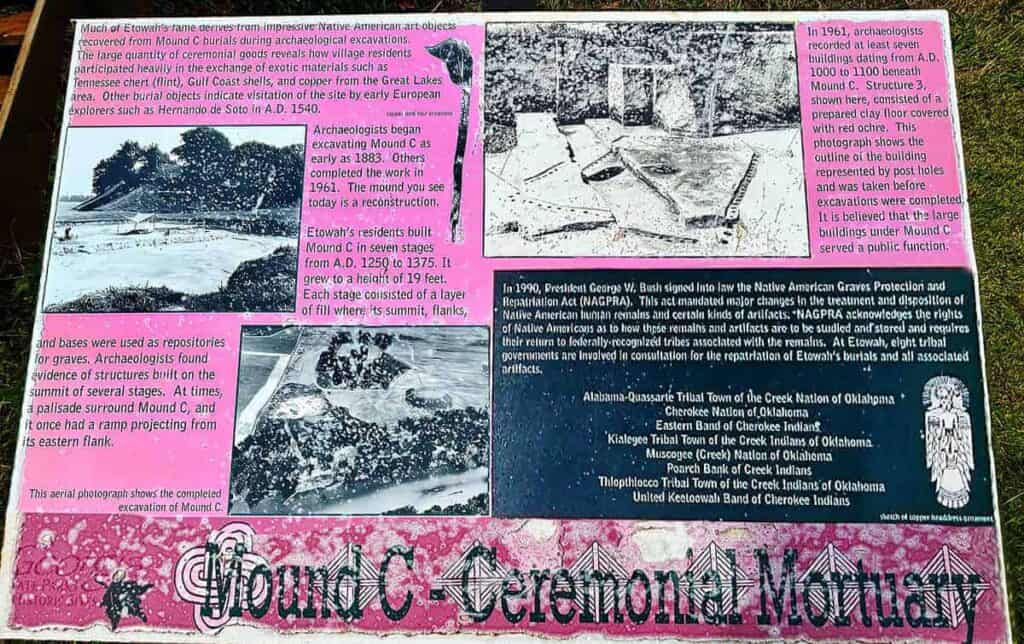
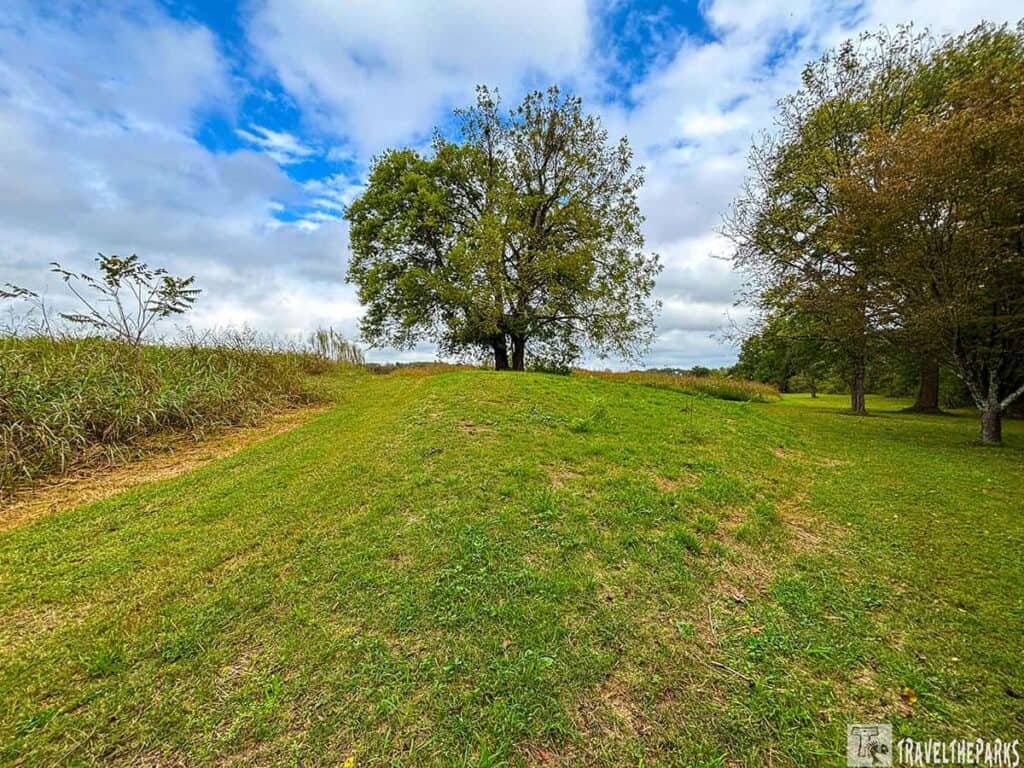
From the top of Mound A, I am looking north and can see Mound C. The conical shape contrasts with the flat-topped platforms of the other mounds that are around. Archeologists dug up this sacred burial mound, discovering 350 burials. It gave archaeologists insight into the people of Etowah. Finding carved marble, polished copper, and other artifacts within the mound tells a powerful story. Those buried in the mound had high status within the community. The skilled artisans obviously held deep spiritual beliefs. Through observation of changes within the mound, they discovered that Mound C was built in layers.
Mounds D, E, and F: The Fabric of the City
The smaller mounds complete the picture. They may not command the same attention, but they were essential to the city’s daily life. They likely supported the homes of respected community members or served as areas for specialized crafts. Though worn down by time, they remind us that this was a living, breathing community. Built later in the third period, these mounds represent a tapestry of many lives woven together around the monumental earthworks.
A Weir on the River, Webs in the Trees
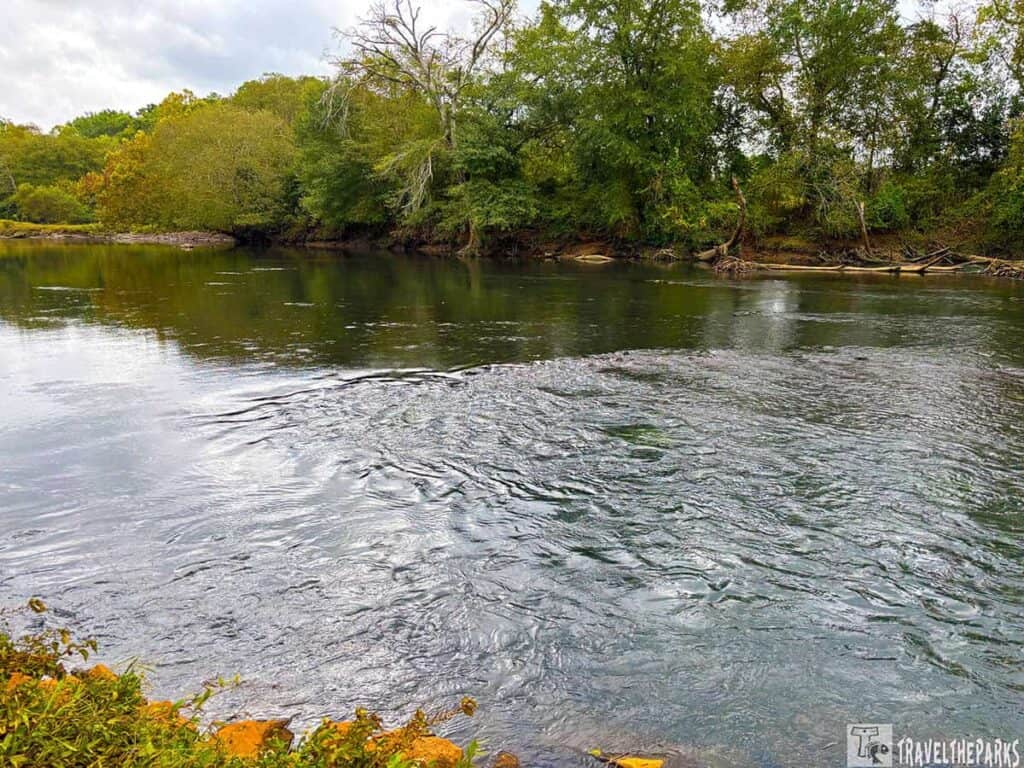
I followed the loop trail out along the Etowah River bank. The remains of a rock weir were easily visible looking into the river. I recall reading about this in school. Stones formed them in a U, V, or W shape. I pondered the remains of the ancient weir and could almost envision how it once rerouted fish. My curiosity changed from archaeology to nature in the cool shade, enthralled by the intricate glistening webs of large orb spiders.

Extend Your Journey: An Ancient Southeast Road Trip
Visiting Etowah Indian Mounds fits perfectly into a larger road trip through the ancient Southeast. In case you are interested in learning more about the Etowah culture, why not combine the visit with other stunning places like:
- Kolomoki Mounds in southwest Georgia—one of the oldest mound complexes of the Woodland era in the state.
- Ocmulgee Mounds National Historical Park in Macon, where the history of over 12,000 years through the remains of huge earth lodges and ceremonial mounds.
If you want to go even deeper, consider adding Poverty Point in northeast Louisiana to your itinerary; this is a globally significant site recognized by UNESCO and is home to some of the most mind-boggling and monumental ancient mounds in the whole of the North American continent. When combined, these places narrate an extensive history of the Native American cultures that formed the land way back before the Europeans arrived, thus each visit resembling a chapter of a grand, interconnected voyage.
Final Thoughts: Visiting Etowah Indian Mounds State Historic Site
Visiting Etowah Indian Mounds State Historic Site is an immersion into one of the Southeast’s most significant Native American sites. It silently refutes the concept of an “empty wilderness,” showing a landscape deeply carved by ingenuity and community.
A place of reflection rather than distraction, stand atop the great mound and look over the river to listen. In the silence, you may feel an echo of a mighty and mystical past.
Does the story of Etowah’s rise and mysterious abandonment make you think of any other lost civilizations? I’d love to hear your thoughts.